Synthesis of 4-Hydroxyphenylamino-Naphthoquinones as Paracetamol-Inspired Analogs: Chemical, In Silico, and Phenotypic Pharmacological Evaluation

 ,
,  ,
,  , , , ,
Abstract
1. Introduction
2. Materials and Methods
2.1. Chemistry
2.1.1. General
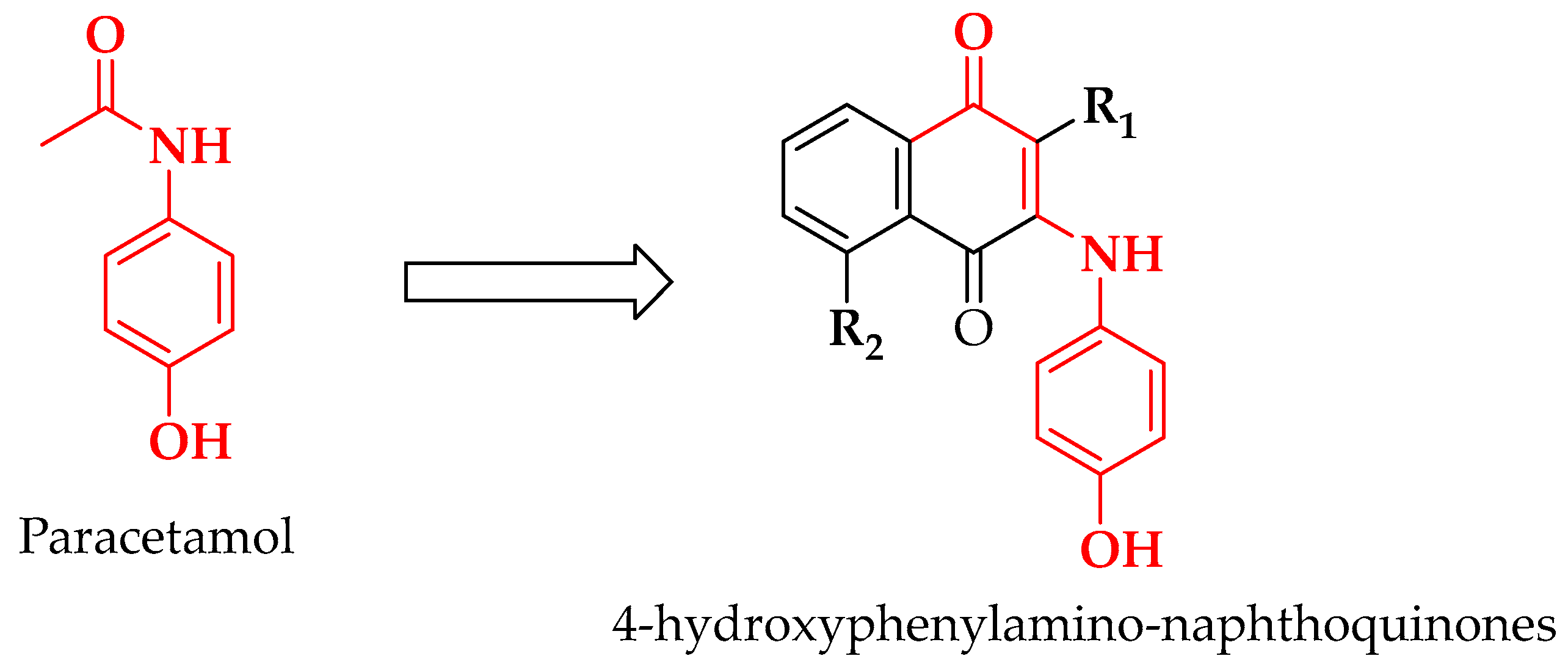
2.1.2. Solvent-Free Synthesis of Paracetamol Analogues
2.2. In Silico Studies
2.2.1. Prediction of Biological Activity Based on Spectra
2.2.2. Chemical Reactivity Based on Density Functional Theory (DFT)
2.2.3. Molecular Docking
2.2.4. ADMET Prediction
2.3. Pharmacological Evaluation
2.3.1. Animals
2.3.2. Experimental Design
2.3.3. Antinociceptive Assay
Eddy’s Hot Plate
Acetic Acid-Induced Writhing Effect
2.3.4. Anti-Inflammatory Assay
Carrageenan-Induced Paw Edema Assay
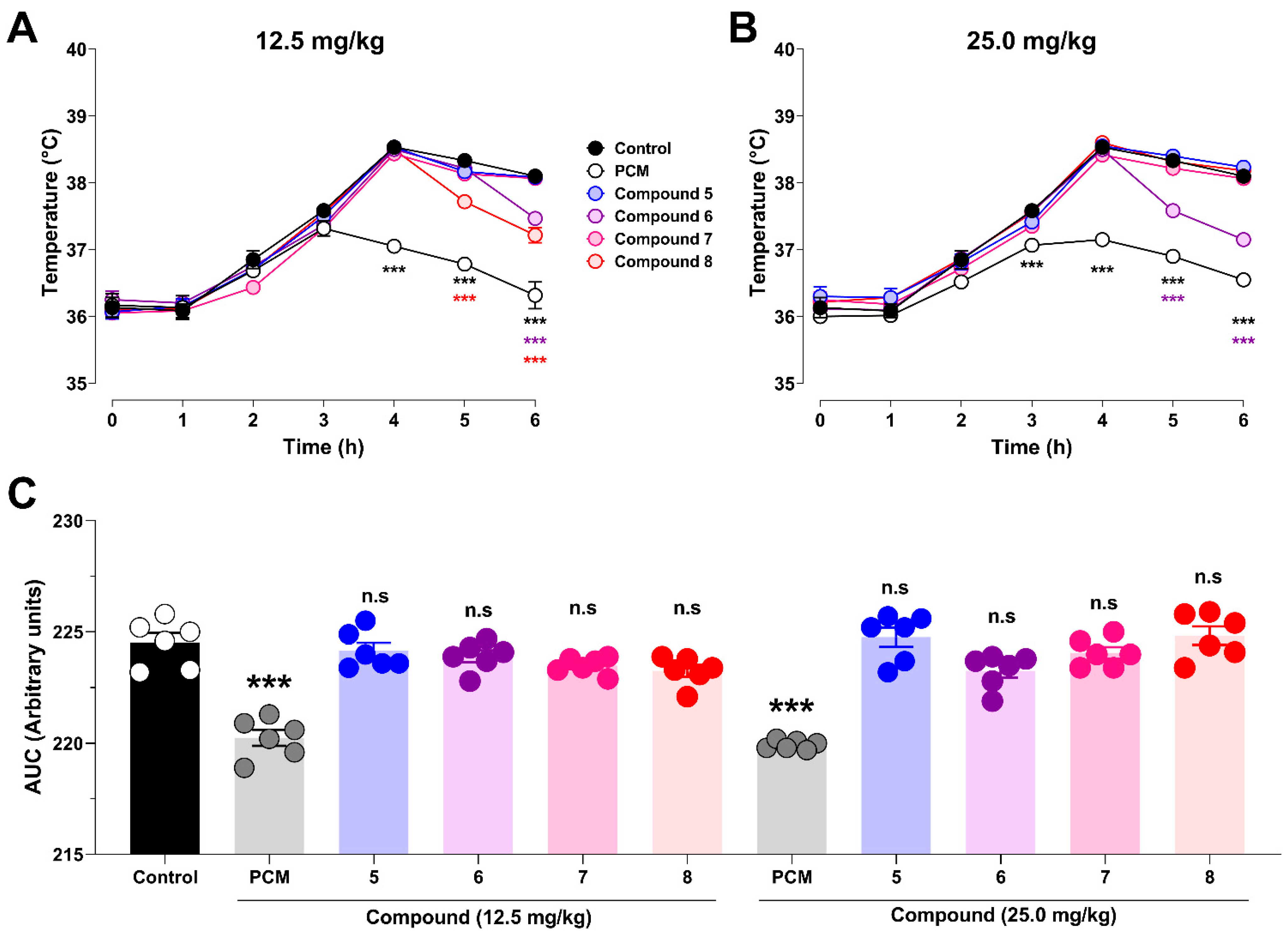
2.3.5. Antipyretic Assay [46]
2.4. Statistical Analysis
3. Results
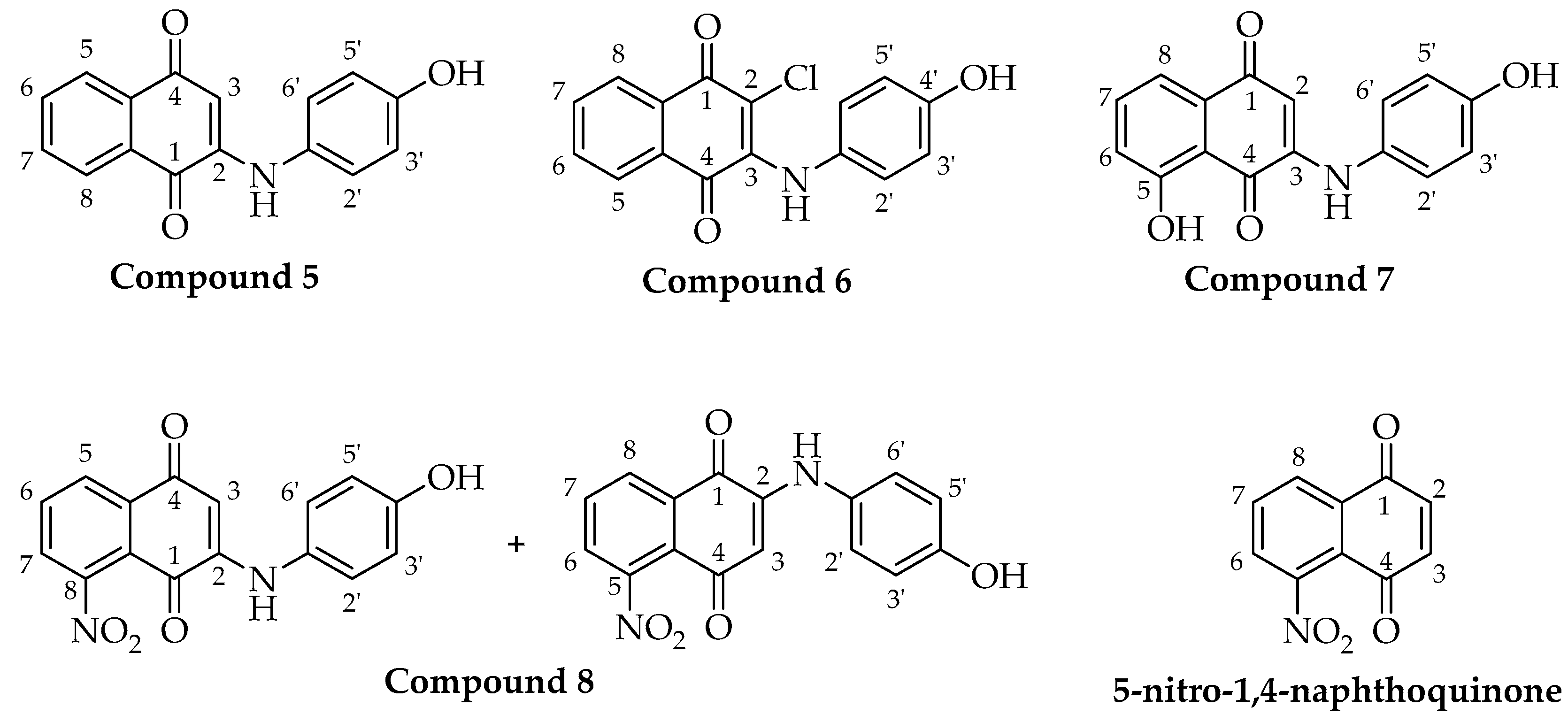
3.1. Solvent-Free Synthesis
3.2. PASS-Based Prediction of Biological Activity
3.3. Density Functional Theory (DFT) Calculations
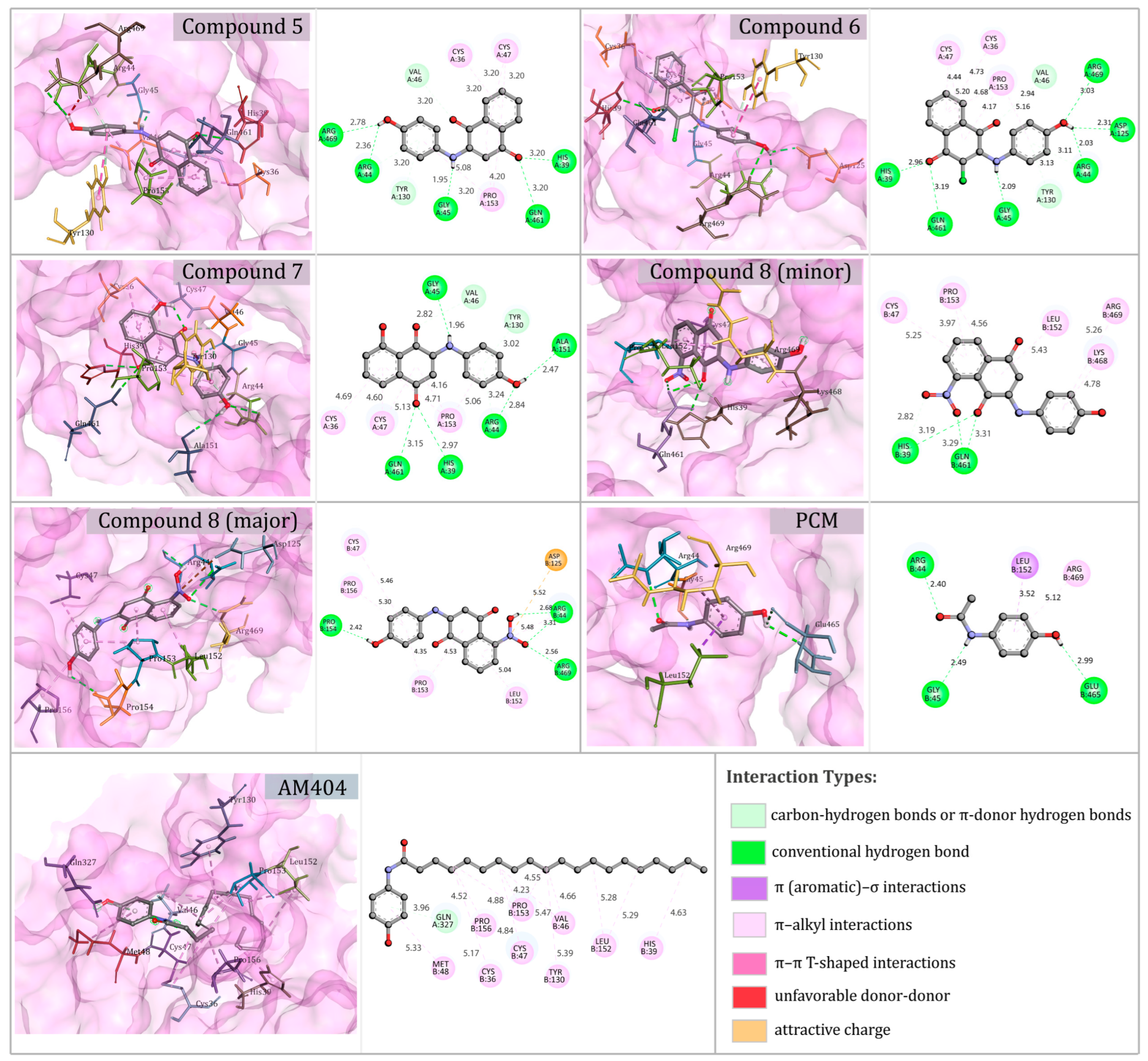
3.4. Docking Molecular
3.5. In Silico ADMET Prediction of Compounds 5–7 and the Two Regioisomers of Compound 8
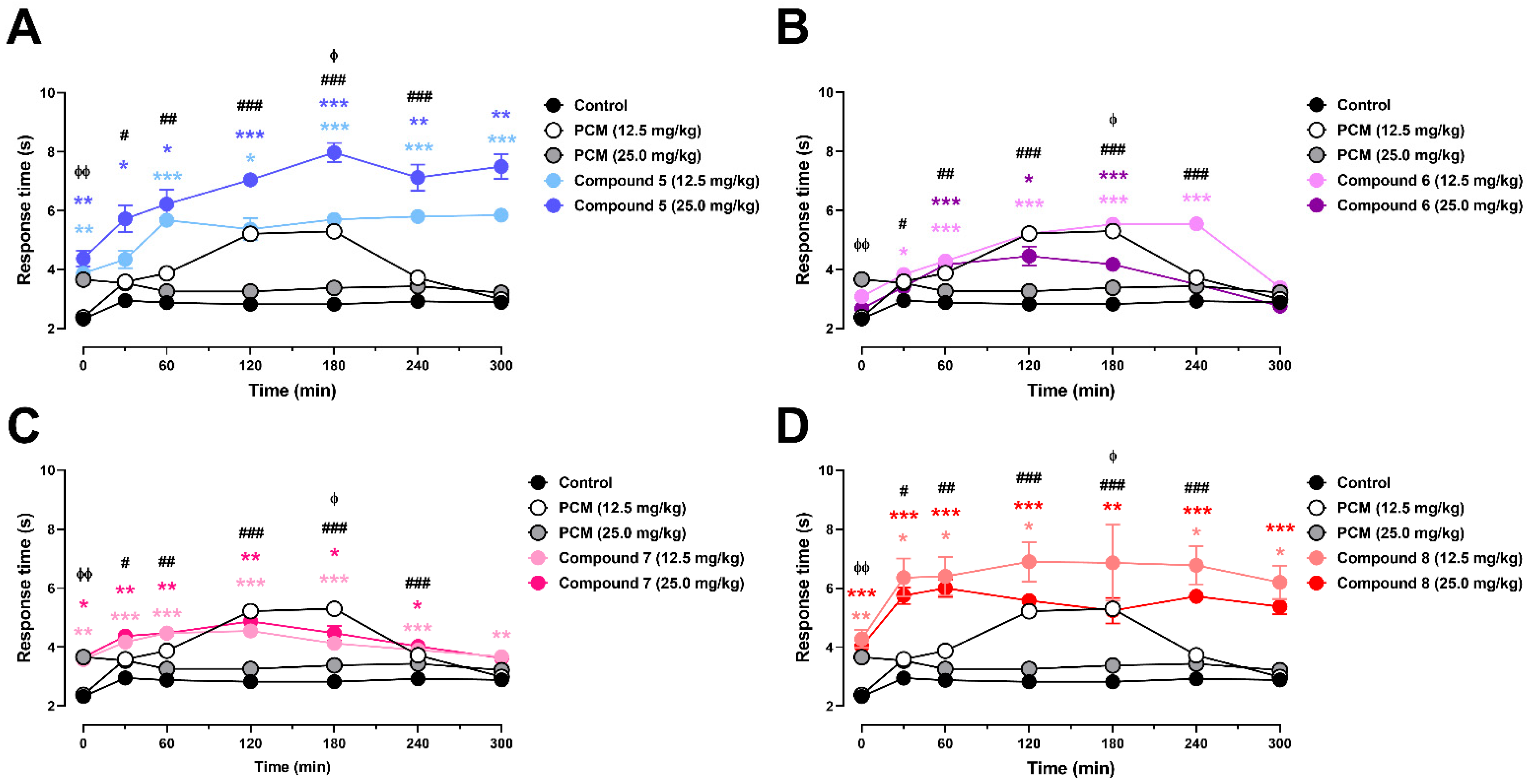
3.6. Central Antinociceptive Effect of Compounds 5–8
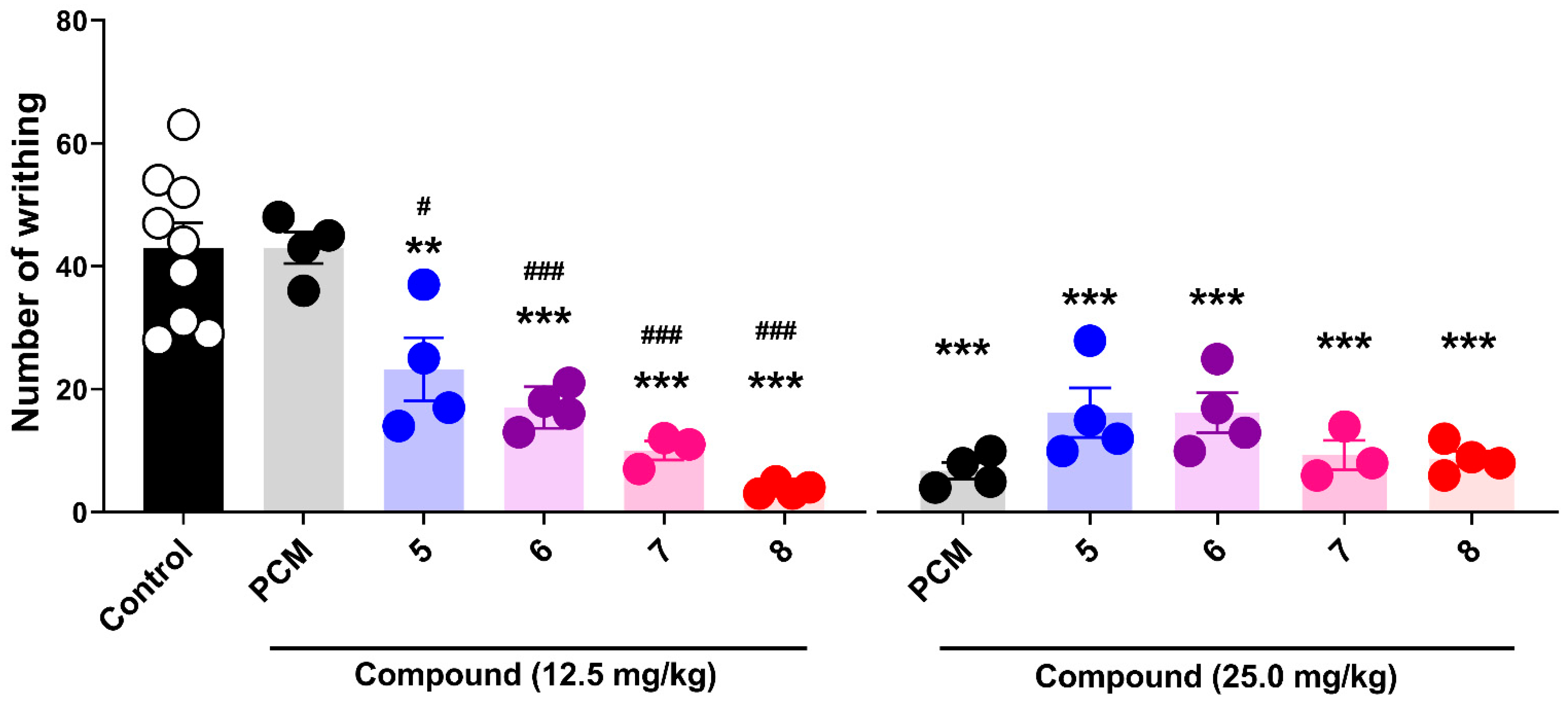
3.7. Peripheral Antinociceptive Effect of Compounds 5–8
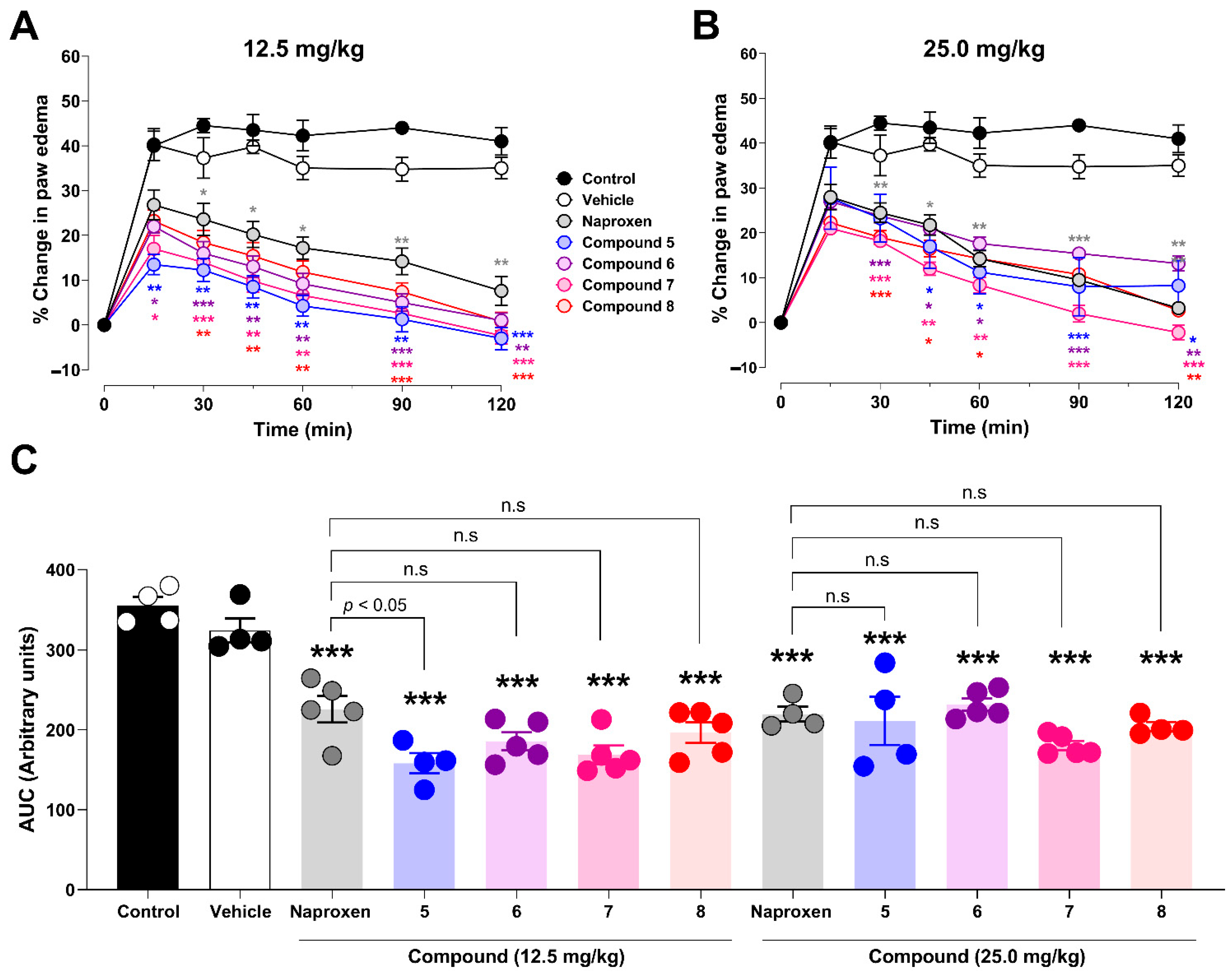
3.8. Anti-Inflammatory Effect of Compounds 5–8
3.9. Antipyretic Effect of Compounds 5–8
4. Discussion
5. Conclusions
Supplementary Materials
Author Contributions
Funding
Institutional Review Board Statement
Informed Consent Statement
Data Availability Statement
Acknowledgments
Conflicts of Interest
References
- Ferreira, B.L.; Ferreira, D.P.; Borges, S.F.; Ferreira, A.M.; Holanda, F.H.; Ucella-Filho, J.G.M.; Cruz, R.A.S.; Birolli, W.G.; Luque, R.; Ferreira, I.M. Diclofenac, ibuprofen, and paracetamol biodegradation: Overconsumed non-steroidal anti-inflammatories drugs at COVID-19 pandemic. Front. Microbiol. 2023, 14, 1207664. [Google Scholar] [CrossRef]
- Bianconi, A.; Zauli, E.; Biagiotti, C.; Calò, G.L.; Cioni, G.; Imperiali, G.; Orazi, V.; Acuti Martellucci, C.; Rosso, A.; Fiore, M. Paracetamol Use and COVID-19 Clinical Outcomes: A Meta-Analysis. Healthcare 2024, 12, 2309. [Google Scholar] [CrossRef]
- Ayoub, S.S. Paracetamol (acetaminophen): A familiar drug with an unexplained mechanism of action. Temperature 2021, 8, 351–371. [Google Scholar] [CrossRef]
- Yoon, E.; Babar, A.; Choudhary, M.; Kutner, M.; Pyrsopoulos, N. Acetaminophen-Induced Hepatotoxicity: A Comprehensive Update. J. Clin. Transl. Hepatol. 2016, 4, 131–142. [Google Scholar] [CrossRef] [PubMed]
- Mazaleuskaya, L.L.; Sangkuhl, K.; Thorn, C.F.; FitzGerald, G.A.; Altman, R.B.; Klein, T.E. PharmGKB summary: Pathways of acetaminophen metabolism at the therapeutic versus toxic doses. Pharmacogenet. Genom. 2015, 25, 416–426. [Google Scholar] [CrossRef]
- Caparrotta, T.M.; Antoine, D.J.; Dear, J.W. Are some people at increased risk of paracetamol-induced liver injury? A critical review of the literature. Eur. J. Clin. Pharmacol. 2018, 74, 147–160. [Google Scholar] [CrossRef] [PubMed]
- Cai, X.; Cai, H.; Wang, J.; Yang, Q.; Guan, J.; Deng, J.; Chen, J. Molecular pathogenesis of acetaminophen-induced liver injury and its treatment options. J. Zhejiang Univ. Sci. B 2022, 23, 265–285. [Google Scholar] [CrossRef]
- Luo, G.; Huang, L.; Zhang, Z. The molecular mechanisms of acetaminophen-induced hepatotoxicity and its potential therapeutic targets. Exp. Biol. Med. 2023, 248, 412–424. [Google Scholar] [CrossRef] [PubMed]
- Du, K.; Ramachandran, A.; Jaeschke, H. Oxidative stress during acetaminophen hepatotoxicity: Sources, pathophysiological role and therapeutic potential. Redox Biol. 2016, 10, 148–156. [Google Scholar] [CrossRef]
- Bajt, M.L.; Ramachandran, A.; Yan, H.M.; Lebofsky, M.; Farhood, A.; Lemasters, J.J.; Jaeschke, H. Apoptosis-inducing factor modulates mitochondrial oxidant stress in acetaminophen hepatotoxicity. Toxicol. Sci. 2011, 122, 598–605. [Google Scholar] [CrossRef]
- Shan, S.; Shen, Z.; Song, F. Autophagy and acetaminophen-induced hepatotoxicity. Arch. Toxicol. 2018, 92, 2153–2161. [Google Scholar] [CrossRef] [PubMed]
- Esh, C.J.; Chrismas, B.C.R.; Mauger, A.R.; Taylor, L. Pharmacological hypotheses: Is acetaminophen selective in its cyclooxygenase inhibition? Pharmacol. Res. Perspect. 2021, 9, e00835. [Google Scholar] [CrossRef] [PubMed]
- Przybyła, G.W.; Szychowski, K.A.; Gmiński, J. Paracetamol—An old drug with new mechanisms of action. Clin. Exp. Pharmacol. Physiol. 2021, 48, 3–19. [Google Scholar] [CrossRef]
- Mallet, C.; Desmeules, J.; Pegahi, R.; Eschalier, A. An Updated Review on the Metabolite (AM404)-Mediated Central Mechanism of Action of Paracetamol (Acetaminophen): Experimental Evidence and Potential Clinical Impact. J. Pain Res. 2023, 16, 1081–1094. [Google Scholar] [CrossRef]
- Abdel Shaheed, C.; Ferreira, G.E.; Dmitritchenko, A.; McLachlan, A.J.; Day, R.O.; Saragiotto, B.; Lin, C.; Langendyk, V.; Stanaway, F.; Latimer, J.; et al. The efficacy and safety of paracetamol for pain relief: An overview of systematic reviews. Med. J. Aust. 2021, 214, 324–331. [Google Scholar] [CrossRef]
- Sinning, C.; Watzer, B.; Coste, O.; Nüsing, R.M.; Ott, I.; Ligresti, A.; Marzo, D.; Imming, P. New Analgesics Synthetically Derived from the Paracetamol Metabolite N-(4-Hydroxyphenyl)-(5Z,8Z,11Z,14Z)-icosatetra-5,8,11,14-enamide. J. Med. Chem. 2008, 51, 7800–7805. [Google Scholar] [CrossRef]
- Nilsson, J.L.; Mallet, C.; Shionoya, K.; Blomgren, A.; Sundin, A.P.; Grundemar, L.; Boudieu, L.; Blomqvist, A.; Eschalier, A.; Nilsson, U.J.; et al. Paracetamol analogues conjugated by FAAH induce TRPV1-mediated antinociception without causing acute liver toxicity. Eur. J. Med. Chem. 2021, 213, 113042. [Google Scholar] [CrossRef]
- Sahu, A.; Das, D.; Sahu, P.; Mishra, S.; Sakthivel, A.; Gajbhiye, A.; Agrawal, R. Bioisosteric Replacement of Amide Group with 1,2,3-Triazoles in Acetaminophen Addresses Reactive Oxygen Species-Mediated Hepatotoxic Insult in Wistar Albino Rats. Chem. Res. Toxicol. 2020, 33, 522–535. [Google Scholar] [CrossRef]
- Kishore, N.; Binneman, B.; Mahapatra, A.; van de Venter, M.; du Plessis-Stoman, D.; Boukes, G.; Houghton, P.; Marion Meyer, J.J.; Lall, N. Cytotoxicity of synthesized 1,4-naphthoquinone analogues on selected human cancer cell lines. Bioorg. Med. Chem. 2014, 22, 5013–5019. [Google Scholar] [CrossRef] [PubMed]
- Angulo-Elizari, E.; Henriquez-Figuereo, A.; Morán-Serradilla, C.; Plano, D.; Sanmartín, C. Unlocking the potential of 1,4-naphthoquinones: A comprehensive review of their anticancer properties. Eur. J. Med. Chem. 2024, 268, 116249. [Google Scholar] [CrossRef]
- Mahalapbutr, P.; Leechaisit, R.; Thongnum, A.; Todsaporn, D.; Prachayasittikul, V.; Rungrotmongkol, T.; Prachayasittikul, S.; Ruchirawat, S.; Prachayasittikul, V.; Pingaew, R. Discovery of Anilino-1,4-naphthoquinones as Potent EGFR Tyrosine Kinase Inhibitors: Synthesis, Biological Evaluation, and Comprehensive Molecular Modeling. ACS Omega 2022, 7, 17881–17893. [Google Scholar] [CrossRef] [PubMed]
- Rahman, M.M.; Islam, M.R.; Akash, S.; Shohag, S.; Ahmed, L.; Supti, F.A.; Rauf, A.; Aljohani, A.S.M.; Al Abdulmonem, W.; Khalil, A.A.; et al. Naphthoquinones and derivatives as potential anticancer agents: An updated review. Chem. Biol. Interact. 2022, 368, 110198. [Google Scholar] [CrossRef]
- Carneiro, R.L.; de Melo, C.C.; de Alvarenga, B.R.; Dayo Owoyemi, B.C.; Ellena, J.; da Silva, C.C.P. Mechanochemical synthesis and characterization of a novel AAs–Flucytosine drug–drug cocrystal: A versatile model system for green approaches. J. Mol. Struct. 2022, 1251, 132052. [Google Scholar] [CrossRef]
- Banerjee, M.; Panjikar, P.C.; Das, D.; Iyer, S.; Bhosle, A.A.; Chatterjee, A. Grindstone chemistry: A “green” approach for the synthesis and derivatization of heterocycles. Tetrahedron 2022, 112, 132753. [Google Scholar] [CrossRef]
- Lopez-Mercado, S.; Enríquez, C.; Valderrama, J.A.; Pino-Rios, R.; Ruiz-Vásquez, L.; Ruiz Mesia, L.; Vargas-Arana, G.; Buc Calderon, P.; Benites, J. Exploring the Antibacterial and Antiparasitic Activity of Phenylaminonaphthoquinones-Green Synthesis, Biological Evaluation and Computational Study. Int. J. Mol. Sci. 2024, 25, 10670. [Google Scholar] [CrossRef]
- Pal, K.; Karmakar, P.; Brahmachari, G. Mechanochemistry-driven solvent-free synthesis of biologically relevant diversely substituted 2-amino-1,4-naphthoquinones. RSC Mechanochem. 2025, 2, 833. [Google Scholar] [CrossRef]
- Stepanchikova, A.; Lagunin, A.; Filimonov, D.; Poroikov, V. Prediction of Biological Activity Spectra for Substances: Evaluation on the Diverse Sets of Drug-Like Structures. Curr. Med. Chem. 2003, 10, 225–233. [Google Scholar] [CrossRef]
- Chakraborty, D.; Kumar Chattaraj, P. Conceptual density functional theory based electronic structure principles. Chem. Sci. 2021, 12, 6264–6279. [Google Scholar] [CrossRef] [PubMed]
- Rappe, A.K.; Casewit, C.J.; Colwell, K.S.; Goddard, W.A., III; Skiff, W.M. UFF, a full periodic table force field for molecular dynamics simulations. J. Am. Chem. Soc. 1992, 114, 10024–10035. [Google Scholar] [CrossRef]
- Krishnan, R.; Binkley, J.S.; Seeger, R.; Pople, J.A. Self-consistent molecular orbital methods. XX. A basis set for correlated wave functions. J. Chem. Phys. 1980, 72, 650–654. [Google Scholar] [CrossRef]
- Lee, C.; Yang, W.; Parr, R.G. Development of the Colle-Salvetti correlation-energy formula into a functional of the electron density. Phys. Rev. B 1988, 37, 785–799. [Google Scholar] [CrossRef]
- Becke, A.D. Density-functional thermochemistry. III. The role of exact exchange. J. Chem. Phys. 1993, 98, 5648–5652. [Google Scholar] [CrossRef]
- Stephens, P.J.; Devlin, F.J.; Chabalowski, C.F.; Frisch, M.J. Ab Initio Calculation of Vibrational Absorption and Circular Dichroism Spectra Using Density Functional Force Fields. J. Phys. Chem. 1994, 98, 11623–11637. [Google Scholar] [CrossRef]
- Ditchfield, R.; Hehre, W.J.; Pople, J.A. Self-Consistent Molecular-Orbital Methods. IX. An Extended Gaussian-Type Basis for Molecular-Orbital Studies of Organic Molecules. J. Chem. Phys. 1971, 54, 724–738. [Google Scholar] [CrossRef]
- Tomasi, J.; Mennucci, B.; Cammi, R. Quantum Mechanical Continuum Solvation Models. Chem. Rev. 2005, 105, 2999–3094. [Google Scholar] [CrossRef]
- Orlando, B.J.; Malkowski, M.G. Substrate-selective Inhibition of Cyclooxygeanse-2 by Fenamic Acid Derivatives Is Dependent on Peroxide Tone. J. Biol. Chem. 2016, 291, 15069–15081. [Google Scholar] [CrossRef]
- Liao, M.; Cao, E.; Julius, D.; Cheng, Y. Structure of the TRPV1 ion channel determined by electron cryo-microscopy. Nature 2013, 504, 107–112. [Google Scholar] [CrossRef]
- Shao, Z.; Yin, J.; Chapman, K.; Grzemska, M.; Clark, L.; Wang, J.; Rosenbaum, D.M. High-resolution crystal structure of the human CB1 cannabinoid receptor. Nature 2016, 540, 602–606. [Google Scholar] [CrossRef]
- Trott, O.; Olson, A.J. AutoDock Vina: Improving the Speed and Accuracy of Docking with a New Scoring Function, Efficient Optimization, and Multithreading. J. Comput. Chem. 2010, 31, 455–461. [Google Scholar] [CrossRef]
- Sanner, M.F. Python: A Programming Language for Software Integration and Development. J. Mol. Graph. Model. 1999, 17, 57–61. [Google Scholar]
- Quispe-Díaz, I.M.; Ybañez-Julca, R.O.; Asunción-Alvarez, D.; Enriquez-Lara, C.; Polo-Bardales, J.L.; Jara-Aguilar, R.; Venegas-Casanova, E.A.; de Albuquerque, R.D.D.G.; Costilla-Sánchez, N.; Vásquez-Corales, E.; et al. Antioxidant, Neuroprotective, and Antinociceptive Effects of Peruvian Black Maca (Lepidium meyenii Walp.). Antioxidants 2025, 14, 1214. [Google Scholar] [CrossRef] [PubMed]
- Pires, D.E.V.; Blundell, T.L.; Ascher, D.B. pkCSM: Predicting Small-Molecule Pharmacokinetic and Toxicity Properties Using Graph-Based Signatures. J. Med. Chem. 2015, 58, 4066–4072. [Google Scholar] [CrossRef]
- Zlatanova-Tenisheva, H.; Vladimirova, S. Experimental screening for analgesic and anti-inflammatory effect of novel compounds with a pyrrole heterocycle. Pharmacia 2024, 71, 1–10. [Google Scholar] [CrossRef]
- Malhotra, S.D.; Rana, D.A.; Patel, V.J. Comparison of analgesic, anti-inflammatory and anti-pyretic efficacy of diclofenac, paracetamol and their combination in experimental animals. Int. J. Basic Clin. Pharmacol. 2017, 2, 458–465. [Google Scholar] [CrossRef]
- Walker, M.C.; Gierse, J.K. In vitro assays for cyclooxygenase activity and inhibitor characterization. Methods Mol. Biol. 2010, 644, 131–144. [Google Scholar] [CrossRef] [PubMed]
- Yao, X.J.; Yin, J.A.; Xia, Y.F.; Wei, Z.F.; Luo, Y.B.; Liu, M.; Feleder, C.; Dai, Y. Puerarin exerts antipyretic effect on lipopolysaccharide-induced fever in rats involving inhibition of pyrogen production from macrophages. J. Ethnopharmacol. 2012, 141, 322–330. [Google Scholar] [CrossRef] [PubMed]
- Varma, R.S. Solvent-free organic syntheses using supported reagents and microwave irradiation. Green Chem. 1999, 1, 43–55. [Google Scholar] [CrossRef]
- Onitsuka, S.; Jin, Y.Z.; Shaikh, A.C.; Furuno, H.; Inanaga, J. Silica gel-mediated organic reactions under organic solvent-free conditions. Molecules 2012, 17, 11469–11483. [Google Scholar] [CrossRef]
- Uzzaman, M.; Hoque, M.J. Physiochemical, molecular docking, and pharmacokinetic studies of Naproxen and its modified derivatives based on DFT. Chem. Environ. Eng. 2018, 6, C-2018-12-19. [Google Scholar] [CrossRef]
- Demir, P.; Akman, F. Molecular structure, spectroscopic characterization, HOMO and LUMO analysis of PU and PCL grafted onto PEMA-co-PHEMA with DFT quantum chemical calculations. J. Mol. Struct. 2017, 1134, 404–415. [Google Scholar] [CrossRef]
- Collier, H.O.; Dinneen, L.C.; Johnson, C.A.; Schneider, C. The abdominal constriction response and its suppression by analgesic drugs in the mouse. Br. J. Pharmacol. Chemother. 1968, 32, 295–310. [Google Scholar] [CrossRef] [PubMed]
- Le Bars, D.; Gozariu, M.; Cadden, S.W. Animal models of nociception. Pharmacol. Rev. 2001, 53, 597–652. [Google Scholar] [CrossRef] [PubMed]
- Bentley, G.A.; Newton, S.H.; Starr, J. Evidence for an action of morphine and the enkephalins on sensory nerve endings in the mouse peritoneum. Br. J. Pharmacol. 1981, 73, 325–332. [Google Scholar] [CrossRef]
- Dzoyem, J.P.; McGaw, L.J.; Kuete, V.; Bakowsky, U. Chapter 9—Anti-inflammatory and Anti-nociceptive Activities of African Medicinal Spices and Vegetables. In Medicinal Spices and Vegetables from Africa; Kuete, V., Ed.; Academic Press: San Diego, CA, USA, 2017; pp. 239–270. [Google Scholar] [CrossRef]
- Oladejo, B.O.; Adeboboye, C.F.; Adiji, P.I.; Adebolu, T.T. Cytokine-mediated immunoregulatory activity of Lactobacillus species in a carrageenan-induced acute inflammatory model. BioTechnologia 2023, 104, 53–63. [Google Scholar] [CrossRef] [PubMed]
- Morris, C.J. Carrageenan-induced paw edema in the rat and mouse. Methods Mol. Biol. 2003, 225, 115–121. [Google Scholar] [CrossRef]
- Daina, A.; Michielin, O.; Zoete, V. SwissADME: A free web tool to evaluate pharmacokinetics, drug-likeness and medicinal chemistry friendliness of small molecules. Sci. Rep. 2017, 7, 42717. [Google Scholar] [CrossRef]
- Roth, J.; Blatteis, C.M. Mechanisms of fever production and lysis: Lessons from experimental LPS fever. Compr. Physiol. 2014, 4, 1563–1604. [Google Scholar] [CrossRef]
- Engström, L.; Ruud, J.; Eskilsson, A.; Larsson, A.; Mackerlova, L.; Kugelberg, U.; Qian, H.; Vasilache, A.M.; Larsson, P.; Engblom, D.; et al. Lipopolysaccharide-induced fever depends on prostaglandin E2 production specifically in brain endothelial cells. Endocrinology 2012, 153, 4849–4861. [Google Scholar] [CrossRef]
- Santacroce, L.; Colella, M.; Charitos, I.A.; Di Domenico, M.; Palmirotta, R.; Jirillo, E. Microbial and Host Metabolites at the Backstage of Fever: Current Knowledge about the Co-Ordinate Action of Receptors and Molecules Underlying Pathophysiology and Clinical Implications. Metabolites 2023, 13, 461. [Google Scholar] [CrossRef]



| Group | Treatment Allocation | p.o. Dose (mg/kg) | ||
|---|---|---|---|---|
| Antinociceptive | Anti-Inflammatory | Antipyretic | ||
| control | vehicle | vehicle | vehicle | - |
| reference standard | PCM | NPX | PCM | 12.5 and 25.0 |
| test groups | compounds 5–8 | compounds 5–8 | compounds 5–8 | 12.5 and 25.0 |

| Entry Nº | R1 | R2 | Solvent-Free | Product N° | |
|---|---|---|---|---|---|
| Yield (%) | Time | ||||
| 1 | H | H | 89.0 | 0.5 h | 5 |
| 2 | Cl | H | 78.7 | 1.0 h | 6 |
| 3 | H | OH | 50.0 | 2.0 h | 7 |
| 4 | H | NO2 | 89.7 | 8.0 h | 8 * |
| Biological Activity | Compound | |||||||||
|---|---|---|---|---|---|---|---|---|---|---|
| 5 | 6 | 7 | 8 | PCM | ||||||
| Pa | Pi | Pa | Pi | Pa | Pi | Pa | Pi | Pa | Pi | |
| Antinociceptive | 0.345 | 0.149 | 0.269 | 0.208 | – | – | – | – | 0.413 | 0.099 |
| Analgesic stimulant | 0.214 | 0.169 | 0.220 | 0.156 | – | – | – | – | 0.278 | 0.060 |
| Vanilloid 1 agonist | 0.212 | 0.074 | 0.396 | 0.029 | 0.335 | 0.063 | 0.267 | 0.142 | 0.466 | 0.011 |
| Anti-inflammatory | 0.427 | 0.082 | 0.347 | 0.124 | 0.411 | 0.090 | 0.239 | 0.226 | 0.319 | 0.144 |
| Cyclooxygenase 1 inhibitor | 0.151 | 0.036 | 0.087 | 0.068 | 0.138 | 0.041 | – | – | 0.094 | 0.062 |
| Cyclooxygenase 3 inhibitor | 0.102 | 0.016 | 0.112 | 0.013 | 0.082 | 0.023 | 0.063 | 0.040 | 0.036 | 0.004 |
| Antipyretic | 0.435 | 0.021 | 0.279 | 0.054 | 0.421 | 0.023 | 0.262 | 0.064 | 0.675 | 0.005 |
| Cyclooxygenase inhibitor | 0.133 | 0.060 | – | – | 0.110 | 0.076 | – | – | 0.294 | 0.019 |
| Compound | Isomer | I (kcal·mol−1) | A (kcal·mol−1) | µ (kcal·mol−1) | η (kcal·mol−1) |
|---|---|---|---|---|---|
| 5 | − | 134.6 | 72.4 | −103.5 | 31.1 |
| 6 | − | 137.3 | 75.8 | −106.5 | 30.8 |
| 7 | − | 133.9 | 69.7 | −101.8 | 32.1 |
| 8 * | 8-nitro (minor) | 136.8 | 79.0 | −107.9 | 28.9 |
| 5-nitro (major) | 137.0 | 78.2 | −107.6 | 29.4 | |
| PCM | − | 134.8 | 12.2 | −73.5 | 61.3 |
| Compound | Isomer | ΔEBind (kcal.mol−1) |
|---|---|---|
| COX-2 Enzyme | ||
| 5IKR | ||
| 5 | – | −9.9 |
| 6 | – | −9.7 |
| 7 | – | −9.7 |
| 8 * | 8-nitro (minor) | −9.9 |
| 5-nitro (major) | −9.7 | |
| PCM | – | −6.1 |
| AM404 | – | −8.2 |
| N° | Property | |||||||||
|---|---|---|---|---|---|---|---|---|---|---|
| Absorption | Distribution | Metabolism | Excretion | Toxicity | ||||||
| Caco–2 | IA | SP | VDss | BBB | CNS | CYP2D6/CYP3A4 Inhibitor | TC | Oral Rat Acute Tox. (LD50) | Oral Rat Chronic Tox.—LOAEL | |
| 5 | 1.024 | 93.804 | −3.272 | −0.334 | −0.022 | −2.037 | No/No | 0.137 | 2.305 | 2.086 |
| 6 | 1.018 | 92.341 | −2.817 | −0.390 | −0.023 | −1.929 | No/Yes | −0.060 | 2.241 | 1.940 |
| 7 | 1.038 | 90.919 | −3.611 | −0.513 | −0.684 | −2.227 | No/No | 0.049 | 2.300 | 1.991 |
| 8 * | 0.546 | 89.118 | −2.749 | −0.050 | −0.216 | −2.217 | No/No | 0.042 | 2.770 | 1.831 |
| 8 ** | 0.516 | 89.045 | −2.763 | −0.084 | −0.216 | −2.215 | No/Yes | 0.040 | 2.813 | 1.905 |
| PCM | 1.231 | 93.858 | −2.832 | −0.242 | −0.209 | −2.319 | No/No | 0.487 | 2.166 | 2.636 |
Disclaimer/Publisher’s Note: The statements, opinions and data contained in all publications are solely those of the individual author(s) and contributor(s) and not of MDPI and/or the editor(s). MDPI and/or the editor(s) disclaim responsibility for any injury to people or property resulting from any ideas, methods, instructions or products referred to in the content. |
© 2026 by the authors. Licensee MDPI, Basel, Switzerland. This article is an open access article distributed under the terms and conditions of the Creative Commons Attribution (CC BY) license.
Share and Cite
Quispe-Díaz, I.M.; Rebaza-Rioja, O.; Lopez-Mercado, S.; Enriquez-Lara, C.; Asunción-Alvarez, D.; Ybañez-Julca, R.O.; Mantilla-Rodríguez, E.; Gutiérrez-Alvarado, W.O.; Pino-Rios, R.; Valderrama, J.A.; et al. Synthesis of 4-Hydroxyphenylamino-Naphthoquinones as Paracetamol-Inspired Analogs: Chemical, In Silico, and Phenotypic Pharmacological Evaluation. Pharmaceutics 2026, 18, 482. https://doi.org/10.3390/pharmaceutics18040482
Quispe-Díaz IM, Rebaza-Rioja O, Lopez-Mercado S, Enriquez-Lara C, Asunción-Alvarez D, Ybañez-Julca RO, Mantilla-Rodríguez E, Gutiérrez-Alvarado WO, Pino-Rios R, Valderrama JA, et al. Synthesis of 4-Hydroxyphenylamino-Naphthoquinones as Paracetamol-Inspired Analogs: Chemical, In Silico, and Phenotypic Pharmacological Evaluation. Pharmaceutics. 2026; 18(4):482. https://doi.org/10.3390/pharmaceutics18040482
Chicago/Turabian StyleQuispe-Díaz, Iván M., Oswaldo Rebaza-Rioja, Sussan Lopez-Mercado, Cinthya Enriquez-Lara, Daniel Asunción-Alvarez, Roberto O. Ybañez-Julca, Elena Mantilla-Rodríguez, Wilfredo O. Gutiérrez-Alvarado, Ricardo Pino-Rios, Jaime A. Valderrama, and et al. 2026. "Synthesis of 4-Hydroxyphenylamino-Naphthoquinones as Paracetamol-Inspired Analogs: Chemical, In Silico, and Phenotypic Pharmacological Evaluation" Pharmaceutics 18, no. 4: 482. https://doi.org/10.3390/pharmaceutics18040482
APA StyleQuispe-Díaz, I. M., Rebaza-Rioja, O., Lopez-Mercado, S., Enriquez-Lara, C., Asunción-Alvarez, D., Ybañez-Julca, R. O., Mantilla-Rodríguez, E., Gutiérrez-Alvarado, W. O., Pino-Rios, R., Valderrama, J. A., & Benites, J. (2026). Synthesis of 4-Hydroxyphenylamino-Naphthoquinones as Paracetamol-Inspired Analogs: Chemical, In Silico, and Phenotypic Pharmacological Evaluation. Pharmaceutics, 18(4), 482. https://doi.org/10.3390/pharmaceutics18040482