Development and Evaluation of a Phospholipid Complex-Loaded SMEDDS for Enhanced Oral Delivery of H007, a Novel Anti-Hyperlipidemic Drug
 , and
, and
Abstract
1. Introduction
2. Materials and Methods
2.1. Materials
2.2. Preparation and Characterization of H007–Phospholipid Complex
2.2.1. Preparation of H007–Phospholipid Complex
2.2.2. Infrared Spectral Analysis
2.2.3. Differential Scanning Calorimetry (DSC) Analysis
2.2.4. X-Ray Powder Diffraction (XRPD) Analysis
2.3. Preparation of SMEDDS
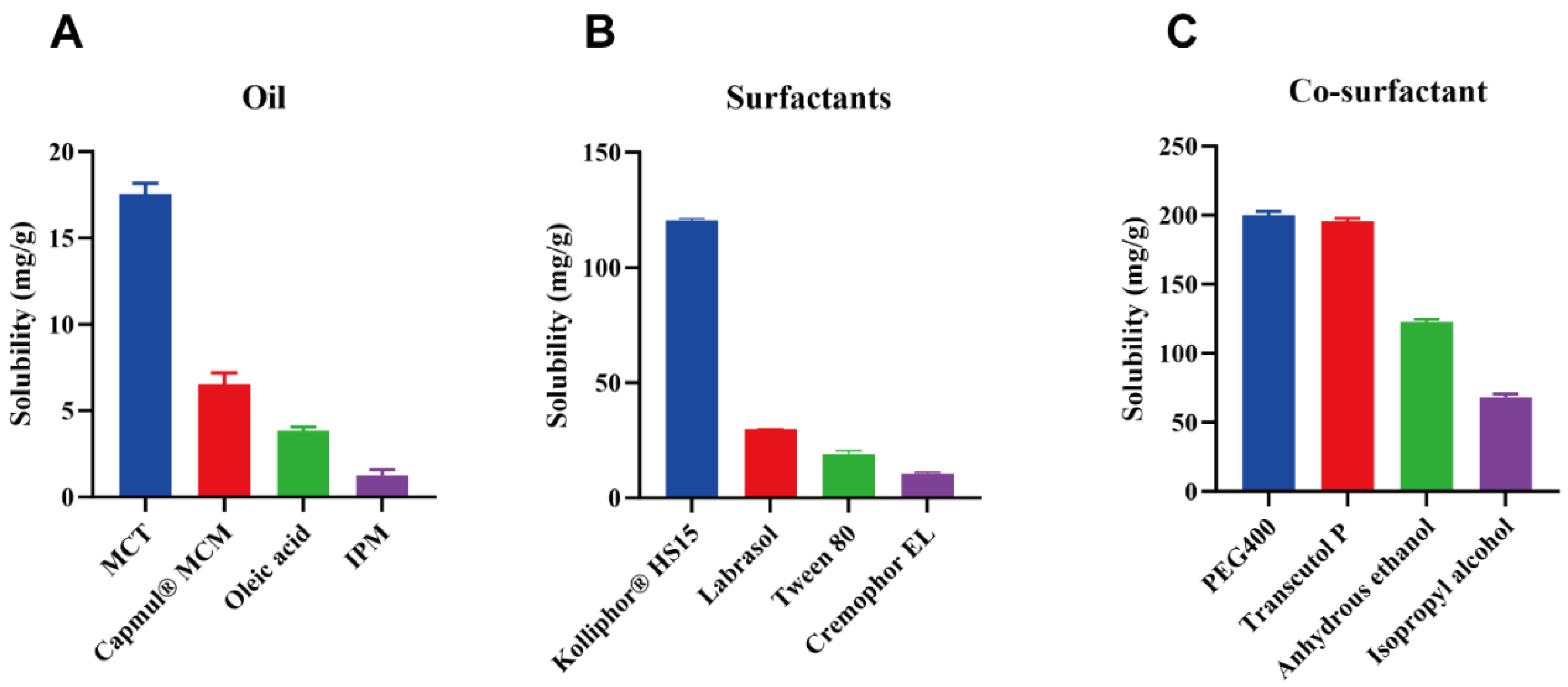
2.3.1. Solubility Study for Selection of Excipients for SMEDDS
2.3.2. Compatibility Test
2.3.3. Evaluation of Emulsification and Phase Separation
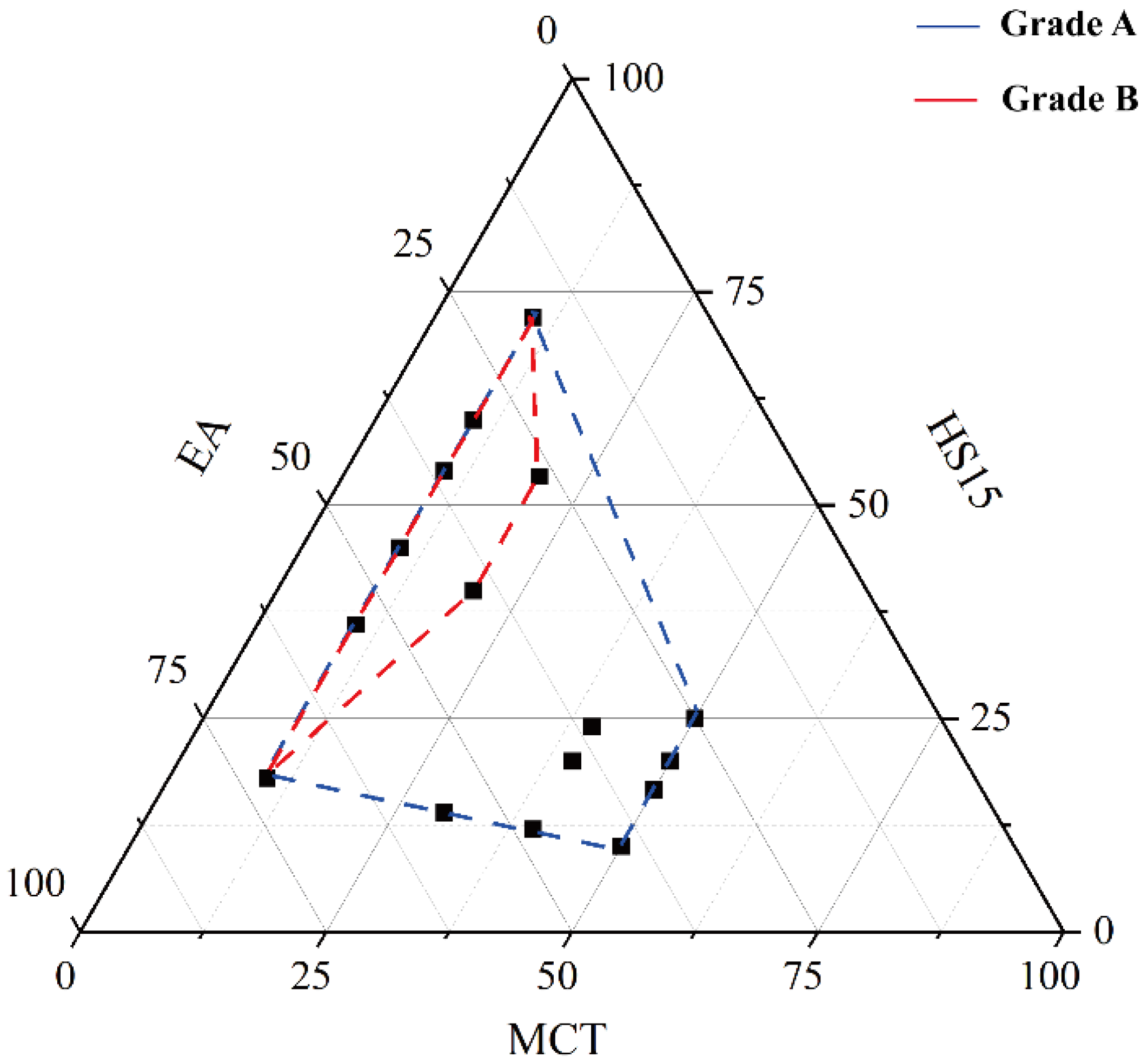
2.3.4. Pseudo-Ternary Phase Diagram
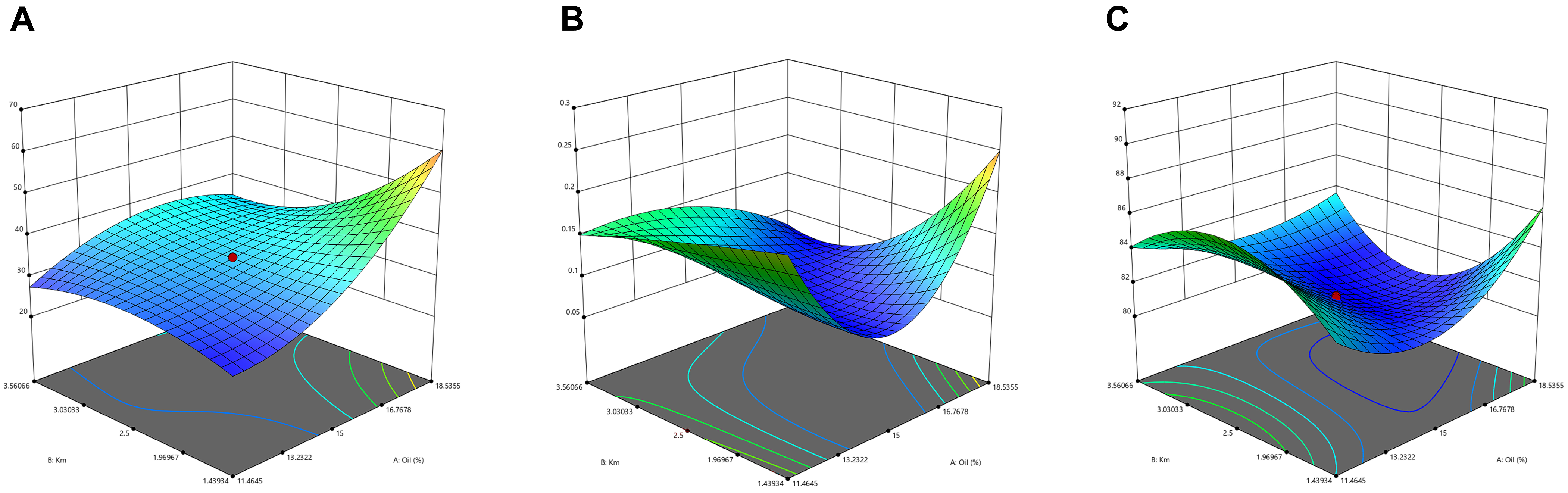
2.3.5. Experimental Optimization of the H007-PC-SME Formulation
2.3.6. Preparation of H007-SME and H007-PC-SME
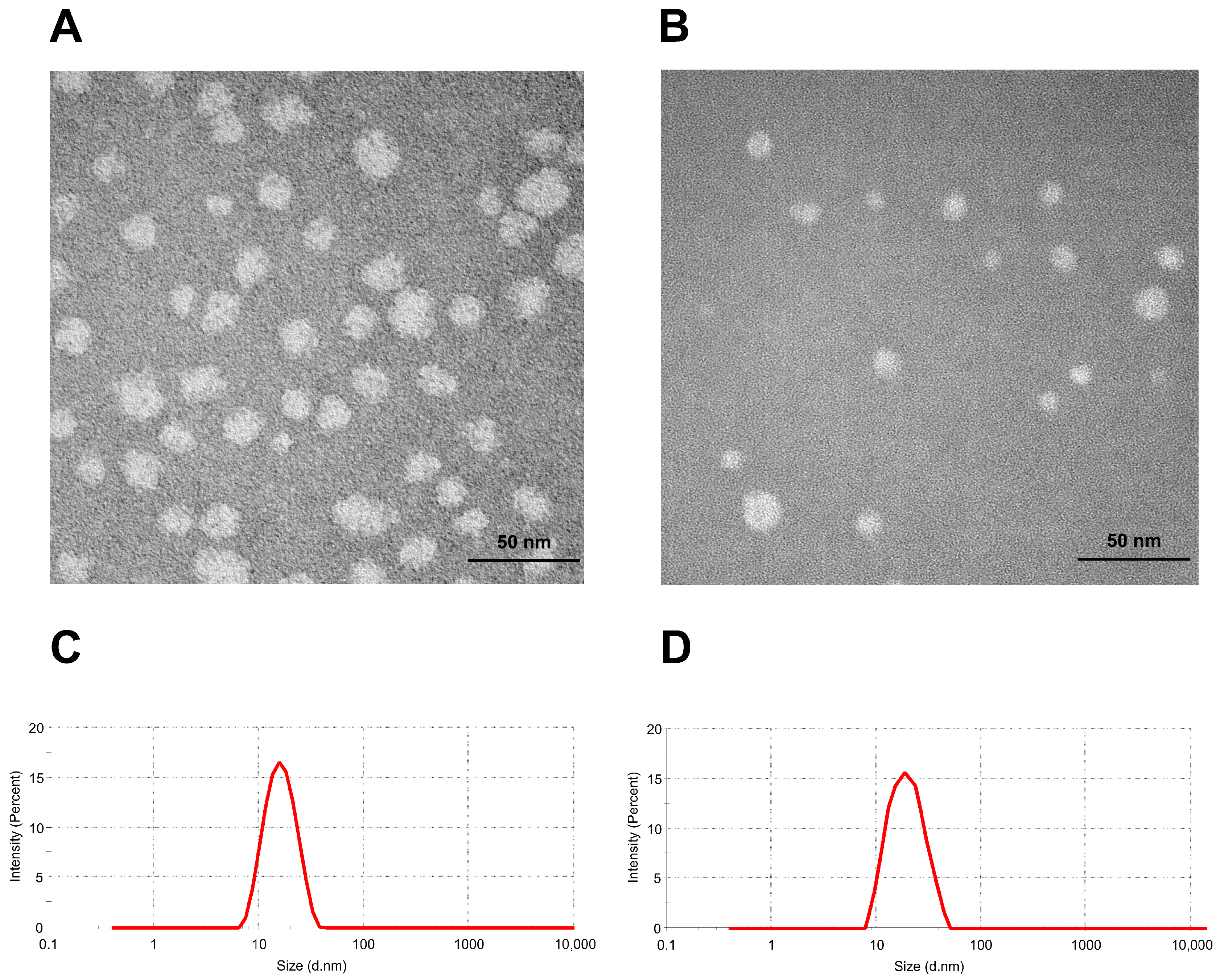
2.4. Determination of Droplet Size, PDI and Zeta Potential
2.5. Morphological Analysis by Transmission Electron Microscopy
2.6. Effect of pH and Dilution Stability
2.7. Stability Test
2.8. HPLC Analysis
2.9. In Vitro Drug Release
2.10. Cell Studies
Cellular Uptake Study
2.11. In Vivo Pharmacokinetic Studies
2.12. Chylomicron Flow Blockade Hamster Model
2.13. In Vivo Analysis
2.13.1. Sample Handling
2.13.2. LC-MS/MS Analysis
2.14. Statistical Analysis
3. Results
3.1. Preparation and Optimization of H007-PC
3.1.1. Infrared Spectral Characterization
3.1.2. Differential Scanning Calorimetry Characterization
3.1.3. X-Ray Powder Diffraction Characterization
3.2. Screening of Excipients for SMEDDS
3.3. Pseudo-Ternary Phase Diagram
3.4. Optimization of H007-PC-SME
3.5. Self-Emulsification Performance and TEM Analysis
3.6. Droplet Size and Zeta Potential
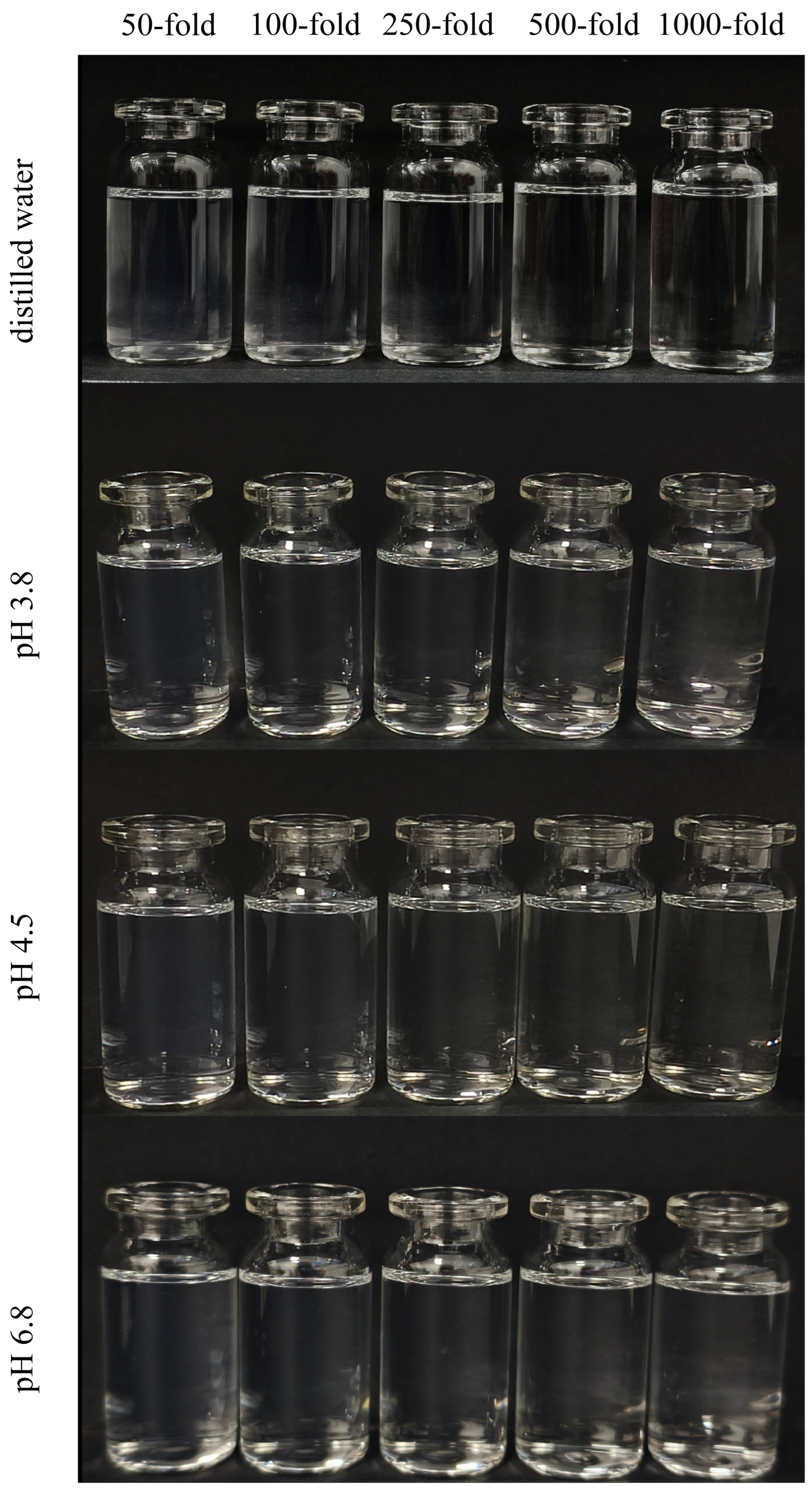
3.7. Effect of pH and Dilution Stability
3.8. Stability Test
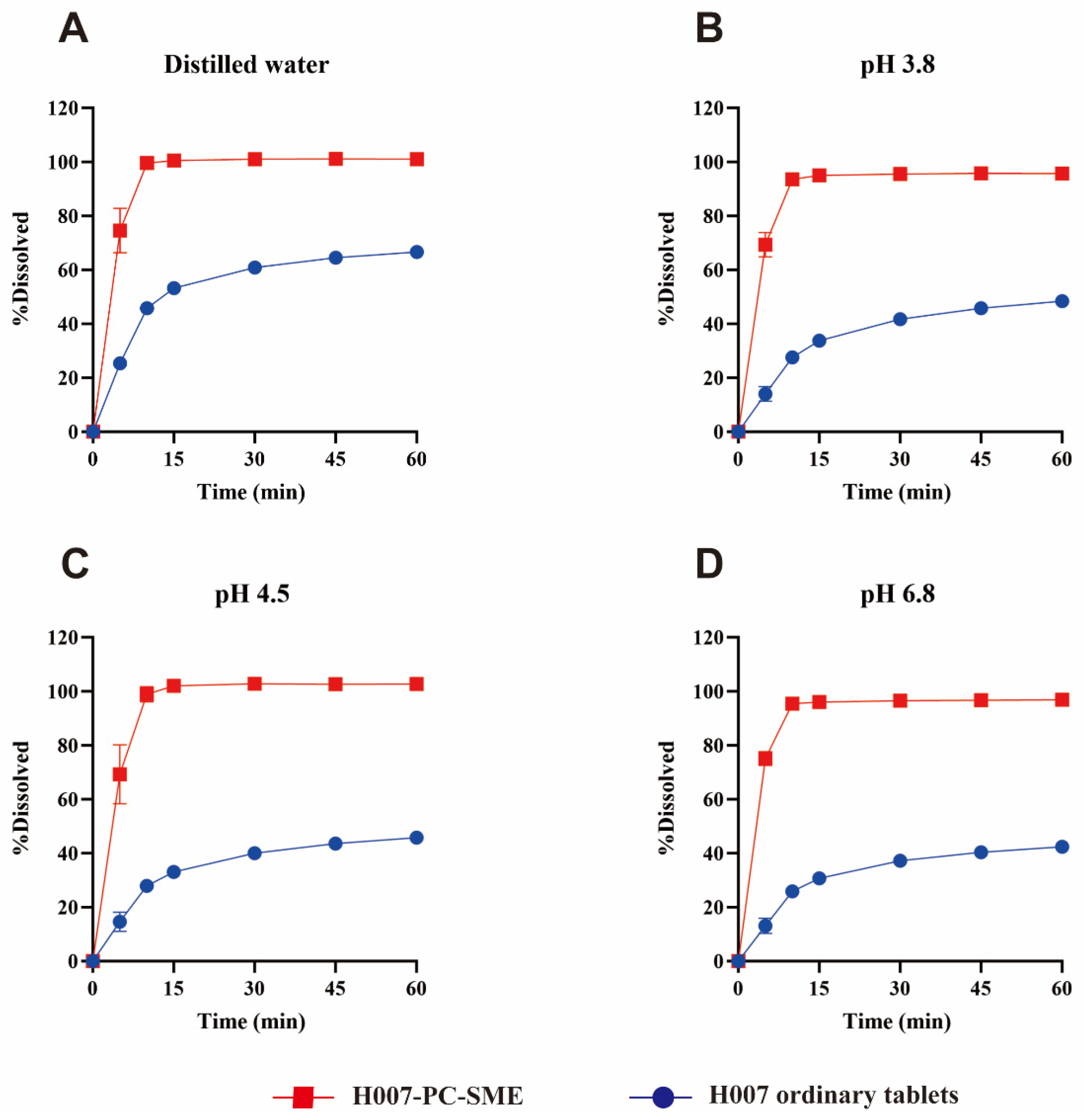
3.9. In Vitro Drug Release
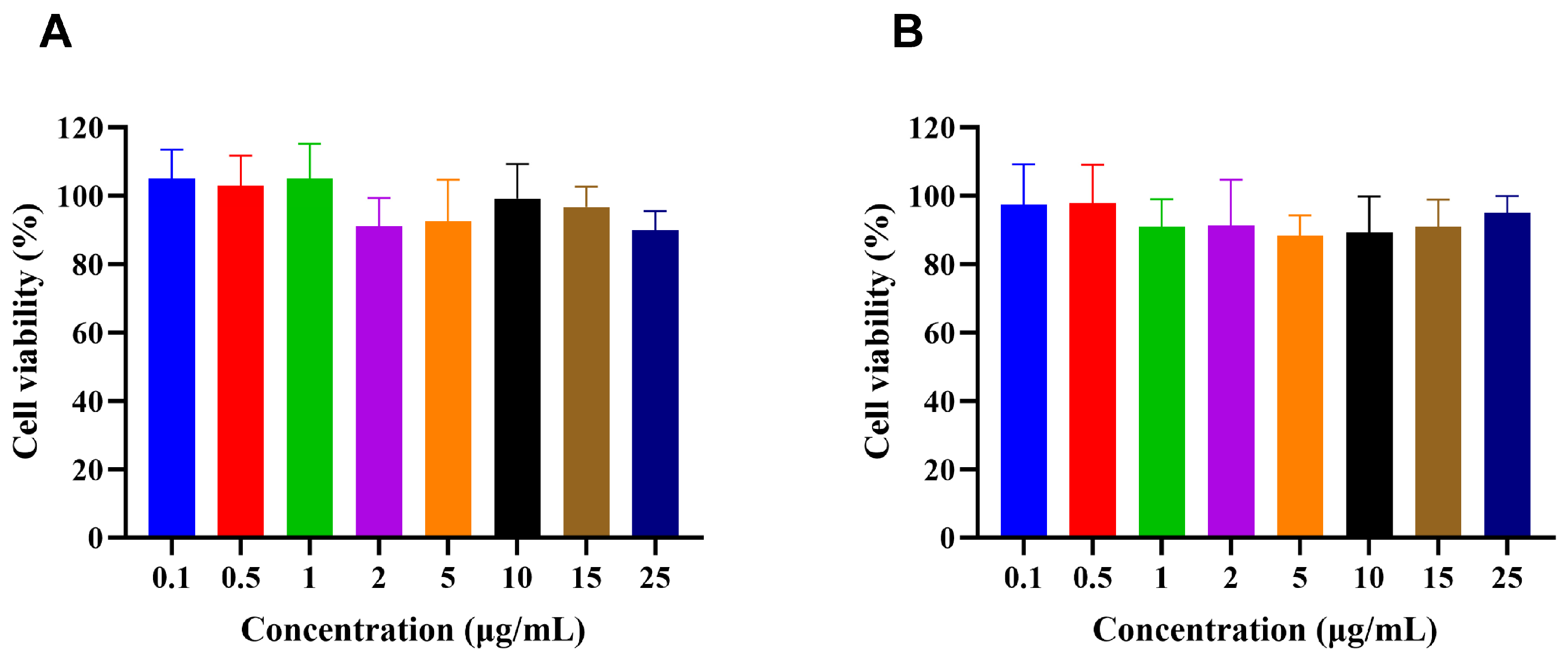
3.10. Cell Studies
3.10.1. Cytotoxicity Study
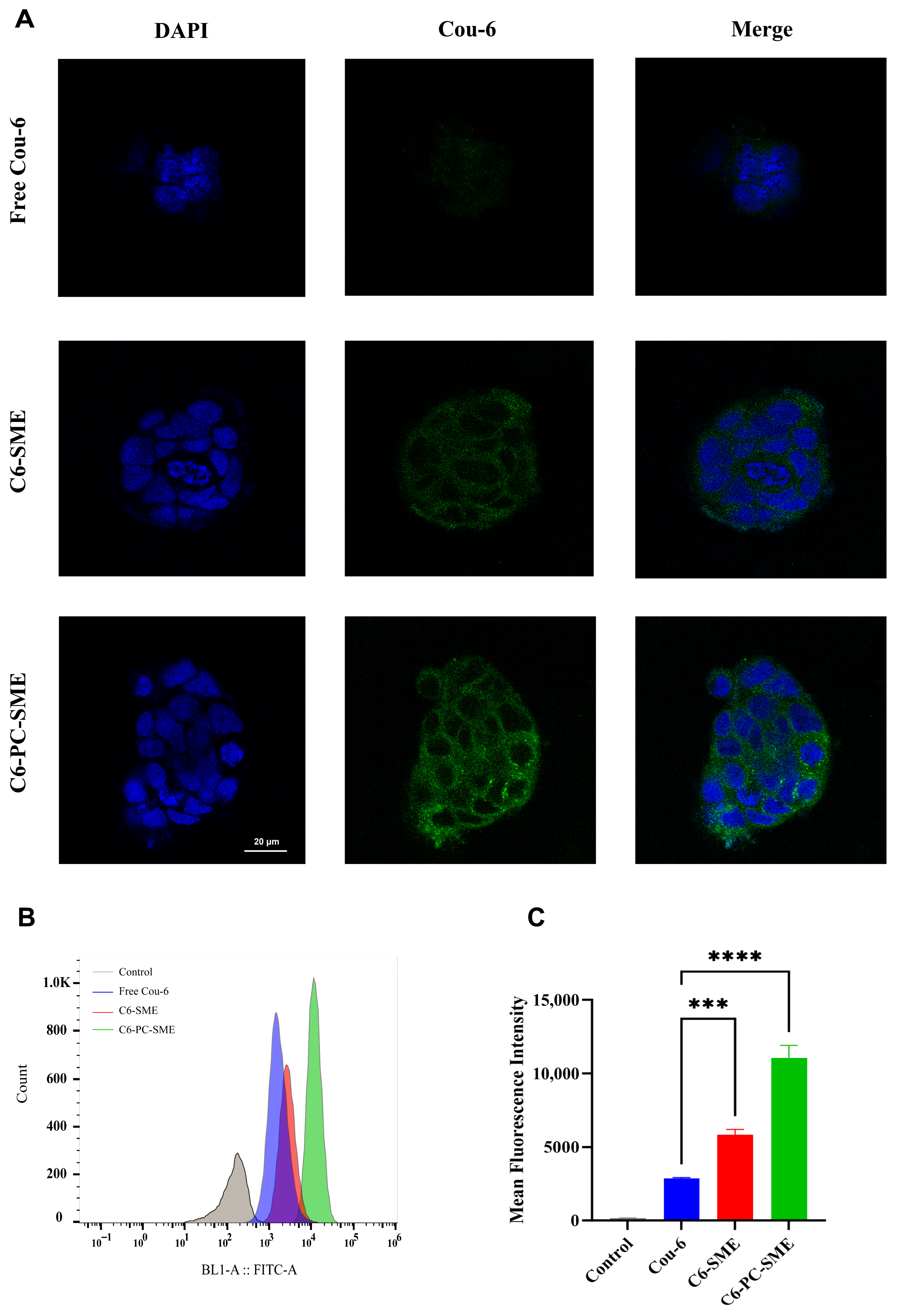
3.10.2. Cellular Uptake Study
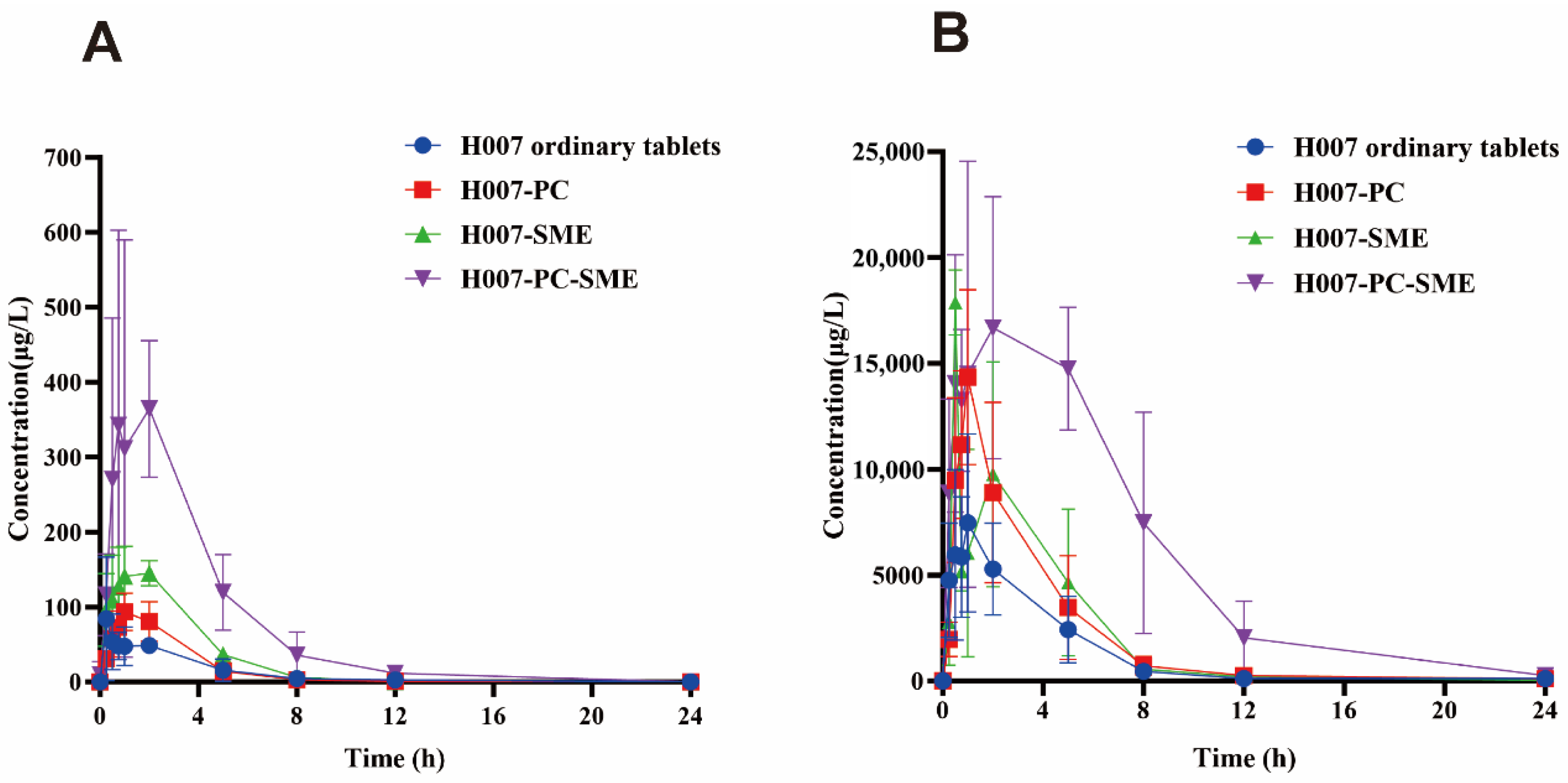
3.11. Pharmacokinetic Study
3.12. Lymphatic Transport
4. Conclusions
Author Contributions
Funding
Institutional Review Board Statement
Informed Consent Statement
Data Availability Statement
Conflicts of Interest
References
- Simons, L.A. Additive Effect of Plant Sterol-Ester Margarine and Cerivastatin in Lowering Low-Density Lipoprotein Cholesterol in Primary Hypercholesterolemia. Am. J. Cardiol. 2002, 90, 737–740. [Google Scholar] [CrossRef]
- Modesti, P.A.; Perruolo, E.; Parati, G. Need for Better Blood Pressure Measurement in Developing Countries to Improve Prevention of Cardiovascular Disease. J. Epidemiol. 2015, 25, 91–98. [Google Scholar] [CrossRef]
- Gu, D.; Gupta, A.; Muntner, P.; Hu, S.; Duan, X.; Chen, J.; Reynolds, R.F.; Whelton, P.K.; He, J. Prevalence of Cardiovascular Disease Risk Factor Clustering Among the Adult Population of China: Results From the International Collaborative Study of Cardiovascular Disease in Asia (InterAsia). Circulation 2005, 112, 658–665. [Google Scholar] [CrossRef]
- Du, H.; Li, L.; Bennett, D.; Guo, Y.; Key, T.J.; Bian, Z.; Sherliker, P.; Gao, H.; Chen, Y.; Yang, L.; et al. Fresh Fruit Consumption and Major Cardiovascular Disease in China. N. Engl. J. Med. 2016, 374, 1332–1343. [Google Scholar] [CrossRef] [PubMed]
- Pirillo, A.; Casula, M.; Olmastroni, E.; Norata, G.D.; Catapano, A.L. Global Epidemiology of Dyslipidaemias. Nat. Rev. Cardiol. 2021, 18, 689–700. [Google Scholar] [CrossRef] [PubMed]
- Cannon, C.P.; De Lemos, J.A.; Rosenson, R.S.; Ballantyne, C.M.; Liu, Y.; Gao, Q.; Palagashvilli, T.; Alam, S.; Mues, K.E.; Bhatt, D.L.; et al. Use of Lipid-Lowering Therapies Over 2 Years in GOULD, a Registry of Patients With Atherosclerotic Cardiovascular Disease in the US. JAMA Cardiol. 2021, 6, 1060–1068. [Google Scholar] [CrossRef]
- Ray, K.K.; Haq, I.; Bilitou, A.; Manu, M.C.; Burden, A.; Aguiar, C.; Arca, M.; Connolly, D.L.; Eriksson, M.; Ferrières, J.; et al. Treatment gaps in the implementation of LDL cholesterol control among high- and very high-risk patients in Europe between 2020 and 2021: The multinational observational SANTORINI study. Lancet Reg. Health Eur. 2023, 29, 100624. [Google Scholar] [CrossRef] [PubMed]
- Underberg, J.; Toth, P.P.; Rodriguez, F. LDL-C Target Attainment in Secondary Prevention of ASCVD in the United States: Barriers, Consequences of Nonachievement, and Strategies to Reach Goals. Postgrad. Med. 2022, 134, 752–762. [Google Scholar] [CrossRef]
- Lian, Z.; Li, Y.; Gao, J.; Qu, K.; Li, J.; Hao, L.; Wu, S.; Zhu, H. A Novel AMPK Activator, WS070117, Improves Lipid Metabolism Discords in Hamsters and HepG2 Cells. Lipids Health Dis. 2011, 10, 67. [Google Scholar] [CrossRef]
- Chen, B.; Li, J.; Zhu, H. AMP-Activated Protein Kinase Attenuates oxLDL Uptake in Macrophages through PP2A/NF-κB/LOX-1 Pathway. Vasc. Pharmacol. 2016, 85, 1–10. [Google Scholar] [CrossRef]
- Bahar, F.G.; Ohura, K.; Ogihara, T.; Imai, T. Species Difference of Esterase Expression and Hydrolase Activity in Plasma. J. Pharm. Sci. 2012, 101, 3979–3988. [Google Scholar] [CrossRef]
- Ruderman, N.; Prentki, M. AMP Kinase and Malonyl-CoA: Targets for Therapy of the Metabolic Syndrome. Nat. Rev. Drug Discov. 2004, 3, 340–351. [Google Scholar] [CrossRef] [PubMed]
- Grefhorst, A.; Elzinga, B.M.; Voshol, P.J.; Plo¨sch, T.; Kok, T.; Bloks, V.W.; Van Der Sluijs, F.H.; Havekes, L.M.; Romijn, J.A.; Verkade, H.J.; et al. Stimulation of Lipogenesis by Pharmacological Activation of the Liver X Receptor Leads to Production of Large, Triglyceride-Rich Very Low Density Lipoprotein Particles. J. Biol. Chem. 2002, 277, 34182–34190. [Google Scholar] [CrossRef]
- Wang, Z.; Wang, X.; Qu, K.; Zhu, P.; Guo, N.; Zhang, R.; Abliz, Z.; Yu, H.; Zhu, H. Binding of Cordycepin Monophosphate to AMP-Activated Protein Kinase and Its Effect on AMP-Activated Protein Kinase Activation. Chem. Biol. Drug Des. 2010, 76, 340–344. [Google Scholar] [CrossRef]
- Huang, L.; Fan, B.; Ma, A.; Shaul, P.W.; Zhu, H. Inhibition of ABCA1 Protein Degradation Promotes HDL Cholesterol Efflux Capacity and RCT and Reduces Atherosclerosis in Mice. J. Lipid Res. 2015, 56, 986–997. [Google Scholar] [CrossRef]
- Ma, A.; Wang, D.; An, Y.; Fang, W.; Zhu, H. Comparative Transcriptomic Analysis of Mice Liver Treated with Different AMPK Activators in a Mice Model of Atherosclerosis. Oncotarget 2017, 8, 16594–16604. [Google Scholar] [CrossRef] [PubMed]
- Sun, Y.; Lian, Z.; Jiang, C.; Wang, Y.; Zhu, H. Beneficial Metabolic Effects of 2′,3′,5′-Tri-Acetyl-N6- (3-Hydroxylaniline) Adenosine in the Liver and Plasma of Hyperlipidemic Hamsters. PLoS ONE 2012, 7, e32115. [Google Scholar] [CrossRef] [PubMed]
- Jia, Y.; Wang, B.; Wu, X.; Li, S.; Hu, J.; Wang, D.; Zhu, H.; Li, Y. Simultaneous Quantification of 2′,3′,5′-Tri-O-Acetyl-N6-(3-Hydroxylaniline)Adenosine and Its Principal Metabolites in Hamster Blood by LC–MS/MS and Its Application in Pharmacokinetics Study. J. Chromatogr. B 2016, 1022, 46–53. [Google Scholar] [CrossRef]
- Na, Y.-G.; Byeon, J.-J.; Wang, M.; Huh, H.W.; Kim, M.-K.; Bang, K.-H.; Han, M.-G.; Lee, H.-K.; Cho, C.-W. Statistical Approach for Solidifying Ticagrelor Loaded Self-Microemulsifying Drug Delivery System with Enhanced Dissolution and Oral Bioavailability. Mater. Sci. Eng. C 2019, 104, 109980. [Google Scholar] [CrossRef] [PubMed]
- Na, Y.-G.; Byeon, J.-J.; Kim, M.-K.; Han, M.-G.; Cho, C.-W.; Baek, J.-S.; Lee, H.-K.; Shin, Y.G. Pharmacokinetic/Pharmacodynamic Modeling To Predict the Antiplatelet Effect of the Ticagrelor-Loaded Self-Microemulsifying Drug Delivery System in Rats. Mol. Pharm. 2020, 17, 1079–1089. [Google Scholar] [CrossRef]
- Lam, H.T.; Le-Vinh, B.; Phan, T.N.Q.; Bernkop-Schnürch, A. Self-Emulsifying Drug Delivery Systems and Cationic Surfactants: Do They Potentiate Each Other in Cytotoxicity? J. Pharm. Pharmacol. 2019, 71, 156–166. [Google Scholar] [CrossRef]
- Zhou, H.; Wan, J.; Wu, L.; Yi, T.; Liu, W.; Xu, H.; Yang, X. A New Strategy for Enhancing the Oral Bioavailability of Drugs with Poor Water-Solubility and Low Liposolubility Based on Phospholipid Complex and Supersaturated SEDDS. PLoS ONE 2013, 8, e84530. [Google Scholar] [CrossRef] [PubMed]
- Wu, H.; Long, X.; Yuan, F.; Chen, L.; Pan, S.; Liu, Y.; Stowell, Y.; Li, X. Combined Use of Phospholipid Complexes and Self-Emulsifying Microemulsions for Improving the Oral Absorption of a BCS Class IV Compound, Baicalin. Acta Pharm. Sin. B 2014, 4, 217–226. [Google Scholar] [CrossRef]
- Kuche, K.; Bhargavi, N.; Dora, C.P.; Jain, S. Drug-Phospholipid Complex—A Go Through Strategy for Enhanced Oral Bioavailability. AAPS PharmSciTech 2019, 20, 43. [Google Scholar] [CrossRef]
- Huang, J.; Chen, P.X.; Rogers, M.A.; Wettig, S.D. Investigating the Phospholipid Effect on the Bioaccessibility of Rosmarinic Acid-Phospholipid Complex through a Dynamic Gastrointestinal in Vitro Model. Pharmaceutics 2019, 11, 156. [Google Scholar] [CrossRef]
- Huang, J.; Gong, W.; Chen, Z.; Huang, J.; Chen, Q.; Huang, H.; Zhao, C. Emodin Self-Emulsifying Platform Ameliorates the Expression of FN, ICAM-1 and TGF-Β1 in AGEs-Induced Glomerular Mesangial Cells by Promoting Absorption. Eur. J. Pharm. Sci. 2017, 99, 128–136. [Google Scholar] [CrossRef] [PubMed]
- Kawakami, K.; Yoshikawa, T.; Moroto, Y.; Kanaoka, E.; Takahashi, K.; Nishihara, Y.; Masuda, K. Microemulsion Formulation for Enhanced Absorption of Poorly Soluble Drugs. J. Control. Release 2002, 81, 65–74. [Google Scholar] [CrossRef] [PubMed]
- Khoo, S.-M.; Humberstone, A.J.; Porter, C.J.H.; Edwards, G.A.; Charman, W.N. Formulation Design and Bioavailability Assessment of Lipidic Self-Emulsifying Formulations of Halofantrine. Int. J. Pharm. 1998, 167, 155–164. [Google Scholar] [CrossRef]
- Dixit, A.R.; Rajput, S.J.; Patel, S.G. Preparation and Bioavailability Assessment of SMEDDS Containing Valsartan. AAPS PharmSciTech 2010, 11, 314–321. [Google Scholar] [CrossRef] [PubMed]
- Emad, N.A.; Sultana, Y.; Aqil, M.; Saleh, A.; Al Kamaly, O.; Nasr, F.A. Omega-3 Fatty Acid-Based Self-Microemulsifying Drug Delivery System (SMEDDS) of Pioglitazone: Optimization, in Vitro and in Vivo Studies. Saudi J. Biol. Sci. 2023, 30, 103778. [Google Scholar] [CrossRef]
- Kadu, P.J.; Kushare, S.S.; Thacker, D.D.; Gattani, S.G. Enhancement of Oral Bioavailability of Atorvastatin Calcium by Self-Emulsifying Drug Delivery Systems (SEDDS). Pharm. Dev. Technol. 2011, 16, 65–74. [Google Scholar] [CrossRef]
- Singh, B.; Khurana, L.; Bandyopadhyay, S.; Kapil, R.; Katare, O.O.P. Development of Optimized Self-Nano-Emulsifying Drug Delivery Systems (SNEDDS) of Carvedilol with Enhanced Bioavailability Potential. Drug Deliv. 2011, 18, 599–612. [Google Scholar] [CrossRef] [PubMed]
- Shen, H.; Zhong, M. Preparation and Evaluation of Self-Microemulsifying Drug Delivery Systems (SMEDDS) Containing Atorvastatin. J. Pharm. Pharmacol. 2006, 58, 1183–1191. [Google Scholar] [CrossRef]
- Zhang, K.; Gu, L.; Chen, J.; Zhang, Y.; Jiang, Y.; Zhao, L.; Bi, K.; Chen, X. Preparation and Evaluation of Kaempferol–Phospholipid Complex for Pharmacokinetics and Bioavailability in SD Rats. J. Pharm. Biomed. Anal. 2015, 114, 168–175. [Google Scholar] [CrossRef] [PubMed]
- Gurram, A.; Deshpande, P.; Kar, S.; Nayak, U.; Udupa, N.; Reddy, M. Role of Components in the Formation of Self-Microemulsifying Drug Delivery Systems. Indian J. Pharm. Sci. 2015, 77, 249. [Google Scholar] [CrossRef] [PubMed]
- Mishra, B.; Sahoo, J.; Dixit, P.K. Formulation and Process Optimization of Naproxen Nanosuspensions Stabilized by Hydroxy Propyl Methyl Cellulose. Carbohydr. Polym. 2015, 127, 300–308. [Google Scholar] [CrossRef]
- Son, G.-H.; Lee, H.-J.; Na, Y.-G.; Lee, H.-K.; Kim, S.-J.; Huh, H.-W.; Kim, K.-T.; Kang, J.-S.; Kim, Y.-H.; Myung, C.-S.; et al. Formulation and Statistical Analysis of an Herbal Medicine Tablet Containing Morus Alba Leaf Extracts. J. Pharm. Investig. 2019, 49, 625–634. [Google Scholar] [CrossRef]
- Avachat, A.M.; Patel, V.G. Self Nanoemulsifying Drug Delivery System of Stabilized Ellagic Acid–Phospholipid Complex with Improved Dissolution and Permeability. Saudi Pharm. J. 2015, 23, 276–289. [Google Scholar] [CrossRef]
- Choe, J.; Choe, E. Effect of addition of egg yolk lecithin on the lipid oxidation of a water/canola oil emulsion. Korean J. Food Sci. Technol. 2015, 47, 561–566. [Google Scholar] [CrossRef]
- Son, G.-H.; Na, Y.-G.; Huh, H.W.; Wang, M.; Kim, M.-K.; Han, M.-G.; Byeon, J.-J.; Lee, H.-K.; Cho, C.-W. Systemic Design and Evaluation of Ticagrelor-Loaded Nanostructured Lipid Carriers for Enhancing Bioavailability and Antiplatelet Activity. Pharmaceutics 2019, 11, 222. [Google Scholar] [CrossRef]
- Bang, K.-H.; Na, Y.-G.; Huh, H.W.; Hwang, S.-J.; Kim, M.-S.; Kim, M.; Lee, H.-K.; Cho, C.-W. The Delivery Strategy of Paclitaxel Nanostructured Lipid Carrier Coated with Platelet Membrane. Cancers 2019, 11, 807. [Google Scholar] [CrossRef] [PubMed]
- Fan, Z.; Wu, J.; Fang, X.; Sha, X. A New Function of Vitamin E-TPGS in the Intestinal Lymphatic Transport of Lipophilic Drugs: Enhancing the Secretion of Chylomicrons. Int. J. Pharm. 2013, 445, 141–147. [Google Scholar] [CrossRef] [PubMed]
- Lind, M.L.; Jacobsen, J.; Holm, R.; Müllertz, A. Intestinal Lymphatic Transport of Halofantrine in Rats Assessed Using a Chylomicron Flow Blocking Approach: The Influence of Polysorbate 60 and 80. Eur. J. Pharm. Sci. 2008, 35, 211–218. [Google Scholar] [CrossRef] [PubMed]
- Dahan, A.; Hoffman, A. Evaluation of a Chylomicron Flow Blocking Approach to Investigate the Intestinal Lymphatic Transport of Lipophilic Drugs. Eur. J. Pharm. Sci. 2005, 24, 381–388. [Google Scholar] [CrossRef] [PubMed]








| Grade | Emulsification Time | Appearance |
|---|---|---|
| I | <1 min | Clear or slightly blue |
| II | <1 min | Bright white emulsion |
| III | 1–2 min | Milky emulsion |
| IV | >2 min | Grayish white emulsion with a slightly oil |
| V | Difficult to emulsify | Large oil droplets presenting |
| Factors | Level | ||||
|---|---|---|---|---|---|
| −1.414 | −1 | 0 | 1 | 1.414 | |
| X1 | 10 | 11.46 | 15 | 18.54 | 20 |
| X2 | 1 | 1.44 | 2.5 | 3.56 | 4 |
| Time (min) | Mobile Phase A | Mobile Phase B |
|---|---|---|
| 0.00 | 95 | 5 |
| 0.50 | 95 | 5 |
| 0.60 | 65 | 5 |
| 2.00 | 65 | 5 |
| 2.01 | 95 | 5 |
| 4.00 | 95 | 5 |
| Run | Factors | Responses | |||
|---|---|---|---|---|---|
| X1 | X2 | Y1 | Y2 | Y3 | |
| Oil (%) | Km | Particle Size (nm) | PDI | Solubility (mg·g−1) | |
| 1 | 11.46 | 3.56 | 29.72 | 0.17 | 83.48 |
| 2 | 15 | 4 | 37.01 | 0.171 | 84.48 |
| 3 | 15 | 1 | 33.96 | 0.081 | 82.76 |
| 4 | 10 | 2.5 | 28.03 | 0.243 | 90.88 |
| 5 | 15 | 2.5 | 34.44 | 0.08 | 81.25 |
| 6 | 18.54 | 3.56 | 37.12 | 0.101 | 82.98 |
| 7 | 15 | 2.5 | 34.22 | 0.078 | 81.21 |
| 8 | 15 | 2.5 | 34.27 | 0.078 | 80.92 |
| 9 | 15 | 2.5 | 34.73 | 0.092 | 80.97 |
| 10 | 18.54 | 1.44 | 62.97 | 0.27 | 85.82 |
| 11 | 11.46 | 1.44 | 28.7 | 0.233 | 82.64 |
| 12 | 15 | 2.5 | 34.85 | 0.086 | 81.09 |
| 13 | 20 | 2.5 | 40.41 | 0.126 | 82.05 |
| Responses | Suggested Model | Model p-Value | Lack of Fit p-Value | R2 | Adjusted R2 | Adequate Precision |
|---|---|---|---|---|---|---|
| Y1 | Cubic | 0.0055 | <0.0001 | 0.9501 | 0.8803 | 14.4184 |
| Y2 | Cubic | 0.0059 | 0.0009 | 0.9488 | 0.8771 | 9.2878 |
| Y3 | Cubic | 0.0030 | 0.0002 | 0.9613 | 0.9070 | 13.8073 |
| Optimal Factors | Responses | Predicted Value | Observed Value | Error Percentage (%) |
|---|---|---|---|---|
| X1: 11% | Y1: Particle size (nm) | 20.5 | 20.53 ± 0.45 | 0.15 |
| X2: 2.7 | Y2: PDI | 0.267 | 0.25 ± 0.02 | 6.37 |
| Y3: Solubility (mg·g−1) | 81.09 | 80.23 ± 1.02 | 1.06 |
| Formulation | H007-SME | H007-PC-SME |
|---|---|---|
| Content of H007 (mg/g) | 50 | 50 |
| Efficiency of self-emulsification | I | I |
| Droplet size (nm) | 20.18 ± 2.13 | 20.54 ± 4.23 |
| Polydispersity index | 0.219 ± 0.121 | 0.247 ± 0.102 |
| Zeta potential (mV) | −20.3 ± 1.8 | −20.9 ± 2.2 |
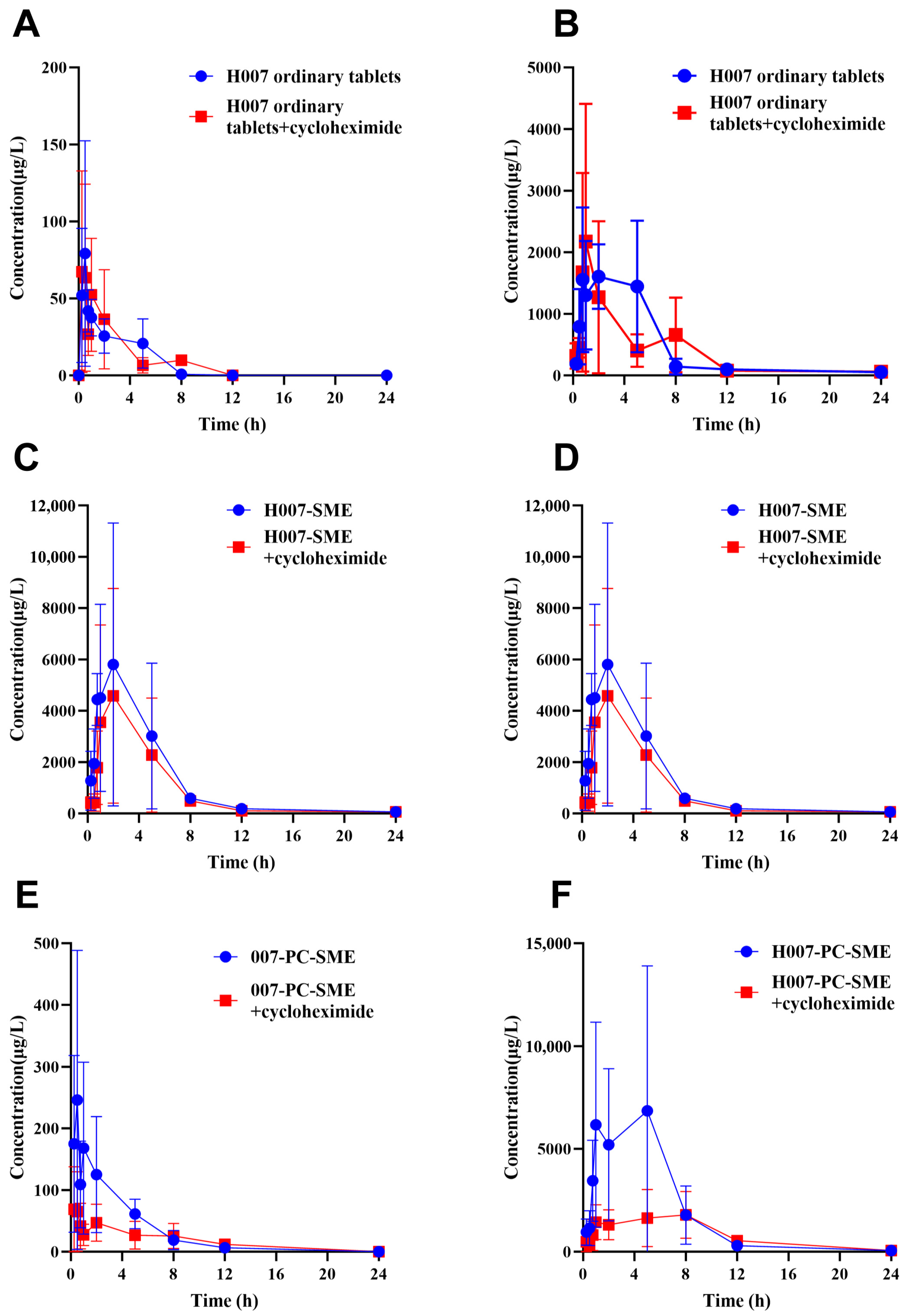
| Pharmacokinetic Parameters | H007 | H007-PC | H007-SME | H007-PC-SME |
|---|---|---|---|---|
| AUC0–t (µg/L × h) | 231.32 ± 38.39 | 316.57 ± 70.46 | 871.28 ± 504.31 * | 1074.77 ± 204.69 **,# |
| MRT0–t (h) | 2.45 ± 0.81 | 2.23 ± 0.57 | 2.57 ± 0.57 | 4.92 ± 1.08 |
| Tmax (h) | 0.75 ± 0.73 | 1.29 ± 0.56 | 1.20 ± 0.76 | 1.50 ± 1.84 |
| Cmax (ug/L) | 97.78 ± 70.89 | 107.70 ± 16.73 | 490.22 ± 306.29 * | 513.91 ± 228.85 **,# |
| Relative bioavailability (%) | 100.00 | 136.85 | 376.65 | 464.62 |
| Pharmacokinetic Parameters | H007 | H007-PC | H007-SME | H007-PC-SME |
|---|---|---|---|---|
| AUC0–t (µg/L × h) | 29,888.67 ± 5070.45 | 48,000.32 ± 16,581.27 | 93,854.77 ± 34,129.66 * | 13,8547.84 ± 22,698.32 **,# |
| MRT0–t (h) | 3.56 ± 0.57 | 3.29 ± 0.61 | 1.87 ± 0.61 | 5.15 ± 1.10 |
| Tmax (h) | 0.67 ± 0.30 | 0.95 ± 0.11 | 0.5 | 2.40 ± 3.19 |
| Cmax (µg/L) | 9807.38 ± 2660.64 | 14,440.95 ± 4013.10 | 17,868.19 ± 1535.63 * | 20,429.59 ± 5349.82 **,# |
| Relative bioavailability (%) | 100 | 160.60 | 314.01 | 463.55 |
| Pharmacokinetic Parameters | H007 | H007-SME | H007-PC-SME |
|---|---|---|---|
| AUC0–t (µg/L × h) | 146.78 ± 40.03 | 552.43 ± 372.10 * | 745.89 ± 338.09 **,# |
| MRT0–t (h) | 2.02 ± 0.894 | 2.539 ± 0.46 | 3.41 ± 1.14 |
| Tmax (h) | 1.50 ± 1.96 | 0.8 ± 0.74 | 1.45 ± 2.00 |
| Cmax (µg/L) | 91.62 ± 61.98 | 187.938 ± 125.68 * | 270.65 ± 219.33 **,# |
| Pharmacokinetic Parameters | H007 | H007-SME | H007-PC-SME |
|---|---|---|---|
| AUC0–t (µg/L × h) | 9245.86 ± 4228.67 | 29,224.44 ± 20,094.33 * | 41,491.45 ± 20,855.96 **,# |
| MRT0-t (h) | 4.47 ± 1.05 | 4.24 ± 0.97 | 4.56 ± 1.54 |
| Tmax (h) | 1.60 ± 1.91 | 1.92 ± 1.62 | 3.67 ± 2.81 |
| Cmax (µg/L) | 2750.28 ± 772.95 | 6831.254 ± 4659.84 * | 10,491.61 ± 6897.22 **,# |
| Pharmacokinetic Parameters | H007 + Inhibition | H007-SME + Inhibition | H007-PC-SME + Inhibition |
|---|---|---|---|
| AUC0–t (µg/L × h) | 180.56 ± 133.33 | 432.76 ± 237.69 * | 347.413 ± 209.40 **,# |
| MRT0–t (h) | 2.42 ± 1.10 | 3.35 ± 1.46 | 4.861 ± 0.69 |
| Tmax (h) | 0.6 ± 0.38 | 2.00 ± 1.64 | 2.55 ± 2.33 |
| Cmax (µg/L) | 76.43 ± 67.46 | 109.75 ± 68.06 * | 74.788 ± 64.64 **,# |
| Pharmacokinetic Parameters | H007 + Inhibition | H007-SME + Inhibition | H007-PC-SME + Inhibition |
|---|---|---|---|
| AUC0-t (µg/L × h) | 9140.53 ± 5624.56 | 21057.702 ± 13631.80 * | 19802.7 ± 7948.52 **,# |
| MRT0–t (h) | 6.07 ± 1.91 | 5.113 ± 2.08 | 7.487 ± 1.03 |
| Tmax (h) | 0.95 ± 0.11 | 3.00 ± 1.87 | 5.00 ± 2.12 |
| Cmax (µg/L) | 2535.54 ± 2183.99 | 5889.426 ± 5090.13 * | 2222.826 ± 1240.83 **,# |
| Formulations | Fraction Transported via Lymphatic System (%) | Fraction Transported Directly to Systemic Circulation (%) |
|---|---|---|
| H007 | - | 123 |
| H007-SME | 22 | 78 |
| H007-PC-SME | 54 | 46 |
| Formulations | Fraction Transported via Lymphatic System (%) | Fraction Transported Directly to Systemic Circulation (%) |
|---|---|---|
| H007 | 1 | 99 |
| H007-SME | 28 | 72 |
| H007-PC-SME | 52 | 48 |
Disclaimer/Publisher’s Note: The statements, opinions and data contained in all publications are solely those of the individual author(s) and contributor(s) and not of MDPI and/or the editor(s). MDPI and/or the editor(s) disclaim responsibility for any injury to people or property resulting from any ideas, methods, instructions or products referred to in the content. |
© 2026 by the authors. Licensee MDPI, Basel, Switzerland. This article is an open access article distributed under the terms and conditions of the Creative Commons Attribution (CC BY) license.
Share and Cite
Liu, C.; Guo, L.; Chen, L.; Gong, X.; Han, Z.; Feng, J.; Zhang, C.; Wu, S.; Yang, Q. Development and Evaluation of a Phospholipid Complex-Loaded SMEDDS for Enhanced Oral Delivery of H007, a Novel Anti-Hyperlipidemic Drug. Pharmaceutics 2026, 18, 474. https://doi.org/10.3390/pharmaceutics18040474
Liu C, Guo L, Chen L, Gong X, Han Z, Feng J, Zhang C, Wu S, Yang Q. Development and Evaluation of a Phospholipid Complex-Loaded SMEDDS for Enhanced Oral Delivery of H007, a Novel Anti-Hyperlipidemic Drug. Pharmaceutics. 2026; 18(4):474. https://doi.org/10.3390/pharmaceutics18040474
Chicago/Turabian StyleLiu, Chunxi, Lundang Guo, Liqing Chen, Xiaoliang Gong, Zunsheng Han, Jing Feng, Chi Zhang, Song Wu, and Qingyun Yang. 2026. "Development and Evaluation of a Phospholipid Complex-Loaded SMEDDS for Enhanced Oral Delivery of H007, a Novel Anti-Hyperlipidemic Drug" Pharmaceutics 18, no. 4: 474. https://doi.org/10.3390/pharmaceutics18040474
APA StyleLiu, C., Guo, L., Chen, L., Gong, X., Han, Z., Feng, J., Zhang, C., Wu, S., & Yang, Q. (2026). Development and Evaluation of a Phospholipid Complex-Loaded SMEDDS for Enhanced Oral Delivery of H007, a Novel Anti-Hyperlipidemic Drug. Pharmaceutics, 18(4), 474. https://doi.org/10.3390/pharmaceutics18040474