pH-Responsive ZIF-8 Precisely Induces Apoptosis of Oral Squamous Cell Carcinoma over Orofacial Mesenchymal Stem Cells

 , , , ,
  and
and
Abstract
1. Introduction
2. Materials and Methods
2.1. Materials
2.2. Cell Culturing
2.3. RNA Sequencing Analysis
2.4. Nuclear Staining
2.5. LIVE/DEAD Staining
2.6. Immunocytochemistry
3. Results
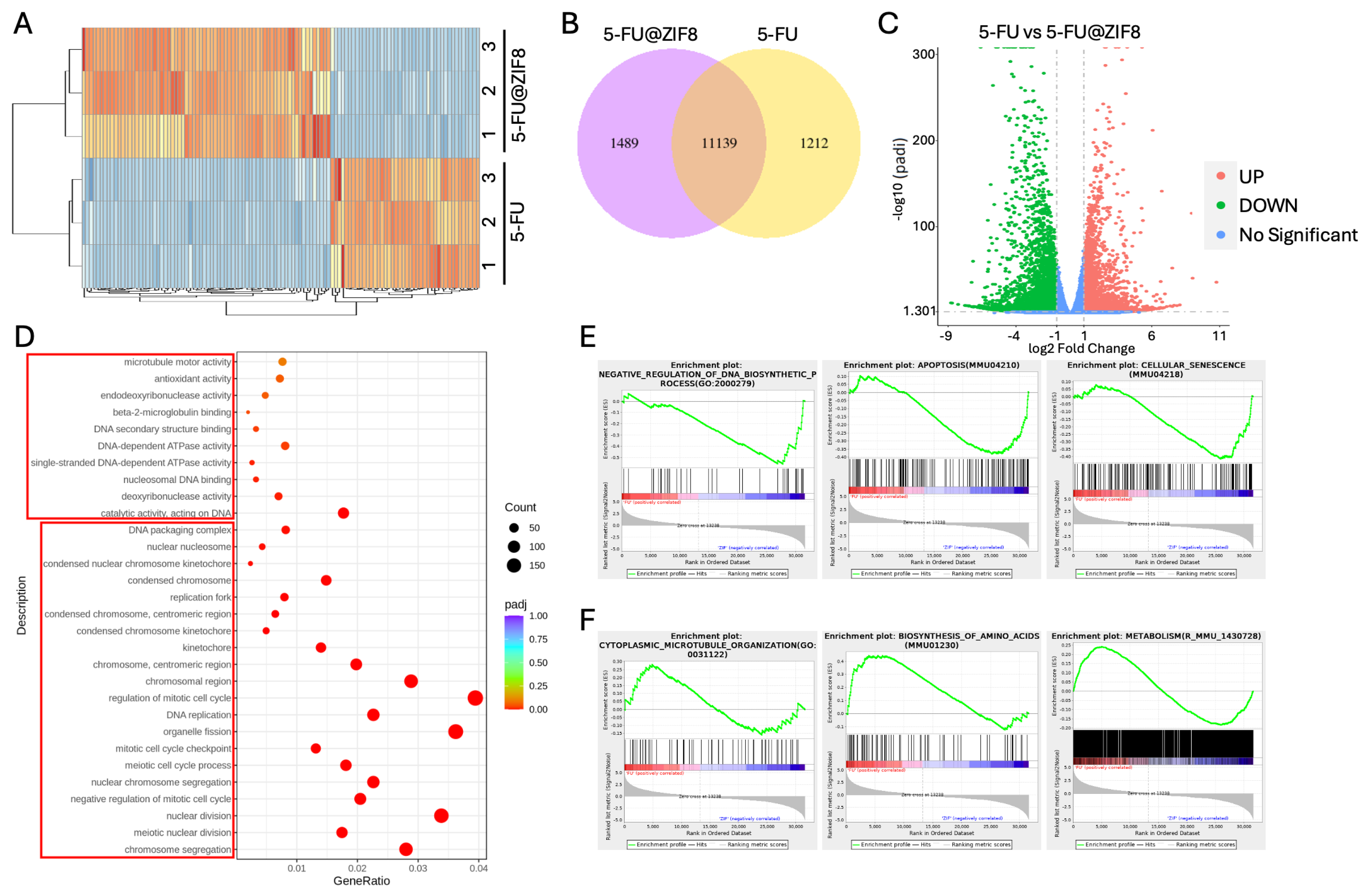
3.1. Transcriptomic Analysis Showed ZIF-8 Selectively Induces SCC7 but Not OMSC Apoptosis
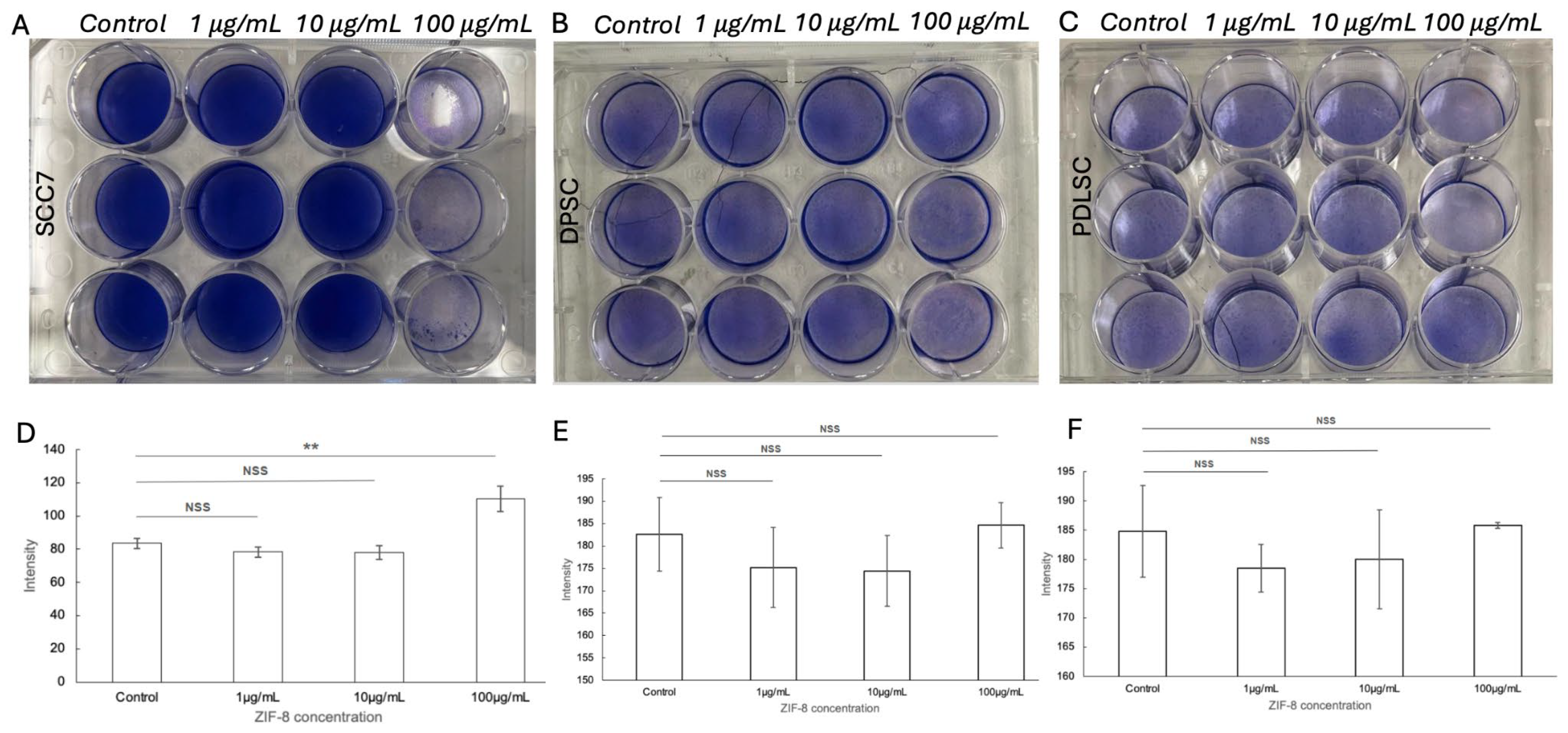
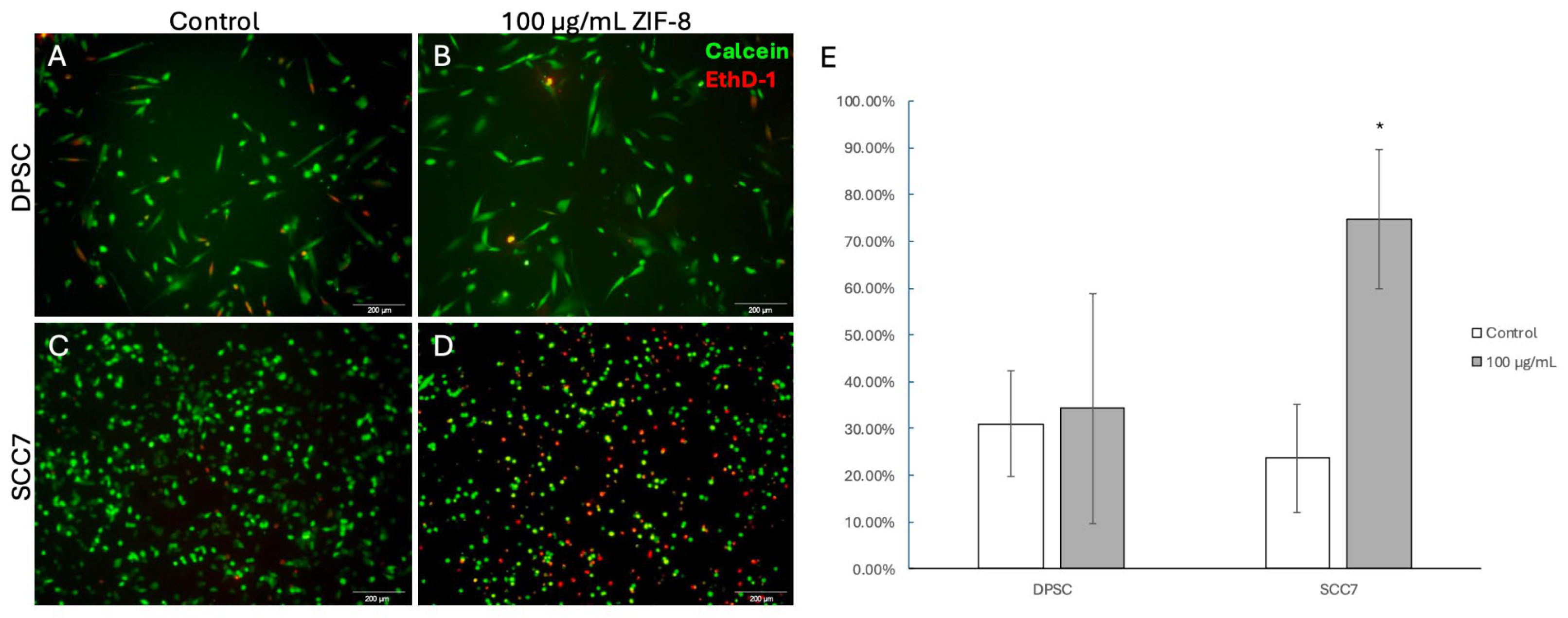
3.2. Cell Viability Assays Confirmed That ZIF-8 Selectively Induces SCC7 Apoptosis
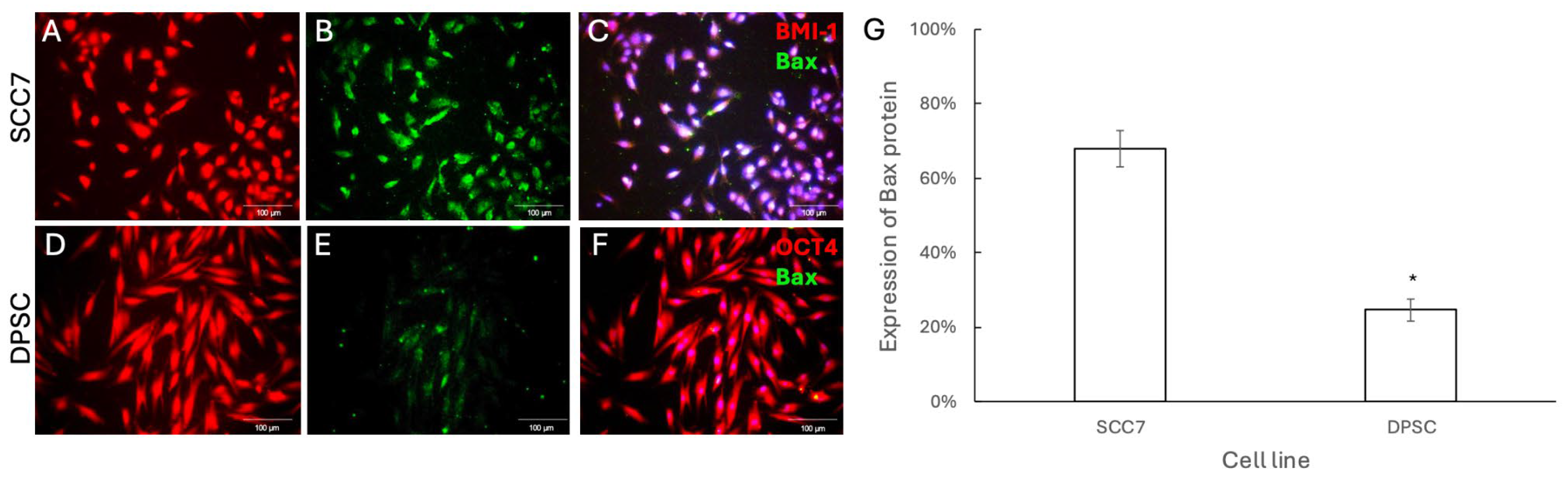
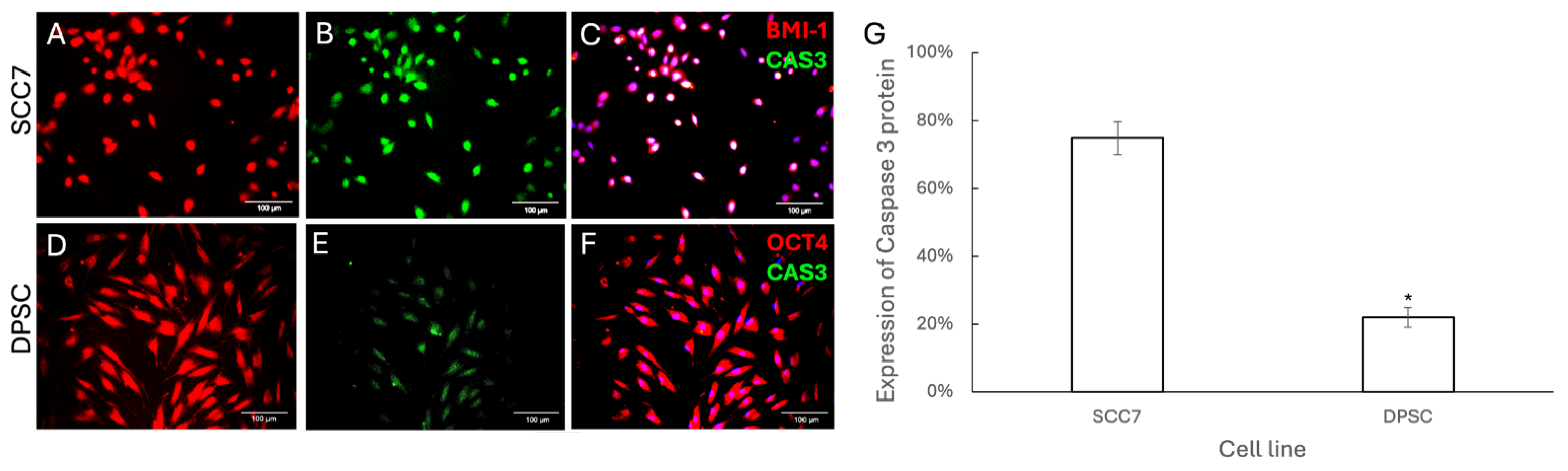
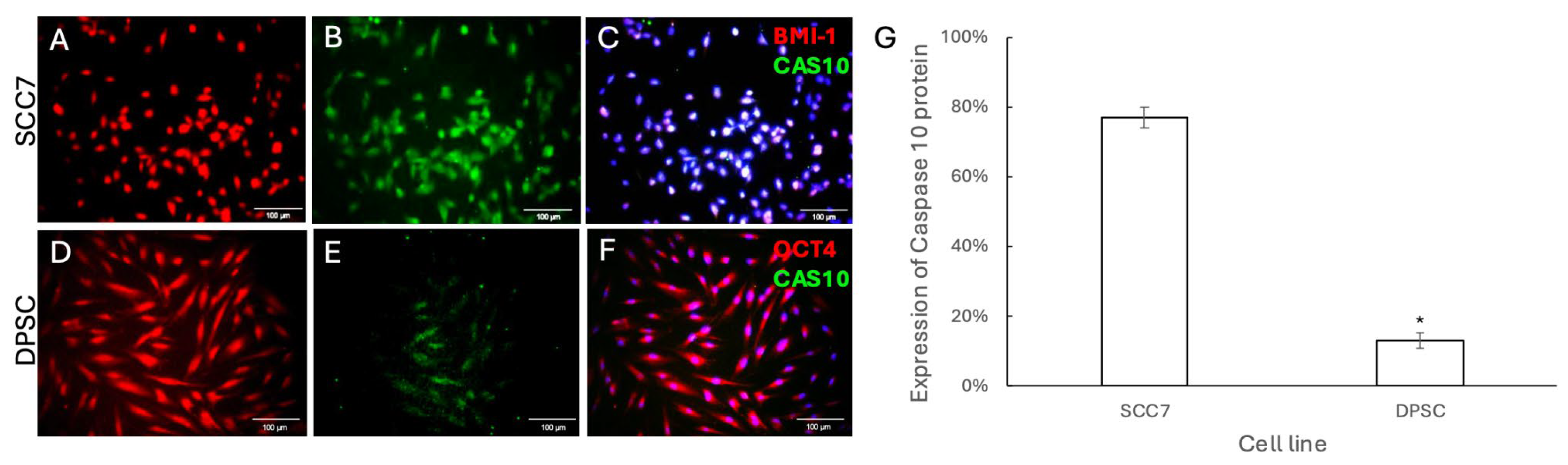
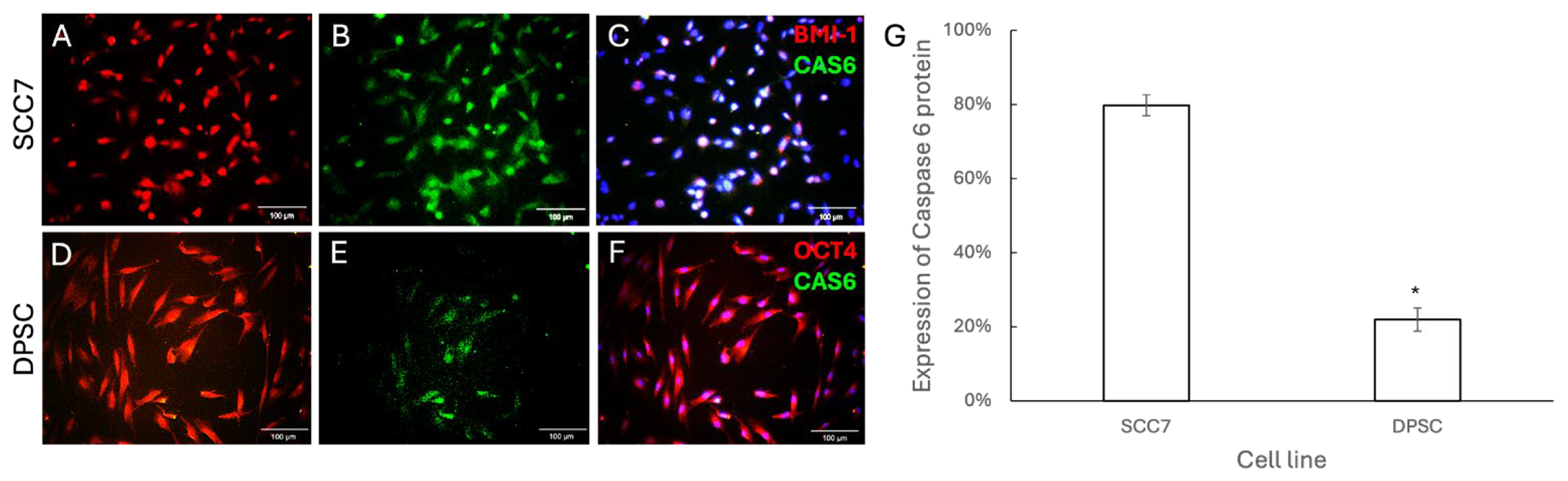
3.3. ZIF-8 Selectively Induces SCC7 Apoptosis Through Cell Death Pathways
4. Discussion
5. Conclusions
Author Contributions
Funding
Institutional Review Board Statement
Informed Consent Statement
Data Availability Statement
Conflicts of Interest
Abbreviations
| 5-FU | 5-fluorouracil |
| α-MEM | Alpha minimum essential medium |
| BAX | Bcl-2–associated X protein |
| BMI-1 | B lymphoma Mo-MLV insertion region 1 |
| CAF | Cancer-associated fibroblasts |
| CAS3 | Caspase-3 |
| CAS6 | Caspase-6 |
| CAS10 | Caspase-10 |
| DPSC | Dental pulp stem cell |
| EthD-1 | Ethidium homodimer-1 |
| FBS | Fetal bovine serum |
| FC | Fold change |
| GO | Gene ontology |
| GSEA | Gene set enrichment analysis |
| HNSCC | Head and neck squamous cell carcinoma |
| LIVE/DEAD | LIVE/DEAD viability/cytotoxicity assay |
| MAPK | Mitogen-activated protein kinase |
| MSC | Mesenchymal stem/stromal cell |
| OMSC | Orofacial mesenchymal stem/stromal cell |
| OSCC | Oral squamous cell carcinoma |
| OCT4 | Octamer-binding transcription factor 4 |
| PBS | Phosphate-buffered saline |
| PDLSC | Periodontal ligament stem cell |
| PFA | Paraformaldehyde |
| RNA-seq | RNA sequencing |
| ROI | Region of interest |
References
- Bray, F.; Ferlay, J.; Soerjomataram, I.; Siegel, R.L.; Torre, L.A.; Jemal, A. Global cancer statistics 2018: GLOBOCAN estimates of incidence and mortality worldwide for 36 cancers in 185 countries. CA Cancer J. Clin. 2018, 68, 394–424. [Google Scholar] [CrossRef] [PubMed]
- González-Moles, M.; Aguilar-Ruiz, M.; Ramos-García, P. Challenges in the Early Diagnosis of Oral Cancer, Evidence Gaps and Strategies for Improvement: A Scoping Review of Systematic Reviews. Cancers 2022, 14, 4967. [Google Scholar] [CrossRef] [PubMed]
- Noguti, J.; De Moura, C.F.; De Jesus, G.P.; Da Silva, V.H.; Hossaka, T.A.; Oshima, C.T.; Ribeiro, D.A. Metastasis from oral cancer: An overview. Cancer Genom. Proteom. 2012, 9, 329–335. [Google Scholar]
- Umapathy, V.R.; Natarajan, P.M.; Swamikannu, B. Review of the Role of Nanotechnology in Overcoming the Challenges Faced in Oral Cancer Diagnosis and Treatment. Molecules 2023, 28, 5395. [Google Scholar] [CrossRef]
- Sroussi, H.Y.; Epstein, J.B.; Bensadoun, R.J.; Saunders, D.P.; Lalla, R.V.; Migliorati, C.A.; Heaivilin, N.; Zumsteg, Z.S. Common oral complications of head and neck cancer radiation therapy: Mucositis, infections, saliva change, fibrosis, sensory dysfunctions, dental caries, periodontal disease, and osteoradionecrosis. Cancer Med. 2017, 6, 2918–2931. [Google Scholar] [CrossRef]
- Shahoumi, L.A. Oral Cancer Stem Cells: Therapeutic Implications and Challenges. Front. Oral Health 2021, 2, 685236. [Google Scholar] [CrossRef]
- Pons-Fuster López, E.; Gómez García, F.; López Jornet, P. Combination of 5-Florouracil and polyphenol EGCG exerts suppressive effects on oral cancer cells exposed to radiation. Arch. Oral Biol. 2019, 101, 8–12. [Google Scholar] [CrossRef]
- Wang, G.; Zhang, M.; Cheng, M.; Wang, X.; Li, K.; Chen, J.; Chen, Z.; Chen, S.; Chen, J.; Xiong, G.; et al. Tumor microenvironment in head and neck squamous cell carcinoma: Functions and regulatory mechanisms. Cancer Lett. 2021, 507, 55–69. [Google Scholar] [CrossRef]
- Liotta, F.; Querci, V.; Mannelli, G.; Santarlasci, V.; Maggi, L.; Capone, M.; Rossi, M.C.; Mazzoni, A.; Cosmi, L.; Romagnani, S.; et al. Mesenchymal stem cells are enriched in head neck squamous cell carcinoma, correlates with tumour size and inhibit T-cell proliferation. Br. J. Cancer 2015, 112, 745–754. [Google Scholar] [CrossRef]
- de Miranda, M.C.; Melo, M.I.A.; Cunha, P.D.S.; Gentilini, J.J.; Faria, J.; Rodrigues, M.A.; Gomes, D.A. Roles of mesenchymal stromal cells in the head and neck cancer microenvironment. Biomed. Pharmacother. 2021, 144, 112269. [Google Scholar] [CrossRef]
- Zhou, Y.; Dong, Y.; Zhang, A.; Wu, J.; Sun, Q. The role of mesenchymal stem cells derived exosomes as a novel nanobiotechnology target in the diagnosis and treatment of cancer. Front. Bioeng. Biotechnol. 2023, 11, 1214190. [Google Scholar] [CrossRef]
- Ohlsson, L.B.; Varas, L.; Kjellman, C.; Edvardsen, K.; Lindvall, M. Mesenchymal progenitor cell-mediated inhibition of tumor growth in vivo and in vitro in gelatin matrix. Exp. Mol. Pathol. 2003, 75, 248–255. [Google Scholar] [CrossRef]
- Clarke, M.R.; Imhoff, F.M.; Baird, S.K. Mesenchymal stem cells inhibit breast cancer cell migration and invasion through secretion of tissue inhibitor of metalloproteinase-1 and -2. Mol. Carcinog. 2015, 54, 1214–1219. [Google Scholar] [CrossRef]
- Lan, T.; Luo, M.; Wei, X. Mesenchymal stem/stromal cells in cancer therapy. J. Hematol. Oncol. 2021, 14, 195. [Google Scholar] [CrossRef]
- Yang, T.; Tang, S.; Peng, S.; Ding, G. The Effects of Mesenchymal Stem Cells on Oral Cancer and Possible Therapy Regime. Front. Genet. 2022, 13, 949770. [Google Scholar] [CrossRef] [PubMed]
- Zhou, H.; Jing, S.; Xiong, W.; Zhu, Y.; Duan, X.; Li, R.; Peng, Y.; Kumeria, T.; He, Y.; Ye, Q. Metal-organic framework materials promote neural differentiation of dental pulp stem cells in spinal cord injury. J. Nanobiotechnol. 2023, 21, 316. [Google Scholar] [CrossRef] [PubMed]
- Li, J.; Jiang, Q.; Chen, M.; Zhang, W.; Liu, R.; Huang, J.; Xu, Q. An attomolar-level electrochemical DNA biosensor based on target-triggered and entropy-driven catalytic amplification integrated with AuNPs@ZIF-8 nanocomposites for oral cancer overexpressed 1 detection. Anal. Chim. Acta 2024, 1287, 342055. [Google Scholar] [CrossRef]
- Wu, Q.; Niu, M.; Chen, X.; Tan, L.; Fu, C.; Ren, X.; Ren, J.; Li, L.; Xu, K.; Zhong, H.; et al. Biocompatible and biodegradable zeolitic imidazolate framework/polydopamine nanocarriers for dual stimulus triggered tumor thermo-chemotherapy. Biomaterials 2018, 162, 132–143. [Google Scholar] [CrossRef]
- Warburg, O. On the origin of cancer cells. Science 1956, 123, 309–314. [Google Scholar] [CrossRef]
- Boedtkjer, E.; Pedersen, S.F. The Acidic Tumor Microenvironment as a Driver of Cancer. Annu. Rev. Physiol. 2020, 82, 103–126. [Google Scholar] [CrossRef] [PubMed]
- Hao, J.; Stavljenić Milašin, I.; Batu Eken, Z.; Mravak-Stipetic, M.; Pavelić, K.; Ozer, F. Effects of Zeolite as a Drug Delivery System on Cancer Therapy: A Systematic Review. Molecules 2021, 26, 6196. [Google Scholar] [CrossRef]
- Hao, J.; Chen, C.; Pavelic, K.; Ozer, F. ZIF-8 as a pH-Responsive Nanoplatform for 5-Fluorouracil Delivery in the Chemotherapy of Oral Squamous Cell Carcinoma. Int. J. Mol. Sci. 2024, 25, 9292. [Google Scholar] [CrossRef]
- Wang, S.; Chen, X.; Zhang, X.; Wen, K.; Chen, X.; Gu, J.; Li, J.; Wang, Z. Pro-apoptotic gene BAX is a pan-cancer predictive biomarker for prognosis and immunotherapy efficacy. Aging 2024, 16, 11289–11317. [Google Scholar] [CrossRef]
- Eskandari, E.; Eaves, C.J. Paradoxical roles of caspase-3 in regulating cell survival, proliferation, and tumorigenesis. J. Cell Biol. 2022, 221, e202201159. [Google Scholar] [CrossRef]
- Qi, L.; Wang, L.; Jin, M.; Jiang, M.; Li, L.; Li, Y. Caspase-6 is a key regulator of cross-talk signal way in PANoptosis in cancer. Immunology 2023, 169, 245–259. [Google Scholar] [CrossRef] [PubMed]
- Wang, J.; Chun, H.J.; Wong, W.; Spencer, D.M.; Lenardo, M.J. Caspase-10 is an initiator caspase in death receptor signaling. Proc. Natl. Acad. Sci. USA 2001, 98, 13884–13888. [Google Scholar] [CrossRef] [PubMed]
- Huang, G.T.; Gronthos, S.; Shi, S. Mesenchymal stem cells derived from dental tissues vs. those from other sources: Their biology and role in regenerative medicine. J. Dent. Res. 2009, 88, 792–806. [Google Scholar] [CrossRef]
- Tahamtan, M.S.; Rafiee, Z.; Oryan, A.; Vaez, A. Application of the ZIF-8-Based Composites in Bone Scaffolds. Adv. Eng. Mater. 2025, 27, 2402749. [Google Scholar] [CrossRef]
- Shi, W.; Bian, L.; Wu, Y.; Wang, Z.; Dai, Y.; Zhou, Y.; Meng, P.; Wang, Q.; Zhang, Z.; Zhao, X.; et al. Enhanced Bone Regeneration Using a ZIF-8-Loaded Fibrin Composite Scaffold. Macromol. Biosci. 2022, 22, e2100416. [Google Scholar] [CrossRef]
- Hossain, M.B.; Haldar Neer, A.H. Chemotherapy. Cancer Treat. Res. 2023, 185, 49–58. [Google Scholar] [CrossRef]
- Johari, S.A.; Sarkheil, M.; Veisi, S. Cytotoxicity, oxidative stress, and apoptosis in human embryonic kidney (HEK293) and colon cancer (SW480) cell lines exposed to nanoscale zeolitic imidazolate framework 8 (ZIF-8). Environ. Sci. Pollut. Res. Int. 2021, 28, 56772–56781. [Google Scholar] [CrossRef]
- Zhang, S.; Li, J.; Yan, L.; You, Y.; Zhao, F.; Cheng, J.; Yang, L.; Sun, Y.; Chang, Q.; Liu, R.; et al. Zeolitic Imidazolate Framework-8 (ZIF-8) as a Drug Delivery Vehicle for the Transport and Release of Telomerase Inhibitor BIBR 1532. Nanomaterials 2023, 13, 1779. [Google Scholar] [CrossRef]
- Tiwari, A.; Singh, A.; Garg, N.; Randhawa, J.K. Curcumin encapsulated zeolitic imidazolate frameworks as stimuli responsive drug delivery system and their interaction with biomimetic environment. Sci. Rep. 2017, 7, 12598. [Google Scholar] [CrossRef] [PubMed]
- Ruvolo, P.P.; Deng, X.; May, W.S. Phosphorylation of Bcl2 and regulation of apoptosis. Leukemia 2001, 15, 515–522. [Google Scholar] [CrossRef] [PubMed]
- McIlwain, D.R.; Berger, T.; Mak, T.W. Caspase functions in cell death and disease. Cold Spring Harb. Perspect. Biol. 2013, 5, a008656. [Google Scholar] [CrossRef]
- Tasleem, M.W.; Rajpoot, S.R.; Zhang, H. Advances in cancer therapeutics with aptamer-functionalized ZIF-8 formulations for site-specific drug delivery. Int. J. Pharm. 2025, 681, 125816. [Google Scholar] [CrossRef] [PubMed]
- Xie, H.; Liu, X.; Huang, Z.; Xu, L.; Bai, R.; He, F.; Wang, M.; Han, L.; Bao, Z.; Wu, Y.; et al. Nanoscale Zeolitic Imidazolate Framework (ZIF)-8 in Cancer Theranostics: Current Challenges and Prospects. Cancers 2022, 14, 3935. [Google Scholar] [CrossRef]



Disclaimer/Publisher’s Note: The statements, opinions and data contained in all publications are solely those of the individual author(s) and contributor(s) and not of MDPI and/or the editor(s). MDPI and/or the editor(s) disclaim responsibility for any injury to people or property resulting from any ideas, methods, instructions or products referred to in the content. |
© 2026 by the authors. Licensee MDPI, Basel, Switzerland. This article is an open access article distributed under the terms and conditions of the Creative Commons Attribution (CC BY) license.
Share and Cite
Hao, J.; Zakershahrak, M.; Ly, P.; Huang, X.; Sun, K.; Zhang, S.; Ozer, F.; Chen, C. pH-Responsive ZIF-8 Precisely Induces Apoptosis of Oral Squamous Cell Carcinoma over Orofacial Mesenchymal Stem Cells. Pharmaceutics 2026, 18, 394. https://doi.org/10.3390/pharmaceutics18030394
Hao J, Zakershahrak M, Ly P, Huang X, Sun K, Zhang S, Ozer F, Chen C. pH-Responsive ZIF-8 Precisely Induces Apoptosis of Oral Squamous Cell Carcinoma over Orofacial Mesenchymal Stem Cells. Pharmaceutics. 2026; 18(3):394. https://doi.org/10.3390/pharmaceutics18030394
Chicago/Turabian StyleHao, Jessica, Mehrnaz Zakershahrak, Peter Ly, Xiaobin Huang, Kunfeng Sun, Shilan Zhang, Fusun Ozer, and Chider Chen. 2026. "pH-Responsive ZIF-8 Precisely Induces Apoptosis of Oral Squamous Cell Carcinoma over Orofacial Mesenchymal Stem Cells" Pharmaceutics 18, no. 3: 394. https://doi.org/10.3390/pharmaceutics18030394
APA StyleHao, J., Zakershahrak, M., Ly, P., Huang, X., Sun, K., Zhang, S., Ozer, F., & Chen, C. (2026). pH-Responsive ZIF-8 Precisely Induces Apoptosis of Oral Squamous Cell Carcinoma over Orofacial Mesenchymal Stem Cells. Pharmaceutics, 18(3), 394. https://doi.org/10.3390/pharmaceutics18030394