Receptor-Mediated Drug Delivery: Redefining Targeted Drug Conjugates in Oncology



Abstract
1. Introduction
2. Cell Surface Receptors with Clinically Approved Conjugates
2.1. Human Epidermal Growth Factor Receptor 2 (HER2)
2.2. Trophoblast Cell Surface Antigen 2 (Trop-2)
2.3. Nectin-4
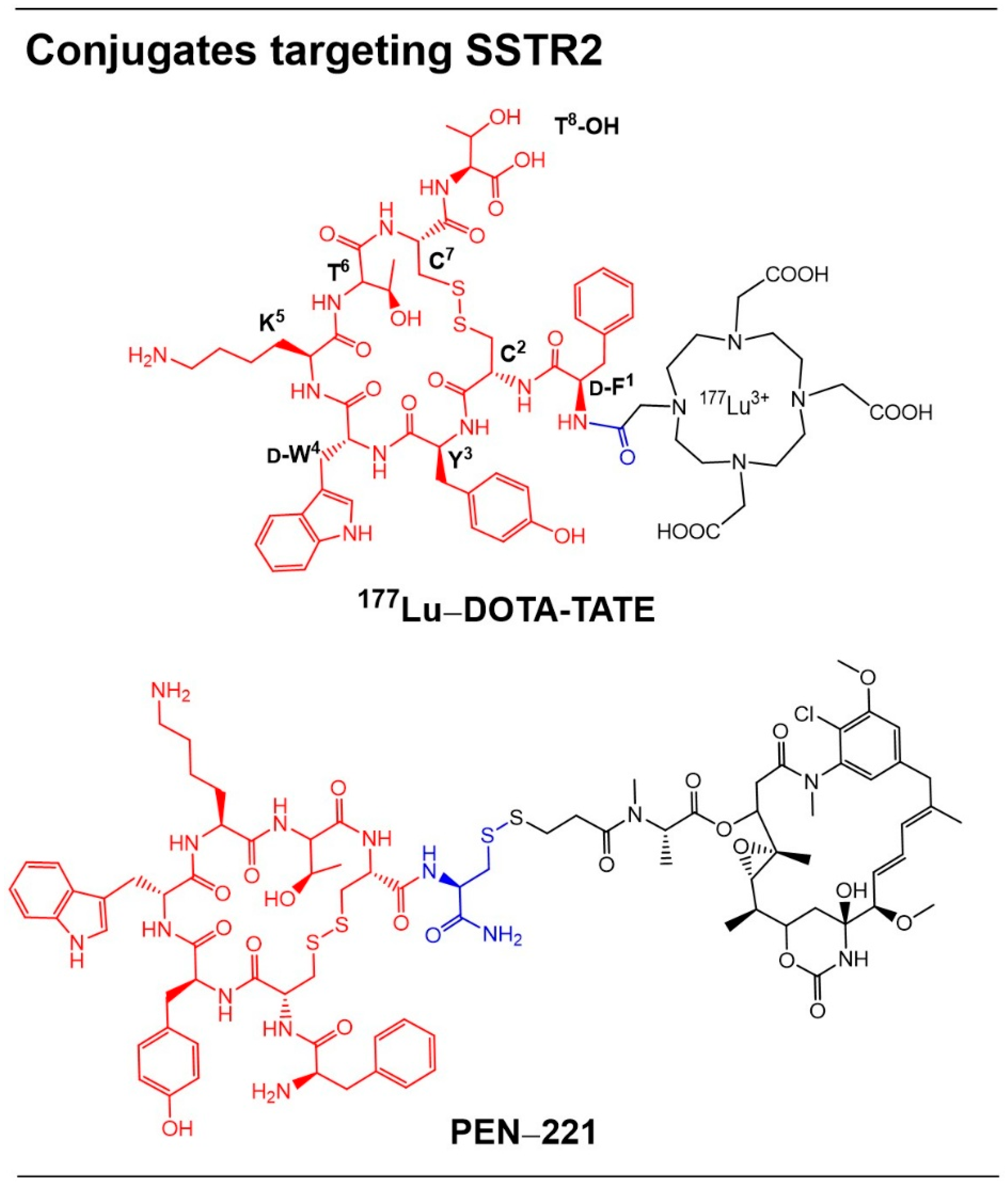
2.4. Somatostatin Receptor (SSTR)
3. Cell Surface Receptors with Conjugates in the Development Stages
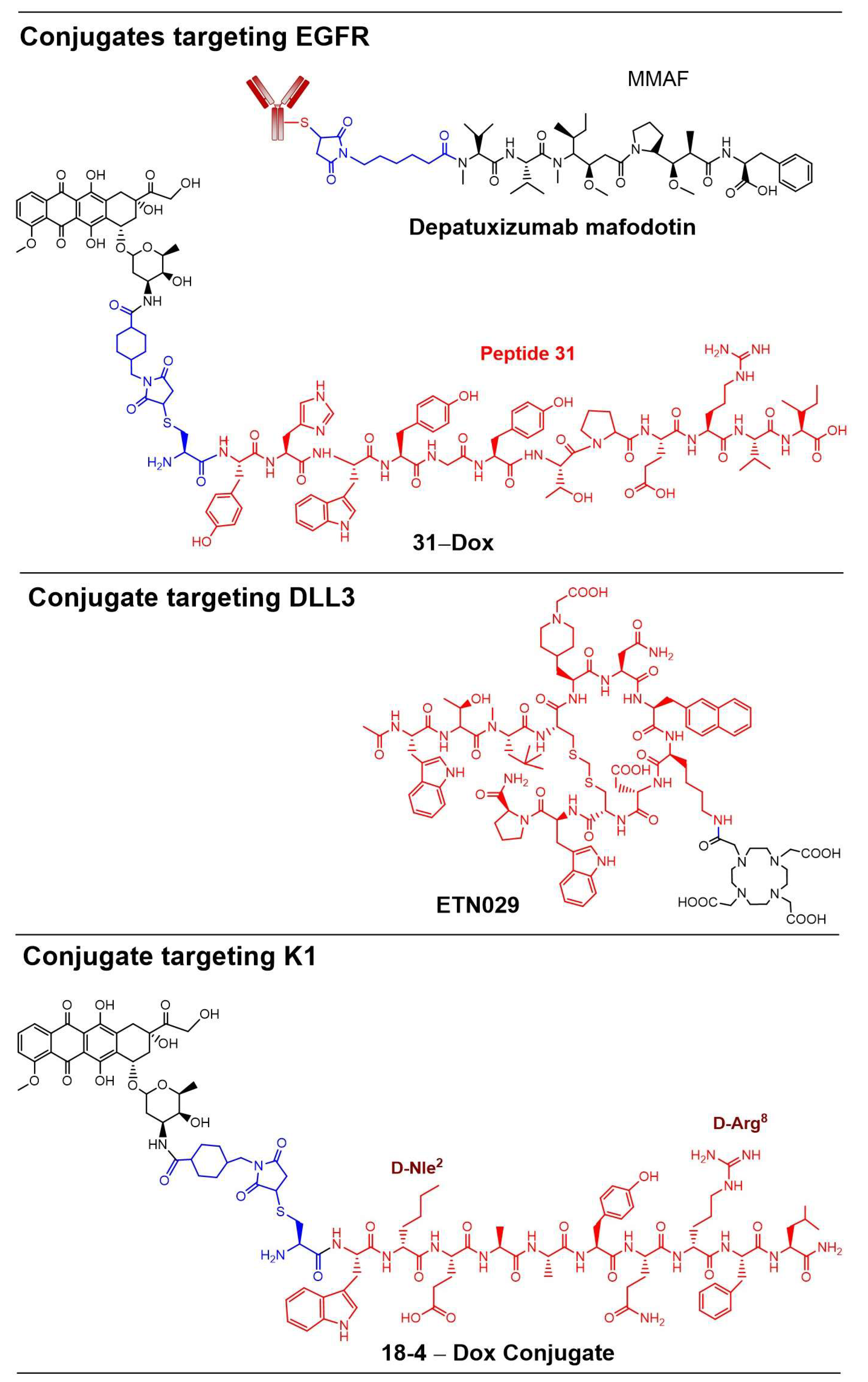
3.1. Epidermal Growth Factor Receptor (EGFR)
3.2. Delta-like Ligand 3 (Dll3)
3.3. Keratin 1 (K1)
4. Drug Concentration at the Tumor Site
5. Conclusions and Future Outlook
- i.
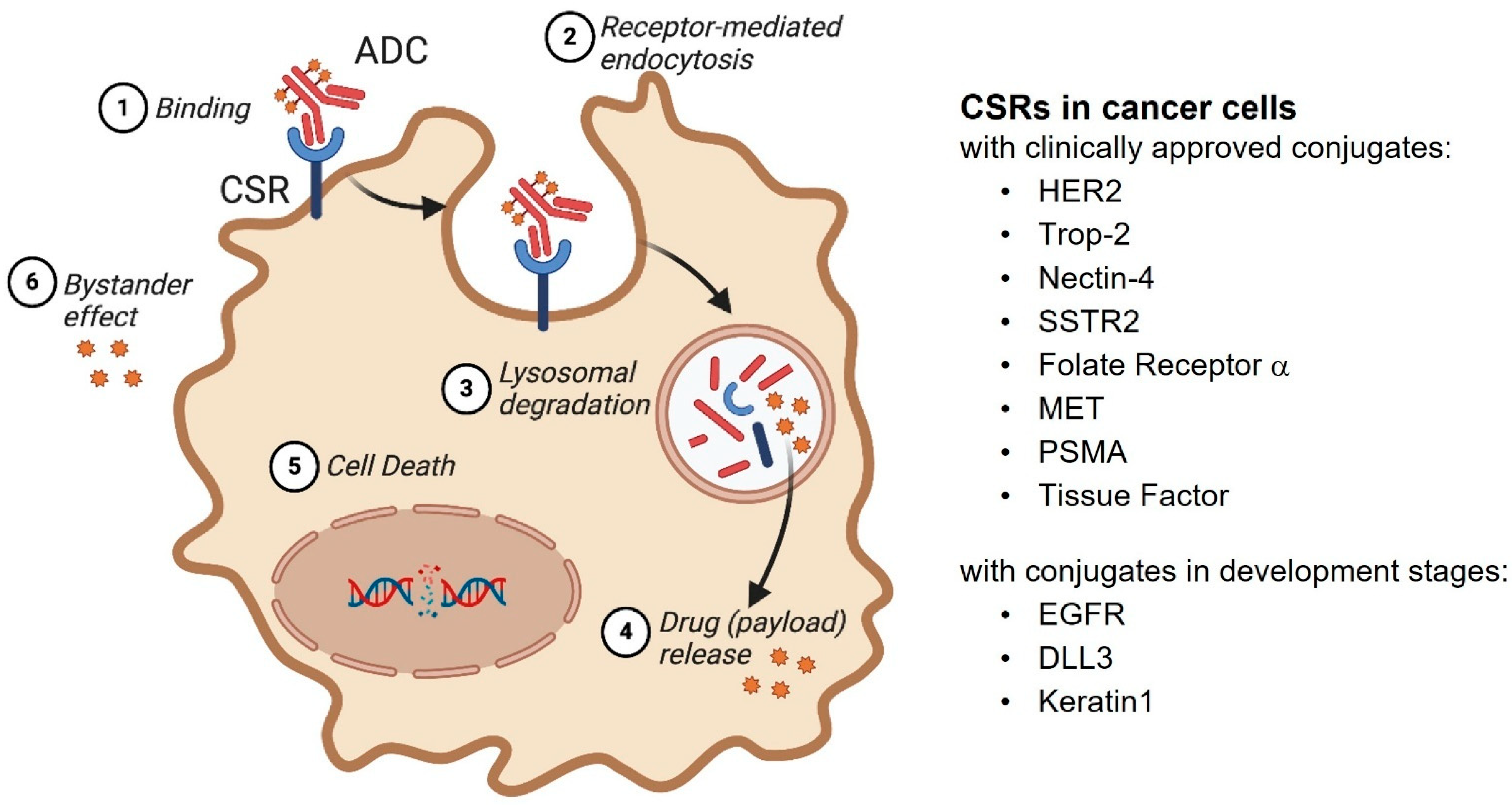
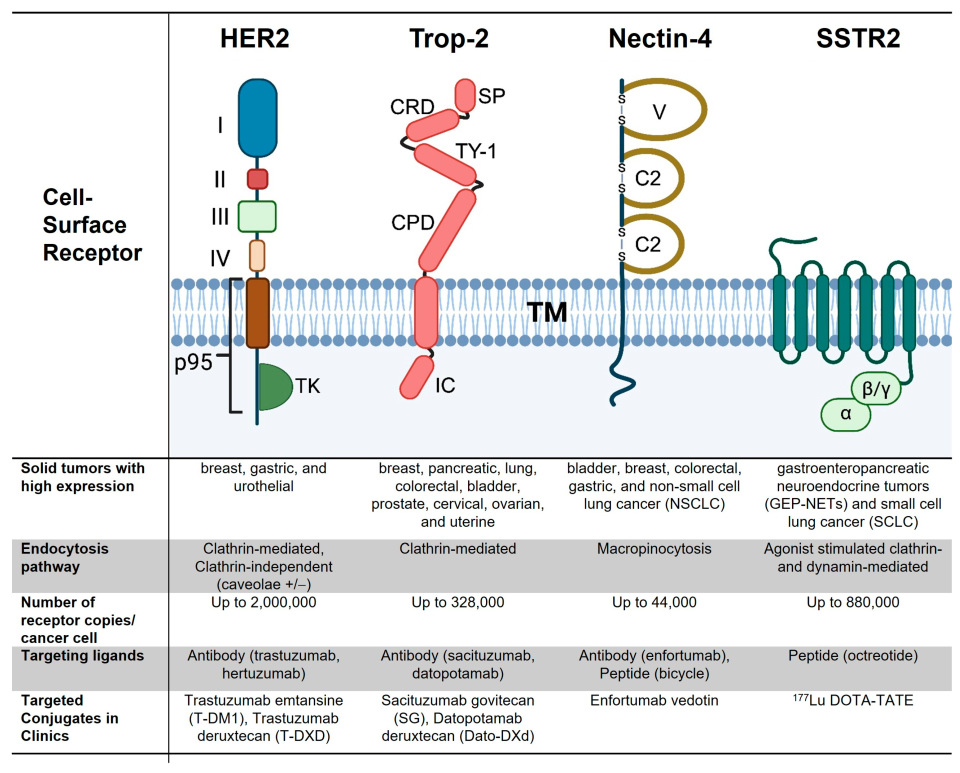
- High CSR expression in tumors, combined with low or no expression in normal cells and tissues, is essential for CSR-targeted conjugates in cancer therapy. Although high expression levels (for example, more than 106 receptors per cancer cell) are ideal, even much lower levels (around 1000 receptors per cell) can still provide adequate payload delivery. The clinical success of T-DXD in HER2-low breast cancer [13], and the activity of conjugates targeting other CSRs with low expression, such as DLL3 (<1000 per cell) in SCLC [63], indicate that only a low threshold of CSR expression may be sufficient for effective uptake. Notably, differences among receptor quantification methods, including the IHC scoring, quantitative proteomics, and imaging-based approaches, can significantly affect receptor expression thresholds. In addition, using combinations of two or more conjugates that target different CSRs, while keeping the total dose equal to that of a single conjugate, can raise local payload concentrations and ensure uptake in all cancer cells. This strategy may be especially useful for aggressive tumors with high intratumoral heterogeneity, such as SCLC and TNBC. Furthermore, the internalization kinetics and intracellular trafficking pathways of CSR conjugate complexes are key determinants of payload delivery and therapeutic efficacy. However, the internalization mechanisms of CSRs used for TDD have not been fully characterized. Different CSRs follow distinct intracellular trafficking pathways for their bound conjugates (Figure 2). In general, receptors that recycle back to the cell surface after releasing the conjugate are preferred over those that traffic to lysosomes together with the conjugate and are subsequently degraded.
- ii.
- Smaller conjugates can improve tumor penetration and therapeutic outcomes. Antibody fragments without the Fc region [83] and peptide [7,8,9] drug conjugates offer promising alternatives to conventional ADCs. These intermediate-size conjugates remain in circulation much longer than small molecules, which are cleared within minutes (for example, doxorubicin has a circulation half-life of 5 to 10 minutes). At the same time, they penetrate tumors more effectively because they can move through the limited spaces within tumor tissue better than full-length antibodies. The targeting component, whether a peptide or an antibody, primarily prolongs the drug’s local presence near tumor cells (residence time) rather than actively transporting it from the site of administration. By slowing rapid clearance, these components increase residence time and the probability of interaction with cellular receptors. Overall, intermediate-sized conjugates achieve an optimal balance of improved pharmacokinetics, enhanced tumor penetration, and greater tumor residence time and probability of interaction. In addition, compared with larger conjugates, intermediate-size conjugates may present fewer manufacturing and scalability challenges, including issues related to reproducible conjugation chemistry, product heterogeneity, and large-scale production.
- iii.
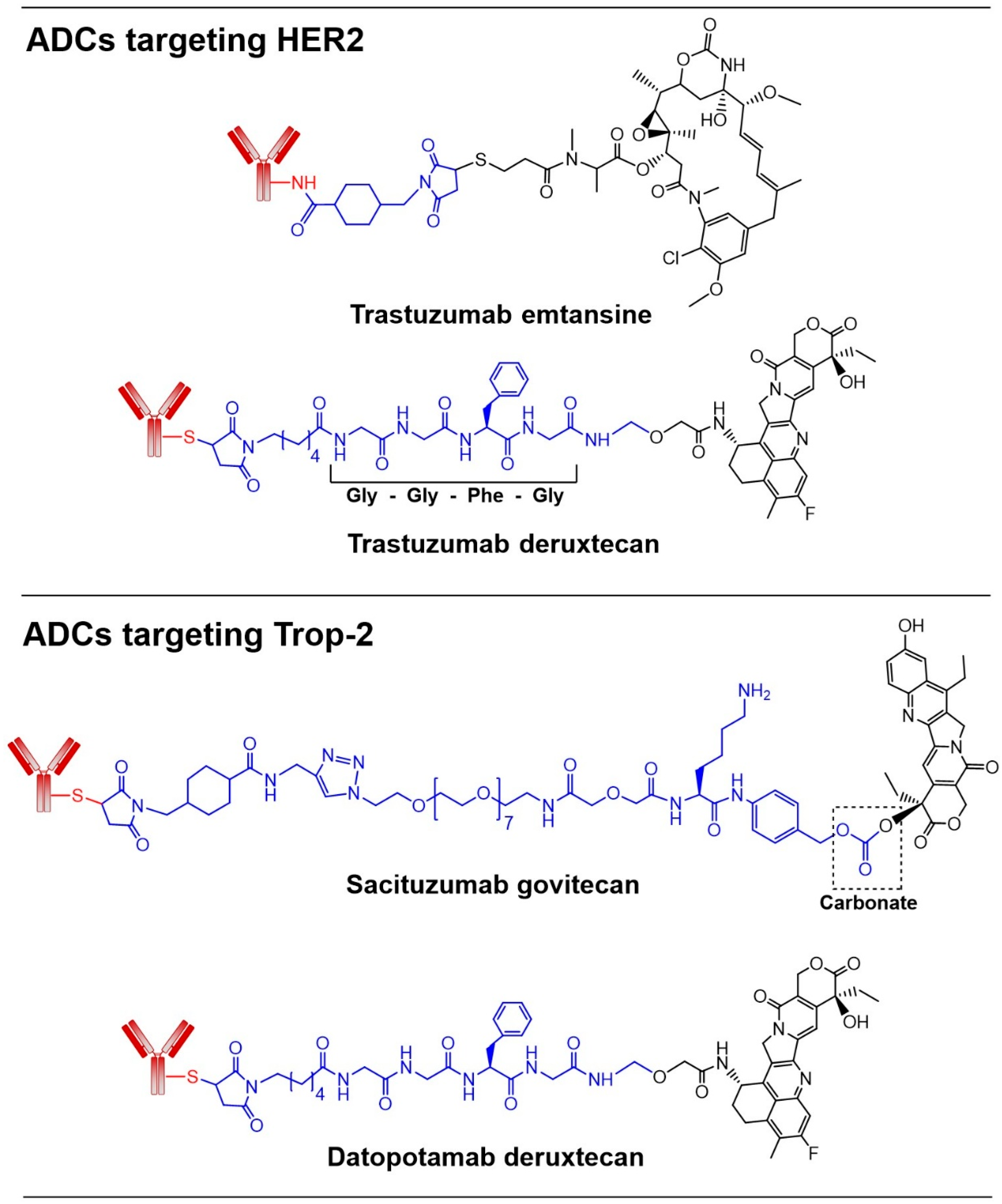
- The linker chemistry plays a critical role in conjugate design, as it must maintain payload attachment during circulation to allow the conjugate to reach the tumor, while ideally releasing the drug only after internalization by cancer cells. Interestingly, linkers with very high stability often perform worse than those with intermediate stability, which retain the payload during circulation but allow rapid release at the tumor site. For example, the acid-labile carbonate linker in SG (Figure 3) showed superior in vivo activity compared with ADCs using more stable, enzyme-cleavable linkers [31,82]. The DAR of 8 increased tumor drug concentration for SG, enabled by the SN-38 payload, whereas ultra-toxic agents such as PBD dimer require lower DARs. Similarly, an amide linker in an amide PDC produced higher tumor drug levels than an extremely acid-labile N-acyl hydrazone linker in a hydrazone PDC (Table 2) [71,72]. These findings emphasize that optimal therapeutic efficacy depends on balancing linker stability in the bloodstream with efficient payload release within the tumor microenvironment.
Author Contributions
Funding
Institutional Review Board Statement
Informed Consent Statement
Data Availability Statement
Acknowledgments
Conflicts of Interest
Abbreviations
References
- Colombo, R.; Tarantino, P.; Rich, J.R.; LoRusso, P.M.; de Vries, E.G.E. The Journey of Antibody-Drug Conjugates: Lessons Learned from 40 Years of Development. Cancer Discov. 2024, 14, 2089–2108. [Google Scholar] [CrossRef]
- Drago, J.Z.; Modi, S.; Chandarlapaty, S. Unlocking the potential of antibody-drug conjugates for cancer therapy. Nat. Rev. Clin. Oncol. 2021, 18, 327–344. [Google Scholar] [CrossRef] [PubMed]
- Zippelius, A.; Tolaney, S.M.; Tarantino, P.; Balthasar, J.P.; Thurber, G.M. Unveiling the molecular and immunological drivers of antibody-drug conjugates in cancer treatment. Nat. Rev. Cancer 2025, 25, 925–944. [Google Scholar] [CrossRef] [PubMed]
- Dumontet, C.; Reichert, J.M.; Senter, P.D.; Lambert, J.M.; Beck, A. Antibody-drug conjugates come of age in oncology. Nat. Rev. Drug Discov. 2023, 22, 641–661. [Google Scholar] [CrossRef]
- Fallah, J.; Agrawal, S.; Gittleman, H.; Fiero, M.H.; Subramaniam, S.; John, C.; Chen, W.; Ricks, T.K.; Niu, G.; Fotenos, A.; et al. FDA Approval Summary: Lutetium Lu 177 Vipivotide Tetraxetan for Patients with Metastatic Castration-Resistant Prostate Cancer. Clin. Cancer Res. 2023, 29, 1651–1657. [Google Scholar] [CrossRef]
- Hope, T.A.; Pavel, M.; Bergsland, E.K. Neuroendocrine Tumors and Peptide Receptor Radionuclide Therapy: When Is the Right Time? J. Clin. Oncol. 2022, 40, 2818–2829. [Google Scholar] [CrossRef]
- Alas, M.; Saghaeidehkordi, A.; Kaur, K. Peptide-Drug Conjugates with Different Linkers for Cancer Therapy. J. Med. Chem. 2021, 64, 216–232. [Google Scholar] [CrossRef]
- Rizvi, S.F.A.; Zhang, L.; Zhang, H.; Fang, Q. Peptide-Drug Conjugates: Design, Chemistry, and Drug Delivery System as a Novel Cancer Theranostic. ACS Pharmacol. Transl. Sci. 2024, 7, 309–334. [Google Scholar] [CrossRef]
- Zhang, B.; Wang, M.; Sun, L.; Liu, J.; Yin, L.; Xia, M.; Zhang, L.; Liu, X.; Cheng, Y. Recent Advances in Targeted Cancer Therapy: Are PDCs the Next Generation of ADCs? J. Med. Chem. 2024, 67, 11469–11487. [Google Scholar] [CrossRef]
- Srinivasarao, M.; Low, P.S. Ligand-Targeted Drug Delivery. Chem. Rev. 2017, 117, 12133–12164. [Google Scholar] [CrossRef]
- Dal Corso, A.; Pignataro, L.; Belvisi, L.; Gennari, C. Innovative Linker Strategies for Tumor-Targeted Drug Conjugates. Chemistry 2019, 25, 14740–14757. [Google Scholar] [CrossRef] [PubMed]
- Hammood, M.; Craig, A.W.; Leyton, J.V. Impact of Endocytosis Mechanisms for the Receptors Targeted by the Currently Approved Antibody-Drug Conjugates (ADCs)-A Necessity for Future ADC Research and Development. Pharmaceuticals 2021, 14, 674. [Google Scholar] [CrossRef] [PubMed]
- Yoon, J.; Oh, D.Y. HER2-targeted therapies beyond breast cancer—An update. Nat. Rev. Clin. Oncol. 2024, 21, 675–700. [Google Scholar] [CrossRef]
- Gutierrez, C.; Schiff, R. HER2: Biology, detection, and clinical implications. Arch. Pathol. Lab. Med. 2011, 135, 55–62. [Google Scholar] [CrossRef]
- Rigakos, G.; Razis, E.; Koliou, G.A.; Oikonomopoulos, G.; Tsolaki, E.; Sperinde, J.; Chrisafi, S.; Zarkavelis, G.; Pazarli, E.; Batistatou, A.; et al. Evaluation of the Role of p95 HER2 Isoform in Trastuzumab Efficacy in Metastatic Breast Cancer. Anticancer Res. 2021, 41, 1793–1802. [Google Scholar] [CrossRef]
- Gupta, A.; Michelini, F.; Shao, H.; Yeh, C.; Drago, J.Z.; Liu, D.; Rosiek, E.; Romin, Y.; Ghafourian, N.; Thyparambil, S.; et al. EGFR-directed antibodies promote HER2 ADC internalization and efficacy. Cell Rep. Med. 2024, 5, 101792. [Google Scholar] [CrossRef]
- Chen, Y.F.; Zhang, Q.H.; Zhang, Z.W.; Zhou, Y.J.; Liu, C.C.; Shao, Z.M.; Yu, K.D. SNX10 deficiency impairs sensitivity to anti-HER2 antibody-drug conjugates via altering HER2 trafficking in HER2-positive breast cancer. Proc. Natl. Acad. Sci. USA 2025, 122, e2417586122. [Google Scholar] [CrossRef]
- Gil Del Alcazar, C.R.; Alečković, M.; Polyak, K. Immune Escape during Breast Tumor Progression. Cancer Immunol. Res. 2020, 8, 422–427. [Google Scholar] [CrossRef]
- Cortes, J.; Kim, S.B.; Chung, W.P.; Im, S.A.; Park, Y.H.; Hegg, R.; Kim, M.H.; Tseng, L.M.; Petry, V.; Chung, C.F.; et al. Trastuzumab Deruxtecan versus Trastuzumab Emtansine for Breast Cancer. N. Engl. J. Med. 2022, 386, 1143–1154. [Google Scholar] [CrossRef]
- Sheng, X.; Wang, L.; He, Z.; Shi, Y.; Luo, H.; Han, W.; Yao, X.; Shi, B.; Liu, J.; Hu, C.; et al. Efficacy and Safety of Disitamab Vedotin in Patients with Human Epidermal Growth Factor Receptor 2-Positive Locally Advanced or Metastatic Urothelial Carcinoma: A Combined Analysis of Two Phase II Clinical Trials. J. Clin. Oncol. 2024, 42, 1391–1402. [Google Scholar] [CrossRef]
- Yao, H.P.; Zhao, H.; Hudson, R.; Tong, X.M.; Wang, M.H. Duocarmycin-based antibody-drug conjugates as an emerging biotherapeutic entity for targeted cancer therapy: Pharmaceutical strategy and clinical progress. Drug Discov. Today 2021, 26, 1857–1874. [Google Scholar] [CrossRef] [PubMed]
- Hu, X.; Zhang, J.; Liu, R.; Gao, S.; Qing, Y.; Yi, S.; Yuan, J.; Chen, H.; Fan, B.; Zheng, H.; et al. Phase I study of A166 in patients with HER2-expressing locally advanced or metastatic solid tumors. J. Clin. Oncol. 2021, 39, 1024. [Google Scholar] [CrossRef]
- Shvartsur, A.; Bonavida, B. Trop2 and its overexpression in cancers: Regulation and clinical/therapeutic implications. Genes. Cancer 2015, 6, 84–105. [Google Scholar] [CrossRef] [PubMed]
- Lombardi, P.; Filetti, M.; Falcone, R.; Altamura, V.; Paroni Sterbini, F.; Bria, E.; Fabi, A.; Giannarelli, D.; Scambia, G.; Daniele, G. Overview of Trop-2 in Cancer: From Pre-Clinical Studies to Future Directions in Clinical Settings. Cancers 2023, 15, 1744. [Google Scholar] [CrossRef]
- Goldenberg, D.M.; Cardillo, T.M.; Govindan, S.V.; Rossi, E.A.; Sharkey, R.M. Trop-2 is a novel target for solid cancer therapy with sacituzumab govitecan (IMMU-132), an antibody-drug conjugate (ADC). Oncotarget 2015, 6, 22496–22512. [Google Scholar] [CrossRef]
- Tanaka, T.; Ohishi, T.; Asano, T.; Takei, J.; Nanamiya, R.; Hosono, H.; Sano, M.; Harada, H.; Kawada, M.; Kaneko, M.K.; et al. An anti-TROP2 monoclonal antibody TrMab-6 exerts antitumor activity in breast cancer mouse xenograft models. Oncol. Rep. 2021, 46, 132. [Google Scholar] [CrossRef]
- Ahn, M.J.; Tanaka, K.; Paz-Ares, L.; Cornelissen, R.; Girard, N.; Pons-Tostivint, E.; Vicente Baz, D.; Sugawara, S.; Cobo, M.; Perol, M.; et al. Datopotamab Deruxtecan Versus Docetaxel for Previously Treated Advanced or Metastatic Non-Small Cell Lung Cancer: The Randomized, Open-Label Phase III TROPION-Lung01 Study. J. Clin. Oncol. 2025, 43, 260–272. [Google Scholar] [CrossRef]
- Bardia, A.; Jhaveri, K.; Im, S.A.; Pernas, S.; De Laurentiis, M.; Wang, S.; Martinez Janez, N.; Borges, G.; Cescon, D.W.; Hattori, M.; et al. Datopotamab Deruxtecan Versus Chemotherapy in Previously Treated Inoperable/Metastatic Hormone Receptor-Positive Human Epidermal Growth Factor Receptor 2-Negative Breast Cancer: Primary Results from TROPION-Breast01. J. Clin. Oncol. 2025, 43, 285–296. [Google Scholar] [CrossRef]
- Goldenberg, D.M.; Sharkey, R.M. Antibody-drug conjugates targeting TROP-2 and incorporating SN-38: A case study of anti-TROP-2 sacituzumab govitecan. MAbs 2019, 11, 987–995. [Google Scholar] [CrossRef]
- Shaffer, C. Trop2 deal heats up antibody-drug conjugate space in cancer. Nat. Biotechnol. 2021, 39, 128–130. [Google Scholar] [CrossRef]
- Sharkey, R.M.; McBride, W.J.; Cardillo, T.M.; Govindan, S.V.; Wang, Y.; Rossi, E.A.; Chang, C.H.; Goldenberg, D.M. Enhanced Delivery of SN-38 to Human Tumor Xenografts with an Anti-Trop-2-SN-38 Antibody Conjugate (Sacituzumab Govitecan). Clin. Cancer Res. 2015, 21, 5131–5138. [Google Scholar] [CrossRef]
- Poorebrahim, M.; Quiros-Fernandez, I.; Marme, F.; Burdach, S.E.; Cid-Arregui, A. A costimulatory chimeric antigen receptor targeting TROP2 enhances the cytotoxicity of NK cells expressing a T cell receptor reactive to human papillomavirus type 16 E7. Cancer Lett. 2023, 566, 216242. [Google Scholar] [CrossRef]
- Cortes, J.; Punie, K.; Barrios, C.; Hurvitz, S.A.; Schneeweiss, A.; Sohn, J.; Tokunaga, E.; Brufsky, A.; Park, Y.H.; Xu, B.; et al. Sacituzumab Govitecan in Untreated, Advanced Triple-Negative Breast Cancer. N. Engl. J. Med. 2025, 393, 1912–1925. [Google Scholar] [CrossRef] [PubMed]
- Tsuchikama, K.; Anami, Y.; Ha, S.Y.Y.; Yamazaki, C.M. Exploring the next generation of antibody-drug conjugates. Nat. Rev. Clin. Oncol. 2024, 21, 203–223. [Google Scholar] [CrossRef] [PubMed]
- Zhao, S.; Cheng, Y.; Wang, Q.; Li, X.; Liao, J.; Rodon, J.; Meng, X.; Luo, Y.; Chen, Z.; Wang, W.; et al. Sacituzumab tirumotecan in advanced non-small-cell lung cancer with or without EGFR mutations: Phase 1/2 and phase 2 trials. Nat. Med. 2025, 31, 1976–1986. [Google Scholar] [CrossRef]
- Nikanjam, M.; Perez-Granado, J.; Gramling, M.; Larvol, B.; Kurzrock, R. Nectin-4 expression patterns and therapeutics in oncology. Cancer Lett. 2025, 622, 217681. [Google Scholar] [CrossRef]
- Li, K.; Zhou, Y.; Zang, M.; Jin, X.; Li, X. Therapeutic prospects of nectin-4 in cancer: Applications and value. Front. Oncol. 2024, 14, 1354543. [Google Scholar] [CrossRef]
- Wang, Y.; Li, G.; Wang, H.; Qi, Q.; Wang, X.; Lu, H. Targeted therapeutic strategies for Nectin-4 in breast cancer: Recent advances and future prospects. Breast 2025, 79, 103838. [Google Scholar] [CrossRef]
- Zhang, J.L.; Li, M.; Li, W.Y.; Yang, Y.X.; Wu, G.; Guo, P.; Yu, C.F.; Wang, L. Mechanistic Insights into Anti-Nectin4-VcMMAE-Induced Ocular Toxicity: From Cellular Uptake Pathways to Molecular Modification. Int. J. Mol. Sci. 2025, 26, 4996. [Google Scholar] [CrossRef]
- Mishra, A.; Sharma, A.K.; Gupta, K.; Banka, D.S.; Johnson, B.A.; Hoffman-Censits, J.; Huang, P.; McConkey, D.J.; Nimmagadda, S. Nectin-4 PET for predicting enfortumab vedotin dose-response in urothelial carcinoma. Sci. Adv. 2026, 12, eady1111. [Google Scholar] [CrossRef]
- Powles, T.; Rosenberg, J.E.; Sonpavde, G.P.; Loriot, Y.; Duran, I.; Lee, J.L.; Matsubara, N.; Vulsteke, C.; Castellano, D.; Wu, C.; et al. Enfortumab Vedotin in Previously Treated Advanced Urothelial Carcinoma. N. Engl. J. Med. 2021, 384, 1125–1135. [Google Scholar] [CrossRef] [PubMed]
- Mudd, G.E.; Scott, H.; Chen, L.; van Rietschoten, K.; Ivanova-Berndt, G.; Dzionek, K.; Brown, A.; Watcham, S.; White, L.; Park, P.U.; et al. Discovery of BT8009: A Nectin-4 Targeting Bicycle Toxin Conjugate for the Treatment of Cancer. J. Med. Chem. 2022, 65, 14337–14347. [Google Scholar] [CrossRef] [PubMed]
- Shao, F.; Pan, Z.; Long, Y.; Zhu, Z.; Wang, K.; Ji, H.; Zhu, K.; Song, W.; Song, Y.; Song, X.; et al. Nectin-4-targeted immunoSPECT/CT imaging and photothermal therapy of triple-negative breast cancer. J. Nanobiotechnol. 2022, 20, 243, Correction in J. Nanobiotechnol. 2023, 21, 345. [Google Scholar] [CrossRef]
- Priyadarshini, S.; Allison, D.B.; Chauhan, A. Comprehensive Assessment of Somatostatin Receptors in Various Neoplasms: A Systematic Review. Pharmaceutics 2022, 14, 1394. [Google Scholar] [CrossRef]
- Ichikawa, Y.; Kobayashi, N.; Takano, S.; Kato, I.; Endo, K.; Inoue, T. Neuroendocrine tumor theranostics. Cancer Sci. 2022, 113, 1930–1938. [Google Scholar] [CrossRef]
- Kuan, C.T.; Wikstrand, C.J.; McLendon, R.E.; Zalutsky, M.R.; Kumar, U.; Bigner, D.D. Detection of amino-terminal extracellular domain of somatostatin receptor 2 by specific monoclonal antibodies and quantification of receptor density in medulloblastoma. Hybridoma 2009, 28, 389–403. [Google Scholar] [CrossRef]
- Zhao, P.; Canals, M.; Murphy, J.E.; Klingler, D.; Eriksson, E.M.; Pelayo, J.C.; Hardt, M.; Bunnett, N.W.; Poole, D.P. Agonist-biased trafficking of somatostatin receptor 2A in enteric neurons. J. Biol. Chem. 2013, 288, 25689–25700. [Google Scholar] [CrossRef]
- Lastoria, S.; Rodari, M.; Sansovini, M.; Baldari, S.; D’Agostini, A.; Cervino, A.R.; Filice, A.; Salgarello, M.; Perotti, G.; Nieri, A.; et al. Lutetium [177Lu]-DOTA-TATE in gastroenteropancreatic-neuroendocrine tumours: Rationale, design and baseline characteristics of the Italian prospective observational (REAL-LU) study. Eur. J. Nucl. Med. Mol. Imaging 2024, 51, 3417–3427. [Google Scholar] [CrossRef]
- White, B.H.; Whalen, K.; Kriksciukaite, K.; Alargova, R.; Au Yeung, T.; Bazinet, P.; Brockman, A.; DuPont, M.; Oller, H.; Lemelin, C.A.; et al. Discovery of an SSTR2-Targeting Maytansinoid Conjugate (PEN-221) with Potent Activity In Vitro and In Vivo. J. Med. Chem. 2019, 62, 2708–2719. [Google Scholar] [CrossRef]
- Whalen, K.A.; White, B.H.; Quinn, J.M.; Kriksciukaite, K.; Alargova, R.; Au Yeung, T.P.; Bazinet, P.; Brockman, A.; DuPont, M.M.; Oller, H.; et al. Targeting the Somatostatin Receptor 2 with the Miniaturized Drug Conjugate, PEN-221: A Potent and Novel Therapeutic for the Treatment of Small Cell Lung Cancer. Mol. Cancer Ther. 2019, 18, 1926–1936. [Google Scholar] [CrossRef]
- Halperin, D.M.; Johnson, M.L.; Chan, J.A.; Hart, L.L.; Cook, N.; Patel, V.M.; Schlecter, B.L.; Cave, J.; Dowlati, A.; Blaszkowsky, L.S.; et al. The Safety and Efficacy of PEN-221 Somatostatin Analog (SSA)-DM1 Conjugate in Patients (Pts) with Advanced GI Mid-gut Neuroendocrine Tumor (NET): Phase 2 Results. J. Clin. Oncol. 2021, 39, 4110. [Google Scholar] [CrossRef]
- AghaAmiri, S.; Ghosh, S.C.; Hernandez Vargas, S.; Halperin, D.M.; Azhdarinia, A. Somatostatin Receptor Subtype-2 Targeting System for Specific Delivery of Temozolomide. J. Med. Chem. 2024, 67, 2425–2437. [Google Scholar] [CrossRef]
- Sigismund, S.; Avanzato, D.; Lanzetti, L. Emerging functions of the EGFR in cancer. Mol. Oncol. 2018, 12, 3–20. [Google Scholar] [CrossRef]
- Kovacs, E.; Zorn, J.A.; Huang, Y.; Barros, T.; Kuriyan, J. A structural perspective on the regulation of the epidermal growth factor receptor. Annu. Rev. Biochem. 2015, 84, 739–764. [Google Scholar] [CrossRef] [PubMed]
- Costa, R.; Shah, A.N.; Santa-Maria, C.A.; Cruz, M.R.; Mahalingam, D.; Carneiro, B.A.; Chae, Y.K.; Cristofanilli, M.; Gradishar, W.J.; Giles, F.J. Targeting Epidermal Growth Factor Receptor in triple negative breast cancer: New discoveries and practical insights for drug development. Cancer Treat. Rev. 2017, 53, 111–119. [Google Scholar] [CrossRef] [PubMed]
- Anderson, M.G.; Falls, H.D.; Mitten, M.J.; Oleksijew, A.; Vaidya, K.S.; Boghaert, E.R.; Gao, W.; Palma, J.P.; Cao, D.; Chia, P.L.; et al. Targeting Multiple EGFR-expressing Tumors with a Highly Potent Tumor-selective Antibody-Drug Conjugate. Mol. Cancer Ther. 2020, 19, 2117–2125. [Google Scholar] [CrossRef]
- Phillips, A.C.; Boghaert, E.R.; Vaidya, K.S.; Mitten, M.J.; Norvell, S.; Falls, H.D.; DeVries, P.J.; Cheng, D.; Meulbroek, J.A.; Buchanan, F.G.; et al. ABT-414, an Antibody-Drug Conjugate Targeting a Tumor-Selective EGFR Epitope. Mol. Cancer Ther. 2016, 15, 661–669. [Google Scholar] [CrossRef]
- Than, P.P.; Yao, S.J.; Althagafi, E.; Kaur, K. A Conjugate of an EGFR-Binding Peptide and Doxorubicin Shows Selective Toxicity to Triple-Negative Breast Cancer Cells. ACS Med. Chem. Lett. 2025, 16, 109–115. [Google Scholar] [CrossRef]
- Jain, S.; Griffith, J.I.; Porath, K.A.; Rathi, S.; Le, J.; Pasa, T.I.; Decker, P.A.; Gupta, S.K.; Hu, Z.; Carlson, B.L.; et al. Bystander Effects, Pharmacokinetics, and Linker-Payload Stability of EGFR-Targeting Antibody-Drug Conjugates Losatuxizumab Vedotin and Depatux-M in Glioblastoma Models. Clin. Cancer Res. 2024, 30, 3287–3297. [Google Scholar] [CrossRef]
- Huang, H.; Zhou, Y.; Shang, C.; Zhang, Y.; Shen, Y. A novel anti-HER2/EGFR bispecific antibody-drug conjugate demonstrates promising antitumor efficacy and overcomes resistance to HER2- or EGFR-targeted ADCs. Investig. New Drugs 2025, 43, 262–275. [Google Scholar] [CrossRef]
- Rudin, C.M.; Reck, M.; Johnson, M.L.; Blackhall, F.; Hann, C.L.; Yang, J.C.; Bailis, J.M.; Bebb, G.; Goldrick, A.; Umejiego, J.; et al. Emerging therapies targeting the delta-like ligand 3 (DLL3) in small cell lung cancer. J. Hematol. Oncol. 2023, 16, 66. [Google Scholar] [CrossRef] [PubMed]
- Rudin, C.M.; Pietanza, M.C.; Bauer, T.M.; Ready, N.; Morgensztern, D.; Glisson, B.S.; Byers, L.A.; Johnson, M.L.; Burris, H.A., 3rd; Robert, F.; et al. Rovalpituzumab tesirine, a DLL3-targeted antibody-drug conjugate, in recurrent small-cell lung cancer: A first-in-human, first-in-class, open-label, phase 1 study. Lancet Oncol. 2017, 18, 42–51. [Google Scholar] [CrossRef] [PubMed]
- Lin, S.; Zhang, Y.; Yao, J.; Yang, J.; Qiu, Y.; Zhu, Z.; Hua, H. DB-1314, a novel DLL3-targeting ADC with DNA topoisomerase I inhibitor, exhibits promising safety profile and therapeutic efficacy in preclinical small cell lung cancer models. J. Transl. Med. 2024, 22, 766. [Google Scholar] [CrossRef]
- Huang, C.; Wan, M.; Bruton, T.; Zidell, A.; Metcalf, C.; Cupido, J.; Dearling, J.; Chonkar, A.; Lee, K.; Ma, Z.; et al. ETN029: Discovery and development of a DLL3-targeting radioligand therapy for the treatment of SCLC and beyond. In Proceedings of the ACS Fall 2025 Meeting and Exposition, Washington, DC, USA, 20 August 2025; American Chemical Society: Washington, DC, USA, 2025. [Google Scholar]
- Soudy, R.; Etayash, H.; Bahadorani, K.; Lavasanifar, A.; Kaur, K. Breast Cancer Targeting Peptide Binds Keratin 1: A New Molecular Marker for Targeted Drug Delivery to Breast Cancer. Mol. Pharm. 2017, 14, 593–604. [Google Scholar] [CrossRef]
- Yao, S.J.; Amirrad, F.; Ziaei, E.; Saghaeidehkordi, A.; Roosan, M.R.; Shamloo, K.; Sharma, A.; Sumbria, R.K.; Nauli, S.M.; Bunick, C.G.; et al. Surface keratin 1, a tumor-selective peptide target in human triple-negative breast cancer. Sci. Rep. 2025, 15, 21644. [Google Scholar] [CrossRef]
- Chuang, N.N.; Huang, C.C. Interaction of integrin beta1 with cytokeratin 1 in neuroblastoma NMB7 cells. Biochem. Soc. Trans. 2007, 35, 1292. [Google Scholar] [CrossRef]
- Attallah, A.M.; El-Far, M.; Abdel Malak, C.A.; Zahran, F.; Farid, K.; Omran, M.M.; Zagloul, H.; El-Deen, M.S. Evaluation of cytokeratin-1 in the diagnosis of hepatocellular carcinoma. Clin. Chim. Acta 2011, 412, 2310–2315. [Google Scholar] [CrossRef]
- Soudy, R.; Chen, C.; Kaur, K. Novel peptide-doxorubucin conjugates for targeting breast cancer cells including the multidrug resistant cells. J. Med. Chem. 2013, 56, 7564–7573. [Google Scholar] [CrossRef]
- Ziaei, E.; Saghaeidehkordi, A.; Dill, C.; Maslennikov, I.; Chen, S.; Kaur, K. Targeting Triple Negative Breast Cancer Cells with Novel Cytotoxic Peptide-Doxorubicin Conjugates. Bioconj. Chem. 2019, 30, 3098–3106. [Google Scholar] [CrossRef]
- Saghaeidehkordi, A.; Chen, S.; Yang, S.; Kaur, K. Evaluation of a Keratin 1 Targeting Peptide-Doxorubicin Conjugate in a Mouse Model of Triple-Negative Breast Cancer. Pharmaceutics 2021, 13, 661. [Google Scholar] [CrossRef]
- Ziaei, E.; Paiva, I.M.; Yao, S.J.; Sarrami, N.; Mehinrad, P.; Lai, J.; Lavasanifar, A.; Kaur, K. Peptide-Drug Conjugate Targeting Keratin 1 Inhibits Triple-Negative Breast Cancer in Mice. Mol. Pharm. 2023, 20, 3570–3577. [Google Scholar] [CrossRef] [PubMed]
- Raghuwanshi, Y.; Etayash, H.; Soudy, R.; Paiva, I.; Lavasanifar, A.; Kaur, K. Proteolytically Stable Cyclic Decapeptide for Breast Cancer Cell Targeting. J. Med. Chem. 2017, 60, 4893–4903. [Google Scholar] [CrossRef] [PubMed]
- Subiros-Funosas, R.; Ho, V.C.L.; Barth, N.D.; Mendive-Tapia, L.; Pappalardo, M.; Barril, X.; Ma, R.Y.; Zhang, C.B.; Qian, B.Z.; Sintes, M.; et al. Fluorogenic Trp(redBODIPY) cyclopeptide targeting keratin 1 for imaging of aggressive carcinomas. Chem. Sci. 2020, 11, 1368–1374. [Google Scholar] [CrossRef] [PubMed]
- Labadie, K.P.; Hamlin, D.K.; Kenoyer, A.; Daniel, S.K.; Utria, A.F.; Ludwig, A.D.; Kenerson, H.L.; Li, L.; Sham, J.G.; Chen, D.L.; et al. Glypican-3-Targeted 227Th alpha-Therapy Reduces Tumor Burden in an Orthotopic Xenograft Murine Model of Hepatocellular Carcinoma. J. Nucl. Med. 2022, 63, 1033–1038. [Google Scholar] [CrossRef]
- Akinyemi, A.O.; Simpson, K.E.; Oyelere, S.F.; Nur, M.; Ngule, C.M.; Owoyemi, B.C.D.; Ayarick, V.A.; Oyelami, F.F.; Obaleye, O.; Esoe, D.P.; et al. Unveiling the dark side of glucose-regulated protein 78 (GRP78) in cancers and other human pathology: A systematic review. Mol. Med. 2023, 29, 112. [Google Scholar] [CrossRef]
- Zhou, J.; Meng, N.; Lu, L.; Lu, J.; Wu, S.; Ding, Y.; Wu, S.; Bao, Y.; Xu, Q.; Chen, R.; et al. A novel peptide-drug conjugate for glioma-targeted drug delivery. J. Control. Release 2024, 369, 722–733. [Google Scholar] [CrossRef]
- Nakayama, I.; Qi, C.; Chen, Y.; Nakamura, Y.; Shen, L.; Shitara, K. Claudin 18.2 as a novel therapeutic target. Nat. Rev. Clin. Oncol. 2024, 21, 354–369. [Google Scholar] [CrossRef]
- Mukkamala, R.; Carlson, D.J.; Miller, N.K.; Lindeman, S.D.; Bowen, E.R.; Tudi, P.; Schleinkofer, T.; Booth, O.C.; Cox, A.; Srinivasarao, M.; et al. Design of a Fibroblast Activation Protein-Targeted Radiopharmaceutical Therapy with High Tumor-to-Healthy-Tissue Ratios. J. Nucl. Med. 2024, 65, 1257–1263. [Google Scholar] [CrossRef]
- Meric-Bernstam, F.; Yuca, E.; Evans, K.W.; Zhao, M.; Maejima, T.; Karibe, T.; Raso, M.G.; Tang, X.; Zheng, X.; Rizvi, Y.Q.; et al. Antitumor Activity and Biomarker Analysis for TROP2 Antibody-Drug Conjugate Datopotamab Deruxtecan in Patient-Derived Breast Cancer Xenograft Models. Clin. Cancer Res. 2025, 31, 573–587. [Google Scholar] [CrossRef]
- Sharma, S.; Li, Z.; Bussing, D.; Shah, D.K. Evaluation of Quantitative Relationship Between Target Expression and Antibody-Drug Conjugate Exposure Inside Cancer Cells. Drug Metab. Dispos. 2020, 48, 368–377. [Google Scholar] [CrossRef]
- Kopp, A.; Hofsess, S.; Cardillo, T.M.; Govindan, S.V.; Donnell, J.; Thurber, G.M. Antibody-Drug Conjugate Sacituzumab Govitecan Drives Efficient Tissue Penetration and Rapid Intracellular Drug Release. Mol. Cancer Ther. 2023, 22, 102–111. [Google Scholar] [CrossRef]
- Nessler, I.; Khera, E.; Vance, S.; Kopp, A.; Qiu, Q.; Keating, T.A.; Abu-Yousif, A.O.; Sandal, T.; Legg, J.; Thompson, L.; et al. Increased Tumor Penetration of Single-Domain Antibody-Drug Conjugates Improves In Vivo Efficacy in Prostate Cancer Models. Cancer Res. 2020, 80, 1268–1278. [Google Scholar] [CrossRef]
- Lu, G.; Nishio, N.; van den Berg, N.S.; Martin, B.A.; Fakurnejad, S.; van Keulen, S.; Colevas, A.D.; Thurber, G.M.; Rosenthal, E.L. Co-administered antibody improves penetration of antibody-dye conjugate into human cancers with implications for antibody-drug conjugates. Nat. Commun. 2020, 11, 5667. [Google Scholar] [CrossRef]
- Nessler, I.; Rubahamya, B.; Kopp, A.; Hofsess, S.; Cardillo, T.M.; Sathyanarayan, N.; Donnell, J.; Govindan, S.V.; Thurber, G.M. Improving Intracellular Delivery of an Antibody-Drug Conjugate Targeting Carcinoembryonic Antigen Increases Efficacy at Clinically Relevant Doses In Vivo. Mol. Cancer Ther. 2024, 23, 343–353. [Google Scholar] [CrossRef]



| Conjugate | Year Approved | Target CSR | Approved for Cancer Types |
|---|---|---|---|
| Antibody-Drug Conjugates (ADCs) | |||
| Telisotuzumab vedotin (Emrelis) | 2025 | MET | NSCLC |
| Datopotamab deruxtecan (Datroway) | 2025 | Trop-2 | HR+/HER2− BC |
| Sacituzumab govitecan (Trodelvy) | 2020 | Trop-2 | TNBC, HR+/HER2− MBC |
| Mirvetuximab soravtansine (Elahere) | 2022 | Ovarian | |
| Tisotumab vedotin (Tivdak) | 2021 | TF | Cervical |
| Enfortumab vedotin (Padcev) | 2019 | Nectin-4 | Urothelial cancer |
| Trastuzumab deruxtecan (Enhertu) | 2019 | HER2 | HER2+, HER2− low, NSCLC |
| Trastuzumab emtansine (Kadcyla) | 2013 | HER2 | HER2+ |
| Peptide-Drug (Radionuclide) Conjugates (PDCs) | |||
| 177Lu vipivotide tetraxetan (Pluvicto) | 2022 | PSMA | Prostate cancer |
| 177Lu DOTA-TATE (Lutathera) | 2018 | SSTR2 | SSTR2 +ive cancers |
| Intravenous Injection | [Drug] in Tumor Tissue | Fold Increase in [Drug] * | Reference ** |
|---|---|---|---|
| Dato-DXd | 12 ng/g | 17 | [80] |
| IgG-DXd | 0.7 ng/g | ||
| Sacituzumab govitecan (SG) | 43.88 μg/g | 20.8 | [31] |
| Irinotecan | 2.11 μg/g | ||
| pHA-AOHX-VAP-DOX | 0.68% ID/g | 4.7 | [77] |
| Dox | 0.145% ID/g | ||
| Amide PDC (Peptide 18-4—Dox) | 0.219 μg/g | 7.6 | [72] |
| Dox | 0.029 μg/g | ||
| Hydrazone PDC (Peptide 18-4—Dox) | 1.703 μg/g | 1.4 | [71] |
| Dox | 1.205 μg/g |
Disclaimer/Publisher’s Note: The statements, opinions and data contained in all publications are solely those of the individual author(s) and contributor(s) and not of MDPI and/or the editor(s). MDPI and/or the editor(s) disclaim responsibility for any injury to people or property resulting from any ideas, methods, instructions or products referred to in the content. |
© 2026 by the authors. Licensee MDPI, Basel, Switzerland. This article is an open access article distributed under the terms and conditions of the Creative Commons Attribution (CC BY) license.
Share and Cite
Jafari, K.N.; Chai, C.; Kim, S.; Kaur, K. Receptor-Mediated Drug Delivery: Redefining Targeted Drug Conjugates in Oncology. Pharmaceutics 2026, 18, 386. https://doi.org/10.3390/pharmaceutics18030386
Jafari KN, Chai C, Kim S, Kaur K. Receptor-Mediated Drug Delivery: Redefining Targeted Drug Conjugates in Oncology. Pharmaceutics. 2026; 18(3):386. https://doi.org/10.3390/pharmaceutics18030386
Chicago/Turabian StyleJafari, Keon Niles, Charlene Chai, Shelby Kim, and Kamaljit Kaur. 2026. "Receptor-Mediated Drug Delivery: Redefining Targeted Drug Conjugates in Oncology" Pharmaceutics 18, no. 3: 386. https://doi.org/10.3390/pharmaceutics18030386
APA StyleJafari, K. N., Chai, C., Kim, S., & Kaur, K. (2026). Receptor-Mediated Drug Delivery: Redefining Targeted Drug Conjugates in Oncology. Pharmaceutics, 18(3), 386. https://doi.org/10.3390/pharmaceutics18030386