Modified Chitosan-Based Hemostatic Dressings Incorporating Heparin-Loaded Nanoparticles for Enhanced Hemostatic Activity

 , , ,
, , ,  , ,
, ,  ,
,  ,
,  and
and 
Abstract
1. Introduction
2. Materials and Methods
2.1. Materials
2.2. Methods
2.2.1. Synthesis of Modified CS Derivatives
2.2.2. Preparation of PBSu and Hep-Loaded PBSu NPs
2.2.3. Preparation of NPs-Enriched CS Dressings
2.3. Characterization of the Prepared Materials
2.3.1. Molecular Weight Determination
2.3.2. Fourier-Transformed Infrared Spectroscopy (FT-IR)
2.3.3. X-Ray Diffractometry (XRD)
2.3.4. Particle Size and ζ-Potential Estimation (DLS)
2.3.5. Scanning Electron Microscopy (SEM)
2.3.6. Swelling Capacity and Stability
2.3.7. In Vitro Release of Hep
2.3.8. Biocompatibility Evaluation by MTT Assay
2.3.9. Evaluation of Antibacterial Activity
2.3.10. Assessment of Blood Clotting Time
2.3.11. Evaluation of Hemostatic Ability
2.3.12. Statistical Analysis
3. Results and Discussion
3.1. Structural Properties
3.1.1. Molecular Weight Determination
3.1.2. FT-IR Spectroscopy
3.1.3. Crystalline Structure
3.1.4. Swelling Ratio and Stability
3.2. Morphological Examination
3.3. Release Studies
3.4. Biological Studies
3.4.1. Biocompatibility Evaluation by MTT Assay
3.4.2. Evaluation of Antibacterial Activity
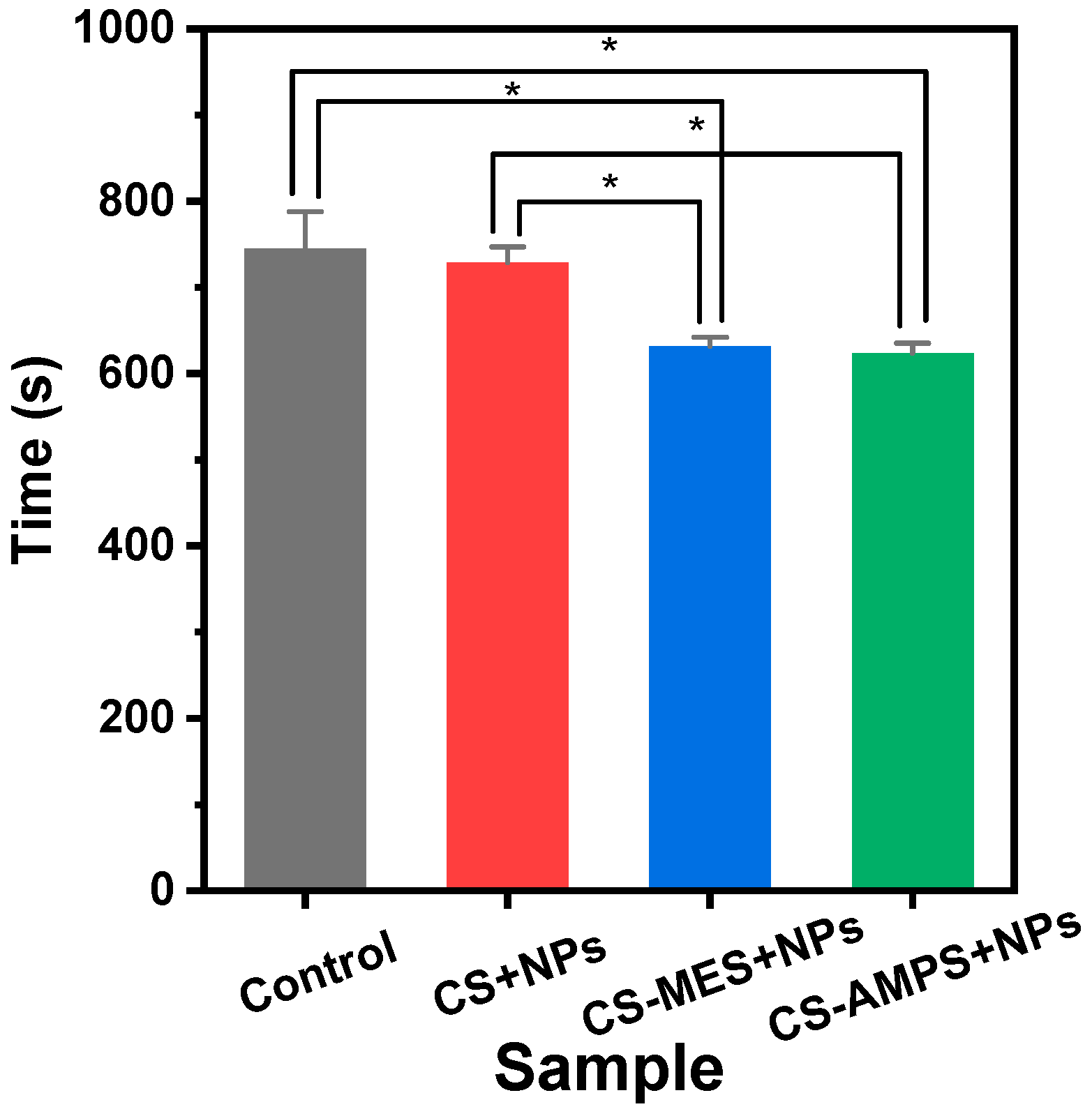
3.4.3. Determination of Blood Clotting Time (CT)
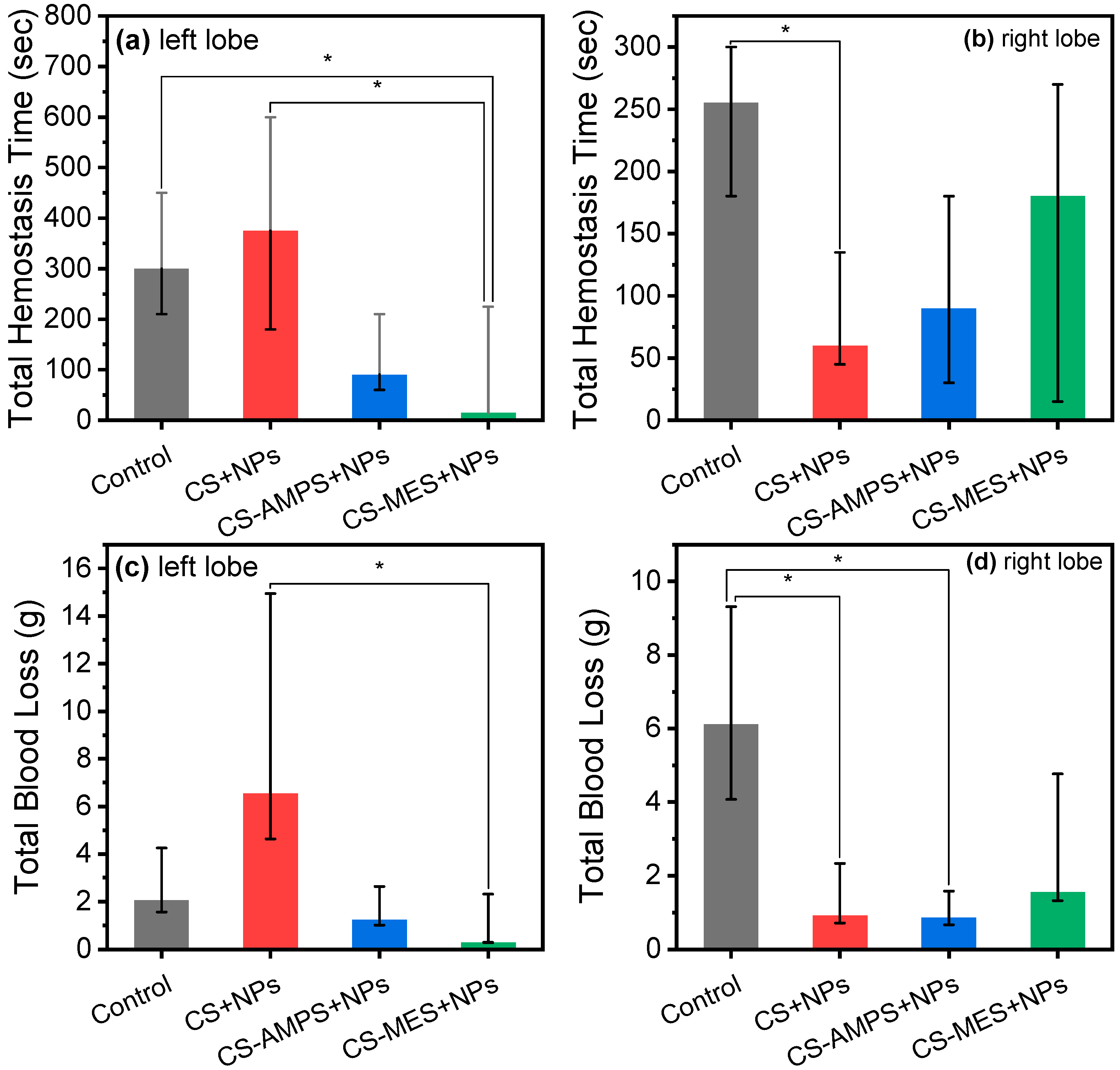
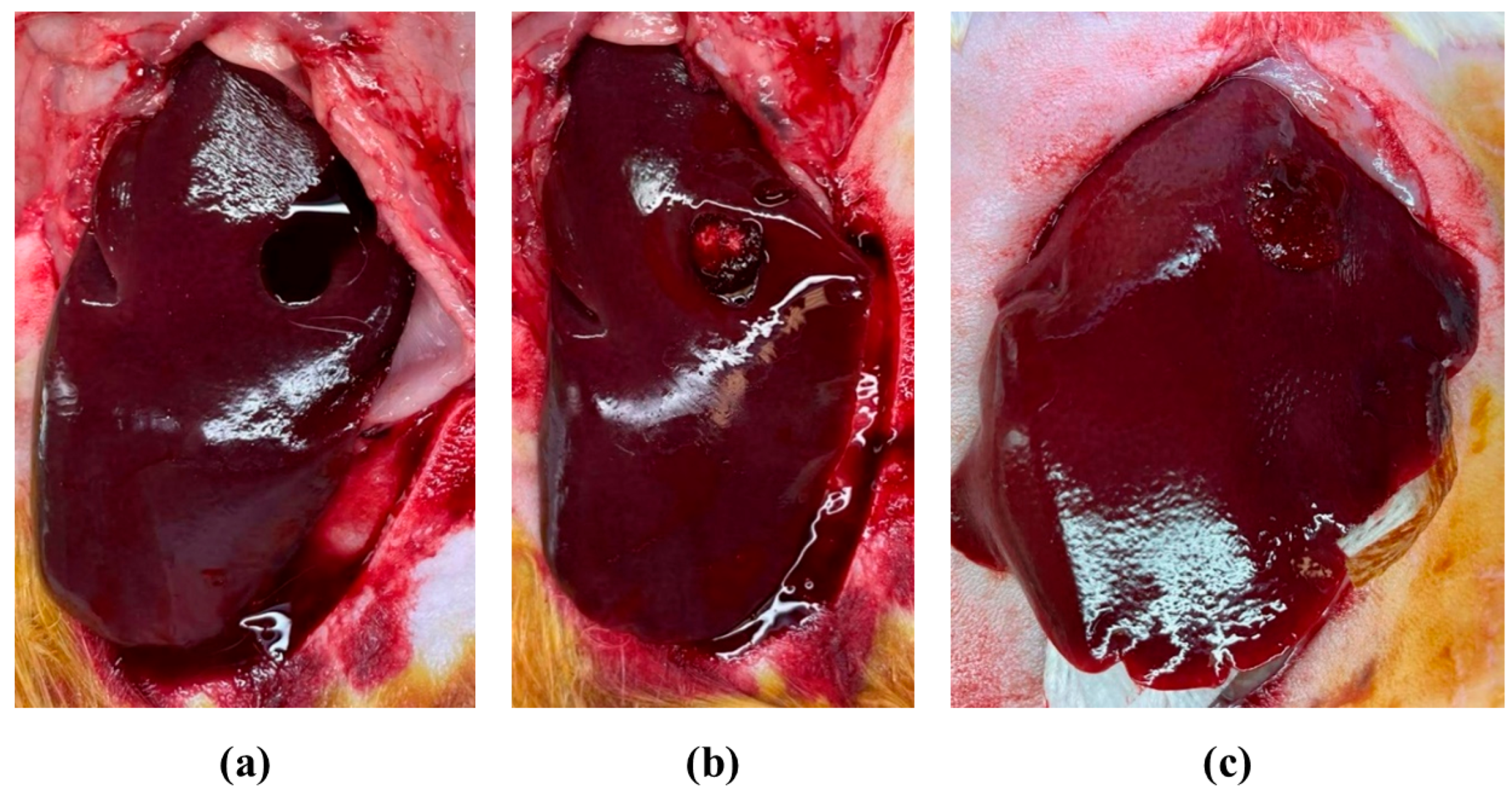
3.4.4. Determination of Total Hemostasis Time (THT) and Total Blood Loss (TBL)
4. Conclusions
Author Contributions
Funding
Institutional Review Board Statement
Informed Consent Statement
Data Availability Statement
Acknowledgments
Conflicts of Interest
References
- Hu, Z.; Zhang, D.Y.; Lu, S.T.; Li, P.W.; Li, S.D. Chitosan-Based Composite Materials for Prospective Hemostatic Applications. Mar. Drugs 2018, 16, 273. [Google Scholar] [CrossRef]
- Koumentakou, I.; Terzopoulou, Z.; Michopoulou, A.; Kalafatakis, I.; Theodorakis, K.; Tzetzis, D.; Bikiaris, D. Chitosan Dressings Containing Inorganic Additives and Levofloxacin as Potential Wound Care Products with Enhanced Hemostatic Properties. Int. J. Biol. Macromol. 2020, 162, 693–703. [Google Scholar] [CrossRef]
- Palta, S.; Saroa, R.; Palta, A. Overview of the Coagulation System. Indian J. Anaesth. 2014, 58, 515–523. [Google Scholar] [CrossRef]
- Yan, T.; Cheng, F.; Wei, X.; Huang, Y.; He, J. Biodegradable Collagen Sponge Reinforced with Chitosan/Calcium Pyrophosphate Nanoflowers for Rapid Hemostasis. Carbohydr. Polym. 2017, 170, 271–280. [Google Scholar] [CrossRef]
- Zhao, Y.-F.; Zhao, J.-Y.; Hu, W.-Z.; Ma, K.; Chao, Y.; Sun, P.-J.; Fu, X.-B.; Zhang, H. Synthetic Poly(Vinyl Alcohol)–Chitosan as a New Type of Highly Efficient Hemostatic Sponge with Blood-Triggered Swelling and High Biocompatibility. J. Mater. Chem. B 2019, 7, 1855–1866. [Google Scholar] [CrossRef]
- Bennett, B.L.; Littlejohn, L. Review of New Topical Hemostatic Dressings for Combat Casualty Care. Mil. Med. 2014, 179, 497–514. [Google Scholar] [CrossRef]
- Palm, M.D.; Altman, J.S. Topical Hemostatic Agents: A Review. Dermatol. Surg. 2008, 34, 431–445. [Google Scholar] [CrossRef]
- Leonhardt, E.E.; Kang, N.; Hamad, M.A.; Wooley, K.L.; Elsabahy, M. Absorbable Hemostatic Hydrogels Comprising Composites of Sacrificial Templates and Honeycomb-like Nanofibrous Mats of Chitosan. Nat. Commun. 2019, 10, 2307. [Google Scholar] [CrossRef]
- Xu, W.; Zhong, L.; Xu, F.; Song, W.; Wang, J.; Zhu, J.; Chou, S.L. Ultraflexible Transparent Bio-Based Polymer Conductive Films Based on Ag Nanowires. Small 2019, 15, 1805094. [Google Scholar] [CrossRef]
- Mu, L.; Wu, L.; Wu, S.; Ye, Q.; Zhong, Z. Progress in Chitin/Chitosan and Their Derivatives for Biomedical Applications: Where We Stand. Carbohydr. Polym. 2024, 343, 122233. [Google Scholar] [CrossRef]
- Zhang, W.; Geng, X.; Qin, S.; Xie, Z.; Li, W.; Li, J. Research Progress and Application of Chitosan Dressings in Hemostasis: A Review. Int. J. Biol. Macromol. 2024, 282, 136421. [Google Scholar] [CrossRef]
- Cassano, R.; Perri, P.; Scarcello, E.; Piro, P.; Sole, R.; Curcio, F.; Trombino, S. Chitosan Hemostatic Dressings: Properties and Surgical Applications. Polymers 2024, 16, 1770. [Google Scholar] [CrossRef]
- Wang, Y.-H.; Liu, C.-C.; Cherng, J.-H.; Fan, G.-Y.; Wang, Y.-W.; Chang, S.-J.; Hong, Z.-J.; Lin, Y.-C.; Hsu, S.-D. Evaluation of Chitosan-Based Dressings in a Swine Model of Artery-Injury-Related Shock. Sci. Rep. 2019, 9, 14608. [Google Scholar] [CrossRef]
- Oduah, E.I.; Linhardt, R.J.; Sharfstein, S.T. Heparin: Past, Present, and Future. Pharmaceuticals 2016, 9, 38. [Google Scholar] [CrossRef]
- Hu, Z.; Lu, S.; Cheng, Y.; Kong, S.; Li, S.; Li, C.; Yang, L. Investigation of the Effects of Molecular Parameters on the Hemostatic Properties of Chitosan. Molecules 2018, 23, 3147. [Google Scholar] [CrossRef]
- Wang, X.; Ouyang, Q.; Chen, Y.; Wang, X.; Li, D.; Yang, J.; Pan, J. Effect and Mechanism of α, β Carboxylic Acid Groups of Itaconic Acid on the Stabilization Reactions of Polyacrylonitrile. Polym. Mater. Sci. Eng. 2015, 31, 22–27. [Google Scholar] [CrossRef]
- Karava, A.; Lazaridou, M.; Nanaki, S.; Michailidou, G.; Christodoulou, E.; Kostoglou, M.; Iatrou, H.; Bikiaris, D.N. Chitosan Derivatives with Mucoadhesive and Antimicrobial Properties for Simultaneous Nanoencapsulation and Extended Ocular Release Formulations of Dexamethasone and Chloramphenicol Drugs. Pharmaceutics 2020, 12, 594. [Google Scholar] [CrossRef]
- Farag, R.K.; Atta, A.M.; Labena, A.; Alhawari, S.H.; Safwat, G.; Diab, A. Antibacterial and Anti-Fungal Biological Activities for Acrylonitrile, Acrylamide and 2-Acrylamido-2-Methylpropane Sulphonic Acid Crosslinked Terpolymers. Materials 2020, 13, 4891. [Google Scholar] [CrossRef]
- Yoo, I.K.; Kim, K.; Song, G.; Koh, M.Y.; Lee, M.S.; Yeniova, A.Ö.; Lee, H.; Cho, J.Y. Endoscopic Application of Mussel-Inspired Phenolic Chitosan as a Hemostatic Agent for Gastrointestinal Bleeding: A Preclinical Study in a Heparinized Pig Model. PLoS ONE 2021, 16, e0251145. [Google Scholar] [CrossRef]
- Lorkowska-Zawicka, B.; Kamiński, K.; Ciejka, J.; Szczubiałka, K.; Białas, M.; Okoń, K.; Adamek, D.; Nowakowska, M.; Jawień, J.; Olszanecki, R.; et al. Inactivation of Heparin by Cationically Modified Chitosan. Mar. Drugs 2014, 12, 3953–3969. [Google Scholar] [CrossRef]
- Stricker-Krongrad, A.-H.; Alikhassy, Z.; Matsangos, N.; Sebastian, R.; Marti, G.; Lay, F.; Harmon, J.W. Efficacy of Chitosan-Based Dressing for Control of Bleeding in Excisional Wounds. Eplasty 2018, 8, e14. [Google Scholar]
- Misgav, M.; Lubetszki, A.; Brutman-Barazani, T.; Martinowitz, U.; Kenet, G. The Hemostatic Efficacy of Chitosan-Pads in Hemodialysis Patients with Significant Bleeding Tendency. J. Vasc. Access 2017, 18, 220–224. [Google Scholar] [CrossRef]
- Bikiaris, R.; Christodoulou, E.; Kostoglou, M.; Kasimatis, M.; Iatrou, H.; Nikolaidis, N. Paliperidone Palmitate Depot Microspheres Based on Biocompatible Poly(Alkylene Succinate) Polyesters as Long-Acting Injectable Formulations. J. Drug Deliv. Sci. Technol. 2022, 68, 103056. [Google Scholar] [CrossRef]
- Wang, S.; Xing, Q. Study on Properties and Biocompatibility of Poly (Butylene Succinate) and Sodium Alginate Biodegradable Composites for Biomedical Applications. Mater. Res. Express 2022, 9, 085403. [Google Scholar] [CrossRef]
- Gigli, M.; Fabbri, M.; Lotti, N.; Gamberini, R.; Rimini, B.; Munari, A. Poly(Butylene Succinate)-Based Polyesters for Biomedical Applications: A Review in Memory of Our Beloved Colleague and Friend Dr. Lara Finelli. Eur. Polym. J. 2016, 75, 431–460. [Google Scholar] [CrossRef]
- Kasaai, M.R.; Arul, J.; Charlet, G. Fragmentation of Chitosan by Acids. Sci. World J. 2013, 2013, 508540. [Google Scholar] [CrossRef]
- Michailidou, G.; Ainali, N.M.; Xanthopoulou, E.; Nanaki, S.; Kostoglou, M.; Koukaras, E.N.; Bikiaris, D.N. Effect of Poly(Vinyl Alcohol) on Nanoencapsulation of Budesonide in Chitosan Nanoparticles via Ionic Gelation and Its Improved Bioavailability. Polymers 2020, 12, 1101. [Google Scholar] [CrossRef]
- Kokubo, T.; Takadama, H. How Useful Is SBF in Predicting in Vivo Bone Bioactivity? Biomaterials 2006, 27, 2907–2915. [Google Scholar] [CrossRef] [PubMed]
- Im, O.; Li, J.; Wang, M.; Zhang, L.G.; Keidar, M. Biomimetic Three-Dimensional Nanocrystalline Hydroxyapatite and Magnetically Synthesized Single-Walled Carbon Nanotube Chitosan Nanocomposite for Bone Regeneration. Int. J. Nanomed. 2012, 7, 2087–2099. [Google Scholar] [CrossRef]
- Ho, Y.S.; Mckay, G. Pseudo-Second Order Model for Sorption Processes. Process Biochem. 1999, 34, 451–465. [Google Scholar] [CrossRef]
- Ahola, M.S.; Säilynoja, E.S.; Raitavuo, M.H.; Vaahtio, M.M.; Salonen, J.I.; Yli-Urpo, A.U.O. In Vitro Release of Heparin from Silica Xerogels. Biomaterials 2001, 22, 2163–2170. [Google Scholar] [CrossRef]
- Smith, P.K.; Mallia, A.K.; Hermanson, G.T. Colorimetric Method for the Assay of Heparin Content in Immobilized Heparin Preparations. Anal. Biochem. 1980, 109, 466–473. [Google Scholar] [CrossRef] [PubMed]
- Polidoro, D.P.; Kass, P.H. Evaluation of a Gelatin Matrix as a Topical Hemostatic Agent for Hepatic Bleeding in the Dog. J. Am. Anim. Hosp. Assoc. 2013, 49, 308–317. [Google Scholar] [CrossRef]
- Albrecht, M.; Henke, J.; Tacke, S.; Markert, M.; Guth, B. Influence of Repeated Anaesthesia on Physiological Parameters in Male Wistar Rats: A Telemetric Study about Isoflurane, Ketamine-Xylazine and a Combination of Medetomidine, Midazolam and Fentanyl. BMC Vet. Res. 2014, 10, 310. [Google Scholar] [CrossRef]
- Henke, J.; Astner, S.; Brill, T.; Eissner, B.; Busch, R.; Erhardt, W. Comparative Study of Three Intramuscular Anaesthetic Combinations (Medetomidine/Ketamine, Medetomidine/Fentanyl/Midazolam and Xylazine/Ketamine) in Rabbits. Vet. Anaesth. Analg. 2005, 32, 261–270. [Google Scholar] [CrossRef]
- Koutroumanis, K.P.; Avgoustakis, K.; Bikiaris, D. Synthesis of Cross-Linked N-(2-Carboxybenzyl)Chitosan PH Sensitive Polyelectrolyte and Its Use for Drug Controlled Delivery. Carbohydr. Polym. 2010, 82, 181–188. [Google Scholar] [CrossRef]
- Mohamed, M.M.A.; Abd-Alla, E.M.; El-Badawy, A.E.S. Dimethyltin(IV) Complexes with Zwitterionic Buffers (Mes and Mops). J. Organomet. Chem. 2007, 692, 1735–1747. [Google Scholar] [CrossRef]
- Zhan, H.; Hu, Y.; Wang, P.; Chen, J. Molecular Structures of Gas-Phase Neutral Morpholine and Its Monohydrated Complexes: Experimental and Theoretical Approaches. RSC Adv. 2017, 7, 6179–6186. [Google Scholar] [CrossRef]
- Underwood, D.S.; Tennyson, J.; Yurchenko, S.N.; Huang, X.; Schwenke, D.W.; Lee, T.J.; Clausen, S.; Fateev, A. ExoMol Molecular Line Lists—XIV. The Rotation-Vibration Spectrum of Hot SO2. Mon. Not. R. Astron. Soc. 2016, 459, 3890–3899. [Google Scholar] [CrossRef]
- Roeder, J.; Gomes, D.; Ponce, M.L.; Abetz, V.; Nunes, S.P. Protonation of Sulfonated Polyi(4,4′-Diphenylether-1,3,4-Oxadiazole) Membranes. Macromol. Chem. Phys. 2007, 208, 467–473. [Google Scholar] [CrossRef]
- Jiao, Y.Y.; Ubrich, N.; Marchand-Arvier, M.; Vigneron, C.; Hoffman, M.; Maincent, P. Preparation and In Vitro Evaluation of Heparin-Loaded Polymeric Nanoparticles. Drug Deliv. J. Deliv. Target. Ther. Agents 2001, 8, 135–141. [Google Scholar] [CrossRef]
- Harish Prashanth, K.V.; Kittur, F.S.; Tharanathan, R.N. Solid State Structure of Chitosan Prepared under Different N-Deacetylating Conditions. Carbohydr. Polym. 2002, 50, 27–33. [Google Scholar] [CrossRef]
- Wang, X.; Du, Y.; Liu, H. Preparation, Characterization and Antimicrobial Activity of Chitosan–Zn Complex. Carbohydr. Polym. 2004, 56, 21–26. [Google Scholar] [CrossRef]
- Kong, L.; Gao, Y.; Cao, W.; Gong, Y.; Zhao, N.; Zhang, X. Preparation and Characterization of Nano-Hydroxyapatite/Chitosan Composite Scaffolds. J. Biomed. Mater. Res. Part A 2005, 75, 275–282. [Google Scholar] [CrossRef] [PubMed]
- Yao, S.F.; Chen, X.T.; Ye, H.M. Investigation of Structure and Crystallization Behavior of Poly(Butylene Succinate) by Fourier Transform Infrared Spectroscopy. J. Phys. Chem. B 2017, 121, 9476–9485. [Google Scholar] [CrossRef] [PubMed]
- Terzopoulou, Z.; Zamboulis, A.; Bikiaris, N.D.; Margellou, A.; Valera, M.A.; Mangas, A.; Koltsakidis, S.; Tsongas, K.; Tzetzis, D.; Triantafyllidis, K. Properties of PLA-Co-PBSu Copolymers Rapidly Synthesized by Reactive Processing. J. Polym. Environ. 2024, 32, 316–330. [Google Scholar] [CrossRef]
- Li, H.; Wang, L.; Alwaal, A.; Lee, Y.C.; Reed-Maldonado, A.; Spangler, T.A.; Banie, L.; O’Hara, R.B.; Lin, G. Comparison of Topical Hemostatic Agents in a Swine Model of Extremity Arterial Hemorrhage: BloodSTOP IX Battle Matrix vs. Quikclot Combat Gauze. Int. J. Mol. Sci. 2016, 17, 545. [Google Scholar] [CrossRef]
- Pandey, R.; Mathur, G. Current Trends in Chitosan Functionalization Methods and Their Applications. Starch 2024, 77, 2300248. [Google Scholar] [CrossRef]
- Kluczka, J. Chitosan: Structural and Chemical Modification, Properties, and Application. Int. J. Mol. Sci. 2024, 25, 554. [Google Scholar] [CrossRef]
- Bikiaris, R.E.; Tsamesidis, I.; Kontonasaki, E.; Baciu, D.; Steriotis, T.; Charalambopoulou, G.; Kosheleva, R.I.; Koumentakou, I.; Kyzas, G.Z. Chitosan/Oxidized-Dextran Dressings Containing Mesoporous Bioglass Nanoparticles for Hemostatic Applications. J. Mater. Sci. 2024, 59, 17593–17608. [Google Scholar] [CrossRef]
- Papadopoulou, V.; Kosmidis, K.; Vlachou, M.; Macheras, P. On the Use of the Weibull Function for the Discernment of Drug Release Mechanisms. Int. J. Pharm. 2006, 309, 44–50. [Google Scholar] [CrossRef]
- Oyarzun-Ampuero, F.A.; Brea, J.; Loza, M.I.; Torres, D.; Alonso, M.J. Chitosan-Hyaluronic Acid Nanoparticles Loaded with Heparin for the Treatment of Asthma. Int. J. Pharm. 2009, 381, 122–129. [Google Scholar] [CrossRef]
- Sang, Y.; Roest, M.; de Laat, B.; de Groot, P.G.; Huskens, D. Interplay between Platelets and Coagulation. Blood Rev. 2021, 46, 100733. [Google Scholar] [CrossRef]
- Han, Q.; Chen, X.; Niu, Y.; Zhao, B.; Wang, B.; Mao, C.; Chen, L.; Shen, J. Preparation of Water-Soluble Hyperbranched Polyester Nanoparticles with Sulfonic Acid Functional Groups and Their Micelles Behavior, Anticoagulant Effect and Cytotoxicity. Langmuir 2013, 29, 8402–8409. [Google Scholar] [CrossRef]
- Tam, A.L.; Melancon, M.P.; Ensor, J.; Liu, Y.; Dixon, K.; McWatters, A.; Gupta, S. Rabbit Hepatic Arterial Anatomy Variations: Implications on Experimental Design. Acta Radiol. 2014, 55, 1226–1233. [Google Scholar] [CrossRef]
- Páramo, M.; García-Barquin, P.; Santa María, E.; Madrid, J.M.; Caballeros, M.; Benito, A.; Sangro, B.; Iñarrairaegui, M.; Bilbao, J.I. Evaluation of the Rabbit Liver by Direct Portography and Contrast-Enhanced Computed Tomography: Anatomical Variations of the Portal System and Hepatic Volume Quantification. Eur. Radiol. Exp. 2017, 1, 7. [Google Scholar] [CrossRef]
- Lunkov, A.P.; Zubareva, A.A.; Varlamov, V.P.; Nechaeva, A.M.; Drozd, N.N. Chemical Modification of Chitosan for Developing of New Hemostatic Materials: A Review. Int. J. Biol. Macromol. 2023, 253, 127608. [Google Scholar] [CrossRef] [PubMed]
- Pusateri, A.E.; Mccarthy, S.J.; Gregory, K.W.; Harris, R.A.; Cardenas, L.; Mcmanus, A.T.; Goodwin, C.W., Jr. Effect of a Chitosan-Based Hemostatic Dressing on Blood Loss and Survival in a Model of Severe Venous Hemorrhage and Hepatic Injury in Swine. J. Trauma Inj. Infect. Crit. Care 2003, 54, 177–182. [Google Scholar] [CrossRef] [PubMed]
- Wei, X.; Ding, S.; Liu, S.; Yang, K.; Cai, J.; Li, F.; Wang, C.; Lin, S.; Tian, F. Polysaccharides-Modified Chitosan as Improved and Rapid Hemostasis Foam Sponges. Carbohydr. Polym. 2021, 264, 118028. [Google Scholar] [CrossRef] [PubMed]
- Klokkeuold, P.R.; Fukayama, H.; Sung, E.C.; Bertolami, C.N. The Effect of Chitosan (Poly-N-Acetyl Glucosamine) on Lingual Hemostasis in Heparinized Rabbits. J. Oral Maxillofac. Surg. 1999, 57, 49–52. [Google Scholar] [CrossRef]
- Cheng, J.; Liu, J.; Li, M.; Liu, Z.; Wang, X.; Zhang, L.; Wang, Z. Hydrogel-Based Biomaterials Engineered from Natural-Derived Polysaccharides and Proteins for Hemostasis and Wound Healing. Front. Bioeng. Biotechnol. 2021, 9, 780187. [Google Scholar] [CrossRef] [PubMed]
- Huang, Z.; Zhang, D.; Tong, L.; Gao, F.; Zhang, S.; Wang, X.; Xie, Y.; Chen, F.; Liu, C. Protonated-Chitosan Sponge with Procoagulation Activity for Hemostasis in Coagulopathy. Bioact. Mater. 2024, 41, 174–192. [Google Scholar] [CrossRef]
- Lu, H.; Cui, M.; Wang, Y.; Du, X.; Zhou, X.; Fang, Y.; Gao, X.; Peng, Y.; Zhu, J.; Yang, G.; et al. Protein-Based Functional Hydrogel Improves Cutaneous Nerve Repair and Diabetic Wound Healing. Nano Res. 2025, 18, 94907012. [Google Scholar] [CrossRef]
- Tai, Q.D.; Tang, Y.; Xie, S.T.; Ye, Y.Y.; Tang, X.; Lyu, Q.; Fan, Z.J.; Liao, Y.H. Glucose-Responsive Nanozyme Hydrogel for Glycemic Control and Catalytic Anti-Infective Therapy in Diabetic Wound Healing. Mater. Today Bio 2025, 35, 102405. [Google Scholar] [CrossRef] [PubMed]
- Wang, Q.; Feng, S.; Zhong, L.; Zhou, Y.; Liu, J.; Liu, H.; Zhu, Q. Polydopamine-Functionalized Cellulose Nanofibrils with Ag Deposition for Robust Poly(Vinyl Alcohol) Hydrogel Strain Sensor. Int. J. Biol. Macromol. 2026, 347, 150776. [Google Scholar] [CrossRef] [PubMed]






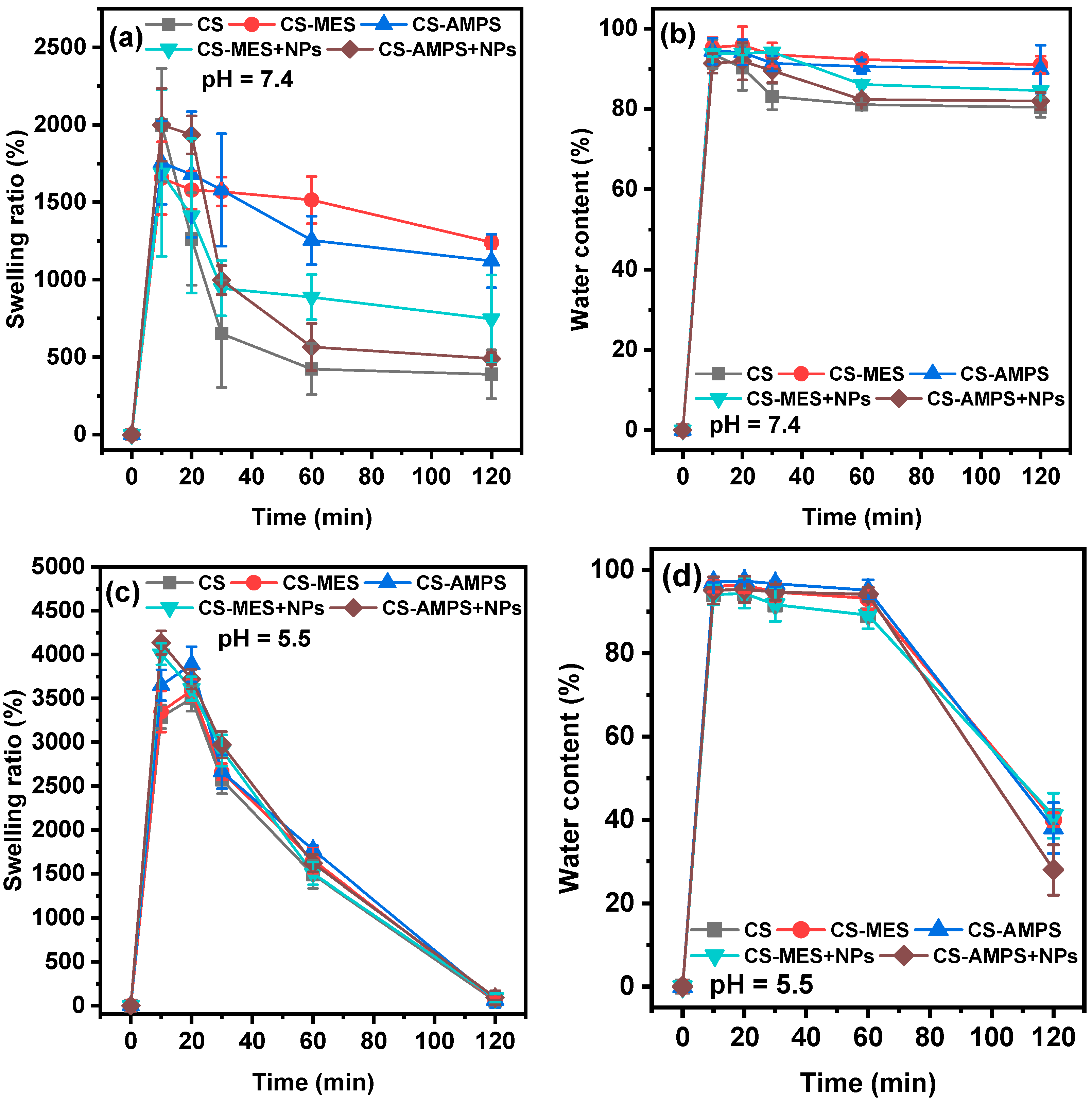
| Sample | Maximum Water Content (%) | Water Content Loss (%) | k (g/g∙min) | R2 |
|---|---|---|---|---|
| CS | 94.03 | 13.27 | 4.6 × 10⁻³ | 0.93 |
| CS-MES | 95.73 | 4.34 | 1.4 × 10⁻³ | 0.90 |
| CS-AMPS | 98.04 | 5.23 | 0.83 × 10⁻³ | 0.92 |
| CS-MES + NPs | 94.03 | 9.24 | 2.7 × 10⁻³ | 0.94 |
| CS-AMPS + NPs | 91.73 | 9.37 | 3.3 × 10⁻³ | 0.92 |
| Sample | Z-Average (nm) | PDI | Hep Loading % |
|---|---|---|---|
| PBSu NPs | 506 | 0.39 | - |
| PBSu-Hep NPs | 797 | 0.58 | 13.87 ± 1.06 |
| CS + NPs | - | - | 10.24 ± 1.85 |
| CS-AMPS + NPs | - | - | 12.43 ± 0.97 |
| CS-MES + NPs | - | - | 11.29 ± 2.41 |
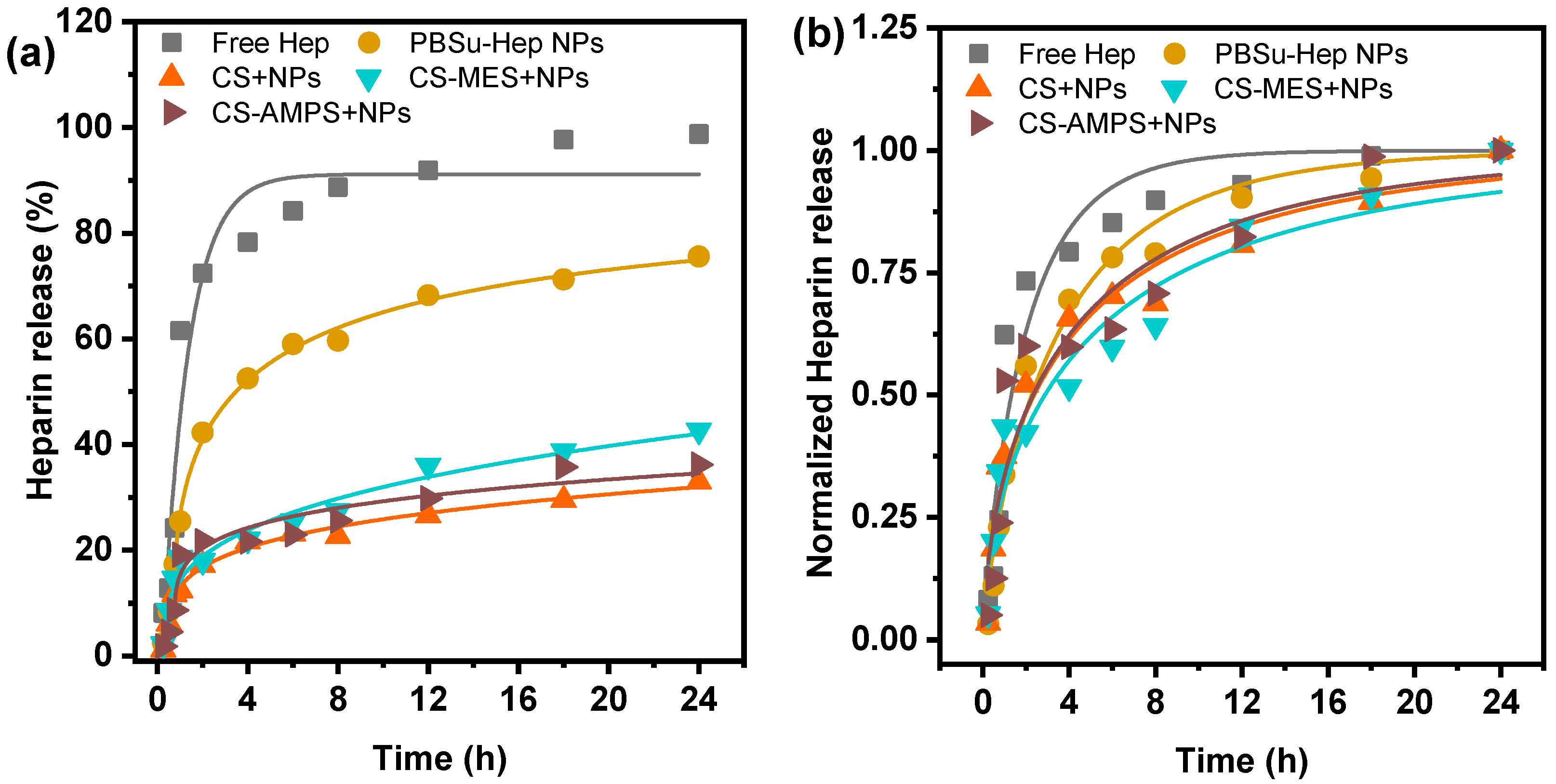
| Formulation | Release Efficiency at 24 h (%) | Relative to Free Hep | Weibull α-Values (Normalized Fit) | Weibull β-Values (Normalized Fit) |
|---|---|---|---|---|
| Free Hep | 98.8 | ×1.00 | 2.02 | 0.87 |
| PBSu-Hep NPs | 75.6 | ×0.76 | 3.56 | 0.81 |
| CS + NPs | 33 | ×0.33 | 4.34 | 0.61 |
| CS-MES + NPs | 42.7 | ×0.43 | 5.30 | 0.60 |
| CS-AMPS + NPs | 36.2 | ×0.37 | 4.18 | 0.63 |
Disclaimer/Publisher’s Note: The statements, opinions and data contained in all publications are solely those of the individual author(s) and contributor(s) and not of MDPI and/or the editor(s). MDPI and/or the editor(s) disclaim responsibility for any injury to people or property resulting from any ideas, methods, instructions or products referred to in the content. |
© 2026 by the authors. Licensee MDPI, Basel, Switzerland. This article is an open access article distributed under the terms and conditions of the Creative Commons Attribution (CC BY) license.
Share and Cite
Meimaroglou, D.; Christodoulou, E.; Bikiaris, R.E.; Koumentakou, I.; Noordam, M.J.; Oikonomou, A.; Taitzoglou, I.; Tsamesidis, I.; Kontonasaki, E.; Terzopoulou, Z.; et al. Modified Chitosan-Based Hemostatic Dressings Incorporating Heparin-Loaded Nanoparticles for Enhanced Hemostatic Activity. Pharmaceutics 2026, 18, 373. https://doi.org/10.3390/pharmaceutics18030373
Meimaroglou D, Christodoulou E, Bikiaris RE, Koumentakou I, Noordam MJ, Oikonomou A, Taitzoglou I, Tsamesidis I, Kontonasaki E, Terzopoulou Z, et al. Modified Chitosan-Based Hemostatic Dressings Incorporating Heparin-Loaded Nanoparticles for Enhanced Hemostatic Activity. Pharmaceutics. 2026; 18(3):373. https://doi.org/10.3390/pharmaceutics18030373
Chicago/Turabian StyleMeimaroglou, Despoina, Evi Christodoulou, Rizos Evangelos Bikiaris, Ioanna Koumentakou, Michiel Jan Noordam, Amalia Oikonomou, Ioannis Taitzoglou, Ioannis Tsamesidis, Eleana Kontonasaki, Zoi Terzopoulou, and et al. 2026. "Modified Chitosan-Based Hemostatic Dressings Incorporating Heparin-Loaded Nanoparticles for Enhanced Hemostatic Activity" Pharmaceutics 18, no. 3: 373. https://doi.org/10.3390/pharmaceutics18030373
APA StyleMeimaroglou, D., Christodoulou, E., Bikiaris, R. E., Koumentakou, I., Noordam, M. J., Oikonomou, A., Taitzoglou, I., Tsamesidis, I., Kontonasaki, E., Terzopoulou, Z., Papazoglou, L. G., Kyzas, G. Z., & Bikiaris, D. N. (2026). Modified Chitosan-Based Hemostatic Dressings Incorporating Heparin-Loaded Nanoparticles for Enhanced Hemostatic Activity. Pharmaceutics, 18(3), 373. https://doi.org/10.3390/pharmaceutics18030373