

Innovative Nanocarriers: Elastic Aspasomes Loaded with Metformin Hydrochloride for Effective Management of Melasma: In Vitro Studies and Clinical Appraisal

 , , , ,
  and
and
Abstract
1. Introduction
2. Materials and Methods
2.1. Methods
2.1.1. Experimental Design
2.1.2. Metformin Hydrochloride Aspasome (ASP) Fabrication
2.1.3. Estimation of the Percentage Entrapment Efficiency
2.1.4. Particle Size (PS), Polydispersity Index (PDI), and Zeta Potential (ZP) Measurements
2.1.5. Application of Desirability Criterion for Optimization of ASPs
2.2. In Vitro Testing of OASPs
2.2.1. Transmission Electron Microscopy (TEM)
2.2.2. Lyophilization and Differential Scanning Calorimetry (DSC)
2.2.3. In Vitro Release Study of MFC from OASPs
2.2.4. Effect of Short-Term Storage
2.3. In Vivo Clinical Assessment of OASPs
2.3.1. Patient Recruitment
2.3.2. Evaluation of Modified Melasma Area Severity Index (mMASI) and Physician Global Assessment (PGA)
2.3.3. Immunohistochemical Evaluation and Histopathologic Assessment
3. Results and Discussion
3.1. Metformin Hydrochloride Aspasome (ASP) Fabrication
3.1.1. Experimental Design Interpretations
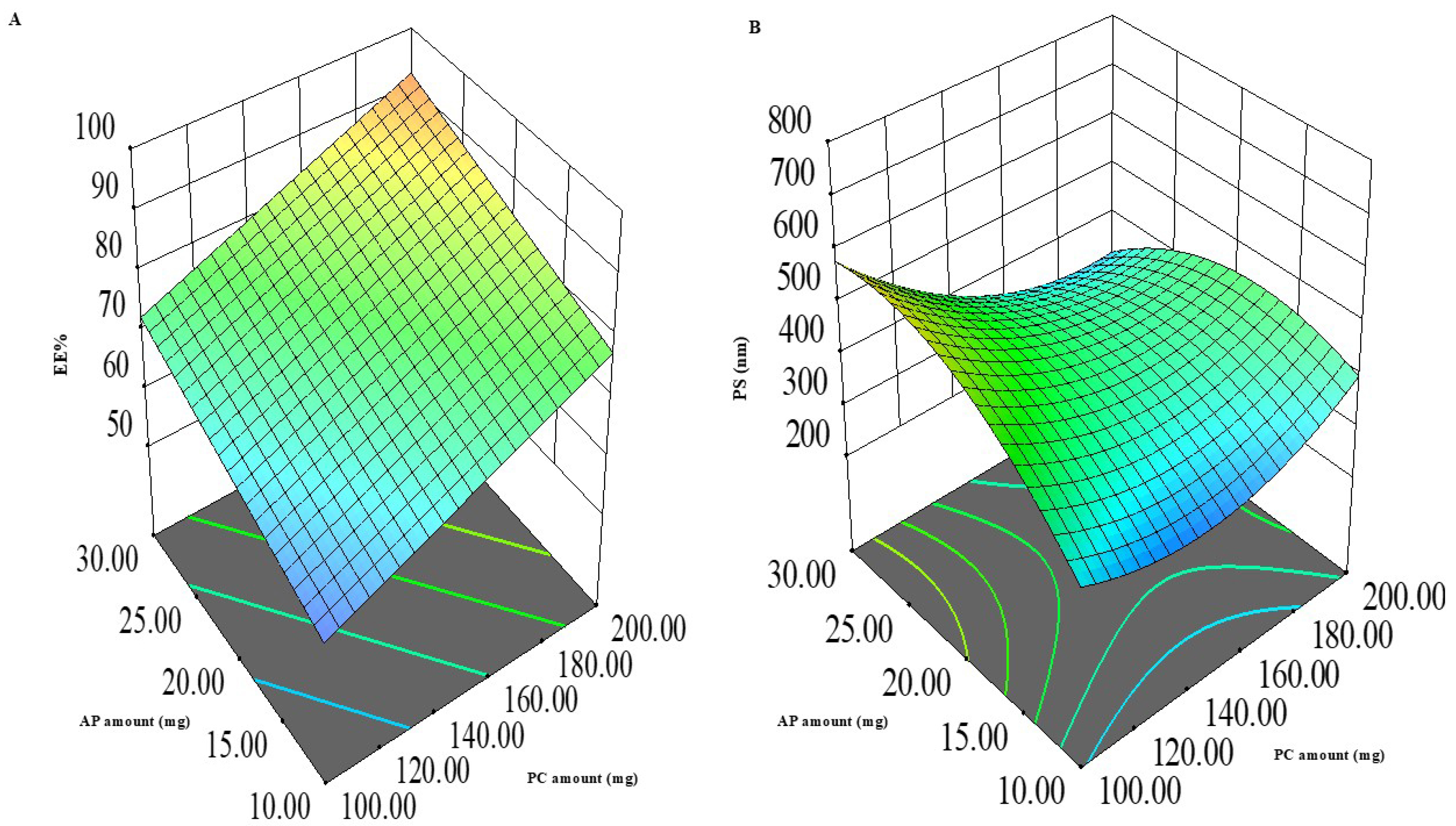
3.1.2. %EE Model Analysis
3.1.3. PS Model Analysis
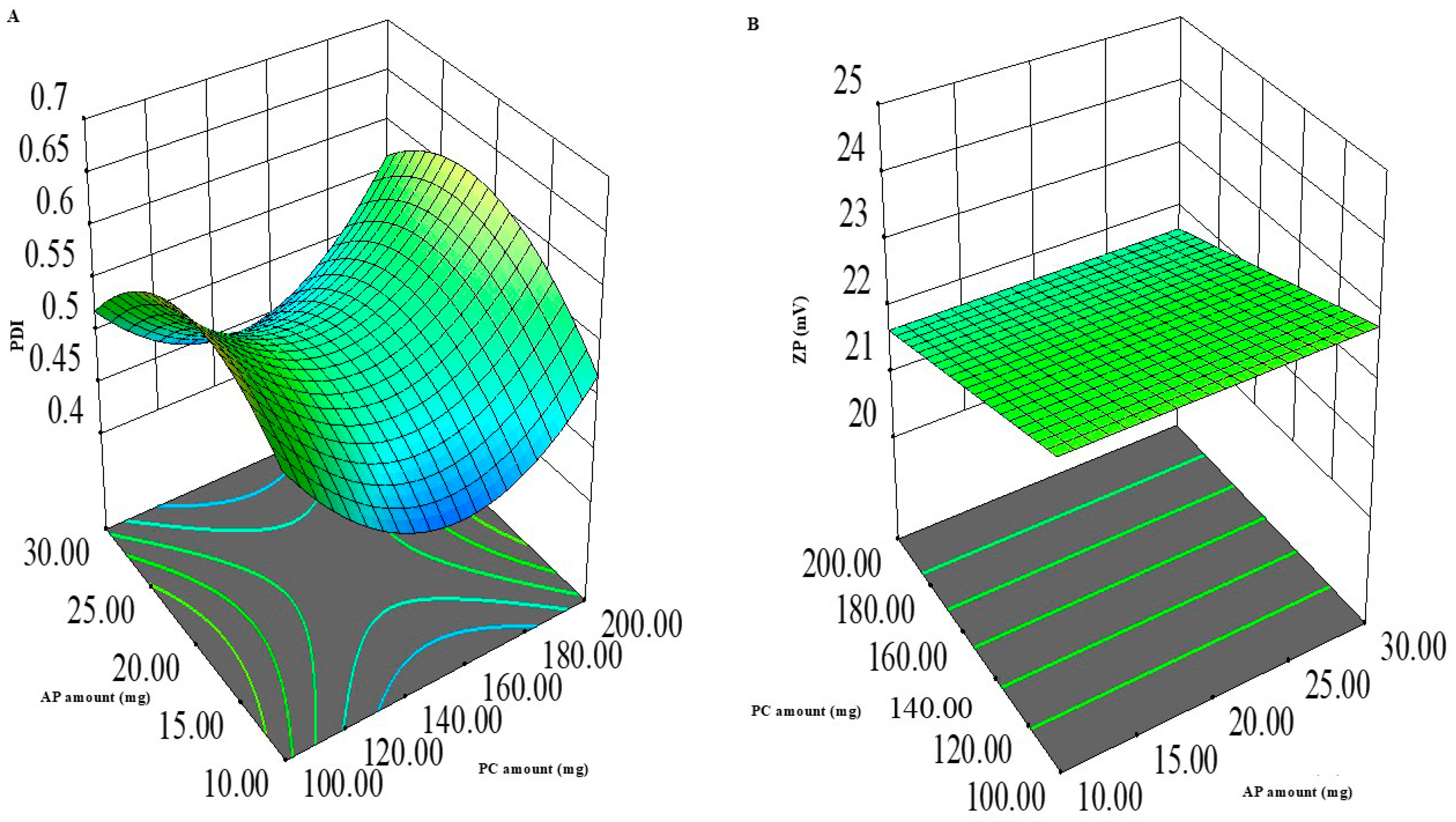
3.1.4. PDI Model Analysis
3.1.5. ZP Model Analysis
3.2. Application of Desirability Criterion for Optimization of ASPs
3.3. In Vitro Testing of OASP (Physicochemical Properties)
3.3.1. Transmission Electron Microscopy (TEM)
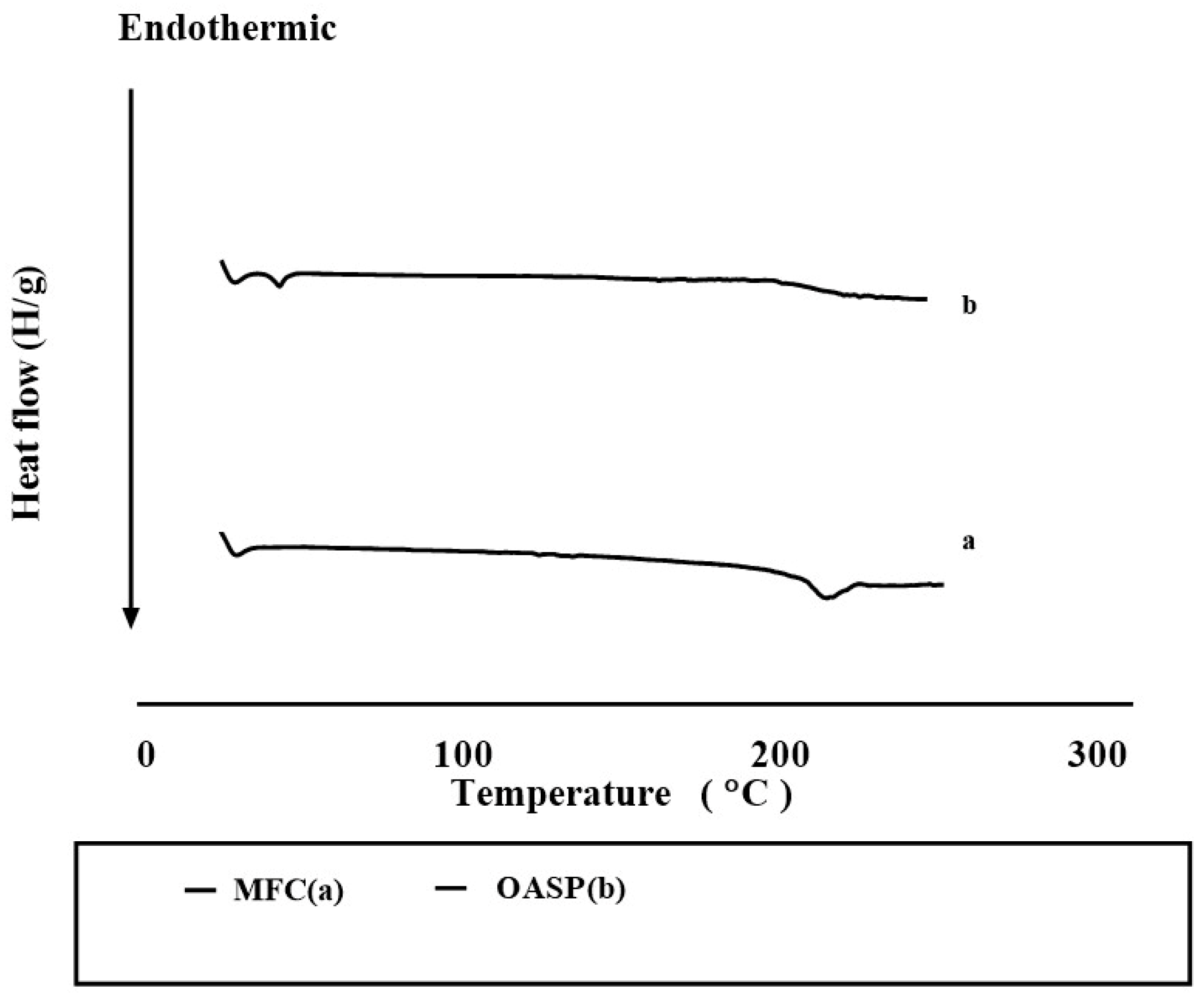
3.3.2. Differential Scanning Calorimetry (DSC)
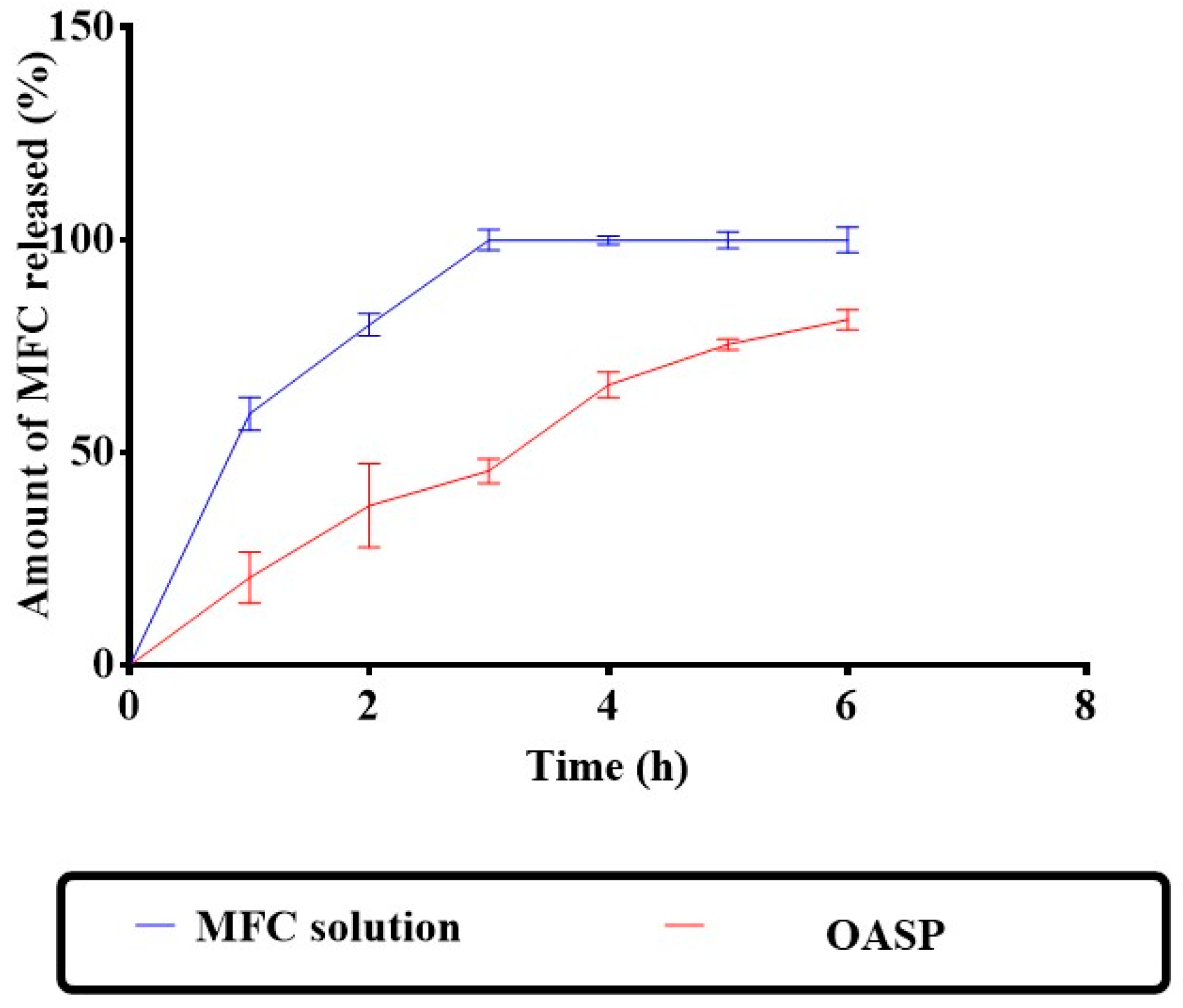
3.4. In Vitro Release Study of MFC from OASP
Effect of Short-Term Storage
3.5. In Vivo Clinical Assessment of OASP
Modified Melasma Area Severity Index (mMASI), Physician (PGA), and Patient Global Assessment (PtGA) Evaluations
3.6. Immunohistochemical Evaluation and Histopathologic Assessment
4. Conclusions
Author Contributions
Funding
Institutional Review Board Statement
Informed Consent Statement
Data Availability Statement
Acknowledgments
Conflicts of Interest
Abbreviations
| %EE | Entrapment efficiency percent |
| PS | Particle size |
| PDI | Polydispersity index |
| ZP | Zeta potential |
| MFC | Metformin hydrochloride |
| AP | Ascorbyl palmitate |
| PC | Phospholipid |
| ASP | Aspasomes |
References
- Ali, L.; Al Niaimi, F. Pathogenesis of Melasma Explained. Int. J. Dermatol. 2025, 64, 1201–1212. [Google Scholar] [CrossRef]
- Hatem, S.; El Hoffy, N.M.; Elezaby, R.S.; Nasr, M.; Kamel, A.O.; Elkheshen, S.A. Background and different treatment modalities for melasma: Conventional and nanotechnology-based approaches. J. Drug Deliv. Sci. Technol. 2020, 60, 101984. [Google Scholar] [CrossRef]
- El-Kayal, M.; Nasr, M.; Elkheshen, S.; Mortada, N. Colloidal (-)-epigallocatechin-3-gallate vesicular systems for prevention and treatment of skin cancer: A comprehensive experimental study with preclinical investigation. Eur. J. Pharm. Sci. 2019, 137, 104972. [Google Scholar] [CrossRef]
- Ghasemiyeh, P.; Fazlinejad, R.; Kiafar, M.R.; Rasekh, S.; Mokhtarzadegan, M.; Mohammadi-Samani, S. Different therapeutic approaches in melasma: Advances and limitations. Front. Pharmacol. 2024, 15, 1337282. [Google Scholar] [CrossRef]
- Špiclin, P.; Gašperlin, M.; Kmetec, V. Stability of ascorbyl palmitate in topical microemulsions. Int. J. Pharm. 2001, 222, 271–279. [Google Scholar] [CrossRef]
- Stamford, N.P.J. Stability, transdermal penetration, and cutaneous effects of ascorbic acid and its derivatives. J. Cosmet. Dermatol. 2012, 11, 310–317. [Google Scholar] [CrossRef] [PubMed]
- Gopinath, D.; Ravi, D.; Rao, B.R.; Apte, S.S.; Renuka, D.; Rambhau, D. Ascorbyl palmitate vesicles (Aspasomes): Formation, characterization and applications. Int. J. Pharm. 2004, 271, 95–113. [Google Scholar] [CrossRef] [PubMed]
- Aboul-Einien, M.H.; Kandil, S.M.; Abdou, E.M.; Diab, H.M.; Zaki, M.S.E. Ascorbic acid derivative-loaded modified aspasomes: Formulation, in vitro, ex vivo and clinical evaluation for melasma treatment. J. Liposome Res. 2020, 30, 54–67. [Google Scholar] [CrossRef] [PubMed]
- Khalil, R.M.; Abdelbary, A.; Arini, S.K.; El Basha, M.; El-Hashemy, H.A.; Farouk, F. Development of tizanidine loaded aspasomes as transdermal delivery system: Ex-vivo and in-vivo evaluation. J. Liposome Res. 2021, 31, 19–29. [Google Scholar] [CrossRef] [PubMed]
- Yücel, Ç.; Şeker Karatoprak, G.; Ilbasmis-Tamer, S.; Değim, İ.T. Ferulic acid-loaded aspasomes: A new approach to enhance the skin permeation, anti-aging and antioxidant effects. J. Drug Deliv. Sci. Technol. 2023, 86, 104748. [Google Scholar] [CrossRef]
- Shahid, M.; Usman, F.; Abbas, S.R. Topical hydrogel formulation based on nano-aspasomes encapsulating Caffeic acid and Retinoic acid for antiaging effects. J. Drug Deliv. Sci. Technol. 2025, 113, 107360. [Google Scholar] [CrossRef]
- Miklos, A.C.; Li, C.; Sorrell, C.D.; Lyon, L.A.; Pielak, G.J. An upper limit for macromolecular crowding effects. BMC Biophys. 2011, 4, 13. [Google Scholar] [CrossRef]
- Ceriello, A.; Colagiuri, S. IDF global clinical practice recommendations for managing type 2 diabetes—2025. Diabetes Res. Clin. Pract. 2025, 222, 112152. [Google Scholar] [CrossRef]
- Mbara, K.C.; Mofo Mato, P.E.; Driver, C.; Nzuza, S.; Mkhombo, N.T.; Gcwensa, S.K.; Mcobothi, E.N.; Owira, P.M. Metformin turns 62 in pharmacotherapy: Emergence of non-glycaemic effects and potential novel therapeutic applications. Eur. J. Pharmacol. 2021, 898, 173934. [Google Scholar] [CrossRef]
- AboAlsoud, E.S.; Eldahshan, R.M.; AbouKhodair Mohammed, H.; Elsaie, M.L. Safety and efficacy of topical metformin 30% cream versus triple combination cream (Kligman’s formula) in treating melasma: A randomized controlled study. J. Cosmet. Dermatol. 2022, 21, 2508–2515. [Google Scholar] [CrossRef]
- Mongkhon, P.; Ruengorn, C.; Awiphan, R.; Phosuya, C.; Ruanta, Y.; Thavorn, K.; Jamjanya, S.; Chuamanochan, M.; Nochaiwong, S. Efficacy and safety of metformin for melasma treatment: A systematic review and meta-analysis. Front. Pharmacol. 2023, 14, 1281050. [Google Scholar] [CrossRef] [PubMed]
- Eltabeeb, M.A.; Hamed, R.R.; El-Nabarawi, M.A.; Teaima, M.H.; Hamed, M.I.A.; Darwish, K.M.; Hassan, M.; Abdellatif, M.M. Nanocomposite alginate hydrogel loaded with propranolol hydrochloride kolliphor® based cerosomes as a repurposed platform for Methicillin-Resistant Staphylococcus aureus-(MRSA)-induced skin infection; in-vitro, ex-vivo, in-silico, and in-vivo evaluation. Drug Deliv. Transl. Res. 2024, 15, 556–576. [Google Scholar] [CrossRef] [PubMed]
- Lamie, C.; Elmowafy, E.; Ragaie, M.H.; Attia, D.A.; Mortada, N.D. Assessment of antifungal efficacy of itraconazole loaded aspasomal cream: Comparative clinical study. Drug Deliv. 2022, 29, 1345–1357. [Google Scholar] [CrossRef]
- Elmahboub, Y.; Albash, R.; Magdy William, M.; Rayan, A.H.; Hamed, N.O.; Ousman, M.S.; Raslan, N.A.; Mosallam, S. Metformin Loaded Zein Polymeric Nanoparticles to Augment Antitumor Activity against Ehrlich Carcinoma via Activation of AMPK Pathway: D-Optimal Design Optimization, In Vitro Characterization, and In Vivo Study. Molecules 2024, 29, 1614. [Google Scholar] [CrossRef] [PubMed]
- El Hassab, M.A.; Ibrahim, M.H.; Abdel Mageed, S.S.; Mahmoud, A.M.A.; Othman Ahmed, Z.S.; Mosallam, S.; Abdelbari, M.A.; Khaleel, E.F.; El Hasab, M.A.; Elsayyad, A.; et al. Formulation of zein nanoparticles for augmenting the anti-inflammatory activity of dexketoprofen. Front. Pharmacol. 2025, 16, 1560585. [Google Scholar] [CrossRef]
- Ahmed, S.; Attia, H.; Saher, O.; Fahmy, A.M. Augmented glycerosomes as a promising approach against fungal ear infection: Optimization and microbiological, ex vivo and in vivo assessments. Int. J. Pharm. X 2024, 8, 100295. [Google Scholar] [CrossRef]
- Agiba, A.M.; Huerta, L.G.R.; Ulloa-Castillo, N.A.; Sierra-Valdez, F.J.; Beigi-Boroujeni, S.; Lozano, O.; Aguirre-Soto, A. Fusion of polymer-coated liposomes and centrifugally spun microfibers as hybrid materials to enhance sustained release. Nanoscale Adv. 2024, 7, 1009–1017. [Google Scholar] [CrossRef]
- Albash, R.; Abdelbari, M.A.; Elbesh, R.M.; Khaleel, E.F.; Badi, R.M.; Eldehna, W.M.; Elkaeed, E.B.; El Hassab, M.A.; Ahmed, S.M.; Mosallam, S. Sonophoresis mediated diffusion of caffeine loaded Transcutol® enriched cerosomes for topical management of cellulite. Eur. J. Pharm. Sci. 2024, 201, 106875. [Google Scholar] [CrossRef]
- Gupta, V.; Sharma, V.K. Skin typing: Fitzpatrick grading and others. Clin. Dermatol. 2019, 37, 430–436. [Google Scholar] [CrossRef]
- Majid, I. Mometasone-based triple combination therapy in melasma: Is it really safe? Indian J. Dermatol. 2010, 55, 359–362. [Google Scholar] [CrossRef] [PubMed]
- Salama, A.H.; Aburahma, M.H. Ufasomes nano-vesicles-based lyophilized platforms for intranasal delivery of cinnarizine: Preparation, optimization, ex-vivo histopathological safety assessment and mucosal confocal imaging. Pharm. Dev. Technol. 2016, 21, 706–715. [Google Scholar] [CrossRef] [PubMed]
- Ammar, H.O.; Tadros, M.I.; Salama, N.M.; Ghoneim, A.M. Ethosome-derived invasomes as a potential transdermal delivery system for vardenafil hydrochloride: Development, optimization and application of physiologically based pharmacokinetic modeling in adults and geriatrics. Int. J. Nanomed. 2020, 15, 5671–5685. [Google Scholar] [CrossRef]
- Albash, R.; Ali, S.K.; Abdelmonem, R.; Agiba, A.M.; Aldhahri, R.; Saleh, A.; Kassem, A.B.; Abdellatif, M.M. Electrospun Nanofiber-Scaffold-Loaded Levocetirizine Dihydrochloride Cerosomes for Combined Management of Atopic Dermatitis and Methicillin-Resistant Staphylococcus Aureus (MRSA) Skin Infection: In Vitro and In Vivo Studies. Pharmaceuticals 2025, 18, 633. [Google Scholar] [CrossRef]
- Fahmy, A.M.; Balkhi, B.; Sadek, M.A.; ElBishbishy, R.M.; Ahmed, S. PEGylated terpesomes of curcumin for prominent hepatoprotective activity: Fabrication, optimization, biochemical analysis and in vivo evaluation. J. Drug Deliv. Sci. Technol. 2025, 108, 106876. [Google Scholar] [CrossRef]
- Jahanfar, S.; Gahavami, M.; Khosravi-Darani, K.; Jahadi, M. Liposomal green tea extract: Optimization and physicochemical characterization. J. Appl. Biotechnol. Rep. 2021, 8, 5–12. [Google Scholar] [CrossRef]
- Raghav, S.S.; Kumar, B.; Sethiya, N.K.; Pahwa, S. Development and optimization of kaempferol loaded ethosomes using Box–Behnken statistical design: In vitro and ex-vivo assessments. J. Biomed. Mater. Res. Part B Appl. Biomater. 2024, 112, e35394. [Google Scholar] [CrossRef]
- Wang, C.H.; Huang, Y.Y. Encapsulating protein into preformed liposomes by ethanol-destabilized method. Artif. Cells Blood Substit. Immobil. Biotechnol. 2003, 31, 303–312. [Google Scholar] [CrossRef]
- Vikbjerg, A.F.; Rusig, J.Y.; Jonsson, G.; Mu, H.; Xu, X. Comparative evaluation of the emulsifying properties of phosphatidylcholine after enzymatic acyl modification. J. Agric. Food Chem. 2006, 54, 3310–3316. [Google Scholar] [CrossRef]
- Andleeb, M.; Shoaib Khan, H.M.; Daniyal, M. Development, Characterization and Stability Evaluation of Topical Gel Loaded with Ethosomes Containing Achillea millefolium L. Extract. Front. Pharmacol. 2021, 12, 603227. [Google Scholar] [CrossRef]
- Wu, J.; Xu, R.; Xu, X.; Ye, S.; Huang, A. Preparation and evaluation of transdermal permeation of Huperzine A ethosomes gel in vitro. BMC Pharmacol. Toxicol. 2024, 25, 21. [Google Scholar] [CrossRef] [PubMed]
- Galatage, S.T.; Manjappa, A.S.; Sankula, K.R.; Nadaf, S.J.; Rao, N.S.; Sushma, N.; Gunnam, S.; Shyamsundar, P.; Kadam, R.J.; Gourisankar, K.; et al. Development and characterization of ethosomes of Acacia senegal for improved topical treatment of breast cancer. Next Mater. 2025, 8, 100556. [Google Scholar] [CrossRef]
- Danaei, M.; Dehghankhold, M.; Ataei, S.; Hasanzadeh Davarani, F.; Javanmard, R.; Dokhani, A.; Khorasani, S.; Mozafari, M.R. Impact of particle size and polydispersity index on the clinical applications of lipidic nanocarrier systems. Pharmaceutics 2018, 10, 57. [Google Scholar] [CrossRef]
- Zaki, R.M.; Alfadhel, M.M.; Alossaimi, M.A.; Elsawaf, L.A.; Devanathadesikan Seshadri, V.; Almurshedi, A.S.; Yusif, R.M.; Said, M. Central Composite Optimization of Glycerosomes for the Enhanced Oral Bioavailability and Brain Delivery of Quetiapine Fumarate. Pharmaceuticals 2022, 15, 940. [Google Scholar] [CrossRef]
- Al-Mahallawi, A.M.; Abdelbary, A.A.; Aburahma, M.H. Investigating the potential of employing bilosomes as a novel vesicular carrier for transdermal delivery of tenoxicam. Int. J. Pharm. 2015, 485, 329–340. [Google Scholar] [CrossRef] [PubMed]
- Albash, R.; El-Dahmy, R.M.; Hamed, M.I.A.; Darwish, K.M.; Alahdal, A.M.; Kassem, A.B.; Fahmy, A.M. Repurposing levocetirizine hydrochloride loaded into cationic ceramide/phospholipid composite (CCPCs) for management of alopecia: Central composite design optimization, in-silico and in-vivo studies. Drug Deliv. 2022, 29, 2784–2795. [Google Scholar] [CrossRef] [PubMed]
- Fahmy, A.M.; Hassan, M.; El-Setouhy, D.A.; Tayel, S.A.; Al-mahallawi, A.M. Voriconazole Ternary Micellar Systems for the Treatment of Ocular Mycosis: Statistical Optimization and In Vivo Evaluation. J. Pharm. Sci. 2021, 110, 2130–2138. [Google Scholar] [CrossRef]
- Makino, K.; Yamada, T.; Kimura, M.; Oka, T.; Ohshima, H.; Kondo, T. Temperature-and ionic strength-induced conformational changes in the lipid head group region of liposomes as suggested by zeta potential data. Biophys. Chem. 1991, 41, 175–183. [Google Scholar] [CrossRef]
- Garcia-Manyes, S.; Oncins, G.; Sanz, F. Effect of pH and ionic strength on phospholipid nanomechanics and on deposition process onto hydrophilic surfaces measured by AFM. Electrochim. Acta 2006, 51, 5029–5036. [Google Scholar] [CrossRef]
- Limsuwan, T.; Boonme, P.; Amnuaikit, T. Enhanced stability of phenylethyl resorcinol in elastic vesicular formulations. Trop. J. Pharm. Res. 2018, 17, 1895–1902. [Google Scholar] [CrossRef]
- Albash, R.; Abdelbary, A.A.; Refai, H.; El-Nabarawi, M.A. Use of transethosomes for enhancing the transdermal delivery of olmesartan medoxomil: In vitro, ex vivo, and in vivo evaluation. Int. J. Nanomed. 2019, 14, 1953–1968. [Google Scholar] [CrossRef]
- Fahmy, A.M.; El-Setouhy, D.A.; Habib, B.A.; Tayel, S.A. Enhancement of Transdermal Delivery of Haloperidol via Spanlastic Dispersions: Entrapment Efficiency vs. Particle Size. AAPS PharmSciTech 2019, 20, 95. [Google Scholar] [CrossRef]
- Abdelhakeem, E.; Nemr, A.A.; Rashed, H.M.; Selim, A.A.; Essa, B.M.; Hegazy, D. Revitalizing Itraconazole: Unleashing its Anticancer Potential through Oral Nanosystems for Liver Targeting and Biodistribution Profiling in an Animal Model using Radiolabeling Technique. J. Drug Deliv. Sci. Technol. 2025, 104, 106463. [Google Scholar] [CrossRef]
- Ahmed, S.; Farag, M.M.; Attia, H.; Balkhi, B.; Adel, I.M.; Nemr, A.A. Exploring the potential of antifungal-loaded proniosomes to consolidate corneal permeation in fungal keratitis: A comprehensive investigation from laboratory characterization to microbiological evaluation. Int. J. Pharm. X 2025, 9, 100322. [Google Scholar] [CrossRef]
- Albash, R.; Fahmy, A.M.; Shamsel-Din, H.A.; Ibrahim, A.B.; Bogari, H.A.; Malatani, R.T.; Abdelbari, M.A.; Mosallam, S. Intranasal propranolol hydrochloride-loaded PLGA-lipid hybrid nanoparticles for brain targeting: Optimization and biodistribution study by radiobiological evaluation. Eur. J. Pharm. Sci. 2025, 208, 107061. [Google Scholar] [CrossRef] [PubMed]
- Taylor, S.C.; Torok, H.; Jones, T.; Lowe, N.; Rich, P.; Tschen, E.; Menter, A.; Baumann, L.; Wieder, J.J.; Jarratt, M.M.; et al. Efficacy and Safety of a New Triple-Combination Agent for the Treatment of Facial Melasma. CUTIS 2003, 72, 67–72. [Google Scholar] [PubMed]
- El-Husseiny, R.; Rakha, N.; Sallam, M. Efficacy and safety of tranexamic acid 5% cream vs hydroquinone 4% cream in treating melasma: A split-face comparative clinical, histopathological, and antera 3D camera study. Dermatol. Ther. 2020, 33, e14240. [Google Scholar] [CrossRef] [PubMed]
- Afshar, K.; Adibfard, S.; Nikbakht, M.H.; Rastegarnasab, F.; Pourmahdi-Boroujeni, M.; Abtahi-Naeini, B. A Systematic Review on Clinical Evidence for Topical Metformin: Old Medication with New Application. Health Sci. Rep. 2024, 7, e70281. [Google Scholar] [CrossRef]
- Singh, S.; Sharma, N.; Zahoor, I.; Behl, T.; Antil, A.; Gupta, S.; Anwer, M.K.; Mohan, S.; Bungau, S.G. Decrypting the Potential of Nanotechnology-Based Approaches as Cutting-Edge for Management of Hyperpigmentation Disorder. Molecules 2023, 28, 220. [Google Scholar] [CrossRef] [PubMed]
- Kandil, S.M.; Soliman, I.I.; Diab, H.M.; Bedair, N.I.; Mahrous, M.H.; Abdou, E.M. Magnesium ascorbyl phosphate vesicular carriers for topical delivery; preparation, in-vitro and ex-vivo evaluation, factorial optimization and clinical assessment in melasma patients. Drug Deliv. 2022, 29, 534–547. [Google Scholar] [CrossRef] [PubMed]





| Factors (Independent Variables) | Levels | |
|---|---|---|
| Low (−1) | High (+1) | |
| X1: PC amount (mg) | 100 | 200 |
| X2: AP amount (mg) | 10 | 30 |
| X3: Absence/presence of ethanol | Absent | Present |
| Responses (dependent variables) | Constraints | |
| Y1: %EE | Maximize | |
| Y2: PS (nm) | Minimize | |
| Y3: PDI | Minimize | |
| Y4: ZP (mV) | In range | |
| Characteristics | Value |
|---|---|
| Age (years) | |
| Mean ± SD | 31.5 ± 8.41 |
| (Range) | (18–42) |
| Sex, n (%) | |
| Female | 10 (100%) |
| Skin type, n (%) | |
| III | 5 (50%) |
| IV | 5 (50%) |
| Family history, n (%) | |
| +ve | 5 (50%) |
| −ve | 5 (50%) |
| Histological type, n (%) | |
| Mixed | 6 (60%) |
| Epidermal | 4 (40%) |
| Clinical type, n (%) | |
| Centrofacial | 1 (10%) |
| Malar | 6 (60%) |
| Malar, Mandibular | 3 (30%) |
| Duration of disease (months) | |
| Mean ± SD | 24.9 ± 16 |
| (Range) | (9–60) |
| PC Amount (mg) | AP Amount (mg) | Ethanol | %EE | PS (nm) | PDI | ZP (mV) | |
|---|---|---|---|---|---|---|---|
| ASP1 | 100 | 10 | Absent | 61.19 ± 1.30 | 360.00 ± 1.00 | 0.580 ± 0.001 | −21.5 ± 0.51 |
| ASP2 | 100 | 10 | Present | 54.92 ± 1.12 | 315.61 ± 1.28 | 0.557 ± 0.018 | −24.56 ± 0.43 |
| ASP3 | 100 | 20 | Present | 60.33 ± 1.10 | 509.19 ± 2.34 | 0.550 ± 0.010 | −24.12 ± 0.41 |
| ASP4 | 100 | 30 | Absent | 75.00 ± 2.00 | 705.00 ± 2.00 | 0.658 ± 0.002 | −20.00 ± 1.00 |
| ASP5 | 100 | 30 | Absent | 75.00 ± 2.00 | 705.00 ± 2.00 | 0.675 ± 0.002 | −20.00 ± 1.00 |
| ASP6 | 150 | 10 | Absent | 67.31 ± 1.78 | 231.51 ± 0.53 | 0.420 ± 0.003 | −22.90 ± 0.10 |
| ASP7 | 150 | 10 | Present | 65.38 ± 1.78 | 374.19 ± 1.96 | 0.479 ± 0.002 | −21.91 ± 0.09 |
| ASP8 | 150 | 20 | Absent | 85.18 ± 2.32 | 427.23 ± 2.12 | 0.580 ± 0.001 | −21.63 ± 0.12 |
| ASP9 | 175 | 20 | Present | 76.12 ± 2.32 | 398.00 ± 2.00 | 0.470 ± 0.010 | −22.00 ± 2.00 |
| ASP10 | 200 | 10 | Absent | 81.71 ± 2.50 | 315.34 ± 3.65 | 0.49 ± 0.011 | −23.11 ± 0.91 |
| ASP11 | 200 | 10 | Present | 72.77 ± 3.64 | 483.18 ± 0.12 | 0.550 ± 0.005 | −21.00 ± 1.00 |
| ASP12 | 200 | 30 | Absent | 96.29 ± 2.31 | 355.23 ± 2.12 | 0.670 ± 0.003 | −21.41 ± 0.12 |
| ASP13 | 200 | 30 | Present | 88.00 ± 1.00 | 270.92 ± 0.01 | 0.453 ± 0.002 | −21.33 ± 0.18 |
| ASP14 | 200 | 30 | Present | 88.00 ± 1.00 | 270.91 ± 0.01 | 0.453 ± 0.017 | −21.33 ± 0.15 |
| ASP15 | 200 | 30 | Absent | 96.29 ± 2.31 | 355.23 ± 2.12 | 0.680 ± 0.020 | −21.71 ± 0.13 |
| Observed values for OASP | 87.50 ± 0.3% | 264.47 ± 0.02 | 0.423 ± 0.001 | −21.67 ± 0.12 | |||
| Predicted values for OASP | 87.49 | 264.30 | 0.420 | −21.60 | |||
| Bias (%) | 0.01 | 0.06 | 0.70 | 0.18 | |||
| Responses | R2 | Adjusted R2 | Predicted R2 | Adequate Precision | Significant Factors |
|---|---|---|---|---|---|
| %EE | 0.970 | 0.962 | 0.955 | 32.64 | X1, X2, X3 |
| PS (nm) | 0.983 | 0.962 | 0.800 | 21.48 | X1, X2 |
| PDI | 0.986 | 0.976 | 0.942 | 26.52 | X3 |
| ZP (mV) | 0.895 | 0.854 | 0.732 | 15.22 | X1, X3 |
| Right-Side OASP Formula | Left-Side Kligman’s Formula | p Value | |
|---|---|---|---|
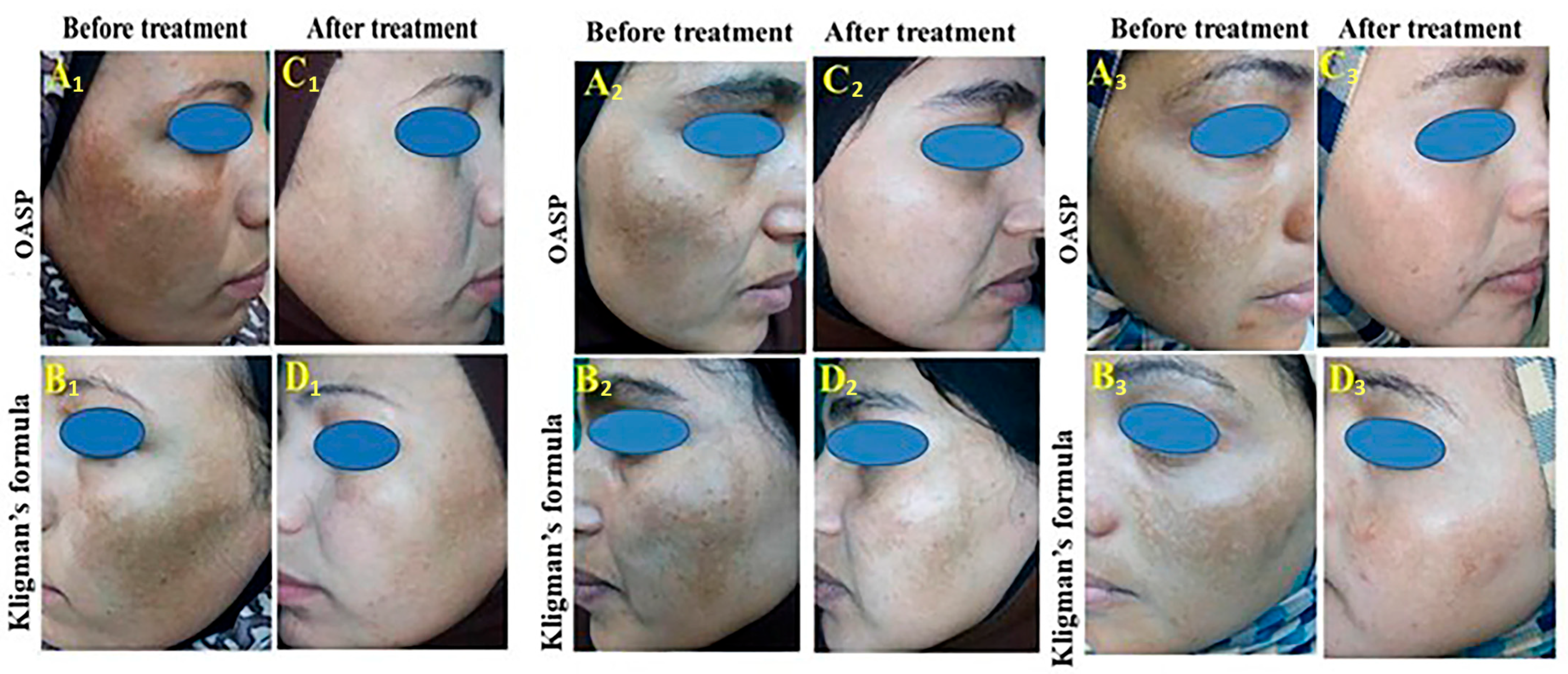
| Mean of mMASI before treatment, mean ± SD ∞ | 10.68 ± 2.68 | 10.67 ± 2.56 | 0.997 |
| (Range) | (6.2–14.55) | (6.2–14.3) | |
| Mean of mMASI after treatment, mean ± SD ∞ | 4.17 ± 1.22 | 6.28 ± 1.41 | 0.002 * |
| (Range) | (2.6–5.8) | (5–9.1) | |
| P1 value (before vs. after treatment in each group) € | <0.001 * | <0.001 * | |
| Reduction in mMASI after two months, mean ± SD ∞ | 6.51 ± 1.66 | 4.39 ± 1.73 | 0.012 * |
| (Range) | (3.6–8.75) | (1.2–7.65) | |
| Percent of reduction in mMASI after two months, mean ± SD ∞ | 61.09 ± 4.92 | 40.01 ± 10.02 | <0.001 * |
| (Range) | (53.15–66.67) | (19.35–53.50) |
| Clinical Response | Right-Side OASP Formula | Left-Side Kligman’s Formula | p Value |
|---|---|---|---|
| Excellent | 6 (60%) | 0 (0%) | 0.001 * |
| Good | 4 (40%) | 7 (70%) | |
| Moderate | 0 (0%) | 3 (30%) | |
| Mild | 0 (0%) | 0 (0%) |
| Parameter | Right Side of the Face OASP Formula | Left Side of the Face Kligman’s Formula | p-Value |
|---|---|---|---|
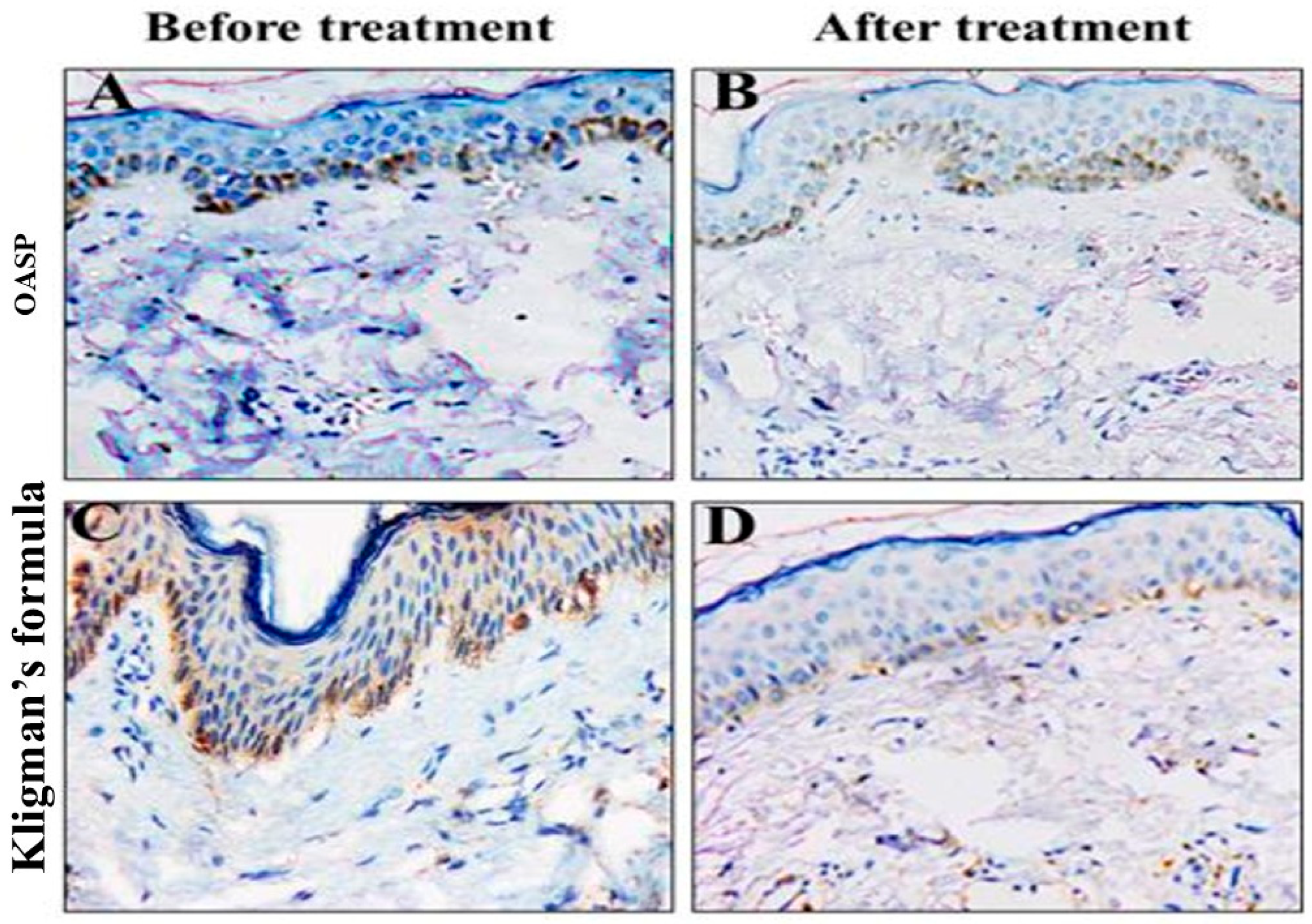
| Number of MART-1-positive cells in the epidermal layer before treatment, median (IQR) ¥ | 17 (10–22.8) | 17.5 (9.8–21.5) | 0.879 |
| Number of MART-1-positive cells in the epidermal layer after treatment, median (IQR) ¥ | 5 (2.8–7.3) | 7 (5.8–10.3) | 0.044 * |
| Comparison of MART-1-positive cells in the epidermal layer before and after treatment in each group α | 0.005 * | 0.005 * | |
| Number of MART-1-positive cells in the dermal layer before treatment, median (IQR) ¥ | 6.5 (3.8–9.3) | 6.5 (4.5–10) | 0.820 |
| Number of MART-1-positive cells in the dermal layer after treatment, median (IQR) ¥ | 2.5 (0.8–4) | 4.5 (2.8–5.3) | 0.039 * |
| Comparison of MART-1-positive cells in the dermal layer before and after treatment in each group α | 0.005 * | 0.005 * | |
| Total number of MART-1-positive cells before treatment, median (IQR) ¥ | 24.5 (18.3–28.5) | 25.5 (17–28) | 0.940 |
| Total number of MART-1-positive cells after treatment, median (IQR) ¥ | 7 (4.5–10) | 11 (8–16) | 0.035 * |
| Comparison of the total number of MART-1-positive cells before and after treatment in each group α | 0.005 * | 0.005 * | |
| Percent reduction in total MART-1-positive cells after treatment, median (IQR) ¥ | 63.64 (57.84–66.67) | 36.61 (21.67–48.65) | 0.0002 * |
Disclaimer/Publisher’s Note: The statements, opinions and data contained in all publications are solely those of the individual author(s) and contributor(s) and not of MDPI and/or the editor(s). MDPI and/or the editor(s) disclaim responsibility for any injury to people or property resulting from any ideas, methods, instructions or products referred to in the content. |
© 2026 by the authors. Licensee MDPI, Basel, Switzerland. This article is an open access article distributed under the terms and conditions of the Creative Commons Attribution (CC BY) license.
Share and Cite
Albash, R.; Fahmy, A.M.; Ragaie, M.H.; Ahmed, S.S.; El-Gazar, R.A.; Kassem, A.B.; Abdelbari, M.A.; Salem, H.A.; Saleh, A.; Mosallam, S. Innovative Nanocarriers: Elastic Aspasomes Loaded with Metformin Hydrochloride for Effective Management of Melasma: In Vitro Studies and Clinical Appraisal. Pharmaceutics 2026, 18, 364. https://doi.org/10.3390/pharmaceutics18030364
Albash R, Fahmy AM, Ragaie MH, Ahmed SS, El-Gazar RA, Kassem AB, Abdelbari MA, Salem HA, Saleh A, Mosallam S. Innovative Nanocarriers: Elastic Aspasomes Loaded with Metformin Hydrochloride for Effective Management of Melasma: In Vitro Studies and Clinical Appraisal. Pharmaceutics. 2026; 18(3):364. https://doi.org/10.3390/pharmaceutics18030364
Chicago/Turabian StyleAlbash, Rofida, Abdurrahman M. Fahmy, Maha H. Ragaie, Shimaa S. Ahmed, Rabab A. El-Gazar, Amira B. Kassem, Manar Adel Abdelbari, Hoda A. Salem, Asmaa Saleh, and Shaimaa Mosallam. 2026. "Innovative Nanocarriers: Elastic Aspasomes Loaded with Metformin Hydrochloride for Effective Management of Melasma: In Vitro Studies and Clinical Appraisal" Pharmaceutics 18, no. 3: 364. https://doi.org/10.3390/pharmaceutics18030364
APA StyleAlbash, R., Fahmy, A. M., Ragaie, M. H., Ahmed, S. S., El-Gazar, R. A., Kassem, A. B., Abdelbari, M. A., Salem, H. A., Saleh, A., & Mosallam, S. (2026). Innovative Nanocarriers: Elastic Aspasomes Loaded with Metformin Hydrochloride for Effective Management of Melasma: In Vitro Studies and Clinical Appraisal. Pharmaceutics, 18(3), 364. https://doi.org/10.3390/pharmaceutics18030364