1. Introduction
Physical modulation of the tumor microenvironment (TME) has emerged as a promising strategy to overcome therapeutic resistance in solid tumors by enhancing antitumor immune responses [
1]. In immune-refractory tumors, physical and structural barriers within the TME restrict antigen accessibility, immune cell infiltration, and effective immune activation, which highlights the need for approaches capable of remodeling the tumor milieu in a spatially controlled manner. Among various physical modalities, ultrasound-based techniques offer unique advantages by enabling the noninvasive delivery of mechanical energy with high spatial precision [
2].
In particular, acoustic cavitation, defined as the formation and dynamic oscillation of gas or vapor cavities in response to ultrasound exposure, is widely recognized as a central mechanism underlying the biological and immunologically relevant effects of ultrasound-based therapies [
2,
3]. Cavitation-induced mechanical stress has been shown to promote immunogenic signaling through enhanced tumor antigen release, the exposure of damage-associated molecular patterns, and the modulation of immune cell trafficking, thereby contributing to antitumor immune activation [
4,
5].
Focused ultrasound (FUS) enables cavitation activity to be spatially confined to a defined focal region within the tumor, allowing localized modulation of the tumor microenvironment without widespread tissue damage [
6,
7,
8]. Depending on its spatial distribution, intensity, and temporal persistence, cavitation can induce a range of biological effects, including transient membrane permeabilization, microstructural remodeling, and localized mechanical stress, all of which are known to influence immune activation within tumors [
9,
10,
11]. However, the reproducible induction and precise control of cavitation within the tumor parenchyma remain challenging, particularly in solid tumors with heterogeneous vascular architectures and stromal compositions, where cavitation patterns can vary substantially [
12,
13].
Importantly, emerging evidence indicates that the immunological consequences of cavitation are not solely determined by its magnitude but are also critically influenced by where cavitation occurs within the tumor microenvironment [
14]. Cavitation localized predominantly to the vascular compartment may preferentially induce endothelial perturbation and transient permeability changes, whereas cavitation occurring within the tumor parenchyma can directly modulate the physical state of cancer cells and stromal components, thereby shaping antigen availability and immune accessibility [
5,
15]. This spatial distinction is particularly relevant in solid tumors, where immune-excluded and therapy-resistant regions—characterized by elevated interstitial pressure and dense extracellular matrix—are primarily located outside the vasculature [
14].
Despite the recognized importance of cavitation localization for immune activation, most ultrasound-based strategies rely on microbubble-mediated cavitation that is largely confined to the intravascular compartment, due to the micron-scale size and vascular restriction of microbubbles, where acoustic conditions favor bubble activity [
16,
17]. While such approaches can robustly amplify cavitation signals, they provide limited control over cavitation events in extravascular regions, including the tumor interstitium and parenchyma, thereby restricting effective immune modulation within the tumor tissue. As a consequence, cavitation-induced immune responses are often spatially biased, transient, and difficult to reproduce across heterogeneous solid tumors [
18,
19].
Nanodroplets represent an emerging class of ultrasound-responsive platforms that offer a potential solution to this limitation [
20]. Owing to their nanoscale dimensions, nanodroplets can extravasate beyond the vasculature and access tumor interstitial and parenchymal compartments, thereby repositioning cavitation nuclei within immune-relevant regions of the tumor [
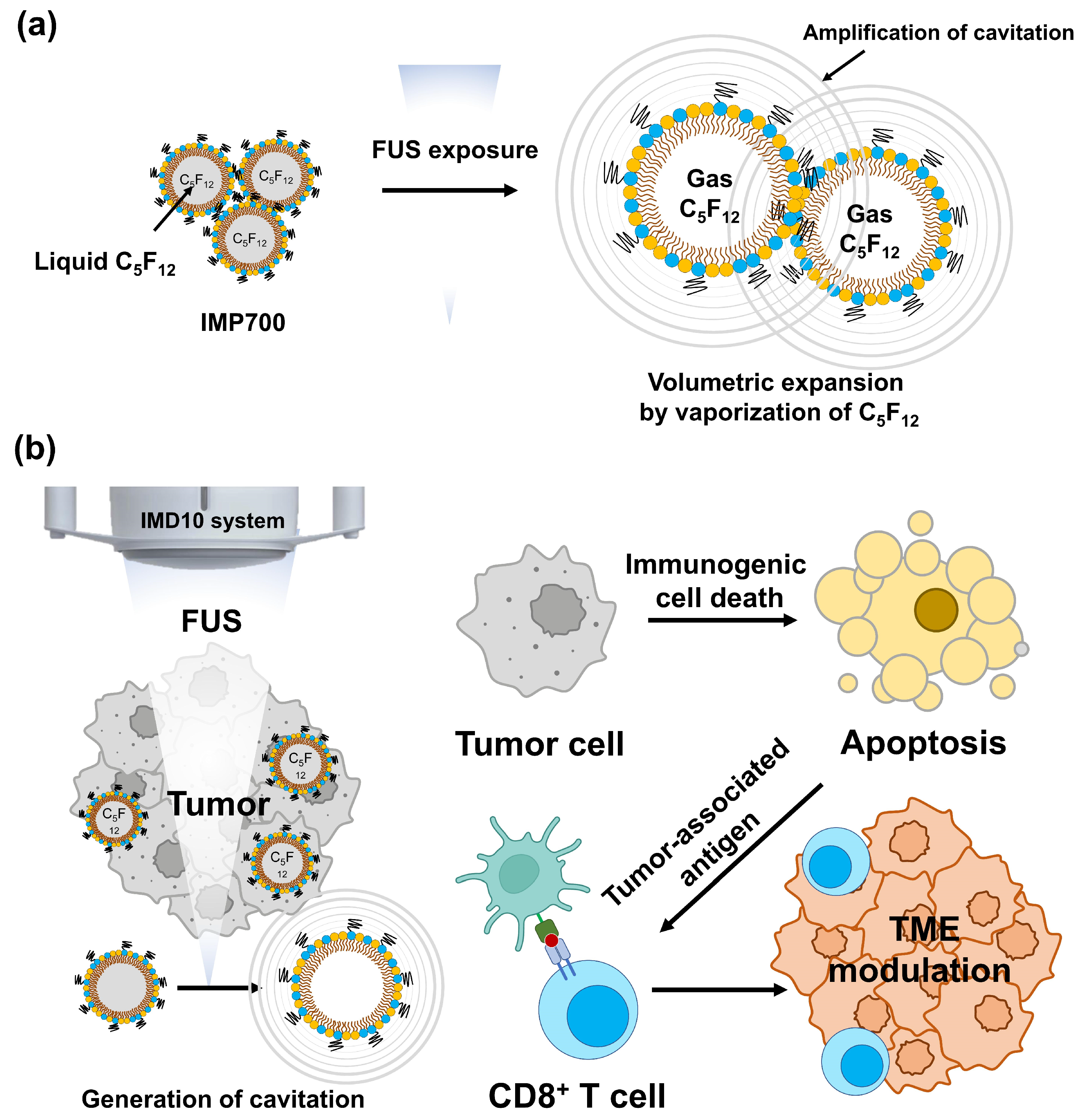
20]. Upon FUS exposure, nanodroplets undergo phase-transition–mediated activation through acoustic droplet vaporization (ADV), generating localized cavitation events directly within the tumor parenchyma [
21]. This spatial redistribution of cavitation provides a means to couple precise physical targeting with reproducible immune activation.
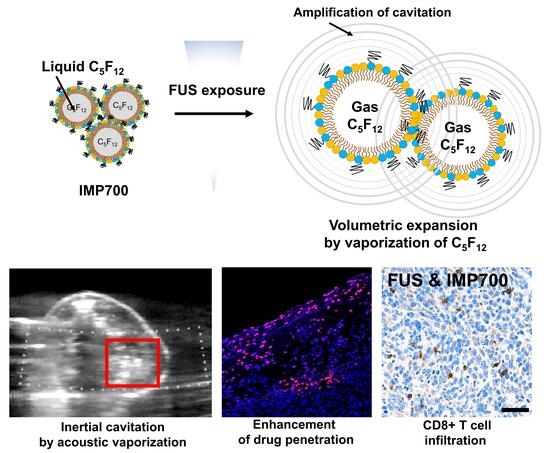
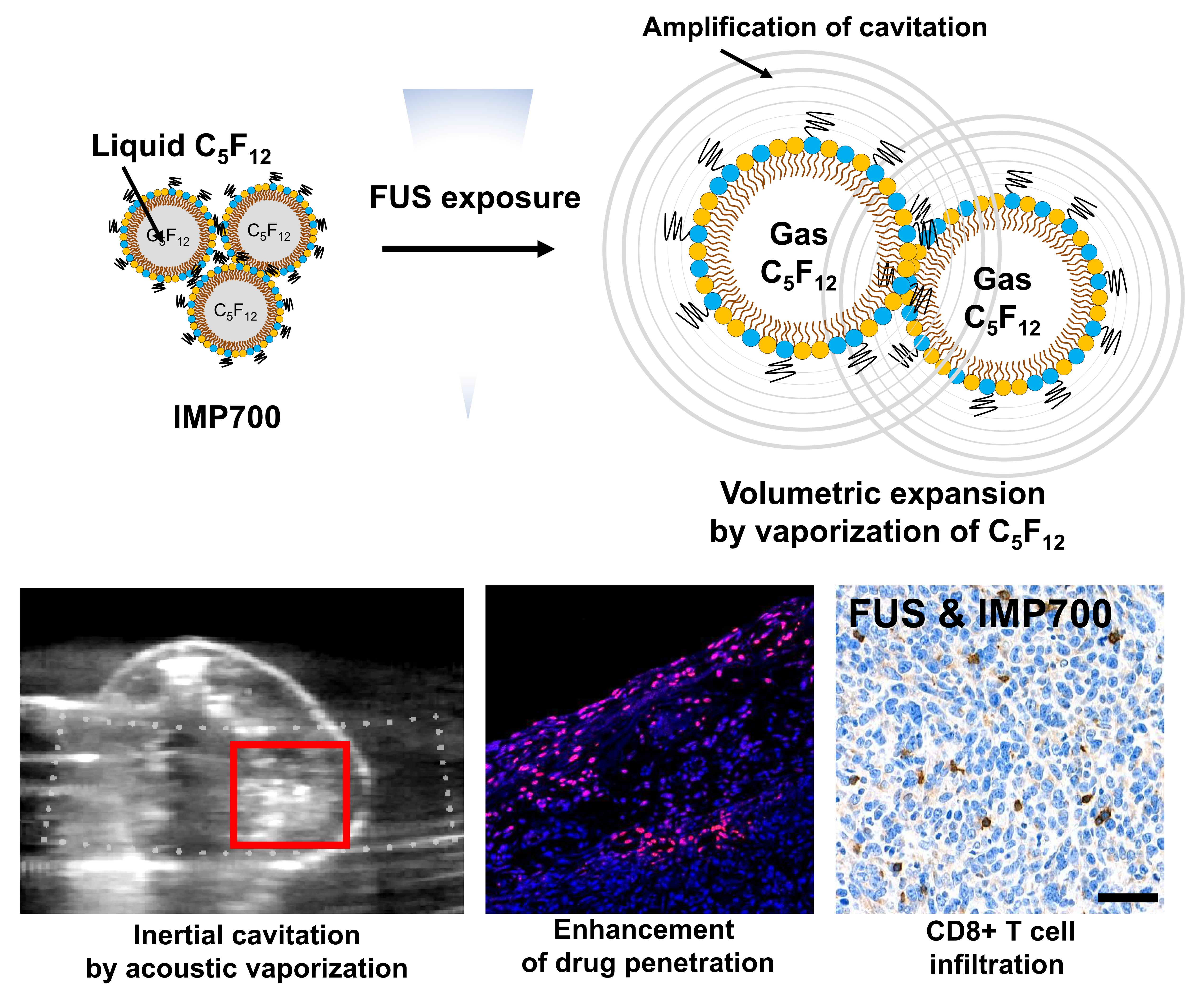
In this study, we developed perfluoropentane (PFP)-encapsulated lipid nanodroplets (IMP700) to investigate whether nanodroplet-assisted FUS can enhance antitumor immune responses through spatially controlled intratumoral cavitation. Using breast cancer and pancreatic cancer solid tumor models, we demonstrate that nanodroplets enable reproducible parenchymal cavitation patterns that are distinct from conventional vascular-confined responses, which leads to robust immune activation within the tumor microenvironment. Together, these findings establish controlled cavitation localization as a key physical determinant of ultrasound-mediated immune enhancement and provide a mechanistic framework for integrating focused ultrasound into immunotherapeutic strategies (
Figure 1).
2. Materials and Methods
2.1. Materials
The following substances were acquired from Lipoid AG (Steinhausen, Switzerland): 1,2-Distearoyl-sn-glycero-3-phosphocholine (DSPC, purity: 99.9%), 1,2-Distearoyl-sn-glycero-3-phosphoethanolamine-N-[methoxy(polyethyleneglycol)-2000] (DSPE-mPEG2000, purity: 99.6%), 1,2-Dioleyl-sn-glycerol-3-phosphoethanolamine (DOPE, purity: 99.9%). 1-Stearoyl-2-lyso-sn-glycero-3-phosphocholine (S-LysoPC) was purchased from NOF Corporation (purity: >99.0%). Cholesterol (purity: 99.6%) was purchased from Sigma Aldrich (St. Louis, MO, USA). PFP was obtained from STREM Chemicals, Inc. (Newburyport, MA, USA), and IMP301 was acquired from IMGT. Co., Ltd. IMP301 is FUS-sensitive liposome [
22]. Basic characteristics of IMP301 are demonstrated in
Figure S1.
2.2. Preparation of Perfluoropentane-Encapsulated Lipid Nanodroplets, IMP700
IMP700s were prepared with the following lipid formation molar ratio: DSPC (40%), DSPE-mPEG2000 (9%), Cholesterol (6%), DOPE (35%), and S-LysoPC (10%). Firstly, all lipids were dissolved in chloroform, and the solvent was removed under a nitrogen stream using a rotary evaporator to form a dry lipid thin film. The resulting lipid films were hydrated in 0.01 M phosphate-buffered saline (PBS, pH 7.4) to a final concentration of 5 mg/mL by stirring at 500 rpm for 60 min at 50 °C. The mixture was stored under seal in the fridge to cool down to 4 °C, prior to the addition of PFP to a final concentration of 2% (v/v in PBS). Next, 1 mL of the mixture was placed in an 8 mL glass vial and sonicated using an ultrasonic device (UP200S, Hielscher Ultrasonics GmbH, Teltow, Germany) for 2 min to promote nanodroplet emulsion. The vial was in an ice bath to prevent temperature increase during sonication. Particle size homogenization was then achieved by extrusion through the 200 nm polycarbonate track-etch membranes (Cytiva, Marlborough, MA, USA) using a hand-driven mini-extruder (Avanti Polar Lipids, Inc., Alabaster, AL, USA).
2.3. Analysis of Size Distribution and the Number of IMP700s
The hydrodynamic diameter of the IMP700 was measured using a dynamic light scattering (DLS) apparatus (Zeta Sizer Nano-ZS, Malvern Instruments, Orsay, France) at a temperature of 25 °C. The IMP700s were diluted with 0.01 M phosphate-buffered saline (PBS). Three different samples for each batch were analyzed, and all DLS measurements were performed in triplicate. The hydrodynamic diameter is calculated as an average of 9 measurements and is reported as an intensity-based distribution using the cumulant method (Z-average). The concentration of IMP700s was also quantified using nanoparticle tracking analysis (NTA) on a Nanosight NS300 (Malvern Instruments, Malvern, UK). Before measurement, samples were gently vortexed and diluted to 1:1000 v/v using PBS (pH 7.4). Three independent samples were analyzed at 25 °C, with five 60 s videos recorded per sample.
2.4. Morphology and C5F12 Encapsulation Efficiency of IMP700
Cryogenic transmission electron microscopy (cryo-TEM) was performed to visualize the morphological changes in IMP700 nanoparticles before and after vaporization. For cryo-TEM analysis, samples were prepared using a Vitrobot-type plunge freezer (FEI FP5350/60). A 5 μL aliquot of the liposome suspension was applied to a carbon-coated TEM grid (Lacey support film, 200 mesh; Ted Pella, Inc., Redding, CA, USA), blotted with filter paper, and rapidly vitrified by plunging into liquid ethane. For analysis of the vaporized morphology, IMP700 was dropwise applied to TEM grids and vaporized in situ. The IMP700 was analyzed under cryogenic conditions at −170 °C using a Tecnai F20 X TXIN microscope (FEI, Hillsboro, OR, USA) equipped with a field emission gun operating at an acceleration voltage of 200 kV.
For the investigation of C5F12 encapsulation efficiency, gas chromatography was applied. The IMP700 was diluted by ethanol at a concentration of 100 µg/mL in a headspace vial. The diluted IMP700 was sonicated in a bath sonicator at 37 °C for 5 min to break all nanodroplets and, thus, release the C5F12. Prior to quantification, PFP in the headspace vial was fully evaporated by increasing the temperature in the headspace vial oven to 85 °C. Then, the PFP was evaluated by gas chromatography (GC) equipped with a flame ionization detector (FID). The temperature for PFP detection was maintained at 250 °C, and the flow rate of nitrogen gas was 5 mL/min. This process was repeated in triplicate for each formulation, and isopropyl alcohol was used as an internal standard.
2.5. Stability of IMP700
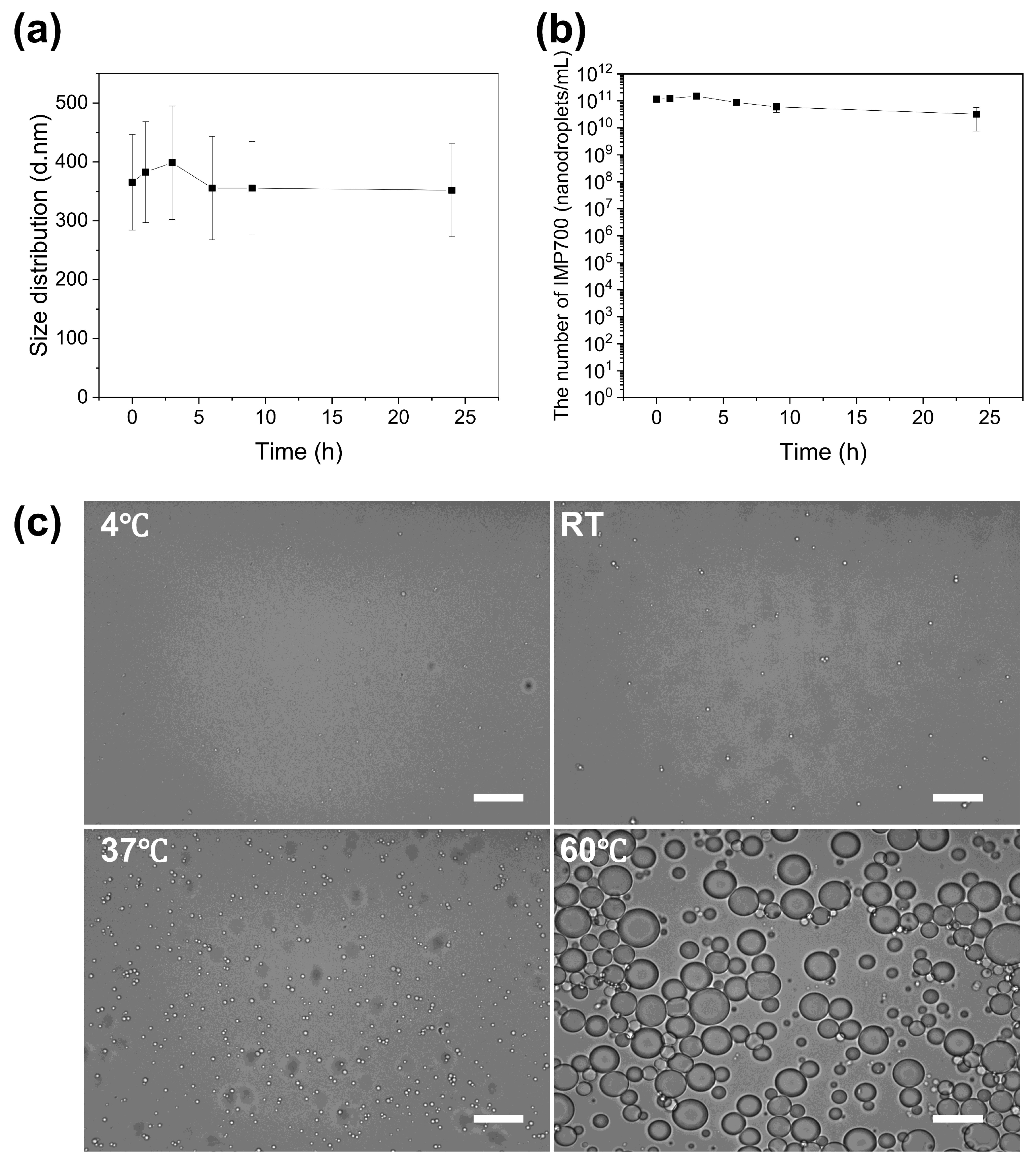
The stability of IMP700s over storage time was evaluated in 0.01 M PBS at storage temperature (4 °C). Changes in hydrodynamic size and concentration were monitored at predetermined time points (0, 1, 3, 6, 9, and 24 h) using DLS and NTA, respectively. To assess the temperature-dependent stability of IMP700s, IMP700s were placed in the refrigerator (4 °C) and on a temperature-controlled hot plate (37 °C and 60 °C). The morphological changes and evaporation of PFP were observed with an optical microscope, and the microscopic images were captured to evaluate the thermal stability of the IMP700.
2.6. Vaporization of IMP700 Dependent on the FUS Intensity
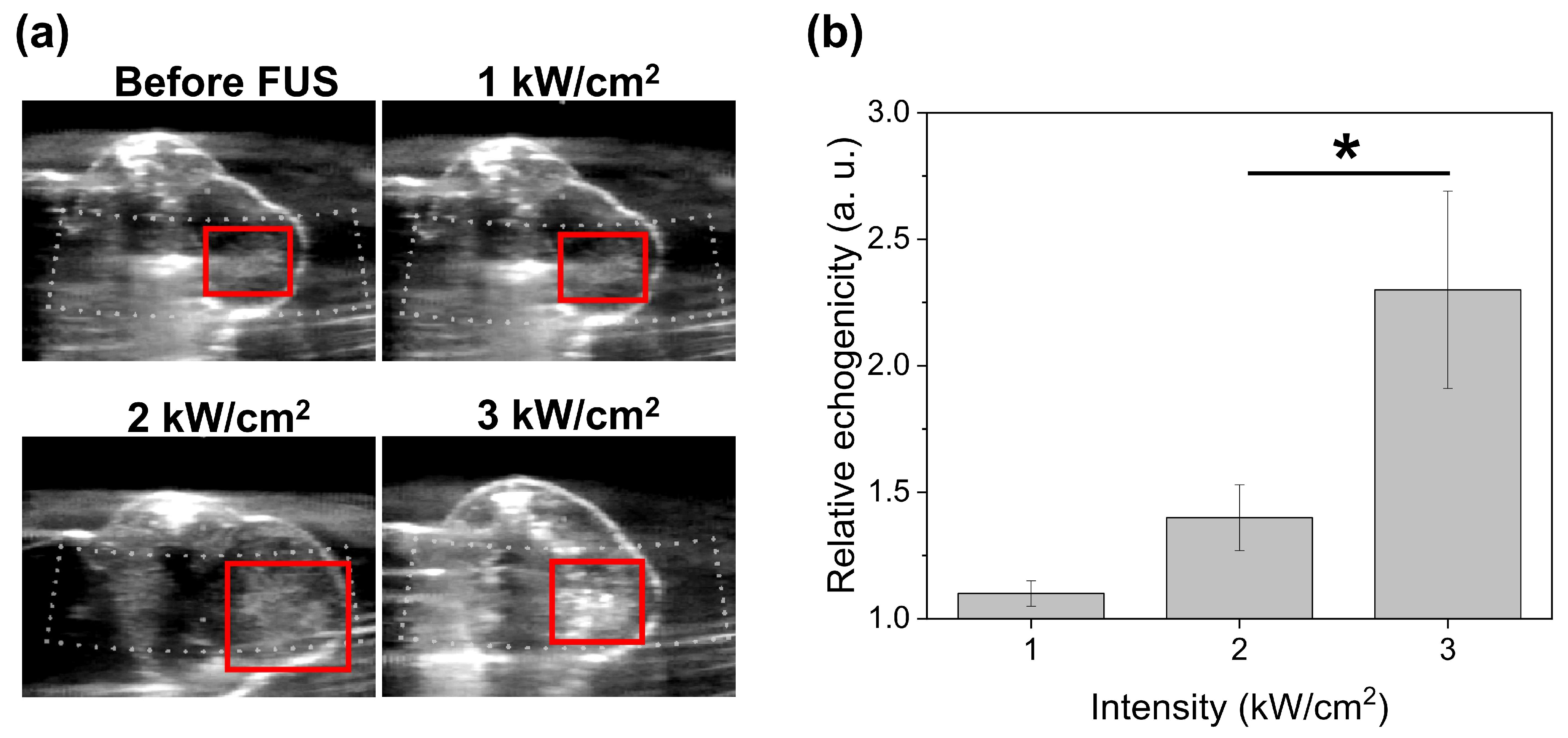
To investigate cavitation generation induced by vaporization of IMP700 under FUS exposure, IMP700 was irradiated with FUS at varying acoustic intensities. The FUS system was equipped with a FUS transducer operating at a center frequency of 1.1 MHz with a cigar-shaped acoustic focal zone measuring 1.2 mm in diameter and 9.4 mm in length at −6 dB. Briefly, IMP700 diluted 100-fold in PBS was loaded into a latex tube to minimize acoustic impedance mismatch. FUS was applied to the center of the latex tube, and ultrasound images were acquired during FUS irradiation. FUS was applied with intensities ranging from 0.35 to 2.81 kW/cm2, at a 5% duty cycle, with PRF of 10 Hz and 5 s irradiation duration, to investigate intensity-dependent ADV. During FUS exposure, real-time B-mode ultrasound images were acquired using the diagnostic imaging probe. The echogenicity of vaporized IMP700 droplets was quantified as the mean gray value within the ROI using ImageJ software (Version 1.54g) to assess the ultrasound-induced phase transition effect.
2.7. Cavitation Behavior of IMP700 as a Function of FUS Intensity
Cavitation dose was assessed across 0.5–2.5 kW/cm2, while the duty cycle and PRF were fixed at 2% and 10 Hz, respectively, to evaluate the cavitation behavior of IMP700 under varying ultrasound intensities. Stable and inertial cavitation levels were quantified from the same cavitation signals.
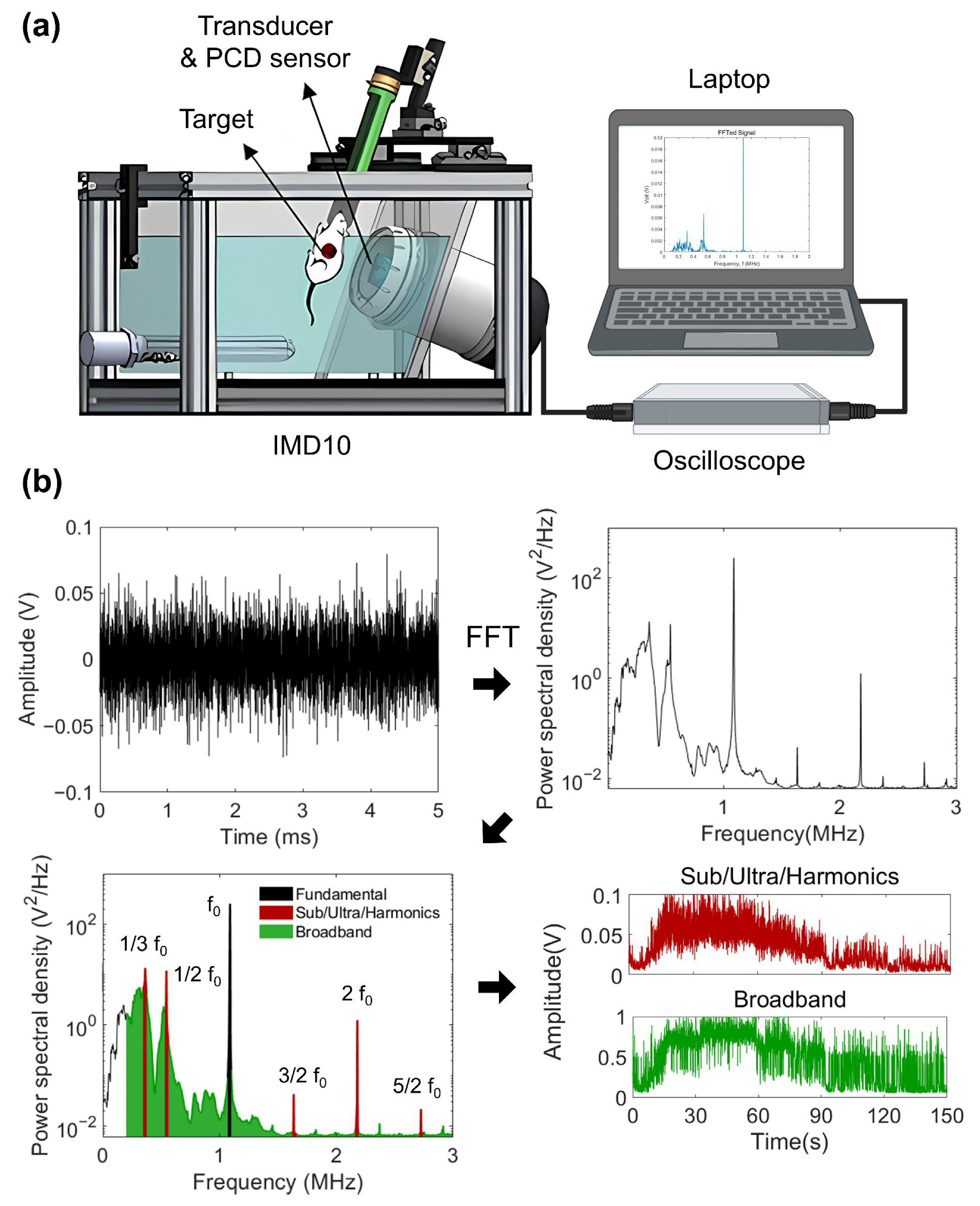
The overall process of cavitation signal acquisition and analysis is illustrated in
Figure 2. Cavitation was measured using an IMD10 system (IMGT Co., Ltd., Seongnam-si, Republic of Korea) equipped with a FUS transducer and a pair of 6 mm diameter passive cavitation detection (PCD) sensors confocally aligned with the FUS focal point. The PCD sensors converted the acoustic signals into voltage signals, and the signals were measured by an oscilloscope device (NI 779969-1, National Instrument, Austin, TX, USA) and processed by the MATLAB software (Ver R2023a, MathWorks, Natick, MA, USA) (
Figure 2a). Time-domain signals were converted into frequency-domain signals by a Fast Fourier transform (FFT). The power spectral density (PSD) was calculated to quantify the cavitation dose (
Figure 2b).
Stable and inertial cavitation doses were quantified by integrating PSD over predefined spectral bands. The center frequency of the FUS transducer (f
c = 1.1 MHz) and subharmonic, ultraharmonic, and harmonic components were used to define stable cavitation bands [
23,
24,
25,
26]. By contrast, inertial cavitation was quantified from broadband except for the stable cavitation frequency [
25,
26,
27], which encompasses all frequency regions (0.2–3 MHz), excluding the fundamental and stable cavitation bands. The frequency bands used for cavitation analysis are summarized in
Table 1.
2.8. Mouse Tumor Modeling
PANC-1 human pancreatic cancer cells (ATCC, Manassas, VA, USA) and 4T1 murine mammary carcinoma cells (ATCC, Manassas, VA, USA) were grown in DMEM and RPMI 1640 with glutamine, respectively, supplemented with 10% fetal bovine serum (FBS), 100 U/mL penicillin, and 100 μg/mL streptomycin. Cells were cultured in a 5% CO2 humidified atmosphere at 37 °C. Both cells were harvested at 70–80% confluency and washed with PBS. PANC-1 cells were resuspended in PBS and Matrigel basement membrane matrix (Corning, NY, USA) mixture, while 4T1 cells were resuspended in PBS for tumor implantation.
For the PANC-1 xenograft model, female BALB/c nude mice (6–7 weeks old, 18–20 g of body weight) were subcutaneously inoculated in the right thigh with 5 × 10⁶ PANC-1 cells suspended in 50 μL PBS mixed with 50 μL Matrigel. For the syngeneic 4T1 model, female BALB/c mice (6–7 weeks old, 18–20 g of body weight) were anesthetized by intraperitoneal injection of a mixture of Zoletil (30 mg/kg; Virbac, Carros, France) and Rompun (10 mg/kg; Bayer, Leverkusen, Germany), and the hair on the right thigh was removed before tumor implantation. Then, 4T1 cells were subcutaneously injected into the right thigh at a density of 1 × 10⁶ cells in 100 μL PBS.
Tumor growth was monitored every 2–3 days using digital calipers, and tumor volume was calculated using the formula: V = (length × width × height)/2. Sonoporation and immune response experiments were initiated when tumor volumes reached approximately 150–200mm3. All animal experiments were performed following a protocol approved by the Institutional Animal Care and Use Committee (IACUC No. BA-2111-332-009-01, approved on 1 February 2023) of the Biomedical Research Institute of Seoul National University Bundang Hospital.
2.9. In Vivo IMP700 Vaporization and Cavitation Assessment Depending on the FUS Parameter
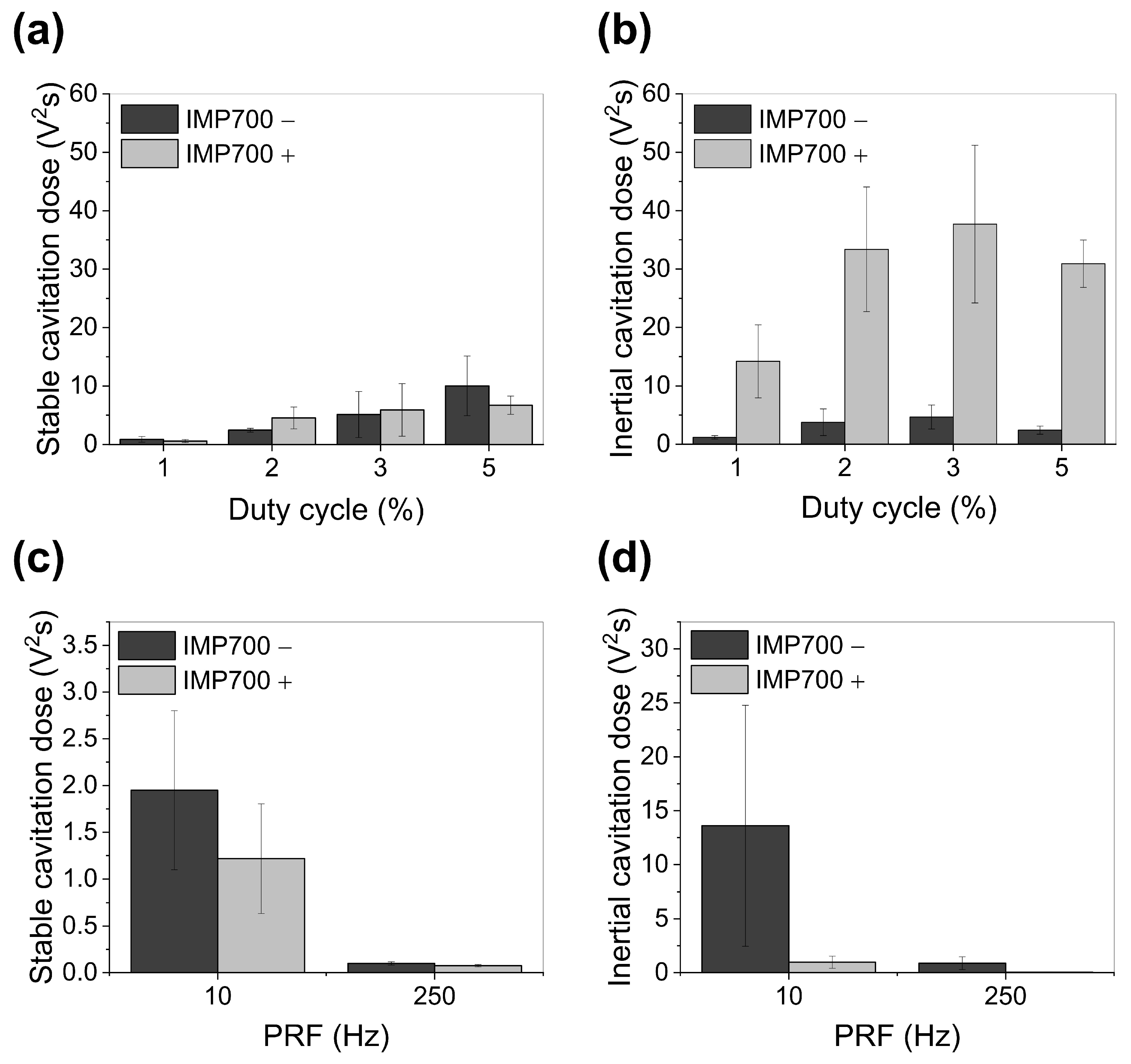
In vivo vaporization and cavitation of IMP700 were assessed using a PANC-1 xenografted mouse model. The vaporization efficiency of IMP700 was quantified by measuring echogenicity in ultrasound images using ImageJ software. To investigate the in vivo cavitation dose of IMP700 during vaporization, PANC-1 xenografted mice (n = 5 per group) were intravenously injected with 1–3 × 10⁹ droplets per mouse. The duty cycle was adjusted to 1%, 2%, 3%, and 5%, while the PRF was set to 10 Hz and 250 Hz. For each condition, FUS was applied to the tumor region, and the acoustic signals were recorded and analyzed to quantify the cavitation dose.
2.10. Sonoporation Effect of IMP700-Mediated Focused Ultrasound
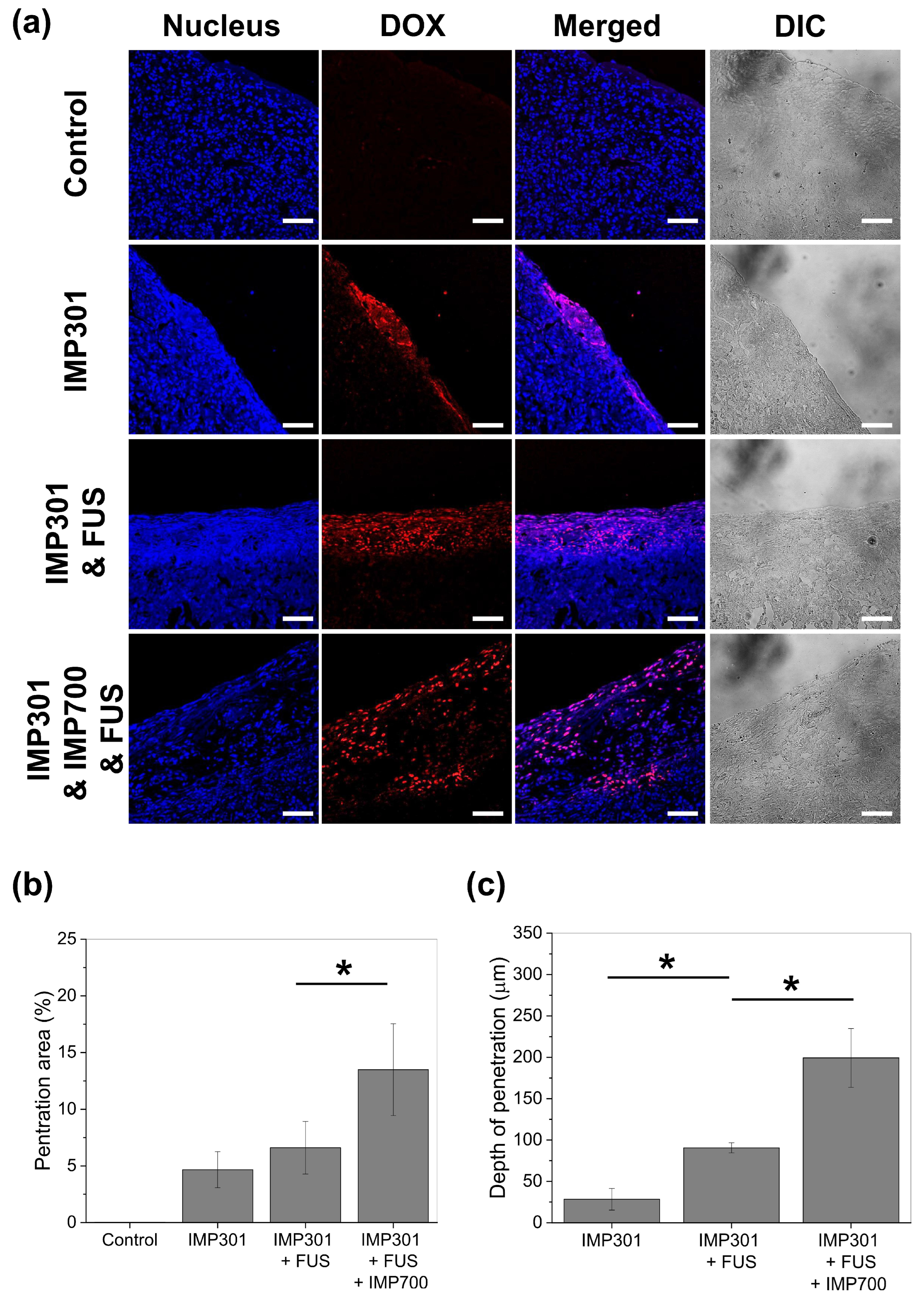
Sonoporation efficiency was assessed using IMP301. A total of twenty PANC-1 xenografted mice were randomly divided into four groups, with five mice in each group: (1) vehicle-only control, (2) IMP301, (3) IMP301 with FUS, and (4) IMP301 + IMP700 with FUS. IMP301 (10 mg/kg) and IMP700 (1–3 × 10⁹ droplets in PBS) were intravenously co-administered at a total injection volume of 200 μL. After injection, FUS (2 kW/cm2, 2% duty cycle, and 10 Hz PRF) was applied, and the cavitation dose was measured. After FUS exposure, tumor tissues were harvested 1 h after treatment. The tumors were embedded and sectioned for fluorescence imaging. The tissue slices were mounted with DAPI-containing medium (Fluoroshield with DAPI, Immuno BioScience, Mukilteo, WA, USA) to stain the nuclei, and confocal fluorescence images were acquired using an LSM800 confocal laser scanning microscope (Carl Zeiss AG, Jena, Germany) to evaluate the intracellular uptake and distribution of IMP301.
2.11. Investigation of Immune Response Enhancement by Combining IMP700 and FUS Treatment
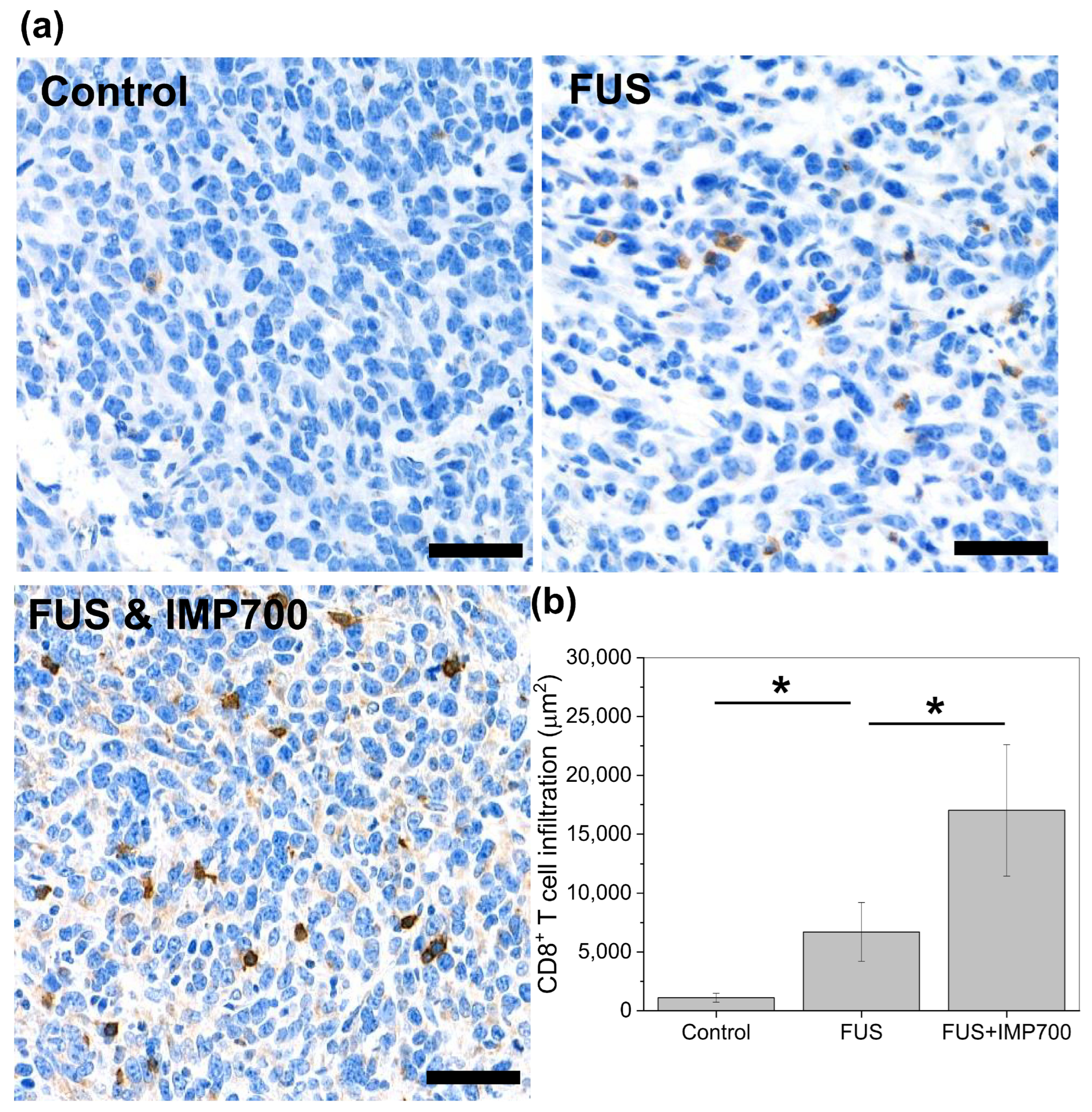
The enhancement of immune responses was evaluated using a syngeneic mouse model. The 4T1 syngeneic mouse was exposed to FUS with 2.5 kW/cm2 of intensity, 2%-duty cycle, and 10 Hz for 10s/exposure spot. The experimental groups were divided into a non-FUS-treated group (control), a FUS-treated group (FUS), and a combined IMP700 and FUS treatment group (IMP700 & FUS), with n = 3 per group. The FUS or IMP700 treatments were administered three times in 3-day intervals. Post 2 days of the 3rd FUS treatment, the tumor was excised for the CD8+ T-cell infiltration by immunohistochemistry analysis.
2.12. Immunohistochemistry
Tumor tissues were rinsed with PBS (pH 7.4) and fixed in 4% paraformaldehyde overnight. The tumors were paraffin-sectioned for immunostaining CD8α mouse antibody. Tumor slides were incubated with anti-mouse CD8α monoclonal rat antibody (Invitrogen (Carlsbad, CA, USA), 14-0808-82), as a primary antibody, at a 1:50 dilution (in normal horse serum solution) at 4 °C overnight. After washing with PBS, detection was carried out using a biotinylated anti-rat antibody (Vector Laboratories (Newark, CA, USA), BP-9400-50, host: Goat) and ABC solution kit (Vector Laboratories, PK-6100). Samples were incubated with secondary antibody and ABC solution for 1 h each at room temperature. Visualization was performed using diaminobenzidine (DAB) chromogen, followed by hematoxylin counterstaining before dehydration and coverslipping for imaging and quantitative analysis. After the dehydration step and the clearing step with xylene, the paramount solution was dropped on the slides, and the coverslipped slides were left overnight in the fume hood for xylene evaporation. The CD8α-stained tumor region was visualized by Pannoramic 250 Flash III digital whole-slide scanner (3DHISTECH Ltd., Budapest, Hungary), equipped with a Zeiss Plan-Apochromat 20×/0.8 NA objective lens. The CD8+ T-cell infiltration was quantified by measuring the stained area using the Quant Center image analysis platform (3D HISTECH).
2.13. Statistical Analysis
All data are expressed as average ± standard deviation. Statistical significance of the difference between the individual groups was determined by either a one-way or two-way ANOVA followed by Tukey’s HSD test or Welch’s ANOVA followed by Dunnett’s T3 test, depending on the homogeneity of variances. Statistical significance was defined as p < 0.05. Data analysis was performed using GraphPad Prism (version 10.6.1; GraphPad Software, San Diego, CA, USA).
4. Discussion
This study successfully develops and characterizes PFP-based nanodroplets (IMP700) as ultrasound-responsive agents for enhancing cavitation, intratumoral drug delivery, and antitumor immune responses in the solid tumor. Our results show that IMP700 undergoes efficient ADV under FUS, significantly amplifies inertial cavitation, and substantially improves ultrasound-mediated drug penetration in dense tumor tissue. Importantly, combined IMP700 and FUS treatment also increased intratumoral CD8+ T-cell infiltration, which highlights the potential of FUS-activated nanodroplets to overcome both stromal and immunological barriers in solid tumors.
4.1. Physicochemical Properties and Stability of IMP700
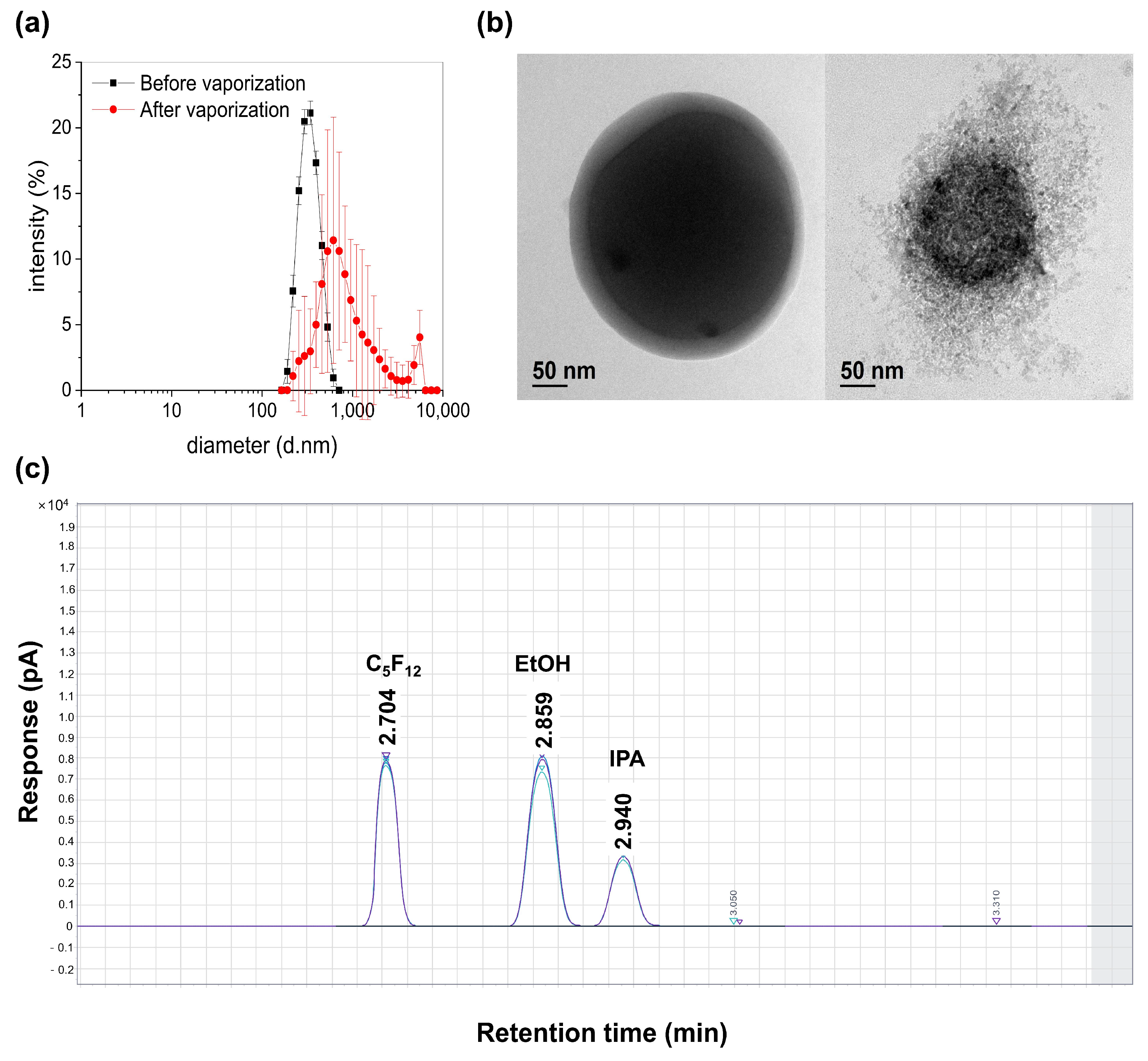
The IMP700 exhibited a Z-average diameter of 326 ± 64.7 nm, a size range in which extravasation through leaky tumor vasculature has been reported. Furthermore, the particle size was maintained in serum-containing culture medium, which indicates that the formulation is expected to remain stable under physiological vascular conditions (
Figure S2). While ~300 nm is modestly larger than the size range typically associated with efficient EPR-mediated transport (~200 nm), cavitation-mediated vascular permeabilization is expected to promote active extravasation. [
28,
29]. In addition, this nanoscale size enables more effective sonoporation within tumor tissue compared to conventional microbubbles. This size range of IMP700 provides a clear advantage over conventional microbubbles (>1 µm), which remain primarily within the bloodstream and show minimal penetration into tumor tissue [
30,
31]. The high encapsulation efficiency of PFP (99.5%) confirms the successful incorporation of the PFP core, which is an essential feature enabling effective activation by ultrasound.
Cryo-TEM imaging provided direct morphological evidence of ADV. Prior to ultrasound exposure, IMP700 maintained a uniform spherical structure, whereas post-vaporization images displayed disrupted, porous morphologies consistent with gas bubble formation and shell fragmentation. This phase transition is the fundamental mechanism by which nanodroplets generate the localized cavitation effects necessary for sonoporation [
21,
32]. Our stability studies revealed that IMP700 concentration maintained over 24 h at 4 °C, with particle counts and stable size distribution. Diffusion of C
5F
12 within IMP700 is not observed, and vaporization is suppressed due to the elevated boiling point resulting from the Laplace pressure imposed by the shell [
33]. Temperature-dependent microscopy further demonstrated that IMP700 is thermally sensitive, with spontaneous vaporization occurring at 37 °C and complete phase transition at 60 °C. These findings indicate that IMP700 should be stored at low temperatures and used without delay to maintain stability.
4.2. Acoustic Droplet Vaporization and Cavitation Behavior In Vitro
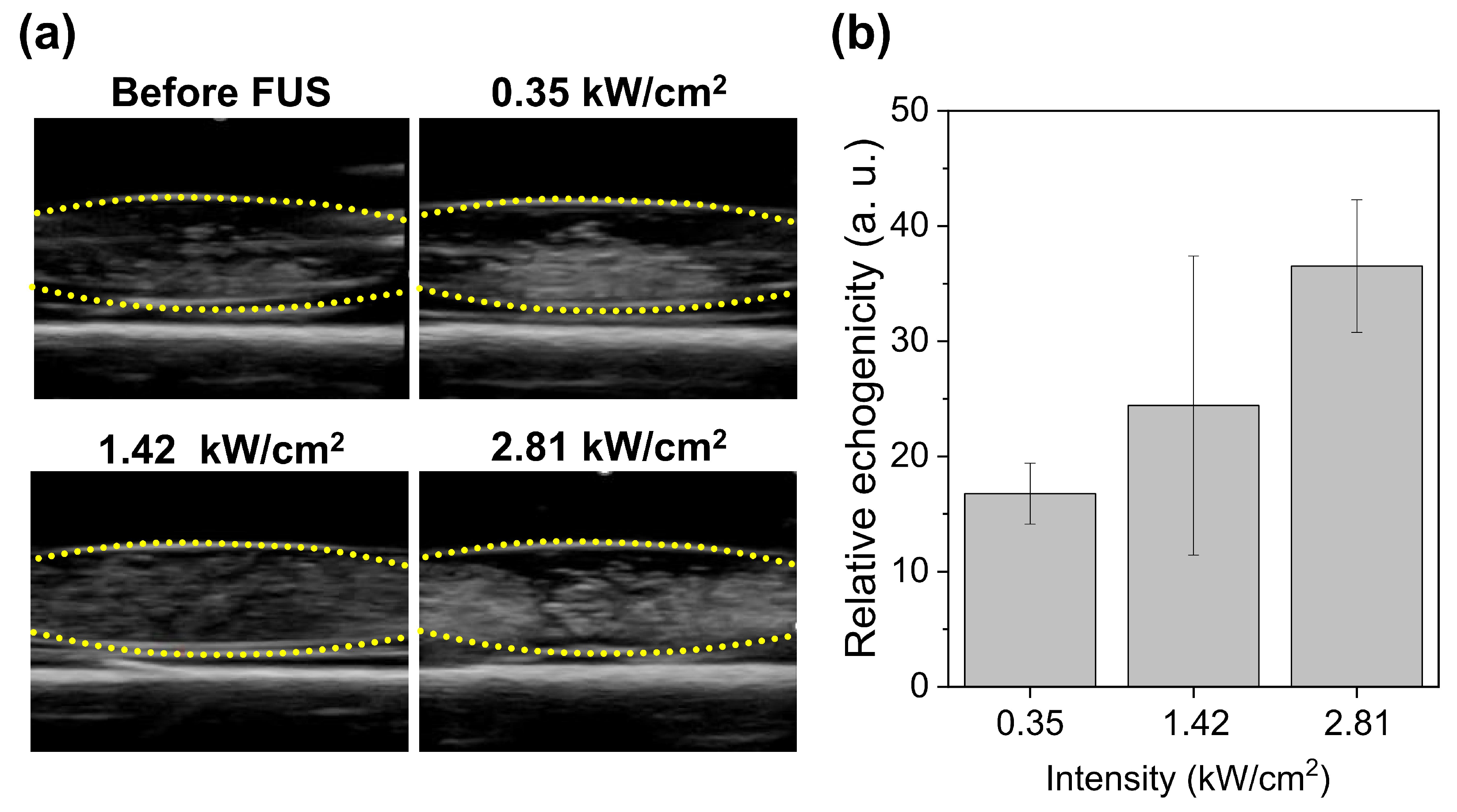
Our in vitro experiments confirmed that IMP700 undergoes intensity-dependent ADV. Echogenicity increased progressively with ultrasound intensity from 0.35 to 2.81 kW/cm
2, which demonstrates that FUS can trigger the liquid-to-gas phase transition of IMP700s. This behavior is consistent with prior observations that perfluorocarbon droplets exhibit vaporization above a certain intensity [
33,
34].
The cavitation behavior of IMP700 vaporization was investigated under different FUS intensities. The FUS intensity was selectively varied while keeping the duty cycle and PRF constant. IMP700 incorporates a PFP core, and its vaporization is predominantly regulated by acoustic pressure (ultrasound intensity), which serves as the key trigger for ultrasound-induced phase transition [
21,
35]. To specifically assess the influence of acoustic pressure on droplet vaporization, the duty cycle and PRF were fixed at 2% and 10 Hz, respectively, as temporal parameters will be systematically optimized in subsequent in vivo cavitation studies.
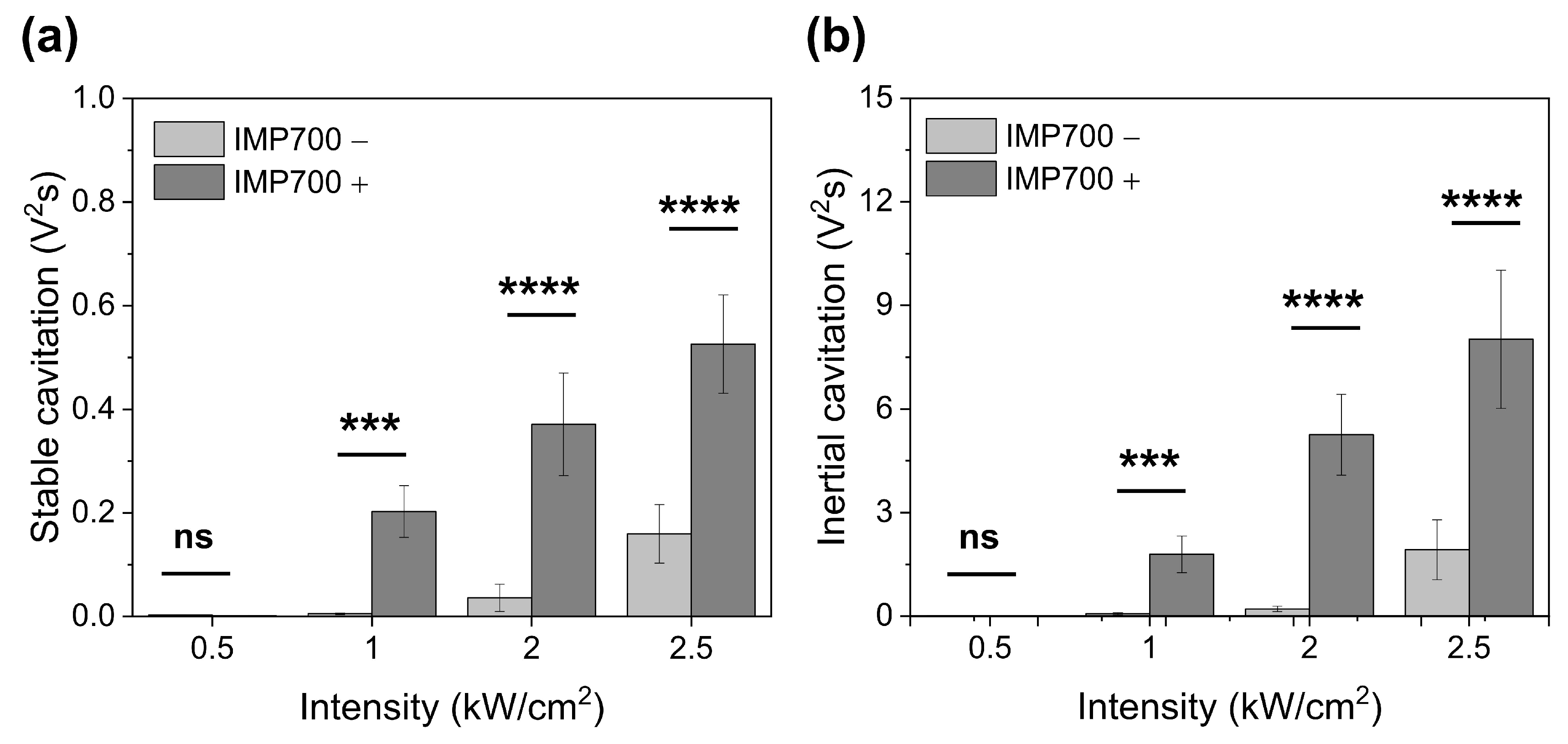
Cavitation analysis showed that the stable cavitation dose increased steadily from 1.0 to 2.5 kW/cm
2, whereas inertial cavitation rose sharply at intensities ≥ 2.0 kW/cm
2. Stable cavitation, characterized by sustained bubble oscillations, is typically associated with reversible membrane permeabilization and modest enhancement of vascular permeability [
36]. By contrast, inertial cavitation results from violent bubble collapse and generates shock waves and microjets that can disrupt the extracellular matrix and produce transient pores in cell membranes [
37,
38]. Although these effects can be advantageous for improving drug penetration in fibrotic tumors, excessive inertial cavitation may induce microvascular injury or hemorrhage, ultimately limiting therapeutic delivery [
39,
40].
Based on these experimental observations, we selected 2.0 kW/cm2 as the experimental intensity for subsequent in vivo studies. Although the exact cavitation thresholds cannot be fully defined from the current data alone, this setting consistently produced sufficient inertial cavitation to support sonoporation without eliciting excessive acoustic effects.
4.3. In Vivo Cavitation and Optimization of Ultrasound Parameters
In vivo cavitation studies in the PANC-1 xenograft model demonstrated that duty cycle and PRF significantly influence cavitation behavior following intravenous IMP700 injections. Specifically, stable cavitation increased with duty cycle from 1% to 5%, whereas inertial cavitation did not increase proportionally with duty cycle in the presence of IMP700 and showed an apparent plateau beyond 2%. One possible explanation is that, at the given IMP700 dose, the number of droplets that can participate in cavitation is already saturated at low duty cycles. Increasing the duty cycle further mainly causes repeated collapse of the same bubbles rather than involving additional droplets, so inertial cavitation no longer increases. In addition, the dense, fibrotic stroma of PDAC is known to constrain transport and modulate the local mechanical environment [
41,
42], which may further restrict bubble motion and attenuate inertial cavitation despite higher acoustic exposure. A duty cycle of 2% was, therefore, selected for subsequent sonoporation experiments, as it represented the lowest setting that elicited a marked increase in inertial cavitation compared to 1% while maintaining cavitation enhancement, without indications of excessive damage at higher duty cycles.
Notably, PRF had an even stronger influence on cavitation activity. A PRF of 10 Hz generated markedly higher stable and inertial cavitation compared to 250 Hz, both with and without nanodroplets. A likely explanation is that, at lower PRF, the longer interval between pulses allows new nanodroplets and microbubbles to flow into the focal region. Previously formed bubbles also have time to dissipate, so each pulse interacts with a refreshed population of bubbles. At very high PRF, pulses act on the same bubbles in rapid sequence, which leads to their fast destruction and loss before they can be replaced. As a result, the overall cavitation strength is reduced even though the pulse rate is higher. Similar PRF-dependent effects on cavitation and drug delivery have been reported in several studies [
43,
44]. However, only two PRF conditions (10 and 250 Hz) were tested in this study, which is a limitation that does not allow detailed evaluation of how PRF affects cavitation behavior. Within this limitation, 10 Hz was selected as the PRF for subsequent sonoporation experiments, as it yielded the strongest and most reproducible cavitation under our experimental conditions.
4.4. Enhanced Sonoporation and Intratumoral Drug Delivery
The present study demonstrates that IMP700 effectively enhances the intratumoral delivery of IMP301 under FUS exposure by amplifying cavitation activity within the pancreatic tumor microenvironment. Confocal imaging showed clear differences in the distribution of doxorubicin, with the IMP700-treated group exhibiting the deepest and broadest penetration among all conditions.
Pancreatic ductal adenocarcinoma is characterized by a dense and fibrotic stroma that restricts the transport of therapeutic agents, which frequently diminishes the efficacy of nanoparticle-based drug delivery [
45,
46,
47]. Within this challenging microenvironment, the improved distribution of doxorubicin achieved with IMP700 is likely attributable to cavitation-induced mechanical effects. ADV produces localized microbubbles that undergo inertial cavitation, generating mechanical forces that transiently loosen stromal structures and enhance interstitial porosity [
48]. Cavitation also helps particles move through regions with poor permeability, and the transient increase in membrane permeability facilitates cellular uptake [
49]. Collectively, these processes create enhanced tissue permeability that enables deeper intratumoral penetration.
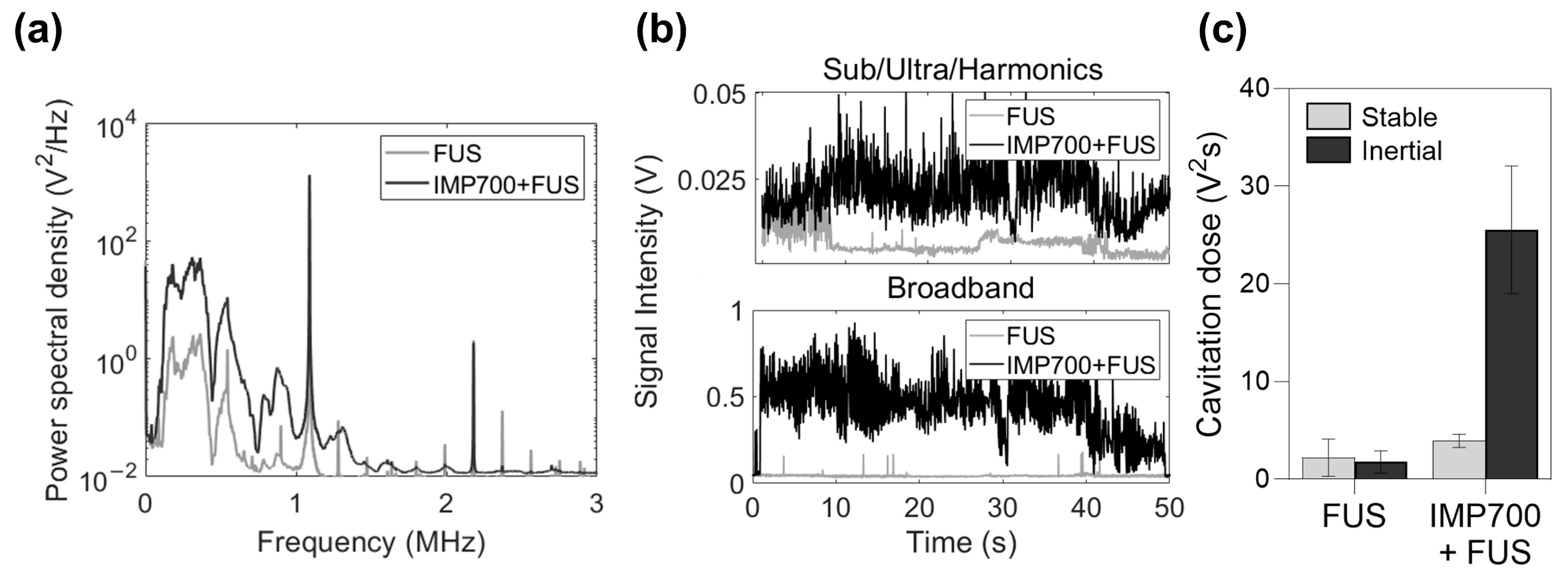
Importantly, the cavitation measurements confirmed that IMP700 substantially amplified inertial cavitation in vivo, whereas IMP301 + FUS alone produced minimal cavitation activity. These findings support cavitation as the principal mechanism driving improved doxorubicin delivery. Although the increase in cavitation was not strictly proportional across all ultrasound settings, the cavitation threshold achieved with IMP700 was sufficient to meaningfully modify tissue permeability and facilitate deeper penetration of the co-administered therapeutic payload.
Overall, these findings highlight the therapeutic potential of IMP700 as an ultrasound-responsive agent that can modulate the physical barriers of pancreatic tumors. By enhancing cavitation dynamics within the tumor, IMP700 improves the penetration of nanoparticle therapeutics such as IMP301, which suggests a broadly applicable strategy for addressing the stromal resistance that limits drug efficacy in pancreatic cancer.
4.5. Amplification of the Immune Response by IMP700 Cavitation
Focused ultrasound (FUS) has emerged as a promising non-invasive modality capable of modulating the tumor microenvironment through mechanical effects, including acoustic cavitation. In the present study, we demonstrate that FUS treatment enhances the intratumoral infiltration of CD8+ T-cells and that this immunomodulatory effect is further potentiated by the vaporization-capable agent IMP700.
Immunohistochemical analysis revealed minimal CD8
+ T-cell infiltration in untreated tumors, whereas FUS treatment alone increased CD8
+ T-cell presence within the tumor microenvironment. This observation is consistent with previous reports showing that cavitation induced by ultrasound can transiently disrupt tumor vasculature, increase vascular permeability, and facilitate immune cell recruitment into solid tumors [
1,
2,
3]. Such mechanical perturbations are known to promote antigen release and enhance immune surveillance, thereby contributing to antitumor immune activation.
Notably, the combination of FUS with IMP700 resulted in a marked and synergistic increase in CD8
+ T-cell infiltration compared to FUS treatment alone. This enhanced effect is likely attributable to the acoustic vaporization of IMP700, which amplifies cavitation activity under FUS exposure. Phase-transition agents capable of vaporization have been reported to significantly lower cavitation thresholds and intensify mechanical stresses within tumor tissue, leading to more pronounced biological effects [
20,
32]. In this context, IMP700 appears to function as an effective cavitation enhancer, thereby augmenting the immunological consequences of FUS treatment.
The increased infiltration of CD8
+ T cells observed in the FUS + IMP700 group suggests a shift toward a more immunologically active tumor microenvironment. Cytotoxic CD8
+ T cells play a central role in antitumor immunity by directly eliminating malignant cells and orchestrating downstream immune responses [
50]. Therefore, the substantial increase in the CD8
+ T-cell-positive area following combined treatment indicates that cavitation-enhanced FUS may serve as a potent immune-priming strategy. Collectively, these findings provide compelling evidence that vaporization-mediated cavitation amplification using IMP700 significantly enhances the immunomodulatory effects of FUS, supporting its potential as a combinatorial strategy for cancer immunotherapy. In our previous study, cavitation by FUS demonstrated immunogenic cell death with the increase in inflammation cytokines and with the modulation of the tumor microenvironment [
51]. FUS monotherapy enhanced immune activation such as M1/M2 ratio, NK cells, and CD4 and CD8 T-cell-resulting promotion of tumor cell death. According to previous results, the combination of IMP700 and FUS is sufficiently capable for the enhancement of immunogenic cell death by the amplification of cavitation via vaporization of C
5F
12. Therefore, more detailed investigations into the immunotherapeutic implications of this approach are warranted and will be pursued in future studies.
4.6. Limitations and Future Directions
Several limitations of this study should be noted. First, IMP700 demonstrated limited stability over 24 h, which indicates the need for improved formulations with enhanced storage stability. Second, while this study demonstrated enhanced drug penetration using doxorubicin as a model payload, the therapeutic efficacy of IMP700-mediated delivery remains to be determined. Future studies should, therefore, evaluate treatment outcomes including tumor regression, survival, and potential synergy with immune checkpoint inhibitors or other combination strategies.
In addition, the potential safety implications of increasing tumor permeability should be considered. Although excessive permeability could theoretically increase susceptibility to pathogen entry [
52], the optimized FUS parameters used in this study induced localized and transient cavitation confined to the focal tumor region. Unlike approaches targeting critical physiological barriers such as the blood–brain barrier, our strategy focuses on tumor tissue with already abnormal vasculature. While further safety evaluation is warranted, our findings suggest that FUS-activated nanodroplets enhance permeability primarily within tumor tissue, with a low likelihood of unintended systemic effects.
Finally, the present study focused on CD8
+ T-cell infiltration as a key indicator of immune activation. Further investigations are warranted to elucidate additional immunological mechanisms, including antigen presentation, cytokine release, and potential synergy with immune checkpoint blockade [
53,
54].
5. Conclusions
In this study, we developed and evaluated a PFP-based phase-change nanodroplet, IMP700, as an ultrasound-responsive agent to enhance cavitation, intratumoral drug delivery, and immune engagement in solid tumors. IMP700 exhibited a nanoscale size suitable for tumor extravasation, high PFP encapsulation efficiency, and clear ADV under FUS exposure. Systematic in vitro and in vivo cavitation assessments enabled the identification of ultrasound parameters that robustly generated inertial cavitation in vivo, with 2 kW/cm2 intensity, 2% duty cycle, and 10 Hz PRF selected for subsequent experiments.
Under these conditions, co-administration of IMP700 with an ultrasound-responsive liposomal formulation (IMP301) significantly increased inertial cavitation activity and promoted deeper, broader intratumoral penetration of the drug payload. These findings indicate that nanodroplet-mediated cavitation effectively modulates the physical barriers of solid tumors, facilitating deeper transport of therapeutic payloads. Importantly, in a syngeneic 4T1 solid tumor model, IMP700-assisted FUS treatment led to a pronounced increase in intratumoral CD8+ T-cell infiltration compared to FUS alone, supporting a role for vaporization-mediated cavitation amplification in enhancing the immunomodulatory effects of FUS.
Overall, our study establishes IMP700 as a versatile cavitation-enhancing agent that strengthens both the drug-delivery and immunomodulatory effects of FUS. This nanodroplet-assisted FUS strategy offers a broadly applicable physical platform for overcoming stromal and immunological barriers in solid tumors and provides a foundation for future therapeutic combinations integrating ultrasound with immunotherapy or nanomedicine.




 ,
,