1. Introduction
Dermatological disorders encompass a wide range of conditions affecting the skin, hair, and nails, often significantly impacting an individual’s physical and psychological well-being. Among these, Inflammatory Skin Diseases (ISDs) are particularly challenging, as they involve complex immune responses and persistent symptoms such as redness, itching, and discomfort. Psoriasis, a prevalent chronic inflammatory skin disease, exemplifies such conditions [
1]. Characterized by the rapid proliferation of keratinocytes and immune-mediated inflammation, psoriasis manifests as well-defined, scaly, erythematous plaques, typically appearing on the scalp, elbows, knees, and lower back. Beyond its physical symptoms, psoriasis is associated with systemic complications, including psoriatic arthritis and an increased risk of cardiovascular and metabolic disorders [
2]. Despite advancements in treatment options, managing this chronic inflammatory condition remains difficult, emphasizing the need for innovative therapeutic strategies to improve patient outcomes and quality of life.
In recent years, Cannabis-Based Medicines (CBMs) have garnered significant attention for their potential therapeutic applications across a wide range of medical conditions. Derived from the
Cannabis sativa plant [
3], these pharmaceutical products utilize cannabinoids as their active ingredients, with CBD emerging as a particularly promising compound. CBD, a non-psychoactive cannabinoid, is renowned for its pharmacological benefits, including anti-inflammatory, immunomodulatory, and skin-soothing properties, positioning it as a viable candidate for addressing psoriasis [
4,
5]. Emerging research highlights CBD’s potential in managing this chronic skin condition through multiple mechanisms, including reducing inflammation and oxidative stress, alleviating itching, inhibiting abnormal keratinocyte proliferation, and enhancing skin hydration [
2]. Together, these attributes underscore the therapeutic promise of CBD in improving both the symptoms and quality of life for individuals with psoriasis. However, the effective delivery of CBD is hindered by its poor water solubility, low bioavailability, and vulnerability to oxidative degradation, which collectively limit its therapeutic effectiveness [
6].
Nanoemulsions have emerged as advanced drug delivery systems capable of overcoming these limitations. These colloidal dispersions, characterized by their small droplet size and high surface area, provide a means to encapsulate hydrophobic drugs, enhancing their solubility, stability, bioavailability, and dermal penetration of bioactive compounds [
7]. Argan oil, valued for its emollient and skin-healing properties, serves as an ideal oil phase in such formulations [
8], further complementing the therapeutic benefits of CBD.
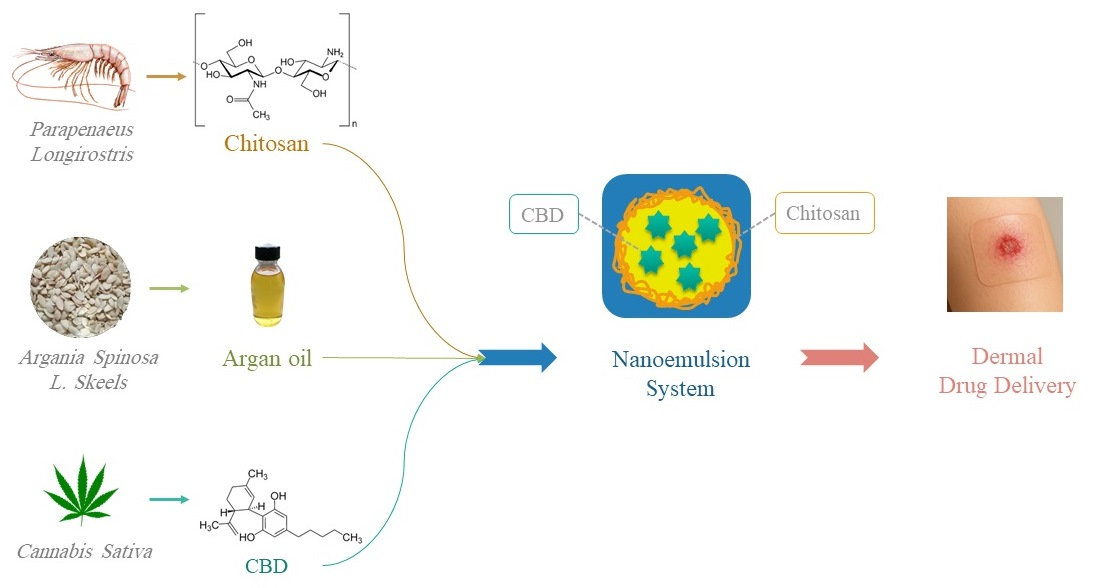
In this study, chitosan, a biodegradable and biocompatible polymer derived from natural sources, is employed as a stabilizing agent to address formulation stability challenges [
9]. Chitosan not only enhances the physical stability of nanoemulsions and facilitates sustained release but can also improve permeation through biological membranes. Furthermore, it possesses intrinsic antibacterial and wound-healing properties, making it an ideal component for dermal drug delivery systems, particularly for psoriasis treatment [
10].
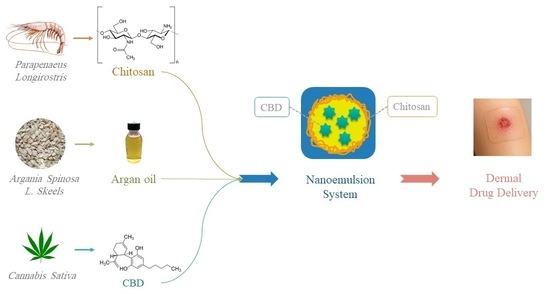
This study aims to develop and comprehensively evaluate a chitosan-stabilized argan oil nanoemulsion for the dermal delivery of cannabidiol (CBD) as a potential therapy for psoriasis. The central hypothesis is that the chitosan-stabilized nanoemulsion will enhance the stability, skin penetration, and therapeutic potential of CBD compared to non-stabilized formulations or CBD alone by leveraging the synergistic effects of its components. To test this hypothesis, the work is guided by specific objectives: to formulate and optimize the chitosan-stabilized nanoemulsion; to characterize the optimized system in terms of its key physicochemical properties and in vitro release profile; to assess its stability under various storage conditions; and to evaluate its ex vivo skin permeation and preliminary safety profile using suitable biological models. By systematically addressing these objectives, this research seeks to provide a novel delivery platform for targeting the multifaceted pathology of psoriasis.
3. Results
3.1. Formulation Composition
Stable nanoemulsion formulations (NE) were identified by varying the ratio of argan oil to the surfactant mixture. The proportions of Span 80 and Tween 80 within the surfactant mixture (SM) were adjusted to achieve a HLB value of 11.0, which is reported as optimal for argan oil [
13].
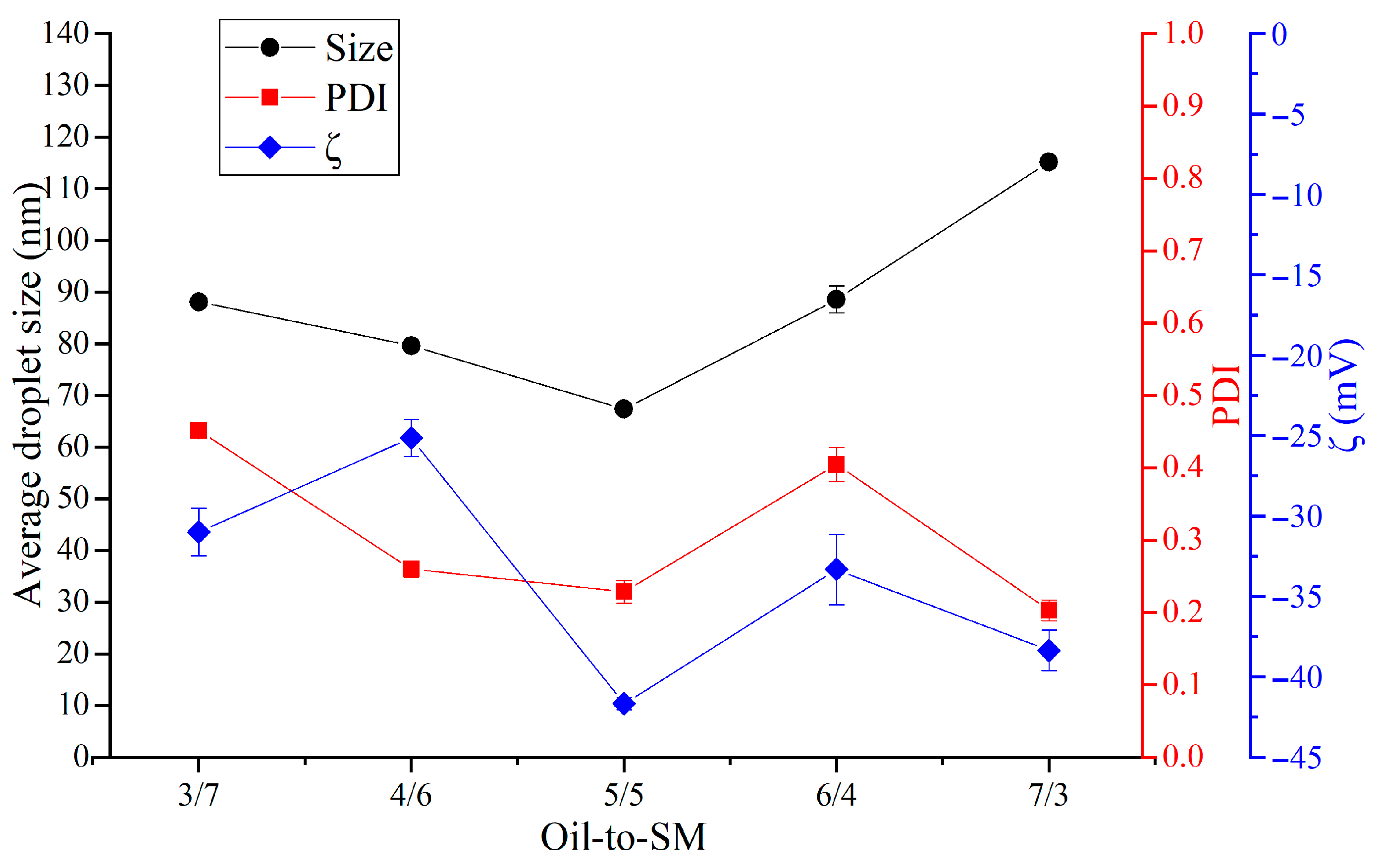
The droplet size results (
Figure 1) showed a complex relationship with the oil-to-SM ratio. The smallest droplet size (67.4 ± 0.5 nm) was achieved at a 5:5 ratio, indicating an optimal balance between oil and surfactant that likely promotes efficient droplet formation. In contrast, the largest droplets (115.2 ± 0.4 nm) were observed at a 7:3 ratio, suggesting that higher oil content can lead to the formation of larger droplets. Interestingly, the 6:4 and 3:7 ratios produced similar droplet sizes (89 ± 3 nm and 88.1 ± 0.6 nm, respectively), highlighting a non-linear trend in size changes relative to the oil-to-SM ratio.
The PDI, which reflects droplet size uniformity, decreased as the oil content increased (
Figure 1). The highest PDI (0.452 ± 0.008) was recorded at the 3:7 ratio, suggesting less uniformity. Conversely, the lowest PDI values (0.229 ± 0.016 and 0.203 ± 0.014) were observed at the 5:5 and 7:3 ratios, respectively, indicating greater uniformity. These ratios offer a good balance between droplet size optimization and uniformity, making them promising formulations.
ζ-potential values of the NEs were negative (
Figure 1). Argan oil has a high unsaturated fatty acid content (85–90%), mainly oleic and linoleic acids, which confer a negative surface charge to the oil droplets (
Figure 1). The ζ-potential value of NEs was influenced by the proportion of oil in the mixture. An increase in the proportion of surfactants relative to oil reduced the magnitude of the ζ-potential. The two surfactants used in the preparation of the NEs do not possess ionizable groups; therefore, increasing their concentration and decreasing the proportion of oil induces a shielding of surface charges, reducing the ζ-potential value. The ζ-potential values obtained with the highest proportions of oil suggest strong electrostatic repulsion between droplets, which prevents aggregation and ensures stability. In contrast, the lowest ζ-potential (−25.14 ± 1.15 mV), indicating reduced stability, was found at the 4:6 ratio. Interestingly, while the 7:3 ratio, despite producing the largest droplets, maintained a relatively high stability with a ζ-potential of −38.4 ± 1.3 mV, suggesting good resistance to aggregation [
14].
Overall, the 5:5 oil-to-SM ratio emerged as the most balanced formulation, producing the smallest droplet size, a relatively low PDI, and high colloidal stability. In contrast, formulations with higher oil content, such as 7:3 ratio, yielded larger droplet sizes but demonstrated better uniformity and relatively strong stability, making them suitable for applications requiring higher oil loading.
These results highlight the impact of oil-to-SM ratio on droplet size, PDI, and ζ-potential—critical parameters in assessing nanoemulsion stability and uniformity—underscoring the importance of optimizing this ratio for effective dermal drug delivery [
15].
The final compositions (w/w%) of the four selected nanoemulsions were as follows. The plain nanoemulsion (NE) contained 5.0% argan oil, 5.0% surfactant mixture (Tween 80:Span 80, 1:1 (w/w)), and 90.0% water. The chitosan-stabilized nanoemulsion (CS-NE) contained 2.46% oil, 2.46% surfactants, 1.0% chitosan, 0.49% acetic acid (from the chitosan stock solution), and 93.58% water. The CBD-loaded nanoemulsion (CBD-NE) contained 4.99% oil, 4.99% surfactants, 0.10% CBD, 0.05% Tocobiol® C, and 89.87% water. The chitosan-stabilized CBD-loaded nanoemulsion (CBD-CS-NE) contained 2.46% oil, 2.46% surfactants, 1.0% chitosan, 0.49% acetic acid, 0.10% CBD, 0.05% Tocobiol® C, and 93.43% water.
The 0.1% (
w/
w) CBD concentration employed in this study was selected based on prior evidence demonstrating its therapeutic efficacy in inflammatory skin conditions. Preclinical studies have shown that topical 0.1% CBD significantly reduces psoriasis-like inflammation, epidermal thickness, and hyperproliferation in murine models [
16]. Furthermore, clinical application of 0.1% CBD has been reported to accelerate healing and reduce lesion size in inflammatory mucosal conditions without adverse effects [
17], supporting its suitability for dermal delivery in the present formulation study.
3.2. pH, Droplet Size, PDI, and Zeta Potential
Upon preparation, all nanoemulsions formed homogeneous, white dispersions. The plain formulations (NE and CBD-NE) were opaque, milky-white liquids with low viscosity and rapid flow. In contrast, the chitosan-stabilized formulations (CS-NE and CBD-CS-NE) appeared less opaque, with a translucent, pearlescent quality and a noticeably higher, gel-like viscosity.
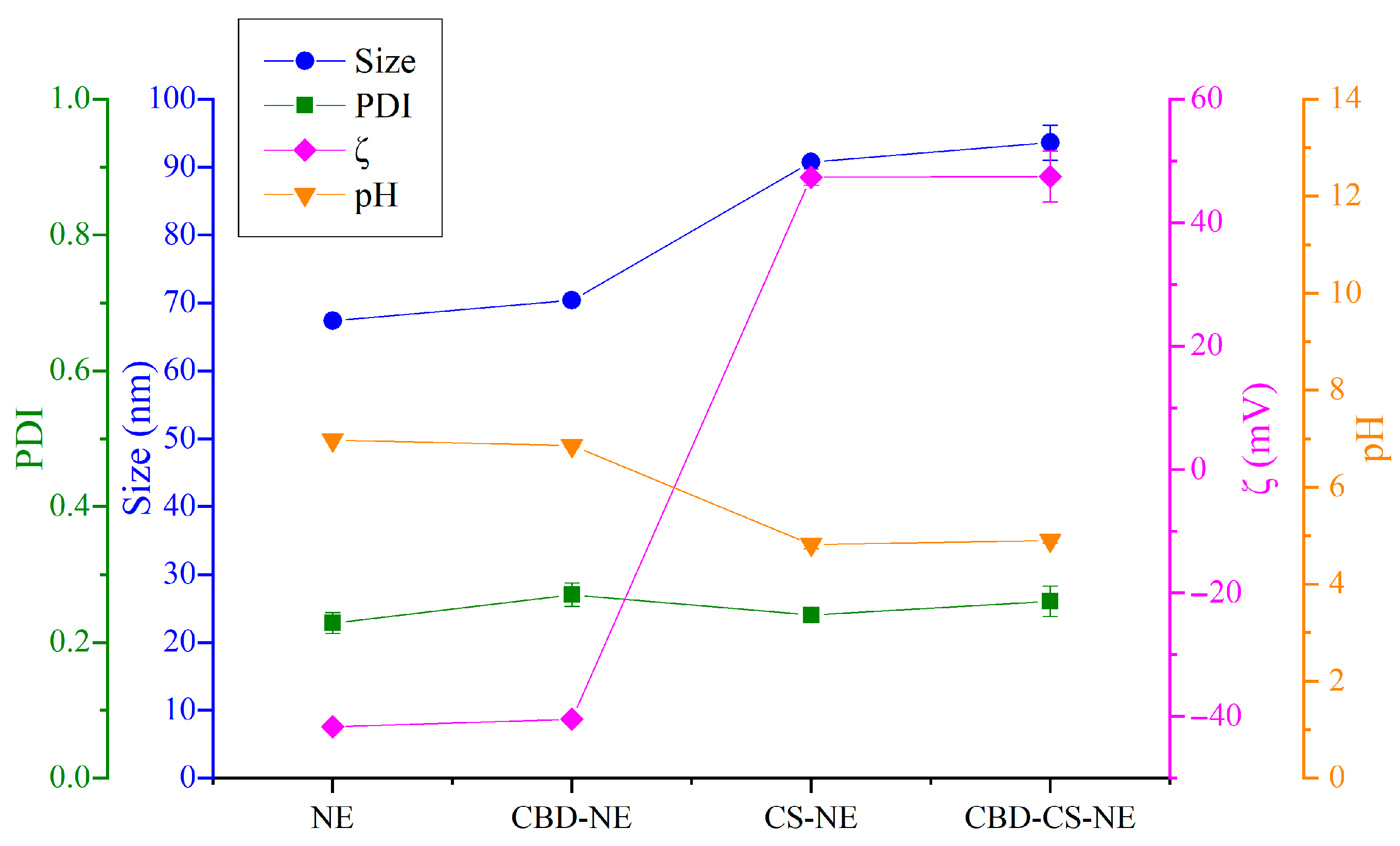
Further characterization (
Figure 2) showed that NE had the smallest droplet size (67.4 ± 0.5 nm), indicating a compact and efficient formulation. The inclusion of chitosan in CS-NE significantly increased the droplet size to 90.7 ± 0.6 nm, likely due to droplet coating or aggregation effects. However, CBD addition did not statistically influence the droplet size for either formulation, with or without chitosan. The CBD-CS-NE formulation, combining both CBD and chitosan, had the largest droplet size (94 ± 3 nm).
As shown in
Figure 2, the PDI results indicated uniform droplet size distributions, with no statistical differences between the formulations. A low PDI signifies a highly uniform droplet population, a key factor for physical stability and predictable drug release.
ζ-potential analysis of CBD-NE, CS-NE and CBD-CS-NE, revealed differences among the formulations. The base NE showed the highest stability, with a ζ-potential of −41.7 ± 0.4 mV (
Figure 2), while other formulations varied depending on their composition. CBD-NE exhibited a comparable value (−41.0 ± 0.6 mV), indicating that the addition of CBD did not significantly alter surface charge. In contrast, chitosan-containing formulations (CS-NE and CBD-CS-NE) displayed highly positive ζ-potential (47.4 ± 1.3 mV and 47 ± 4 mV, respectively), with no significant differences caused by CBD addition. These positive values are consistent with the cationic nature of chitosan, which interacts with and adsorbs onto the negatively charged droplet surfaces [
9].
The pH values also varied among formulations (
Figure 2). NE and CBD-NE exhibited near-neutral pH values (6.97 ± 0.01 and 6.86 ± 0.03, respectively), consistent with their base components. In contrast, CS-NE and CBD-CS-NE showed acidic pH values (4.82 ± 0.09 and 4.90 ± 0.05, respectively), reflecting the effect of the acetic acid used to dissolve the chitosan. The reduction in the pH of these formulations may also contribute to the neutralization of fatty acids and, consequently, to the changes in ζ-potential observed for CS-NE and CBD-CS-NE. Moreover, the addition of CBD to NE and CS-NE did not significantly alter the formulation pH values.
In summary, these results demonstrate how compositional adjustments influence key physicochemical properties, informing formulation strategies for stable and effective nanoemulsions. The NE formulation exhibited the smallest droplet size, the most uniform distribution, high colloidal stability, and near-neutral pH, making it a highly stable and consistent base. The addition of CBD in CBD-NE maintained these favorable characteristics with minimal changes, resulting in a slight increase in droplet size while preserving overall stability. Formulations containing chitosan (CS-NE and CBD-CS-NE) significantly altered physical properties, producing larger droplets, positive ζ-potential, and slightly acidic pH values. Nonetheless, their relatively low PDI values indicate that the droplet size distribution remained fairly uniform.
These findings highlight the distinct effects of chitosan on formulation characteristics, supporting their potential customization for dermal and psoriasis-related applications. The small size of chitosan-coated nanoemulsions is favorable for dermal application, as smaller droplets typically enhance drug penetration and spreadability, thereby improving delivery to the target site. The low PDI indicates a highly uniform droplet population, which is a key factor for physical stability and predictable drug release. Additionally, the strong positive surface charge promotes electrostatic repulsion between droplets, preventing aggregation and enhancing colloidal stability during storage. This positive charge may also promote bioadhesion and stronger interactions with negatively charged skin components, which can improve local drug retention [
18,
19]. Human skin typically has a pH between 4.5 and 6.0, and the optimal physiological range for dermal applications spans 4.0 to 7.0 [
20]. All tested formulations fell within this range, suggesting good skin compatibility and low irritation potential. Furthermore, the chitosan coating may help prevent premature drug release and improve retention at the application site, leading to prolonged therapeutic effects [
18]. As a biocompatible polymer with anti-inflammatory properties [
21], chitosan may complement the therapeutic action of encapsulated drugs particularly in the treatment of inflammatory skin disorders such as psoriasis.
3.3. Viscosity Analysis
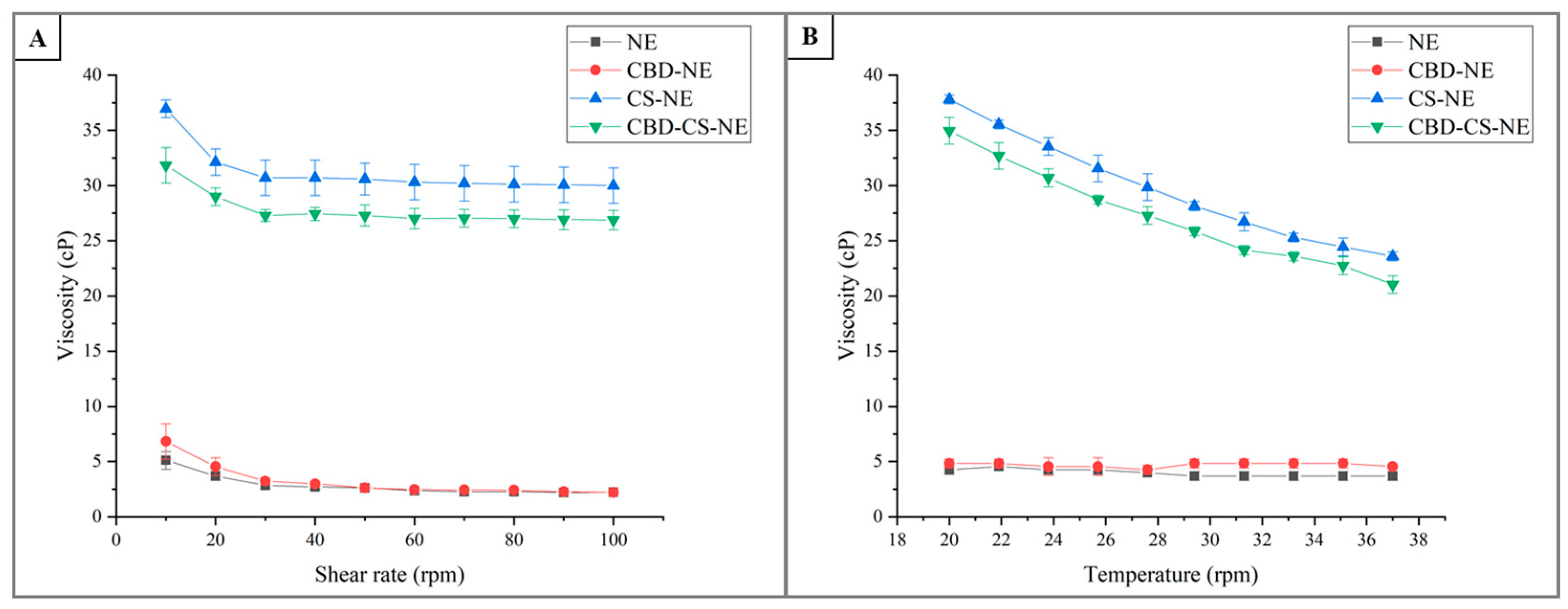
Viscosity is a critical parameter for evaluating the flow properties and stability of formulations, influencing both their processing and application. The viscosity profiles of the different formulations were measured at shear rates ranging from 10 to 100 rpm at 25 °C (
Figure 3A). The NE and CBD-NE formulations demonstrated low viscosities and followed a similar trend, starting at 5.1 ± 0.8 cP and 6.8 ± 1.6 cP at 10 rpm, respectively, and gradually decreasing to 2.22 ± 0.08 cP for both at 100 rpm. The reduction in viscosity with increasing shear rate indicated shear-thinning behavior, wherein the internal structure of the formulation is disrupted under shear forces, facilitating flow [
22].
In contrast, formulations containing chitosan (CS-NE and CBD-CS-NE) exhibited substantially higher viscosities across all shear rates compared to their non-chitosan counterparts. At 10 rpm, the viscosities were 37.0 ± 0.8 cP and 31.8 ± 1.6 cP, decreasing steadily to 30.0 ± 1.6 cP and 26.9 ± 0.9 cP at 100 rpm, respectively. The elevated viscosity is attributed to the presence of chitosan, a polymer known for its thickening properties. The progressive decrease in viscosity with increasing shear rate confirms the shear-thinning behavior typical of polymeric systems, where molecular entanglements and interactions are reduced under shear [
23].
NE and CBD-NE showed no significant difference in viscosity, suggesting that the incorporation of CBD did not markedly affect the rheological properties of the nanoemulsion matrix. However, in the presence of chitosan, the viscosity values differed significantly, indicating that the inclusion of CBD introduced structural complexity that resulted in moderated viscosity.
The temperature-dependent viscosity data (
Figure 3B) provided additional insights into the thermal behavior of the formulations between 20 °C and 37 °C. The NE formulation maintained consistently low viscosities, starting at 4.3 ± 0.4 cP at 20 °C, decreasing slightly to 3.7 ± 0.4 cP, and then stabilizing. This minor variation suggests that NE maintained stable flow properties over the studied temperature range, with minimal sensitivity to thermal changes.
CBD-NE also exhibited minimal thermal sensitivity, with viscosities ranging from 4.8 ± 0.4 cP to 4.548 ± 0.000 cP. Notably, the addition of CBD did not significantly alter the thermal behavior of the formulation.
CS-NE exhibited higher viscosities across all temperatures, starting at 37.8 ± 0.4 cP at 20 °C and gradually decreasing to 23.6 ± 0.4 cP at 37 °C. This decline reflects the temperature sensitivity of chitosan, as increasing thermal energy reduces molecular entanglements and thickening interactions—a typical characteristic of polymer-based systems [
23].
Although CBD-CS-NE showed viscosities similar to CS-NE, they were consistently lower and significantly different. Beginning at 35.0 ± 1.2 cP at 20 °C, the viscosity decreased to 21.0 ± 0.8 cP at 37 °C. This trend mirrored the thermal sensitivity of CS-NE but suggested that CBD may moderate the temperature-induced viscosity drop, possibly by influencing the chitosan’s intermolecular interactions.
The viscosity study revealed clear distinctions between the formulations. NE and CBD-NE, with the lowest viscosities, were highly flowable, making them ideal for easy application, rapid dispersion, and exhibited minimal temperature sensitivity. Their pronounced shear-thinning behavior and stable viscosity across a wide temperature range suggest good storage stability and ease of use under mechanical stress.
In contrast, CS-NE and CBD-CS-NE, with significantly higher viscosities, are robust systems suitable for bioadhesive and controlled-release applications [
24]. The inclusion of chitosan introduced considerable resistance to flow, which is expected to enhance film-forming ability and residence time on the skin, reduces runoff, and provide a desirable sensory feel upon application. However, their viscosities decreased markedly with rising temperatures, reflecting the polymeric nature of chitosan and underscoring the importance of storage temperature control for these systems. An interesting empirical observation was the slightly lower viscosity of CBD-CS-NE compared to the CS-NE formulation. While the exact cause of this difference cannot be determined from rheological data alone, it indicates a subtle interaction within the formulation. Future studies employing structural analysis techniques would be necessary to elucidate whether this results from a direct molecular interaction between CBD and chitosan, a modification of the droplet interface, or another formulation effect.
The observed shear-thinning and temperature-dependent behavior further underscore the unique characteristics of these formulations. Shear-thinning is advantageous in pharmaceutical applications, as a high apparent viscosity at low shear limits the movement of the dispersed phase, stabilizing the system during storage, while low viscosity at high shear ensures good spreadability and ease of application [
12].
3.4. Stability Studies
In the centrifugation test, all formulations demonstrated remarkable physical stability, showing no phase separation when subjected to centrifugation at 2655× g for 30 min. Notably, the chitosan-stabilized nanoemulsions maintained their integrity even at higher centrifugation speeds of up to 17,949× g at 40 °C, underscoring the robust stabilizing effect of chitosan on the nanoemulsion system.
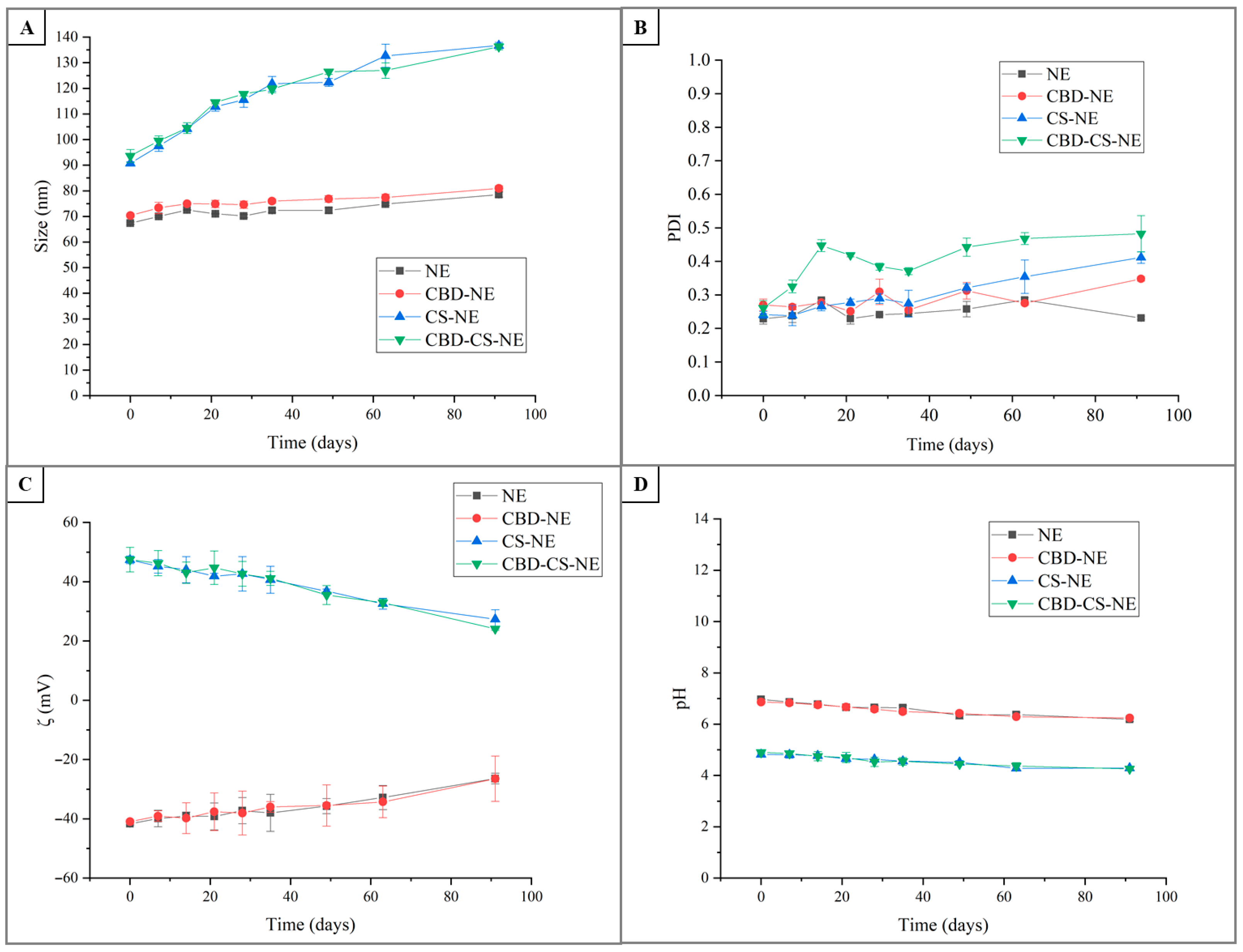
The storage stability study assessed changes in homogeneity, droplet size, PDI, ζ-potential, and pH over 91 days (
Figure 4). These parameters are critical for evaluating the long-term stability of the formulations, particularly in terms of resistance to aggregation, uniformity, and colloidal stability. All formulations remained physically stable, retaining a homogeneous single-phase structure throughout the study period.
The droplet size of NE gradually increased from 67.4 ± 0.5 nm on day 0 to 78.5 ± 1.0 nm on day 91, indicating a slight degree of destabilization over time. This increase was relatively minor, suggesting good overall physical stability. CBD-NE followed a similar trend, with droplet size increasing from 70.4 ± 0.6 nm to 81.0 ± 1.0 nm, reflecting slightly more pronounced destabilization than NE. CS-NE exhibited a more marked increase, from 90.7 ± 0.6 nm to 136.7 ± 1.2 nm, likely due to the polymeric nature of chitosan which may promote aggregation. CBD-CS-NE showed a comparable pattern, with size increasing from 94 ± 3 nm to 136.3 ± 1.2 nm. Notably, droplet size was primarily influenced by the presence of chitosan, and CBD incorporation did not induce significant structural changes in terms of size.
The PDI of NE rose slightly from 0.229 ± 0.016 to 0.285 ± 0.005, indicating a small reduction in uniformity. CBD-NE exhibited a more notable increase from 0.270 ± 0.017 to 0.348 ± 0.006, suggesting increased heterogeneity in particle size distribution. CS-NE showed a significant rise in PDI from 0.240 ± 0.010 to 0.411 ± 0.017, while CBD-CS-NE increased markedly from 0.26 ± 0.02 to 0.48 ± 0.05, reflecting a pronounced loss of uniformity. Importantly, the PDI values between NE and CBD-NE, and between NE and CS-NE were not significantly different, indicating a comparable degree of formulation uniformity among these variants, regardless of the inclusion of cannabidiol or chitosan.
NE exhibited a decline in ζ-potential from −41.7 ± 0.4 mV to −26.4 ± 1.8 mV, indicating a reduction in surface charge and electrostatic stabilization. This reduction may be attributed to chemical and physical changes occurring during storage, particularly within the oil phase and surfactant layer. Argan oil contains free fatty acids, phenolics, tocopherols and other polar compounds that, along with their oxidation or hydrolysis products, may migrate toward the droplet interface and partially neutralize or mask negatively charged sites, thereby lowering the measured ζ-potential. Additionally, gradual degradation or rearrangement of surfactant molecules may generate or expose new interfacial species that alter the electrical double layer, contributing to the observed decrease in surface charge [
25]. CBD-NE showed a similar trend, decreasing from −41.0 ± 0.6 mV to −26 ± 8 mV. In both cases, the reduction remained within an acceptable range, supporting adequate colloidal stability. CS-NE showed a decrease in ζ-potential from +47.4 ± 1.3 mV to +27 ± 3 mV, and CBD-CS-NE dropped from +47 ± 4 mV to +24.1 ± 0.5 mV, indicating reduced electrostatic repulsion. The similarity between NE and CBD-NE suggested that CBD incorporation did not affect the surface charge of nanoemulsion. Similarly, the comparable ζ-potential of CS-NE and CBD-CS-NE indicated that chitosan governs the electrostatic properties, and the presence of CBD did not significantly alter this behavior.
The pH of NE declined from 6.97 ± 0.01 on day 0 to 6.19 ± 0.08 on day 91, remaining within a stable range and suggesting minimal degradation. CBD-NE followed a similar pattern, decreasing from 6.86 ± 0.03 to 6.24 ± 0.05. Due to the presence of chitosan solubilized in acetic acid, CS-NE had a lower initial pH of 4.82 ± 0.09, which declined to 4.29 ± 0.06. CBD-CS-NE started at 4.90 ± 0.05 and decreased to 4.26 ± 0.05. These lower values reflected formulation characteristics rather than instability. The pH values of NE and CBD-NE, and those of CS-NE and CBD-CS-NE, were not significantly different. This consistency indicated that CBD inclusion did not substantially affect the acidity or alkalinity of the system. Therefore, the observed pH was largely governed by the base formulation components (with or without chitosan), and CBD did not introduce significant chemical changes that would alter pH.
Collectively, these results suggest that the addition of CBD did not significantly alter the physical or colloidal stability of the formulations within each type (with or without chitosan), reinforcing the compatibility of CBD with the nanoemulsion matrix. The stability data revealed a clear distinction between the plain and chitosan-stabilized systems. The NE and CBD-NE formulations maintained relatively stable droplet size, PDI, ζ-potential, and pH over 91 days, indicating good potential for long-term storage with minimal physical degradation. In contrast, while the CS-NE and CBD-CS-NE formulations provided initial stability and desirable functional properties (positive charge, increased viscosity), their long-term physical stability was more challenging. These formulations exhibited more substantial increases in droplet size and PDI over time compared to their non-chitosan counterparts. This suggests that the presence of chitosan, while beneficial for bioadhesion and initial colloidal charge, may introduce long-term instability that requires further optimization.
While this study assessed the physical and colloidal stability of the carrier systems, it is important to note a key limitation: the stability assessment did not include a chemical assay to quantify the integrity of the encapsulated CBD. Therefore, these data establish the physical shelf-life trends of the systems but do not confirm the chemical shelf-life of the active pharmaceutical ingredient. To advance the formulation toward pharmaceutical application, future studies must incorporate analytical methods, such as HPLC, to monitor CBD content and identify potential degradation products under various storage conditions.
Overall, the findings highlight a key formulation trade-off: chitosan imparts functional advantages relevant to dermal delivery, like the positive charge and bioadhesion but may compromise long-term physical stability compared to simpler nanoemulsions. All formulations remained within acceptable parameters, confirming their overall stability throughout the study period.
3.5. In Vitro Drug Release
This
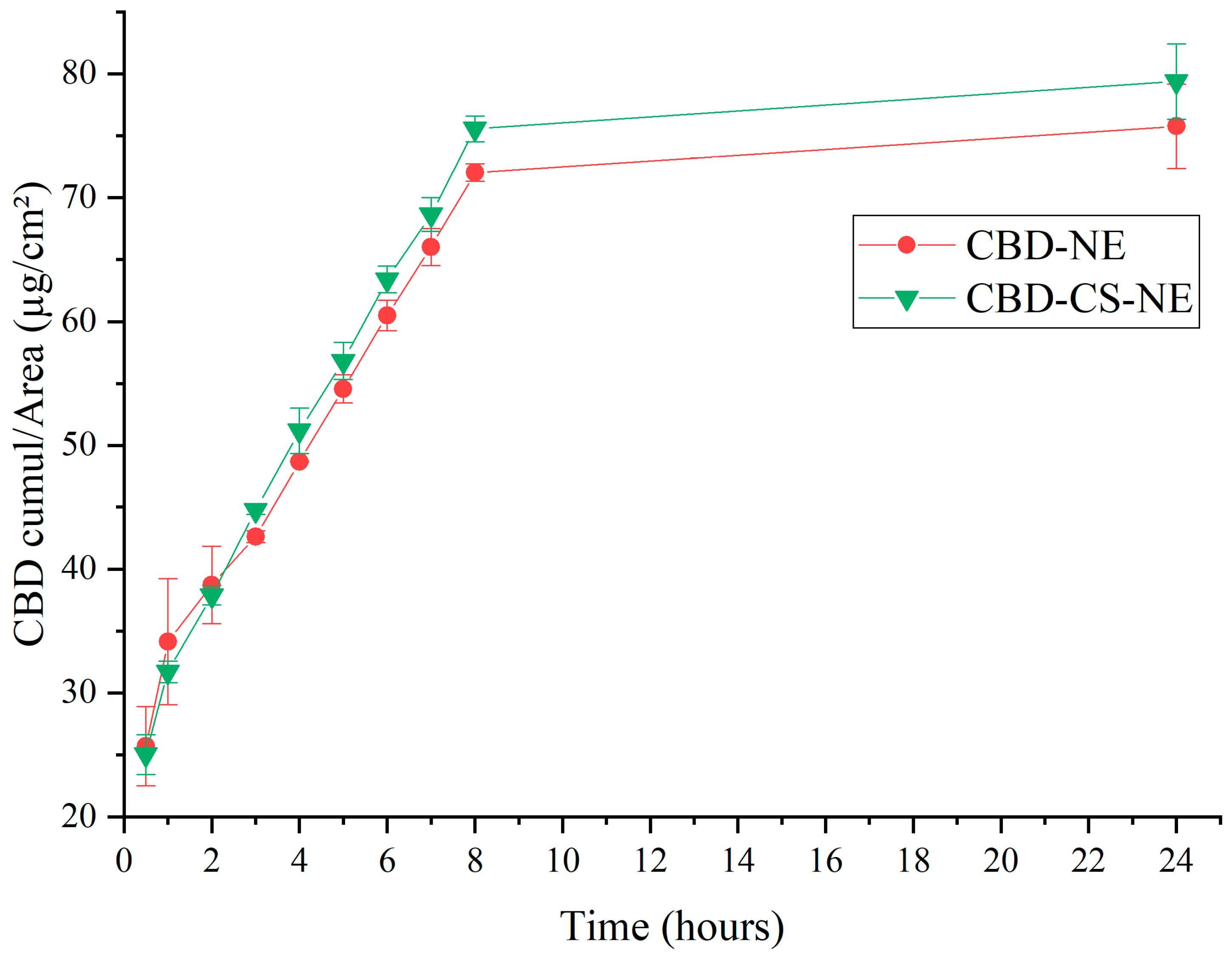
in vitro study assessed the release profile of CBD cross a synthetic membrane. The cumulative release data demonstrated that CBD-NE and CBD-CS-NE exhibited comparable release profiles over time, with CBD-CS-NE consistently showing a higher cumulative release per unit area than CBD-NE (
Figure 5). At 0.5 h, CBD-NE released 26 ± 3 µg/cm
2, while CBD-CS-NE released 25.0 ± 1.6 µg/cm
2, indicating similar initial diffusion rates. As the experiment progressed, CBD-CS-NE achieved a cumulative release per unit area of 79 ± 3 µg/cm
2 after 24 h, compared to 76 ± 4 µg/cm
2 for CBD-NE.
Both CBD-NE and CBD-CS-NE exhibited a sustained release profile over a 12 h period, with no abrupt fluctuations in the release rate, indicating their suitability for controlled CBD delivery.
Mathematical modeling was applied to assess the drug release behaviors of the formulations. The linear portion of the cumulative drug release per unit area over time was fitted to three kinetic models—Zero-Order, First-Order, Higuchi and Korsmeyer–Peppas—to identify the best-fit model describing CBD release and permeation mechanisms. Adjusted R2 values were as indicators of model suitability.
Although the cumulative release profiles of both CBD-NE and CBD-CS-NE exhibited near-linear behavior over the initial portion, resulting in high adjusted R
2 values for the zero-order model (98.94% and 99.47%, respectively), such correlations are commonly observed for cumulative release data and should not be interpreted as definitive evidence of a true zero-order release mechanism. To gain further insight into the release mechanism, the data were also evaluated using diffusion-based and semi-empirical models [
12]. Both formulations showed high correlation with the Higuchi model (adjusted R
2 = 97.13% for CBD-NE and 98.46% for CBD-CS-NE), suggesting that diffusion plays a significant role in CBD release. The Korsmeyer–Peppas model yielded release exponent (n) values of 0.3520 for CBD-NE and 0.3901 for CBD-CS-NE. These n values (<0.45) are characteristic of Fickian diffusion-controlled release, indicating that CBD transport is primarily governed by diffusion through the oil–water interface of the nanoemulsion droplets and across the dialysis membrane [
26].
It is important to note that due to the absence of sampling time points between 8 and 24 h, the current data cannot definitively confirm whether a plateau phase or a secondary release mechanism occurs during this interval.
Overall, the results indicate that while the release profiles may approximate zero-order behavior over the studied timeframe, the dominant release mechanism for both nanoemulsion systems is diffusion-controlled. The observed near-linear cumulative release is therefore attributed to sustained diffusion from the dispersed oil droplets under sink conditions, rather than to a concentration-independent zero-order process.
3.6. Ex Vivo Skin Permeation
This
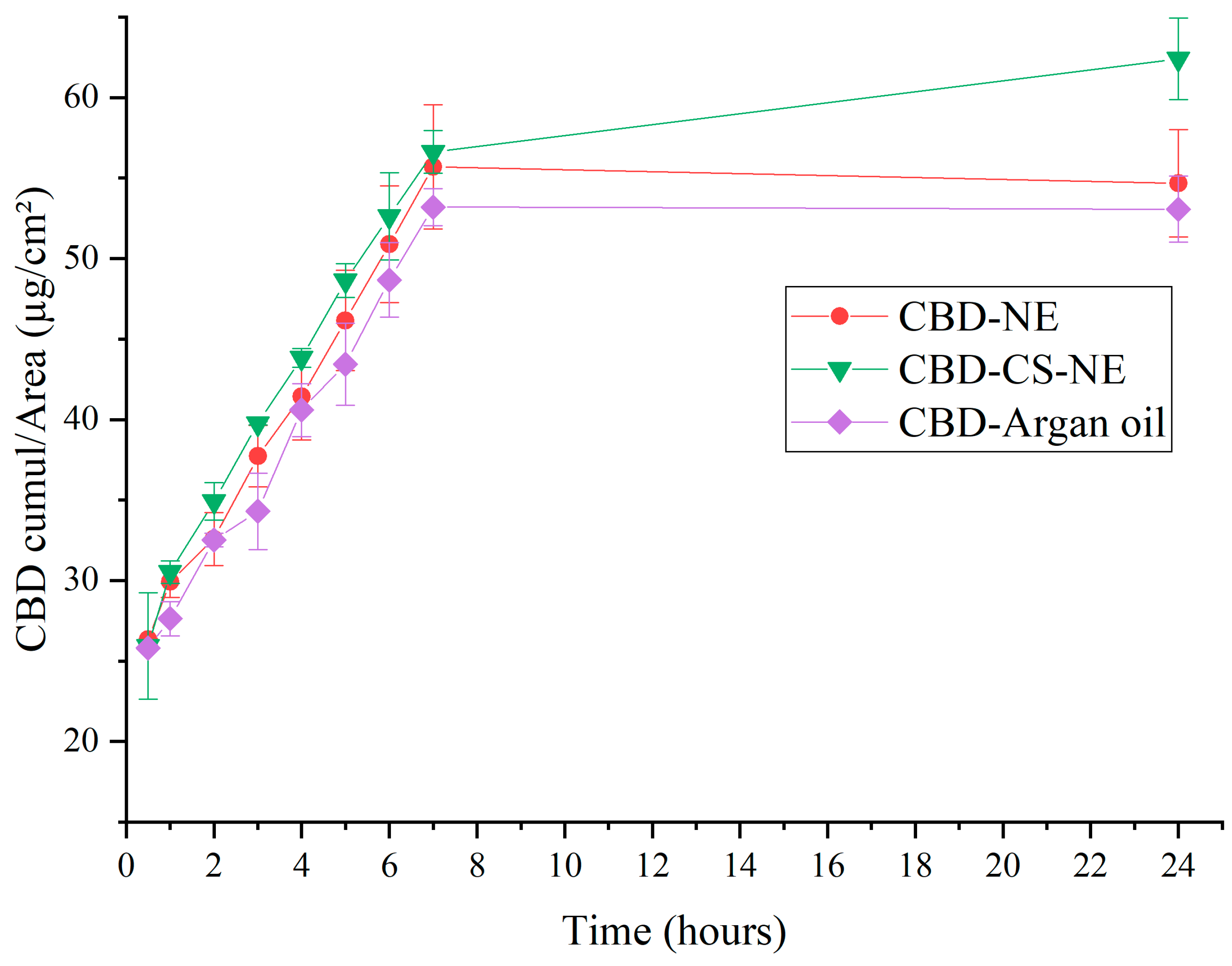
ex vivo skin permeation study evaluated the cumulative permeation of CBD over 24 h from the two nanoemulsion formulations, CBD-NE and CBD-CS-NE, as well as from the free drug in oil (CBD-Argan oil) (
Figure 6). The aim was to assess the extent of CBD penetration across the skin barrier, and to compare the effectiveness of the carrier systems.
The three formulations exhibited a gradual and continuous increase in CBD permeation, reaching 55 ± 3 µg/cm2, 62 ± 3 µg/cm2 and 53 ± 2 µg/cm2 for CBD-NE, CBD-CS-NE and CBD-Argan oil, respectively, at 24 h. The steady-state fluxes of the formulations were 4.4 ± 0.2 µg/cm2.h (CBD-NE), 4.58 ± 0.15 µg/cm2.h (CBD-CS-NE), and 4.18 ± 0.15 µg/cm2.h (CBD-Argan oil). The corresponding permeability coefficients were 0.00440 cm/h, 0.00458 cm/h, and 0.00418 cm/h (C0 = 1 mg/mL). Relative to CBD in argan oil, CBD-NE and CBD-CS-NE exhibited enhancement ratios of 1.05 and 1.10, respectively, representing improvements of 5.4% and 9.7%. Additionally, the flux of CBD-CS-NE was 4.1% higher than that of CBD-NE (enhancement ratio = 1.04).
Although the cumulative amount of CBD permeated after 24 h differed significantly among CBD-NE, CBD-CS-NE and CBD-Argan oil formulations (
p < 0.05), the steady-state flux values were not statistically different. This indicates that once steady-state conditions were established, the intrinsic diffusion rate of CBD across the skin barrier was comparable for all formulations. Consequently, the observed enhancements for the nanoemulsion systems primarily affected the extent of permeation rather than the steady-state permeation velocity. The increased cumulative permeation from CBD-NE and CBD-CS-NE may be attributed to improved drug solubilization, increased thermodynamic activity at the skin interface, enhanced partitioning into the stratum corneum, and/or temporary drug retention within the skin layers [
27]. In particular, chitosan functionalization produced the greatest increase in cumulative permeation, likely due to enhanced droplet–skin interactions and prolonged residence time at the skin surface, despite having no measurable effect on steady-state flux [
28]. This interpretation is subject to the limitation that the relative contribution of chitosan versus the nanoemulsion matrix to enhanced permeation cannot be fully decoupled without comparative studies using a hydrophilic model drug.
Kinetic modeling of the ex vivo permeation data showed high correlations with both the zero-order (R2 ≈ 99%) and Higuchi models (R2 ≈ 98–99%) for all formulations. While the near-linear cumulative permeation profiles may approximate zero-order behavior over the investigated time period, such high correlations are characteristic of steady-state diffusion through skin and should not be interpreted as definitive evidence of a true zero-order mechanism. To further elucidate the permeation mechanism, the Korsmeyer–Peppas model was applied. The release exponent (n) values for CBD-NE (0.2754), CBD-CS-NE (0.2908), and CBD-Argan oil (0.2710) were all below 0.45, indicating Fickian diffusion–controlled permeation. This finding is consistent with diffusion-driven transport across the skin barrier under steady-state conditions and supports the Higuchi-based interpretation.
Overall, the kinetic and permeation analyses confirm that CBD transport across the skin from all formulations is predominantly governed by Fickian diffusion. The key practical finding is not a difference in the steady-state diffusion rate, but a significant enhancement in the total drug delivered by the nanoemulsion systems, particularly the chitosan-stabilized formulation (CBD-CS-NE). This has direct therapeutic implications: a greater cumulative permeation suggests that more active ingredient can reach the target sites in the skin over a standard dosing period, potentially improving efficacy. Furthermore, the chitosan-functionalized nanoemulsion offers additional practical advantages essential for a topical product: its positive charge and increased viscosity promote bioadhesion and extended residence time on the psoriatic skin, which may improve patient compliance and local bioavailability. Therefore, while the fundamental permeability of the skin to CBD remains constant, the chitosan-stabilized nanoemulsion represents a superior delivery strategy. It enhances the extent of delivery, provides a stable and protective carrier for the hydrophobic drug, and incorporates features conducive to topical application, together addressing key formulation challenges for treating chronic skin conditions like psoriasis.
3.7. In Vitro Cytotoxicity
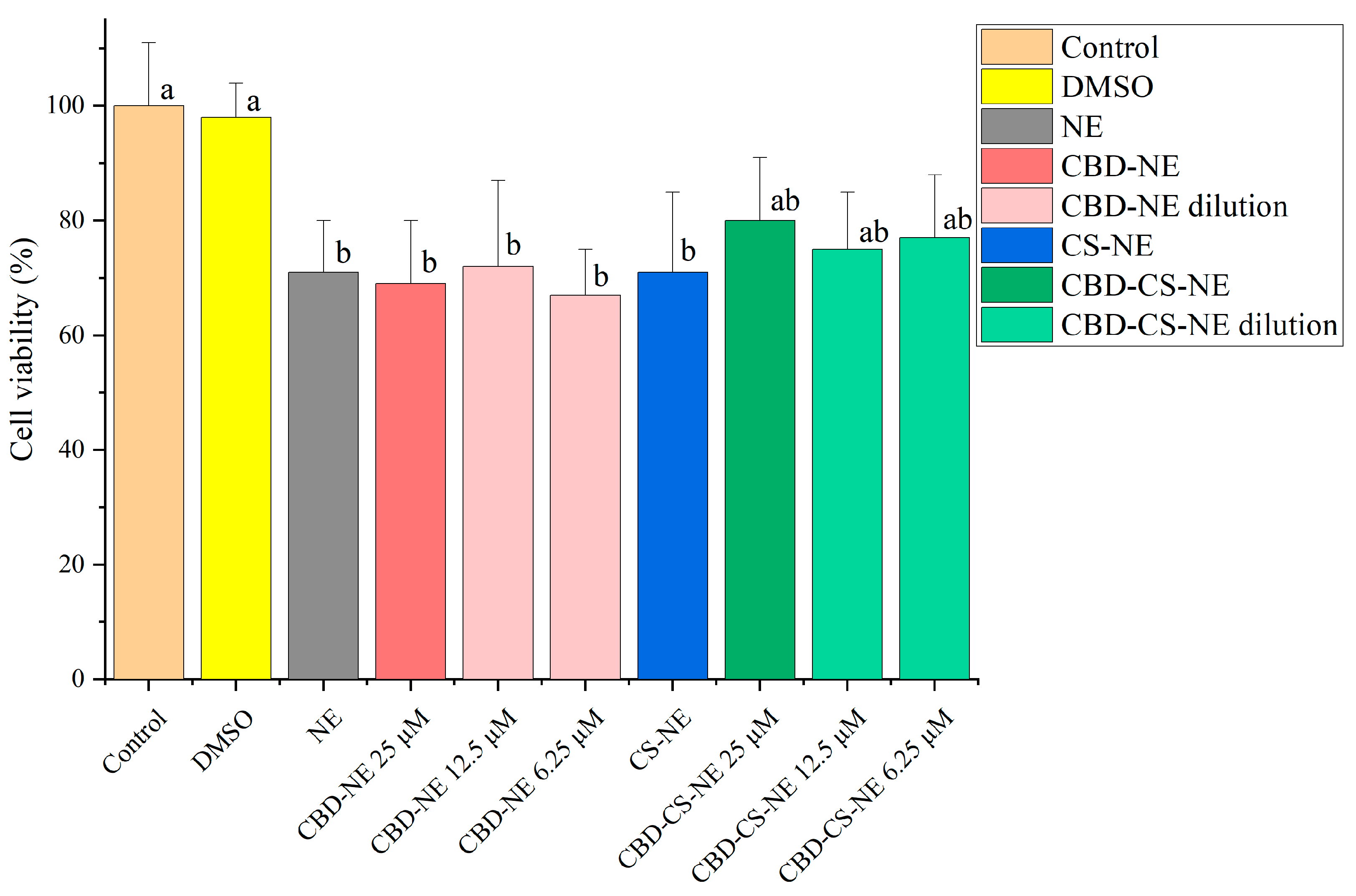
The formulations NE, CBD-NE, CS-NE, and CBD-CS-NE were evaluated for their cytotoxicity on HaCaT keratinocyte cells (
Figure 7).
The control group showed a standard deviation of ±11%, demonstrating the variability of the untreated cells, while the DMSO control exhibited a cell viability of 98 ± 6%, confirming the non-toxicity of the solvent.
The NE and CS-NE formulations exhibited cell viabilities of 71 ± 9% and 71 ± 14%, respectively, indicating weak cytotoxicity and overall good compatibility with HaCaT cells. The CBD-NE formulation showed similar viability values (69 ± 11%, 72 ± 15%, and 67 ± 8%) at CBD concentrations of 25 μM, 12.5 μM, and 6.25 μM, respectively. These comparable results suggest that the individual addition of either chitosan or CBD did not significantly alter the cytotoxic profile of the NE formulation.
The CBD-CS-NE formulation containing 25 μM of CBD demonstrated a higher cell viability of 80 ± 11%, falling within the non-cytotoxic range. Upon dilution, cell viability remained stable: 75 ± 10% at 12.5 μM and 77 ± 11% at 6.25 μM, indicating that concentration had no significant impact on cytotoxicity.
The study demonstrated that all tested formulations maintained acceptable levels of cell viability, with no substantial cytotoxicity observed. According to ISO 10993-5:2009 standard [
29], cell viability above 80% is classified as non-cytotoxic, 80–60% as weak cytotoxicity, 60–40% as moderate, and below 40% as strong cytotoxicity [
30].
The NE, CS-NE, and CBD-NE formulations exhibited weak cytotoxicity, with statistically comparable viability values. This indicates that the incorporation of chitosan or CBD did not significantly affect cytotoxicity. Additionally, no notable variations were observed between undiluted and diluted CBD-containing samples, suggesting consistent cytotoxicity profiles across concentrations.
The moderate cytotoxicity noted for CS-NE may be attributed to chitosan’s molecular-weight-dependent pro-apoptotic activity and its electrostatic interactions with negatively charged cell membranes, which can moderately compromise cell viability [
31]. In contrast, the presence of CBD in the CBD-CS-NE formulation appears to mitigate these effects, likely through a counterbalancing or neutralizing interaction that reduces cytotoxicity [
32].
Among all formulations, CBD-CS-NE exhibited the highest cell viability at all tested concentrations, falling within the non-cytotoxic range. This suggests a synergistic effect between CBD and chitosan that enhances overall biocompatibility, making this formulation particularly advantageous for dermatological applications requiring high cell compatibility.
In conclusion, while all formulations demonstrated mild to moderate cytotoxicity, none showed drastic reductions in HaCaT keratinocyte viability. CBD-CS-NE emerged as the most biocompatible formulation, underscoring its potential for safe and effective use in skin-related therapies where cellular compatibility is essential.
3.8. In Vivo Toxicity in Caenorhabditis elegans Model
This
in vivo toxicity study assessed the survivability of
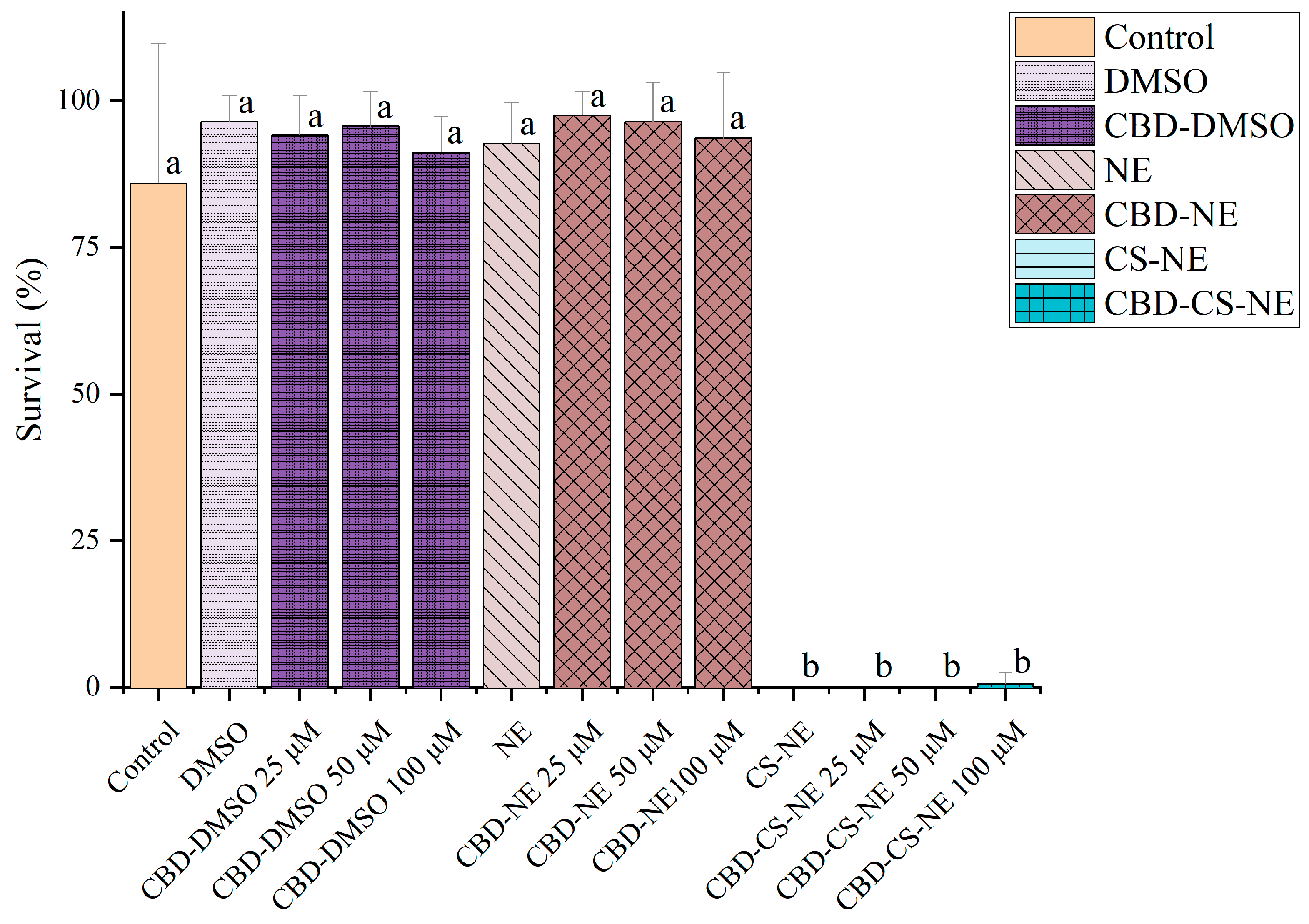
C. elegans following exposure to various CBD-containing formulations at different concentrations. The survival rates of the nematodes were quantified under different experimental conditions (
Figure 8).
The control group exhibited a survival rate of 86 ± 24%, indicating the baseline viability of the untreated C. elegans. The relatively high standard deviation suggested notable variability within the group, likely due to inherent biological differences among the nematodes.
Treatment with DMSO and CBD in DMSO (CBD-DMSO) resulted in high survival rates, with DMSO alone achieving a survival rate of 96 ± 5%, confirming that the solvent itself was non-toxic. CBD-DMSO at concentrations of 25, 50, and 100 μM maintained elevated survival rates (94 ± 7%, 96 ± 6%, and 91 ± 6%, respectively), indicating that CBD dissolved in DMSO did not negatively impact nematode viability.
Similarly, the NE and CBD-NE formulations demonstrated high biocompatibility. The NE formulation alone resulted in a survival rate of 93 ± 7%, confirming its safety in C. elegans. CBD-NE at concentrations of 25, 50, and 100 μM yielded survival rates of 98 ± 4%, 96 ± 7%, and 94 ± 11%, respectively, all not statistically different from the control and DMSO-treated groups. These results indicated that the NE formulation did not induce significant toxicity and was effective in delivering CBD without compromising nematode viability.
In contrast, the CS-NE and CBD-CS-NE formulations exhibited pronounced lethality in
C. elegans. This finding stands in direct opposition to the results from the
in vitro cytotoxicity assay in HaCaT keratinocytes (
Figure 7), where the same formulations showed no significant toxicity. This discrepancy underscores a critical limitation of isolated 2D cell cultures, which lack the integrated physiology of a whole organism, including protective barriers, digestive systems, and neuronal signaling [
33]. The severe toxicity in
C. elegans suggests a mechanism that requires systemic interaction or affects organs not represented in a keratinocyte monolayer.
The results demonstrated that both DMSO-based and NE-based CBD formulations were well-tolerated, with survival rates consistently above 90%, even at the highest concentration tested (100 μM). These findings indicate that CBD did not exert significant toxicity in the C. elegans model. In contrast, the CS-NE formulation and its CBD-loaded variants exhibited severe toxicity, resulting in complete or near-complete loss of nematode viability at all tested concentrations. This outcome suggests that chitosan, rather than CBD, was the primary factor contributing to observed toxicity.
The toxicity associated with the chitosan-based formulations may be linked to chitosan’s interaction with C. elegans physiology, potentially involving disruption of protective barriers or interfering with key internal processes. We propose two non-mutually exclusive mechanistic hypotheses to explain the specific toxicity of the chitosan-stabilized nanoemulsions: disruption of the nematode cuticle and intestinal barrier, and neurological or systemic toxicity via chitosan uptake.
The positively charged chitosan polymer, freely available in the nanoemulsion’s aqueous phase, could extensively interact with the negatively charged glycoproteins of the nematode cuticle and intestinal lining. This interaction may compromise these critical protective barriers, leading to a loss of osmotic integrity, desiccation, and uncontrolled influx of the formulation components, culminating in rapid organismal death. This mode of action would be absent in cultured cells grown on a plastic substrate [
34].
Alternatively, chitosan or chitosan-coated nanodroplets may be ingested and internalized by
C. elegans, potentially interfering with essential neuronal or metabolic pathways. Cationic polymers like chitosan are known to interact with cellular membranes and can disrupt mitochondrial function or induce oxidative stress in a tissue-specific manner; effects that could be lethal in a whole organism but not immediately apparent in a viability assay on resilient epithelial cells. Previous studies have reported that chitosan-based formulations, including nanoparticles and nanocapsules, can exhibit dose-dependent toxicity, with chitosan coatings contributing to higher mortality compared to other polymeric carriers [
33].
A significant limitation of this study must be acknowledged. The chitosan solution was prepared in 1% acetic acid, and the final nanoemulsions had a pH between 4.7–4.9. While the in vitro cell medium was strongly buffered, the C. elegans exposure medium (M9 buffer) has limited buffering capacity. Therefore, the contribution of residual low pH and free acetic acid to the observed lethality cannot be ruled out and represents a major confounding factor. The acidic environment itself could cause severe physiological stress. Future work must include appropriate pH-matched controls to decouple the effects of chitosan from those of low pH and acetic acid.
Despite this limitation, the data clearly indicate that the chitosan component is the primary driver of toxicity, as neither the NE (without chitosan) nor CBD alone induced adverse effects. The results compellingly demonstrate that while the plain nanoemulsion (NE) is a biocompatible carrier for CBD in this model, the incorporation of chitosan as a stabilizer creates a formulation with unacceptable in vivo toxicity under these experimental conditions. This highlights the necessity for stringent in vivo safety screening even when in vitro results are favorable and underscores that chitosan’s safety profile is profoundly dependent on its formulation, concentration, and the biological context of its application. Future formulations must either employ rigorous purification steps to eliminate acidic residues or utilize alternative, biocompatible stabilizers for intended dermal use.




 ,
,