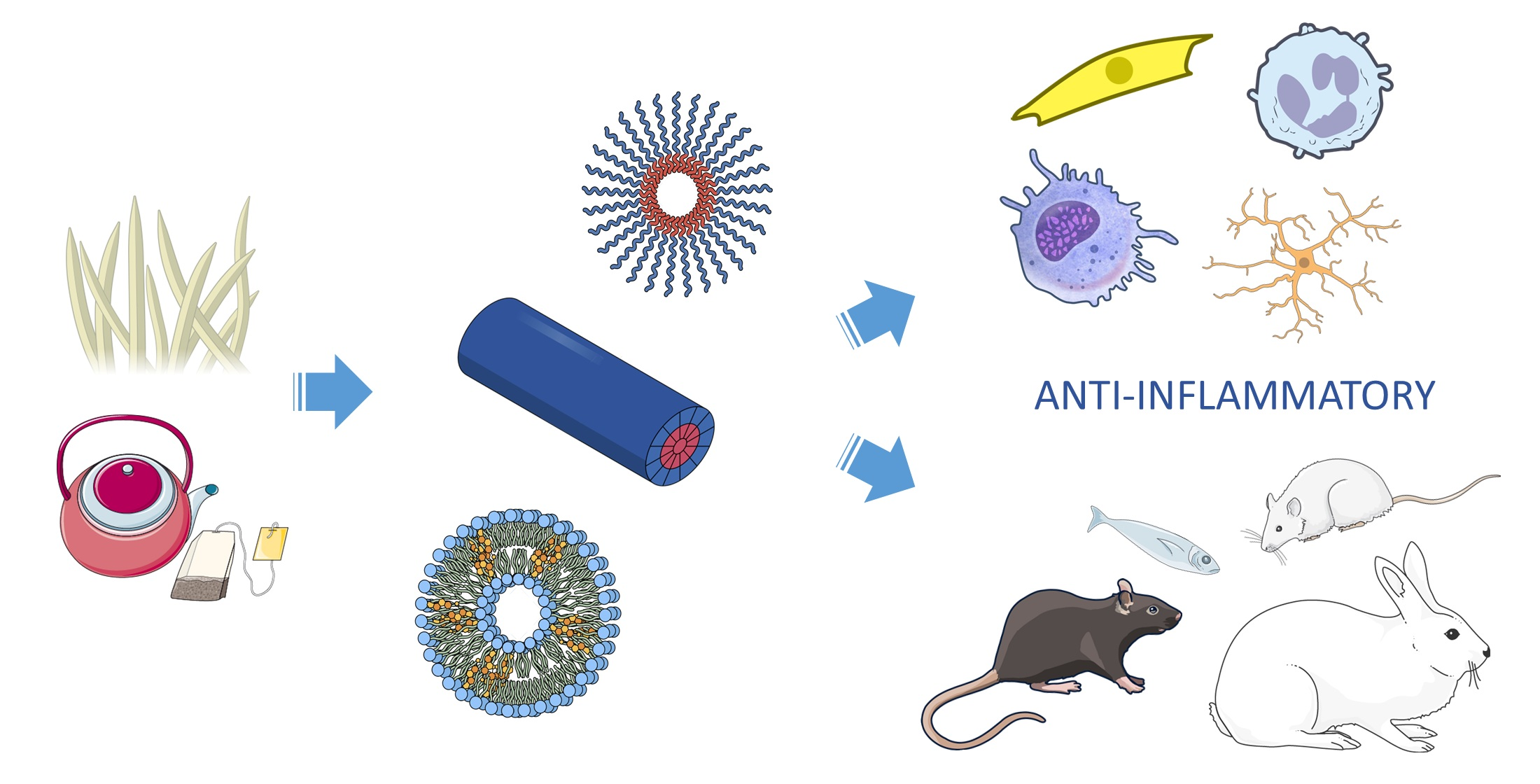
Plant-Based Nano-Delivery Systems in the Treatment of Inflammatory Disorders

 ,
,  ,
,  ,
,  and
and 
Abstract
1. Introduction
2. Method
2.1. Source and Search Strategy
2.2. Inclusion and Exclusion Criteria
3. Results and Discussion
3.1. Acute Lung Injury
3.2. Benign Prostatic Hyperplasia
3.3. Inflammation and Cancer
3.4. Liver Inflammation
3.5. Multiple Sclerosis
3.6. Ocular Inflammation
3.7. Osteoarthritis
3.8. Rheumatoid Arthritis
3.9. Skin Inflammation
3.10. Spinal Cord Injury
3.11. Ulcerative Colitis
3.12. Neurodegenerative Conditions
3.13. Other Inflammatory States
4. Conclusions
5. Future Directions
Author Contributions
Funding
Data Availability Statement
Conflicts of Interest
Appendix A

| Nanosystem | Model | Administration Route | Mechanism of Action | Ref. |
|---|---|---|---|---|
| Nanocrystals | ||||
| Crocin-loaded nanoformulation | Male Wistar rats | Intraperitoneal injection | Reduction in TNF-α, IL-1β, and NF-κB mRNA levels; Decrease in LPO and ROS generation; Attenuation of the reduced thiol level and SOD activity | [95] |
| Inorganic nanoparticles | ||||
| Capsaicin–Iron nanoparticles | LPS-induced RAW 264.7 cells | - | Decrease in the levels of TNF-α and iNOS; Increase in the levels of TGF-β | [48] |
| C57 mice | Intraperitoneal injection | Decrease in the expression of pro-inflammatory factors such as TNF-α and IL-6 | [48] | |
| Quercetin–Iron ultrasmall coordination nanoparticles | RAW 264.7 cells | - | Removal of reactive oxygen species (ROS), reduction in cell apoptosis, and inhibition of the NF-kB pathway Reduction in the release of TNF-α and IL-1β | [66] |
| Eupatorium japonicum flavonoids-loaded gold nanoparticles | HaCaT cells | - | Inhibition of pro-inflammatory cytokines (like IL-6 and IL-8) and downregulation of MAPK and NF-κB signaling pathways | [67] |
| Cotyledon orbiculata-loaded biogenic silver nanoparticles | Mouse skin fibroblasts (KMST-6) | - | Downregulation of pro-inflammatory genes (CCL2, CXCL2, IL-6, MMP2, SERPINE1) | [68] |
| Cotyledon orbiculata-loaded silver nanoparticles | LPS-treated macrophages | - | Inhibition of the secretion of pro-inflammatory cytokines: TNF-α, IL-6 and IL-1β | [86] |
| Luteolin–Cerium ion nanocomplexes | RAW 264.7 cells | - | Scavenging of excess ROS; Prevention of cell apoptosis; Down-regulation of inflammatory cytokine levels; Regulation of the response of inflammatory macrophages; Suppression of the activation of the NF-κB pathway | [87] |
| AKI rats | Intravenous injection | Improvement of kidney function; Repair of damaged renal tissue; Reduction in oxidative stress, inflammatory response, and cellular apoptosis | [87] | |
| Oridonin–Iridium (III) complexes | P50 knockdown cells | - | Detection of the p50 subunit of NF-κB; Tracking of TNF-α-induced NF-κB translocation | [88] |
| Tinospora cordifolia-loaded Magnesium hydroxide nanoparticles | RAB1130-1KT ovine kit | - | Inhibition of COX-1 and COX-2 | [89] |
| Thymus vulgaris-loaded Selenium nanoparticles | BSA bovine serum albumin | - | Inhibition of protein denaturation | [92] |
| Panax ginseng-loaded Gold and Silver nanoparticles | LPS stimulated RAW 264.7 cells | - | Inhibition of LPS-induced NO production | [93] |
| Naringenin-reduced graphene oxide nanosheets | Rats | Oral gavage | Decrease in serum levels of pro-inflammatory cytokines: IL-1β and IL-6; Amelioration of oxidative stress | [56] |
| Quercetin–Iron natural coordination nanoparticles | Collagen-induced arthritis (CIA) mice | Tail vein injection | Reduction in inflammatory cell infiltration, increase in anti-inflammatory macrophage phenotypes (M2) and reduction in pro-inflammatory M1; Inhibition of TNF-α, IL-6 and IL-1β; Increase in IL-10; ROS scavenging potential | [66] |
| Arctigenin-loaded cluster-like mesoporous silica/CAQK composite | C57BL/6J mice | Tail vein injection | Reduction in the expression of IL-17; Reduction in the expression of pro-inflammatory cytokines such as IL-1α, IL-6, G-CSF, MCP-1, and MIP-1β; Protection of neurons and promotion of recovery from spinal cord injury | [75] |
| Lupeol-loaded and PEG-coated Selenium nanoparticles with Gymnema sylvestre/Cinnamon cassia extracts | Sprague Dawley rats | Oral gavage | Reduction in edema by reducing the release of pro-inflammatory factors | [91] |
| Polymeric nanoparticles | ||||
| Anacardium occidentale-loaded chitosan/PVA/Copper oxide nanoparticles | COX-1 and COX-2 kits | - | Targeting and inhibition of the activity of COX-1 and COX-2 | [15] |
| β-carotene-loaded hyaluronic acid-modified polycyclodextrins | HCEC (Human Corneal Epithelial Cells) | - | Decrease in reactive oxygen species and inflammatory factors such as TNF-α and IL-1β; Promotion of ocular surface mucins secretion | [59] |
| Cannabidiol-loaded poly(lactic-co glycolic acid) copolymer nanoparticles | LPS-induced rat chondrocytes | - | Decrease in the levels of IL-1β, IL-6, TNF-α and MMP13 | [63] |
| Nanoparticles with chlorogenic acid and mannose modified chitosan | RAW 264.7 cells | - | Decrease in TNF-α, IL-1β, IL-6. Increase in IL-10; Modulation of macrophage M1/M2 polarization | [80] |
| Inulin-based nanoparticles with cannabidiol | RAW 264.7 cells | - | Reduction in the levels of NO, Inos, TNF-α and IL-1β; Increase in the production of IL-4 and IL-10 | [81] |
| Mice | Oral gavage | Modulation of TLR4 NF-Kβ pathway; Decrease in NO, INOS, TNF-α and IL-1β; Increase in IL-4 and IL-10 levels | [81] | |
| Starch nanoparticles with cannabidiol | LPS-induced BV2 microglia cell line | - | Reduction in NO and IL-6 levels | [83] |
| Curcumin-loaded amphiphilic polymeric nanoparticles | Human articular chondrocytes RAW 264.7 cells | - | Reduction in pro-inflammatory factors: IL-8, MCP and MIP (chondrocytes); Reduction in nitric oxide, IL-6, TNF-α, and MCP-1 (RAW 264.7 cells) | [94] |
| Aloe vera-loaded chitosan nanoparticles | Rats | Intraperitoneal injection | Inhibition of pro-inflammatory cytokines such as IL-1β, TNF-α, IFN-γ, IL-6 and the transcription factor NF-kB; Increase in IL-10 | [49] |
| β-carotene-loaded hyaluronic acid-modified polycyclodextrins | Rats | Ocular | Reduction in IL-1β and TNF-α levels; Restoration of ocular surface tissue; Reduction in oxidative stress levels | [59] |
| Licochalcone-A-loaded PLGA nanoparticles | Rabbits | Eye conjunctival sac instillation | Reduction in ocular inflammation score | [60] |
| Echinacea purpurea-loaded chitosan-silica nanoparticles | Obese male rats | Oral gavage | Inhibition of the expression of IL-1β, TNF-α, NF-κB p65 and IL-6 in the NF-κB pathway; Decrease the expression of COX-2, PGE2, iNOS and NO; Improvement of collagen II expression | [61] |
| Curcumin-loaded poly-(L-lactic acid) yarns | Male Wistar rats | Surgical suture | Reduction in inflammation and cellularity; Tissue regeneration | [69] |
| Gallic acid-loaded hyaluronic acid engineered chitosan nanoparticles | Mice | Topical | Targeting of CD44 receptors, restriction of keratinocyte hyperproliferation | [70] |
| Nanoparticles with chlorogenic acid and mannose modified chitosan | Mice | Oral | Polarization of macrophages towards M2; Inhibition of TLR4 NF-KB pathway; Decrease in TNF-α, IL-1β, IL-6; Increase in IL-10 | [80] |
| Curcumin–cholesteryl–hyaluronic acid nanogel | Human pancreatic adenocarcinoma MiaPaCa-2 cells | - | Apoptosis and cytotoxicity in cancer cells by suppressing NF-κB, TNF-α, and COX-2 | [53] |
| Aggressive orthotropic murine mammary carcinoma 4T1 model | Intraperitoneal injection | Effective tumor growth inhibition | [53] | |
| Human pancreatic adenocarcinoma MiaPaCa-2 xenograft mice model | Intraperitoneal injection | Effective tumor growth inhibition | [53] | |
| Syzygium aromaticum-loaded nanoemulsion | Rats | Topical | Acceleration on wound healing; Wound size reduction | [72] |
| Hypericum perforatum callus extract (HPCE)-loaded chitosan/alginate hydrogel | Healthy male BALB/c mice | Topical | Acceleration of re-epithelialization, neovascularization, and collagen deposition and reduction in inflammation | [74] |
| Curcumin-loaded, laminarin-coated, folic acid-modified lactoferrin nanoparticles | DSS-induced ulcerative colitis mice | Oral | Inhibition of the TLR4/NF-κB signaling pathway; Reduction in the expression of pro-inflammatory cytokines: iNOS, IL-1β, IL-6, and TNF-α | [76] |
| Isoliquiritigenin-loaded zein/caseinate nanoparticles | Mice | Oral | Inhibition of pro-inflammatory factors (IL-6 and TNF-α); Reduction in inflammatory cells infiltration in colon tissues; Repair of damaged intestinal mucosa | [77] |
| Bruceine D self-nanoemulsifying drug delivery system | TNBS-induced UC rat model | Intracolonic injection | Suppression of pro-inflammatory cytokines TNF-α, IL-8, IL-1β, and IL-6; Restoration of the levels of TNF-β and IL-10; Suppression of NF-κB, downregulation of iNOS and COX-2 gene expression | [78] |
| Gallic acid-loaded thiolated mucoadhesive anionic nanoliposomes | DSS-induced colitis mice model | Intra-rectal infusion | Inhibition of the NF-κB pathway Reduction in neutrophil and eosinophil levels; Reduction in lymphocytes | [79] |
| Berberine-loaded hyaluronic acid-modified chitosan-guanidine-CO2 nanoparticles | Mice | Oral gavage | Downregulation of CD98, TNF-α and IL-1β expression; Amelioration of MPO activity; Decrease in lymphocytic infiltration | [82] |
| Kaempferol in situ electrospinning dressings | Diabetic rats | Topical | Inhibition of MMP9; M2 macrophage polarization; Reduction in pro-inflammatory cytokine levels (TNF-α, IL-1β, and IL-6); Upregulation of anti-inflammatory cytokines (IL-10) | [71] |
| Naringin-loaded biomimetic nanoparticles | RAW 264.7 cells | - | Reduction in ROS production | [51] |
| Mice | Intrathecal injection | Reduction in IL-6 and IL-1β; Relief of pulmonary edema; Polarization of macrophages towards M2 | [51] | |
| Ginsenoside C-K-loaded liver-targeted nanoparticles | HepG2 cells | - | Reduction in the expression of pro-inflammatory genes: cytokines like IL16, IL34 and chemokines like CXCL5, CCL26, and CCL16 | [57] |
| HFD induced NAFLD mice | Tail vein injection | Retardation of the development of steatosis and fibrosis; Protection of cardiac tissues from lipo-toxicity; Inhibition of the mTOR Pathway | [57] | |
| Lipidic nanoparticles | ||||
| Teucrium polium-loaded solid lipid nanoparticles | Ntra-2 cancer cells | - | Decrease in the expression of IL-6 and IL-1β | [54] |
| Celastrol-loaded EMVs | RAW 264.7 cells | - | Modulation of macrophage M1/M2 polarization: suppression of M1 polarization and promotion of M2 polarization; Downregulation of the gene transcription of TNF-α, IL-1β, and iNOS; Upregulation of the gene transcription of Arg-1, Ym-1, and IL-10 | [55] |
| Mice | Tail vein injection | Modulation of macrophage M1/M2 polarization; Reduction in the levels of pro-inflammatory cytokines like TNF-α, IL-1β and iNOS; Prevention of neutrophil infiltration | [55] | |
| Cannabidiol-loaded solid lipid nanoparticles | Human chondrocytes and macrophage cell lines | - | Reduction in reactive oxygen and nitrogen species; Reduction in pro-inflammatory cytokines: TNF-α and IL-6 | [62] |
| Gallic acid-loaded thiolated mucoadhesive anionic nanoliposomes | LPS-stimulated RAW 264.7 cells | - | Decrease in the levels of pro-inflammatory cytokines (IL-1β and TNF-α) and nitrite levels | [79] |
| Lipid nanoparticles with mannose and penetratin | LPS and human Aβ1–42 oligomers | - | Reduction in TNF-α and IL-1β | [84] |
| American ginseng-loaded vesicle-like nanoparticles (AGVNs) | RAW 264.7 cells | - | Reduction in inflammatory factors such as NO, TNF-α, IL-6, and IL-10 | [85] |
| Oleic acid-loaded lipid-based nanoparticles | Isolated human neutrophils | - | Inhibition of superoxide and elastase production in activated neutrophils | [90] |
| Auraptene-loaded nanostructured lipid carrier | Rats | Oral | Reduction in the expression of inflammatory markers such as NF-κB, IL-1β, IL-6, and TGF-β; Enhancement of antioxidant activity | [52] |
| Bryostatin-1-loaded engineered extracellular vesicles | EAE mice | Intravenous injection | Decrease in infiltration of pro-inflammatory cells Protection of blood–brain barrier Alteration of the microglia pro-inflammatory phenotype | [58] |
| Caffeic acid-9AA-conjugated nanomicelles | Wistar rats | Intradermal injection | Inhibition of NF-κB signaling pathway; Activation of NR4A1, which led to the suppression of HIF-1α | [64] |
| Dexamethasone and luteolin co-encapsulated hyalurosomes | Rats | Topical | Reduction in serum levels of TNF-α and IL-1β | [65] |
| Rutin-loaded ethosomes | Human healthy volunteers | Topical | Reduction in the erythema index with physiological restoration of skin integrity | [73] |
| American ginseng vesicle-like nanoparticles (AGVLN) | Zebrafish | Topical | Decrease in the number of inflammatory cells | [85] |
| Oleic acid-loaded lipid-based nanoparticles | Mice | Intravenous injection | Reduction in myeloperoxidase (MPO) levels and cytokine production (TNF-α and IL-6); Decreased pulmonary neutrophil recruitment and lung damage | [90] |
| Lycopene-loaded nanoliposomes | Rats with high-fat diet | Oral | Reduction in the levels of pro-inflammatory cytokines such as TNF-α, IL-6, and IL-1β; Inhibition of the production of COX-2 | [96] |
| Curcumin platelet-derived nanoparticles | Mice | Inhalation | Decrease in lung vascular permeability and reduction in pro-inflammatory cytokine levels like TNFα, IL-6, ICAM1 and iNOS; Polarization towards the M2 subtype | [50] |
References
- Arulselvan, P.; Fard, M.; Tan, W.; Gothai, S.; Fakurazi, S.; Norhaizan, M.; Kumar, S. Role of Antioxidants and Natural Products in Inflammation. Oxid. Med. Cell. Longev. 2016, 2016, 5276130. [Google Scholar] [CrossRef] [Scilit]
- Tasneem, S.; Liu, B.; Li, B.; Choudhary, M.I.; Wang, W. Molecular pharmacology of inflammation: Medicinal plants as anti-inflammatory agents. Pharmacol. Res. 2019, 139, 126–140. [Google Scholar] [CrossRef] [Scilit]
- Liu, Y.; Lin, Z.; Wang, Y.; Chen, L.; Wang, Y.; Luo, C. Nanotechnology in inflammation: Cutting-edge advances in diagnostics, therapeutics and theranostics. Theranostics 2024, 14, 2490–2525. [Google Scholar] [CrossRef] [Scilit]
- Soták, M.; Clark, M.; Suur, B.E.; Börgeson, E. Inflammation and resolution in obesity. Nat. Rev. Endocrinol. 2025, 21, 45–61. [Google Scholar] [CrossRef] [Scilit]
- Markiewski, M.M.; Lambris, J.D. The role of complement in inflammatory diseases from behind the scenes into the spotlight. Am. J. Pathol. 2007, 171, 715–727. [Google Scholar] [CrossRef] [Scilit]
- Shen, Y.; Teng, L.; Qu, Y.; Liu, J.; Zhu, X.; Chen, S.; Yang, L.; Huang, Y.; Song, Q.; Fu, Q. Anti-proliferation and anti-inflammation effects of corilagin in rheumatoid arthritis by downregulating NF-κB and MAPK signaling pathways. J. Ethnopharmacol. 2022, 284, 114791. [Google Scholar] [CrossRef] [Scilit]
- Hou, M.; Wei, Y.; Zhao, Z.; Han, W.; Zhou, R.; Zhou, Y.; Zheng, Y.; Yin, L. Immuno-Engineered Nanodecoys for the Multi-Target Anti-Inflammatory Treatment of Autoimmune Diseases. Adv. Mater. 2022, 34, 2108817. [Google Scholar] [CrossRef] [Scilit]
- Chaudhary, D.; Patel, S.; Gururani, R.; Chak, P.; Jain, S.; Dwivedi, J.; Sharma, S. A comprehensive review on anti-inflammatory plants: A mechanistic insight through preclinical and clinical studies. Inflammopharmacology 2025, 33, 2447–2476. [Google Scholar] [CrossRef] [Scilit]
- Van Linschoten, R.C.A.; Visser, E.; Niehot, C.; van der Woude, C.; Hazelzet, J.; van Noord, D.; West, R. Systematic review: Societal cost of illness of inflammatory bowel disease is increasing due to biologics and varies between continents. Aliment. Pharmacol. Ther. 2021, 54, 234–248. [Google Scholar] [CrossRef] [Scilit]
- Wang, S.; Su, R.; Nie, S.; Sun, M.; Zhang, J.; Wu, D.; Moustaid-Moussa, N. Application of nanotechnology in improving bioavailability and bioactivity of diet-derived phytochemicals. J. Nutr. Biochem. 2014, 25, 363–376. [Google Scholar] [CrossRef] [Scilit]
- NNI Supplement to the President’s 2016 Budget—National Nanotechnology Coordination Office (NNCO). Available online: https://www.nano.gov/2016budgetsupplement/ (accessed on 20 August 2025).
- Zeng, M.; Guo, D.; Fernández-Varo, G.; Zhang, X.; Fu, S.; Ju, S.; Yang, H.; Liu, X.; Wang, Y.; Zeng, Y.; et al. The Integration of Nanomedicine with Traditional Chinese Medicine: Drug Delivery of Natural Products and Other Opportunities. Mol. Pharm. 2022, 20, 886–904. [Google Scholar] [CrossRef] [Scilit]
- Altammar, K.A. A review on nanoparticles: Characteristics, synthesis, applications, and challenges. Front. Microbiol. 2023, 14, 1155622. [Google Scholar] [CrossRef] [Scilit]
- Rajkumar, M.; Presley, S.; Govindaraj, P.; Kirubakaran, D.; Farahim, F.; Ali, T.; Shkir, M.; Latha, S. Synthesis of chitosan/PVA/copper oxide nanocomposite using Anacardium occidentale extract and evaluating its antioxidant, antibacterial, anti-inflammatory and cytotoxic activities. Sci. Rep. 2025, 15, 3931. [Google Scholar] [CrossRef] [Scilit]
- Malik, A.Q.; Mir, T.; Kumar, D.; Mir, I.; Rashid, A.; Ayoub, M.; Shukla, S. A review on the green synthesis of nanoparticles, their biological applications, and photocatalytic efficiency against environmental toxins. Environ. Sci. Pollut. Res. 2023, 30, 69796–69823. [Google Scholar] [CrossRef] [Scilit]
- An, Q.; Van Bel, A.J.E.; Hückelhoven, R. Do plant cells secrete exosomes derived from multivesicular bodies? Plant Signal. Behav. 2007, 2, 4–7. [Google Scholar] [CrossRef] [Scilit]
- Pan, K.; Zhong, Q.; Baek, S.J. Enhanced dispersibility and bioactivity of curcumin by encapsulation in casein nanocapsules. J. Agric. Food Chem. 2013, 61, 6036–6043. [Google Scholar] [CrossRef] [Scilit]
- Nitta, S.K.; Numata, K. Biopolymer-based nanoparticles for drug/gene delivery and tissue engineering. Int. J. Mol. Sci. 2013, 14, 1629–1654. [Google Scholar] [CrossRef] [Scilit]
- Danaei, M.; Dehghankhold, M.; Ataei, S.; Davarani, F.; Javanmard, R.; Dokhani, A.; Khorasani, S.; Mozafari, M. Impact of particle size and polydispersity index on the clinical applications of lipidic nanocarrier systems. Pharmaceutics 2018, 10, 57. [Google Scholar] [CrossRef] [Scilit]
- Rudramurthy, G.R.; Swamy, M.K.; Sinniah, U.R.; Ghasemzadeh, A. Nanoparticles: Alternatives against drug-resistant pathogenic microbes. Pharmaceutics 2018, 10, 57. [Google Scholar] [CrossRef] [Scilit]
- Patra, J.K.; Das, G.; Fraceto, L.; Campos, E.; Rodriguez-Torres, M.; Acosta-Torres, L.; Diaz-Torres, L.; Grillo, R.; Swamy, M.; Sharma, S.; et al. Nano based drug delivery systems: Recent developments and future prospects. J. Nanobiotechnol. 2018, 16, 71. [Google Scholar] [CrossRef] [Scilit]
- Ferozekhan, S.; Umashankar, M.S.; Narayanasamy, D. A Comprehensive Review of Nanogel-Based Drug Delivery Systems. Cureus 2024, 16, e68633. [Google Scholar] [CrossRef] [Scilit]
- Fais, S.; O’Driscoll, L.; Borras, F.; Buzas, E.; Camussi, G.; Cappello, F.; Carvalho, J.; Silva, A.; Portillo, H.; Andaloussi, S.; et al. Evidence-Based Clinical Use of Nanoscale Extracellular Vesicles in Nanomedicine. ACS Nano 2016, 10, 3886–3899. [Google Scholar] [CrossRef] [Scilit]
- Sarabia-Vallejo, Á.; Caja, M.d.M.; Olives, A.I.; Martín, M.A.; Menéndez, J.C. Cyclodextrin Inclusion Complexes for Improved Drug Bioavailability and Activity: Synthetic and Analytical Aspects. Pharmaceutics 2023, 15, 2345. [Google Scholar] [CrossRef] [Scilit]
- Sivakumar, P.M.; Peimanfard, S.; Zarrabi, A.; Khosravi, A.; Islami, M. Cyclodextrin-Based Nanosystems as Drug Carriers for Cancer Therapy. Anti-Cancer Agents Med. Chem. 2019, 20, 1327–1339. [Google Scholar] [CrossRef] [Scilit]
- Farghaly, D.A.; Aboelwafa, A.A.; Hamza, M.Y.; Mohamed, M.I. Topical Delivery of Fenoprofen Calcium via Elastic Nano-vesicular Spanlastics: Optimization Using Experimental Design and In Vivo Evaluation. AAPS PharmSciTech 2017, 18, 2898–2909. [Google Scholar] [CrossRef] [Scilit]
- Mozafari, M.R. Nanoliposomes: Preparation and analysis. Methods Mol. Biol. 2010, 605, 29–50. [Google Scholar] [CrossRef] [Scilit]
- Geim, A.K. Graphene: Status and prospects. Science 2009, 324, 1530–1534. [Google Scholar] [CrossRef] [Scilit]
- Guo, S.; Dong, S. Graphene nanosheet: Synthesis, molecular engineering, thin film, hybrids, and energy and analytical applications. Chem. Soc. Rev. 2011, 40, 2644–2672. [Google Scholar] [CrossRef] [Scilit]
- Umar, A.; Alshahrani, A.A.; Algarni, H.; Kumar, R. CuO nanosheets as potential scaffolds for gas sensing applications. Sens. Actuators B Chem. 2017, 250, 24–31. [Google Scholar] [CrossRef] [Scilit]
- Castro, K.C.; Campos, M.G.N.; Mei, L.H.I. Hyaluronic acid electrospinning: Challenges, applications in wound dressings and new perspectives. Int. J. Biol. Macromol. 2021, 173, 251–266. [Google Scholar] [CrossRef] [Scilit]
- Liu, M.; Duan, X.P.; Li, Y.M.; Yang, D.P.; Long, Y.Z. Electrospun nanofibers for wound healing. Mater. Sci. Eng. C 2017, 76, 1413–1423. [Google Scholar] [CrossRef] [Scilit]
- McClements, D.J. Delivery by Design (DbD): A Standardized Approach to the Development of Efficacious Nanoparticle- and Microparticle-Based Delivery Systems. Compr. Rev. Food Sci. Food Saf. 2017, 17, 200–219. [Google Scholar] [CrossRef] [Scilit]
- Rieux, A.D.; Fievez, V.; Garinot, M.; Schneider, Y.J.; Préat, V. Nanoparticles as potential oral delivery systems of proteins and vaccines: A mechanistic approach. J. Control. Release 2006, 116, 1–27. [Google Scholar] [CrossRef] [Scilit]
- Chen, L.; Remondetto, G.E.; Subirade, M. Food protein-based materials as nutraceutical delivery systems. Trends Food Sci. Technol. 2006, 17, 272–283. [Google Scholar] [CrossRef] [Scilit]
- Ai, S.; Li, Y.; Zheng, H.; Zhang, M.; Tao, J.; Liu, W.; Peng, L.; Wang, Z.; Wang, Y. Collision of herbal medicine and nanotechnology: A bibliometric analysis of herbal nanoparticles from 2004 to 2023. J. Nanobiotechnol. 2024, 22, 140. [Google Scholar] [CrossRef] [Scilit]
- Zhu, Y.; Zhao, J.; Ding, H.; Qiu, M.; Xue, L.; Ge, D.; Wen, G.; Ren, H.; Li, P.; Wang, J. Applications of plant-derived extracellular vesicles in medicine. Medcomm 2024, 5, e741. [Google Scholar] [CrossRef] [Scilit]
- Cheng, Z.; Lu, W.; Shao, W.; Zhang, C.; She, Y.; Song, R.; Qi, R.; Song, J.; Zhang, W.; Chang, X.; et al. Advances in plant-derived vesicle like nanoparticles-based therapies for inflammatory diseases. Asian J. Pharm. Sci. 2025, 20, 101052. [Google Scholar] [CrossRef] [Scilit]
- Buya, A.B.; Beloqui, A.; Memvanga, P.B.; Préat, V. Self-nano-emulsifying drug-delivery systems: From the development to the current applications and challenges in oral drug delivery. Pharmaceutics 2020, 12, 1194. [Google Scholar] [CrossRef] [Scilit]
- Xuan, L.; Ju, Z.; Skonieczna, M.; Zhou, P.K.; Huang, R. Nanoparticles-induced potential toxicity on human health: Applications, toxicity mechanisms, and evaluation models. Medcomm 2023, 4, e327. [Google Scholar] [CrossRef] [Scilit]
- Thu, H.E.; Haider, M.A.; Khan, S.; Sohail, M.; Hussain, Z. Nanotoxicity induced by nanomaterials: A review of factors affecting nanotoxicity and possible adaptations. OpenNano 2023, 14, 100190. [Google Scholar] [CrossRef] [Scilit]
- Yang, W.; Wang, L.; Mettenbrink, E.M.; Deangelis, P.L.; Wilhelm, S. Nanoparticle Toxicology. Annu. Rev. Pharmacol. Toxicol. 2021, 61, 269–289. [Google Scholar] [CrossRef] [Scilit]
- Landsiedel, R.; Honarvar, N.; Seiffert, S.B.; Oesch, B.; Oesch, F. Genotoxicity testing of nanomaterials. WIREs Nanomed. Nanobiotechnol. 2022, 14, e1833. [Google Scholar] [CrossRef] [Scilit]
- Chow, J.C.L. Biophysical insights into nanomaterial-induced DNA damage: Mechanisms, challenges, and future directions. AIMS Biophys. 2024, 11, 340–369. [Google Scholar] [CrossRef] [Scilit]
- Ci, Z.; Wang, H.; Luo, J.; Wei, C.; Chen, J.; Wang, D.; Zhou, Y. Application of Nanomaterials Targeting Immune Cells in the Treatment of Chronic Inflammation. Int. J. Nanomed. 2024, 19, 13925–13946. [Google Scholar] [CrossRef] [Scilit]
- Cuomo, J.; Appendino, G.; Dern, A.; Schneider, E.; McKinnon, T.; Brown, M.; Togni, S.; Dixon, B. Comparative absorption of a standardized curcuminoid mixture and its lecithin formulation. J. Nat. Prod. 2011, 74, 664–669. [Google Scholar] [CrossRef] [Scilit]
- More, S.; Bampidis, V.; Benford, D.; Bragard, C.; Halldorsson, T.; Hernández-Jerez, A.; Bennekou, S.; Koutsoumanis, K.; Lambré, C.; Machera, K. Guidance on risk assessment of nanomaterials to be applied in the food and feed chain: Human and animal health. EFSA J. 2021, 19, e06768. [Google Scholar] [CrossRef] [Scilit]
- Wang, R.; Li, Q.; Wu, P.; Ren, K.; Li, Y.; Wang, Y.; Zhu, H.; Lv, C. Fe-Capsaicin Nanozymes Attenuate Sepsis-Induced Acute Lung Injury via NF-κB Signaling. Int. J. Nanomed. 2024, 19, 73–90. [Google Scholar] [CrossRef] [Scilit]
- El-Emam, M.M.A.; El-Demerdash, A.; Abdo, S.; Abd-Elfatah, E.; El-Sayed, M.; Qelliny, M.; Eldin, Z.; Shehata, A. The ameliorative role of Aloe vera-loaded chitosan nanoparticles on Staphylococcus aureus induced acute lung injury: Targeting TLR/NF-κB signaling pathways. Open Vet. J. 2024, 14, 416–427. [Google Scholar] [CrossRef] [Scilit]
- Jin, H.; Luo, R.; Li, J.; Zhao, H.; Ouyang, S.; Yao, Y.; Chen, D.; Ling, Z.; Zhu, W.; Chen, M.; et al. Inhaled platelet vesicle-decoyed biomimetic nanoparticles attenuate inflammatory lung injury. Front. Pharmacol. 2022, 13, 1050224. [Google Scholar] [CrossRef] [Scilit]
- Jin, H.; Zhao, Y.; Yao, Y.; Fan, S.; Luo, R.; Shen, X.; Wang, Y.; Pi, J.; Huang, G. Intratracheal Administration of Stem Cell Membrane-Cloaked Naringin-Loaded Biomimetic Nanoparticles Promotes Resolution of Acute Lung Injury. Antioxidants 2024, 13, 282. [Google Scholar] [CrossRef] [Scilit]
- Almukadi, H.; Eid, B.G.; Shaik, R.A.; Abdel-Naim, A.B.; Esmat, A. Auraptene nanoparticles ameliorate testosterone-induced benign prostatic hyperplasia in rats: Emphasis on antioxidant, anti-inflammatory, proapoptotic and PPARs activation effects. Biomed. Pharmacother. 2021, 143, 112199. [Google Scholar] [CrossRef] [Scilit]
- Wei, X.; Senanayake, T.H.; Bohling, A.; Vinogradov, S.V. Targeted nanogel conjugate for improved stability and cellular permeability of curcumin: Synthesis, pharmacokinetics, and tumor growth inhibition. Mol. Pharm. 2014, 11, 3112–3122. [Google Scholar] [CrossRef] [Scilit]
- Roumi, S.; Tabrizi, M.H.; Eshaghi, A.; Abbasi, N. Teucrium polium extract-loaded solid lipid nanoparticles: A design and in vitro anticancer study. J. Food Biochem. 2021, 45, e13868. [Google Scholar] [CrossRef] [Scilit]
- Zheng, J.; Yang, N.; Wan, Y.; Cheng, W.; Zhang, G.; Yu, S.; Yang, B.; Liu, X.; Chen, X.; Ding, X.; et al. Celastrol-loaded biomimetic nanodrug ameliorates APAP-induced liver injury through modulating macrophage polarization. J. Mol. Med. 2023, 101, 699–716. [Google Scholar] [CrossRef] [Scilit]
- Abdelmoneim, D.; Eldomany, E.B.; El-Adl, M.; Farghali, A.; El-Sayed, G.; El-Sherbini, E.S. Possible protective effect of natural flavanone naringenin-reduced graphene oxide nanosheets on nonalcoholic fatty liver disease. Naunyn-Schmiedeberg’s Arch. Pharmacol. 2024, 398, 4071–4086. [Google Scholar] [CrossRef] [Scilit]
- Yue, C.; Li, D.; Fan, S.; Tao, F.; Yu, Y.; Lu, W.; Chen, Q.; Yuan, A.; Wu, J.; Zhao, G.; et al. Long-term and liver-selected ginsenoside C–K nanoparticles retard NAFLD progression by restoring lipid homeostasis. Biomaterials 2023, 301, 122291. [Google Scholar] [CrossRef] [Scilit]
- Wu, W.C.; Tian, J.; Xiao, D.; Guo, Y.; Xiao, Y.; Wu, X.; Casella, G.; Rasouli, J.; Yan, Y.; Rostami, A.; et al. Engineered extracellular vesicles encapsulated Bryostatin-1 as therapy for neuroinflammation. Nanoscale 2022, 14, 2393–2410. [Google Scholar] [CrossRef] [Scilit]
- Zhang, F.; Tan, M.; Hu, Z.; Zhang, Y.; Qi, X.; Che, Y.; Li, J.; Zhang, S.; Li, B. A hyaluronic acid-modified cyclodextrin self-assembly system for the delivery of β-carotene in the treatment of dry eye disease. Int. J. Biol. Macromol. 2024, 287, 138428. [Google Scholar] [CrossRef] [Scilit]
- Galindo, R.; Sánchez-López, E.; Gómara, M.; Espina, M.; Ettcheto, M.; Cano, A.; Haro, I.; Camins, A.; García, M. Development of Peptide Targeted PLGA-PEGylated Nanoparticles Loading Licochalcone-A for Ocular Inflammation. Pharmaceutics 2022, 14, 285. [Google Scholar] [CrossRef] [Scilit]
- Johnson, A.; Huang, Y.; Mao, C.; Chen, C.; Thomas, S.; Kuo, H.; Miao, S.; Kong, Z. Protective effect of ethanolic extract of Echinacea purpurea contained nanoparticles on meniscal/ligamentous injury induced osteoarthritis in obese male rats. Sci. Rep. 2022, 12, 5354. [Google Scholar] [CrossRef] [Scilit]
- Alcantara, K.P.; Malabanan, J.W.T.; Nalinratana, N.; Thitikornpong, W.; Rojsitthisak, P.; Rojsitthisak, P. Cannabidiol-Loaded Solid Lipid Nanoparticles Ameliorate the Inhibition of Proinflammatory Cytokines and Free Radicals in an In Vitro Inflammation-Induced Cell Model. Int. J. Mol. Sci. 2024, 25, 4744. [Google Scholar] [CrossRef] [Scilit]
- Jin, Z.; Zhan, Y.; Zheng, L.; Wei, Q.; Xu, S.; Qin, Z. Cannabidiol-Loaded Poly Lactic-Co-Glycolic Acid Nanoparticles with Improved Bioavailability as a Potential for Osteoarthritis Therapeutic. ChemBioChem 2023, 24, e202200698. [Google Scholar] [CrossRef] [Scilit]
- Vyawahare, A.; Prakash, R.; Jori, C.; Ali, A.; Raza, S.S.; Khan, R. Caffeic Acid Modified Nanomicelles Inhibit Articular Cartilage Deterioration and Reduce Disease Severity in Experimental Inflammatory Arthritis. ACS Nano 2022, 16, 18579–18591. [Google Scholar] [CrossRef] [Scilit]
- Zewail, M.; Gaafar, P.M.E.; Abbas, H.; Elsheikh, M.A. Innovative rheumatoid arthritis management using injection replacement approach via dual therapeutic effects of hyalurosomes-encapsulated luteolin and dexamethasone. Colloids Surf. B Biointerfaces 2025, 249, 114497. [Google Scholar] [CrossRef] [Scilit]
- Han, Z.; Gao, X.; Wang, Y.; Cheng, S.; Zhong, X.; Xu, Y.; Zhou, X.; Zhang, Z.; Liu, Z.; Cheng, L. Ultrasmall iron-quercetin metal natural product nanocomplex with antioxidant and macrophage regulation in rheumatoid arthritis. Acta Pharm. Sin. B 2022, 13, 1726–1739. [Google Scholar] [CrossRef] [Scilit]
- Xu, X.Y.; Moon, S.K.; Kim, J.K.; Kim, W.J.; Kim, Y.J.; Kim, H. Structural properties and anti-dermatitis effects of flavonoids-loaded gold nanoparticles prepared by Eupatorium japonicum. Front. Pharmacol. 2022, 13, 1055378. [Google Scholar] [CrossRef] [Scilit]
- Tyavambiza, C.; Meyer, M.; Wusu, A.D.; Madiehe, A.M.; Meyer, S. The Antioxidant and In Vitro Wound Healing Activity of Cotyledon orbiculata Aqueous Extract and the Synthesized Biogenic Silver Nanoparticles. Int. J. Mol. Sci. 2022, 23, 16094. [Google Scholar] [CrossRef] [Scilit]
- Richard, A.S.; Verma, R.S. Bioactive nano yarns as surgical sutures for wound healing. Mater. Sci. Eng. C 2021, 128, 112334. [Google Scholar] [CrossRef] [Scilit]
- Sheikh, A.; Hazari, S.; Molugulu, N.; Alshehri, S.; Wahab, S.; Sahebkar, A.; Kesharwani, P. Hyaluronic acid engineered gallic acid embedded chitosan nanoparticle as an effective delivery system for treatment of psoriasis. Environ. Res. 2023, 238, 117086. [Google Scholar] [CrossRef] [Scilit]
- Li, J.; Meng, H.; Guo, W.; Zhou, L.; Wu, S.; Gao, G.; Liu, Q.; You, D.; Qu, W. In-Situ Electrospinning Dressings Loaded with Kaempferol for Reducing MMP9 to Promote Diabetic Ulcer Healing. Int. J. Nanomed. 2025, 20, 1101–1117. [Google Scholar] [CrossRef] [Scilit]
- Parham, S.; Kharaz, A.Z. Cellulosic textile/clove nanocomposite as an antimicrobial wound dressing: In vitro and in vivo study. Colloids Surf. B Biointerfaces 2022, 217, 112659. [Google Scholar] [CrossRef] [Scilit]
- Cristiano, M.C.; Barone, A.; Mancuso, A.; Torella, D.; Paolino, D. Rutin-loaded nanovesicles for improved stability and enhanced topical efficacy of natural compound. J. Funct. Biomater. 2021, 12, 74. [Google Scholar] [CrossRef] [Scilit]
- Zivari-Ghader, T.; Hamishehkar, H.; Shokouhi, B.; Kosari-Nasab, M.; Farahpour, M.; Memar, M.; Davaran, S.; Hanaee, J.; Rashidi, M.; Mehrali, M. Chitosan-Alginate Hydrogel Enriched with Hypericum perforatum Callus Extract for Improved Wound Healing and Scar Inhibition. ACS Appl. Mater. Interfaces 2024, 16, 67344–67361. [Google Scholar] [CrossRef] [Scilit]
- Sun, G.; Zeng, S.; Liu, X.; Shi, H.; Zhang, R.; Wang, B.; Zhou, C.; Yu, T. Synthesis and Characterization of a Silica-Based Drug Delivery System for Spinal Cord Injury Therapy. Nano-Micro Lett. 2019, 11, 23. [Google Scholar] [CrossRef] [Scilit]
- Ye, N.; Zhao, P.; Ayue, S.; Qi, S.; Ye, Y.; He, H.; Dai, L.; Luo, R.; Chang, D.; Gao, F. Folic acid-modified lactoferrin nanoparticles coated with a laminarin layer loaded curcumin with dual-targeting for ulcerative colitis treatment. Int. J. Biol. Macromol. 2023, 232, 123229. [Google Scholar] [CrossRef] [Scilit]
- Xiao, M.; Wu, S.; Cheng, Y.; Ma, J.; Luo, X.; Chang, L.; Zhang, C.; Chen, J.; Zou, L.; You, Y.; et al. Colon-specific delivery of isoliquiritigenin by oral edible zein/caseate nanocomplex for ulcerative colitis treatment. Front. Chem. 2022, 10, 981055. [Google Scholar] [CrossRef] [Scilit]
- Dou, Y.X.; Zhou, J.; Wang, T.; Huang, Y.; Chen, V.; Xie, Y.; Lin, Z.; Gao, J.; Su, Z.; Zeng, H. Self-nanoemulsifying drug delivery system of bruceine D: A new approach for anti-ulcerative colitis. Int. J. Nanomed. 2018, 13, 5887–5907. [Google Scholar] [CrossRef] [Scilit]
- Kanika; Ahmad, A.; Kumar, A.; Rahul; Mishra, R.; Ali, N.; Navik, U.; Parvez, S.; Khan, R. Leveraging thiol-functionalized biomucoadhesive hybrid nanoliposome for local therapy of ulcerative colitis. Biomaterials 2024, 312, 122747. [Google Scholar] [CrossRef] [Scilit]
- Hu, S.; Runan, Z.; Yixin, Y.; Xinru, T.; Xuesong, C.; Zhicong, W.; Xiaoxiao, Z.; Yingying, Z.; Beiwei, Z.; Jiangning, H. Macrophage-targeted polyphenol-armored nanoparticles synergistically attenuate colitis by suppressing TLR4/Myd88/NF-κB and modulating gut microbiota. Chem. Eng. J. 2025, 522, 167934. [Google Scholar] [CrossRef] [Scilit]
- Zhang, X.; Gao, X.; Yi, X.; Yu, H.; Shao, M.; Li, Y.; Shen, X. Multi-targeting inulin-based nanoparticles with cannabidiol for effective prevention of ulcerative colitis. Mater. Today Bio 2024, 25, 100965. [Google Scholar] [CrossRef] [Scilit]
- Yang, M.; Yang, C.; Zhang, Y.; Yan, X.; Ma, Y.; Zhang, Y.; Cao, Y.; Xu, Q.; Tu, K.; Zhang, M. An oral pH-activated ‘nano-bomb’ carrier combined with berberine by regulating gene silencing and gut microbiota for site-specific treatment of ulcerative colitis. Biomater. Sci. 2022, 10, 1053–1067. [Google Scholar] [CrossRef] [Scilit]
- Eydelman, I.; Zehavi, N.; Feinshtein, V.; Kumar, D.; Ben-Shabat, S.; Sintov, A.C. Cannabidiol-Loaded Nanoparticles Based on Crosslinked Starch: Anti-Inflammatory Activity and Improved Nose-to-Brain Delivery. Pharmaceutics 2023, 15, 1803. [Google Scholar] [CrossRef] [Scilit]
- Chaulagain, B.; Singh, J. Penetratin and Mannose-Functionalized Cannabidiol Lipid Nanoparticles Encapsulating the BDNF Gene Reduce Amyloid-Induced Inflammation. Mol. Pharm. 2024, 22, 154–167. [Google Scholar] [CrossRef] [Scilit]
- Li, T.; Wang, H.; Bi, W.; Su, Y.; Xiong, Y.; Wang, S.; Han, L. Nano-Characterization, Composition Analysis, and Anti-Inflammatory Activity of American-Ginseng-Derived Vesicle-like Nanoparticles. Molecules 2024, 29, 3443. [Google Scholar] [CrossRef] [Scilit]
- Tyavambiza, C.; Elbagory, A.M.; Madiehe, A.M.; Meyer, M.; Meyer, S. The antimicrobial and anti-inflammatory effects of silver nanoparticles synthesised from cotyledon orbiculata aqueous extract. Nanomaterials 2021, 11, 1343. [Google Scholar] [CrossRef] [Scilit]
- Gu, J.; Zhang, P.; Li, H.; Wang, Y.; Huang, Y.; Fan, L.; Ma, X.; Qian, X.; Xi, J. Cerium-Luteolin Nanocomplexes in Managing Inflammation-Related Diseases by Antioxidant and Immunoregulation. ACS Nano 2024, 18, 6229–6242. [Google Scholar] [CrossRef] [Scilit]
- Wang, W.; Yang, C.; Lin, S.; Vellaisamy, K.; Li, G.; Tan, W.; Leung, C.; Ma, D. First Synthesis of an Oridonin-Conjugated Iridium(III) Complex for the Intracellular Tracking of NF-κB in Living Cells. Chem. A Eur. J. 2017, 23, 4929–4935. [Google Scholar] [CrossRef] [Scilit]
- Rajkumar, M.; Presley, S.; Menaa, F.; Elbehairi, S.; Alfaifi, M.; Shati, A.; Albalawi, A.; Althobaiti, N.; Kirubakaran, D.; Govindaraj, P.; et al. Biosynthesis and biological activities of magnesium hydroxide nanoparticles using Tinospora cordifolia leaf extract. Bioprocess Biosyst. Eng. 2024, 47, 2111–2129. [Google Scholar] [CrossRef] [Scilit]
- Yu, H.P.; Liu, F.; Umoro, A.; Lin, Z.; Elzoghby, A.; Hwang, T.; Fang, J. Oleic acid-based nanosystems for mitigating acute respiratory distress syndrome in mice through neutrophil suppression: How the particulate size affects therapeutic efficiency. J. Nanobiotechnol. 2020, 18, 25. [Google Scholar] [CrossRef] [Scilit]
- Bi, S.B.; Elahi, I.; Sardar, N.; Ghaffar, O.; Ali, H.; Alsubki, R.; Iqbal, M.; Attia, K.; Abushady, A. Exploring non-cytotoxic, antioxidant, and anti-inflammatory properties of selenium nanoparticles synthesized from Gymnema sylvestre and Cinnamon cassia extracts for herbal nanomedicine. Microb. Pathog. 2024, 192, 106670. [Google Scholar] [CrossRef] [Scilit]
- Pandiyan, I.; Sri, S.D.; Indiran, M.A.; Rathinavelu, P.K.; Prabakar, J.; Rajeshkumar, S. Antioxidant, anti-inflammatory activity of Thymus vulgaris-mediated selenium nanoparticles: An in vitro study. J. Conserv. Dent. 2022, 25, 241–245. [Google Scholar] [CrossRef]
- Singh, P.; Singh, H.; Ahn, S.; Castro-Aceituno, V.; Jiménez, Z.; Simu, S.; Kim, Y.; Yang, D. Pharmacological importance, characterization and applications of gold and silver nanoparticles synthesized by Panax ginseng fresh leaves. Artif. Cells Nanomed. Biotechnol. 2016, 45, 1415–1424. [Google Scholar] [CrossRef] [Scilit]
- Pontes-Quero, G.M.; Benito-Garzón, L.; Cano, J.P.; Aguilar, M.R.; Vázquez-Lasa, B. Amphiphilic polymeric nanoparticles encapsulating curcumin: Antioxidant, anti-inflammatory and biocompatibility studies. Mater. Sci. Eng. C 2021, 121, 111793. [Google Scholar] [CrossRef] [Scilit]
- Khaksari, Z.; Mehri, F.; Abdolvahab, M.; Manavi, M.; Nasab, M.; Karbasi, A.; Baeeri, M.; Ranjbar, A. Crocin and Nano-Crocin Mitigate Paraquat Hepatotoxicity by Modulating Expression of Genes Involved in Oxidative Stress and Inflammation. Pharm. Nanotechnol. 2025, 13, 1–11. [Google Scholar] [CrossRef] [Scilit]
- Salem, G.A.; Mohamed, A.; Khater, S.; Noreldin, A.; Alosaimi, M.; Alansari, W.; Shamlan, G.; Eskandrani, A.; Awad, M.; El-Shaer, R.; et al. Enhancement of biochemical and genomic pathways through lycopene-loaded nano-liposomes: Alleviating insulin resistance, hepatic steatosis, and autophagy in obese rats with non-alcoholic fatty liver disease: Involvement of SMO, GLI-1, and PTCH-1 genes. Gene 2023, 883, 147670. [Google Scholar] [CrossRef] [Scilit]
Disclaimer/Publisher’s Note: The statements, opinions and data contained in all publications are solely those of the individual author(s) and contributor(s) and not of MDPI and/or the editor(s). MDPI and/or the editor(s) disclaim responsibility for any injury to people or property resulting from any ideas, methods, instructions or products referred to in the content. |
© 2026 by the authors. Licensee MDPI, Basel, Switzerland. This article is an open access article distributed under the terms and conditions of the Creative Commons Attribution (CC BY) license.
Share and Cite
Silva, C.R.; Vieira, A.C.F.; Paiva-Santos, A.C.; Veiga, F.; Costa, G. Plant-Based Nano-Delivery Systems in the Treatment of Inflammatory Disorders. Pharmaceutics 2026, 18, 150. https://doi.org/10.3390/pharmaceutics18020150
Silva CR, Vieira ACF, Paiva-Santos AC, Veiga F, Costa G. Plant-Based Nano-Delivery Systems in the Treatment of Inflammatory Disorders. Pharmaceutics. 2026; 18(2):150. https://doi.org/10.3390/pharmaceutics18020150
Chicago/Turabian StyleSilva, Catarina R., Amélia C. F. Vieira, Ana Cláudia Paiva-Santos, Francisco Veiga, and Gustavo Costa. 2026. "Plant-Based Nano-Delivery Systems in the Treatment of Inflammatory Disorders" Pharmaceutics 18, no. 2: 150. https://doi.org/10.3390/pharmaceutics18020150
APA StyleSilva, C. R., Vieira, A. C. F., Paiva-Santos, A. C., Veiga, F., & Costa, G. (2026). Plant-Based Nano-Delivery Systems in the Treatment of Inflammatory Disorders. Pharmaceutics, 18(2), 150. https://doi.org/10.3390/pharmaceutics18020150