Onco-Hem Connectome—Network-Based Phenotyping of Polypharmacy and Drug–Drug Interactions in Onco-Hematological Inpatients

 , , , ,
  , , and
Abstract
1. Introduction
2. Materials and Methods
2.1. Study Design, Ethical Approval, and Data Source
2.2. Data Preprocessing and Aggregation
2.3. Comorbidity and Polypharmacy Scores
2.4. Drug Processing, Drug–Drug Interactions, and DDI Severity Score
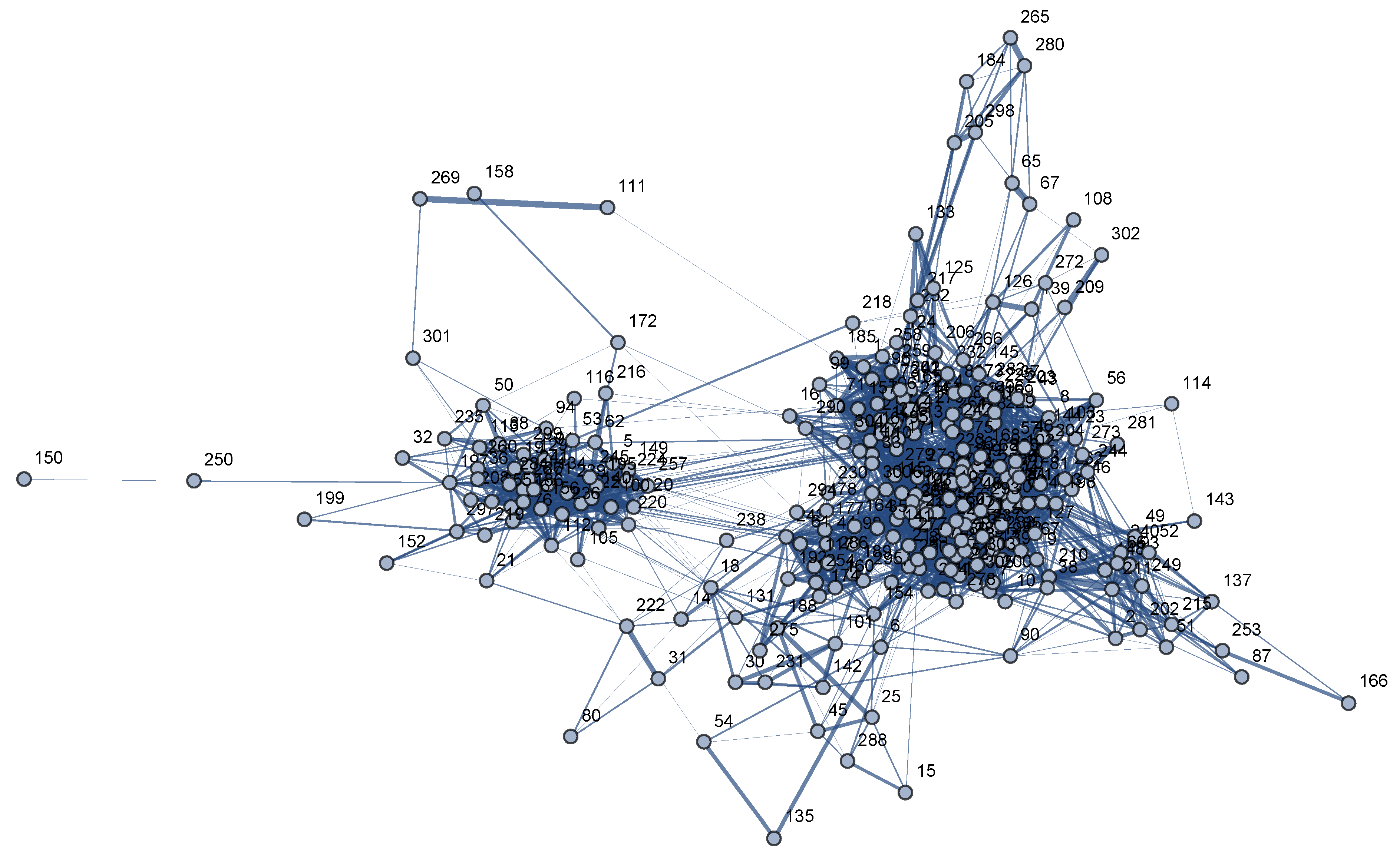
2.5. Building the Patient Similarity Network (PSN)—Onco-Hem Connectome
- aggregated continuous variables (mean age, mean CPS, mean Charlson and Elixhauser scores, mean ADSS, mean and total length of stay, number of hospitalizations),
- sex (encoded as a binary variable, woman/man),
- Elixhauser comorbidity flags (0/1, ever present),
- medication exposure (the binary patient-by-drug matrix).
2.6. Chemotherapy Regimens
3. Results
3.1. Cohort Description
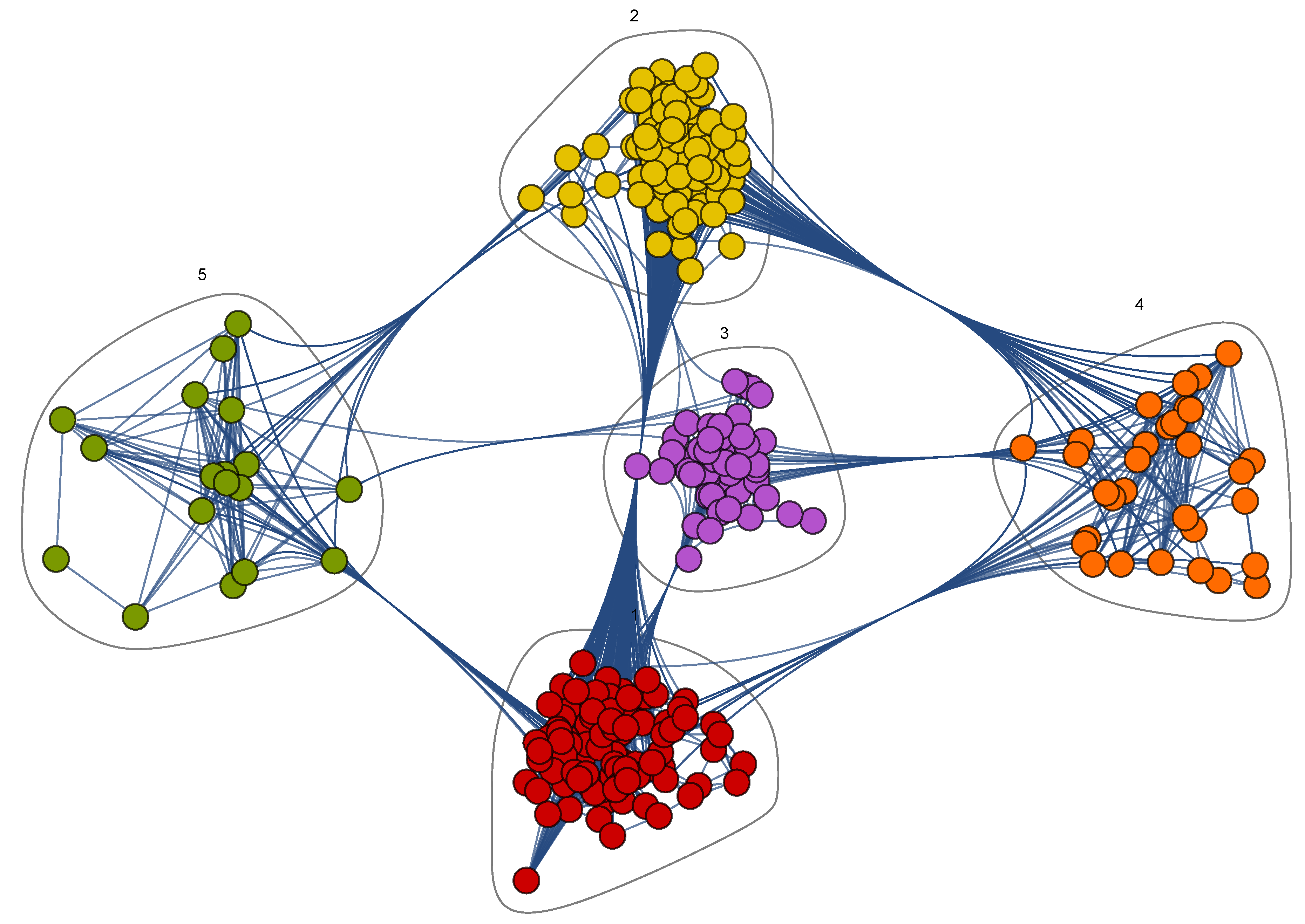
3.2. Onco-Hem Connectome
3.3. Chemotherapy Regimen Prevalence
3.4. Onco-Hem Connectome Phenotypes
- Community 1—Mixed myeloma/lymphoma phenotype with predominant supportive care pattern. Community 1 included 99 patients (53% men), mean age 63.38 years, with mean LOS 5.47 days and 3.82 episodes per patient. Comorbidity and polypharmacy were moderate–high (CPS 23.88; Charlson 1.1; Elixhauser 6.79), and the DDI burden substantial (ADSS 41.96); nearly half were CPS Level 4. Principal diagnoses were dominated by multiple myeloma (C90.0, 23%), chronic lymphocytic leukemia–CLL (C91.1, 15%), and diffuse large B-cell lymphoma–DLBCL (C83.3, 15%), while additional diagnoses highlighted a quasi-universal immunocompromised background (D84.9, 92%) alongside hypertension (I10, 88%) and COVID-19-related codes (U07.2, 76%). The top over-represented drugs reflected supportive and regimen-adjacent care rather than a single signature protocol—acetaminophen and filgrastim ( = +0.04 each), desloratadine (+0.02), tramadol (+0.01) and arginine/zoledronic acid/spironolactone (+0.01 each), alongside selective antineoplastic (obinutuzumab, doxorubicin) and ciprofloxacin (+0.02). Overall, Community 1 represents a heterogeneous, mid-complexity hemato-oncology cluster (myeloma/lymphoma-centric) managed with broad supportive care and intermittent cytotoxic/immunotherapy, consistent with its intermediate comorbidity and DDI profiles.
- Community 2—Older, highly multimorbid thrombo–infectious phenotype. Community 2 (n = 86) is the oldest subgroup (mean age 68.26, 56% men) and the most multimorbid (CPS 29.06; Charlson 2.11; Elixhauser 9.77), with high DDI burden (ADSS 47.87) and greater utilization (LOS 6.94 days). Predominant principal diagnoses are multiple myeloma (C90.0, 22%), CLL (C91.1, 13%) and other specified types of non-Hodgkin lymphoma (C85.7, 13%). Additional diagnoses reveal a dense cardio-infectious profile: near-universal immunodeficiency (D84.9, 92%), very high hypertension (I10, 85%), valvular disease (I34.0, 76%), heart failure (I50.9, 59%), postprocedural cardiac complications (I97.9, 57%), plus COVID-related and screening codes (U07.2, 73%; Z11.5, 72%). Drug enrichment aligns with this burden: enoxaparin ( = +0.13), acyclovir (+0.12), diuretics such as furosemide (+0.11) and spironolactone (+0.05), antibacterials co-trimoxazole (sulfamethoxazole+trimethoprim, +0.07) and meropenem (+0.06), alongside metamizole, lidocaine, alprazolam, and rituximab—a pattern consistent with thrombo-prophylaxis, anti-infective prophylaxis/therapy, and volume/arrhythmia and analgesia management accompanying hematologic treatment.
- Community 3—Younger chemo-intensive leukemia and lymphoma phenotype. Community 3 (n = 61, 51% men) is the youngest group and displays the lowest non-malignant comorbidity burden (Charlson 0.07, Elixhauser 0.28) but still considerable polypharmacy and DDI exposure (CPS 21.54, ADSS 46.08). Principal diagnoses are dominated by acute myeloid leukemia (C92.0, 15%), alongside CLL (C91.1, 11%), follicular lymphoma (C82.7, 11%) and myeloma (C90.0, 11%). Additional diagnoses show near-universal immunodeficiency (D84.9, 92%) and anaemia in neoplastic disease (D63.0, 82%), with opportunistic mycoses (B48.7, 74%) ranking third. Drug enrichment strongly favours intensive multi-agent chemotherapy with intensive antiemetic and vitamin support drugs (e.g., ascorbic acid +0.11, granisetron, metoclopramide, thiamine, pyridoxine, vinblastine, dacarbazine, doxorubicin, epirubicin, and co-trimoxazole), fully consistent with ABVD and related anthracycline/vinca-based regimens.
- Community 4—Small, highly treated, high-DDI subgroup. Community 4 included 31 patients (55% men) who showed the highest drug–drug interaction burden (ADSS 58.84) and the most intensive healthcare utilization (mean 4.84 hospitalizations, LOS 6.41 days) despite only intermediate age (58.48 years) and comorbidity scores (CPS 23.76, Charlson 1.07, Elixhauser 3.41). Principal diagnoses again mix multiple myeloma (C90.0, 16%) with aggressive lymphomas (C82.7 and C83.3, each 13%). Additional diagnoses highlight profound immunodeficiency (D84.9, 90%), anaemia in neoplastic disease (D63.0, 87%), and frequent follow-up encounters (Z11.5, 74%). Over-represented drugs reflect aggressive management of infections and treatment-related complications: furosemide ( +0.22), fluconazole (+0.17), ceftriaxone (+0.16), meropenem (+0.12), dexamethasone (+0.15), bisoprolol, ondansetron, metamizole, and yeast probiotics(+0.18)—consistent with repeated cycles complicated by heart failure and volume overload, febrile neutropenia, pain, and nausea.
- Community 5—Women-enriched, lymphoma-focused chemo phenotype. The smallest community (n = 18, 67% women, mean age 55.05 years) is markedly women-predominant (67% women) and relatively young (mean age 55.1 years) with intermediate comorbidity (CPS 22.75, Charlson 1.87, Elixhauser 4.30) and moderate DDI burden (ADSS 39.38). Principal diagnoses are dominated by DLBCL (C83.3, 22%) and Hodgkin lymphoma (C81.9, 17%). The most prevalent additional diagnoses are immunodeficiency, unspecified D84.9 (94%), COVID-19, virus not identified U07.2 (89%), special screening examination for other viral diseases Z11.5 (89%). Drug enrichment reflects intensive multi-agent immunochemotherapy and associated supportive care: cyclophosphamide (+0.20), epirubicin (+0.17), vincristine (+0.15), etoposide (+0.14), rituximab, hydrocortisone, etamsylate, potassium chloride, and folic acid—consistent with R-CHOP-like, CHOEP (where etoposide is added to the CHOP regimen), and related regimens delivered to a fitter, lymphoma-focused subgroup.
4. Discussion
4.1. Clinical and Pharmacotherapeutic Implications of Onco-Hem Connectome Phenotypes
- Community 1. Clinically, this phenotype may inform standardized supportive bundles, including analgesic algorithms, growth factor triggers, and bone health protocols [34,35,36,37,38,39,40,41]. It may also support DDI-aware prescribing, as indicated by ADSS 42, with interaction checks for anthracyclines and targeted agents alongside fluoroquinolones, analgesics, and cardiovascular drugs. Additionally, it emphasizes risk-based monitoring for infectious and cardiovascular complications due to high D84.9 and I10. For responsible management, Community 1 may be a reasonable target for order set optimization (e.g., zoledronic acid + calcium/vitamin D checks; filgrastim criteria; antibiotic de-escalation rules) and drug reconciliation to curb unnecessary adjacent treatments (e.g., routine tramadol) without compromising symptom control [42,43,44]. For prediction purposes, community membership plus core features (CPS, ADSS, I10, D84.9) may help develop phenotype-specific models of prolonged LOS, high-DDI episodes, or infection-related escalation. This approach could facilitate a strategy that prioritizes early prophylactic measures, ongoing interaction monitoring, and targeted supportive care for this mid-complexity subgroup, primarily composed of lymphoma and myeloma patients [45].
- Community 2. This phenotype could facilitate a structured approach to prophylaxis and monitoring in clinical settings, including the following components: (i) standardized venous thromboembolism (VTE) and bleeding pathways (implementing dose-adjusted enoxaparin along with renal and platelet monitoring), (ii) infection bundles (using co-trimoxazole and acyclovir based on specific criteria; early escalation to meropenem in high-risk febrile patients), (iii) cardio-oncology co-management (focusing on blood pressure targets, optimizing heart failure (HF) management, and following up on valvular diseases), and (iv) DDI-aware prescribing given the elevated ADSS [46,47,48,49,50,51,52]. For stewardship, phenotype-specific order sets (anticoagulation + antiviral/antibacterial prophylaxis + diuretic algorithms) and interaction watchlists (e.g., QT-prolonging or nephrotoxic combinations) could be built [53,54,55,56]. For prediction, community membership combined with CPS, ADSS, and key ICD codes (I10, I34.0, I50.9, D84.9) may provide a framework for risk models for prolonged LOS, infectious complications, HF decompensation, or 30-day readmission. This approach may enalbe targeted monitoring and earlier intervention for older patients with complex cardiovascular and infectious diseases.
- Community 3. This phenotype may support a chemo-toxicity–oriented clinical approach. The most pressing concerns are anticipatory antiemetics, care for mucositis and diarrhea, and proactive electrolyte management due to the frequent occurrence of E87.1 [57,58,59,60,61,62]. DDI-aware prescribing should be prioritized around anthracyclines and antiemetics, with attention to risks related to QT prolongation and metabolic interactions [63,64,65,66,67]. For responsible management, implement triggers for growth-factor administration, criteria for antimicrobial prophylaxis, guidelines for electrolyte administration, and drug reconciliation to avoid redundant treatments. For predictive purposes, community membership combined with core features (CPS, ADSS, E87.1 indicators, and regimen flags) may inform models for predicting febrile neutropenia, infections, unplanned dose reductions, and prolonged LOS [68,69,70,71]. This approach may support the need for early laboratory tests, preemptive supportive care, and timely escalation of treatment.
- Community 4. This phenotype highlights patients at particularly high risk of cumulative toxicity and iatrogenic harm, given the intense use of antimicrobials, diuretics, corticosteroids, and cardio-active drugs [72,73,74]. Clinically, the observed pattern may justify structured escalation pathways for suspected infection (early cultures, predefined triggers for broad-spectrum coverage and antifungal stewardship) [75,76,77,78,79,80], alongside cardio-oncology co-management to monitor volume status, heart failure symptoms, and arrhythmia [81,82]. To ensure responsible management, it may be beneficial to standardize order sets that combine antimicrobials, diuretics, antiemetics, analgesics, and electrolyte replacement; include interaction watchlists for QT-prolonging and nephrotoxic combinations; and ensure pharmacist review before each treatment cycle [83,84,85,86,87,88,89]. For prediction, community membership with ADSS, CPS, and key complication markers may help flag risk of high-DDI episodes, antimicrobial escalation, recurrent admissions, and prolonged LOS, which allow for earlier pharmacy intervention and post-discharge follow-up.
- Community 5. For this women-enriched phenotype, a pharmacotherapy focused on lymphoma is indicated, including premedication with antiemetics and corticosteroids, neuropathy vigilance for vinca alkaloids, and cardiotoxicity surveillance for anthracyclines [90,91,92,93,94]. Responsible management may include phenotype-specific order sets for CHOP-like combinations, structure DDI screening (anthracyclines, vinca alkaloids, azoles), and monitoring of bleeding risk and potassium balance. For prediction, community membership integrated with CPS, ADSS, and key regimen-adjacent exposures may support models of chemotherapy complications (neutropenic events, electrolyte derangements, cardiotoxicity) and unplanned dose delays; this integration may enable risk-stratified monitoring, timely supportive measures, and coordinated referrals to specialists, where necessary [95,96,97,98,99].
4.2. Chemotherapy Regimen Signals Across OHC Communities
4.3. Study Limitations and Future Work
5. Conclusions
Author Contributions
Funding
Institutional Review Board Statement
Informed Consent Statement
Data Availability Statement
Conflicts of Interest
Abbreviations
| PSN | Patient Similarity Network |
| DDIs | Drug–Drug Interctions |
| CPS | Comorbidity Polypharmacy Score |
| ADSS | Aggregate DDI Severity Score |
| ICD-10 | International Classification of Diseases, 10th Revision |
| CAM | Complementary and Alternative Medicines |
| COPD | Chronic Obstructive Pulmonary Disease |
| CCI | Charlson Comorbidity Index |
| IQR | Interquartile Range |
| OHC | Onco-Hem Connectome |
| LOS | Length of Stay |
| CLL | Chronic Lymphocytic Leukemia |
| DLBCL | Diffuse Large B-cell Lymphoma |
| VTE | Venous Thromboembolism |
| HF | Heart Failure |
References
- Randolph, L.A.; Walker, C.K.; Nguyen, A.T.; Zachariah, S.R. Impact of pharmacist interventions on cost avoidance in an ambulatory cancer center. J. Oncol. Pharm. Pract. 2018, 24, 3–8. [Google Scholar]
- Zarrabi, S.; Hosseini, E.; Sadeghi, K.; Vaezi, M.; Shahrami, B. Assessment of drug-drug interactions among patients with hematologic malignancy: A clinical pharmacist-led study. J. Oncol. Pharm. Pract. 2024, 31, 1256–1263. [Google Scholar]
- Moghaddas, A.; Adib-Majlesi, M.; Sabzghabaee, A.M.; Hajigholami, A.; Riechelmann, R. Potential drug–drug interactions in hospitalized cancer patients: A report from the Middle-East. J. Oncol. Pharm. Pract. 2021, 27, 46–53. [Google Scholar] [CrossRef]
- Auberger, P.; Tamburini-Bonnefoy, J.; Puissant, A. Drug resistance in hematological malignancies. Int. J. Mol. Sci. 2020, 21, 6091. [Google Scholar] [CrossRef] [PubMed]
- Santamaria, F.; Roberto, M.; Buccilli, D.; Di Civita, M.A.; Giancontieri, P.; Maltese, G.; Nicolella, F.; Torchia, A.; Scagnoli, S.; Pisegna, S.; et al. Clinical implications of the Drug-Drug Interaction in Cancer Patients treated with innovative oncological treatments. Crit. Rev. Oncol. 2024, 200, 104405. [Google Scholar] [CrossRef] [PubMed]
- Metzke, B.; Hug, M.J.; Fink, G.; Hieke, S.; Jung, M.; Engelhardt, M. Drug-drug interactions in the hematology and oncology department: A real-life assessment of frequency and severity. Blood 2012, 120, 4250. [Google Scholar]
- Ataei, S.; Ardalani, K.; Mehrpooya, M.; Mohammadi, M. Evaluation of potential drug-drug interactions in patients with hematologic malignancies at a referral hematology–oncology hospital: A single-center experience. J. Rep. Pharm. Sci. 2019, 8, 284–288. [Google Scholar]
- Alkan, A.; Yaşar, A.; Karcı, E.; Köksoy, E.B.; Ürün, M.; Şenler, F.Ç.; Ürün, Y.; Tuncay, G.; Ergün, H.; Akbulut, H. Severe drug interactions and potentially inappropriate medication usage in elderly cancer patients. Support. Care Cancer 2017, 25, 229–236. [Google Scholar]
- Vecchia, S.; Orlandi, E.; Confalonieri, C.; Damonti, E.; Riva, A.; Sartori, A.; Cavanna, L. Prevalence study on potential drug–drug interaction in cancer patients in Piacenza hospital’s Onco-Haematology department. J. Oncol. Pharm. Pract. 2018, 24, 490–493. [Google Scholar] [PubMed]
- Blower, P.; De Wit, R.; Goodin, S.; Aapro, M. Drug–drug interactions in oncology: Why are they important and can they be minimized? Crit. Rev. Oncol. 2005, 55, 117–142. [Google Scholar] [CrossRef]
- Crisci, S.; Amitrano, F.; Saggese, M.; Muto, T.; Sarno, S.; Mele, S.; Vitale, P.; Ronga, G.; Berretta, M.; Di Francia, R. Overview of current targeted anti-cancer drugs for therapy in onco-hematology. Medicina 2019, 55, 414. [Google Scholar] [CrossRef]
- Riechelmann, R.P.; Tannock, I.F.; Wang, L.; Saad, E.D.; Taback, N.A.; Krzyzanowska, M.K. Potential drug interactions and duplicate prescriptions among cancer patients. J. Natl. Cancer Inst. 2007, 99, 592–600. [Google Scholar] [CrossRef]
- Albayrak, A.; Özbalcı, D. Determination of drug-related problems in the hematology service: A prospective interventional study. BMC Cancer 2024, 24, 552. [Google Scholar] [CrossRef]
- Sokol, K.; Knudsen, J.; Li, M. Polypharmacy in older oncology patients and the need for an interdisciplinary approach to side-effect management 1. J. Clin. Pharm. Ther. 2007, 32, 169–175. [Google Scholar] [CrossRef]
- Visacri, M.B.; Tavares, M.G.; Barbosa, C.R.; Duarte, N.C.; Moriel, P. Clinical pharmacy in onco-hematology and bone marrow transplant: A valuable contribution to improving patient safety. J. Oncol. Pharm. Pract. 2021, 27, 1172–1180. [Google Scholar] [CrossRef]
- Mashni, O.K.; Nazer, L.H.; Khalil, H.Z.; Dalbah, M.I.; Tuffaha, H.W.; Rumman, A.T.; Jaddoua, S.M. Impact of clinical pharmacy services on patient management in the chemotherapy infusion clinics: A 5-year study at a comprehensive cancer center. J. Pharm. Pract. 2022, 35, 686–690. [Google Scholar]
- World Health Organization. ICD-10 Online Browser (2019 Edition). 2019. Available online: https://icd.who.int/browse10/2019/en (accessed on 25 October 2025).
- Stawicki, S.P.; Kalra, S.; Jones, C.; Justiniano, C.F.; Papadimos, T.J.; Galwankar, S.C.; Pappada, S.M.; Feeney, J.J.; Evans, D.C. Comorbidity polypharmacy score and its clinical utility: A pragmatic practitioner’s perspective. J. Emergencies Trauma Shock 2015, 8, 224–231. [Google Scholar]
- Charlson, M.E.; Pompei, P.; Ales, K.L.; MacKenzie, C.R. A new method of classifying prognostic comorbidity in longitudinal studies: Development and validation. J. Chronic Dis. 1987, 40, 373–383. [Google Scholar] [CrossRef]
- Charlson, M.E.; Carrozzino, D.; Guidi, J.; Patierno, C. Charlson comorbidity index: A critical review of clinimetric properties. Psychother. Psychosom. 2022, 91, 8–35. [Google Scholar] [CrossRef] [PubMed]
- Elixhauser, A.; Steiner, C.; Harris, D.R.; Coffey, R.M. Comorbidity measures for use with administrative data. Med. Care 1998, 36, 8–27. [Google Scholar] [CrossRef] [PubMed]
- Knox, C.; Wilson, M.; Klinger, C.M.; Franklin, M.; Oler, E.; Wilson, A.; Pon, A.; Cox, J.; Chin, N.E.; Strawbridge, S.A.; et al. DrugBank 6.0: The DrugBank knowledgebase for 2024. Nucleic Acids Res. 2024, 52, D1265–D1275. [Google Scholar] [CrossRef]
- Purwadi, J.; Delima, R.; Wibowo, A.; Rumuy, A. Comparison of the Application of Weighted Cosine Similarity and Minkowski Distance Similarity Methods in Stroke Diagnostic Systems. (IJACSA) Int. J. Adv. Comput. Sci. Appl. 2023, 14, 394–400. [Google Scholar] [CrossRef]
- Zhang, X.; Wu, R.; Qu, Z. A Cosine-Similarity-Based Deconvolution Method for Analyzing Data-Independent Acquisition Mass Spectrometry Data. Appl. Sci. 2023, 13, 5969. [Google Scholar] [CrossRef]
- Asiri, Y. Computing drug-drug similarity from patient-centric data. Bioengineering 2023, 10, 182. [Google Scholar]
- Newman, M.E. Modularity and community structure in networks. Proc. Natl. Acad. Sci. USA 2006, 103, 8577–8582. [Google Scholar]
- Newman, M.E. Fast algorithm for detecting community structure in networks. Phys. Rev. E—Stat. Nonlinear Soft Matter Phys. 2004, 69, 066133. [Google Scholar] [CrossRef]
- Mihaicuta, S.; Udrescu, M.; Topirceanu, A.; Udrescu, L. Network science meets respiratory medicine for OSAS phenotyping and severity prediction. PeerJ 2017, 5, e3289. [Google Scholar] [CrossRef] [PubMed]
- Topîrceanu, A.; Udrescu, L.; Udrescu, M.; Mihaicuta, S. Gender phenotyping of patients with obstructive sleep apnea syndrome using a network science approach. J. Clin. Med. 2020, 9, 4025. [Google Scholar] [CrossRef] [PubMed]
- Suciu, L.; Cristescu, C.; Topirceanu, A.; Udrescu, L.; Udrescu, M.; Buda, V.; Tomescu, M. Evaluation of patients diagnosed with essential arterial hypertension through network analysis. Ir. J. Med. Sci. 2016, 185, 443–451. [Google Scholar] [PubMed]
- Colibășanu, D.; Ardelean, S.M.; Goldiș, F.D.; Drăgoi, M.M.; Vasii, S.O.; Maksimović, T.; Colibășanu, Ș.; Șoica, C.; Udrescu, L. Unveiling Drug-Drug Interactions in Dental Patients: A Retrospective Real-World Study. Dent. J. 2025, 13, 255. [Google Scholar]
- Suciu, L.; Ardelean, S.M.; Udrescu, M.; Goldiş, F.D.; Hânda, D.; Tuică, M.M.; Vasii, S.O.; Udrescu, L. Categorical Analysis of Database Consistency in Reporting Drug–Drug Interactions for Cardiovascular Diseases. Pharmaceutics 2024, 16, 339. [Google Scholar] [CrossRef] [PubMed]
- Udrescu, M.; Ardelean, S.M.; Udrescu, L. The curse and blessing of abundance—The evolution of drug interaction databases and their impact on drug network analysis. GigaScience 2023, 12, giad011. [Google Scholar] [CrossRef] [PubMed]
- Coleman, R.; Hadji, P.; Body, J.J.; Santini, D.; Chow, E.; Terpos, E.; Oudard, S.; Bruland, Ø.; Flamen, P.; Kurth, A.; et al. Bone health in cancer: ESMO clinical practice guidelines. Ann. Oncol. 2020, 31, 1650–1663. [Google Scholar] [CrossRef]
- Swarm, R.A.; Youngwerth, J.M.; Agne, J.L.; Anitescu, M.; Are, M.; Buga, S.; Butler, T.; Chwistek, M.; Cleary, J.; Copenhaver, D.; et al. Adult cancer pain, version 2.2025, NCCN clinical practice guidelines in oncology. J. Natl. Compr. Cancer Netw. 2025, 23, e250032. [Google Scholar] [CrossRef] [PubMed]
- Peterson, S.E.; Selvaggi, K.J.; Scullion, B.F.; Blinderman, C.D. Pain management and antiemetic therapy in hematologic disorders. In Hematology: Basic Principles and Practice; Elsevier Inc.: Amsterdam, The Netherlands, 2018; pp. 1473–1487. [Google Scholar]
- Norris, L.; Qureshi, Z.; Barnato, S.; Lai, S.; Bennett, C. Serious Adverse Drug Reactions (sADRS) Associated with Hematopoietic Growth Factors: A Systematic Review From the Southern Network on Adverse Reactions (SONAR) Program. Blood 2010, 116, 2555. [Google Scholar] [CrossRef]
- Chan, K.Y.; Chan, T.S.Y.; Gill, H.; Chan, T.C.W.; Li, C.W.; Au, H.Y.; Wong, C.Y.; Tsang, K.W.; Lo, R.S.K.; Cheng, B.H.W.; et al. Supportive care and symptom management in patients with advanced hematological malignancies: A literature review. Ann. Palliat. Med. 2022, 11, 3273291. [Google Scholar] [CrossRef]
- Mastanzade, M. Supportive care and quality of life in MDS: Essential management strategies. Hematol. Transfus. Cell Ther. 2024, 46, S12. [Google Scholar] [CrossRef]
- Feng, X.; Lan, H.; Ruan, Y.; Li, C. Impact on acute myeloid leukemia relapse in granulocyte colony-stimulating factor application: A meta-analysis. Hematology 2018, 23, 581–589. [Google Scholar] [CrossRef]
- Miceli, T.S.; Colson, K.; Faiman, B.M.; Miller, K.; Tariman, J.D.; International Myeloma Foundation Nurse Leadership Board. Maintaining bone health in patients with multiple myeloma: Survivorship care plan of the International Myeloma Foundation Nurse Leadership Board. Clin. J. Oncol. Nurs. 2011, 15, 9. [Google Scholar] [CrossRef]
- Brooks, G.A.; Landrum, M.B.; Kapadia, N.S.; Liu, P.H.; Wolf, R.R.; Riedel, L.E.; Hsu, V.D.; Jhatakia, S.; Simon, C.; Hassol, A.; et al. Impact of the Oncology Care Model on use of bone supportive medications, antiemetics, and growth factors. J. Clin. Oncol. 2022, 40, 1763–1771. [Google Scholar] [CrossRef]
- Puhalla, S.; Bhattacharya, S.; Davidson, N.E. Hematopoietic growth factors: Personalization of risks and benefits. Mol. Oncol. 2012, 6, 237–241. [Google Scholar] [CrossRef] [PubMed]
- Veeraballi, S.; Bandaru, S.S.; Kiwan, C.; Chan, K.H.; Shaaban, H.S. A multifaceted role of bisphosphonates from palliative care to anti-cancer therapy in solid tumors. J. Oncol. Pharm. Pract. 2025, 31, 107–118. [Google Scholar] [CrossRef] [PubMed]
- Gündüz, E.; Gülbaş, Z. Supportive care in hemato-oncology: A review in light of the latest guidelines. Turk. J. Hematol. 2012, 29, 1. [Google Scholar] [CrossRef]
- Plummer, C.; Driessen, C.; Szabo, Z.; Mateos, M.V. Management of cardiovascular risk in patients with multiple myeloma. Blood Cancer J. 2019, 9, 26. [Google Scholar] [CrossRef]
- Breccia, M.; Carver, J.R.; Szmit, S.; Jurczak, W.; Salvatorelli, E.; Minotti, G. Mechanisms and clinical course of cardiovascular toxicity of cancer treatment II. Hematology. Semin. Oncol. 2019, 46, 403–407. [Google Scholar] [CrossRef]
- El-Cheikh, J.; Moukalled, N.; Malard, F.; Bazarbachi, A.; Mohty, M. Cardiac toxicities in multiple myeloma: An updated and a deeper look into the effect of different medications and novel therapies. Blood Cancer J. 2023, 13, 83. [Google Scholar] [CrossRef] [PubMed]
- Cordella, S.; Coluccio, V.; Cuoghi Costantini, R.; D’Amico, R.; Luppi, M.; Marietta, M. Venous thromboembolic risk in hematological hospitalized patients: A retrospective study. Ann. Hematol. 2025, 104, 2963–2971. [Google Scholar] [CrossRef]
- Blennow, O.; Ljungman, P. Infections in hematology patients. In Concise Guide to Hematology; Springer: Berlin/Heidelberg, Germany, 2018; pp. 503–518. [Google Scholar]
- Can, F. Hematological diseases and heart. Turk. J. Med. Sci. 2024, 54, 1438–1446. [Google Scholar] [CrossRef]
- Herrmann, J. Vascular toxic effects of cancer therapies. Nat. Rev. Cardiol. 2020, 17, 503–522. [Google Scholar] [CrossRef]
- Heitner, S.B.; Minnier, J.; Naher, A.; Van Woerkom, R.C.; Ritts, A.; Ferencik, M.; Broberg, C.; Medvedova, E.; Silbermann, R.; Scott, E.C. Bortezomib-based chemotherapy for multiple myeloma patients without comorbid cardiovascular disease shows no cardiotoxicity. Clin. Lymphoma Myeloma Leuk. 2018, 18, 796–802. [Google Scholar] [CrossRef]
- Sandherr, M.; Hentrich, M.; von Lilienfeld-Toal, M.; Massenkeil, G.; Neumann, S.; Penack, O.; Biehl, L.; Cornely, O.A. Antiviral prophylaxis in patients with solid tumours and haematological malignancies—Update of the Guidelines of the Infectious Diseases Working Party (AGIHO) of the German Society for Hematology and Medical Oncology (DGHO). Ann. Hematol. 2015, 94, 1441–1450. [Google Scholar] [CrossRef]
- Stuurman, R.; Jong, E.; Godschalk, P.; Corsten, M.; Nagtegaal, J. Evaluating the use of meropenem in hematologic patients with febrile neutropenia: A retrospective observational single-cohort study. Mediterr. J. Hematol. Infect. Dis. 2023, 15, e2023067. [Google Scholar] [CrossRef]
- Cleland, J.G.; Zhang, J.; Pellicori, P.; Dicken, B.; Dierckx, R.; Shoaib, A.; Wong, K.; Rigby, A.; Goode, K.; Clark, A.L. Prevalence and outcomes of anemia and hematinic deficiencies in patients with chronic heart failure. JAMA Cardiol. 2016, 1, 539–547. [Google Scholar] [CrossRef]
- Blijlevens, N.M.; de Mooij, C.E. Mucositis and infection in hematology patients. Int. J. Mol. Sci. 2023, 24, 9592. [Google Scholar] [CrossRef]
- Brown, T.J.; Gupta, A. Management of cancer therapy–associated oral mucositis. JCO Oncol. Pract. 2020, 16, 103–109. [Google Scholar] [CrossRef] [PubMed]
- Juthani, R.; Punatar, S.; Mittra, I. New light on chemotherapy toxicity and its prevention. BJC Rep. 2024, 2, 41. [Google Scholar] [CrossRef] [PubMed]
- Zeien, J.; Qiu, W.; Triay, M.; Dhaibar, H.A.; Cruz-Topete, D.; Cornett, E.M.; Urits, I.; Viswanath, O.; Kaye, A.D. Clinical implications of chemotherapeutic agent organ toxicity on perioperative care. Biomed. Pharmacother. 2022, 146, 112503. [Google Scholar] [CrossRef] [PubMed]
- Kahn, A.M.; Blenman, K.R.; Sonis, S.T.; Lustberg, M.B. Strategies to mitigate the toxicity of cancer therapeutics. Adv. Cancer Res. 2022, 155, 215–244. [Google Scholar]
- Adeyemi, S.A.; Ngema, L.M.; Choonara, Y.E. Advances in targeted therapies and emerging strategies for blood cancer treatment. RSC Pharm. 2025, 2, 950–961. [Google Scholar] [CrossRef]
- Cardinale, D. Monitoring and Treatment of Cardiovascular Complications During Cancer Therapies. Part I: Anthracyclines, HER2-Targeted Therapies and Fluoropyrimidines. Cardinale. 2023. Available online: https://www.escardio.org/communities/councils/cardiology-practice/education/cardiopractice/monitoring-and-treatment-of-cardiovascular-complications-during-cancer-therapies/ (accessed on 12 December 2025).
- Johnson, M.; Keyes, D. Anthracycline toxicity. In StatPearls [Internet]; StatPearls Publishing: Tampa, FL, USA, 2024. [Google Scholar]
- Richardson, D.; Johnson, S. Anthracyclines in haematology: Preclinical studies, toxicity and delivery systems. Blood Rev. 1997, 11, 201–223. [Google Scholar] [CrossRef]
- Johnson, S.; Richardson, D. Anthracyclines in haematology: Pharmacokinetics and clinical studies. Blood Rev. 1998, 12, 52–71. [Google Scholar] [CrossRef]
- Sethi, T.K.; Basdag, B.; Bhatia, N.; Moslehi, J.; Reddy, N.M. Beyond anthracyclines: Preemptive management of cardiovascular toxicity in the era of targeted agents for hematologic malignancies. Curr. Hematol. Malig. Rep. 2017, 12, 257–267. [Google Scholar]
- Kossow, K.W.; Bennett, J.G.; Hoffmann, M.S. Antimicrobial prophylaxis in lymphoma by chemotherapy regimen. J. Cell. Immunol. 2023, 5, 103–115. [Google Scholar] [CrossRef]
- Yıldız, A.; Öztürk, H.B.; Albayrak, M.; Pala, Ç.; Şahin, O.; Maral, S.; Okutan, H. Is antimicrobial prophylaxis necessary for lymphoma patients? A single centre, real-life experience. J. Oncol. Pharm. Pract. 2019, 25, 1381–1387. [Google Scholar]
- Byar, K.; Anderson, A. An Overview of the Management of Electrolyte Emergencies and Imbalances in Cancer Patients. J. Adv. Pract. Oncol. 2025, 1–15. [Google Scholar] [CrossRef]
- Ajewole, V.B.; Solomon, J.M.; Schneider, A.M.; Heyne, K.E. Development and implementation of an electrolyte replacement protocol in the outpatient oncology infusion centers of a large academic healthcare system. J. Oncol. Pharm. Pract. 2020, 26, 1871–1877. [Google Scholar] [CrossRef] [PubMed]
- Smolej, L. The role of high-dose corticosteroids in the treatment of chronic lymphocytic leukemia. Expert Opin. Investig. Drugs 2012, 21, 1009–1017. [Google Scholar] [CrossRef]
- Yetgin, S.; Özsoylu, S. Comparison of megadose methylprednisolone versus conventional dose prednisolone in hematologic disorders. J. Pediatr. Hematol. 2007, 29, 253–259. [Google Scholar] [CrossRef]
- Madonna, R. Multi-target drugs for blood cancer in the elderly: Implications of damage and repair in the cardiovascular toxicity. Front. Physiol. 2021, 12, 792751. [Google Scholar] [CrossRef] [PubMed]
- Vergidis, P.; Stevens, R.W.; Agrawal, S.G. Antifungal stewardship interventions in patients with hematologic malignancies. Curr. Fungal Infect. Rep. 2023, 17, 108–118. [Google Scholar] [CrossRef]
- Science, M.; Timberlake, K. Antifungal stewardship: A budding branch of antimicrobial stewardship. Pediatr. Blood Cancer 2020, 67, e28145. [Google Scholar] [CrossRef]
- Taynton, T.; Allsup, D.; Barlow, G. How can we optimize antifungal use and stewardship in the treatment of acute leukemia? Expert Rev. Hematol. 2024, 17, 581–593. [Google Scholar] [CrossRef] [PubMed]
- Paige, E.; Haywood, P.; Xie, M.; Worth, L.; Thursky, K.; Urbancic, K.; Bajel, A.; Slavin, M. Auditing fungal disease in leukemia patients in a tertiary care center: Opportunities and challenges for an antifungal stewardship program. Leuk. Lymphoma 2019, 60, 2373–2383. [Google Scholar] [CrossRef] [PubMed]
- Hui, L.A.; Bodolea, C.; Vlase, A.; Hirișcău, E.I.; Bălan, A.M.; Vlase, L.; Popa, A. Clinical Pharmacist Led Therapeutic Drug Monitoring for Vancomycin in a Romanian Hospital. Farmacia 2025, 73, 867–875. [Google Scholar] [CrossRef]
- Hui, L.A.; Vlase, A.M.; Hirișcău, E.I.; Bodolea, C.; Bălan, A.M.; Vlase, L.; Popa, A. Effectiveness and Safety of Linezolid as Continuous Infusion Versus Intermittent Infusion in Critically Ill Patients: A Pilot Study. Future Pharmacol. 2025, 5, 61. [Google Scholar] [CrossRef]
- Herrmann, J.; Lenihan, D.; Armenian, S.; Barac, A.; Blaes, A.; Cardinale, D.; Carver, J.; Dent, S.; Ky, B.; Lyon, A.R.; et al. Defining cardiovascular toxicities of cancer therapies: An International Cardio-Oncology Society (IC-OS) consensus statement. Eur. Heart J. 2022, 43, 280–299. [Google Scholar] [CrossRef] [PubMed]
- Alexandre, J.; Cautela, J.; Ederhy, S.; Damaj, G.L.; Salem, J.E.; Barlesi, F.; Farnault, L.; Charbonnier, A.; Mirabel, M.; Champiat, S.; et al. Cardiovascular toxicity related to cancer treatment: A pragmatic approach to the American and European cardio-oncology guidelines. J. Am. Heart Assoc. 2020, 9, e018403. [Google Scholar] [CrossRef]
- Ghanem, S.; Kim, C.J.; Dutta, D.; Salifu, M.; Lim, S.H. Antimicrobial therapy during cancer treatment: Beyond antibacterial effects. J. Intern. Med. 2021, 290, 40–56. [Google Scholar] [CrossRef]
- Vahedian-Ardakani, H.A.; Moghimi, M.; Shayestehpour, M.; Doosti, M.; Amid, N. Bacterial spectrum and antimicrobial resistance pattern in cancer patients with febrile neutropenia. Asian Pac. J. Cancer Prev. APJCP 2019, 20, 1471. [Google Scholar] [CrossRef]
- Nethagani, S.; Fudacz, P.; Furner, M.; Rizwan, U. Comparing Loop Diuretic Efficacy and Safety in Patients with Acute Myeloid Leukemia and Differentiation Syndrome. Blood 2024, 144, 5991. [Google Scholar] [CrossRef]
- Lameire, N. Nephrotoxicity of recent anti-cancer agents. Clin. Kidney J. 2014, 7, 11–22. [Google Scholar] [CrossRef]
- Hałka, J.; Spaleniak, S.; Kade, G.; Antosiewicz, S.; Sigorski, D. The nephrotoxicity of drugs used in causal oncological therapies. Curr. Oncol. 2022, 29, 9681–9694. [Google Scholar] [CrossRef] [PubMed]
- Kiel, P.J.; Lo, M.; Stockwell, D.; Patel, G.P. An evaluation of amikacin nephrotoxicity in the hematology/oncology population. Am. J. Ther. 2008, 15, 131–136. [Google Scholar] [CrossRef] [PubMed]
- Ulger, Z.; Aydinok, Y.; Levent, E.; Gurses, D.; Ozyurek, A.R. Evaluation of QT dispersion in β thalassaemia major patients. Am. J. Hematol. 2006, 81, 901–906. [Google Scholar] [CrossRef] [PubMed]
- Nadas, J.; Sun, D. Anthracyclines as effective anticancer drugs. Expert Opin. Drug Discov. 2006, 1, 549–568. [Google Scholar] [CrossRef]
- Oliveira, G.H.; Al-Kindi, S.G.; Caimi, P.F.; Lazarus, H.M. Maximizing anthracycline tolerability in hematologic malignancies: Treat to each heart’s content. Blood Rev. 2016, 30, 169–178. [Google Scholar] [CrossRef]
- Chan, J.D. Pharmacokinetic drug interactions of vinca alkaloids: Summary of case reports. Pharmacother. J. Hum. Pharmacol. Drug Ther. 1998, 18, 1304–1307. [Google Scholar] [CrossRef]
- Banyal, A.; Tiwari, S.; Sharma, A.; Chanana, I.; Patel, S.K.S.; Kulshrestha, S.; Kumar, P. Vinca alkaloids as a potential cancer therapeutics: Recent update and future challenges. 3 Biotech 2023, 13, 211. [Google Scholar] [CrossRef]
- Kannepogu, A. Current Status and Development of Vinca Alkaloids in Cancer Treatment. J. Pharma Insights Res. 2025, 3, 149–157. [Google Scholar] [CrossRef]
- Ahmad, K.; Khan, M.K.A.; Baig, M.H.; Imran, M.; Gupta, G.K. Role of azoles in cancer prevention and treatment: Present and future perspectives. Anti-Cancer Agents Med. Chem.-Anti Agents 2018, 18, 46–56. [Google Scholar] [CrossRef]
- Zhong, X.; Wang, J.; Dai, Y.; Huang, X.; Liu, J.; Xiang, B.; Ma, H. Combining azole antifungals with venetoclax plus azacitidine in patients with newly diagnosed acute myeloid leukemia. Hematology 2024, 29, 2433172. [Google Scholar] [CrossRef] [PubMed]
- Rausch, C.R.; DiNardo, C.D.; Maiti, A.; Jammal, N.J.; Kadia, T.M.; Marx, K.R.; Borthakur, G.; Savoy, J.M.; Pemmaraju, N.; DiPippo, A.J.; et al. Duration of cytopenias with concomitant venetoclax and azole antifungals in acute myeloid leukemia. Cancer 2021, 127, 2489–2499. [Google Scholar] [CrossRef] [PubMed]
- Rosner, M.H.; Dalkin, A.C. Electrolyte disorders associated with cancer. Adv. Chronic Kidney Dis. 2014, 21, 7–17. [Google Scholar] [CrossRef]
- Verzicco, I.; Regolisti, G.; Quaini, F.; Bocchi, P.; Brusasco, I.; Ferrari, M.; Passeri, G.; Cannone, V.; Coghi, P.; Fiaccadori, E.; et al. Electrolyte disorders induced by antineoplastic drugs. Front. Oncol. 2020, 10, 779. [Google Scholar] [CrossRef]



| Age (Years) | CPS 1 (Mean) | Charlson Score (Mean) | Elixhauser Sum (Mean) | ADSS 2 (Mean) | Number of Episodes per Patient | |
|---|---|---|---|---|---|---|
| Count | 298.00 | 298.00 | 298.00 | 298.00 | 298.00 | 298.00 |
| Mean | 61.91 | 24.86 | 1.23 | 5.77 | 46.19 | 3.89 |
| SD | 14.66 | 9.06 | 1.22 | 4.65 | 40.85 | 2.50 |
| Min | 20.00 | 8.00 | 0.00 | 0.00 | 0.00 | 1.00 |
| 25% | 53.00 | 19.00 | 0.00 | 2.35 | 20.08 | 2.00 |
| 50% | 65.00 | 23.00 | 1.00 | 4.00 | 38.00 | 4.00 |
| 75% | 72.96 | 28.90 | 2.00 | 8.00 | 59.78 | 6.00 |
| Max | 91.33 | 56.00 | 5.60 | 21.33 | 268.00 | 12.00 |
| Community 1 | Community 2 | Community 3 | Community 4 | Community 5 | |
|---|---|---|---|---|---|
| Number of patients | 99 | 86 | 61 | 31 | 18 |
| Women (proportion) | 0.47 | 0.44 | 0.49 | 0.45 | 0.67 |
| Men (proportion) | 0.53 | 0.56 | 0.51 | 0.55 | 0.33 |
| Age (years, mean) | 63.38 | 68.26 | 54.19 | 58.49 | 55.05 |
| Length of stay (days, mean) | 5.47 | 6.94 | 5.16 | 6.41 | 6.31 |
| Number of episodes (mean) | 3.82 | 3.64 | 3.80 | 4.84 | 4.33 |
| CPS (mean) | 23.88 | 29.06 | 21.54 | 23.76 | 22.75 |
| Charlson score (mean) | 1.10 | 2.11 | 0.07 | 1.07 | 1.87 |
| Elixhauser sum (mean) | 6.79 | 9.77 | 0.28 | 3.41 | 4.30 |
| ADSS (mean) | 41.96 | 47.87 | 46.08 | 58.84 | 39.38 |
| CPS level 1 (proportion) | 0.00 | 0.01 | 0.00 | 0.00 | 0.00 |
| CPS level 2 (proportion) | 0.16 | 0.02 | 0.21 | 0.16 | 0.17 |
| CPS level 3 (proportion) | 0.36 | 0.23 | 0.36 | 0.32 | 0.39 |
| CPS level 4 (proportion) | 0.47 | 0.73 | 0.43 | 0.52 | 0.44 |
| Variable | Test | Effect Size | FDR-Adjusted p | Significant (FDR) |
|---|---|---|---|---|
| Age (years) | Kruskal–Wallis | Yes | ||
| CPS (mean) | Kruskal–Wallis | Yes | ||
| Charlson (mean) | Kruskal–Wallis | Yes | ||
| Elixhauser sum (mean) | Kruskal–Wallis | Yes | ||
| Length of stay (mean) | Kruskal–Wallis | No | ||
| Number of episodes | Kruskal–Wallis | No | ||
| ADSS (mean) | Kruskal–Wallis | No | ||
| CPS level | Chi-square | Yes | ||
| Sex | Chi-square | No |
| Community ID | Drug | Global (Cohort) Prevalence | Community Prevalence | |
|---|---|---|---|---|
| Community 1 | Acetaminophen | 0.7 | 0.74 | 0.04 |
| Filgrastim | 0.69 | 0.73 | 0.04 | |
| Obinutuzumab | 0.15 | 0.17 | 0.02 | |
| Ciprofloxacin | 0.11 | 0.13 | 0.02 | |
| Doxorubicin | 0.10 | 0.12 | 0.02 | |
| Desloratadine | 0.67 | 0.69 | 0.02 | |
| Tramadol | 0.13 | 0.14 | 0.01 | |
| Arginine | 0.14 | 0.15 | 0.01 | |
| Zoledronic acid | 0.12 | 0.13 | 0.01 | |
| Spironolactone | 0.10 | 0.11 | 0.01 | |
| Community 2 | Enoxaparin | 0.43 | 0.56 | 0.13 |
| Acyclovir | 0.57 | 0.69 | 0.12 | |
| Furosemide | 0.49 | 0.60 | 0.11 | |
| Alprazolam | 0.24 | 0.31 | 0.07 | |
| Lidocaine | 0.27 | 0.34 | 0.07 | |
| Sulfamethoxazole+Trimethoprim | 0.70 | 0.77 | 0.07 | |
| Meropenem | 0.10 | 0.16 | 0.06 | |
| Metamizole | 0.36 | 0.42 | 0.06 | |
| Rituximab | 0.29 | 0.34 | 0.05 | |
| Spironolactone | 0.10 | 0.15 | 0.05 | |
| Community 3 | Ascorbic acid | 0.78 | 0.89 | 0.11 |
| Metoclopramide | 0.19 | 0.28 | 0.09 | |
| Vinblastine | 0.07 | 0.16 | 0.09 | |
| Granisetron | 0.75 | 0.84 | 0.09 | |
| Dacarbazine | 0.06 | 0.15 | 0.08 | |
| Doxorubicin | 0.10 | 0.16 | 0.06 | |
| Pyridoxine | 0.77 | 0.82 | 0.05 | |
| Thiamine | 0.65 | 0.69 | 0.04 | |
| Sulfamethoxazole+Trimethoprim | 0.71 | 0.74 | 0.03 | |
| Epirubicin | 0.33 | 0.36 | 0.03 | |
| Community 4 | Furosemide | 0.49 | 0.71 | 0.22 |
| Yeast | 0.11 | 0.29 | 0.18 | |
| Fluconazole | 0.64 | 0.81 | 0.17 | |
| Ceftriaxone | 0.1 | 0.27 | 0.16 | |
| Dexamethasone | 0.50 | 0.65 | 0.15 | |
| Bisoprolol | 0.1 | 0.23 | 0.12 | |
| Meropenem | 0.11 | 0.23 | 0.12 | |
| Metamizole | 0.37 | 0.48 | 0.11 | |
| Ondansetron | 0.31 | 0.42 | 0.11 | |
| Allopurinol | 0.8 | 0.9 | 0.10 | |
| Community 5 | Hydrocortisone | 0.59 | 0.83 | 0.24 |
| Cyclophosphamide | 0.36 | 0.56 | 0.20 | |
| Etamsylate | 0.21 | 0.39 | 0.18 | |
| Epirubicin | 0.33 | 0.50 | 0.17 | |
| Potassium chloride | 0.17 | 0.33 | 0.16 | |
| Coenzyme M | 0.06 | 0.22 | 0.16 | |
| Rituximab | 0.29 | 0.44 | 0.15 | |
| Vincristine | 0.35 | 0.50 | 0.15 | |
| Folic acid | 0.07 | 0.22 | 0.15 | |
| Etoposide | 0.03 | 0.17 | 0.14 |
| Community | First Principal Diagnosis | Second Principal Diagnosis | Third Principal Diagnosis |
|---|---|---|---|
| 1 | C90.0 (23/99; 23%) | C91.1 (15/99; 15%) | C83.3 (15/99; 15%) |
| 2 | C90.0 (19/86; 22%) | C91.1 (11/86; 13%) | C85.7 (11/86; 13%) |
| 3 | C92.0 (9/61; 15%) | C91.1 (7/61; 11%) | C82.7 (7/61; 11%) |
| 4 | C90.0 (5/31; 16%) | C82.7 (4/31; 13%) | C83.3 (4/31; 13%) |
| 5 | C83.3 (4/18; 22%) | C81.9 (3/18; 17%) | C91.1 (2/18; 11%) |
| Community | First Additional Diagnosis | Second Additional Diagnosis | Third Additional Diagnosis |
|---|---|---|---|
| 1 | D84.9 (91/99; 92%) | I10 (87/99; 88%) | U07.2 (75/99; 76%) |
| 2 | D84.9 (79/86; 92%) | I10 (73/86; 85%) | I34.0 (65/86; 76%) |
| 3 | D84.9 (56/61; 92%) | D63.0 (50/61; 82%) | B48.7 (45/61; 74%) |
| 4 | D84.9 (28/31; 90%) | D63.0 (27/31; 87%) | Z11.5 (23/31; 74%) |
| 5 | D84.9 (17/18; 94%) | U07.2 (16/18; 89%) | Z11.5 (16/18; 89%) |
| Community | ABVD | R-CHOP | VAD |
|---|---|---|---|
| 1 | 4/99; 4.0% | 9/99; 9.1% | 20/99; 20.2% |
| 2 | 0/86; 0.0% | 3/86; 3.5% | 15/86; 17.4% |
| 3 | 8/61; 13.1% | 2/61; 3.3% | 13/61; 21.3% |
| 4 | 0/31; 0.0% | 2/31; 6.5% | 9/31; 29.0% |
| 5 | 0/18; 0.0% | 0/18; 0.0% | 1/18; 5.6% |
| Community (Label) | Concrete Bedside Actions |
|---|---|
| Community 1—Mixed myeloma/lymphoma phenotype with predominant supportive care pattern |
|
| Community 2—Older, highly multimorbid thrombo-infectious phenotype |
|
| Community 3—Younger chemo-intensive leukemia and lymphoma phenotype |
|
| Community 4—Small, highly treated, high-DDI subgroup |
|
| Community 5—Women-enriched, lymphoma-focused chemo phenotype |
|
Disclaimer/Publisher’s Note: The statements, opinions and data contained in all publications are solely those of the individual author(s) and contributor(s) and not of MDPI and/or the editor(s). MDPI and/or the editor(s) disclaim responsibility for any injury to people or property resulting from any ideas, methods, instructions or products referred to in the content. |
© 2026 by the authors. Licensee MDPI, Basel, Switzerland. This article is an open access article distributed under the terms and conditions of the Creative Commons Attribution (CC BY) license.
Share and Cite
Vasii, S.-O.; Colibășanu, D.; Goldiș, F.-D.; Ardelean, S.-M.; Udrescu, M.; Iliescu, D.; Malița, D.-C.; Ioniță, I.; Udrescu, L. Onco-Hem Connectome—Network-Based Phenotyping of Polypharmacy and Drug–Drug Interactions in Onco-Hematological Inpatients. Pharmaceutics 2026, 18, 146. https://doi.org/10.3390/pharmaceutics18020146
Vasii S-O, Colibășanu D, Goldiș F-D, Ardelean S-M, Udrescu M, Iliescu D, Malița D-C, Ioniță I, Udrescu L. Onco-Hem Connectome—Network-Based Phenotyping of Polypharmacy and Drug–Drug Interactions in Onco-Hematological Inpatients. Pharmaceutics. 2026; 18(2):146. https://doi.org/10.3390/pharmaceutics18020146
Chicago/Turabian StyleVasii, Sabina-Oana, Daiana Colibășanu, Florina-Diana Goldiș, Sebastian-Mihai Ardelean, Mihai Udrescu, Dan Iliescu, Daniel-Claudiu Malița, Ioana Ioniță, and Lucreția Udrescu. 2026. "Onco-Hem Connectome—Network-Based Phenotyping of Polypharmacy and Drug–Drug Interactions in Onco-Hematological Inpatients" Pharmaceutics 18, no. 2: 146. https://doi.org/10.3390/pharmaceutics18020146
APA StyleVasii, S.-O., Colibășanu, D., Goldiș, F.-D., Ardelean, S.-M., Udrescu, M., Iliescu, D., Malița, D.-C., Ioniță, I., & Udrescu, L. (2026). Onco-Hem Connectome—Network-Based Phenotyping of Polypharmacy and Drug–Drug Interactions in Onco-Hematological Inpatients. Pharmaceutics, 18(2), 146. https://doi.org/10.3390/pharmaceutics18020146