Cell-Penetrating Peptide-Mediated siRNA Targeting of LDHC Suppresses Tumor Growth in a Triple-Negative Breast Cancer Zebrafish Xenograft Model

 , and
, and 
Abstract
1. Introduction
2. Materials and Methods
2.1. Cell Penetrating Peptides (CPPs) and siRNA
2.2. CPP:siRNA Complex Preparation
2.3. Gel Retardation Assay
2.4. Physicochemical Characterization of CPP:siRNA Nanocomplexes
2.5. Serum Stability Assay
2.6. Cell Culture
2.7. Cellular Uptake of CPP:siRNA Nanocomplexes
2.8. Flow Cytometry Analysis of Integrin αvβ3 Expression
2.9. Expression Analysis of LDHC and Integrins Using Quantitative Real-Time Reverse Transcription Polymerase Chain Reaction (qRT-PCR)
2.10. Western Blotting of LDHC and Integrins
2.11. Cytotoxicity Assay
2.12. Clonogenic Assay
2.13. Zebrafish Maintenance and Breeding
2.14. Zebrafish Embryo Toxicity Test
2.15. Breast Cancer Zebrafish Xenograft Model
2.16. Statistical Analysis
3. Results
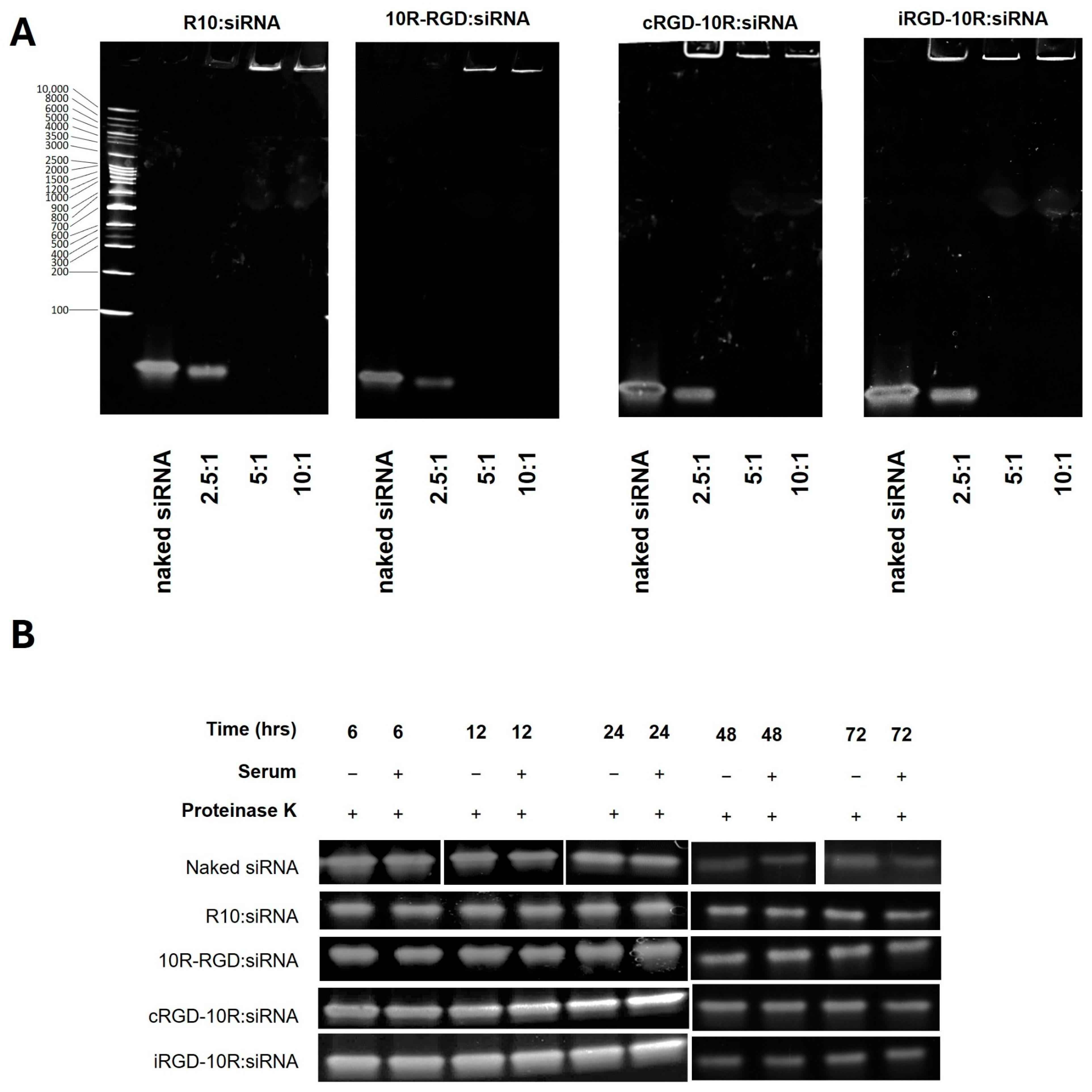
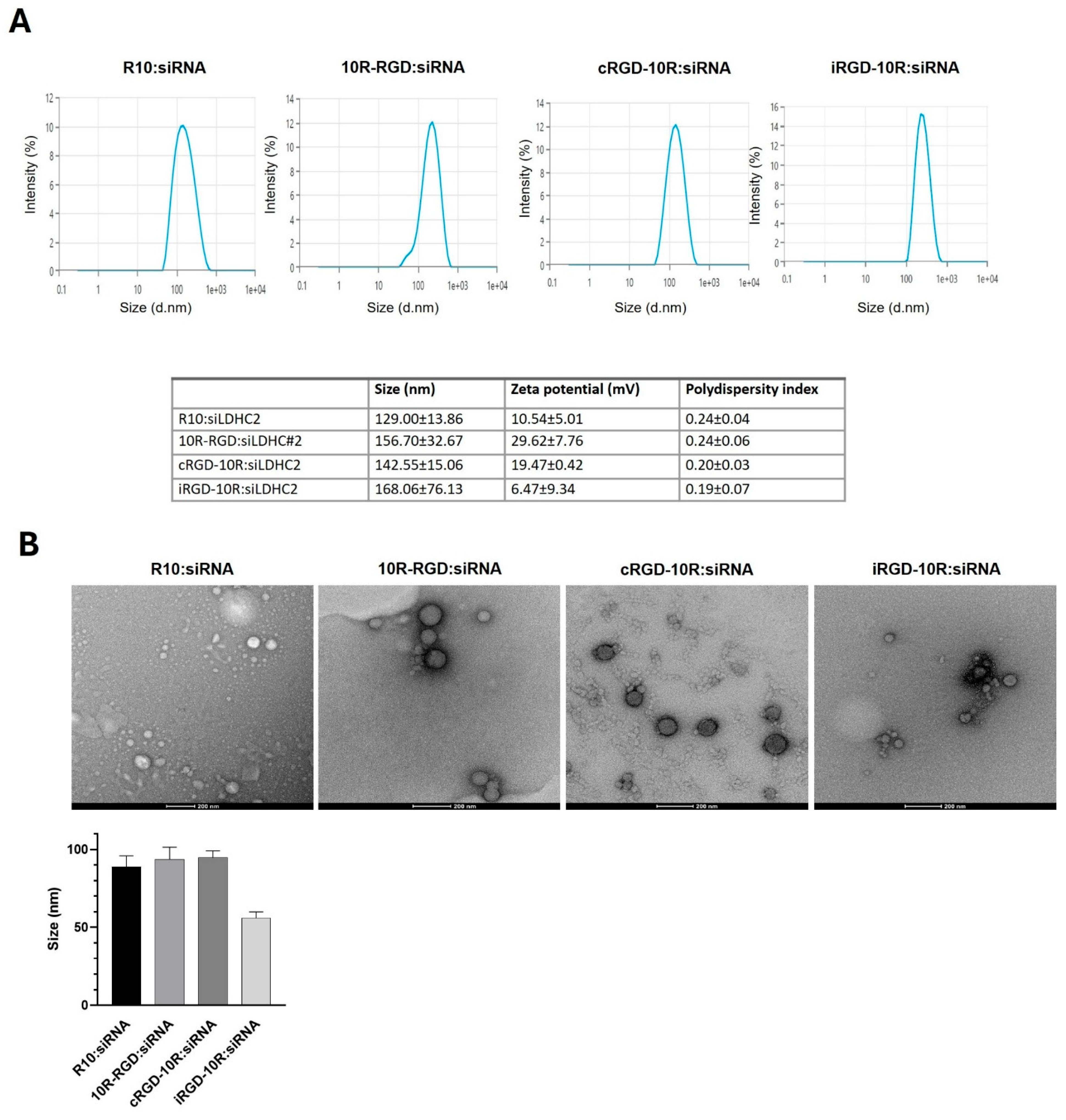
3.1. Assessment of CPP:siRNA Complex Formation, Serum Stability, and Physicochemical Characterization of the Nanocomplexes
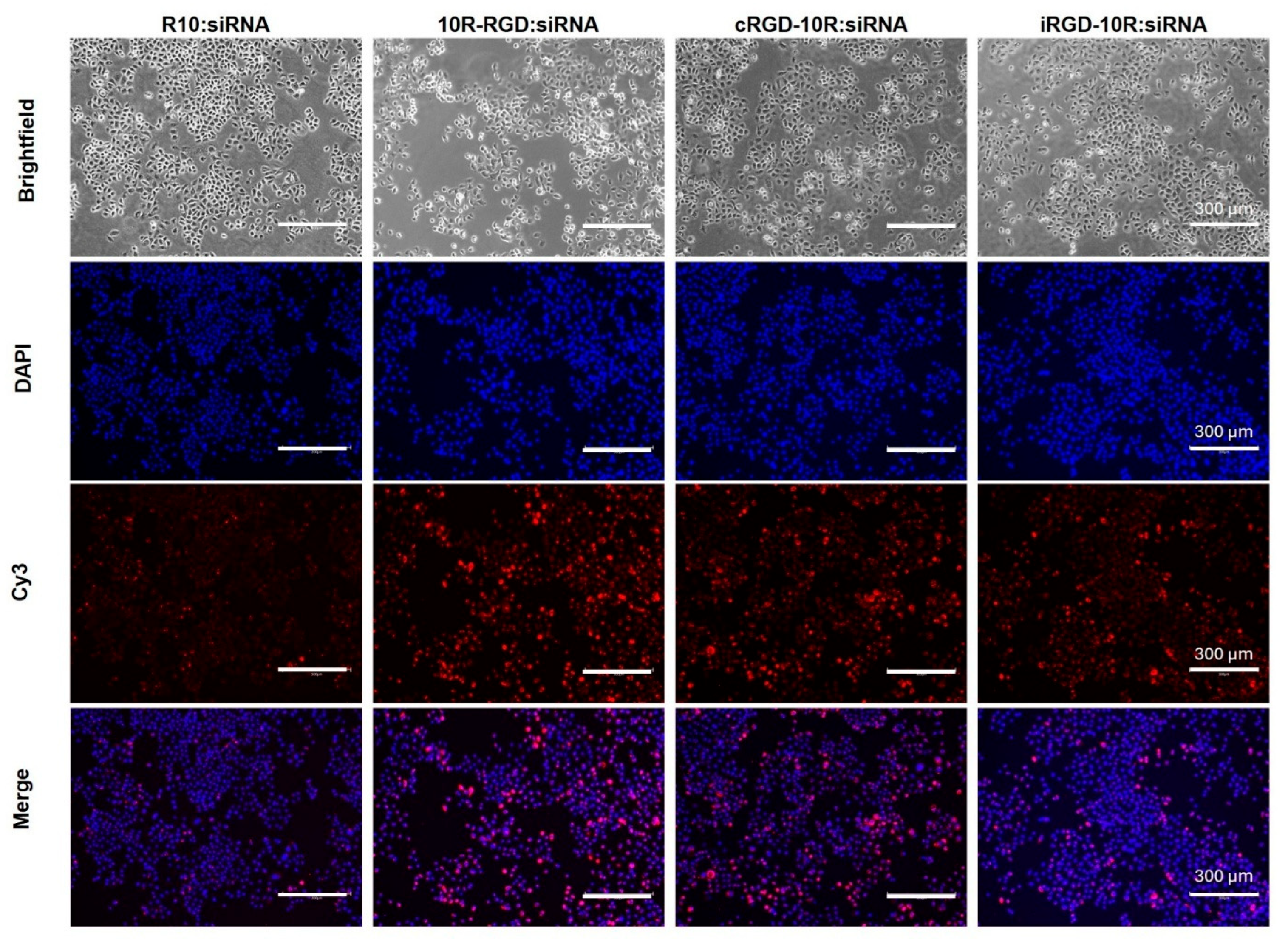
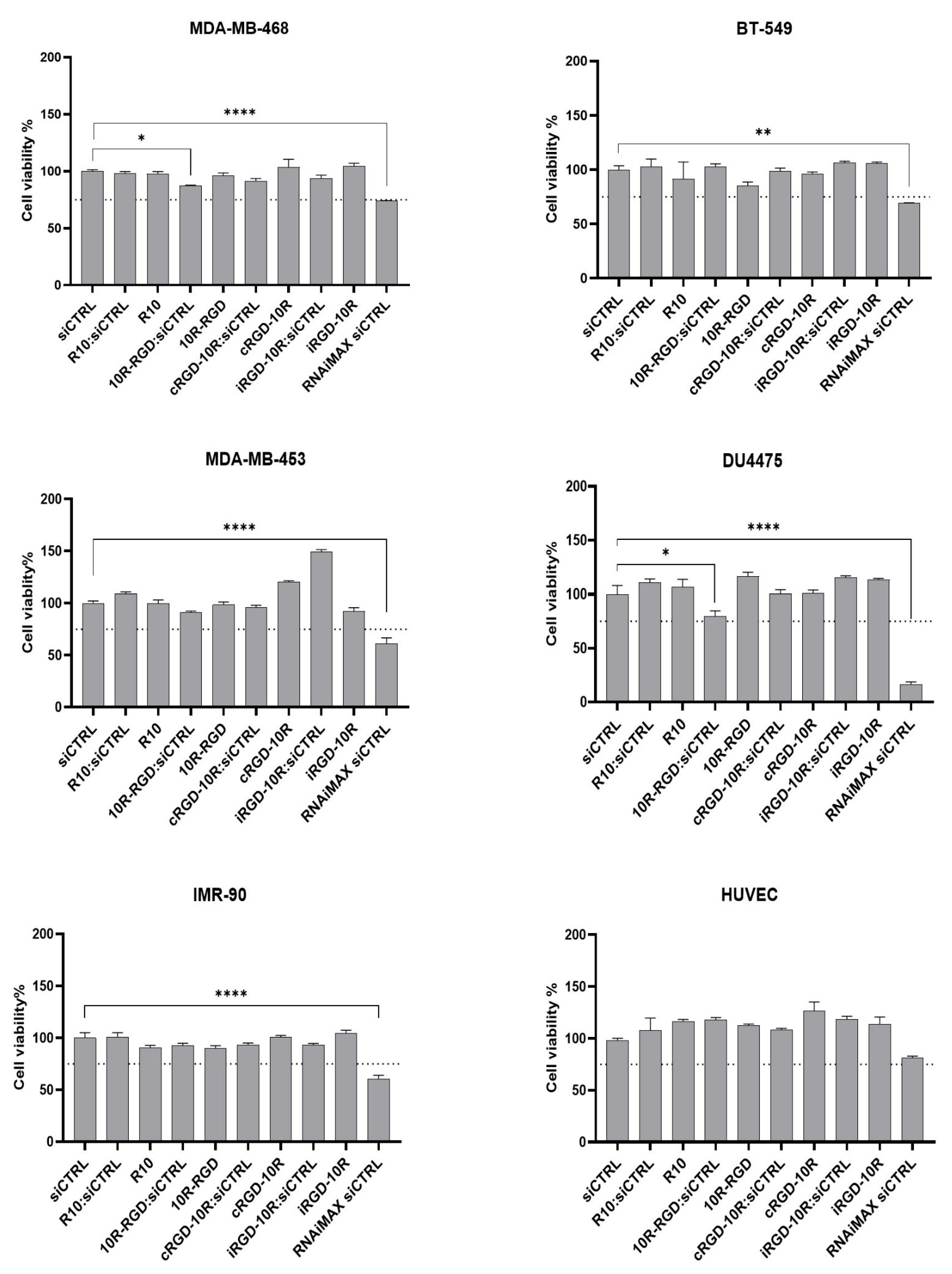
3.2. CPP:siRNA Complexes Demonstrate Good Cellular Uptake in Breast Cancer Cells and Exhibit Favorable Safety Profile In Vitro
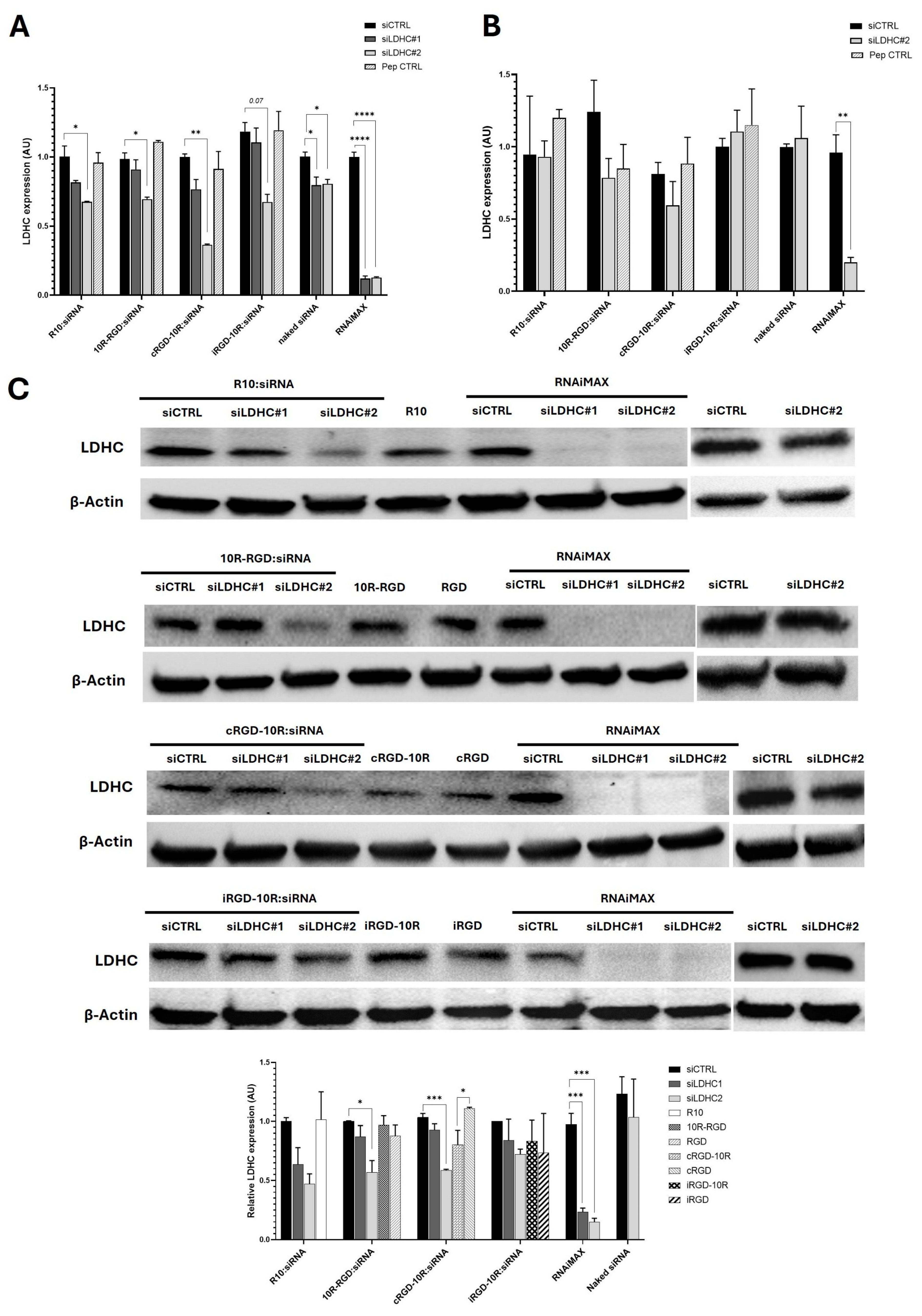
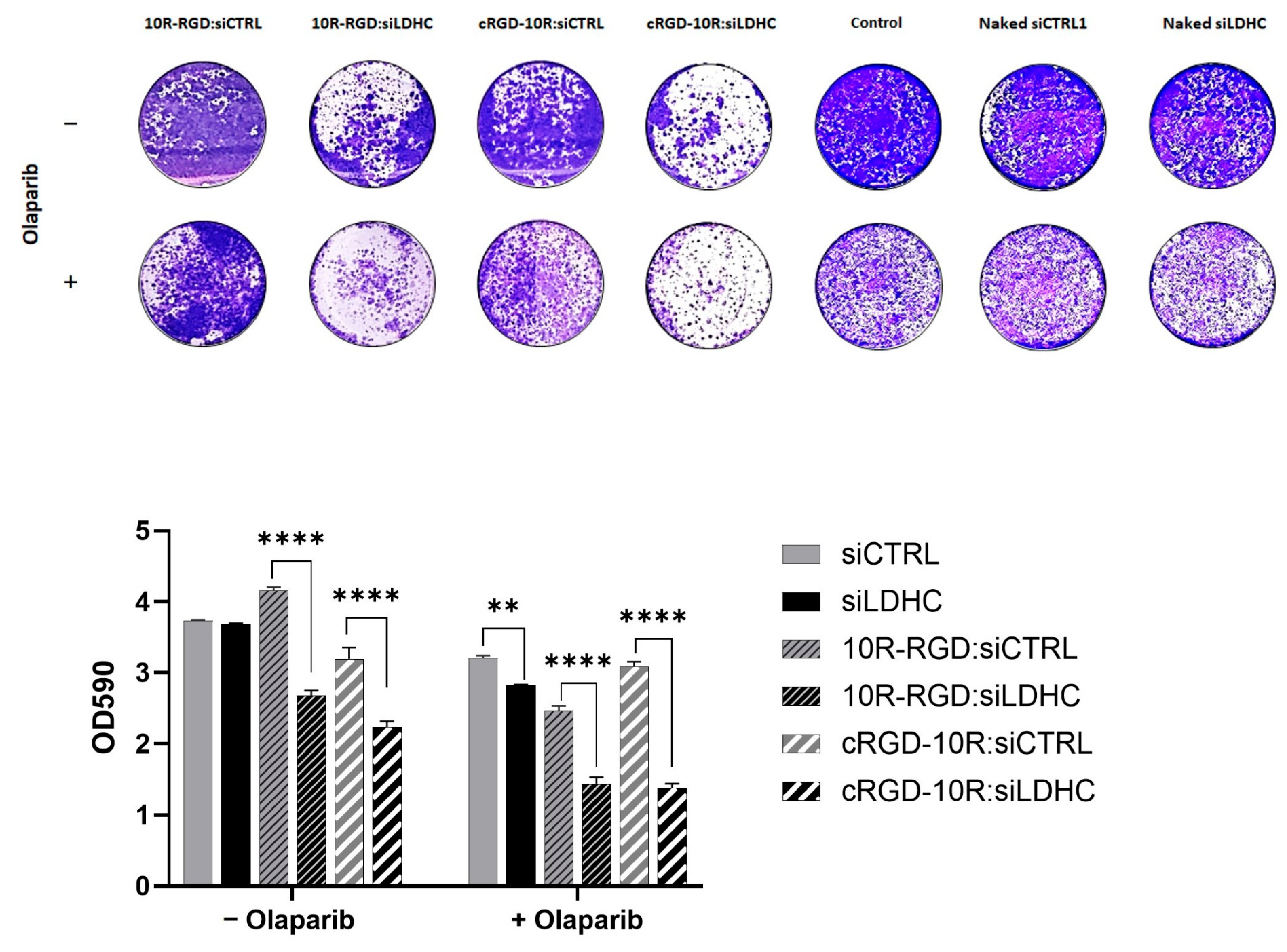
3.3. siRNA Delivery by CPPs Efficiently Reduces LDHC Expression and Clonogenic Ability in Triple Negative Breast Cancer Cells In Vitro
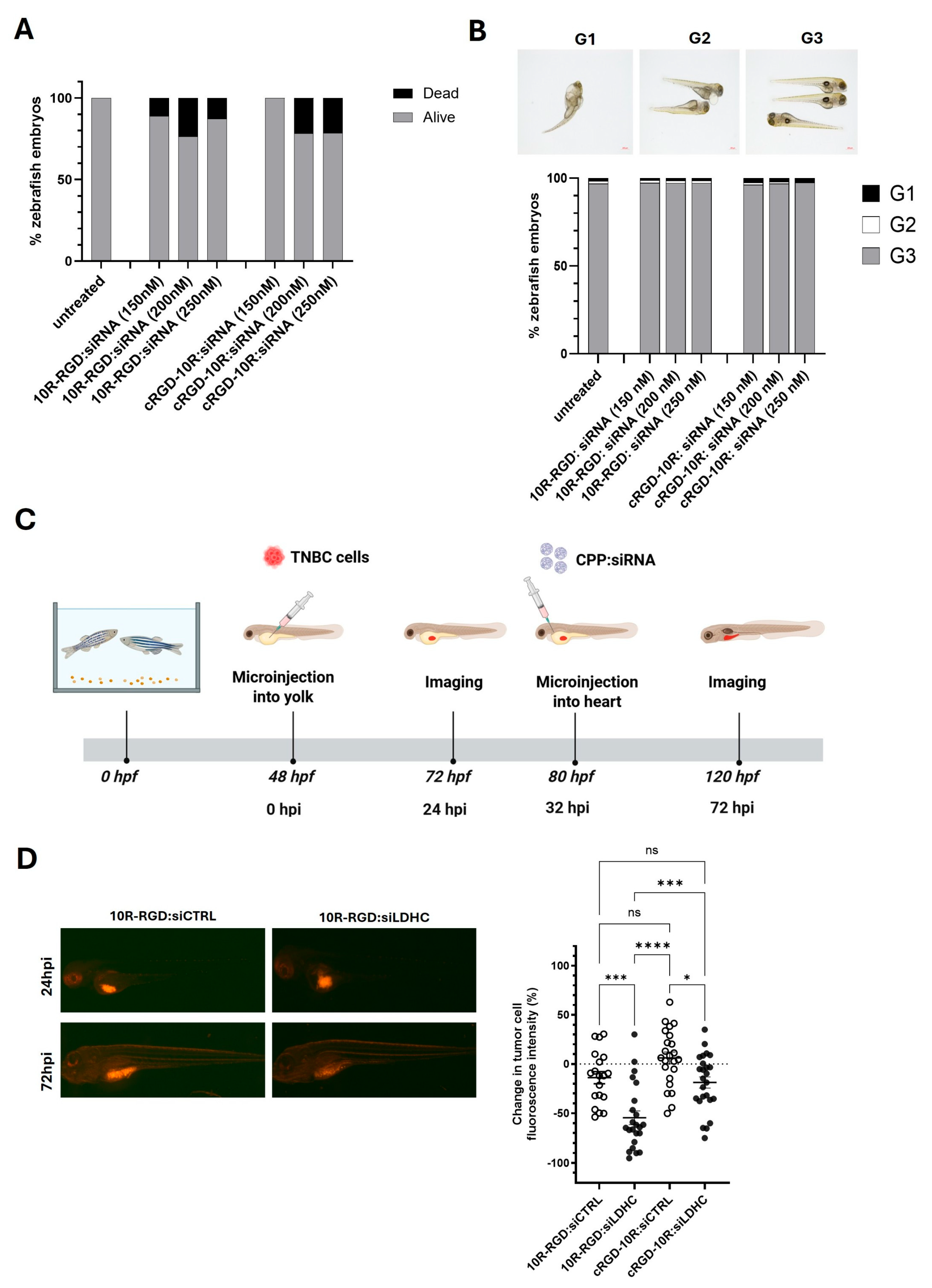
3.4. 10R-RGD and cRGD-10R:siRNA Complexes Exhibit Anti-Tumor Activity with Minor Toxicity in Breast Cancer Zebrafish Xenograft Model
4. Discussion
5. Conclusions
6. Patents
Supplementary Materials
Author Contributions
Funding
Institutional Review Board Statement
Informed Consent Statement
Data Availability Statement
Acknowledgments
Conflicts of Interest
Abbreviations
| CPP | cell-penetrating peptide |
| CTA | cancer testis antigen |
| Her2 | Human Epidermal Growth Factor Receptor 2 |
| LDHC | Lactate Dehydrogenase C |
| TNBC | triple-negative breast cancer |
References
- Bray, F.; Laversanne, M.; Sung, H.; Ferlay, J.; Siegel, R.L.; Soerjomataram, I.; Jemal, A. Global Cancer Statistics 2022: GLOBOCAN Estimates of Incidence and Mortality Worldwide for 36 Cancers in 185 Countries. CA Cancer J. Clin. 2024, 74, 229–263. [Google Scholar] [CrossRef]
- Chen, Z.; Liu, Y.; Lyu, M.; Chan, C.H.; Sun, M.; Yang, X.; Qiao, S.; Chen, Z.; Yu, S.; Ren, M.; et al. Classifications of Triple-Negative Breast Cancer: Insights and Current Therapeutic Approaches. Cell Biosci. 2025, 15, 13. [Google Scholar] [CrossRef] [PubMed]
- Zubair, M.; Wang, S.; Ali, N. Advanced Approaches to Breast Cancer Classification and Diagnosis. Front. Pharmacol. 2020, 11, 632079. [Google Scholar] [CrossRef] [PubMed]
- Palma, G.; Frasci, G.; Chirico, A.; Esposito, E.; Siani, C.; Saturnino, C.; Arra, C.; Ciliberto, G.; Giordano, A.; D’Aiuto, M. Triple Negative Breast Cancer: Looking for the Missing Link between Biology and Treatments. Oncotarget 2015, 6, 26560–26574. [Google Scholar] [CrossRef] [PubMed]
- Jhan, J.-R.; Andrechek, E.R. Triple-Negative Breast Cancer and the Potential for Targeted Therapy. Pharmacogenomics 2017, 18, 1595–1609. [Google Scholar] [CrossRef]
- Costa, R.L.B.; Han, H.S.; Gradishar, W.J. Targeting the PI3K/AKT/mTOR Pathway in Triple-Negative Breast Cancer: A Review. Breast Cancer Res. Treat. 2018, 169, 397–406. [Google Scholar] [CrossRef]
- Ren, S.; Zhang, Z.; Li, M.; Wang, D.; Guo, R.; Fang, X.; Chen, F. Cancer Testis Antigen Subfamilies: Attractive Targets for Therapeutic Vaccine (Review). Int. J. Oncol. 2023, 62, 71. [Google Scholar] [CrossRef]
- Thomas, R.; Al-Khadairi, G.; Roelands, J.; Hendrickx, W.; Dermime, S.; Bedognetti, D.; Decock, J. NY-ESO-1 Based Immunotherapy of Cancer: Current Perspectives. Front. Immunol. 2018, 9, 947. [Google Scholar] [CrossRef]
- Thomas, R.; Shaath, H.; Naik, A.; Toor, S.M.; Elkord, E.; Decock, J. Identification of Two HLA-A*0201 Immunogenic Epitopes of Lactate Dehydrogenase C (LDHC): Potential Novel Targets for Cancer Immunotherapy. Cancer Immunol. Immunother. 2020, 69, 449–463. [Google Scholar] [CrossRef] [PubMed]
- Al-Khadairi, G.; Decock, J. Cancer Testis Antigens and Immunotherapy: Where Do We Stand in the Targeting of PRAME? Cancers 2019, 11, 984. [Google Scholar] [CrossRef]
- Hua, Y.; Liang, C.; Zhu, J.; Miao, C.; Yu, Y.; Xu, A.; Zhang, J.; Li, P.; Li, S.; Bao, M.; et al. Expression of Lactate Dehydrogenase C Correlates with Poor Prognosis in Renal Cell Carcinoma. Tumour Biol. 2017, 39, 1010428317695968. [Google Scholar] [CrossRef]
- Cui, Z.; Chen, Y.; Hu, M.; Lin, Y.; Zhang, S.; Kong, L.; Chen, Y. Diagnostic and Prognostic Value of the Cancer-Testis Antigen Lactate Dehydrogenase C4 in Breast Cancer. Clin. Chim. Acta 2020, 503, 203–209. [Google Scholar] [CrossRef] [PubMed]
- Cui, Z.; Li, Y.; Gao, Y.; Kong, L.; Lin, Y.; Chen, Y. Cancer-Testis Antigen Lactate Dehydrogenase C4 in Hepatocellular Carcinoma: A Promising Biomarker for Early Diagnosis, Efficacy Evaluation and Prognosis Prediction. Aging 2020, 12, 19455–19467. [Google Scholar] [CrossRef]
- Naik, A.; Decock, J. Targeting of Lactate Dehydrogenase C Dysregulates the Cell Cycle and Sensitizes Breast Cancer Cells to DNA Damage Response Targeted Therapy. Mol. Oncol. 2022, 16, 885–903. [Google Scholar] [CrossRef] [PubMed]
- Tian, Z.; Liang, G.; Cui, K.; Liang, Y.; Wang, Q.; Lv, S.; Cheng, X.; Zhang, L. Insight Into the Prospects for RNAi Therapy of Cancer. Front. Pharmacol. 2021, 12, 644718. [Google Scholar] [CrossRef]
- Fu, S.; Xu, X.; Ma, Y.; Zhang, S.; Zhang, S. RGD Peptide-Based Non-Viral Gene Delivery Vectors Targeting Integrin Avβ3 for Cancer Therapy. J. Drug Target. 2019, 27, 1–11. [Google Scholar] [CrossRef]
- He, S.; Cen, B.; Liao, L.; Wang, Z.; Qin, Y.; Wu, Z.; Liao, W.; Zhang, Z.; Ji, A. A Tumor-Targeting cRGD-EGFR siRNA Conjugate and Its Anti-Tumor Effect on Glioblastoma in Vitro and in Vivo. Drug Deliv. 2017, 24, 471–481. [Google Scholar] [CrossRef] [PubMed]
- Li, M.; Tang, Z.; Zhang, D.; Sun, H.; Liu, H.; Zhang, Y.; Zhang, Y.; Chen, X. Doxorubicin-Loaded Polysaccharide Nanoparticles Suppress the Growth of Murine Colorectal Carcinoma and Inhibit the Metastasis of Murine Mammary Carcinoma in Rodent Models. Biomaterials 2015, 51, 161–172. [Google Scholar] [CrossRef]
- Huang, J.; Lai, W.; Wang, Q.; Tang, Q.; Hu, C.; Zhou, M.; Wang, F.; Xie, D.; Zhang, Q.; Liu, W.; et al. Effective Triple-Negative Breast Cancer Targeted Treatment Using iRGD-Modified RBC Membrane-Camouflaged Nanoparticles. Int. J. Nanomed. 2021, 16, 7497–7515. [Google Scholar] [CrossRef]
- Soenen, S.J.H.; Brisson, A.R.; De Cuyper, M. Addressing the Problem of Cationic Lipid-Mediated Toxicity: The Magnetoliposome Model. Biomaterials 2009, 30, 3691–3701. [Google Scholar] [CrossRef]
- Mokhtarieh, A.A.; Kim, S.; Lee, Y.; Chung, B.H.; Lee, M.K. Novel Cell Penetrating Peptides with Multiple Motifs Composed of RGD and Its Analogs. Biochem. Biophys. Res. Commun. 2013, 432, 359–364. [Google Scholar] [CrossRef]
- Ye, Y.; Zhu, L.; Ma, Y.; Niu, G.; Chen, X. Synthesis and Evaluation of New iRGD Peptide Analogs for Tumor Optical Imaging. Bioorg. Med. Chem. Lett. 2011, 21, 1146–1150. [Google Scholar] [CrossRef]
- du Rusquec, P.; Blonz, C.; Frenel, J.S.; Campone, M. Targeting the PI3K/Akt/mTOR Pathway in Estrogen-Receptor Positive HER2 Negative Advanced Breast Cancer. Ther. Adv. Med. Oncol. 2020, 12, 1758835920940939. [Google Scholar] [CrossRef] [PubMed]
- Brandão, M.; Pondé, N.F.; Poggio, F.; Kotecki, N.; Salis, M.; Lambertini, M.; de Azambuja, E. Combination Therapies for the Treatment of HER2-Positive Breast Cancer: Current and Future Prospects. Expert Rev. Anticancer Ther. 2018, 18, 629–649. [Google Scholar] [CrossRef]
- Yao, Y.; Chu, Y.; Xu, B.; Hu, Q.; Song, Q. Radiotherapy after Surgery Has Significant Survival Benefits for Patients with Triple-Negative Breast Cancer. Cancer Med. 2019, 8, 554–563. [Google Scholar] [CrossRef] [PubMed]
- Motamedi, H.; Ari, M.M.; Alvandi, A.; Abiri, R. Principle, Application and Challenges of Development siRNA-Based Therapeutics against Bacterial and Viral Infections: A Comprehensive Review. Front. Microbiol. 2024, 15, 1393646. [Google Scholar] [CrossRef]
- Fang, J.; Nakamura, H.; Maeda, H. The EPR Effect: Unique Features of Tumor Blood Vessels for Drug Delivery, Factors Involved, and Limitations and Augmentation of the Effect. Adv. Drug Deliv. Rev. 2011, 63, 136–151. [Google Scholar] [CrossRef]
- Huang, Y.; Wang, X.; Huang, W.; Cheng, Q.; Zheng, S.; Guo, S.; Cao, H.; Liang, X.-J.; Du, Q.; Liang, Z. Systemic Administration of siRNA via cRGD-Containing Peptide. Sci. Rep. 2015, 5, 12458. [Google Scholar] [CrossRef]
- Cen, B.; Wei, Y.; Huang, W.; Teng, M.; He, S.; Li, J.; Wang, W.; He, G.; Bai, X.; Liu, X.; et al. An Efficient Bivalent Cyclic RGD-PIK3CB siRNA Conjugate for Specific Targeted Therapy against Glioblastoma In Vitro and In Vivo. Mol. Ther. Nucleic Acids 2018, 13, 220–232. [Google Scholar] [CrossRef] [PubMed]
- Li, D.; Li, J.; Wang, S.; Teng, W.; Wang, Q. Combined Self-Assembled iRGD Polymersomes for Effective Targeted siRNA Anti-Tumor Therapy. Int. J. Nanomed. 2022, 17, 5679–5696. [Google Scholar] [CrossRef]
- Liu, X.; Wang, W.; Samarsky, D.; Liu, L.; Xu, Q.; Zhang, W.; Zhu, G.; Wu, P.; Zuo, X.; Deng, H.; et al. Tumor-Targeted in Vivo Gene Silencing via Systemic Delivery of cRGD-Conjugated siRNA. Nucleic Acids Res. 2014, 42, 11805–11817. [Google Scholar] [CrossRef]
- Naik, A.; Thomas, R.; Al-Khalifa, A.; Qasem, H.; Decock, J. Immunomodulatory Effects of Tumor Lactate Dehydrogenase C (LDHC) in Breast Cancer. Cell Commun. Signal. 2025, 23, 145. [Google Scholar] [CrossRef]
- Das, P.; Ganguly, S.; Agarwal, T.; Maity, P.; Ghosh, S.; Choudhary, S.; Gangopadhyay, S.; Maiti, T.K.; Dhara, S.; Banerjee, S.; et al. Heteroatom Doped Blue Luminescent Carbon Dots as a Nano-Probe for Targeted Cell Labeling and Anticancer Drug Delivery Vehicle. Mater. Chem. Phys. 2019, 237, 121860. [Google Scholar] [CrossRef]
- Pan, R.; He, T.; Zhang, K.; Zhu, L.; Lin, J.; Chen, P.; Liu, X.; Huang, H.; Zhou, D.; Li, W.; et al. Tumor-Targeting Extracellular Vesicles Loaded with siS100A4 for Suppressing Postoperative Breast Cancer Metastasis. Cell. Mol. Bioeng. 2023, 16, 117–125. [Google Scholar] [CrossRef]
- Lin, D.; Zhang, H.; Liu, R.; Deng, T.; Ning, T.; Bai, M.; Yang, Y.; Zhu, K.; Wang, J.; Duan, J.; et al. iRGD-Modified Exosomes Effectively Deliver CPT1A siRNA to Colon Cancer Cells, Reversing Oxaliplatin Resistance by Regulating Fatty Acid Oxidation. Mol. Oncol. 2021, 15, 3430–3446. [Google Scholar] [CrossRef]
- Zhang, J.; Zha, M.; Xiao, S.; Filipczak, N.; Yalamarty, S.S.K.; Wu, X.; Gong, C.; Li, X. Lipid-Coated Ag@MnO2 Core-Shell Nanoparticles for Co-Delivery of Survivin siRNA in Breast Tumor Therapy. Int. J. Nanomed. 2025, 20, 6515–6531. [Google Scholar] [CrossRef] [PubMed]
- Ming, L.; Song, L.; Xu, J.; Wang, R.; Shi, J.; Chen, M.; Zhang, Y. Smart Manganese Dioxide-Based Lanthanide Nanoprobes for Triple-Negative Breast Cancer Precise Gene Synergistic Chemodynamic Therapy. ACS Appl. Mater. Interfaces 2021, 13, 35444–35455. [Google Scholar] [CrossRef]
- Wang, Y.; Xie, Y.; Kilchrist, K.V.; Li, J.; Duvall, C.L.; Oupický, D. Endosomolytic and Tumor-Penetrating Mesoporous Silica Nanoparticles for siRNA/miRNA Combination Cancer Therapy. ACS Appl. Mater. Interfaces 2020, 12, 4308–4322. [Google Scholar] [CrossRef]
- Huang, R.; Du, H.; Cheng, L.; Zhang, P.; Meng, F.; Zhong, Z. Targeted Nanodelivery of siRNA against KRAS G12D Inhibits Pancreatic Cancer. Acta Biomater. 2023, 168, 529–539. [Google Scholar] [CrossRef]
- Maishi, N.; Sakurai, Y.; Hatakeyama, H.; Umeyama, Y.; Nakamura, T.; Endo, R.; Alam, M.T.; Li, C.; Annan, D.A.-M.; Kikuchi, H.; et al. Novel Antiangiogenic Therapy Targeting Biglycan Using Tumor Endothelial Cell-Specific Liposomal siRNA Delivery System. Cancer Sci. 2022, 113, 1855–1867. [Google Scholar] [CrossRef]
- Wan, W.-J.; Huang, G.; Wang, Y.; Tang, Y.; Li, H.; Jia, C.-H.; Liu, Y.; You, B.-G.; Zhang, X.-N. Coadministration of iRGD Peptide with ROS-Sensitive Nanoparticles Co-Delivering siFGL1 and siPD-L1 Enhanced Tumor Immunotherapy. Acta Biomater. 2021, 136, 473–484. [Google Scholar] [CrossRef]
- Sakurai, Y.; Hatakeyama, H.; Sato, Y.; Hyodo, M.; Akita, H.; Ohga, N.; Hida, K.; Harashima, H. RNAi-Mediated Gene Knockdown and Anti-Angiogenic Therapy of RCCs Using a Cyclic RGD-Modified Liposomal-siRNA System. J. Control. Release 2014, 173, 110–118. [Google Scholar] [CrossRef] [PubMed]
- Alzamely, K.O.; Hajizadeh, F.; Heydari, M.; Ghaderi Sede, M.J.; Asl, S.H.; Peydaveisi, M.; Masjedi, A.; Izadi, S.; Nikkhoo, A.; Atyabi, F.; et al. Combined Inhibition of CD73 and ZEB1 by Arg-Gly-Asp (RGD)-Targeted Nanoparticles Inhibits Tumor Growth. Colloids Surf. B Biointerfaces 2021, 197, 111421. [Google Scholar] [CrossRef] [PubMed]
- Han, H.D.; Mangala, L.S.; Lee, J.W.; Shahzad, M.M.K.; Kim, H.S.; Shen, D.; Nam, E.J.; Mora, E.M.; Stone, R.L.; Lu, C.; et al. Targeted Gene Silencing Using RGD-Labeled Chitosan Nanoparticles. Clin. Cancer Res. 2010, 16, 3910–3922. [Google Scholar] [CrossRef] [PubMed]
- Yu, X.; Xue, L.; Zhao, J.; Zhao, S.; Wu, D.; Liu, H.Y. Non-Cationic RGD-Containing Protein Nanocarrier for Tumor-Targeted siRNA Delivery. Pharmaceutics 2021, 13, 2182. [Google Scholar] [CrossRef]
- Lo, J.H.; Hao, L.; Muzumdar, M.D.; Raghavan, S.; Kwon, E.J.; Pulver, E.M.; Hsu, F.; Aguirre, A.J.; Wolpin, B.M.; Fuchs, C.S.; et al. iRGD-Guided Tumor-Penetrating Nanocomplexes for Therapeutic siRNA Delivery to Pancreatic Cancer. Mol. Cancer Ther. 2018, 17, 2377–2388. [Google Scholar] [CrossRef]



| CPP | Sequence | Length | Molecular Weight (MW) | Purity % |
|---|---|---|---|---|
| R10 | RRRRRRRRRR | 10 | 1579.9 | 98 |
| 10R-RGD | RRRRRRRRRR-RGD | 13 | 1908.23 | 96 |
| cRGD-10R | DGARYCRGDCFDG-RRRRRRRRRR | 23 | 2994.39 | 99 |
| iRGD-10R | CRGDKGPDCRRRRRRRRRR | 19 | 2509.93 | 99 |
Disclaimer/Publisher’s Note: The statements, opinions and data contained in all publications are solely those of the individual author(s) and contributor(s) and not of MDPI and/or the editor(s). MDPI and/or the editor(s) disclaim responsibility for any injury to people or property resulting from any ideas, methods, instructions or products referred to in the content. |
© 2026 by the authors. Licensee MDPI, Basel, Switzerland. This article is an open access article distributed under the terms and conditions of the Creative Commons Attribution (CC BY) license.
Share and Cite
Qasem, H.; Naik, A.; Gomez, T.; Ponraj, J.; Jafar, U.; Sikhondze, M.; Thomas, R.; Mahmoud, K.A.; Decock, J. Cell-Penetrating Peptide-Mediated siRNA Targeting of LDHC Suppresses Tumor Growth in a Triple-Negative Breast Cancer Zebrafish Xenograft Model. Pharmaceutics 2026, 18, 78. https://doi.org/10.3390/pharmaceutics18010078
Qasem H, Naik A, Gomez T, Ponraj J, Jafar U, Sikhondze M, Thomas R, Mahmoud KA, Decock J. Cell-Penetrating Peptide-Mediated siRNA Targeting of LDHC Suppresses Tumor Growth in a Triple-Negative Breast Cancer Zebrafish Xenograft Model. Pharmaceutics. 2026; 18(1):78. https://doi.org/10.3390/pharmaceutics18010078
Chicago/Turabian StyleQasem, Hanan, Adviti Naik, Tricia Gomez, Janarthanan Ponraj, Umar Jafar, Martin Sikhondze, Remy Thomas, Khaled A. Mahmoud, and Julie Decock. 2026. "Cell-Penetrating Peptide-Mediated siRNA Targeting of LDHC Suppresses Tumor Growth in a Triple-Negative Breast Cancer Zebrafish Xenograft Model" Pharmaceutics 18, no. 1: 78. https://doi.org/10.3390/pharmaceutics18010078
APA StyleQasem, H., Naik, A., Gomez, T., Ponraj, J., Jafar, U., Sikhondze, M., Thomas, R., Mahmoud, K. A., & Decock, J. (2026). Cell-Penetrating Peptide-Mediated siRNA Targeting of LDHC Suppresses Tumor Growth in a Triple-Negative Breast Cancer Zebrafish Xenograft Model. Pharmaceutics, 18(1), 78. https://doi.org/10.3390/pharmaceutics18010078