Advances in Nanotechnology-Based Topical Delivery Systems for Skincare Applications

 and
and
Abstract
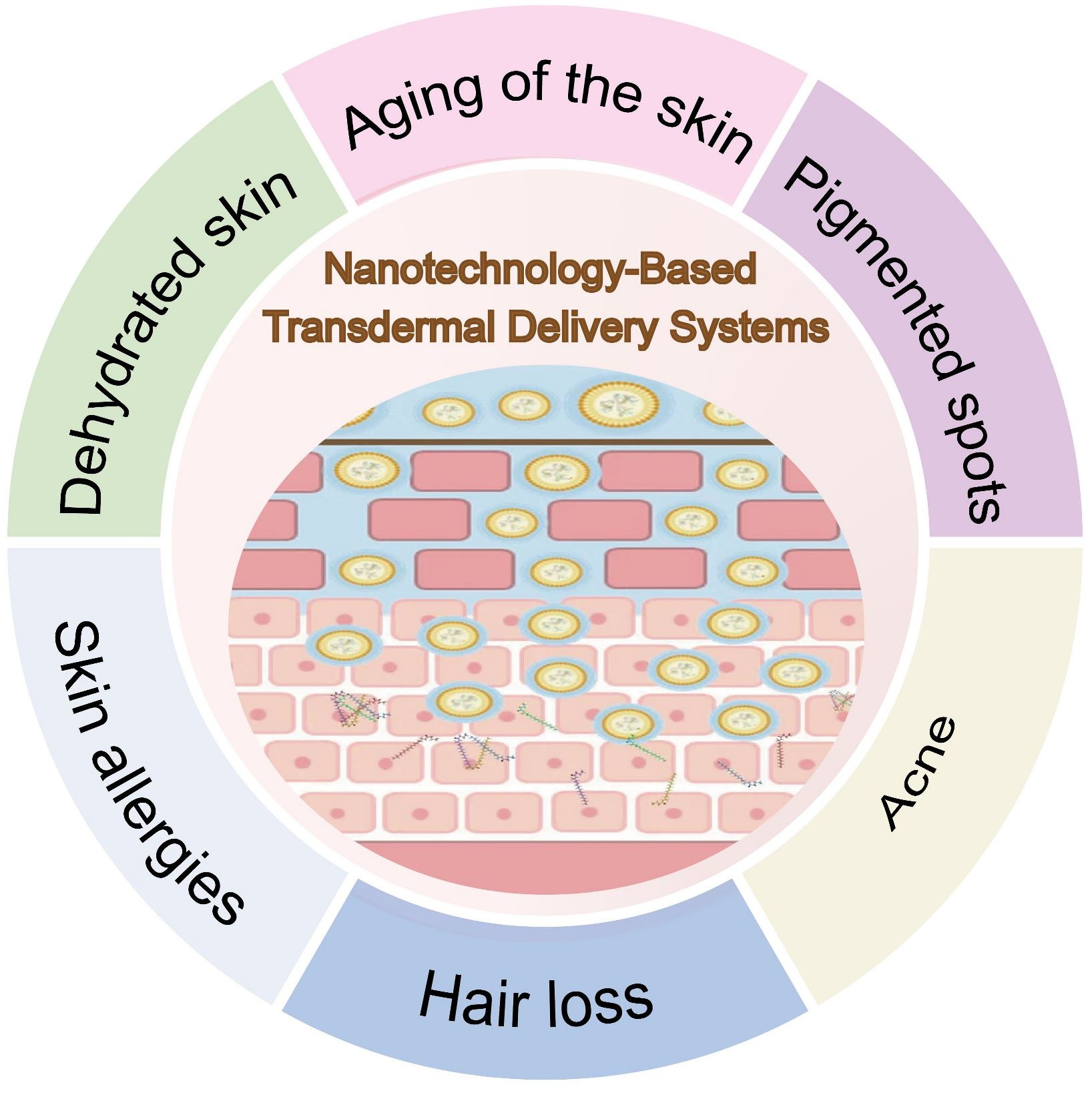
1. Introduction
2. Nanocarrier-Based Topical Delivery Systems: Current Class and Cosmetic Benefits
3. Nanocarrier-Based Topical Delivery Technology for Skincare
3.1. Anti-Aging
3.2. Skin Whitening
3.3. Anti-Acne and Oil Control
3.4. Hair Loss Prevention or Treatment
3.5. Skin Soothing and Repairing
3.6. Skin Moisturizing
4. Safety and Regulation of Nanocarriers in Skincare
5. Conclusions
Author Contributions
Funding
Data Availability Statement
Conflicts of Interest
Abbreviations
| SC | Stratum corneum |
| SLNs | Solid lipid nanoparticles |
| EE | encapsulation efficiency |
| NLCs | Nanostructured lipid carriers |
| PNP | Polymeric nanoparticle |
| PM | Polymeric micelle |
| CDs | Cyclodextrins |
| UV | Ultraviolet |
| CPDs | Cyclobutane pyrimidine dimers |
| NEG | non-enzymatic glycation |
| PPE | Porcine placenta extract |
| ROS | Reactive oxygen species |
| RT | Retinol palmitate |
| EGCG | Epigallocatechin gallate |
| FA | Ferulic acid |
| T-Res | Trans-Resveratrol |
| CUR | Curcumin |
| FDA | United States Food and Drug Administration |
| Ga | Gelidium amansii |
| UP | Undecylenoyl phenylalanine |
| HA | hyaluronic acid |
| LMW-HA | low molecular weight HA |
| NAMs | New Approach Methodologies |
References
- Chambers, E.S.; Vukmanovic-Stejic, M. Skin barrier immunity and ageing. Immunology 2020, 160, 116–125. [Google Scholar] [CrossRef] [Scilit] [PubMed]
- Motter Catarino, C.; Kaiser, K.; Baltazar, T.; Motter Catarino, L.; Brewer, J.R.; Karande, P. Evaluation of native and non-native biomaterials for engineering human skin tissue. Bioeng. Transl. Med. 2022, 7, e10297. [Google Scholar] [CrossRef] [Scilit]
- Fukuda, K.; Ito, Y.; Furuichi, Y.; Matsui, T.; Horikawa, H.; Miyano, T.; Okada, T.; van Logtestijn, M.; Tanaka, R.J.; Miyawaki, A.; et al. Three stepwise pH progressions in stratum corneum for homeostatic maintenance of the skin. Nat. Commun. 2024, 15, 4062. [Google Scholar] [CrossRef] [Scilit]
- Avelino, T.M.; Harb, S.V.; Adamoski, D.; Oliveira, L.C.M.; Horinouchi, C.D.S.; Azevedo, R.J.; Azoubel, R.A.; Thomaz, V.K.; Batista, F.A.H.; d’Ávila, M.A.; et al. Unveiling the impact of hypodermis on gene expression for advancing bioprinted full-thickness 3D skin models. Commun. Biol. 2024, 7, 1437. [Google Scholar] [CrossRef] [Scilit]
- Barbaud, A.; Castagna, J.; Soria, A. Skin tests in the work-up of cutaneous adverse drug reactions: A review and update. Contact Dermat. 2022, 86, 344–356. [Google Scholar] [CrossRef] [Scilit]
- Yin, Y.; Tang, L.; Cao, Y.; Liu, H.; Fu, C.; Feng, J.; Zhu, H.; Wang, W. Microneedle patch-involved local therapy synergized with immune checkpoint inhibitor for pre- and post-operative cancer treatment. J. Control. Release 2025, 379, 678–695. [Google Scholar] [CrossRef] [Scilit]
- Fan, D.; Cao, Y.; Cao, M.; Wang, Y.; Cao, Y.; Gong, T. Nanomedicine in cancer therapy. Signal Transduct. Target. Ther. 2023, 8, 293. [Google Scholar] [CrossRef] [Scilit]
- Tang, L.; Li, J.; Zhao, Q.; Pan, T.; Zhong, H.; Wang, W. Advanced and Innovative Nano-Systems for Anticancer Targeted Drug Delivery. Pharmaceutics 2021, 13, 1151. [Google Scholar] [CrossRef] [Scilit]
- Ramanunny, A.K.; Wadhwa, S.; Gulati, M.; Singh, S.K.; Kapoor, B.; Dureja, H.; Chellappan, D.K.; Anand, K.; Dua, K.; Khursheed, R.; et al. Nanocarriers for treatment of dermatological diseases: Principle, perspective and practices. Eur. J. Pharmacol. 2021, 890, 173691. [Google Scholar] [CrossRef] [Scilit] [PubMed]
- Tang, L.; Liu, H.; Yin, Y.; Pan, T.; Fu, C.; Cao, Y.; Mei, Y.; Xiao, Q.; Yan, Z.; Yao, Y.; et al. Micro/nano system-mediated local treatment in conjunction with immune checkpoint inhibitor against advanced-Stage malignant melanoma. Chem. Eng. J. 2024, 497, 154499. [Google Scholar] [CrossRef] [Scilit]
- Liu, H.; Zhu, Y.; Shu, W.; Zhang, Y.; Hou, Y.; Tang, L.; Wang, W. Photoactive Nanoplatforms with Immunomodulation Effect for Antibacterial Therapy. Adv. Healthc. Mater. 2025, 14, e03365. [Google Scholar] [CrossRef] [Scilit]
- Tang, L.; Yin, Y.; Cao, Y.; Liu, H.; Qing, G.; Fu, C.; Li, Z.; Zhu, Y.; Shu, W.; He, S.; et al. Bioorthogonal Chemistry-Guided Inhalable Nanoprodrug to Circumvent Cisplatin Resistance in Orthotopic Nonsmall Cell Lung Cancer. ACS Nano 2024, 18, 32103–32117. [Google Scholar] [CrossRef] [Scilit] [PubMed]
- Su, Y.; Wang, W.; Xiao, Q.; Tang, L.; Wang, T.; Xie, M.; Su, Y. Macrophage membrane-camouflaged lipoprotein nanoparticles for effective obesity treatment based on a sustainable self-reinforcement strategy. Acta Biomater. 2022, 152, 519–531. [Google Scholar] [CrossRef] [Scilit] [PubMed]
- Liu, H.; Tang, L.; Yin, Y.; Cao, Y.; Fu, C.; Feng, J.; Shen, Y.; Wang, W. Photoresponsive Multirole Nanoweapon Camouflaged by Hybrid Cell Membrane Vesicles for Efficient Antibacterial Therapy of Pseudomonas aeruginosa-Infected Pneumonia and Wound. Adv. Sci. 2024, 11, e2403101. [Google Scholar] [CrossRef] [Scilit]
- Yu, Y.Q.; Yang, X.; Wu, X.F.; Fan, Y.B. Enhancing Permeation of Drug Molecules Across the Skin via Delivery in Nanocarriers: Novel Strategies for Effective Transdermal Applications. Front. Bioeng. Biotechnol. 2021, 9, 646554. [Google Scholar] [CrossRef] [Scilit]
- Dubey, S.K.; Dey, A.; Singhvi, G.; Pandey, M.M.; Singh, V.; Kesharwani, P. Emerging trends of nanotechnology in advanced cosmetics. Colloids Surf. B Biointerfaces 2022, 214, 112440. [Google Scholar] [CrossRef] [Scilit]
- Singh, S.; Sharma, N.; Zahoor, I.; Behl, T.; Antil, A.; Gupta, S.; Anwer, M.K.; Mohan, S.; Bungau, S.G. Decrypting the Potential of Nanotechnology-Based Approaches as Cutting-Edge for Management of Hyperpigmentation Disorder. Molecules 2022, 28, 220. [Google Scholar] [CrossRef] [Scilit]
- Lee, J.B.; Sung, M.; Noh, M.; Kim, J.E.; Jang, J.; Kim, S.J.; Kim, J.W. Effective association of ceramide-coassembled lipid nanovehicles with stratum corneum for improved skin barrier function and enhanced skin penetration. Int. J. Pharm. 2020, 579, 119162. [Google Scholar] [CrossRef] [Scilit]
- Castañeda-Reyes, E.D.; Perea-Flores, M.J.; Davila-Ortiz, G.; Lee, Y.; Gonzalez de Mejia, E. Development, Characterization and Use of Liposomes as Amphipathic Transporters of Bioactive Compounds for Melanoma Treatment and Reduction of Skin Inflammation: A Review. Int. J. Nanomed. 2020, 15, 7627–7650. [Google Scholar] [CrossRef] [Scilit]
- Mbituyimana, B.; Liu, L.; Ye, W.; Ode Boni, B.O.; Zhang, K.; Chen, J.; Thomas, S.; Vasilievich, R.V.; Shi, Z.; Yang, G. Bacterial cellulose-based composites for biomedical and cosmetic applications: Research progress and existing products. Carbohydr. Polym. 2021, 273, 118565. [Google Scholar] [CrossRef] [Scilit] [PubMed]
- Gomes, A.; Aguiar, L.; Ferraz, R.; Teixeira, C.; Gomes, P. The Emerging Role of Ionic Liquid-Based Approaches for Enhanced Skin Permeation of Bioactive Molecules: A Snapshot of the Past Couple of Years. Int. J. Mol. Sci. 2021, 22, 11991. [Google Scholar] [CrossRef] [Scilit]
- Bai, D.; Hu, F.; Xu, H.; Huang, J.; Wu, C.; Zhang, J.; Ye, R. High Stability and Low Irritation of Retinol Propionate and Hydroxypinacolone Retinoate Supramolecular Nanoparticles with Effective Anti-Wrinkle Efficacy. Pharmaceutics 2023, 15, 731. [Google Scholar] [CrossRef] [Scilit]
- Hou, J.; Wei, W.; Geng, Z.; Zhang, Z.; Yang, H.; Zhang, X.; Li, L.; Gao, Q. Developing Plant Exosomes as an Advanced Delivery System for Cosmetic Peptide. ACS Appl. Bio Mater. 2024, 7, 3050–3060. [Google Scholar] [CrossRef] [Scilit]
- Kang, Y.; Zhang, S.; Wang, G.; Yan, Z.; Wu, G.; Tang, L.; Wang, W. Nanocarrier-Based Transdermal Drug Delivery Systems for Dermatological Therapy. Pharmaceutics 2024, 16, 1384. [Google Scholar] [CrossRef] [Scilit]
- Wei, X.; Jiang, Y.; Chenwu, F.; Li, Z.; Wan, J.; Li, Z.; Zhang, L.; Wang, J.; Song, M. Synergistic Ferroptosis-Immunotherapy Nanoplatforms: Multidimensional Engineering for Tumor Microenvironment Remodeling and Therapeutic Optimization. Nanomicro Lett. 2025, 18, 56. [Google Scholar] [CrossRef] [Scilit]
- Tang, L.; Liu, H.; Feng, J.; Yao, Y.; Cao, Y.; Yin, Y.; Fu, C.; Gao, J.; Xiao, Q.; Yan, Z.; et al. Site-Specific Antibacterial Strategy for Multi-Pathway Treatment of Drug-Resistant Skin Infections. Adv. Healthc. Mater. 2025, e04240. [Google Scholar] [CrossRef] [Scilit]
- Güngör, S.; Kahraman, E. Nanocarriers Mediated Cutaneous Drug Delivery. Eur. J. Pharm. Sci. 2021, 158, 105638. [Google Scholar] [CrossRef] [Scilit] [PubMed]
- Tiwari, N.; Osorio-Blanco, E.R.; Sonzogni, A.; Esporrín-Ubieto, D.; Wang, H.; Calderón, M. Nanocarriers for Skin Applications: Where Do We Stand? Angew. Chem. Int. Ed. Engl. 2022, 61, e202107960. [Google Scholar] [CrossRef] [Scilit] [PubMed]
- Teixeira, M.I.; Lopes, C.M.; Amaral, M.H.; Costa, P.C. Navigating Neurotoxicity and Safety Assessment of Nanocarriers for Brain Delivery: Strategies and Insights. Acta Biomater. 2024, 189, 25–56. [Google Scholar] [CrossRef] [Scilit]
- Pander, G.; Uhl, P.; Kühl, N.; Haberkorn, U.; Anderl, J.; Mier, W. Antibody-drug conjugates: What drives their progress? Drug Discov. Today 2022, 27, 103311. [Google Scholar] [CrossRef] [Scilit]
- Oliveira, C.; Coelho, C.; Teixeira, J.A.; Ferreira-Santos, P.; Botelho, C.M. Nanocarriers as Active Ingredients Enhancers in the Cosmetic Industry-The European and North America Regulation Challenges. Molecules 2022, 27, 1669. [Google Scholar] [CrossRef] [Scilit] [PubMed]
- Ahmad, A.; Imran, M.; Sharma, N. Precision Nanotoxicology in Drug Development: Current Trends and Challenges in Safety and Toxicity Implications of Customized Multifunctional Nanocarriers for Drug-Delivery Applications. Pharmaceutics 2022, 14, 2463. [Google Scholar] [CrossRef] [Scilit]
- Gao, J.; Tang, L.; Fu, C.; Cao, Y.; Liu, H.; Yin, Y.; Li, Z.; Zhu, Y.; Shu, W.; Zhang, Y.; et al. A Nano-Strategy for Advanced Triple-Negative Breast Cancer Therapy by Regulating Intratumoral Microbiota. Nano Lett. 2025, 25, 6134–6144. [Google Scholar] [CrossRef] [Scilit]
- Mei, Y.; Zhang, D.; Cao, Y.; Hu, J.; Gao, X.; Liao, W.; Huang, C.; Wang, W. One-stone-three-birds strategy: A graphdiyne oxide nanosheet-involved drug-formed immune-boosting hydrogel with dual responsivity for triple-modal cancer immunotherapy. Mater. Today 2025, 89, 67–83. [Google Scholar] [CrossRef] [Scilit]
- Zhou, H.; Luo, D.; Chen, D.; Tan, X.; Bai, X.; Liu, Z.; Yang, X.; Liu, W. Current Advances of Nanocarrier Technology-Based Active Cosmetic Ingredients for Beauty Applications. Clin. Cosmet. Investig. Dermatol. 2021, 14, 867–887. [Google Scholar] [CrossRef] [Scilit]
- Tang, L.; Xiao, Q.; Yin, Y.; Mei, Y.; Li, J.; Xu, L.; Gao, H.; Wang, W. An enzyme-responsive and NIR-triggered lipid-polymer hybrid nanoplatform for synergistic photothermal/chemo cancer therapy. Biomater. Sci. 2022, 10, 2370–2383. [Google Scholar] [CrossRef] [Scilit] [PubMed]
- Cao, Z.; Liu, J.; Yang, X. Deformable nanocarriers for enhanced drug delivery and cancer therapy. Exploration 2024, 4, 20230037. [Google Scholar] [CrossRef] [Scilit]
- Tang, L.; Fu, C.; Zhang, A.; Li, X.; Cao, Y.; Feng, J.; Liu, H.; Dong, H.; Wang, W. Harnessing nanobiotechnology for cerebral ischemic stroke management. Biomater. Sci. 2023, 11, 791–812. [Google Scholar] [CrossRef] [Scilit]
- Xiao, Q.; Tang, L.; Chen, S.; Mei, Y.; Wang, C.; Yang, J.; Shang, J.; Li, S.; Wang, W. Two-Pronged Attack: Dual Activation of Fat Reduction Using Near-Infrared-Responsive Nanosandwich for Targeted Anti-Obesity Treatment. Adv. Sci. 2024, 11, e2406985. [Google Scholar] [CrossRef] [Scilit] [PubMed]
- Tang, L.; Yin, Y.; Liu, H.; Zhu, M.; Cao, Y.; Feng, J.; Fu, C.; Li, Z.; Shu, W.; Gao, J.; et al. Blood-Brain Barrier-Penetrating and Lesion-Targeting Nanoplatforms Inspired by the Pathophysiological Features for Synergistic Ischemic Stroke Therapy. Adv. Mater. 2024, 36, e2312897. [Google Scholar] [CrossRef] [Scilit]
- Pan, T.; Tang, L.; Chu, R.; Zheng, S.; Wang, J.; Yang, Y.; Wang, W.; He, J. Microfluidic-Enabled Assembly of Multicomponent Artificial Organelle for Synergistic Tumor Starvation Therapy. ACS Appl. Mater. Interfaces 2024, 16, 40667–40681. [Google Scholar] [CrossRef] [Scilit] [PubMed]
- Feng, C.; Tan, P.; Nie, G.; Zhu, M. Biomimetic and bioinspired nano-platforms for cancer vaccine development. Exploration 2023, 3, 20210263. [Google Scholar] [CrossRef] [Scilit]
- Tang, L.; Xie, M.; Li, J.; Mei, Y.; Cao, Y.; Xiao, Q.; Dong, H.; Zhang, Y.; Wang, W. Leveraging nano-engineered mesenchymal stem cells for intramedullary spinal cord tumor treatment. Chin. Chem. Lett. 2023, 34, 107801. [Google Scholar] [CrossRef] [Scilit]
- Xiao, Q.; Wang, C.; Yang, J.; Gao, X.; Chen, Z.; Niu, Z.; Hou, Y.; Fu, C.; Yan, Z.; Zhu, G.; et al. Dual-Targeting Nanoplatform to Regulate Metabolic Disorders: From Obesity to Obesity-Related Metabolic Dysfunction-Associated Steatotic Liver Disease. Nano Lett. 2025, 25, 15416–15427. [Google Scholar] [CrossRef] [Scilit] [PubMed]
- Li, J.; Zhang, Y.L.; Jin, T.; Jin, Z.; Zhu, M.; Qing, G.; Zhang, J.; Wang, Z.; Mu, Y.; Li, J.; et al. Advanced Pharmaceutical Nanotechnologies Applied for Chinese Herbal Medicines. Adv. Sci. 2025, 12, e00167. [Google Scholar] [CrossRef] [Scilit]
- You, Q.; Wu, G.; Li, H.; Liu, J.; Cao, F.; Ding, L.; Liang, F.; Zhou, B.; Ma, L.; Zhu, L.; et al. A nanovaccine targeting cancer stem cells and bulk cancer cells for postoperative cancer immunotherapy. Nat. Nanotechnol. 2025, 20, 1298–1311. [Google Scholar] [CrossRef] [Scilit]
- Tang, L.; Yin, Y.; Zhang, Z.; Fu, C.; Cao, Y.; Liu, H.; Feng, J.; Gao, J.; Shang, J.; Wang, W. Size-switchable and dual-targeting nanomedicine for cancer chemoimmunotherapy by potentiating deep tumor penetration and antitumor immunity. Chem. Eng. J. 2024, 493, 152590. [Google Scholar] [CrossRef] [Scilit]
- Fu, Y.; Huang, Y.; Wang, Y.; Fu, Z.; Cai, W.; Wang, L.; Wu, Y.; Zhou, X.; Ma, Z.; Xu, Z.; et al. Virus-inspired lipopeptide-derived nucleic acid delivery to cartilage for osteoarthritis therapy. Nat. Commun. 2025, 16, 9184. [Google Scholar] [CrossRef] [Scilit] [PubMed]
- Zhang, S.; Wang, X.; Chen, X.; Shu, D.; Lin, Q.; Zou, H.; Dong, J.; Wang, B.; Tang, Q.; Li, H.; et al. An on-Demand Oxygen Nano-vehicle Sensitizing Protein and Nucleic Acid Drug Augment Immunotherapy. Adv. Mater. 2025, 37, e2409378. [Google Scholar] [CrossRef] [Scilit]
- Jain, A.; Bhise, K. Nano-pharmacokinetics and pharmacodynamics of green-synthesized ZnO nanoparticles: A pathway to safer therapeutic applications. Xenobiotica 2025, 55, 265–276. [Google Scholar] [CrossRef] [Scilit]
- Vu Thanh, C.; Gooding, J.J.; Kah, M. Learning lessons from nano-medicine to improve the design and performances of nano-agrochemicals. Nat. Commun. 2025, 16, 2306. [Google Scholar] [CrossRef] [Scilit]
- Lunter, D.; Klang, V.; Eichner, A.; Savic, S.M.; Savic, S.; Lian, G.; Erdő, F. Progress in Topical and Transdermal Drug Delivery Research—Focus on Nanoformulations. Pharmaceutics 2024, 16, 817. [Google Scholar] [CrossRef] [Scilit]
- Hao, T.; Tang, L.; Xu, Q.; Wang, W.; Li, Z.; Shen, Y.; Xu, B.; Luo, H.; Li, Q.; Wang, J.; et al. Silk Fibroin Formed Bioadhesive Ophthalmic Gel for Dry Eye Syndrome Treatment. AAPS PharmSciTech 2024, 25, 92. [Google Scholar] [CrossRef] [Scilit]
- Lai, F.; Caddeo, C.; Manca, M.L.; Manconi, M.; Sinico, C.; Fadda, A.M. What’s new in the field of phospholipid vesicular nanocarriers for skin drug delivery. Int. J. Pharm. 2020, 583, 119398. [Google Scholar] [CrossRef] [Scilit]
- Paiva-Santos, A.C.; Silva, A.L.; Guerra, C.; Peixoto, D.; Pereira-Silva, M.; Zeinali, M.; Mascarenhas-Melo, F.; Castro, R.; Veiga, F. Ethosomes as Nanocarriers for the Development of Skin Delivery Formulations. Pharm. Res. 2021, 38, 947–970. [Google Scholar] [CrossRef] [Scilit]
- Sudhakar, K.; Fuloria, S.; Subramaniyan, V.; Sathasivam, K.; Azad, A.; Swain, S.S.; Sekar, M.; Karupiah, S.; Porwal, O.; Sahoo, A.; et al. Ultraflexible Liposome Nanocargo as a Dermal and Transdermal Drug Delivery System. Nanomaterials 2021, 11, 2557. [Google Scholar] [CrossRef] [Scilit]
- Antonara, L.; Triantafyllopoulou, E.; Chountoulesi, M.; Pippa, N.; Dallas, P.P.; Rekkas, D.M. Lipid-Based Drug Delivery Systems: Concepts and Recent Advances in Transdermal Applications. Nanomaterials 2025, 15, 1326. [Google Scholar] [CrossRef] [Scilit]
- Souto, E.B.; Cano, A.; Martins-Gomes, C.; Coutinho, T.E.; Zielińska, A.; Silva, A.M. Microemulsions and Nanoemulsions in Skin Drug Delivery. Bioengineering 2022, 9, 158. [Google Scholar] [CrossRef] [Scilit] [PubMed]
- Roy, A.; Nishchaya, K.; Rai, V.K. Nanoemulsion-based dosage forms for the transdermal drug delivery applications: A review of recent advances. Expert Opin. Drug Deliv. 2022, 19, 303–319. [Google Scholar] [CrossRef] [Scilit] [PubMed]
- Kogan, A.; Garti, N. Microemulsions as transdermal drug delivery vehicles. Adv. Colloid. Interface Sci. 2006, 123–126, 369–385. [Google Scholar] [CrossRef] [Scilit] [PubMed]
- Abdel-Mottaleb, M.M.A.; Neumann, D.; Lamprecht, A. Lipid nanocapsules for dermal application: A comparative study of lipid-based versus polymer-based nanocarriers. Eur. J. Pharm. Biopharm. 2011, 79, 36–42. [Google Scholar] [CrossRef] [Scilit]
- Lei, Y.J.; Jiang, W.T.; Peng, C.; Wu, D.H.; Wu, J.; Xu, Y.L.; Yan, H.; Xia, X.H. Advances in polymeric nano-delivery systems targeting hair follicles for the treatment of acne. Drug Deliv. 2024, 31, 2372269. [Google Scholar] [CrossRef] [Scilit] [PubMed]
- Nimrawi, S.; Gannett, P.; Kwon, Y.M. Inorganic nanoparticles incorporated with transdermal drug delivery systems. Expert Opin. Drug Deliv. 2024, 21, 1349–1362. [Google Scholar] [CrossRef] [Scilit]
- Saweres-Argüelles, C.; Ramírez-Novillo, I.; Vergara-Barberán, M.; Carrasco-Correa, E.J.; Lerma-García, M.J.; Simó-Alfonso, E.F. Skin absorption of inorganic nanoparticles and their toxicity: A review. Eur. J. Pharm. Biopharm. 2023, 182, 128–140. [Google Scholar] [CrossRef] [Scilit] [PubMed]
- Ji, X.Y.; Zou, Y.X.; Lei, H.F.; Bi, Y.; Yang, R.; Tang, J.H.; Jin, Q.R. Advances in Cyclodextrins and Their Derivatives in Nano-Delivery Systems. Pharmaceutics 2024, 16, 1054. [Google Scholar] [CrossRef] [Scilit]
- Lima, S.G.M.; Freire, M.C.L.C.; Oliveira, V.D.; Solisio, C.; Converti, A.; de Lima, A.A.N. Astaxanthin Delivery Systems for Skin Application: A Review. Mar. Drugs 2021, 19, 511. [Google Scholar] [CrossRef] [Scilit] [PubMed]
- Jeong, W.Y.; Kwon, M.; Choi, H.E.; Kim, K.S. Recent advances in transdermal drug delivery systems: A review. Biomater. Res. 2021, 25, 24. [Google Scholar] [CrossRef] [Scilit]
- Tang, L.; Fu, C.; Liu, H.; Yin, Y.; Cao, Y.; Feng, J.; Zhang, A.; Wang, W. Chemoimmunotherapeutic Nanogel for Pre- and Postsurgical Treatment of Malignant Melanoma by Reprogramming Tumor-Associated Macrophages. Nano Lett. 2024, 24, 1717–1728. [Google Scholar] [CrossRef] [Scilit]
- Phatale, V.; Vaiphei, K.K.; Jha, S.; Patil, D.; Agrawal, M.; Alexander, A. Overcoming skin barriers through advanced transdermal drug delivery approaches. J. Control. Release 2022, 351, 361–380. [Google Scholar] [CrossRef] [Scilit]
- Gaikwad, S.S.; Zanje, A.L.; Somwanshi, J.D. Advancements in transdermal drug delivery: A comprehensive review of physical penetration enhancement techniques. Int. J. Pharm. 2024, 652, 123856. [Google Scholar] [CrossRef] [Scilit]
- Wong, Q.Y.A.; Chew, F.T. Defining skin aging and its risk factors: A systematic review and meta-analysis. Sci. Rep. 2021, 11, 22075. [Google Scholar] [CrossRef] [Scilit]
- Fitsiou, E.; Pulido, T.; Campisi, J.; Alimirah, F.; Demaria, M. Cellular Senescence and the Senescence-Associated Secretory Phenotype as Drivers of Skin Photoaging. J. Investig. Dermatol. 2021, 141, 1119–1126. [Google Scholar] [CrossRef] [Scilit]
- He, X.; Wan, F.; Su, W.; Xie, W. Research Progress on Skin Aging and Active Ingredients. Molecules 2023, 28, 5556. [Google Scholar] [CrossRef] [Scilit]
- Caritá, A.C.; Fonseca-Santos, B.; Shultz, J.D.; Michniak-Kohn, B.; Chorilli, M.; Leonardi, G.R. Vitamin C: One compound, several uses. Advances for delivery, efficiency and stability. Nanomedicine 2020, 24, 102117. [Google Scholar] [CrossRef] [Scilit]
- Donoso, A.; González-Durán, J.; Muñoz, A.A.; González, P.A.; Agurto-Muñoz, C. “Therapeutic uses of natural astaxanthin: An evidence-based review focused on human clinical trials”. Pharmacol. Res. 2021, 166, 105479. [Google Scholar] [CrossRef] [Scilit]
- Różanowska, M.B.; Czuba-Pełech, B.; Różanowski, B. Is There an Optimal Combination of AREDS2 Antioxidants Zeaxanthin, Vitamin E and Vitamin C on Light-Induced Toxicity of Vitamin A Aldehyde to the Retina? Antioxidants 2022, 11, 1132. [Google Scholar] [CrossRef] [Scilit] [PubMed]
- Mei, Y.; Tang, L.; Zhang, L.; Hu, J.; Zhang, Z.; He, S.; Zang, J.; Wang, W. A minimally designed PD-L1-targeted nanocomposite for positive feedback-based multimodal cancer therapy. Mater. Today 2022, 60, 52–68. [Google Scholar] [CrossRef] [Scilit]
- Raszewska-Famielec, M.; Flieger, J. Nanoparticles for Topical Application in the Treatment of Skin Dysfunctions-An Overview of Dermo-Cosmetic and Dermatological Products. Int. J. Mol. Sci. 2022, 23, 15980. [Google Scholar] [CrossRef] [Scilit] [PubMed]
- Mei, Y.; Hu, J.; Cao, Y.; Gao, X.; Tang, L.; Wang, W. Versatile hydrogel-based drug delivery platform for multimodal cancer therapy from bench to bedside. Appl. Mater. Today 2024, 39, 102341. [Google Scholar] [CrossRef] [Scilit]
- Tansathien, K.; Ngawhirunpat, T.; Rangsimawong, W.; Patrojanasophon, P.; Opanasopit, P.; Nuntharatanapong, N. In Vitro Biological Activity and In Vivo Human Study of Porcine-Placenta-Extract-Loaded Nanovesicle Formulations for Skin and Hair Rejuvenation. Pharmaceutics 2022, 14, 1846. [Google Scholar] [CrossRef] [Scilit]
- Algahtani, M.S.; Ahmad, M.Z.; Ahmad, J. Nanoemulgel for Improved Topical Delivery of Retinyl Palmitate: Formulation Design and Stability Evaluation. Nanomaterials 2020, 10, 848. [Google Scholar] [CrossRef] [Scilit]
- An, J.Y.; Yang, H.S.; Park, N.R.; Koo, T.S.; Shin, B.; Lee, E.H.; Cho, S.H. Development of Polymeric Micelles of Oleanolic Acid and Evaluation of Their Clinical Efficacy. Nanoscale Res. Lett. 2020, 15, 133. [Google Scholar] [CrossRef] [Scilit]
- Hughes, B.K.; Bishop, C.L. Current Understanding of the Role of Senescent Melanocytes in Skin Ageing. Biomedicines 2022, 10, 3111. [Google Scholar] [CrossRef] [Scilit]
- Rigel, D.S.; Lim, H.W.; Draelos, Z.D.; Weber, T.M.; Taylor, S.C. Photoprotection for all: Current gaps and opportunities. J. Am. Acad. Dermatol. 2022, 86, S18–S26. [Google Scholar] [CrossRef] [Scilit]
- Kang, H.Y.; Lee, J.W.; Papaccio, F.; Bellei, B.; Picardo, M. Alterations of the pigmentation system in the aging process. Pigment Cell Melanoma Res. 2021, 34, 800–813. [Google Scholar] [CrossRef] [Scilit]
- Zolghadri, S.; Beygi, M.; Mohammad, T.F.; Alijanianzadeh, M.; Pillaiyar, T.; Garcia-Molina, P.; Garcia-Canovas, F.; Munoz-Munoz, J.; Saboury, A.A. Targeting tyrosinase in hyperpigmentation: Current status, limitations and future promises. Biochem. Pharmacol. 2023, 212, 115574. [Google Scholar] [CrossRef] [Scilit] [PubMed]
- Thawabteh, A.M.; Jibreen, A.; Karaman, D.; Thawabteh, A.; Karaman, R. Skin Pigmentation Types, Causes and Treatment-A Review. Molecules 2023, 28, 4839. [Google Scholar] [CrossRef] [Scilit]
- Boo, Y.C. Up- or Downregulation of Melanin Synthesis Using Amino Acids, Peptides, and Their Analogs. Biomedicines 2020, 8, 322. [Google Scholar] [CrossRef] [Scilit] [PubMed]
- Park, C.H.; Kim, G.; Lee, Y.; Kim, H.; Song, M.J.; Lee, D.H.; Chung, J.H. A natural compound harmine decreases melanin synthesis through regulation of the DYRK1A/NFATC3 pathway. J. Dermatol. Sci. 2021, 103, 16–24. [Google Scholar] [CrossRef] [Scilit]
- Panichakul, T.; Rodboon, T.; Suwannalert, P.; Tripetch, C.; Rungruang, R.; Boohuad, N.; Youdee, P. Additive Effect of a Combination of Artocarpus lakoocha and Glycyrrhiza glabra Extracts on Tyrosinase Inhibition in Melanoma B16 Cells. Pharmaceuticals 2020, 13, 310. [Google Scholar] [CrossRef] [Scilit]
- Ding, J.; Lu, G.; Nie, W.; Huang, L.L.; Zhang, Y.; Fan, W.; Wu, G.; Liu, H.; Xie, H.Y. Self-Activatable Photo-Extracellular Vesicle for Synergistic Trimodal Anticancer Therapy. Adv. Mater. 2021, 33, e2005562. [Google Scholar] [CrossRef] [Scilit] [PubMed]
- Baber, M.A.; Crist, C.M.; Devolve, N.L.; Patrone, J.D. Tyrosinase Inhibitors: A Perspective. Molecules 2023, 28, 5762. [Google Scholar] [CrossRef] [Scilit]
- Speeckaert, R.; Bulat, V.; Speeckaert, M.M.; van Geel, N. The Impact of Antioxidants on Vitiligo and Melasma: A Scoping Review and Meta-Analysis. Antioxidants 2023, 12, 2082. [Google Scholar] [CrossRef] [Scilit]
- Park, H.J.; Byun, K.A.; Oh, S.; Kim, H.M.; Chung, M.S.; Son, K.H.; Byun, K. The Combination of Niacinamide, Vitamin C, and PDRN Mitigates Melanogenesis by Modulating Nicotinamide Nucleotide Transhydrogenase. Molecules 2022, 27, 4923. [Google Scholar] [CrossRef] [Scilit]
- Liu, H.; Yu, H.; Xia, J.; Liu, L.; Liu, G.J.; Sang, H.; Peinemann, F. Topical azelaic acid, salicylic acid, nicotinamide, sulphur, zinc and fruit acid (alpha-hydroxy acid) for acne. Cochrane Database Syst. Rev. 2020, 5, Cd011368. [Google Scholar]
- Bento-Lopes, L.; Cabaço, L.C.; Charneca, J.; Neto, M.V.; Seabra, M.C.; Barral, D.C. Melanin’s Journey from Melanocytes to Keratinocytes: Uncovering the Molecular Mechanisms of Melanin Transfer and Processing. Int. J. Mol. Sci. 2023, 24, 11289. [Google Scholar] [CrossRef] [Scilit]
- Boo, Y.C. Mechanistic Basis and Clinical Evidence for the Applications of Nicotinamide (Niacinamide) to Control Skin Aging and Pigmentation. Antioxidants 2021, 10, 1315. [Google Scholar] [CrossRef] [Scilit]
- He, J.; Chen, W.; Chen, X.; Xie, Y.; Zhao, Y.; Tian, T.; Guo, B.; Cai, X. Tetrahedral framework nucleic acid loaded with glabridin: A transdermal delivery system applicated to anti-hyperpigmentation. Cell Prolif. 2023, 56, e13495. [Google Scholar] [CrossRef] [Scilit] [PubMed]
- Boo, Y.C. Arbutin as a Skin Depigmenting Agent with Antimelanogenic and Antioxidant Properties. Antioxidants 2021, 10, 1129. [Google Scholar] [CrossRef] [Scilit]
- Lyons, A.B.; Trullas, C.; Kohli, I.; Hamzavi, I.H.; Lim, H.W. Photoprotection beyond ultraviolet radiation: A review of tinted sunscreens. J. Am. Acad. Dermatol. 2021, 84, 1393–1397. [Google Scholar] [CrossRef] [Scilit] [PubMed]
- Yu, W.; Sun, J.; Wang, X.; Yu, S.; Yan, M.; Wang, F.; Liu, X. Boosting Cancer Immunotherapy via the Convenient A2AR Inhibition Using a Tunable Nanocatalyst with Light-Enhanced Activity. Adv. Mater. 2022, 34, e2106967. [Google Scholar] [CrossRef] [Scilit] [PubMed]
- Sheweita, S.A.; El-Masry, Y.M.; Zaghloul, T.I.; Mostafa, S.K.; Elgindy, N.A. Preclinical studies on melanogenesis proteins using a resveratrol-nanoformula as a skin whitener. Int. J. Biol. Macromol. 2022, 223, 870–881. [Google Scholar] [CrossRef] [Scilit] [PubMed]
- Hsieh, W.C.; Fang, C.W.; Suhail, M.; Lam Vu, Q.; Chuang, C.H.; Wu, P.C. Improved skin permeability and whitening effect of catechin-loaded transfersomes through topical delivery. Int. J. Pharm. 2021, 607, 121030. [Google Scholar] [CrossRef] [Scilit]
- Melnik, B.C. Acne Transcriptomics: Fundamentals of Acne Pathogenesis and Isotretinoin Treatment. Cells 2023, 12, 2600. [Google Scholar] [CrossRef] [Scilit]
- Dréno, B.; Dagnelie, M.A.; Khammari, A.; Corvec, S. The Skin Microbiome: A New Actor in Inflammatory Acne. Am. J. Clin. Dermatol. 2020, 21, 18–24. [Google Scholar] [CrossRef] [Scilit] [PubMed]
- Dreno, B.; Dekio, I.; Baldwin, H.; Demessant, A.L.; Dagnelie, M.A.; Khammari, A.; Corvec, S. Acne microbiome: From phyla to phylotypes. J. Eur. Acad. Dermatol. Venereol. 2024, 38, 657–664. [Google Scholar] [CrossRef] [Scilit]
- Jin, Z.; Song, Y.; He, L. A review of skin immune processes in acne. Front. Immunol. 2023, 14, 1324930. [Google Scholar] [CrossRef] [Scilit]
- Ramasamy, S.; Barnard, E.; Dawson, T.L., Jr.; Li, H. The role of the skin microbiota in acne pathophysiology. Br. J. Dermatol. 2019, 181, 691–699. [Google Scholar] [CrossRef] [Scilit]
- Dudhat, S.; Singh, P.; Pimple, P. Insights of Lipid Vesicular and Particulate Carrier Mediated Approach for Acne Management. Curr. Drug Deliv. 2023, 20, 57–74. [Google Scholar] [CrossRef] [Scilit] [PubMed]
- Patel, R.; Prabhu, P. Nanocarriers as versatile delivery systems for effective management of acne. Int. J. Pharm. 2020, 579, 119140. [Google Scholar] [CrossRef] [Scilit]
- Le, T.T.N.; Nguyen, T.K.N.; Nguyen, V.M.; Dao, T.C.M.; Nguyen, H.B.C.; Dang, C.T.; Le, T.B.C.; Nguyen, T.K.L.; Nguyen, P.T.T.; Dang, L.H.N.; et al. Development and Characterization of a Hydrogel Containing Curcumin-Loaded Nanoemulsion for Enhanced In Vitro Antibacteria and In Vivo Wound Healing. Molecules 2023, 28, 6433. [Google Scholar] [CrossRef] [Scilit]
- Amer, S.S.; Nasr, M.; Abdel-Aziz, R.T.A.; Moftah, N.H.; El Shaer, A.; Polycarpou, E.; Mamdouh, W.; Sammour, O. Cosm-nutraceutical nanovesicles for acne treatment: Physicochemical characterization and exploratory clinical experimentation. Int. J. Pharm. 2020, 577, 119092. [Google Scholar] [CrossRef] [Scilit]
- Leignadier, J.; Drago, M.; Lesouhaitier, O.; Barreau, M.; Dashi, A.; Worsley, O.; Attia-Vigneau, J. Lysine-Dendrimer, a New Non-Aggressive Solution to Rebalance the Microbiota of Acne-Prone Skin. Pharmaceutics 2023, 15, 2083. [Google Scholar] [CrossRef] [Scilit]
- Dainichi, T.; Iwata, M.; Kaku, Y. Alopecia areata: What’s new in the epidemiology, comorbidities, and pathogenesis? J. Dermatol. Sci. 2023, 112, 120–127. [Google Scholar] [CrossRef] [Scilit]
- Walter, K. Common Causes of Hair Loss. JAMA 2022, 328, 686. [Google Scholar] [CrossRef] [Scilit]
- Devjani, S.; Ezemma, O.; Kelley, K.J.; Stratton, E.; Senna, M. Androgenetic Alopecia: Therapy Update. Drugs 2023, 83, 701–715. [Google Scholar] [CrossRef] [Scilit] [PubMed]
- Suchonwanit, P.; Thammarucha, S.; Leerunyakul, K. Minoxidil and its use in hair disorders: A review. Drug Des. Dev. Ther. 2019, 13, 2777–2786. [Google Scholar] [CrossRef] [Scilit]
- Traish, A.M. Post-finasteride syndrome: A surmountable challenge for clinicians. Fertil. Steril. 2020, 113, 21–50. [Google Scholar] [CrossRef] [Scilit]
- Pereira-Silva, M.; Martins, A.M.; Sousa-Oliveira, I.; Ribeiro, H.M.; Veiga, F.; Marto, J.; Paiva-Santos, A.C. Nanomaterials in hair care and treatment. Acta Biomater. 2022, 142, 14–35. [Google Scholar] [CrossRef] [Scilit] [PubMed]
- Salimi, A.; Makhmalzadeh, B.S.; Salahshoori, M. Preparation and In Vitro Evaluation of Protective Effects of Quercetin-Loaded Solid Lipid Nanoparticles on Human Hair Against UV-B Radiation. J. Cosmet. Dermatol. 2024, 23, 4349–4357. [Google Scholar] [CrossRef] [Scilit]
- Brenaut, E.; Barnetche, T.; Le Gall-Ianotto, C.; Roudot, A.C.; Misery, L.; Ficheux, A.S. Triggering factors in sensitive skin from the worldwide patients’ point of view: A systematic literature review and meta-analysis. J. Eur. Acad. Dermatol. Venereol. 2020, 34, 230–238. [Google Scholar] [CrossRef] [Scilit] [PubMed]
- Zheng, Y.; Liang, H.; Li, Z.; Tang, M.; Song, L. Skin microbiome in sensitive skin: The decrease of Staphylococcus epidermidis seems to be related to female lactic acid sting test sensitive skin. J. Dermatol. Sci. 2020, 97, 225–228. [Google Scholar] [CrossRef] [Scilit] [PubMed]
- Do, L.H.D.; Azizi, N.; Maibach, H. Sensitive Skin Syndrome: An Update. Am. J. Clin. Dermatol. 2020, 21, 401–409. [Google Scholar] [CrossRef] [Scilit]
- Keum, H.L.; Kim, H.; Kim, H.J.; Park, T.; Kim, S.; An, S.; Sul, W.J. Structures of the Skin Microbiome and Mycobiome Depending on Skin Sensitivity. Microorganisms 2020, 8, 1032. [Google Scholar] [CrossRef] [Scilit]
- Wollenberg, A.; Christen-Zäch, S.; Taieb, A.; Paul, C.; Thyssen, J.P.; de Bruin-Weller, M.; Vestergaard, C.; Seneschal, J.; Werfel, T.; Cork, M.J.; et al. ETFAD/EADV Eczema task force 2020 position paper on diagnosis and treatment of atopic dermatitis in adults and children. J. Eur. Acad. Dermatol. Venereol. 2020, 34, 2717–2744. [Google Scholar] [CrossRef] [Scilit]
- Sevilla, L.M.; Jiménez-Panizo, A.; Alegre-Martí, A.; Estébanez-Perpiñá, E.; Caelles, C.; Pérez, P. Glucocorticoid Resistance: Interference Between the Glucocorticoid Receptor and the MAPK Signalling Pathways. Int. J. Mol. Sci. 2021, 22, 10049. [Google Scholar] [CrossRef] [Scilit]
- Lee, S.; Wei, E.T.; Selescu, T.; Babes, A.; Park, J.; Kim, J.; Chung, B.; Park, C.; Kim, H.O. Histamine- and pruritogen-induced itch is inhibited by a TRPM8 agonist: A randomized vehicle-controlled human trial. Br. J. Dermatol. 2024, 190, 885–894. [Google Scholar] [CrossRef] [Scilit]
- Yan, F.; Li, F.; Liu, J.; Ye, S.; Zhang, Y.; Jia, J.; Li, H.; Chen, D.; Mo, X. The formulae and biologically active ingredients of Chinese herbal medicines for the treatment of atopic dermatitis. Biomed. Pharmacother. 2020, 127, 110142. [Google Scholar] [CrossRef] [Scilit]
- Resende, D.; Ferreira, M.S.; Sousa-Lobo, J.M.; Sousa, E.; Almeida, I.F. Usage of Synthetic Peptides in Cosmetics for Sensitive Skin. Pharmaceuticals 2021, 14, 702. [Google Scholar] [CrossRef] [Scilit] [PubMed]
- Ferreira, M.S.; Resende, D.; Lobo, J.M.S.; Sousa, E.; Almeida, I.F. Marine Ingredients for Sensitive Skin: Market Overview. Mar. Drugs 2021, 19, 464. [Google Scholar] [CrossRef] [Scilit] [PubMed]
- Liu, H.; Zhu, Y.; Li, Z.; Shu, W.; Yin, Y.; Hou, Y.; Mei, Y.; Fu, C.; Gao, J.; Zhang, Y.; et al. Bioengineered Violet Phosphorus Hybrid Nanoassembly for Pathogen-Specific Eradication of Multidrug-Resistant Bacteria. Adv. Funct. Mater. 2025, e18779. [Google Scholar] [CrossRef] [Scilit]
- Wollenberg, A.; Giménez-Arnau, A. Sensitive skin: A relevant syndrome, be aware. J. Eur. Acad. Dermatol. Venereol. 2022, 36, 3–5. [Google Scholar] [CrossRef] [Scilit]
- So, B.R.; Yeo, H.J.; Lee, J.J.; Jung, Y.H.; Jung, S.K. Cellulose nanocrystal preparation from Gelidium amansii and analysis of its anti-inflammatory effect on the skin in vitro and in vivo. Carbohydr. Polym. 2021, 254, 117315. [Google Scholar] [CrossRef] [Scilit] [PubMed]
- Jung, K.; Kim, S.H.; Joo, K.M.; Lim, S.H.; Shin, J.H.; Roh, J.; Kim, E.; Park, C.W.; Kim, W. Oral Intake of Enzymatically Decomposed AP Collagen Peptides Improves Skin Moisture and Ceramide and Natural Moisturizing Factor Contents in the Stratum Corneum. Nutrients 2021, 13, 4372. [Google Scholar] [CrossRef] [Scilit] [PubMed]
- Fluhr, J.W.; Moore, D.J.; Lane, M.E.; Lachmann, N.; Rawlings, A.V. Epidermal barrier function in dry, flaky and sensitive skin: A narrative review. J. Eur. Acad. Dermatol. Venereol. 2024, 38, 812–820. [Google Scholar] [CrossRef] [Scilit]
- Chu, V.; Ong, P.Y. Constant vigilance! Managing threats to the skin barrier. Am. Coll. Allergy Asthma Immunol. 2024, 132, 678–685. [Google Scholar] [CrossRef] [Scilit]
- Ni, C.; Zhang, Z.; Wang, Y.; Zhang, Z.; Guo, X.; Lv, H. Hyaluronic acid and HA-modified cationic liposomes for promoting skin penetration and retention. J. Control. Release 2023, 357, 432–443. [Google Scholar] [CrossRef] [Scilit]
- Elias, P.M. Optimizing emollient therapy for skin barrier repair in atopic dermatitis. Ann. Allergy Asthma Immunol. 2022, 128, 505–511. [Google Scholar] [CrossRef] [Scilit]
- Ramaraj, J.A.; Narayan, S. Anti-Aging Strategies and Topical Delivery of Biopolymer-Based Nanocarriers for Skin Cancer Treatment. Curr. Aging Sci. 2024, 17, 31–48. [Google Scholar] [CrossRef] [Scilit]
- Deb, A.; Sateesha, S.B.; Shrikishan, B.; Gowda, S.H.P.; Rajamma, A.J. Advancements in drug delivery for hyperpigmentation: Emerging therapies and future prospects. Cutan. Ocul. Toxicol. 2025, 44, 329–341. [Google Scholar] [CrossRef] [Scilit] [PubMed]
- Fu, C.; Tang, L.; Cao, Y.; Yin, Y.; Liu, H.; Feng, J.; Gao, J.; Li, J.; Wang, W. Bacterial outer membrane vesicles-clothed nanoparticles delivered by live macrophages for potentiating antitumor photoimmunotherapy. Chem. Eng. J. 2024, 499, 156420. [Google Scholar] [CrossRef] [Scilit]
- Fu, C.; Wu, Y.; Liu, S.; Luo, C.; Lu, Y.; Liu, M.; Wang, L.; Zhang, Y.; Liu, X. Rehmannioside A improves cognitive impairment and alleviates ferroptosis via activating PI3K/AKT/Nrf2 and SLC7A11/GPX4 signaling pathway after ischemia. J. Ethnopharmacol. 2022, 289, 115021. [Google Scholar] [CrossRef] [Scilit]
- Atrooz, O.M.; Reihani, N.; Mozafari, M.R.; Salawi, A.A.; Taghavi, E. Enhancing hair regeneration: Recent progress in tailoring nano-structured lipid carriers through surface modification strategies. ADMET DMPK 2024, 12, 431–462. [Google Scholar] [CrossRef] [Scilit] [PubMed]
- Chhabra, J.; Chopra, H.; Pahwa, R.; Raina, N.; Wadhwa, K.; Saini, S.; Negi, P.; Gupta, M.; Singh, I.; Dureja, H.; et al. Potential of nanoemulsions for accelerated wound healing: Innovative strategies. Int. J. Surg. 2023, 109, 2365–2377. [Google Scholar] [CrossRef] [Scilit] [PubMed]
- Maghraby, Y.R.; Ibrahim, A.H.; El-Shabasy, R.M.; Azzazy, H.M.E. Overview of Nanocosmetics with Emphasis on those Incorporating Natural Extracts. ACS Omega 2024, 16, 36001–36022. [Google Scholar] [CrossRef] [Scilit]
- Salvioni, L.; Morelli, L.; Ochoa, E.; Labra, M.; Fiandra, L.; Palugan, L.; Prosperi, D.; Colombo, M. The emerging role of nanotechnology in skincare. Adv. Colloid. Interface Sci. 2021, 293, 102437. [Google Scholar] [CrossRef] [Scilit]
- Fytianos, G.; Rahdar, A.; Kyzas, G.Z. Nanomaterials in Cosmetics: Recent Updates. Nanomaterials 2020, 10, 979. [Google Scholar] [CrossRef] [Scilit] [PubMed]
- Meftahi, A.; Samyn, P.; Geravand, S.A.; Khajavi, R.; Alibkhshi, S.; Bechelany, M.; Barhoum, A. Nanocelluloses as skin biocompatible materials for skincare, cosmetics, and healthcare: Formulations, regulations, and emerging applications. Carbohydr. Polym. 2022, 278, 118956. [Google Scholar] [CrossRef] [Scilit]
- Schmeisser, S.; Miccoli, A.; von Bergen, M.; Berggren, E.; Braeuning, A.; Busch, W.; Desaintes, C.; Gourmelon, A.; Grafström, R.; Harrill, J.; et al. New approach methodologies in human regulatory toxicology—Not if, but how and when! Environ. Int. 2023, 178, 108082. [Google Scholar] [CrossRef] [Scilit]
- Sheng, Q.S.; Liu, B.; Wang, X.; Hua, L.; Zhao, S.C.; Sun, X.Z.; Li, M.Y.; Zhang, X.Y.; Wang, J.X.; Hu, P.L. Revolutionizing toxicological risk assessment: Integrative advances in new approach methodologies (NAMs) and precision toxicology. Arch. Toxicol. 2025, 99, 4697–4707. [Google Scholar] [CrossRef] [Scilit]
- Ta, G.H.; Weng, C.F.; Leong, M.K. In silico Prediction of Skin Sensitization: Quo vadis? Front. Pharmacol. 2021, 12, 655771. [Google Scholar] [CrossRef] [Scilit]

| Nanocarriers | Advantages | Limitations | Ref. |
|---|---|---|---|
| Vesicular Nanocarriers (e.g., Liposomes, Transfersomes, Ethosomes, and Niosomes) | Excellent biocompatibility; Ability to encapsulate both hydrophilic and lipophilic agents; Biomimetic structure that facilitates fusion with skin | Limited physicochemical stability for some types; Topical delivery efficiency is highly dependent on composition and preparation methods | [54,55] |
| Lipid-Based Nanocarriers (e.g., (SLNs, Nanostructured lipid carriers (NLCs))) | Good biodegradability and safety; Solid matrix provides controlled release and protection; Forms an occlusive film to enhance skin hydration | SLNs may have limited drug loading and drug expulsion during storage; Production requires precise control to obtain stable nano-dispersions | [56,57] |
| Emulsion-Based Nanocarriers (e.g., Microemulsions, Nanoemulsions) | Relatively simple preparation; High loading capacity for hydrophobic actives; Ease of scale-up; Significantly improves skin hydration and penetration | High surfactant/cosurfactant concentrations may cause skin irritation; Long-term physical stability can be challenging. | [58,59,60] |
| Polymeric Nanocarriers (e.g., Polymeric nanoparticle (PNP), Polymeric micelle (PM), and Dendrimer) | Diverse structures with tunable properties (size, release profile, surface functionality); Enables sustained or stimuli-responsive release; Protects actives from degradation | Biocompatibility and degradability of some synthetic polymers require careful assessment; Potential toxicity of some materials or degradation products | [61,62] |
| Inorganic Nanoparticles (e.g., Mesoporous Silica, Titanium Dioxide, Carbon, and Metallic nanomaterials) | High stability; Unique optical, electrical, or catalytic properties; Mesoporous materials offer high surface area and pore volume for high drug loading | Long-term dermal safety profile requires comprehensive evaluation; Potential environmental accumulation risks | [63,64] |
| Inclusion Complexes (e.g., Cyclodextrins (CDs)) | Significantly improves solubility and stability of poorly soluble actives; Reduces irritation and volatility of actives; Enhances formulation compatibility | Primarily suitable for small molecules; Limited loading capacity; Penetration enhancement effect on the skin barrier is generally indirect and mild | [65,66] |
| Basic Mechanics | Mechanism of Action | Pathway of Action | Representative Ingredients | Mechanism of Skin Lightening and Spot Removal | Ref. |
|---|---|---|---|---|---|
| Antagonistic Agents | Suppress the secretion of melanocyte-stimulating hormones induced by external stimuli such as sunlight and stress | It contains substances that compete with melanin-stimulating hormones, blocking the signaling pathway | Undecylenoyl phenylalanine | Melanin antagonist, inhibiting melanin formation signals and subsequently suppressing melanogenesis | [88,89] |
| Inhibitory Agents | Highly skin-penetrating ingredients that reach the dermis layer, inhibiting melanin production and oxidation during its formation phase | By inhibiting tyrosinase activity through mechanisms such as preventing substrate–enzyme binding and tyrosinase–substrate complex formation, as well as suppressing oxidative processes | Licorice glabra root extract, arbutin and its derivatives | By inhibiting the activity of tyrosinase, the production of melanin is prevented | [90,91,92,93] |
| Vitamin C and its derivatives | By inhibiting the catalytic reaction of tyrosinase, which reduces the intermediate dopachrome in the melanin synthesis pathway, thereby suppressing melanin production | ||||
| Blocking Agents | During the melanin transfer phase, the delivery speed of melanosomes to keratinocytes is reduced, leading to a decrease in melanin content across various layers of epidermal cells | By reducing the activity of melanosomes, the melanin content within cellular layers is decreased | Nicotinamide | It can act on already formed melanin, reducing its transfer to superficial cells | [94] |
| Metabolic Agents | It softens keratin, accelerates the shedding of dead cells, and promotes epidermal metabolism, allowing melanosomes that have entered the epidermis to be shed along with the rapid renewal of the epidermis during the metabolic process | Employing chemical or biological exfoliants to sweep away the superficial keratinocytes that contain melanin | Alpha hydroxy acids, keratolytic enzymes | After penetrating into the SC of the skin, it accelerates the rate of cell renewal and promotes the shedding of dead cells, thereby improving skin condition | [95,96] |
Disclaimer/Publisher’s Note: The statements, opinions and data contained in all publications are solely those of the individual author(s) and contributor(s) and not of MDPI and/or the editor(s). MDPI and/or the editor(s) disclaim responsibility for any injury to people or property resulting from any ideas, methods, instructions or products referred to in the content. |
© 2026 by the authors. Licensee MDPI, Basel, Switzerland. This article is an open access article distributed under the terms and conditions of the Creative Commons Attribution (CC BY) license.
Share and Cite
Yan, Z.; Zhang, S.; Wu, G.; Kang, Y.; Fu, C.; Wang, Z.; Wang, G.; Tang, L.; Wang, W. Advances in Nanotechnology-Based Topical Delivery Systems for Skincare Applications. Pharmaceutics 2026, 18, 63. https://doi.org/10.3390/pharmaceutics18010063
Yan Z, Zhang S, Wu G, Kang Y, Fu C, Wang Z, Wang G, Tang L, Wang W. Advances in Nanotechnology-Based Topical Delivery Systems for Skincare Applications. Pharmaceutics. 2026; 18(1):63. https://doi.org/10.3390/pharmaceutics18010063
Chicago/Turabian StyleYan, Ziwei, Sunxin Zhang, Guyuan Wu, Yunxiang Kang, Cong Fu, Zihan Wang, Guoqi Wang, Lu Tang, and Wei Wang. 2026. "Advances in Nanotechnology-Based Topical Delivery Systems for Skincare Applications" Pharmaceutics 18, no. 1: 63. https://doi.org/10.3390/pharmaceutics18010063
APA StyleYan, Z., Zhang, S., Wu, G., Kang, Y., Fu, C., Wang, Z., Wang, G., Tang, L., & Wang, W. (2026). Advances in Nanotechnology-Based Topical Delivery Systems for Skincare Applications. Pharmaceutics, 18(1), 63. https://doi.org/10.3390/pharmaceutics18010063