


Abstract
Tuberculosis (TB) remains a leading infectious killer, increasingly complicated by multidrug-resistant (MDR) and extensively drug-resistant (XDR) disease; current regimens, although effective, are prolonged, toxic, and often fail to reach intracellular bacilli in heterogeneous lung lesions. This narrative review synthesizes how next-generation antimycobacterial strategies can be translated “from molecule to patient” by coupling potent therapeutics with delivery platforms tailored to the lesion microenvironment. We survey emerging small-molecule classes, including decaprenylphosphoryl-β-D-ribose 2′-epimerase (DprE1) inhibitors, mycobacterial membrane protein large 3 (MmpL3) inhibitors, and respiratory chain blockers, alongside optimized uses of established agents and host-directed therapies (HDTs). These are mapped to inhalable and nanocarrier systems that improve intralesional exposure, macrophage uptake, and targeted release while reducing systemic toxicity. Particular emphasis is placed on pulmonary dry powder inhalers (DPIs) and aerosols for direct lung targeting, stimuli-responsive carriers that trigger release through pH, redox, or enzymatic cues, and long-acting depots or implants that shift daily dosing to monthly or quarterly schedules to enhance adherence, safety, and access. We also outline translational enablers, including model-informed pharmacokinetic/pharmacodynamic (PK/PD) integration, device formulation co-design, manufacturability, regulatory quality frameworks, and patient-centered implementation. Overall, aligning stronger drugs with smart delivery platforms offers a practical pathway to shorter, safer, and more easily completed TB therapy, improving both individual outcomes and public health impact.
1. Introduction
Tuberculosis (TB) remains a major global health threat. In 2023, an estimated 10.8 million people (95% uncertainty interval, 10.1–11.7 million) developed TB and 1.25 million died, keeping TB among the leading infectious causes of death worldwide [1]. Independent analyses from the Global Burden of Disease program show that declines in incidence are too slow to offset population growth, with the highest burden in sub-Saharan Africa and South-East Asia [2]. Structural factors, including socioeconomic inequity and delayed diagnosis, continue to drive transmission and mortality. These constraints highlight the need to strengthen health systems and improve access to timely, high-quality care [3]. They also point to a practical conclusion: next-generation antimycobacterial agents must be paired with smart delivery platforms that raise drug exposure at sites of bacillary persistence while reducing systemic toxicity so treatment remains effective and finishable for patients [1].
Drug-resistant tuberculosis (DR-TB) remains a major global challenge. In 2023, multidrug-resistant or rifampicin-resistant TB accounted for 3.2% of new cases and 16% of previously treated cases worldwide [1]. Despite this burden, access to effective treatment remains limited. The World Health Organization (WHO) estimated that about 400,000 people developed MDR/RR-TB globally in 2023, but only around 176,000 were diagnosed and started on appropriate therapy [1,4]. This gap reflects ongoing limitations in drug-susceptibility testing, health system capacity, and access to care. Modeling studies indicate that without faster progress in prevention, diagnosis, and treatment, TB, including drug-resistant forms, will continue to cause avoidable illness and death [2]. These trends reinforce the need for improved drugs and delivery approaches that can reach more patients and support treatment completion. Scalable long-acting and pulmonary delivery systems promoted by the WHO may help reduce these gaps by simplifying treatment and supporting decentralized care [1].
For drug-susceptible TB, the WHO-recommended six-month multidrug regimen is highly effective but remains burdensome due to toxicity, pill load, and daily adherence requirements [5,6]. Shorter options exist, including the four-month rifapentine and moxifloxacin regimen, which was noninferior to the six-month standard in Dorman et al. [7]. Yet real-world completion can be limited by adverse effects, drug–drug interactions, and implementation challenges. Analyses by Carr et al. [8] and guidance from the National Tuberculosis Controllers Association highlight constraints such as rifapentine cost, interaction risks with antiretroviral therapy, and the need for strong toxicity-monitoring systems. A central biological barrier is insufficient drug exposure at sites of bacillary persistence. Lesion-based studies show heterogeneous and often low penetration of key agents into intracellular compartments and caseating granulomas, conditions that favor relapse and persistence [9,10,11,12]. These clinical and biological findings support delivery strategies that improve intralesional and intracellular drug levels while reducing systemic toxicity. Pregnant individuals with human immunodeficiency virus (HIV)/TB coinfection face increased maternal, fetal, and infant risk, further emphasizing the value of delivery systems that simplify dosing, reduce drug–drug interactions, and improve completion [13].
Pulmonary TB forms a range of lesions, including cellular granulomas with caseous, hypoxic, protein-rich necrotic centers that hinder diffusion and lower effective drug concentrations where Mycobacterium tuberculosis (M. tuberculosis) persists [11]. Caseous caseum forms acidic, lipid-rich microenvironments that promote bacterial tolerance and restrict antibiotic activity [14]. High-resolution mass-spectrometry imaging and rabbit histopathology show that fluoroquinolone penetration varies with necrosis, distance from the lesion edge, and macrophage density [12]. Human resection studies measuring drug levels across nine pulmonary lesion types confirm underexposure to several first-line agents and propose links between lesion penetration and resistance emergence [15]. These lesion-centered insights, supported by lesion-penetration modeling from Sarathy et al. [9], provide a rationale for pulmonary and macrophage-targeted delivery strategies that ensure effective exposure in necrotic and cavitary compartments.
Historically, streptomycin demonstrated that TB could be cured but also revealed the limitations of monotherapy, as resistance emerged early in clinical use [16]. These findings led to the early adoption of combination therapy, including the addition of para-aminosalicylic acid to reduce resistance [17]. The subsequent introduction of isoniazid, pyrazinamide, ethambutol, and rifampicin enabled the development of standardized multidrug chemotherapy regimens that form the backbone of modern TB treatment [18,19]. Rifampicin, discovered in the mid-1960s and approved in 1968, provided potent sterilizing activity that transformed combination therapy and shortened treatment duration [20,21].
After decades without new drug classes, bedaquiline (BDQ) received U.S. Food and Drug Administration accelerated approval in 2012, enabling all-oral regimens for DR-TB [22]. Delamanid (DLM) obtained European Union marketing authorization in 2014 [23]. In 2019, pretomanid (Pa) was approved as part of the BPaL regimen, providing a shorter, all-oral option for selected patients with highly drug-resistant disease [24]. This evolution illustrates a central theme in tuberculosis care: sustained progress depends on combining potent drugs with strategies that support effective delivery, adherence, and patient convenience.
Even strong agents face barriers related to biopharmaceutics, host factors, and lesion heterogeneity, which limit the fraction of free, active drug that reaches intracellular bacilli in granulomas [11]. Inhaled administration can raise pulmonary concentrations without proportionally raising systemic toxicity, as shown in recent reviews of inhaled TB therapy [25,26]. Nanocarriers, including liposomes, solid-lipid nanoparticles (LNPs), polymeric systems, and hybrids, can stabilize labile drugs, prolong residence, and target alveolar macrophages or granulomatous tissue [27,28]. Stimuli-responsive platforms triggered by pH, enzymes, or redox gradients allow site-specific release in diseased lungs [25]. Advances by Aekwattanaphol et al. [29] and Patil et al. [30] demonstrate inhalable Pa and BDQ-Pa nanoparticle dry-powder formulations developed through quality-by-design principles. Macrophage-targeted platforms, such as mannose-decorated solid-LNPs [31] and glucan-based carriers [32], significantly enhance drug accumulation in alveolar phagocytes while maintaining safety.
Despite substantial progress, major gaps remain in human evidence. Host-directed therapies (HDTs) show encouraging signals but lack definitive randomized data and clear dosing windows. Many nano- or inhaled platforms that improve exposure in animals have not yet demonstrated faster culture conversion or lower relapse compared with optimized oral therapy in humans. Until such outcomes are shown, the idea that inhaled or nanoformulations are superior should remain a testable hypothesis rather than an established conclusion [25,33].
Preclinical data support both dry-powder inhalers and nebulized formulations for direct lung delivery, including new inhaled Pa candidates [25]. Macrophage-directed solid-lipid systems concentrate drug at bacillary niches in the deep lung and raise local exposure [27]. Long-acting depots and implants are also being explored to sustain therapeutic levels and support adherence, with translational models described for both preventive and therapeutic settings [34]. Advances in computational fluid dynamics and imaging now enable prediction of aerosol deposition and intrapulmonary distribution, supporting rational device formulation co-design [35,36]. Recent outputs from the Long-Acting/Extended-Release Antiretroviral Resource Program [37] define target-product profiles, regulatory considerations, and community preferences for long-acting TB therapy. Vermeulen et al. [38] show strong patient and provider support for monthly or quarterly injectable formulations, suggesting that practical long-acting products could improve adherence and public-health outcomes. LNP messenger RNA (mRNA) platforms are also emerging for TB. Early findings show promising immunogenicity, but efficacy, durability, and scalable manufacturing for TB-specific use remain to be demonstrated [39].
Across these developments, progress depends on linking novel molecular entities with innovative delivery systems that balance intralesional exposure with toxicity [40]. Targets such as decaprenylphosphoryl-β-D-ribose 2′-epimerase (DprE1), essential for arabinan biosynthesis in the mycobacterial cell wall [41], and mycobacterial membrane protein large 3 (MmpL3), a lipid transporter that supports mycolic-acid trafficking and cell-wall integrity [42], represent opportunities that modern chemistry and formulation science can advance. This narrative review integrates next-generation therapeutics with advanced delivery strategies to show how pharmaceutical innovation may shorten therapy, reduce toxicity, improve adherence, and expand access. Pulmonary and nanocarrier approaches, stimuli-responsive and sustained-release technologies, and translational dimensions including scalable manufacturing, quality and regulatory pathways, and equitable access will shape whether scientific progress reaches the people who need it. Figure 1 provides a visual overview of the progression from drug administration to lesion-level exposure in TB therapy. It integrates next-generation anti-tuberculosis drug mechanisms with pulmonary lesion biology to illustrate how pharmacokinetic (PK) barriers within granulomas limit effective drug delivery. The figure highlights how advanced delivery strategies, including inhalable systems, nanocarriers, and long-acting formulations, are intended to improve intralesional and intracellular exposure. This framework supports the central premise of the review: that aligning drug design, delivery strategy, and lesion-site PKs is critical for improving treatment outcomes.
Figure 1.
Routes of administration, lesion-associated PK barriers, and delivery strategies for next-generation anti-TB therapies. Next-generation agents, including BTZ043 (DprE1 inhibition), SQ109 (MmpL3 inhibition), bedaquiline (ATP synthase inhibition), and pretomanid (nitroimidazole prodrug), target essential pathways in M. tuberculosis. Following administration, drug distribution is strongly influenced by pulmonary lesion architecture. Granulomas commonly contain caseous necrosis, lipid-rich regions, hypoxia, and low pH, all of which limit drug penetration and reduce exposure at intracellular and intralesional bacterial sites. The schematic illustrates how delivery approaches such as nanocarriers, inhalable formulations, and long-acting injectables are designed to overcome these PK barriers by improving lung targeting, macrophage uptake, and sustained local drug release. These strategies aim to enhance therapeutic efficacy while reducing systemic toxicity and supporting shorter, safer, and more accessible treatment regimens.
2. Materials and Methods: Literature Search and Review Approach
This article is a narrative review that examines recent advances in TB drug therapy and delivery systems. Vaccines and infection-control measures are outside the scope of this review. The focus is on pharmaceutical strategies that support TB treatment from drug discovery to patient care. The literature search was carried out using PubMed, EMBASE, and ClinicalTrials.gov. We also reviewed selected documents from regulatory agencies, including the U.S. Food and Drug Administration and the European Medicines Agency. Publications from 2006 to October 2025 were considered.
Search terms combined TB with nanocarrier, inhaled delivery, long-acting formulations, DprE1, MmpL3, host-directed therapy, and macrophage. We also examined reference lists of relevant articles to identify additional studies. Priority was given to human clinical studies, translational pharmacokinetic and pharmacodynamic research, and regulatory or manufacturing-related sources. Preclinical studies were included when they helped explain how drugs reach TB lesions or infected cells.
3. New Horizons in Anti-Tuberculosis Drug Discovery
A new therapeutics era is emerging. Potent small molecules, refined repurposing, host-directed strategies, and early biologic or genetic approaches are being developed to reach bacilli in hypoxic, acidic, and caseous niches while keeping treatment tolerable enough to complete [43,44]. Beyond BDQ, DLM, and Pa, the clinical pipeline includes DprE1 inhibitors such as quabodepistat (OPC-167832), benzothiazinones including BTZ043 and macozinone, and TBA-7371. Other candidates include respiratory-chain blockers such as telacebec (Q203) and protein-synthesis inhibitors such as the leucyl-tRNA synthetase inhibitor ganfeborole. Real-time genomics is clarifying resistance patterns and improving regimen design [45,46,47]. The translational goal is to pair strong mechanisms with delivery that reaches the lesion microenvironment without adding undue toxicity so cures remain durable and resistance slows [48].
Recent progress in TB drug development has produced a diverse group of new and emerging agents that act on distinct and essential mycobacterial pathways. These drugs differ not only in their molecular targets but also in their stage of clinical development and current therapeutic role. For clarity, Table 1 provides a concise overview of the most important next-generation anti-tuberculosis drugs, summarizing their drug class, primary mechanism of action, and current clinical status or approved use. This overview is intended to support the detailed discussion that follows by allowing readers to quickly orient themselves within the evolving therapeutic landscape before individual compounds and strategies are examined in depth.
Table 1.
New-generation anti-TB drugs: mechanisms of action, and clinical status.
3.1. Innovative Small Molecules
BDQ remains a cornerstone, but resistance mediated by Rv0678 or mmpR5 variants is increasingly recognized. These variants often show cross-resistance with clofazimine (CFZ), and atpE mutations appear less frequently. Rapid molecular drug-susceptibility testing and careful companion selection are essential [50,51,52]. DLM and Pa require F420-dependent activation through ddn, fgd1, fbiA, fbiB, and fbiC. Mutations along this pathway can inactivate the class and undermine salvage regimens [55,56]. Reports of high-level Pa resistance linked to specific ddn variants support baseline and on-treatment genotyping where feasible [57]. These findings show that strong drugs have fragile points. Rv0678 upregulates the MmpL5 efflux pump and drives BDQ-CFZ cross-resistance. Defects in the F420 pathway, including ddn, fbiA, fbiB, fbiC, and fgd1, threaten DLM and Pa. Until more human data across these resistance backgrounds become available, rifamycins remain dependable anchors [55,65].
Nitrofuran derivatives are gaining renewed attention in anti-TB research. Recent medicinal chemistry studies have focused on 5-nitrofuran-2-yl scaffolds that show measurable activity against M. tuberculosis and may serve as starting points for further optimization [66]. Modified nitrofurantoin analogs with improved lipophilicity and reduced protein binding have demonstrated stronger antimycobacterial activity in vitro than the parent drug [67]. In addition, more complex nitrofuran-based hybrids have shown potent inhibition of both replicating and non-replicating M. tuberculosis, with favorable selectivity indices [68]. Other newly synthesized nitrofuran-containing compounds have also displayed activity against M. tuberculosis, supporting continued investigation of this class [69]. Although clinical evidence is not yet available, these results support the inclusion of nitrofuran derivatives as exploratory preclinical candidates in tuberculosis drug development.
DprE1 inhibitors continue to progress toward clinical use. A randomized 14-day study showed early bactericidal activity and supportive pharmacokinetics for quabodepistat combinations. Phase 2 evaluation of BTZ043 showed on-target bactericidal activity with a defined safety profile [46,60]. Dose-dependent early bactericidal activity for TBA-7371 and continued work with benzothiazinones strengthen DprE1 as a second pillar beyond rifamycins. Exposure-response modeling supports dose selection [46,48,70]. Work targeting MmpL3 is grounded in strong biology but has faced uneven oral exposure, including the low bioavailability and first-pass metabolism of SQ109. Q203, which inhibits the cytochrome bc1 complex through QcrB, shows dose-dependent early bactericidal activity, although its optimal combination partners are still being defined. Much of the understanding of lesion-site exposure comes from translational models and imaging rather than direct human measurements, so enthusiasm remains ahead of clinical certainty [9,60,71].
MmpL3 remains an attractive target because it mediates trehalose monomycolate export and supports cell-wall integrity. SQ109 can allosterically trap MmpL3 in a nonproductive state, revealing proton-coupled transport as a modifiable weakness with natural synergy alongside inhibitors of energy metabolism [53,72]. New chemotypes sustain interest in MmpL3 despite earlier limitations with bioavailability [42]. Q203 continues to show Phase 2a, dose-dependent early bactericidal activity and appears compatible with inhibitors of electron transport or ATP synthesis. New gyrase-directed scaffolds, including GyrB-focused agents and novel bacterial topoisomerase inhibitors, expand options against fluoroquinolone resistance [63,73,74,75].
3.2. Drug Repurposing and Adjunctive Antibacterials
Linezolid (LZD) remains central to short, all-oral regimens for drug-resistant TB. Studies such as Nix-TB and ZeNix show that reducing dose or duration can sustain efficacy while lowering the risk of neuropathy and myelosuppression [58,59]. However, these adverse effects remain common and clinically important. Patients receiving linezolid should therefore undergo regular clinical assessment for peripheral neuropathy and visual symptoms, along with routine blood count monitoring to detect anemia or thrombocytopenia early, as recommended in international treatment guidance and supported by clinical safety analyses [49,76]. Careful monitoring is essential to allow timely dose adjustment or interruption when toxicity develops. Next-generation oxazolidinones aim to preserve sterilizing activity with a wider safety margin. Sutezolid shows early bactericidal activity and combination promise, and TBI-223 shows Phase 1 pharmacokinetics consistent with clinically relevant exposure [62,77,78,79,80]. Phase 3 comparisons are pending, so claims of improved safety with equal efficacy remain provisional until patient-centered endpoints are aligned [77,81]. Until more definitive clinical data are available, similar safety monitoring should be applied when newer oxazolidinones are used in TB regimens [76].
CFZ improves outcomes in pooled analyses but requires monitoring for corrected QT interval prolongation and for Rv0678-linked cross-resistance with BDQ [82,83]. For drug-susceptible TB, the four-month rifapentine–moxifloxacin regimen (Study 31/A5349) is noninferior to the six-month standard [7]. For drug-resistant TB, Opti-Q supports levofloxacin 1000 mg per day to reach PK targets when fluoroquinolones remain active [84]. Carbapenem and beta-lactamase-inhibitor combinations, including meropenem or imipenem with clavulanate, are not first-line but can serve as salvage options. Early cohorts suggest that meropenem with clavulanate may offer an advantage with acceptable toxicity, although larger studies are needed [85,86].
3.3. Host-Directed Therapies (Hdts)
Across several observational datasets, metformin use is associated with lower all-cause mortality during tuberculosis treatment. This association is consistent with activation of AMP-activated protein kinase and increased mitochondrial reactive oxygen species (ROS), which promote phagosome maturation and antibacterial autophagy [87,88,89]. Statins may also enhance autophagy and phagolysosome maturation, although clinical evidence remains mixed [90,91,92]. Vitamin D is the most extensively studied immunonutrient. Randomized trials and meta-analyses show faster smear or culture conversion mainly in individuals with baseline vitamin D deficiency. In patients with sufficient levels, benefits are modest or absent, supporting a targeted rather than universal approach to supplementation [93,94].
Several host-directed approaches are advancing. Modulation of the mTOR pathway, including rapamycin, can increase antimycobacterial autophagy and improve myeloid function in models and ex vivo human macrophages. Dosing must be managed carefully to avoid immunosuppression [95,96]. Nitazoxanide affects host pathways and pathogen metabolism. It has reached early bactericidal testing and continues to be evaluated with formulation work to optimize PKs [33,97]. Amiodarone induces autophagy and reduces mycobacterial burden in macrophage systems and zebrafish, although any repurposing would require careful safety evaluation [98]. Overall, signals are encouraging, but dosing windows, drug–drug interactions, and consistent endpoints must be defined before routine use, especially among individuals with human immunodeficiency virus, diabetes, or pregnancy [33,99]. Materials science may increase precision. Macrophage-targeted nanosystems can intensify autophagy, concentrate drugs in granuloma-resident phagocytes, and act synergistically with antibiotics. These approaches may increase lesion exposure without raising systemic toxicity [32,100].
3.4. Emerging Biologic and Genetic Therapies
Peptide-based strategies are progressing. The human cathelicidin LL-37 kills M. tuberculosis and modulates macrophage responses through autophagy induction, cytokine balance, and improved differentiation. Small-molecule inducers and nanocarriers aim to protect LL-37 and guide it toward granuloma macrophages [101,102,103,104]. Antibody-based approaches are also moving forward. A human monoclonal antibody to LpqH showed protective activity in human ex vivo systems and mice with isotype-dependent effects. These findings support continued interest in antibody drug conjugates (ADCs) for TB [105].
Phage therapy is more developed for nontuberculous mycobacteria, but TB-specific findings are now emerging. The mycobacteriophage DS6A kills M. tuberculosis in vitro, in primary human macrophages, and in humanized mice. Enzymes such as LysB lyse drug-resistant strains. Delivery, immunity, and manufacturing remain major challenges before formal trials can begin [106,107,108,109]. CRISPR interference screens identify vulnerable nodes and potentiation targets. Cas13-based diagnostics detect TB DNA or RNA rapidly, including plasma cell-free DNA [110,111,112,113]. LNP-mRNA platforms encoding fusion TB antigens such as CysVac2 induce strong T-cell responses and alter early innate trafficking in mice. Chemistry is being adapted for safe pulmonary or systemic dosing [114,115,116]. These biologic and genetic approaches remain early in translation. Immune reactivity, scalable manufacturing, regulatory pathways, and penetration into granulomas continue to limit progress. Most efficacy signals remain preclinical. Questions about durability, repeat dosing, and added value beyond standard antibiotics in humans remain open [39,117].
Table 2 summarizes the direction of TB therapeutics. It presents goals, mechanisms, and translational progress for major agents. Established drugs appear alongside new scaffolds, refined repurposing strategies, and biologic or host-directed concepts. Each entry includes a concise rationale and a key study for reference. Collectively, these developments reflect a shift from chemistry alone toward chemistry combined with immune modulation and targeted delivery so therapy can become shorter, safer, and easier to complete.
Table 2.
Developmental pipeline of anti-TB agents and molecular targets.
4. Innovative Delivery Systems in Tb Pharmaceutics
The future of TB care depends on how well drugs reaches the bacilli. Even potent agents can underperform when they fail to penetrate macrophages, hypoxic caseum, or fibrotic granulomas. Delivery science is narrowing this gap. Inhaled systems place drug where disease is concentrated. Nanocarriers guide payloads into the cells that matter [129,130]. Stimuli-responsive materials release drug only in lesion environments. Long-acting depots reduce pill burden. Co-delivery platforms unite antibacterial and host-directed actions in a single system. These approaches aim to raise intralesional exposure, reduce systemic toxicity, and support treatment completion.
4.1. Pulmonary and Inhalable Delivery Systems
Direct lung targeting is a logical approach for pulmonary TB. It increases local concentrations, bypasses first-pass metabolism, and moves drug into alveolar macrophages. Across preclinical studies, inhaled nano- and micro-formulations raise lung and intracellular exposure while reducing systemic levels. Ramachandran and colleagues summarize this trend. Inhalable NPs improve efficacy and reduce adverse effects in animal models, and clinical work is beginning to advance [131].
To clarify how particle composition and physicochemical characteristics influence lung deposition, cellular uptake, drug release, and therapeutic performance, Table 3 summarizes key design features of inhalable delivery systems relevant to TB treatment. Figure 2 illustrates how different routes of administration and formulation strategies are used to deliver anti-TB drugs to infected lung tissue and intracellular niches, highlighting inhalation-based delivery, lesion-responsive nanocarriers, dual-payload systems, and long-acting formulations.
Table 3.
Composition and properties of inhalable particles for TB therapy.
Figure 2.
Delivery routes and formulation strategies for targeting TB lesions. The schematic illustrates how advanced drug delivery systems are designed to transport anti-TB agents to sites where M. tuberculosis persists. Inhaled dry powders and aerosolized NPs deposit in the alveoli and are taken up by alveolar macrophages, increasing drug exposure at the primary site of infection. Stimuli-responsive nanocarriers penetrate granulomas and release their payload in response to local conditions such as acidic pH, enzymatic activity, or redox gradients. Dual-payload systems combine antibacterial agents with host-directed compounds to enhance intracellular killing and modulate host responses. Long-acting depots or controlled-release formulations maintain therapeutic concentrations over extended periods, reducing dosing frequency and supporting sustained lesion-level exposure.
Dry-powder inhalers are well suited for low-resource settings because they are portable and do not require power. Their success depends on precise engineering of particle size, moisture resistance, and the match between device and formulation. Two translational examples stand out. Aekwattanaphol et al. [29] developed a proliposomal Pa dry powder with respirable particles and a defined release profile. Patil et al. [30] used quality-by-design (QbD) methods to produce an inhalable BDQ–Pa nanoparticle powder with strong aerosol performance and additive or synergistic activity against M. tuberculosis.
Nebulized systems serve patients who cannot generate adequate inspiratory flow. Liposome-based aerosols are promising. Liposomal rifampicin distributes uniformly across the lung and can deliver bactericidal exposures at a fraction of oral doses in preclinical studies. Reviews describe how lipid vesicles improve solubility, residence, and tolerability in lung disease, including TB [135,136]. A broad review of inhaled anti-TB powders highlights strong animal data and early human dosing studies now underway [25].
Clinical limitations remain. Dry-powder inhalers require adequate inspiratory flow and humidity-resistant formulations. Nebulizers add time and require maintenance. In preclinical work, inhaled rifampicin often achieves higher lung exposure at lower doses, yet human trials have not demonstrated faster culture conversion or reduced relapse compared with optimized oral therapy. Thus, inhaled therapy remains a promising but unproven hypothesis [25,137].
4.2. Nanocarrier-Based Systems
Nanocarriers play a central role in modern TB drug delivery. Platforms such as poly(lactic-co-glycolic acid) NPs, solid LNPs, nanostructured lipid carriers, liposomes, dendrimers, and hybrid particles are used to protect drugs, control release, and improve delivery to macrophages and granulomatous lesions. Systems with sizes below 200 nm and with macrophage-recognition ligands consistently show higher cellular uptake and stronger intracellular activity than free drugs [28].
Polymeric carriers such as PLGA offer predictable degradation and enable surface functionalization with targeting ligands, including mannose and glucan. Lipid-based systems are well suited for hydrophobic agents and can improve drug stability, extend circulation time, and reduce systemic toxicity. PEGylation combined with macrophage-targeting ligands further enhances uptake in the alveolar compartment. Recent reviews emphasize both the potential of these systems and their limitations, including constraints related to drug loading, formulation stability, scale-up, and regulatory requirements. Mannose-engineered and hyaluronic acid linked particles that preferentially target infected phagocytes are well documented examples [28].
Beyond size and surface charge, deliberate surface modification is widely used to enhance macrophage targeting. Functionalization with ligands such as mannose promotes receptor-mediated uptake and improves intracellular delivery of anti-TB agents [138]. Peptide-based modifications are also under active investigation. Short targeting peptides and antimicrobial peptides can be designed to enhance cellular internalization, facilitate endosomal escape, or engage macrophage receptors, leading to increased cellular uptake and improved local bioavailability in the lung [139]. Although most peptide-modified nanocarriers remain at an early stage of development, they provide practical and adaptable strategies for macrophage-directed delivery. Studies in preclinical systems show that functionalization with receptor-specific peptides increases targeted cellular localization and internalization by phagocytic cells, supporting their potential application in TB nanocarriers [140].
Special consideration is required for pediatric populations. Child-friendly nanotechnologies administered by inhalation or oral routes may improve treatment acceptability and adherence [141]. Translation of nanocarrier systems to human use remains challenging. Small changes in particle size or surface chemistry can markedly alter biodistribution and exposure. Regulatory agencies increasingly require clear links between critical quality attributes and clinical performance. Issues related to batch comparability and cost of goods are often insufficiently addressed. In addition, because human PK and PD assessments rely largely on plasma measurements rather than lesion-level data, evidence that nanocarriers improve clinical outcomes remains indirect in the absence of validated biomarkers of intralesional drug delivery [28,142].
4.3. Stimuli-Responsive and Smart Delivery
TB lesions provide cues that can trigger targeted release, including acidic pH within phagosomes and caseum, redox gradients, and lesion-associated enzymes. pH-responsive designs such as chitosan-coated PLGA or acid-cleavable linkers remain inert at physiological pH and release drug in the acidic environment of infected macrophages. These strategies can increase intracellular activity while limiting off-target exposure [143,144]. Redox-responsive carriers use disulfide or thioketal bonds that respond to intracellular ROS, further biasing release toward infected cells. Some designs integrate multiple triggers, pairing pH-sensitive shells with redox-cleavable cores. Reviews describe rapid growth in responsive materials from 2023 through 2025 [145]. Table 4 summarizes the main classes of stimuli-responsive delivery systems relevant to tuberculosis lesions, highlighting the dominant biological triggers, common design features, and the rationale for their use in targeted drug release.
Table 4.
Stimuli-responsive delivery systems relevant to TB lesions.
Biological heterogeneity remains a key challenge. Phagosomal pH and redox gradients vary across granuloma types and evolve over time. A trigger that performs well in one niche may misfire in another. Stacking triggers may improve precision but adds manufacturing and regulatory complexity. Human data comparing responsive systems with simpler sustained-release approaches are still limited [146,147]. Pulmonary targeting complements responsive release. A 2024 overview describes how inhalable nanoparticle powders can be engineered to deposit in alveoli and then release drug responsively within macrophages, increasing lesion exposure while avoiding systemic toxicity [148].
4.4. Long-Acting and Controlled-Release Formulations
Daily therapy for several months is difficult in all settings. Long-acting platforms aim to convert daily dosing into monthly or quarterly administration through injectable depots, implants, or controlled-release oral formulations. Proof-of-concept data are strong. Kim et al. designed a long-acting rifabutin depot using biodegradable polymers and biocompatible solvents that form a solid matrix after subcutaneous delivery. A single dose sustained therapeutic levels and prevented or treated TB in mice, greatly reducing dosing frequency [149]. Complementary overviews summarize development considerations, including excipients, depot formation, pharmacology, and device requirements [34].
Rifapentine is also progressing toward long-acting use. Preclinical nanoprecipitation spray-drying work shows encouraging depot characteristics and alignment with pharmacokinetic targets for long-acting rifamycins [150]. Surveys in high-burden regions report strong patient and provider support for less frequent dosing if safety is maintained, a factor that is important for real-world implementation [38].
Long-acting systems offer clear advantages but have limitations. Once administered, rapid reversal is difficult if toxicity occurs, pregnancy becomes a concern, or companion drugs are interrupted. A prolonged pharmacokinetic tail may encourage resistance if drug levels fall while bacteria persist [34]. This risk is particularly relevant when bacterial clearance is incomplete, as extended exposure to subtherapeutic concentrations can select for resistant subpopulations, a concern highlighted in analyses of long-acting antimicrobial therapies [151]. Controlled-release oral approaches, such as microencapsulated rifamycins, have produced sustained exposure and reduced toxicity in animals. These strategies keep open the possibility of once-weekly oral regimens that could complement injectable options [152].
4.5. Co-Delivery and Combination Platforms
TB therapy requires combinations, and nanoplatforms are evolving to match this need. Co-loaded systems deliver antibacterial drug and host-directed agents together and can time release for synergy. One example pairs rifampicin with autophagy-inducing compounds to improve intracellular killing and reduce harmful inflammation. Mannose-decorated inhalable micelles containing rifampicin and curcumin targeted alveolar macrophages and improved antibacterial activity in vitro [134]. Macrophage-targeted curcumin NPs alone induced autophagy and suppressed both drug-susceptible and drug-resistant strains [153].
Other groups have designed immunomodulatory NPs that trigger autophagy in infected macrophages and reduce lung bacterial burden in mice [154]. Additional work uses graphene-oxide systems to deliver rifampicin to macrophages, enhance intracellular killing, and shift macrophages toward an antibacterial M1 phenotype [100].
Recent reviews describe multi-payload carriers built from polymer, lipid, or hybrid materials. These carriers can deliver drugs sequentially or in combination and can incorporate imaging elements to track drug distribution [155]. Dual-payload systems show translational promise but complicate interpretation. Benefits may arise from targeting, release kinetics, or the host-directed component. Without factorial clinical trials or validated PD markers, superiority over optimized oral combinations remains unproven. Manufacturing complexity also increases as particle size, polydispersity, and cargo ratio must remain consistent through scale-up [28,132].
5. Bridging Therapeutics and Delivery: The Precision Pharmaceutic Paradigm
Progress in TB treatment now depends on combining potent agents with delivery systems that place drug exactly where it is needed. This approach defines precision pharmaceutics. It aligns drug potency with the time, place, and duration of exposure at the lesion. It designs delivery systems that match drug pharmacology and the biology of infection. It uses artificial intelligence (AI) and advanced modeling to co-optimize drug and delivery. It also plans for affordability, access, and adherence from the start of development. The guiding question is shifting from “What is the drug?” to “How will it be delivered, targeted, and completed by the patient?”
5.1. Case Studies: Improved PK/PD Through Delivery Innovation
Table 5 links each agent or formulation to its model, PK/PD outputs, and key implications. It shows how drug and delivery can be paired to improve lesion-focused performance. BDQ: Lyons et al. analyzed a 14-day early bactericidal activity trial to build a mechanistic PK/PD model of BDQ. With loading doses on days 1 and 2 followed by daily dosing between 100 mg and 400 mg, they estimated a maximum kill rate of 0.23 ± 0.03 log10 CFU/mL/day, an EC50 near 1.6 ± 0.3 mg/L, and an onset delay of about 40 ± 7 h. Simulations suggested that daily 200 mg, 300 mg, or 400 mg achieve about 40, 50, or 60 percent of maximal early bactericidal activity over 14 days. These findings highlight BDQ’s long half-life, large distribution volume, and the balance needed between sustained exposure and toxicity—features suited to innovative delivery [156].
Ajayi et al. addressed solubility and pediatric dosing by creating BDQ vegetable-oil nanoemulsions using design of experiments (DoE) within a quality-by-design framework. The optimized formulation produced droplets near 192 nm with a polydispersity index of about 0.12, a zeta potential near −26 mV, BDQ content near 3.1 mg/mL, and controlled release. Although preclinical, this work suggests better oral bioavailability and child-friendly formats [157]. Kaushik et al. developed an injectable BDQ depot. A single 160 mg/kg dose provided activity for 12 weeks in a validated preventive-therapy mouse model. One injection plus two weeks of oral BDQ, with or without high-dose rifapentine, matched or exceeded controls. These results show how depot delivery can flatten peaks, extend exposure, and simplify dosing [158].
Rifabutin: Kim et al. developed an in situ forming implant (ISFI) using PLGA and biocompatible solvents. Amphiphilic additives improved drug content and controlled polymer erosion. A single subcutaneous injection in mice sustained high plasma concentrations for about 16 weeks, prevented M. tuberculosis challenge, and cleared acute infection in the lung and extrapulmonary sites. This work reframes a backbone rifamycin as a near-quarterly option [149].
CFZ: Rongala et al. created an inhalable PLGA CFZ dry powder using spray-drying guided by DoE. The optimized powder (mean size near 1 µm; zeta potential near −31 mV) showed high entrapment, strong loading, acceptable aerosolization, and biphasic release. It also produced about eight-fold higher in vitro activity against M. tuberculosis H37Ra, consistent with a profile suited for alveolar macrophage targeting [133]. Stemkens et al. proposed a four-week, 300 mg once-daily oral loading approach to accelerate CFZ target levels, underscoring that dosing strategy is part of formulation science [159].
Liposomes and nanoparticles: Yildirim and Düzgünes reported that NP systems often produce tissue concentrations more than five-fold higher than free drug and improve survival in preclinical models evidence for macrophage homing in mycobacterial disease [160]. In guinea pigs, Garcia-Contreras et al. tested nebulized rifampicin liposomes and liposome–microparticle blends. Lungs showed significant CFU declines and improved spleen weights, supported by histology [161]. Khadka et al. showed that pulmonary delivery in mice and guinea pigs increases rifampicin bioavailability and lung exposure at lower doses than oral dosing [25].
Design for macrophage uptake: synthesizing work across many platforms, Kumar et al. outlined practical design cues. Carriers between about 100 nm and 200 nm with appropriate surface charge, stealthing, and pH-, redox-, or enzyme-responsiveness align closest with lesion-level PK/PD metrics more relevant to cure than plasma PK alone [28].
5.2. AI and Computational Modeling in Drug Delivery Co-Optimization
System performance depends on particle size and shape, surface charge, ligand density, release behavior, inhalation properties, body distribution, and lesion heterogeneity. Computational modeling in drug delivery serves two main purposes. First, it supports the design and optimization of new drug molecules using methods such as molecular docking, molecular dynamics, and structure activity or structure property relationships. Second, it supports the design and optimization of drug carriers and delivery systems. In this context, AI based tools are increasingly combined with classical molecular mechanics to guide polymer and excipient selection [162,163,164]. AI and machine learning (ML) now play a growing role in formulation decision making.
Jena et al. described models that predict formulation properties such as particle size and zeta potential, rank targeting ligands, and simulate polymer release, which reduces experimental workload [165]. As a practical example, active machine learning has been used to screen polymer composition and excipient ratios efficiently. This approach identified PLGA-PEG nanoparticle formulations with improved cellular uptake using only a limited number of experimental iterations [166]. Other reviews describe how AI is used to guide polymer selection, core shell design, and responsive carrier chemistry [167].
Modeling in TB addresses drug exposure at both organ and lesion levels, as well as airway deposition. Physiologically based pharmacokinetic (PBPK) frameworks estimate drug concentrations in tissues that are difficult to sample, including pleura and lymph nodes. These models help identify compartments where treatment response may be suboptimal [168]. Specific applications include BDQ exposure in central nervous system (CNS) TB and rifampicin dosing during pregnancy, where direct measurement is limited [169,170]. Lesion scale and imaging informed models explain drug trapping and diffusion barriers and show how physicochemical properties can be adjusted to improve penetration [9]. Agent based granuloma simulations further show how lesion diversity and PK variability influence the probability of bacterial clearance [171].
For inhaled tuberculosis therapy, computational fluid dynamics (CFDs) and particle simulations are used to predict interactions between the device, aerosol particles, and the airway. CT based modeling generates individualized deposition maps for dry powder inhalers and nebulized nanocarriers, which supports delivery to distal alveoli and macrophages [172]. Small changes in breathing pattern or particle size can shift deposition between airway regions, guiding formulation and device optimization [173]. Simplified PK tools are also emerging. The murine minimal PBPK model stormTB enables rapid evaluation of dosing scenarios for rifapentine, bedaquiline, and quabodepistat [174]. Related simplified PBPK approaches are under development to better integrate pharmacokinetics with formulation design [175].
A key limitation remains. Many predictions from AI, CFD, and PBPK models rely on plasma PKs or idealized deposition patterns rather than direct measurements from human lesions. Until prospective studies link predicted airway deposition and intralesional exposure with measured outcomes, such as imaging data or drug levels from bronchoalveolar lavage (BAL), these predictions should be interpreted with caution [9,12,176].
5.3. Strategies for Intracellular Penetration and Sustained Exposure
M. tuberculosis persists inside alveolar macrophages and within granulomas whose caseous, hypoxic, and acidic centers restrict diffusion. Plasma-adequate dosing can leave intralesional gaps. Newer formulations therefore emphasize macrophage targeting and sustained exposure [177]. Nanocarriers smaller than 200 nm that use ligands such as mannose, glucan, or hyaluronic acid raise intracellular drug levels and strengthen bactericidal activity while protecting labile compounds and reducing off-target effects [135]. Stimuli-responsive carriers match lesion conditions. pH-, redox-, or enzyme-responsive designs remain inert in circulating blood and release drug in acidic, oxidative, or enzyme-active niches within infected macrophages and caseum [176,178]. These profiles align with pH patterns seen in human and animal TB, where lung acidity increases during active disease and evolves with granuloma maturation [179].
Sustained exposure is the complementary strategy. TB grows slowly, and many niches are poorly perfused, so the aim is to maintain concentrations above minimum inhibitory or bactericidal thresholds without sharp peaks. Two illustrative anchors are a long-acting rifabutin ISFI that maintained therapeutic plasma concentrations for about 16 weeks after one injection and prevented or treated infection in mice [149], and a long-acting BDQ suspension that remained active for 12 weeks in a preventive-therapy mouse model [158].
Pulmonary sustained-release approaches bridge oral and parenteral depots. For rifampicin, aerosols and powders can increase lung concentrations at lower doses than oral regimens, raise macrophage uptake, and reduce systemic exposure. Human translation remains limited, but animal PK and PD and mechanistic rationale are strong [25].
5.4. Patient-Centered Issues: Adherence, Cost, Access
Precision pharmaceutics is useful only if patients can complete treatment. Attrition reflects long regimens, pill burden, and repeated clinic visits. Long-acting strategies reduce dosing frequency and visit demands. Surveys in high-burden regions report strong interest in less frequent dosing, particularly injectables, when safety, efficacy, and affordability are ensured [38].
Costs and logistics determine impact. High-technology systems will fail if they require specialized equipment, cold-chain transport, or costs beyond public-sector capacity. Designing for constraint from the outset heat-stable formulations, simple devices, and transport-stable products helps ensure that treatment can be completed. Preference studies show that with these factors addressed, acceptability of long-acting and inhaled options is high [38]. Aligning formulation with real-world context supports better completion and lower relapse [25,149].
5.5. Synthesis and Future Directions
Precision pharmaceutics integrates molecules, carriers, and delivery routes with lesion biology and real-world constraints. pH, redox, and hypoxia now inform projected site-of-action exposure before early clinical studies. Targeted nanocarriers, responsive platforms, long-acting depots, and inhaled powders can translate these projections into improved lesion exposure with fewer systemic effects [25,135,149,179]. The forward path is integration. PBPK and PD models set exposure goals. AI-guided formulation selects particle size, charge, ligands, and triggers to meet them. Iterative in vivo testing confirms exposure and tolerability. These steps make TB therapy more feasible to complete and support the long-term goal of shorter, safer, and more accessible regimens [25,38].
Table 5.
Precision Pharmaceutics for TB: Verified case studies and design rules.
6. Translational and Regulatory Challenges
6.1. Regulatory and Gmp Hurdles for Nanocarriers and Inhalables
Turning “drug + delivery” into usable products requires early quality and regulatory planning. In the United States, the FDA applies an evidence-based, product-specific approach for nanomaterial-containing medicines. Sponsors are expected to link critical quality attributes (CQAs), including particle-size distribution, surface chemistry, and kinetic stability, to clinical performance and to maintain these attributes across the product life cycle [142,182,183]. For liposomes, FDA guidance outlines expectations for CMC, PK and bioequivalence, and labeling, indicating that TB liposomes and similar nanosystems will face comparability requirements during development and scale-up [182].
For inhaled products such as metered-dose inhalers (MDIs) and DPIs, the FDA requires detailed characterization of aerodynamic particle-size distribution, emitted dose, device resistance, and in-use performance. In practice, TB aerosols and powders must be developed as integrated device formulation systems rather than as drugs alone [183]. In Europe, the European Medicines Agency (EMA) emphasizes similar principles for nanotechnology products, including strong characterization, comparability after process changes, and risk-based CMC approaches tailored to the platform [184]. The overarching message is clear: playbooks designed for traditional small molecules do not fit complex carriers or inhalables, and regulatory-ready CMC must begin early.
6.2. Toxicology, Stability, and Pharmacovigilance: Safety Beyond Plasma
Complex carriers raise biodistribution questions that standard toxicology packages may not capture. Reviewers look for local tolerability, including histopathology for depot systems, immune interactions in macrophage-targeted platforms, and the clearance patterns of carrier components, not only the active pharmaceutical ingredient (API) [142]. Stability must reflect real-world stressors: heat, humidity, and routine handling can shift particle size or aerosol performance and reduce exposure at the site of disease [183]. After launch, programs are expected to conduct active drug-safety monitoring and management (aDSM) so that adverse events linked to new drugs and regimens are recognized and resolved within routine care [185,186]. Regions with limited pharmacovigilance infrastructure may need targeted support to attribute and manage safety signals. Building that support into development prevents fragile or uneven rollouts.
6.3. Manufacturing Complexity and Cost: Designing for Constraint
The strengths of nanocarriers and inhaled systems—tight size control, staged assembly, and device coupling—also create manufacturing challenges. Scaling from gram-level work to industrial output can alter size distributions, entrapment efficiency, residual solvents, or shear-sensitive features. Each shift carries possible clinical implications if not controlled [132]. Two international tools now define a common language for scale-up. ICH Q13 provides guidance on continuous manufacturing, including validation and process control [187,188]. ICH Q12 outlines life-cycle change management and explains how established conditions and comparability protocols can maintain quality during post-approval changes [189,190]. Affordability determines whether a product can succeed in TB programs. Public tenders dominate procurement, and platforms that depend on rare excipients, specialized compressors, or cold-chain storage face cost and logistics barriers. Designing for standard equipment, feasible technology transfer, and stable room-temperature shelf life increases the chance of adoption [191].
There is still a gap between how some reports present “clinic-ready” products and what regulators require. Promising data often appear without control strategies aligned with ICH Q12 or Q13. When particle size, PDI, ligand density, or aerodynamic particle-size distribution are not tied to clinical performance and protected through comparability protocols, scale-up and site transfer risk uncontrolled shifts. The cost of goods is also rarely disclosed, leaving uncertainty about real-world feasibility for public TB programs [182,189].
6.4. Integration Within the WHO End TB Strategy Framework
The End TB Strategy aims for an 80 percent reduction in incidence, a 90 percent reduction in mortality, and the elimination of catastrophic costs by 2030 [192]. Products that reduce clinic visits, simplify monitoring, and align with national prequalification and logistics systems are most likely to scale [191]. Long-acting depots and simple inhaled approaches can lower patient and facility costs and support progress toward the “no catastrophic costs” target, provided price and supply remain practical for national programs [192].
6.5. Harmonizing Rules for Nanomedicines and HDTs
There is no single global standard for nanomedicine regulation. Agencies apply case-by-case science, often using cross-cutting guidance and requiring product-specific evidence for quality and safety. Analyses of the regulatory landscape highlight differences in definitions and data expectations that slow worldwide development [193]. The International Organization for Standardization (ISO) technical report ISO/TR 10993-22, while developed for medical devices, remains relevant. It advises developers to characterize nanomaterials, assess potential release, and evaluate toxicokinetics, recognizing that conventional assays may not fully apply to nanoscale materials [194]. HDTs require a different risk–benefit assessment. Immune modulation, chronic exposure, and combination use with antibiotics demand tailored safety evaluations and careful post-approval vigilance. Updated ICH Q2(R2) and ICH Q14 guidelines on analytical method life cycle and real-time release testing offer structured approaches for complex products that rely on modern, risk-based control strategies [195,196].
6.6. What a Workable Path Looks Like
A viable path begins with regulatory-ready CMC. Developers should map CQAs that drive performance particle size and PDI for nanocarriers and aerodynamic particle-size distribution, emitted dose, and device resistance for inhalables and embed these attributes into a quality-by-design (QbD) strategy tied to clinical targets [142,183]. Stability and usability must match programmatic settings. This includes testing under heat and humidity cycling, transport vibration, and straightforward user handling for sites with inconsistent power [183]. Development should pair with aDSM plans that include traceable device lots, simple reporting tools, and feedback loops so field signals trigger controlled changes under ICH Q12 rather than emergency repairs [189,197]. Affordability must remain central. Standard equipment, common excipients, and early regional technology transfer can help ensure pricing compatible with public-sector procurement [187].
When sponsors, regulators, and TB programs align on these principles, delivery innovation moves faster and reaches the field more safely. These steps turn “drug + delivery” concepts into regimens people can complete [192]. Figure 3 illustrates the translational pathway from formulation development to clinical application, highlighting key challenges that influence whether advanced delivery systems can be implemented at scale. These include regulatory and GMP requirements, safety considerations beyond plasma exposure, manufacturability and cost constraints, alignment with the WHO End TB strategy, and the need for global regulatory harmonization.
Figure 3.
Translational pathway and implementation barriers for advanced TB drug delivery systems. The figure outlines the progression of advanced anti-TB drug delivery approaches from formulation design to clinical application. Early development must account for regulatory expectations and GMP requirements, particularly for nanocarriers and inhalable systems. Preclinical evaluation extends beyond plasma PKs to include toxicology, stability, and safety considerations relevant to pulmonary and intracellular exposure. During clinical development, manufacturability, cost, and scalability become key constraints. Successful implementation further requires alignment with the WHO End TB strategy and harmonized regulatory pathways for nanomedicines and host-directed therapies. These steps illustrate how scientific advances must be integrated with regulatory, manufacturing, and public-health considerations to enable real-world impact.
7. Future Perspectives and Outlook
A practical goal is approaching: modeled, targeted, and finishable TB therapy that places the right drug at the right lesion for the right duration in a form people can complete. This future joins thoughtful formulation with patient-appropriate delivery, guided by rapid pathogen and host profiling and supported by manufacturing that public health systems can maintain. Many components are advancing; the priority now is to connect them so improvements appear in routine care rather than only in models [192].
7.1. Smarter Design and Selection
Data-driven methods can speed formulation decisions for complex carriers and inhaled systems. These approaches help match excipients, architectures, and processes to the CQAs that determine lesion-level exposure. They also simplify process development and analytics, improving “first-time-right” choices for DPIs, including aerodynamic distribution and emitted dose, and for nano-enabled systems, including size distribution and surface stability [198,199].
7.2. Delivery in Real Lungs
Patient-specific “digital-twin” airway models are becoming practical tools. These models combine computed tomography (CT) geometries with aerosol and particle dynamics and with physiology-based PK to forecast where an inhaled powder deposits, how much reaches distal airspaces, and how those patterns translate into time–concentration profiles at disease sites. In TB, where infection is patchy and intracellular, connecting smarter formulation with individualized deposition maps moves practice from exposure by assumption to exposure by design [200].
7.3. Choosing Regimens and Doses Sooner
The WHO now recommends targeted next-generation sequencing (tNGS) for rapid resistance detection, supported by a global interpretation portal. As laboratories expand whole-genome sequencing (WGS), direct comparisons are refining resistance-inference methods and cluster detection [201,202]. Host-guided dosing is also advancing. N-acetyltransferase 2 (NAT2)-guided isoniazid dosing can reduce hepatotoxicity and stabilize exposure. As point-of-care genotyping matures and additional pharmacogenes gain evidence, it becomes feasible to combine pathogen genotype, host genotype, and individualized inhaled dosing into a practical treatment plan [203].
7.4. Vaccines, Gene-Based Adjuncts, and Manufacturability
The first mRNA TB vaccine candidates, including BNT164, have entered Phase I trials. Efficacy remains unknown, but the platform allows faster iteration once safety and immunogenicity are established. Gene editing remains exploratory as therapy, but it already accelerates diagnostics and target discovery [39,204]. Sustained impact will require stable, transferable manufacturing. ICH Q13 supports continuous manufacturing, and ICH Q12 supports life-cycle change management. These tools help sponsors control cost, variability, and multi-site supply, which are essential for public-sector TB programs [187]. Sustainability and equity are central. Products must tolerate heat and transport, avoid cold chains when possible, fit procurement channels, and be straightforward to use. Otherwise, even effective candidates will not shift national outcomes [191,192].
7.5. A Near-Term Blueprint We Can Act on Now
A workable approach begins with modeling to narrow candidate formulations and identify the CQAs that determine lesion-site exposure. In first-in-human studies, this process should be paired with low-dose CT–based, patient-specific deposition maps to confirm that an inhaled dose reaches distal airways. Dosing and interval should follow PK/PD principles, and adjustments should proceed through comparability protocols under ICH Q12 rather than ad hoc changes. More precise regimen choices can reach the bedside through baseline tNGS or WGS and NAT2-guided isoniazid dosing, expanding to additional pharmacogenes as evidence grows. Manufacturing should follow ICH Q13 and ICH Q12 from the start so cost, process control, and multi-site supply stay aligned with clinical intent and national budgets [187,198,200,201,203].
Gaps and priorities remain. First, human trials must confirm that inhaled therapy improves culture conversion and relapse compared with optimized oral therapy. Preclinical results, including inhaled rifampicin, are strong, but human evidence is limited. Second, dual-payload nanocarriers require factorial testing to separate targeting effects from payload effects. Third, validated lesion-site biomarkers, including MALDI mass-spectrometry imaging and alveolar-cell PK, are needed to verify intralesional exposure. Fourth, for oxazolidinones and HDTs, patient-centered endpoints such as neuropathy-free survival should complement culture-based measures. Fifth, CMC should link directly to outcomes through ICH Q12 and ICH Q13 strategies, and cost-of-goods should be reported to assess feasibility for low- and middle-income countries [12,25].
If these steps are combined, near-term progress could be substantial. Formulations can be chosen more rationally; inhaled options can be tuned to the lungs that need them; regimens can be selected using real resistance data at baseline; dosing can reflect each person’s genetic profile; and manufacturing can shift from central plants to regional lines without losing quality. The benefit is as much human as technical: fewer clinic visits, fewer missed wages, and regimens that work the first time. This is the promise of precision pharmaceutics in TB, innovation designed for the places and people who need it most [192]. Figure 4 outlines a practical roadmap for precision pharmaceutics in TB, highlighting how outcomes from real-world use feed back into refinement of formulation, dosing, and delivery strategies.
Figure 4.
Practical roadmap and feedback loop for precision pharmaceutics in TB. This figure illustrates a stepwise framework linking drug and carrier selection, formulation design, delivery optimization, and clinical application. It highlights how administration strategies, formulation control through quality-by-design and CMC processes, and delivery optimization inform PK performance and programmatic feasibility. Importantly, the schematic shows a feedback loop in which real-world outcomes guide iterative refinement of formulation, dosing, and delivery approaches.
Beyond scientific performance, real-world success will depend on cost-effectiveness and the ability to manufacture at scale. Formulations that rely on complex processes, specialized excipients, or device-dependent delivery may be difficult to afford or produce widely if these issues are not addressed early. Designing products with scalable manufacturing, feasible regulatory pathways, and public-sector procurement in mind will be essential for meaningful impact in TB programs.
8. Conclusions
TB treatment is entering a pivotal phase. Standard multidrug regimens cure most drug-susceptible diseases but remain long, are often toxic, and do not reliably reach the microenvironments where M. tuberculosis persists. Evidence across this review supports a practical direction: pair potent therapeutics with delivery systems that improve intralesional and intracellular exposure. New small-molecule classes, including DprE1 and MmpL3 inhibitors, respiratory-chain blockers, and refined protein-synthesis inhibitors, expand options for both drug-susceptible and drug-resistant TB. Repurposed agents and next-generation oxazolidinones help balance efficacy with safety. Beyond traditional antibiotics, HDTs, antimicrobial peptides, monoclonal antibodies, phage strategies, and early CRISPR-based approaches offer complementary paths to enhance sterilization and limit tissue injury.
Delivery science links strong drugs to real-world cures. Inhalable powders and aerosols place drugs in the lung and increase uptake by alveolar macrophages with less systemic exposure. Nanocarriers protect fragile compounds, improve intracellular penetration, and release cargo in response to lesion cues, including low pH and redox gradients. Long-acting depots and implants can transform daily dosing into monthly or quarterly administration, reducing burdens for patients and health systems.
For these advances to matter, development should begin with the lesion in mind and remain anchored to what patients can complete. This includes the use of PK modeling, disciplined formulation, and early planning for manufacturability, affordability, and program fit. When potent therapeutics are aligned with targeted delivery and practical implementation, TB therapy can become shorter, safer, and genuinely finishable—helping more people heal and bringing communities closer to ending TB.
Author Contributions
Supervision, A.E.; Formal analysis, A.E., E.M. and A.A.; Writing—original draft, A.E., E.M. and A.A.; Visualization, A.E., E.M. and A.A.; Data curation, A.E., E.M. and A.A.; Validation, A.E., E.M. and A.A.; Conceptualization, A.E., E.M. and A.A.; Writing—review and editing, A.E., E.M. and A.A. funding acquisition, A.E., E.M. and A.A. All authors have read and agreed to the published version of the manuscript.
Funding
This research received no external funding.
Data Availability Statement
No new data were created or analyzed in this study. Data sharing is not applicable.
Acknowledgments
The researchers would like to thank the Deanship of Graduate Studies and Scientific Research at Qassim University for financial support (QU-APC-2026).
Conflicts of Interest
The authors declare that they have no conflicts of interest.
References
- World Health Organization (WHO). Global Tuberculosis Report 2024; World Health Organization: Geneva, Switzerland, 2024; Available online: https://www.who.int/teams/global-programme-on-tuberculosis-and-lung-health/tb-reports/global-tuberculosis-report-2024 (accessed on 22 October 2025).
- Yang, H.; Ruan, X.; Li, W.; Xiong, J.; Zheng, Y. Global, regional, and national burden of tuberculosis and attributable risk factors for 204 countries and territories, 1990–2021: A systematic analysis for the Global Burden of Diseases 2021 study. BMC Public Health 2024, 24, 3111. [Google Scholar] [CrossRef] [Scilit]
- Di Gennaro, F.; Cotugno, S.; Guido, G.; Cavallin, F.; Pisaturo, M.; Onorato, L.; Zimmerhofer, F.; Pipitò, L.; De Iaco, G.; Bruno, G. Disparities in tuberculosis diagnostic delays between native and migrant populations in Italy: A multicenter study. Int. J. Infect. Dis. 2025, 150, 107279. [Google Scholar] [CrossRef] [Scilit]
- Pan American Health Organization (PAHO). Tuberculosis Resurges as Top Infectious Disease Killer; PAHO: Washington, DC, USA, 2024; Available online: https://www.paho.org/en/news/1-11-2024-tuberculosis-resurges-top-infectious-disease-killer? (accessed on 11 October 2025).
- World Health Organization (WHO). Consolidated Guidelines on Tuberculosis: Module 4—Treatment: Drug-Susceptible Tuberculosis; World Health Organization: Geneva, Switzerland, 2022; Available online: https://www.who.int/publications/i/item/9789240048126? (accessed on 15 October 2025).
- World Health Organization (WHO). TB Knowledge Sharing Platform—Treatment of Drug-Susceptible Tuberculosis; Section 3.4; World Health Organization: Geneva, Switzerland, 2024; Available online: https://tbksp.who.int/es/node/2774? (accessed on 25 October 2025).
- Dorman, S.E.; Nahid, P.; Kurbatova, E.V.; Phillips, P.P.; Bryant, K.; Dooley, K.E.; Engle, M.; Goldberg, S.V.; Phan, H.T.; Hakim, J. Four-month rifapentine regimens with or without moxifloxacin for tuberculosis. N. Engl. J. Med. 2021, 384, 1705–1718. [Google Scholar] [CrossRef] [Scilit] [PubMed]
- Carr, W. Interim guidance: 4-month rifapentine-moxifloxacin regimen for the treatment of drug-susceptible pulmonary tuberculosis—United States, 2022. MMWR Morb. Mortal. Wkly. Rep. 2022, 71, 285–289. [Google Scholar] [CrossRef] [Scilit]
- Sarathy, J.P.; Zuccotto, F.; Hsinpin, H.; Sandberg, L.; Via, L.E.; Marriner, G.A.; Masquelin, T.; Wyatt, P.; Ray, P.; Dartois, V. Prediction of drug penetration in tuberculosis lesions. ACS Infect. Dis. 2016, 2, 552–563. [Google Scholar] [CrossRef] [Scilit] [PubMed]
- Anderson, D.M.; Mills, D.; Spraggins, J.; Lambert, W.S.; Calkins, D.J.; Schey, K.L. High-resolution matrix-assisted laser desorption ionization–imaging mass spectrometry of lipids in rodent optic nerve tissue. Mol. Vis. 2013, 19, 581. [Google Scholar]
- Lenaerts, A.; Barry, C.E., III; Dartois, V. Heterogeneity in tuberculosis pathology, microenvironments and therapeutic responses. Immunol. Rev. 2015, 264, 288–307. [Google Scholar] [CrossRef] [Scilit]
- Blanc, L.; Daudelin, I.B.; Podell, B.K.; Chen, P.-Y.; Zimmerman, M.; Martinot, A.J.; Savic, R.M.; Prideaux, B.; Dartois, V. High-resolution mapping of fluoroquinolones in TB rabbit lesions reveals specific distribution in immune cell types. eLife 2018, 7, e41115. [Google Scholar] [CrossRef] [Scilit]
- Yilma, A.; Bailey, H.; Karakousis, P.C.; Karanika, S. HIV/tuberculosis coinfection in pregnancy and the postpartum period. J. Clin. Med. 2023, 12, 6302. [Google Scholar] [CrossRef] [Scilit] [PubMed]
- Sarathy, J.P.; Dartois, V. Caseum: A niche for Mycobacterium tuberculosis drug-tolerant persisters. Clin. Microbiol. Rev. 2020, 33, e00159-19. [Google Scholar] [CrossRef] [Scilit]
- Strydom, N.; Gupta, S.V.; Fox, W.S.; Via, L.E.; Bang, H.; Lee, M.; Eum, S.; Shim, T.; Barry, C.E., III; Zimmerman, M. Tuberculosis drugs’ distribution and emergence of resistance in patient’s lung lesions: A mechanistic model and tool for regimen and dose optimization. PLoS Med. 2019, 16, e1002773. [Google Scholar] [CrossRef] [Scilit] [PubMed]
- Crofton, J. The MRC randomized trial of streptomycin and its legacy: A view from the clinical front line. J. R. Soc. Med. 2006, 99, 531–534. [Google Scholar] [CrossRef] [Scilit]
- Kerantzas, C.A.; Jacobs, W.R., Jr. Origins of combination therapy for tuberculosis: Lessons for future antimicrobial development and application. mBio 2017, 8, e01586-16. [Google Scholar] [CrossRef] [Scilit]
- Murray, J.F.; Schraufnagel, D.E.; Hopewell, P.C. Treatment of tuberculosis. A historical perspective. Ann. Am. Thorac. Soc. 2015, 12, 1749–1759. [Google Scholar] [CrossRef] [Scilit]
- Dahl, V.N.; Wetzstein, N. Building on the past: Revisiting historical tuberculosis trials in a modern era. CMI Commun. 2025, 2, 105132. [Google Scholar] [CrossRef] [Scilit]
- Sensi, P. History of the development of rifampin. Rev. Infect. Dis. 1983, 5, S402–S406. [Google Scholar] [CrossRef] [Scilit]
- Sudzinová, P.; Šanderová, H.; Koval’, T.; Skálová, T.; Borah, N.; Hnilicová, J.; Kouba, T.; Dohnálek, J.; Krásný, L. What the Hel: Recent advances in understanding rifampicin resistance in bacteria. FEMS Microbiol. Rev. 2023, 47, fuac051. [Google Scholar] [CrossRef] [Scilit]
- U.S. Food and Drug Administration (FDA). SIRTURO (Bedaquiline) Tablets—NDA Approval Letter; U.S. Food and Drug Administration: Silver Spring, MD, USA, 2012. Available online: https://www.accessdata.fda.gov/drugsatfda_docs/appletter/2012/204384Orig1s000ltr.pdf (accessed on 10 October 2025).
- European Medicines Agency (EMA). Deltyba, INN—Delamanid: Product Information (EPAR); European Medicines Agency: Amsterdam, The Netherlands, 2024; Available online: https://www.ema.europa.eu/en/documents/product-information/deltyba-epar-product-information_en.pdf? (accessed on 26 October 2025).
- U.S. Food and Drug Administration (FDA). Pretomanid Tablets—NDA 212862 Approval Package; U.S. Food and Drug Administration: Silver Spring, MD, USA, 2019. Available online: https://www.accessdata.fda.gov/drugsatfda_docs/nda/2019/212862Orig1s000Approv.pdf? (accessed on 26 October 2025).
- Khadka, P.; Dummer, J.; Hill, P.C.; Katare, R.; Das, S.C. A review of formulations and preclinical studies of inhaled rifampicin for its clinical translation. Drug Deliv. Transl. Res. 2023, 13, 1246–1271. [Google Scholar] [CrossRef] [Scilit]
- Nainwal, N.; Sharma, Y.; Jakhmola, V. Dry powder inhalers of antitubercular drugs. Tuberculosis 2022, 135, 102228. [Google Scholar] [CrossRef] [Scilit] [PubMed]
- Buya, A.B.; Witika, B.A.; Bapolisi, A.M.; Mwila, C.; Mukubwa, G.K.; Memvanga, P.B.; Makoni, P.A.; Nkanga, C.I. Application of lipid-based nanocarriers for antitubercular drug delivery: A review. Pharmaceutics 2021, 13, 2041. [Google Scholar] [CrossRef] [Scilit] [PubMed]
- Kumar, M.; Virmani, T.; Kumar, G.; Deshmukh, R.; Sharma, A.; Duarte, S.; Brandão, P.; Fonte, P. Nanocarriers in tuberculosis treatment: Challenges and delivery strategies. Pharmaceuticals 2023, 16, 1360. [Google Scholar] [CrossRef] [Scilit]
- Aekwattanaphol, N.; Das, S.C.; Khadka, P.; Nakpheng, T.; Bintang, M.A.K.M.; Srichana, T. Development of a proliposomal pretomanid dry powder inhaler as a novel alternative approach for combating pulmonary tuberculosis. Int. J. Pharm. 2024, 664, 124608. [Google Scholar] [CrossRef] [Scilit]
- Patil, S.M.; Diorio, A.M.; Kommarajula, P.; Kunda, N.K. A quality-by-design strategic approach for the development of bedaquiline-pretomanid nanoparticles as inhalable dry powders for TB treatment. Int. J. Pharm. 2024, 653, 123920. [Google Scholar] [CrossRef] [Scilit]
- Bera, H.; Zhao, C.; Tian, X.; Cun, D.; Yang, M. Mannose-decorated solid-lipid nanoparticles for alveolar macrophage targeted delivery of rifampicin. Pharmaceutics 2024, 16, 429. [Google Scholar] [CrossRef] [Scilit]
- Liu, Y.; Wang, J.; Yang, J.; Xia, J.; Yu, J.; Chen, D.; Huang, Y.; Yang, F.; Ruan, Y.; Xu, J.-F. Nanomaterial-mediated host directed therapy of tuberculosis by manipulating macrophage autophagy. J. Nanobiotechnol. 2024, 22, 608. [Google Scholar] [CrossRef] [Scilit]
- Tian, N.; Chu, H.; Li, Q.; Sun, H.; Zhang, J.; Chu, N.; Sun, Z. Host-directed therapy for tuberculosis. Eur. J. Med. Res. 2025, 30, 267. [Google Scholar] [CrossRef] [Scilit] [PubMed]
- Ammerman, N.C.; Nuermberger, E.L.; Owen, A.; Rannard, S.P.; Meyers, C.F.; Swindells, S. Potential impact of long-acting products on the control of tuberculosis: Preclinical advancements and translational tools in preventive treatment. Clin. Infect. Dis. 2022, 75, S510–S516. [Google Scholar] [CrossRef] [Scilit]
- Longest, P.W.; Bass, K.; Dutta, R.; Rani, V.; Thomas, M.L.; El-Achwah, A.; Hindle, M. Use of computational fluid dynamics deposition modeling in respiratory drug delivery. Expert Opin. Drug Deliv. 2019, 16, 7–26. [Google Scholar] [CrossRef] [Scilit] [PubMed]
- Sadafi, H.; Monshi Tousi, N.; De Backer, W.; De Backer, J. Validation of computational fluid dynamics models for airway deposition with SPECT data of the same population. Sci. Rep. 2024, 14, 5492. [Google Scholar] [CrossRef] [Scilit] [PubMed]
- Long-Acting/Extended Release Antiretroviral Resource Program (LEAP). Long-Acting Tuberculosis Drug Development Workshop 2024; LEAP: Chapel Hill, NC, USA, 2024; Available online: https://longactinghiv.org/LEAP-TB-WORKSHOP-2024? (accessed on 26 October 2025).
- Vermeulen, M.; Scarsi, K.; Furl, R.; Sayles, H.; Anderson, M.; Valawalkar, S.; Kadam, A.; Cox, S.; Mave, V.; Barthwal, M. Patient and provider preferences for long-acting TB preventive therapy. IJTLD Open 2025, 2, 276–283. [Google Scholar] [CrossRef] [Scilit]
- Li, J.; Liu, D.; Li, X.; Wei, J.; Du, W.; Zhao, A.; Xu, M. RNA vaccines: The dawn of a new age for tuberculosis? Hum. Vaccines Immunother. 2025, 21, 2469333. [Google Scholar] [CrossRef] [Scilit]
- Chakraborty, S.; Rhee, K.Y. Tuberculosis drug development: History and evolution of the mechanism-based paradigm. Cold Spring Harb. Perspect. Med. 2015, 5, a021147. [Google Scholar] [CrossRef] [Scilit]
- Yadav, S.; Soni, A.; Tanwar, O.; Bhadane, R.; Besra, G.S.; Kawathekar, N. DprE1 inhibitors: Enduring aspirations for future antituberculosis drug discovery. ChemMedChem 2023, 18, e202300099. [Google Scholar] [CrossRef] [Scilit] [PubMed]
- North, E.J.; Schwartz, C.P.; Zgurskaya, H.I.; Jackson, M. Recent advances in mycobacterial membrane protein large 3 inhibitor drug design for mycobacterial infections. Expert Opin. Drug Discov. 2023, 18, 707–724. [Google Scholar] [CrossRef] [Scilit] [PubMed]
- Hoelscher, M.; Barros-Aguirre, D.; Dara, M.; Heinrich, N.; Sun, E.; Lange, C.; Tiberi, S.; Wells, C. Candidate anti-tuberculosis medicines and regimens under clinical evaluation. Clin. Microbiol. Infect. 2024, 30, 1131–1138. [Google Scholar] [CrossRef] [Scilit]
- Kufa, M.; Finger, V.; Kovar, O.; Soukup, O.; Torruellas, C.; Roh, J.; Korabecny, J. Revolutionizing tuberculosis treatment: Breakthroughs, challenges, and hope on the horizon. Acta Pharm. Sin. B 2025, 15, 1311–1332. [Google Scholar] [CrossRef] [Scilit]
- Dawson, R.; Diacon, A.H.; Takuva, S.; Liu, Y.; Zheng, B.; Karwe, V.; Hafkin, J. Quabodepistat in combination with delamanid and bedaquiline in participants with drug-susceptible pulmonary tuberculosis: Protocol for a multicenter, phase 2b/c, open-label, randomized, dose-finding trial to evaluate safety and efficacy. Trials 2024, 25, 70. [Google Scholar] [CrossRef] [Scilit]
- Heinrich, N.; de Jager, V.; Dreisbach, J.; Gross-Demel, P.; Schultz, S.; Gerbach, S.; Kloss, F.; Dawson, R.; Narunsky, K.; Matt, L. Safety, bactericidal activity, and pharmacokinetics of the antituberculosis drug candidate BTZ-043 in South Africa (PanACEA-BTZ-043–02): An open-label, dose-expansion, randomised, controlled, phase 1b/2a trial. Lancet Microbe 2025, 6, 100952. [Google Scholar] [CrossRef] [Scilit]
- Diacon, A.H.; Barry, C.E., III; Carlton, A.; Chen, R.Y.; Davies, M.; de Jager, V.; Fletcher, K.; Koh, G.C.; Kontsevaya, I.; Heyckendorf, J. A first-in-class leucyl-tRNA synthetase inhibitor, ganfeborole, for rifampicin-susceptible tuberculosis: A phase 2a open-label, randomized trial. Nat. Med. 2024, 30, 896–904. [Google Scholar] [CrossRef] [Scilit]
- Li, S.-Y.; Tyagi, S.; Soni, H.; Betoudji, F.; Converse, P.J.; Mdluli, K.; Upton, A.M.; Fotouhi, N.; Barros-Aguirre, D.; Ballell, L. Bactericidal and sterilizing activity of novel regimens combining bedaquiline or TBAJ-587 with GSK2556286 and TBA-7371 in a mouse model of tuberculosis. Antimicrob. Agents Chemother. 2024, 68, e01562-23. [Google Scholar] [CrossRef] [Scilit] [PubMed]
- World Health Organization (WHO). WHO Consolidated Guidelines on Tuberculosis: Module 4—Treatment: Drug-Resistant Tuberculosis Treatment (2022 Update); World Health Organization: Geneva, Switzerland, 2022; Available online: https://www.who.int/publications/i/item/9789240063129? (accessed on 14 December 2025).
- Nimmo, C.; Bionghi, N.; Cummings, M.J.; Perumal, R.; Hopson, M.; Al Jubaer, S.; Naidoo, K.; Wolf, A.; Mathema, B.; Larsen, M.H. Opportunities and limitations of genomics for diagnosing bedaquiline-resistant tuberculosis: A systematic review and individual isolate meta-analysis. Lancet Microbe 2024, 5, e164–e172. [Google Scholar] [CrossRef] [Scilit]
- Perumal, R.; Bionghi, N.; Nimmo, C.; Letsoalo, M.; Cummings, M.J.; Hopson, M.; Wolf, A.; Al Jubaer, S.; Padayatchi, N.; Naidoo, K. Baseline and treatment-emergent bedaquiline resistance in drug-resistant tuberculosis: A systematic review and meta-analysis. Eur. Respir. J. 2023, 62, 2300639. [Google Scholar] [CrossRef] [Scilit]
- Snobre, J.; Meehan, C.; Mulders, W.; Rigouts, L.; Buyl, R.; de Jong, B.; Van Rie, A.; Tzfadia, O. Frameshift mutations in the mmpR5 gene can have a bedaquiline-susceptible phenotype by retaining a protein structure and function similar to wild-type Mycobacterium tuberculosis. Antimicrob. Agents Chemother. 2024, 68, e00854-24. [Google Scholar] [CrossRef] [Scilit]
- Babii, S.; Li, W.; Yang, L.; Grzegorzewicz, A.E.; Jackson, M.; Gumbart, J.C.; Zgurskaya, H.I. Allosteric coupling of substrate binding and proton translocation in MmpL3 transporter from Mycobacterium tuberculosis. mBio 2024, 15, e02183-24. [Google Scholar] [CrossRef] [Scilit] [PubMed]
- World Health Organization (WHO). Section 1.3: Drug-Resistant Tuberculosis. In Global Tuberculosis Report 2024; World Health Organization: Geneva, Switzerland, 2024; Available online: https://www.who.int/teams/global-programme-on-tuberculosis-and-lung-health/tb-reports/global-tuberculosis-report-2024/tb-disease-burden/1-3-drug-resistant-tb (accessed on 10 October 2025).
- Liu, Y.; Shi, J.; Li, L.; Wu, T.; Chu, P.; Pang, Y.; Guo, Y.; Gao, M.; Lu, J. Spontaneous mutational patterns and novel mutations for delamanid resistance in Mycobacterium tuberculosis. Antimicrob. Agents Chemother. 2022, 66, e00531-22. [Google Scholar] [CrossRef] [Scilit] [PubMed]
- Reichmuth, M.L.; Hömke, R.; Zürcher, K.; Sander, P.; Avihingsanon, A.; Collantes, J.; Loiseau, C.; Borrell, S.; Reinhard, M.; Wilkinson, R.J. Natural polymorphisms in Mycobacterium tuberculosis conferring resistance to delamanid in drug-naive patients. Antimicrob. Agents Chemother. 2020, 64, e00513-20. [Google Scholar] [CrossRef] [Scilit]
- Pei, S.; Yang, W.; Ou, X.; Zhao, B.; Zhao, Z.; Wang, Z.; Song, Z.; Wang, S.; Zhuang, J.; Li, C. High-Level Primary Pretomanid-Resistant with ddn In-Frame Deletion of Mycobacterium tuberculosis and Its Association with Lineage 4.5 in China. ACS Omega 2025, 10, 26551–26559. [Google Scholar] [CrossRef] [Scilit]
- Conradie, F.; Bagdasaryan, T.R.; Borisov, S.; Howell, P.; Mikiashvili, L.; Ngubane, N.; Samoilova, A.; Skornykova, S.; Tudor, E.; Variava, E. Bedaquiline–pretomanid–linezolid regimens for drug-resistant tuberculosis. N. Engl. J. Med. 2022, 387, 810–823. [Google Scholar] [CrossRef] [Scilit] [PubMed]
- Conradie, F.; Diacon, A.H.; Ngubane, N.; Howell, P.; Everitt, D.; Crook, A.M.; Mendel, C.M.; Egizi, E.; Moreira, J.; Timm, J. Treatment of highly drug-resistant pulmonary tuberculosis. N. Engl. J. Med. 2020, 382, 893–902. [Google Scholar] [CrossRef] [Scilit]
- Dawson, R.; Diacon, A.H.; De Jager, V.; Narunsky, K.; Moodley, V.M.; Stinson, K.W.; Liu, Y.; Zheng, B.; Hafkin, J. Safety, pharmacokinetics, and early bactericidal activity of quabodepistat in combination with delamanid, bedaquiline, or both in adults with pulmonary tuberculosis: A randomised, active-controlled, open-label trial. Lancet Infect. Dis. 2025, 25, 435–444. [Google Scholar] [CrossRef] [Scilit]
- Holtzman, D.; de Jager, V.; Dawson, R.; Narunsky, K.; Moloantoa, T.; Venter, E.; Stinson, K.; Levi, M.; Anderson, A.; Grekas, E.; et al. A randomized, active-control, open-label Phase 2a trial evaluating the bactericidal activity, safety, and pharmacokinetics of TBA-7371 in drug-susceptible pulmonary tuberculosis. In Proceedings of the World Conference on Lung Health 2023, Paris, France, 15–18 November 2023; Presentation. Bill & Melinda Gates Medical Research Institute: Cambridge, MA, USA, 2023. Available online: https://www.gatesmri.org/wp-content/uploads/2024/02/tbd03-201-union-late-breaker-abstract.pdf (accessed on 26 October 2025).
- Heinrich, N.; Manyama, C.; Koele, S.E.; Mpagama, S.; Mhimbira, F.; Sebe, M.; Wallis, R.S.; Ntinginya, N.; Liyoyo, A.; Huglin, B. Sutezolid in combination with bedaquiline, delamanid, and moxifloxacin for pulmonary tuberculosis (PanACEA-SUDOCU-01): A prospective, open-label, randomised, phase 2b dose-finding trial. Lancet Infect. Dis. 2025, 25, 1208–1218. [Google Scholar] [CrossRef] [Scilit] [PubMed]
- Janssen, S.; Upton, C.; de Jager, V.R.; van Niekerk, C.; Dawson, R.; Hutchings, J.; Kim, J.; Choi, J.; Nam, K.; Sun, E. Telacebec, a Potent Agent in the Fight Against Tuberculosis: Findings from A Randomized, Phase 2 Clinical Trial and Beyond. Am. J. Respir. Crit. Care Med. 2025, 211, 1504–1512. [Google Scholar] [CrossRef] [Scilit]
- Phase 2a Study to Evaluate the Early Bactericidal Activity, Safety, Tolerability, and Pharmacokinetics of Multiple Oral Doses of Telacebec (Q203). New TB Drugs. 2022. Available online: https://www.newtbdrugs.org/pipeline/trials/phase-2-telacebec-q203-eba? (accessed on 27 October 2025).
- Hartkoorn, R.C.; Uplekar, S.; Cole, S.T. Cross-resistance between clofazimine and bedaquiline through upregulation of MmpL5 in Mycobacterium tuberculosis. Antimicrob. Agents Chemother. 2014, 58, 2979–2981. [Google Scholar] [CrossRef] [Scilit] [PubMed]
- Elsaman, T.; Mohamed, M.S.; Mohamed, M.A. Current development of 5-nitrofuran-2-yl derivatives as antitubercular agents. Bioorg. Chem. 2019, 88, 102969. [Google Scholar] [CrossRef] [Scilit]
- Zuma, N.H.; Smit, F.J.; Seldon, R.; Aucamp, J.; Jordaan, A.; Warner, D.F.; N’Da, D.D. Single-step synthesis and in vitro anti-mycobacterial activity of novel nitrofurantoin analogues. Bioorg Chem. 2020, 96, 103587. [Google Scholar] [CrossRef] [Scilit]
- Rakesh; Bruhn, D.F.; Scherman, M.S.; Woolhiser, L.K.; Madhura, D.B.; Maddox, M.M.; Singh, A.P.; Lee, R.B.; Hurdle, J.G.; McNeil, M.R. Pentacyclic nitrofurans with in vivo efficacy and activity against nonreplicating Mycobacterium tuberculosis. PLoS ONE 2014, 9, e87909. [Google Scholar] [CrossRef] [Scilit]
- Komarova, K.; Vinogradova, L.; Lukin, A.; Zhuravlev, M.; Deniskin, D.; Chudinov, M.; Gureev, M.; Dogonadze, M.; Zabolotnykh, N.; Vinogradova, T. The Nitrofuran-Warhead-Equipped Spirocyclic Azetidines Show Excellent Activity against Mycobacterium tuberculosis. Molecules 2024, 29, 3071. [Google Scholar] [CrossRef] [Scilit]
- Koele, S.E.; Heinrich, N.; De Jager, V.R.; Dreisbach, J.; Phillips, P.P.; Gross-Demel, P.; Dawson, R.; Narunsky, K.; Wildner, L.M.; Mchugh, T.D. Population pharmacokinetics and exposure–response relationship of the antituberculosis drug BTZ-043. J. Antimicrob. Chemother. 2025, 80, 1315–1323. [Google Scholar] [CrossRef] [Scilit]
- Egbelowo, O.; Sarathy, J.P.; Gausi, K.; Zimmerman, M.D.; Wang, H.; Wijnant, G.-J.; Kaya, F.; Gengenbacher, M.; Van, N.; Degefu, Y. Pharmacokinetics and target attainment of SQ109 in plasma and human-like tuberculosis lesions in rabbits. Antimicrob. Agents Chemother. 2021, 65, e00024-21. [Google Scholar] [CrossRef] [Scilit]
- Carbone, J.; Paradis, N.J.; Bennet, L.; Alesiani, M.C.; Hausman, K.R.; Wu, C. Inhibition mechanism of anti-TB drug SQ109: Allosteric inhibition of TMM translocation of Mycobacterium tuberculosis MmpL3 transporter. J. Chem. Inf. Model. 2023, 63, 5356–5374. [Google Scholar] [CrossRef] [Scilit] [PubMed]
- de Jager, V.R.; Dawson, R.; van Niekerk, C.; Hutchings, J.; Kim, J.; Vanker, N.; van der Merwe, L.; Choi, J.; Nam, K.; Diacon, A.H. Telacebec (Q203), a new antituberculosis agent. N. Engl. J. Med. 2020, 382, 1280–1281. [Google Scholar] [CrossRef] [Scilit]
- Kim, J.; Choi, J.; Kang, H.; Ahn, J.; Hutchings, J.; Niekerk, C.v.; Kim, J.; Jeon, Y.; Nam, K.; Kim, T.H. Safety, tolerability, pharmacokinetics, and metabolism of Telacebec (Q203) for the treatment of tuberculosis: A randomized, placebo-controlled, multiple ascending dose phase 1B trial. Antimicrob. Agents Chemother. 2023, 67, e01123-22. [Google Scholar] [CrossRef] [Scilit]
- Chauffour, A.; Cambau, E.; Pethe, K.; Veziris, N.; Aubry, A. Unprecedented in vivo activity of telacebec against Mycobacterium leprae. PLoS Neglected Trop. Dis. 2025, 19, e0013076. [Google Scholar] [CrossRef] [Scilit]
- Motta, I.; Boeree, M.; Chesov, D.; Dheda, K.; Günther, G.; Horsburgh, C.R., Jr.; Kherabi, Y.; Lange, C.; Lienhardt, C.; McIlleron, H.M. Recent advances in the treatment of tuberculosis. Clin. Microbiol. Infect. 2024, 30, 1107–1114. [Google Scholar] [CrossRef] [Scilit]
- Chen, R.H.; Burke, A.; Cho, J.-G.; Alffenaar, J.-W.; Davies Forsman, L. New oxazolidinones for tuberculosis: Are novel treatments on the horizon? Pharmaceutics 2024, 16, 818. [Google Scholar] [CrossRef] [Scilit]
- Gordon, O.; Dikeman, D.A.; Ortines, R.V.; Wang, Y.; Youn, C.; Mumtaz, M.; Orlando, N.; Zhang, J.; Patel, A.M.; Gough, E. The novel oxazolidinone TBI-223 is effective in three preclinical mouse models of methicillin-resistant Staphylococcus aureus infection. Microbiol. Spectr. 2022, 10, e02451-21. [Google Scholar] [CrossRef] [Scilit]
- Strydom, N.; Ernest, J.P.; Imperial, M.; Solans, B.P.; Wang, Q.; Tasneen, R.; Tyagi, S.; Soni, H.; Garcia, A.; Bigelow, K. Dose optimization of TBI-223 for enhanced therapeutic benefit compared to linezolid in antituberculosis regimen. Nat. Commun. 2024, 15, 7311. [Google Scholar] [CrossRef] [Scilit]
- Lombardi, A.; Pappas, F.; Bruinenberg, P.; Nedelman, J.; Taneja, R.; Hickman, D.; Beumont, M.; Sun, E. Pharmacokinetics, tolerability, and safety of TBI-223, a novel oxazolidinone, in healthy participants. Antimicrob. Agents Chemother. 2025, 69, e01542-24. [Google Scholar] [CrossRef] [Scilit] [PubMed]
- Jaspard, M.; Butel, N.; El Helali, N.; Marigot-Outtandy, D.; Guillot, H.; Peytavin, G.; Veziris, N.; Bodaghi, B.; Flandre, P.; Petitjean, G. Linezolid-associated neurologic adverse events in patients with multidrug-resistant tuberculosis, France. Emerg. Infect. Dis. 2020, 26, 1792. [Google Scholar] [CrossRef] [Scilit] [PubMed]
- Wang, M.-G.; Liu, X.-M.; Wu, S.-Q.; He, J.-Q. Impacts of clofazimine on the treatment outcomes of drug-resistant tuberculosis. Microbes Infect. 2023, 25, 105020. [Google Scholar] [CrossRef] [Scilit] [PubMed]
- Gopal, M.; Padayatchi, N.; Metcalfe, J.; O’Donnell, M. Systematic review of clofazimine for the treatment of drug-resistant tuberculosis. Int. J. Tuberc. Lung Dis. 2013, 17, 1001–1007. [Google Scholar] [CrossRef] [Scilit]
- Phillips, P.P.; Peloquin, C.A.; Sterling, T.R.; Kaur, P.; Diacon, A.H.; Gotuzzo, E.; Benator, D.; Warren, R.M.; Sikes, D.; Lecca, L. Efficacy and safety of higher doses of levofloxacin for multidrug-resistant tuberculosis: A randomized, placebo-controlled phase II clinical trial. Am. J. Respir. Crit. Care Med. 2025, 211, 1277–1287. [Google Scholar] [CrossRef] [Scilit] [PubMed]
- England, K.; Boshoff, H.I.; Arora, K.; Weiner, D.; Dayao, E.; Schimel, D.; Via, L.E.; Barry, C.E., III. Meropenem-clavulanic acid shows activity against Mycobacterium tuberculosis in vivo. Antimicrob. Agents Chemother. 2012, 56, 3384–3387. [Google Scholar] [CrossRef] [Scilit]
- Tiberi, S.; Sotgiu, G.; D’Ambrosio, L.; Centis, R.; Arbex, M.A.; Arrascue, E.A.; Alffenaar, J.W.; Caminero, J.A.; Gaga, M.; Gualano, G. Comparison of effectiveness and safety of imipenem/clavulanate-versus meropenem/clavulanate-containing regimens in the treatment of MDR-and XDR-TB. Eur. Respir. J. 2016, 47, 1758–1766. [Google Scholar] [CrossRef] [Scilit]
- Degner, N.R.; Wang, J.-Y.; Golub, J.E.; Karakousis, P.C. Metformin use reverses the increased mortality associated with diabetes mellitus during tuberculosis treatment. Clin. Infect. Dis. 2018, 66, 198–205. [Google Scholar] [CrossRef] [Scilit]
- Chung, E.; Jeong, D.; Mok, J.; Jeon, D.; Kang, H.-Y.; Kim, H.; Kim, H.; Choi, H.; Kang, Y.A. Relationship between metformin use and mortality in tuberculosis patients with diabetes: A nationwide cohort study. Korean J. Intern. Med. 2024, 39, 306. [Google Scholar] [CrossRef] [Scilit] [PubMed]
- Tetteh, P.; Danso, E.K.; Osei-Wusu, S.; Yeboah-Manu, D.; Asare, P. The role of metformin in tuberculosis control among TB and diabetes mellitus comorbid individuals. Front. Microbiol. 2025, 16, 1549572. [Google Scholar] [CrossRef] [Scilit]
- Parihar, S.P.; Guler, R.; Khutlang, R.; Lang, D.M.; Hurdayal, R.; Mhlanga, M.M.; Suzuki, H.; Marais, A.D.; Brombacher, F. Statin therapy reduces the mycobacterium tuberculosis burden in human macrophages and in mice by enhancing autophagy and phagosome maturation. J. Infect. Dis. 2014, 209, 754–763. [Google Scholar] [CrossRef] [Scilit] [PubMed]
- Liao, K.-M.; Lee, C.-S.; Wu, Y.-C.; Shu, C.-C.; Ho, C.-H. Association between statin use and tuberculosis risk in patients with bronchiectasis: A retrospective population-based cohort study in Taiwan. BMJ Open Respir. Res. 2024, 11, e002077. [Google Scholar] [CrossRef] [Scilit]
- Sabeel, S.; Motaung, B.; Ozturk, M.; Mafu, T.S.; Wilkinson, R.J.; Thienemann, F.; Guler, R. Immunomodulatory effects of atorvastatin on peripheral blood mononuclear cells infected with Mycobacterium tuberculosis. Front. Immunol. 2025, 16, 1597534. [Google Scholar] [CrossRef] [Scilit] [PubMed]
- Wu, H.-x.; Xiong, X.-f.; Zhu, M.; Wei, J.; Zhuo, K.-q.; Cheng, D.-y. Effects of vitamin D supplementation on the outcomes of patients with pulmonary tuberculosis: A systematic review and meta-analysis. BMC Pulm. Med. 2018, 18, 108. [Google Scholar] [CrossRef] [Scilit]
- Liu, S.; Lin, T.; Pan, Y. Vitamin D supplementation for tuberculosis prevention: A meta-analysis. Biomol. Biomed. 2025, 26, 559–571. [Google Scholar] [CrossRef] [Scilit] [PubMed]
- Andersson, A.-M.; Andersson, B.; Lorell, C.; Raffetseder, J.; Larsson, M.; Blomgran, R. Autophagy induction targeting mTORC1 enhances Mycobacterium tuberculosis replication in HIV co-infected human macrophages. Sci. Rep. 2016, 6, 28171. [Google Scholar] [CrossRef] [Scilit] [PubMed]
- Restrepo, B.I.; Khan, A.; Singh, V.K.; de-Leon, E.; Aguillón-Durán, G.P.; Ledezma-Campos, E.; Canaday, D.H.; Jagannath, C. Human monocyte-derived macrophage responses to M. tuberculosis differ by the host’s tuberculosis, diabetes or obesity status, and are enhanced by rapamycin. Tuberculosis 2021, 126, 102047. [Google Scholar] [CrossRef] [Scilit]
- Zhang, C.; Liang, R.; Liu, D.; Wang, X.; Yang, S.; Hu, Q.; Wen, Q.; Zhao, H. Pharmacokinetics of Nitazoxanide Dry Suspensions After Single Oral Doses in Healthy Subjects: Food Effects Evaluation and Bioequivalence Study. Clin. Pharmacol. Drug Dev. 2024, 13, 748–754. [Google Scholar] [CrossRef] [Scilit] [PubMed]
- Kilinç, G.; Boland, R.; Heemskerk, M.T.; Spaink, H.P.; Haks, M.C.; van der Vaart, M.; Ottenhoff, T.H.; Meijer, A.H.; Saris, A. Host-directed therapy with amiodarone in preclinical models restricts mycobacterial infection and enhances autophagy. Microbiol. Spectr. 2024, 12, e00167-24. [Google Scholar] [CrossRef] [Scilit]
- Naicker, N.; Sigal, A.; Naidoo, K. Metformin as host-directed therapy for TB treatment: Scoping review. Front. Microbiol. 2020, 11, 435. [Google Scholar] [CrossRef] [Scilit]
- Pi, J.; Chen, D.; Wang, J.; Yang, E.; Yang, J.; Liu, Y.; Yu, J.; Xia, J.; Huang, X.; Chen, L. Macrophage targeted graphene oxide nanosystem synergize antibiotic killing and host immune defense for Tuberculosis Therapy. Pharmacol. Res. 2024, 208, 107379. [Google Scholar] [CrossRef] [Scilit]
- Rivas-Santiago, B.; Hernandez-Pando, R.; Carranza, C.; Juarez, E.; Contreras, J.L.; Aguilar-Leon, D.; Torres, M.; Sada, E. Expression of cathelicidin LL-37 during Mycobacterium tuberculosis infection in human alveolar macrophages, monocytes, neutrophils, and epithelial cells. Infect. Immun. 2008, 76, 935–941. [Google Scholar] [CrossRef] [Scilit] [PubMed]
- Rekha, R.S.; Rao Muvva, S.J.; Wan, M.; Raqib, R.; Bergman, P.; Brighenti, S.; Gudmundsson, G.H.; Agerberth, B. Phenylbutyrate induces LL-37-dependent autophagy and intracellular killing of Mycobacterium tuberculosis in human macrophages. Autophagy 2015, 11, 1688–1699. [Google Scholar] [CrossRef] [Scilit]
- van der Does, A.M.; Beekhuizen, H.; Ravensbergen, B.; Vos, T.; Ottenhoff, T.H.; van Dissel, J.T.; Drijfhout, J.W.; Hiemstra, P.S.; Nibbering, P.H. LL-37 directs macrophage differentiation toward macrophages with a proinflammatory signature. J. Immunol. 2010, 185, 1442–1449. [Google Scholar] [CrossRef] [Scilit]
- Dhiman, A.; Talukdar, S.; Chaubey, G.K.; Dilawari, R.; Modanwal, R.; Chaudhary, S.; Patidar, A.; Boradia, V.M.; Kumbhar, P.; Raje, C.I. Regulation of macrophage cell surface GAPDH alters LL-37 internalization and downstream effects in the cell. J. Innate Immun. 2023, 15, 581–598. [Google Scholar] [CrossRef] [Scilit]
- Krishnananthasivam, S.; Li, H.; Bouzeyen, R.; Shunmuganathan, B.; Purushotorman, K.; Liao, X.; Du, F.; Friis, C.G.K.; Crawshay-Williams, F.; Boon, L.H. An anti-LpqH human monoclonal antibody from an asymptomatic individual mediates protection against Mycobacterium tuberculosis. npj Vaccines 2023, 8, 127. [Google Scholar] [CrossRef] [Scilit]
- Yang, F.; Labani-Motlagh, A.; Bohorquez, J.A.; Moreira, J.D.; Ansari, D.; Patel, S.; Spagnolo, F.; Florence, J.; Vankayalapati, A.; Sakai, T. Bacteriophage therapy for the treatment of Mycobacterium tuberculosis infections in humanized mice. Commun. Biol. 2024, 7, 294. [Google Scholar] [CrossRef] [Scilit] [PubMed]
- Hatfull, G.F. Phage therapy for nontuberculous mycobacteria: Challenges and opportunities. Pulm. Ther. 2023, 9, 91–107. [Google Scholar] [CrossRef] [Scilit] [PubMed]
- Nick, J.A.; Dedrick, R.M.; Gray, A.L.; Vladar, E.K.; Smith, B.E.; Freeman, K.G.; Malcolm, K.C.; Epperson, L.E.; Hasan, N.A.; Hendrix, J. Host and pathogen response to bacteriophage engineered against Mycobacterium abscessus lung infection. Cell 2022, 185, 1860–1874.e12. [Google Scholar] [CrossRef] [Scilit]
- Singh, A.K.; Gangakhedkar, R.; Thakur, H.S.; Raman, S.K.; Patil, S.A.; Jain, V. Mycobacteriophage D29 Lysin B exhibits promising anti-mycobacterial activity against drug-resistant Mycobacterium tuberculosis. Microbiol. Spectr. 2023, 11, e04597-22. [Google Scholar] [CrossRef] [Scilit]
- Wang, X.; Jowsey, W.J.; Cheung, C.-Y.; Smart, C.J.; Klaus, H.R.; Seeto, N.E.; Waller, N.J.; Chrisp, M.T.; Peterson, A.L.; Ofori-Anyinam, B. Whole genome CRISPRi screening identifies druggable vulnerabilities in an isoniazid resistant strain of Mycobacterium tuberculosis. Nat. Commun. 2024, 15, 9791. [Google Scholar] [CrossRef] [Scilit]
- Ren, W.; Zhou, Y.; Li, H.; Shang, Y.; Zhang, X.; Yuan, J.; Li, S.; Li, C.; Pang, Y. Development and clinical evaluation of a CRISPR/Cas13a-based diagnostic test to detect Mycobacterium tuberculosis in clinical specimens. Front. Microbiol. 2023, 14, 1117085. [Google Scholar] [CrossRef] [Scilit] [PubMed]
- Li, Q.; Wang, N.; Pang, M.; Miao, H.; Dai, X.; Li, B.; Yang, X.; Li, C.; Liu, Y. Rapid and Highly Sensitive Detection of Mycobacterium tuberculosis Utilizing the Recombinase Aided Amplification-Based CRISPR-Cas13a System. Microorganisms 2024, 12, 1507. [Google Scholar] [CrossRef] [Scilit]
- Thakku, S.G.; Lirette, J.; Murugesan, K.; Chen, J.; Theron, G.; Banaei, N.; Blainey, P.C.; Gomez, J.; Wong, S.Y.; Hung, D.T. Genome-wide tiled detection of circulating Mycobacterium tuberculosis cell-free DNA using Cas13. Nat. Commun. 2023, 14, 1803. [Google Scholar] [CrossRef] [Scilit]
- Lukeman, H.; Al-Wassiti, H.; Fabb, S.A.; Lim, L.; Wang, T.; Britton, W.J.; Steain, M.; Pouton, C.W.; Triccas, J.A.; Counoupas, C. A lipid nanoparticle-mRNA vaccine provides potent immunogenicity and protection against Mycobacterium tuberculosis. bioRxiv 2024. [Google Scholar] [CrossRef] [Scilit]
- Lukeman, H.; Al-Wassiti, H.; Fabb, S.A.; Lim, L.; Wang, T.; Britton, W.J.; Steain, M.; Pouton, C.W.; Triccas, J.A.; Counoupas, C. An LNP-mRNA vaccine modulates innate cell trafficking and promotes polyfunctional Th1 CD4+ T cell responses to enhance BCG-induced protective immunity against Mycobacterium tuberculosis. eBioMedicine 2025, 113, 105599. [Google Scholar] [CrossRef] [Scilit]
- Shi, Y.; Shi, M.; Wang, Y.; You, J. Progress and prospects of mRNA-based drugs in pre-clinical and clinical applications. Signal Transduct. Target. Ther. 2024, 9, 322. [Google Scholar] [CrossRef] [Scilit] [PubMed]
- Opperman, C.J.; Brink, A.J. Phage Therapy for Mycobacteria: Overcoming Challenges, Unleashing Potential. Infect. Dis. Rep. 2025, 17, 24. [Google Scholar] [CrossRef] [Scilit]
- Thuy, H.; Padmapriyadarsini, C.; Chuchottaworn, C.; Foraida, S.; Hadigal, S.; Birajdar, A. Efficacy and safety data on pretomanid for drug-resistant TB. IJTLD Open 2025, 2, 73–82. [Google Scholar] [CrossRef] [Scilit]
- Römpp, A.; Treu, A.; Kokesch-Himmelreich, J.; Marwitz, F.; Dreisbach, J.; Aboutara, N.; Hillemann, D.; Garrelts, M.; Converse, P.J.; Tyagi, S. The clinical-stage drug BTZ-043 accumulates in murine tuberculosis lesions and efficiently acts against Mycobacterium tuberculosis. Nat. Commun. 2025, 16, 826. [Google Scholar] [CrossRef] [Scilit] [PubMed]
- Vocat, A.; Luraschi-Eggemann, A.; Antoni, C.; Cathomen, G.; Cichocka, D.; Greub, G.; Riabova, O.; Makarov, V.; Opota, O.; Mendoza, A. Real-time evaluation of macozinone activity against Mycobacterium tuberculosis through bacterial nanomotion analysis. Antimicrob. Agents Chemother. 2025, 69, e01318-24. [Google Scholar] [CrossRef] [Scilit]
- Walter, K.; Te Brake, L.H.; Lemm, A.-K.; Hoelscher, M.; Svensson, E.M.; Hölscher, C.; Heinrich, N. Investigating the treatment shortening potential of a combination of bedaquiline, delamanid and moxifloxacin with and without sutezolid, in a murine tuberculosis model with confirmed drug exposures. J. Antimicrob. Chemother. 2024, 79, 2607–2610. [Google Scholar] [CrossRef] [Scilit]
- Harrison, L.J.; Velásquez, G.E.; Kempker, R.R.; Imperial, M.Z.; Nuermberger, E.; Dorman, S.E.; Ignatius, E.; Granche, J.; Phillips, P.P.; Furin, J. ACTG A5409 (RAD-TB): Study protocol for a phase 2 randomized, adaptive, dose-ranging, open-label trial of novel regimens for the treatment of pulmonary tuberculosis. Trials 2025, 26, 291. [Google Scholar] [CrossRef] [Scilit]
- Guglielmetti, L.; Khan, U.; Velásquez, G.E.; Gouillou, M.; Ali, M.H.; Amjad, S.; Kamal, F.; Abubakirov, A.; Ardizzoni, E.; Baudin, E. Bedaquiline, delamanid, linezolid, and clofazimine for rifampicin-resistant and fluoroquinolone-resistant tuberculosis (endTB-Q): An open-label, multicentre, stratified, non-inferiority, randomised, controlled, phase 3 trial. Lancet Respir. Med. 2025, 13, 809–820. [Google Scholar] [CrossRef] [Scilit]
- Hasan, T.; Medcalf, E.; Nyang’wa, B.-T.; Egizi, E.; Berry, C.; Dodd, M.; Foraida, S.; Gegia, M.; Li, M.; Mirzayev, F. The safety and tolerability of linezolid in novel short-course regimens containing bedaquiline, pretomanid, and linezolid to treat rifampicin-resistant tuberculosis: An individual patient data meta-analysis. Clin. Infect. Dis. 2024, 78, 730–741. [Google Scholar] [CrossRef] [Scilit]
- Davuluri, K.S.; Singh, A.K.; Singh, A.V.; Chaudhary, P.; Raman, S.K.; Kushwaha, S.; Singh, S.V.; Chauhan, D.S. Atorvastatin potentially reduces mycobacterial severity through its action on lipoarabinomannan and drug permeability in granulomas. Microbiol. Spectr. 2023, 11, e03197-22. [Google Scholar] [CrossRef] [Scilit] [PubMed]
- Meng, J.; Li, X.; Xiong, Y.; Wu, Y.; Liu, P.; Gao, S. The role of vitamin D in the prevention and treatment of tuberculosis: A meta-analysis of randomized controlled trials. Infection 2025, 53, 1129–1140. [Google Scholar] [CrossRef] [Scilit] [PubMed]
- Svensson, D.; Nilsson, B.-O. Human antimicrobial/host defense peptide LL-37 may prevent the spread of a local infection through multiple mechanisms: An update. Inflamm. Res. 2025, 74, 36. [Google Scholar] [CrossRef] [Scilit] [PubMed]
- Bell, A.G.; Dunkley, O.R.; Modi, N.H.; Huang, Y.; Tseng, S.; Reiss, R.; Daivaa, N.; Davis, J.L.; Vargas, D.A.; Banada, P. A streamlined CRISPR-based test for tuberculosis detection directly from sputum. Sci. Adv. 2025, 11, eadx2067. [Google Scholar] [CrossRef] [Scilit]
- Nadeem, W.; Ahmad, S.; Rahman, M.U.; Akram, H.; Abdullah, U. Nanostructured lipid carriers applications in cosmeceuticals: Structure, formulation, safety profile and market trends. Prospect. Pharm. Sci. 2025, 23, 74–83. [Google Scholar] [CrossRef] [Scilit]
- Singireddy, A.R.; Pedireddi, S.R. Advances in lopinavir formulations: Strategies to overcome solubility, bioavailability, and stability challenges. Prospect. Pharm. Sci. 2024, 22, 105–121. [Google Scholar] [CrossRef] [Scilit]
- Ramachandran, S.; Prakash, P.; Mohtar, N.; Kumar, K.S.; Parumasivam, T. Review of inhalable nanoparticles for the pulmonary delivery of anti-tuberculosis drugs. Pharm. Dev. Technol. 2023, 28, 978–991. [Google Scholar] [CrossRef] [Scilit]
- Wang, Y.; Grainger, D.W. Regulatory considerations specific to liposome drug development as complex drug products. Front. Drug Deliv. 2022, 2, 901281. [Google Scholar] [CrossRef] [Scilit]
- Rongala, D.S.; Patil, S.M.; Kunda, N.K. Design of experiment (DoE) approach for developing inhalable PLGA microparticles loaded with clofazimine for tuberculosis treatment. Pharmaceuticals 2024, 17, 754. [Google Scholar] [CrossRef] [Scilit]
- Galdopórpora, J.M.; Martinena, C.; Bernabeu, E.; Riedel, J.; Palmas, L.; Castangia, I.; Manca, M.L.; Garcés, M.; Lázaro-Martinez, J.; Salgueiro, M.J. Inhalable mannosylated rifampicin–curcumin co-loaded nanomicelles with enhanced in vitro antimicrobial efficacy for an optimized pulmonary tuberculosis therapy. Pharmaceutics 2022, 14, 959. [Google Scholar] [CrossRef] [Scilit]
- Nair, A.; Greeny, A.; Nandan, A.; Sah, R.K.; Jose, A.; Dyawanapelly, S.; Junnuthula, V.; KV, A.; Sadanandan, P. Advanced drug delivery and therapeutic strategies for tuberculosis treatment. J. Nanobiotechnol. 2023, 21, 414. [Google Scholar] [CrossRef] [Scilit]
- Bashyal, S.; Suwal, N.; Thapa, R.; Bagale, L.R.; Sugandhi, V.; Subedi, S.; Idrees, S.; Panth, N.; Elwakil, B.H.; El-Khatib, M. Liposomal drug delivery system for lung diseases: Recent advancement and future perspectives. Nanomed. Nanotechnol. Biol. Med. 2025, 69, 102855. [Google Scholar] [CrossRef] [Scilit] [PubMed]
- Ke, W.-R.; Chang, R.Y.K.; Kwok, P.C.L.; Tang, P.; Chen, L.; Chen, D.; Chan, H.-K. Administration of dry powders during respiratory supports. Ann. Transl. Med. 2021, 9, 596. [Google Scholar] [CrossRef] [Scilit]
- Cai, D.; Gao, W.; Li, Z.; Zhang, Y.; Xiao, L.; Xiao, Y. Current development of nano-drug delivery to target macrophages. Biomedicines 2022, 10, 1203. [Google Scholar] [CrossRef] [Scilit] [PubMed]
- Roque-Borda, C.A.; Vishwakarma, S.K.; Delgado, O.J.R.; de Souza Rodrigues, H.L.; Primo, L.M.; Campos, I.C.; De Lima, T.S.; Perdigão, J.; Pavan, F.R. Peptide-Based Strategies Against Mycobacterium tuberculosis Covering Immunomodulation, Vaccines, Synergistic Therapy, and Nanodelivery. Pharmaceuticals 2025, 18, 1440. [Google Scholar] [CrossRef] [Scilit]
- Swami, R.; Popli, P.; Sal, K.; Challa, R.R.; Vallamkonda, B.; Garg, M.; Dora, C.P. A review on biomacromolecular ligand-directed nanoparticles: New era in macrophage targeting. Int. J. Biol. Macromol. 2025, 306, 141740. [Google Scholar] [CrossRef] [Scilit]
- Ajayi, T.O.; Poka, M.S.; Witika, B.A. Nanotechnological innovations in paediatric tuberculosis management: Current trends and future prospects. Front. Drug Deliv. 2024, 3, 1295815. [Google Scholar] [CrossRef] [Scilit] [PubMed]
- U.S. Food and Drug Administration (FDA). Drug Products, Including Biological Products, That Contain Nanomaterials—Guidance for Industry; U.S. Food and Drug Administration: Silver Spring, MD, USA, 2022. Available online: https://www.fda.gov/media/157812/download? (accessed on 28 October 2025).
- Das, S.S.; Bharadwaj, P.; Bilal, M.; Barani, M.; Rahdar, A.; Taboada, P.; Bungau, S.; Kyzas, G.Z. Stimuli-responsive polymeric nanocarriers for drug delivery, imaging, and theragnosis. Polymers 2020, 12, 1397. [Google Scholar] [CrossRef] [Scilit]
- Elsayed, N. Stimuli-responsive nanoparticles for lung disorder treatment: From serendipity to precision phosphorylation modulation and drug repurposing. Next Nanotechnol. 2025, 7, 100182. [Google Scholar] [CrossRef] [Scilit]
- Liu, X.; He, F.; Liu, M. New opportunities of stimulus-responsive smart nanocarriers in cancer therapy. Nano Mater. Sci. 2024, in press. [Google Scholar] [CrossRef] [Scilit]
- Sarathy, J.P.; Via, L.E.; Weiner, D.; Blanc, L.; Boshoff, H.; Eugenin, E.A.; Barry, C.E., III; Dartois, V.A. Extreme drug tolerance of Mycobacterium tuberculosis in caseum. Antimicrob. Agents Chemother. 2018, 62, e02266-17. [Google Scholar] [CrossRef] [Scilit]
- Lin, X.; Wu, J.; Liu, Y.; Lin, N.; Hu, J.; Zhang, B. Stimuli-responsive drug delivery systems for the diagnosis and therapy of lung cancer. Molecules 2022, 27, 948. [Google Scholar] [CrossRef] [Scilit] [PubMed]
- Naureen, F.; Shah, Y.; Rehman, M.u.; Chaubey, P.; Nair, A.K.; Khan, J.; Abdullah; Shafique, M.; Shah, K.U.; Ahmad, B. Inhalable dry powder nano-formulations: Advancing lung disease therapy-a review. Front. Nanotechnol. 2024, 6, 1403313. [Google Scholar] [CrossRef] [Scilit]
- Kim, M.; Johnson, C.E.; Schmalstig, A.A.; Annis, A.; Wessel, S.E.; Van Horn, B.; Schauer, A.; Exner, A.A.; Stout, J.E.; Wahl, A. A long-acting formulation of rifabutin is effective for prevention and treatment of Mycobacterium tuberculosis. Nat. Commun. 2022, 13, 4455. [Google Scholar] [CrossRef] [Scilit]
- Chang, Y.S.; Li, S.-Y.; Pertinez, H.; Betoudji, F.; Lee, J.; Rannard, S.P.; Owen, A.; Nuermberger, E.L.; Ammerman, N.C. Using dynamic oral dosing of rifapentine and rifabutin to simulate exposure profiles of long-acting formulations in a mouse model of tuberculosis preventive therapy. Antimicrob. Agents Chemother. 2023, 67, e00481-23. [Google Scholar] [CrossRef] [Scilit]
- Nande, A.; Hill, A.L. The risk of drug resistance during long-acting antimicrobial therapy. Proc. R. Soc. B 2022, 289, 20221444. [Google Scholar] [CrossRef] [Scilit]
- Quenelle, D.C.; Staas, J.K.; Winchester, G.A.; Barrow, E.L.; Barrow, W.W. Efficacy of microencapsulated rifampin in Mycobacterium tuberculosis-infected mice. Antimicrob. Agents Chemother. 1999, 43, 1144–1151. [Google Scholar] [CrossRef] [Scilit]
- Gupta, P.K.; Jahagirdar, P.; Tripathi, D.; Devarajan, P.V.; Kulkarni, S. Macrophage targeted polymeric curcumin nanoparticles limit intracellular survival of Mycobacterium tuberculosis through induction of autophagy and augment anti-TB activity of isoniazid in RAW 264.7 macrophages. Front. Immunol. 2023, 14, 1233630. [Google Scholar] [CrossRef] [Scilit]
- Bekale, R.B.; Maphasa, R.E.; D’Souza, S.; Hsu, N.J.; Walters, A.; Okugbeni, N.; Kinnear, C.; Jacobs, M.; Sampson, S.L.; Meyer, M. Immunomodulatory Nanoparticles Induce Autophagy in Macrophages and Reduce Mycobacterium tuberculosis Burden in the Lungs of Mice. ACS Infect. Dis. 2025, 11, 610–625. [Google Scholar] [CrossRef] [Scilit] [PubMed]
- Singh, D.; Krishna, V.; Kumari, N.; Banerjee, A.; Kapoor, P. Nano-engineered solutions for extensively drug-resistant tuberculosis (XDR-TB): A novel nanomedicine. Nano Struct. Nano Objects 2024, 40, 101390. [Google Scholar] [CrossRef] [Scilit]
- Lyons, M.A. Pharmacodynamics and bactericidal activity of bedaquiline in pulmonary tuberculosis. Antimicrob. Agents Chemother. 2022, 66, e01636-21. [Google Scholar] [CrossRef] [Scilit]
- Ajayi, T.O.; Poka, M.S.; Witika, B.A. Formulation and optimisation of bedaquiline nanoemulsions for the potential treatment of multi drug resistant tuberculosis in paediatrics using quality by design. Sci. Rep. 2024, 14, 31891. [Google Scholar] [CrossRef] [Scilit] [PubMed]
- Kaushik, A.; Ammerman, N.C.; Tasneen, R.; Lachau-Durand, S.; Andries, K.; Nuermberger, E. Efficacy of long-acting bedaquiline regimens in a mouse model of tuberculosis preventive therapy. Am. J. Respir. Crit. Care Med. 2022, 205, 570–579. [Google Scholar] [CrossRef] [Scilit] [PubMed]
- Stemkens, R.; Lemson, A.; Koele, S.E.; Svensson, E.M.; Te Brake, L.H.; van Crevel, R.; Boeree, M.J.; Hoefsloot, W.; van Ingen, J.; Aarnoutse, R.E. A loading dose of clofazimine to rapidly achieve steady-state-like concentrations in patients with nontuberculous mycobacterial disease. J. Antimicrob. Chemother. 2024, 79, 3100–3108. [Google Scholar] [CrossRef] [Scilit] [PubMed]
- Yıldırım, M.; Düzgüneş, N. Liposome-Encapsulated Antibiotics for the Therapy of Mycobacterial Infections. Antibiotics 2025, 14, 728. [Google Scholar] [CrossRef] [Scilit]
- Garcia-Contreras, L.; Sethuraman, V.; Kazantseva, M.; Hickey, A. Efficacy of combined rifampicin formulations delivered by the pulmonary route to treat tuberculosis in the guinea pig model. Pharmaceutics 2021, 13, 1309. [Google Scholar] [CrossRef] [Scilit]
- Ferreira, L.G.; Dos Santos, R.N.; Oliva, G.; Andricopulo, A.D. Molecular docking and structure-based drug design strategies. Molecules 2015, 20, 13384–13421. [Google Scholar] [CrossRef] [Scilit]
- Abd-Algaleel, S.A.; Abdel-Bar, H.M.; Metwally, A.A.; Hathout, R.M. Evolution of the computational pharmaceutics approaches in the modeling and prediction of drug payload in lipid and polymeric nanocarriers. Pharmaceuticals 2021, 14, 645. [Google Scholar] [CrossRef] [Scilit]
- Javan Nikkhah, S.; Thompson, D. Molecular modelling guided modulation of molecular shape and charge for design of smart self-assembled polymeric drug transporters. Pharmaceutics 2021, 13, 141. [Google Scholar] [CrossRef] [Scilit]
- Jena, G.K.; Patra, C.N.; Jammula, S.; Rana, R.; Chand, S. Artificial intelligence and machine learning implemented drug delivery systems: A paradigm shift in the pharmaceutical industry. J. Bio-X Res. 2024, 7, 143–157. [Google Scholar] [CrossRef] [Scilit]
- Ortiz-Perez, A.; van Tilborg, D.; van der Meel, R.; Grisoni, F.; Albertazzi, L. Machine learning-guided high throughput nanoparticle design. Digit. Discov. 2024, 3, 1280–1291. [Google Scholar] [CrossRef] [Scilit]
- Panchpuri, M.; Painuli, R.; Kumar, C. Artificial intelligence in smart drug delivery systems: A step toward personalized medicine. RSC Pharm. 2025, 2, 882–914. [Google Scholar] [CrossRef] [Scilit]
- Ramachandran, A.; Gadgil, C.J. A physiologically-based pharmacokinetic model for tuberculosis drug disposition at extrapulmonary sites. CPT Pharmacomet. Syst. Pharmacol. 2023, 12, 1274–1284. [Google Scholar] [CrossRef] [Scilit]
- Mehta, K.; Balazki, P.; van der Graaf, P.H.; Guo, T.; van Hasselt, J.C. Predictions of bedaquiline central nervous system exposure in patients with tuberculosis meningitis using physiologically based pharmacokinetic modeling. Clin. Pharmacokinet. 2024, 63, 657–668. [Google Scholar] [CrossRef] [Scilit] [PubMed]
- Atoyebi, S.; Montanha, M.C.; Nakijoba, R.; Orrell, C.; Mugerwa, H.; Siccardi, M.; Denti, P.; Waitt, C. Physiologically based pharmacokinetic modeling of drug–drug interactions between ritonavir-boosted atazanavir and rifampicin in pregnancy. CPT Pharmacomet. Syst. Pharmacol. 2024, 13, 1967–1977. [Google Scholar] [CrossRef] [Scilit]
- Cicchese, J.M.; Dartois, V.; Kirschner, D.E.; Linderman, J.J. Both pharmacokinetic variability and granuloma heterogeneity impact the ability of the first-line antibiotics to sterilize tuberculosis granulomas. Front. Pharmacol. 2020, 11, 333. [Google Scholar] [CrossRef] [Scilit] [PubMed]
- Bartol, I.R.; Graffigna Palomba, M.S.; Tano, M.E.; Dewji, S.A. Computational multiphysics modeling of radioactive aerosol deposition in diverse human respiratory tract geometries. Commun. Eng. 2024, 3, 152. [Google Scholar] [CrossRef] [Scilit]
- Jing, H.; Xue, Y.; Wu, B.; Wang, Y.; Xi, Z.; Cui, X. Numerical investigations on the deposition characteristics of lunar dust in the human bronchial airways. Particuology 2025, 97, 25–38. [Google Scholar] [CrossRef] [Scilit]
- Visintainer, R.; Fochesato, A.; Boaretti, D.; Giampiccolo, S.; Watson, S.; Levi, M.; Reali, F.; Marchetti, L. stormTB: A web-based simulator of a murine minimal-PBPK model for anti-tuberculosis treatments. Front. Pharmacol. 2025, 15, 1462193. [Google Scholar] [CrossRef] [Scilit] [PubMed]
- Reali, F.; Fochesato, A.; Kaddi, C.; Visintainer, R.; Watson, S.; Levi, M.; Dartois, V.; Azer, K.; Marchetti, L. A minimal PBPK model to accelerate preclinical development of drugs against tuberculosis. Front. Pharmacol. 2024, 14, 1272091. [Google Scholar] [CrossRef] [Scilit]
- Canales, C.S.C.; Cazorla, J.I.M.; Cazorla, R.M.M.; Roque-Borda, C.A.; Polinario, G.; Banda, R.A.F.; Sabio, R.M.; Chorilli, M.; Santos, H.A.; Pavan, F.R. Breaking barriers: The potential of nanosystems in antituberculosis therapy. Bioact. Mater. 2024, 39, 106–134. [Google Scholar] [CrossRef] [Scilit]
- Walter, N.D.; Ernest, J.P.; Dide-Agossou, C.; Bauman, A.A.; Ramey, M.E.; Rossmassler, K.; Massoudi, L.M.; Pauly, S.; Al Mubarak, R.; Voskuil, M.I. Lung microenvironments harbor Mycobacterium tuberculosis phenotypes with distinct treatment responses. Antimicrob. Agents Chemother. 2023, 67, e00284-23. [Google Scholar] [CrossRef] [Scilit] [PubMed]
- Kothawade, S.; Shende, P. Coordination bonded stimuli-responsive drug delivery system of chemical actives with metal in pharmaceutical applications. Coord. Chem. Rev. 2024, 510, 215851. [Google Scholar] [CrossRef] [Scilit]
- Krueger, G.; Faisal, S.; Dorhoi, A. Microenvironments of tuberculous granuloma: Advances and opportunities for therapy. Front. Immunol. 2025, 16, 1575133. [Google Scholar] [CrossRef] [Scilit] [PubMed]
- Diacon, A.H.; Dawson, R.; Von Groote-Bidlingmaier, F.; Symons, G.; Venter, A.; Donald, P.R.; Conradie, A.; Erondu, N.; Ginsberg, A.M.; Egizi, E. Randomized dose-ranging study of the 14-day early bactericidal activity of bedaquiline (TMC207) in patients with sputum microscopy smear-positive pulmonary tuberculosis. Antimicrob. Agents Chemother. 2013, 57, 2199–2203. [Google Scholar] [CrossRef] [Scilit]
- Kaushik, A.; Ammerman, N.C.; Tyagi, S.; Saini, V.; Vervoort, I.; Lachau-Durand, S.; Nuermberger, E.; Andries, K. Activity of a long-acting injectable bedaquiline formulation in a paucibacillary mouse model of latent tuberculosis infection. Antimicrob. Agents Chemother. 2019, 63, e00007-19. [Google Scholar] [CrossRef] [Scilit]
- U.S. Food and Drug Administration (FDA). Liposome Drug Products: Chemistry, Manufacturing, and Controls; Human Pharmacokinetics and Bioavailability; and Labeling—Guidance for Industry; U.S. Food and Drug Administration: Silver Spring, MD, USA, 2018. Available online: https://www.fda.gov/media/70837/download? (accessed on 10 October 2025).
- U.S. Food and Drug Administration (FDA). Metered Dose Inhaler (MDI) and Dry Powder Inhaler (DPI) Drug Products—Quality Considerations (Draft Guidance); U.S. Food and Drug Administration: Silver Spring, MD, USA, 2018. Available online: https://public-inspection.federalregister.gov/2018-08200.pdf (accessed on 11 October 2025).
- European Medicines Agency (EMA). Reflection Paper on Nanotechnology-Based Medicinal Products for Human Use; European Medicines Agency: London, UK, 2006; Available online: https://etp-nanomedicine.eu/wp-content/uploads/2018/10/reflection-paper-nanotechnology-based-medicinal-products-human-use_en-1.pdf? (accessed on 22 October 2025).
- World Health Organization (WHO). Active Tuberculosis Drug-Safety Monitoring and Management (aDSM); World Health Organization: Geneva, Switzerland, 2018; Available online: https://cdn.who.int/media/docs/default-source/documents/tuberculosis/active-tb-drug-safety-monitoring-and-management-adsm3f6ba713-4a52-4076-9b1d-943bb96cfc55.pdf?sfvrsn=4a28fd4c_1& (accessed on 23 October 2025).
- World Health Organization (WHO). Special Programme for Research and Training in Tropical Diseases (TDR). In Training Guide for Trainers on Active Tuberculosis Drug Safety Monitoring and Management (aDSM); WARN/CARN-TB; WHO/TDR: Geneva, Switzerland, 2023; Available online: https://tdr.who.int/docs/librariesprovider10/adsm/adsm-training-guide.pdf (accessed on 29 October 2025).
- International Council for Harmonisation of Technical Requirements for Pharmaceuticals for Human Use (ICH). ICH Q13: Continuous Manufacturing of Drug Substances and Drug Products; ICH: Geneva, Switzerland, 2022; Available online: https://database.ich.org/sites/default/files/ICH_Q13_Step4_Guideline_2022_1116.pdf? (accessed on 29 October 2025).
- European Medicines Agency (EMA). Nanotechnology-Based Medicinal Products for Human Use: EU Horizon Scanning Report; European Medicines Agency: Amsterdam, The Netherlands, 2020; Available online: https://www.ema.europa.eu/en/documents/report/nanotechnology-based-medicinal-products-human-use-eu-horizon-scanning-report_en.pdf? (accessed on 29 October 2025).
- International Council for Harmonisation of Technical Requirements for Pharmaceuticals for Human Use (ICH). ICH Q12: Technical and Regulatory Considerations for Pharmaceutical Product Lifecycle Management (Step 5); ICH: Geneva, Switzerland, 2020; Available online: https://database.ich.org/sites/default/files/Q12_Guideline_Step4_2019_1119.pdf? (accessed on 12 October 2025).
- U.S. Food and Drug Administration (FDA). Q12 Technical and Regulatory Considerations for Pharmaceutical Product Lifecycle Management—Guidance for Industry; U.S. Food and Drug Administration: Silver Spring, MD, USA, 2021. Available online: https://www.fda.gov/regulatory-information/search-fda-guidance-documents/q12-technical-and-regulatory-considerations-pharmaceutical-product-lifecycle-management-guidance? (accessed on 29 October 2025).
- World Health Organization (WHO). Tuberculosis; World Health Organization: Geneva, Switzerland, 2025; Available online: https://www.who.int/news-room/fact-sheets/detail/tuberculosis? (accessed on 23 October 2025).
- World Health Organization (WHO). Global Programme on Tuberculosis and Lung Health: The End TB Strategy; World Health Organization: Geneva, Switzerland, 2015; Available online: https://www.who.int/teams/global-programme-on-tuberculosis-and-lung-health/the-end-tb-strategy? (accessed on 25 October 2025).
- Rodríguez-Gómez, F.D.; Monferrer, D.; Penon, O.; Rivera-Gil, P. Regulatory pathways and guidelines for nanotechnology-enabled health products: A comparative review of EU and US frameworks. Front. Med. 2025, 12, 1544393. [Google Scholar] [CrossRef] [Scilit]
- ISO/TR 10993-22:2017; Biological Evaluation of Medical Devices: Part 22: Guidance on Nanomaterials. International Organization for Standardization (ISO): Geneva, Switzerland, 2017. Available online: https://www.iso.org/standard/65918.html? (accessed on 30 October 2025).
- Singh, A.V.; Bhardwaj, P.; Upadhyay, A.K.; Pagani, A.; Upadhyay, J.; Bhadra, J.; Tisato, V.; Thakur, M.; Gemmati, D.; Mishra, R. Navigating regulatory challenges in molecularly tailored nanomedicine. Explor. BioMat-X 2024, 1, 124–134. [Google Scholar] [CrossRef] [Scilit]
- International Council for Harmonisation of Technical Requirements for Pharmaceuticals for Human Use (ICH). ICH Q2(R2): Validation of Analytical Procedures; ICH: Geneva, Switzerland, 2023; Available online: https://www.ema.europa.eu/en/documents/scientific-guideline/ich-q2r2-guideline-validation-analytical-procedures-step-5-revision-1_en.pdf? (accessed on 30 October 2025).
- World Health Organization (WHO). Active Tuberculosis Drug-Safety Monitoring and Management (aDSM)—Programme Page; World Health Organization: Geneva, Switzerland, 2025; Available online: https://www.who.int/teams/global-programme-on-tuberculosis-and-lung-health/diagnosis-treatment/treatment-of-drug-resistant-tb/active-tb-drug-safety-monitoring-and-management-%28adsm%29? (accessed on 12 October 2025).
- Aghajanpour, S.; Amiriara, H.; Esfandyari-Manesh, M.; Ebrahimnejad, P.; Jeelani, H.; Henschel, A.; Singh, H.; Dinarvand, R.; Hassan, S. Utilizing machine learning for predicting drug release from polymeric drug delivery systems. Comput. Biol. Med. 2025, 188, 109756. [Google Scholar] [CrossRef] [Scilit]
- Pai, S.M.; Shah, K.A.; Sunder, S.; Albuquerque, R.Q.; Brütting, C.; Ruckdäschel, H. Machine learning applied to the design and optimization of polymeric materials: A review. Next Mater. 2025, 7, 100449. [Google Scholar] [CrossRef] [Scilit]
- Gonsard, A.; Genet, M.; Drummond, D. Digital twins for chronic lung diseases. Eur. Respir. Rev. 2024, 33, 240159. [Google Scholar] [CrossRef] [Scilit]
- World Health Organization (WHO). WHO Launches New Guidance on the Use of Targeted Next-Generation Sequencing Tests for the Diagnosis of Drug-Resistant Tuberculosis and a New Sequencing Portal; Departmental Update, 20 March 2024; World Health Organization: Geneva, Switzerland, 2024; Available online: https://www.who.int/news/item/20-03-2024-who-launches-new-guidance-on-the-use-of-targeted-next-generation-sequencing-tests-for-the-diagnosis-of-drug-resistant-tb-and-a-new-sequencing-portal? (accessed on 16 October 2025).
- Jin, W.; Wang, M.; Wang, Y.; Zhu, B.; Wang, Q.; Zhou, C.; Li, P.; Hu, C.; Liu, J.; Pan, J. Targeted next-generation sequencing: A promising approach for Mycobacterium tuberculosis detection and drug resistance when applied in paucibacillary clinical samples. Microbiol. Spectr. 2025, 13, e03127-24. [Google Scholar] [CrossRef] [Scilit] [PubMed]
- Azuma, J.; Ohno, M.; Kubota, R.; Yokota, S.; Nagai, T.; Tsuyuguchi, K.; Okuda, Y.; Takashima, T.; Kamimura, S.; Fujio, Y. NAT2 genotype guided regimen reduces isoniazid-induced liver injury and early treatment failure in the 6-month four-drug standard treatment of tuberculosis: A randomized controlled trial for pharmacogenetics-based therapy. Eur. J. Clin. Pharmacol. 2013, 69, 1091–1101. [Google Scholar] [CrossRef] [Scilit] [PubMed]
- BioNTech SE. Safety and Immune Responses After Vaccination with Two Investigational RNA-Based Vaccines against Tuberculosis in Healthy Volunteers; ClinicalTrials.gov Identifier: NCT05537038; BioNTech SE: Mainz, Germany, 2025. Available online: https://clinicaltrials.gov/study/NCT05537038 (accessed on 1 November 2025).
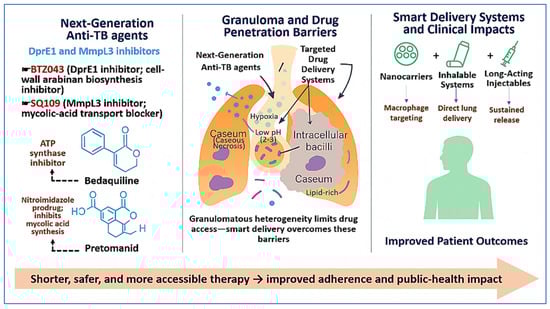
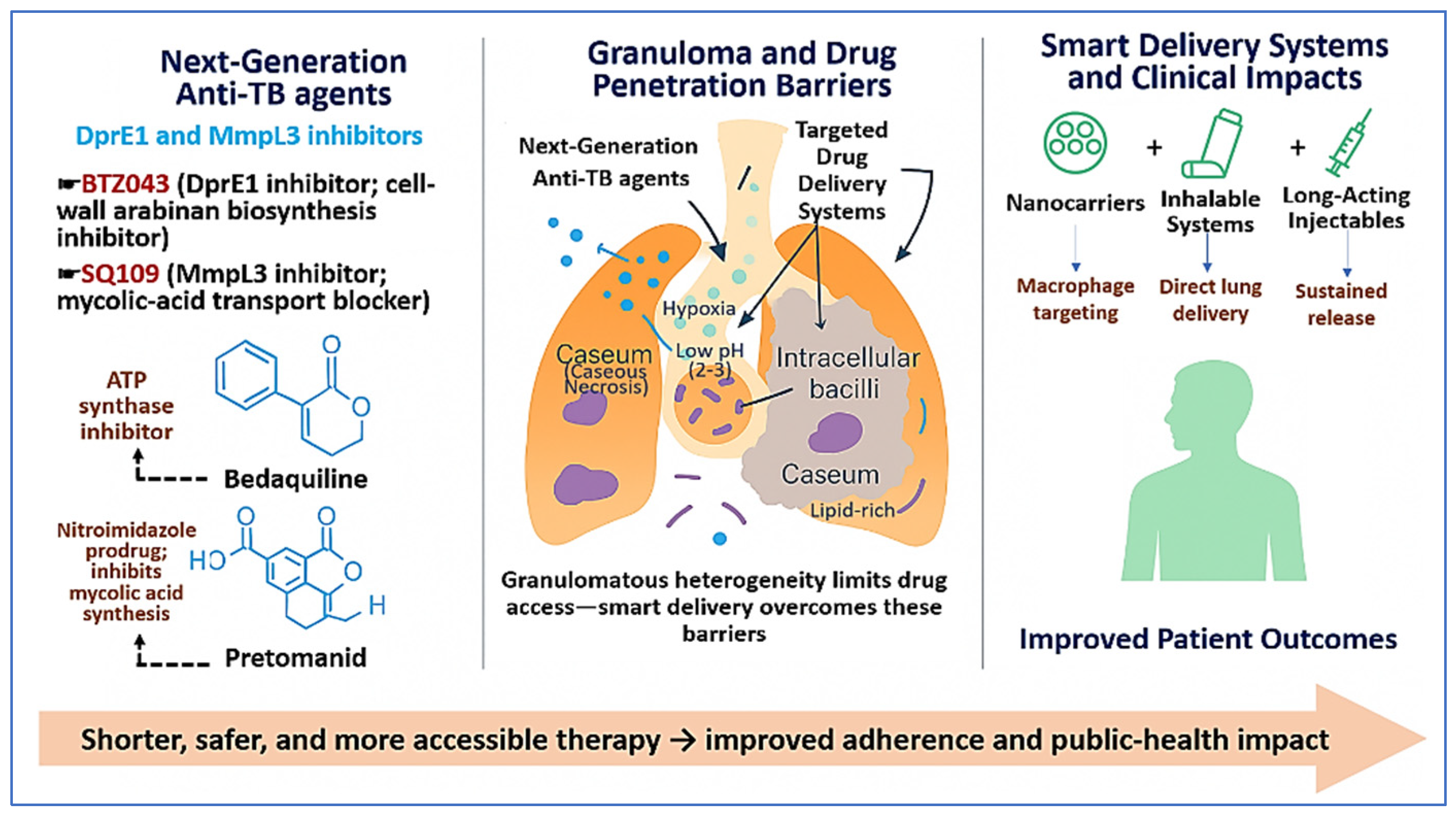
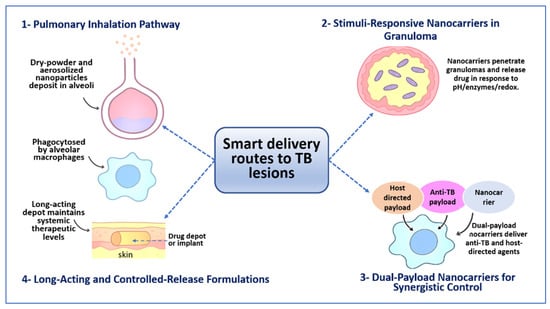
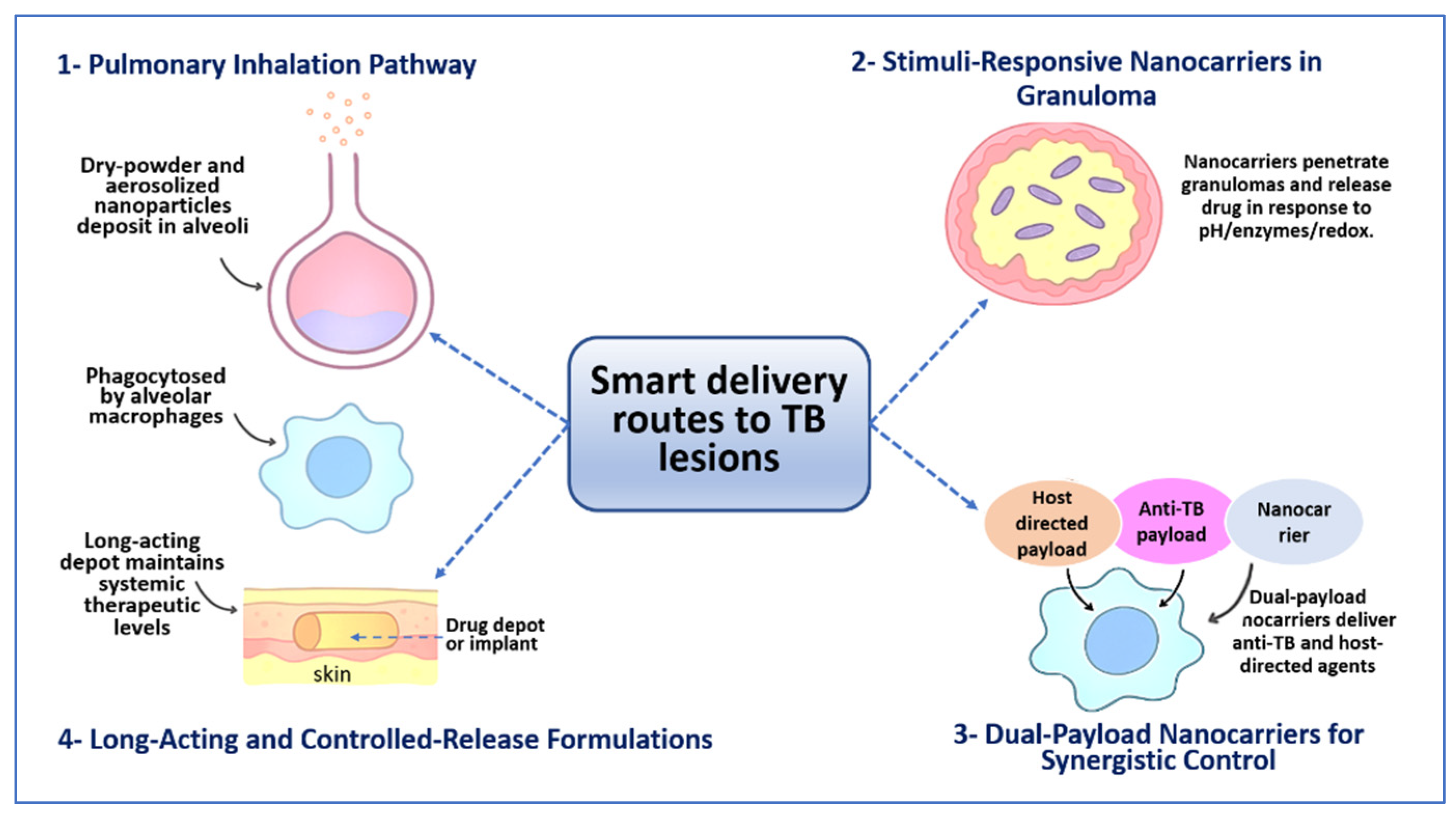
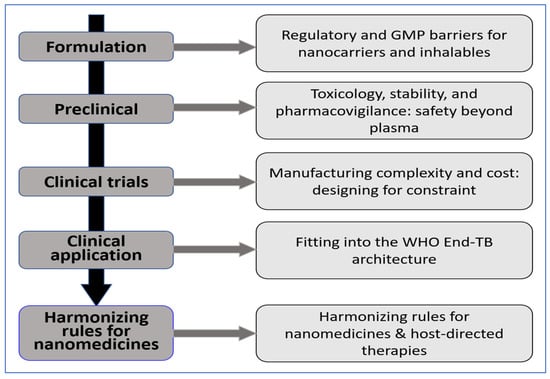
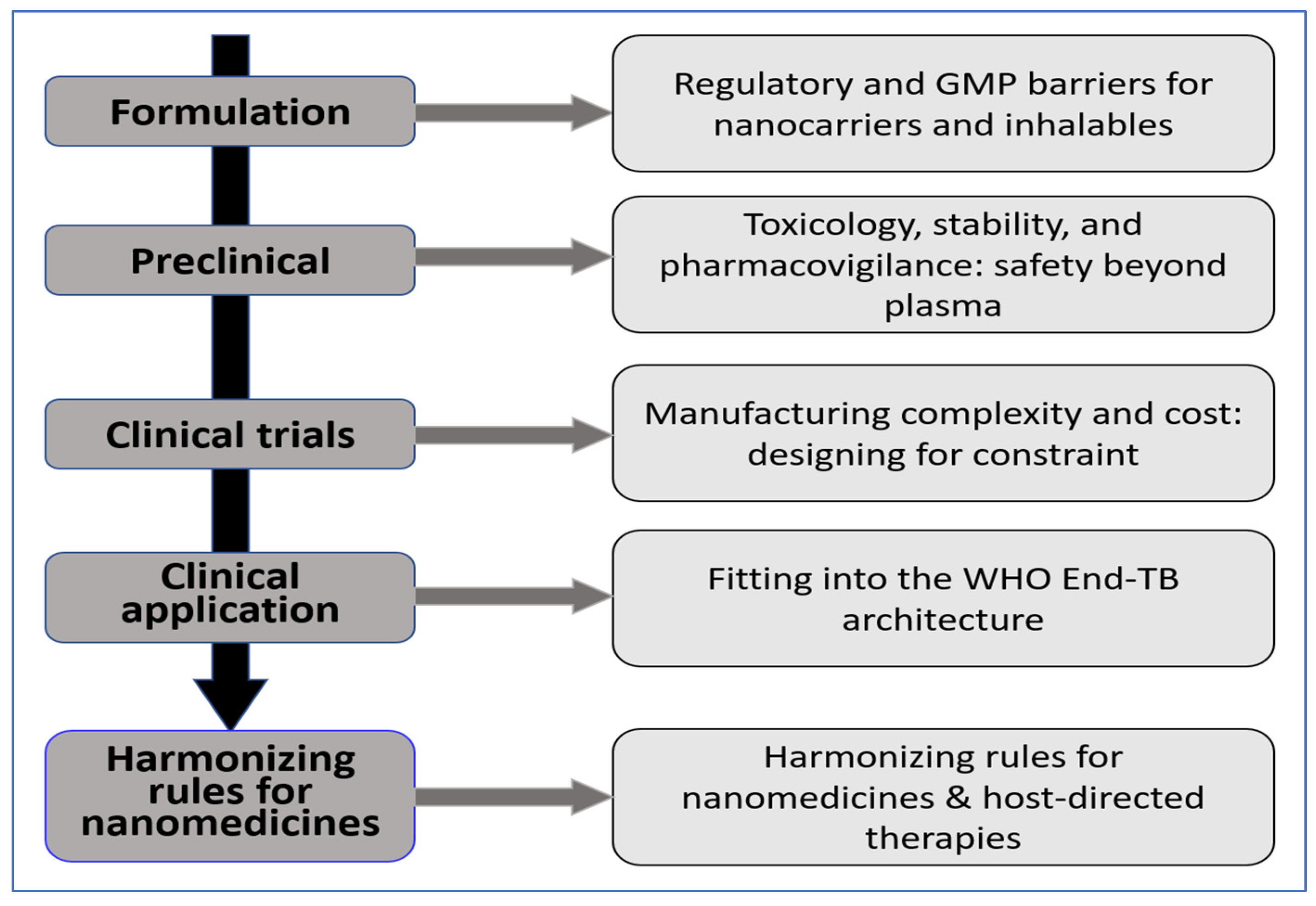
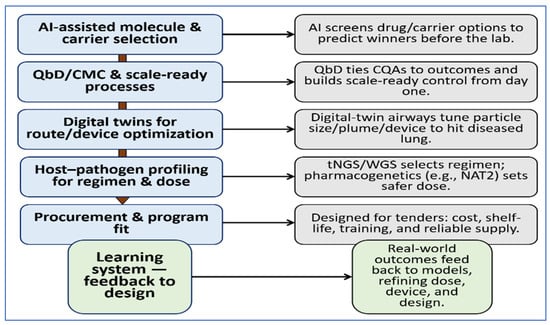
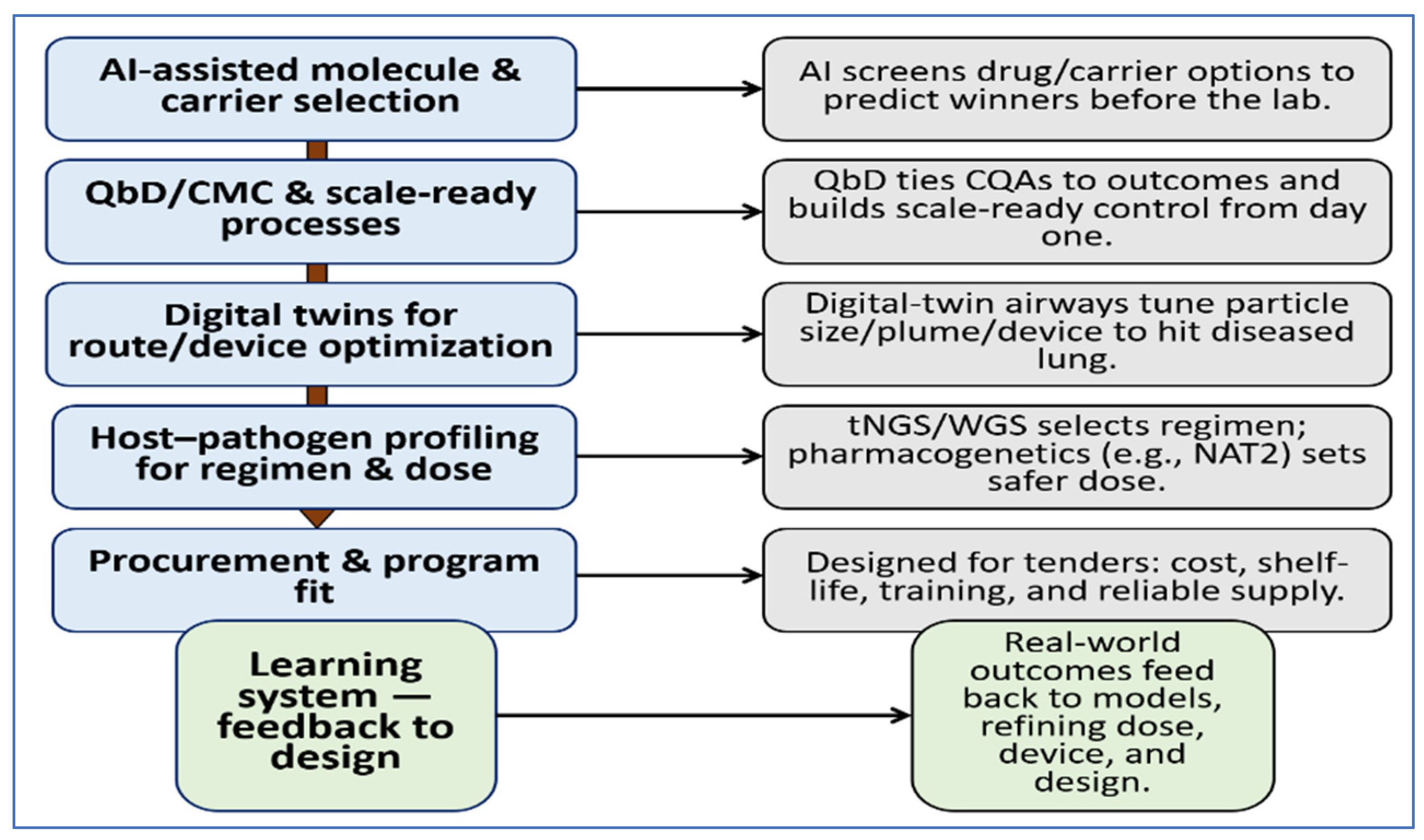

Disclaimer/Publisher’s Note: The statements, opinions and data contained in all publications are solely those of the individual author(s) and contributor(s) and not of MDPI and/or the editor(s). MDPI and/or the editor(s) disclaim responsibility for any injury to people or property resulting from any ideas, methods, instructions or products referred to in the content. |
© 2026 by the authors. Licensee MDPI, Basel, Switzerland. This article is an open access article distributed under the terms and conditions of the Creative Commons Attribution (CC BY) license.