Silymarin and Silybin: Rejuvenating Traditional Remedies with Modern Delivery Strategies

 ,
,  , ,
, ,
Abstract
1. Introduction
2. Advancements in Research on Rejuvenating Traditional Remedies
3. Motivations for Developing New Formulation Strategies
3.1. Biopharmaceutical Barriers Restricting the Pharmacological Activity of Silymarin
3.2. Commercially Available Products and Their Limitations

| Formulation Type | Representative Product(s) | Key Features | Limitations | Reference(s) |
|---|---|---|---|---|
| Conventional herbal extract | Yi Ganling (China); Legalon® (Germany); Eurosil 85® (Germany); | Silymarin extract; widely used | Poor solubility; variable composition; limited permeability; low bioavailability | [62,69,74,75,76] |
| Purified silybin formulations | Shui Linjia (China); Natrol Milk Thistle (USA) | Higher silybin content; simple manufacturing | Low solubility; limited absorption | [79] |
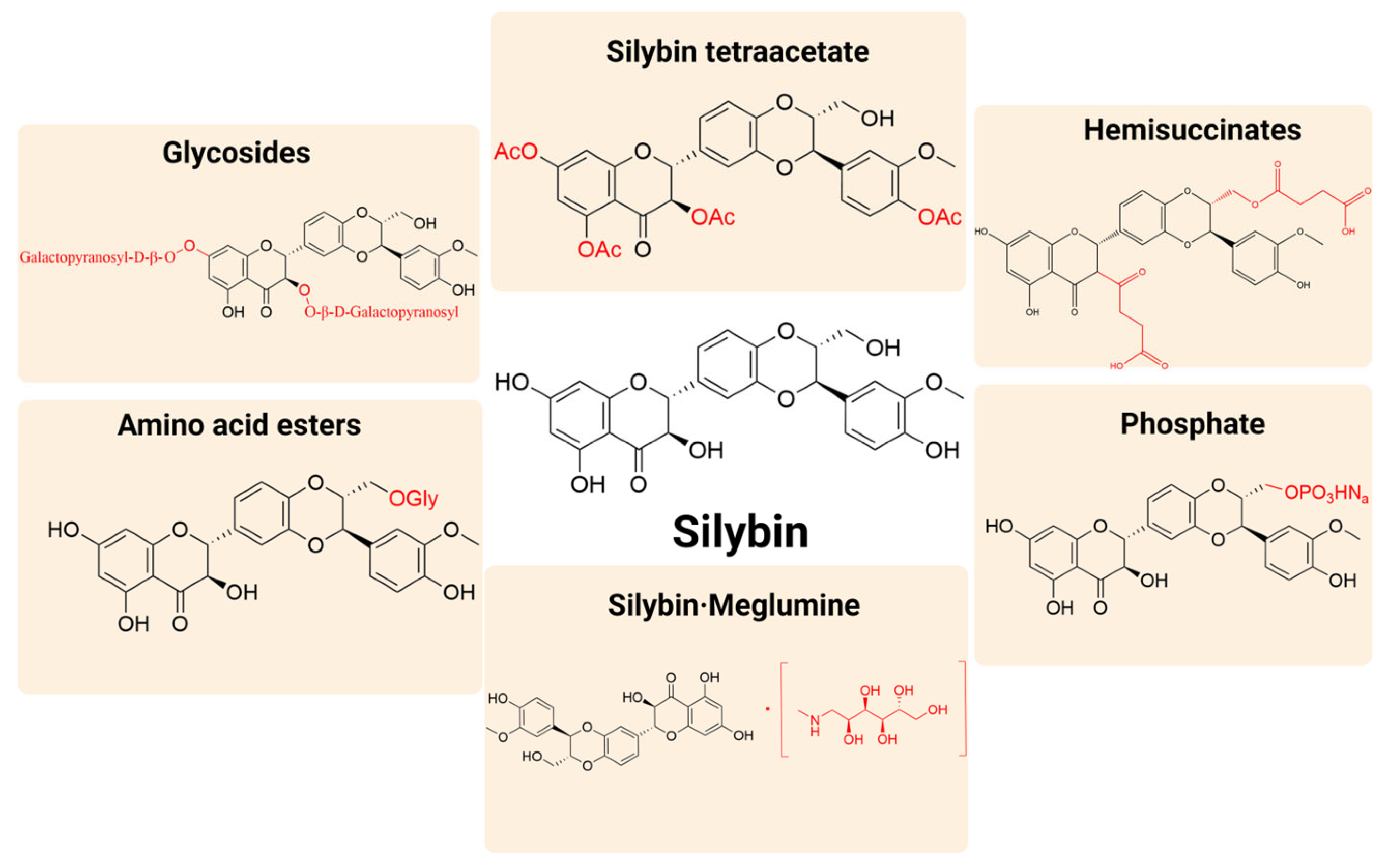
| Salt forms (enhanced solubility) | Silybin meglumine tablets (China); Silybin succinate injection (Legalon® SIL, Germany) | Improved aqueous solubility; IV, bypasses oral absorption barriers | Oral: pH-sensitive; IV: stability, handling issues | [30,77,78] |
| Phytosome (phospholipid complex) | Siliphos®/Silipide®(Italy) | Lipid complex enhances permeability | Costly; variable complexation Significant; 4–10× increase vs. standard extract | [30,69,76,81] |
| Multicomponent nutraceutical blends | Swisse liver detox (Australia); Natrol blends (USA) | Combined botanicals | Contribution of silymarin unclear due to botanical mixtures Uncertain | — |
4. Advanced Oral Delivery Systems
4.1. Solid Dispersions
4.2. Cyclodextrin-Based Inclusion Systems
4.3. Particle Size Reduction
4.4. Lipid-Based Carriers
4.4.1. Phytosomes
4.4.2. Liposomes
4.4.3. Nanoemulsions and SMEDDSs
4.4.4. Lipid Nanoparticles
4.5. Polymeric Micelles
5. Molecular Modification and Bioavailability Enhancers
5.1. Water-Soluble Salts and Derivative Methods
5.2. Bioavailability Enhancers
6. Non-Oral Delivery Strategies for Silymarin
6.1. Targeted Parenteral Delivery
6.2. Topical, Dermal and Transdermal Delivery
6.3. Controlled-Release of Silymarin
7. Translational and Regulatory Barriers to Clinical Commercialization of Advanced Silymarin Delivery Systems
7.1. Why Nanoparticle-Based Silymarin Systems Have Not Reached Clinical Trials
- (i)
- Manufacturing and scale-up limitations. Most nanoparticle systems reported in academia rely on solvent evaporation, nanoprecipitation, sonication, or microemulsion methods that show inability to maintain particle size, PDI, and encapsulation efficiency at scale; batch-to-batch variability incompatible with GMP; difficulty achieving stability metadata required for investigational new drug (IND) submission (e.g., ≥24-month room-temperature stability) [156].
- (ii)
- Regulatory CMC complexity for natural-product nanomedicines. Nanomedicines require stringent physicochemical characterization (size distribution, surface chemistry, release profile, impurity analysis). For plant-derived mixtures like silymarin, additional challenges include multi-constituent variability; need to characterize active pharmaceutical ingredient (API) distribution inside nanostructures; unclear classification (drug vs. herbal drug vs. complex mixture vs. nanomedicine); These burdens often exceed the capacity of academic-industry teams in early-phase development [156,157].
- (iii)
- Lack of clear clinical differentiation. To justify the cost and regulatory burden of nanomedicines, new formulations must outperform established oral complexes (e.g., Legalon®). Most nanoformulations report improved PK in rodents but lack disease-relevant efficacy models; comparative superiority to existing prescription standards; well-defined clinical targets and endpoints. As a result, they cannot support IND applications for first-in-human trials [158].
7.2. Barriers Extending to Parenteral, Transdermal, and Controlled-Release Systems
- (i)
- Parenteral formulations. Although intravenous injection theoretically circumvents solubility and first-pass metabolism, real-world experience with silybin meglumine and silybin succinate injectables reveals substantial constraints. These include solubility achievable only under extreme alkaline pH; precipitation risk after dilution or during infusion; sensitivity to light, temperature, and handling; limited long-term physicochemical stability. These issues underscore that parenteral delivery does not automatically solve silybin’s biopharmaceutical limitations and may even amplify development risks associated with nano-injectables [81].
- (ii)
- Transdermal patches and microneedle systems. Preclinical benefits (enhanced permeation, bypassing first-pass metabolism) have not translated due to large interspecies differences in stratum corneum permeability, complicating pharmacokinetics extrapolation; stricter biocompatibility requirements for skin-contact materials; lack of a clinically validated transdermal indication, as hepatoprotective therapy is inherently systemic and traditionally oral.
- (iii)
- Controlled-release implants or oral depot systems. These platforms require clear therapeutic rationales (e.g., prolonged stable plasma levels), yet most silymarin indications do not demand depot delivery. The complexity of CMC controls for release kinetics and device-drug integration further discourages progression into clinical development.
7.3. Principles for Future Successful Translation
- (i)
- Clearly define the clinical rationale for advanced delivery. Target indications where advanced delivery offers a clear advantage, such as acute hepatotoxicity (requiring rapid exposure), chronic liver disease (needing sustained levels), or oncology (leveraging enhanced permeability and retention).
- (ii)
- Consider manufacturability and stability at an early stage. Formulation design should prioritize processes that can be feasibly scaled, minimize reliance on organic solvents, and maintain key quality attributes such as particle size and chemical stability. Early establishment of stability programs aligned with internationally recognized quality guidelines can reduce downstream development delays.
- (iii)
- Engage proactively with regulatory frameworks. Engage early with regulatory agencies (EMA/FDA) to clarify pathways for nanomedicines and/or botanical drug products.
- (iv)
- Demonstrate clinically relevant advantages over existing products. Demonstrate not just improved pharmacokinetics, but clinically meaningful efficacy advantages over the current standard of care (e.g., silybin-phospholipid complexes).
8. Conclusions and Perspectives
Funding
Data Availability Statement
Conflicts of Interest
References
- Abenavoli, L.; Capasso, R.; Milic, N.; Capasso, F. Milk Thistle in Liver Diseases: Past, Present, Future. Phytother. Res. 2010, 24, 1423–1432. [Google Scholar] [CrossRef]
- Abenavoli, L.; Izzo, A.A.; Milić, N.; Cicala, C.; Santini, A.; Capasso, R. Milk Thistle (Silybum marianum): A Concise Overview on Its Chemistry, Pharmacological, and Nutraceutical Uses in Liver Diseases. Phytother. Res. 2018, 32, 2202–2213. [Google Scholar] [CrossRef]
- Flora, K.; Hahn, M.; Rosen, H.; Benner, K. Milk Thistle (Silybum marianum) for the Therapy of Liver Disease. Am. J. Gastroenterol. 1998, 93, 139–143. [Google Scholar] [CrossRef] [PubMed]
- Zarif-Yeganeh, M.; Rastegarpanah, M. Clinical Role of Silymarin in Oxidative Stress and Infertility: A Short Review for Pharmacy Practitioners. J. Res. Pharm. Pract. 2019, 8, 181–188. [Google Scholar] [CrossRef] [PubMed]
- Ross, S.M. Milk Thistle (Silybum Marianum): An Ancient Botanical Medicine for Modern Times. Holist. Nurs. Pract. 2008, 22, 299–300. [Google Scholar] [CrossRef] [PubMed]
- Chambers, C.S.; Holečková, V.; Petrásková, L.; Biedermann, D.; Valentová, K.; Buchta, M.; Křen, V. The Silymarin Composition… and Why Does It Matter??? Food Res. Int. 2017, 100, 339–353. [Google Scholar] [CrossRef]
- Delmas, D. Silymarin and Derivatives: From Biosynthesis to Health Benefits. Molecules 2020, 25, 2415. [Google Scholar] [CrossRef]
- Federico, A.; Dallio, M.; Loguercio, C. Silymarin/Silybin and Chronic Liver Disease: A Marriage of Many Years. Molecules 2017, 22, 191. [Google Scholar] [CrossRef]
- Gazak, R.; Walterova, D.; Kren, V. Silybin and Silymarin-New and Emerging Applications in Medicine. Curr. Med. Chem. 2007, 14, 315–338. [Google Scholar] [CrossRef]
- Post-White, J.; Ladas, E.J.; Kelly, K.M. Advances in the Use of Milk Thistle (Silybum marianum). Integr. Cancer Ther. 2007, 6, 104–109. [Google Scholar] [CrossRef]
- Soleimani, V.; Delghandi, P.S.; Moallem, S.A.; Karimi, G. Safety and Toxicity of Silymarin, the Major Constituent of Milk Thistle Extract: An Updated Review. Phytother. Res. 2019, 33, 1627–1638. [Google Scholar] [CrossRef]
- Surai, P. Silymarin as a Natural Antioxidant: An Overview of the Current Evidence and Perspectives. Antioxidants 2015, 4, 204–247. [Google Scholar] [CrossRef] [PubMed]
- Tajmohammadi, A.; Razavi, B.M.; Hosseinzadeh, H. Silybum marianum (Milk Thistle) and Its Main Constituent, Silymarin, as a Potential Therapeutic Plant in Metabolic Syndrome: A Review. Phytother. Res. 2018, 32, 1933–1949. [Google Scholar] [CrossRef] [PubMed]
- Wellington, K.; Jarvis, B. Silymarin: A Review of Its Clinical Properties in the Management of Hepatic Disorders. BioDrugs 2001, 15, 465–489. [Google Scholar] [CrossRef] [PubMed]
- Riasová, P.; Jenco, J.; Moreno-González, D.; Vander Heyden, Y.; Mangelings, D.; Polásek, M.; Jác, P. Development of a Capillary Electrophoresis Method for the Separation of Flavonolignans in Silymarin Complex. Electrophoresis 2022, 43, 930–938. [Google Scholar] [CrossRef]
- Wen, Z.; Dumas, T.E.; Schrieber, S.J.; Hawke, R.L.; Fried, M.W.; Smith, P.C. Pharmacokinetics and Metabolic Profile of Free, Conjugated, and Total Silymarin Flavonolignans in Human Plasma after Oral Administration of Milk Thistle Extract. Drug Metab. Dispos. 2008, 36, 65–72. [Google Scholar] [CrossRef]
- Hosseinabadi, T.; Lorigooini, Z.; Tabarzad, M.; Salehi, B.; Rodrigues, C.F.; Martins, N.; Sharifi-Rad, J. Silymarin Antiproliferative and Apoptotic Effects: Insights into Its Clinical Impact in Various Types of Cancer. Phytother. Res. 2019, 33, 2849–2861. [Google Scholar] [CrossRef]
- Bahari, H.; Jazinaki, M.S.; Rashidmayvan, M.; Taheri, S.; Amini, M.R.; Malekahmadi, M. The Effects of Silymarin Consumption on Inflammation and Oxidative Stress in Adults: A Systematic Review and Meta-Analysis. Inflammopharmacology 2024, 32, 949–963. [Google Scholar] [CrossRef]
- Gillessen, A.; Schmidt, H.H.-J. Silymarin as Supportive Treatment in Liver Diseases: A Narrative Review. Adv. Ther. 2020, 37, 1279–1301. [Google Scholar] [CrossRef]
- Li, S.; Duan, F.; Li, S.; Lu, B. Administration of Silymarin in NAFLD/NASH: A Systematic Review and Meta-Analysis. Ann. Hepatol. 2024, 29, 101174. [Google Scholar] [CrossRef]
- Kolota, A.; Glabska, D. Dietary Intake of Milk Thistle Seeds as a Source of Silymarin and Its Influence on the Lipid Parameters in Nonalcoholic Fatty Liver Disease Patients. Appl. Sci. 2021, 11, 5836. [Google Scholar] [CrossRef]
- dos Santos, A.C.; França, T.C.S.; Venzon, L.; Polli, V.; Polleti, G.; Trembulak, E.; Pilati, S.F.M.; da Silva, L.M. Are Silymarin and N-Acetylcysteine Able to Prevent Liver Damage Mediated by Multiple Factors? Findings against Ethanol plus LPS-Induced Liver Injury in Mice. J. Biochem. Mol. Toxic. 2024, 38, e23560. [Google Scholar] [CrossRef] [PubMed]
- Elsawy, H.; Alzahrani, A.M.; Alfwuaires, M.; Sedky, A.; El-Trass, E.E.; Mahmoud, O.; Abdel-Moneim, A.M.; Khalil, M. Analysis of Silymarin-Modulating Effects against Acrylamide-Induced Cerebellar Damage in Male Rats: Biochemical and Pathological Markers. J. Chem. Neuroanat. 2021, 115, 101964. [Google Scholar] [CrossRef] [PubMed]
- Tighe, S.P.; Akhtar, D.; Iqbal, U.; Ahmed, A. Chronic Liver Disease and Silymarin: A Biochemical and Clinical Review. J. Clin. Transl. Hepatol. 2020, 8, 454–458. [Google Scholar] [CrossRef]
- Kadoglou, N.P.E.; Panayiotou, C.; Vardas, M.; Balaskas, N.; Kostomitsopoulos, N.G.; Tsaroucha, A.K.; Valsami, G. A Comprehensive Review of the Cardiovascular Protective Properties of Silibinin/Silymarin: A New Kid on the Block. Pharmaceuticals 2022, 15, 538. [Google Scholar] [CrossRef]
- Vidimce, J.; Pennell, E.N.; Foo, M.; Shiels, R.G.; Shibeeb, S.; Watson, M.; Bulmer, A.C. Effect of Silymarin Treatment on Circulating Bilirubin and Cardiovascular Disease Risk Factors in Healthy Men: A Single-Blind, Randomized Crossover Trial. Clin. Pharmacol. Drug Dev. 2021, 10, 1156–1165. [Google Scholar] [CrossRef]
- Navabi, S.M.; Elieh-Ali-Komi, D.; Afshari, D.; Goudarzi, F.; Mohammadi-Noori, E.; Heydari, K.; Heydarpour, F.; Kiani, A. Adjunctive Silymarin Supplementation and Its Effects on Disease Severity, Oxidative Stress, and Inflammation in Patients with Alzheimer’s Disease. Nutr. Neurosci. 2024, 27, 1077–1087. [Google Scholar] [CrossRef]
- Ranjan, S.; Gautam, A. Pharmaceutical Prospects of Silymarin for the Treatment of Neurological Patients: An Updated Insight. Front. Neurosci. 2023, 17, 1159806. [Google Scholar] [CrossRef]
- Rahimi, D.; Sharifi, R.; Jaberie, H.; Naghibalhossaini, F. Antiproliferative and Antitelomerase Effects of Silymarin on Human Colorectal and Hepatocellular Carcinoma Cells. Planta Medica 2024, 90, 298–304. [Google Scholar] [CrossRef]
- Javed, S.; Kohli, K.; Ali, M. Reassessing Bioavailability of Silymarin. Altern. Med. Rev. 2011, 16, 239–249. [Google Scholar]
- Fallah, M.; Davoodvandi, A.; Nikmanzar, S.; Aghili, S.; Mirazimi, S.M.A.; Aschner, M.; Rashidian, A.; Hamblin, M.R.; Chamanara, M.; Naghsh, N.; et al. Silymarin (Milk Thistle Extract) as a Therapeutic Agent in Gastrointestinal Cancer. Biomed. Pharmacother. 2021, 142, 112024. [Google Scholar] [CrossRef]
- Tang, N.; Wu, D.; Lu, Y.; Chen, J.; Zhang, B.; Wu, W. A Comparative Study on the Stability of Silybin and That in Silymarin in Buffers and Biological Fluids. Drug Metab. Lett. 2009, 3, 115–119. [Google Scholar] [CrossRef] [PubMed]
- Calani, L.; Brighenti, F.; Bruni, R.; Del Rio, D. Absorption and Metabolism of Milk Thistle Flavanolignans in Humans. Phytomedicine 2012, 20, 40–46. [Google Scholar] [CrossRef] [PubMed]
- Di Costanzo, A.; Angelico, R. Formulation Strategies for Enhancing the Bioavailability of Silymarin: The State of the Art. Molecules 2019, 24, 2155. [Google Scholar] [CrossRef] [PubMed]
- Song, I.-S.; Nam, S.-J.; Jeon, J.-H.; Park, S.-J.; Choi, M.-K. Enhanced Bioavailability and Efficacy of Silymarin Solid Dispersion in Rats with Acetaminophen-Induced Hepatotoxicity. Pharmaceutics 2021, 13, 628. [Google Scholar] [CrossRef]
- Shakeel, F.; Anwer, M.K.; Shazly, G.A.; Jamil, S. Measurement and Correlation of Solubility of Bioactive Compound Silymarin in Five Different Green Solvents at 298.15K to 333.15K. J. Mol. Liq. 2014, 195, 255–258. [Google Scholar] [CrossRef]
- Shakeel, F.; Anwer, M.K. Dissolution Thermodynamics and Solubility of Silymarin in PEG 400-Water Mixtures at Different Temperatures. Drug Dev. Ind. Pharm. 2015, 41, 1819–1823. [Google Scholar] [CrossRef]
- Williamson, E. Synergy and Other Interactions in Phytomedicines. Phytomedicine 2001, 8, 401–409. [Google Scholar] [CrossRef]
- Saller, R.; Melzer, J.; Reichling, J.; Brignoli, R.; Meier, R. An Updated Systematic Review of the Pharmacology of Silymarin. Forsch Komplementmed 2007, 14, 70–80. [Google Scholar] [CrossRef]
- Fanoudi, S.; Alavi, M.S.; Karimi, G.; Hosseinzadeh, H. Milk Thistle (Silybum marianum) as an Antidote or a Protective Agent against Natural or Chemical Toxicities: A Review. Drug Chem. Toxicol. 2020, 43, 240–254. [Google Scholar] [CrossRef]
- Jahanafrooz, Z.; Motamed, N.; Rinner, B.; Mokhtarzadeh, A.; Baradaran, B. Silibinin to Improve Cancer Therapeutic, as an Apoptotic Inducer, Autophagy Modulator, Cell Cycle Inhibitor, and microRNAs Regulator. Life Sci. 2018, 213, 236–247. [Google Scholar] [CrossRef]
- Liakopoulou, C.; Kazazis, C.; Vallianou, N.G. Silimarin and Cancer. Anti-Cancer Agents Med. Chem.-Anti-Cancer Agents 2018, 18, 1970–1974. [Google Scholar] [CrossRef] [PubMed]
- Liu, C.-H.; Jassey, A.; Hsu, H.-Y.; Lin, L.-T. Antiviral Activities of Silymarin and Derivatives. Molecules 2019, 24, 1552. [Google Scholar] [CrossRef] [PubMed]
- Taleb, A.; Ahmad, K.A.; Ihsan, A.U.; Qu, J.; Lin, N.; Hezam, K.; Koju, N.; Hui, L.; Qilong, D. Antioxidant Effects and Mechanism of Silymarin in Oxidative Stress Induced Cardiovascular Diseases. Biomed. Pharmacother. 2018, 102, 689–698. [Google Scholar] [CrossRef] [PubMed]
- Yan, T.; Yan, N.; Wang, P.; Xia, Y.; Hao, H.; Wang, G.; Gonzalez, F.J. Herbal Drug Discovery for the Treatment of Nonalcoholic Fatty Liver Disease. Acta Pharm. Sin. B 2020, 10, 3–18. [Google Scholar] [CrossRef]
- Wang, Y.; Yuan, A.J.; Wu, Y.J.; Wu, L.M.; Zhang, L. Silymarin in Cancer Therapy: Mechanisms of Action, Protective Roles in Chemotherapy-Induced Toxicity, and Nanoformulations. J. Funct. Foods 2023, 100, 105384. [Google Scholar] [CrossRef]
- Moezian, G.S.A.; Javadinia, S.A.; Sales, S.S.; Fanipakdel, A.; Elyasi, S.; Karimi, G. Oral Silymarin Formulation Efficacy in Management of AC-T Protocol Induced Hepatotoxicity in Breast Cancer Patients: A Randomized, Triple Blind, Placebo-Controlled Clinical Trial. J. Oncol. Pharm. Pract. 2022, 28, 827–835. [Google Scholar] [CrossRef]
- Mohammadi, S.; Asbaghi, O.; Afrisham, R.; Farrokhi, V.; Jadidi, Y.; Mofidi, F.; Ashtary-Larky, D. Impacts of Supplementation with Silymarin on Cardiovascular Risk Factors: A Systematic Review and Dose–Response Meta-Analysis. Antioxidants 2024, 13, 390. [Google Scholar] [CrossRef]
- Ghalandari, K.; Shabani, M.; Khajehlandi, A.; Mohammadi, A. Effect of Aerobic Training with Silymarin Consumption on Glycemic Indices and Liver Enzymes in Men with Type 2 Diabetes. Arch. Physiol. Biochem. 2023, 129, 76–81. [Google Scholar] [CrossRef]
- Formisano, E.; Pasta, A.; Cremonini, A.L.; Favari, E.; Ronca, A.; Carbone, F.; Semino, T.; Di Pierro, F.; Sukkar, S.G.; Pisciotta, L. Efficacy of Nutraceutical Combination of Monacolin K, Berberine, and Silymarin on Lipid Profile and PCSK9 Plasma Level in a Cohort of Hypercholesterolemic Patients. J. Med. Food 2020, 23, 658–666. [Google Scholar] [CrossRef]
- Xiao, F.; Gao, F.; Zhou, S.; Wang, L. The Therapeutic Effects of Silymarin for Patients with Glucose/Lipid Metabolic Dysfunction: A Meta-Analysis. Medicine 2020, 99, e22249. [Google Scholar] [CrossRef] [PubMed]
- Ghiasian, M.; Nafisi, H.; Ranjbar, A.; Mohammadi, Y.; Ataei, S. Antioxidative Effects of Silymarin on the Reduction of Liver Complications of Fingolimod in Patients with Relapsing-Remitting Multiple Sclerosis: A Clinical Trial Study. J. Biochem. Mol. Toxic. 2021, 35, e22800. [Google Scholar] [CrossRef] [PubMed]
- Rodríguez-Flores, E.M.; Mata-Espinosa, D.; Barrios-Payan, J.; Marquina-Castillo, B.; Castañón-Arreola, M.; Hernández-Pando, R. A Significant Therapeutic Effect of Silymarin Administered Alone, or in Combination with Chemotherapy, in Experimental Pulmonary Tuberculosis Caused by Drug-Sensitive or Drug-Resistant Strains: In vitro and in vivo studies. PLoS ONE 2019, 14, e0217457. [Google Scholar] [CrossRef] [PubMed]
- Ghodousi, M.; Karbasforooshan, H.; Arabi, L.; Elyasi, S. Silymarin as a Preventive or Therapeutic Measure for Chemotherapy and Radiotherapy-Induced Adverse Reactions: A Comprehensive Review of Preclinical and Clinical Data. Eur. J. Clin. Pharmacol. 2023, 79, 15–38. [Google Scholar] [CrossRef]
- Chu, C.; Li, D.; Zhang, S.; Ikejima, T.; Jia, Y.; Wang, D.; Xu, F. Role of Silibinin in the Management of Diabetes Mellitus and Its Complications. Arch. Pharm. Res. 2018, 41, 785–796. [Google Scholar] [CrossRef]
- Guo, H.; Cao, H.; Cui, X.; Zheng, W.; Wang, S.; Yu, J.; Chen, Z. Silymarin’s Inhibition and Treatment Effects for Alzheimer’s Disease. Molecules 2019, 24, 1748. [Google Scholar] [CrossRef]
- Mohammadi, H.; Hadi, A.; Arab, A.; Moradi, S.; Rouhani, M.H. Effects of Silymarin Supplementation on Blood Lipids: A Systematic Review and Meta-analysis of Clinical Trials. Phytother. Res. 2019, 33, 871–880. [Google Scholar] [CrossRef]
- Ullah, H.; Khan, H. Anti-Parkinson Potential of Silymarin: Mechanistic Insight and Therapeutic Standing. Front. Pharmacol. 2018, 9, 422. [Google Scholar] [CrossRef]
- Navarro, V.J.; Belle, S.H.; D’Amato, M.; Adfhal, N.; Brunt, E.M.; Fried, M.W.; Reddy, K.R.; Wahed, A.S.; Harrison, S.; on behalf of the Silymarin in NASH and C Hepatitis (SyNCH) Study Group. Silymarin in Non-Cirrhotics with Non-Alcoholic Steatohepatitis: A Randomized, Double-Blind, Placebo Controlled Trial. PLoS ONE 2019, 14, e0221683. [Google Scholar] [CrossRef]
- Rendina, M.; D’Amato, M.; Castellaneta, A.; Castellaneta, N.M.; Brambilla, N.; Giacovelli, G.; Rovati, L.; Rizzi, S.F.; Zappimbulso, M.; Bringiotti, R.S.; et al. Antiviral Activity and Safety Profile of Silibinin in HCV Patients with Advanced Fibrosis after Liver Transplantation: A Randomized Clinical Trial. Transpl. Int. 2014, 27, 696–704. [Google Scholar] [CrossRef]
- Li, W.-Y.; Yu, G.; Hogan, R.M.; Mohandas, R.; Frye, R.F.; Gumpricht, E.; Markowitz, J.S. Relative Bioavailability of Silybin A and Silybin B From 2 Multiconstituent Dietary Supplement Formulations Containing Milk Thistle Extract: A Single-Dose Study. Clin. Ther. 2018, 40, 103–113.e1. [Google Scholar] [CrossRef] [PubMed]
- Méndez-Sánchez, N.; Dibildox-Martinez, M.; Sosa-Noguera, J.; Sánchez-Medal, R.; Flores-Murrieta, F.J. Superior Silybin Bioavailability of Silybin-Phosphatidylcholine Complex in Oily-Medium Soft-Gel Capsules versus Conventional Silymarin Tablets in Healthy Volunteers. BMC Pharmacol. Toxicol. 2019, 20, 5. [Google Scholar] [CrossRef]
- Nofal, A.; Ibrahim, A.M.; Nofal, E.; Gamal, N.; Osman, S. Topical Silymarin versus Hydroquinone in the Treatment of Melasma: A Comparative Study. J. Cosmet. Dermatol. 2019, 18, 263–270. [Google Scholar] [CrossRef] [PubMed]
- Bonifácio, B.; Silva, P.; Ramos, M.; Negri, K.; Maria Bauab, T.; Chorilli, M. Nanotechnology-Based Drug Delivery Systems and Herbal Medicines: A Review. Int. J. Nanomed. 2014, 9, 1–15. [Google Scholar] [CrossRef]
- Dash, R.P.; Kala, M.; Nivsarkar, M.; Babu, R.J. Implication of Formulation Strategies on the Bioavailability of Selected Plant-Derived Hepatoprotectants. Crit. Rev. Ther. Drug Carr. Syst. 2017, 34, 489–526. [Google Scholar] [CrossRef]
- Takke, A.; Shende, P. Nanotherapeutic Silibinin: An Insight of Phytomedicine in Healthcare Reformation. Nanomed. Nanotechnol. Biol. Med. 2019, 21, 102057. [Google Scholar] [CrossRef]
- Wang, Y.; Zhang, L.; Wang, Q.; Zhang, D. Recent Advances in the Nanotechnology-Based Drug Delivery of Silybin. J. Biomed. Nanotechnol. 2014, 10, 543–558. [Google Scholar] [CrossRef]
- Mohylyuk, V.; Pauly, T.; Dobrovolnyi, O.; Scott, N.; Jones, D.S.; Andrews, G.P. Effect of Carrier Type and Tween® 80 Concentration on the Release of Silymarin from Amorphous Solid Dispersions. J. Drug Deliv. Sci. Technol. 2021, 63, 102416. [Google Scholar] [CrossRef]
- Pérez-Sánchez, A.; Cuyàs, E.; Ruiz-Torres, V.; Agulló-Chazarra, L.; Verdura, S.; González-Álvarez, I.; Bermejo, M.; Joven, J.; Micol, V.; Bosch-Barrera, J.; et al. Intestinal Permeability Study of Clinically Relevant Formulations of Silibinin in Caco-2 Cell Monolayers. Int. J. Mol. Sci. 2019, 20, 1606. [Google Scholar] [CrossRef]
- Sahibzada, M.U.K.; Sadiq, A.; Khan, S.; Faidah, H.S.; Ullah, N.; Khurram, M.; Amin, M.U.; Haseeb, A. Fabrication, Characterization and in Vitro Evaluation of Silibinin Nanoparticles: An Attempt to Enhance Its Oral Bioavailability. Drug Des. Dev. Ther. 2017, 11, 1453–1464. [Google Scholar] [CrossRef]
- Bai, T.-C.; Zhu, J.-J.; Hu, J.; Zhang, H.-L.; Huang, C.-G. Solubility of Silybin in Aqueous Hydrochloric Acid Solution. Fluid Phase Equilibria 2007, 254, 204–210. [Google Scholar] [CrossRef]
- Patel, A.; Heussen, P.; Hazekamp, J.; Velikov, K.P. Stabilisation and Controlled Release of Silibinin from pH Responsive Shellac Colloidal Particles. Soft Matter 2011, 7, 8549. [Google Scholar] [CrossRef]
- Silybum Marianum (Milk Thistle). Altern. Med. Rev. 1999, 4, 272–274.
- Tung, N.T.; Tran, C.S.; Nguyen, H.A.; Nguyen, T.D.; Chi, S.C.; Pham, D.V.; Bui, Q.D.; Ho, X.H. Formulation and Biopharmaceutical Evaluation of Supersaturatable Self-Nanoemulsifying Drug Delivery Systems Containing Silymarin. Int. J. Pharm. 2019, 555, 63–76. [Google Scholar] [CrossRef]
- Shangguan, M.; Lu, Y.; Qi, J.; Han, J.; Tian, Z.; Xie, Y.; Hu, F.; Yuan, H.; Wu, W. Binary Lipids-Based Nanostructured Lipid Carriers for Improved Oral Bioavailability of Silymarin. J. Biomater. Appl. 2014, 28, 887–896. [Google Scholar] [CrossRef] [PubMed]
- Chen, Z.Z.; Gao, W.H.; Feng, X.Q.; Zhou, G.Z.; Zhang, M.X.; Zeng, L.J.; Hu, X.M.; Liu, Z.H.; Song, H.T. A Comparative Study on the Preparation and Evaluation of Solubilizing Systems for Silymarin. Drug Deliv. Transl. Res. 2024, 14, 1616–1634. [Google Scholar] [CrossRef]
- Cao, X.; Deng, W.W.; Fu, M.; Wang, L.; Tong, S.S.; Wei, Y.W.; Xu, Y.; Su, W.Y.; Xu, X.M.; Yu, J.N. In Vitro Release and in Vitro–in Vivo Correlation for Silybin Meglumine Incorporated into Hollow-Type Mesoporous Silica Nanoparticles. Int. J. Nanomed. 2012, 7, 753–762. [Google Scholar] [CrossRef]
- Cufí, S.; Bonavia, R.; Vazquez-Martin, A.; Corominas-Faja, B.; Oliveras-Ferraros, C.; Cuyàs, E.; Martin-Castillo, B.; Barrajón-Catalán, E.; Visa, J.; Segura-Carretero, A.; et al. Silibinin Meglumine, a Water-Soluble Form of Milk Thistle Silymarin, Is an Orally Active Anti-Cancer Agent That Impedes the Epithelial-to-Mesenchymal Transition (EMT) in EGFR-Mutant Non-Small-Cell Lung Carcinoma Cells. Food Chem. Toxicol. 2013, 60, 360–368. [Google Scholar] [CrossRef]
- Ma, Y.; He, H.; Xia, F.; Li, Y.; Lu, Y.; Chen, D.; Qi, J.; Lu, Y.; Zhang, W.; Wu, W. In Vivo Fate of Lipid-Silybin Conjugate Nanoparticles: Implications on Enhanced Oral Bioavailability. Nanomedicine 2017, 13, 2643–2654. [Google Scholar] [CrossRef]
- Sun, N.; Wei, X.; Wu, B.; Chen, J.; Lu, Y.; Wu, W. Enhanced Dissolution of Silymarin/Polyvinylpyrrolidone Solid Dispersion Pellets Prepared by a One-Step Fluid-Bed Coating Technique. Powder Technol. 2008, 182, 72–80. [Google Scholar] [CrossRef]
- Lu, C.; Li, X.; Liang, X.; Zhang, X.; Yin, T.; Gou, J.; He, H.; Zhang, Y.; Tang, X. Liver Targeting Albumin-Coated Silybin-Phospholipid Particles Prepared by NabTM Technology for Improving Treatment Effect of Acute Liver Damage in Intravenous Administration. AAPS PharmSciTech 2019, 20, 293. [Google Scholar] [CrossRef] [PubMed]
- Lu, E.; Li, S.; Wang, Z. Biorelevant Test for Supersaturable Formulation. Asian J. Pharm. Sci. 2017, 12, 9–20. [Google Scholar] [CrossRef] [PubMed]
- Sun, D.D.; Lee, P.I. Haste Makes Waste: The Interplay Between Dissolution and Precipitation of Supersaturating Formulations. AAPS J. 2015, 17, 1317–1326. [Google Scholar] [CrossRef] [PubMed]
- Kawakami, K. Supersaturation and Crystallization: Non-Equilibrium Dynamics of Amorphous Solid Dispersions for Oral Drug Delivery. Expert Opin. Drug Deliv. 2017, 14, 735–743. [Google Scholar] [CrossRef]
- Laitinen, R.; Löbmann, K.; Grohganz, H.; Priemel, P.; Strachan, C.J.; Rades, T. Supersaturating Drug Delivery Systems: The Potential of Co-Amorphous Drug Formulations. Int. J. Pharm. 2017, 532, 1–12. [Google Scholar] [CrossRef]
- Sun, N.; Zhang, X.; Lu, Y.; Wu, W. In Vitro Evaluation and Pharmacokinetics in Dogs of Solid Dispersion Pellets Containing Silybum marianum Extract Prepared by Fluid-Bed Coating. Planta Medica 2008, 74, 126–132. [Google Scholar] [CrossRef]
- Lim, D.Y.; Pang, M.; Lee, J.; Lee, J.; Jeon, J.-H.; Park, J.-H.; Choi, M.-K.; Song, I.-S. Enhanced Bioavailability and Hepatoprotective Effect of Silymarin by Preparing Silymarin-Loaded Solid Dispersion Formulation Using Freeze-Drying Method. Arch. Pharm. Res. 2022, 45, 743–760. [Google Scholar] [CrossRef]
- Alkathiri, F.A.; Bukhari, S.I.; Imam, S.S.; Alshehri, S.; Mahdi, W.A. Formulation of Silymarin Binary and Ternary Solid Dispersions: Characterization, Simulation Study and Cell Viability Assessment against Lung Cancer Cell Line. Heliyon 2024, 10, e23221. [Google Scholar] [CrossRef]
- Imam, S.S.; Alshehri, S.; Altamimi, M.A.; Mahdi, W.A.; Qamar, W. Formulation of Silymarin-ß Cyclodextrin-TPGS Inclusion Complex: Physicochemical Characterization, Molecular Docking, and Cell Viability Assessment against Breast Cancer Cell Lines. ACS Omega 2023, 8, 34898–34907. [Google Scholar] [CrossRef]
- Shankar, V.K.; Police, A.; Ajjarapu, S.; Murthy, S.N. Development of Silymarin Topical Formulation: In Vitro and Ex Vivo Dermal Kinetics of Silymarin. Int. J. Pharm. 2023, 630, 122431. [Google Scholar] [CrossRef]
- Arshad, S.; Raza, S.A.; Alamgeer; Bukhari, S.N.A.; Alotaibi, N.F.; Ahmad, N.; Irfan, H.M.; Mahmood, A.; Asim, M.H. Microwave-Assisted, Sulfhydryl-Modified β-Cyclodextrin-Silymarin Inclusion Complex: A Diverse Approach to Improve Oral Drug Bioavailability via Enhanced Mucoadhesion and Permeation. Carbohydr. Polym. 2025, 348, 122880. [Google Scholar] [CrossRef] [PubMed]
- Ibrahim, A.H.; Rosqvist, E.; Smått, J.H.; Ibrahim, H.M.; Ismael, H.R.; Afouna, M.I.; Samy, A.M.; Rosenholm, J.M. Formulation and Optimization of Lyophilized Nanosuspension Tablets to Improve the Physicochemical Properties and Provide Immediate Release of Silymarin. Int. J. Pharm. 2019, 563, 217–227. [Google Scholar] [CrossRef] [PubMed]
- Jabeen, N.; Sohail, M.; Shah, S.A.; Mahmood, A.; Khan, S.; Kashif, M.U.R.; Khaliq, T. Silymarin Nanocrystals-Laden Chondroitin Sulphate-Based Thermoreversible Hydrogels; A Promising Approach for Bioavailability Enhancement. Int. J. Biol. Macromol. 2022, 218, 456–472. [Google Scholar] [CrossRef] [PubMed]
- Zhao, T.; Maniglio, D.; Chen, J.; Chen, B.; Migliaresi, C. Development of pH-Sensitive Self-Nanoemulsifying Drug Delivery Systems for Acid-Labile Lipophilic Drugs. Chem. Phys. Lipids 2016, 196, 81–88. [Google Scholar] [CrossRef]
- Shriram, R.G.; Moin, A.; Alotaibi, H.F.; Khafagy, E.S.; Al Saqr, A.; Abu Lila, A.S.; Charyulu, R.N. Phytosomes as a Plausible Nano-Delivery System for Enhanced Oral Bioavailability and Improved Hepatoprotective Activity of Silymarin. Pharmaceuticals 2022, 15, 790. [Google Scholar] [CrossRef]
- Patil, J.; Pawde, D.M.; Bhattacharya, S.; Srivastava, S. Phospholipid Complex Formulation Technology for Improved Drug Delivery in Oncological Settings: A Comprehensive Review. AAPS PharmSciTech 2024, 25, 91. [Google Scholar] [CrossRef]
- Kuche, K.; Bhargavi, N.; Dora, C.P.; Jain, S. Drug-Phospholipid Complex—A Go Through Strategy for Enhanced Oral Bioavailability. AAPS PharmSciTech 2019, 20, 43. [Google Scholar] [CrossRef]
- Gohari Mahmoudabad, A.; Gheybi, F.; Mehrabi, M.; Masoudi, A.; Mobasher, Z.; Vahedi, H.; Gharravi, A.M.; Bitaraf, F.S.; Rezayat Sorkhabadi, S.M. Synthesis, Characterization and Hepatoprotective Effect of Silymarin Phytosome Nanoparticles on Ethanol-Induced Hepatotoxicity in Rats. Bioimpacts 2023, 13, 301–311. [Google Scholar] [CrossRef]
- Guimarães, D.; Cavaco-Paulo, A.; Nogueira, E. Design of Liposomes as Drug Delivery System for Therapeutic Applications. Int. J. Pharm. 2021, 601, 120571. [Google Scholar] [CrossRef]
- Dymek, M.; Sikora, E. Liposomes as Biocompatible and Smart Delivery Systems–The Current State. Adv. Colloid Interface Sci. 2022, 309, 102757. [Google Scholar] [CrossRef]
- Gheybi, F.; Rajabian, F.; Tayarani-Najaran, Z.; Adibi, A.R.; Alavizadeh, S.H.; Kesharwani, P.; Sahebkar, A. Liposomal Silymarin Anti-Oxidative and Anti-Apoptotic Features in Lung Cells: An Implication in Cadmium Toxicity. J. Trace Elem. Med. Biol. 2023, 80, 127291. [Google Scholar] [CrossRef] [PubMed]
- Kumar, N.; Rai, A.; Reddy, N.D.; Shenoy, R.R.; Mudgal, J.; Bansal, P.; Mudgal, P.P.; Arumugam, K.; Udupa, N.; Sharma, N.; et al. Improved in vitro and in vivo Hepatoprotective Effects of Liposomal Silymarin in Alcohol-Induced Hepatotoxicity in Wistar Rats. Pharmacol. Rep. 2019, 71, 703–712. [Google Scholar] [CrossRef] [PubMed]
- Talegaonkar, S.; Bhattacharyya, A. Potential of Lipid Nanoparticles (SLNs and NLCs) in Enhancing Oral Bioavailability of Drugs with Poor Intestinal Permeability. AAPS PharmSciTech 2019, 20, 121. [Google Scholar] [CrossRef] [PubMed]
- Safarpour, S.; Safarpour, S.; Moghadamnia, A.A.; Kazemi, S.; Ebrahimpour, A.; Shirafkan, F.; Mansoori, R.; Golchoobian, R. Cardioprotective Effect of Silymarin Nanoemulsion on 5-Fluorouracil-Induced Cardiotoxicity in Rats. Arch. Pharm. 2022, 355, e2200060. [Google Scholar] [CrossRef]
- Imran, M.; Almehmadi, M.; Alsaiari, A.A.; Kamal, M.; Alshammari, M.K.; Alzahrani, M.O.; Almaysari, F.K.; Alzahrani, A.O.; Elkerdasy, A.F.; Singh, S.K. Intranasal Delivery of a Silymarin Loaded Microemulsion for the Effective Treatment of Parkinson’s Disease in Rats: Formulation, Optimization, Characterization, and In Vivo Evaluation. Pharmaceutics 2023, 15, 618. [Google Scholar] [CrossRef]
- Wu, W.; Wang, Y.; Que, L. Enhanced Bioavailability of Silymarin by Self-Microemulsifying Drug Delivery System. Eur. J. Pharm. Biopharm. 2006, 63, 288–294. [Google Scholar] [CrossRef]
- Graván, P.; Aguilera-Garrido, A.; Marchal, J.A.; Navarro-Marchal, S.A.; Galisteo-González, F. Lipid-Core Nanoparticles: Classification, Preparation Methods, Routes of Administration and Recent Advances in Cancer Treatment. Adv. Colloid Interface Sci. 2023, 314, 102871. [Google Scholar] [CrossRef]
- Shangguan, M.; Qi, J.; Lu, Y.; Wu, W. Comparison of the Oral Bioavailability of Silymarin-Loaded Lipid Nanoparticles with Their Artificial Lipolysate Counterparts: Implications on the Contribution of Integral Structure. Int. J. Pharm. 2015, 489, 195–202. [Google Scholar] [CrossRef]
- Pathak, K.; Keshri, L.; Shah, M. Lipid Nanocarriers: Influence of Lipids on Product Development and Pharmacokinetics. Crit. Rev. Ther. Drug Carr. Syst. 2011, 28, 357–393. [Google Scholar] [CrossRef]
- Attama, A.A. SLN, NLC, LDC: State of the Art in Drug and Active Delivery. Drug Deliv. Formul. 2011, 5, 178–187. [Google Scholar] [CrossRef]
- Das, S.; Ng, W.K.; Tan, R.B.H. Are Nanostructured Lipid Carriers (NLCs) Better than Solid Lipid Nanoparticles (SLNs): Development, Characterizations and Comparative Evaluations of Clotrimazole-Loaded SLNs and NLCs? Eur. J. Pharm. Sci. 2012, 47, 139–151. [Google Scholar] [CrossRef] [PubMed]
- D’Souza, A.; Shegokar, R. Nanostructured Lipid Carriers (NLCs) for Drug Delivery: Role of Liquid Lipid (Oil). Curr. Drug Deliv. 2021, 18, 249–270. [Google Scholar] [CrossRef] [PubMed]
- Song, A.; Zhang, X.; Li, Y.; Mao, X.; Han, F. Effect of Liquid-to-Solid Lipid Ratio on Characterizations of Flurbiprofen-Loaded Solid Lipid Nanoparticles (SLNs) and Nanostructured Lipid Carriers (NLCs) for Transdermal Administration. Drug Dev. Ind. Pharm. 2016, 42, 1308–1314. [Google Scholar] [CrossRef] [PubMed]
- Ashraf, A.; Mahmoud, P.A.; Reda, H.; Mansour, S.; Helal, M.H.; Michel, H.E.; Nasr, M. Silymarin and Silymarin Nanoparticles Guard against Chronic Unpredictable Mild Stress Induced Depressive-like Behavior in Mice: Involvement of Neurogenesis and NLRP3 Inflammasome. J. Psychopharmacol. 2019, 33, 615–631. [Google Scholar] [CrossRef]
- Deshmukh, A.S.; Chauhan, P.N.; Noolvi, M.N.; Chaturvedi, K.; Ganguly, K.; Shukla, S.S.; Nadagouda, M.N.; Aminabhavi, T.M. Polymeric Micelles: Basic Research to Clinical Practice. Int. J. Pharm. 2017, 532, 249–268. [Google Scholar] [CrossRef]
- Jain, A.; Bhardwaj, K.; Bansal, M. Polymeric Micelles as Drug Delivery System: Recent Advances, Approaches, Applications and Patents. Curr. Drug Saf. 2024, 19, 163–171. [Google Scholar] [CrossRef]
- Soodvilai, S.; Tipparos, W.; Rangsimawong, W.; Patrojanasophon, P.; Soodvilai, S.; Sajomsang, W.; Opanasopit, P. Effects of Silymarin-Loaded Amphiphilic Chitosan Polymeric Micelles on the Renal Toxicity and Anticancer Activity of Cisplatin. Pharm. Dev. Technol. 2019, 24, 927–934. [Google Scholar] [CrossRef]
- Singh, A.; Ujjwal, R.R.; Kumar, A.; Verma, R.K.; Shukla, R. Formulation and Optimization of Silymarin-Encapsulated Binary Micelles for Enhanced Amyloid Disaggregation Activity. Drug Dev. Ind. Pharm. 2021, 47, 1775–1785. [Google Scholar] [CrossRef]
- Han, X.; Wang, Z.; Wang, M.; Li, J.; Xu, Y.; He, R.; Guan, H.; Yue, Z.; Gong, M. Liver-Targeting Self-Assembled Hyaluronic Acid-Glycyrrhetinic Acid Micelles Enhance Hepato-Protective Effect of Silybin after Oral Administration. Drug Deliv. 2016, 23, 1818–1829. [Google Scholar] [CrossRef]
- Cagel, M.; Tesan, F.C.; Bernabeu, E.; Salgueiro, M.J.; Zubillaga, M.B.; Moretton, M.A.; Chiappetta, D.A. Polymeric Mixed Micelles as Nanomedicines: Achievements and Perspectives. Eur. J. Pharm. Biopharm. 2017, 113, 211–228. [Google Scholar] [CrossRef]
- Garg, S.; Peeters, M.; Mahajan, R.K.; Singla, P. Loading of Hydrophobic Drug Silymarin in Pluronic and Reverse Pluronic Mixed Micelles. J. Drug Deliv. Sci. Tec. 2022, 75, 103699. [Google Scholar] [CrossRef]
- Verma, P.; Gupta, G.D.; Markandeywar, T.S.; Singh, D. A Critical Sojourn of Polymeric Micelles: Technological Concepts, Recent Advances, and Future Prospects. ASSAY Drug Dev. Technol. 2023, 21, 31–47. [Google Scholar] [CrossRef] [PubMed]
- Onodera, R.; Hayashi, T.; Motoyama, K.; Tahara, K.; Takeuchi, H. Hydroxypropyl-β-Cyclodextrin Enhances Oral Absorption of Silymarin Nanoparticles Prepared Using PureNanoTM Continuous Crystallizer. Pharmaceutics 2022, 14, 394. [Google Scholar] [CrossRef] [PubMed]
- Jaiswal, J.; Rajput, P.K.; Srivastav, A.K.; Rao, M.J.; Yadav, U.C.S.; Kumar, U. Synthesis, Physiochemical Characterization, Molecular Docking Study, and Anti-Breast Cancer Activity of Silymarin Loaded Zein Nanoparticles. Int. J. Biol. Macromol. 2024, 264, 130679. [Google Scholar] [CrossRef]
- Wang, Y.; Yuan, M.; Li, S.; Tang, J.; Wan, Y.; Liang, X.; Guo, Y.; Guo, L. Multifunctional Liposome Delivery System Based on Ursodeoxycholic Acid Sodium for the Encapsulation of Silibinin and Combined Treatment of Alcoholic Liver Injury. Mol. Pharm. 2025, 22, 1480–1497. [Google Scholar] [CrossRef]
- Sheta, N.M.; Boshra, S.A.; Mamdouh, M.A.; Abdel-Haleem, K.M. Design and Optimization of Silymarin Loaded in Lyophilized Fast Melt Tablets to Attenuate Lung Toxicity Induced HgCl in Rats. Drug Deliv. 2022, 29, 1299–1311. [Google Scholar] [CrossRef]
- Zeng, Q.; Liu, Z.; Huang, A.; Zhang, J.; Song, H. Preparation and Characterization of Silymarin Synchronized-Release Microporous Osmotic Pump Tablets. Drug Des. Dev. Ther. 2016, 10, 519–531. [Google Scholar] [CrossRef]
- Mashayekhi, M.; Ketabi, S.; Qomi, M.; Sadroleslami, S. Hydration Study of Silymarin and Its Ethylene Glycol Derivatives Compounds by Monte Carlo Simulation Method. Struct. Chem. 2023, 34, 2107–2118. [Google Scholar] [CrossRef]
- Patel, S.; Chopra, S.; Chaurasia, S.; Sarwat, M. Plant Based Bioavailability Enhancers. Curr. Pharm. Des. 2022, 28, 642–654. [Google Scholar] [CrossRef]
- Kesarwani, K.; Mukerjee, A.; Gupta, R. Bioavailability Enhancers of Herbal Origin: An Overview. Asian Pac. J. Trop. Biomed. 2013, 3, 253–266. [Google Scholar] [CrossRef]
- Ralli, T.; Saifi, Z.; Kumari, A.; Aeri, V.; Kohli, K. In-Silico, in-Vitro and Ex-Vivo Evidence of Combining Silymarin Phytopharmaceutical with Piperine, and Fulvic Acid for Enhancing Its Solubility and Permeability. Pharm. Dev. Technol. 2023, 28, 595–610. [Google Scholar] [CrossRef]
- Bakshi, H.; Nagpal, M.; Singh, M.; Dhingra, G.A.; Aggarwal, G. Propitious Profile of Peppery Piperine. Curr. Mol. Pharmacol. 2021, 14, 477–486. [Google Scholar] [CrossRef] [PubMed]
- Smilkov, K.; Ackova, D.G.; Cvetkovski, A.; Ruskovska, T.; Vidovic, B.; Atalay, M. Piperine: Old Spice and New Nutraceutical? Curr. Pharm. Des. 2019, 25, 1729–1739. [Google Scholar] [CrossRef] [PubMed]
- Montonye, M.L.; Tian, D.D.; Arman, T.; Lynch, K.D.; Hagenbuch, B.; Paine, M.F.; Clarke, J.D. A Pharmacokinetic Natural Product-Disease-Drug Interaction: A Double Hit of Silymarin and Nonalcoholic Steatohepatitis on Hepatic Transporters in a Rat Model. J. Pharmacol. Exp. Ther. 2019, 371, 385–393. [Google Scholar] [CrossRef] [PubMed]
- Bi, X.; Yuan, Z.; Qu, B.; Zhou, H.; Liu, Z.; Xie, Y. Piperine Enhances the Bioavailability of Silybin via Inhibition of Efflux Transporters BCRP and MRP2. Phytomedicine 2019, 54, 98–108. [Google Scholar] [CrossRef]
- Yu Liu, X.; Ying Mao, H.; Hong, S.; Jin, C.-H.; Jiang, H.-L.; Guan Piao, M. Dual-Targeting Galactose-Functionalized Hyaluronic Acid Modified Lipid Nanoparticles Delivering Silybin for Alleviating Alcoholic Liver Injury. Int. J. Pharm. 2024, 666, 124662. [Google Scholar] [CrossRef]
- Frank, D.; Indermun, S.; Govender, M.; Kumar, P.; Choonara, Y.E.; du Toit, L.C.; Pillay, V. Antineoplastic Nano-Lipobubbles for Passively Targeted Ovarian Cancer Therapy. Colloids Surf. B Biointerfaces 2019, 177, 160–168. [Google Scholar] [CrossRef]
- Svobodová, A.R.; Gabrielová, E.; Ulrichová, J.; Zálešák, B.; Biedermann, D.; Vostálová, J. A Pilot Study of the UVA-Photoprotective Potential of Dehydrosilybin, Isosilybin, Silychristin, and Silydianin on Human Dermal Fibroblasts. Arch. Dermatol. Res. 2019, 311, 477–490. [Google Scholar] [CrossRef]
- Moghadam, P.M.; Alavizadeh, S.H.; Rasouli, S.R.; Oskoueian, E.; Momtazi-Borojeni, A.A.; Kesharwani, P.; Gheybi, F.; Karimi, E.; Sahebkar, A. Adjuvant Therapy with Topical Silymarin Nanomicelles Attenuates Skin and Hair Depigmentation in a C57/BL6 Mouse Model of Vitiligo. J. Drug Deliv. Sci. Technol. 2024, 94, 105508. [Google Scholar] [CrossRef]
- Lynch, S.; Patel, K.; Lee, B. A Topical Antioxidant Serum Containing Silymarin Reduces Sebum Peroxidation and Improves Facial Acne. J. Am. Acad. Dermatol. 2022, 87, AB133. [Google Scholar] [CrossRef]
- Fathi, A.; Gholami, M.; Motasadizadeh, H.; Malek-Khatabi, A.; Sedghi, R.; Dinarvand, R. Thermoresponsive in Situ Forming and Self-Healing Double-Network Hydrogels as Injectable Dressings for Silymarin/Levofloxacin Delivery for Treatment of Third-Degree Burn Wounds. Carbohydr. Polym. 2024, 331, 121856. [Google Scholar] [CrossRef]
- Frankova, J.; Juranova, J.; Biedermann, D.; Ulrichova, J. Influence of Silymarin Components on Keratinocytes and 3D Reconstructed Epidermis. Toxicol. Vitr. 2021, 74, 105162. [Google Scholar] [CrossRef] [PubMed]
- Juránová, J.; Aury-Landas, J.; Boumediene, K.; Baugé, C.; Biedermann, D.; Ulrichová, J.; Franková, J. Modulation of Skin Inflammatory Response by Active Components of Silymarin. Molecules 2018, 24, 123. [Google Scholar] [CrossRef] [PubMed]
- Surai, P.F.; Surai, A.; Earle-Payne, K. Silymarin and Inflammation: Food for Thoughts. Antioxidants 2024, 13, 98. [Google Scholar] [CrossRef] [PubMed]
- Mota, J.; Faria-Silva, C.; Resendes, A.; Santos, M.I.; Carvalheiro, M.C.; Lima, A.; Simoes, S. Silymarin Inhibits Dermal Gelatinolytic Activity and Reduces Cutaneous Inflammation. Nat. Prod. Res. 2024, 39, 4718–4729. [Google Scholar] [CrossRef]
- Dhawan, S.; Nanda, S. Implementation of Quality by Design (QbD) Concept for the Development of Emulsion Based Nanotailored Gel for Improved Antiphotoageing Potential of Silymarin. J. Drug Deliv. Sci. Tec. 2023, 81, 104201. [Google Scholar] [CrossRef]
- Mahdi, W.A.; Imam, S.S.; Alotaibi, A.; Alhallaf, S.; Alzhrani, R.F.; Alshehri, S. Formulation and Evaluation of a Silymarin Inclusion Complex-Based Gel for Skin Cancer. ACS Omega 2025, 10, 3006–3017. [Google Scholar] [CrossRef]
- Abdelfattah, S.; Metwally, A.A.; Nasr, M. Silymarin Chitosan-Modified Penetration Enhancer Microvesicles as a Promising Wound Healing Tool. J. Drug Deliv. Sci. Technol. 2023, 84, 104430. [Google Scholar] [CrossRef]
- Sali, A.; Duzyer Gebizli, S.; Goktalay, G. Silymarin-Loaded Electrospun Polycaprolactone Nanofibers as Wound Dressing. J. Mater. Res. 2023, 38, 2251–2263. [Google Scholar] [CrossRef]
- Shete, M.B.; Deshpande, A.S.; Shende, P. Enhancement of In-Vitro Anti-Oral Cancer Activities of Silymarin Using Dispersion of Nanostructured Lipid Carrier in Mucoadhesive in-Situ Gel. Int. J. Pharm. 2023, 636, 122860. [Google Scholar] [CrossRef]
- Ji, K.; Luo, X.; He, L.; Liao, S.; Hu, L.; Han, J.; Chen, C.; Liu, Y.; Tan, N. Preparation of Hollow Magnetic Molecularly Imprinted Polymer and Its Application in Silybin Recognition and Controlled Release. J. Pharm. Biomed. Anal. 2020, 180, 113036. [Google Scholar] [CrossRef] [PubMed]
- Chen, Z.; Zhu, Q.; Qi, J.; Lu, Y.; Wu, W. Sustained and Controlled Release of Herbal Medicines: The Concept of Synchronized Release. Int. J. Pharm. 2019, 560, 116–125. [Google Scholar] [CrossRef] [PubMed]
- Lu, C.; Lu, Y.; Chen, J.; Zhang, W.; Wu, W. Synchronized and Sustained Release of Multiple Components in Silymarin from Erodible Glyceryl Monostearate Matrix System. Eur. J. Pharm. Biopharm. 2007, 66, 210–219. [Google Scholar] [CrossRef] [PubMed]
- Liu, Z.-H.; Li, X.-J.; Huang, A.-W.; Zhang, J.; Song, H.-T. Preparation and Characterization of Silymarin Synchronized and Sustained Release Dropping Pill. Curr. Drug Deliv. 2017, 14, 650–657. [Google Scholar] [CrossRef]
- Xie, Y.; Lu, Y.; Qi, J.; Li, X.; Zhang, X.; Han, J.; Jin, S.; Yuan, H.; Wu, W. Synchronized and Controlled Release of Multiple Components in Silymarin Achieved by the Osmotic Release Strategy. Int. J. Pharm. 2013, 441, 111–120. [Google Scholar] [CrossRef]
- Hobson, D.W. Commercialization of Nanotechnology. WIREs Nanomed. Nanobiotechnol. 2009, 1, 189–202. [Google Scholar] [CrossRef]
- Rao, L.; Yuan, Y.; Shen, X.; Yu, G.; Chen, X. Designing Nanotheranostics with Machine Learning. Nat. Nanotechnol. 2024, 19, 1769–1781. [Google Scholar] [CrossRef]
- Hemmrich, E.; McNeil, S. Strategic Aspects for the Commercialization of Nanomedicines. J. Control. Release 2024, 369, 617–621. [Google Scholar] [CrossRef]


| Formulation Type | Study ID/Year | Dose & Regimen | Disease/Indication | Primary Outcomes | Reference(s) |
|---|---|---|---|---|---|
| Conventional standardized extract; (Silymarin/Legalon®) | NCT00680407 (2008) | Oral; 420 or 700 mg Tid | Non-alcoholic steatohepatitis | No significant histological benefit; High dose safety established | [59] |
| NCT01752153 (2012) | Oral; 40 mg/Kg/day + Desferrioxamine | Immune abnormalities | — | — | |
| NCT04394208 (2020) | Oral; 140 mg Tid | COVID-19 pneumonia | — | [43] | |
| NCT05631041 (2022) | Oral; 140 mg Qd | Metastatic colorectal cancer | — | — | |
| IV; Silibinin (Legalon-SIL®) | NCT01518933 (2011) | IV; 20 mg/kg daily, 2-h infusion × 14 days | Hepatitis C virus recurrence | Viral load reduced by 2.30 ± 1.32 log in silibinin group vs. no change in placebo (p = 0.0002) | [60] |
| Two different milk thistle formulations | NCT02529605 (2015) | Product B® vs. IsaGenesis® (crossover design) | Healthy; bioavailability study | Dose-corrected Cmax increased 365% (silybin A) and 450% (silybin B) vs. powdered form | [61] |
| Silibin-Phytosome | NCT00487721 (2007) | Oral; 13 g/day | Prostate cancer | — | — |
| Phospholipid complex (Siliphos®) | NCT01129570 (2010) | Oral; 2–12 g/day | Advanced hepatocellular carcinoma | — | — |
| Silibinin-phosphatidylcholine complex | NCT03440164 (2016) | Oral; 45 mg silibinin soft-gel vs. 70 mg standard silymarin tablets | Healthy; Bioavailability study | AUC0–∞: soft-gel 308.8 ± 126.1 vs. tablets 29.5 ± 14.1 ng·h/mL (p < 0.0001) | [62] |
| Nutraceutical blend (Vitamin E + Silymarin + Carnitine) | NCT01511523 (2012) | Oral combination | NAFLD | — | — |
| Silymarin 1.4% cream | NCT04490967 (2021) | Topical; Bid | Acne vulgaris | — | — |
| Silymarin 0.7–1.4% cream | NCT03982849 (2019) | Topical; 0.7–1.4% cream vs. 4% hydroquinone; 3 months | Melasma | All reduced MASI score; no significant difference between groups | [63] |
| Silymarin topical + microneedling | NCT05099601 (2021) | Topical; Silymarin 0.7% alone vs. combined with microneedles | Melasma | — | — |
| Micellar silymarin (LipoMicel® soft-gel) | NCT06882681 (2024) | Oral; ~140 mg micellar silymarin/capsule vs. standard silymarin extract | Healthy; bioavailability study | — | — |
| Delivery Strategy | Key Composition/Materials | Intended Biopharmaceutical Improvement | Main Findings | Limitations/Translational Barriers | Reference(s) |
|---|---|---|---|---|---|
| Solid Dispersions | Silymarin; Tween 80; HPC | Improve solubility, dissolution, absorption | Relative bioavailability ↑ 215–589% | Stability issues; moisture sensitivity | [87] |
| Kollidone VA64; Soluplus; Poloxamer 188 | Increase dissolution rate, amorphization | Release ↑ 87.8%/120 min; stability constant ↑ 2.6–5.3× | Polymer load high; scale-up challenges | [88] | |
| Silymarin; TPGS | Solubility ↑; permeability ↑; efflux inhibition | Solubility ↑ 23×; absorption ↑ 4.6×; liver distribution ↑ 3.4×; efflux ratio ↓ | Surfactant-related toxicity concerns | [35] | |
| Silymarin; PVP | Improve dissolution and absorption | Relative bioavailability ↑ 5× in dogs | Polymer recrystallization risk | [80,86] | |
| Cyclodextrin Systems | Silymarin; β-CD; TPGS | Solubility enhancement; release modulation | Release ↑ 99%/45 min; IC50 ↓ | Large CD dose; GI tolerability concerns | [89] |
| Silymarin; HP-β-CD; erythritol | Solubilization via complexation | Release ↑ 80%/60 min | CD complexation efficiency variable | [123] | |
| Silymarin; β-CD; Zein | Solubility ↑; sustained release | EE 84%; Bioavailability ↑ | Hybrid NP-CD system → classification/regulatory ambiguity | [124] | |
| Lyophilized Nanosuspension Tablets | Silymarin; PVA; mannitol | Nanosizing → dissolution ↑ | Size 277 nm; disintegration < 30 s | Stability during storage; aggregation | [92] |
| Nanocrystal Hydrogels | Silymarin; chondroitin sulfate | Solubility ↑; sustained release | Release ↑ 89%/24 h; bioavailability ↑ 2× | Limited scalability; gel rheology variability | [93] |
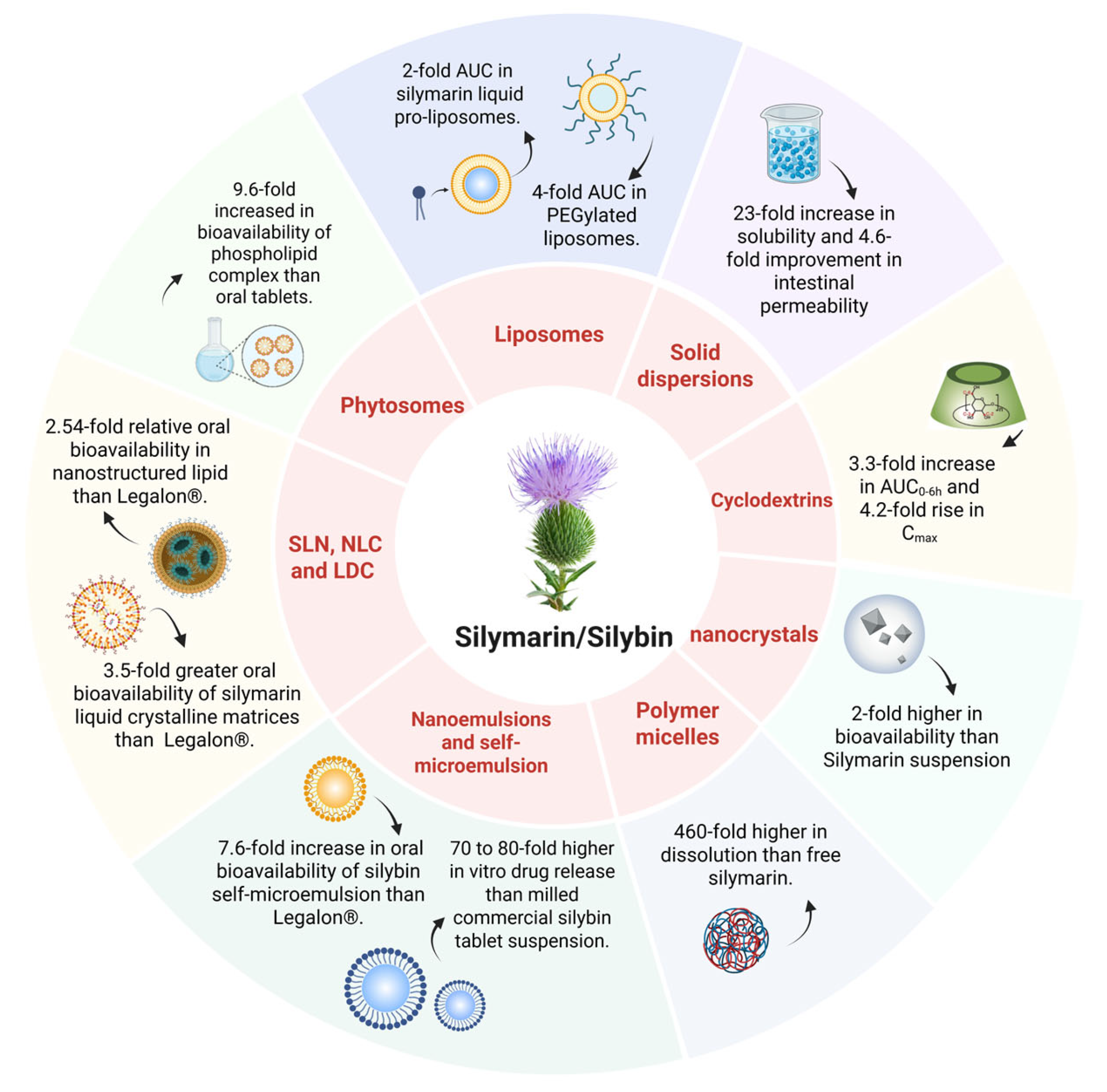
| Phytosomes/Phospholipid Complexes | Silybin–phosphatidylcholine | Membrane permeability ↑ | Bioavailability ↑ 9.6× | High phospholipid cost; variability | [62] |
| Silybin–PC | BBB permeability improvement | Papp 6.29 × 10⁻⁶ cm/s | Limited clinical data | [69] | |
| Silymarin–PC | Enhanced hepatoprotection | Bioavailability ↑ 6×; size 218 nm | Component variability | [95] | |
| Silymarin phytosome NPs | Protection from inflammation | Size~100 nm; reduced ethanol-induced liver injury | Manufacturing complexity | [98] | |
| Liposomes | Silymarin; HSPC; cholesterol | Improve stability; target liver | Size~122 nm; dose-dependent effects | Large-scale production costly | [101] |
| Silymarin; PC; DCP; SA | Anti-inflammatory effects | AUC ↑ 3×; reduced IL-6, MPO | Physical instability | [102] | |
| Silybin; UAS; SL; | Inhibited alcohol-induced liver damage; | Size~133 nm; stability ↑; release 58%/24 h; ATP↑; Bcl-2 ↓; Bax ↓; Caspase 3 ↓; | Complex production process | [125] | |
| Nanoemulsions | Silymarin; PEG 400; GMO; Cremophor | Improved solubilization and absorption | Improved ECG, reduced COX-2, TNF-α | Surfactant toxicity | [104] |
| Microemulsions | Silymarin; Labrafil; Transcutol; Tween 80 | Solubility enhancement; brain delivery | Size 61 nm; release ↑ 92%/12 h; neuroprotection ↑ | High surfactant content | [105] |
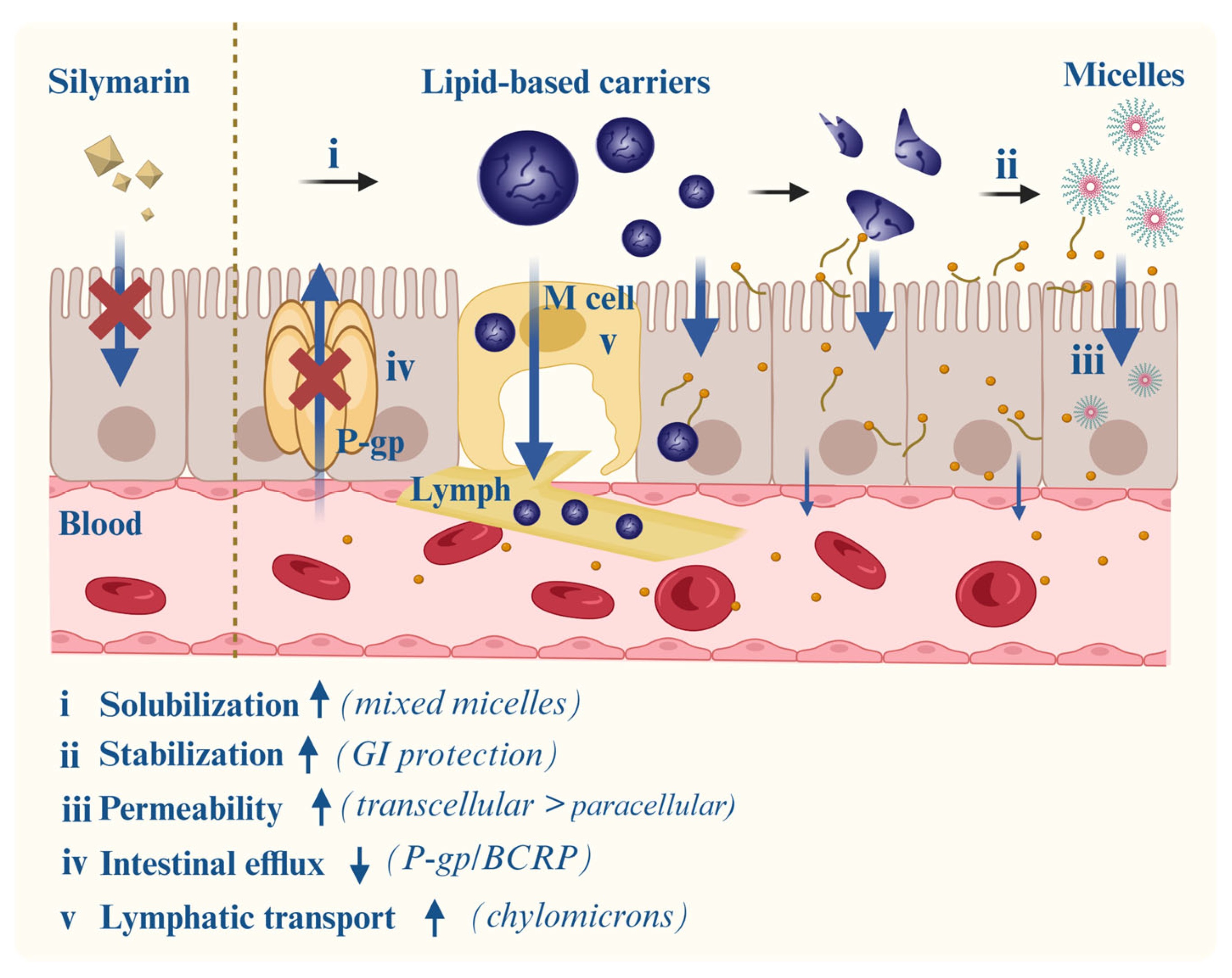
| SMEDDS/SNEDDS | Silymarin; ethyl linoleate; Tween 80 | Solubilization; lymphatic uptake | Bioavailability ↑ 1.88× (solution) and ↑ 48.8× (suspension) | Excipient toxicity; regulatory concerns | [106] |
| Silymarin; Cremophor; ethyl linoleate | Rapid dissolution | 98.7%/60 min; 1.36× faster than Legalon® | High surfactant load | [76] | |
| Silymarin; oleoyl macrogol glycerides | Solubility & absorption ↑ | Dissolution ↑ 13×; bioavailability ↑ 7.6× | Lymphatic transport unpredictable | [74] | |
| Lipid Nanoparticles (SLNs/NLCs) | Silymarin; oleic acid; lecithin | Solubility, stability, uptake ↑ | Size 83–107 nm; BA ↑ 75% (NLC), 60% (SLN) | Solid lipid crystallinity → drug expulsion | [108] |
| Silymarin; glycerol distearates | Enhanced bioavailability | BA ↑ 2.5–3.1× | Scale-up challenges | [75] | |
| Solid Lipid Nanoparticles | Silybin; Tween 80; Precirol | Improved stability & solubilization | BA ↑ 5–7× vs. fast-release | Low drug loading capacity | [79] |
| NLCs (Specialized) | Silymarin; cetyl palmitate; Lauroglycol | Permeability ↑ | Papp ↑ 10×; 90 × 10−6 cm/s | High lipid content concerns | [78] |
| Silymarin; Precirol; Labrafac | Targeting CNS | Brain deposition ↑ 12.46× | CNS targeting safety unknown | [114] | |
| Polymeric Micelles | Silymarin; succinyl chitosan | Solubility ↑; controlled release | Release ↑ 81–87%; cell viability ↑ 2.8–3.3× | Polymer toxicity concerns | [117] |
| Silymarin; Solutol HS15; Poloxamer F68 | Solubility ↑ | Solubility ↑ 460×; IC50 ↓ | Surfactant crystallization risk | [118] | |
| Silybin; deoxycholate–GA micelles | Solubility ↑; liver targeting | Solubility ↑ 41×; AUC ↑ 4× | Synthesis complexity | [119] | |
| Silymarin; Pluronics | Sustained release | Release ↑ 95%/24 h; IC50 ↓ 5× | Rapid clearance | [121] |
Disclaimer/Publisher’s Note: The statements, opinions and data contained in all publications are solely those of the individual author(s) and contributor(s) and not of MDPI and/or the editor(s). MDPI and/or the editor(s) disclaim responsibility for any injury to people or property resulting from any ideas, methods, instructions or products referred to in the content. |
© 2025 by the authors. Licensee MDPI, Basel, Switzerland. This article is an open access article distributed under the terms and conditions of the Creative Commons Attribution (CC BY) license (https://creativecommons.org/licenses/by/4.0/).
Share and Cite
Li, X.; Zhu, H.; Wang, Y.; Zhang, X.; Yang, Z.; Yan, X.; Yu, Q. Silymarin and Silybin: Rejuvenating Traditional Remedies with Modern Delivery Strategies. Pharmaceutics 2025, 17, 1628. https://doi.org/10.3390/pharmaceutics17121628
Li X, Zhu H, Wang Y, Zhang X, Yang Z, Yan X, Yu Q. Silymarin and Silybin: Rejuvenating Traditional Remedies with Modern Delivery Strategies. Pharmaceutics. 2025; 17(12):1628. https://doi.org/10.3390/pharmaceutics17121628
Chicago/Turabian StyleLi, Xiuyan, Han Zhu, Yanhong Wang, Xiwu Zhang, Zhixin Yang, Xueying Yan, and Qin Yu. 2025. "Silymarin and Silybin: Rejuvenating Traditional Remedies with Modern Delivery Strategies" Pharmaceutics 17, no. 12: 1628. https://doi.org/10.3390/pharmaceutics17121628
APA StyleLi, X., Zhu, H., Wang, Y., Zhang, X., Yang, Z., Yan, X., & Yu, Q. (2025). Silymarin and Silybin: Rejuvenating Traditional Remedies with Modern Delivery Strategies. Pharmaceutics, 17(12), 1628. https://doi.org/10.3390/pharmaceutics17121628