Improving the Culture of Human Skin Explants for Use in Preclinical Testing of Wound Healing Treatments

 , , , , ,
Abstract

1. Background
2. Materials and Methods
2.1. Primary Skin Fibroblast Isolation and Culture
2.2. In Vitro Wound Scratch Assay
2.3. Ex Vivo Skin and Superficial Wound Model
2.4. Skin Culture Procedure
2.5. Protein Extraction and Skin Sectioning Process
2.6. Assessment of Skin Cell Viability and Apoptosis Using LDH and Caspase-3/7 Assays
2.7. Histological and Immunostaining Analysis
2.8. Quantification of K17 and CD31 Using ELISA
2.9. ELISA Quantification of Cytokines in Culture Media
2.10. Statistical Analysis
3. Results
3.1. Effects of Different Culture Media Composition on Cell Migration In Vitro
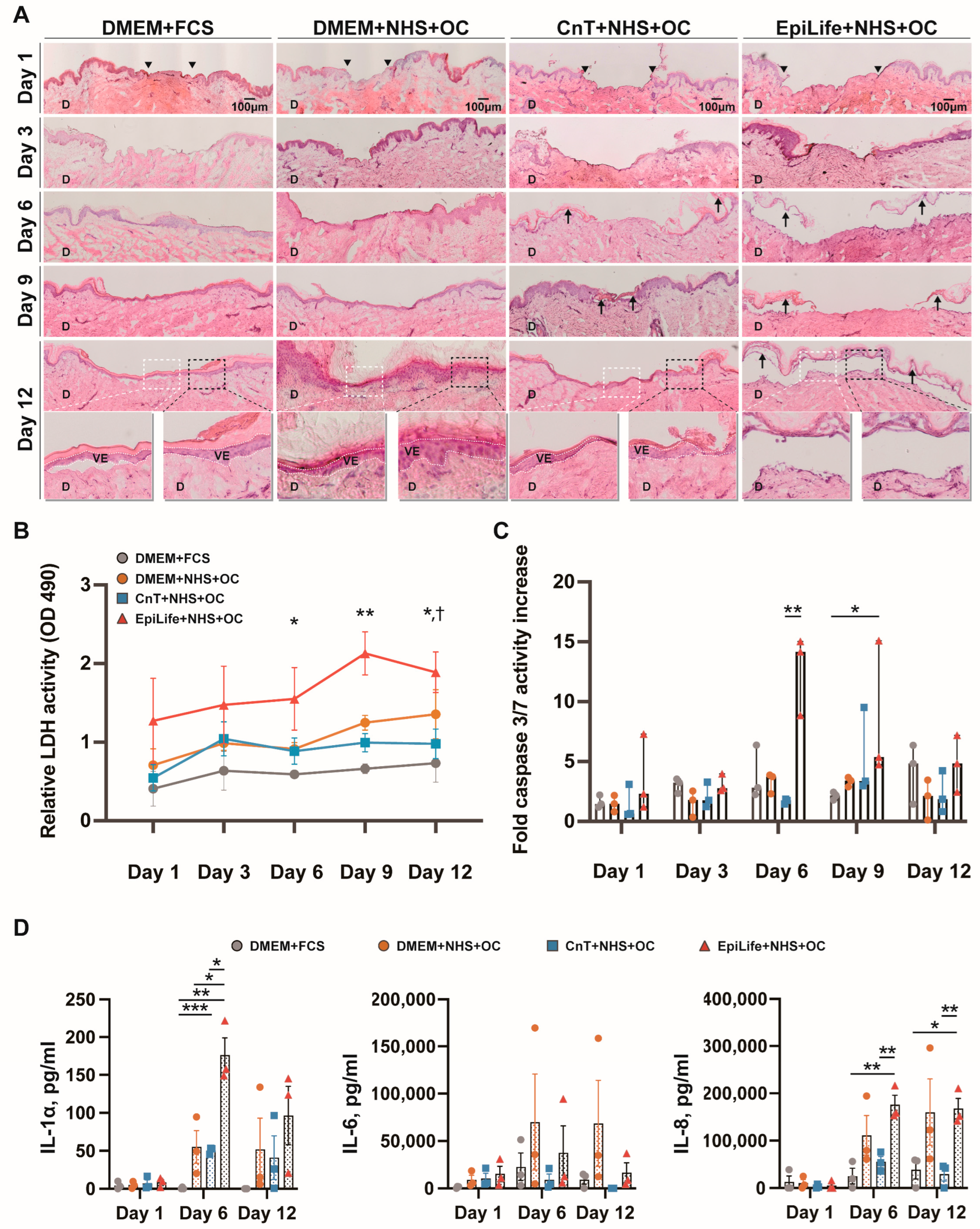
3.2. Skin Morphology, Necrosis, and Apoptosis
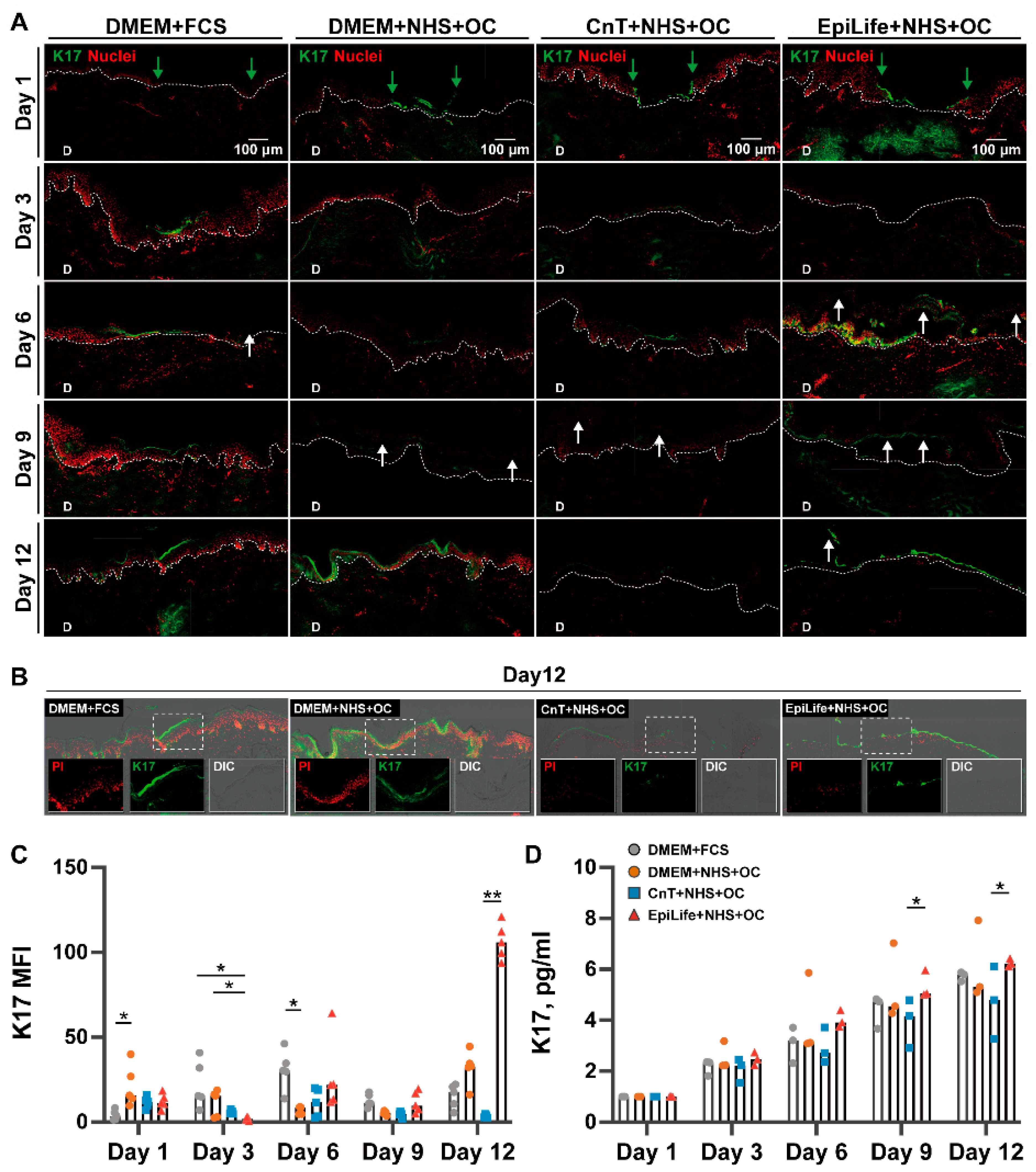
3.3. K17 Expression and Wound Healing
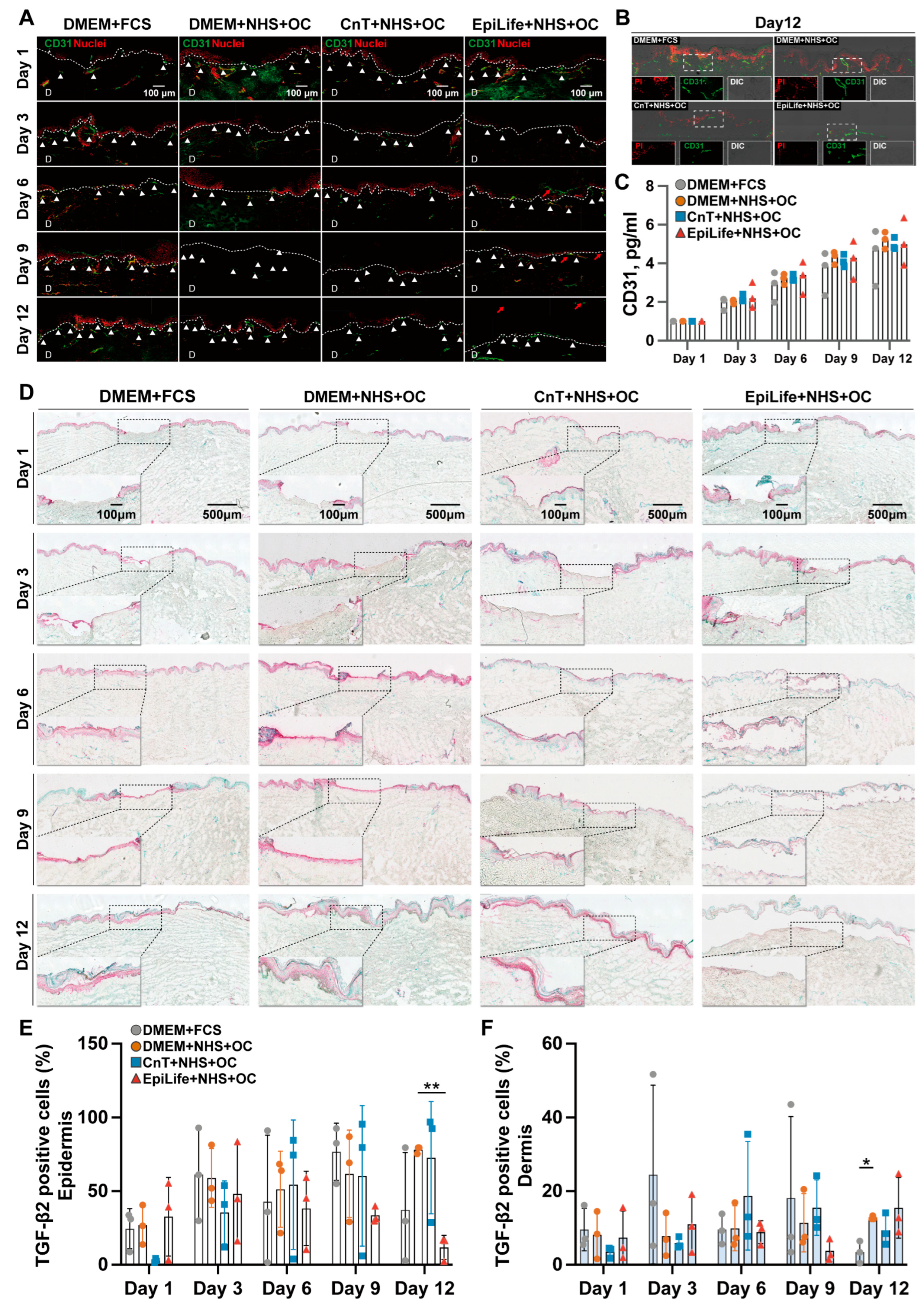
3.4. Angiogenesis-Related CD31 and TGF-β2 Levels
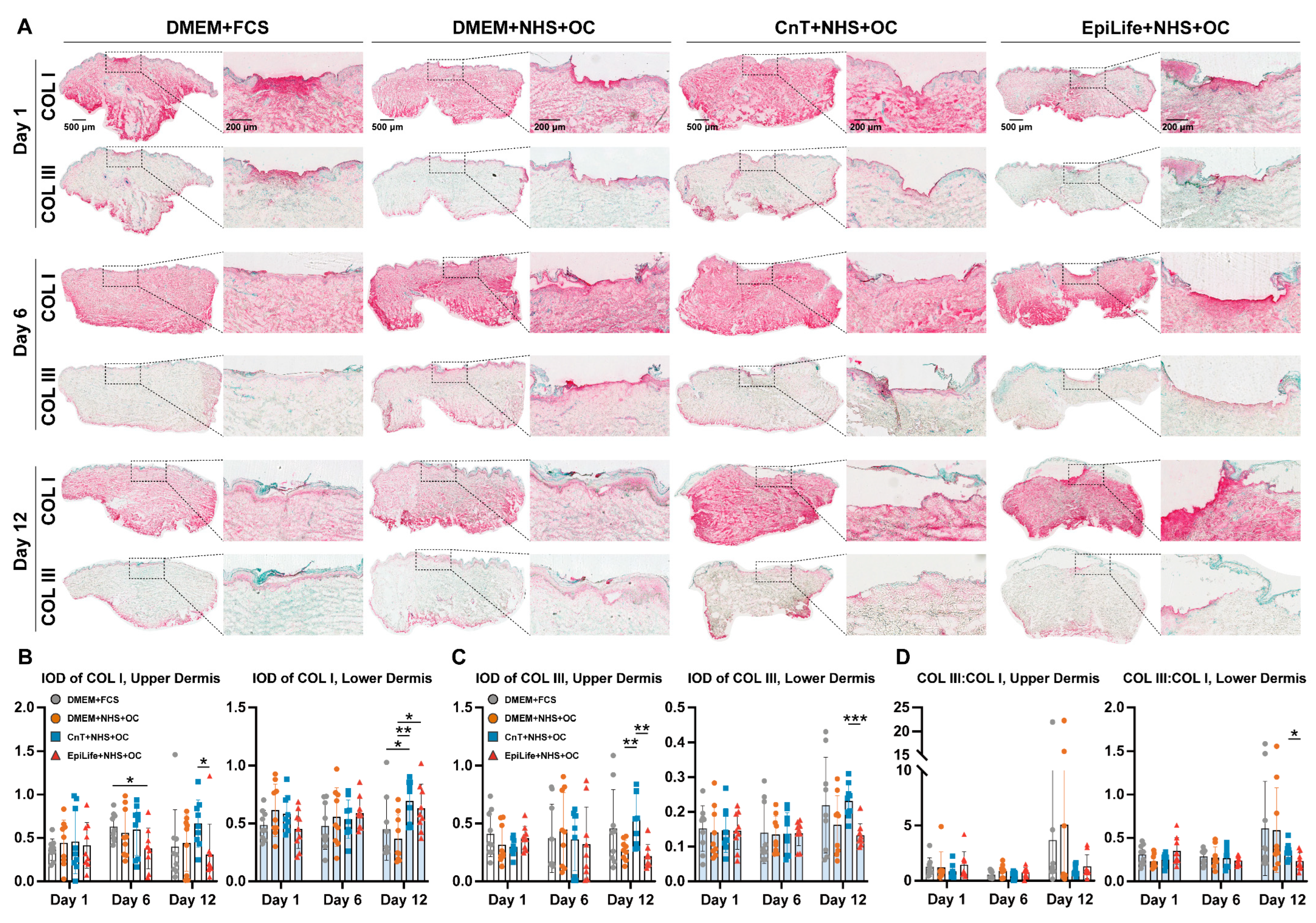
3.5. Type I Collagen and Type III Collagen Expression
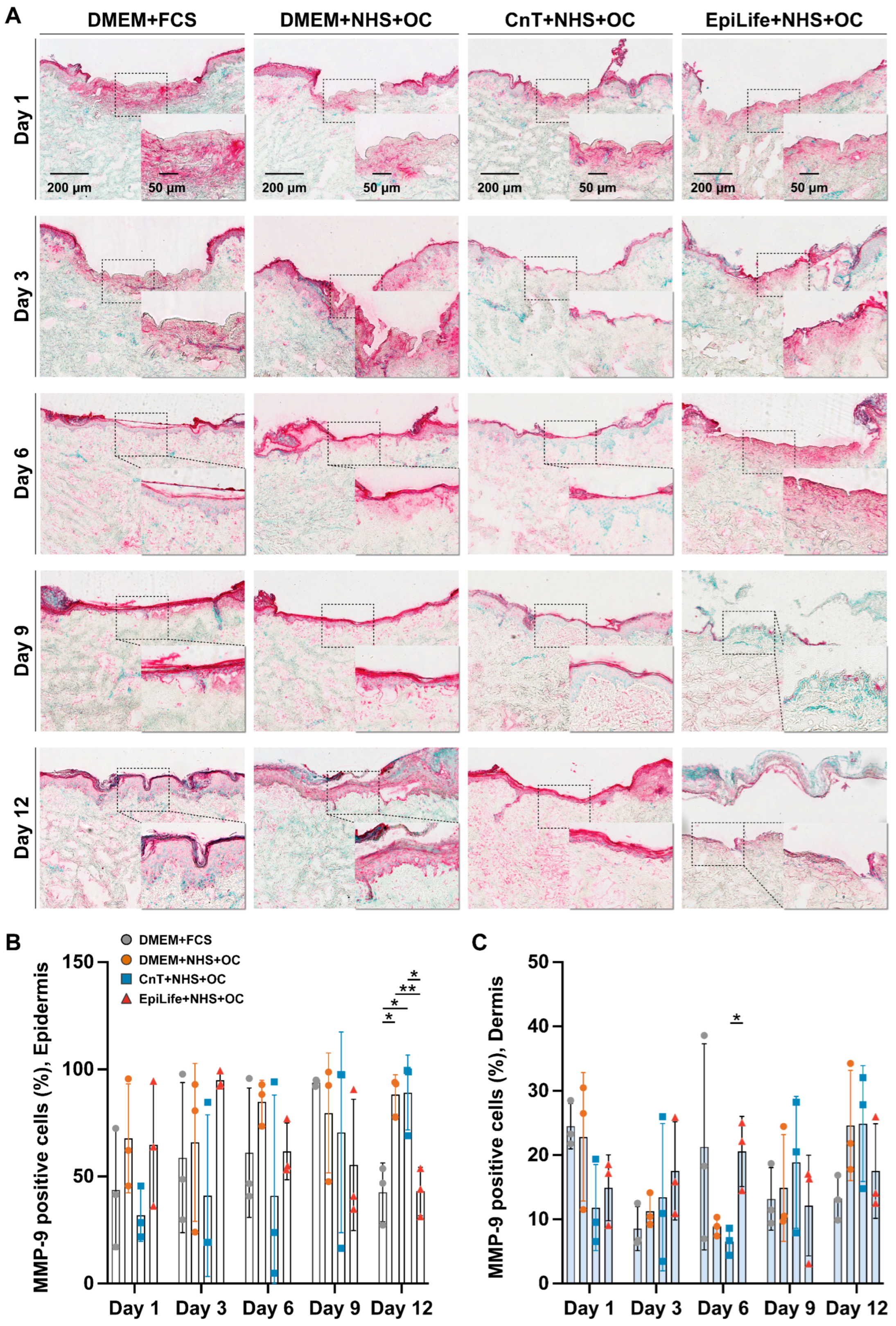
3.6. MMP-9 Expression
4. Discussion
4.1. FCS and OC Are Essential for In Vitro Cell Proliferation and Migration
4.2. The Composition of Culture Media Influenced Ex Vivo Wound Healing, Cell Viability, and Cytokine Release
4.3. The Composition of Culture Media Influenced K17 Temporal Expression in the Regenerating Epidermis
4.4. The Composition of Culture Media Influenced the Angiogenesis-Related CD31 and TGF-β2 Expression
4.5. The Composition of Culture Media Had an Impact on Collagen Deposition and MMP-9 Expression
5. Conclusions
Supplementary Materials
Author Contributions
Funding
Institutional Review Board Statement
Informed Consent Statement
Data Availability Statement
Acknowledgments
Conflicts of Interest
Abbreviations
| DEJs | Dermal–Epidermal Junctions |
| FCS | Fetal Calf Serum |
| NHS | Normal Human Serum |
| OC | Oxygen Carrier |
| DMEM | Dulbecco’s Modified Eagle Medium High Glucose |
| IHC | Immunohistochemical |
| ECM | Extracellular Matrix |
| TGF-β2 | Transforming Growth Factor-β2 |
| MMP-9 | Matrix Metalloproteinase-9 |
References
- Falanga, V.; Isseroff, R.R.; Soulika, A.M.; Romanelli, M.; Margolis, D.; Kapp, S.; Granick, M.; Harding, K. Chronic Wounds. Nat. Rev. Dis. Primer 2022, 8, 50. [Google Scholar] [CrossRef]
- Footner, E.; Firipis, K.; Liu, E.; Baker, C.; Foley, P.; Kapsa, R.M.I.; Pirogova, E.; O’Connell, C.; Quigley, A. Layer-by-Layer Analysis of In Vitro Skin Models. ACS Biomater. Sci. Eng. 2023, 9, 5933–5952. [Google Scholar] [CrossRef]
- Pridgeon, C.S.; Schlott, C.; Wong, M.W.; Heringa, M.B.; Heckel, T.; Leedale, J.; Launay, L.; Gryshkova, V.; Przyborski, S.; Bearon, R.N.; et al. Innovative Organotypic In Vitro Models for Safety Assessment: Aligning with Regulatory Requirements and Understanding Models of the Heart, Skin, and Liver as Paradigms. Arch. Toxicol. 2018, 92, 557–569. [Google Scholar] [CrossRef]
- JLE—European Journal of Dermatology—The Evolution and Use of Skin Explants: Potential and Limitations for Dermatological Research. Available online: https://www.jle.com/en/revues/ejd/e-docs/the_evolution_and_use_of_skin_explants_potential_and_limitations_for_dermatological_research_286602/article.phtml (accessed on 4 February 2025).
- Guo, X.; Schaudinn, C.; Blume-Peytavi, U.; Vogt, A.; Rancan, F. Effects of Adipose-Derived Stem Cells and Their Conditioned Medium in a Human Ex Vivo Wound Model. Cells 2022, 11, 1198. [Google Scholar] [CrossRef]
- Eberlin, S.; da Silva, M.S.; Facchini, G.; da Silva, G.H.; Pinheiro, A.L.T.A.; Pinheiro, A.d.S. The Ex Vivo Skin Model as an Alternative Tool for the Efficacy and Safety Evaluation of Topical Products. Altern. Lab. Anim. ATLA 2020, 48, 10–22. [Google Scholar] [CrossRef]
- Wang, E.H.C.; Barresi-Thornton, R.; Chen, L.-C.; Senna, M.M.; Liao, I.-C.; Chen, Y.; Zheng, Q.; Bouez, C. The Development of Human Ex Vivo Models of Inflammatory Skin Conditions. Int. J. Mol. Sci. 2023, 24, 17255. [Google Scholar] [CrossRef] [PubMed]
- Cheng, Y.; De Bank, P.A.; Bolhuis, A. An In Vitro and Ex Vivo Wound Infection Model to Test Topical and Systemic Treatment with Antibiotics. J. Appl. Microbiol. 2022, 133, 2993–3006. [Google Scholar] [CrossRef] [PubMed]
- Rancan, F.; Asadian-Birjand, M.; Dogan, S.; Graf, C.; Cuellar, L.; Lommatzsch, S.; Blume-Peytavi, U.; Calderón, M.; Vogt, A. Effects of Thermoresponsivity and Softness on Skin Penetration and Cellular Uptake of Polyglycerol-Based Nanogels. J. Control. Release 2016, 228, 159–169. [Google Scholar] [CrossRef] [PubMed]
- Freshney, R.I. The Culture Environment: Substrate, Gas Phase, Medium and Temperature. In Culture of Animal Cells: A Manual of Basic Technique; Wiley-Liss: Hoboken, NJ, USA, 1994; p. 71. [Google Scholar]
- Liu, S.; Yang, W.; Li, Y.; Sun, C. Fetal Bovine Serum, an Important Factor Affecting the Reproducibility of Cell Experiments. Sci. Rep. 2023, 13, 1942. [Google Scholar] [CrossRef]
- Karnieli, O.; Friedner, O.M.; Allickson, J.G.; Zhang, N.; Jung, S.; Fiorentini, D.; Abraham, E.; Eaker, S.S.; Yong, T.K.; Chan, A.; et al. A Consensus Introduction to Serum Replacements and Serum-Free Media for Cellular Therapies. Cytotherapy 2017, 19, 155–169, Corrigendum in Cytotherapy 2018, 20, 271. https://doi.org/10.1016/j.jcyt.2017.11.007. [Google Scholar] [CrossRef]
- Heger, J.I.; Froehlich, K.; Pastuschek, J.; Schmidt, A.; Baer, C.; Mrowka, R.; Backsch, C.; Schleußner, E.; Markert, U.R.; Schmidt, A. Human Serum Alters Cell Culture Behavior and Improves Spheroid Formation in Comparison to Fetal Bovine Serum. Exp. Cell Res. 2018, 365, 57–65. [Google Scholar] [CrossRef]
- Le Pape, F.; Cosnuau-Kemmat, L.; Richard, G.; Dubrana, F.; Férec, C.; Zal, F.; Leize, E.; Delépine, P. HEMOXCell, a New Oxygen Carrier Usable as an Additive for Mesenchymal Stem Cell Culture in Platelet Lysate-Supplemented Media. Artif. Organs 2017, 41, 359–371. [Google Scholar] [CrossRef]
- Zhou, J.; Ge, D.; Liu, Y.; Chu, Y.; Zheng, X.; Lu, Y.; Chu, Y. Developing Multiple Media Approach to Investigate Reproducible Characteristic VOCs of Lung Cancer Cells. Anal. Chem. 2024, 96, 20398–20405. [Google Scholar] [CrossRef]
- Vostálová, J.; Cukr, M.; Zálešák, B.; Lichnovská, R.; Ulrichová, J.; Rajnochová Svobodová, A. Comparison of Various Methods to Analyse Toxic Effects in Human Skin Explants: Rediscovery of TTC Assay. J. Photochem. Photobiol. B 2018, 178, 530–536. [Google Scholar] [CrossRef]
- Koyama, S.; Purk, A.; Kaur, M.; Soini, H.A.; Novotny, M.V.; Davis, K.; Kao, C.C.; Matsunami, H.; Mescher, A. Beta-Caryophyllene Enhances Wound Healing through Multiple Routes. PLoS ONE 2019, 14, e0216104. [Google Scholar] [CrossRef]
- Aiello, G.; Rescigno, F.; Meloni, M.; Zoanni, B.; Aldini, G.; Carini, M.; D’Amato, A. The Effect of Carnosine on UVA-Induced Changes in Intracellular Signaling of Human Skin Fibroblast Spheroids. Antioxidants 2023, 12, 300. [Google Scholar] [CrossRef] [PubMed]
- Ghani, N.’I.A.; Razali, R.A.; Chowdhury, S.R.; Fauzi, M.B.; Bin Saim, A.; Ruszymah, B.H.I.; Maarof, M. Effect of Different Collection Times of Dermal Fibroblast Conditioned Medium (DFCM) on In Vitro Re-Epithelialisation Process. Biomedicines 2022, 10, 3203. [Google Scholar] [CrossRef] [PubMed]
- Viticchiè, G.; Lena, A.M.; Cianfarani, F.; Odorisio, T.; Annicchiarico-Petruzzelli, M.; Melino, G.; Candi, E. MicroRNA-203 Contributes to Skin Re-Epithelialization. Cell Death Dis. 2012, 3, e435. [Google Scholar] [CrossRef] [PubMed]
- Liu, T.; Qu, L.; Zhu, C.; Guo, M.; Ma, X.; Lei, H.; Fan, D. Oxygen-Generating Hydrogels Combined with Electrical Stimulation: A Dual Approach for Promoting Diabetic Wound Healing. Acta Biomater. 2024, 190, 95–106. [Google Scholar] [CrossRef]
- Rousselot, M.; Delpy, E.; Drieu La Rochelle, C.; Lagente, V.; Pirow, R.; Rees, J.-F.; Hagege, A.; Le Guen, D.; Hourdez, S.; Zal, F. Arenicola Marina Extracellular Hemoglobin: A New Promising Blood Substitute. Biotechnol. J. 2006, 1, 333–345. [Google Scholar] [CrossRef]
- Werner, S.; Krieg, T.; Smola, H. Keratinocyte–Fibroblast Interactions in Wound Healing. J. Investig. Dermatol. 2007, 127, 998–1008. [Google Scholar] [CrossRef]
- Han, X.; Ju, L.S.; Irudayaraj, J. Oxygenated Wound Dressings for Hypoxia Mitigation and Enhanced Wound Healing. Mol. Pharm. 2023, 20, 3338–3355. [Google Scholar] [CrossRef]
- Boland, K.; Flanagan, L.; Prehn, J.H. Paracrine Control of Tissue Regeneration and Cell Proliferation by Caspase-3. Cell Death Dis. 2013, 4, e725. [Google Scholar] [CrossRef]
- Saad, B.; Dakwar, S.; Said, O.; Abu-Hijleh, G.; Battah, F.A.; Kmeel, A.; Aziazeh, H. Evaluation of Medicinal Plant Hepatotoxicity in Co-Cultures of Hepatocytes and Monocytes. Evid. Based Complement. Altern. Med. 2006, 3, 93–98. [Google Scholar] [CrossRef]
- Chen, B.-A.; Xia, G.-H.; Lu, H.-X.; Shao, Z.-Y.; Gao, C.; Ding, H.-J.; Xiao, P.-P.; Chen, N.-N.; Zhao, G.; Gao, F.; et al. Mechanisms of 2-Methoxyestradiol-Induced Apoptosis on Myelodysplastic Syndrome MUTZ-1 Cell Lines. Blood 2007, 110, 4590. [Google Scholar] [CrossRef]
- Tu, C.-L.; Chang, W.; Xie, Z.; Bikle, D.D. Inactivation of the Calcium Sensing Receptor Inhibits E-Cadherin-Mediated Cell-Cell Adhesion and Calcium-Induced Differentiation in Human Epidermal Keratinocytes. J. Biol. Chem. 2008, 283, 3519–3528. [Google Scholar] [CrossRef]
- Schultz, N.; Brännström, K.; Byman, E.; Moussaud, S.; Nielsen, H.M.; Bank, T.N.B.; Olofsson, A.; Wennström, M. Amyloid-Beta 1-40 Is Associated with Alterations in NG2+ Pericyte Population Ex Vivo and In Vitro. Aging Cell 2018, 17, e12728. [Google Scholar] [CrossRef] [PubMed]
- Kang, J.I.; Park, K.M.; Park, K.D. Oxygen-Generating Alginate Hydrogels as a Bioactive Acellular Matrix for Facilitating Wound Healing. J. Ind. Eng. Chem. 2019, 69, 397–404. [Google Scholar] [CrossRef]
- Jacobson, M.D.; Weil, M.; Raff, M.C. Programmed Cell Death in Animal Development. Cell 1997, 88, 347–354. [Google Scholar] [CrossRef] [PubMed]
- Paladini, R.D.; Takahashi, K.; Bravo, N.S.; Coulombe, P.A. Onset of Re-Epithelialization after Skin Injury Correlates with a Reorganization of Keratin Filaments in Wound Edge Keratinocytes: Defining a Potential Role for Keratin 16. J. Cell Biol. 1996, 132, 381–397. [Google Scholar] [CrossRef]
- Schweizer, J.; Bowden, P.E.; Coulombe, P.A.; Langbein, L.; Lane, E.B.; Magin, T.M.; Maltais, L.; Omary, M.B.; Parry, D.A.D.; Rogers, M.A.; et al. New Consensus Nomenclature for Mammalian Keratins. J. Cell Biol. 2006, 174, 169–174. [Google Scholar] [CrossRef]
- Sun, T.T.; Shih, C.; Green, H. Keratin Cytoskeletons in Epithelial Cells of Internal Organs. Proc. Natl. Acad. Sci. USA 1979, 76, 2813–2817. [Google Scholar] [CrossRef] [PubMed]
- Moll, R.; Franke, W.W.; Schiller, D.L.; Geiger, B.; Krepler, R. The Catalog of Human Cytokeratins: Patterns of Expression in Normal Epithelia, Tumors and Cultured Cells. Cell 1982, 31, 11–24. [Google Scholar] [CrossRef] [PubMed]
- McGowan, K.M.; Coulombe, P.A. Onset of Keratin 17 Expression Coincides with the Definition of Major Epithelial Lineages during Skin Development. J. Cell Biol. 1998, 143, 469–486. [Google Scholar] [CrossRef] [PubMed]
- Proby, C.M.; Churchill, L.; Purkis, P.E.; Glover, M.T.; Sexton, C.J.; Leigh, I.M. Keratin 17 Expression as a Marker for Epithelial Transformation in Viral Warts. Am. J. Pathol. 1993, 143, 1667–1678. [Google Scholar]
- Pan, X.O.; Kane, L.A.; Eyk, J.V.V.; Coulombe, P. Type I Keratin 17 Protein Is Phosphorylated on Serine 44 by P90 Ribosomal Protein S6 Kinase 1 (RSK1) in a Growth- and Stress-Dependent Fashion*. J. Biol. Chem. 2011, 286, 42403–42413. [Google Scholar] [CrossRef]
- Price, P.J.; Gregory, E.A. Relationship between In Vitro Growth Promotion and Biophysical and Biochemical Properties of the Serum Supplement. In Vitro 1982, 18, 576–584. [Google Scholar] [CrossRef]
- Zheng, X.; Baker, H.; Hancock, W.S.; Fawaz, F.; McCaman, M.; Pungor, E., Jr. Proteomic Analysis for the Assessment of Different Lots of Fetal Bovine Serum as a Raw Material for Cell Culture. Part IV. Application of Proteomics to the Manufacture of Biological Drugs. Biotechnol. Prog. 2006, 22, 1294–1300. [Google Scholar] [CrossRef]
- Li, Y.; Fan, J.; Chen, M.; Li, W.; Woodley, D.T. Transforming Growth Factor-Alpha: A Major Human Serum Factor That Promotes Human Keratinocyte Migration. J. Investig. Dermatol. 2006, 126, 2096–2105, Correction in J. Investig. Dermatol. 2006, 126, 2145. https://doi.org/10.1038/sj.jid.5700441. [Google Scholar] [CrossRef]
- Nyman, E.; Lindholm, E.; Rakar, J.; Junker, J.; Kratz, G. Effects of Amniotic Fluid on Human Keratinocyte Gene Expression: Implications for Wound Healing. Exp. Dermatol. 2021, 31, 764–774. [Google Scholar] [CrossRef]
- Loschke, F.; Homberg, M.; Magin, T. Keratin Isotypes Control Desmosome Stability and Dynamics through PKCα. J. Investig. Dermatol. 2016, 136, 202–213. [Google Scholar] [CrossRef]
- Gospodarowicz, D.; Ferrara, N.; Schweigerer, L.; Neufeld, G. Structural Characterization and Biological Functions of Fibroblast Growth Factor. Endocr. Rev. 1987, 8, 95–114. [Google Scholar] [CrossRef]
- Valk, J.B.F.; Brunner, D.; De Smet, K.; Svenningsen, A.; Honegger, P.; Knudsen, L.; Lindl, T.; Noraberg, J.; Price, A.; Scarino, M.L.; et al. Optimization of Chemically Defined Cell Culture Media-Replacing Fetal Bovine Serum in Mammalian In Vitro Methods. Toxicol. Vitro Int. J. Publ. Assoc. BIBRA 2010, 24, 1053–1063. [Google Scholar] [CrossRef]
- Carpenter, G.; Cohen, S. Epidermal Growth Factor. Annu. Rev. Biochem. 1979, 48, 193–216. [Google Scholar] [CrossRef] [PubMed]
- Karadjian, M.; Senger, A.-S.; Essers, C.; Wilkesmann, S.; Heller, R.; Fellenberg, J.; Simon, R.; Westhauser, F. Human Platelet Lysate Can Replace Fetal Calf Serum as a Protein Source to Promote Expansion and Osteogenic Differentiation of Human Bone-Marrow-Derived Mesenchymal Stromal Cells. Cells 2020, 9, 918. [Google Scholar] [CrossRef]
- Cheng, C.; Zhang, Y.; Jiang, H.; Shi, Y.; Xue, T.; Wu, X.; Wang, H. Human Adipose-Derived Mesenchymal Stem Cells Colonize and Promote Healing of Leprosy Ulcer by Inducing Neuro-Vascularization. Stem Cells Dev. 2024, 33, 276–289. [Google Scholar] [CrossRef] [PubMed]
- Kim, D.Y.; Ko, E.; Ryu, Y.H.; Lee, S.J.; Jun, Y.J. Hyaluronic Acid Based Adipose Tissue-Derived Extracellular Matrix Scaffold in Wound Healing: Histological and Immunohistochemical Study. Tissue Eng. Regen. Med. 2024, 21, 829–842. [Google Scholar] [CrossRef] [PubMed]
- Brown, L.F.; Yeo, K.T.; Berse, B.; Yeo, T.K.; Senger, D.R.; Dvorak, H.F.; van de Water, L. Expression of Vascular Permeability Factor (Vascular Endothelial Growth Factor) by Epidermal Keratinocytes during Wound Healing. J. Exp. Med. 1992, 176, 1375–1379. [Google Scholar] [CrossRef]
- Riwaldt, S.; Corydon, T.J.; Pantalone, D.; Sahana, J.; Wise, P.; Wehland, M.; Krüger, M.; Melnik, D.; Kopp, S.; Infanger, M.; et al. Role of Apoptosis in Wound Healing and Apoptosis Alterations in Microgravity. Front. Bioeng. Biotechnol. 2021, 9, 679650. [Google Scholar] [CrossRef]
- Brett, D. A Review of Collagen and Collagen-Based Wound Dressings. Wounds Compend. Clin. Res. Pract. 2008, 20, 347–356. [Google Scholar]
- Martinez-Ferrer, M.; Afshar-Sherif, A.-R.; Uwamariya, C.; de Crombrugghe, B.; Davidson, J.M.; Bhowmick, N.A. Dermal Transforming Growth Factor-β Responsiveness Mediates Wound Contraction and Epithelial Closure. Am. J. Pathol. 2010, 176, 98–107. [Google Scholar] [CrossRef]
- Liarte, S.; Bernabé-García, Á.; Nicolás, F.J. Human Skin Keratinocytes on Sustained TGF-β Stimulation Reveal Partial EMT Features and Weaken Growth Arrest Responses. Cells 2020, 9, 255. [Google Scholar] [CrossRef] [PubMed]
- Gilbert, R.W.D.; Vickaryous, M.K.; Viloria-Petit, A.M. Signalling by Transforming Growth Factor Beta Isoforms in Wound Healing and Tissue Regeneration. J. Dev. Biol. 2016, 4, 21. [Google Scholar] [CrossRef] [PubMed]
- Frank, S.; Madlener, M.; Werner, S. Transforming Growth Factors Β1, Β2, and Β3 and Their Receptors Are Differentially Regulated during Normal and Impaired Wound Healing (*). J. Biol. Chem. 1996, 271, 10188–10193. [Google Scholar] [CrossRef]
- Kanchanawong, P.; Calderwood, D.A. Organization, Dynamics and Mechanoregulation of Integrin-Mediated Cell-ECM Adhesions. Nat. Rev. Mol. Cell Biol. 2023, 24, 142–161. [Google Scholar] [CrossRef] [PubMed]
- Wang, C.-H.; Hsieh, D.-J.; Periasamy, S.; Chuang, C.-T.; Tseng, F.-W.; Kuo, J.-C.; Tarng, Y.-W. Regenerative Porcine Dermal Collagen Matrix Developed by Supercritical Carbon Dioxide Extraction Technology: Role in Accelerated Wound Healing. Materialia 2020, 9, 100576. [Google Scholar] [CrossRef]
- Zhao, X.; Chen, Y.; Lin, Z.; Jin, X.; Su, B.; Liu, X.; Yang, M.; Chen, K.; Zhu, M.; Wang, L.; et al. H2S Donor S-propargyl-cysteine for Skin Wound Healing Improvement via Smart Transdermal Delivery. MedComm 2024, 5, e485. [Google Scholar] [CrossRef]
- Barnes, M.J.; Morton, L.F.; Bennett, R.C.; Bailey, A.J.; Sims, T.J. Presence of Type III Collagen in Guinea-Pig Dermal Scar. Biochem. J. 1976, 157, 263–266. [Google Scholar] [CrossRef]
- Lee, H.J.; Jang, Y.J. Recent Understandings of Biology, Prophylaxis and Treatment Strategies for Hypertrophic Scars and Keloids. Int. J. Mol. Sci. 2018, 19, 711. [Google Scholar] [CrossRef]
- Stewart-McGuinness, C.; Platt, C.I.; Ozols, M.; Goh, B.; Griffiths, T.W.; Sherratt, M.J. Defining the Protease and Protease Inhibitor (P/PI) Proteomes of Healthy and Diseased Human Skin by Modified Systematic Review. Biomolecules 2022, 12, 475. [Google Scholar] [CrossRef]
- Nyström, A.; Bruckner-Tuderman, L. Matrix Molecules and Skin Biology. Semin. Cell Dev. Biol. 2019, 89, 136–146. [Google Scholar] [CrossRef]
- Malta, M.D.; Cerqueira, M.T.; Marques, A.P. Extracellular Matrix in Skin Diseases: The Road to New Therapies. J. Adv. Res. 2023, 51, 149–160. [Google Scholar] [CrossRef]
- Potekaev, N.N.; Borzykh, O.B.; Medvedev, G.V.; Petrova, M.M.; Gavrilyuk, O.A.; Karpova, E.I.; Trefilova, V.V.; Demina, O.M.; Popova, T.E.; Shnayder, N.A. Genetic and Epigenetic Aspects of Skin Collagen Fiber Turnover and Functioning. Cosmetics 2021, 8, 92. [Google Scholar] [CrossRef]
- Singh, D.; Rai, V.; Agrawal, D.K. Regulation of Collagen I and Collagen III in Tissue Injury and Regeneration. Cardiol. Cardiovasc. Med. 2023, 7, 5–16. [Google Scholar] [CrossRef]
- Merkel, J.R.; DiPaolo, B.R.; Hallock, G.G.; Rice, D.C. Type I and Type III Collagen Content of Healing Wounds in Fetal and Adult Rats. Exp. Biol. Med. 1988, 187, 493–497. [Google Scholar] [CrossRef]
- Li, L.; Ma, Y.; He, G.; Ma, S.; Wang, Y.; Sun, Y. Pilose Antler Extract Restores Type I and III Collagen to Accelerate Wound Healing. Biomed. Pharmacother. 2023, 161, 114510. [Google Scholar] [CrossRef]
- Bergers, G.; Brekken, R.; McMahon, G.; Vu, T.H.; Itoh, T.; Tamaki, K.; Tanzawa, K.; Thorpe, P.; Itohara, S.; Werb, Z.; et al. Matrix Metalloproteinase-9 Triggers the Angiogenic Switch during Carcinogenesis. Nat. Cell Biol. 2000, 2, 737–744. [Google Scholar] [CrossRef] [PubMed]
- Legrand, C.; Gilles, C.; Zahm, J.-M.; Polette, M.; Buisson, A.-C.; Kaplan, H.; Birembaut, P.; Tournier, J.-M. Airway Epithelial Cell Migration Dynamics. J. Cell Biol. 1999, 146, 517–529. [Google Scholar] [CrossRef] [PubMed]
- Okada, Y.; Gonoji, Y.; Naka, K.; Tomita, K.; Nakanishi, I.; Iwata, K.; Yamashita, K.; Hayakawa, T. Matrix Metalloproteinase 9 (92-kDa Gelatinase/Type IV Collagenase) from HT 1080 Human Fibrosarcoma Cells. Purification and Activation of the Precursor and Enzymic Properties. J. Biol. Chem. 1992, 267, 21712–21719. [Google Scholar] [CrossRef] [PubMed]
- Parks, W.C.; Mecham, R.P. (Eds.) Matrix Metalloproteinases; Elsevier: Amsterdam, The Netherlands, 1998; ISBN 978-0-08-053598-2. [Google Scholar]
- Zhang, C.; Lim, J.; Jeon, H.H.; Xu, F.; Tian, C.; Miao, F.; Hameedaldeen, A.; Graves, D.T. FOXO1 Deletion in Keratinocytes Improves Diabetic Wound Healing through MMP9 Regulation. Sci. Rep. 2017, 7, 10565. [Google Scholar] [CrossRef]
- Kopcewicz, M.M.; Kur-Piotrowska, A.; Bukowska, J.; Gimble, J.M.; Gawronska-Kozak, B. Foxn1 and Mmp-9 Expression in Intact Skin and during Excisional Wound Repair in Young, Adult, and Old C57Bl/6 Mice. Wound Repair Regen. 2017, 25, 248–259. [Google Scholar] [CrossRef]
- Pilcher, B.K.; Sudbeck, B.D.; Dumin, J.A.; Welgus, H.G.; Parks, W.C. Collagenase-1 and Collagen in Epidermal Repair. Arch. Dermatol. Res. 1998, 290, S37–S46. [Google Scholar] [CrossRef]
- Garlick, J.A.; Parks, W.C.; Welgus, H.G.; Taichman, L.B. Re-Epithelialization of Human Oral Keratinocytes In Vitro. J. Dent. Res. 1996, 75, 912–918. [Google Scholar] [CrossRef]
- Saarialho-Kere, U.K.; Vaalamo, M.; Airola, K.; Niemi, K.M.; Oikarinen, A.I.; Parks, W.C. Interstitial Collagenase Is Expressed by Keratinocytes That Are Actively Involved in Reepithelialization in Blistering Skin Disease. J. Investig. Dermatol. 1995, 104, 982–988. [Google Scholar] [CrossRef] [PubMed]
- de Almeida, L.G.N.; Thode, H.; Eslambolchi, Y.; Chopra, S.; Young, D.; Gill, S.; Devel, L.; Dufour, A. Matrix Metalloproteinases: From Molecular Mechanisms to Physiology, Pathophysiology, and Pharmacology. Pharmacol. Rev. 2022, 74, 714–770. [Google Scholar] [CrossRef] [PubMed]
- Lobmann, R.; Ambrosch, A.; Schultz, G.; Waldmann, K.; Schiweck, S.; Lehnert, H. Expression of Matrix-Metalloproteinases and Their Inhibitors in the Wounds of Diabetic and Non-Diabetic Patients. Diabetologia 2002, 45, 1011–1016. [Google Scholar] [CrossRef] [PubMed]
- Yu, Q.; Stamenkovic, I. Cell Surface-Localized Matrix Metalloproteinase-9 Proteolytically Activates TGF-β and Promotes Tumor Invasion and Angiogenesis. Genes Dev. 2000, 14, 163–176. [Google Scholar] [CrossRef]


Disclaimer/Publisher’s Note: The statements, opinions and data contained in all publications are solely those of the individual author(s) and contributor(s) and not of MDPI and/or the editor(s). MDPI and/or the editor(s) disclaim responsibility for any injury to people or property resulting from any ideas, methods, instructions or products referred to in the content. |
© 2025 by the authors. Licensee MDPI, Basel, Switzerland. This article is an open access article distributed under the terms and conditions of the Creative Commons Attribution (CC BY) license (https://creativecommons.org/licenses/by/4.0/).
Share and Cite
Guo, X.; Hüging, M.; Mirastschijski, U.; Blume-Peytavi, U.; Vogt, A.; Schaudinn, C.; Rancan, F. Improving the Culture of Human Skin Explants for Use in Preclinical Testing of Wound Healing Treatments. Pharmaceutics 2025, 17, 1611. https://doi.org/10.3390/pharmaceutics17121611
Guo X, Hüging M, Mirastschijski U, Blume-Peytavi U, Vogt A, Schaudinn C, Rancan F. Improving the Culture of Human Skin Explants for Use in Preclinical Testing of Wound Healing Treatments. Pharmaceutics. 2025; 17(12):1611. https://doi.org/10.3390/pharmaceutics17121611
Chicago/Turabian StyleGuo, Xiao, Martina Hüging, Ursula Mirastschijski, Ulrike Blume-Peytavi, Annika Vogt, Christoph Schaudinn, and Fiorenza Rancan. 2025. "Improving the Culture of Human Skin Explants for Use in Preclinical Testing of Wound Healing Treatments" Pharmaceutics 17, no. 12: 1611. https://doi.org/10.3390/pharmaceutics17121611
APA StyleGuo, X., Hüging, M., Mirastschijski, U., Blume-Peytavi, U., Vogt, A., Schaudinn, C., & Rancan, F. (2025). Improving the Culture of Human Skin Explants for Use in Preclinical Testing of Wound Healing Treatments. Pharmaceutics, 17(12), 1611. https://doi.org/10.3390/pharmaceutics17121611