1. Introduction
Breast cancer stands as the most commonly diagnosed malignancy and the leading cause of cancer-related mortality among women worldwide, posing a significant challenge to global public health. According to the latest global cancer statistics released by the International Agency for Research on Cancer (IARC) in 2022, there were over 2.3 million new cases of breast cancer and approximately 670,000 deaths, with a concerning trend towards earlier onset age, highlighting the increasing urgency of prevention and treatment [
1]. Currently, imaging techniques such as mammography, ultrasound, and MRI serve as the cornerstone for breast cancer screening and diagnosis [
2]. However, their diagnostic accuracy is often limited by factors like dense breast tissue and tumor heterogeneity, making it difficult to achieve early detection at the molecular level [
3,
4]. In terms of treatment, comprehensive therapeutic strategies based on surgery, radiotherapy, chemotherapy, endocrine therapy, and targeted drugs are widely used but continue to face numerous challenges, including multidrug resistance, significant systemic toxicity, and high rates of metastasis and recurrence [
5]. A more profound challenge stems from the high degree of molecular heterogeneity in breast cancer—categorized into subtypes such as Luminal A, Luminal B, human epidermal growth factor receptor 2 (HER2)-positive, and triple-negative based on distinct molecular marker profiles [
6]—which renders the single therapeutic strategy approach inadequate for meeting the pressing demands of personalized medicine. Consequently, the development of novel technological platforms capable of simultaneously achieving highly sensitive diagnosis and highly effective, low-toxicity treatment has emerged as a critical scientific problem to overcome the current dilemmas in breast cancer management.
The rapid advancement of nanotechnology offers unprecedented opportunities to address these challenges [
7,
8,
9,
10,
11,
12]. Nanomaterials, leveraging their unique size effects, engineerable surfaces, multimodal compatibility, and intelligent responsiveness to the TME, can function as “precision-guided missiles,” enabling active targeting and accumulation at tumor sites within the body [
7]. This significantly enhances the delivery efficiency and therapeutic index of conventional chemotherapeutic agents, nucleic acid-based drugs, photosensitizers (PSs), and immunomodulators [
11,
12]. On the diagnostic front, through the conjugation of specific targeting moieties (such as antibodies or ligands targeting HER2, estrogen receptor (ER), protein ligand-1 (PD-L1), etc.), nanoprobes can achieve highly sensitive recognition of breast cancer-associated molecular biomarkers, providing powerful tools for early disease detection, intraoperative navigation, and dynamic therapeutic monitoring [
9,
10]. In this context, the construction of “theranostic” nanoplatforms is particularly noteworthy. By integrating diagnostic, therapeutic, and treatment evaluation functions into a single nanosystem, they open up a new paradigm for the personalized, visualized, and real-time management of breast cancer [
13].
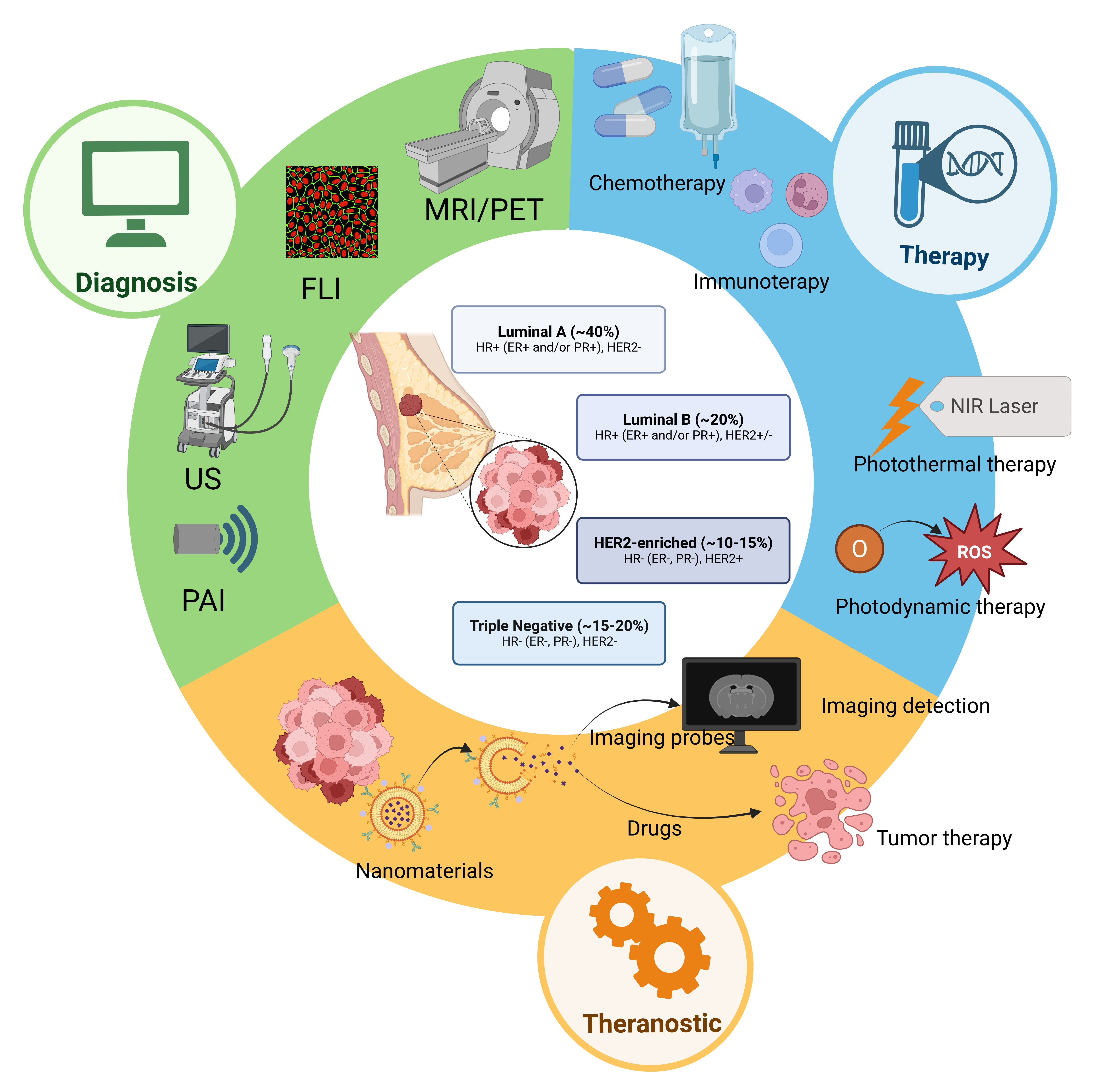
This review systematically summarizes the latest advances of nanomaterials in the diagnosis and treatment of breast cancer. It begins by outlining the applications of nanomaterials in breast cancer biomedical imaging and biomarker detection. It then assesses cutting-edge developments in areas such as intelligent drug delivery, immunotherapy, gene therapy, and phototherapy. Finally, it highlights strategies for constructing integrated theranostic nanoplatforms and discusses their prospects for clinical translation. This work aims to provide theoretical guidance and practical directions for advancing nanomedicine toward precision diagnosis and therapy of breast cancer.
3. Nanomaterials for Therapy in Breast Cancer
The pronounced molecular heterogeneity of breast cancer underpins the markedly divergent responses to chemotherapy and clinical outcomes observed among its subtypes [
63]. While chemotherapy remains a cornerstone of adjuvant treatment, the development of drug resistance continues to limit its efficacy. There is, therefore, an urgent need for novel and precision-guided therapeutic strategies. Nanodelivery systems offer a promising platform to address this challenge [
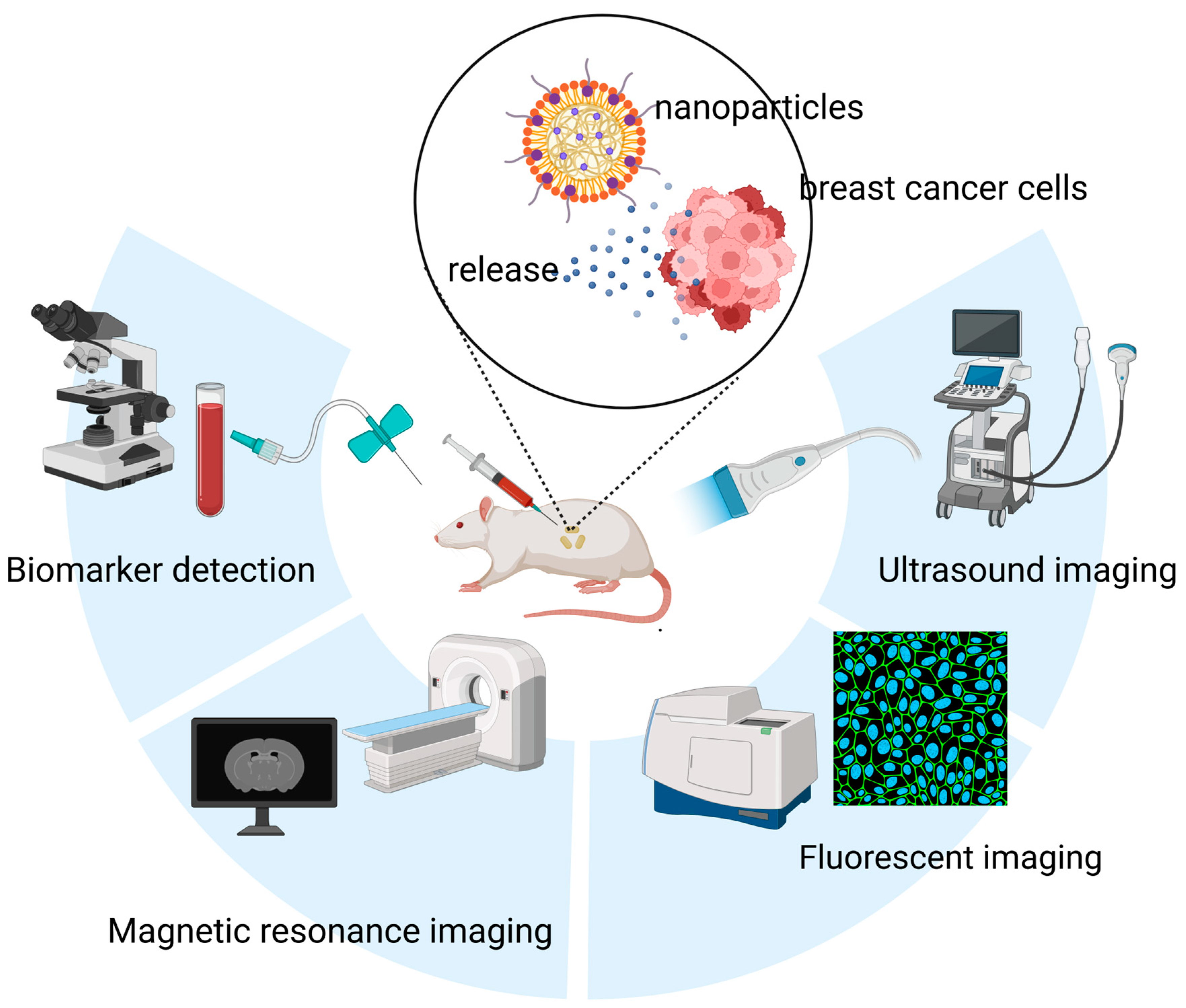
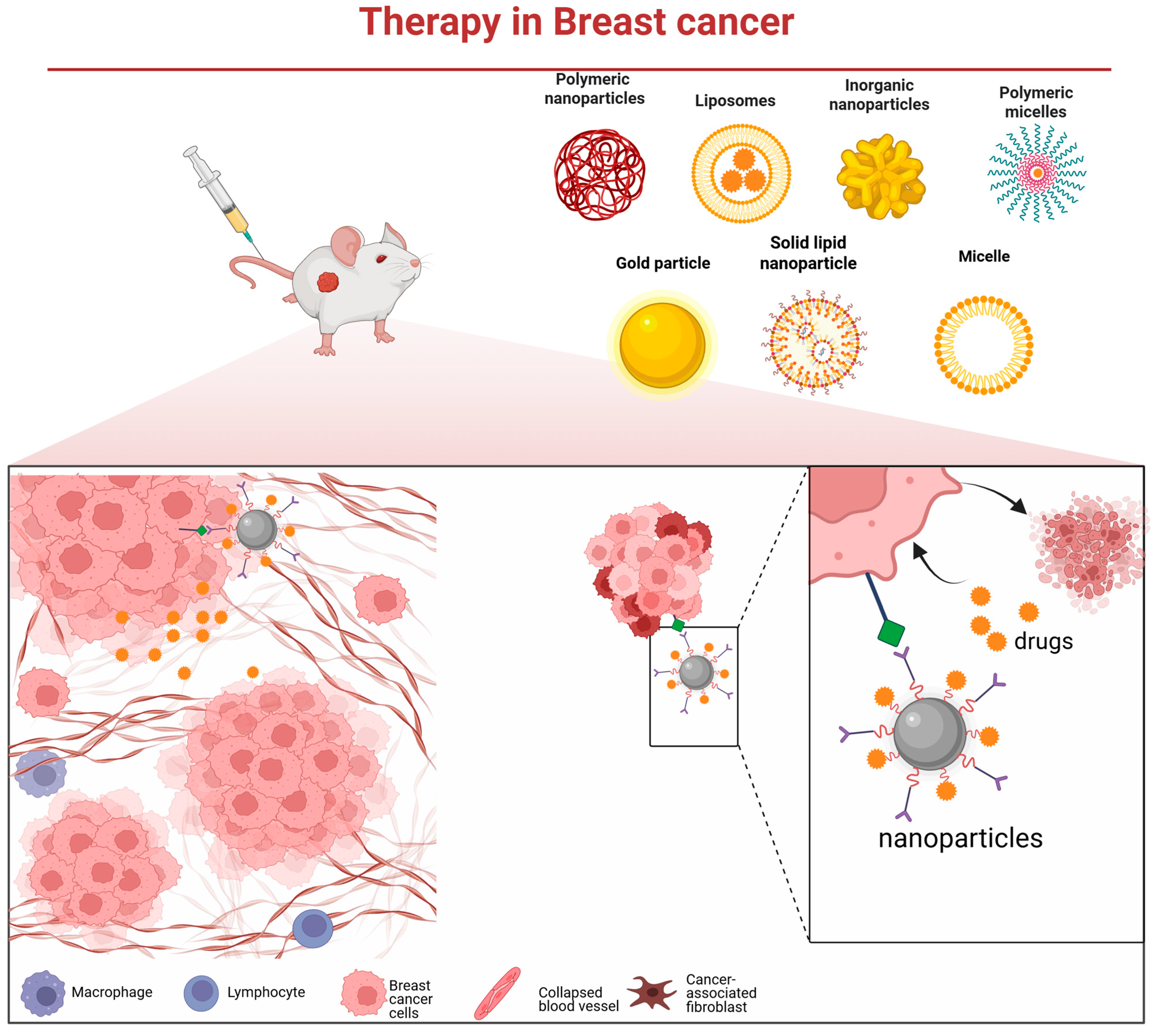
64]. They enable the targeted delivery of high-dose chemotherapeutics, molecularly targeted agents, nucleic acids, or immunomodulators deep into tumor tissues (
Figure 2), while minimizing off-target effects [
65]. Furthermore, such systems can be integrated with photothermal, photodynamic, or radiosensitizing modalities to empower multimodal synergistic therapy.
3.1. Chemotherapy Drug Delivery System
Several nano-formulated chemotherapeutic agents, including liposomal doxorubicin (DOX), have already received clinical approval for breast cancer treatment. The DOX/Cyclophosphamide (AC) regimen represents a classical therapeutic approach associated with high survival rates; however, its utility is limited by common adverse effects—such as cardiotoxicity, hepatotoxicity, and secondary leukemia—as well as the frequent development of acquired resistance [
66,
67]. These challenges underscore the need for more efficient and tumor-selective drug delivery strategies (
Table 2). Poly (lactic-co-glycolic acid) (PLGA), as a biocompatible and biodegradable polymer, has been employed for the delivery of various anti-tumor drug [
68]. To improve the therapeutic profile of DOX, Helmy et al. developed folate receptor-targeted PLGA nanoparticles co-loaded with DOX and trans-ferulic acid (TFA), a natural compound with anticancer activity but poor aqueous solubility [
69]. The resulting DOX/FA-PLGA-TFA NPs not only reduced adverse effects relative to the free drug regimen but also demonstrated robust antitumor efficacy and an improved safety profile [
70]. In a related effort, Hu et al. functionalized PLGA nanoparticles with tannic acid and Fe (III) ions to construct a stimuli-responsive delivery platform for DOX. This system promoted enhanced drug release under acidic conditions, improved cellular uptake in breast cancer cells, and achieved a notable tumor inhibition rate of 85.53 ± 8.77% [
71]. Similarly, Brzeziński et al. developed tannic acid- and DOX-conjugated nanoparticles based on PCL/PTMC polymers, which suppressed tumor cell proliferation more effectively than free DOX [
72].
Platinum-based agents such as cisplatin (CDDP) remain first-line chemotherapeutics that induce apoptosis through DNA damage [
78]. Recent efforts have focused on nano-delivery systems to optimize the pharmacokinetics and tumor accumulation of CDDP. For example, Xiang et al. encapsulated cisplatin into core–shell nanoparticles stabilized by polyphenol–metal coordination. The resulting Polyethylene glycol (PEG)-GAx/Pt nanoparticles exhibited dual pH- and reactive oxygen species (ROS)-responsive drug release, leading to enhanced antitumor activity and reduced systemic toxicity [
73]. In another study, Sultan et al. developed cisplatin-loaded chitosan nanoparticles (CCNP), which effectively induced early and late apoptosis along with chromatin condensation at a concentration of 4.00 μg·mL
−1 [
74].
Paclitaxel (PTX), which disrupts microtubule dynamics to inhibit cell division, is another widely used chemotherapeutic. Epithelial cell adhesion molecule (EpCAM) is a transmembrane glycoprotein that is overexpressed in multiple cancers (e.g., breast, ovarian, and colorectal cancers) and is considered an ideal therapeutic target [
79]. To improve PTX targeting, Khodadadi et al. constructed an EpCAM-specific DNA aptamer-guided nanosystem (SPIONs@PTX-SYL3C) that selectively delivers PTX to EpCAM-overexpressing breast cancer cells and suppresses proliferation [
75]. Research has shown that intercellular adhesion molecule-1 (ICAM-1) is highly expressed in TNBC [
80]. Zhu et al. designed a co-delivery nanoparticle platform for PTX and gemcitabine (GEM) and functionalized it with an ICAM-1 ligand to enable targeted drug delivery. The results demonstrated effective accumulation of the nanoparticles in TNBC cells, suggesting a potential new therapeutic approach for metastatic breast cancer [
76]. In addition, Chen et al. prepared albumin nanoparticles Nab-PTX-PA based on the Nab
TM technology of palmitic acid–paclitaxel (PTX-PA), achieving a high drug-loading system. Nab-PTX-PA not only prolongs retention in tumor tissue but also exhibits superior antitumor activity [
77].
Collectively, drug delivery systems leveraging nanotechnology have markedly increased the localized concentration of chemotherapeutic agents within tumor tissues by harnessing the enhanced permeability and retention (EPR) effect and employing active targeting strategies, while simultaneously minimizing off-target toxicity. Through tailored design, these functional nanocarriers improve the physicochemical properties and pharmacokinetic profiles of therapeutic payloads and contribute to overcoming multidrug resistance, thus playing a pivotal role in enhancing both the efficacy and safety of breast cancer chemotherapy.
3.2. Immunotherapy and Nanomaterials
Although immune checkpoint inhibitors (ICIs) have achieved breakthroughs in advanced TNBC, their efficacy is often limited by an immunosuppressive “cold” TME, characterized by inadequate T cell infiltration, abundant M2-polarized tumor-associated macrophages (TAMs), and impaired dendritic cell (DC) maturation [
81]. To overcome these limitations, nanoparticle-based strategies have been proposed to augment immune checkpoint blockade (
Table 3). Exosomes, which are phospholipid bilayer-enclosed vesicles secreted by various cell types, can serve as natural nanocarriers for nucleic acids, proteins, and lipids [
82]. Shi et al. engineered exosomes decorated with anti-CD3 and anti-HER2 antibodies to construct a multiplexed antibody-retargeted exosome platform (SMART-Exo) for modulating cellular immunity. This platform effectively activates cytotoxic T cells to target and kill HER2 expressing breast cancer cells, thereby inhibiting tumor growth in HER2 positive models [
83].
Cluster of Differentiation 47 (CD47) signaling expressed on the surface of cancer cells mediates immune evasion by engaging the signal regulatory protein α (SIRPα) receptor on macrophages; thus, CD47–SIRPα inhibitors are pursued for tumor immunotherapy [
89]. The magnetic nanoparticles (MN) core blocks the CD47–SIRPα pathway while promoting repolarization of TAMs from the M2 to the M1 phenotype, thereby enhancing anti-tumor immunity. Rao et al. developed a cell membrane-coated magnetic nanoparticle (gCM-MN) that blocks CD47–SIRPα interaction and promotes TAM repolarization from M2 to M1 phenotype, thereby enhancing antitumor immunity and suppressing local growth and distant metastasis [
86]. In a similar vein, Tang et al. conjugated the DSPE-PEG2000-Mal-RS17 peptide—which specifically binds CD47—to the nanovesicle SPI@hEL, generating SPI@hEL-RS17 nanoparticles that potently inhibit primary tumor growth and prevent metastasis [
87,
90].
The cyclic guanosine monophosphate–adenosine monophosphate synthase stimulator of interferon genes (cGAS-STING) signaling cascade is a potential target for antitumor immune responses; activation of this pathway can help reverse the locally immunosuppressive TME and enhance the efficacy of immune checkpoint blockade therapy [
91,
92]. While monophosphoryl lipid A (MPLA) and Mn
3O
4 are known STING agonists, their utility is hampered by poor tumor targeting and stability [
93,
94]. To address this, Liu et al. designed TME-responsive nanoparticles (PMM NPs) co-encapsulating MPLA and Mn
3O
4. These NPs not only activate STING signaling but also interact with PD-1 to relieve immunosuppression, leading to potent tumor growth inhibition [
88].
Beyond these approaches, emerging forms of regulated cell death such as cuproptosis—a copper-dependent mitochondrial cell death pathway—are being harnessed for immunotherapy. Evidence suggests that cuproptosis can induce immunogenic cell death (ICD), promote DC maturation and cytotoxic T cell infiltration, and remodel the immunosuppressive TME [
95]. Nanomedicines associated with anti-programmed cell death protein ligand-1 antibody (αPD-L1) have been demonstrated to enhance immunotherapy for bladder cancer [
96,
97]. In this work, Zhou et al. constructed a zinc–copper bimetallic nanoplatform (Cu-ZnO
2@PDA) for TNBC immunotherapy. This system promotes DC maturation and CD8
+ T cell infiltration via cGAS–STING activation and upregulates PD L1 expression in tumor cells, effectively suppressing TNBC growth and metastasis [
85]. In parallel, Li et al. developed a bifunctional CuP/Er nanoplatform that synergizes ferroptosis and cuproptosis to enhance ICI efficacy. Erastin (Er) inhibits system Xc
− to deplete glutathione and induce ferroptosis, while the copper component triggers cuproptosis. Together, they induce ICD and upregulate PD L1 expression, significantly inhibiting TNBC growth and preventing brain metastasis [
84].
In summary, nanomaterials provide versatile platforms for improving the efficacy of breast cancer immunotherapy. By enabling targeted delivery of immunomodulators, blocking immunosuppressive signals, activating innate immune pathways, and inducing novel forms of immunogenic cell death, nano-enabled strategies can effectively convert immunologically “cold” tumors into “hot” ones, enhancing T cell infiltration and function. This synergistic approach augments the therapeutic effect of immune checkpoint inhibitors and offers new hope for overcoming immunotherapy resistance.
3.3. Gene-Therapy and Nanomaterials
Genetic alterations and dysregulated gene expression are closely associated with the initiation and progression of breast cancer, making gene therapy—through correction of defective genes or modulation of gene expression—a promising therapeutic strategy (
Table 4). However, the clinical translation of naked nucleic acids is hampered by their poor cellular uptake and instability in systemic circulation. Nanomaterials, with their high loading capacity, scalable production, and controllable release profiles, have thus emerged as attractive vehicles for breast cancer gene therapy [
98]. Lipid nanoparticles (LNPs), as non-viral gene delivery systems, are widely used in various disease contexts due to their high payload capacity, low immunogenicity, and cost-effectiveness [
99]. In vitro-transcribed mRNA (IVT-mRNA) can express therapeutic antibodies in vivo, enabling the targeting of intracellular drug targets. Rybakova and colleagues developed an LNP-based platform to deliver in vitro-transcribed mRNA (IVT-mRNA) encoding the anti-HER2 antibody trastuzumab. Their system demonstrated enhanced protein expression, prolonged antibody persistence, and significant tumor growth inhibition with improved survival in a murine model, offering a novel strategy for antibody-based breast cancer therapy [
100]. High expression of tubulointerstitial nephritis antigen-like 1 (Tinagl1) has been shown to correlate with overall survival in TNBC [
101,
102]. YAP and TAZ are transcriptional co-activators associated with the Hippo pathway that play crucial roles in breast cancer development and malignant behavior [
103,
104]. Thus, targeting YAP/TAZ represents a promising therapeutic strategy for breast cancer. CD44 is an important cancer stem cell marker and is increasingly recognized as a valuable target for eradicating invasive tumors [
105]. Zhao et al. constructed CD44-specific peptide-modified LNPs for co-delivery of YAP/TAZ siRNA. Compared with non-modified LNPs, these CD44-targeted LNPs exhibited higher cellular uptake and stronger tumor-suppressive effects [
106].
The secreted protein Tinagl1 has been identified as a suppressor of TNBC growth via inhibition of EGFR and integrin signaling. Based on this, Musetti et al. designed lipid–protein–DNA–lipid (LPD) nanoparticles loaded with Tinagl1 plasmid DNA (pDNA) to enable localized and targeted Tinagl1 expression. This gene therapy approach led to sustained inhibition of tumor growth and suppression of distant metastasis, highlighting its potential for TNBC treatment [
107].
MiRNAs are small non-coding RNAs frequently dysregulated in cancer, leading to either oncogene activation or tumor suppressor silencing. In breast cancer, miR-206 is consistently downregulated, and its restoration has been shown to inhibit malignant proliferation [
112,
113]. Capitalizing on this tumor-suppressive function, Chaudhari et al. engineered a metallic nanoparticle platform for the efficient intracellular delivery of miR-206. Their data demonstrated that the nanocomplex successfully transported miR-206 into breast cancer cells, induced the cell cycle, and downregulated NOTCH3, thereby triggered apoptosis in breast cancer cells [
108]. The tumor-suppressor gene p53 is the most frequently mutated gene in human cancers, with mutations often conferring chemoresistance and poor prognosis [
114,
115]. Consequently, Strategies to restore wild-type p53 function are therefore of great interest. To improve transfection efficiency, liposomes have been functionalized with targeting ligands to promote receptor-mediated endocytosis [
116]. The transferrin receptor (TfR), which is markedly overexpressed on a broad spectrum of cancer cells, has thus been exploited as a docking site for ligand-directed drug delivery [
117]. Rejeeth et al. utilized TfR-targeted silica nanoparticles to deliver exogenous p53. Their results demonstrated robust induction of tumor-cell apoptosis and significant suppression of tumor growth in vivo [
110].
DNAzymes—catalytic single-stranded DNA molecules that cleave RNA or DNA substrates in the presence of divalent metal ions such as Mn
2+ or Zn
2+—have also been explored for cancer gene therapy [
118]. Jiang et al. developed a degradable biomimetic nanocapsule incorporating DNAzymes into Mn/Zn–IP6-based cores decorated with small-molecule peptides. This system showed potent antitumor activity and suppressed distal metastasis in both orthotopic and lung metastasis models of breast cancer [
109]. In another effort, Yao et al. designed a Zn–Mn ferrite-based nanoheterogeneous composite (DNC-ZMF) integrating cascade DNAzymes and promoter-like elements for combined gene/chemodynamic therapy. The nanocomposite triggers gene therapy by consuming intratumoral protons and glutathione to release metal ions, which in turn drive Fenton-like reactions to generate reactive oxygen species. Together, these mechanisms synergistically inhibited tumor growth, achieving an inhibition rate of 70.4% [
111].
In summary, nanomaterials serve as effective non-viral carriers that successfully address key challenges in the systemic delivery of nucleic acid therapeutics, including poor stability, inefficient cellular uptake, and limited targeting specificity. By encapsulating and delivering a variety of gene-based agents—such as siRNA, mRNA, pDNA, miRNA, and DNAzymes—nanosystems enable precise intervention at the genetic level in breast cancer progression. This strategy demonstrates considerable therapeutic potential and is accelerating the translation of gene therapy into clinical practice.
3.4. Phototherapy
Phototherapy represents a localized treatment strategy for solid tumors, whose core principle involves the use of light at specific wavelengths to induce photochemical or photothermal effects within the target tissue, thereby selectively eradicating tumor cells [
119]. In contrast to conventional treatments, phototherapy offers advantages such as minimal invasiveness and reduced systemic side effects. The two primary forms of phototherapy, PDT and PTT, utilize light in combination with exogenous or endogenous absorbers to generate cytotoxic ROS or elevate local temperature, respectively, achieving therapeutic objectives [
120]. Owing to their unique mechanisms of action, both PDT and PTT are frequently employed as adjuvant therapies alongside conventional cancer treatments. Studies have confirmed that these phototherapeutic approaches can effectively overcome chemoresistance, suppress compensatory survival signaling pathways, and enhance drug delivery and accumulation efficiency by modulating the tumor microenvironment, for instance, through improved vascular permeability [
121,
122]. With advances in nanotechnology, nanoplatforms loaded with PSs or photothermal agents have been developed for breast cancer treatment (
Table 5). The following sections will elaborate on PTT, PDT, and their combined strategy (PTT/PDT) in detail.
3.4.1. Photothermal Therapy
PTT is an emerging oncotherapeutic modality that utilizes near-infrared (NIR) light to excite photothermal agents (PTAs), generating localized hyperthermia to ablate neoplastic lesions and induce ICD [
143]. PTT is seldom employed as a monotherapy but can significantly enhance the selectivity and efficacy of other treatment modalities when applied in combination. A wide range of nanomaterials—including metallic nanostructures, carbon-based nanosystems, and semiconducting polymers—have been extensively explored as efficient PTAs. Among various PTAs, GNRs are widely employed in oncology due to their high photothermal conversion efficiency and low systemic toxicity [
144,
145]. Their anisotropic geometry confers strong longitudinal surface plasmon resonance in the NIR region, making them ideal for NIR-triggered PTT [
146]. Zhao et al. and Chen et al. independently developed DOX-loaded core–shell nanoplatforms based on GNRs; both studies demonstrated that the combined PTT-chemotherapy regimen produced significantly stronger tumor-suppressive effects than DOX monotherapy, offering a novel therapeutic strategy for breast cancer treatment [
123,
124]. In another approach, Granja and colleagues co-loaded solid lipid nanoparticles with GNRs and the anticancer drug mitoxantrone. The resulting nanocarriers induced a temperature increase exceeding 20 °C and promoted accelerated mitoxantrone release, significantly enhancing breast cancer cell death [
125].
In addition to gold nanoparticles, GO has been widely explored as a photothermal agent owing to its large specific surface area, strong NIR absorption, and good biocompatibility [
147]. Li and colleagues developed an ultrafine graphene oxide nanoscale platform (UDP) for DOX delivery, further encapsulating it with polydopamine (PDA). Under NIR irradiation, UDP-treated mice exhibited a rapid temperature increase, significant tumor cell death, and inhibited tumor growth in 4T1-bearing models [
126]. Leveraging the excellent photothermal properties of PDA, Lu and colleagues conjugated DOX and ICG via electrostatic interactions and π–π stacking, functionalized the surface with PDA, and attached the conjugate to anaerobic Bifidobacterium (Bif). The resulting Bif@DIP hybrid achieved tumor-selective accumulation and synergistically suppressed tumor growth through combined chemotherapy and PTT [
128].
Cell membrane-derived nanoparticles inherit the natural biological properties, enabling immune evasion and tumor-specific targeting [
148]. Imiquimod (R837) is an immune adjuvant that promotes DC maturation by activating TLRs and induces macrophage polarization toward the M1 phenotype [
149]. Zhang and colleagues designed Fe
3O
4 nanoparticles loaded with ICG and R837 using a cell membrane cloaking strategy for combinatorial therapy. The results showed that Fe
3O
4 and ICG synergistically produced photothermal effects that enhanced cancer cell ablation, while promoting R837-induced release of tumor-associated antigens and strengthening antitumor immunity [
129]. Discoidin domain receptor 2 (DDR2) is a receptor tyrosine kinase aberrantly expressed in breast cancer that promotes cancer-associated fibroblast (CAF) activation and EMT [
150,
151]. Chen and colleagues developed cancer cell membrane-coated nanospheres (M@P-WIs) for co-delivery of the photothermal agent IR-780 and the DDR2 inhibitor WRG-28. Experimental results demonstrated that M@P-WIs achieved safe and durable clearance of primary tumors and established long-term immune memory, reducing recurrence and metastasis [
127].
PTT employs photothermal agents that, upon near-infrared light excitation, generate localized hyperthermia to ablate tumor tissue. Its key advantages include spatiotemporal controllability and minimal invasiveness. Various nanomaterials—such as gold nanorods, graphene oxide, and polydopamine—have been established as efficient photothermal converters. Beyond direct tumor ablation, PTT can induce immunogenic cell death and, when combined with chemotherapy or immunotherapy, exhibits marked synergistic therapeutic effects.
3.4.2. Photodynamic Therapy
PDT exerts its cytotoxic and growth-suppressive effects by activating PSs with laser light at specific wavelengths, generating ROS that disrupt cellular structures and tumor vasculature [
152]. The efficacy of this therapy critically depends on key parameters including the PS activation wavelength, irradiation duration, and delivery efficiency of the PSs [
153]. Employing nanomaterials or nanocomposites as PS carriers enables selective targeting and enhanced delivery of PSs to tumor tissues, thereby significantly improving the therapeutic outcome of PDT. To overcome the hypoxic TME, Liu et al. engineered a liposomal nanoplatform co-encapsulating nano-platinum (nPt) and the photosensitizer verteporfin (VP). Within the tumor, nPt catalyzes endogenous H
2O
2 decomposition to generate O
2, sustaining VP-mediated PDT; conversely, PDT-induced ROS increase membrane permeability, accelerating nPt release. This reciprocal amplification produced robust cytotoxicity that eradicated primary tumors and suppressed distant metastasis [
130]. Porphyrin and its derivatives, as second-generation PSs, absorb at 660–770 nm and accumulate rapidly in cancer cells, attracting broad interest in PDT [
154]. Cabral and colleagues designed a nanoemulsion co-loaded with aluminum phthalocyanine and DOX. Upon laser irradiation, this synergistic therapy markedly inhibited tumor proliferation and induced tumor tissue apoptosis, providing a new alternative for the treatment of breast cancer [
131]. Besides, Lipid-encapsulated oxygen-loaded nanobubbles (Lipo-NBs-O
2) were designed to enhance the efficacy of the photosensitizer copper phthalocyanine. Conjugation with anti-HER2 and anti-PD-L1 antibodies yielded DRT@Lipo-PS-NBs-O
2, which targets HER2-positive breast cancer. Under 808 nm NIR irradiation, the oxygen carried by this system augmented PDT efficacy, increasing the destruction of the primary tumor while effectively inhibiting growth and metastasis of distant tumors [
134]. Furthermore, leveraging the specific interaction between lectins and carbohydrates, Calavia et al. functionalized phthalocyanine-coated AuNPs with lactose, enabling precise drug delivery through selective targeting of the overexpressed galactose-binding lectin-1 receptor on breast cancer cells. Experimental results demonstrated that compared with previous studies using other carbohydrates for selective cancer targeting, this functionalized nanoparticle system achieved stronger cytotoxic efficacy with shorter irradiation times and lower radiation doses [
155].
Rose bengal (RB), a hydrophilic photosensitizer, exerts anticancer effects by generating singlet oxygen upon irradiation, though its tissue penetration is limited [
156,
157]. Uddin et al. developed an RB delivery platform using chitosan nanospheres irradiated with 532 nm light. At low doses, it efficiently killed tumor cells while showing no cytotoxicity toward normal mammary epithelial cells [
132]. In addition, Wang and colleagues designed a magnetic and pH-responsive nanocomposite, Ce6@MMSN/DOX@FA-PEG-b-PAsp, for co-delivery of the photosensitizer chlorin e6 (Ce6) and DOX. In tumor-bearing mice, the composite exhibited efficient tumor targeting under an external magnetic field. In vitro, DOX release was pH-responsive, effectively reversing tumor cell resistance and inducing apoptosis, thus providing a new platform for breast cancer therapy [
133].
Although PDT can directly damage tumor cell DNA and induce apoptosis, its efficacy is limited by cellular DNA repair mechanisms. While, poly(ADP-ribose) polymerase (PARP) facilitates repair of DNA single-strand breaks [
158]. To address this, Wu and colleagues developed a multifunctional biomimetic nanoplatform, 4T1Mem@PGA-Ce6/Ola (MPCO), for co-delivery of Ce6 and the PARP inhibitor olaparib (Ola). Experimental results showed that MPCO nanoparticles effectively generate ROS under laser irradiation, damaging tumor cell DNA and inhibiting its repair, thereby suppressing the growth of orthotopic breast tumors and preventing tumor metastasis and recurrence [
135].
PDT relies on photosensitizers that, upon irradiation with light of a specific wavelength, generate reactive oxygen species to destroy tumor cells. Nanocarriers significantly improve the targeted delivery, tumor accumulation, and adaptability to hypoxic microenvironments of photosensitizers. By integrating oxygen-generation strategies or DNA repair inhibitors, nanoplatforms further overcome key bottlenecks that limit PDT efficacy, thereby enhancing its antitumor outcomes.
3.4.3. Combined Therapy
Leveraging the complementary mechanisms of action between PDT and PTT, their combined application results in synergistic enhancement of antitumor efficacy. This combination not only facilitates targeted delivery of PSs to tumor tissues but also improves intratumoral ROS accumulation through enhanced local perfusion, thereby achieving synergistic antitumor effects [
120]. The realization of this synergistic effect largely relies on the development of multimodal nanoplatforms capable of co-delivering PSs and photothermal agents, which provide crucial technical vehicles for precise implementation of combination therapy. Zero-valent iron (ZVI) exhibits strong reducing capability and Fenton-like catalytic activity. Nano-ZVI (nZVI) retains these catalytic properties while serving as an effective photothermal agent [
159,
160]. Yu et al. prepared poly(dopamine)-modified nZVI (nZVI@PDA) for breast cancer PTT/PDT. The results demonstrated that, under 808 nm NIR irradiation, nZVI@PDA showed high photothermal conversion efficiency and ROS generation rate, enabling efficient killing of breast cancer cells [
136].
Gold nanomaterials, particularly GNRs, are widely studied for PTT-based combination therapy due to their strong tunable LSPR effects and excellent photothermal conversion efficiency [
161]. Notably, gold nanostructures can suppress photosensitizer activity prior to reaching the target site, avoiding self-damage and premature activation in circulation, making GNRs ideal for PTT/PDT combinations [
139,
162]. 5-Animolevulinic acid (ALA), a metabolic precursor of the endogenous photosensitizer protoporphyrin IX (PpIX), is widely used in PDT [
163]. Xu et al. constructed a multifunctional nanoplatform by conjugating DOX and ALA to gold nanorod (GNRs-MPH-
ALA/DOX-PEG) for combined therapy of breast cancer including chemotherapy, PTT, and PDT. Experimental results showed that this platform accumulated effectively in tumor tissue and, under NIR irradiation, generated sufficient ROS for PDT and heat for PTT, leading to complete inhibition of tumor progression (final tumor volume is only 0.43 cm
3) [
137]. In addition, Cheng and colleagues loaded the photosensitizer IR820 and DOX onto organically silicon-coated GNRs, and encapsulated them with hyaluronic acid (HA) to form IR&DOX@NC. This nano-hybrid responded to HAase and glutathione in the TME, enabling preferential accumulation and triggered drug release. Under 808 nm NIR irradiation, it also generated ROS for PDT and induced photothermal effects [
138]. In another study, Xu et al. developed a dual-targeted hyaluronic acid-coated gold nanorod platform (GNR-HA-
ALA/Cy7.5-HER2) targetingHER2 and CD44, which also achieved combined PTT and PDT, and result in complete tumor ablation [
139].
In addition to the aforementioned nanomaterials, materials such as polydopamine nanoparticles, albumin nanoparticles, and graphene oxide have also been incorporated into nanoplatforms for multimodal therapy, including PTT/PDT combined with chemotherapy or immunotherapy [
140,
141,
142]. The integration of these therapeutic modalities significantly inhibits tumor growth and mitigates the development of drug resistance, offering a promising comprehensive approach for breast cancer treatment.
The combination of PTT and PDT, or the integration of phototherapy with other treatment modalities such as chemotherapy and immunotherapy, represents a significant direction in cancer therapy. Multifunctional nanoplatforms capable of co-delivering different therapeutic agents enable precise spatiotemporal control over their actions, achieving a synergistic “1 + 1 > 2” therapeutic effect. This approach significantly enhances the inhibitory efficacy against breast cancer, particularly for its refractory subtypes.
4. Theranostic Nanomaterials
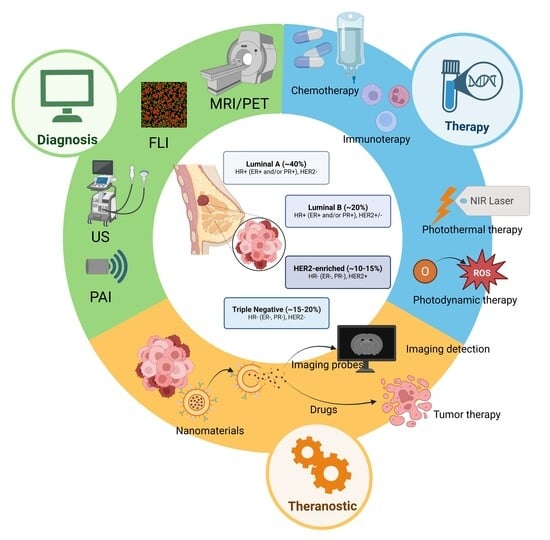
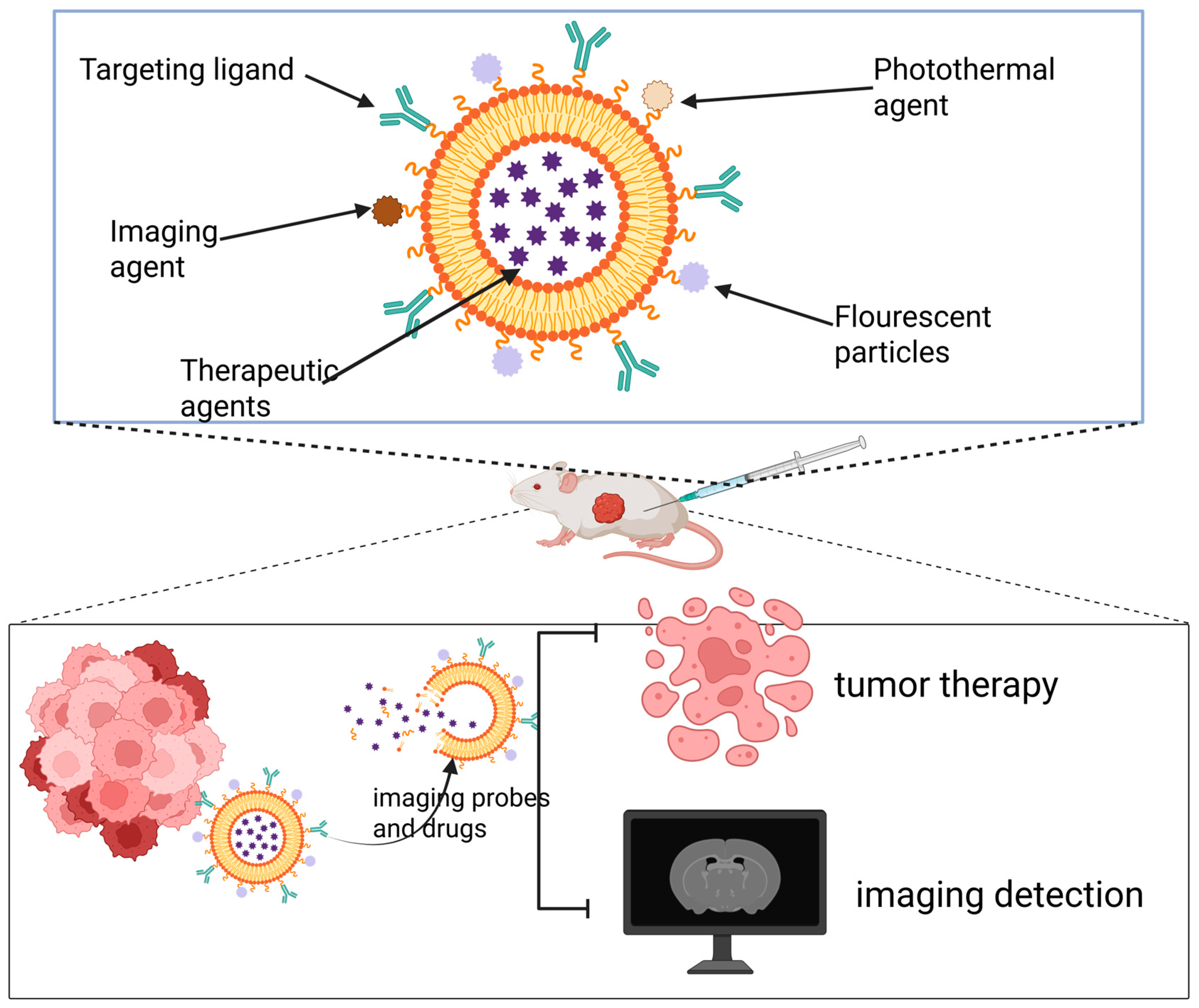
Theranostic nanomaterials refer to nanocarrier systems that co-load diagnostic imaging agents and therapeutic drugs within a single nanoparticle, enabling precise disease intervention and real-time monitoring [
164]. By incorporating imaging probes, therapeutic agents, or PSs, and engineering them to respond to the TME, these platforms can activate imaging signals and control drug release specifically at the lesion site [
165]. This allows for precise matching of therapeutic strategies to the different molecular subtypes of breast cancer. This integrated paradigm of “treatment within diagnosis and monitoring within treatment” significantly enhances the precision, efficiency, and safety of breast cancer diagnosis and therapy, demonstrating the tremendous potential of nanomaterials in advancing personalized precision medicine for breast cancer (
Figure 3).
In recent years, Mn -based nanomaterials have shown rapid development in the field of cancer nanodiagnostics and nanotherapeutics. As a naturally occurring element in the human body, Mn participates in physiological processes such as carbohydrate, lipid, and protein metabolism, endowing Mn-containing systems with good biocompatibility and relatively low toxicity [
166,
167]. Mn-based nanomaterials can significantly shorten T1 and exhibit lower T2 at high magnetic field strengths, enabling their function as T1- and T2-weighted MRI contrast agents [
168,
169]. Therapeutically, Mn2+ can activate Fenton-like reactions to decompose the elevated hydrogen peroxide in tumors, generating abundant ROS that effectively kill cancer cells [
170]. Moreover, Mn
2+ has been reported to activate the host innate immune system via the cGAS–STING signaling pathway, markedly enhancing DC activation and antigen presentation, and promoting tumor-specific T cell responses, thereby synergistically improving immunotherapy efficacy [
171]. These multifaceted properties establish manganese-based nanomaterials as promising agents for integrated cancer theranostics, combining diagnostic imaging, targeted therapy, and immune modulation. Leveraging the multifaceted applications of manganese in cancer imaging and therapy, Zhu et al. developed a manganese-based nanoplatform loaded with glucose oxidase, PTX, and a NIR dye. This platform releases its cargo in acidic environments, not only enhancing T1 contrast in MRI but also achieving efficient inhibition of breast cancer cells, thereby offering a novel diagnostic and therapeutic strategy [
172]. Similarly, Ziyaee et al. prepared MnO
2@Poly (DMAEMA-Co-IA)-MTX NPs based on MnO
2 nanoparticles, coated with itaconic acid (IA) and conjugated to methotrexate (MTX). In acidic tumor microenvironments, manganese dioxide dissociates into Mn
2+, thereby enhancing T1 MRI signals. At the same time, Mn dioxide dissociates into Mn
2+, helping to overcome hypoxia-associated radiotherapy resistance and significantly improving therapeutic efficacy [
173]. Biotin, a vitamin receptor commonly overexpressed across various solid tumors, is considered an excellent tumor-targeting moiety for breast cancer treatment. Jain et al. functionalized Mn3O4 nanoparticles with biotin for the targeted delivery of GEM to breast cancer cells. The experimental results show that the resulting nanoparticles constitute a pH-responsive and sustained-release system, providing excellent contrast in both T1- and T2-weighted MRI, and delivering superior therapeutic efficacy compared to free GEM [
174].
Gd and iron oxide nanoparticles (Fe
3O
4 NPs) are also commonly used MRI contrast agents, producing contrast enhancement in T1- and T2-weighted images, respectively, and are widely applied to cancer imaging. When combined with therapies such as PTT, they enable precise cancer theranostics [
175,
176]. Mesoporous dopamine (MPDA) nanoparticles function as photothermal transducers and simultaneously serve as anchors for various metal ions, while π–π interactions facilitate the adsorption of the chemotherapy drug like DOX and the anti-inflammatory drug such as MX [
177,
178,
179]. Liu et al. synthesized MX@Arg-Gd-MPDA mesoporous nanoparticles. The chelated Gd
3+ provides precise T1–T2 bimodal MRI guidance for PTT, while the loaded arginine (Arg) enhances photothermal conversion efficiency and ROS scavenging capability, synergizing with MX to improve the anti-inflammatory effect post-PTT. In a breast cancer mouse model, this system demonstrated notable antitumor efficacy [
180]. Chen et al. designed a novel theranostic nanoparticle targeting overexpressed ICAM-1 in TNBC. Gd and DOX were loaded into polyethylene glycol–poly(ε-caprolactone) (PEG-PCL) copolymer-based nanoparticles, functionalized with anti-ICAM-1 antibodies. The results showed effective nanoparticle accumulation at TNBC sites, enhanced T1-weighted MRI contrast, and stronger tumor growth inhibition compared to controls [
181]. Oxygen deficiency is a key factor driving invasion, metastasis, and chemotherapy resistance in TNBC. Zhang et al. developed a near-infrared-responsive, on-demand oxygen-releasing nanoplatform (O
2-PPSiI) loaded with PTX and Gd
3+, enabling precise and controllable drug release. The platform allows real-time monitoring of its dynamic biodistribution via tumor MRI. Under synergistic NIR irradiation, it suppressed EMT, thereby reducing the migratory and invasive capabilities of TNBC tumors [
182]. Magnetic nanogels (MNLs) are a class of nanogels incorporating magnetic nanoparticles, offering advantages such as high stability, remote operability, controllable drug delivery, and MRI capabilities [
183]. Zhang and colleagues developed MNLs loaded with Fe
3O
4 and DOX, and conjugated with the HER antibody. These MNLs facilitate the release of DOX under acidic conditions, thereby enhancing therapeutic efficacy, while the Fe
3O
4 component contributes to an increased contrast in T2-weighted imaging [
184].
Photoacoustic imaging (PAI) is an emerging imaging modality that uses optical excitation to generate ultrasound signals, enabling the visualization of hemoglobin concentration and distribution in breast tissue and facilitating malignant tumor identification [
185]. Perfluorocarbon (PFC) emulsions hold multifunctional value in diagnosis and therapy, enabling drug delivery, tumor targeting, and imaging with photoacoustic and US modalities [
186]. Fernandes and colleagues developed a theranostic PFC nanoemulsion conjugated with silica-coated gold nanoparticles. This nanoemulsion could be loaded with various chemotherapeutic drugs or imaging agents, and selectively induce cancer cell death upon irradiation at 680 nm. Moreover, it exhibited significantly enhanced signal intensity in both US and PAI, with an average ultrasound intensity more than ten times greater than that of whole blood [
13]. Carrese et al. developed hybrid albumin-modified nanoparticles with photoacoustic properties, loaded with the anticancer drug DOX. The results indicated that these nanoparticles exhibited a favorable combined chemo- PTT effect, effectively inhibiting breast cancer cell viability, while also possessing strong photoacoustic characteristics (contrast-to-noise ratio: 12–35; signal-to-noise ratio: 13–36). This approach provides a new option for breast cancer theranostics [
187]. Phthalocyanines (PC) and naphthalocyanine (NC) dyes have been employed in photoacoustic and ultrasonographic imaging due to their NIR absorption, stability, and imaging contrast [
120,
188]. They can also serve as alternatives to gold nanoparticles and ICG for PTT [
189]. Tian et al. encapsulated various NC and PC dyes and their derivatives in nanoemulsion micelles, and screening revealed that CuNC (Octa)-loaded micelles produced photoacoustic signal intensities tenfold higher than those of gold nanoparticles, while achieving heating performance under laser irradiation comparable to gold nanorods [
190].
For patients with early-stage breast cancer, breast-conserving surgery (BCS) is a standard treatment; however, positive tumor margins are strongly associated with local recurrence and distant metastasis [
191]. Intraoperative frozen section analysis can assist in assessing margin status but prolongs surgery duration and exhibits low sensitivity (<80%) [
192,
193]. Therefore, there is an urgent clinical need for a real-time, high-resolution, and highly specific intraoperative margin assessment method. Fluorescence imaging in NIR-II window (1000–1700 nm) offers high sensitivity, superior resolution, and deep tissue penetration, holding great potential for real-time intraoperative imaging [
194]. He et al. designed a hafnium (IV)-coordinated NIR-II fluorescent nanoprobe that not only accumulates efficiently at tumor sites but also enables FLI of sub-millimeter-scale microtumors, significantly reducing local tumor recurrence [
195]. In addition, Wang et al. developed a nano-system based on ICG and 125I-labeled glycopeptides, which accumulates in tumor tissue under NIR stimulation and enables FLI/SPECR imaging, while enabling precise PTT and PDT upon laser irradiation [
196]. Rubtsova et al. also developed a lipid probe for NIR imaging and PDT of TNBC [
197].
In conclusion, theranostic nanomaterials mark a pivotal milestone in the management of breast cancer. By integrating diagnostic imaging and therapeutic functions within a single nanosystem, they realize the clinically appealing paradigm of “therapy guided by diagnosis and monitoring enabled by therapy.” Through their responsiveness to the tumor microenvironment and the combination of multiple imaging modalities and treatment approaches, these platforms allow for real-time visualization and precise control over drug delivery, distribution, and efficacy. This integrated capability significantly advances the development of personalized precision medicine for breast cancer and underscores their strong potential for clinical translation (
Table 6).
6. Conclusions
Nanomaterials, by virtue of their size-dependent effects, ultrahigh surface-to-volume ratio and facile surface engineering, have catalyzed a paradigm shift in breast cancer management. Conventional imaging (mammography, ultrasound) relies predominantly on morphological differences, whereas nano-probes—superparamagnetic iron-oxide nanoparticles for MRI, gold nanorods for CT, quantum dots for NIR-II fluorescence—achieve active tumor accumulation through ligand-mediated targeting (anti-HER2, RGD peptides, etc.), elevating signal-to-noise ratios and lowering detection limits to sub-millimetre lesions. This enables both earlier-stage primary tumors and occult micro-metastases that remain invisible on standard images to be identified, markedly improving diagnostic accuracy.
Concurrently, nanomaterial-based biosensors—graphene field-effect transistors, gold-nanorod SERS chips—allow non-invasive, ultrasensitive detection of circulating tumor DNA, exosomes and protein biomarkers in blood or saliva, extending tissue biopsy to real-time “liquid biopsy” for molecular subtyping, response monitoring and relapse prediction, thereby underpinning precision oncology.
Therapeutically, nanocarriers (liposomes, polymeric micelles) exploit the EPR effect plus active targeting to deliver chemotherapeutics selectively to the tumor bed, overcoming poor solubility, short circulation half-life and off-target toxicities (cardiotoxicity, myelosuppression) inherent to free drugs. Co-delivery of cytotoxics with P-glycoprotein inhibitors or siRNA further circumvents multi-drug resistance. Nanoparticles also function per se as immune adjuvants or as vehicles for tumor antigens/immunomodulators, converting immunologically “cold” tumors into “hot” ones and potentiating immune-checkpoint blockade, thus opening a nano-immunotherapy avenue.
Additionally, nanomaterials serve as ideal agents for PTT and PDT, transducing light into localized heat or ROS to achieve spatiotemporally controlled tumor ablation with minimal collateral damage. Integrating these functionalities into “theranostic” nanoplatforms synchronizes real-time imaging with on-demand treatment, heralding a new era of individualized and precise breast cancer medicine.