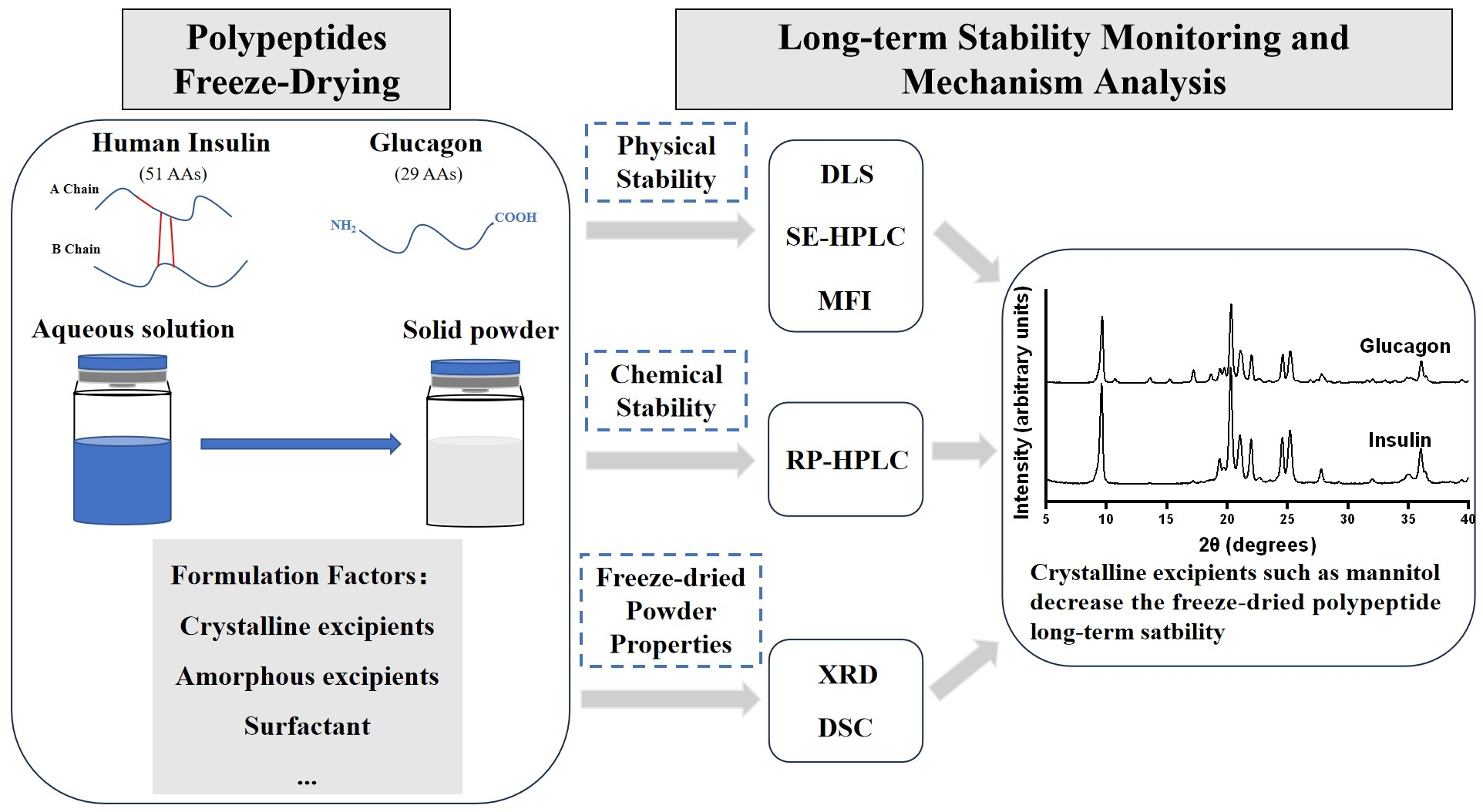
The Detrimental Effects of Crystalline Excipients: How They Jeopardize the Long-Term Stability of Freeze-Dried Polypeptide Formulations


Abstract
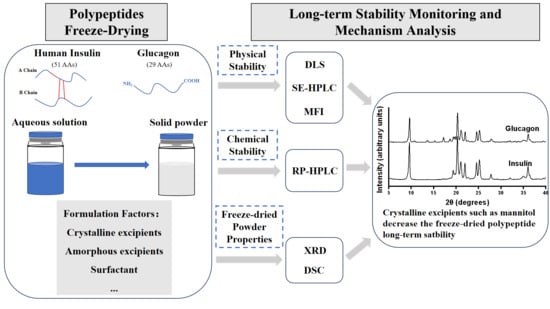
1. Introduction
2. Materials and Methods
2.1. Materials
2.2. Methods
2.2.1. Formulations Preparation
2.2.2. Freeze-Drying
2.2.3. Karl-Fisher Moisture Determination
2.2.4. Differential Scanning Calorimetry (DSC)
2.2.5. X-Ray Powder Diffraction (XRPD)
2.2.6. Accelerated Stability Test
2.2.7. Reverse Phase-High Performance Liquid Chromatography
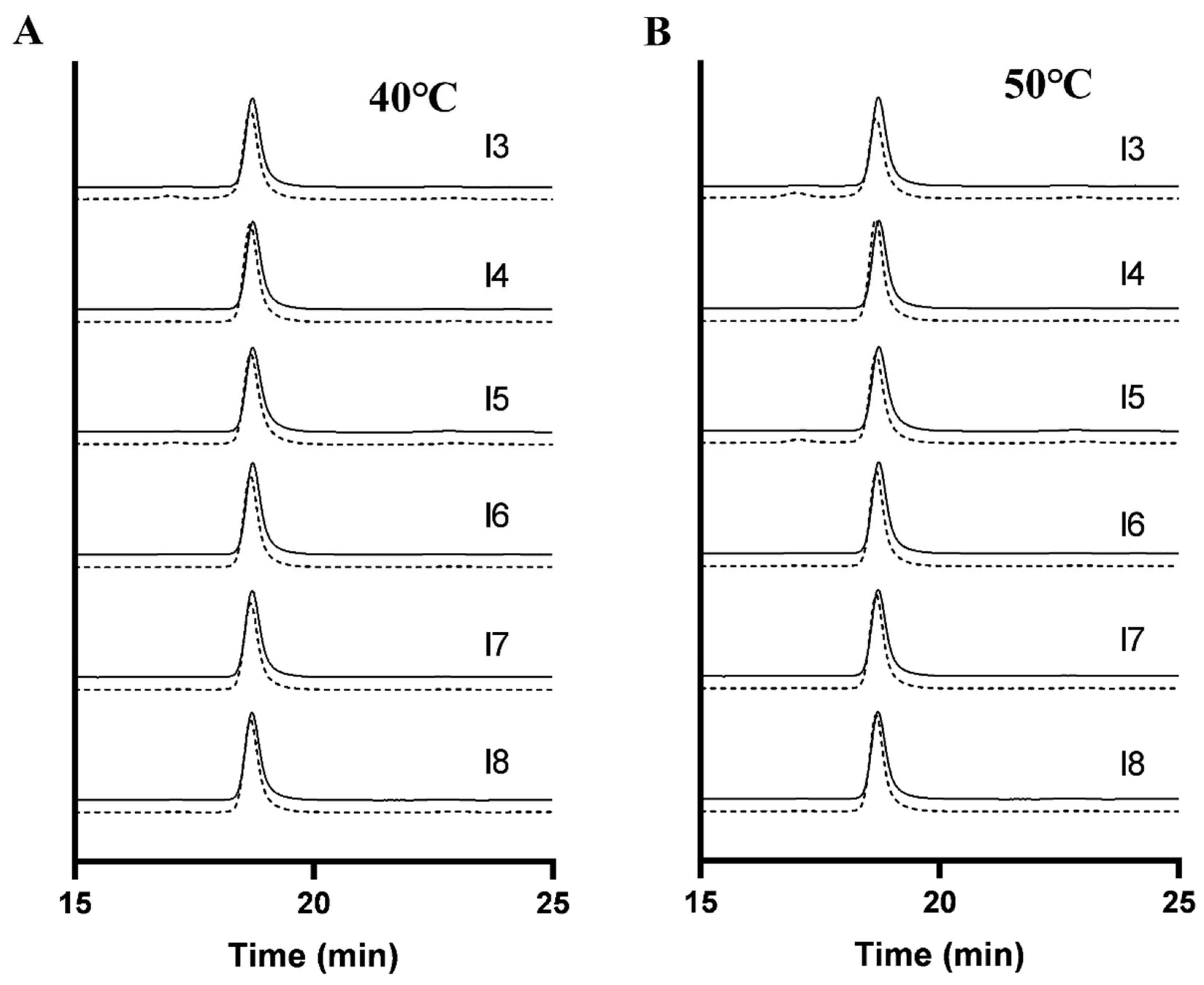
2.2.8. Size Exclusion-High Performance Liquid Chromatography
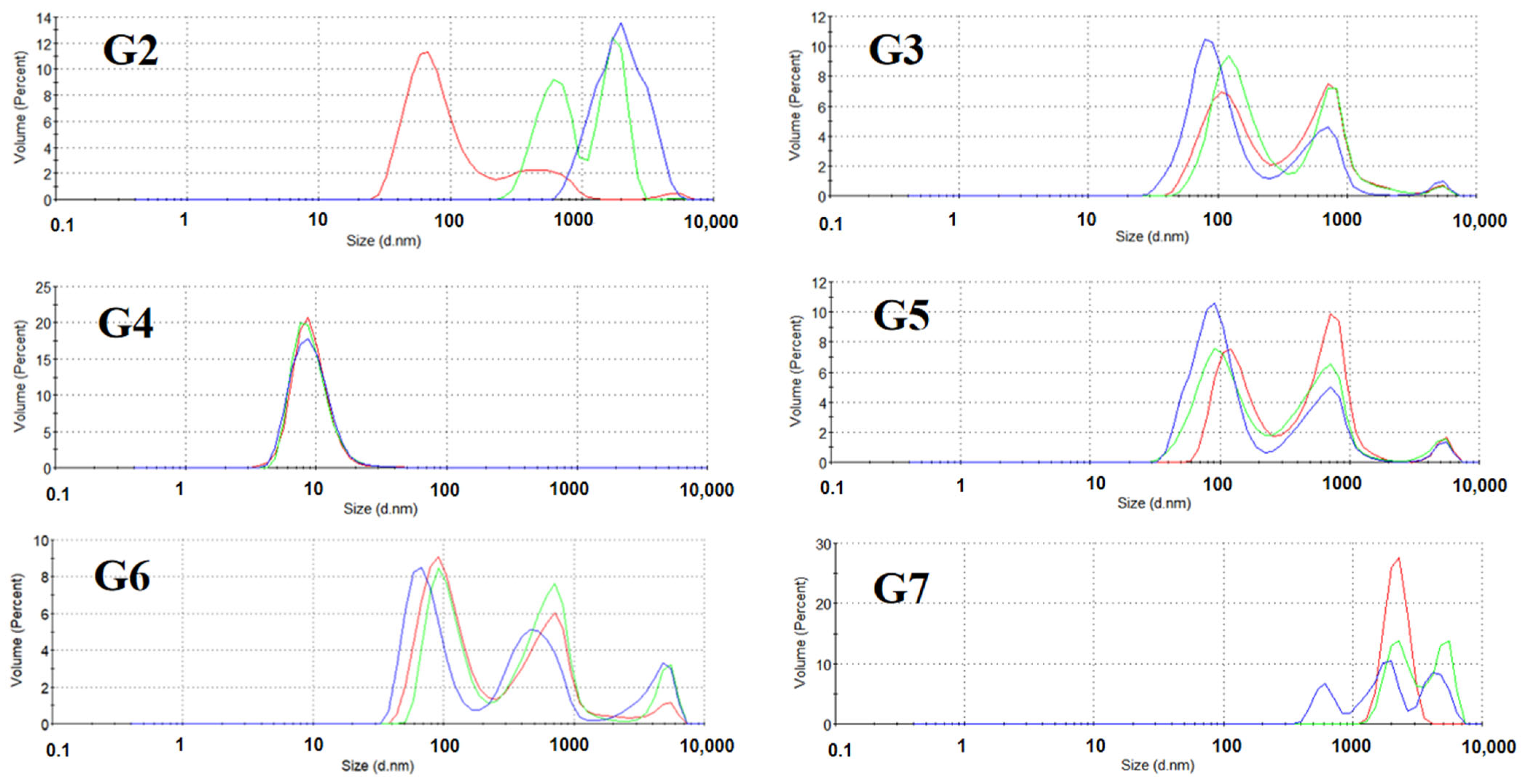
2.2.9. Dynamic Light Scattering
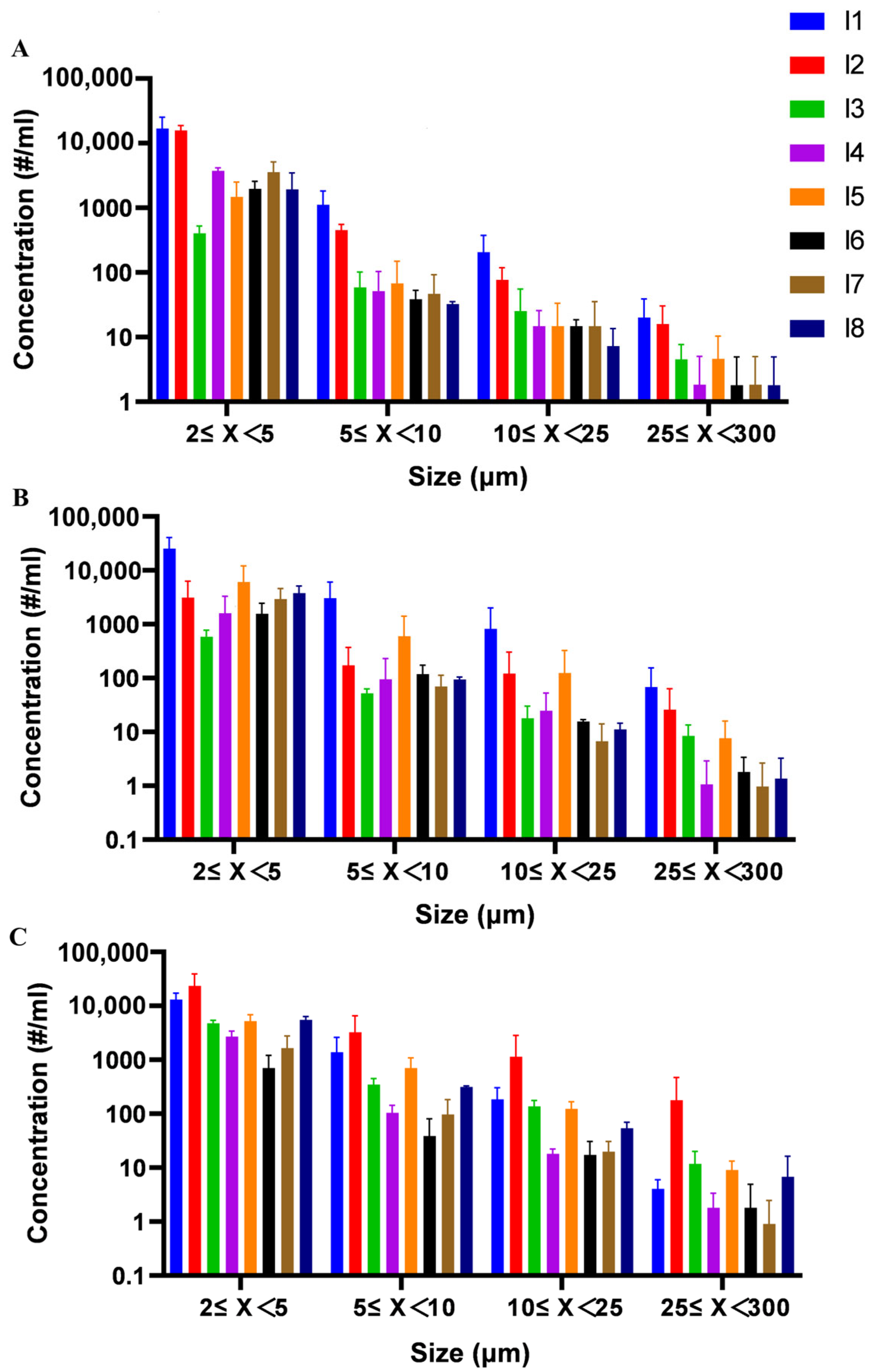
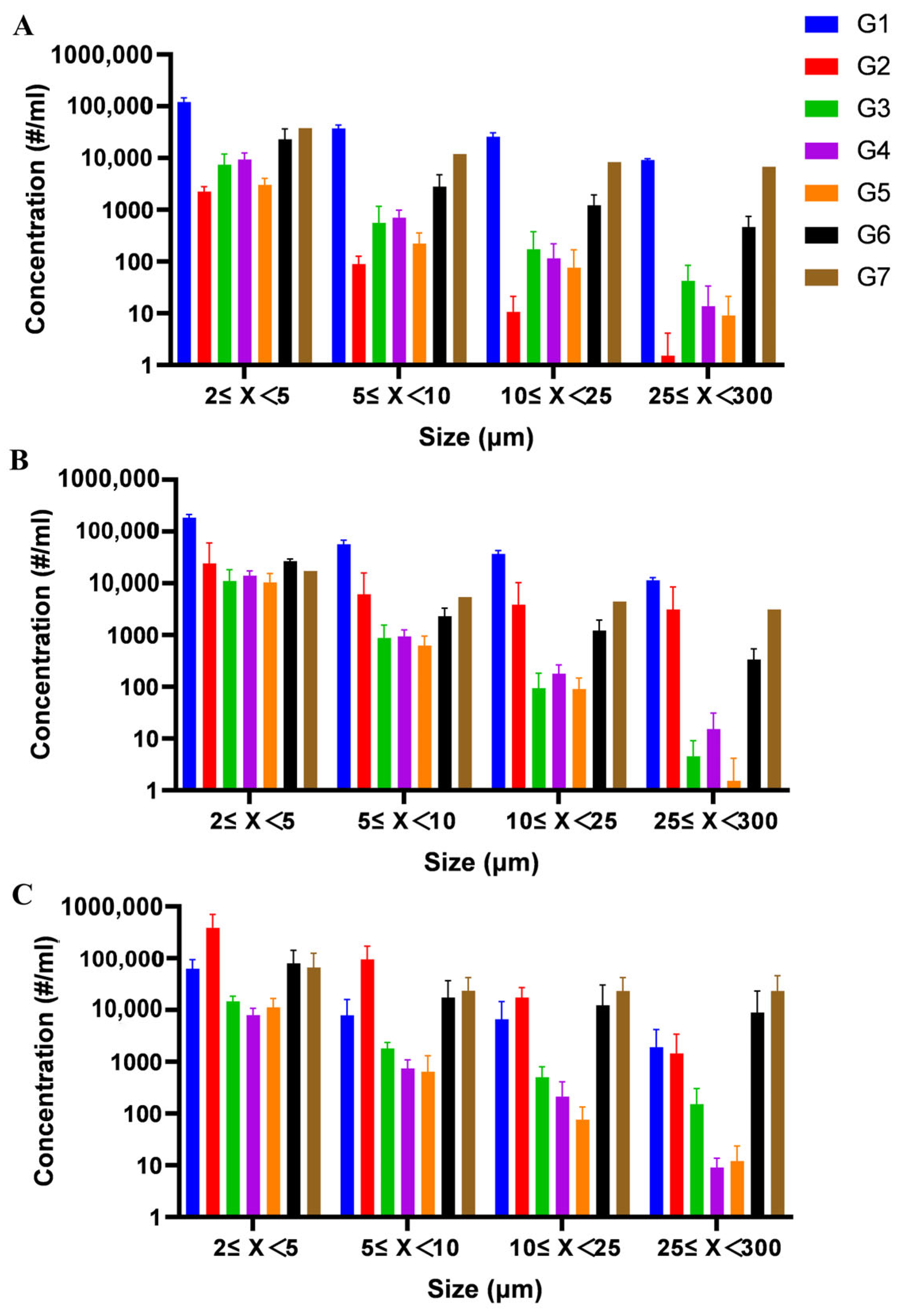
2.2.10. Micro-Flow Imaging
2.2.11. Fluorescence-Based Fibrillation Assay
3. Results and Discussions
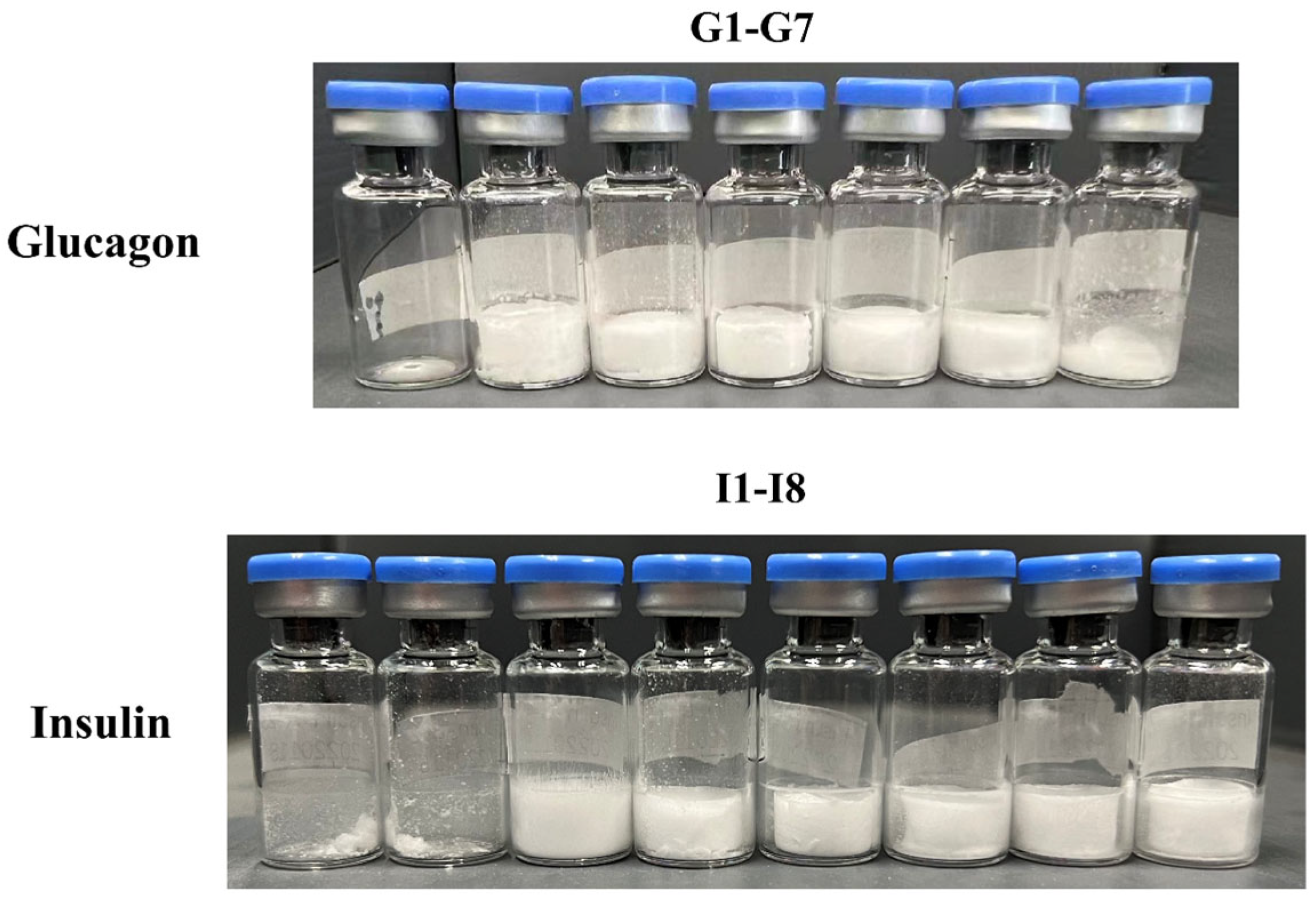
3.1. Cake Appearance by Visual Inspection
3.2. The Residual Moisture of Freeze-Dried Samples
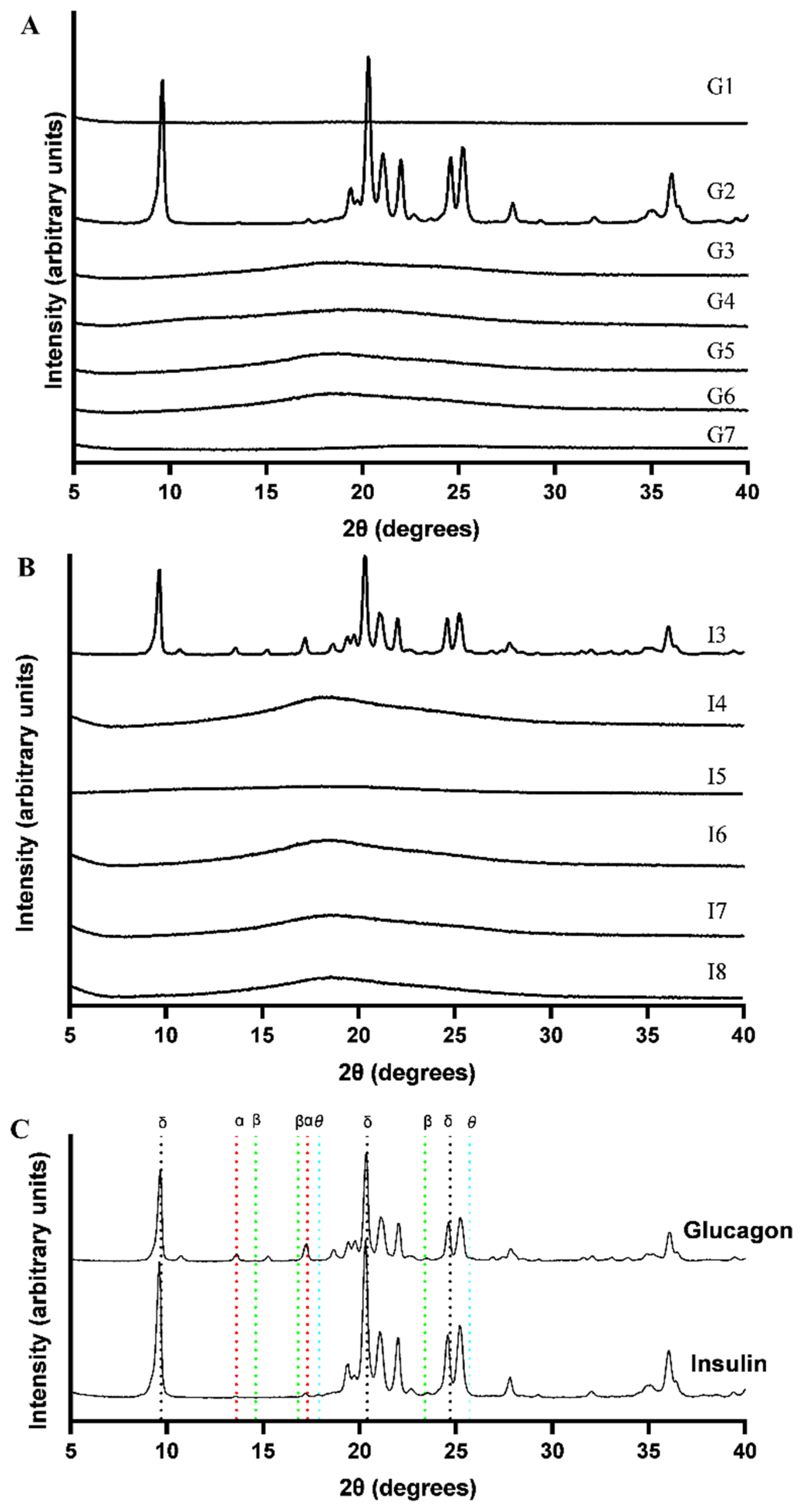
3.3. The Physicochemical Properties of Freeze-Dried Samples
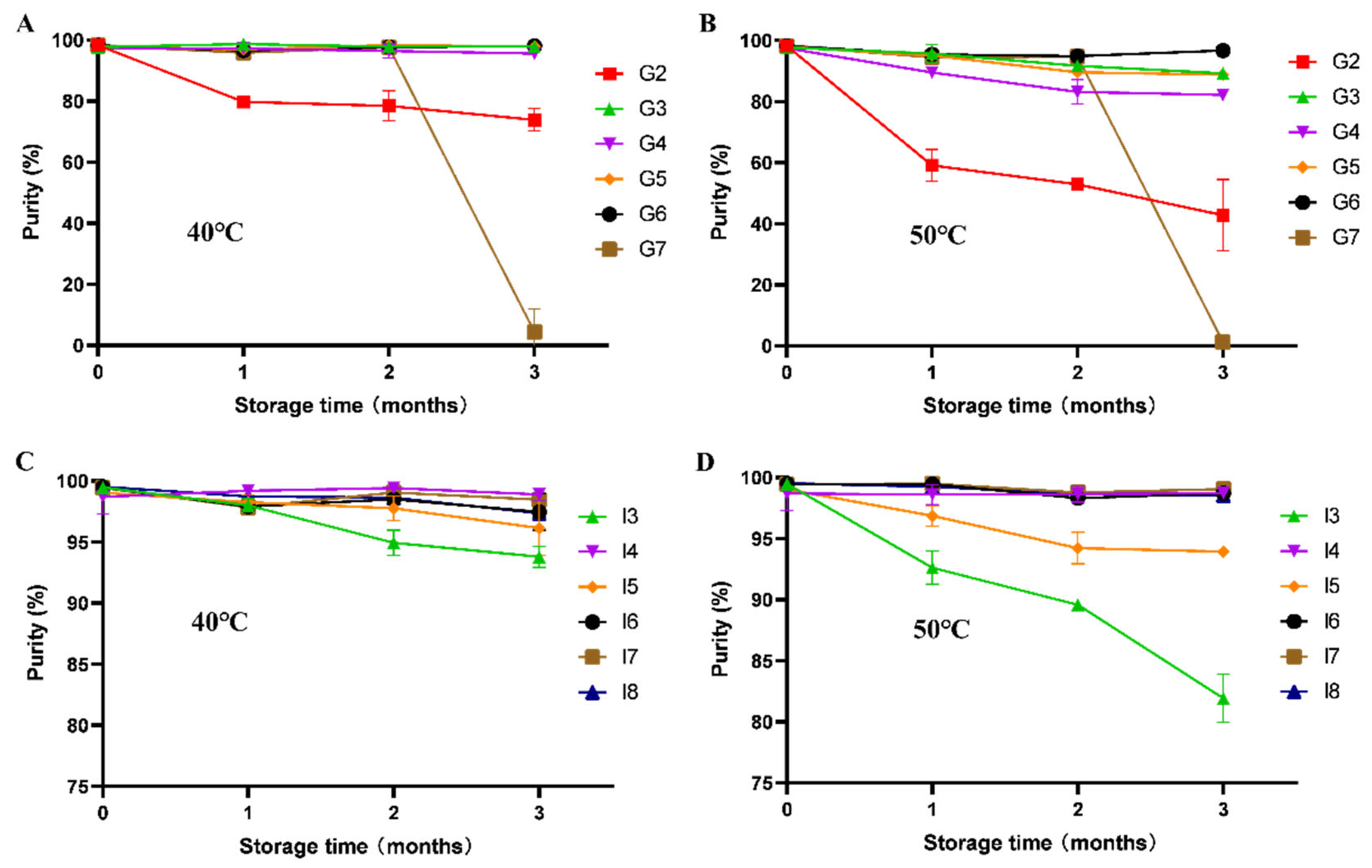
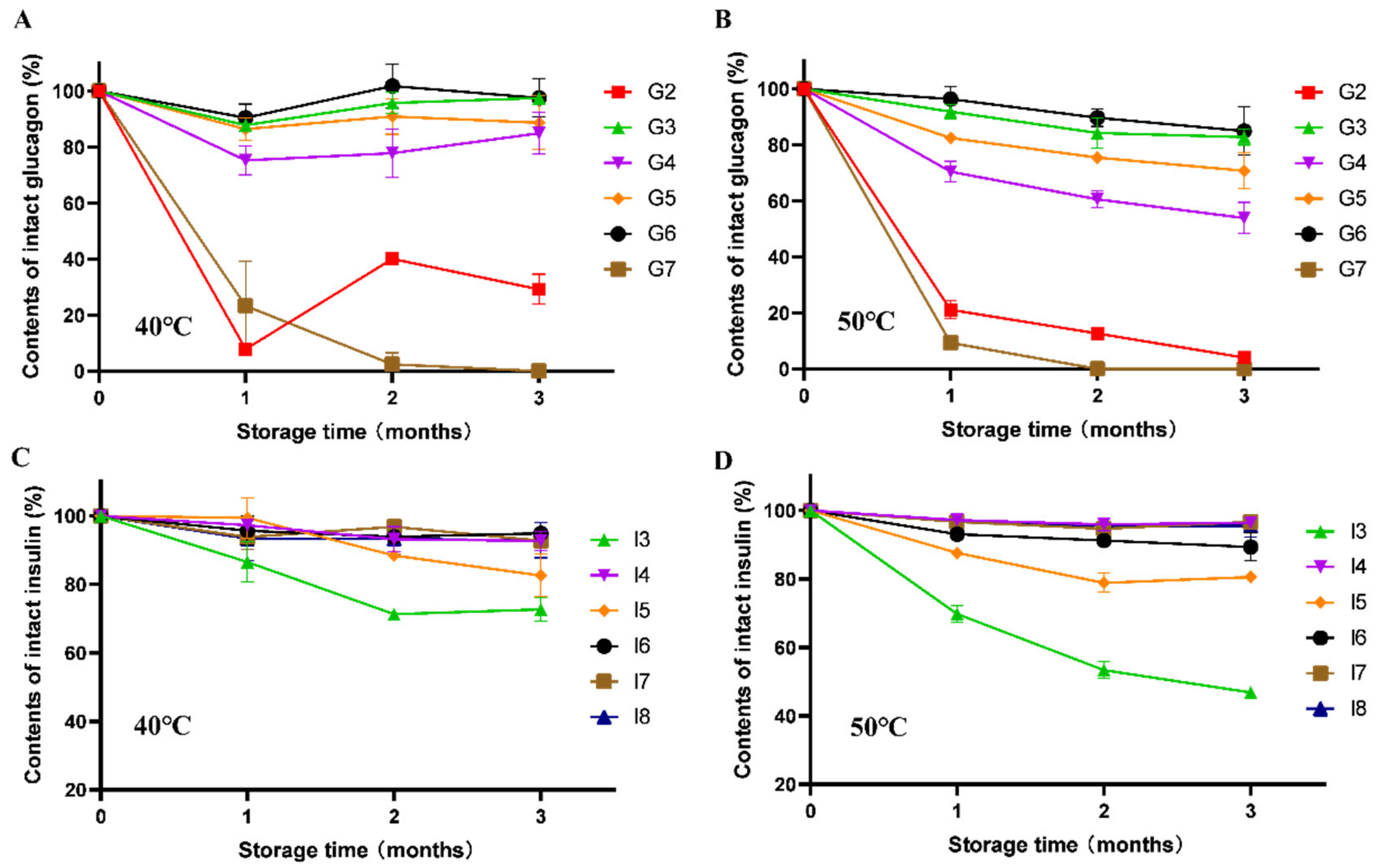
3.4. Effect of Formulations on Long-Term Stability of Freeze-Dried Samples
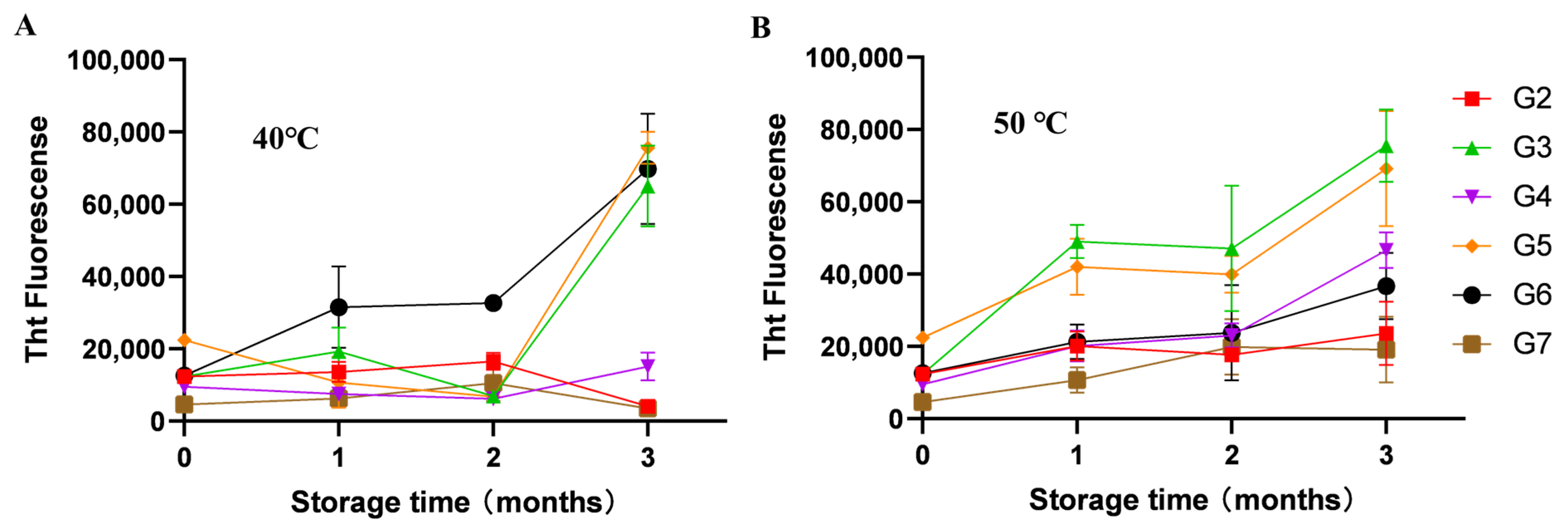
3.5. Effect of Formulation on Polypeptide Fibrillation
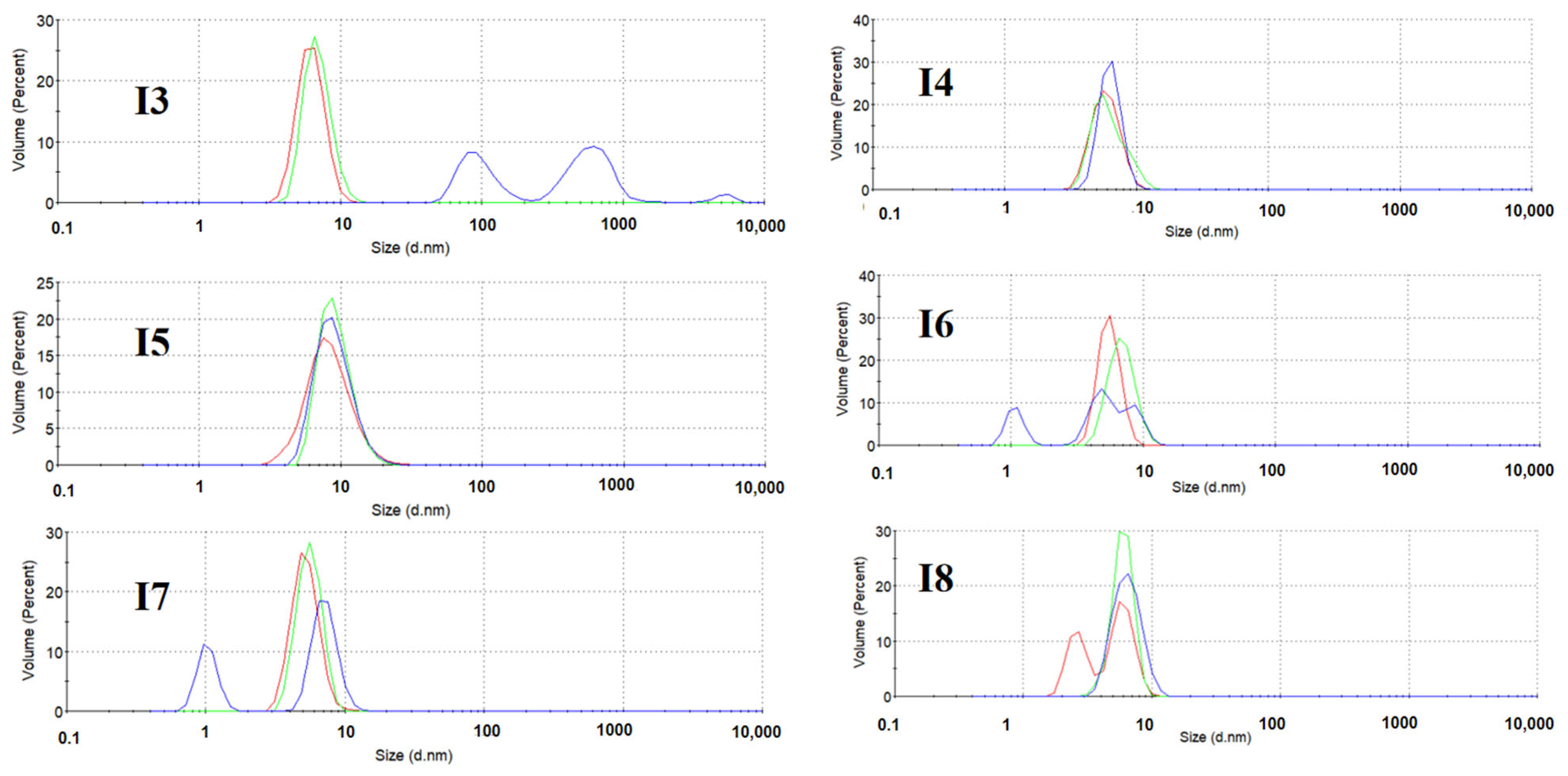
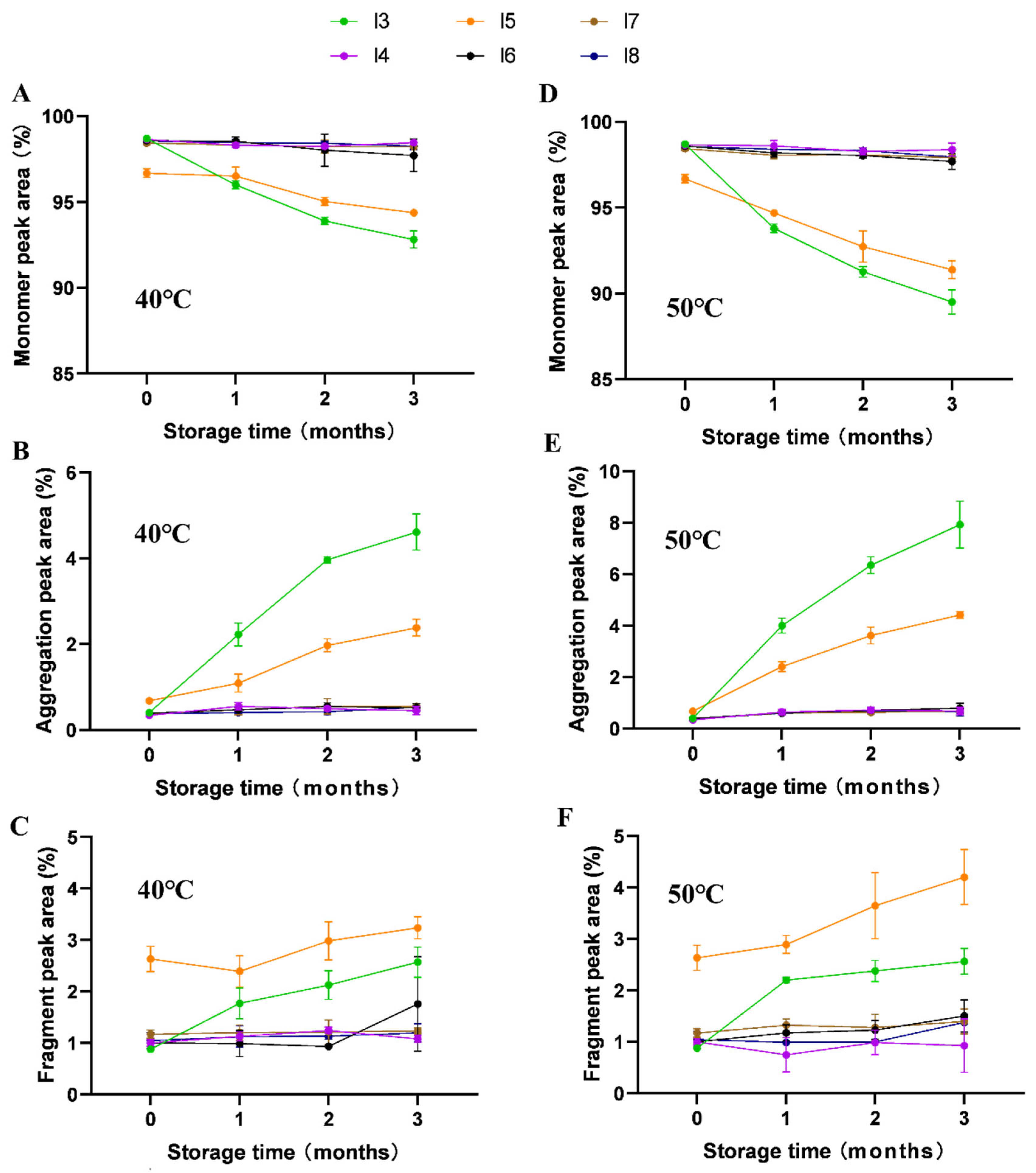
3.6. Effect of Formulation on Polypeptide Aggregation
3.7. Effect of Formulation on Subvisible Particle Formation in Polypeptide
4. Discussion
5. Conclusions
Author Contributions
Funding
Institutional Review Board Statement
Informed Consent Statement
Data Availability Statement
Acknowledgments
Conflicts of Interest
Abbreviations
References
- De Groot, A.S.; Roberts, B.J.; Mattei, A.; Lelias, S.; Boyle, C.; Martin, W.D. Immunogenicity risk assessment of synthetic peptide drugs and their impurities. Drug Discov. Today 2023, 28, 103714. [Google Scholar] [CrossRef]
- Alas, M.; Saghaeidehkordi, A.; Kaur, K. Peptide-Drug Conjugates with Different Linkers for Cancer Therapy. J. Med. Chem. 2021, 64, 216–232. [Google Scholar] [CrossRef]
- Zuglianello, C.; Lemos-Senna, E. The nanotechnological approach for nasal delivery of peptide drugs: A comprehensive review. J. Microencapsul. 2022, 39, 156–175. [Google Scholar] [CrossRef]
- Haddadzadegan, S.; Dorkoosh, F.; Bernkop-Schnürch, A. Oral delivery of therapeutic peptides and proteins: Technology landscape of lipid-based nanocarriers. Adv. Drug Deliv. Rev. 2022, 182, 114097. [Google Scholar] [CrossRef]
- Davies, M.; Færch, L.; Jeppesen, O.K.; Pakseresht, A.; Pedersen, S.D.; Perreault, L.; Rosenstock, J.; Shimomura, I.; Viljoen, A.; Wadden, T.A.; et al. Semaglutide 2·4 mg once a week in adults with overweight or obesity, and type 2 diabetes (STEP 2): A randomised, double-blind, double-dummy, placebo-controlled, phase 3 trial. Lancet 2021, 397, 971–984. [Google Scholar] [CrossRef]
- Rubino, D.M.; Greenway, F.L.; Khalid, U.; O’Neil, P.M.; Rosenstock, J.; Sørrig, R.; Wadden, T.A.; Wizert, A.; Garveyet, T.W. Effect of weekly subcutaneous semaglutide vs daily liraglutide on body weight in adults With overweight or obesity without diabetes: The STEP 8 randomized clinical trial. JAMA 2022, 327, 138–150. [Google Scholar] [CrossRef] [PubMed]
- Suran, M. As Ozempic’s popularity soars, here’s what to know about semaglutide and weight loss. JAMA 2023, 329, 1627–1629. [Google Scholar] [CrossRef]
- Fang, W.-J.; Qi, W.; Kinzell, J.; Prestrelski, S.; Carpenter, J.F. Effects of Excipients on the Chemical and Physical Stability of Glucagon during Freeze-Drying and Storage in Dried Formulations. Pharm. Res. 2012, 29, 3278–3291. [Google Scholar] [CrossRef] [PubMed]
- Manning, M.C.; Patel, K.; Borchardt, R.T. Stability of protein pharmaceuticals. Pharm. Res. 1989, 6, 903–918. [Google Scholar] [CrossRef] [PubMed]
- Manning, M.C.; Chou, D.K.; Murphy, B.M.; Payne, R.W.; Katayama, D.S. Stability of Protein Pharmaceuticals: An Update. Pharm. Res. 2010, 27, 544–575. [Google Scholar] [CrossRef]
- Lai, M.; Topp, E. Solid-state chemical stability of proteins and peptides. J. Pharm. Sci. 1999, 88, 489–500. [Google Scholar] [CrossRef]
- Krause, M.E.; Sahin, E. Chemical and physical instabilities in manufacturing and storage of therapeutic proteins. Curr. Opin. Biotechnol. 2019, 60, 159–167. [Google Scholar] [CrossRef]
- Chi, E.Y.; Krishnan, S.; Randolph, T.W.; Carpenter, J.F. Physical Stability of Proteins in Aqueous Solution: Mechanism and Driving Forces in Nonnative Protein Aggregation. Pharm. Res. 2003, 20, 1325–1336. [Google Scholar] [CrossRef]
- Shi, M.; McHugh, K.J. Strategies for overcoming protein and peptide instability in biodegradable drug delivery systems. Adv. Drug Deliv. Rev. 2023, 199, 114904. [Google Scholar] [CrossRef] [PubMed]
- Clamp, J.; Hough, L. The Periodate Oxidation of Amino Acids with Reference to Studies on Glycoproteins. Biochem. J. 1965, 94, 17–24. [Google Scholar] [CrossRef] [PubMed]
- Hoofnagle, A.N.; Whiteaker, J.R.; Carr, S.A.; Kuhn, E.; Liu, T.; Massoni, S.A.; Thomas, S.N.; Townsend, R.R.; Zimmerman, L.J.; Boja, E.; et al. Recommendations for the Generation, Quantification, Storage, and Handling of Peptides Used for Mass Spectrometry–Based Assays. Clin. Chem. 2016, 62, 48–69. [Google Scholar] [CrossRef] [PubMed]
- Abla, K.K.; Mehanna, M.M. Freeze-drying: A flourishing strategy to fabricate stable pharmaceutical and biological products. Int. J. Pharm. 2022, 628, 122233. [Google Scholar] [CrossRef]
- Emami, F.; Vatanara, A.; Park, E.J.; Na, D.H. Drying Technologies for the Stability and Bioavailability of Biopharmaceuticals. Pharmaceutics 2018, 10, 131. [Google Scholar] [CrossRef]
- Hansen, L.J.J.; Daoussi, R.; Vervaet, C.; Remon, J.-P.; De Beer, T.R.M. Freeze-drying of live virus vaccines: A review. Vaccine 2015, 33, 5507–5519. [Google Scholar] [CrossRef]
- Carpenter, J.F.; Pikal, M.J.; Chang, B.S.; Randolph, T.W. Rational Design of Stable Lyophilized Protein Formulations: Some Practical Advice. Pharm. Res. 1997, 14, 969–975. [Google Scholar] [CrossRef]
- Franks, F. Freeze-drying: From empiricism to predictability. The significance of glass transitions. Dev. Biol. Stand. 1992, 74, 9–18. [Google Scholar]
- Franks, F. Freeze-drying of bioproducts: Putting principles into practice. Eur. J. Pharm. Biopharm. 1998, 45, 221–229. [Google Scholar] [CrossRef] [PubMed]
- Thakral, S.; Sonje, J.; Munjal, B.; Bhatnagar, B.; Suryanarayanan, R. Mannitol as an Excipient for Lyophilized Injectable Formulations. J. Pharm. Sci. 2023, 112, 19–35. [Google Scholar] [CrossRef]
- Ohrem, H.L.; Schornick, E.; Kalivoda, A.; Ognibene, R. Why is mannitol becoming more and more popular as a pharmaceutical excipient in solid dosage forms. Pharm. Dev. Technol. 2014, 19, 257–262. [Google Scholar] [CrossRef]
- Patel, K.; Munjal, B.; Bansal, A.K. Effect of cyclophosphamide on the solid form of mannitol during lyophilization. Eur. J. Pharm. Sci. 2017, 101, 251–257. [Google Scholar] [CrossRef]
- Su, W.; Zhang, Y.; Liu, J.; Ma, M.; Guo, P.; Liu, X.; Wang, H.; Li, C. Molecular Dynamic Simulation of D-Mannitol Polymorphs in Solid State and in Solution Relating With Spontaneous Nucleation. J. Pharm. Sci. 2020, 109, 1537–1546. [Google Scholar] [CrossRef]
- Benetti, A.A.; Bianchera, A.; Buttini, F.; Bertocchi, L.; Bettini, R. Mannitol Polymorphs as Carrier in DPIs Formulations: Isolation Characterization and Performance. Pharmaceutics 2021, 13, 1113. [Google Scholar] [CrossRef] [PubMed]
- Sonje, J.; Thakral, S.; Mayhugh, B.; Sacha, G.; Nail, S.; Srinivasan, J.; Suryanarayanan, R. Mannitol hemihydrate in lyophilized protein formulations: Impact of its dehydration during storage on sucrose crystallinity and protein stability. Int. J. Pharm. 2022, 624, 121974. [Google Scholar] [CrossRef] [PubMed]
- Mehta, M.; Bhardwaj, S.P.; Suryanarayanan, R. Controlling the physical form of mannitol in freeze-dried systems. Eur. J. Pharm. Biopharm. 2013, 85, 207–213. [Google Scholar] [CrossRef]
- Zeng, C.; Li, J.; Shi, J.; Bates, S.; Munjal, B.; Suryanarayanan, R. Modulating the Physical Form of Mannitol Crystallizing in Frozen Solutions: The Role of Cosolute and Processing. Mol. Pharm. 2025, 22, 1686–1696. [Google Scholar] [CrossRef]
- Anko, M.; Bjelošević, M.; Planinšek, O.; Trstenjak, U.; Logar, M.; Grabnar, P.A.; Brus, B. The formation and effect of mannitol hemihydrate on the stability of monoclonal antibody in the lyophilized state. Int. J. Pharm. 2019, 564, 106–116. [Google Scholar] [CrossRef]
- Seifert, I.; Bregolin, A.; Fissore, D.; Friess, W. The Influence of Arginine and Counter-Ions: Antibody Stability during Freeze-Drying. J. Pharm. Sci. 2020, 110, 2017–2027. [Google Scholar] [CrossRef]
- Mutukuri, T.T.; Wilson, N.E.; Taylor, L.S.; Topp, E.M.; Zhou, Q.T. Effects of drying method and excipient on the structure and physical stability of protein solids: Freeze drying vs. spray freeze drying. Int. J. Pharm. 2021, 594, 120169. [Google Scholar] [CrossRef]
- Stärtzel, P.; Gieseler, H.; Gieseler, M.; Abdul-Fattah, A.M.; Adler, M.; Mahler, H.-C.; Goldbach, P. Freeze Drying of l—Arginine/Sucrose-Based Protein Formulations, Part I: Influence of Formulation and Arginine Counter Ion on the Critical Formulation Temperature, Product Performance and Protein Stability. J. Pharm. Sci. 2015, 104, 2345–2358. [Google Scholar] [CrossRef] [PubMed]
- Cicerone, M.T.; Pikal, M.J.; Qian, K.K. Stabilization of proteins in solid form. Adv. Drug Deliv. Rev. 2015, 93, 14–24. [Google Scholar] [CrossRef] [PubMed]
- Stark, B.; Pabst, G.; Prassl, R. Long-term stability of sterically stabilized liposomes by freezing and freeze-drying: Effects of cryoprotectants on structure. Eur. J. Pharm. Sci. 2010, 41, 546–555. [Google Scholar] [CrossRef] [PubMed]
- Strickley, R.G.; Anderson, B.D. Solid-State Stability of Human Insulin, I. Mechanism and the Effect of Water on the Kinetics of Degradation in Lyophiles from pH 2–5 Solutions. Pharm. Res. 1996, 13, 1142–1153. [Google Scholar] [CrossRef]
- Strickley, R.G.; Anderson, B.D. Solid-state Stability of Human Insulin II. Effect of Water on Reactive Intermediate Partitioning in Lyophiles from pH 2–5 Solutions: Stabilization Against Covalent Dimer Formation. J. Pharm. Sci. 1997, 86, 645–653. [Google Scholar] [CrossRef]
- Wu, S.-L.; Leung, D.; Tretyakov, L.; Hu, J.; Guzzetta, A.; Wang, Y. The formation and mechanism of multimerization in a freeze-dried peptide. Int. J. Pharm. 2000, 200, 1–16. [Google Scholar] [CrossRef]
- Yoshioka, S.; Miyazaki, T.; Aso, Y. β-Relaxation of Insulin Molecule in Lyophilized Formulations Containing Trehalose or Dextran as a Determinant of Chemical Reactivity. Pharm. Res. 2006, 23, 961–966. [Google Scholar] [CrossRef]
- Santana, H.; Sotolongo, J.; González, Y.; Hernández, G.; Chinea, G.; Gerónimo, H.; Amarantes, O.; Beldarraín, A.; Páez, R. Stabilization of a recombinant human epidermal growth factor parenteral formulation through freeze-drying. Biologicals 2014, 42, 322–333. [Google Scholar] [CrossRef]
- Santana, H.; García, G.; Vega, M.; Beldarraín, A.; Páez, R. Stability Studies of a Freeze-Dried Recombinant Human Epidermal Growth Factor Formulation for Wound Healing. PDA J. Pharm. Sci. Technol. 2015, 69, 399–416. [Google Scholar] [CrossRef]
- Sun, M.-F.; Xu, Y.; Yuan, J.-J.; Fang, W.-J. Identification and characterization of chemical and physical stability of insulin formulations utilizing degraded glycerol after repeated use and storage. Eur. J. Pharm. Biopharm. 2022, 177, 147–156. [Google Scholar] [CrossRef] [PubMed]
- Karas, J.A.; Wade, J.D.; Hossain, M.A. The Chemical Synthesis of Insulin: An Enduring Challenge. Chem. Rev. 2021, 121, 4531–4560. [Google Scholar] [CrossRef]
- Kleinert, M.; Sachs, S.; Habegger, K.M.; Hofmann, S.M.; Müller, T.D. Glucagon Regulation of Energy Expenditure. Int. J. Mol. Sci. 2019, 20, 5407. [Google Scholar] [CrossRef] [PubMed]
- Jiang, G.; Zhang, B.B. Glucagon and regulation of glucose metabolism. Am. J. Physiol. Metab. 2003, 284, E671–E678. [Google Scholar] [CrossRef] [PubMed]
- Larsen, H.M.L.; Trnka, H.; Grohganz, H. Formation of mannitol hemihydrate in freeze-dried protein formulations—A design of experiment approach. Int. J. Pharm. 2014, 460, 45–52. [Google Scholar] [CrossRef]
- Liao, X.; Krishnamurthy, R.; Suryanarayanan, R. Influence of the Active Pharmaceutical Ingredient Concentration on the Physical State of Mannitol—Implications in Freeze-Drying. Pharm. Res. 2005, 22, 1978–1985. [Google Scholar] [CrossRef]
- Haeuser, C.; Goldbach, P.; Huwyler, J.; Friess, W.; Allmendinger, A. Imaging Techniques to Characterize Cake Appearance of Freeze-Dried Products. J. Pharm. Sci. 2018, 107, 2810–2822. [Google Scholar] [CrossRef]
- Schersch, K.; Betz, O.; Garidel, P.; Muehlau, S.; Bassarab, S.; Winter, G. Systematic investigation of the effect of lyophilizate collapse on pharmaceutically relevant proteins I: Stability after freeze-drying. J. Pharm. Sci. 2010, 99, 2256–2278. [Google Scholar] [CrossRef]
- Precausta, P.M.; Simatos, D.; Le Pemp, M.; Devaux, B.; Kato, F. Influence of residual moisture and sealing atmosphere on viability of two freeze-dried viral vaccines. J. Clin. Microbiol. 1980, 12, 483–489. [Google Scholar] [CrossRef]
- Kim, N.A.; Hada, S.; Thapa, R.; Jeong, S.H. Arginine as a protein stabilizer and destabilizer in liquid formulations. Int. J. Pharm. 2016, 513, 26–37. [Google Scholar] [CrossRef] [PubMed]
- Bera, A.; Ghosh, P.; Barman, S.; Bhattacharya, S.; Sudhamalla, B.; Goswami, K.; De, P. Insulin fibril inhibition using glycopolymeric nanoassemblies. Biomater. Sci. 2023, 11, 3574–3588. [Google Scholar] [CrossRef] [PubMed]
- Brudar, S.; Hribar-Lee, B. The Effect of Arginine on the Phase Stability of Aqueous Hen Egg-White Lysozyme Solutions. Int. J. Mol. Sci. 2023, 24, 1197. [Google Scholar] [CrossRef]
- Shiraki, K.; Kudou, M.; Nishikori, S.; Kitagawa, H.; Imanaka, T.; Takagi, M. Arginine ethylester prevents thermal inactivation and aggregation of lysozyme. Eur. J. Biochem. 2004, 271, 3242–3247. [Google Scholar] [CrossRef]
- Shah, D.; Shaikh, A.R.; Peng, X.; Rajagopalan, R. Effects of arginine on heat-induced aggregation of concentrated protein solutions. Biotechnol. Prog. 2011, 27, 513–520. [Google Scholar] [CrossRef]
- Platts, L.; Falconer, R.J. Controlling protein stability: Mechanisms revealed using formulations of arginine, glycine and guanidinium HCl with three globular proteins. Int. J. Pharm. 2015, 486, 131–135. [Google Scholar] [CrossRef]
- Stärtzel, P. Arginine as an Excipient for Protein Freeze-Drying: A Mini Review. J. Pharm. Sci. 2018, 107, 960–967. [Google Scholar] [CrossRef]
- Izutsu, K.-I.; Kojima, S. Excipient crystallinity and its protein-structure-stabilizing effect during freeze-drying. J. Pharm. Pharmacol. 2002, 54, 1033–1039. [Google Scholar] [CrossRef]
- Izutsu, K.-I.; Ocheda, S.O.; Aoyagi, N.; Kojima, S. Effects of sodium tetraborate and boric acid on nonisothermal mannitol crystallization in frozen solutions and freeze-dried solids. Int. J. Pharm. 2004, 273, 85–93. [Google Scholar] [CrossRef] [PubMed]
- Al-Hussein, A.; Gieseler, H. The Effect of Mannitol Crystallization in Mannitol–Sucrose systems on LDH Stability during Freeze-Drying. J. Pharm. Sci. 2012, 101, 2534–2544. [Google Scholar] [CrossRef] [PubMed]



| Protein | No. | Formulation | |||||
|---|---|---|---|---|---|---|---|
| Polysorbate 20 | Mannitol (mg/mL) | Trehalose (mg/mL) | Hydroxyethyl Starch (mg/mL) | Sorbitol (mg/mL) | Arginine Hydrochloride (mg/mL) | ||
| Glucagon | G1 | 0.02% | — | — | — | — | — |
| G2 | 0.02% | 40 | — | — | — | — | |
| G3 | 0.02% | — | 40 | — | — | — | |
| G4 | 0.02% | — | — | 40 | — | — | |
| G5 | 0.02% | — | 40 | — | 2.0 | — | |
| G6 | 0.02% | — | 40 | — | — | 2.4 | |
| G7 | 0.02% | — | — | — | — | 40 | |
| Insulin | I1 | — | — | — | — | — | — |
| I2 | 0.02% | — | — | — | — | — | |
| I3 | 0.02% | 40 | — | — | — | — | |
| I4 | 0.02% | — | 40 | — | — | — | |
| I5 | 0.02% | — | — | 40 | — | — | |
| I6 | 0.02% | — | 40 | — | 2.0 | — | |
| I7 | 0.02% | — | 40 | — | — | 2.4 | |
| I8 | — | — | 40 | — | — | — | |
| No. | Stage | Shelf Temperature (°C) | Ramp Rate (°C/min) | Hold Time (min) | Chamber Pressure (mTorr) |
|---|---|---|---|---|---|
| 1 | Freezing | −45 | 0.56 | 60 | — |
| 2 | Annealing | −15 | 0.86 | 120 | — |
| 3 | Freezing | −45 | 1.00 | 75 | — |
| 4 | Primary drying | −25 | 0.16 | 1400 | 60 |
| 5 | Secondary drying | 30 | 0.22 | 300 | 60 |
| Glucagon | Insulin | ||||
|---|---|---|---|---|---|
| Time (min) | A (%) | B (%) | Time (min) | A (%) | B (%) |
| 0.0 | 70.0 | 30.0 | 0.0 | 71.0 | 29.0 |
| 30.0 | 64.0 | 36.0 | 30.0 | 63.0 | 37.0 |
| 30.1 | 10.0 | 90.0 | 35.0 | 35.0 | 65.0 |
| 31.0 | 10.0 | 90.0 | 35.1 | 71.0 | 29.0 |
| 31.1 | 70.0 | 30.0 | 48.0 | 71.0 | 29.0 |
| 45.0 | 70.0 | 30.0 | |||
| Formulation | Moisture (%) | Formulation | Moisture (%) |
|---|---|---|---|
| G1 | 19.27 ± 8.20 | I1 | 28.03 ± 1.82 |
| G2 | 2.66 ± 0.88 | I2 | 25.86 ± 4.53 |
| G3 | 1.78 ± 0.85 | I3 | 1.89 ± 0.48 |
| G4 | 1.37 ± 0.64 | I4 | 2.49 ± 0.22 |
| G5 | 1.52 ± 0.49 | I5 | 1.54 ± 0.17 |
| G6 | 1.53 ± 0.30 | I6 | 2.17 ± 0.39 |
| G7 | 2.05 ± 0.41 | I7 | 2.01 ± 0.11 |
| I8 | 1.96 ± 0.06 |
| Formulation | Tg (°C) | Formulation | Tg (°C) |
|---|---|---|---|
| G1 | / | I1 | / |
| G2 | / | I2 | / |
| G3 | 72.7 ± 0.3 | I3 | / |
| G4 | 200.6 ± 1.7 | I4 | 68.8 ± 8.5 |
| G5 | 63.7 ± 2.4 | I5 | 205.8 ± 1.8 |
| G6 | 69.1 ± 0.4 | I6 | 57.6 ± 4.9 |
| G7 | 46.9 ± 1.1 | I7 | 61.2 ± 4.3 |
| I8 | 61.2 ± 2.9 |
| Formulation | Tg′ (°C) | Formulation | Tg′ (°C) |
|---|---|---|---|
| G1 | / | I1 | / |
| G2 | −34.5 ± 0.1 | I2 | / |
| G3 | −30.1 ± 0.2 | I3 | −31.7 ± 0.2 |
| G4 | −12.1 ± 0.0 | I4 | −33.2 ± 0.0 |
| G5 | −43.9 ± 0.0 | I5 | −15.4 ± 0.0 |
| G6 | −31.1 ± 0.0 | I6 | −33.6 ± 0.0 |
| G7 | / | I7 | −32.9 ± 0.2 |
| I8 | −32.4 ± 0.0 |
Disclaimer/Publisher’s Note: The statements, opinions and data contained in all publications are solely those of the individual author(s) and contributor(s) and not of MDPI and/or the editor(s). MDPI and/or the editor(s) disclaim responsibility for any injury to people or property resulting from any ideas, methods, instructions or products referred to in the content. |
© 2025 by the authors. Licensee MDPI, Basel, Switzerland. This article is an open access article distributed under the terms and conditions of the Creative Commons Attribution (CC BY) license (https://creativecommons.org/licenses/by/4.0/).
Share and Cite
Gao, H.; Ouyang, J.; Hu, Z.-B.; Fang, W.-J. The Detrimental Effects of Crystalline Excipients: How They Jeopardize the Long-Term Stability of Freeze-Dried Polypeptide Formulations. Pharmaceutics 2025, 17, 1543. https://doi.org/10.3390/pharmaceutics17121543
Gao H, Ouyang J, Hu Z-B, Fang W-J. The Detrimental Effects of Crystalline Excipients: How They Jeopardize the Long-Term Stability of Freeze-Dried Polypeptide Formulations. Pharmaceutics. 2025; 17(12):1543. https://doi.org/10.3390/pharmaceutics17121543
Chicago/Turabian StyleGao, Han, Jun Ouyang, Zhi-Bo Hu, and Wei-Jie Fang. 2025. "The Detrimental Effects of Crystalline Excipients: How They Jeopardize the Long-Term Stability of Freeze-Dried Polypeptide Formulations" Pharmaceutics 17, no. 12: 1543. https://doi.org/10.3390/pharmaceutics17121543
APA StyleGao, H., Ouyang, J., Hu, Z.-B., & Fang, W.-J. (2025). The Detrimental Effects of Crystalline Excipients: How They Jeopardize the Long-Term Stability of Freeze-Dried Polypeptide Formulations. Pharmaceutics, 17(12), 1543. https://doi.org/10.3390/pharmaceutics17121543