Article

Gut Microbiota and Bile Acids Mediate the Clinical Benefits of YH1 in Male Patients with Type 2 Diabetes Mellitus: A Pilot Observational Study


1
Department of Traditional Chinese Medicine, Chang Gung Memorial Hospital, Taipei 105, Taiwan
2
Graduate Institute of Clinical Medical Sciences, Chang Gung University, Taoyuan 333, Taiwan
3
School of Traditional Chinese Medicine, College of Medicine, Chang Gung University, Taoyuan 333, Taiwan
4
Metabolomics Core Laboratory, Healthy Aging Research Center, Chang Gung University, Taoyuan 333, Taiwan
5
Division of Endocrinology and Metabolism, Department of Internal Medicine, Chang Gung Memorial Hospital, Linkou Branch, Taoyuan 333, Taiwan
6
Division of Cardiology, Department of Internal Medicine, Chang Gung Memorial Hospital, Linkou Branch, Taoyuan 333, Taiwan
7
Department of Traditional Chinese Medicine, Chang Gung Memorial Hospital, Linkou Branch, Taoyuan 333, Taiwan
8
Department of Medical Nutrition Therapy, Chang Gung Memorial Hospital, Taoyuan 333, Taiwan
9
Genomic Medicine Core Laboratory, Chang Gung Memorial Hospital, Linkou Branch, Taoyuan 333, Taiwan
10
Graduate Institute of Health Industry Technology, Chang Gung University of Science and Technology, Taoyuan 333, Taiwan
11
Clinical Metabolomics Core Laboratory, Chang Gung Memorial Hospital, Taoyuan 333, Taiwan
12
Department of Biomedical Sciences, College of Medicine, Chang Gung University, Taoyuan 333, Taiwan
*
Authors to whom correspondence should be addressed.
These authors contributed equally to this work.
Pharmaceutics 2022, 14(9), 1857; https://doi.org/10.3390/pharmaceutics14091857

Submission received: 16 August 2022 / Revised: 30 August 2022 / Accepted: 31 August 2022 / Published: 2 September 2022
(This article belongs to the Special Issue The Role of Natural Products on Diabetes Mellitus Treatment)

Abstract

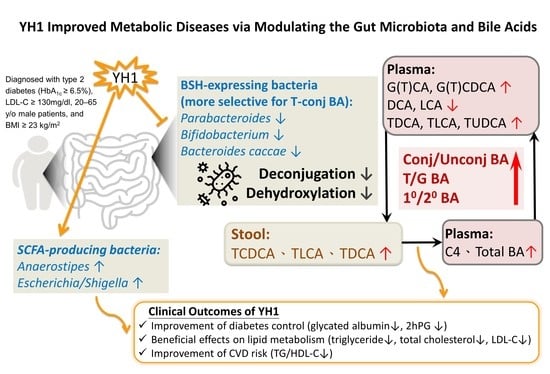
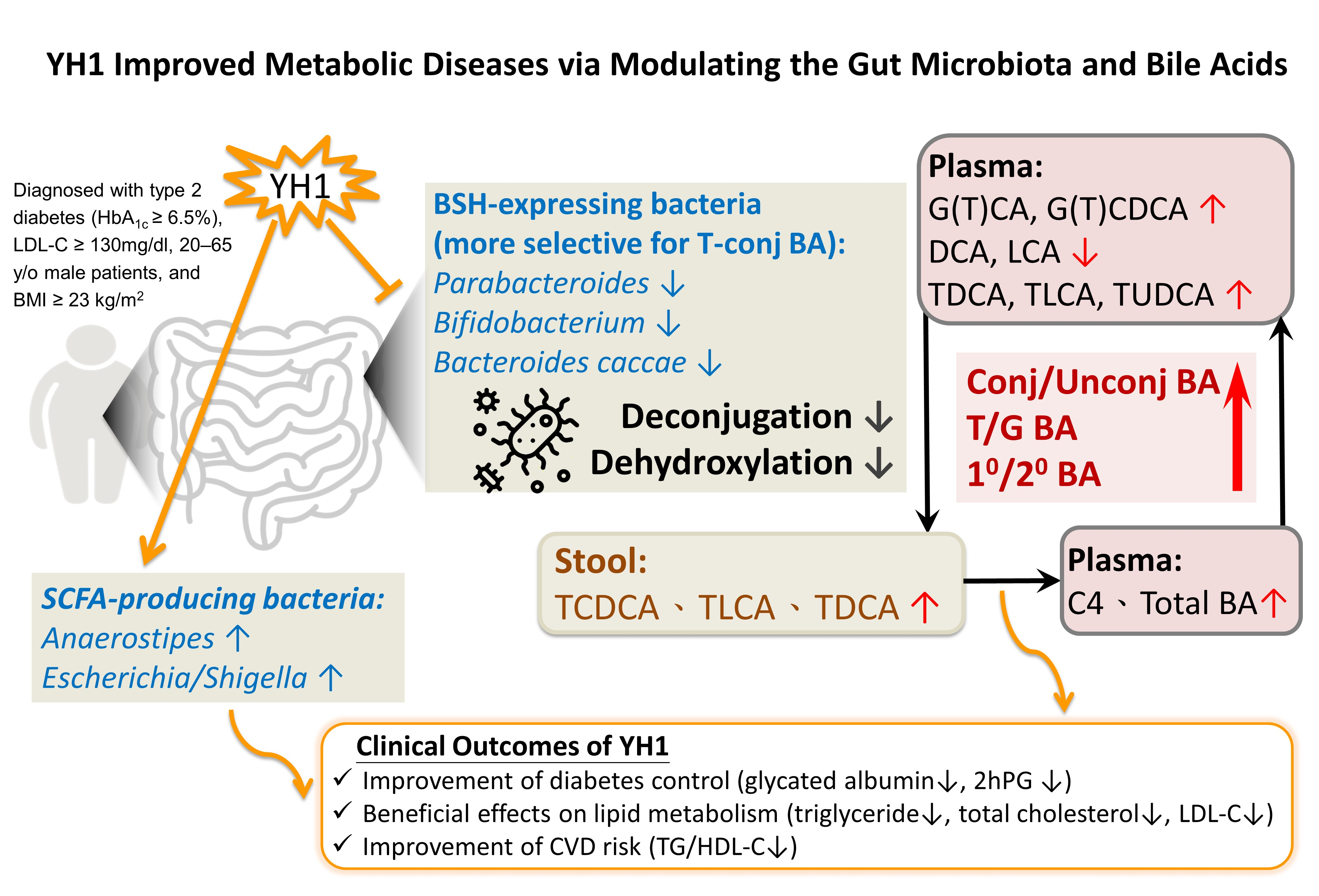
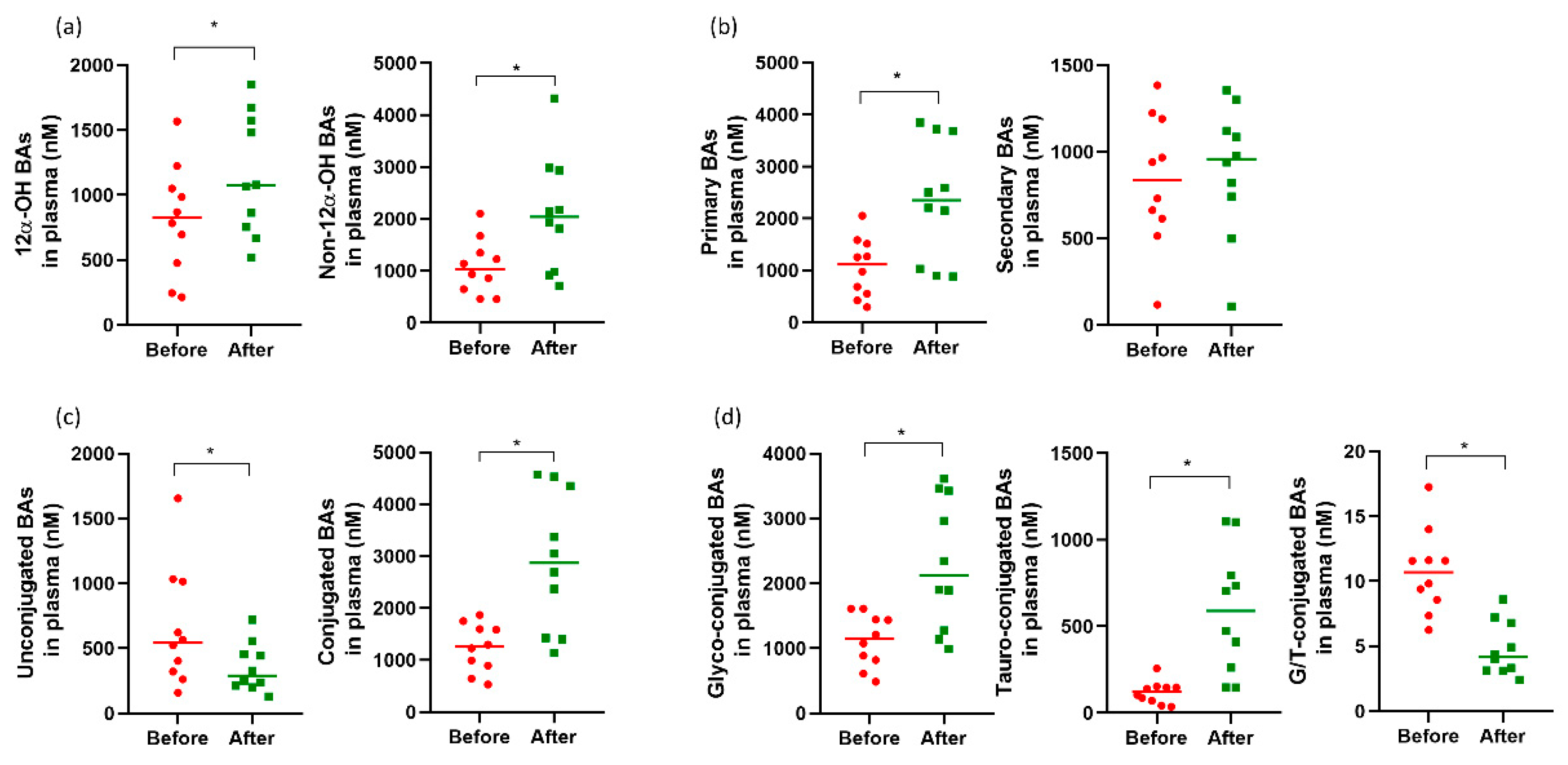
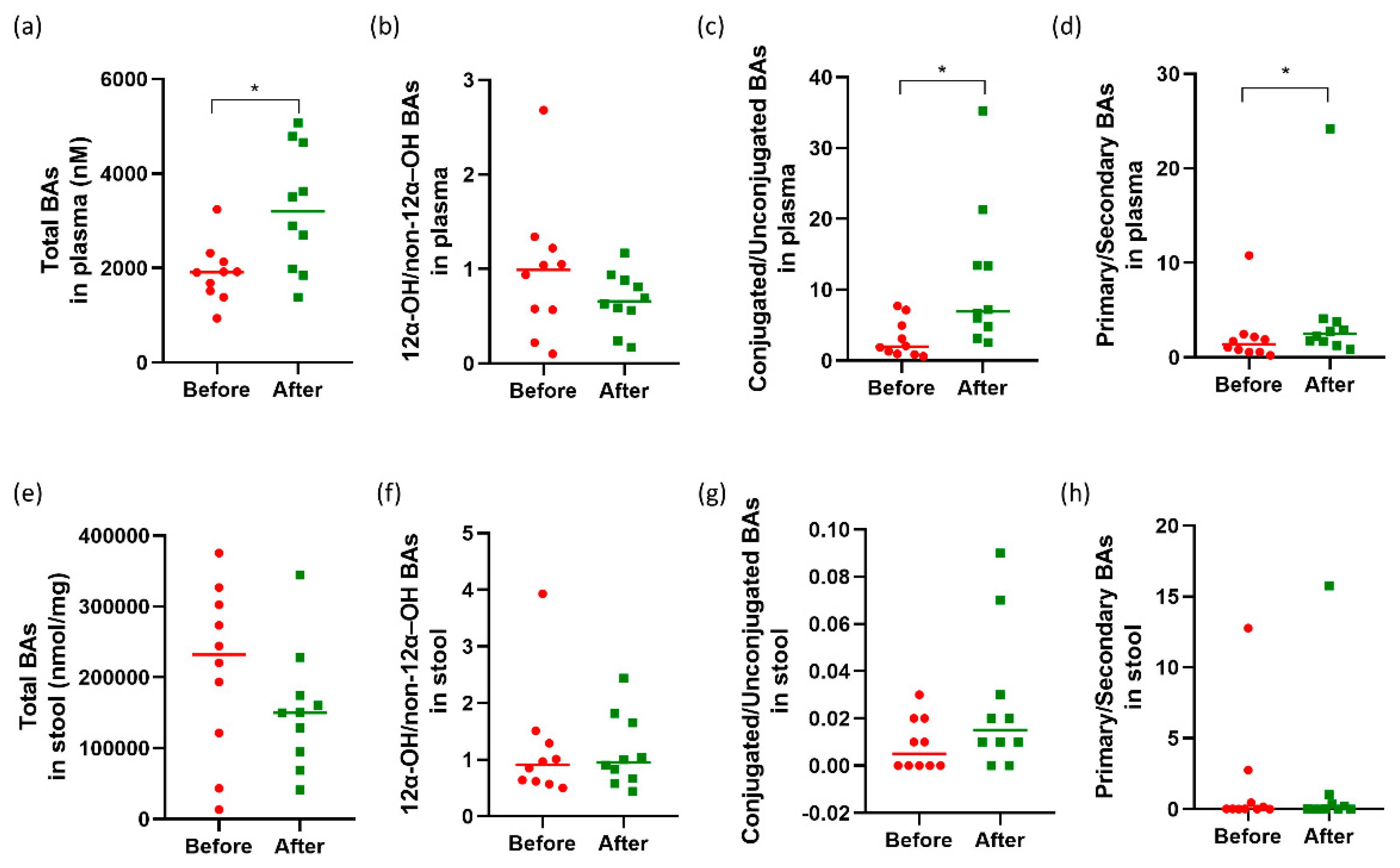
Our previous clinical trial showed that a novel concentrated herbal extract formula, YH1 (Rhizoma coptidis and Shen-Ling-Bai-Zhu-San), improved blood glucose and lipid control. This pilot observational study investigated whether YH1 affects microbiota, plasma, and fecal bile acid (BA) compositions in ten untreated male patients with type 2 diabetes (T2D), hyperlipidemia, and a body mass index ≥ 23 kg/m2. Stool and plasma samples were collected for microbiome, BA, and biochemical analyses before and after 4 weeks of YH1 therapy. As previous studies found, the glycated albumin, 2-h postprandial glucose, triglycerides, total cholesterol, and low-density lipoprotein cholesterol levels were significantly improved after YH1 treatment. Gut microbiota revealed an increased abundance of the short-chain fatty acid-producing bacteria Anaerostipes and Escherichia/Shigella. Furthermore, YH1 inhibited specific phylotypes of bile salt hydrolase-expressing bacteria, including Parabacteroides, Bifidobacterium, and Bacteroides caccae. Stool tauro-conjugated BA levels increased after YH1 treatment. Plasma total BAs and 7α-hydroxy-4-cholesten-3-one (C4), a BA synthesis indicator, were elevated. The reduced deconjugation of BAs and increased plasma conjugated BAs, especially tauro-conjugated BAs, led to a decreased glyco- to tauro-conjugated BA ratio and reduced unconjugated secondary BAs. These results suggest that YH1 ameliorates T2D and hyperlipidemia by modulating microbiota constituents that alter fecal and plasma BA compositions and promote liver cholesterol-to-BA conversion and glucose homeostasis.
Keywords: type 2 diabetes; Chinese herbal medicine; YH1; gut microbiota; bile acids type 2 diabetes; Chinese herbal medicine; YH1; gut microbiota; bile acids
Graphical Abstract