Identification of Receptor Binding Proteins of Yersinia Phage φR1-37 and Enterocoliticin That Use the Same Bacterial Surface Receptor

 , , , , and
Abstract
1. Introduction
2. Materials and Methods
2.1. Bacterial Strains, Plasmids and Phages
2.2. Recombinant DNA Methods
2.3. Construction of a Cosmid Library of Y. enterocolitica 29930
2.4. Plasmid Constructs for φR1-37 RBP Expression
2.5. DNA Sequencing and Sequence Analysis
2.6. Ultracentrifugation and Ultrafiltration of Enterocoliticin
2.7. Transmission Electron Microscopy (TEM)
2.8. MALDI-TOF TOF-MS/MS Analysis of Enterocoliticin Proteins
2.9. Enterocoliticin Activity Determination
2.10. Phage Microbiology Methods
2.10.1. Preparation of Phage Stocks
2.10.2. Double-Layer Overlay and Drop Tests
2.10.3. Efficiency of Plating (EOP)
2.10.4. Phage Adsorption Assays
2.11. LPS Isolation and Analysis
2.12. Protein Expression in E. coli
2.13. High Pressure Liquid Chromatography (HPLC)
2.14. Interaction of Dynabeads-Immobilized LPS with Tail Fiber Protein
2.15. Blocking of Host Cell Surface with Purified Tail Fiber Protein
2.16. Modeling of Protein Multimers
2.16.1. Ligand Structure Preparation
2.16.2. Protein Multimer Prediction
2.16.3. Quality Assessment and Data Extraction
2.17. AlphaFold2-Driven Modeling and Subsequent Molecular Docking Analysis
2.17.1. AlphaFold2-Based Modeling of Orf39
2.17.2. AutoDock Vina Docking Protocol
2.17.3. Pose Selection and Interaction Profiling
3. Results
3.1. Identification and Cloning of the Enterocoliticin Biosynthesis Genes of Y. enterocolitica 29930
3.1.1. Identification of the Cosmid Carrying the Enterocoliticin Gene Cluster
3.1.2. Characterization of Cos141
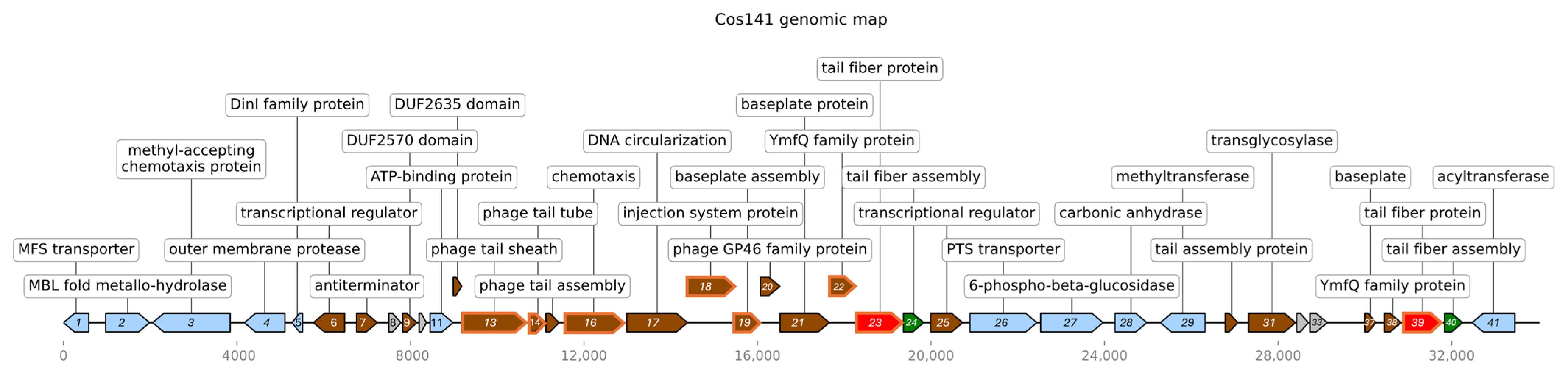
3.1.3. Sequence Analysis of Cos141
3.1.4. Mass Spectrometry of Enterocoliticin Proteins
3.2. Identification of Phage φR1-37 RBP
3.2.1. EOP and Phage Adsorption Kinetics
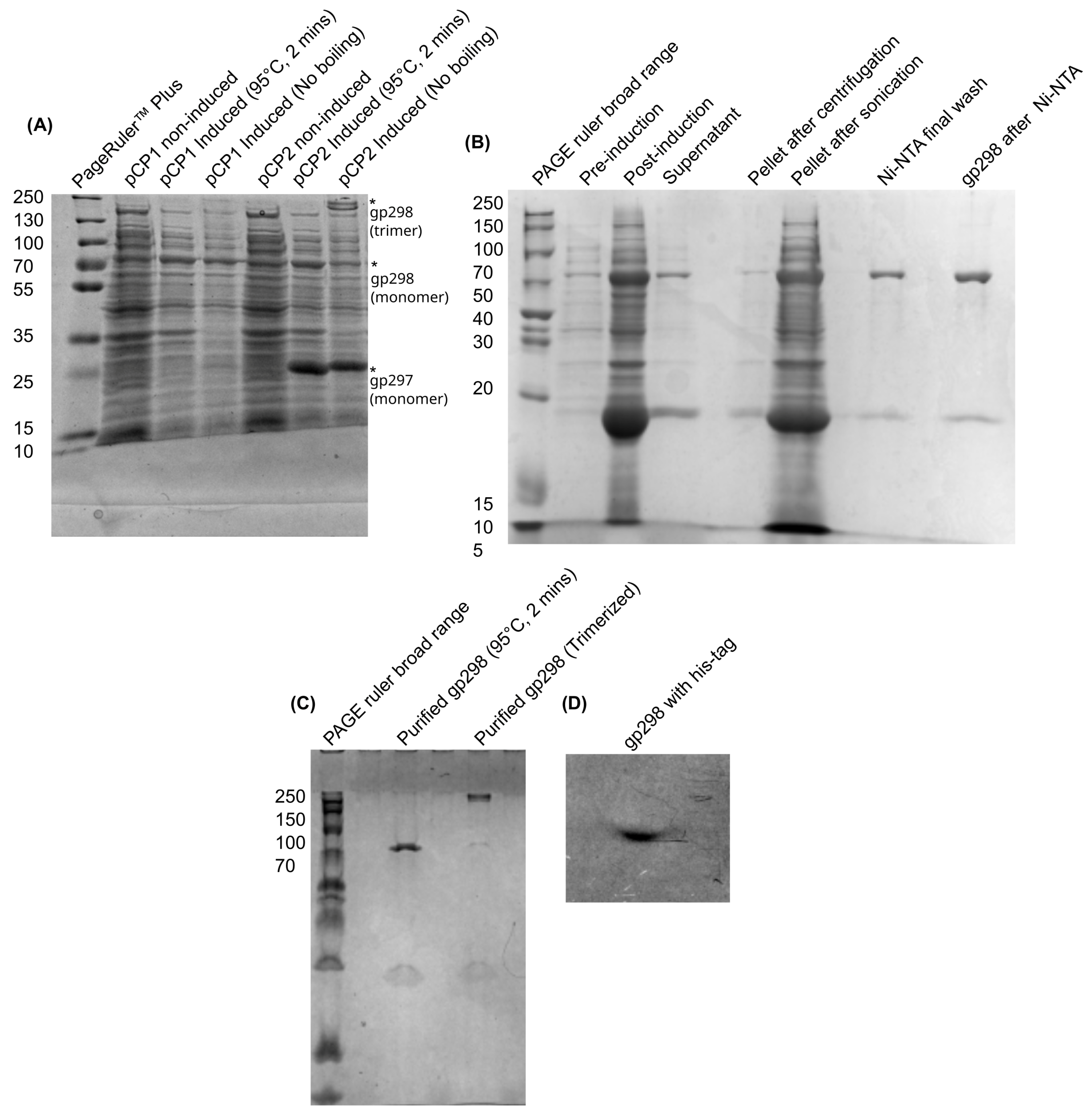
3.2.2. Expression, Purification, and Trimerization of Recombinant Gp298
3.2.3. φR1-37 Interacts with Y. enterocolitica O:3 via the Gp298 Putative RBP
3.3. Identification of Enterocoliticin RBP
3.4. Evolutionary Considerations
3.5. Computational Structural Analysis of RBPs and Receptor-Binding
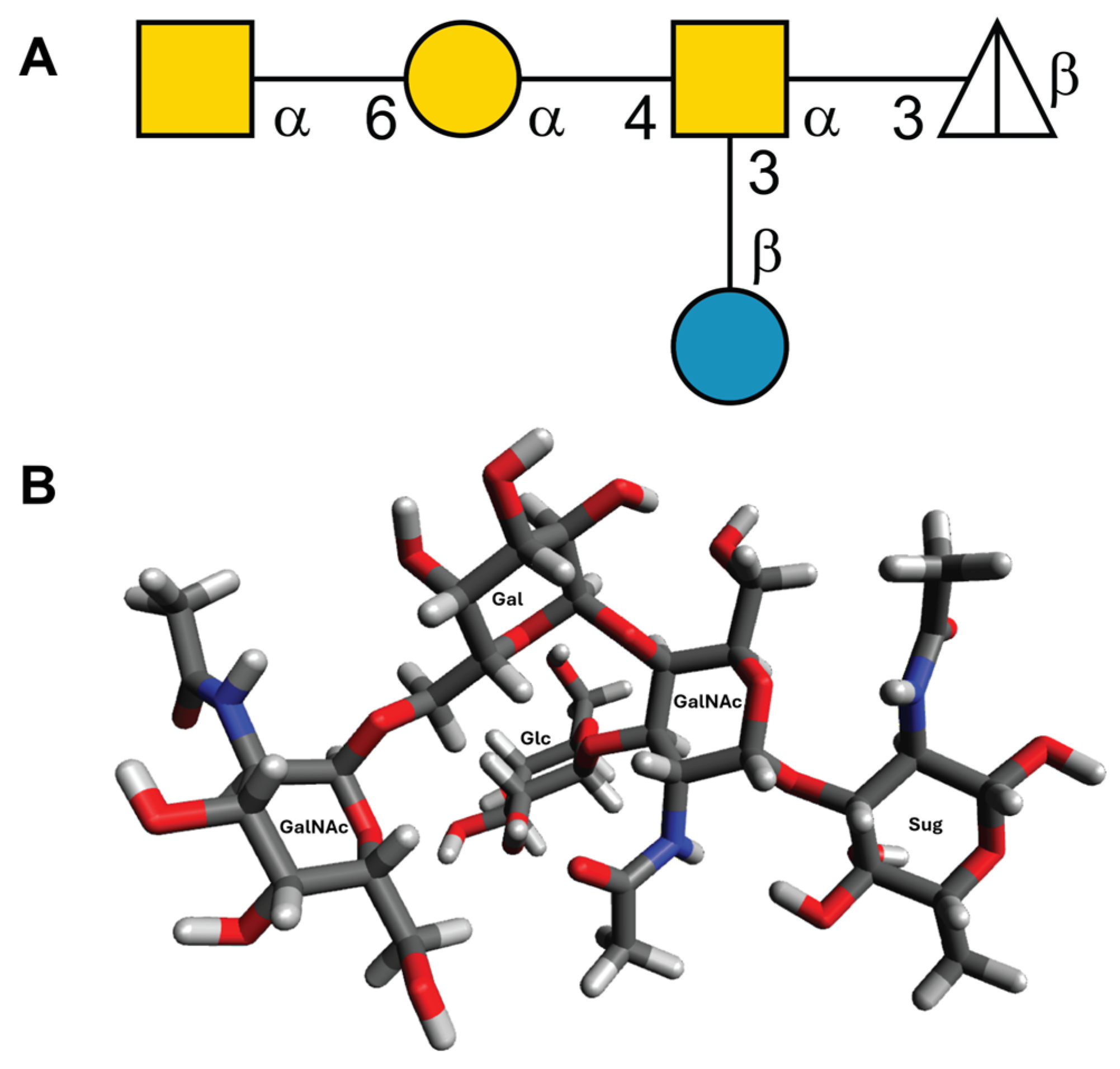
3.5.1. The OC Oligosaccharide Model
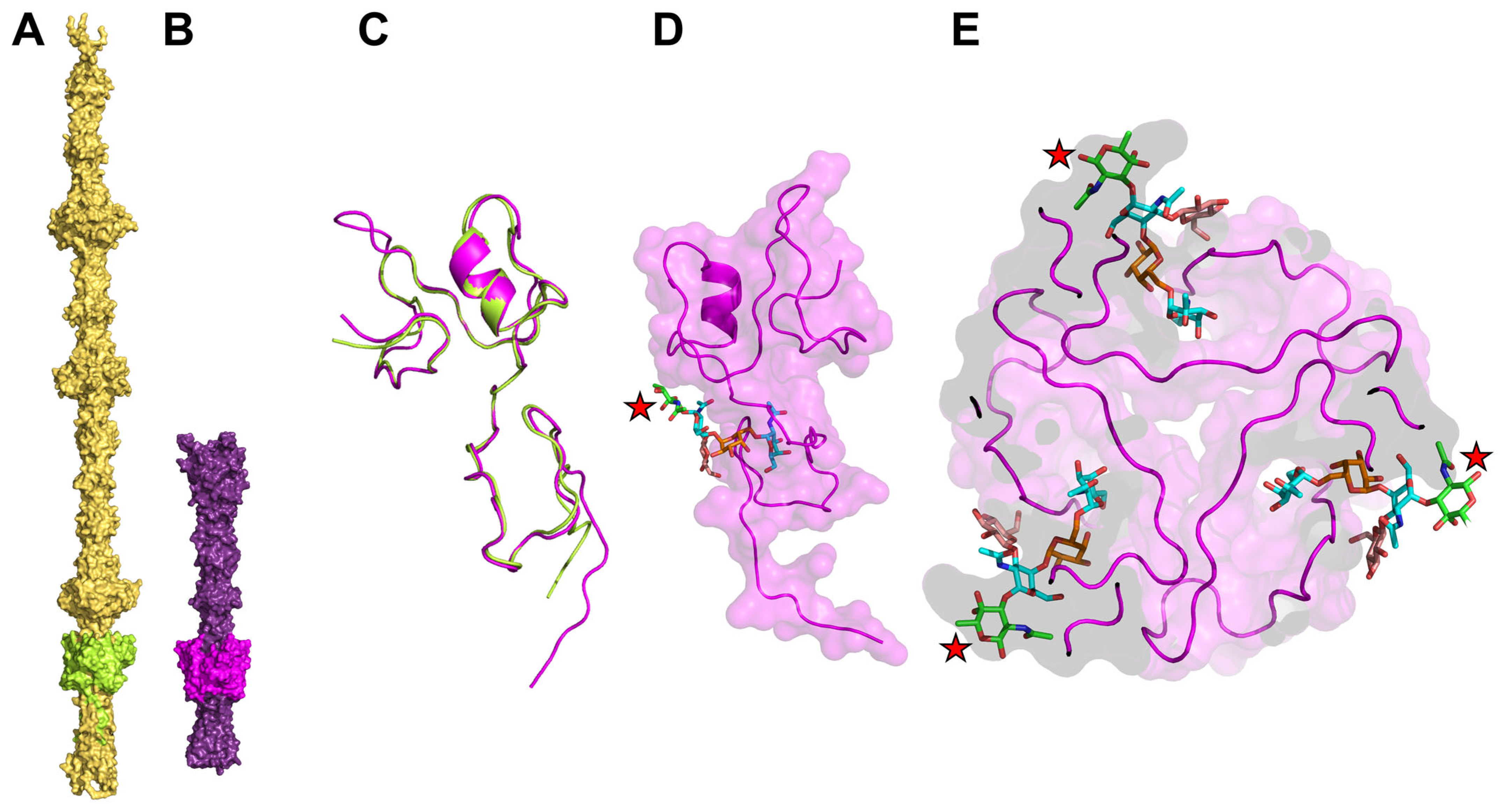
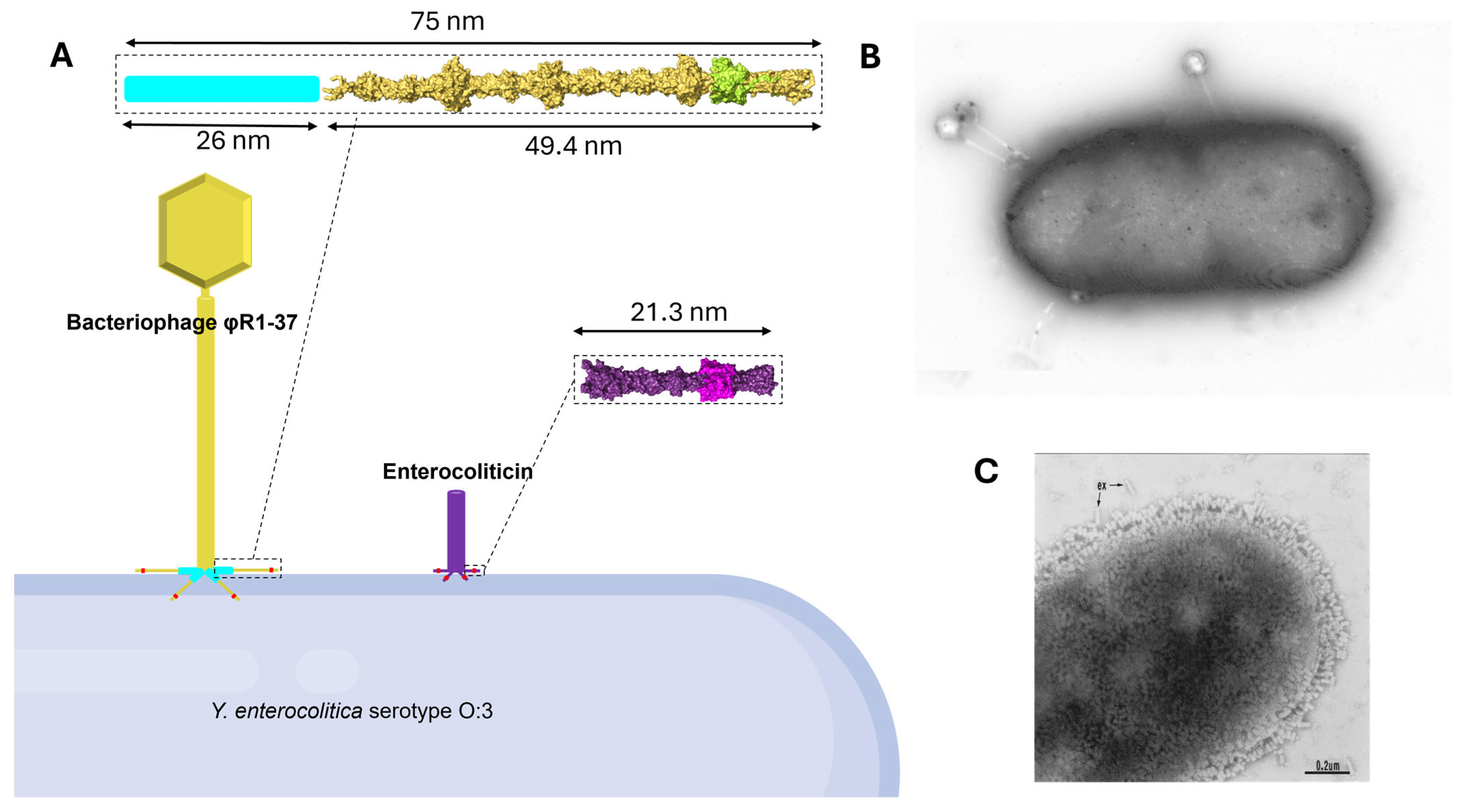
3.5.2. Predicted Trimeric Structures of Orf39 and Gp298
3.5.3. The RBDs of Gp298 and Orf39
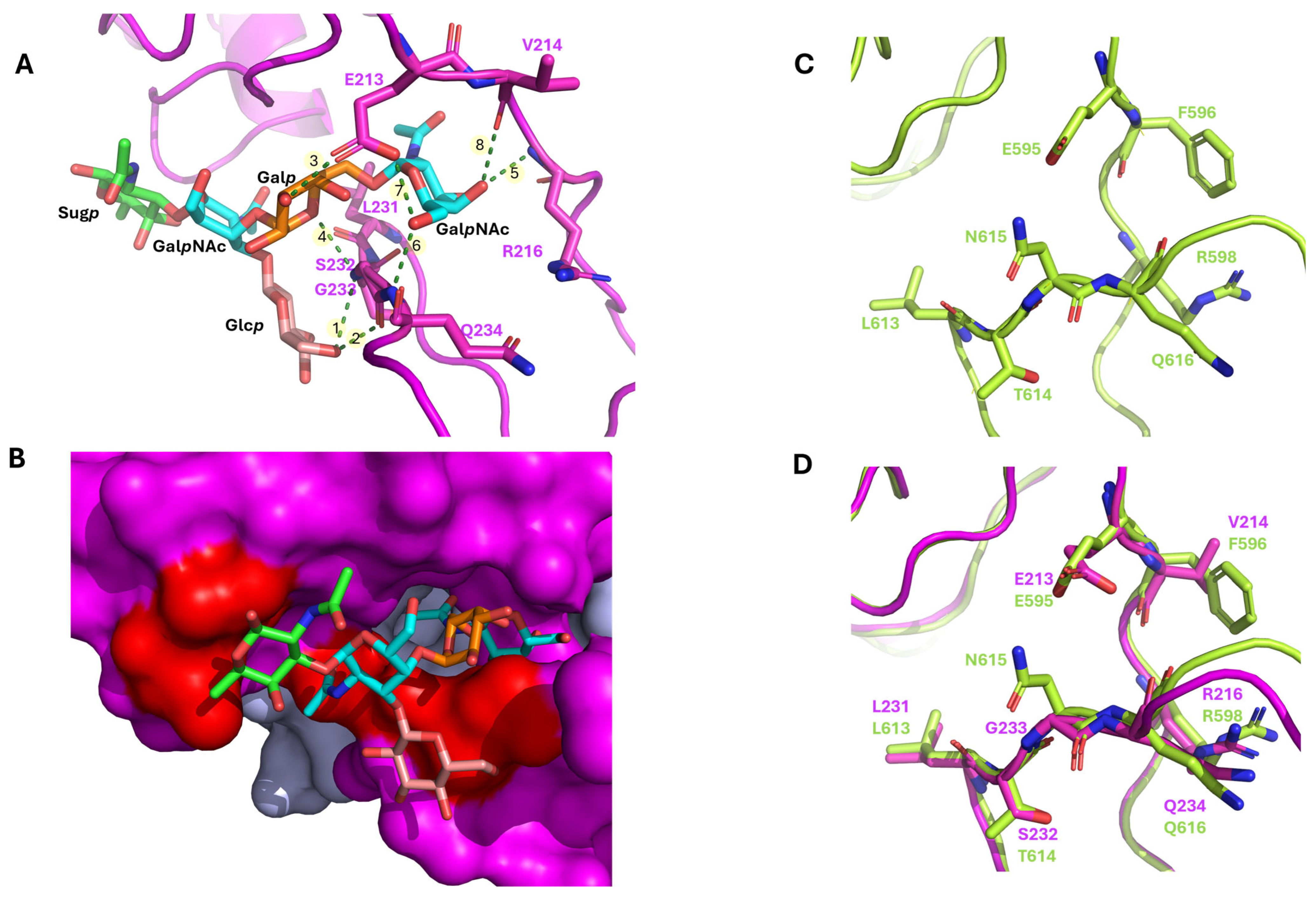
3.5.4. A Specific Carbohydrate Binding Cleft on the Orf39 Trimer Is Proposed by Molecular Docking
3.5.5. Molecular Mechanism of Recognition: Backbone Anchoring and Hydrophobic Stabilization
4. Discussion
4.1. The Enterocoliticin Biosynthesis Gene Cluster
4.2. φR1-37 RBP
4.3. In Silico Prediction of the Tail Fiber Protein Structure and Molecular Docking
4.3.1. Structural Identity, Functional Homology, and Modular Evolution
4.3.2. Predicted Binding Energetics and Molecular Determinants of Recognition
4.3.3. In Vivo Feasibility of the Binding
Supplementary Materials
Author Contributions
Funding
Institutional Review Board Statement
Data Availability Statement
Acknowledgments
Conflicts of Interest
Abbreviations
| aa | amino acid |
| Amp | Ampicillin |
| API | application programming interface |
| AU | Activity unit |
| BLAST | Basic local alignment tool |
| BV-BRC | Bacterial and Viral Bioinformatics Resource Center |
| Clm | Chloramphenicol |
| DB | Dynabeads |
| DOC | Deoxycholate |
| ECL | Enhanced chemiluminescence |
| EOP | Efficiency of plating |
| Galp | d-galactose |
| GalpNAc | N-acetyl-d-galactosamine |
| Glcp | d-glucose |
| HB | Hydrogen Bond |
| HC | Hydrophobic Contact |
| HPLC | High pressure liquid chromatography |
| ipTM | interface predicted TM-score |
| IPTG | Isopropyl-β-d-1-thiogalactopyranoside |
| Kan | Kanamycin |
| KmR | Kanamycin-resistance |
| LA | Lysogeny broth agar |
| LB | Lysogeny broth |
| LPS | Lipopolysaccharide |
| LTF | Long tail fiber |
| MALDI | Matrix-assisted laser desorption/ionization |
| MCS | Multicloning site |
| MS | Mass spectrometry |
| MW | Molecular weight |
| OC | Outer core |
| OD | Optical density |
| OPS | O-polysaccharide |
| Orf | Open reading frame |
| PAE | Predicted aligned error |
| PAGE | Polyacrylamide gel electropohoresis |
| PBS | Phosphate-buffered saline |
| PCR | Polymerase chain reaction |
| PFU | Plaque forming unit |
| PGAP | Prokaryotic Genome Annotation Pipeline |
| PFF | peptide fragment fingerprint |
| pLDDT | Predicted local distance difference test |
| PLIP | Protein-Ligand Interaction Profiler |
| PMF | Peptide mass fingerprint |
| PPAP | phage particle associated protein |
| PVDF | polyvinylidene difluoride |
| RASTtk | Rapid annotations using subsystems technology tool kit |
| RBD | Receptor Binding Domain |
| RBP | Receptor Binding Protein |
| RT | Room temperature |
| SDS | Sodium dodecyl sulphate |
| SF | Filter sterilization |
| Str | Streptomycin |
| Sugp | 2-acetamido-2,6-dideoxy-d-xylo-hex-4-ulopyranose |
| TBST | Tris-buffer with sodium chloride and tween 20 |
| TEM | Transmission electron microscopy |
| TEMED | Tetramethylethylenediamine |
| TOF | Time of flight |
| UCG | CsCl gradient ultracentrifugation |
| WGS | Whole genome sequencing |
References
- Le Guern, A.S.; Savin, C.; Angermeier, H.; Bremont, S.; Clermont, D.; Muhle, E.; Orozova, P.; Najdenski, H.; Pizarro-Cerda, J. Yersinia artesiana sp. nov., Yersinia proxima sp. nov., Yersinia alsatica sp. nov., Yersina vastinensis sp. nov., Yersinia thracica sp. nov. and Yersinia occitanica sp. nov., isolated from humans and animals. Int. J. Sys. Evol. Microbiol. 2020, 70, 5363–5372. [Google Scholar] [CrossRef]
- Carniel, E.; Autenrieth, I.; Cornelis, G.; Guinet, F.; Fukushima, H.; Isberg, R.; Pham, J.; Prentice, M.B.; Simonet, M.; Skurnik, M.; et al. Y. enterocolitica and Y. pseudotuberculosis. In The Prokaryotes, a Handbook on the Biology of Bacteria, 3rd ed.; Dworkin, M., Falkow, S., Rosenberg, E., Schleifer, K.-H., Stackebrandt, E., Eds.; Springer: New York, NY, USA, 2002; Volume 6, pp. 270–398. [Google Scholar]
- Matsuzaki, S.; Rashel, M.; Uchiyama, J.; Sakurai, S.; Ujihara, T.; Kuroda, M.; Ikeuchi, M.; Tani, T.; Fujieda, M.; Wakiguchi, H.; et al. Bacteriophage therapy: A revitalized therapy against bacterial infectious diseases. J. Infect. Chemother. 2005, 11, 211–219. [Google Scholar] [CrossRef]
- Skurnik, M.; Alkalay-Oren, S.; Boon, M.; Clokie, M.; Sicheritz-Pontén, T.; Dąbrowska, K.; Hatfull, G.F.; Hazan, R.; Jalasvuori, M.; Kiljunen, S.; et al. Phage Therapy. Natture Rev. Methods Primers 2025, 5, 9. [Google Scholar] [CrossRef]
- Zhao, X.; Skurnik, M. Bacteriophages of Yersinia pestis. Adv. Exp. Med. Biol. 2016, 918, 361–375. [Google Scholar] [CrossRef] [PubMed]
- Skurnik, M. My life with Yersinia. Adv. Exp. Med. Biol. 2007, 603, 44–73. [Google Scholar] [CrossRef]
- Almusrati, M. Natural Predators of Yersinia: Characterization and Genomic Analysis of Bacteriophages That Infect Yersinia. Ph.D. Thesis, University of Helsinki, Helsinki, Finland, 2024. [Google Scholar]
- Al-Hendy, A.; Toivanen, P.; Skurnik, M. Lipopolysaccharide O side chain of Yersinia enterocolitica O:3 is an essential virulence factor in an orally infected murine model. Infect. Immun. 1992, 60, 870–875. [Google Scholar] [CrossRef] [PubMed]
- Skurnik, M.; Venho, R.; Toivanen, P.; Al-Hendy, A. A novel locus of Yersinia enterocolitica serotype O:3 involved in lipopolysaccharide outer core biosynthesis. Mol. Microbiol. 1995, 17, 575–594. [Google Scholar] [CrossRef] [PubMed]
- Kiljunen, S.; Hakala, K.; Pinta, E.; Huttunen, S.; Pluta, P.; Gador, A.; Lönnberg, H.; Skurnik, M. Yersiniophage fR1-37 is a tailed bacteriophage having a 270 kb DNA genome with thymidine replaced by deoxyuridine. Microbiology 2005, 151, 4093–4102. [Google Scholar] [CrossRef]
- Pinta, E.; Duda, K.A.; Hanuszkiewicz, A.; Salminen, T.A.; Bengoechea, J.A.; Hyytiäinen, H.; Lindner, B.; Radziejewska-Lebrecht, J.; Holst, O.; Skurnik, M. Characterization of the six glycosyltransferases involved in the biosynthesis of Yersinia enterocolitica serotype O:3 lipopolysaccharide outer core. J. Biol. Chem. 2010, 285, 28333–28342. [Google Scholar] [CrossRef]
- Pinta, E.; Duda, K.A.; Hanuszkiewicz, A.; Kaczynski, Z.; Lindner, B.; Miller, W.L.; Hyytiäinen, H.; Vogel, C.; Borowski, S.; Kasperkiewicz, K.; et al. Identification and role of a 6-deoxy-4-keto-hexosamine in the lipopolysaccharide outer core of Yersinia enterocolitica serotype O:3. Chemistry 2009, 15, 9747–9754. [Google Scholar] [CrossRef]
- Skurnik, M.; Hyytiäinen, H.J.; Happonen, L.J.; Kiljunen, S.; Datta, N.; Mattinen, L.; Williamson, K.; Kristo, P.; Szeliga, M.; Kalin-Mänttäri, L.; et al. Characterization of the genome, proteome, and structure of yersiniophage fR1-37. J. Virol. 2012, 86, 12625–12642. [Google Scholar] [CrossRef] [PubMed][Green Version]
- Sirisena, D.M.; Skurnik, M. Mutations in the genes for synthesis of the outer core region of the lipopolysaccharide of Yersinia enterocolitica O:3. J. Appl. Microbiol. 2003, 94, 686–692. [Google Scholar] [CrossRef][Green Version]
- Beczala, A.; Ovchinnikova, O.G.; Datta, N.; Mattinen, L.; Knapska, K.; Radziejewska-Lebrecht, J.; Holst, O.; Skurnik, M. Structure and genetic basis of Yersinia similis serotype O:9 O-specific polysaccharide. Innate Immun. 2015, 21, 3–16. [Google Scholar] [CrossRef]
- Beczala, A.; Duda, K.A.; Skurnik, M.; Holst, O. The structure of the O-specific polysaccharide of the lipopolysaccharide from Yersinia enterocolitica serotype O:50 strain 3229. Carbohydr. Res. 2012, 359, 97–101. [Google Scholar] [CrossRef] [PubMed]
- Leon-Velarde, C.G. The Application of Bacteriophage Host Recognition Binding Proteins for the Isolation of Yersinia enterocolitica in Foods. Ph.D. Thesis, University of Guelph, Guelph, ON, Canada, 2017. [Google Scholar]
- Dykes, G.A. Bacteriocins: Ecological and evolutionary significance. Trends Ecol. Evol. 1995, 10, 186–189. [Google Scholar] [CrossRef]
- Riley, M.A. Molecular mechanisms of bacteriocin evolution. Annu. Rev. Genet. 1998, 32, 255–278. [Google Scholar] [CrossRef]
- Strauch, E.; Kaspar, H.; Schaudinn, C.; Dersch, P.; Madela, K.; Gewinner, C.; Hertwig, S.; Wecke, J.; Appel, B. Characterization of enterocoliticin, a phage tail-like bacteriocin, and its effect on pathogenic Yersinia enterocolitica strains. Appl. Environ. Microb. 2001, 67, 5634–5642. [Google Scholar] [CrossRef]
- Bradley, D.E. Ultrastructure of bacteriophage and bacteriocins. Bact. Rev. 1967, 31, 230–314. [Google Scholar] [CrossRef]
- Hamon, Y.; Nicolle, P.; View, J.F.; Mollaret, H. Recherche de la bacteriocinogenie parmi les souches de Yersinia enterocolitica. Ann. Inst. Pasteur 1966, 111, 368–372. [Google Scholar]
- Schaudinn, C. Bacteriocin Aus Yersinia enterocolitica. Diploma Thesis, Technische Universität Braunschweig, Braunschweig, Germany, 2000. [Google Scholar]
- Daw, M.A.; Falkiner, F.R. Bacteriocins: Nature, function and structure. Micron 1996, 27, 467–479. [Google Scholar] [CrossRef]
- Skurnik, M.; Toivanen, P. Intervening sequences (IVSs) in the 23S ribosomal RNA genes of pathogenic Yersinia enterocolitica strains. The IVSs in Y. enterocolitica and Salmonella typhimurium have common origin. Mol. Microbiol. 1991, 5, 585–593. [Google Scholar] [CrossRef]
- Portnoy, D.A.; Moseley, S.L.; Falkow, S. Characterization of plasmids and plasmid-associated determinants of Yersinia enterocolitica pathogenesis. Infect. Immun. 1981, 31, 775–782. [Google Scholar] [CrossRef]
- Bogdanovich, T.; Carniel, E.; Fukushima, H.; Skurnik, M. Use of O-antigen gene cluster-specific PCRs for the identification and O-genotyping of Yersinia pseudotuberculosis and Yersinia pestis. J. Clin. Microbiol. 2003, 41, 5103–5112. [Google Scholar] [CrossRef]
- Ausubel, F.M.; Brent, R.; Kingston, R.E.; Moore, O.D.; Seidman, J.G.; Smith, J.A.; Struhl, K. Current Protocols in Molecular Biology; John Wiley & Sons: New York, NY, USA, 1987. [Google Scholar]
- Sambrook, J.; Fritsch, E.F.; Maniatis, T. Molecular Cloning: A Laboratory Manual, 2nd ed.; Cold Spring Harbor Laboratory: Cold Spring Harbor, NY, USA, 1989. [Google Scholar]
- Leon-Velarde, C.G.; Happonen, L.; Pajunen, M.; Leskinen, K.; Kropinski, A.M.; Mattinen, L.; Rajtor, M.; Zur, J.; Smith, D.; Chen, S.; et al. Yersinia enterocolitica-specific infection by bacteriophages TG1 and fR1-RT is dependent on temperature-regulated expression of the phage host receptor OmpF. Appl. Environ. Microb. 2016, 82, 5340–5353. [Google Scholar] [CrossRef]
- Schwartz, K.; Hammerl, J.A.; Gollner, C.; Strauch, E. Environmental and clinical strains of Vibrio cholerae Non-O1, Non-O139 from Germany possess similar virulence gene profiles. Front. Microbiol. 2019, 10, 733. [Google Scholar] [CrossRef] [PubMed]
- Schirmeister, F.; Wieczorek, A.; Dieckmann, R.; Taureck, K.; Strauch, E. Evaluation of molecular methods to discriminate the closely related species Vibrio fluvialis and Vibrio furnissii. Int. J. Med. Microbiol. 2014, 304, 851–857. [Google Scholar] [CrossRef] [PubMed]
- Aziz, R.K.; Bartels, D.; Best, A.A.; DeJongh, M.; Disz, T.; Edwards, R.A.; Formsma, K.; Gerdes, S.; Glass, E.M.; Kubal, M.; et al. The RAST Server: Rapid annotations using subsystems technology. BMC Genom. 2008, 9, 75. [Google Scholar] [CrossRef] [PubMed]
- Falkiner, F.R.; Keane, C.T. Epidemiological information from active and passive pyocine typing of Pseudomonas aeruginosa. J. Med. Microbiol. 1977, 10, 447–459. [Google Scholar] [CrossRef]
- Kropinski, A.M.; Mazzocco, A.; Waddell, T.E.; Lingohr, E.; Johnson, R.P. Enumeration of bacteriophages by double agar overlay plaque assay. Methods Mol. Biol. 2009, 501, 69–76. [Google Scholar] [CrossRef]
- Mazzocco, A.; Waddell, T.E.; Lingohr, E.; Johnson, R.P. Enumeration of bacteriophages using the small drop plaque assay system. Methods Mol. Biol. 2009, 501, 81–85. [Google Scholar] [CrossRef]
- Skurnik, M.; Venho, R.; Bengoechea, J.-A.; Moriyón, I. The lipopolysaccharide outer core of Yersinia enterocolitica serotype O:3 is required for virulence and plays a role in outer membrane integrity. Mol. Microbiol. 1999, 31, 1443–1462. [Google Scholar] [CrossRef]
- Kuttel, M.M.; Stahle, J.; Widmalm, G. CarbBuilder: Software for building molecular models of complex oligo- and polysaccharide structures. J. Comput. Chem. 2016, 37, 2098–2105. [Google Scholar] [CrossRef] [PubMed]
- Hanwell, M.D.; Curtis, D.E.; Lonie, D.C.; Vandermeersch, T.; Zurek, E.; Hutchison, G.R. Avogadro: An advanced semantic chemical editor, visualization, and analysis platform. J. Cheminform. 2012, 4, 17. [Google Scholar] [CrossRef]
- Chen, X.; Zhang, Y.; Lu, C.; Ma, W.; Guan, J.; Gong, C.; Yang, J.; Zhang, H.; Zhang, K.; Wu, S.; et al. Protenix—Advancing Structure Prediction Through a Comprehensive AlphaFold3 Reproduction. bioRxiv 2025. bioRxiv:2025.2001.2008.631967. [Google Scholar] [CrossRef]
- Evans, R.; O’Neill, M.; Pritzel, A.; Antropova, N.; Senior, A.; Green, T.; Zidek, A.; Bates, R.; Blackwell, S.; Yim, J.; et al. Protein complex prediction with AlphaFold-Multimer. bioRxiv 2021. [Google Scholar] [CrossRef]
- Mirdita, M.; Schütze, K.; Moriwaki, Y.; Heo, L.; Ovchinnikov, S.; Steinegger, M. ColabFold: Making Protein folding accessible to all. Nat. Methods 2022, 19, 679–682. [Google Scholar] [CrossRef] [PubMed]
- Mirdita, M.; Steinegger, M.; Soding, J. MMseqs2 desktop and local web server app for fast, interactive sequence searches. Bioinformatics 2019, 35, 2856–2858. [Google Scholar] [CrossRef] [PubMed]
- Mirdita, M.; von den Driesch, L.; Galiez, C.; Martin, M.J.; Soding, J.; Steinegger, M. Uniclust databases of clustered and deeply annotated protein sequences and alignments. Nucleic Acids Res. 2017, 45, D170–D176. [Google Scholar] [CrossRef]
- Mitchell, A.L.; Almeida, A.; Beracochea, M.; Boland, M.; Burgin, J.; Cochrane, G.; Crusoe, M.R.; Kale, V.; Potter, S.C.; Richardson, L.J.; et al. MGnify: The microbiome analysis resource in 2020. Nucleic Acids Res. 2020, 48, D570–D578. [Google Scholar] [CrossRef]
- Eberhardt, J.; Santos-Martins, D.; Tillack, A.F.; Forli, S. AutoDock Vina 1.2.0: New Docking Methods, Expanded Force Field, and Python Bindings. J. Chem. Inf. Model. 2021, 61, 3891–3898. [Google Scholar] [CrossRef]
- Trott, O.; Olson, A.J. AutoDock Vina: Improving the speed and accuracy of docking with a new scoring function, efficient optimization, and multithreading. J. Comput. Chem. 2010, 31, 455–461. [Google Scholar] [CrossRef]
- Sanner, M.F. Python: A programming language for software integration and development. J. Mol. Graph. Model. 1999, 17, 57–61. [Google Scholar] [PubMed]
- O’Boyle, N.M.; Banck, M.; James, C.A.; Morley, C.; Vandermeersch, T.; Hutchison, G.R. Open Babel: An open chemical toolbox. J. Cheminform. 2011, 3, 33. [Google Scholar] [CrossRef]
- Adasme, M.F.; Linnemann, K.L.; Bolz, S.N.; Kaiser, F.; Salentin, S.; Haupt, V.J.; Schroeder, M. PLIP 2021: Expanding the scope of the protein-ligand interaction profiler to DNA and RNA. Nucleic Acids Res. 2021, 49, W530–W534. [Google Scholar] [CrossRef]
- Buttner, C.R.; Wu, Y.; Maxwell, K.L.; Davidson, A.R. Baseplate assembly of phage Mu: Defining the conserved core components of contractile-tailed phages and related bacterial systems. Proc. Natl. Acad. Sci. USA 2016, 113, 10174–10179. [Google Scholar] [CrossRef]
- Zulkower, V.; Rosser, S. DNA Features Viewer: A sequence annotation formatting and plotting library for Python. Bioinformatics 2020, 36, 4350–4352. [Google Scholar] [CrossRef]
- Hockett, K.L.; Renner, T.; Baltrus, D.A. Independent Co-Option of a Tailed Bacteriophage into a Killing Complex in Pseudomonas. mBio 2015, 6, e00452. [Google Scholar] [CrossRef]
- Patz, S.; Becker, Y.; Richert-Poggeler, K.R.; Berger, B.; Ruppel, S.; Huson, D.H.; Becker, M. Phage tail-like particles are versatile bacterial nanomachines—A mini-review. J. Adv. Res. 2019, 19, 75–84. [Google Scholar] [CrossRef] [PubMed]
- Altschul, S.F.; Madden, T.L.; Schaffer, A.A.; Zhang, J.; Zhang, Z.; Miller, W.; Lipman, D.J. Gapped BLAST and PSI-BLAST: A new generation of protein database search programs. Nucleic Acids Res. 1997, 25, 3389–3402. [Google Scholar] [CrossRef]
- Altschul, S.F.; Gish, W.; Miller, W.; Myers, E.W.; Lipman, D.J. Basic local alignment search tool. J. Mol. Biol. 1990, 215, 403–410. [Google Scholar] [CrossRef] [PubMed]
- Söding, J.; Biegert, A.; Lupas, A.N. The HHpred interactive server for protein homology detection and structure prediction. Nucleic Acids Res. 2005, 33, W244–W248. [Google Scholar] [CrossRef]
- Gasteiger, E.; Hoogland, C.; Gattiger, A.; Duvaud, S.; Wilkins, M.R.; Appel, R.D.; Bairoch, A. Protein identification and analysis tools in the ExPASy server. In The Proteomics Protocols Handbook; Walker, J.M., Ed.; Humana Press: Totowa, NJ, USA, 2005; pp. 571–607. [Google Scholar]
- Neelamegham, S.; Aoki-Kinoshita, K.; Bolton, E.; Frank, M.; Lisacek, F.; Lutteke, T.; O’Boyle, N.; Packer, N.H.; Stanley, P.; Toukach, P.; et al. Updates to the Symbol Nomenclature for Glycans guidelines. Glycobiology 2019, 29, 620–624. [Google Scholar] [CrossRef]
- Tsuchiya, S.; Aoki, N.P.; Shinmachi, D.; Matsubara, M.; Yamada, I.; Aoki-Kinoshita, K.F.; Narimatsu, H. Implementation of GlycanBuilder to draw a wide variety of ambiguous glycans. Carbohydr. Res. 2017, 445, 104–116. [Google Scholar] [CrossRef]
- Calvo, C.; Brault, J.; Ramos-Cormenzana, A.; Mollaret, H.H. Production of bacteriocin-like substances by Yersinia frederiksenii, Y. kristensenii, and Y. intermedia strains. Folia Microbiol. 1986, 31, 177–186. [Google Scholar] [CrossRef]
- Coetzee, H.L.; De Klerk, H.C.; Coetzee, J.N.; Smit, J.A. Bacteriophage-tail-like particles associated with intra-species killing of Proteus vulgaris. J. Gen. Virol. 1968, 2, 29–36. [Google Scholar] [CrossRef]
- Govan, J.R. Studies on the pyocins of Pseudomonas aeruginosa: Morphology and mode of action of contractile pyocins. J. Gen. Microbiol. 1974, 80, 1–15. [Google Scholar] [CrossRef] [PubMed]
- Nguyen, A.H.; Tomita, T.; Hirota, M.; Sato, T.; Kamio, Y. A simple purification method and morphology and component analyses for carotovoricin Er, a phage-tail-like bacteriocin from the plant pathogen Erwinia carotovora Er. Biosci. Biotechnol. Biochem. 1999, 63, 1360–1369. [Google Scholar] [CrossRef] [PubMed]
- Gratia, J.-P. Macrocin G: A phage tail related to, but distinct from the temperate coliphage phi-gamma and produced by Serratia marcescens SMG 38. Arch. Int. Physiol. Biochim. 1987, 95, B30. [Google Scholar]
- Wang, X.; Li, Y.; Jing, H.; Ren, Y.; Zhou, Z.; Wang, S.; Kan, B.; Xu, J.; Wang, L. Complete genome sequence of a Yersinia enterocolitica “Old World” (3/O:9) strain and comparison with the “New World” (1B/O:8) strain. J. Clin. Microbiol. 2011, 49, 1251–1259. [Google Scholar] [CrossRef]
- Damasko, C.; Konietzny, A.; Kaspar, H.; Appel, B.; Dersch, P.; Strauch, E. Studies of the efficacy of enterocoliticin, a phage-tail like bacteriocin, as antimicrobial agent against Yersinia enterocolitica serotype O3 in a cell culture system and in mice. J. Vet. Med. B 2005, 52, 1–9. [Google Scholar] [CrossRef] [PubMed]
- Huebner, C.; Ding, Y.; Petermann, I.; Knapp, C.; Ferguson, L.R. The probiotic Escherichia coli Nissle 1917 reduces pathogen invasion and modulates cytokine expression in Caco-2 cells infected with Crohn’s disease-associated E. coli LF82. Appl. Environ. Microb. 2011, 77, 2541–2544. [Google Scholar] [CrossRef] [PubMed][Green Version]
- Stern, N.J.; Svetoch, E.A.; Eruslanov, B.V.; Kovalev, Y.N.; Volodina, L.I.; Perelygin, V.V.; Mitsevich, E.V.; Mitsevich, I.P.; Levchuk, V.P. Paenibacillus polymyxa purified bacteriocin to control Campylobacter jejuni in chickens. J. Food Prot. 2005, 68, 1450–1453. [Google Scholar] [CrossRef]
- Strauch, E.; Hammerl, J.A.; Hertwig, S. Bacteriophages: New tools for safer food? J. Verbr. Lebensm. 2007, 2, 138–143. [Google Scholar] [CrossRef]
- Bateman, K.R.; Scaletti Hutchinson, E.; Widmalm, G.; Miller, M.J.; Stenmark, P. Structural and functional insights into Listeria monocytogenes phage endolysin PlyP100: A promising food safety tool. J. Biol. Chem. 2025, 301, 110295. [Google Scholar] [CrossRef]
- Bottone, E.J. Yersinia enterocolitica: The charisma continues. Clin. Microbiol. Rev. 1997, 10, 257–276. [Google Scholar] [CrossRef]
- Kapperud, G. Yersinia enterocolitica in food hygiene. Int. J. Food Microbiol. 1991, 12, 53–65. [Google Scholar] [CrossRef] [PubMed]
- Strauch, E.; Kaspar, H.; Schaudinn, C.; Damasko, C.; Konietzny, A.; Dersch, P.; Skurnik, M.; Appel, B. Analysis of enterocoliticin, a phage tail-like bacteriocin. Adv. Exp. Med. Biol. 2003, 529, 249–251. [Google Scholar] [CrossRef]
- Bartual, S.G.; Otero, J.M.; Garcia-Doval, C.; Llamas-Saiz, A.L.; Kahn, R.; Fox, G.C.; van Raaij, M.J. Structure of the bacteriophage T4 long tail fiber receptor-binding tip. Proc. Natl. Acad. Sci. USA 2010, 107, 20287–20292. [Google Scholar] [CrossRef]
- Burda, M.R.; Miller, S. Folding of coliphage T4 short tail fiber in vitro. Analysing the role of a bacteriophage-encoded chaperone. Eur. J. Biochem. 1999, 265, 771–778. [Google Scholar] [CrossRef] [PubMed]
- Hashemolhosseini, S.; Stierhof, Y.D.; Hindennach, I.; Henning, U. Characterization of the helper proteins for the assembly of tail fibers of coliphages T4 and lambda. J. Bacteriol. 1996, 178, 6258–6265. [Google Scholar] [CrossRef]
- Herrmann, R.; Wood, W.B. Assembly of bacteriophage T4 tail fibers: Identification and characterization of the nonstructural protein gp57. Mol. Gen. Genet. 1981, 184, 125–132. [Google Scholar] [CrossRef] [PubMed]
- Leiman, P.G.; Arisaka, F.; van Raaij, M.J.; Kostyuchenko, V.A.; Aksyuk, A.A.; Kanamaru, S.; Rossmann, M.G. Morphogenesis of the T4 tail and tail fibers. Virol. J. 2010, 7, 355. [Google Scholar] [CrossRef] [PubMed]
- Matsui, T.; Griniuviene, B.; Goldberg, E.; Tsugita, A.; Tanaka, N.; Arisaka, F. Isolation and characterization of a molecular chaperone, gp57A, of bacteriophage T4. J. Bacteriol. 1997, 179, 1846–1851. [Google Scholar] [CrossRef] [PubMed]
- Riede, I.; Degen, M.; Henning, U. The receptor specificity of bacteriophages can be determined by a tail fiber modifying protein. EMBO J. 1985, 4, 2343–2346. [Google Scholar] [CrossRef]
- Riede, I.; Drexler, K.; Schwarz, H.; Henning, U. T-even-type bacteriophages use an adhesin for recognition of cellular receptors. J. Mol. Biol. 1987, 194, 23–30. [Google Scholar] [CrossRef]
- Salem, M.; Pajunen, M.I.; Jun, J.W.; Skurnik, M. T4-like bacteriophages isolated from pig stools infect Yersinia pseudotuberculosis and Yersinia pestis using LPS and OmpF as receptors. Viruses 2021, 13, 296. [Google Scholar] [CrossRef]
- Trojet, S.N.; Caumont-Sarcos, A.; Perrody, E.; Comeau, A.M.; Krisch, H.M. The gp38 adhesins of the T4 superfamily: A complex modular determinant of the phage’s host specificity. Genome Biol. Evol. 2011, 3, 674–686. [Google Scholar] [CrossRef]







| Bacteria | Strain | Serotype | Description (Reference) |
|---|---|---|---|
| Y. enterocolitica | YeO3-R1 | O:3 | Spontaneous rough derivative of YeO3-c, virulence plasmid cured (pYV-negative), φR1-37 sensitive [8] |
| 3229 | O:50 | Human stool isolate [25] | |
| 18425/83 | O:25,26,44 | Human stool isolate [9] | |
| 14779/83 | O:5 | Human stool isolate [25] | |
| 29930 | O:7,8 | Food isolate [20] | |
| 8081 | O:8 | Fatal septicemia [26] | |
| DSM 13030 | O:3 | DSMZ * | |
| 13169 | O:3 | Pig, Free University of Berlin | |
| 29807 | O:5 | Pig, Free University of Berlin | |
| Y. similis | R708Ly | O:9 | Isolated from a mole in Japan [9] |
| Y. intermedia | 821/84 | O:52,54 | Human stool isolate [25] |
| E. coli | BL21 Star | Expression system | |
| VCS 257 | Stratagene | ||
| DH5α | Stratagene | ||
| GeneHogs | Stratagene | ||
| Plasmids | pCDF duet-1TM | Expression vector, lac promoter, 2 MCS, StreptR (Novagen) | |
| pCP-1 | The φR1-37 gene g298 cloned to pCDF duet-1TM at MCS-1 | ||
| pCP-2 | The φR1-37 gene g297 cloned to pCP-1 at MCS-2 | ||
| SuperCos1 | AmpR, NeoR | ||
| Phage | φR1-37 | [9] |
| Tested Strain | Serotype | SF * | UCG * |
|---|---|---|---|
| Y. enterocolitica 13169 | O:3 | 100 | 6400 |
| Y. enterocolitica DSM13030 | O:3 | 400 | 6400 |
| Y. enterocolitica 8081 | O:8 | n.d. | n.d. |
| Y. enterocolitica 29807 | O:5 | n.d. | n.d. |
| Bacterial Species | Strain | Serotype | EOP |
|---|---|---|---|
| Y. enterocolitica | YeO3-R1 | O:3 | 1 |
| Y. enterocolitica | 3229 | O:50 | 0.83 × 10⁻² |
| Y. similis | R708Ly | O:9 | 0.5 |
| Y. intermedia | 821/84 | O:52,54 | 0.5 |
| Y. enterocolitica | 18425/83 | O:25,26,44 | 0.16 × 10⁻⁷ |
| Y. enterocolitica | 14779/83 | O:5 | 0.16 × 10⁻⁸ |
Disclaimer/Publisher’s Note: The statements, opinions and data contained in all publications are solely those of the individual author(s) and contributor(s) and not of MDPI and/or the editor(s). MDPI and/or the editor(s) disclaim responsibility for any injury to people or property resulting from any ideas, methods, instructions or products referred to in the content. |
© 2026 by the authors. Licensee MDPI, Basel, Switzerland. This article is an open access article distributed under the terms and conditions of the Creative Commons Attribution (CC BY) license.
Share and Cite
Skurnik, M.; Tetik, R.; Qasim, M.S.; Sachsenröder, J.; Dieckmann, R.; Leon-Velarde, C.G.; Widmalm, G.; Strauch, E.; Bhattacharjee, A. Identification of Receptor Binding Proteins of Yersinia Phage φR1-37 and Enterocoliticin That Use the Same Bacterial Surface Receptor. Viruses 2026, 18, 291. https://doi.org/10.3390/v18030291
Skurnik M, Tetik R, Qasim MS, Sachsenröder J, Dieckmann R, Leon-Velarde CG, Widmalm G, Strauch E, Bhattacharjee A. Identification of Receptor Binding Proteins of Yersinia Phage φR1-37 and Enterocoliticin That Use the Same Bacterial Surface Receptor. Viruses. 2026; 18(3):291. https://doi.org/10.3390/v18030291
Chicago/Turabian StyleSkurnik, Mikael, Rahime Tetik, Muhammad Suleman Qasim, Jana Sachsenröder, Ralf Dieckmann, Carlos G. Leon-Velarde, Göran Widmalm, Eckhard Strauch, and Arnab Bhattacharjee. 2026. "Identification of Receptor Binding Proteins of Yersinia Phage φR1-37 and Enterocoliticin That Use the Same Bacterial Surface Receptor" Viruses 18, no. 3: 291. https://doi.org/10.3390/v18030291
APA StyleSkurnik, M., Tetik, R., Qasim, M. S., Sachsenröder, J., Dieckmann, R., Leon-Velarde, C. G., Widmalm, G., Strauch, E., & Bhattacharjee, A. (2026). Identification of Receptor Binding Proteins of Yersinia Phage φR1-37 and Enterocoliticin That Use the Same Bacterial Surface Receptor. Viruses, 18(3), 291. https://doi.org/10.3390/v18030291