Apples to Apples? A Comparison of Real-World Tolerability of Antiretrovirals in Patients with Human Immunodeficiency Virus Infection and Patients with Primary Biliary Cholangitis

Abstract
1. Introduction
1.1. Primary Biliary Cholangitis
1.2. Human Betaretrovirus
1.3. HBRV and PBC
1.4. Proof-of-Principle ART Studies in PBC
2. Antiretroviral Use and Adverse Effects in Primary Biliary Cholangitis
2.1. ART in PBC
2.2. NRTI Use with Betaretrovirus and Development of Resistance-Associated Variants
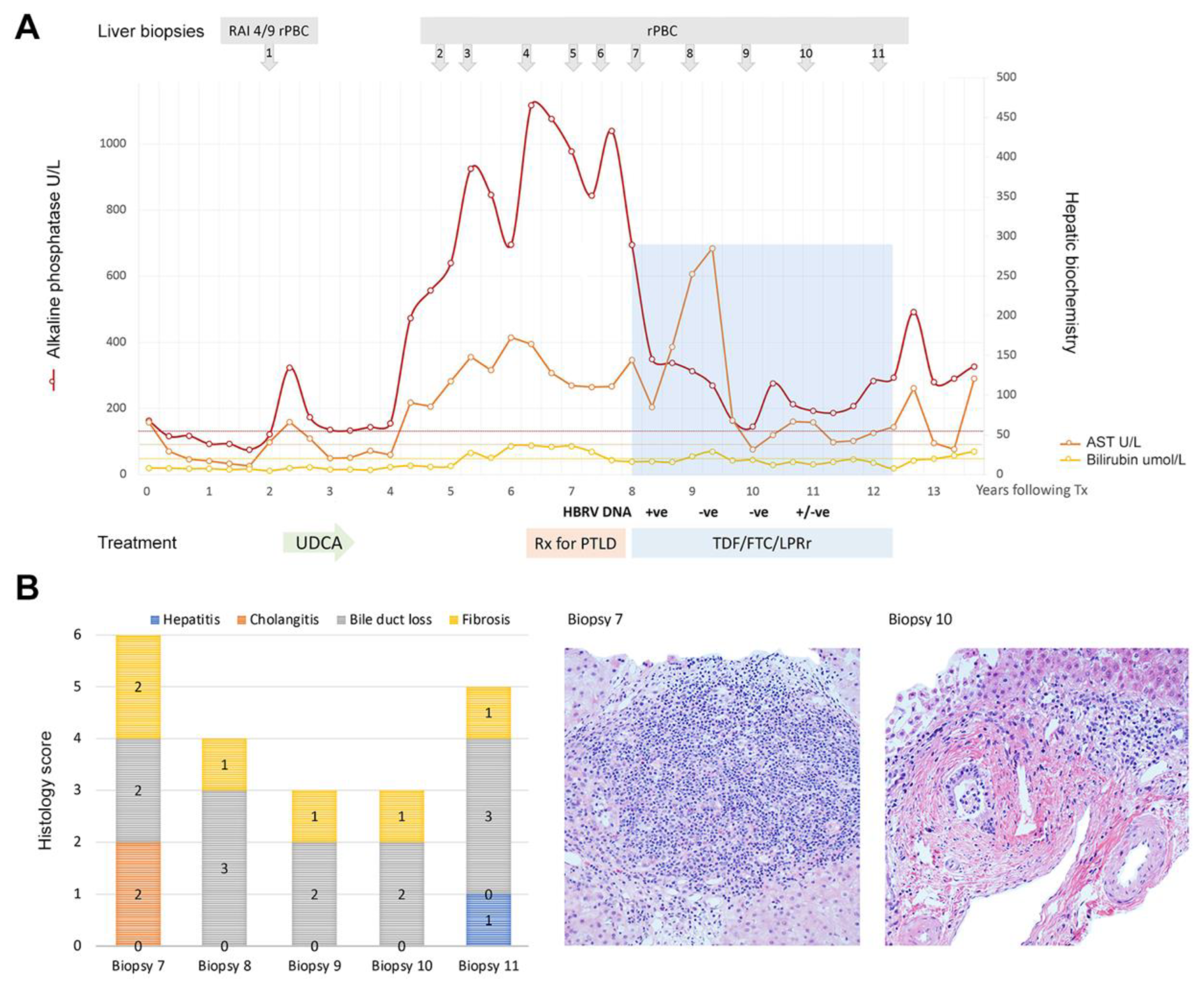
2.3. Combination ART Use with Betaretrovirus
2.4. Randomized Controlled Trial of Combination TDF/FTC and LPV/r in Patients with PBC
3. Antiretroviral Adverse Effects in People Living with HIV (PLWH) Infection
3.1. Side Effects of ART
3.2. Side-Effect Profiles of Nucleoside/Nucleotide Reverse Transcriptase Inhibitors
3.3. Side-Effect Profile of HIV Protease Inhibitors
3.4. Side Effects of Non-Nucleoside Reverse Transcriptase Inhibitors
3.5. Integrase Strand Transfer Inhibitors
3.6. Hepatotoxicity with Antiretroviral Drugs
4. Conclusions
Author Contributions
Funding
Conflicts of Interest
Abbreviations
| 3TC | Lamivudine |
| ART | Antiretroviral therapy |
| AZT | Zidovudine |
| DRV | Darunavir |
| HBRV | Human betaretrovirus |
| HIV | Human immunodeficiency virus |
| FTC | Emtricitabine |
| INSTI | Integrase strand transfer inhibitor |
| LPV/r | Lopinavir boosted with ritonavir |
| LT | Liver transplantation |
| NNRTI | Non-nucleoside reverse transcriptase inhibitor |
| NRTI | Nucleotide reverse transcriptase inhibitor |
| PBC | Primary biliary cholangitis |
| PLWH | People living with HIV infection |
| PTLD | Post-transplant lymphoproliferative disorder |
| RAL | Raltegravir |
| TDF | Tenofovir disoproxil fumarate |
References
- Lindor, K.D.; Bowlus, C.L.; Boyer, J.; Levy, C.; Mayo, M. Primary Biliary Cholangitis: 2018 Practice Guidance from the American Association for the Study of Liver Diseases. Hepatology 2019, 69, 394–419. [Google Scholar] [CrossRef] [Scilit] [PubMed]
- European Association for the Study of the Liver; Hirschfield, G.M.; Beuers, U.; Corpechot, C.; Invernizzi, P.; Jones, D.; Marzioni, M.; Schramm, C. EASL Clinical Practice Guidelines: The diagnosis and management of patients with primary biliary cholangitis. J. Hepatol. 2017. [Google Scholar] [CrossRef] [Scilit] [PubMed]
- Mason, A. Is PBC a viral infectious disease? Best Pract. Res. Clin. Gastroenterol. 2018, 27e39, 27–39. [Google Scholar] [CrossRef] [Scilit] [PubMed]
- Gish, R.; Mason, A. Autoimmune Liver Disease: Current Standards, Future Directions. Clin. Liver Dis. 2001, 5, 287–315. [Google Scholar] [CrossRef] [Scilit]
- Mason, A.L.; Wasilenko, S.T. Other potential medical therapies: The use of antiviral agents to investigate and treat primary ciliary cirrhosis. Clin. Liver Dis. 2008, 12, 445–460. [Google Scholar] [CrossRef] [Scilit]
- Montano-Loza, A.J.; Hansen, B.E.; Corpechot, C.; Roccarina, D.; Thorburn, D.; Trivedi, P.; Hirschfield, G.; McDowell, P.; Poupon, R.; Dumortier, J.; et al. Factors Associated With Recurrence of Primary Biliary Cholangitis After Liver Transplantation and Effects on Graft and Patient Survival. Gastroenterology 2019, 156, 96–107. [Google Scholar] [CrossRef] [Scilit]
- Dong, V.; Montano-Loza, A.; Mason, A. Modelling recurrent primary biliary cholangitis and primary sclerosing cholangitis as infectious diseases following liver transplantation. OBM Transplant. 2019, 3, 94. [Google Scholar] [CrossRef] [Scilit]
- Lytvyak, E.; Niazi, M.; Pai, R.; He, D.; Zhang, G.; Hubscher, S.G.; Mason, A.L. Combination antiretroviral therapy improves recurrent primary biliary cholangitis following liver transplantation. Liver Int. 2021, 41, 1879–1883. [Google Scholar] [CrossRef] [Scilit]
- Nakanuma, Y.; Zen, Y.; Harada, K.; Sasaki, M.; Nonomura, A.; Uehara, T.; Sano, K.; Kondo, F.; Fukusato, T.; Tsuneyama, K.; et al. Application of a new histological staging and grading system for primary biliary cirrhosis to liver biopsy specimens: Interobserver agreement. Pathol. Int. 2010, 60, 167–174. [Google Scholar] [CrossRef] [Scilit]
- Garcia-Montojo, M.; Doucet-O’Hare, T.; Henderson, L.; Nath, A. Human endogenous retrovirus-K (HML-2): A comprehensive review. Crit. Rev. Microbiol. 2018, 44, 715–738. [Google Scholar] [CrossRef] [Scilit]
- Grandi, N.; Cadeddu, M.; Pisano, M.P.; Esposito, F.; Blomberg, J.; Tramontano, E. Identification of a novel HERV-K(HML10): Comprehensive characterization and comparative analysis in non-human primates provide insights about HML10 proviruses structure and diffusion. Mob. DNA 2017, 8, 15. [Google Scholar] [CrossRef] [Scilit] [PubMed]
- Mason, A.L. The evidence supports a viral aetiology for primary biliary cirrhosis. J. Hepatol. 2011, 54, 1312–1314. [Google Scholar] [CrossRef] [Scilit] [PubMed]
- Xu, L.; Sakalian, M.; Shen, Z.; Loss, G.; Neuberger, J.; Mason, A. Cloning the human betaretrovirus proviral genome from patients with primary biliary cirrhosis. Hepatology 2004, 39, 151–156. [Google Scholar] [CrossRef] [Scilit] [PubMed]
- Bittner, J.J. Some Possible Effects of Nursing on the Mammary Gland Tumor Incidence in Mice. Science 1936, 84, 162. [Google Scholar] [CrossRef] [Scilit]
- Moore, D.H.; Charney, J.; Kramarsky, B.; Lasfargues, E.Y.; Sarkar, N.H.; Brennan, M.J.; Burrows, J.H.; Sirsat, S.M.; Paymaster, J.C.; Vaidya, A.B. Search for a human breast cancer virus. Nature 1971, 229, 611–615. [Google Scholar] [CrossRef] [Scilit]
- Mason, A.L.; Gilady, S.Y.; Mackey, J.R. Mouse mammary tumor virus in human breast cancer red herring or smoking gun? Am. J. Pathol. 2011, 179, 1588–1590. [Google Scholar] [CrossRef] [Scilit]
- Wang, Y.; Holland, J.F.; Bleiweiss, I.J.; Melana, S.; Liu, X.; Pelisson, I.; Cantarella, A.; Stellrecht, K.; Mani, S.; Pogo, B.G. Detection of mammary tumor virus env gene-like sequences in human breast cancer. Cancer Res. 1995, 55, 5173–5179. [Google Scholar]
- Holland, J.F.; Pogo, B.G. Mouse mammary tumor virus-like viral infection and human breast cancer. Clin. Cancer Res. 2004, 10, 5647–5649. [Google Scholar] [CrossRef] [Scilit]
- Mason, A.L.; Xu, L.; Guo, L.; Munoz, S.; Jaspan, J.B.; Bryer-Ash, M.; Cao, Y.; Sander, D.M.; Shoenfeld, Y.; Ahmed, A.; et al. Detection of retroviral antibodies in primary biliary cirrhosis and other idiopathic biliary disorders. Lancet 1998, 351, 1620–1624. [Google Scholar] [CrossRef] [Scilit]
- Xu, L.; Shen, Z.; Guo, L.; Fodera, B.; Keogh, A.; Joplin, R.; O’Donnell, B.; Aitken, J.; Carman, W.; Neuberger, J.; et al. Does a betaretrovirus infection trigger primary biliary cirrhosis? Proc. Natl. Acad. Sci. USA 2003, 100, 8454–8459. [Google Scholar] [CrossRef] [Scilit]
- Wang, W.; Indik, S.; Wasilenko, S.T.; Faschinger, A.; Carpenter, E.J.; Tian, Z.; Zhang, Y.; Wong, G.K.; Mason, A.L. Frequent proviral integration of the human betaretrovirus in biliary epithelium of patients with autoimmune and idiopathic liver disease. Aliment. Pharmacol. Ther. 2015, 41, 393–405. [Google Scholar] [CrossRef] [Scilit] [PubMed]
- Zhang, G.; Bashiri, K.; Kneteman, M.; Cave, K.; Hong, Y.; Mackay, J.; Alter, H.; Mason, A. Seroprevalence of Human Betaretrovirus Surface Protein Antibodies in Patients with Breast Cancer and Liver Disease. J. Oncol. 2020, 2020, 8958192. [Google Scholar] [PubMed]
- Rahbari, M.; Sharon, D.; Houghton, M.; Mason, A. Identification of an immunosuppressive domain in human betaretrovirus. In Proceedings of the Environment Abstract CDDW Annual Meeting, Banff, AB, Canada, 3–6 March 2017. [Google Scholar]
- Kane, M.; Case, L.K.; Kopaskie, K.; Kozlova, A.; MacDearmid, C.; Chervonsky, A.V.; Golovkina, T.V. Successful transmission of a retrovirus depends on the commensal microbiota. Science 2011, 334, 245–249. [Google Scholar] [CrossRef] [Scilit] [PubMed]
- Abofayed, H.; Syed, H.; Rahbari, M.; Mason, A. Cellular immune responses to human betaretrovirus in patients with primary biliary cholangitis. J. Hepatol. 2021, 75, PO-1822. [Google Scholar]
- Wang, W.; Wasilenko, S.; Indik, S.; Wong, G.; Mason, A. Isolation of the human betaretrovirus and demonstration of integration sites in patients with primary biliary cirrhosis. Can. J. Gastroenterol. 2012, 26, 84A. [Google Scholar]
- Sadamoto, T.; Joplin, R.; Keogh, A.; Mason, A.; Carman, W.; Neuberger, J. Expression of pyruvate-dehydrogenase complex PDC-E2 on biliary epithelial cells induced by lymph nodes from primary biliary cirrhosis. Lancet 1998, 352, 1595–1596. [Google Scholar] [CrossRef] [Scilit]
- Lytvyak, E.; Hosamani, I.; Montano-Loza, A.; Saxinger, L.; Mason, A.L. Randomized controlled trial: Combination antiretroviral therapy with Tenofovir-Emtricitabine and Lopinavir-Ritonavir in patients with primary biliary cholangitis. Can. Liver J. 2019, 2, 31–44. [Google Scholar] [CrossRef] [Scilit]
- Lytvyak, E.; Montano-Loza, A.; Saxinger, L.; Mason, A. Combination Anti-Retroviral Therapy Provides Reduction in Human Betaretrovirus Load and Durable Biochemical Responses in Patients with Primary Biliary Cirrhosis. Hepatology 2015, 62, 528A. [Google Scholar]
- Lytvyak, E.; Montano-Loza, A.J.; Mason, A.L. Combination antiretroviral studies for patients with primary biliary cirrhosis. World J. Gastroenterol. 2016, 22, 349–360. [Google Scholar] [CrossRef] [Scilit]
- Mason, A.L.; Farr, G.H.; Xu, L.; Hubscher, S.G.; Neuberger, J.M. Pilot studies of single and combination antiretroviral therapy in patients with primary biliary cirrhosis. Am. J. Gastroenterol. 2004, 99, 2348–2355. [Google Scholar] [CrossRef] [Scilit]
- Mason, A.L.; Lindor, K.D.; Bacon, B.R.; Vincent, C.; Neuberger, J.M.; Wasilenko, S.T. Clinical trial: Randomized controlled study of zidovudine and lamivudine for patients with primary biliary cirrhosis stabilized on ursodiol. Aliment. Pharmacol. Ther. 2008, 28, 886–894. [Google Scholar] [CrossRef] [Scilit] [PubMed]
- Schembri, G.; Schober, P. Killing two birds with one stone. Lancet 2011, 377, 96. [Google Scholar] [CrossRef] [Scilit]
- Held, W.; Waanders, G.A.; Acha-Orbea, H.; MacDonald, H.R. Reverse transcriptase-dependent and -independent phases of infection with mouse mammary tumor virus: Implications for superantigen function. J. Exp. Med. 1994, 180, 2347–2351. [Google Scholar] [CrossRef] [Scilit] [PubMed]
- Zhang, G.; Chen, M.; Graham, D.; Subsin, B.; McDougall, C.; Gilady, S.; Kneteman, M.; Law, L.; Swain, M.; Trauner, M.; et al. Mouse mammary tumor virus in anti-mitochondrial antibody producing mouse models. J. Hepatol. 2011, 55, 876–884. [Google Scholar] [CrossRef] [Scilit]
- Sharon, D.; Chen, M.; Zhang, G.; Girgis, S.; Sis, B.; Graham, D.; McDougall, C.; Wasilenko, S.T.; Montano-Loza, A.; Mason, A.L. Impact of combination antiretroviral therapy in the NOD.c3c4 mouse model of autoimmune biliary disease. Liver Int. 2015, 35, 1442–1450. [Google Scholar] [CrossRef] [Scilit]
- Montano-Loza, A.J.; Wasilenko, S.; Bintner, J.; Mason, A.L. Cyclosporine A inhibits in vitro replication of betaretrovirus associated with primary biliary cirrhosis. Liver Int. 2010, 30, 871–877. [Google Scholar] [CrossRef] [Scilit]
- Newton, J.L.; Pairman, J.; Sutcliffe, K.; Wilton, K.; Jones, D.E. A predictive model for fatigue and its etiologic associations in primary biliary cirrhosis. Clin. Gastroenterol. Hepatol. 2008, 6, 228–233. [Google Scholar] [CrossRef] [Scilit]
- Consolidated Guidelines on HIV Prevention, Testing, Treatment, Service Delivery and Monitoring: Recommendations for a Public Health Approach; World Health Organization: Geneva, Switzerland, 2021.
- Silva, B.F.; Peixoto, G.; da Luz, S.R.; de Moraes, S.; Peres, S.B. Adverse effects of chronic treatment with the Main subclasses of highly active antiretroviral therapy: A systematic review. HIV Med. 2019, 20, 429–438. [Google Scholar] [CrossRef] [Scilit]
- O’Brien, M.E.; Clark, R.A.; Besch, C.L.; Myers, L.; Kissinger, P. Patterns and correlates of discontinuation of the initial HAART regimen in an urban outpatient cohort. J. Acquir. Immune Defic. Syndr. 2003, 34, 407–414. [Google Scholar] [CrossRef] [Scilit]
- Korten, V.; Gökengin, D.; Eren, G.; Yıldırmak, T.; Gencer, S.; Eraksoy, H.; Inan, D.; Kaptan, F.; Dokuzoğuz, B.; Karaoğlan, I.; et al. Trends and factors associated with modification or discontinuation of the initial antiretroviral regimen during the first year of treatment in the Turkish HIV-TR Cohort, 2011–2017. AIDS Res. Ther. 2021, 18, 4. [Google Scholar] [CrossRef] [Scilit]
- Margolis, A.M.; Heverling, H.; Pham, P.A.; Stolbach, A. A review of the toxicity of HIV medications. J. Med. Toxicol. 2014, 10, 26–39. [Google Scholar] [CrossRef] [Scilit] [PubMed]
- Mallal, S.; Nolan, D.; Witt, C.; Masel, G.; Martin, A.M.; Moore, C.; Sayer, D.; Castley, A.; Mamotte, C.; Maxwell, D.; et al. Association between presence of HLA-B*5701, HLA-DR7, and HLA-DQ3 and hypersensitivity to HIV-1 reverse-transcriptase inhibitor abacavir. Lancet 2002, 359, 727–732. [Google Scholar] [CrossRef] [Scilit]
- Marcus, J.L.; Neugebauer, R.S.; Leyden, W.A.; Chao, C.R.; Xu, L.; Quesenberry, C.P., Jr.; Klein, D.B.; Towner, W.J.; Horberg, M.A.; Silverberg, M.J. Use of Abacavir and Risk of Cardiovascular Disease Among HIV-Infected Individuals. J. Acquir. Immune Defic. Syndr. 2016, 71, 413–419. [Google Scholar] [CrossRef] [Scilit]
- Dorjee, K.; Baxi, S.M.; Reingold, A.L.; Hubbard, A. Risk of cardiovascular events from current, recent, and cumulative exposure to abacavir among persons living with HIV who were receiving antiretroviral therapy in the United States: A cohort study. BMC Infect. Dis. 2017, 17, 708. [Google Scholar] [CrossRef] [Scilit] [PubMed]
- Bourgi, K.; Rebeiro, P.F.; Turner, M.; Castilho, J.L.; Hulgan, T.; Raffanti, S.P.; Koethe, J.R.; Sterling, T.R. Greater Weight Gain in Treatment-naive Persons Starting Dolutegravir-based Antiretroviral Therapy. Clin. Infect. Dis. 2020, 70, 1267–1274. [Google Scholar] [CrossRef] [Scilit] [PubMed]
- Bourgi, K.; Jenkins, C.A.; Rebeiro, P.F.; Palella, F.; Moore, R.D.; Altoff, K.N.; Gill, J.; Rabkin, C.S.; Gange, S.J.; Horberg, M.A.; et al. Weight gain among treatment-naïve persons with HIV starting integrase inhibitors compared to non-nucleoside reverse transcriptase inhibitors or protease inhibitors in a large observational cohort in the United States and Canada. J. Int. AIDS Soc. 2020, 23, e25484. [Google Scholar] [CrossRef] [Scilit]
- Ruderman, S.A.; Crane, H.M.; Nance, R.M.; Whitney, B.M.; Harding, B.N.; Mayer, K.H.; Moore, R.D.; Eron, J.J.; Geng, E.; Mathews, W.C.; et al. Brief Report: Weight Gain Following ART Initiation in ART-Naïve People Living with HIV in the Current Treatment Era. J. Acquir. Immune Defic. Syndr. 2021, 86, 339–343. [Google Scholar] [CrossRef] [Scilit]
- Lake, J.E.; Trevillyan, J. Impact of Integrase inhibitors and tenofovir alafenamide on weight gain in people with HIV. Curr. Opin. HIV AIDS 2021, 16, 148–151. [Google Scholar] [CrossRef] [Scilit]
- Hawkins, T. Understanding and managing the adverse effects of antiretroviral therapy. Antivir. Res. 2010, 85, 201–209. [Google Scholar] [CrossRef] [Scilit]
- Lv, Z.; Chu, Y.; Wang, Y. HIV protease inhibitors: A review of molecular selectivity and toxicity. HIV AIDS 2015, 7, 95–104. [Google Scholar] [CrossRef] [Scilit]
- Administration, F.A.D. Kaletra (Lopinavir and Ritonavir) Label. Available online: https://www.accessdata.fda.gov/drugsatfda_docs/label/2016/021251s052_021906s046lbl.pdf (accessed on 24 December 2021).
- Cicconi, P.; Cozzi-Lepri, A.; Castagna, A.; Trecarichi, E.M.; Antinori, A.; Gatti, F.; Cassola, G.; Sighinolfi, L.; Castelli, P.; d’Arminio Monforte, A. Insights into reasons for discontinuation according to year of starting first regimen of highly active antiretroviral therapy in a cohort of antiretroviral-naïve patients. HIV Med. 2010, 11, 104–113. [Google Scholar] [CrossRef] [Scilit] [PubMed]
- U.S. Department of Health and Human Services. Guidelines for the Use of Antiretroviral Agents in Adults and Adolescents with HIV. Available online: https://clinicalinfo.hiv.gov/en/guidelines/adult-and-adolescent-arv/whats-new-guidelines (accessed on 24 December 2021).
- Mills, A.M.; Nelson, M.; Jayaweera, D.; Ruxrungtham, K.; Cassetti, I.; Girard, P.M.; Workman, C.; Dierynck, I.; Sekar, V.; Abeele, C.V.; et al. Once-daily darunavir/ritonavir vs. lopinavir/ritonavir in treatment-naive, HIV-1-infected patients: 96-week analysis. Aids 2009, 23, 1679–1688. [Google Scholar] [CrossRef] [Scilit] [PubMed]
- Bongiovanni, M.; Cicconi, P.; Landonio, S.; Meraviglia, P.; Testa, L.; Di Biagio, A.; Chiesa, E.; Tordato, F.; Bini, T.; Monforte, A. Predictive factors of lopinavir/ritonavir discontinuation for drug-related toxicity: Results from a cohort of 416 multi-experienced HIV-infected individuals. Int. J. Antimicrob. Agents 2005, 26, 88–91. [Google Scholar] [CrossRef] [Scilit] [PubMed]
- Ortiz, R.; Dejesus, E.; Khanlou, H.; Voronin, E.; van Lunzen, J.; Andrade-Villanueva, J.; Fourie, J.; De Meyer, S.; De Pauw, M.; Lefebvre, E.; et al. Efficacy and safety of once-daily darunavir/ritonavir versus lopinavir/ritonavir in treatment-naive HIV-1-infected patients at week 48. Aids 2008, 22, 1389–1397. [Google Scholar] [CrossRef] [Scilit] [PubMed]
- Walmsley, S.; Bernstein, B.; King, M.; Arribas, J.; Beall, G.; Ruane, P.; Johnson, M.; Johnson, D.; Lalonde, R.; Japour, A.; et al. Lopinavir-ritonavir versus nelfinavir for the initial treatment of HIV infection. N. Engl. J. Med. 2002, 346, 2039–2046. [Google Scholar] [CrossRef] [Scilit] [PubMed]
- Bissio, E.; Lopardo, G.D. Incidence of Hyperbilirubinemia and Jaundice Due to Atazanavir in a Cohort of Hispanic Patients. AIDS Res. Hum. Retrovir. 2012, 29, 415–417. [Google Scholar] [CrossRef] [Scilit]
- Croom, K.F.; Dhillon, S.; Keam, S.J. Atazanavir. Drugs 2009, 69, 1107–1140. [Google Scholar] [CrossRef] [Scilit]
- Malan, D.N.; Krantz, E.; David, N.; Wirtz, V.; Hammond, J.; McGrath, D.; Group, S. Efficacy and safety of atazanavir, with or without ritonavir, as part of once-daily highly active antiretroviral therapy regimens in antiretroviral-naive patients. JAIDS J. Acquir. Immune. Defic. Syndr. 2008, 47, 161–167. [Google Scholar] [CrossRef] [Scilit]
- Murphy, R.L.; Sanne, I.; Cahn, P.; Phanuphak, P.; Percival, L.; Kelleher, T.; Giordano, M. Dose-ranging, randomized, clinical trial of atazanavir with lamivudine and stavudine in antiretroviral-naive subjects: 48-week results. Aids 2003, 17, 2603–2614. [Google Scholar] [CrossRef] [Scilit]
- Wood, R. Atazanavir: Its role in HIV treatment. Expert Rev. Anti-Infect. Ther. 2008, 6, 785–796. [Google Scholar] [CrossRef] [Scilit]
- Mallolas, J. Darunavir Stands Up as Preferred HIV Protease Inhibitor. AIDS Rev. 2017, 19, 105–112. [Google Scholar] [PubMed]
- Willig, J.H.; Aban, I.; Nevin, C.R.; Ye, J.; Raper, J.L.; McKinnel, J.A.; DeLaitsch, L.L.; Mrus, J.M.; De La Rosa, G.R.; Mugavero, M.J.; et al. Darunavir Outcomes Study: Comparative Effectiveness of Virologic Suppression, Regimen Durability, and Discontinuation Reasons for Three-Class Experienced Patients at 48 Weeks. AIDS Res. Hum. Retrovir. 2010, 26, 1279–1285. [Google Scholar] [CrossRef] [Scilit] [PubMed]
- Hsu, R.; Brunet, L.; Mounzer, K.; Fatukasi, T.; Fusco, J.; Vannappagari, V.; Henegar, C.; van Wyk, J.; Crawford, M.; Curtis, L. Characterizations of weight gain following antiretroviral regimen initiation in treatment-naïve individuals living with HIV. In HIV Medicine; Wiley: Hoboken, NJ, USA, 2019; p. 69. [Google Scholar]
- Antinori, A.; Meraviglia, P.; Monforte, A.; Castagna, A.; Mussini, C.; Bini, T.; Gianotti, N.; Rusconi, S.; Colella, E.; Airoldi, G.; et al. Effectiveness, durability, and safety of darunavir/ritonavir in HIV-1-infected patients in routine clinical practice in Italy: A postauthorization noninterventional study. Drug Des. Devel. 2016, 10, 1589–1603. [Google Scholar] [CrossRef] [Scilit]
- Orkin, C.; DeJesus, E.; Khanlou, H.; Stoehr, A.; Supparatpinyo, K.; Lathouwers, E.; Lefebvre, E.; Opsomer, M.; Van de Casteele, T.; Tomaka, F. Final 192-week efficacy and safety of once-daily darunavir/ritonavir compared with lopinavir/ritonavir in HIV-1-infected treatment-naïve patients in the ARTEMIS trial. HIV Med. 2013, 14, 49–59. [Google Scholar] [CrossRef] [Scilit] [PubMed]
- Molina, J.-M.; Squires, K.; Sax, P.E.; Cahn, P.; Lombaard, J.; DeJesus, E.; Lai, M.-T.; Xu, X.; Rodgers, A.; Lupinacci, L.; et al. Doravirine versus ritonavir-boosted darunavir in antiretroviral-naive adults with HIV-1 (DRIVE-FORWARD): 48-week results of a randomised, double-blind, phase 3, non-inferiority trial. Lancet HIV 2018, 5, e211–e220. [Google Scholar] [CrossRef] [Scilit]
- Orkin, C.; Molina, J.-M.; Negredo, E.; Arribas, J.R.; Gathe, J.; Eron, J.J.; Van Landuyt, E.; Lathouwers, E.; Hufkens, V.; Petrovic, R.; et al. Efficacy and safety of switching from boosted protease inhibitors plus emtricitabine and tenofovir disoproxil fumarate regimens to single-tablet darunavir, cobicistat, emtricitabine, and tenofovir alafenamide at 48 weeks in adults with virologically suppressed HIV-1 (EMERALD): A phase 3, randomised, non-inferiority trial. Lancet HIV 2018, 5, e23–e34. [Google Scholar] [CrossRef] [Scilit] [PubMed]
- Eckard, A.R.; McComsey, G.A. Weight gain and integrase inhibitors. Curr. Opin. Infect. Dis. 2020, 33, 10–19. [Google Scholar] [CrossRef] [Scilit]
- Bakal, D.R.; Coelho, L.E.; Luz, P.M.; Clark, J.L.; De Boni, R.B.; Cardoso, S.W.; Veloso, V.G.; Lake, J.E.; Grinsztejn, B. Obesity following ART initiation is common and influenced by both traditional and HIV-/ART-specific risk factors. J. Antimicrob. Chemother. 2018, 73, 2177–2185. [Google Scholar] [CrossRef] [Scilit]
- Sax, P.E.; Erlandson, K.M.; Lake, J.E.; McComsey, G.A.; Orkin, C.; Esser, S.; Brown, T.T.; Rockstroh, J.K.; Wei, X.; Carter, C.C.; et al. Weight Gain Following Initiation of Antiretroviral Therapy: Risk Factors in Randomized Comparative Clinical Trials. Clin. Infect. Dis. 2020, 71, 1379–1389. [Google Scholar] [CrossRef] [Scilit]
- Shah, S.; Hindley, L.; Hill, A. Are New Antiretroviral Treatments Increasing the Risk of Weight Gain? Drugs 2021, 81, 299–315. [Google Scholar] [CrossRef] [Scilit]
- Lake, J.E.; McComsey, G.A.; Hulgan, T.M.; Wanke, C.A.; Mangili, A.; Walmsley, S.L.; Boger, M.S.; Turner, R.R.; McCreath, H.E.; Currier, J.S. A randomized trial of Raltegravir replacement for protease inhibitor or non-nucleoside reverse transcriptase inhibitor in HIV-infected women with lipohypertrophy. AIDS Patient Care STDS 2012, 26, 532–540. [Google Scholar] [CrossRef] [Scilit] [PubMed]
- Clotet, B.; Feinberg, J.; van Lunzen, J.; Khuong-Josses, M.-A.; Antinori, A.; Dumitru, I.; Pokrovskiy, V.; Fehr, J.; Ortiz, R.; Saag, M.; et al. Once-daily dolutegravir versus darunavir plus ritonavir in antiretroviral-naive adults with HIV-1 infection (FLAMINGO): 48 week results from the randomised open-label phase 3b study. Lancet 2014, 383, 2222–2231. [Google Scholar] [CrossRef] [Scilit]
- Abrescia, N.; D’Abbraccio, M.; Figoni, M.; Busto, A.; Maddaloni, A.; De Marco, M. Hepatotoxicity of antiretroviral drugs. Curr. Pharm. Des. 2005, 11, 3697–3710. [Google Scholar] [CrossRef] [Scilit] [PubMed]
- Núñez, M. Hepatotoxicity of antiretrovirals: Incidence, mechanisms and management. J. Hepatol. 2006, 44, S132–S139. [Google Scholar] [CrossRef] [Scilit]
- Pillaye, J.N.; Marakalala, M.J.; Khumalo, N.; Spearman, W.; Ndlovu, H. Mechanistic insights into antiretroviral drug-induced liver injury. Pharmacol. Res. Perspect. 2020, 8, e00598. [Google Scholar] [CrossRef] [Scilit]
- Torti, C.; Lapadula, G.; Casari, S.; Puoti, M.; Nelson, M.; Quiros-Roldan, E.; Bella, D.; Pastore, G.; Ladisa, N.; Minoli, L.; et al. Incidence and risk factors for liver enzyme elevation during highly active antiretroviral therapy in HIV-HCV co-infected patients: Results from the Italian EPOKA-MASTER Cohort. BMC Infect. Dis. 2005, 5, 58. [Google Scholar] [CrossRef] [Scilit]
- Aranzabal, L.; Casado, J.L.; Moya, J.; Quereda, C.; Diz, S.; Moreno, A.; Moreno, L.; Antela, A.; Perez-Elias, M.J.; Dronda, F.; et al. Influence of liver fibrosis on highly active antiretroviral therapy-associated hepatotoxicity in patients with HIV and hepatitis C virus coinfection. Clin. Infect. Dis. 2005, 40, 588–593. [Google Scholar] [CrossRef] [Scilit]

Publisher’s Note: MDPI stays neutral with regard to jurisdictional claims in published maps and institutional affiliations. |
© 2022 by the authors. Licensee MDPI, Basel, Switzerland. This article is an open access article distributed under the terms and conditions of the Creative Commons Attribution (CC BY) license (https://creativecommons.org/licenses/by/4.0/).
Share and Cite
Turvey, S.L.; Saxinger, L.; Mason, A.L. Apples to Apples? A Comparison of Real-World Tolerability of Antiretrovirals in Patients with Human Immunodeficiency Virus Infection and Patients with Primary Biliary Cholangitis. Viruses 2022, 14, 516. https://doi.org/10.3390/v14030516
Turvey SL, Saxinger L, Mason AL. Apples to Apples? A Comparison of Real-World Tolerability of Antiretrovirals in Patients with Human Immunodeficiency Virus Infection and Patients with Primary Biliary Cholangitis. Viruses. 2022; 14(3):516. https://doi.org/10.3390/v14030516
Chicago/Turabian StyleTurvey, Shannon L., Lynora Saxinger, and Andrew L. Mason. 2022. "Apples to Apples? A Comparison of Real-World Tolerability of Antiretrovirals in Patients with Human Immunodeficiency Virus Infection and Patients with Primary Biliary Cholangitis" Viruses 14, no. 3: 516. https://doi.org/10.3390/v14030516
APA StyleTurvey, S. L., Saxinger, L., & Mason, A. L. (2022). Apples to Apples? A Comparison of Real-World Tolerability of Antiretrovirals in Patients with Human Immunodeficiency Virus Infection and Patients with Primary Biliary Cholangitis. Viruses, 14(3), 516. https://doi.org/10.3390/v14030516