Article

Viral Decoys: The Only Two Herpesviruses Infecting Invertebrates Evolved Different Transcriptional Strategies to Deflect Post-Transcriptional Editing


1
Key Laboratory of Maricultural Organism Disease Control, Ministry of Agriculture, Qingdao Key Laboratory of Mariculture Epidemiology and Biosecurity, Yellow Sea Fisheries Research Institute, Chinese Academy of Fishery Sciences, Qingdao 266237, China
2
Laboratory for Marine Fisheries Science and Food Production Processes, Pilot National Laboratory for Marine Science and Technology, Qingdao 266237, China
3
Coastal Ecology Section, Alfred Wegener Institute Helmholtz Centre for Polar and Marine Research, Warden Sea Station, 25992 List auf Sylt, Germany
4
Department of Biology, University of Padova, 35121 Padova, Italy
5
College of Fisheries, Tianjin Agricultural University, Tianjin 300380, China
*
Author to whom correspondence should be addressed.
These authors contributed equally to this work.
Viruses 2021, 13(10), 1971; https://doi.org/10.3390/v13101971
Submission received: 10 September 2021 / Accepted: 29 September 2021 / Published: 30 September 2021

Abstract

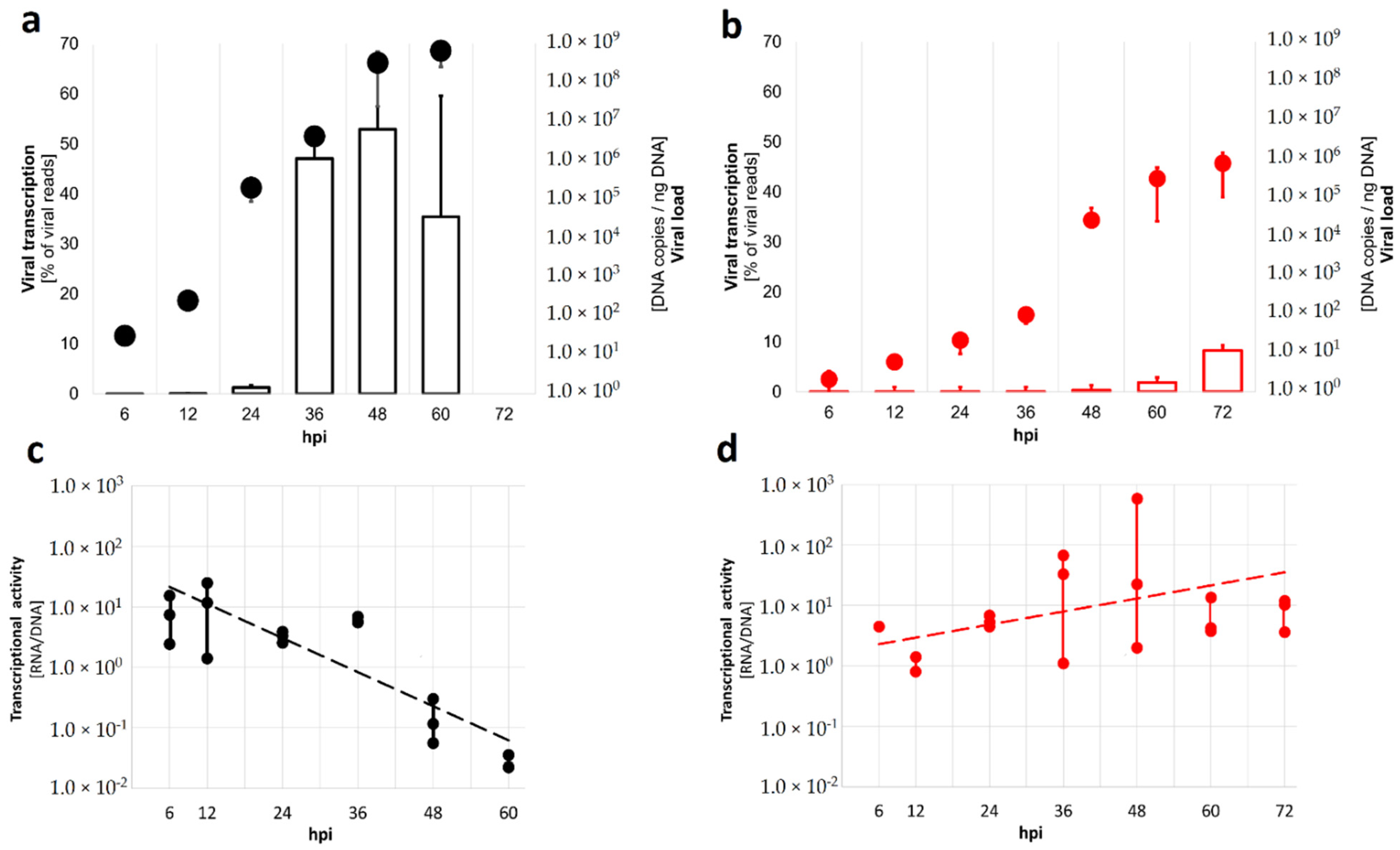
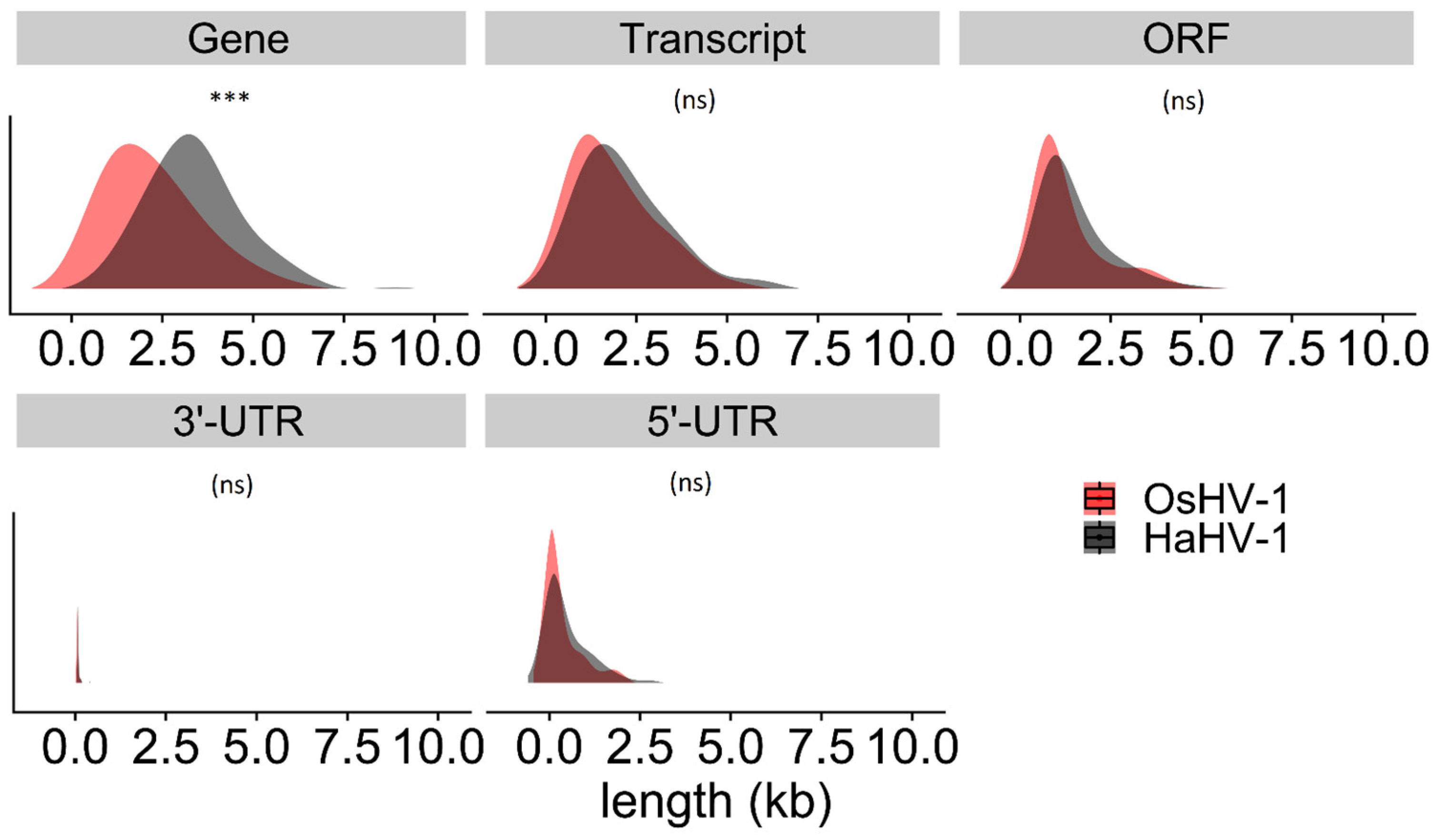
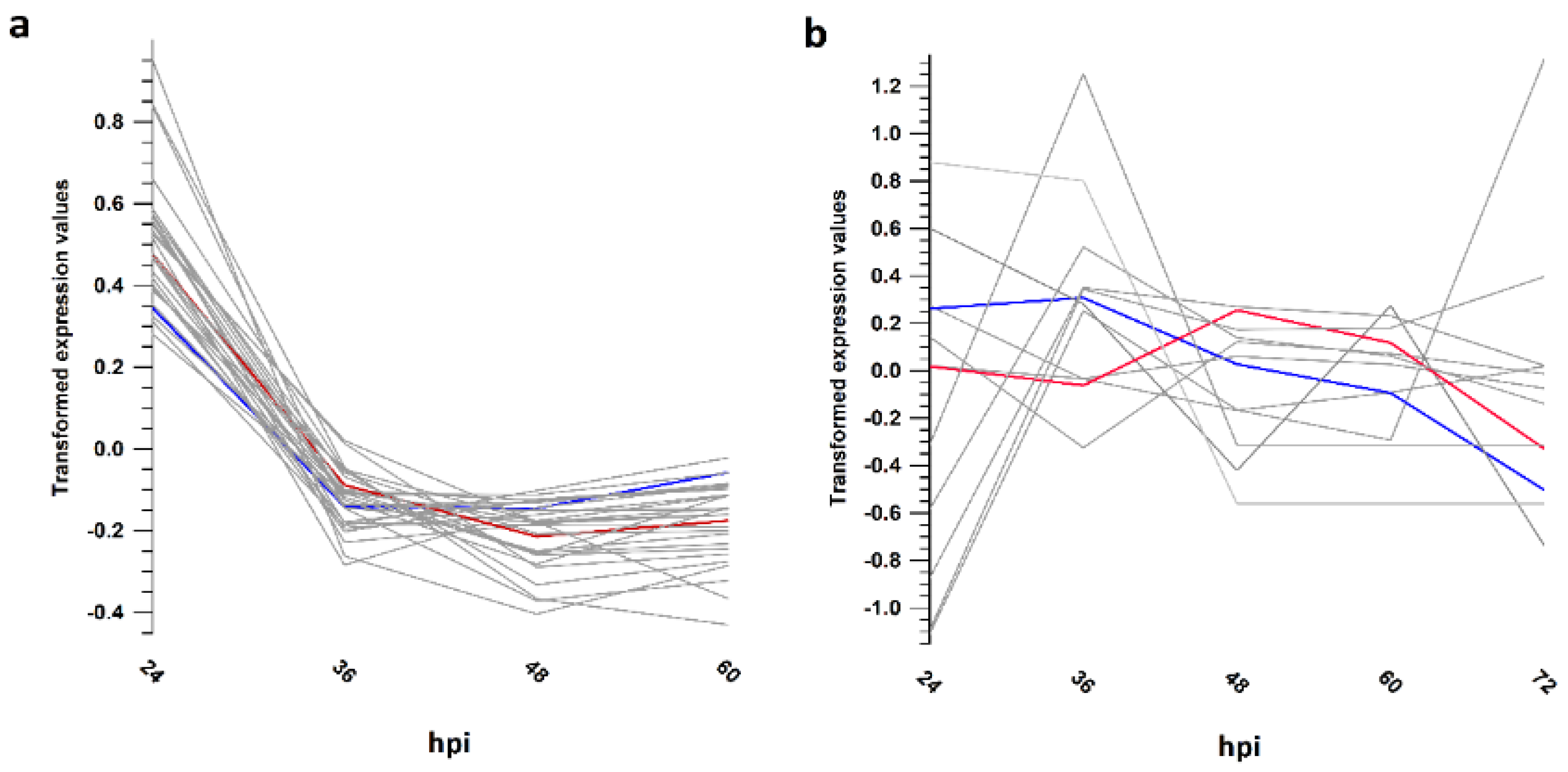
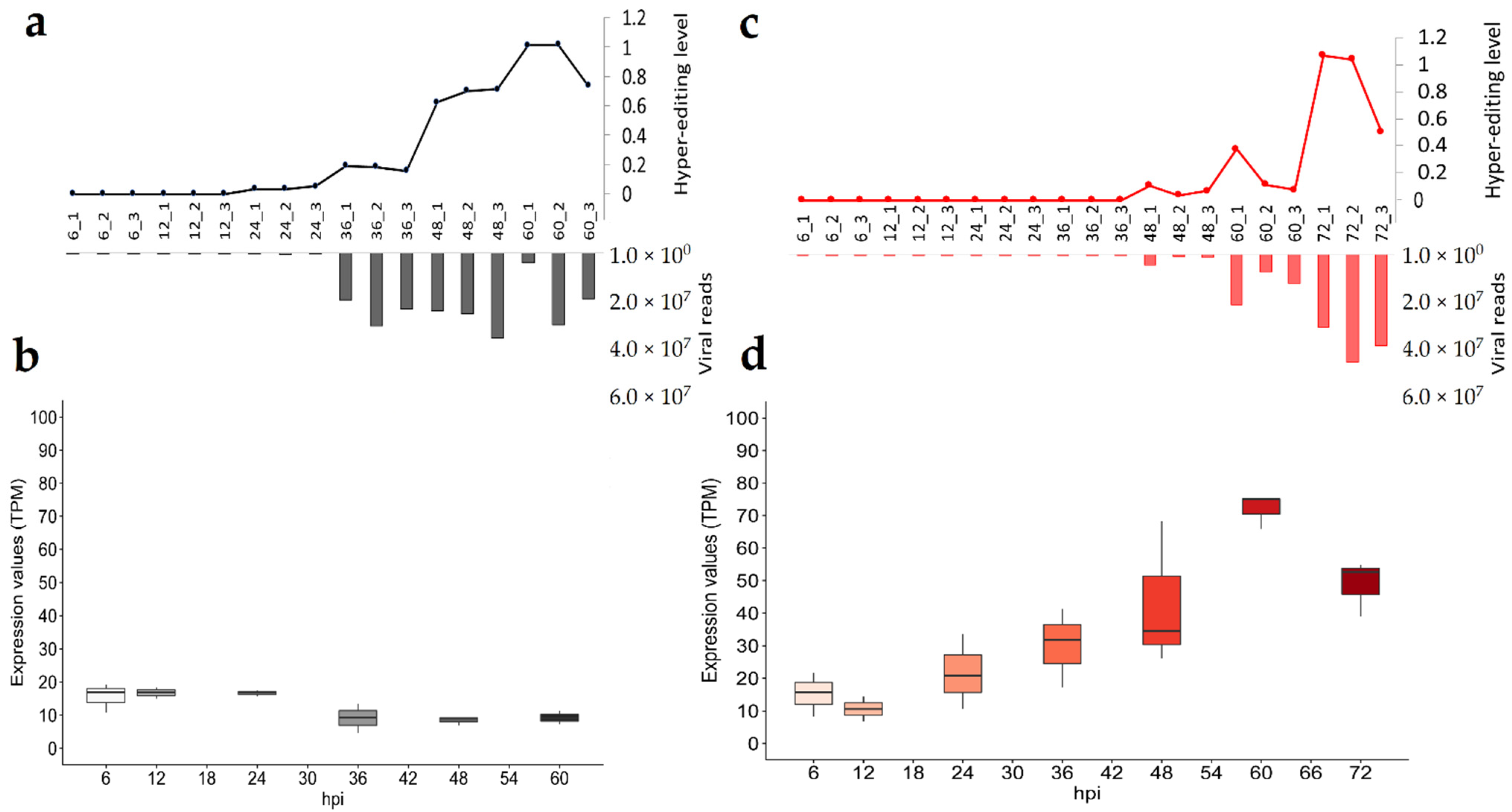
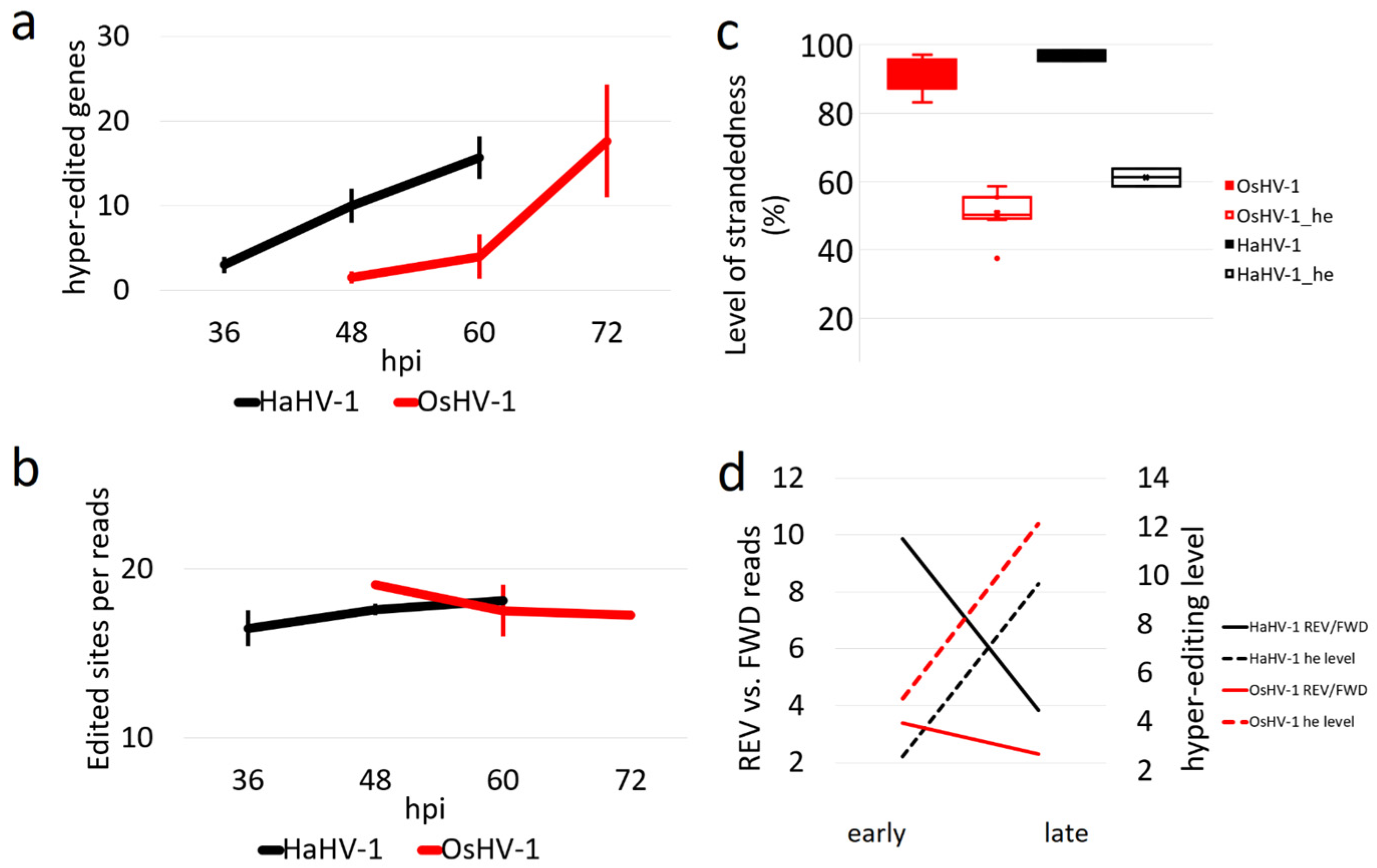
The highly versatile group of Herpesviruses cause disease in a wide range of hosts. In invertebrates, only two herpesviruses are known: the malacoherpesviruses HaHV-1 and OsHV-1 infecting gastropods and bivalves, respectively. To understand viral transcript architecture and diversity we first reconstructed full-length viral genomes of HaHV-1 infecting Haliotis diversicolor supertexta and OsHV-1 infecting Scapharca broughtonii by DNA-seq. We then used RNA-seq over the time-course of experimental infections to establish viral transcriptional dynamics, followed by PacBio long-read sequencing of full-length transcripts to untangle viral transcript architectures at two selected time points. Despite similarities in genome structure, in the number of genes and in the diverse transcriptomic architectures, we measured a ten-fold higher transcript variability in HaHV-1, with more extended antisense gene transcription. Transcriptional dynamics also appeared different, both in timing and expression trends. Both viruses were heavily affected by post-transcriptional modifications performed by ADAR1 affecting sense-antisense gene pairs forming dsRNAs. However, OsHV-1 concentrated these modifications in a few genomic hotspots, whereas HaHV-1 diluted ADAR1 impact by elongated and polycistronic transcripts distributed over its whole genome. These transcriptional strategies might thus provide alternative potential roles for sense-antisense transcription in viral transcriptomes to evade the host’s immune response in different virus–host combinations.
Keywords: PacBio SMRT; long-read sequencing; malacoherpesvirus; OsHV-1; HaHV-1; antisense transcription; ADAR editing; host defenses PacBio SMRT; long-read sequencing; malacoherpesvirus; OsHV-1; HaHV-1; antisense transcription; ADAR editing; host defenses