Impacts of Vertical Variation in Canopy Structures on Shelterbelt Windbreak Effectiveness: A Large-Eddy Simulation Study


 ,
,  ,
,  and
and
Abstract
1. Introduction
2. Materials and Methods
2.1. Porous Media Model with the Uniform-K Approach
Evaluation of the Uniform-K Approach
2.2. Porous Media Model with the Nonuniform-K Approach
2.2.1. Calculating the Profiles of β
2.2.2. Calibration of the K-β Model
2.2.3. Preliminary Evaluation of the Nonuniform-K Approach
2.3. Evaluation of the Mesh Sensitivity
3. Results
3.1. Applications on Single-Row Shelterbelt
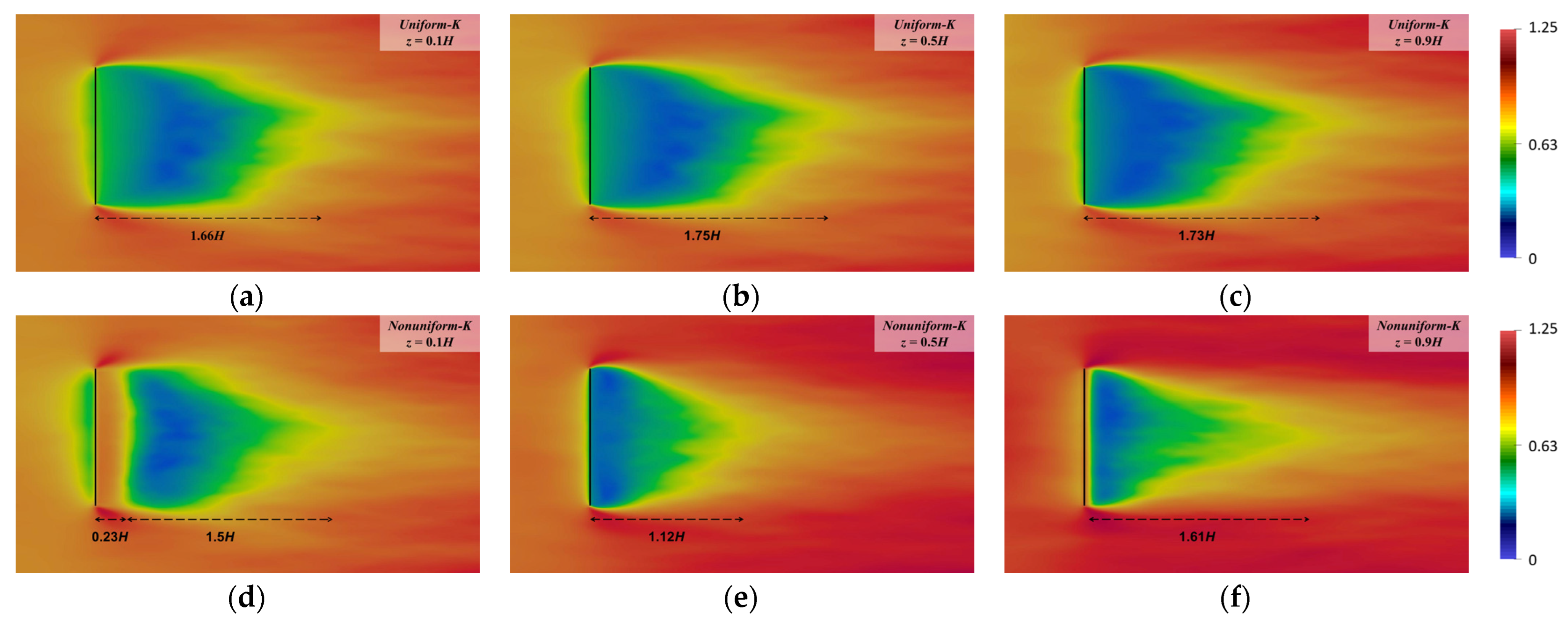
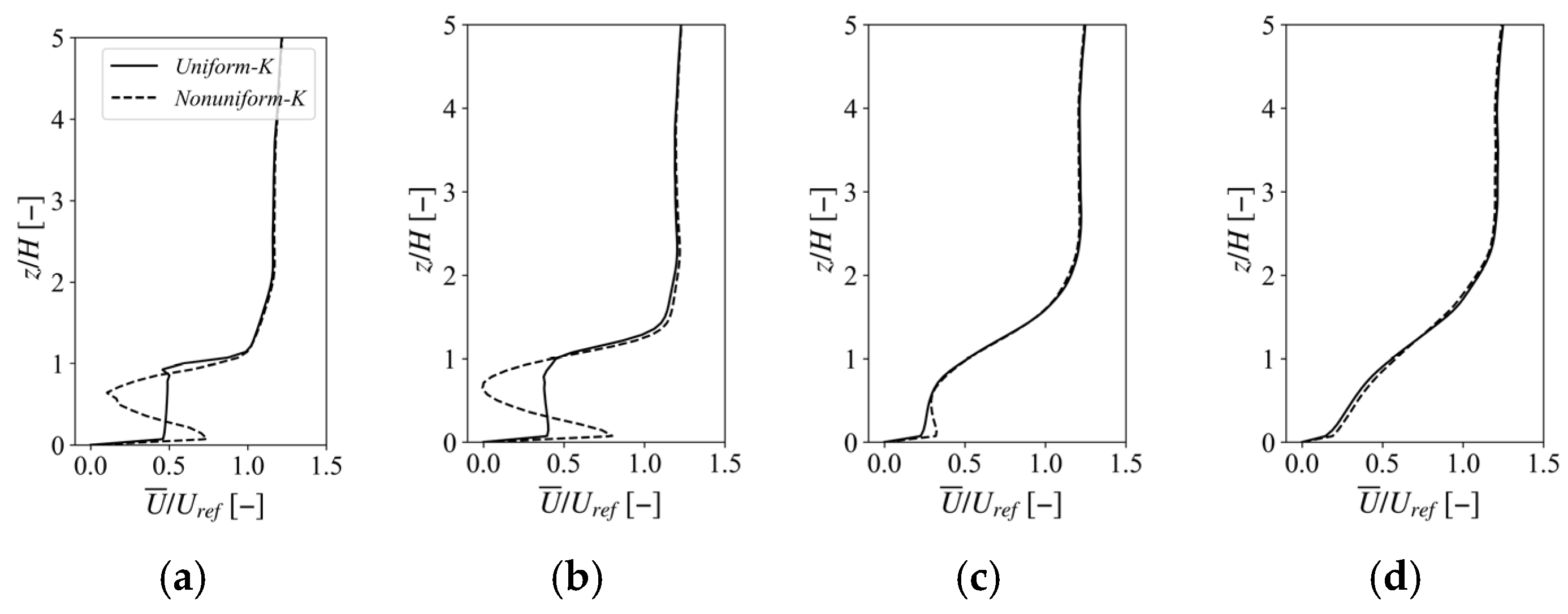
3.1.1. Discrepancies on Velocity Fields of Single-Row Cases
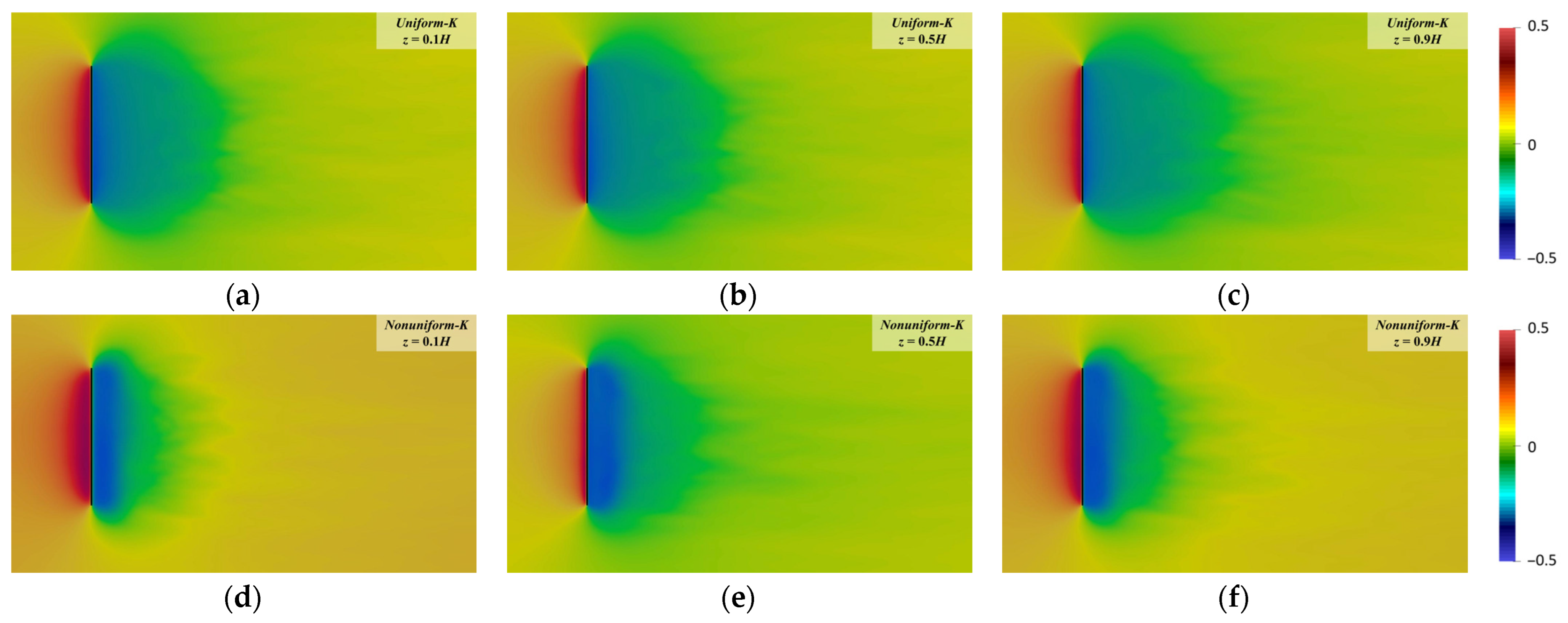
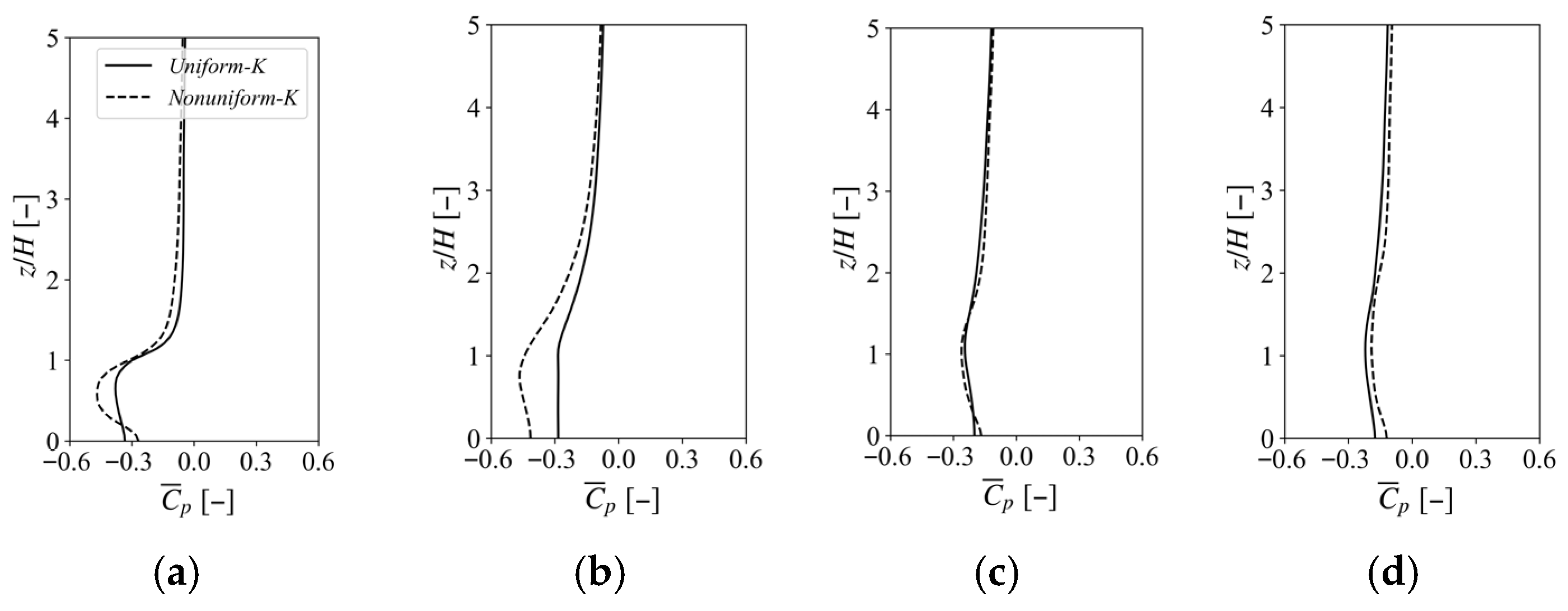
3.1.2. Discrepancies on Pressure Fields of Single-Row Cases
3.1.3. Comparisons with the Uniform-K (Canopy Only)
3.2. Applications on Double-Row Shelterbelt
3.2.1. Discrepancies on Velocity Fields of Double-Row Cases
3.2.2. Discrepancies on Pressure Fields of Double-Row Cases
4. Conclusions
- (1)
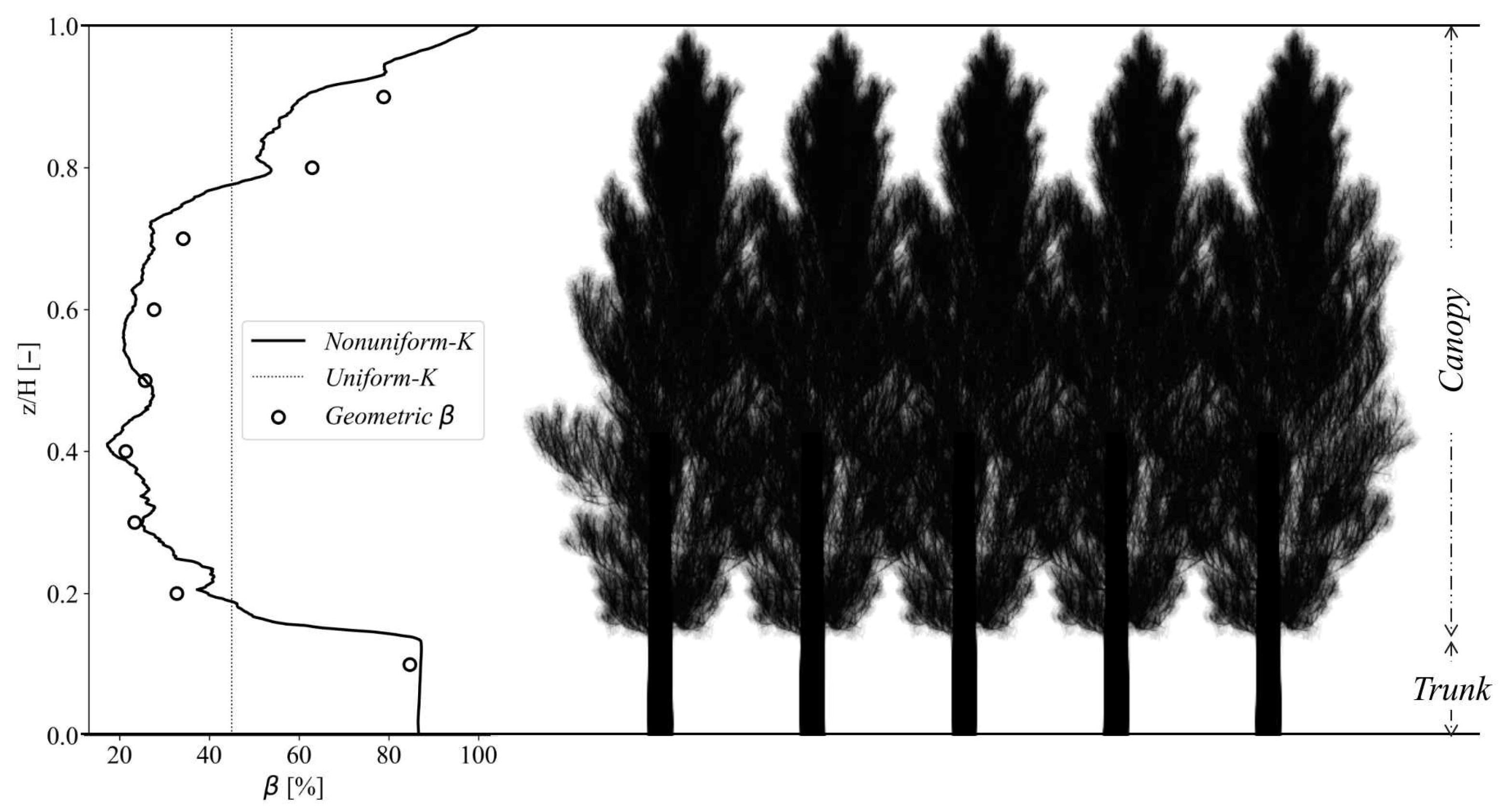
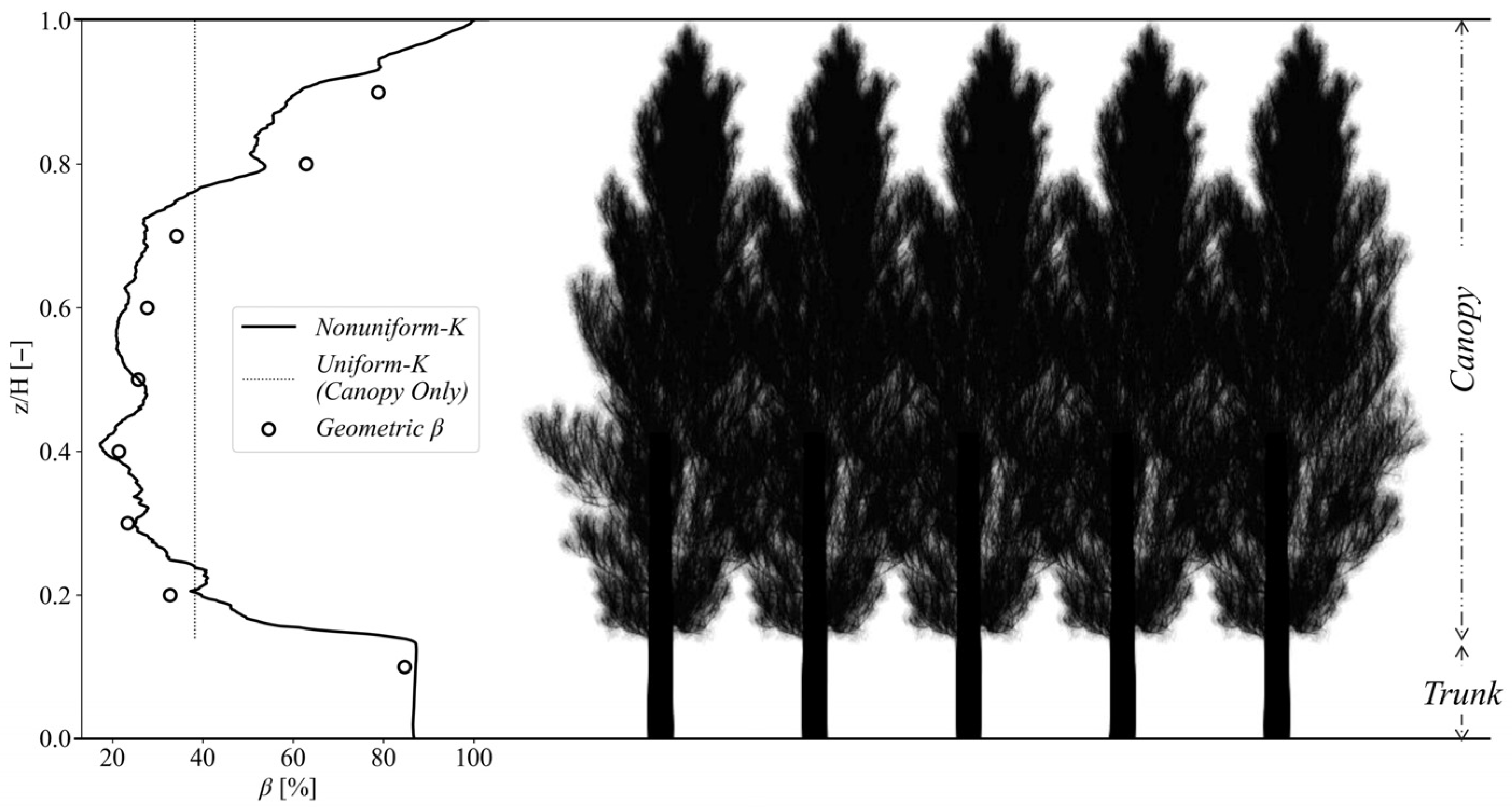
- The non-destructive method based on the Alpha Blending algorithm enables accurate quantification of the vertical variation in shelterbelt canopy porosity. The porosity profiles derived from this method show good agreement with geometric porosity measurements, and establish a robust framework for deriving height-resolved nonuniform aerodynamic resistance coefficients.
- (2)
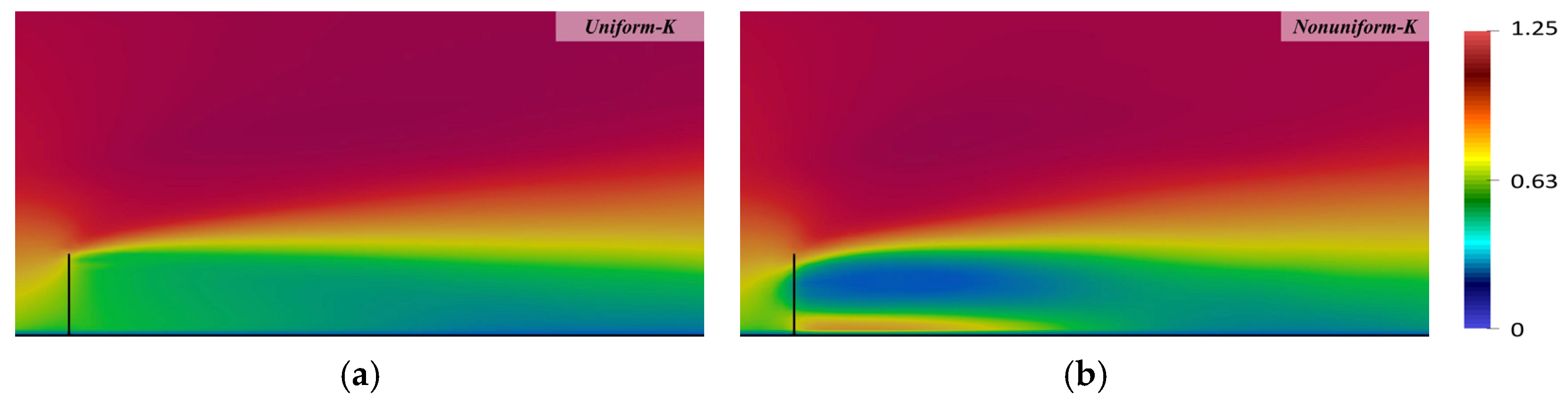
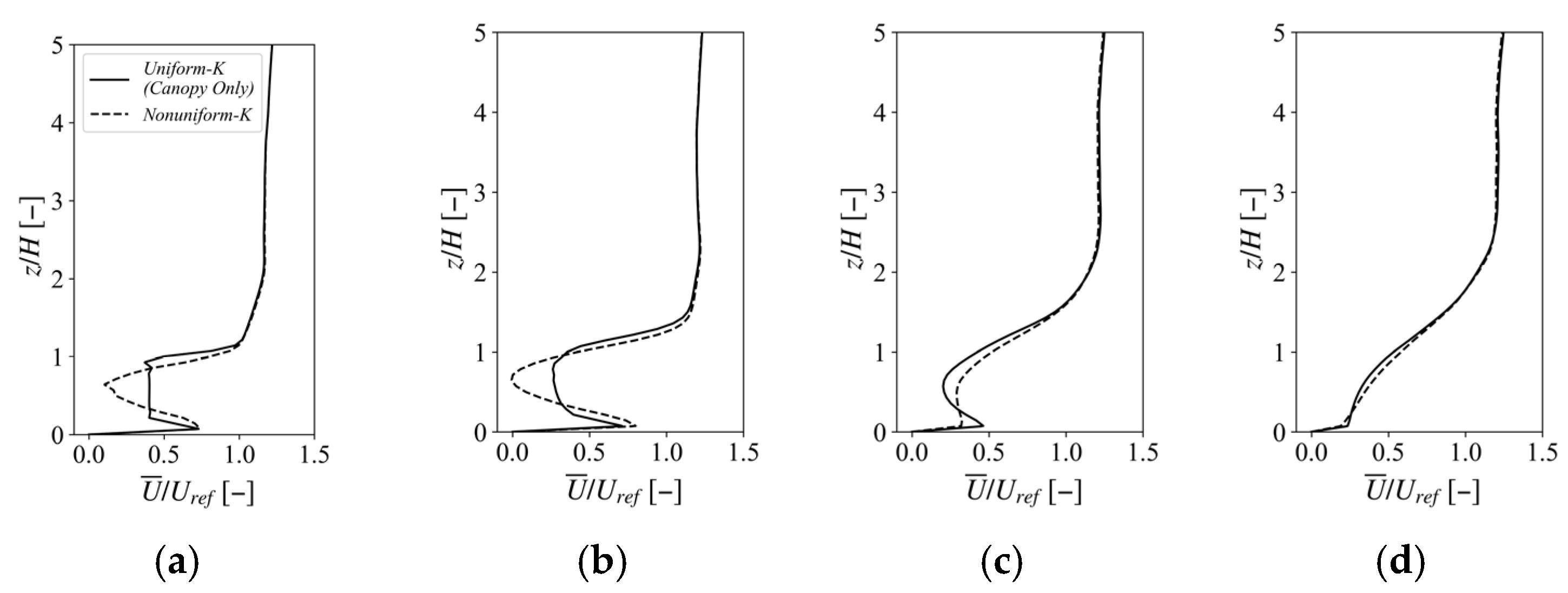
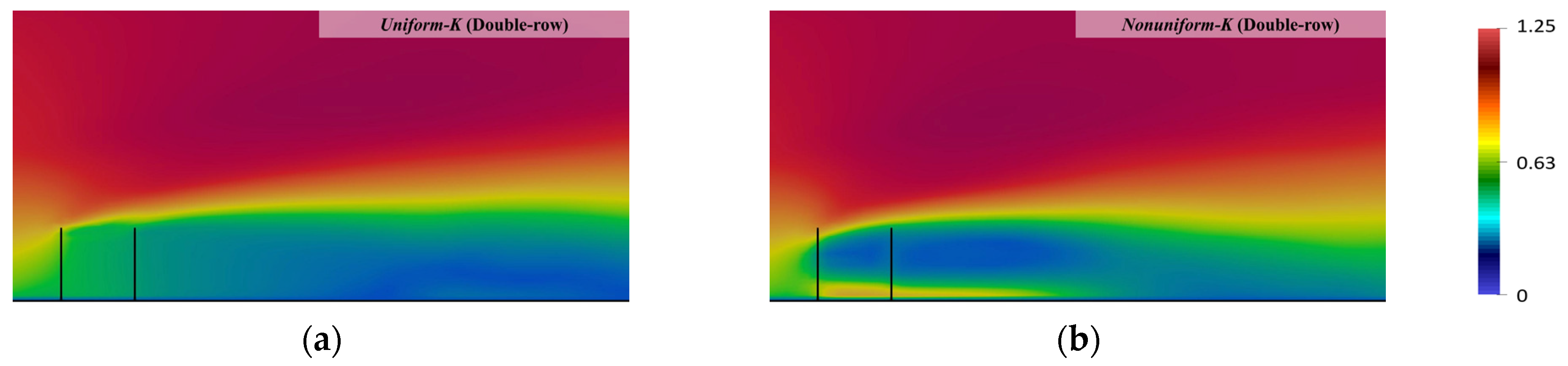
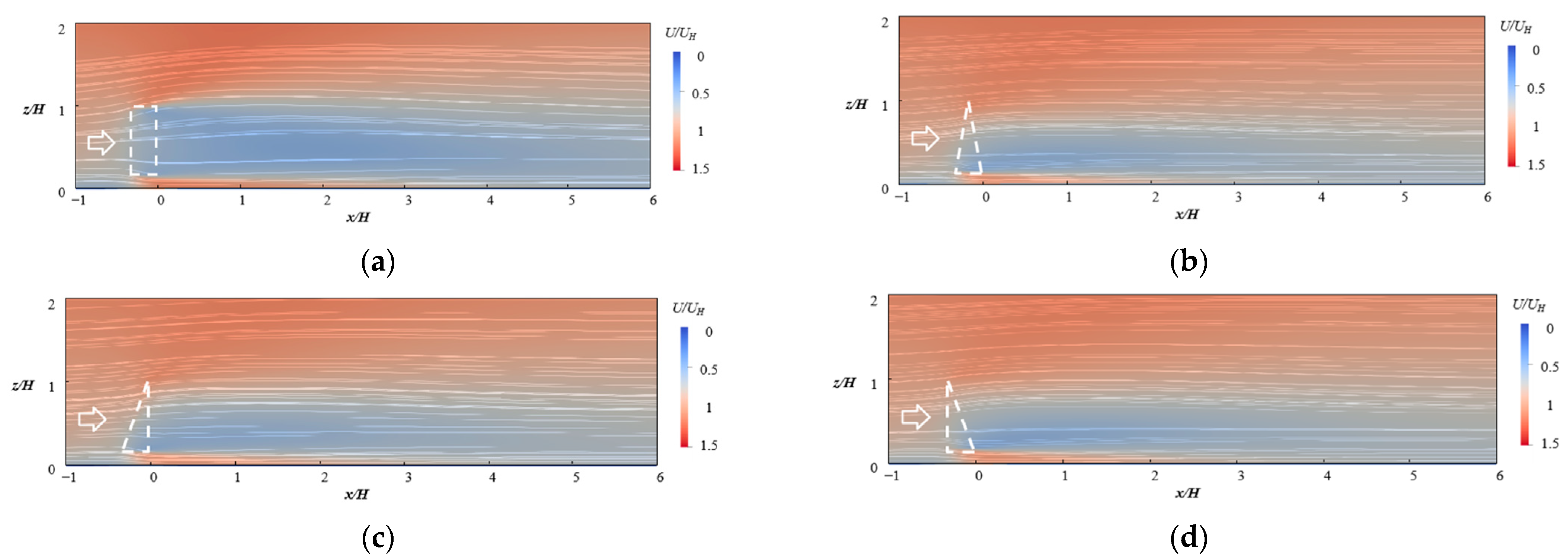
- Neglecting the vertical variation in canopy structures via the conventional Uniform-K model leads to significant systematic biases in the evaluation of windbreak effectiveness: the velocity reduction downstream is underestimated at mid-canopy height and overestimated at the canopy top.
- (3)
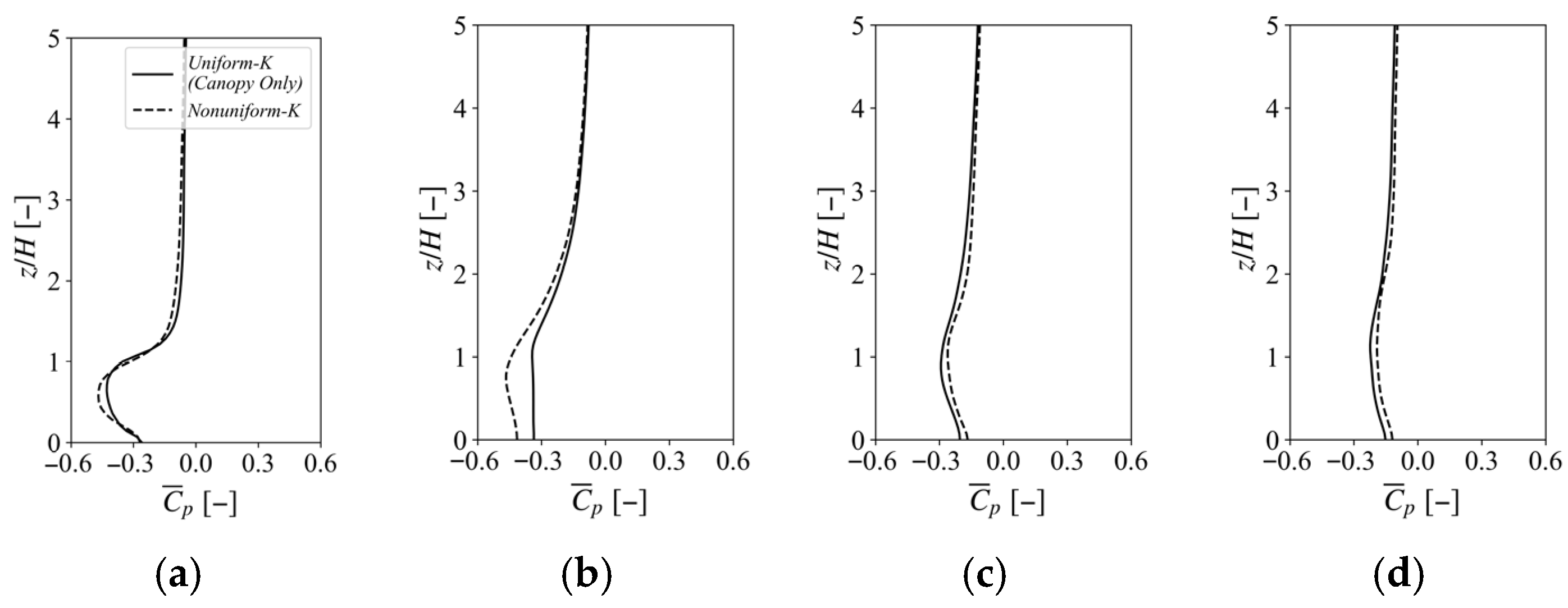
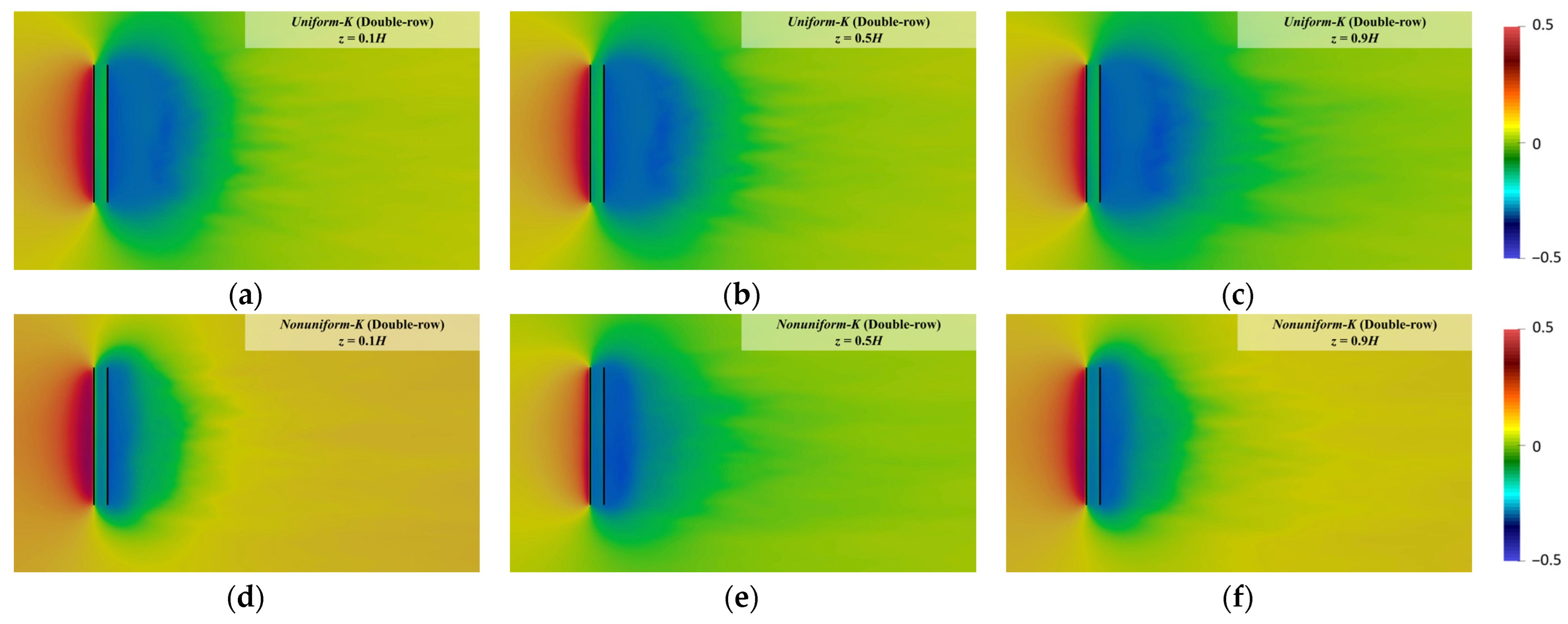
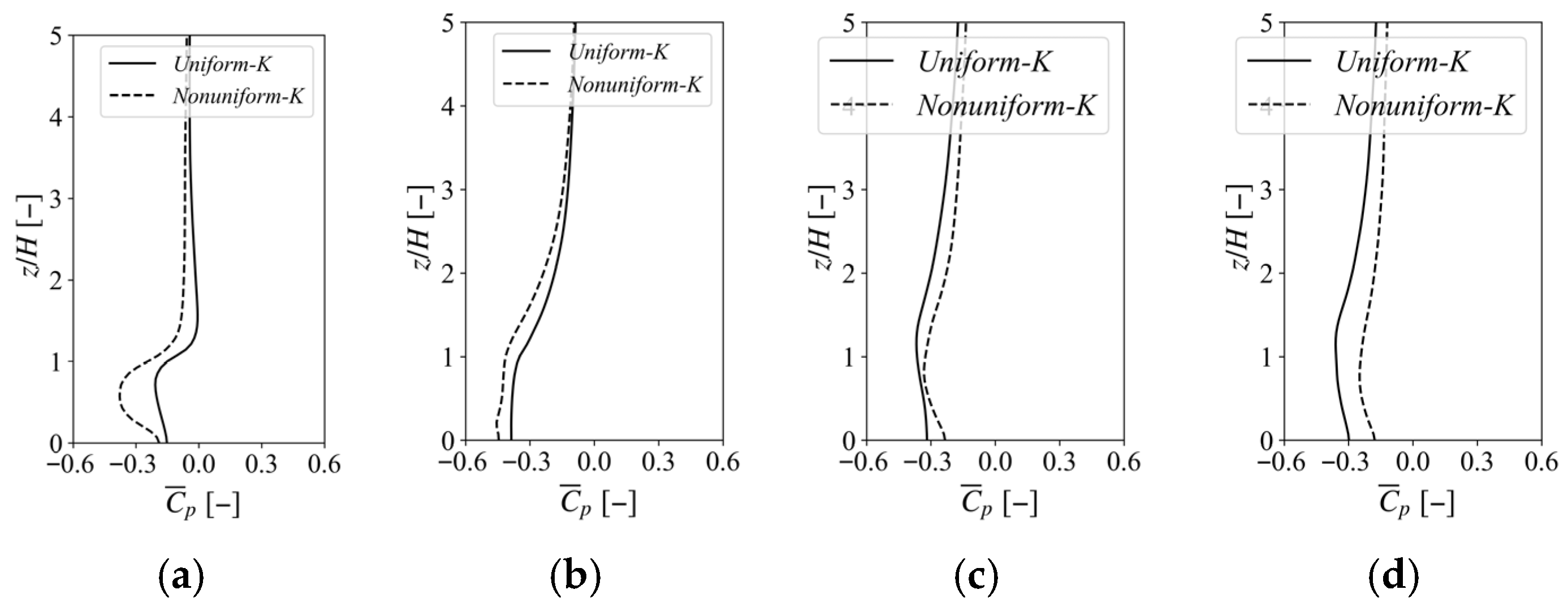
- These discrepancies can be partially mitigated by applying the Uniform-K model exclusively to the canopy region, i.e., neglecting the aerodynamic resistance exerted by tree trunks. With this modified configuration, the discrepancies between the two models in the trunk region are substantially reduced. At mid-canopy heights (where the densest foliage is located), the maximum relative discrepancy in the downstream pressure coefficient is also reduced from approximately 65% to 38%.
- (4)
- The aforementioned discrepancies can be amplified and accumulated when the Uniform-K model is applied to multi-row shelterbelt configurations. For example, in the wake of single-row shelterbelts, these discrepancies diminish gradually with increasing downstream distance, whereas they remain noticeable also in the far-downstream region for double-row shelterbelts.
Author Contributions
Funding
Data Availability Statement
Acknowledgments
Conflicts of Interest
Abbreviations
| CFD | Computational Fluid Dynamics |
| LES | Large-Eddy Simulation |
| LUST | Linear Upwind Stabilised Transport |
References
- Lyu, J.; Wang, C.M.; Mason, M.S. Review of models for predicting wind characteristics behind windbreaks. J. Wind Eng. Ind. Aerodyn. 2020, 199, 104117. [Google Scholar] [CrossRef]
- Terziev, A.; Bode, F.; Zlateva, P.; Pichurov, G.; Ivanov, M.; Denev, J.; Stankov, B. Numerical Study on Tree Belt Impact on Wind Shear on Agricultural Land. Appl. Sci. 2025, 15, 7450. [Google Scholar] [CrossRef]
- Li, M.M.; Liu, A.T.; Zou, C.J.; Xu, W.D.; Shimizu, H.; Wang, K.Y. An overview of the “Three-North” Shelterbelt project in China. For. Stud. China 2012, 14, 70–79. [Google Scholar] [CrossRef]
- Su, Z.A.; Zhou, T.; Zhang, X.B.; Wang, X.Y.; Wang, J.J.; Zhou, M.H.; Zhang, R.C. A preliminary study of the impacts of shelter forest on soil erosion in cultivated land: Evidence from integrated 137Cs and 210Pbex measurements. Soil Tillage Res. 2021, 206, 104843. [Google Scholar] [CrossRef]
- Wang, K.; Yang, Y.; Reniers, G.; Huang, Q. A study into the spatiotemporal distribution of typhoon storm surge disasters in China. Nat. Hazards 2021, 108, 1237–1256. [Google Scholar] [CrossRef]
- Shan, Q.; Zhang, J.; Sun, S.; Chen, G.; Zhang, H.; Shen, L. Construction of coastline shelterbelts and assessment of their environmental effects in Yuyao, China. Land Degrad. Dev. 2018, 29, 2428–2437. [Google Scholar] [CrossRef]
- Lee, S.H.; Kim, H.; Moon, H.; Kim, H.S.; Han, S.S.; Jeong, S. Effects of wind barrier porosity and inclination on wind speed reduction. Appl. Sci. 2023, 13, 8310. [Google Scholar] [CrossRef]
- Enescu, C.M.; Mihalache, M.; Ilie, L.; Dinca, L.; Constandache, C.; Murariu, G. Agricultural benefits of shelterbelts and windbreaks: A bibliometric analysis. Agriculture 2025, 15, 1204. [Google Scholar] [CrossRef]
- Wang, B.H.; Wang, D.B.; Ali, Z.A.; Ting Ting, B.; Wang, H. An overview of various kinds of wind effects on unmanned aerial vehicle. Meas. Control 2019, 52, 731–739. [Google Scholar] [CrossRef]
- Wang, H.; Takle, E.S. A numerical simulation of boundary-layer flows near shelterbelts. Bound.-Layer Meteorol. 1995, 75, 141–173. [Google Scholar] [CrossRef]
- Suratman, M.N.; Brandle, J.R. Tree shelterbelts for sustainable agroforestry. In Agroforestry for Carbon and Ecosystem Management; Jhariya, M.K., Meena, R.S., Banerjee, A., Yadav, D.K., Eds.; Academic Press, Elsevier: Amsterdam, The Netherlands, 2024; pp. 97–107. [Google Scholar]
- Wu, T.; Yu, M.; Wang, G.; Wang, Z.; Duan, X.; Dong, Y.; Cheng, X. Effects of stand structure on velocity reduction in a Metasequoia glyptostroboides shelterbelt. Agrofor. Syst. 2013, 87, 251–257. [Google Scholar] [CrossRef]
- Bean, A.; Alperi, R.W.; Federer, C.A. A method for categorizing shelterbelt porosity. Agric. Meteorol. 1974, 14, 417–429. [Google Scholar] [CrossRef]
- Wang, H.; Takle, E.S. Momentum budget and shelter mechanism of boundary-layer flow near a shelterbelt. Bound.-Layer Meteorol. 1997, 82, 417–437. [Google Scholar] [CrossRef]
- Zhao, Y.; Huang, N.; Sun, J.; Zhan, K.; Li, X.; Han, B.; Zhang, J. Numerical simulation of the plant shelterbelt configuration based on porous media model. Atmosphere 2024, 15, 602. [Google Scholar] [CrossRef]
- Torita, H.; Satou, H. Relationship between shelterbelt structure and mean wind reduction. Agric. For. Meteorol. 2007, 145, 186–194. [Google Scholar] [CrossRef]
- Wu, T.; Zhang, P.; Zhang, L.; Wang, J.; Yu, M.; Zhou, X.; Wang, G.G. Relationships between shelter effects and optical porosity: A meta-analysis for tree windbreaks. Agric. For. Meteorol. 2018, 259, 75–81. [Google Scholar] [CrossRef]
- Manickathan, L.; Defraeye, T.; Allegrini, J.; Derome, D.; Carmeliet, J. Comparative study of flow field and resistance coefficient of model and small natural trees in a wind tunnel. Urban For. Urban Green. 2018, 35, 230–239. [Google Scholar] [CrossRef]
- Hao, Y.F. Studies on Dynamic Characteristics of Trees Measured in Field and Wind Tunnel Tests of an Aeroelastic Model Tree. Ph.D. Thesis, Hunan University, Changsha, China, 2022. [Google Scholar]
- Guo, Z.; Yang, X.; Wu, X.; Zou, X.; Zhang, C.; Fang, H.; Xiang, H. Optimal design for vegetative windbreaks using 3D numerical simulations. Agric. For. Meteorol. 2021, 298, 108290. [Google Scholar] [CrossRef]
- Chen, Z.; Wang, J.; Yang, C.; Yang, X.; Gao, G.; Zhang, X. Effects of cross-sectional shapes and arrangement patterns on windbreak effectiveness of shelterbelts by large eddy simulation. Yingyong Shengtai Xuebao 2024, 35, 1877–1886. [Google Scholar] [CrossRef]
- Wang, J.; Patruno, L.; Chen, Z.; Yang, Q.; Tamura, Y. Windbreak effectiveness of single and double-arranged shelterbelts: A parametric study using large eddy simulation. Forests 2024, 15, 1760. [Google Scholar] [CrossRef]
- Wang, J.; Patruno, L.; Zhao, G.; Tamura, Y. Windbreak effectiveness of shelterbelts with different characteristic parameters and arrangements by means of CFD simulation. Agric. For. Meteorol. 2024, 344, 109813. [Google Scholar] [CrossRef]
- Wang, J.; Patruno, L.; Wang, H.; Wang, P.; Li, D. Evaluation of the aerodynamic loads over isolated and clustered tree canopies using large eddy simulation. Phys. Fluids 2025, 37, 045130. [Google Scholar] [CrossRef]
- Cao, Z.; Zhang, X.; Weerasuriya, A.U.; Wang, Z.; Guo, J. Estimating the impacts of the wind field size, wind speed, turbulence, and no-fly zones on unmanned aerial vehicle flights in urban areas. Phys. Fluids 2026, 38, 015130. [Google Scholar] [CrossRef]
- Qi, Y.; Ishihara, T. Numerical study of turbulent flow fields around of a row of trees and an isolated building by using modifiedurma k-ε model and LES model. J. Wind Eng. Ind. Aerodyn. 2018, 177, 293–305. [Google Scholar] [CrossRef]
- He, Y.; Jones, P.J.; Rayment, M. A simple parameterisation of windbreak effectiveness on velocity reduction and resulting thermal benefits to sheep. Agric. For. Meteorol. 2017, 239, 96–107. [Google Scholar] [CrossRef]
- Mochida, A.; Tabata, Y.; Iwata, T.; Yoshino, H. Examining tree canopy models for CFD prediction of wind environment at pedestrian level. J. Wind Eng. Ind. Aerodyn. 2008, 96, 1667–1677. [Google Scholar] [CrossRef]
- Zhou, X.H.; Brandle, J.R.; Mize, C.W.; Takle, E.S. Three-dimensional aerodynamic structure of a tree shelterbelt: Definition, characterization and working models. Agrofor. Syst. 2005, 63, 133–147. [Google Scholar] [CrossRef]
- Cao, X.; Zhu, T.Y.; Jiang, F.Q. Science of Farmland Shelterbelt; China Forestry Publishing House: Beijing, China, 1983. [Google Scholar]
- Zhou, X.H.; Brandle, J.R.; Takle, E.S.; Mize, C.W. Estimation of the three-dimensional aerodynamic structure of a green ash shelterbelt. Agric. For. Meteorol. 2002, 111, 93–108. [Google Scholar] [CrossRef]
- Zhou, X.H.; Brandle, J.R.; Mize, C.W.; Takle, E.S. The relationship of three-dimensional structure to shelterbelt function: A theoretical hypothesis. In Ecological Basis of Agroforestry; CRC Press: Boca Raton, FL, USA, 2007. [Google Scholar]
- Yuan, W.; Zhu, N.; Zhang, L.; Tong, R.; Miao, Y.; Zhou, F.; Wu, T. Three-dimensional aerodynamic structure estimation and wind field simulation for wide tree shelterbelts. For. Ecol. Manag. 2024, 559, 121813. [Google Scholar] [CrossRef]
- Zhang, L. Three Dimensional Structure Model of Coastal Metasequoia glyptostroboides and Populus euramevicana Shelterbelts and Numerical Simulation of Wind Field. Master’s Thesis, Chinese Academy of Forestry, Beijing, China, 2017. [Google Scholar]
- Wu, C.; Cheng, M.; Chen, D.; Zhang, S.; Sun, X. Advanced intelligent recognition algorithm for tree canopy carbon sequestration capacity based on 3D visualization: Application in Larch plantations under drought stress. Ecol. Indic. 2025, 178, 113780. [Google Scholar] [CrossRef]
- Kim, D.H.; Ko, C.U.; Kim, D.G.; Kang, J.T.; Park, J.M.; Cho, H.J. Automated segmentation of individual tree structures using deep learning over LiDAR point cloud data. Forests 2023, 14, 1159. [Google Scholar] [CrossRef]
- Bauwens, S.; Bartholomeus, H.; Calders, K.; Lejeune, P. Forest inventory with terrestrial LiDAR: A comparison of static and hand-held mobile laser scanning. Forests 2016, 7, 127. [Google Scholar] [CrossRef]
- Li, Z.; Zhang, Z.; Dian, Y.; Cai, S.; Chen, Z. Multi-Scale LAI Estimation Integrating LiDAR Penetration Index and Point Cloud Texture Features. Forests 2025, 16, 1321. [Google Scholar] [CrossRef]
- McReynolds, T.; Blythe, D. Advanced Graphics Programming Using OpenGL; Morgan Kaufmann: San Francisco, CA, USA, 2005. [Google Scholar]
- Holmes, J.D. Wind Loading of Structures, 2nd ed.; Taylor & Francis: London, UK, 2007. [Google Scholar]
- Patruno, L.; Ricci, M. A systematic approach to the generation of synthetic turbulence using spectral methods. Comput. Methods Appl. Mech. Eng. 2018, 340, 881–904. [Google Scholar] [CrossRef]
- Kurotani, Y. Windbreak effect of tsuijimatsu in izumo part. 2. In Summaries of Technical Papers of Annual Meeting; Architectural Institute of Japan (AIJ): Tokyo, Japan, 2002; pp. 745–746. [Google Scholar]
- Iwata, T.; Kimura, A.; Mochida, A.; Yoshino, H.; Ooka, R.; Yoshida, S. Numerical analysis of wind break effect on velocity reduction based on plant canopy model. In Summaries of the Annual Research Conference of the Japan Association of Wind Engineering; Japan Association of Wind Engineering: Tokyo, Japan, 2003; p. 32. [Google Scholar]
- Středa, T.; Malenová, P.; Pokladníková, H.; Rožnovský, J. The efficiency of windbreaks on the basis of wind field and optical porosity measurement. Acta Univ. Agric. Silvic. Mendel. Brun. 2008, 56, 281–288. [Google Scholar] [CrossRef]
- Porter, T.; Duff, T. Compositing digital images. In Proceedings of the 11th Annual Conference on Computer Graphics and Interactive Techniques (SIGGRAPH’84), Minneapolis, MN, USA, 23–27 July 1984; ACM: New York, NY, USA, 1984; pp. 253–259. [Google Scholar]
- Chen, C.; Zhou, L.; Li, X.; Zhao, Y.; Yu, J.; Lv, L.; Du, H. Optimizing the spatial structure of metasequoia plantation forest based on UAV-liDAR and backpack-liDAR. Remote Sens. 2023, 15, 4090. [Google Scholar] [CrossRef]
- Williams, C.J.; LePage, B.A.; Vann, D.R.; Tange, T.; Ikeda, H.; Ando, M.; Sweda, T. Structure, allometry, and biomass of plantation Metasequoia glyptostroboides in Japan. For. Ecol. Manag. 2003, 180, 287–301. [Google Scholar] [CrossRef]
- Wu, W.; Lin, J.; Ning, X.; Liu, Z. Seasonal Impacts on Individual Tree Detection and Height Extraction Using UAV-LiDAR: Preliminary Study of Planted Deciduous Stand. Forests 2025, 16, 1384. [Google Scholar] [CrossRef]
- Eckert, B.; Pfluger, F. The Resistance Coefficient of Commercial Round Wire Grids; NACA Technical Memorandum No. 1003; National Advisory Committee for Aeronautics (NACA): Washington, DC, USA, 1942.
- Wieghardt, K.E.G. On the resistance of screens. Aeronaut. Q. 1953, 4, 186–192. [Google Scholar] [CrossRef]
- Annand, W.J.D. The resistance to air flow of wire gauzes. Aeronaut. J. 1953, 57, 141–146. [Google Scholar] [CrossRef]
- Allori, D.; Bartoli, G.; Mannini, C. Wind tunnel tests on macro-porous structural elements: A scaling procedure. J. Wind Eng. Ind. Aerodyn. 2013, 123, 291–299. [Google Scholar] [CrossRef]
- Azizi, F. On the pressure drop of fluids through woven screen meshes. Chem. Eng. Sci. 2019, 207, 464–478. [Google Scholar] [CrossRef]
- Xu, M.; Patruno, L.; Lo, Y.L.; de Miranda, S. On the use of the pressure jump approach for the simulation of separated external flows around porous structures: A forward facing step. J. Wind Eng. Ind. Aerodyn. 2020, 207, 104377. [Google Scholar] [CrossRef]









Disclaimer/Publisher’s Note: The statements, opinions and data contained in all publications are solely those of the individual author(s) and contributor(s) and not of MDPI and/or the editor(s). MDPI and/or the editor(s) disclaim responsibility for any injury to people or property resulting from any ideas, methods, instructions or products referred to in the content. |
© 2026 by the authors. Licensee MDPI, Basel, Switzerland. This article is an open access article distributed under the terms and conditions of the Creative Commons Attribution (CC BY) license.
Share and Cite
Liu, Y.; Wang, J.; Chen, W.; Xu, M.; Zhang, Y.; Patruno, L.; Li, W. Impacts of Vertical Variation in Canopy Structures on Shelterbelt Windbreak Effectiveness: A Large-Eddy Simulation Study. Forests 2026, 17, 498. https://doi.org/10.3390/f17040498
Liu Y, Wang J, Chen W, Xu M, Zhang Y, Patruno L, Li W. Impacts of Vertical Variation in Canopy Structures on Shelterbelt Windbreak Effectiveness: A Large-Eddy Simulation Study. Forests. 2026; 17(4):498. https://doi.org/10.3390/f17040498
Chicago/Turabian StyleLiu, Yanqun, Jingxue Wang, Wenchao Chen, Mao Xu, Yu Zhang, Luca Patruno, and Weilin Li. 2026. "Impacts of Vertical Variation in Canopy Structures on Shelterbelt Windbreak Effectiveness: A Large-Eddy Simulation Study" Forests 17, no. 4: 498. https://doi.org/10.3390/f17040498
APA StyleLiu, Y., Wang, J., Chen, W., Xu, M., Zhang, Y., Patruno, L., & Li, W. (2026). Impacts of Vertical Variation in Canopy Structures on Shelterbelt Windbreak Effectiveness: A Large-Eddy Simulation Study. Forests, 17(4), 498. https://doi.org/10.3390/f17040498