


Abstract
Forestry operations expose workers to a high risk of health constraints, accidents, and injuries. We are trying to protect them and implement many effective countermeasures; nevertheless, the development of new forestry machines remains a long process, with limited safety and ergonomic feedback, usually provided only at a late stage in the design process. In this study, we propose a practical digital ergonomics workflow that combines inertial motion capture, standardized risk scoring, and digital human modelling to improve and shorten human-centered and safer design of forestry machinery. We validated the approach in a field pilot on a prototype milling–spraying device for standing trees. Two experienced operators performed a full work-cycle (carry → install → operate → dismantle → return), during which their whole-body kinematics were captured in real forest conditions. These were then evaluated using kinematic metrics, RULA, OWAS, and a heart-rate-based load index. Based on these ergonomical and risk findings, we translate motion-derived risk ‘hotspots’ into real redesign targets (grip/handle geometry, weight distribution, support elements, and control layout), outlining an updated forestry-specific DHM/HDT (digital human modeling; human digital twin) framework that explicitly incorporates terrain and environmental constraints to accelerate the iteration of safer prototypes. The updated digital modeling framework will be used in the design of the new, more complex machine—“Semi-autonomous system for optimizing degraded soils by deep injection”. This machine contains a much more complex and advanced structure, including a tractor with an attachment tool for specialized deep soil injection. We suppose that using motion capture data, human digital twins, and digital human models can effectively support designing and the development process to avoid human-related construction nonconformities of this complex machine even before the final machine prototype is produced for functional field testing.
1. Introduction
Forestry operations expose workers to a high risk of health issues, accidents and injuries. International expert reviews and policy papers, including summaries from the National Research Council and the Institute of Medicine, as well as some EU-OSHA reports, show that motion-related accidents and musculoskeletal disorders, including combined back, cervical spine, and upper limb pain, are among the most frequently reported work-related health problems in Europe. The cost of treating these conditions and lost working days amounts to billions of euros per year [1,2,3,4,5]. Data on occupational diseases in the Czech Republic confirm that musculoskeletal disorders account for a significant proportion of reported diseases, representing a major challenge for prevention and the sustainability of working life of an ageing workforce [6].
In this context, international materials focused on safety and health protection in logging and silvicultural activities describe a typical combination of risks: working in uneven and often unstable terrain, handling heavy or bulky tools and machinery near standing trees, limited handling space, unfavorable climatic conditions, and limited opportunities for rest [7,8]. Safety and ergonomic studies focused on the operation of large forestry machinery and on the use of agricultural tractors in forestry operations repeatedly show an increased incidence of back, cervical spine, and upper limb pain in machine operators [9,10,11]. Similarly, workers who manually process wood or perform spraying are dominated by a muscle load, asymmetrical postures, and repetitive movements of the trunk and upper limbs [7,8] in the major list of risks.
Even though there are specific ergonomic recommendations and methodological materials for the forestry field—for example, ergonomic principles for the construction of forestry machinery, guidelines for cabins, access elements, seats, controls, and the view from the cab—the practical application of ergonomics in engineering machine design encounters several barriers [9,10,11,12,13,14]. The most frequently described obstacles include the late involvement of ergonomics in development (only at the stage of verification of the finished product), the limited availability of ergonomic specialists in design teams, the perceived conflict between ergonomics and productivity, or the difficulty of translating the results of ergonomic evaluation into specific technical parameters. Therefore, some authors propose systematic models that translate the outputs of ergonomics analysis of work into understandable design rules and recommendations for designers [14].
This study fills the gap between generic ergonomic screening and practical forestry machine prototyping by providing a field-feasible, phase-based workflow that translates measured posture exposures into engineering-ready redesign targets under uneven terrain constraints. Unlike many DHM/digital twin approaches developed for controlled industrial settings, our contribution explicitly addresses forestry-specific task–terrain coupling and shows how to identify and prioritize risk hotspots across the full work-cycle.
1.1. Traditional Way of the Digital Ergonomic Evaluation
Traditional ergonomic evaluation has been based only on visual observation methods and checklists. Methods such as RULA (Rapid Upper Limb Assessment) or various checklists for the evaluation of manual load handling and working positions allow for a relatively quick estimate of the level of risk, but work with a limited amount of information—often with only a few images of postures or with a rough description of movements [15,16,17]. In a forestry environment where the worker moves in rough, uneven forestry terrain and exposes the body to complex three-dimensional movements in complicated uneven terrain, such an approach may be insufficient to understand the actual load in detail and to design effective technical measures.
The development of digital technologies in recent years has opened new possibilities for so-called digital ergonomics. Digital human models, virtual workplaces, and digital twin techniques enter the design process, which connect real-world measured movement with a virtual model of humans and the work system [12,18,19,20]. Digital ergonomics makes it possible to simulate different design variants, operator positioning, reach, and visibility even before the final physical prototype of the machine exists. In industry, these tools are increasingly being combined with computer-aided design (CAD), virtual reality, and intelligent decision-making systems that have ergonomic knowledge built directly into the engineering workflow [18,19,20].
A key element of digital ergonomics starts to be digital motion capture (MoCap). Both optical and inertial systems make it possible to capture three-dimensional kinematics of the whole body during real work tasks or realistic simulations. Inertial systems based on the system of inertial units (IMUs) are attractive for the field of outdoor physical ergonomics because they do not require direct visibility of markers and can also be used in natural terrain, including forests. In combination with physiological wearable sensors and artificial intelligence methods, these data can be used to automatically evaluate working positions, movements, and levels of physical exertion and provide feedback to workers and designers [16,17]. At the same time, it is possible to link these data with a digital model of a person and digital ergonomic risk assessment (e.g., RULA, OWAS) to obtain more detailed and objective data [15,16,17].
Compared to the automotive or engineering industries, applications of digital ergonomics, digital twins, and wearable sensors in forestry are less widespread [7,8,9,10,18]. Forestry operations are a very demanding testing environment in terms of ergonomics: the worker handles the machine near standing trees, often on uneven and slippery surfaces; has to check their own stability and the precise guidance of the working tool at the same time; and often works, for example, in a confined working space. Therefore, to design “human-friendly” machines designed for branching and targeted spraying in the crop, it is necessary to have tools that can capture and quantify these complex movement situations.
In recent years, some projects have appeared even in the forestry environment that combine digital motion analysis, ergonomic evaluation, and design of machinery in forestry. At Mendel University in Brno, we also started to use digital resources in our project with the advantage of clear use of the design processes and nonconformities. We started to combine traditional machinery design with digital support tools linked to movement analysis, and ergonomics risk analysis methods not only during the testing phase, but also through the prototyping phase to map three-dimensional kinematic data analysis, contact point, movement patterns, postural load of the operator bodies on forestry surfaces during the handling, operation, handling, and maintenance tasks of machine prototypes to avoid WMSD and body high work-load and possible injury cases [20].
1.2. Human Digital Twins (HDT) and Digital Human Modeling (DHM) as a Possible Tool for Future Machine Design and Development
The use of digital human modeling (DHM) has become increasingly popular in the field of ergonomics and work system design. DHM is, in principle, a set of computational tools that allow modeling of anthropometric, biomechanical, cognitive, and ergonomic characteristics of a person directly in a CAD or virtual environment and simulating human–machine–environment interaction in the early stages of design. It is also important to mention that cognitive and ergonomics parts through UX/UI interfaces have become increasingly popular. This makes it possible to design not only to perform simple working tasks, but also to analyze “what-if” scenarios, compare different design options, estimate postural, biomechanical, and operational risks, and continuously integrate various ergonomic criteria into the design process, even before building expensive physical prototypes [21]. In parallel, the concept of human digital twin (HDT) is developing, which builds on the principles of DHM and extends them to include continuous data collection from the real environment, a model–data hybrid approach, and the ability to monitor and evaluate the worker’s condition in real-time. The digital twin connects the physical worker, his virtual model, and layers of algorithmic evaluation (including artificial intelligence elements) into a unified framework and enables advanced simulations in the design phase and continuous monitoring, risk prediction, and timely feedback during operation [22].
Our case study was designed as a two-step pilot workflow to examine how digital human modeling (DHM) and digital-twin-oriented methods can be meaningfully adapted to the specific constraints of forestry work, where uneven terrain, limited workspace around standing trees, and frequent transitions between supported and unsupported handling substantially shape postural load and safety risks. The main purpose of this pilot is to demonstrate feasibility and design translation potential, rather than to provide population-level ergonomic risk estimates.
In Step 1, we applied a field-deployable digital ergonomics approach based on IMU motion capture and phase-based work-cycle segmentation. Movement exposure patterns were combined with standardized posture screening tools to identify phase-specific risk hotspots and their dominant biomechanical drivers, specifically in the forestry terrain, which is known for its movement instability. This first step yields a structured representation of how forestry-specific working conditions influence movement strategies and where engineering interventions are most likely to reduce physical strain.
In Step 2, we evaluate the potential for connecting these motion-derived indicators to a DHM/HDT-oriented design process. We conceptualize the recorded kinematics and ergonomic screening outcomes as a first “data layer” that can be linked to a digital representation of the worker and progressively extended toward an operational human digital twin. In the forestry context, such an extension is not merely a generic replication of industrial DHM practice, it requires explicit consideration of environment–task coupling, including terrain slope and surface irregularity, constrained positioning relative to the trunk, visibility and obstacle density, and climate-related stressors. These factors directly affect stability demands, control strategies, and the reproducibility of postures—therefore, they must be represented in the digital workflow if DHM/HDT tools are to provide valid design guidance.
This pilot experience indicates that integrating motion analysis and ergonomic screening into prototype development can support a shift from a purely functional prototype toward a more human-friendly forestry machine, because it enables designers to translate observed exposure drivers into engineering-ready redesign targets (e.g., grip geometry and placement, trunk support elements, weight distribution, and controller layout). At the same time, the study highlights the need for a systematic, replicable procedure that designers and ergonomists can apply in future forestry projects — especially given that many existing DHM workflows were developed for flat controlled industrial settings and do not directly address uneven-terrain constraints.
Using a prototype of the milling–spraying device for standing trees as a representative example, we demonstrate how digital motion recording, DHM-oriented interpretation, and ergonomic screening can be combined to (i) identify risk-relevant phases and movement patterns, (ii) prioritize redesign actions, and (iii) define a structured pathway toward a forestry-specific DHM/HDT framework. Finally, we focus on practical implementation limits in real forest conditions and outline the methodological steps required for future validation of task-related, terrain conditions, and design variants for any possible future machinery design in forestry.
2. Materials and Methods
2.1. Description of the Case Study
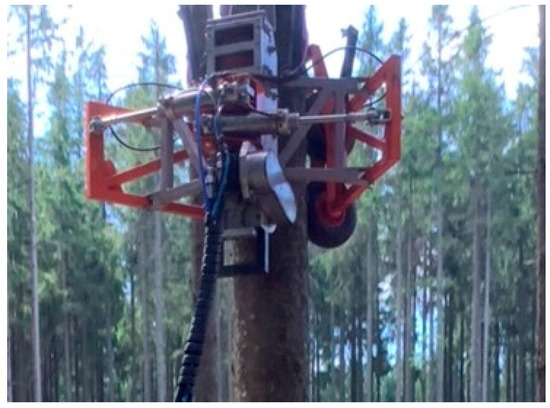
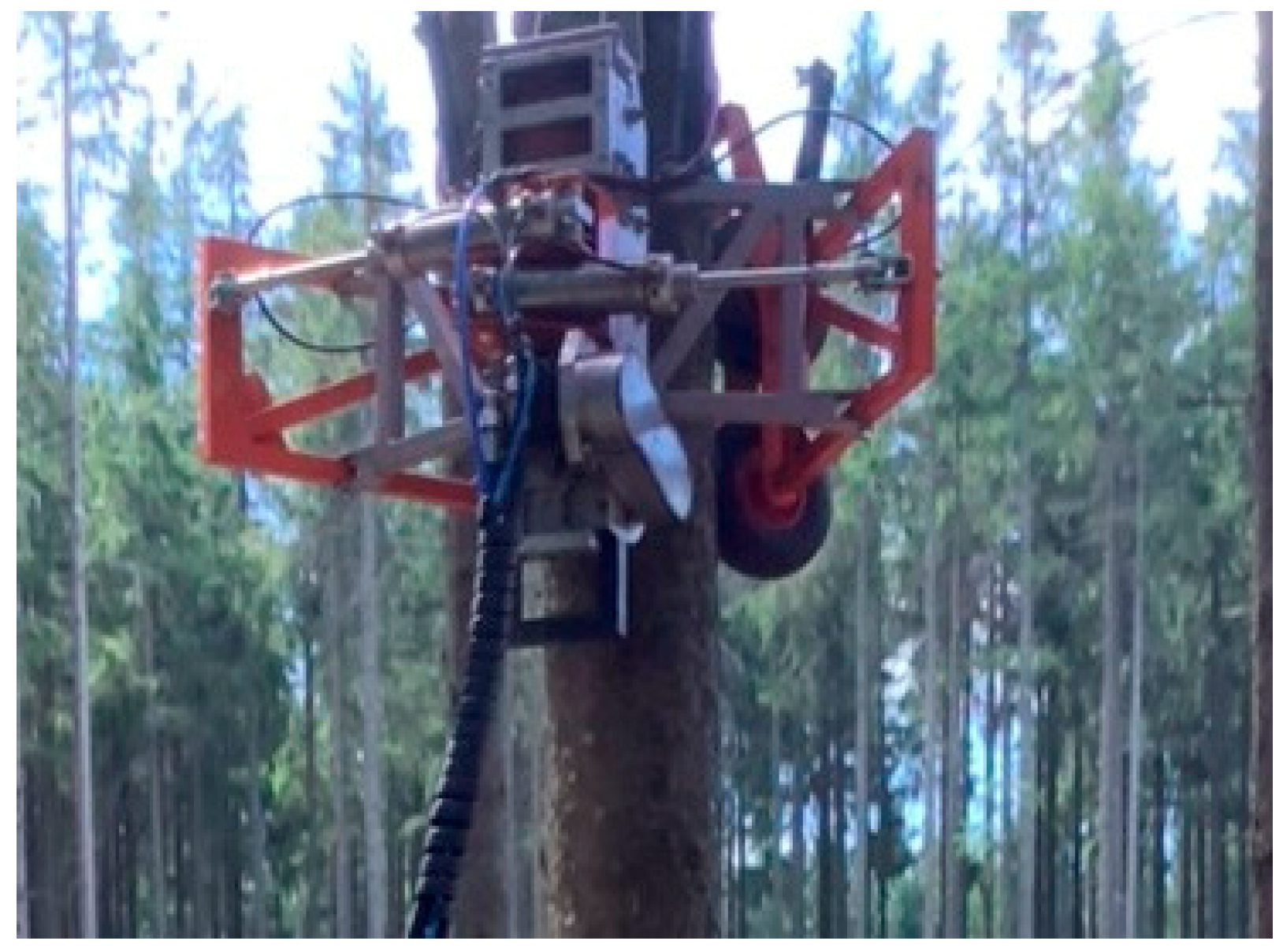
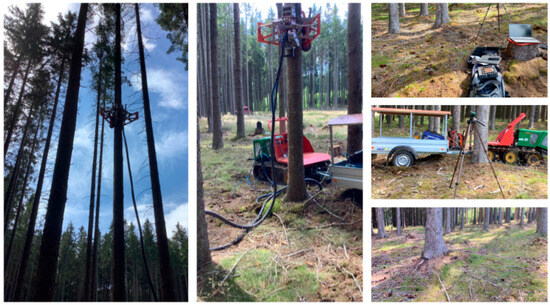
Our experimental study has the character of a pilot human-centered design evaluation of a prototype forestry machine in real working conditions. We focused on a description of physical load, working postures, and movement patterns when working with a “Milling machine with adapters and a sprayer on a climbing carrier” designed for processing on standing trees (Figure 1). The aim was to identify the most stressed phases of the work-cycle and translate this knowledge into design recommendations for modifications to the structure and workflows [23].
Figure 1.
Prototype of the Milling machine with adapters and a sprayer on a climbing carrier.
The test group consisted of personnel with experience in operating the tested equipment or comparable technologies. All participants were informed of the purpose of the study before measurement and agreed to anonymously use the data for research and design purposes in accordance with the organization’s internal regulations.
2.2. Forestry Machine Prototyping
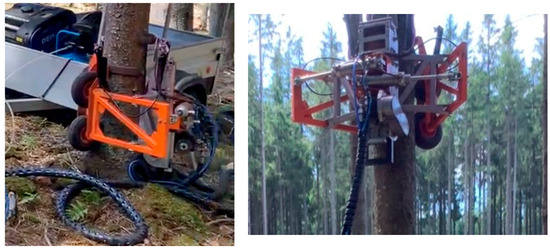
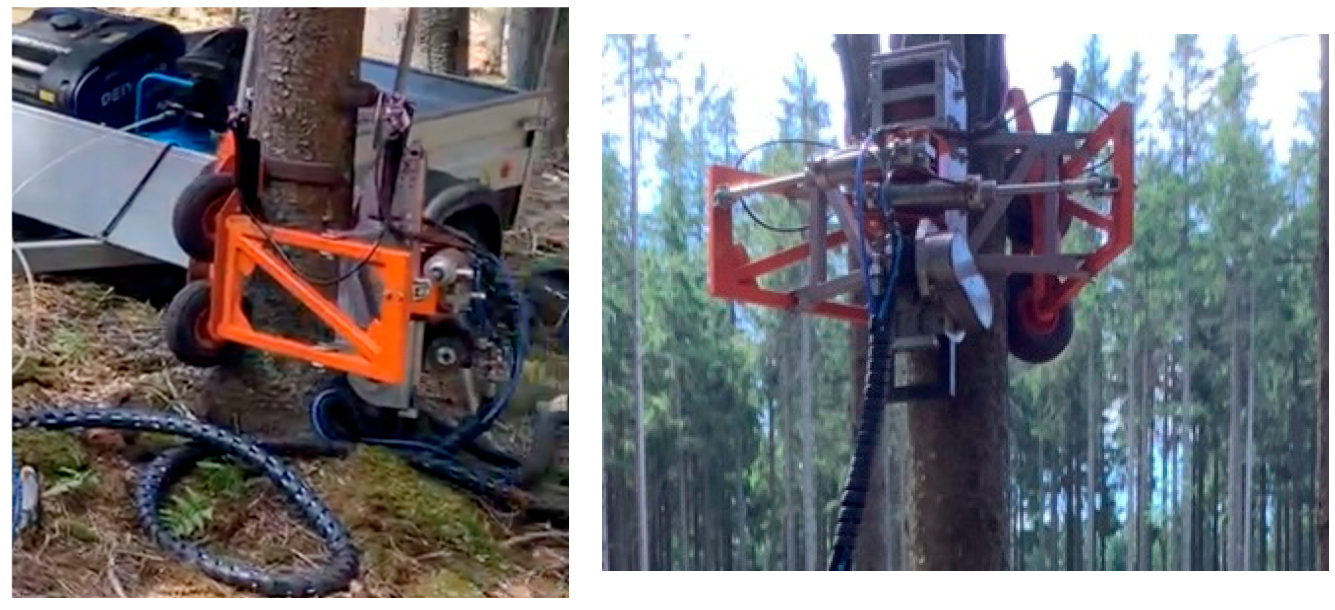
The purpose of the R&D project was to develop and produce a multipurpose machine driven by pressure air for milling/branching out/spraying standing trees in pre-vegetation stands, active with an emphasis on increasing the quality of cultivated assortments of wood in old age stands. The intended application is focused on the treatment of selected trees in real forest stands, where constrained workspace and uneven terrain strongly influence handling and posture. A unique machine prototype (“squirrel”) is used for pruning of high-quality forest stands, assuming future high-quality assortments where machinery would not be fully utilized, and mining activities would be negative. The machine is also combined with a multipurpose system used for protection against bark beetles in the forest ecosystem. The machine is unique in some functional parts and is currently a subject of patent and industrial design approval. As the system is not fully autonomous, it is positioned and stabilized by the operator against the trunk using dedicated support points, while the working head and spray function are controlled via a handheld controller. The prototype is designed as a tool that allows you to combine mechanical branching or milling of the trunk surface with the targeted application of the product to the tree to be treated (Figure 2). The device consists of a carrier (frame) on which the milling head and spraying system itself are attached, and controls (controllers) that the operator holds and uses during work. The design includes several support and guide points that rest on the tree trunk and are intended to stabilize the position of the machine during milling and spraying. Ergonomic evaluation included mainly the weight distribution of the device, the position and shape of the grippers, the method of transmission of forces between the operator and the machine, and the distribution of contact points between the operator’s body, the machine, and the tree trunk. These design characteristics have a major impact on the need to work at high levels of torso flexion, upper limb elevation, and hull rotation, as well as on the overall stability of the operator in uneven terrain.
Figure 2.
Example of the machine placement.
2.3. Participants
Two experienced operators participated in this study; however, full-body IMU motion capture was recorded for one operator due to practical constraints of field deployment. The second operator completed the same work-cycle without motion capture and served as an operational reference for task execution and cycle timing. Accordingly, the kinematic exposure patterns and posture-based screening results should be interpreted as a single-operator pilot intended to demonstrate feasibility and to identify design-relevant movement drivers, rather than to characterize population-level ergonomic risks. Basic anthropometric characteristics (body height, body weight, selected lengths of limb, and torso segments) were recorded before the measurement and entered into the MVN Analyze PRO ver. 2024.2 (Movella/Xsens Technologies B.V., Enschede, The Netherlands) digital motion recording system in order to individualize the biomechanical model of the measurement participant [24]. During the experiment, all legal and experimental requirements were fulfilled.
Participants were instructed to work in the most natural way possible during the test tasks, similar to usual work practice. Before recording the actual work tasks, they had the opportunity to get acquainted with the prototype, to try handling it, and to adjust the basic settings to match their usual style of work.
2.4. Workplace and Experimental Environment
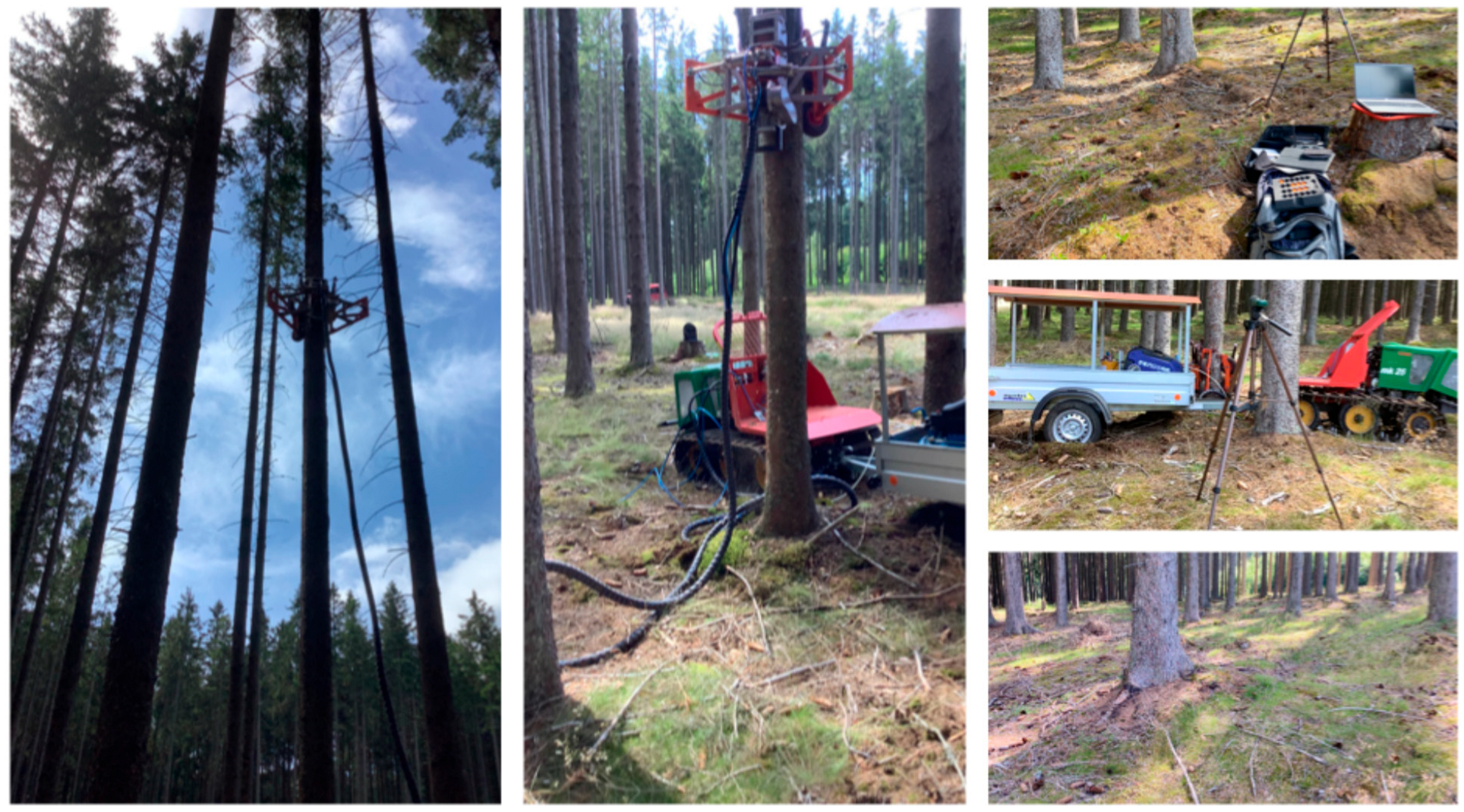
The measurements were carried out in a real forest close to the village of Zdíkov, Prachatice region (49.0615364 N, 13.7064656 E) (Figure 3), to maintain the typical conditions in which the device is intended for use. The test sections contained the trees corresponding to the normal target diameter and height, uneven natural surfaces (roots, stones, unevenness), and limited handling space around the trunk. This ensured that the recorded movement patterns and working positions correspond to actual field work, not just laboratory conditions.
Figure 3.
Workplace and experimental environment.
Environmental conditions (air temperature ranged from 21.3 to 22.5 °C, while the air humidity ranged from 59.8 to 65.5%, terrain slope ranged from 0° to 11°, background noise 1 m from machines 62–103 dB, light condition 1209 to 1680 lx) were documented in the measurement protocol during individual measurements so that these factors could be considered when interpreting the results. Apart from microclimatic conditions (temperature, relative humidity, background noise, and light conditions), using an EN300/TP870 work environment analyzer (Extech Instruments, Nashua, NH, USA), were also monitored distance and terrain slope using a Bosh Professional GLM 50C (Bosch Company, Gerlingen, Germany), as conditions that may impact work capacity, perceived exertion, and safety behavior.
2.5. Work Tasks and Work-Cycle Structure
Five main types of work tasks were defined for the analysis, which together represent a typical work-cycle when using a milling machine with adapters and a sprayer:
- (1)
- Handling and transport of the equipment from the machine base station;
- (2)
- Installation of the equipment on the tree;
- (3)
- The actual work activity;
- (4)
- Disassembly and disposal of the equipment;
- (5)
- Handling and transport of the equipment back to the machine base station.
Each of these tasks contains sub-phases (e.g., gripping and lifting, pressing the device against the trunk, adjusting the height, changing the position of the operator around the tree) that differ in the type and level of load. During the measurements, these tasks were performed repeatedly to capture the variability of the execution and reduce the influence of random deviations. For tasks with a longer duty cycle (longer than 3 min), the recording was repeated at least five times. For shorter cycles, the number of repetitions was adjusted to obtain a representative set of motion data.
2.6. Measuring System for Digital Motion Recording
For digital motion recording, we used the MVN Awinda inertial system (Movella/Xsens Technologies B.V., Enschede, The Netherlands), which uses a set of 17 inertial measurement units (IMUs) to capture the three-dimensional kinematics of the whole worker’s body [24]. The sensors are integrated into the elastic garment and attached to individual body segments under/over PPE (feet, lower legs, thigh segments, pelvis, torso, shoulders, upper and forearms, and hands). Each sensor includes a three-axis accelerometer, gyroscope, and magnetometer, providing continuous recording of linear acceleration, angular velocity, and spatial orientation.
The system enables wireless data transfer to a portable PC, where the data are processed and integrated into a built-in biomechanical model of the whole body [24]. The sampling rate of the sensors was set according to the manufacturer’s recommendations to capture both slower postural changes and faster phases of movement when handling the device. The advantage of the inertial system is its resistance to covering body segments and the possibility of using it in the field, where optical analysis of motion is difficult or unrealistic [25].
2.7. Data Collection Log
Before the measurement, anthropometric measurements were taken, and their results were entered into the MVN software ver. 2024.2 (Movella/Xsens Technologies B.V., Enschede, The Netherlands) to personalize the biomechanical model [24]. As a next step, a calibration protocol was performed, which allowed for the exact identification of body segments in space and the setting of the starting position of the model.
After calibration, the participants had a short adaptation phase (about 10–15 min), during which they could move freely in the field with the sensors and the prototype machine. This phase was not included in the analysis to minimize the so-called “wow effect”—influencing movement by the awareness of the presence of the measuring system. The actual recording of work activities began when the operator began the transition to the target tree and ended when the work-cycle was completed, and the equipment was put down. For each task, several repetitions were taken according to the length of the cycle.
During the measurement, the progress of the tasks was simultaneously visually checked by an ergonomist, who recorded any atypical waveforms, errors in machine settings, or significant changes in work technique. These notes were used to segment the data and interpret the results.
2.8. Data Processing and Derived Variables
The raw IMU data were processed in MVN software ver. 2024.2 (Movella/Xsens Technologies B.V., Enschede, The Netherlands) and exported in the form of time series, orientations, and angles of individual hinges and segments. For further analysis, the movement recordings were divided into individual phases of the work-cycle (handling/transport, installation, work activity, disassembly) based on timestamps and visual control of the progress of tasks.
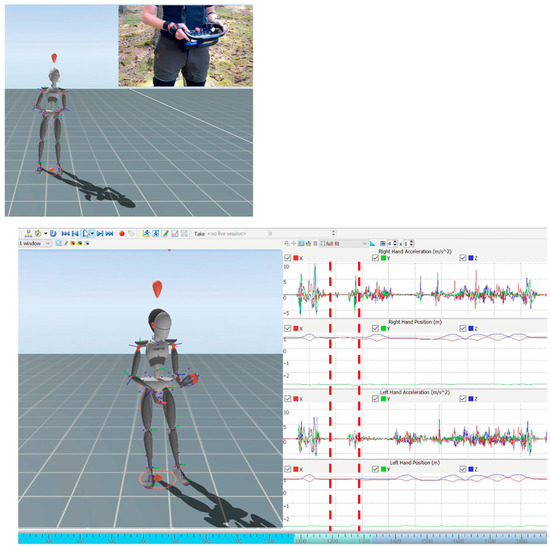
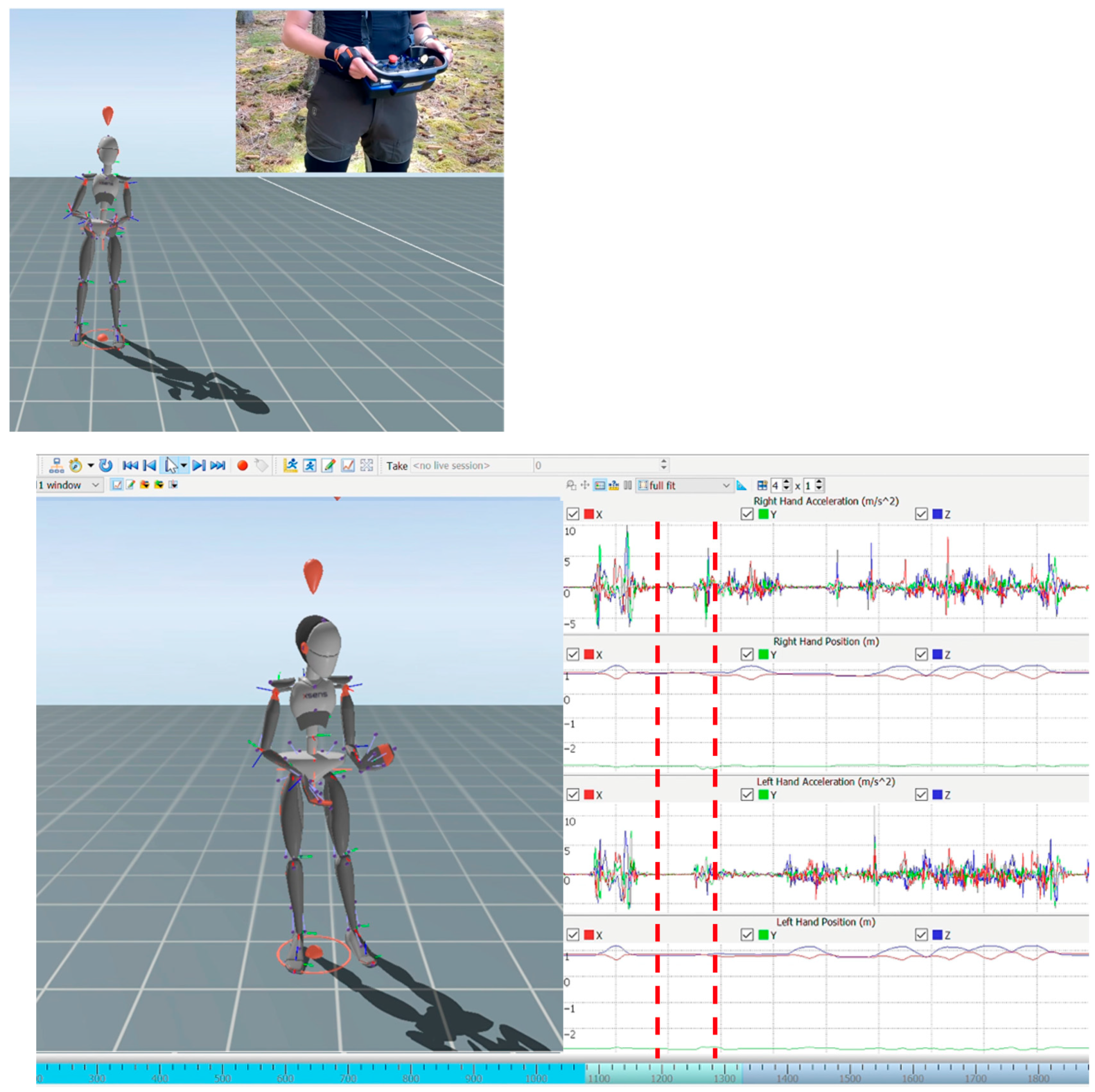
From the time series, the basic kinematic data and the proportion of time spent in predefined levels of flexion or deviation from the neutral position were calculated for selected segments and joints (trunk—flexion, lateroflexion, rotation; shoulder joints—elevation and abduction; elbows—flexion/extension; wrists; lower limbs). Information on support and contact points (the way of support of the lower limbs, possible support of the trunk or upper limbs on a tree or other elements) was also recorded, which was used to assess the stability and distribution of the load (Figure 4). This information was used both for detailed biomechanical interpretation and for subsequent ergonomic evaluation using standardized scales [26,27].
Figure 4.
Example of 3D kinematic data analysis.
2.9. Ergonomic Assessment Tools
To assess the level of ergonomic risk during individual work tasks, we used a combination of standardized observational methods and body load assessment. The aim was to link detailed digital motion analysis with tools that are commonly used in the practice of ergonomists and safety technicians [20,23,26,27].
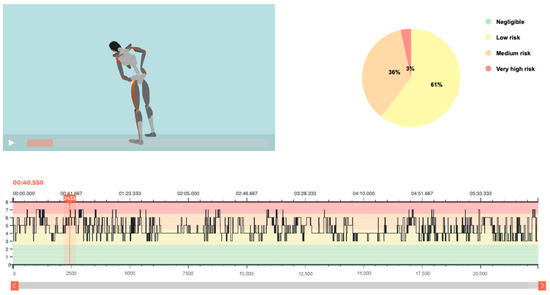
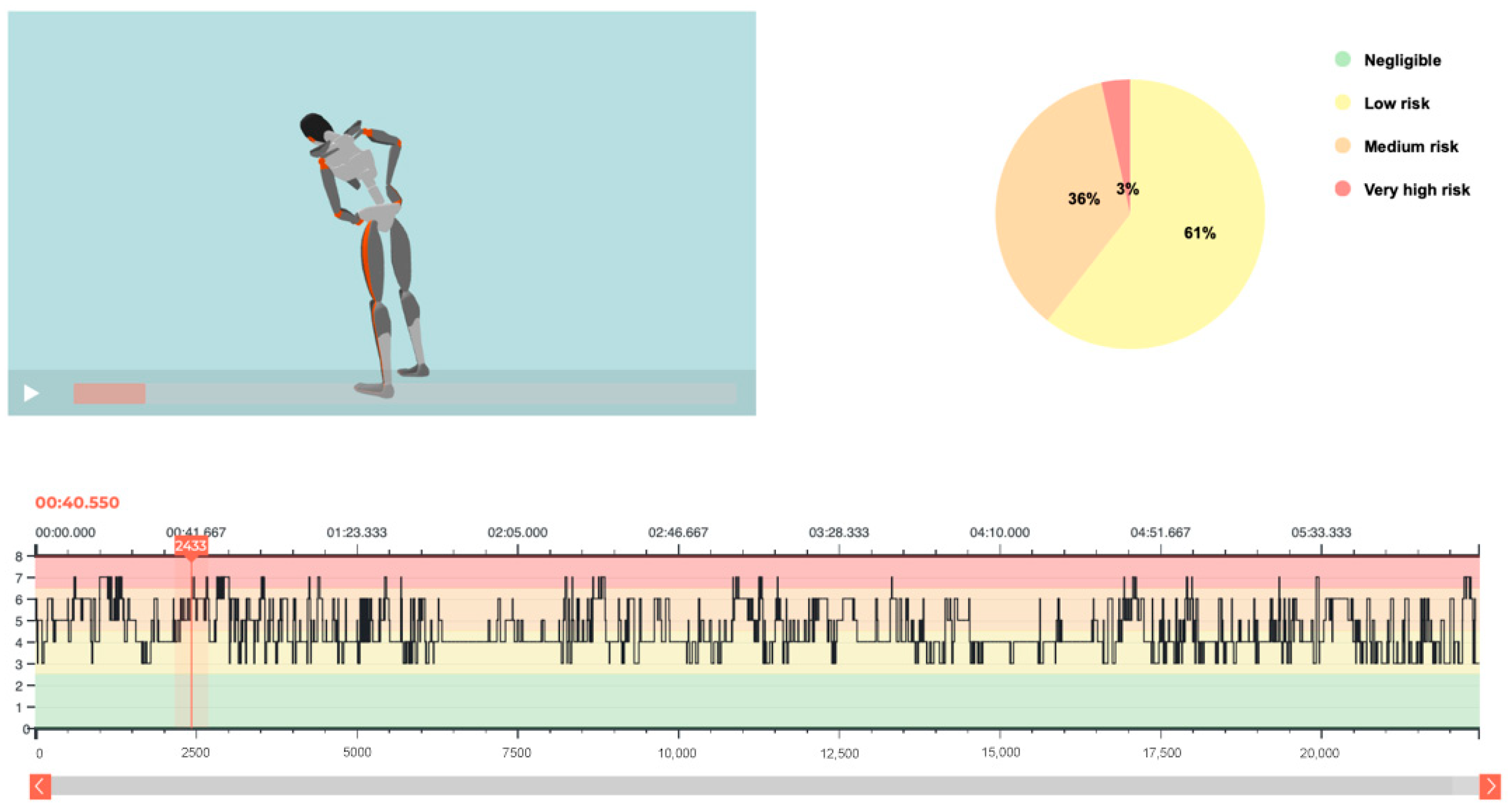
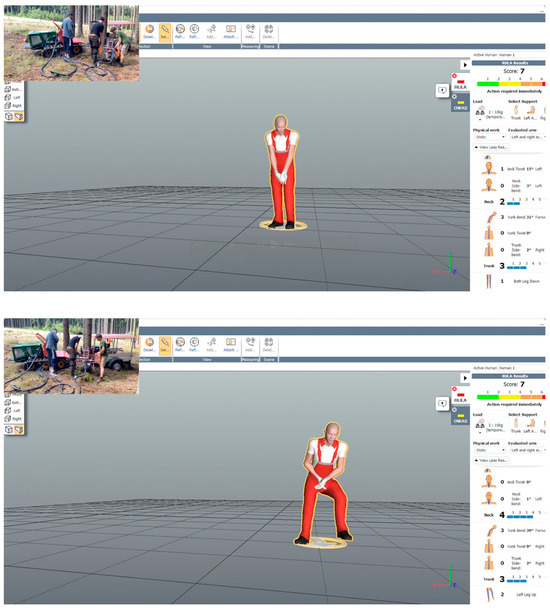
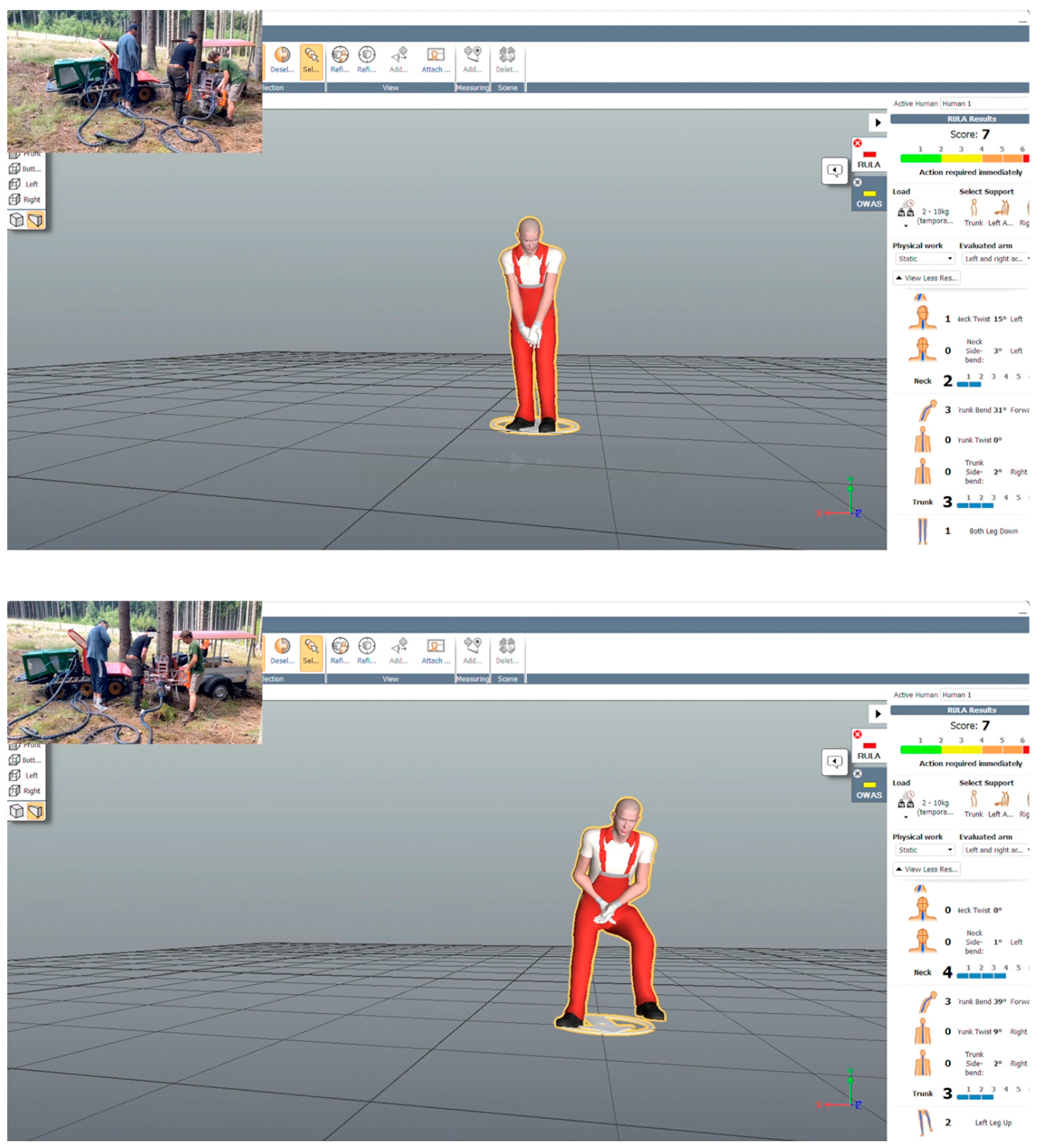
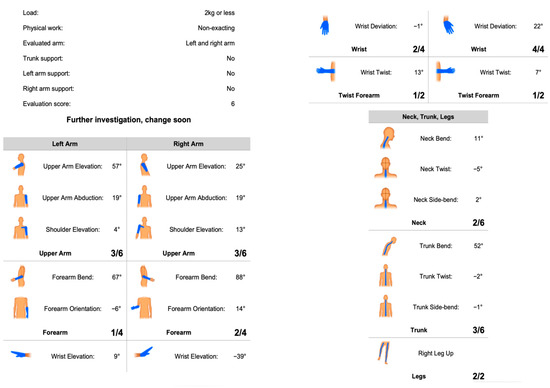
Digital RULA (Rapid Upper Limb Assessment) through ViveLab Ergo (ViveLab Ergo Zrt., Budapest, Hungary) and Xsens Motion Cloud reporting tool (Movella/Xsens Technologies B.V., Enschede, The Netherlands) was performed in two levels of detail—as an overview analysis for the classification of typical working positions (Figure 5) and as a detailed analysis (Figure 6) for selected critical phases of the work-cycle [26]. Based on the kinematic data (angles in the joints of the torso, neck, shoulders, elbows, and wrists), the individual positions were mapped to RULA scoring tables, and the resulting risk level and recommended intervention level were determined.
Figure 5.
Example of an overview analysis by Xsens Motion Cloud reporting tool.
Figure 6.
This is an example of two sequences of a detailed RULA analysis, performed using the VieveLab Ergo software. This analysis assesses the ergonomic risks associated with two critical movements during the installation of equipment.
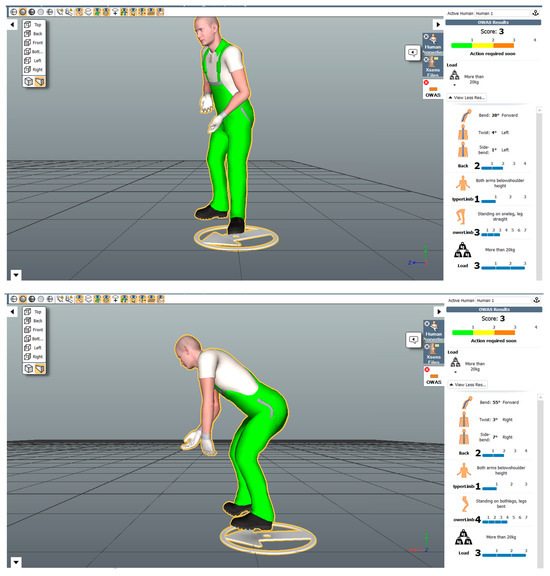
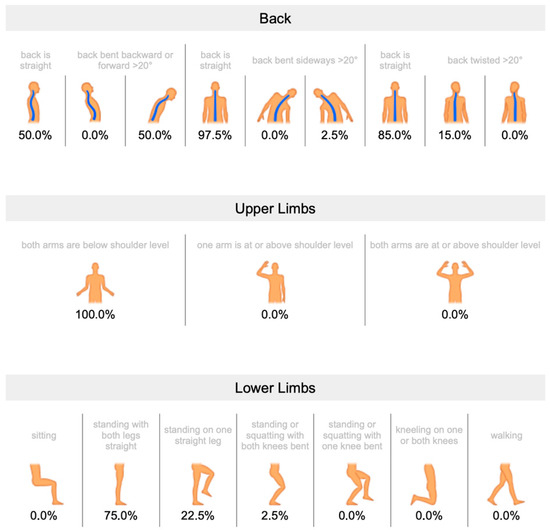
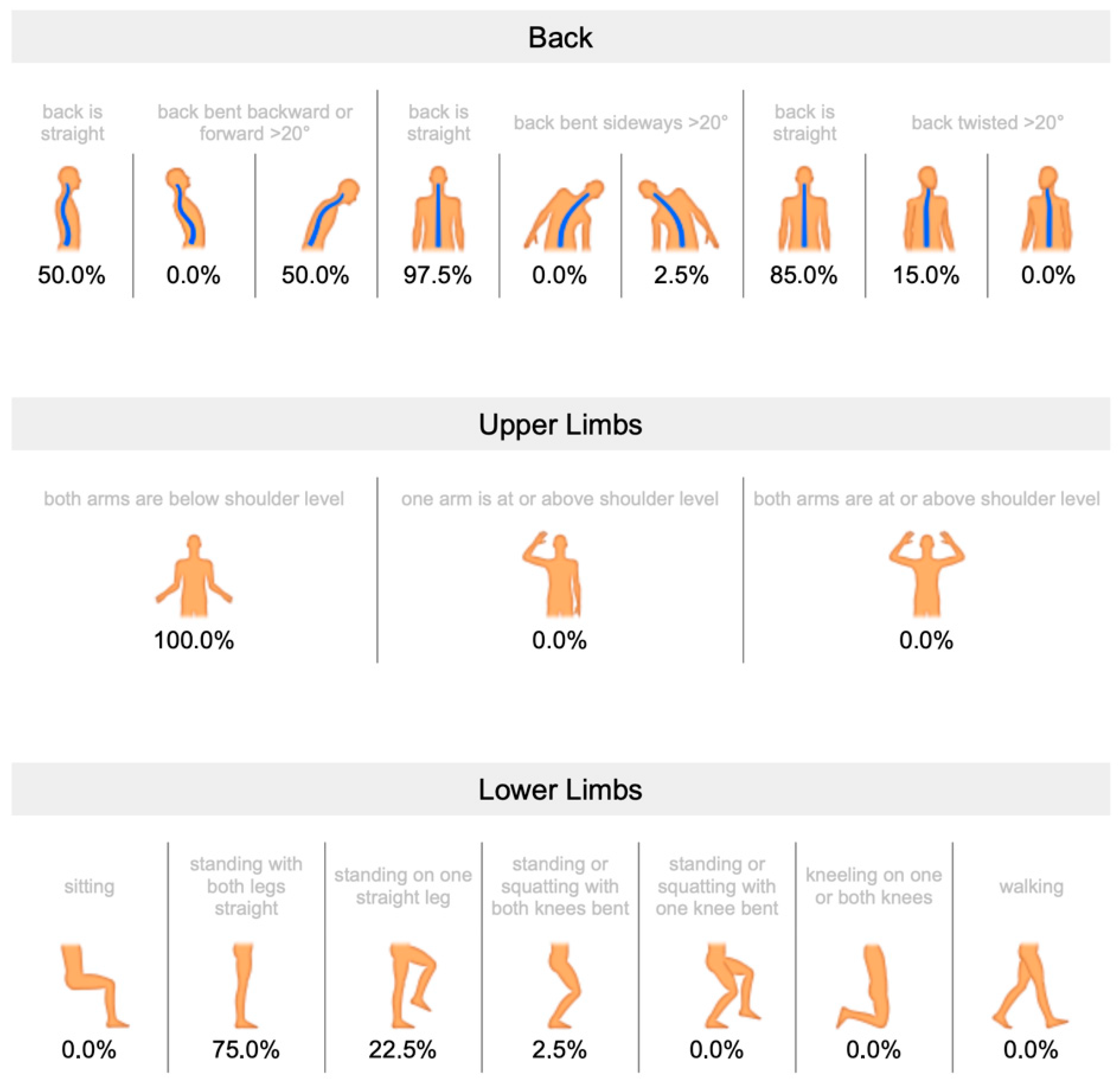
The OWAS (Owako Working Posture Analysis System) method was used to evaluate the working positions of the torso, upper limbs, lower limbs, and load during the entire work-cycle [27]. Representative positions were identified at regular intervals from the digital motion recording, which were then classified according to OWAS rules (Figure 7). The result was interpreted as the distribution of the time share of individual postural categories and the estimation of the need for interventions in terms of adjusting working positions.
Figure 7.
This is an example of two sequences of a detailed OWAS analysis, performed using the VieveLab Ergo software. This analysis assesses the ergonomic risks associated with two critical movements during the installation of equipment.
All RULA and OWAS scores were assigned by a single trained ergonomist based on the motion-derived posture representations and standardized scoring rules. Inter-rater reliability was not assessed in this pilot and is, therefore, considered as a methodological limitation; future work will include independent scoring on a subset of postures to quantify agreement. Given the standing nature of the tasks and the variability of field postures, OWAS may provide a coarse whole-body screening and has limited sensitivity for certain configurations. Therefore, for critical installation and dismantling postures, the Rapid Entire Body Assessment (REBA) method can offer complementary whole-body sensitivity, particularly for unstable and unpredictable working postures in field conditions. In future iterations of the workflow, REBA-based scoring will be integrated as a complementary analysis layer for selected high-demand phases to improve interpretability of the whole-body risk in forestry-specific settings. We used OWAS as a whole-body screening tool across the complete work-cycle, while detailed trunk and upper-limb loading was captured by direct kinematic metrics and RULA scoring. Nevertheless, OWAS may have limited sensitivity to certain trunk and neck postures, therefore, REBA-based scoring will be considered in future analyses for the standing installation/dismantling phases.
Assessment of the total body load was carried out using an Overall Body Heart Rate Index scale to evaluate participants’ physical demands on a numerical scale after completing individual tasks. These data were compared with objective indicators from kinematic analysis and with RULA/OWAS results in order to assess whether the most stressed phases correspond to the subjectively most demanding sections of the work.
The kinematic data processing structure was designed and used from the beginning to be compatible with commonly used tools for digital human modeling (DHM). Exported time series of joint angles, segment orientations, and basic kinematic parameters can be directly used for calibration and validation of digital figures (avatars) integrated into CAD systems. Following the review work in the field of DHM, the goal is to gradually create a data channel that will allow connecting real measurements from the forest environment with virtual simulations of various design variants of the machine and workspace, including tools for biomechanical modeling of muscle forces and spinal loads [28], also in a forestry-specific environment.
Conceptually, the methodology is set up to enable the transition to a model–data hybrid approach, which is typical of the newly emerging human digital twin frameworks. The measured data from inertial sensors represent the “physical” component of the twin, while the digital model of the human, which may be connected to any CAD design model of the machine, serves as the virtual component. In future work, these two components can be systematically linked and used not only for a one-time evaluation of a specific prototype, but also for continuous monitoring and optimization of human–machine interactions throughout the entire life cycle of the device [21].
2.10. Human Digital Twin (HDT) and Digital Human Modeling (DHM) Framework
In this pilot study, we applied a DHM/HDT-oriented workflow to ensure that field measurements can be directly translated into design-relevant parameters during early-stage prototyping. The primary goal was to demonstrate feasibility in real forest conditions and to generate actionable redesign targets, rather than to establish population-level ergonomic risk estimates.
For the purposes of this manuscript, we define the implemented workflow as Tier 1 (Steps 1–9):
- Step 1: Translation of human-friendly principles into measurable requirements and limits (postural constraints, load-handling constraints, and safety-critical conditions);
- Step 2: Analysis of the expected work-cycle and critical situations, using explicit phase segmentation (carry → install → operate → dismantle → return);
- Step 3: Specification of target users and representative “virtual characters” (range of anthropometry and capability) to support DHM/HDT compatibility;
- Step 4: Refinement of work and service scenarios with respect to the prototype concept and identification of how CAD/DHM tools could be applied during iteration;
- Step 5: Conversion of human-friendly limits into preliminary design parameters (grip placement, support points, and control layout);
- Step 6: Use of the functional prototype (or its key parts) for motion capture recordings to document typical working positions;
- Step 7: Field verification of prototype use, including full work-cycle recording under real operating conditions;
- Step 8: Processing and analysis of kinematic data and ergonomic indicators (kinematic variables, RULA/OWAS screening, and physiological load context);
- Step 9: Translation of findings into redesign requirements, prioritizing phase-specific hotspots and parameters that can be modified in the next iteration.
A broader DHM/HDT framework including CAD-based variant testing, iterative prototype loops, and long-term monitoring is conceptually relevant for forestry applications; however, these elements extend beyond the scope of the present pilot and are presented as a roadmap in Section 4.
2.11. Descriptive Data Analysis
Given the pilot nature of the study and the limited number of recorded operators, we applied descriptive data summarization rather than inferential statistics. For each work-cycle phase, we computed time proportions and summary descriptors (mean, minimum, maximum) for selected kinematic variables (trunk flexion/rotation, shoulder elevation/abduction, and wrist and elbow angles). Standardized posture risk levels were derived using RULA and OWAS scoring for representative postures extracted from the motion recordings. Working positions were assessed in accordance with the rules of ergonomic risk assessment using the RULA and OWAS methods [26,27].
Where two variants of task execution were available (e.g., different support height settings or grip positions), these were compared at the level of individual work tasks and modifications, e.g., according to the differences in the trees used. The aim was to identify changes to operations or workflows that led to consistent reductions in burden across participants [20,23].
2.12. Data Acquisition and Measurement
Movement data collection and recording were performed using a 17-sensor IMU system (Movella/Xsens Technologies B.V., Enschede, The Netherlands) with 60 Hz sampling. Before each measurement block, a neutral-pose calibration was performed, followed by a short walk and a second neutral-pose calibration, as recommended by validated protocols for the reconstruction of whole-body kinematics in forestry conditions [29]. Sensors were placed on the head, torso (sternum), pelvis, upper, and lower limb segments up to the feet. Segmental angles (spine, pelvis, hips, knees, shoulders, elbows) and gait stability parameters (body mass position) were reconstructed and analyzed from the IMU MoCap data.
The operators handled the work tasks without interruption and with comparable cycle times. The operators stated that working with the prototype corresponded to the physical demands of normal heavy forestry work, while the most burdensome parts were, according to their perception, the phases of installation and dismantling of the equipment from the tree and movement of the device from and back to the machine basement station. This assessment is consistent with the observation of the level of ergonomic corks and the results of heart rhythm monitoring during the performance of work activities.
2.13. Availability of Data
Taking into account the fact that the data were created as part of an internal research project with a limited number of participants and may contain information about a specific person, workplace, and technological solution, detailed datasets will be available on request from the responsible author and after concluding an agreement on the method of use. This ensures the possibility of re-analysis and follow-up of the published results while respecting contractual and ethical restrictions.
3. Results
3.1. Overall Movement Patterns and Load Distribution in the Working Cycle
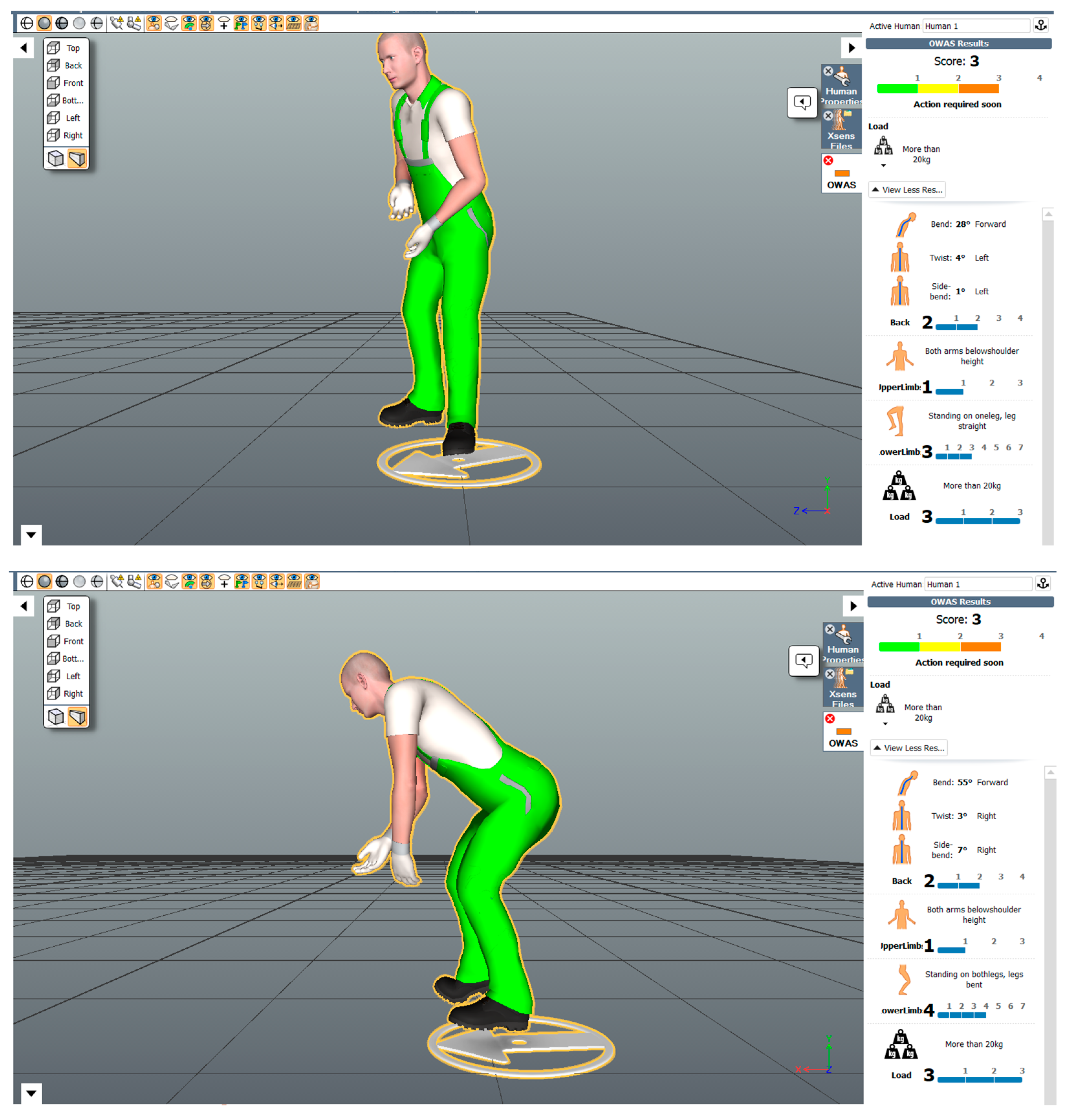
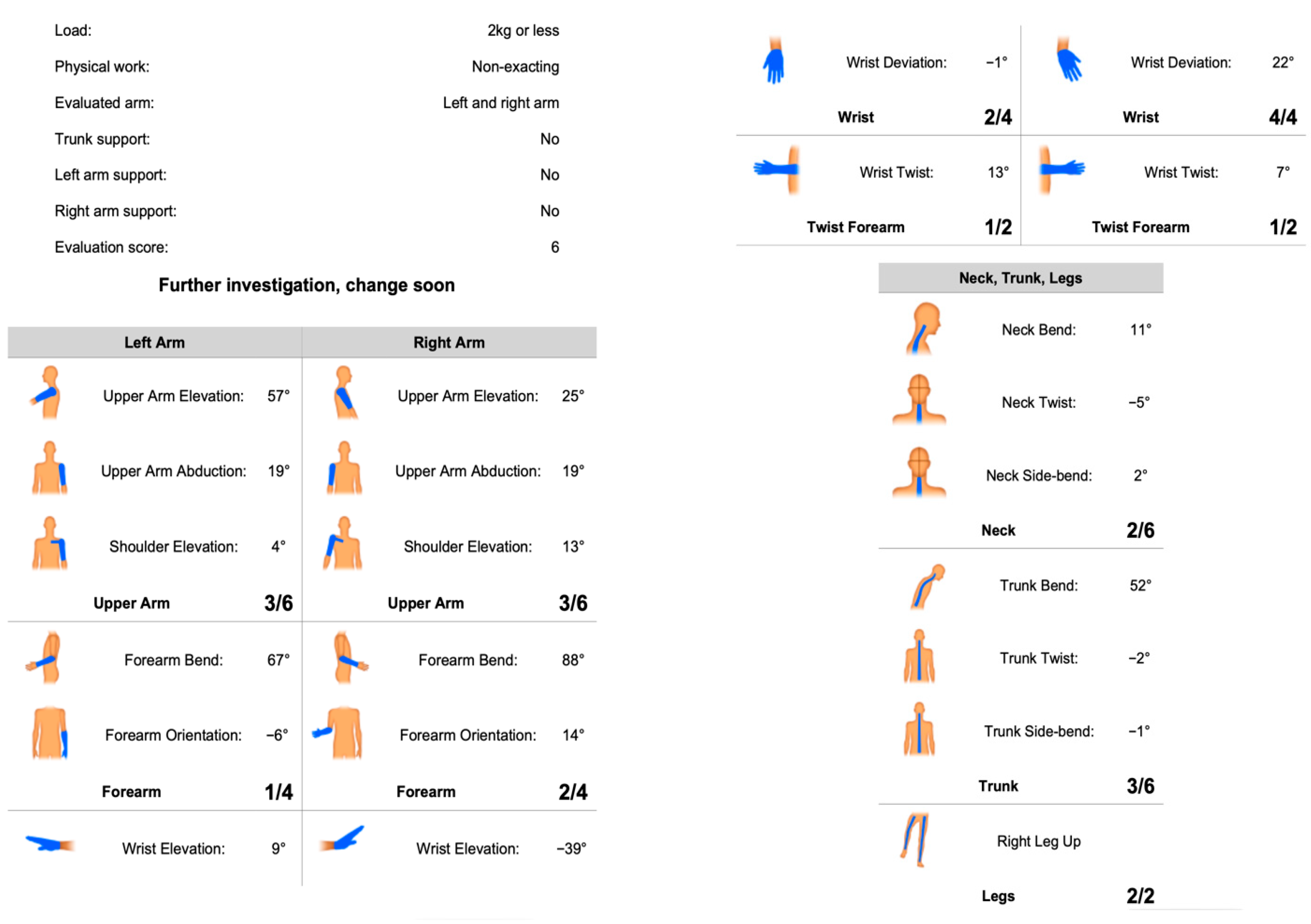
Analysis of the complete work-cycle showed that the nature of the workload differs significantly between individual tasks. When handling and transporting the equipment, dynamic movements of the whole body associated with lifting and carrying the load prevail, while during installation and disassembly, static-dynamic load dominates with prolonged staying in a bend position and with a significant asymmetry of postures (Figure 8 and Figure 9). During the actual work activity (milling/spraying), when the operator controls the machine from a safe distance using the remote control, the position of the torso is more stable, but there are repeated movements of the cervical spine and upper limbs, and minor corrections of posture in response to movement in the forest area and distance from the machine.
Figure 8.
Example of an overview RULA analysis—operation control.
Figure 9.
Example of a detailed OWAS analysis—operation control.
In terms of time, the operator spent a significant part of the work-cycle (about a third of the time) standing with a slight to moderate bend of the torso, often combined with head and trunk rotation towards the tree trunk. Increased demands on maintaining balance were evident when carrying the equipment in uneven terrain and during transitions between individual phases of tasks, when there were rapid changes in the support surface, position of the lower limbs, and the load on the lumbar spine and upper limbs [30,31].
3.2. Load on the Trunk and Spine
Kinematic analysis showed that the highest load on the trunk (lumbar spine flexion and rotation) occurred when the device was installed on the trunk and then dismantled. In these phases, operators often got into a deeper forward bend, when the angle of flexion of the torso in relation to the vertical exceeded the values that are associated, in the literature, with an increased risk of overloading the lumbar spine [30]. Forward bending was often combined with trunk rotation and lateroflexion, especially when the operator was reaching the controls or when adjusting support points of the device on the body of the tree (Table 1).
Table 1.
Kinematic analysis for specific tasks.
During the handling and transport of the equipment, the flexion of the hull changed depending on the gripping method and the individual strategy of the operator related to holding and handling the machine on the uneven forestry terrain. In some work activities, the equipment was lifted from a low position with a significant forward bend and minimal work of the lower limbs, which increased the bending moment in the lumbar spine, arms, and shoulder joints. When dismantling and handling the machine on a transport trolley, the use of the lower limbs and a relatively smaller range of torso flexion were evident, which is more favorable from the point of view of biomechanics [29,30].
In the phase of the machine’s operation—climbing/cutting/milling/spraying activity, the flexion angles of the fuselage were very small. In a rare number of cases, it was rather extended in connection with the inappropriate position of the head of the operator with regard to the working height of the machine on the tree and the distance from the tree. This fact implies that the working distance of the operator from the position on the tree trunk is a very important parameter when trying to safely control the machine and correct its position in relation to the trunk. From the point of view of long-term overload of the lumbar and cervical spine, proper training of the operator and adherence to prescribed procedures, to ensure the elimination of risk factors for safety and health hazards, play an important role [30].
3.3. Load on the Upper Limbs
The load on the upper limbs was highest in situations where it was necessary to hold the device hanging or in a position leaning against the trunk without sufficient support from the load-bearing elements. In these phases, there was an elevation of the shoulders above the level of 60° and a combination of elevation and abduction, which is considered unfavorable in terms of the risk of developing disorders of the shoulder girdle [26,30]. During the handling and transport of the equipment, the upper limbs were exposed to a combination of static load (holding the load) and dynamic load (transitions, crossing unevenness). Kinetics of the upper extremities were significantly influenced by the design of the controls and the distance between the operator’s body and the remote control of the machine.
3.4. Load on the Lower Limbs and Stability of Postures
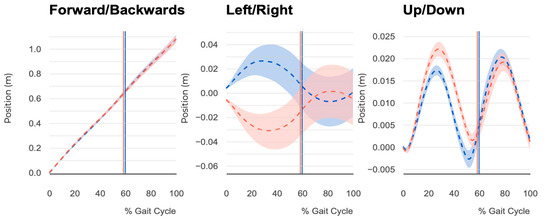
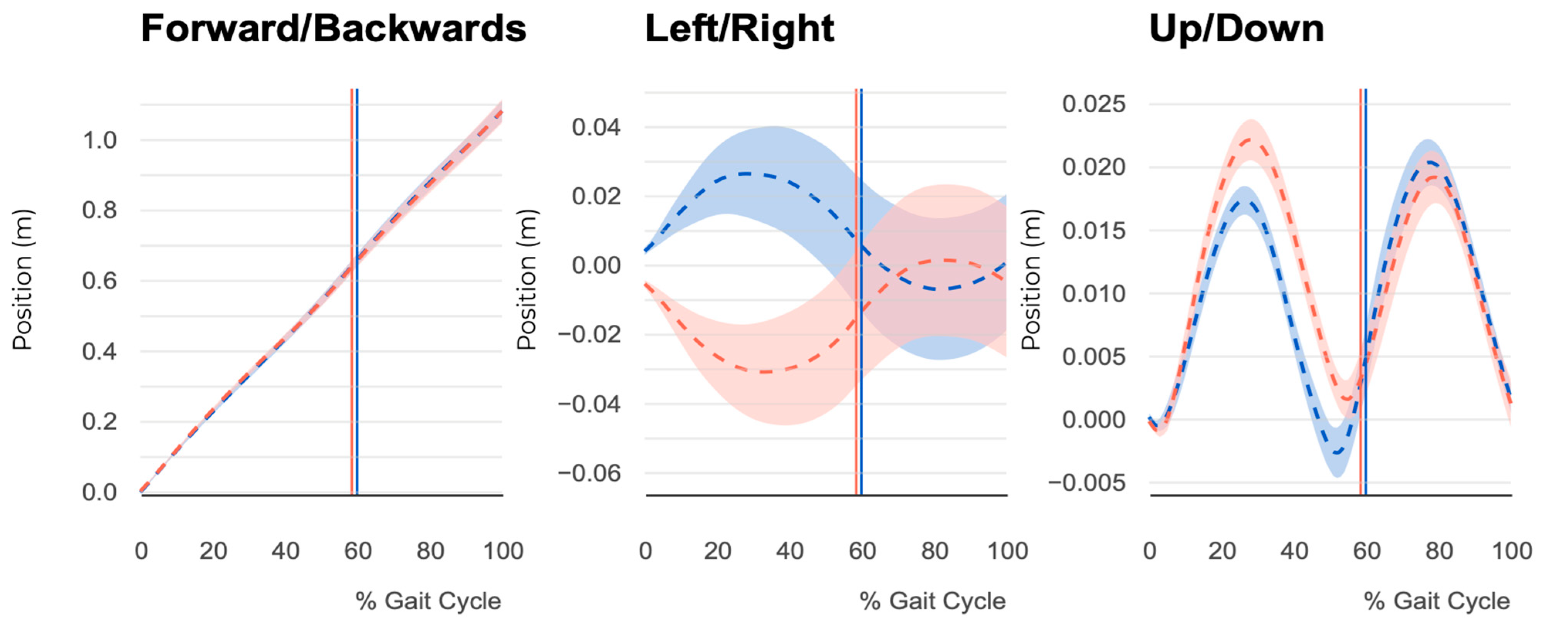
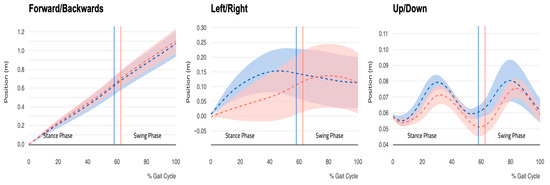
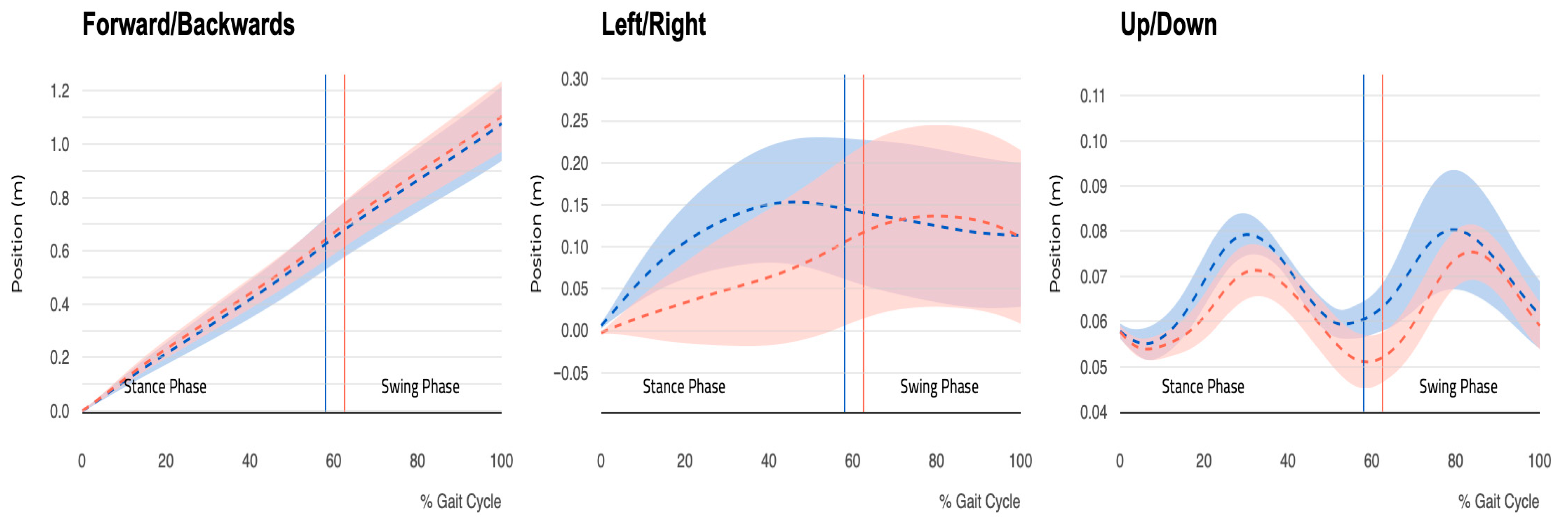
The lower limbs played a key role in ensuring the stability of the body in uneven terrain (Figure 10) [32,33]. This visualisation shows how the centre of mass shifts throughout the gait cycle. It provides insights into dynamic balance, stability control and weight distribution during movement. A stable centre of mass (CoM) indicates efficient and controlled locomotion, whereas increased variability may reflect instability, an increased risk of falling, or compensatory adaptations when walking on uneven surfaces. Analysis of postural patterns showed that operators often occupied a wide standing position with a significant asymmetry of load between the right and left lower limbs. At some stages (especially during installation and disassembly), positions with partial weight transfer to one limb and with a limited support surface have appeared, which increases the demands on balance control (Figure 11), and may increase the risk of slipping, tripping, or falling [31,34,35].
Figure 10.
Analysis of the center of mass position during walking on the solid surface with defined load of 15 kg (blue color represents the left side, red color represents the right side).
Figure 11.
Analysis of the center of mass position during walking in the forest environment with defined load of 15 kg (blue color represents the left side, red color represents the right side).
In case of the device movement, repeated steps on uneven surfaces were recorded, with the need to cross obstacles (roots, stones), according to studies focused on gait and balance, poses an increased risk of falling, especially with fatigue or reduced sensorimotor reserve [16,31,32,33,35].
3.5. Ergonomic Evaluation Results (RULA, OWAS, NASA-OBI)
The RULA and OWAS analyses were used as phase-based screening tools to rank work-cycle segments according to relative postural demand and to identify risk-relevant movement combinations that can be targeted by prototype redesign. The results of the RULA analysis confirmed the high level of ergonomic risk, especially in the installation and dismantling phases of the equipment. In these parts of the work-cycle, most of the evaluated postures reached action levels 3 and 4, which, according to the original methodology [36], means the need for quick to immediate intervention [26]. Typical was the combination of significant flexion of the torso, shoulder elevation, and unfavorable wrist positions when working with the controls.
During the actual work activity, RULA scores were lower on average, but they still often fell into action level 3, i.e., a category requiring adjustment of the job or work procedure in the foreseeable future. The lowest RULA scores were recorded during phases when the device was stably leaning against the trunk, and the operator could work in a relatively more upright position with less elevation of the upper limbs (Table 2).
Table 2.
The level of ergonomic risk evaluated by RULA methodology.
The OWAS analysis showed that a significant part of the working time was spent in postural categories 2 and 3, i.e., in positions that require change in a longer (category 2) or shorter time horizon (category 3) [27]. Postural category 4 (highest risk) appeared mainly in transitional phases when handling heavy equipment in deep forward bending and with trunk rotation (Table 3).
Table 3.
The level of ergonomic risk evaluated by OWAS methodology.
A supplementary assessment of the load using the Heart Rate Index (HR Index) [37] scale showed a moderately high to high perceived body load during individual tasks (Table 4). The highest values were consistently reported for the installation and dismantling phases of the equipment, while the actual work activity was perceived as slightly less demanding, although still physically taxing. The evaluation was in accordance with objective indicators from kinematic analysis as well as with the results of RULA and OWAS.
Table 4.
The level of total body load based on HR Index for specific tasks.
4. Discussion and Conclusions
The entire process of measurement, assessment, and evaluation of specific results pointed to the need for corrections in the Digital Human Modeling (DHM) framework, which, in the future, will allow us to better utilize all design tools for the specific environment of the forest and forest surfaces especially for the next design of the “Semi-autonomous system for optimizing degraded soils by deep injection”.
4.1. Evaluation of the Body Load Risks
When comparing individual tasks performed, it turned out that some ways of working lead to a noticeable reduction in the load on selected parts of the body. For example, variants in which the operator used more lower-limb work to lift the device and kept the device as close to the center of gravity of the body as possible were associated with less torso flexion and lower RULA scores for the torso and upper limb area [29,30]. On the other hand, the designs characterized by a significant forward bend and stretching the arms far in front of the body led to an increase in the load in both the lumbar spine and the shoulder girdle. Based on the results, the key risk factors include:
- High levels of flexion and rotation of the hull during installation and disassembly of the device;
- work with the upper limbs in elevated positions and in the forearm when holding and operating the device;
- asymmetrical and unstable postures of the lower limbs in uneven terrain;
- combination of carrying a heavier load and walking on uneven surfaces.
We used RULA to capture upper-limb and trunk-related screening signals in phases where handle geometry and controller distance influence shoulder and wrist posture, and OWAS to provide a whole-body overview across the complete work-cycle. As recommended in ergonomic risk-assessment reviews, combining complementary observational tools with quantitative kinematics improves interpretability in complex field tasks, particularly when postures vary rapidly across uneven terrain. These findings form the basis for the design of specific modifications to the structure of the device parts (weight distribution, shape, and location of grips, support elements for supporting the device on the tree and device handling from and back to the machine base-station) and work procedures (recommended lifting and carrying techniques, method of positioning the operator at the tree), which will be discussed in detail in the next chapter of the discussion.
4.2. Results in the Context of Health and Safety and Forestry Practice
The observed movement patterns and load levels are in accordance with the current knowledge about the occurrence of musculoskeletal disorders in heavy physical work. Publications by the National Research Council and the Institute of Medicine, as well as other reviews, show that the combination of repetitive forward bending, torso rotation, handling heavier loads, and limited regeneration options represents a significant risk factor for pain and degenerative changes in the lumbar spine [29]. Marras’ study emphasized that the lumbar spine is part of a complex system in which accumulated load, tissue tolerance, and neuromuscular control of movements interact to create different causal pathways leading to their damage [2]. The combination of forward bending, rotation, and asymmetrical load on the lower limbs, which we observed while working with the prototype, fits well into this concept.
4.3. Redesign Suggestions for the Design of the Tested Forestry Machine
One of the objectives of this study was not only to describe the load, but also to identify specific design and process factors that affect the load. The results indicate that the weight distribution of the device, the shape and location of the device grippers, and the ability of the device to lean and stabilize itself against the trunk play a key role. Where the operator could lean more on the structure of the machine and use the support points on the trunk, the flexion angles of the hull and the elevation of the arms were lower, and the RULA/OWAS scores were more favorable.
These findings align with ergonomic recommendations for the design of forestry machinery, which emphasize the importance of correctly placing controls, minimizing work in elevated upper limb positions, and providing sufficient support for the operator [9,10]. Based on the study results, the following recommendations can be made:
- Rethinking the design and weight distribution of the equipment to keep the center of gravity closer to the operator’s body;
- Adjusting the shape and position of the main grippers to support more neutral wrist positions and reduce shoulder elevation;
- Addition or optimization of support elements to allow part of the load to be transferred from the upper limb muscles to the machine structure and trunk;
- Creation of working variants that allow critical tasks (installation and disassembly) to be performed with less bending of the fuselage.
The ergonomic machine design perspective shows the importance of the outputs from the work analysis which are systematically translated into specific design parameters. Models such as the six-step framework for transforming ergonomic analysis into design recommendations can play a key role in this process, helping to overcome the barrier between ergonomics and design [15]. This study shows that digital motion analysis can provide the detailed information needed for this conversion.
Comparative Interpretation and Benchmarking (Pilot Context)
This study evaluates a single prototype configuration and does not include a controlled comparison against commercial devices, alternative prototype variants, or a conventional baseline task, also due to the innovativeness of the principle, which is the subject of the patent and industrial design approval. Therefore, the reported RULA/OWAS action levels should not be interpreted as an improvement or deterioration relative to other forestry technologies. Instead, we use these tools to provide within-cycle benchmarking, identifying which phases of the work-cycle (install and dismantle vs. operate vs. transport) contribute most strongly to overall exposure.
Nevertheless, the phase-based ranking can directly support design decisions, because engineering modifications typically aim to reduce exposure drivers in the highest-demand segments (e.g., trunk flexion/rotation during installation, shoulder elevation during unsupported operation). Future studies should incorporate (i) at least one commercial comparator performing similar tasks, (ii) systematically varied prototype configurations (e.g., grip height, support-point geometry, controller distance), and (iii) a baseline conventional method (e.g., observational scoring based on video) to quantify relative gains from digital ergonomics.
4.4. Translation of Motion-Derived Ergonomic Hotspots into Engineering-Ready Redesign Targets
In this study, we bridge field-measured human motion with ergonomic screening to support actionable engineering decisions during early-stage forestry machine prototyping. We treat ergonomic indicators as decision triggers that highlight phase-specific risk hotspots across the work-cycle (carry → install → operate → dismantle → return). Hotspots are interpreted using complementary evidence sources: kinematic exposure patterns (e.g., trunk flexion/rotation and shoulder elevation), standardized posture-based screening (RULA and OWAS), and heart-rate-based load context to capture task intensity.
The pilot observations indicate that the highest ergonomic demands occur primarily during installation and dismantling, where deep trunk flexion and rotation are frequently combined with reaching and fine manipulation under unstable conditions. In contrast, the operation phase tends to impose sustained upper-limb postural load when the device is held with limited support, leading to elevated shoulder postures and non-neutral arm configurations. The carry and transition phases further increase balance demands on uneven terrain and can amplify compensatory trunk and upper-limb loading.
These phase-specific patterns can be translated into engineering-ready redesign targets. The aim is to modify a limited set of controllable prototype parameters that directly influence posture and stability. Key targets include: (i) grip geometry and placement to promote neutral wrist alignment and reduce sustained shoulder elevation; (ii) support and contact elements against the trunk to enable partial load transfer during installation and dismantling; (iii) weight distribution and handling interfaces to keep loads closer to the operator’s center of mass during transport and repositioning; and (iv) control layout and working-distance guidance to reduce excessive reach and improve visual ergonomics. The proposed hotspot-to-parameter translation is summarized in Table 5.
Table 5.
Translation of motion-derived risk hotspots into engineering-ready redesign targets.
4.5. Impact of the Study Results for Future DHM/DTM Design Framework in Forestry
Forestry work presents a unique combination of ergonomic and safety challenges, driven by uneven terrain, limited workspace between standing trees, microclimate variability, and frequent transitions between supported and unsupported handling. These constraints require a design approach that treats the operator, machine, and environment as an integrated system. To support early-stage decision-making, we formalize our approach as a two-tier DHM/HDT-oriented framework that differentiates between (i) workflow components implemented and demonstrated in this pilot study, and (ii) HDT-oriented extensions that represent a structured roadmap for future development.
To support human-centered design decisions in early-stage forestry machine development, we formalize the applied workflow into a two-tier Digital Human Modeling (DHM) and human digital twin (HDT)-oriented framework. The distinction between tiers is essential: Tier 1 represents the workflow implemented and demonstrated in this field pilot, while Tier 2 represents future extensions required to reach a fully operational forestry-specific HDT concept.
Tier 1 (implemented and demonstrated in this pilot) captures the practical measurement-to-design translation pipeline that can be executed under real forest conditions. It begins with explicit work-cycle segmentation and protocol preparation, followed by field-deployable motion capture acquisition, kinematic computation, and standardized screening using RULA and OWAS. The Tier 1 output is a structured identification of ergonomic hotspots by work-cycle phase, supported by quantitative indicators and contextualized by physiological load. Crucially, Tier 1 concludes with the translation of these hotspots into parameter-level redesign targets, enabling iterative prototype refinement based on measurable evidence rather than qualitative observation alone. In this study, Tier 1 served as the validated core of the framework, demonstrated through a complete work-cycle execution and subsequent extraction of design-relevant risk patterns.
Tier 2 (HDT-oriented roadmap; not implemented in this pilot) extends the demonstrated workflow toward a forestry-specific HDT concept. These steps include the integration of motion-derived constraints into CAD/DHM-based variant testing, explicit modeling of forestry environmental constraints (terrain slope, unstable support surfaces, obstacles, and visibility), and scenario-based simulation of design alternatives before manufacturing changes. Tier 2 further includes closed-loop iteration, where updated prototype versions are repeatedly evaluated using the same field protocol to quantify ergonomic improvements over time, and—ultimately—periodic operational monitoring to support long-term learning and risk trend detection across a broader range of operators and conditions. By clearly distinguishing Tier 2 as future work, the framework remains transparent and scientifically robust.
This two-tier framing ensures that the present manuscript contributes a field-feasible, evidence-driven workflow (Tier 1) that can directly support prototype redesign decisions, while positioning more advanced HDT functionality (Tier 2) as a clearly defined roadmap requiring further validation. Given the pilot sample size, the framework should be interpreted primarily as a methodological contribution that demonstrates feasibility and translation value, rather than as a basis for population-level generalization of ergonomic risk.
4.5.1. Tier 1: Implemented and Demonstrated Pilot Workflow (Validated by Execution)
Tier 1 is designed for rapid integration into prototype development loops under real forest conditions. It combines field-deployable measurements with established ergonomic scoring and engineering-focused interpretation. The Tier 1 workflow consists of the following steps:
- Task definition and work-cycle segmentation (carry → install → operate → dismantle → return);
- Field protocol preparation, including environmental documentation and safety constraints;
- Sensor setup and calibration, enabling full-body kinematic capture in realistic conditions;
- Field data acquisition during representative work-cycle execution on the prototype;
- Data preprocessing and quality control, including detection of missing segments and sensor drift;
- Kinematic computation and phase-based summarization, focusing on design-relevant variables (e.g., trunk flexion/rotation and shoulder elevation);
- Ergonomic risk screening using standardized scoring (RULA and OWAS) for representative postures within each phase;
- Physiological load estimation, using a heart-rate-based index to contextualize intensity and fatigue;
- Translation into design targets, linking motion-derived hotspots to engineering parameters (grip geometry/placement, support elements against the trunk, weight distribution, and control layout).
The output of Tier 1 is a structured set of phase-specific ergonomic hotspots and actionable redesign requirements, enabling iterative prototype modifications informed by quantitative evidence rather than qualitative observation alone.
4.5.2. Tier 2: HDT-Oriented Extensions (Roadmap for Future Implementation)
Tier 2 expands the pilot workflow toward a forestry-specific HDT concept capable of supporting continuous improvement and operational monitoring. These steps were not implemented in the present pilot and are, therefore, presented as a roadmap:
- Digital human model personalization, incorporating operator anthropometry and preferred working strategies;
- Integration into a digital environment representation, explicitly modeling forestry constraints (terrain slope, unstable support surfaces, obstacles, visibility, microclimate);
- Predictive and scenario-based simulation, testing design variants and work-cycle adaptations before manufacturing changes;
- Closed-loop feedback across design iterations, where updated prototypes are re-tested using the same field protocol to quantify ergonomic improvements;
- Operational monitoring and long-term learning, enabling risk trend detection and design refinement based on repeated use under varying forest conditions.
Tier 2 aims to transform the DHM-based evaluation from a one-off assessment into a structured decision–support system that links field measurements, ergonomic indicators, and engineering design modifications within a continuous development cycle.
4.6. Methodological Aspects and Limitations of the Study
This study was designed as a pilot feasibility investigation to test the applicability of IMU-based motion capture and digital ergonomics tools in real forest conditions and to translate measured exposure patterns into prototype redesign targets. The limited sample size (two operators, with full-body IMU kinematics recorded for one operator) restricts inference and does not support population-level generalization of ergonomic risk. Consequently, the presented results should be interpreted as evidence-informed design guidance for the tested prototype and its work-cycle phases, providing a structured basis for future comparative studies across operators, terrain conditions, and design variants. Nevertheless, it can be assumed that the general principles—for example, the risk of a combination of deep forward bending, torso rotation, and work in elevated upper limb positions—are transferable to other situations [29,30]. Its strength lies primarily in the fact that it complements objective data and makes it possible to identify sections of work that are perceived as critical by workers.
4.7. Directions for Further Research and Development of Digital Ergonomics in Forestry
From the perspective of current developments in digital human modelling (DHM), our experimental data are key to the next step: integrating measured worker behaviour with digital human models in a design/CAD environment. DHM tools generate virtual characters that represent different sections of the population. These characters are used to simulate interactions with machines and workspaces, and to test multiple design variants before the final prototype is created [28].
This study demonstrates the technical feasibility of digital motion analysis in a real forest environment and its potential to provide valuable information for ergonomic machine design. At the same time, it opens up several avenues for further research.
One such direction is the integration of digital motion recording with more advanced biomechanical and dynamic digital human models. Such a ‘digital twin’ of the worker would enable different designs, workflows, and environmental variants to be simulated before the prototype reaches the field. Insights from motion analysis and ergonomic evaluations could be used to create targeted training materials, adjust workflows, and set ergonomic standards for new types of machines.
Scientific reviews in the field of DHM show that this approach can reduce time and costs associated with ergonomic design modifications because ergonomics becomes an integral part of the early stages of development, rather than being addressed reactively once the device is finished. This is then connected to a higher-level layer of algorithms that continuously evaluate physical strain, risky positions, and approaching averages. A digital twin conceived in this way can serve machine designers as a ‘living laboratory’ for testing new concepts and, based on smart systems, prevent overload and occupational diseases in the field [21]. Future research will shift from one-off prototype studies to a longer-term, data-driven framework, enabling iterative refinement of digital human models and machine parameter and workflow designs. The DHM framework can contribute to reducing risks and promoting the sustainability of forestry work in the context of an ageing workforce and increasing productivity demands [4,29].
Author Contributions
M.R.: Writing—review and editing, writing—original draft, validation, methodology, investigation, formal analysis, measurement and gait data analysis, data curation, conceptualization. E.A.P. and R.U.: Supervision, writing—review and editing, writing—formal analysis, conceptualization. All authors have read and agreed to the published version of the manuscript.
Funding
The work was supported by TAČR FW06010006 project—“Semi-autonomous system for optimizing degraded soils by deep injection”. Czech Republic.
Institutional Review Board Statement
In this study, we fully followed all legal and ethical requirements related to the Czech and EU laws including EU AI Act and their legal and ethical obligations including the MENDELU ethical standards. We also fully followed the university GDPR and Ethical standards and rules which are set by the University including all GDPR and informed consent statement paperwork, participant signatures, individual data coverage protection, and data storage protection. No other specific risk analysis or specific declarations were required for the individual steps or groups of steps of the study or group of subjects, data collection and processing, or study result structure. The study was also conducted following the Declaration of Helsinki.
Informed Consent Statement
Informed consent was obtained from all subjects involved in the study.
Data Availability Statement
The datasets presented in this article are not readily available because the data are part of an ongoing study. Requests to access the datasets should be directed to the corresponding author.
Acknowledgments
The authors acknowledge the HSEF s.r.o. company for the technical support and to Luboš Staněk and Ladislav Zvěřina for data collection support.
Conflicts of Interest
The authors declare no conflicts of interest.
References
- National Research Council (US); Institute of Medicine (US); Panel on Musculoskeletal Disorders and the Workplace. Musculoskeletal Disorders and the Workplace: Low Back and Upper Extremities; National Academies Press: Washington, DC, USA, 2001. [Google Scholar]
- Marras, W.S. The complex spine: The multidimensional system of causal pathways for low-back disorders. Hum. Factors 2012, 54, 881–889. [Google Scholar] [CrossRef] [Scilit] [PubMed]
- European Agency for Safety and Health at Work. Work-Related Musculoskeletal Disorders: Prevalence, Costs and Demographics in the EU; Publications Office of the European Union: Luxembourg, 2019; Available online: https://osha.europa.eu/en/publications/msds-facts-and-figures-overview-prevalence-costs-and-demographics-msds-europe (accessed on 1 December 2025).
- European Agency for Safety and Health at Work. Work-Related Musculoskeletal Disorders—Facts and Figures; Publications Office of the European Union: Luxembourg, 2020; Available online: https://osha.europa.eu/en/publications/work-related-musculoskeletal-disorders-facts-and-figures-synthesis-report-10-eu-member (accessed on 1 December 2025).
- European Agency for Safety and Health at Work. Work-Related Musculoskeletal Disorders: From Research to Practice; Publications Office of the European Union: Luxembourg, 2020; Available online: https://osha.europa.eu/en/publications/work-related-musculoskeletal-disorders-research-practice-what-can-be-learnt (accessed on 1 December 2025).
- Kupsová, B.; Pavlík, V.; Horáček, J.M.; Šafka, V.; Lašák, P.; Fajfrová, J.; Husárová, M.; Boušová, K.; Tuček, M. Occupational diseases arising in the area of the Ministry of Defence in the Czech Republic and their relationship to work categorization. Cent. Eur. J. Public Health 2022, 30, 235–240. [Google Scholar] [CrossRef] [Scilit] [PubMed]
- Garland, J.; Cedergren, J.; Eliasson, L.; van Hensbergen, H.; McEwan, A. Occupational Safety and Health in Forest Harvesting and Silviculture: A Compendium for Practitioners and Instructors; Food and Agriculture Organization of the United Nations: Rome, Italy, 2020; ISBN 978-92-5-137966-0, 9789220390689. [Google Scholar] [CrossRef] [Scilit]
- International Labour Office. Introduction to Ergonomics in Forestry in Developing Countries; Food and Agriculture Organization of the United Nations: Geneva, Switzerland; Rome, Italy, 1992. [Google Scholar]
- Hansson, J.-E. Ergonomic design of large forestry machines. Int. J. Ind. Ergon. 1990, 5, 255–266. [Google Scholar] [CrossRef] [Scilit]
- Gellerstedt, S. Ergonomic Guidelines for Forest Machines. Proc. Hum. Factors Ergon. Soc. Annu. Meet. 2000, 44, 477–480. [Google Scholar] [CrossRef] [Scilit]
- Machado, J.S.; Schettino, S.; Colen, F.; Pereira, S. Ergonomic evaluation of agricultural tractors used in forestry operations. Rev. Eng. Agric. 2020, 29, 171–183. [Google Scholar] [CrossRef] [Scilit]
- Bossomaier, T.; Bruzzone, A.; Cimino, A.; Longo, F.; Mirabelli, G. Scientific approaches for the industrial workstations ergonomic design: A review. In Proceedings of the 24th European Conference on Modelling and Simulation, Kuala Lumpur, Malaysia, 1–4 June 2010; pp. 189–199. [Google Scholar] [CrossRef] [Scilit]
- Sutschet, S.; Spengler, T.S.; Matthiesen, S. Ergonomic optimization of human–machine systems in virtual environments—A systematic literature review identifying research gaps. In Proceedings of the Design Society, Bordeaux, France, 24–28 June 2023; Volume 3, pp. 95–104. [Google Scholar] [CrossRef] [Scilit]
- Wolf, A.; Fackler, K.; Reulbach, M.; Wartzack, S.; Miehling, J. Computer aided ergonomics: Evaluation study of an interaction model for digital human models. In Proceedings of the Design Society: International Conference on Engineering Design, Dubrovnik, Croatia, 23–26 May 2022; Volume 2, pp. 663–672. [Google Scholar] [CrossRef] [Scilit]
- Caputo, F.; Greco, A.; Fera, M.; Macchiaroli, R. Workplace design ergonomic validation based on multiple human factor assessment methods and simulation. Prod. Manuf. Res. 2019, 7, 195–222. [Google Scholar] [CrossRef] [Scilit]
- Pinder, A. Literature Review: Barriers to the Application of Ergonomics/Human Factors in Engineering Design; Research Report RR1006; Health and Safety Executive: Buxton, UK, 2015. [Google Scholar]
- Donisi, L.; Cesarelli, G.; Pisani, N.; Ponsiglione, A.M.; Ricciardi, C.; Capodaglio, E. Wearable sensors and artificial intelligence for physical ergonomics: A systematic review of literature. Diagnostics 2022, 12, 3048. [Google Scholar] [CrossRef] [Scilit] [PubMed]
- Caputo, F.; Gironimo, G.D.; Marzano, A. Ergonomic Optimization of a Manufacturing System Work Cell in a Virtual Environment. Acta Polytech. 2006, 46, 21–27. [Google Scholar] [CrossRef] [Scilit] [PubMed]
- Greco, A.; Caterino, M.; Fera, M.; Gerbino, S. Digital Twin for Monitoring Ergonomics during Manufacturing Production. Appl. Sci. 2020, 10, 7758. [Google Scholar] [CrossRef] [Scilit]
- Research Institute for Occupational Safety, v.v.i. Prevention of Musculoskeletal Disorders Due to Handling Loads—Correcthandling of Loads in a Specific Selected Group of Employees. Final Research Report. 2020. Available online: https://www.bozpinfo.cz/tematicke-okruhy?oid=10568175&nid=21090&action=itemDetail&id=1208323 (accessed on 1 December 2025).
- Onan Demirel, H.; Ahmed, S.; Duffy, V.G. Digital Human, Modeling: A Review and Reappraisal of Origins, Present, and Expected Future Methods for Representing Humans Computationally. Int. J. Hum. Comput. Interact. 2022, 38, 897–937. [Google Scholar] [CrossRef] [Scilit]
- He, Q.; Li, L.; Li, D.; Peng, T.; Zhang, X.; Cai, Y.; Zhang, X.; Tang, R. From Digital Human Modeling to Human Digital Twin: Framework and Perspectives in Human Factors. Chin. J. Mech. Eng. 2024, 37, 9. [Google Scholar] [CrossRef] [Scilit]
- Da Conceição, C.S.; Broberg, O.; Duarte, F. A six-step model to transform an ergonomic work analysis into design guidelines for engineering projects. Work 2020, 66, 699–710. [Google Scholar] [CrossRef] [Scilit] [PubMed]
- Xsens Technologies B.V. MVN User Manual: MVN Analyze & MVN Animate; Xsens Technologies B.V.: Enschede, The Netherlands, 2025; Available online: https://www.xsens.com/hubfs/User_Manual_Xsens%202025.pdf (accessed on 1 December 2025).
- Skogstad, S.; Nymoen, K.; Høvin, M. Comparing Inertial and Optical MoCap Technologies for Synthesis Control. In Proceedings of the 8th Sound and Music Computing Conference, SMC 2011, Padova, Italy, 6–9 July 2011; Available online: https://www.researchgate.net/publication/252066778_Comparing_Inertial_and_Optical_MoCap_Technologies_for_Synthesis_Control (accessed on 1 December 2025).
- McAtamney, L.; Nigel Corlett, E. RULA: A survey method for the investigation of work-related upper limb disorders. Appl. Ergon. 1993, 24, 91–99. [Google Scholar] [CrossRef] [Scilit] [PubMed]
- Karhu, O.; Kansi, P.; Kuorinka, I. Correcting working postures in industry: A practical method for analysis. Appl. Ergon. 1977, 8, 199–201. [Google Scholar] [CrossRef] [Scilit] [PubMed]
- Haslam, C.; Clemes, S.; McDermott, H.; Shaw, K.; Williams, C.; Haslam, R. Manual Handling Training: Investigation of Current Practices and Development of Guidelines; Loughborough University: Loughborough, UK; Work and Health Research Centre: London, UK, 2007; Available online: https://hdl.handle.net/2134/8353 (accessed on 1 December 2025).
- Landekić, M.; Bačić, M.; Pandur, Z.; Bakarić, M.; Šporčić, M.; Nakić, J. Kinematic Analysis of the Forestry Workers’ Upper Body during Chainsaw Starting Activity. Forests 2023, 14, 2427. [Google Scholar] [CrossRef] [Scilit]
- Neumann, D.A. Kinesiology of the Musculoskeletal System: Foundations for Rehabilitation, 3rd ed.; Elsevier: St. Louis, MO, USA, 2017; ISBN 978-0-323-28753-1. [Google Scholar]
- Shumway-Cook, A.; Woollacott, M.H. Motor Control: Translating Research into Clinical Practice, 3rd ed.; Lippincott Williams & Wilkins: Philadelphia, PA, USA, 2007. [Google Scholar] [CrossRef] [Scilit]
- Voloshina, A.S.; Kuo, A.D.; Daley, M.A.; Ferris, D.P. Biomechanics and energetics of walking on uneven terrain. J. Exp. Biol. 2013, 216, 3963–3970. [Google Scholar] [CrossRef] [Scilit] [PubMed]
- Röhrich, M.; Abramuszkinová Pavlíková, E.; Šácha, J. Biomechanical Analysis of Gait in Forestry Environments: Implications for Movement Stability and Safety. Forests 2025, 16, 996. [Google Scholar] [CrossRef] [Scilit]
- Tsioras, P.A.; Rottensteiner, C.C.; Stampfer, K.; Tamparopoulos, A.E. Slip, Trip and Fall Accidents in a Large Forest Enterprise; CRC Press: Boca Raton, FL, USA, 2013; Available online: https://www.taylorfrancis.com/chapters/edit/10.1201/b15938-227/slip-trip-fall-accidents-large-forest-enterprise-tsioras-rottensteiner-stampfer-tamparopoulos (accessed on 1 December 2025).
- Gates, D.H.; Wilken, J.M.; Scott, S.J.; Sinitski, E.H.; Dingwell, J.B. Kinematic strategies for walking across a destabilizing rock surface. Gait Posture 2012, 35, 36–42. [Google Scholar] [CrossRef] [Scilit] [PubMed]
- Grooten, W.J.A.; Johansson, E. Observational Methods for Assessing Ergonomic Risks for work-related musculoskeletal disorders. A Scoping Review. Rev. Cienc. Salud 2018, 16, 8–38. [Google Scholar] [CrossRef] [Scilit]
- Pavlíková, E.A.; Nevrkla, P.; Röhrich, M. Heart Rate Index as a Measure of Physical Workload in Chainsaw Operations. Appl. Sci. 2024, 14, 11483. [Google Scholar] [CrossRef] [Scilit]

Disclaimer/Publisher’s Note: The statements, opinions and data contained in all publications are solely those of the individual author(s) and contributor(s) and not of MDPI and/or the editor(s). MDPI and/or the editor(s) disclaim responsibility for any injury to people or property resulting from any ideas, methods, instructions or products referred to in the content. |
© 2026 by the authors. Licensee MDPI, Basel, Switzerland. This article is an open access article distributed under the terms and conditions of the Creative Commons Attribution (CC BY) license.