Article

Effects of Intercropping on Soil Microbial Communities in Poplar Plantations

1
Henan Academy of Forestry, Zhengzhou 450008, China
2
College of Landscape Architecture and Art, Henan Agricultural University, Zhengzhou 450002, China
3
College of Life Sciences, Henan Agricultural University, Zhengzhou 450002, China
4
Henan Provincial Forestry and Ecological Construction and Development Center, Henan Provincial Forestry Administration, Zhengzhou 450003, China
5
Co-Innovation Center for Sustainable Forestry in Southern China, Nanjing Forestry University, Nanjing 210037, China
6
College of Forestry and Grassland, Nanjing Forestry University, Nanjing 210037, China
*
Authors to whom correspondence should be addressed.
Forests 2026, 17(2), 184; https://doi.org/10.3390/f17020184
Submission received: 19 December 2025 / Revised: 24 January 2026 / Accepted: 27 January 2026 / Published: 29 January 2026
(This article belongs to the Section Forest Soil)

Abstract

As a fast-growing timber tree species with a wide cultivation area, poplar is facing the problem of declining economic benefits under long-term monoculture. Intercropping provides an effective solution. Using Illumina Miseq sequencing, we analyzed soil microbiomes under four patterns: poplar monoculture, and intercropping with amorpha fruticosa, black locust, or cassia seed. The results showed that the Alpha diversity index of intercropping area was significantly higher than that of single planting poplar area under intercropping and monoculture conditions. In the intercropping area, the highest species richness was the intercropping of poplar and black locust, and the lowest was the intercropping of poplar and amorpha fruticosa. The dominant microorganisms in the intercropping mode were Vicinamibacterales, and the fungi were Alternaia and Enterocarpus. In the single planting poplar area, a large number of bacteria gathered in the soil were Dongia and Alphaproteobacteria, and fungi were Fusarium and Mortierella. Functional prediction results showed that the biosynthetic function of ansamycin was the highest in the bacterial community. In the intercropping area, the functional abundance of methanol oxidation, sulfate respiration, sulfate compound respiration, nitrate denitrification, nitrite denitrification, and nitrous oxide denitrification was higher than that in the single planting poplar area. On the contrary, the abundance of methanotrophy function is lower than that of single planting poplar area. In the fungal community, the functional abundance of animal pathogens and the animal pathogen–dung saprotroph–endophyte–plant saprotroph–soil saprotroph–wood saprotroph group in the monoculture poplar area was higher than that in the three intercropping areas. In summary, the intercropping mode of poplar is better than the monoculture mode, and the species richness is the highest when poplar and black locust are intercropped. Therefore, the intercropping pattern of poplar and other tree species improved microbial community. This provides some theoretical guidance for the subsequent solution of continuous cropping obstacles in poplar.

1. Introduction

With the continuous improvement of modern agricultural technology, crop yield has also increased. However, due to the single form of modern agricultural production and the pursuit of high income and high output, many ecological and environmental problems such as land degradation and productivity decline have been caused [1]. In order to solve the above ecological problems and ensure the sustainable development of the agricultural ecosystem, the agroforestry model has begun to attract the attention of many researchers. Agroforestry, which consists of single or multiple rows of trees or shrubs and different crops planted between them, optimizes the combination of trees, shrubs, or crops and produces positive effects [2]. When different trees and crops coexist in the same area, there may be a promoting or inhibiting effect between the two. If it is beneficial, it can be shown that one species enhances the growth state of another species [3]. On the contrary, if it is a competitive relationship, it will be affected by plant roots, plant phenology, and other resources, resulting in an unfavorable growth state. Therefore, the direction of the interaction between trees and crops depends on the resource-sharing mode of different species under certain conditions [4]. Poplar is an ideal timber crop species with wide distribution, strong adaptability, and moderate growth rate. It has a wide planting area in northeast China, up to more than 4 million hm2. It has high economic and ecological value and is suitable for planting patterns such as timber forest and shelter forest [5]. However, due to the positive correlation between the survival rate of poplar and field management, it is usually necessary to strengthen the corresponding management technology according to local conditions in the planting process to avoid the waste of land resources [6]. Soil disease or tree disease will occur in the intensive cultivation of poplar, and the problem of continuous cropping obstacles is more common [7].
Continuous cropping obstacle refers to the phenomenon of weak growth potential, decreased yield and quality, and increased pests and diseases when the same crop or the same family is continuously cultivated in the same soil, even under normal management [8]. One of the causes is the imbalance of soil microbial community caused by continuous cropping, which is manifested by the decrease in beneficial bacteria and the increase in pathogens. At the same time, the accumulation of toxic substances such as phenolic acids, hormones, and mycotoxins also inhibits plant growth. Lu et al. found that with the increase in continuous planting generations of poplar plantations, the inhibition of rhizosphere soil on lettuce seed germination rate and the length of germ and root of poplar branches was significantly enhanced, and the inhibition effect of seed germination was aggravated with the increase in soil extract concentration [9]. Wang et al. [10] found that the plant height, leaf area, main root length, and total root length of eggplant seedlings under continuous cropping were significantly lower than those under normal cropping. The fresh weight of aboveground and underground parts decreased by 33.12% and 30.12%, respectively, and the harm of root-knot nematodes increased with the increase in seedling age [10]. Chen et al. also confirmed that the disease infection rate increased and the number of Fusarium in the rhizosphere increased significantly in the study of soybean continuous cropping [11]. It is worth noting that Fusarium oxysporum isolated from continuous-cropping watermelon can produce toxins, which can significantly reduce the transmembrane potential of root cells, strongly inhibit the normal physiological functions of seedling leaves and root cells, and ultimately lead to cell death [12]. Liu et al. explored the ground decline under poplar continuous cropping through a field experiment [13]. The results showed that the soil quality in the second and third generations of forest land was significantly lower than that in the first generation [13].
For the control measures of continuous cropping obstacles, the common practices are different crop rotations and chemical fumigation, but both methods have certain drawbacks. For example, rotation cannot harvest the same plant continuously, and chemical fumigation may pose a corresponding safety hazard to humans and the environment. Therefore, the intercropping model that can make full use of soil resources and increase income has become one of the hot measures for domestic and foreign scholars to improve the continuous cropping obstacles [14]. Wu et al. used the high platform preparation method to create poplar mixed forests with different species in the low wetland of the Sanjiang Plain, and the experimental results showed that small black poplar mixed with spruce and camphor pine had a good effect, and the volume of timber of a single plant was greatly improved compared with that of a pure forest [15]. Wu et al. showed that the volume per hectare in poplar acacia hybrid forests was 1.8 times higher than that in pure poplar forests [16]. Other researchers found that compared with Platycodon grandiflorum monoculture, intercropping onion increased soil available nitrogen content by 22.3%. The intercropping of Platycodon grandiflorum and Welsh onion increased the total number of soil microorganisms and bacteria and decreased the number of fungi [17]. Therefore, reasonable intercropping can change the type and content of root exudates and the structure of microbial population in soil, alleviate the adverse state of soil, and reduce the impact of continuous cropping obstacles.
Black locust is a species with the ability to fix N2, which has recognized potential in biomass production and stress resistance [18]. Existing studies have shown that the combination of nitrogen-fixing species and non-nitrogen-fixing species can not only increase biomass yield but also have benefits such as pest control [19]. The crown of poplar is usually fixed by a single main stem with fewer branches, while the crown of black locust is not only thick but also has more branches. The two have different surface root structures, so we can explore different aboveground and underground layers to better share light, water, and other resources [20]. Therefore, intercropping black locust with poplar can not only improve the growth conditions of both species, but also improve the utilization rate of resources. The results of Wang et al. showed that the mixed forest of poplar and black locust increased the composition and importance value of understory herb species, and compared with a pure forest, the species diversity of understory vegetation in black locust forest was significantly higher than that of poplar [21].
Amorpha fruticosa is a shrub species with high economic value, which can promote the growth and development of trees after being mixed with trees [22]. The mixing of poplar and Amorpha fruticosa is an ideal way of arbor–shrub mixing. Amorpha fruticosa can promote the growth of poplar by improving soil conditions and maintaining water, and the mixture of the two can make full use of resources such as space and soil properties. The field study showed that the economic benefit of a mixed forest belt with Amorpha fruticosa was more than two times higher than that of pure poplar forest belt [23]. Xue Ling chose three species of elm, black locust, and Amorpha fruticosa to mix with populus tomentosa [24]. The results showed that the height, DBH, individual volume, and volume of the mixture of poplar and Amorpha fruticosa reached the maximum, which was significantly higher than that of other mixed species [24]. Other studies have shown that compared with pure poplar forests, the mixture of poplar and Amorpha fruticosa can increase the number of soil microorganisms and enzyme activity and effectively promote tree growth by enriching beneficial metabolites in metabolic pathways [25].
Cassia seed is an annual leguminous medicinal plant. Its dried mature seeds have the effects of dispelling wind and heat, moistening intestines and relaxing bowels, reducing blood pressure and lipids, clearing the liver, and improving eyesight [26]. Forest–drug intercropping is one of the important ways to make rational use of space resources in poplar–agricultural compound management mode. Trees can provide shade conditions for medicinal materials to prevent high-temperature damage. At the same time, the medicinal materials intercropped under the forest are also conducive to improving the poor condition of forest soil and promoting the growth of poplar. The results of Luo et al. showed that the low concentration of cassia seed extract could promote the growth of poplar roots [27].
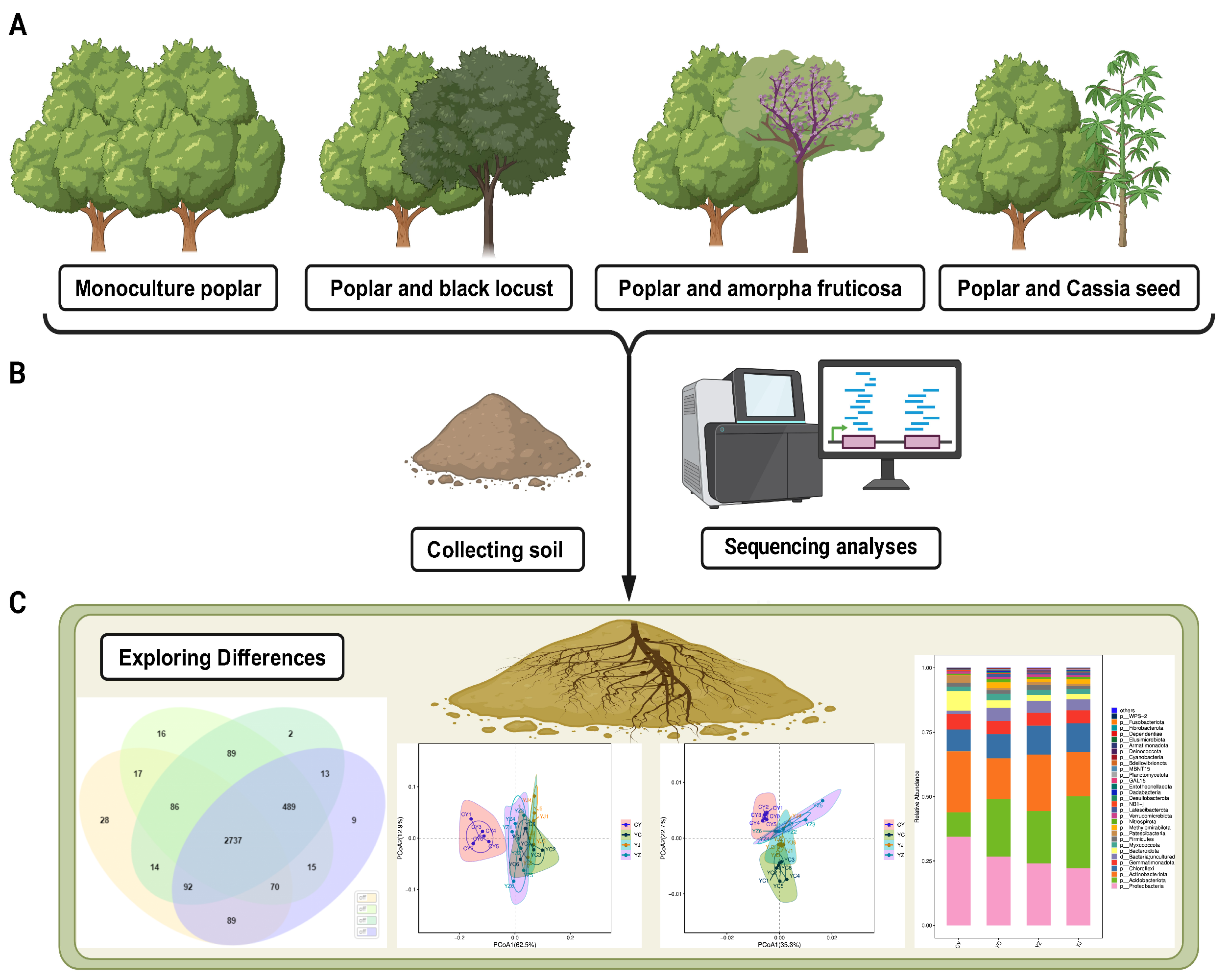
In this study, the intercropping patterns of poplar and other species in the four species of poplar, black locust, Amorpha fruticosa, and cassia seed were selected as the research objects, and the reasons for the differences in productivity under different intercropping patterns and poplar monoculture patterns were explored. By analyzing the differences in microbial diversity between intercropping and monoculture (Figure 1), the complexity of the structure of the mixed forest ecosystem was further understood to find its important potential influencing factors and provide a theoretical basis for the sustainable management and long-term productivity of mixed forests in the future.

2. Materials and Methods

2.1. Sample Collection

The poplar, black locust, cassia seed, and Amorpha fruticose studied in this experiment were planted in the state-owned Minquan Forest Farm in Shangqiu City, Henan Province (34°48′41″ N, 115°00′15″ E). The experimental area is a 30-hectare rectangular plot where trees are arranged in a rectangular grid pattern. The planting density is 3 × 12, meaning trees within the same row are spaced 3 m apart, while trees in adjacent rows are spaced 12 m apart. The local climate is a warm temperate continental monsoon. The soil consists of alluvial loamy sand formed by Yellow River deposits, primarily with sandy, sandy loam, and loamy textures, with a pH range of 7.5 to 9.0. Inter-root soil samples were taken on 30 May 2024, and the six-point zigzag sampling method was used to take the inter-root soils of the poplar monoculture area (CY), poplar and acacia intercropping area (YC), poplar and cassia intercropping area (YJ), and poplar and amorpha fruticosa intercropping area (YZ), respectively. The rhizosphere soil was collected 20 cm from the soil surface. Rhizosphere soil samples were collected at a 20 cm depth below the soil surface. At each sampling point, three subsamples were taken at 120° intervals around the tree trunk as biological replicates, then thoroughly homogenized to form a single composite sample. Each composite sample was subsequently divided equally into six aliquots to generate six replicate samples for downstream analyses. All soil samples were stored in ice packs after collection and transported to the laboratory within 12 h. A portion of the inter-root soil samples were stored at −80 °C until DNA extraction and a portion were used immediately for physico-chemical analyses.

2.2. DNA Extraction and PCR Amplification

Microbial community genomic DNA was extracted from poplar samples using a CretMag TM Power Soil DNA Kit (CretBiotech, Suzhou, China) according to the manufacturer’s instructions. The DNA extract was checked on 1% agarose gel, and DNA concentration and purity were determined with a NanoDrop 2000 UV–Vis spectrophotometer (Thermo Scientific, Wilmington, NC, USA). The hypervariable regions V3–V4 of the bacterial 16S rRNA gene were amplified with primer pairs 341F (5′-CCTAYGGGRBGCASCAG-3′) and 806R (5′-GGACTACHVGGGTWTCTAAT-3′) by an A200 PCR thermocycler (A200, Langji, Hangzhou, China). The hypervariable regions of the ITS were amplified with primer pairs ITS1F (5′-CTTGGTCATTTAGAGGAAGTAA-3′) and ITS2R (5′-GCTGCGTTCTTCATCGATGC-3′) by an A200 PCR thermocycler. The PCR amplification of the 16S rRNA gene was performed as follows: initial denaturation at 94 °C for 2 min, followed by 30 cycles of denaturing at 94 °C for 30 s, annealing at 55 °C for 30 s and extension at 72 °C for 45 s, and single extension at 72 °C for 10 min, ending at 4 °C. The PCR mixtures contain 2× ES Taq MasterMix (Dye) 25 μL, forward primer (10 μM) 2 μL, reverse primer (10 μM) 2 μL, template DNA 10 ng, and finally, ddH2O up to 50 μL. PCR reactions were performed in triplicate. The PCR product was extracted from 2% agarose gel and purified using the AxyPrep DNA Gel Extraction Kit (Axygen Biosciences, Union City, CA, USA) according to the manufacturer’s instructions and quantified using Quantus™ Fluorometer (Promega, Madison, WI, USA).

2.3. Illumina Novaseq Sequencing

Purified amplicons were pooled in equimolar and paired-end sequenced on an Illumina MiSeq PE300 platform (Illumina, San Diego, CA, USA) according to the standard protocols by Baiaoweifan Biotechnology Co., Ltd. (Wuhan, China) [28]. The raw reads were deposited into the NCBI Sequence Read Archive (SRA) database (Accession Number: PRJNA1197144).

2.4. Processing of Sequencing Data

The raw 16S rRNA gene sequencing reads were demultiplexed, quality-filtered by fastp version 0.20.0, and merged by FLASH version 1.2.7 with the following criteria: (i) The 300 bp reads were truncated at any site receiving an average quality score of <20 over a 50 bp sliding window, the truncated reads shorter than 50 bp were discarded, and reads containing ambiguous characters were also discarded. (ii) Only overlapping sequences longer than 10 bp were assembled according to their overlapped sequence. The maximum mismatch ratio of overlap region is 0.2. Reads that could not be assembled were discarded. (iii) Samples were distinguished according to the barcode and primers, and the sequence direction was adjusted, with exact barcode matching, and a maximum of 2 nucleotide mismatches in primer matching.
Operational taxonomic units (OTUs) were clustered at the 97% similarity threshold using UPARSE version 7.1; chimeric sequences were uncovered and eliminated. The taxonomy for every OTU representative sequence was assessed using RDP Classifier version 2.2 against the 16S rRNA database with a confidence level of 0.7. The test method used for α-diversity comparison was ANOVA. Following the significant results of the ANOVA, to further identify which specific pairs of groups exhibited statistical differences, we supplemented the analysis with Tukey’s HSD as a post hoc test. The statistical significance of community structure separation among different groups was tested using the PERMANOVA method, with 999 permutations performed. The PERMANOVA model was set as follows: Community distance matrix~Planting pattern.

3. Results

3.1. High-Throughput Sequencing Data and Microbial Diversity Analysis of the Two Planting Methods

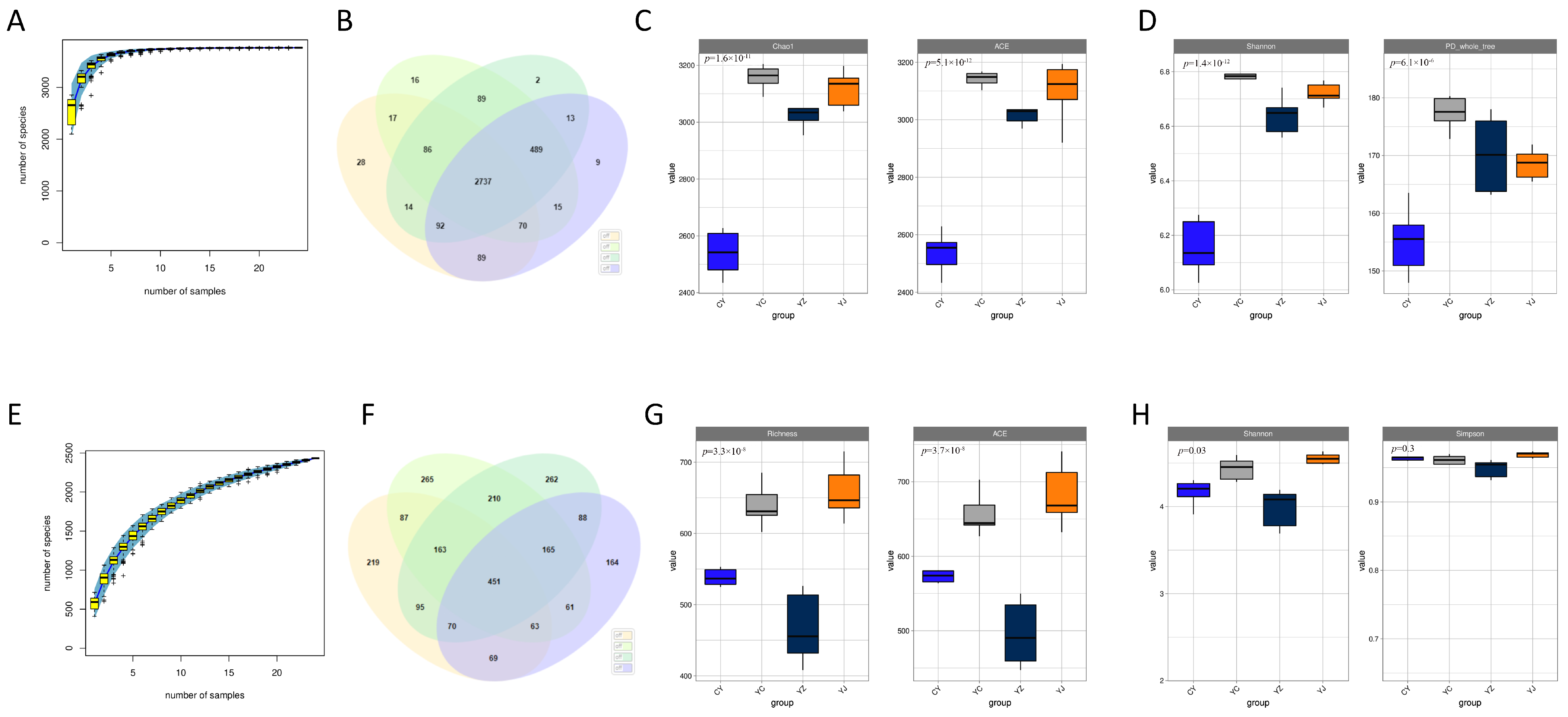
We plotted the species accumulation curves of the bacterial and fungal community sequencing results to determine whether the sample size of this study was sufficient, and estimated community richness. The results showed that when the number of samples exceeded 10, the number of identified new species basically reached the plateau, and the accumulation curve of bacteria tended to be flatter than that of fungi. In this study, 24 samples were sufficient to reflect the species composition of the community. In order to study the common and unique species among the three samples, we plotted the Venn diagram. For the bacterial community, 3766 Operational Taxonomic Units (OTUs) were generated (Figure 2B). Additionally, 2432 OTUs were generated for the fungal community (Figure 2F), and the α-diversity indices were calculated using Quantitative Insights Into Microbial Ecology (QIIME2). The Chao1 index and Abundance-based Coverage Estimator (ACE) index represented the richness of the microbial community, and the Shannon index and the PD-whole-tree index represented the diversity of the microbial community. As can be seen from the figure, the Chao1 and ACE richness indices (Figure 2C) and the diversity Shannon and PD-whole-tree indices (Figure 2D) in the monoculture poplar region were significantly lower than the three intercropping areas. In addition, the richness, ACE, and Shannon index of fungi in the intercropping combination areas were significantly higher than those in the poplar areas (Figure 2G,H); that is, the fungal richness and diversity of the three intercropping combinations were significantly higher than those in the single planted poplar areas. Community richness and diversity decreased in four combinations of poplar and black locust, poplar and cassia, poplar and amorpha fruticose, and poplar monophyte.

3.2. Community Composition and Abundance of Dominant Species Under the Two Planting Methods

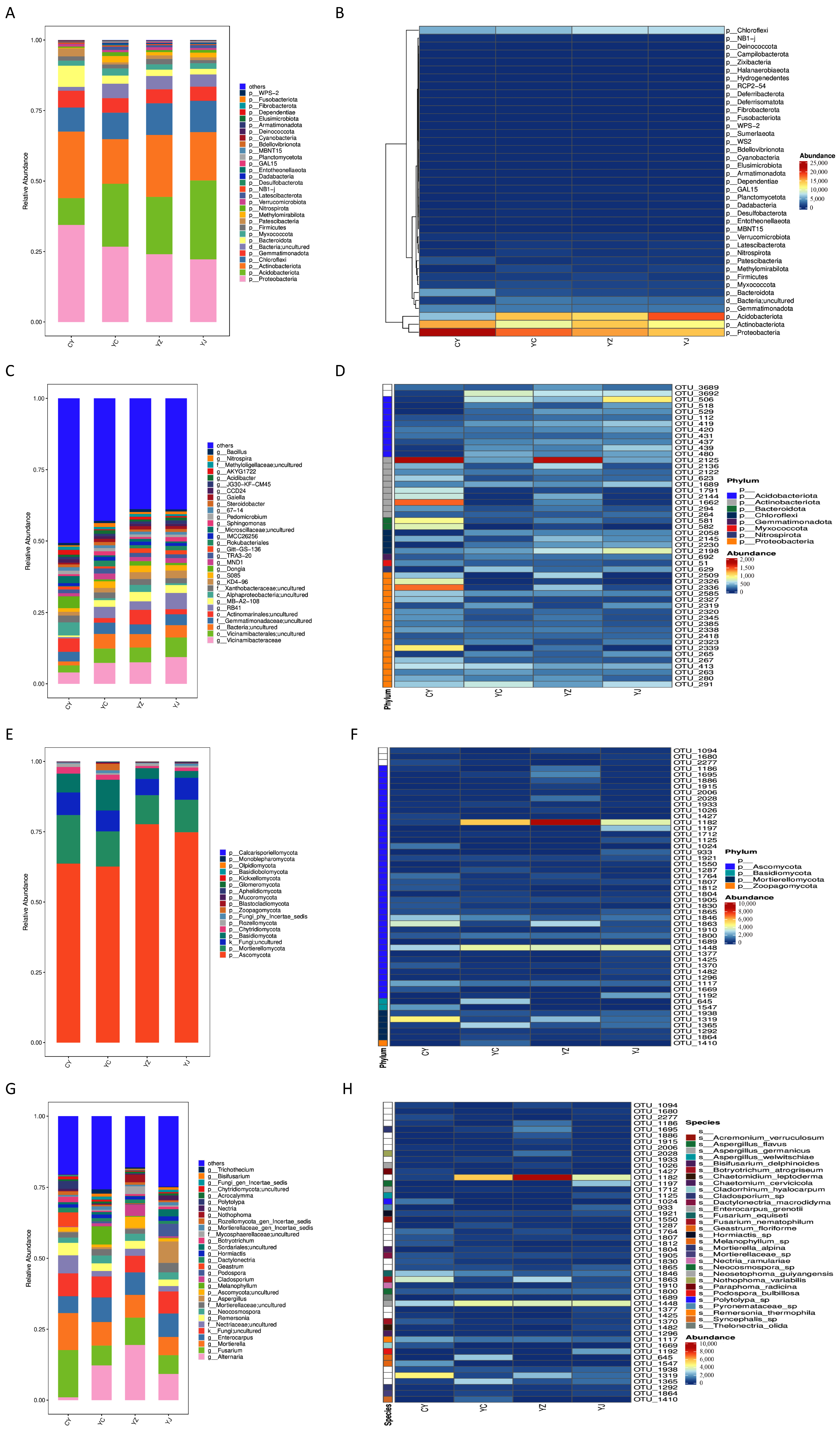
To investigate the effects of different intercropping methods on microbial communities, we compared the relative abundance of soil bacteria and fungi at the phylum and genus level (Figure 3). For the bacterial community, there were 30 bacterial phyla with a relative abundance exceeding 1% at the phylum level. The dominant phyla were Proteobacteria, Acidobacteriota, and Actinobacteria (Figure 3A). As can be seen from the heat map (Figure 3B), the relative abundance of Acidobacteriota was higher in the three intercropping regions than in the monoculture poplar areas, but that of Proteobacteria was lower than in the monoculture poplar areas. At the genus level, there were 30 bacterial genera with a relative abundance exceeding 1%. The genera with higher relative abundance are Vicinamibacteraceae and Vicinamibacterales (uncultured) (Figure 3C). As can be seen from the heat map (Figure 3D), the relative abundance of RB41 bacteria (uncultured), Vicinamibacterales (uncultured), and Vicinamibacteraceae in the three intercropping regions was higher than in the monoculture poplar regions. However, the relative abundance of Dongia and Alphaproteobacteria (uncultured) was lower than that in monoculture poplar areas. For the fungal community, there were 17 fungal phyla with relative abundance exceeding 1% at the phylum level. Among them, the dominant bacteria family is Ascomycot (Figure 3E). According to the heat map (Figure 3F), the relative abundance of Ascomycota in the intercropping areas was higher than that in the monoculture poplar areas. At the genus level, there were 30 fungal genera with a relative abundance exceeding 1%. The genera with higher relative abundance are Mortierella, Fusarium, Fungi (uncultured), Enterocarpus, and Alternaia (Figure 3G). As can be seen from the heat map (Figure 3H), the relative abundance of Enterocarpus in the three intercropping areas was higher than that in the monophyte poplar area. However, the relative abundance of Mortierella and Fusarium was lower than that in monoculture poplar areas.

3.3. Community Clustering Analysis of Microorganisms and Their Structure Between the Two Planting Methods

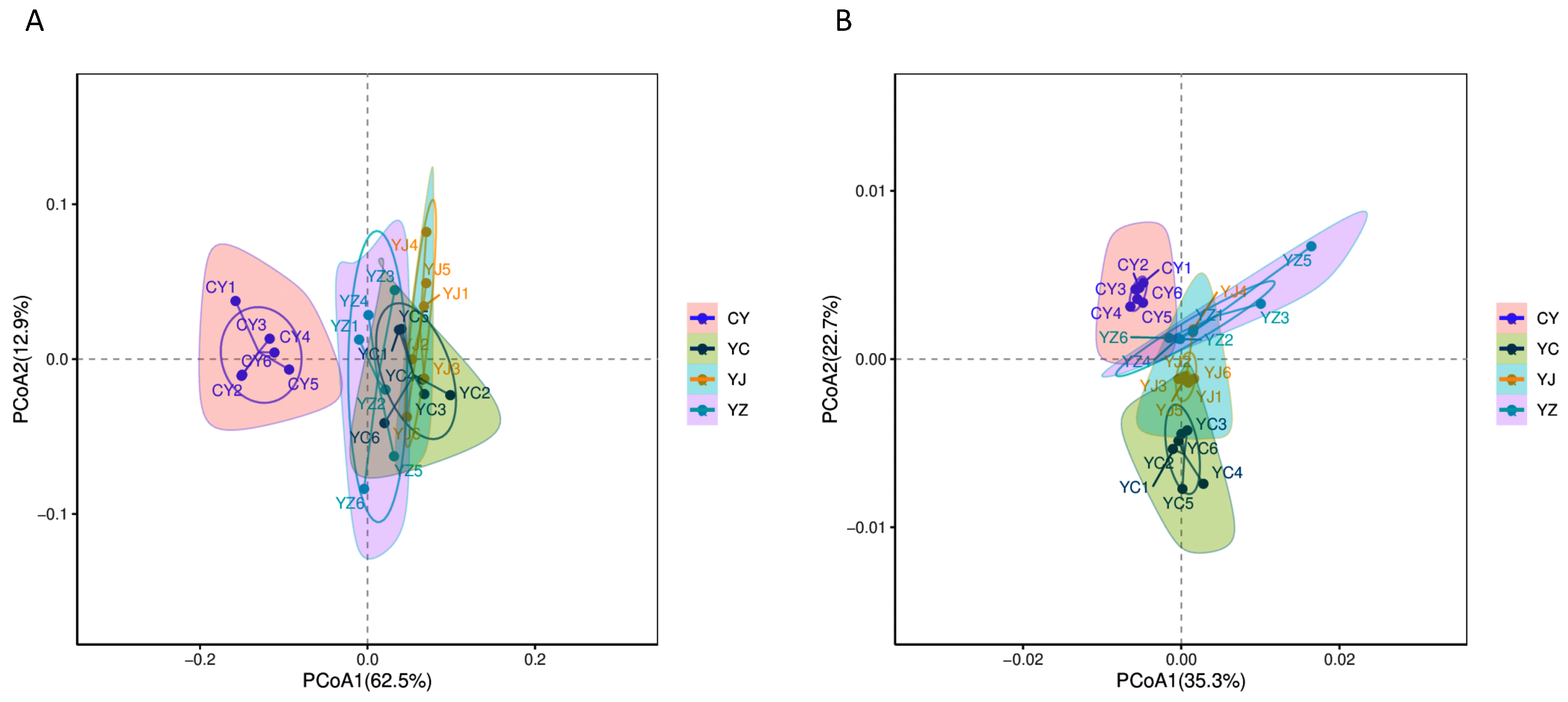
Through the principal coordinate analysis of four different soil microbial communities (Figure 4), the dimension of multidimensional soil microbial variables was reduced to two variables. For the bacterial community, the contribution of Principal Coordinates Analysis1 (PCoA 1) was 62.5%, PCoA 2 was 12.9%, and the cumulative contribution of the two was 75.4%. Figure 4A showed the distance between the soil samples of monoculture poplar and intercropping areas, indicating that the difference in bacterial community compositions between the two plots was obvious. For the fungal community, the contribution of PCoA 1 was 35.3%, PCoA 2 was 22.7%, and the cumulative contribution of the two was 58.0%. From Figure 4B, the soil samples between the monoculture poplar area and the intercropping area were far apart, indicating that the difference in fungal community compositions between the two plots was quite obvious. This was consistent with the bacterial results.

3.4. Functional Analysis of the Microbial Community Under the Two Planting Methods

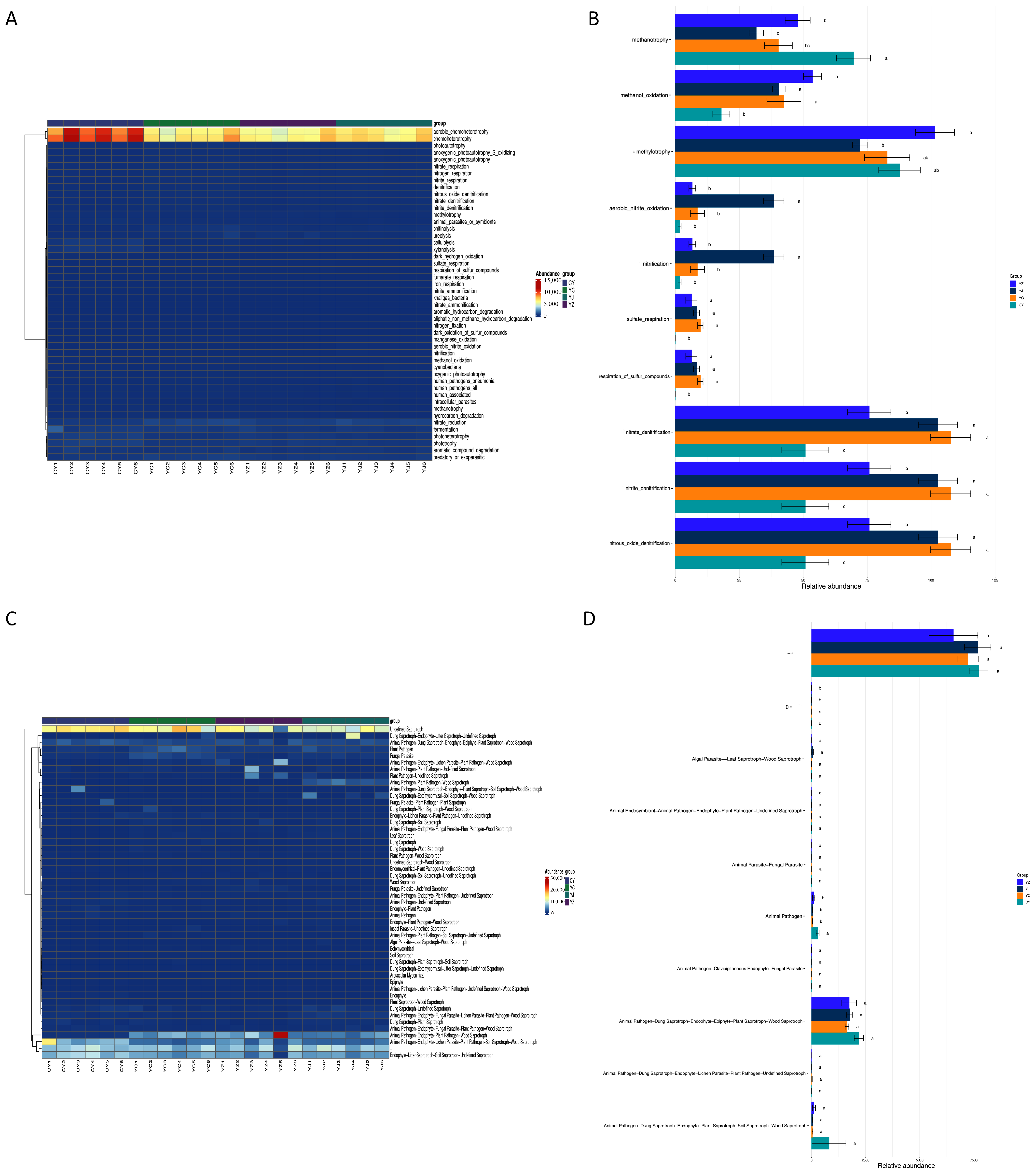
To investigate the potential changes in soil microorganisms in the three sample groups, we compared the functional abundance of bacterial and fungal communities based on a sequence analysis of 16S rRNA genes’ ITS markers. Using FAPROTAX and FUNGuild tools for predictive analysis of microbial functions provides preliminary inferences for exploring microbial community characteristics and their potential interactions with cultivation methods. For the bacterial community, we drew a heatmap of the functional abundance clustering (Figure 5A). The figure shows that biosynthesis of ansamycins has the highest functional abundance. The ANOVA analysis, based on the abundance of functional genes (Figure 5B), showed that methanol oxidation, sulfate respiration, respiration of sulfate compounds, nitrate denitrification, nitrite denitrification, and nitrous oxide denitrification have higher functional abundance than that in monoculture poplar areas. However, the functional abundance of methanotrophy was lower than that in monoculture poplar areas.
FUNGulid is a database of functional annotations of fungi that currently covers over 12,000 fungi. FUNGulid was used to predict fungal function by annotating against the structural composition of fungal communities. We analyzed the functional prediction results for the four plots using the STAMP 2.1.3 software (Figure 5C). The results showed that the undefined saprotroph had the highest functional abundance without reference information. As shown from the ANOVA analysis results (Figure 5D), the functional abundance of animal pathogens in the monoculture poplar area was higher than in the three intercropping areas. The functional abundance of the animal pathogen–dung saprotroph–endophyte–plant saprotroph–soil saprotroph–wood saprotroph group was also higher than that in the three intercropping areas, but it was not statistically significant.

4. Discussion

Poplar is widely planted in large areas in China and is one of the largest plantation species in terms of afforestation area [29]. In terms of crop planting patterns, monoculture systems tend to trigger soil microecological imbalance. For instance, continuous poplar cultivation leads to the accumulation of soil pathogens and simplification of microecological community structure, which in turn indirectly inhibits plant rhizosphere growth and reduces plant health [30]. Existing studies have shown that intercropping patterns can optimize the complex configuration of soil structure, thereby regulating the composition and quantity of rhizosphere microbial communities and enriching the dominant bacterial genera involved in multiple metabolic pathways [31]. Reasonable rotation, intercropping, and poplar management practices have been proven by relevant studies to promote poplar growth [32]. Such beneficial growth patterns may regulate the activity of soil microbial communities and might help reduce the incidence of plant diseases, although this regulatory effect lacks direct experimental data support from this study [33].

4.1. Intercropping of Poplar with Other Species Affects Soil Microbial Composition

Currently, many studies have been conducted to show that intercropping patterns can effectively use resources and enrich species diversity [34]. This was consistent with the results of this paper, which showed that all three intercropping modes of poplar and black locust, poplar and cassia seed, and poplar and amorpha fruticosa significantly increased the diversity of soil microbial communities. It has been found that the growth and development of poplar is closely related to the functional microbial community in the inter-root soil, and that the plant–root interaction interface influences pathways such as material transport in the aboveground parts [35]. Most studies have focused on the aboveground traits of poplars, with limited attention paid to belowground processes—often confined to single-factor analyses [36]. However, rhizosphere soil microorganisms play a crucial role in the process of plant growth and development, and their core functions are manifested in inhibiting the colonization of pathogens and pests, promoting plant growth and development, and enhancing plant stress resistance [37]. The α-diversity index of rhizosphere microorganisms in monoculture poplar stands was significantly lower than that in the three intercropping patterns, and this result may indicate that differences in planting patterns exert a significant regulatory effect on the diversity of rhizosphere microbial communities. The abundance, activity, and community structure of microorganisms can be used as key biological indicators for evaluating the health status of soil ecosystems [38].

4.2. Inter-Root Enrichment of Different Microorganisms Under Intercropping and Monocropping Patterns

The dominant microorganisms in the intercropping pattern were Vicinamibacterales for the bacteria and Alternaia and Enterocarpus for the fungi. Currently, studies on the interaction between microorganisms of the order Vicinamibacterales and plants are relatively scarce, while numerous relevant research reports have been published at the other levels. The Vicinamibacteraceae belongs to the phylum Acidobacteria, and the flora is suited to grow in low-nutrient and acidic soils [39,40]. Scholars have observed that Vicinamibacter (with a relative abundance of 0.80%–9.11%) is one of the dominant bacterial genera in the rhizosphere soil of notopterygium root, and its function has been confirmed to be closely related to enhancing plant stress resistance [41]. Yang et al. found that Vicinamibacter dominates the rhizosphere of cultivated Anemone altaica and accelerates nutrient uptake, and third-generation high-throughput sequencing further revealed its supremacy across four Parashorea chinensis plots [42,43,44]. This finding is consistent with the results of the present study: Vicinamibacter was identified as a dominant rhizobacterial genus across all three poplar intercropping systems. This result implies that it has strong colonization ability in diverse plant–soil environments and might indicate its potential universal role in shaping the rhizosphere microecology, and this function can be further explored through the design of targeted experiments in subsequent research. Alternaria, a fungal genus classified under the order Pleosporales [45], exhibits robust secondary metabolic activity and produces a diverse array of bioactive compounds [46]. Consistent with this metabolic versatility, Alternaria has been flagged as a biomarker taxon of nectarine phyllospheres, maintaining dominance throughout leaf ontogeny [47]. Li et al. observed that Alternaia dominated the relative abundance of Kurrer’s balsam pear rhizosphere conditions conducive to soil health [48]. This research result is consistent with previous studies: the three poplar intercropping patterns significantly increased the abundance of Alternaria fungi, and this change may reflect the regulatory effect of planting patterns on the composition of rhizosphere fungal communities. Enterocarpus, a genus belonging to the phylum Ascomycota, is a fungal group capable of degrading lignin and keratin [49]. In the intercropping pattern of poplar, Enterocarpus may assist the normal growth of the two intercropped plants by decomposing rhizosphere metabolites.
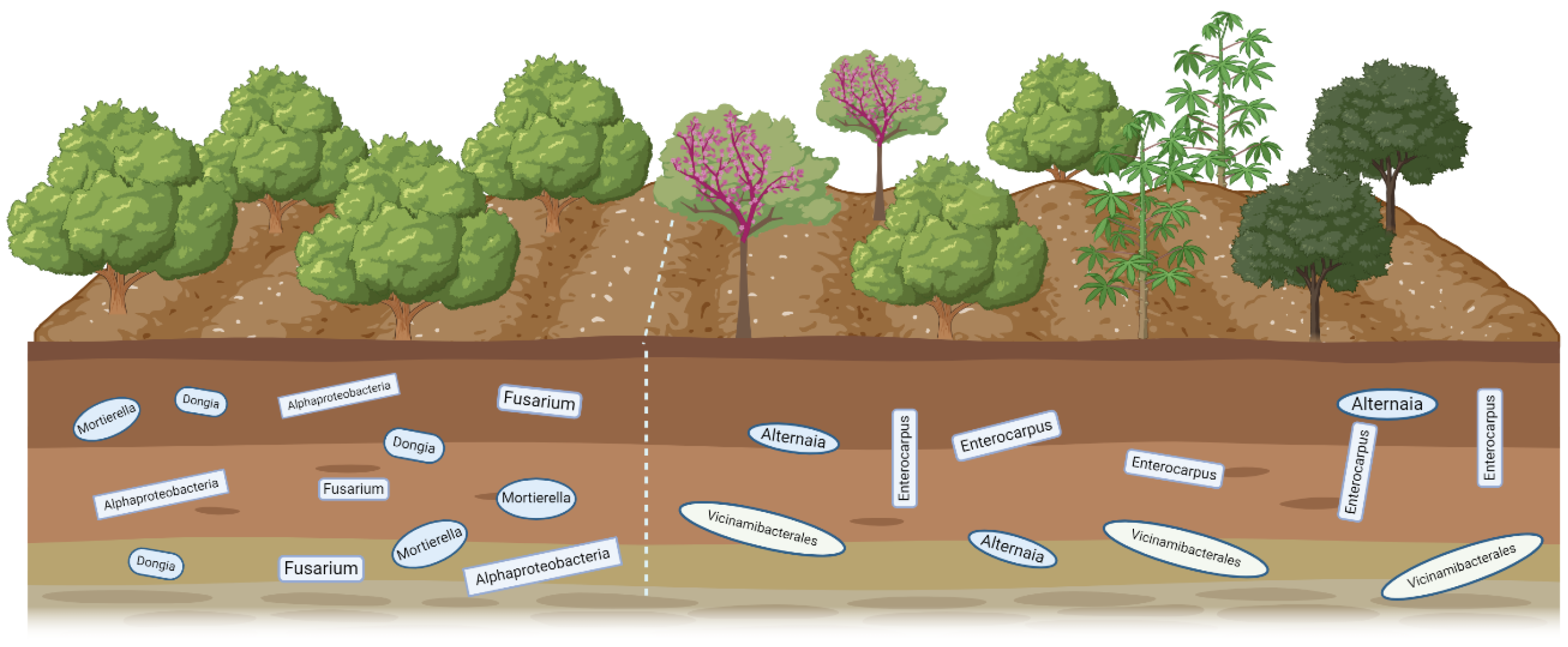
Bacteria that accumulated in large numbers in soils of monoculture poplars were Dongia and Alphaproteobacteria and the fungi were Fusarium and Mortierella. Differences in soil microbial community occurrence between monoculture and intercropping patterns of poplars (Figure 6). After the rotation of rice and ganoderma lucidum, the relative abundance of Dongia increased to a certain extent [50]. Liu et al. revealed a large aggregation of genus Dongia in the substrate of susceptible tobacco seedlings [51]. In this paper, Dongia mainly appeared in poplar monoculture areas, and the results of previous research results, preliminarily revealed the enrichment characteristics of this bacterium in different crops. With changes in the external environment, this bacterium may exhibit pathogenicity and then induce plant root diseases, and this characteristic has not been verified in this study. Alphaproteobacteria is a eutrophic flora with slow growth rate. Consistent with previous findings, the dominant colonization of Alphaproteobacteria strains is observed in the crop rhizosphere [52]. In addition, existing studies have confirmed that the decline in plant photosynthetic rate can indirectly inhibit the abundance of Alphaproteobacteria in soil [53]. This study found that Alphaproteobacteria strains dominated the rhizosphere of monocropped poplars. This not only indicates the typical association between these taxa and monoculture systems but also provides new insights into the microbial network mechanisms under long-term monoculture conditions. The lower relative abundance of Fusarium in intercropping areas may reduce the exposure of plants to pathogens. Fusarium can infect more than 100 plant species, including tomato, eggplant, wheat, and rice [54], and their pathogenic mechanisms toward different crops mainly involve the destruction of plant cell structures and the secretion of phytotoxins [55,56]. As alfalfa expands, Fusarium—already implicated as the dominant agents of alfalfa root rot [57]—have been shown to monopolize pathogenicity, with Luo et al. recovering exclusively Fusarium isolates from 19 symptomatic chrysanthemum stems [58]. Mortierella belongs to the family Mortierellaceae of the order Mortierellales under the phylum Zygomycota [59]. There was no conclusion yet on how Mortierella, which was extensively enriched in poplar areas, played a role in influencing rhizosphere microbial activity and composition. Wang et al. identified the co-dominance of Mortierella and Fusarium in Qiangwu rhizosphere soil as a potential root-rot driver [41], and He et al. subsequently showed that a composite microbial inoculant selectively suppresses Mortierella abundance [60]. Vélez et al. suggested that pathogenic strains of Mortierella can cause ligamentous necrosis, chlorosis, and leaf drying in trees, and may play an important role in tree decline [61]. The dominant microorganism in the roots of Panax pseudoginseng yellow rot plants was Mortierella, which may act as a pathogen to cause root rot in crops [62]. Mortierella sometimes act as pathogens causing inter-root disease in plants and damaging above ground growth.

4.3. Differences in the Functions Performed by Microorganisms in the Two Cropping Patterns

Soil microorganisms influence their own biochemical processes such as life activities and energy metabolism by changing community structure, species composition [63]. Ansamycins are a class of structurally complex macrolide antibiotics, most of which are derived from microorganisms and exhibit potent biological activities [64,65]. The high-abundance ansamycin signals detected in the rhizosphere soils of both monocropped and intercropped poplars indicate that poplar roots may either secrete specific metabolites or assemble microbial consortia whose constituent taxa are preconditioned for de novo ansamycin biosynthesis. Our research results preliminarily indicate that redox-driven microbial metabolism varies across compartments, with methanol oxidation markedly intensified in the intercropped rhizosphere, a finding based on the detection data of this study. Methanol is primarily derived from the demethylation of pectin in plant cell walls [66]. Methylotrophic bacteria in plant microbial communities can significantly enhance the host’s carbon source utilization efficiency [67,68]; exogenous methanol can also induce the expression of formate dehydrogenase and pectin methylesterase genes, thereby regulating plant stress resistance and growth [69,70]. Bacterial exertion of methanol oxidation reactions in soil may promote poplar growth and influence secondary metabolites through multiple mechanisms of action, among other processes. Furthermore, the dissimilatory sulfate reduction pathway was significantly enriched in the rhizosphere soil of intercropped poplars. Previous studies have confirmed that sulfate respiration is a key microbial anaerobic metabolic process, in which microorganisms utilize sulfate as an electron acceptor to decompose organic matter into carbon dioxide [71]. This process not only drives the sulfur cycle but also couples with other elemental cycles, playing a vital role in maintaining habitat stability and health [72]. In addition, redox reactions with high functional abundance in poplar intercropping areas include nitrate denitrification, nitrite denitrification, nitrous oxide denitrification, and nitrous oxide denitrification. Nitrification and denitrification are core processes of the nitrogen cycle: the former converts ammonium nitrogen into plant-available nitrate nitrogen, while the latter produces nitrous oxide, a potent greenhouse gas [73]. The methanotrophy pathway involved in microorganisms mainly occurred in monoculture poplar areas. It has been shown that methane in the soil can be converted to methanol, formaldehyde, and formic acid, among others, and ultimately emitted as carbon dioxide in the atmosphere [74].

4.4. Community Microbiological Differences in Different Intercropping Combinations

Based on Illumina MiSeq high-throughput sequencing technology, the soil microbial community structure under four planting patterns (monocropped poplar, poplar/amorpha fruticosa intercropping, poplar/black locust intercropping and poplar/cassia seed intercropping) was analyzed in this study. The results showed that the species richness of soil microorganisms in intercropping systems was significantly higher than that in monocropping systems, with a decreasing trend observed among the three intercropping patterns. The highest was between poplar and black locust intercropping, followed by poplar and cassia seed, and the lowest was poplar and amorpha fruticosa. There was consistency in the types of microorganisms found within the three areas, but there were differences in the amount of species composition. He et al. [75] found that black locust intercropping, compared with monocropping, allocates more newly synthesized beneficial metabolites to roots and releases it into the rhizosphere in the form of exudates. In their subsequent study [76], they further found that this intercropping pattern significantly increases rhizobacterial diversity and the abundance of beneficial microbes, while reducing the incidence of soft rot. This is consistent with the conclusion of the present study that poplar and black locust intercropping enhances rhizosphere microbial diversity. Soil microorganisms in areas where poplars were planted singly show a tendency to shift from bacterial to fungal types, but there were no studies to clarify the reasons for the differences in the intercropping of these three plants with poplars, which inspired researchers to conduct more in-depth studies.

5. Conclusions

In this study, the effects of intercropping poplar with different tree species on soil microbial community structure were analyzed by Illumina Miseq high-throughput sequencing technology, and it was found that the intercropping pattern significantly increased the α-diversity index of soil microorganisms, and, in particular, the highest species richness was found in the intercropping of poplar with black locust. The dominant microorganisms in the intercropping pattern were Vicinamibacterales, and the fungi were Alternaia and Enterocarpus, while the dominant microorganisms in the monocropped poplar area were Dongia and Alphaproteobacteria, and the fungi were Fusarium and Mortierella function. The predicted results showed that the functional abundance of methanol oxidation and sulphate respiration was higher in the intercropped area than in the monocropped poplar area, while the functional abundance of methanotrophic functions was lower than in the monocropped area. Among the fungal communities, the functional abundance of zoopathogenic bacteria and zoopathogenic bacteria–fecal saprophytes–endophytes–plant saprophytes–soil saprophytes–wood saprophytes was higher in the monocropping poplar area than in the three intercropping areas. In summary, the intercropping pattern of poplar and other tree species can not only make full use of spatial resources, but also improve species richness, which is expected to solve the problems of long tree growth cycle and low benefits caused by long-term monocropping and provide theoretical basis for further improving income of forest land.
This study has limitations in experimental design; constraints of sampling scope, sample replicates, and observation period may affect the generalizability of conclusions and revelation of long-term evolutionary patterns to some extent. Microbial functional differences are only based on bioinformatics predictions from high-throughput sequencing data, lacking direct verification, which affects the rigor of functional association speculation. Subsequent studies can expand the sampling scope, extend the observation period, and combine functional verification experiments to improve data support, thus enhancing the scientificity and generalizability of conclusions.

Author Contributions

H.Y. grew the plants and collected the soil materials. All authors (H.Y., Q.W., R.W., Z.Z., X.L., L.F. and L.T.) contributed to the experimental design and to the preparation of the manuscript. All authors have read and agreed to the published version of the manuscript.

Funding

This research was funded by the Henan Science and Technology Forest Project (YLK202503) and National Key Research and Development Program of China (2021YFD2201202) and Basic Research Fund project of Henan Academy of Forestry (2022JB01006).

Data Availability Statement

All raw sequence data have been made available in the NCBI Sequence Read Archive (SRA) database under the bioproject accession number PRJNA1197144.

Conflicts of Interest

The authors declare no conflicts of interest.

References

  1. Zhang, F.S.; Chen, X.P.; Vitousek, P. An experiment for the world. Nature 2013, 497, 33–35. [Google Scholar] [CrossRef]
  2. Garrett, H.E.G.; Buck, L. Agroforestry practice and policy in the United States of America. For. Ecol. Manag. 1997, 91, 5–15. [Google Scholar] [CrossRef]
  3. Callaway, R.M. Positive interactions in plant communities and the individualistic-continuum concept. Oecologia 1997, 112, 143–149. [Google Scholar] [CrossRef] [PubMed]
  4. Callaway, R.M.; Walker, L.R. Competition and facilitation: A synthetic approach to interactions in plant communities. Ecology 1997, 78, 1958–1965. [Google Scholar] [CrossRef]
  5. Zhang, Y.H. Study on the cultivation of large-diameter poplar and the application of intercropping technology under forest. Agric. Technol. 2021, 41, 91–93. [Google Scholar]
  6. Huang, G.W.; Zhang, Y.D.; Fan, X.P.; Zhang, X.Y.; Xing, J.H. High-efficiency cultivation technology of large-diameter poplar in Jianghan Plain. Hubei For. Sci. Technol. 2021, 50, 82–86. [Google Scholar]
  7. Wu, Q.F.; Wang, J.S.; Lu, Z.F. Research progress of poplar plantation degradation and recovery. Chin. Agric. Sci. Bull. 2015, 31, 1–6. [Google Scholar]
  8. Su, H.; Zhang, R.P.; Wu, S.X.; Yao, H.Y.; Li, Y.Y. Mechanisms of Continuous Cropping Obstacles and Current Situation of Prevention and Control. Soils 2024, 56, 242–254. [Google Scholar]
  9. Lu, Q.; Zhang, J.C.; Meng, M.J. Bioassay for inhibitory autotoxicity of rhizosphere soil under long-term successive monoculture poplar plantations. Acta Ecol. Sin. 2017, 37, 4053–4060. [Google Scholar] [CrossRef]
  10. Wang, F.; Wang, J.G. Study on the effect of continuous cropping on the growth of eggplant seedlings. Chin. J. Eco-Agric. 2005, 1, 85–87. [Google Scholar]
  11. Chen, H.Y.; Li, X.M.; Wang, J.G. Change of microflora in the rhizoplane and rhizosphere of different disease resistance soybean cultivars II. J. Plant Nutr. Fertil. 2006, 12, 104–108. [Google Scholar]
  12. Wu, H.S.; Yin, X.M.; Liu, D.Y.; Ling, N.; Bao, W.; Ying, R.R.; Zhu, Y.Y.; Guo, S.W.; Shen, Q.R. Inhibition of root cell transmembrane potential and leaf anti-stress enzymes of watermelon seedlings by fusaric acid. Sci. Agric. Sin. 2008, 41, 2641–2650. [Google Scholar]
  13. Liu, F.D.; Jiang, Y.Z.; Wang, H.T.; Wang, Y.; Kong, L.G. Soil Productivity Maintenance Technique of Poplar Plantation under Continuous Cropping. For. Sci. 2007, S1, 58–64. [Google Scholar]
  14. Ou, Y.Z.L.; Jia, X.L.; Shi, J.Z.; Wei, M.Q.; Teng, W.C. Research progress on effects of intercropping on crops, soils and microorganisms. Jiangsu Agric. Sci. 2024, 52, 18–30. [Google Scholar]
  15. Wu, W.G.; Guo, B.S.; Dong, S.B.; Wan, Z.P.; Liu, Z.G. Research on the mixed production afforestation technology of poplar in low wetland. For. Pract. Technol. 1998, 8, 13–16. [Google Scholar]
  16. Wu, J.X. Research on afforestation technology of poplar acacia mixed forest. Henan For. Sci. Technol. 2009, 29, 33–34. [Google Scholar]
  17. Wang, P.; Zhu, L.X.; Chen, X.X.; Feng, H.; Sun, W.S.; Qin, N. Effects of Platycodon grandiflorum and Allium fistulosum intercropping on soil nutrients, microrganism and enzyme activity. J. Plant Nutr. Fert. Sci. 2018, 24, 668–675. [Google Scholar]
  18. Mantovani, D.; Veste, M.; Boldt-Burisch, K.; Fritsch, S.; Koning, L.A.; Freese, D. Carbon allocation, nodulation, and biological nitrogen fixation of black locust (Robinia pseudoacacia L.) under soil water limitation. Ann. For. Res. 2015, 58, 259–274. [Google Scholar] [CrossRef]
  19. Forrester, D.I.; Bauhus, H.; Cowie, A.L. On the success and failure of mixed-species tree plantations: Lessons learned from a model system of Eucalyptus globulus and Acacia mearnsii. For. Ecol. 2005, 209, 147–155. [Google Scholar] [CrossRef]
  20. Marron, N.; Priault, P.; Gana, C.; Gérant, D.; Epron, D. Prevalence of interspecific competition in a mixed poplar/black locust plantation under adverse climate conditions. Ann. For. Sci. 2018, 75, 23. [Google Scholar] [CrossRef]
  21. Wang, S.M.; Pang, Y.X.; Song, A.Y.; Cao, B.H.; Zhu, Z.B.; Li, Y.Y. Soil physiochemical properties and diversity of herbaceous plants dynamic on the different ages mixed forests of Populus × euramercana ‘Neva’ and Robinia pseucdoacacia in coastal saline-alkali area. Acta Ecol. Sin. 2018, 38, 6539–6548. [Google Scholar]
  22. Bai, W.Q.; Li, Z.C.; Chen, L.L.; Xu, M.Y.; Tang, X.M. Amorpha fruticosa and poplar mixed and its comprehensive utilization. Ningxia Agric. Sci. Technol. 1986, 5, 27–29. [Google Scholar]
  23. Chen, J.Y.; Qi, P.H. Analysis on the mixed benefit of poplar and amorpha fruticose. J. Jiangsu For. Sci. Technol. 1993, 3, 28–30. [Google Scholar]
  24. Xue, L. Effects of mixed species on the growth of populus. Agric. Technol. Equip. 2024, 4, 122–123. [Google Scholar]
  25. Sun, C.L.; Zhu, Z.X.; Wang, Z.; Tong, C.R. Study on soil fertility degradation and its maintenance and improvement techniques in poplar plantations. For. Sci. 1995, 31, 506–512. [Google Scholar]
  26. Zhang, C.P.; He, P.; Du, D.D.; Yu, Z.L.; Wei, P.X.; Hu, S.J. Study on hardness and germination characteristic of Cassia obtusifolia seeds. Chin. Chin. Tradit. Herb. Drugs 2010, 41, 1700–1704. [Google Scholar]
  27. Luo, C.B.; Fang, S.Z.; Sun, Q.X.; Tang, L.Z.; Tian, Y. Analysis of allelopathic effects in poplar-Juemingzi agroforestry system. J. Nanjing For. Univ. 2009, 33, 9–12. [Google Scholar]
  28. Illumina Inc. Shotgun Metagenomics on the NovaSeq™ 6000 System Using 2 × 250 bp Sequencing (Application Note, Document # 770-2019-010); Illumina Inc.: San Diego, CA, USA, 2019. [Google Scholar]
  29. Liu, S.S.; Huang, X.Y.; Peng, Z.W.; Lin, W.K.; Zhao, S.; Wu, Y.F.; Chen, Y.L.; Xue, X.H.; Wang, C.G. Spatio-temporal analysis of forestation area changes in China (1991–2014). J. Glob. Change Data Discov. 2021, 5, 37–44+150–157. [Google Scholar] [CrossRef]
  30. Jia, J.; Hu, G.; Ni, G.; Xie, M.; Li, R.; Wang, G.; Zhang, J. Bacteria drive soil multifunctionality while fungi are effective only at low pathogen abundance. Sci. Total Environ. 2024, 906, 167596. [Google Scholar] [CrossRef]
  31. Zhang, S.; Li, S.; Meng, L.; Liu, X.; Zhang, Y.; Zhao, S.; Zhao, H. Root exudation under maize/soybean intercropping system mediates the arbuscular mycorrhizal fungi diversity and improves the plant growth. Front. Plant Sci. 2024, 15, 1375194. [Google Scholar] [CrossRef]
  32. Brooker, R.W.; George, T.S.; Homulle, Z.; Karley, A.J.; Newton, A.C.; Pakeman, R.J.; Schöb, C. Facilitation and biodiversity–ecosystem function relationships in crop production systems and their role in sustainable farming. J. Ecol. 2021, 109, 2054–2067. [Google Scholar] [CrossRef]
  33. Chen, Y.; Bonkowski, M.; Shen, Y.; Griffiths, B.S.; Jiang, Y.; Wang, X.; Sun, B. Root ethylene mediates rhizosphere microbial community reconstruction when chemically detecting cyanide produced by neighbouring plants. Microbiome 2020, 8, 4. [Google Scholar] [CrossRef]
  34. Reiss, E.R.; Drinkwater, L.E. Cultivar mixtures: A meta-analysis of the effect of intraspecific diversity on crop yield. Ecol. Appl. 2018, 28, 62–77. [Google Scholar] [CrossRef] [PubMed]
  35. Song, Y.; Li, X.; Yao, S.; Yang, X.; Jiang, X. Correlations between soil metabolomics and bacterial community structures in the pepper rhizosphere under plastic greenhouse cultivation. Sci. Total Environ. 2020, 728, 138439. [Google Scholar] [CrossRef] [PubMed]
  36. Xing, M.; Wang, Q.; Li, X.; Li, Y.; Zhou, X. Selection of keystone species based on stable carbon and nitrogen isotopes to construct a typical food web on the shore of Xingkai Lake, China. Ecol. Indic. 2021, 132, 108263. [Google Scholar] [CrossRef]
  37. Gupta, R.; Keppanan, R.; Leibman-Markus, M.; Rav-David, D.; Elad, Y.; Ment, D.; Bar, M. The Entomopathogenic fungi Metarhizium brunneum and Beauveria bassiana promote systemic immunity and confer resistance to a broad range of pests and pathogens in tomato. Phytopathology 2022, 112, 784–793. [Google Scholar] [CrossRef]
  38. Mayer, M.; Rewald, B.; Matthews, B.; Sandén, H.; Rosinger, C.; Katzensteiner, K.; Gorfer, M.; Berger, H.; Tallian, C.; Berger, T.W.; et al. Soil fertility relates to fungal-mediated decomposition and organic matter turnover in a temperate mountain forest. New Phytol. 2021, 231, 777–790. [Google Scholar] [CrossRef]
  39. Huber, K.J.; Overmann, J. Vicinamibacteraceae fam. nov., the first described family within the subdivision 6 Acidobacteria. Int. J. Syst. Evol. Microbiol. 2018, 68, 2331–2334. [Google Scholar] [CrossRef]
  40. Jin, Q.; Zhang, Y.; Wang, Q.; Li, M.; Sun, H.; Liu, N.; Zhang, L.; Zhang, Y.; Liu, Z. Effects of potassium fulvic acid and potassium humate on microbial biodiversity in bulk soil and rhizosphere soil of Panax ginseng. Microbiol. Res. 2022, 254, 126914. [Google Scholar] [CrossRef]
  41. Wang, H.L.; Zhu, W.T.; Fang, C.J. Characteristics of rhizosphere soil microbial community structure and its effects on secondary metabolites of Notopterygium incisum. J. Anhui Agric. Sci. 2023, 51, 173–178. [Google Scholar] [CrossRef]
  42. Yang, F.J.; Wang, W.Q.; Wu, Z.W.; Xu, H.D.; Ge, M.Q.; Li, S.Y.; Li, X.D.; Zhang, Y.X.; Chuan, H.W. Effects of soil nutrient and measurementratio on bacterial community structure in Fujian Tea Garden. J. Soil Water Conserv. 2023, 37, 209–218. [Google Scholar] [CrossRef]
  43. Wang, J.; Zhang, H.P.; Su, X.; Fu, Q.J.; Li, X.B.; Liu, F.Q.; Shao, Y.Z.; Chen, Y.; Zhi, L.Y. Microbial diversity in rhizosphere soil of Anemone altaica. Guihaia 2023, 43, 1467–1477. [Google Scholar] [CrossRef]
  44. Lu, Y.S.; Huang, X.G.; Yang, S.X.; Huang, L.D.; Zhao, J.W.; Li, F.J. Soil bacterial community diversity under mangifera persiciformis in Guangxi. J. Zhejiang For. Sci. Technol. 2022, 42, 16–23. [Google Scholar]
  45. Zhou, S.T.; Ren, B.Y.; Li, Y.K.; Yi, Y.; Tang, M. Research progress on pathogenic mechanism, control measures and utilization of Alternaria alternata. Mol. Plant Breed. 2025, 23, 782–791. [Google Scholar] [CrossRef]
  46. Qin, F.F.; Jie, Z. Research progress of active secondary metabolites with exploitation potential from Alternaria sp. Nat. Prod. Res. Dev. 2024, 1–23. Available online: https://link.cnki.net/urlid/51.1335.q.20241113.0904.002 (accessed on 26 January 2026).
  47. Li, M.Z.; Liang, P.; Kang, L.P.; Li, C.; Bai, K.; Mao, Y.Q.; Huang, X.Z. Correlation analysis of endophytes of Ailanthus mayicus with their key secondary metabolites. World Sci. Technol. Mod. Chin. Med. 2024, 26, 2175–2186. [Google Scholar]
  48. Li, W.; Huang, Z.; Xie, W.G.; Zhang, X.Y.; Feng, L.; Xu, Q.; Zhong, P.C. The effect of nitrogen application on the soil fungal community of Korla fragrant pear orchard. Soil Fertil. Sci. China 2024, 6, 56–69. [Google Scholar]
  49. Li, M.; Hu, Y.; Huang, X.M.; Zhang, Q.M.; Chun, Y. Effect of biological carbon on nutrient and bacterial communities of rhizosphere soil of facility cucumber. Trans. Chin. Soc. Agric. Mach. 2016, 47, 172–178. [Google Scholar] [CrossRef]
  50. Zhu, S.J.; Luo, Y.J.; Jin, S.Q.; Zhou, J.B.; Feng, W. Succession of soil microbial community in ganoderma iucidum-rice rotation system. Chin. Agric. Sci. Bull. 2024, 40, 39–46. [Google Scholar]
  51. Liu, T.T.; Li, W.H.; Wang, H.C.; Cai, L.T.; Zhang, C.Q.; Mu, Q. Microbial community structure and diversity in rhizosphere substrate of diseased and healthy tobacco seedlings. Guizhou Agric. Sci. 2022, 50, 86–96. [Google Scholar] [CrossRef]
  52. Dai, Z.; Su, W.; Chen, H.; Barberán, A.; Zhao, H.; Yu, M.; Yu, L.; Brookes, P.C.; Schadt, C.W.; Chang, S.X.; et al. Long-term nitrogen fertilization decreases bacterial diversity and favors the growth of Actinobacteria and Proteobacteria in agro-ecosystems across the globe. Glob. Change Biol. 2018, 24, 3452–3461. [Google Scholar] [CrossRef]
  53. Xia, L.; Lam, S.K.; Kiese, R.; Chen, D.; Luo, Y.; van Groenigen, K.J.; Ainsworth, E.A.; Chen, J.; Liu, S.; Ma, L.; et al. Elevated CO2 negates O3 impacts on terrestrial carbon and nitrogen cycles. One Earth 2021, 4, 1752–1763. [Google Scholar] [CrossRef]
  54. Zhuo, M.X.; Liu, S.W.; Li, C.Y.; Wei, R.H. Research grogress on Fusarium Mycotoxins in plant and pathogen interactions. Guangdong Agric. Sci. 2024, 51, 56–69. [Google Scholar] [CrossRef]
  55. Dean, R.; Van Kan, J.A.; Pretorius, Z.A.; Hammond-Kosack, K.E.; Di Pietro, A.; Spanu, P.D.; Rudd, J.J.; Dickman, M.; Kahmann, R.; Ellis, J.; et al. The top 10 fungal pathogens in molecular plant pathology. Mol. Plant Pathol. 2012, 13, 414–430. [Google Scholar] [CrossRef] [PubMed]
  56. Li, M.H.; Yuan, M.L.; Jiang, Z.D.; Hua, P.L. Research progress in pathogenic mechanism of Fusarium oxysporum f. sp. cubense. J. Fruit Sci. 2019, 36, 803–811. [Google Scholar] [CrossRef]
  57. Fang, X.L.; Zhang, C.X.; Zhi, B.N. Research advances in Fusarium root rot of alfalfa (Medicago sativa). Acta Prataculturae Sin. 2019, 28, 169–183. [Google Scholar] [CrossRef]
  58. Luo, M.X.; Jiang, Y.F.; HE, Y.F.; Fang, W.M.; Chen, F.D.; Guan, Z.Y.; Liu, Y. Isolation and identification of pathogen lead to stem rot at chrysanthemum morifolium. J. Nanjing Agric. Univ. 2025, 4, 812–822. [Google Scholar] [CrossRef]
  59. Si, Y.K. Mechanism and Application of Mortierella Fungi Mediating the Formation of Fluvo-Aquic Soil Aggregates and Phosphorus Turnover. Master’s Thesis, Henan Agricultural University, Zhengzhou, China, 2024. [Google Scholar]
  60. He, F.; Zhao, R.; Huangn, W.F.; Zhang, Q.Y.; Shi, M.T.; Wu, Y.T.; Ya, W. Rhizosphere complex microbial agent of Dicranopteris dichotoma regulates the growth and rhizosphere microbial community of mung bean seedlings. Microbiol. Bull. 2024, 52, 1073–1088. [Google Scholar] [CrossRef]
  61. Vélez, M.L.; Marfetán, J.A.; Salomón, M.E.S.; Taccari, L.E. Mortierella species from declining Araucaria araucana trees in Patagonia, Argentina. For. Pathol. 2020, 50, e12591. [Google Scholar] [CrossRef]
  62. Ding, Z.Y.; Zhao, X.Q.; Ning, L. Microbial community structure and diversity in rhizosphere and roots of healthy and poot rot Panax notoginseng. J. Anhui Agric. Sci. 2024, 52, 151–157. [Google Scholar]
  63. He, M.; Fang, K.; Chen, L.; Feng, X.; Qin, S.; Kou, D.; He, H.; Liang, C.; Yang, Y. Depth-dependent drivers of soil microbial necromass carbon across Tibetan alpine grasslands. Glob. Change Biol. 2022, 28, 936–949. [Google Scholar] [CrossRef]
  64. Niu, S.N.; Hao, X.W.; Chun, H.L.; Most, L.; Yue, M.S. Ansamycins produced by Streptomyces sp. LZ35. Chin. Pharm. J. 2011, 46, 1317–1320. [Google Scholar]
  65. Ikeda, H.; Hideshima, T.; Fulciniti, M.; Lutz, R.J.; Yasui, H.; Okawa, Y.; Kiziltepe, T.; Vallet, S.; Pozzi, S.; Santo, L.; et al. The monoclonal antibody nBT062 conjugated to cytotoxic Maytansinoids has selective cytotoxicity against CD138-positive multiple myeloma cells in vitro and in vivo. Clin. Cancer Res. 2009, 15, 4028–4037. [Google Scholar] [CrossRef] [PubMed]
  66. Macey, M.C.; Pratscher, J.; Crombie, A.T.; Murrell, J.C. Impact of plants on the diversity and activity of methylotrophs in soil. Microbiome 2020, 8, 31. [Google Scholar] [CrossRef] [PubMed]
  67. Delmotte, N.; Knief, C.; Chaffron, S.; Innerebner, G.; Roschitzki, B.; Schlapbach, R.; von Mering, C.; Vorholt, J. A community proteogenomics reveals insights into the physiology of phyllosphere bacteria. Proc. Natl. Acad. Sci. USA 2009, 106, 16428–16433. [Google Scholar] [CrossRef]
  68. Remus-Emsermann, M.N.; Lücker, S.; Müller, D.B.; Potthoff, E.; Daims, H.; Vorholt, J.A. Spatial distribution analyses of natural phyllosphere-colonizing bacteria on Arabidopsis thaliana revealed by fluorescence in situ hybridization. Environ. Microbiol. 2014, 16, 2329–2340. [Google Scholar] [CrossRef]
  69. Saadpanah, A.; Rokhzadi, A.; Mohammadi, K. Growth response of soybean to the application of Bradyrhizobium japonicum and foliar methanol spraying in field conditions. Int. J. Biosci. 2013, 3, 128–134. [Google Scholar]
  70. Wu, K.H.; Tan, H.; Wang, Q.F.; Zhao, Y.; Li, K.Z.; Yu, Y.X.; Chen, L.M. Effects of foliar methanol application on growth and physiological characteris-tics of Tamba black soybean grown in different soil. Soybean Sci. 2012, 31, 431–435. [Google Scholar]
  71. Ferreira, T.O.; Otero, X.L.; Vidal-Torrado, P.; Macías, F. Effects of bioturbation by root and crab activity on iron and sulfur biogeochemistry in mangrove substrate. Geoderma 2007, 142, 36–46. [Google Scholar] [CrossRef]
  72. Mao, L.; Sun, Z.G.; Chen, B.B.; Hu, X.Y.; Wu, H.H. Sulfur oxidation⁃reduction process and its coupling effects with other elements in marsh soil: A review. Chin. J. Appl. Ecol. 2022, 33, 560–568. [Google Scholar]
  73. Liu, T.; Zhang, X.; Shen, A.L.; Su, Y. Effects of biodenitrification inhibitors on soil nitrogen transformation and plant growth. J. Plant Nutr. Fertil. 2023, 29, 1556–1562. [Google Scholar]
  74. Zhou, X.; Smaill, S.J.; Gu, X.; Clinton, P.W. Manipulation of soil methane oxidation under drought stress. Sci. Total Environ. 2021, 757, 144089. [Google Scholar] [CrossRef]
  75. He, F.; Li, C.; Lu, X.M.; Wang, Y.; Wang, M.; Ruan, J.; Wei, M.L.; Ma, X.G.; Wang, Z.; Jiang, H. Carbon transport and phosphorus uptake in an intercropping system of Robinia pseudoacacia and Amorphophallus konjac mediated by arbuscular mycorrhizal hyphal networks. Chin. J. Plant Ecol. 2023, 47, 782–791. [Google Scholar] [CrossRef]
  76. He, F.; Liu, H.; Li, C.; Cui, M.; Wei, M.L.; Ding, L.F.; Liu, B.; Shan, D. Effects of intercropping with Robinia pseudoacacia on rhizosphere bacterial community structure and soft rot disease development in Amorphophallus konjac. J. Nucl. Agric. Sci. 2024, 38, 755–766. [Google Scholar]
Figure 1. A flowchart of the experiment and microbial community analysis on poplar monoculture and intercropping patterns. (A) The different planting methods of poplar. (B) The main method of this research. (C) The difference in the inter-root soil under the two modes.
Forests 17 00184 g001
Figure 2. Alpha diversity of rhizosphere microbial communities. The species accumulation curves of bacteria (A) and fungi (E). Venn diagrams were created for bacteria (B) and fungi (F) identified in the four groups. Box plots showed the variation in Chao1 index and ACE index (C), Shannon index and PD-whole-tree (G) for bacteria. Richness index and ACE index (D), Shannon index and Simpson index (H) for fungi from the four groups. Different letters within the graph indicate significant differences between the means (p < 0.05).
Forests 17 00184 g002
Figure 3. The composition of microorganism communities at the phylum and genus levels (relative abundance top 20). Phylum (A,B) and genus (C,D) levels of bacteria. Phylum (E,F) and genus (G,H) levels of fungi.
Forests 17 00184 g003
Figure 4. Analysis of differences between samples. (A) showed the principal coordinate analysis of bacteria and (B) showed Principal Coordinates Analysis of fungi. The first principal component and its contribution to the difference in samples were shown in the horizontal coordinates, and the second principal component and its contribution to the difference in samples were shown in the vertical coordinates.
Forests 17 00184 g004
Figure 5. Functional abundance clustering heatmap (A) and ANOVA analysis based on functional gene abundance (B) of bacteria. Functional abundance clustering heatmap (C) and ANOVA analysis based on functional gene abundance (D) of fungi. Different lowercase letters (a, b, c) indicate significant differences between groups (p < 0.05), while the same letter denotes no significant difference between groups.
Forests 17 00184 g005
Figure 6. Soils from monoculture and intercropped poplar were significantly enriched with different species of bacteria and fungi.
Forests 17 00184 g006
Disclaimer/Publisher’s Note: The statements, opinions and data contained in all publications are solely those of the individual author(s) and contributor(s) and not of MDPI and/or the editor(s). MDPI and/or the editor(s) disclaim responsibility for any injury to people or property resulting from any ideas, methods, instructions or products referred to in the content.