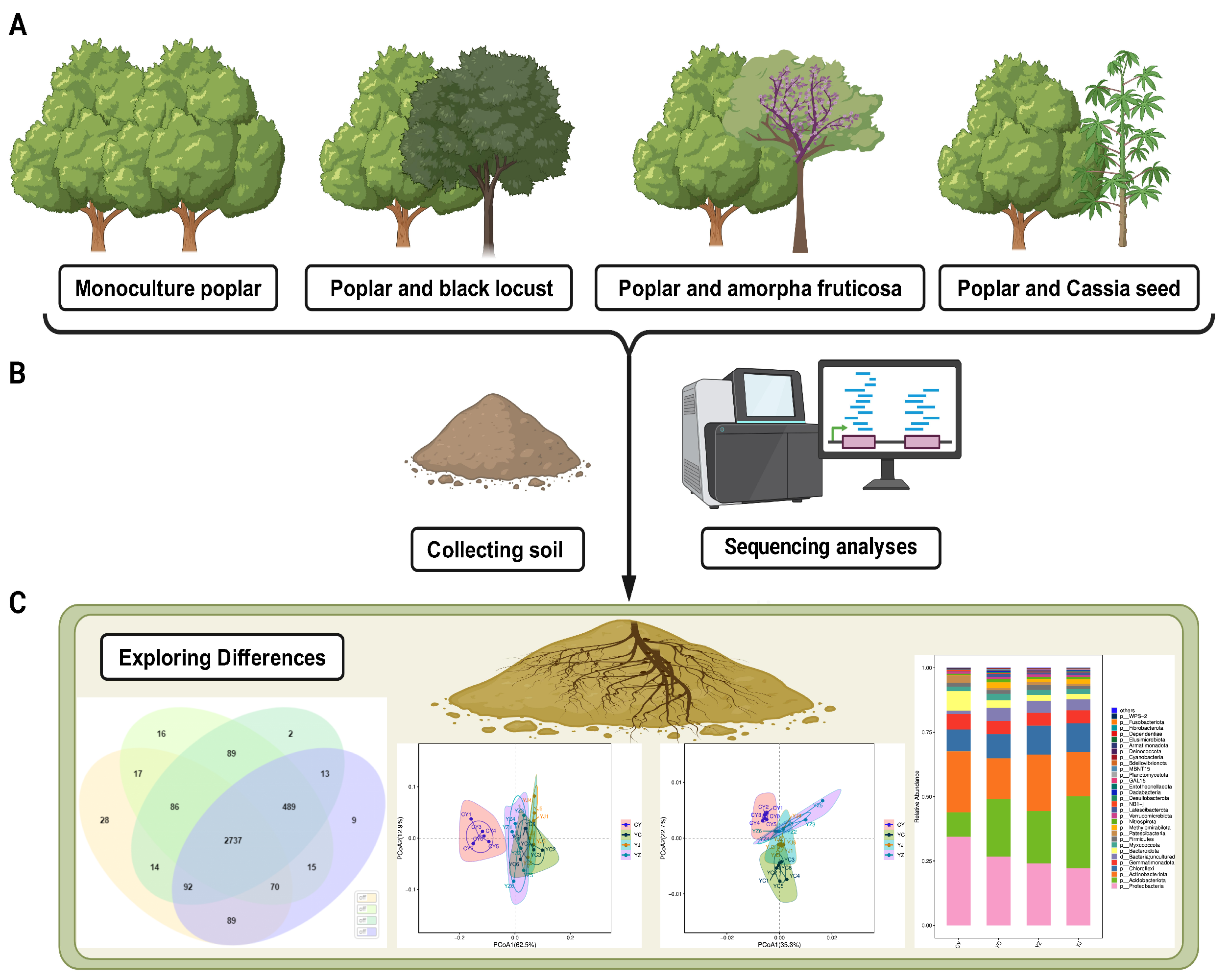
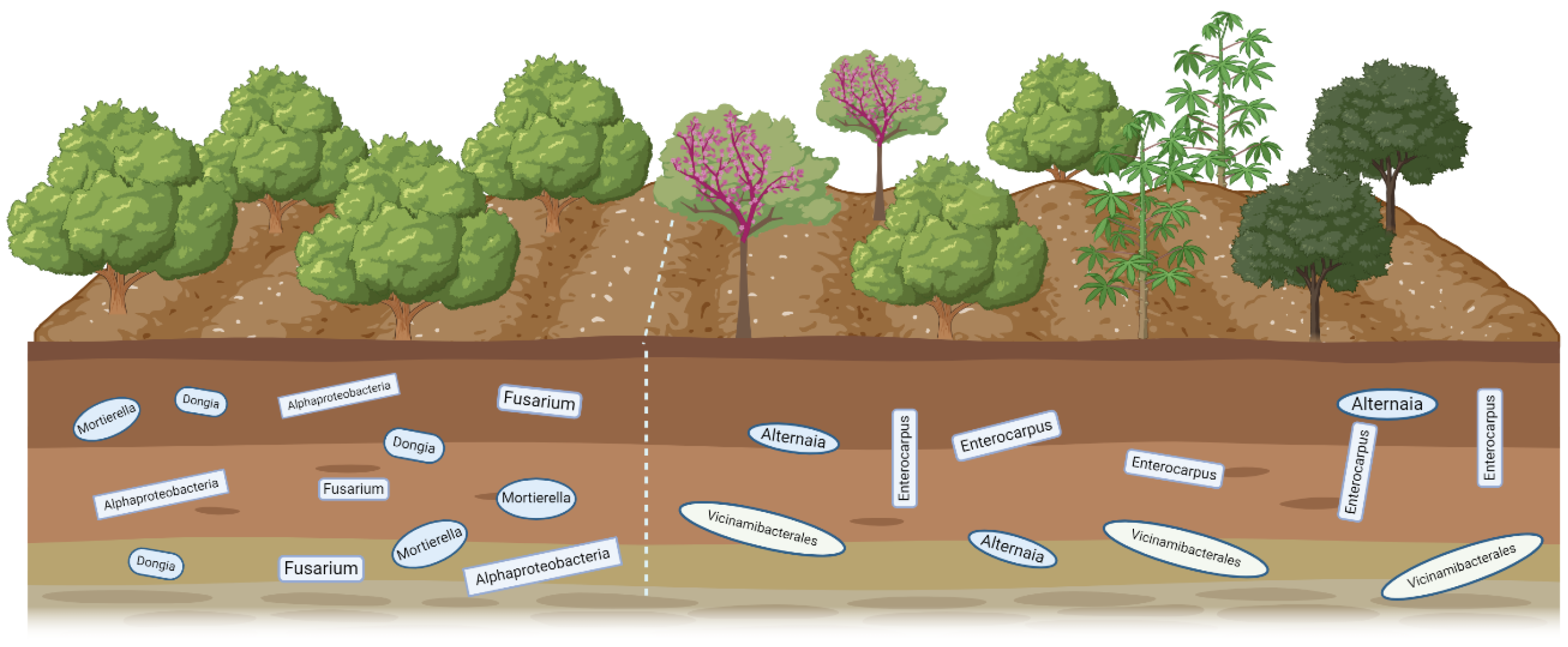
Effects of Intercropping on Soil Microbial Communities in Poplar Plantations

 ,
,
Abstract
1. Introduction
2. Materials and Methods
2.1. Sample Collection
2.2. DNA Extraction and PCR Amplification
2.3. Illumina Novaseq Sequencing
2.4. Processing of Sequencing Data
3. Results
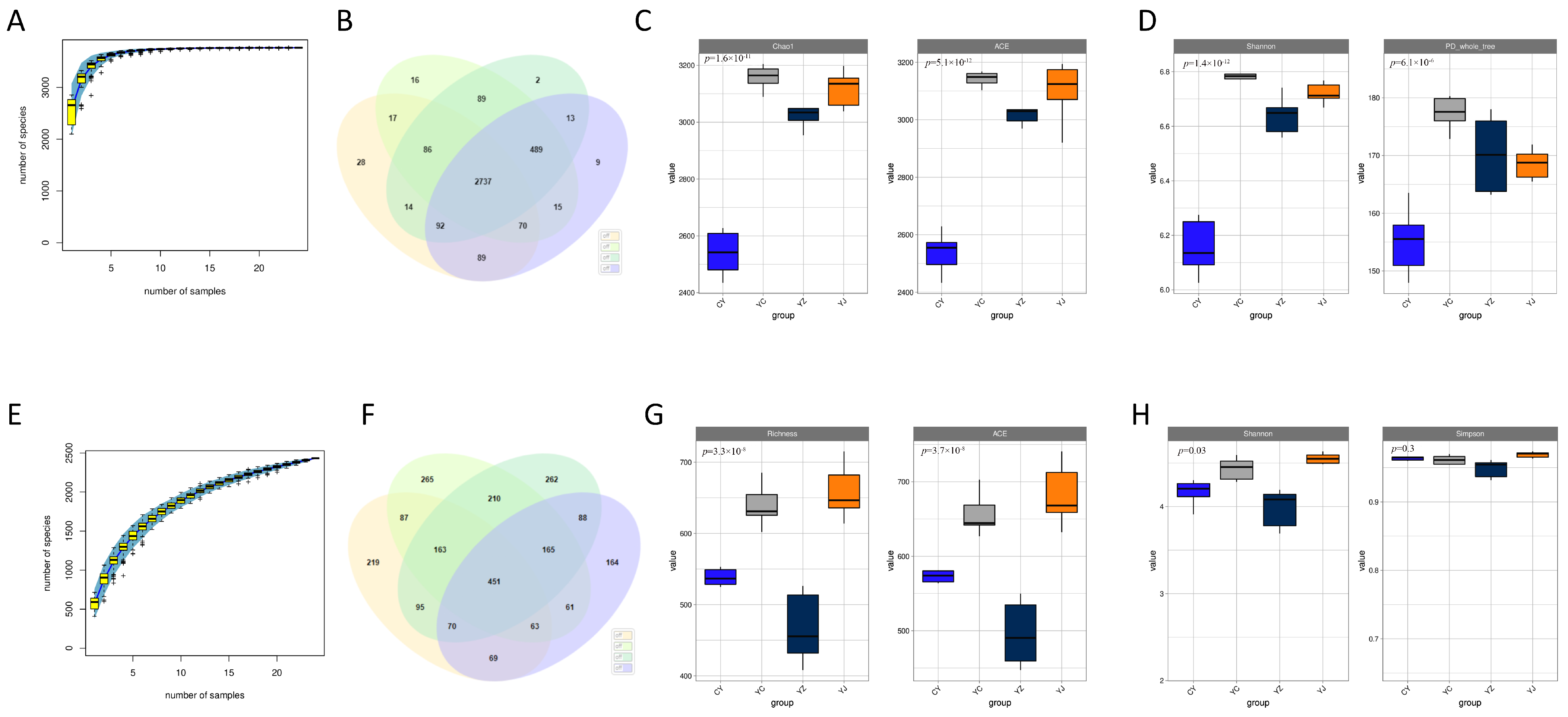
3.1. High-Throughput Sequencing Data and Microbial Diversity Analysis of the Two Planting Methods
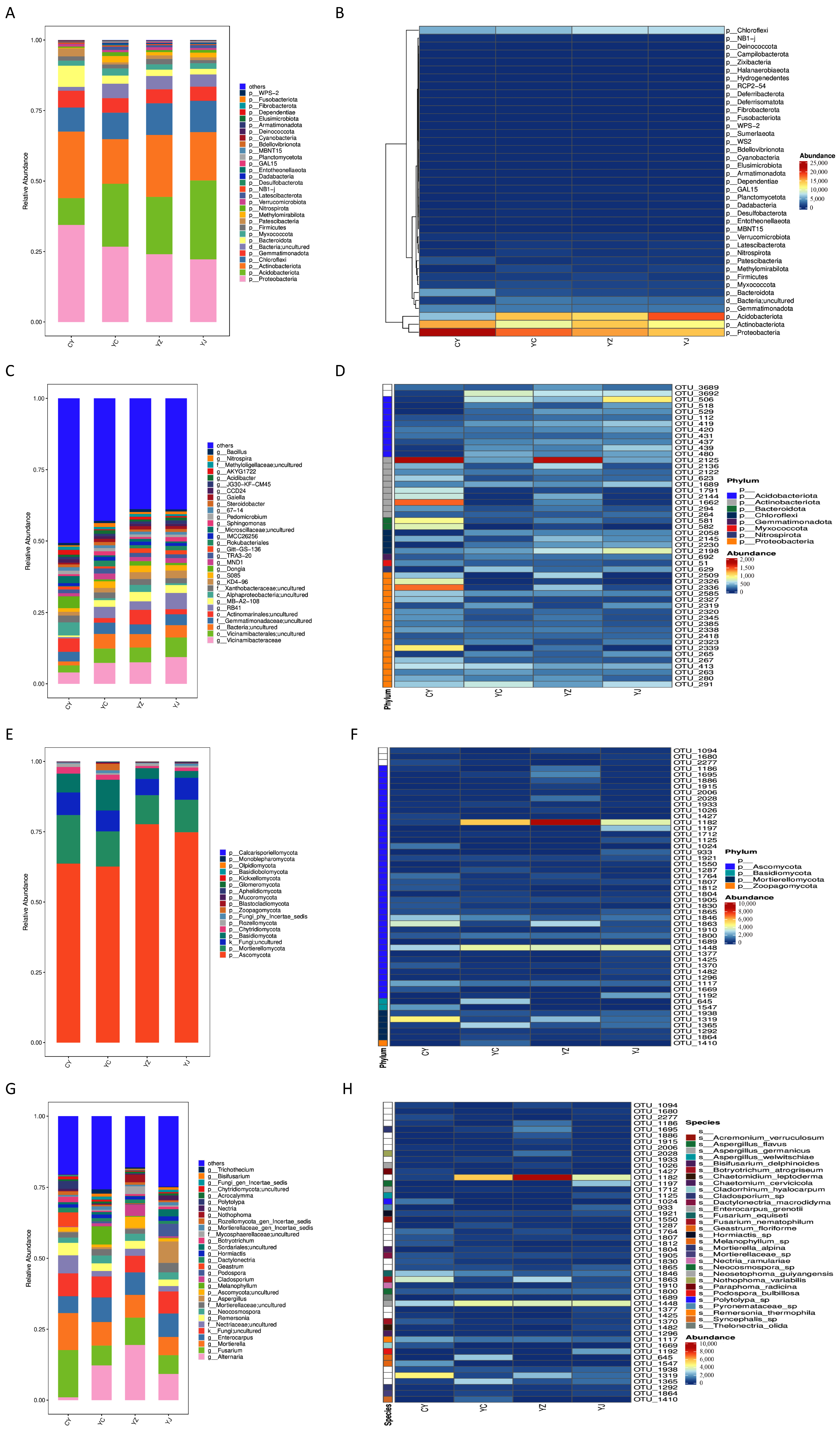
3.2. Community Composition and Abundance of Dominant Species Under the Two Planting Methods
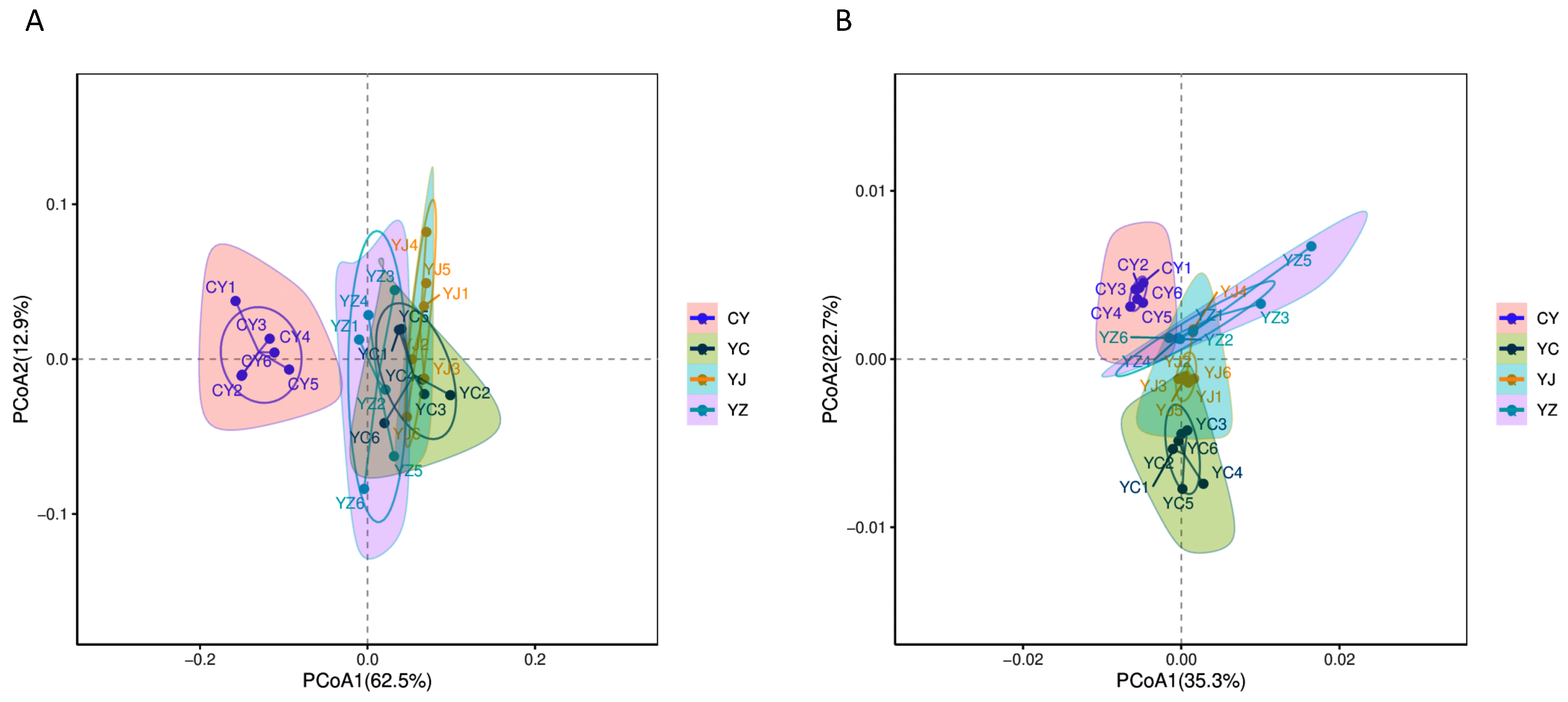
3.3. Community Clustering Analysis of Microorganisms and Their Structure Between the Two Planting Methods
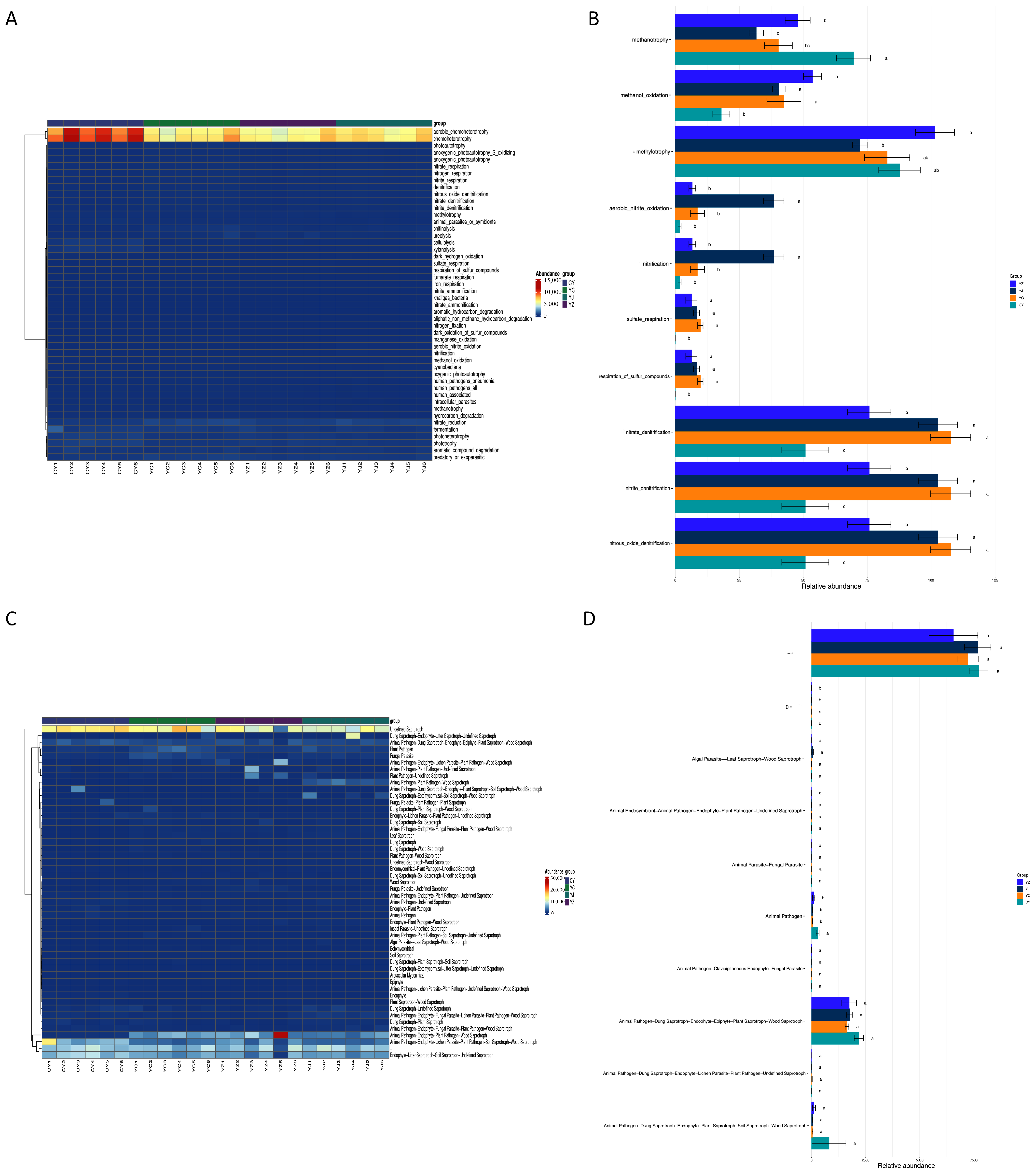
3.4. Functional Analysis of the Microbial Community Under the Two Planting Methods
4. Discussion
4.1. Intercropping of Poplar with Other Species Affects Soil Microbial Composition
4.2. Inter-Root Enrichment of Different Microorganisms Under Intercropping and Monocropping Patterns
4.3. Differences in the Functions Performed by Microorganisms in the Two Cropping Patterns
4.4. Community Microbiological Differences in Different Intercropping Combinations
5. Conclusions
Author Contributions
Funding
Data Availability Statement
Conflicts of Interest
References
- Zhang, F.S.; Chen, X.P.; Vitousek, P. An experiment for the world. Nature 2013, 497, 33–35. [Google Scholar] [CrossRef] [Scilit]
- Garrett, H.E.G.; Buck, L. Agroforestry practice and policy in the United States of America. For. Ecol. Manag. 1997, 91, 5–15. [Google Scholar] [CrossRef] [Scilit]
- Callaway, R.M. Positive interactions in plant communities and the individualistic-continuum concept. Oecologia 1997, 112, 143–149. [Google Scholar] [CrossRef] [Scilit] [PubMed]
- Callaway, R.M.; Walker, L.R. Competition and facilitation: A synthetic approach to interactions in plant communities. Ecology 1997, 78, 1958–1965. [Google Scholar] [CrossRef]
- Zhang, Y.H. Study on the cultivation of large-diameter poplar and the application of intercropping technology under forest. Agric. Technol. 2021, 41, 91–93. [Google Scholar]
- Huang, G.W.; Zhang, Y.D.; Fan, X.P.; Zhang, X.Y.; Xing, J.H. High-efficiency cultivation technology of large-diameter poplar in Jianghan Plain. Hubei For. Sci. Technol. 2021, 50, 82–86. [Google Scholar]
- Wu, Q.F.; Wang, J.S.; Lu, Z.F. Research progress of poplar plantation degradation and recovery. Chin. Agric. Sci. Bull. 2015, 31, 1–6. [Google Scholar]
- Su, H.; Zhang, R.P.; Wu, S.X.; Yao, H.Y.; Li, Y.Y. Mechanisms of Continuous Cropping Obstacles and Current Situation of Prevention and Control. Soils 2024, 56, 242–254. [Google Scholar]
- Lu, Q.; Zhang, J.C.; Meng, M.J. Bioassay for inhibitory autotoxicity of rhizosphere soil under long-term successive monoculture poplar plantations. Acta Ecol. Sin. 2017, 37, 4053–4060. [Google Scholar] [CrossRef] [Scilit]
- Wang, F.; Wang, J.G. Study on the effect of continuous cropping on the growth of eggplant seedlings. Chin. J. Eco-Agric. 2005, 1, 85–87. [Google Scholar]
- Chen, H.Y.; Li, X.M.; Wang, J.G. Change of microflora in the rhizoplane and rhizosphere of different disease resistance soybean cultivars II. J. Plant Nutr. Fertil. 2006, 12, 104–108. [Google Scholar]
- Wu, H.S.; Yin, X.M.; Liu, D.Y.; Ling, N.; Bao, W.; Ying, R.R.; Zhu, Y.Y.; Guo, S.W.; Shen, Q.R. Inhibition of root cell transmembrane potential and leaf anti-stress enzymes of watermelon seedlings by fusaric acid. Sci. Agric. Sin. 2008, 41, 2641–2650. [Google Scholar]
- Liu, F.D.; Jiang, Y.Z.; Wang, H.T.; Wang, Y.; Kong, L.G. Soil Productivity Maintenance Technique of Poplar Plantation under Continuous Cropping. For. Sci. 2007, S1, 58–64. [Google Scholar]
- Ou, Y.Z.L.; Jia, X.L.; Shi, J.Z.; Wei, M.Q.; Teng, W.C. Research progress on effects of intercropping on crops, soils and microorganisms. Jiangsu Agric. Sci. 2024, 52, 18–30. [Google Scholar]
- Wu, W.G.; Guo, B.S.; Dong, S.B.; Wan, Z.P.; Liu, Z.G. Research on the mixed production afforestation technology of poplar in low wetland. For. Pract. Technol. 1998, 8, 13–16. [Google Scholar]
- Wu, J.X. Research on afforestation technology of poplar acacia mixed forest. Henan For. Sci. Technol. 2009, 29, 33–34. [Google Scholar]
- Wang, P.; Zhu, L.X.; Chen, X.X.; Feng, H.; Sun, W.S.; Qin, N. Effects of Platycodon grandiflorum and Allium fistulosum intercropping on soil nutrients, microrganism and enzyme activity. J. Plant Nutr. Fert. Sci. 2018, 24, 668–675. [Google Scholar]
- Mantovani, D.; Veste, M.; Boldt-Burisch, K.; Fritsch, S.; Koning, L.A.; Freese, D. Carbon allocation, nodulation, and biological nitrogen fixation of black locust (Robinia pseudoacacia L.) under soil water limitation. Ann. For. Res. 2015, 58, 259–274. [Google Scholar] [CrossRef] [Scilit]
- Forrester, D.I.; Bauhus, H.; Cowie, A.L. On the success and failure of mixed-species tree plantations: Lessons learned from a model system of Eucalyptus globulus and Acacia mearnsii. For. Ecol. 2005, 209, 147–155. [Google Scholar] [CrossRef] [Scilit]
- Marron, N.; Priault, P.; Gana, C.; Gérant, D.; Epron, D. Prevalence of interspecific competition in a mixed poplar/black locust plantation under adverse climate conditions. Ann. For. Sci. 2018, 75, 23. [Google Scholar] [CrossRef] [Scilit]
- Wang, S.M.; Pang, Y.X.; Song, A.Y.; Cao, B.H.; Zhu, Z.B.; Li, Y.Y. Soil physiochemical properties and diversity of herbaceous plants dynamic on the different ages mixed forests of Populus × euramercana ‘Neva’ and Robinia pseucdoacacia in coastal saline-alkali area. Acta Ecol. Sin. 2018, 38, 6539–6548. [Google Scholar]
- Bai, W.Q.; Li, Z.C.; Chen, L.L.; Xu, M.Y.; Tang, X.M. Amorpha fruticosa and poplar mixed and its comprehensive utilization. Ningxia Agric. Sci. Technol. 1986, 5, 27–29. [Google Scholar]
- Chen, J.Y.; Qi, P.H. Analysis on the mixed benefit of poplar and amorpha fruticose. J. Jiangsu For. Sci. Technol. 1993, 3, 28–30. [Google Scholar]
- Xue, L. Effects of mixed species on the growth of populus. Agric. Technol. Equip. 2024, 4, 122–123. [Google Scholar]
- Sun, C.L.; Zhu, Z.X.; Wang, Z.; Tong, C.R. Study on soil fertility degradation and its maintenance and improvement techniques in poplar plantations. For. Sci. 1995, 31, 506–512. [Google Scholar]
- Zhang, C.P.; He, P.; Du, D.D.; Yu, Z.L.; Wei, P.X.; Hu, S.J. Study on hardness and germination characteristic of Cassia obtusifolia seeds. Chin. Chin. Tradit. Herb. Drugs 2010, 41, 1700–1704. [Google Scholar]
- Luo, C.B.; Fang, S.Z.; Sun, Q.X.; Tang, L.Z.; Tian, Y. Analysis of allelopathic effects in poplar-Juemingzi agroforestry system. J. Nanjing For. Univ. 2009, 33, 9–12. [Google Scholar]
- Illumina Inc. Shotgun Metagenomics on the NovaSeq™ 6000 System Using 2 × 250 bp Sequencing (Application Note, Document # 770-2019-010); Illumina Inc.: San Diego, CA, USA, 2019. [Google Scholar]
- Liu, S.S.; Huang, X.Y.; Peng, Z.W.; Lin, W.K.; Zhao, S.; Wu, Y.F.; Chen, Y.L.; Xue, X.H.; Wang, C.G. Spatio-temporal analysis of forestation area changes in China (1991–2014). J. Glob. Change Data Discov. 2021, 5, 37–44+150–157. [Google Scholar] [CrossRef] [Scilit]
- Jia, J.; Hu, G.; Ni, G.; Xie, M.; Li, R.; Wang, G.; Zhang, J. Bacteria drive soil multifunctionality while fungi are effective only at low pathogen abundance. Sci. Total Environ. 2024, 906, 167596. [Google Scholar] [CrossRef] [Scilit]
- Zhang, S.; Li, S.; Meng, L.; Liu, X.; Zhang, Y.; Zhao, S.; Zhao, H. Root exudation under maize/soybean intercropping system mediates the arbuscular mycorrhizal fungi diversity and improves the plant growth. Front. Plant Sci. 2024, 15, 1375194. [Google Scholar] [CrossRef] [Scilit]
- Brooker, R.W.; George, T.S.; Homulle, Z.; Karley, A.J.; Newton, A.C.; Pakeman, R.J.; Schöb, C. Facilitation and biodiversity–ecosystem function relationships in crop production systems and their role in sustainable farming. J. Ecol. 2021, 109, 2054–2067. [Google Scholar] [CrossRef] [Scilit]
- Chen, Y.; Bonkowski, M.; Shen, Y.; Griffiths, B.S.; Jiang, Y.; Wang, X.; Sun, B. Root ethylene mediates rhizosphere microbial community reconstruction when chemically detecting cyanide produced by neighbouring plants. Microbiome 2020, 8, 4. [Google Scholar] [CrossRef] [Scilit]
- Reiss, E.R.; Drinkwater, L.E. Cultivar mixtures: A meta-analysis of the effect of intraspecific diversity on crop yield. Ecol. Appl. 2018, 28, 62–77. [Google Scholar] [CrossRef] [Scilit] [PubMed]
- Song, Y.; Li, X.; Yao, S.; Yang, X.; Jiang, X. Correlations between soil metabolomics and bacterial community structures in the pepper rhizosphere under plastic greenhouse cultivation. Sci. Total Environ. 2020, 728, 138439. [Google Scholar] [CrossRef] [Scilit] [PubMed]
- Xing, M.; Wang, Q.; Li, X.; Li, Y.; Zhou, X. Selection of keystone species based on stable carbon and nitrogen isotopes to construct a typical food web on the shore of Xingkai Lake, China. Ecol. Indic. 2021, 132, 108263. [Google Scholar] [CrossRef] [Scilit]
- Gupta, R.; Keppanan, R.; Leibman-Markus, M.; Rav-David, D.; Elad, Y.; Ment, D.; Bar, M. The Entomopathogenic fungi Metarhizium brunneum and Beauveria bassiana promote systemic immunity and confer resistance to a broad range of pests and pathogens in tomato. Phytopathology 2022, 112, 784–793. [Google Scholar] [CrossRef] [Scilit]
- Mayer, M.; Rewald, B.; Matthews, B.; Sandén, H.; Rosinger, C.; Katzensteiner, K.; Gorfer, M.; Berger, H.; Tallian, C.; Berger, T.W.; et al. Soil fertility relates to fungal-mediated decomposition and organic matter turnover in a temperate mountain forest. New Phytol. 2021, 231, 777–790. [Google Scholar] [CrossRef] [Scilit]
- Huber, K.J.; Overmann, J. Vicinamibacteraceae fam. nov., the first described family within the subdivision 6 Acidobacteria. Int. J. Syst. Evol. Microbiol. 2018, 68, 2331–2334. [Google Scholar] [CrossRef] [Scilit]
- Jin, Q.; Zhang, Y.; Wang, Q.; Li, M.; Sun, H.; Liu, N.; Zhang, L.; Zhang, Y.; Liu, Z. Effects of potassium fulvic acid and potassium humate on microbial biodiversity in bulk soil and rhizosphere soil of Panax ginseng. Microbiol. Res. 2022, 254, 126914. [Google Scholar] [CrossRef] [Scilit]
- Wang, H.L.; Zhu, W.T.; Fang, C.J. Characteristics of rhizosphere soil microbial community structure and its effects on secondary metabolites of Notopterygium incisum. J. Anhui Agric. Sci. 2023, 51, 173–178. [Google Scholar] [CrossRef]
- Yang, F.J.; Wang, W.Q.; Wu, Z.W.; Xu, H.D.; Ge, M.Q.; Li, S.Y.; Li, X.D.; Zhang, Y.X.; Chuan, H.W. Effects of soil nutrient and measurementratio on bacterial community structure in Fujian Tea Garden. J. Soil Water Conserv. 2023, 37, 209–218. [Google Scholar] [CrossRef]
- Wang, J.; Zhang, H.P.; Su, X.; Fu, Q.J.; Li, X.B.; Liu, F.Q.; Shao, Y.Z.; Chen, Y.; Zhi, L.Y. Microbial diversity in rhizosphere soil of Anemone altaica. Guihaia 2023, 43, 1467–1477. [Google Scholar] [CrossRef]
- Lu, Y.S.; Huang, X.G.; Yang, S.X.; Huang, L.D.; Zhao, J.W.; Li, F.J. Soil bacterial community diversity under mangifera persiciformis in Guangxi. J. Zhejiang For. Sci. Technol. 2022, 42, 16–23. [Google Scholar]
- Zhou, S.T.; Ren, B.Y.; Li, Y.K.; Yi, Y.; Tang, M. Research progress on pathogenic mechanism, control measures and utilization of Alternaria alternata. Mol. Plant Breed. 2025, 23, 782–791. [Google Scholar] [CrossRef]
- Qin, F.F.; Jie, Z. Research progress of active secondary metabolites with exploitation potential from Alternaria sp. Nat. Prod. Res. Dev. 2024, 1–23. Available online: https://link.cnki.net/urlid/51.1335.q.20241113.0904.002 (accessed on 26 January 2026).
- Li, M.Z.; Liang, P.; Kang, L.P.; Li, C.; Bai, K.; Mao, Y.Q.; Huang, X.Z. Correlation analysis of endophytes of Ailanthus mayicus with their key secondary metabolites. World Sci. Technol. Mod. Chin. Med. 2024, 26, 2175–2186. [Google Scholar]
- Li, W.; Huang, Z.; Xie, W.G.; Zhang, X.Y.; Feng, L.; Xu, Q.; Zhong, P.C. The effect of nitrogen application on the soil fungal community of Korla fragrant pear orchard. Soil Fertil. Sci. China 2024, 6, 56–69. [Google Scholar]
- Li, M.; Hu, Y.; Huang, X.M.; Zhang, Q.M.; Chun, Y. Effect of biological carbon on nutrient and bacterial communities of rhizosphere soil of facility cucumber. Trans. Chin. Soc. Agric. Mach. 2016, 47, 172–178. [Google Scholar] [CrossRef]
- Zhu, S.J.; Luo, Y.J.; Jin, S.Q.; Zhou, J.B.; Feng, W. Succession of soil microbial community in ganoderma iucidum-rice rotation system. Chin. Agric. Sci. Bull. 2024, 40, 39–46. [Google Scholar]
- Liu, T.T.; Li, W.H.; Wang, H.C.; Cai, L.T.; Zhang, C.Q.; Mu, Q. Microbial community structure and diversity in rhizosphere substrate of diseased and healthy tobacco seedlings. Guizhou Agric. Sci. 2022, 50, 86–96. [Google Scholar] [CrossRef]
- Dai, Z.; Su, W.; Chen, H.; Barberán, A.; Zhao, H.; Yu, M.; Yu, L.; Brookes, P.C.; Schadt, C.W.; Chang, S.X.; et al. Long-term nitrogen fertilization decreases bacterial diversity and favors the growth of Actinobacteria and Proteobacteria in agro-ecosystems across the globe. Glob. Change Biol. 2018, 24, 3452–3461. [Google Scholar] [CrossRef] [Scilit]
- Xia, L.; Lam, S.K.; Kiese, R.; Chen, D.; Luo, Y.; van Groenigen, K.J.; Ainsworth, E.A.; Chen, J.; Liu, S.; Ma, L.; et al. Elevated CO2 negates O3 impacts on terrestrial carbon and nitrogen cycles. One Earth 2021, 4, 1752–1763. [Google Scholar] [CrossRef] [Scilit]
- Zhuo, M.X.; Liu, S.W.; Li, C.Y.; Wei, R.H. Research grogress on Fusarium Mycotoxins in plant and pathogen interactions. Guangdong Agric. Sci. 2024, 51, 56–69. [Google Scholar] [CrossRef]
- Dean, R.; Van Kan, J.A.; Pretorius, Z.A.; Hammond-Kosack, K.E.; Di Pietro, A.; Spanu, P.D.; Rudd, J.J.; Dickman, M.; Kahmann, R.; Ellis, J.; et al. The top 10 fungal pathogens in molecular plant pathology. Mol. Plant Pathol. 2012, 13, 414–430. [Google Scholar] [CrossRef] [Scilit] [PubMed]
- Li, M.H.; Yuan, M.L.; Jiang, Z.D.; Hua, P.L. Research progress in pathogenic mechanism of Fusarium oxysporum f. sp. cubense. J. Fruit Sci. 2019, 36, 803–811. [Google Scholar] [CrossRef]
- Fang, X.L.; Zhang, C.X.; Zhi, B.N. Research advances in Fusarium root rot of alfalfa (Medicago sativa). Acta Prataculturae Sin. 2019, 28, 169–183. [Google Scholar] [CrossRef]
- Luo, M.X.; Jiang, Y.F.; HE, Y.F.; Fang, W.M.; Chen, F.D.; Guan, Z.Y.; Liu, Y. Isolation and identification of pathogen lead to stem rot at chrysanthemum morifolium. J. Nanjing Agric. Univ. 2025, 4, 812–822. [Google Scholar] [CrossRef]
- Si, Y.K. Mechanism and Application of Mortierella Fungi Mediating the Formation of Fluvo-Aquic Soil Aggregates and Phosphorus Turnover. Master’s Thesis, Henan Agricultural University, Zhengzhou, China, 2024. [Google Scholar]
- He, F.; Zhao, R.; Huangn, W.F.; Zhang, Q.Y.; Shi, M.T.; Wu, Y.T.; Ya, W. Rhizosphere complex microbial agent of Dicranopteris dichotoma regulates the growth and rhizosphere microbial community of mung bean seedlings. Microbiol. Bull. 2024, 52, 1073–1088. [Google Scholar] [CrossRef]
- Vélez, M.L.; Marfetán, J.A.; Salomón, M.E.S.; Taccari, L.E. Mortierella species from declining Araucaria araucana trees in Patagonia, Argentina. For. Pathol. 2020, 50, e12591. [Google Scholar] [CrossRef] [Scilit]
- Ding, Z.Y.; Zhao, X.Q.; Ning, L. Microbial community structure and diversity in rhizosphere and roots of healthy and poot rot Panax notoginseng. J. Anhui Agric. Sci. 2024, 52, 151–157. [Google Scholar]
- He, M.; Fang, K.; Chen, L.; Feng, X.; Qin, S.; Kou, D.; He, H.; Liang, C.; Yang, Y. Depth-dependent drivers of soil microbial necromass carbon across Tibetan alpine grasslands. Glob. Change Biol. 2022, 28, 936–949. [Google Scholar] [CrossRef] [Scilit]
- Niu, S.N.; Hao, X.W.; Chun, H.L.; Most, L.; Yue, M.S. Ansamycins produced by Streptomyces sp. LZ35. Chin. Pharm. J. 2011, 46, 1317–1320. [Google Scholar]
- Ikeda, H.; Hideshima, T.; Fulciniti, M.; Lutz, R.J.; Yasui, H.; Okawa, Y.; Kiziltepe, T.; Vallet, S.; Pozzi, S.; Santo, L.; et al. The monoclonal antibody nBT062 conjugated to cytotoxic Maytansinoids has selective cytotoxicity against CD138-positive multiple myeloma cells in vitro and in vivo. Clin. Cancer Res. 2009, 15, 4028–4037. [Google Scholar] [CrossRef] [Scilit] [PubMed]
- Macey, M.C.; Pratscher, J.; Crombie, A.T.; Murrell, J.C. Impact of plants on the diversity and activity of methylotrophs in soil. Microbiome 2020, 8, 31. [Google Scholar] [CrossRef] [Scilit] [PubMed]
- Delmotte, N.; Knief, C.; Chaffron, S.; Innerebner, G.; Roschitzki, B.; Schlapbach, R.; von Mering, C.; Vorholt, J. A community proteogenomics reveals insights into the physiology of phyllosphere bacteria. Proc. Natl. Acad. Sci. USA 2009, 106, 16428–16433. [Google Scholar] [CrossRef] [Scilit]
- Remus-Emsermann, M.N.; Lücker, S.; Müller, D.B.; Potthoff, E.; Daims, H.; Vorholt, J.A. Spatial distribution analyses of natural phyllosphere-colonizing bacteria on Arabidopsis thaliana revealed by fluorescence in situ hybridization. Environ. Microbiol. 2014, 16, 2329–2340. [Google Scholar] [CrossRef] [Scilit]
- Saadpanah, A.; Rokhzadi, A.; Mohammadi, K. Growth response of soybean to the application of Bradyrhizobium japonicum and foliar methanol spraying in field conditions. Int. J. Biosci. 2013, 3, 128–134. [Google Scholar]
- Wu, K.H.; Tan, H.; Wang, Q.F.; Zhao, Y.; Li, K.Z.; Yu, Y.X.; Chen, L.M. Effects of foliar methanol application on growth and physiological characteris-tics of Tamba black soybean grown in different soil. Soybean Sci. 2012, 31, 431–435. [Google Scholar]
- Ferreira, T.O.; Otero, X.L.; Vidal-Torrado, P.; Macías, F. Effects of bioturbation by root and crab activity on iron and sulfur biogeochemistry in mangrove substrate. Geoderma 2007, 142, 36–46. [Google Scholar] [CrossRef] [Scilit]
- Mao, L.; Sun, Z.G.; Chen, B.B.; Hu, X.Y.; Wu, H.H. Sulfur oxidation⁃reduction process and its coupling effects with other elements in marsh soil: A review. Chin. J. Appl. Ecol. 2022, 33, 560–568. [Google Scholar]
- Liu, T.; Zhang, X.; Shen, A.L.; Su, Y. Effects of biodenitrification inhibitors on soil nitrogen transformation and plant growth. J. Plant Nutr. Fertil. 2023, 29, 1556–1562. [Google Scholar]
- Zhou, X.; Smaill, S.J.; Gu, X.; Clinton, P.W. Manipulation of soil methane oxidation under drought stress. Sci. Total Environ. 2021, 757, 144089. [Google Scholar] [CrossRef] [Scilit]
- He, F.; Li, C.; Lu, X.M.; Wang, Y.; Wang, M.; Ruan, J.; Wei, M.L.; Ma, X.G.; Wang, Z.; Jiang, H. Carbon transport and phosphorus uptake in an intercropping system of Robinia pseudoacacia and Amorphophallus konjac mediated by arbuscular mycorrhizal hyphal networks. Chin. J. Plant Ecol. 2023, 47, 782–791. [Google Scholar] [CrossRef] [Scilit]
- He, F.; Liu, H.; Li, C.; Cui, M.; Wei, M.L.; Ding, L.F.; Liu, B.; Shan, D. Effects of intercropping with Robinia pseudoacacia on rhizosphere bacterial community structure and soft rot disease development in Amorphophallus konjac. J. Nucl. Agric. Sci. 2024, 38, 755–766. [Google Scholar]


Disclaimer/Publisher’s Note: The statements, opinions and data contained in all publications are solely those of the individual author(s) and contributor(s) and not of MDPI and/or the editor(s). MDPI and/or the editor(s) disclaim responsibility for any injury to people or property resulting from any ideas, methods, instructions or products referred to in the content. |
© 2026 by the authors. Licensee MDPI, Basel, Switzerland. This article is an open access article distributed under the terms and conditions of the Creative Commons Attribution (CC BY) license.
Share and Cite
Yang, H.; Wang, Q.; Wang, R.; Zuo, Z.; Ling, X.; Fan, L.; Tang, L. Effects of Intercropping on Soil Microbial Communities in Poplar Plantations. Forests 2026, 17, 184. https://doi.org/10.3390/f17020184
Yang H, Wang Q, Wang R, Zuo Z, Ling X, Fan L, Tang L. Effects of Intercropping on Soil Microbial Communities in Poplar Plantations. Forests. 2026; 17(2):184. https://doi.org/10.3390/f17020184
Chicago/Turabian StyleYang, Haiqing, Qirui Wang, Ran Wang, Zheng Zuo, Xiaoming Ling, Lili Fan, and Luozhong Tang. 2026. "Effects of Intercropping on Soil Microbial Communities in Poplar Plantations" Forests 17, no. 2: 184. https://doi.org/10.3390/f17020184
APA StyleYang, H., Wang, Q., Wang, R., Zuo, Z., Ling, X., Fan, L., & Tang, L. (2026). Effects of Intercropping on Soil Microbial Communities in Poplar Plantations. Forests, 17(2), 184. https://doi.org/10.3390/f17020184