3.1. Spatiotemporal Dynamics of Clear-Cuts
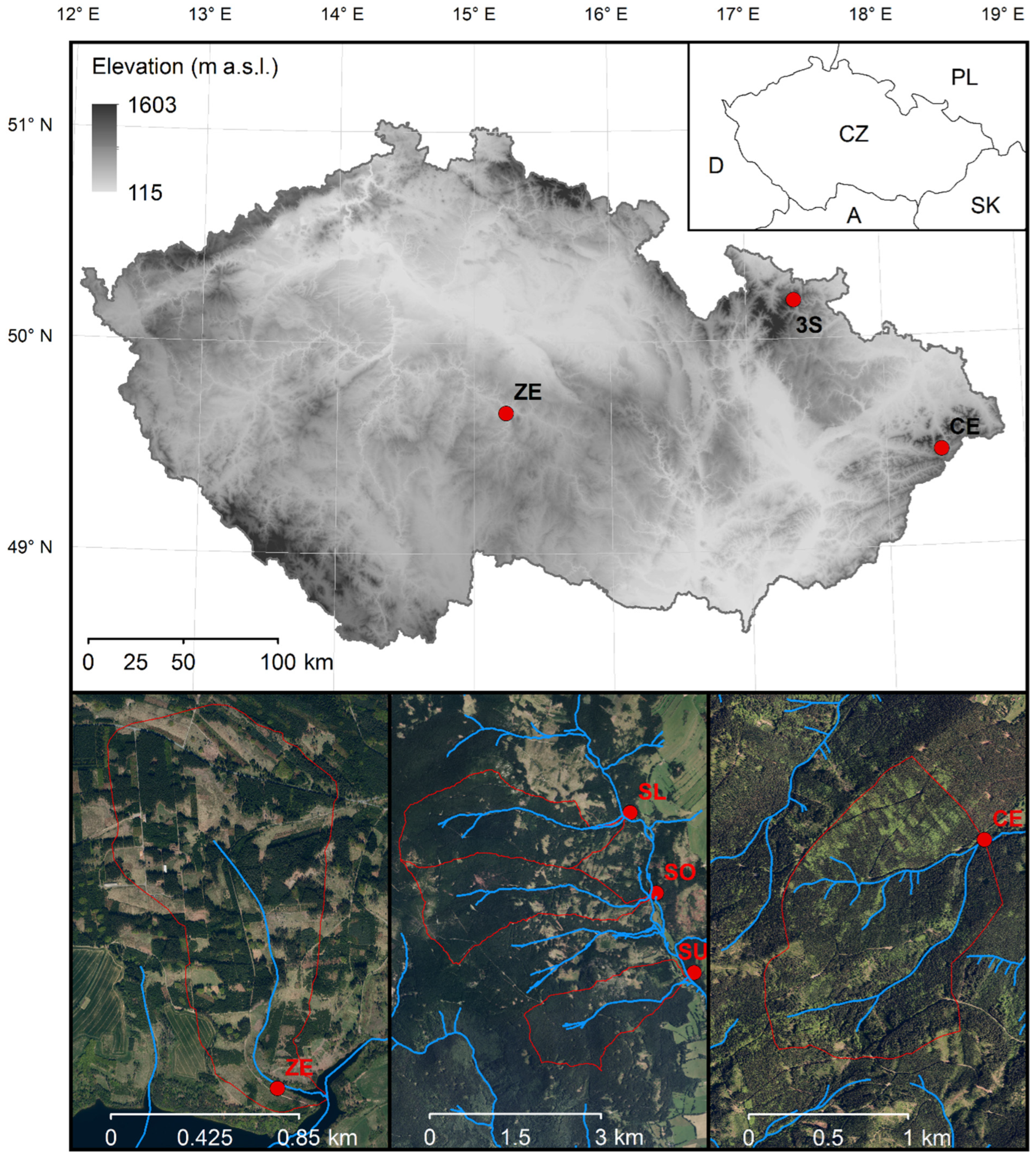
The intensity and timing of disturbances in the respective catchments were quantified by analyzing the area of new clear-cuts (ha) within defined time intervals, determined by the availability of aerial imagery (
Table 2). Data for the reference catchment CE are not presented, as no significant logging occurred there during the study period. Between 2003 and 2016, logging activity in all monitored catchments was minimal, with clear-cut areas generally not exceeding 1.5 ha per interval. A marked increase in logging, indicating the onset of the bark beetle outbreak, was recorded in the period 2016–2018.
This escalation continued in the subsequent intervals (2018–2020 and 2020–2022), representing the peak of the disturbances. The intensity of disturbance differed substantially among the catchments. The highest and most sustained disturbance occurred in the ZE catchment, where 39.9 ha (32.1% of the catchment area) was logged during the critical four-year period 2018–2022. Catchments in the Jeseníky Mountains were also significantly affected, mainly at lower elevations (up to 800 m a.s.l.); however, the relative extent of the disturbance was lower. In SO, the clear-cut area in 2018–2022 reached 26.5 ha (6.7% of the area), while in SL it was 24.5 ha (6.2%) and in SU 13.3 ha (6.5%). During the period of hydrochemical data collection (2022–2024), logging activity nearly ceased in SL and SU, while in SO and ZE it persisted (6.1 ha and 7.1 ha, respectively).
3.2. Precipitation and Stream Water Chemistry
The chemistry of precipitation is summarized in
Table 3. In the Jeseníky Mts., precipitation was monitored at a single site due to the close proximity of the individual catchments. Although there were no pronounced differences in the chemical composition of precipitation among the three regions, the Jeseníky Mts. exhibited the lowest concentrations of potassium (K
+) and magnesium (Mg
2+) ions (0.29 mg·L
−1 and 0.06 mg·L
−1, respectively). Calcium concentrations (Ca
2+) were also slightly lower (0.28 mg·L
−1) compared to CE (0.31 mg·L
−1) and ZE (0.35 mg·L
−1). Concentrations of nitrate (NO
3−), total nitrogen (TN), and ammonium (NH
4+) were lowest in the Jeseníky Mts. and highest in the CE catchment. In contrast, dissolved organic carbon (DOC) was highest in the Jeseníky Mts (3.02 mg·L
−1, compared to 2.20 mg·L
−1 in CE and 2.65 mg·L
−1 in ZE).
Table 4 summarizes the runoff chemistry in the monitored streams. The pH of runoff (7.0–7.8) was uniformly higher than the pH of precipitation water (5.4–5.7) in all catchments. The electrical conductivity (EC) of runoff was several times higher than that of precipitation; values in the Jeseníky Mts. (61.84 μS·cm
−1–87.04 μS·cm
−1) were slightly higher than in CE (60.83 μS·cm
−1) but lower than in ZE (144.7 μS·cm
−1). This reflects the concentration of base cations and sulfates, which were distinctly higher in ZE than in the other catchments. Ammonium concentrations were very low in all catchments (0.01–0.02 mg·L
−1), whereas nitrate concentrations were consistently higher than in precipitation. The highest nitrate levels were observed in ZE (3.80 mg·L
−1), followed by intermediate levels in the Jeseníky Mts. catchments (2.32–3.52 mg·L
−1) and the lowest in CE (1.32 mg·L
−1).
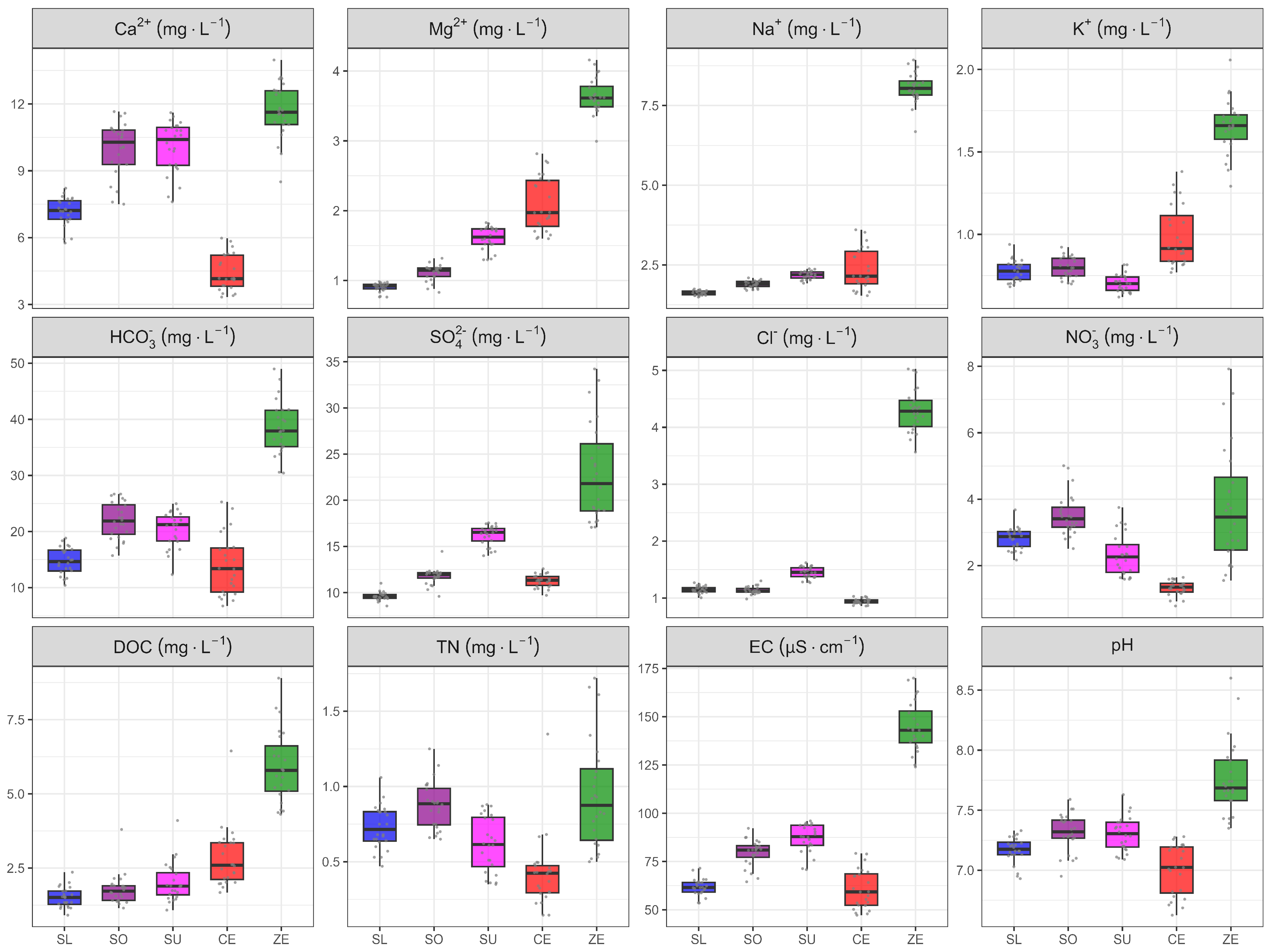
Differences in runoff chemistry among the studied catchments are clearly illustrated in
Figure 2. The Slučí stream (SL) exhibits significantly lower concentrations of calcium, magnesium, and sulfates compared to the other Jeseníky Mts. catchments. The elevated values of most parameters in the ZE catchment, including pH and electrical conductivity, are also notable.
3.3. Retention and Export of Elements
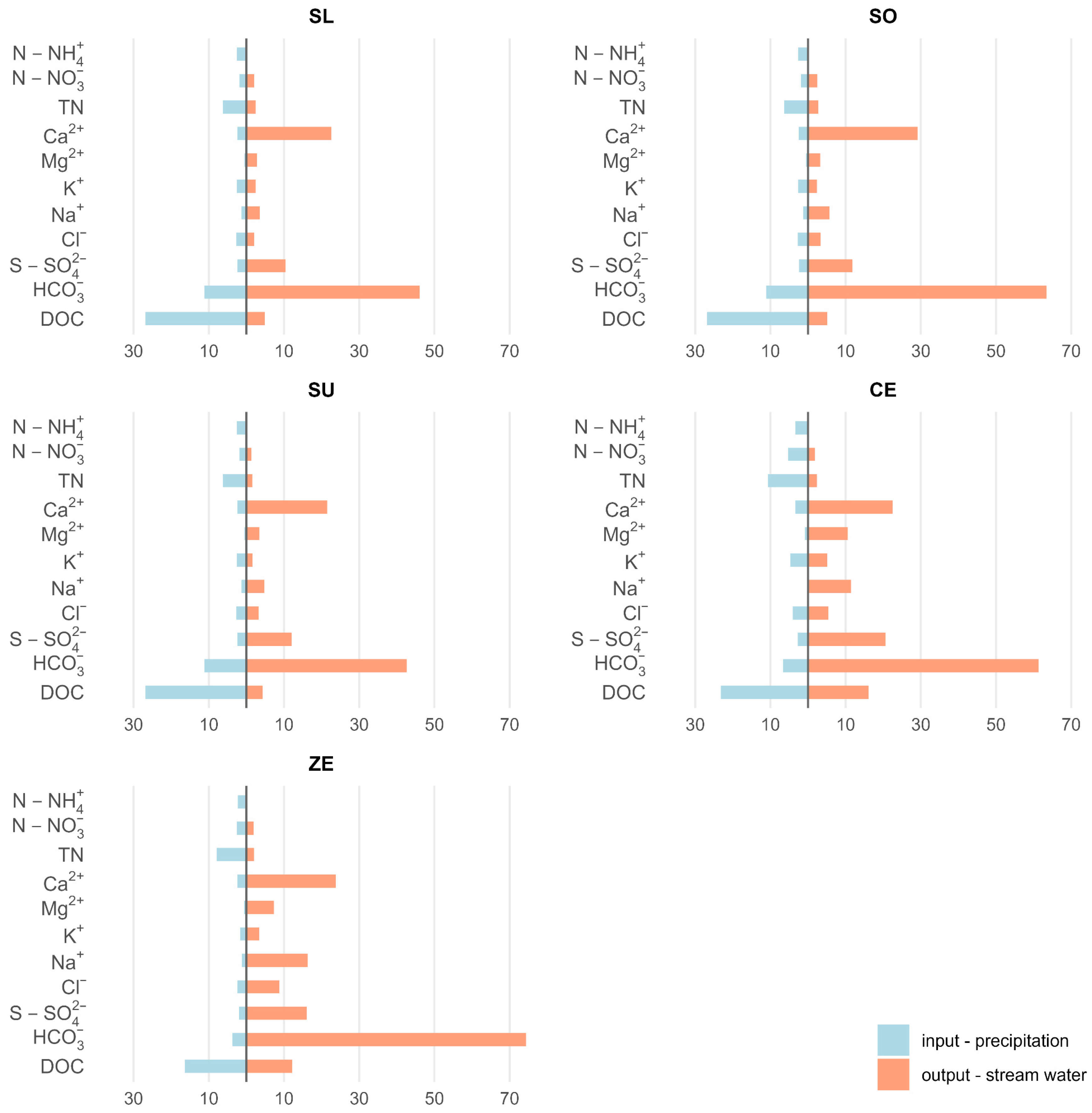
To assess the function of the individual catchments as sources or sinks of elements, net annual budgets (output via runoff minus input via precipitation) were calculated (
Figure 3,
Table 5). All catchments functioned as net sources of weathering products, especially calcium (Ca
2+) with a mean export of over 21 kg·ha
−1·yr
−1 and bicarbonates (HCO
3−), reflecting the dominance of chemical weathering processes over atmospheric deposition. The ZE catchment exhibited the highest release of HCO
3− (70.68 kg·ha
−1·yr
−1) and Na
+ (15.02 kg·ha
−1·yr
−1). This confirms that the gneissic crystalline bedrock (paragneiss) with a rich feldspar content undergoes intense weathering, which releases large amounts of Na
+ and Ca
2+. The Jeseníky catchments (SL, SO, SU) showed the lowest net release of HCO
3− (mean 39 kg·ha
−1·yr
−1), which is consistent with the low absolute concentrations of HCO
3− in these waters and their lower buffering capacity compared to CE and ZE.
All catchments acted as significant sinks for total nitrogen, with CE showing the highest retention (−8.25 kg·ha−1·yr−1), indicating intense biological consumption or accumulation of nitrogen in soils. All catchments were also net sources of chloride Cl− (except SL), with the ZE catchment being the largest source (6.37 kg·ha−1·yr−1).
All catchments acted as sinks for DOC, with the ZE showing the lowest retention (−4.24 kg·ha−1·yr−1).
3.4. Hydrochemical Characteristics of Catchments
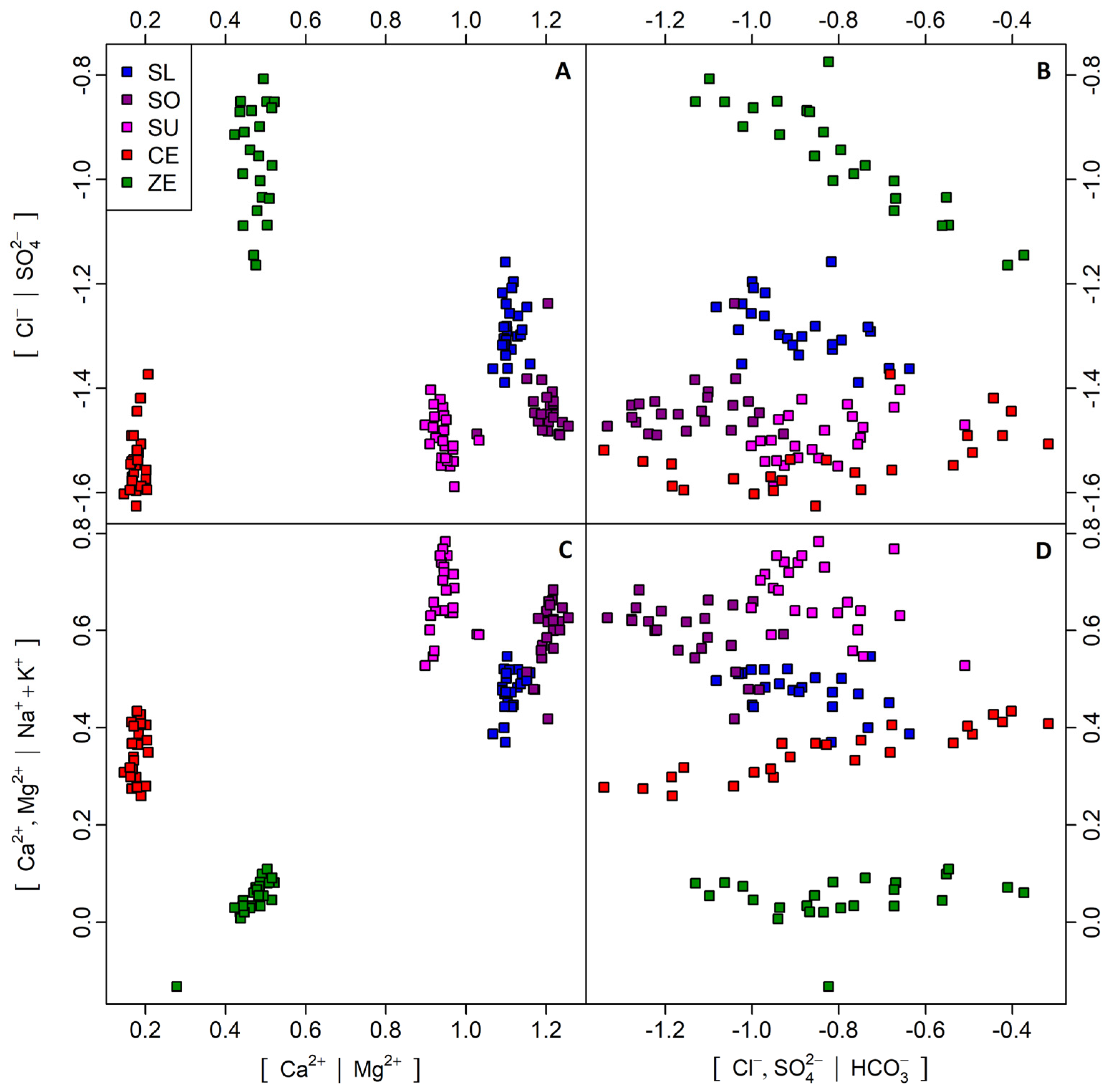
The hydrochemical characteristics of the catchments, based on the analysis of isometric log-ratios of major ions, are presented in the Ilr-Ion plot (
Figure 4). The upper left panel shows the balance between Ca
2+ and Mg
2+ (
x-axis) and the balance between Cl
− and SO
42− (
y-axis). Data for all monitored streams plot on the positive side of the
x-axis, indicating that Ca
2+ concentrations are generally higher than those of Mg
2+. Concurrently, all samples exhibit negative y-coordinates, indicating higher concentrations of SO
42− compared to Cl
−.
Despite these common features, significant differences can be observed among the catchments. The CE catchment is clearly distinct, primarily due to a very low Ca2+ to Mg2+ ratio. The ZE catchment is characterized by the highest ratio of chlorides to sulfates. The values from the three Jeseníky Mts. catchments also differ, although SL and SO are clustered closer to each other than to SU.
The upper right panel (
Figure 4B) displays the balance between Cl
−/SO
42− and HCO
3− (
x-axis) versus Cl
− and SO
42− (
y-axis). The negative coordinate on the
x-axis indicates that HCO
3− is the dominant anion. Bicarbonates in natural surface waters originate mainly from the weathering of geological bedrock.
The lower left panel (
Figure 4C), where the
y-axis represents the balance between alkaline earth metals (Ca
2+, Mg
2+) and the alkali metals (Na
+ + K
+), allows for the classification of waters based on their compositional type. While the SU, SL, and SO catchments belong to the Ca-dominant type (Ca
2+ cations predominate), the ZE and CE catchments are classified as a mixed cation type, falling between the Ca, Mg, and Na+K categories. The mean values of isometric log-ratio coordinates
z1,
z2,
z3, and
z4 for the studied catchments are presented in
Table 6.
The chemical composition of the three Jeseníky catchments corresponds to the classic calcium-bicarbonate type. This composition is primarily influenced by silicate weathering of the bedrock [
53], which predominantly includes silicate metamorphic rocks (phyllites, schists, metagranitoids) and, locally, metabasites (amphibolites). Positive
z1 values (ranging from 0.48 to 0.67) indicate that the weathering of minerals supplying divalent cations is the main source of dissolved ions, a feature typical of environments containing metabasites and metagranitoids.
Furthermore, high positive z2 values (0.94 to 1.11) demonstrate that the weathering of Ca-silicates (plagioclase, amphibole) is the dominant cation release mechanism. The z3 values confirm that water composition is primarily governed by natural weathering processes. Negative z3 values (ranging from −1.13 to −0.84) reflect the dominance of weathering-derived bicarbonate over the input of strong acid anions (Cl− and SO42−). Negative z4 values (ranging from −1.49 to −1.29) indicate that sulfate (SO42−) prevails over chloride (Cl−). This suggests a minor but discernible influence of atmospheric sulfur deposition or sulfide weathering in the bedrock.
The SO catchment exhibits the greatest dominance of weathering-derived HCO3−. In contrast, the SU catchment displays the relatively highest proportion of Cl−/SO42−. Notably, this catchment also has the lowest z2 value (0.94), indicating a relatively higher magnesium content in relation to calcium. This distinction is strongly associated with the presence of metabasites (greenschist/amphibolite) in the bedrock, making the SU catchment unique among the three.
The CE catchment serves as a reference for waters whose chemistry is controlled by flysch sedimentary bedrock. The waters are of the calcium-bicarbonate type; however, the relatively low z2 value (0.18) indicates that Ca2+, Mg2+ concentrations are comparable. This higher relative proportion of magnesium is characteristic of the weathering of dolomitic cements or clay minerals within the flysch strata. The negative z3 value (−0.80) confirms that the water composition is dominated by weathering-derived bicarbonate (HCO3−), with minimal influence from acid anion input. Nevertheless, the negative z4 value (−1.54) points to a strong dominance of sulfate (SO42−) over chloride (Cl−) among external anions. This suggests that, despite the generally pristine character of the catchment, the chemical balance is affected by regional atmospheric sulfur deposition and/or the oxidation of sulfides (e.g., pyrite) within the claystone components of the flysch.
The ZE catchment, characterized by a geological setting dominated by paragneiss rich in biotite and feldspars, exhibits a distinct hydrochemical signature of highly weathered crystalline bedrock. The water is of a mixed bicarbonate type with a high proportion of alkali metals. The low mean z1 value (0.05) indicates that divalent cations (Ca2+, Mg2+) are almost equally represented in the composition relative to monovalent cations (Na+, K+). The high concentration of bicarbonates (38.47 mg·L−1) reflects intense chemical weathering of the bedrock, providing the water with a high buffering capacity against acidification. The z3 value (−0.78) demonstrates that, despite the high mean concentration of sulfates (22.94 mg·L−1), bicarbonate remains the dominant anion. However, the high absolute concentration of sulfates and the z4 value (−0.96) indicate a strong regional influence of both sulfates and chlorides.
3.5. Principal Component Analysis (PCA)
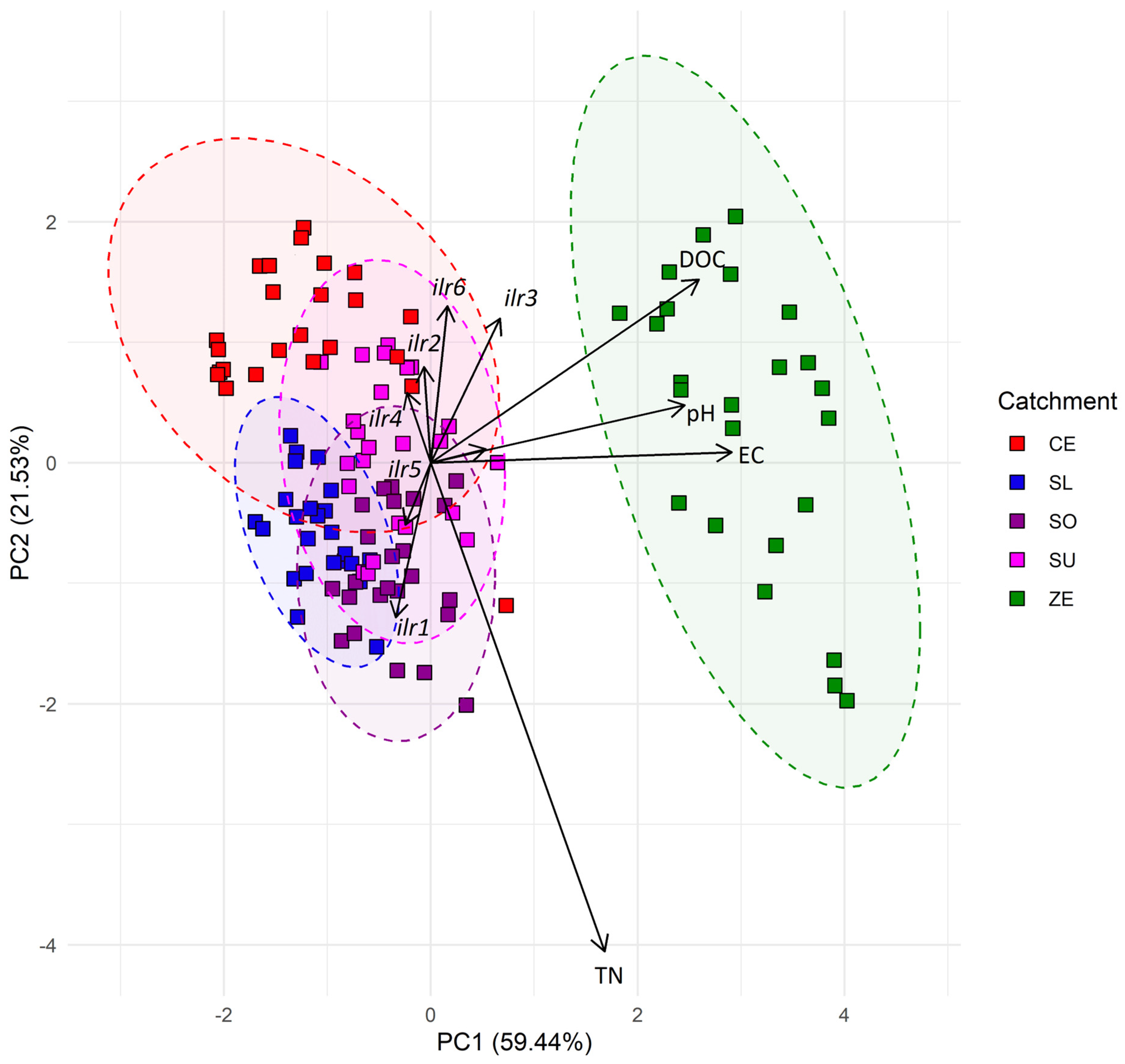
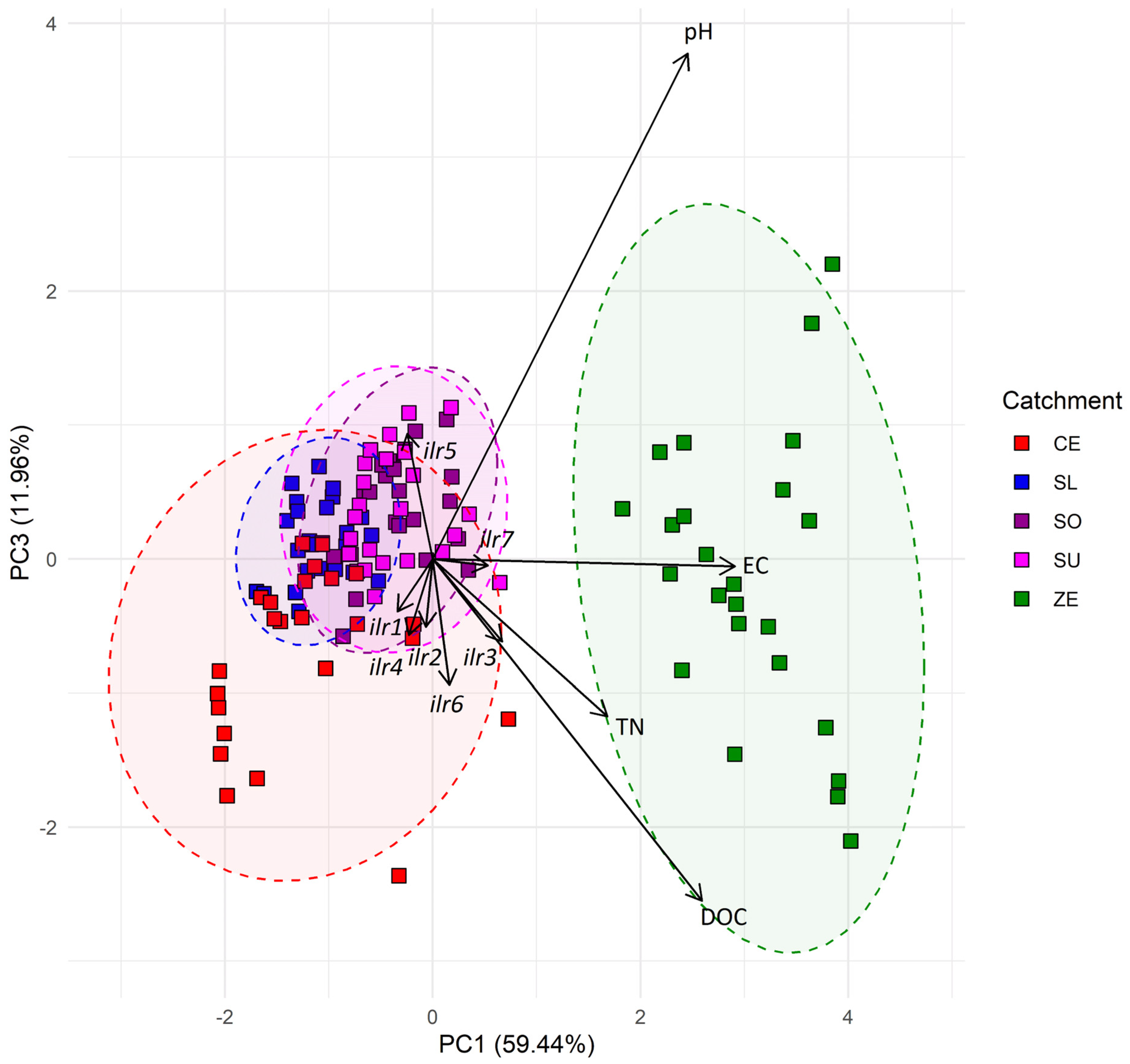
Principal Component Analysis (PCA) was performed on a data matrix consisting of seven ilr-transformed compositional variables (ilr1 to ilr7) representing the ratios of major ions, and four standardized supplementary variables (EC, pH, DOC, TN). The first three principal components (PCs) cumulatively explained 92.63% of the total variance in the data. Consequently, the first three components were retained for interpretation and visualization, providing a robust description of the main patterns in the dataset.
The correlations between the Principal Components (PC1, PC2, PC3), the ilr-transformed compositional variables and the standardized supplementary variables are shown in
Table 7. The correlations between the ilr vectors and the original, untransformed variables are presented in
Table 8.
The first principal component (PC1) accounts for a dominant share of the variance (59.44%) and is interpreted as the main gradient of total mineralization and dissolved substance content. The strongest and most statistically significant positive correlations with PC1 were observed for electrical conductivity (EC; r = 0.960, p < 0.001), dissolved organic carbon (DOC; r = 0.856, p < 0.001), and pH (r = 0.810, p < 0.001). Among the ilr variables, ilr3 (representing total ionic enrichment excluding Ca2+) and ilr7 (representing the influence of salts, especially NaCl), also showed strong positive correlations. Consequently, waters with high positive PC1 scores are characterized by high total mineralization, elevated pH, and high organic matter content. Conversely, negative PC1 scores indicate dilute, nutrient-poor, and more acidic waters.
The second principal component (PC2) accounts for an additional 21.53% of the variance and is interpreted as a contrast between the influence of nitrogenous substances and weathering and leaching processes. Its negative pole is defined by two key, strongly correlated indicators: total nitrogen (TN; r = −0.805, p < 0.001) and ilr1 (r = −0.754, p < 0.001), which represents the ratio of nitrates to base cations and buffering capacity. Conversely, several variables are positively correlated, most notably ilr6 (r = 0.764, p < 0.001), representing the ratio of base cations to nitrates, and dissolved organic carbon (DOC; r = 0.302, p < 0.001). A negative score on PC2, therefore, represents a strong influence of nitrogen, both in terms of its total amount and its relative dominance, while a positive score is associated with water chemistry dominated by the products of bedrock weathering and organic matter leaching from soil horizons.
The third principal component (PC3) accounts for an additional 11.96% of the variance and is interpreted as an acidity gradient, contrasting waters with higher pH against those acidified by organic matter decomposition. The positive pole of this axis shows a strong, significant correlation with pH (r = 0.559, p < 0.001). The negative pole is defined by a significant negative correlation with dissolved organic carbon (DOC; r = −0.378, p < 0.001) and several ilr variables associated with acid leaching (ilr6, ilr4). A positive score on PC3 thus indicates waters that are less acidic, while a negative score indicates waters where acidity is strongly influenced by organic acids.
The projection of the individual catchments into the space defined by the first two components (
Figure 5) revealed a clustering into three distinct hydrochemical types. The ZE catchment formed a separate, clearly demarcated group with high positive values on the PC1 axis, which confirms its character as a catchment with highly mineralized and organic-rich waters. Its most striking feature is the broad scatter of values along the PC2 axis, ranging from strongly positive to strongly negative. This high variability suggests that the catchment functions as a dynamic and potentially unstable system. It likely alternates between periods when water chemistry is dominated by weathering products (positive PC2 scores, e.g., during baseflow) and episodes of nitrogen leaching (negative PC2 scores), which are typical of disturbed ecosystems following rainfall events.
At the opposite end of the PC1 gradient were the CE and SL catchments, which formed a second distinct cluster. Their strong negative scores on PC1 characterize them as catchments with dilute, nutrient-poor, and more acidic waters. However, these two catchments differ along the PC2 axis. The CE catchment (Beskydy) shows a predominantly positive score on PC2, which corresponds to its character as the least disturbed catchment, where water chemistry is controlled primarily by natural weathering and leaching processes. In contrast, the SL catchment (Jeseníky) is shifted toward lower PC2 values, indicating a slightly stronger relative influence of nitrogen.
The SO and SU catchments are located in the center of the ordination diagram with PC1 values close to zero, characterizing them as transitional catchments. However, a key feature is their significant scatter along the PC2 axis, ranging from positive to strongly negative values. This confirms that in these moderately mineralized catchments, the primary driver of internal variability is the dynamics of nitrogen, where conditions dominated by natural leaching processes alternate with periods under the strong influence of nitrogen.
The biplot of PC1 vs. PC3 (
Figure 6) provides a complementary view, separating the catchments based on mineralization and the nature of acidity. This visualization highlights a key distinction within the group of mountain catchments. The CE catchment is not only the most dilute (low PC1 scores) but is also characterized by negative scores on PC3, identifying it as a system where acidity is governed by organic matter. In contrast, the Jeseníky catchments (SL, SO, SU), while also dilute, exhibit positive scores on PC3, indicating that their chemistry is less influenced by organic acids. The ZE catchment, due to its high buffering capacity, generally maintains a relatively high pH (positive PC3 scores) despite its high DOC content.