XGBoost-Based Susceptibility Model Exhibits High Accuracy and Robustness in Plateau Forest Fire Prediction

 ,
,
Abstract
1. Introduction
2. Materials and Methods
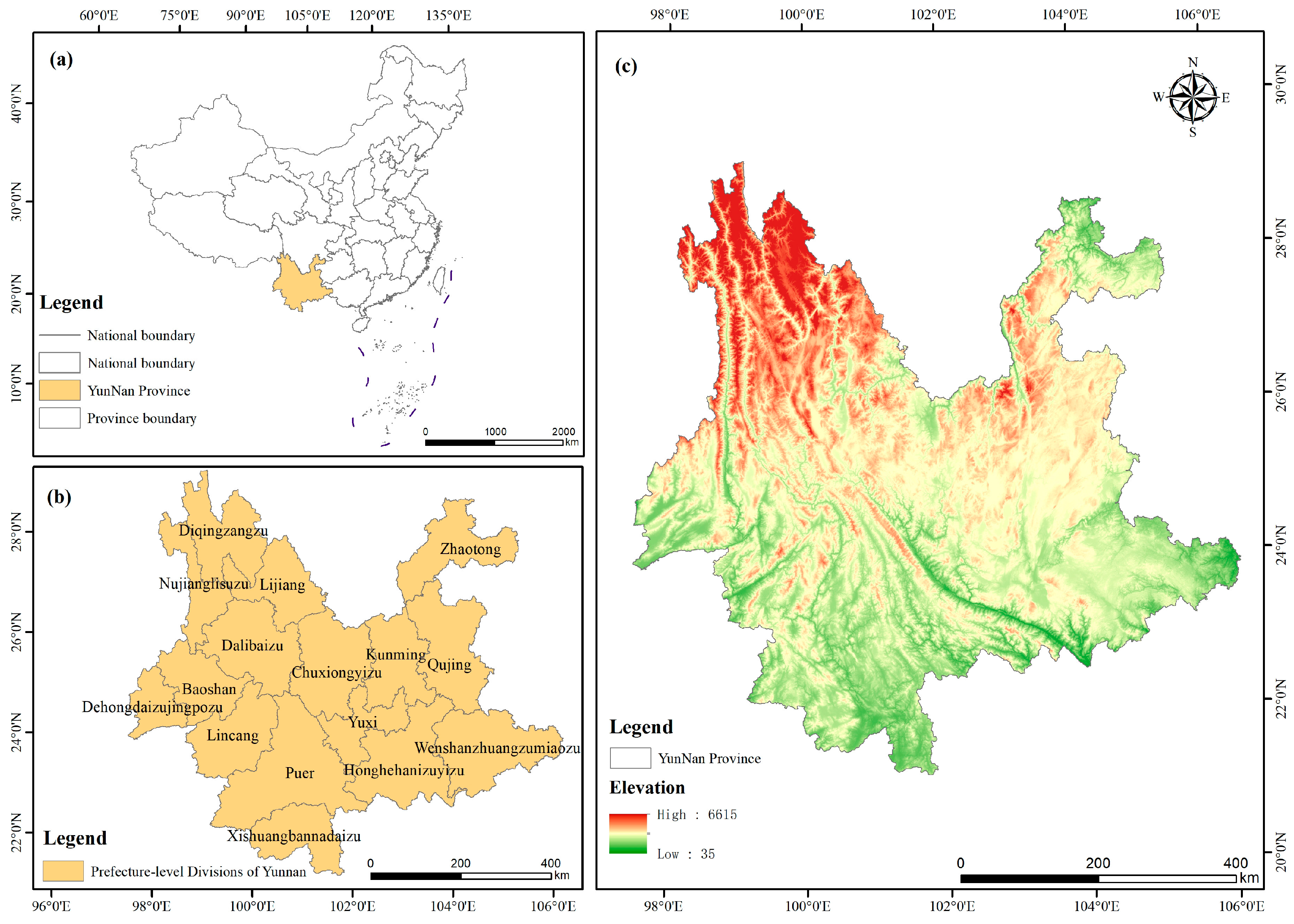
2.1. Study Site Description
2.2. Data
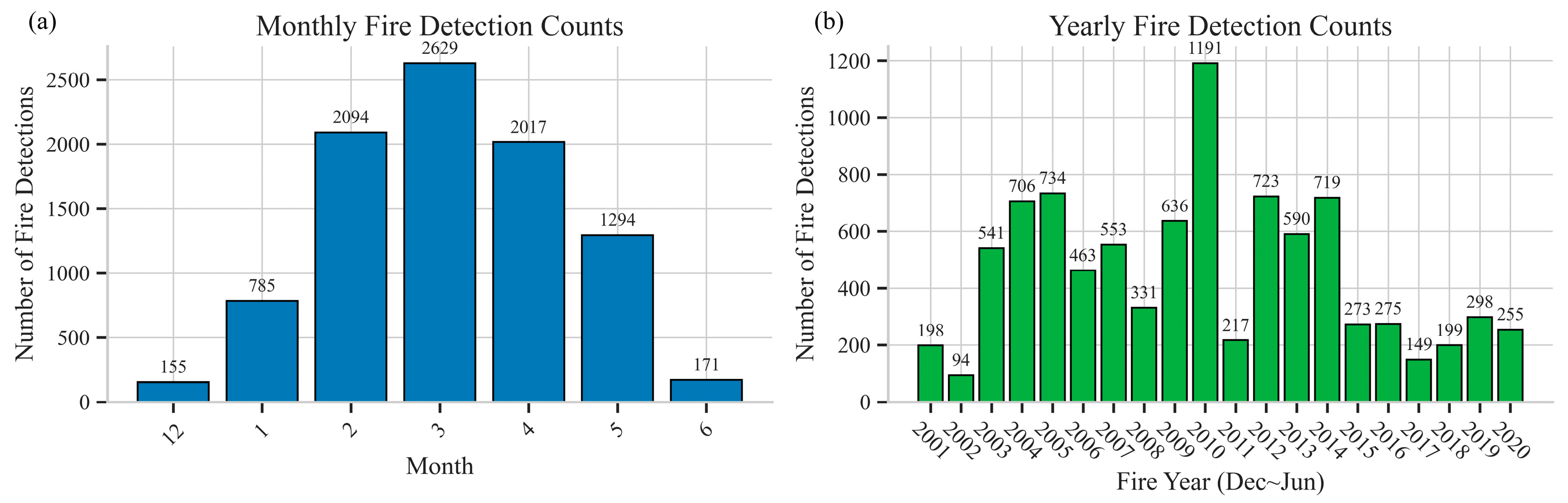
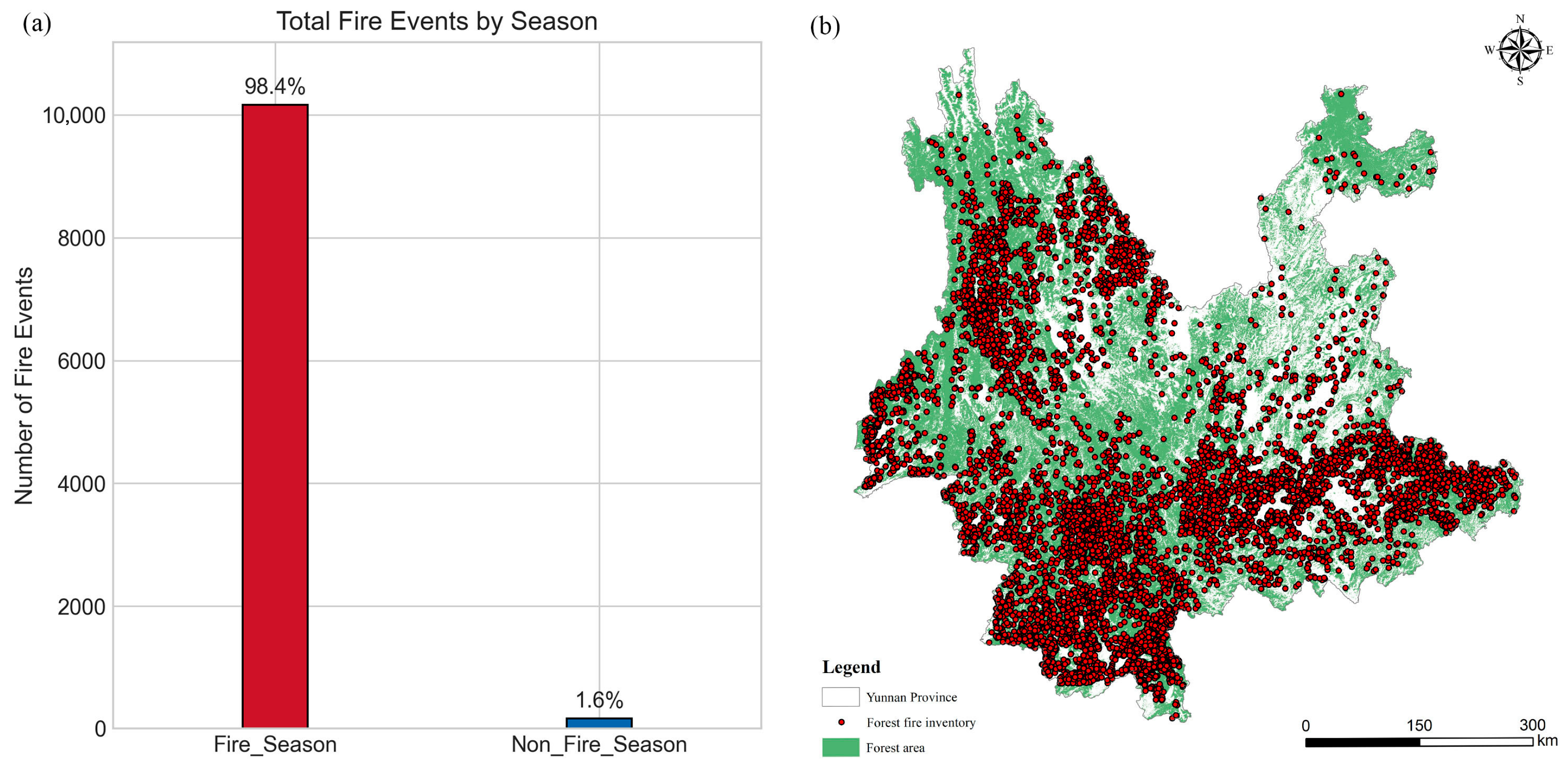
2.2.1. Forest Fire Data
2.2.2. Predictor Variables
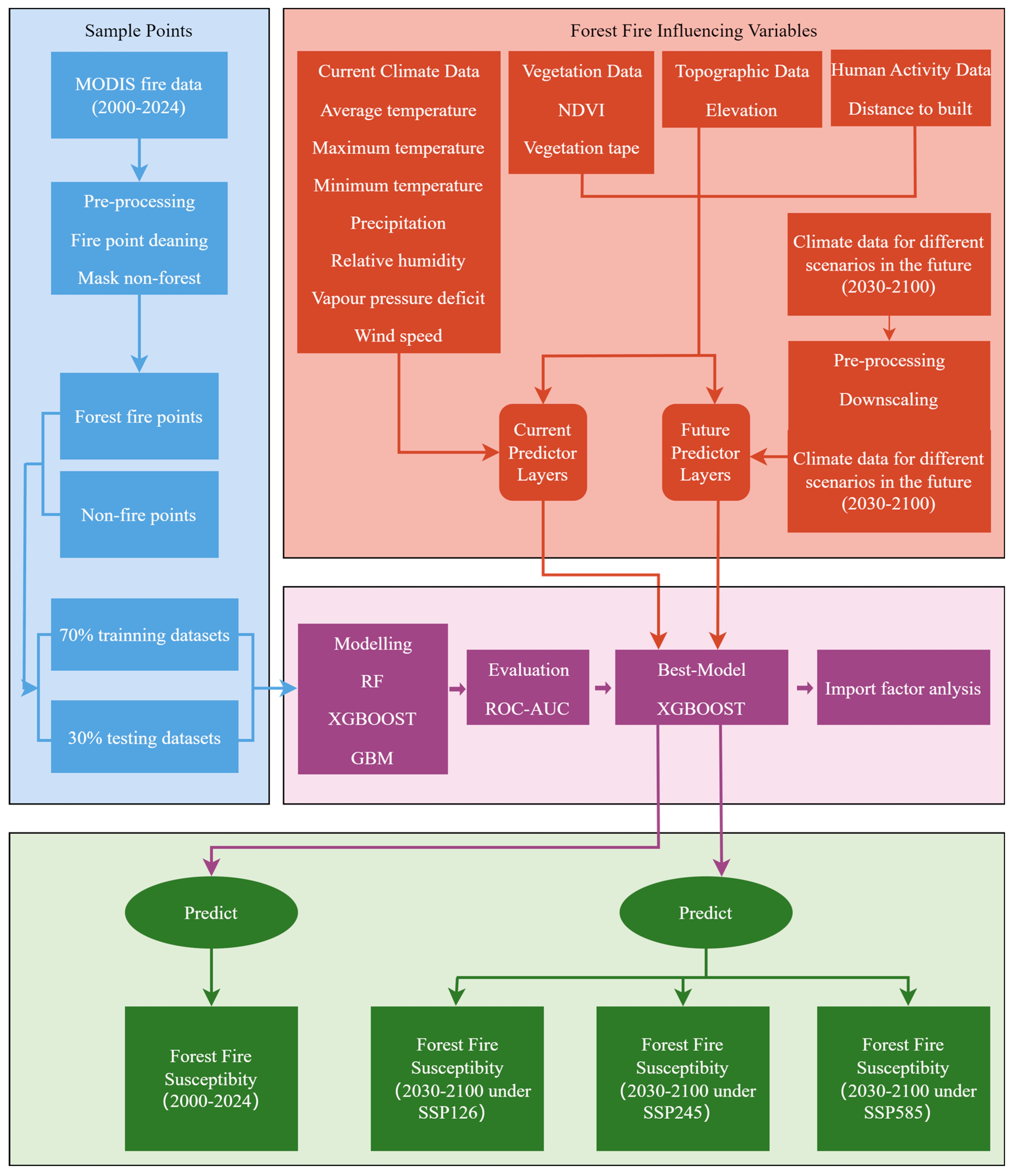
2.3. Technical Workflow
2.4. Machine Learning Model Application
2.4.1. XGBoost
2.4.2. RF
2.4.3. SVM
2.4.4. Variable Importance
2.4.5. SHAP Summary Plot
3. Results
3.1. Performance of the Models
3.2. Importance of Predictor Variables
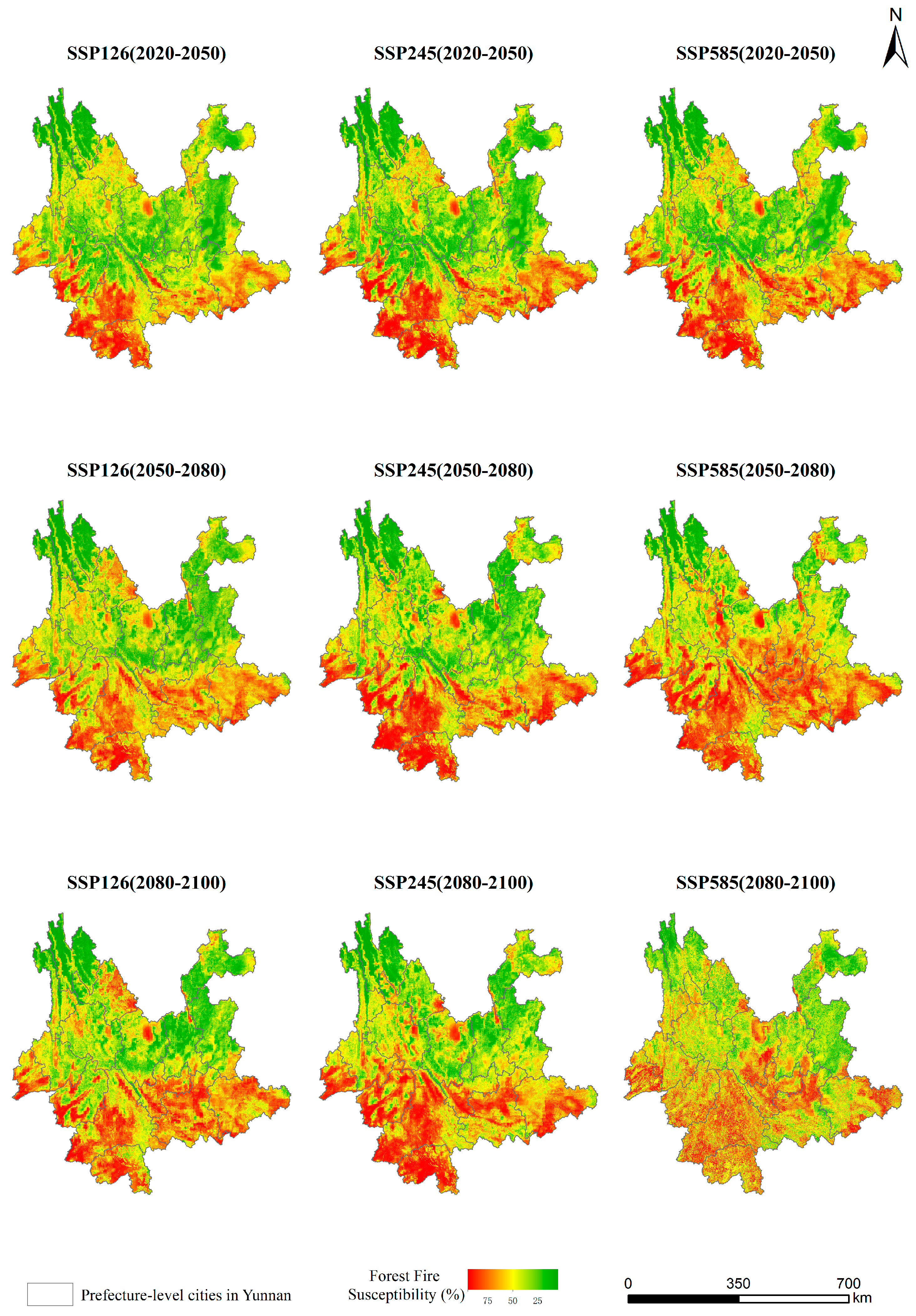
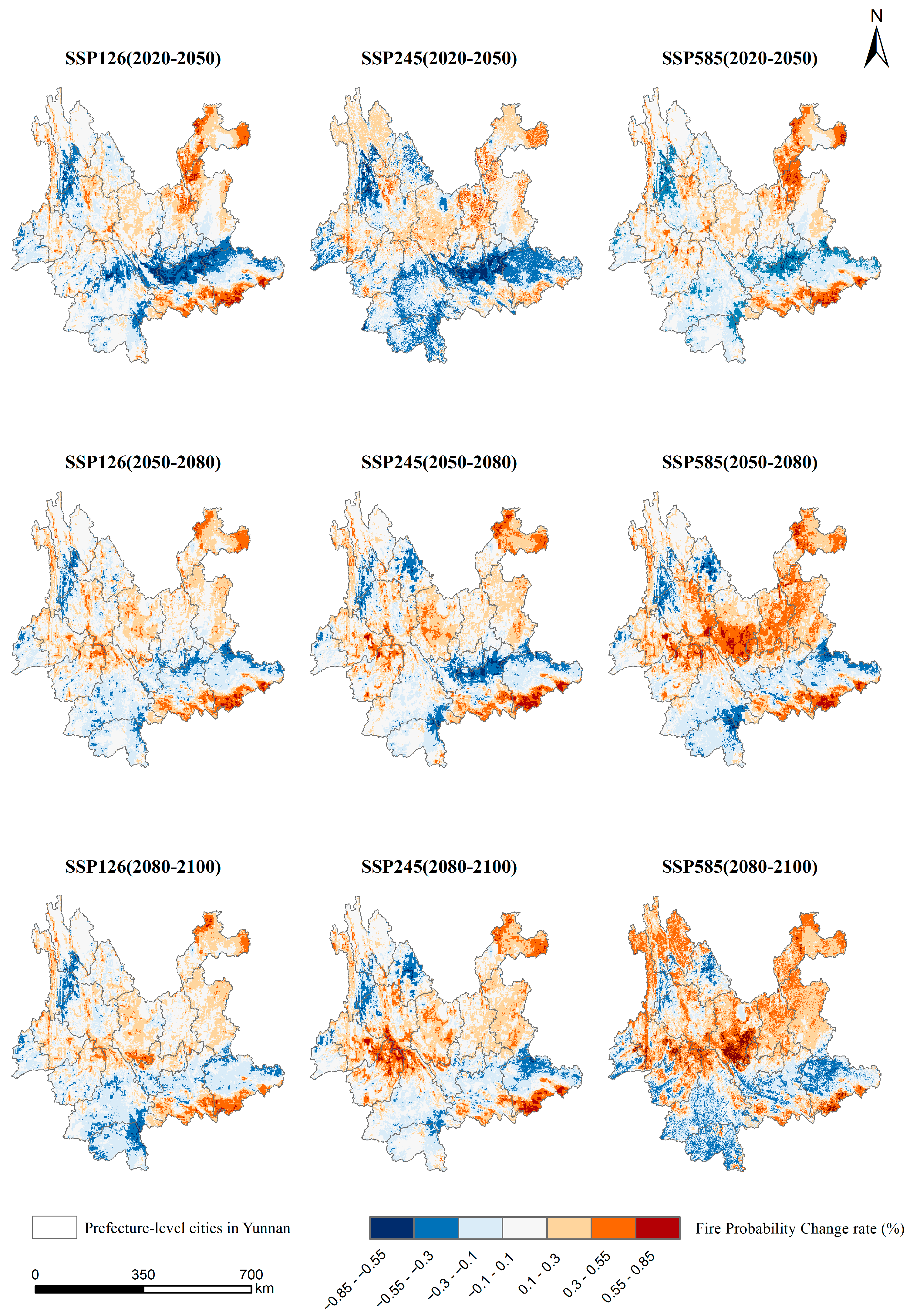
3.3. Forest Fire Susceptibility Under Current and Future Scenarios
4. Discussion
5. Conclusions
Author Contributions
Funding
Data Availability Statement
Acknowledgments
Conflicts of Interest
Abbreviations
| CMIP6 | Coupled Model Intercomparison Project Phase 6 |
| DEM | Digital Elevation Model |
| ERA5 | ECMWF Reanalysis v5 |
| FRP | Fire Radiative Power |
| GBM | Gradient Boosting Machine |
| GLC_FCS30 | Global Land Cover Fine Classification System (30 m) |
| MCD14ML | MODIS Collection 6.1 Active Fire Product |
| MODIS | Moderate Resolution Imaging Spectroradiometer |
| NDVI | Normalized Difference Vegetation Index |
| RF | Random Forest |
| SHAP | Shapley Additive Explanations |
| SRTM | Shuttle Radar Topography Mission |
| SSP | Shared Socioeconomic Pathway |
| SVM | Support Vector Machine |
| VPD | Vapor Pressure Deficit |
| XGBoost | Extreme Gradient Boosting |
| kPa | Kilopascal |
| RBF | Radial Basis Function |
References
- Whitman, E.; Sherren, K.; Rapaport, E. Increasing Daily Wildfire Risk in the Acadian Forest Region of Nova Scotia, Canada, under Future Climate Change. Reg. Environ. Change 2015, 15, 1447–1459. [Google Scholar] [CrossRef]
- Bowman, D.M.J.S.; Balch, J.K.; Artaxo, P.; Bond, W.J.; Carlson, J.M.; Cochrane, M.A.; D’Antonio, C.M.; DeFries, R.S.; Doyle, J.C.; Harrison, S.P.; et al. Fire in the Earth System. Science 2009, 324, 481–484. [Google Scholar] [CrossRef] [PubMed]
- Trenberth, K.E.; Dai, A.; Van Der Schrier, G.; Jones, P.D.; Barichivich, J.; Briffa, K.R.; Sheffield, J. Global Warming and Changes in Drought. Nat. Clim. Change 2014, 4, 17–22. [Google Scholar] [CrossRef]
- Huang, W.; Xie, T.; Huang, L.; Hao, S.; Duan, Y. Why Are Extreme Precipitation Events Becoming More Frequent in a Warming World? Fundam. Res. 2024, 5, 1631–1632. [Google Scholar] [CrossRef] [PubMed]
- Turco, M.; Abatzoglou, J.T.; Herrera, S.; Zhuang, Y.; Jerez, S.; Lucas, D.D.; AghaKouchak, A.; Cvijanovic, I. Anthropogenic Climate Change Impacts Exacerbate Summer Forest Fires in California. Proc. Natl. Acad. Sci. USA 2023, 120, e2213815120. [Google Scholar] [CrossRef]
- Cawson, J.G.; Collins, L.; Parks, S.A.; Nolan, R.H.; Penman, T.D. Atmospheric Dryness Removes Barriers to the Development of Large Forest Fires. Agric. For. Meteorol. 2024, 350, 109990. [Google Scholar] [CrossRef]
- Costa, L.; Thonicke, K.; Poulter, B.; Badeck, F.-W. Sensitivity of Portuguese Forest Fires to Climatic, Human, and Landscape Variables: Subnational Differences between Fire Drivers in Extreme Fire Years and Decadal Averages. Reg. Environ. Change 2011, 11, 543–551. [Google Scholar] [CrossRef]
- Xing, H.; Fang, K.; Yao, Q.; Zhou, F.; Ou, T.; Liu, J.; Zhou, S.; Jiang, S.; Chen, Y.; Bai, M.; et al. Impacts of Changes in Climate Extremes on Wildfire Occurrences in China. Ecol. Indic. 2023, 157, 111288. [Google Scholar] [CrossRef]
- Romps, D.M.; Seeley, J.T.; Vollaro, D.; Molinari, J. Projected Increase in Lightning Strikes in the United States Due to Global Warming. Science 2014, 346, 851–854. [Google Scholar] [CrossRef]
- Zhao, J.; Yue, C.; Wang, J.; Hantson, S.; Wang, X.; He, B.; Li, G.; Wang, L.; Zhao, H.; Luyssaert, S. Forest Fire Size Amplifies Postfire Land Surface Warming. Nature 2024, 633, 828–834. [Google Scholar] [CrossRef]
- Chuvieco, E.; Salas, F.J.; Carvacho, L.; Rodríguez-Silva, F. Integrated Fire Risk Mapping. In Remote Sensing of Large Wildfires; Chuvieco, E., Ed.; Springer: Berlin/Heidelberg, Germany, 1999; pp. 61–100. ISBN 978-3-642-64284-5. [Google Scholar]
- Hamilton, L.C.; Hartter, J.; Keim, B.D.; Boag, A.E.; Palace, M.W.; Stevens, F.R.; Ducey, M.J. Wildfire, Climate, and Perceptions in Northeast Oregon. Reg. Environ. Change 2016, 16, 1819–1832. [Google Scholar] [CrossRef]
- Li, G.; Hai, J.; Qiu, J.; Zhang, D.; Ge, C.; Wang, H.; Wu, J. Revealing Future Changes in China’s Forest Fire under Climate Change. Agric. For. Meteorol. 2025, 371, 110609. [Google Scholar] [CrossRef]
- Liu, X.; Zheng, C.; Wang, G.; Zhao, F.; Tian, Y.; Li, H. Integrating Multi-Source Remote Sensing Data for Forest Fire Risk Assessment. Forests 2024, 15, 2028. [Google Scholar] [CrossRef]
- Kostopoulou, E.; Stavridis, G. Wildfire Risk Assessment Using the Fire Weather Index (FWI) in Greece. Climate 2025, 13, 109. [Google Scholar] [CrossRef]
- Talukdar, N.R.; Ahmad, F.; Goparaju, L.; Choudhury, P.; Qayum, A.; Rizvi, J. Forest Fire in Thailand: Spatio-Temporal Distribution and Future Risk Assessment. Nat. Hazard. Res. 2024, 4, 87–96. [Google Scholar] [CrossRef]
- Gao, P.; Terando, A.J.; Kupfer, J.A.; Morgan Varner, J.; Stambaugh, M.C.; Lei, T.L.; Kevin Hiers, J. Robust Projections of Future Fire Probability for the Conterminous United States. Sci. Total Environ. 2021, 789, 147872. [Google Scholar] [CrossRef]
- Rafaqat, W.; Iqbal, M.; Kanwal, R.; Song, W. Study of Driving Factors Using Machine Learning to Determine the Effect of Topography, Climate, and Fuel on Wildfire in Pakistan. Remote Sens. 2022, 14, 1918. [Google Scholar] [CrossRef]
- Singha, C.; Swain, K.C.; Moghimi, A.; Foroughnia, F.; Swain, S.K. Integrating Geospatial, Remote Sensing, and Machine Learning for Climate-Induced Forest Fire Susceptibility Mapping in Similipal Tiger Reserve, India. For. Ecol. Manag. 2024, 555, 121729. [Google Scholar] [CrossRef]
- Zhang, H.; Wang, W.; Ban, Q. Seasonal Forest Fire Risk and Key Drivers in Yunnan Province: A Machine Learning Approach. npj Nat. Hazards 2025, 2, 59–74. [Google Scholar] [CrossRef]
- Bjånes, A.; De La Fuente, R.; Mena, P. A Deep Learning Ensemble Model for Wildfire Susceptibility Mapping. Ecol. Inf. 2021, 65, 101397. [Google Scholar] [CrossRef]
- Zhang, Y.; Mao, J.; Ricciuto, D.M.; Jin, M.; Yu, Y.; Shi, X.; Wullschleger, S.; Tang, R.; Liu, J. Global Fire Modelling and Control Attributions Based on the Ensemble Machine Learning and Satellite Observations. Sci. Remote Sens. 2023, 7, 100088. [Google Scholar] [CrossRef]
- Chen, T.; Guestrin, C. XGBoost: A Scalable Tree Boosting System. In Proceedings of the 22nd ACM SIGKDD International Conference on Knowledge Discovery and Data Mining, San Francisco, CA, USA, 13–17 August 2016; ACM: San Francisco, CA, USA, 2016; pp. 785–794. [Google Scholar]
- Breiman, L. Random Forests. Mach. Learn. 2001, 45, 5–32. [Google Scholar] [CrossRef]
- Cortes, C.; Vapnik, V. Support-Vector Networks. Mach. Learn. 1995, 20, 273–297. [Google Scholar] [CrossRef]
- Friedman, J.H. Greedy Function Approximation: A Gradient Boosting Machine. Ann. Stat. 2001, 29, 1189–1232. [Google Scholar] [CrossRef]
- Sarkar, M.S.; Majhi, B.K.; Pathak, B.; Biswas, T.; Mahapatra, S.; Kumar, D.; Bhatt, I.D.; Kuniyal, J.C.; Nautiyal, S. Ensembling Machine Learning Models to Identify Forest Fire-Susceptible Zones in Northeast India. Ecol. Inf. 2024, 81, 102598. [Google Scholar] [CrossRef]
- Abatzoglou, J.T.; Williams, A.P. Impact of Anthropogenic Climate Change on Wildfire across Western US Forests. Proc. Natl. Acad. Sci. USA 2016, 113, 11770–11775. [Google Scholar] [CrossRef]
- Jolly, W.M.; Cochrane, M.A.; Freeborn, P.H.; Holden, Z.A.; Brown, T.J.; Williamson, G.J.; Bowman, D.M.J.S. Climate-Induced Variations in Global Wildfire Danger from 1979 to 2013. Nat. Commun. 2015, 6, 7537. [Google Scholar] [CrossRef]
- Shao, X.; Li, C.; Chang, Y.; Xiong, Z.; Chen, H. Modeling Natural Forest Fire Regimes Based on Drought Characteristics at Various Spatial and Temporal Scales in P. R. China. Forests 2025, 16, 1041. [Google Scholar] [CrossRef]
- Sharples, J.J. Review of Formal Methodologies for Wind-Slope Correction of Wildfire Rate of Spread. Int. J. Wildland Fire 2008, 17, 179. [Google Scholar] [CrossRef]
- Balch, J.K.; Bradley, B.A.; Abatzoglou, J.T.; Nagy, R.C.; Fusco, E.J.; Mahood, A.L. Human-Started Wildfires Expand the Fire Niche across the United States. Proc. Natl. Acad. Sci. USA 2017, 114, 2946–2951. [Google Scholar] [CrossRef]
- Razavi-Termeh, S.V.; Sadeghi-Niaraki, A.; Choi, S.-M. Ubiquitous GIS-Based Forest Fire Susceptibility Mapping Using Artificial Intelligence Methods. Remote Sens. 2020, 12, 1689. [Google Scholar] [CrossRef]
- Cao, Y.; Zhou, X.; Yu, Y.; Rao, S.; Wu, Y.; Li, C.; Zhu, Z. Forest Fire Prediction Based on Time Series Networks and Remote Sensing Images. Forests 2024, 15, 1221. [Google Scholar] [CrossRef]
- Zhang, G.; Zhang, L.; Li, X.; Feng, X.; Wang, Y.; Guo, J.; Li, P.; Wei, X. Spatiotemporal Evolution Characteristics and Driving Mechanisms of Wildfires in China under the Context of Climate Change and Human Activities. Ecol. Indic. 2025, 176, 113694. [Google Scholar] [CrossRef]
- Abram, N.J.; Henley, B.J.; Sen Gupta, A.; Lippmann, T.J.R.; Clarke, H.; Dowdy, A.J.; Sharples, J.J.; Nolan, R.H.; Zhang, T.; Wooster, M.J.; et al. Connections of Climate Change and Variability to Large and Extreme Forest Fires in Southeast Australia. Commun. Earth Environ. 2021, 2, 8. [Google Scholar] [CrossRef]
- Jones, M.W.; Abatzoglou, J.T.; Veraverbeke, S.; Andela, N.; Lasslop, G.; Forkel, M.; Smith, A.J.P.; Burton, C.; Betts, R.A.; Van Der Werf, G.R.; et al. Global and Regional Trends and Drivers of Fire under Climate Change. Rev. Geophys. 2022, 60, e2020RG000726. [Google Scholar] [CrossRef]
- Lan, T.; Yan, X. Analysis of Drought Characteristics and Causes in Yunnan Province in the Last 60 Years (1961–2020). J. Hydrometeorol. 2024, 25, 177–190. [Google Scholar] [CrossRef]
- Qian, L.-S.; Chen, J.-H.; Deng, T.; Sun, H. Plant Diversity in Yunnan: Current Status and Future Directions. Plant Divers. 2020, 42, 281–291. [Google Scholar] [CrossRef]
- Xu, J.; Wilkes, A. Biodiversity Impact Analysis in Northwest Yunnan, Southwest China. Biodivers. Conserv. 2004, 13, 959–983. [Google Scholar] [CrossRef]
- Xiao, X.; Haberle, S.G.; Shen, J.; Xue, B.; Burrows, M.; Wang, S. Postglacial Fire History and Interactions with Vegetation and Climate in Southwestern Yunnan Province of China. Clim. Past. 2017, 13, 613–627. [Google Scholar] [CrossRef]
- Ying, L.; Han, J.; Du, Y.; Shen, Z. Forest Fire Characteristics in China: Spatial Patterns and Determinants with Thresholds. For. Ecol. Manag. 2018, 424, 345–354. [Google Scholar] [CrossRef]
- Davies, D.K.; Ilavajhala, S.; Wong, M.M.; Justice, C.O. Fire Information for Resource Management System: Archiving and Distributing MODIS Active Fire Data. IEEE Trans. Geosci. Remote Sens. 2009, 47, 72–79. [Google Scholar] [CrossRef]
- Hantson, S.; Padilla, M.; Corti, D.; Chuvieco, E. Strengths and Weaknesses of MODIS Hotspots to Characterize Global Fire Occurrence. Remote Sens. Environ. 2013, 131, 152–159. [Google Scholar] [CrossRef]
- Zhang, G.; Wang, M.; Liu, K. Forest Fire Susceptibility Modeling Using a Convolutional Neural Network for Yunnan Province of China. Int. J. Disaster Risk Sci. 2019, 10, 386–403. [Google Scholar] [CrossRef]
- Horn, K.H.; Vulova, S.; Li, H.; Kleinschmit, B. Modelling Current and Future Forest Fire Susceptibility in North-Eastern Germany. Nat. Hazards Earth Syst. Sci. 2025, 25, 383–401. [Google Scholar] [CrossRef]
- Mohajane, M.; Costache, R.; Karimi, F.; Bao Pham, Q.; Essahlaoui, A.; Nguyen, H.; Laneve, G.; Oudija, F. Application of Remote Sensing and Machine Learning Algorithms for Forest Fire Mapping in a Mediterranean Area. Ecol. Indic. 2021, 129, 107869. [Google Scholar] [CrossRef]
- Thi Hang, H.; Mallick, J.; Alqadhi, S.; Bindajam, A.A.; Abdo, H.G. Exploring Forest Fire Susceptibility and Management Strategies in Western Himalaya: Integrating Ensemble Machine Learning and Explainable AI for Accurate Prediction and Comprehensive Analysis. Environ. Technol. Innov. 2024, 35, 103655. [Google Scholar] [CrossRef]
- Hersbach, H.; Bell, B.; Berrisford, P.; Hirahara, S.; Horányi, A.; Muñoz-Sabater, J.; Nicolas, J.; Peubey, C.; Radu, R.; Schepers, D.; et al. The ERA5 Global Reanalysis. Q. J. R. Meteorol. Soc. 2020, 146, 1999–2049. [Google Scholar] [CrossRef]
- Eyring, V.; Bony, S.; Meehl, G.A.; Senior, C.A.; Stevens, B.; Stouffer, R.J.; Taylor, K.E. Overview of the Coupled Model Intercomparison Project Phase 6 (CMIP6) Experimental Design and Organization. Geosci. Model Dev. 2016, 9, 1937–1958. [Google Scholar] [CrossRef]
- Wu, T.; Lu, Y.; Fang, Y.; Xin, X.; Li, L.; Li, W.; Jie, W.; Zhang, J.; Liu, Y.; Zhang, L.; et al. The Beijing Climate Center Climate System Model (BCC-CSM): The Main Progress from CMIP5 to CMIP6. Geosci. Model Dev. 2019, 12, 1573–1600. [Google Scholar] [CrossRef]
- Guo, J.; Wang, X.; Xiao, C.; Liu, L.; Wang, T.; Shen, C. Evaluation of the Temperature Downscaling Performance of PRECIS to the BCC-CSM2-MR Model over China. Clim. Dyn. 2022, 59, 1143–1159. [Google Scholar] [CrossRef]
- Yang, Y.; Bai, L.; Wang, B.; Wu, J.; Fu, S. Reliability of the Global Climate Models during 1961–1999 in Arid and Semiarid Regions of China. Sci. Total Environ. 2019, 667, 271–286. [Google Scholar] [CrossRef] [PubMed]
- Zhu, X.; Chu, J.; Wang, K.; Wu, S.; Yan, W.; Chiam, K. Prediction of Rockhead Using a Hybrid N-XGBoost Machine Learning Framework. J. Rock Mech. Geotech. Eng. 2021, 13, 1231–1245. [Google Scholar] [CrossRef]
- Chapelle, O.; Haffner, P.; Vapnik, V.N. Support Vector Machines for Histogram-Based Image Classification. IEEE Trans. Neural Netw. 1999, 10, 1055–1064. [Google Scholar] [CrossRef] [PubMed]
- Strobl, C.; Boulesteix, A.-L.; Zeileis, A.; Hothorn, T. Bias in Random Forest Variable Importance Measures: Illustrations, Sources and a Solution. BMC Bioinform. 2007, 8, 25. [Google Scholar] [CrossRef]
- Lundberg, S.M.; Lee, S.-I. A Unified Approach to Interpreting Model Predictions. In Proceedings of the Advances in Neural Information Processing Systems, Long Beach, CA, USA, 4–9 December 2017; Curran Associates, Inc.: New York, NY, USA, 2017; Volume 30. [Google Scholar]
- Shapley, L.S. A Value for n-Person Games. In Contributions to the Theory of Games, Volume II; Kuhn, H., Tucker, A.W., Eds.; Princeton University Press: Princeton, NJ, USA, 1953; pp. 307–318. [Google Scholar] [CrossRef]
- Ye, J.; Wu, M.; Deng, Z.; Xu, S.; Zhou, R.; Clarke, K.C. Modeling the Spatial Patterns of Human Wildfire Ignition in Yunnan Province, China. Appl. Geogr. 2017, 89, 150–162. [Google Scholar] [CrossRef]
- Wu, Z.; He, H.S.; Fang, L.; Liang, Y.; Parsons, R.A. Wind Speed and Relative Humidity Influence Spatial Patterns of Burn Severity in Boreal Forests of Northeastern China. Ann. For. Sci. 2018, 75, 66. [Google Scholar] [CrossRef]
- Barik, A.; Baidya Roy, S. Climate Change Strongly Affects Future Fire Weather Danger in Indian Forests. Commun. Earth Environ. 2023, 4, 452. [Google Scholar] [CrossRef]
- Quilcaille, Y.; Batibeniz, F.; Ribeiro, A.F.S.; Padrón, R.S.; Seneviratne, S.I. Fire Weather Index Data under Historical and Shared Socioeconomic Pathway Projections in the 6th Phase of the Coupled Model Intercomparison Project from 1850 to 2100. Earth Syst. Sci. Data 2023, 15, 2153–2177. [Google Scholar] [CrossRef]
- Shao, Y.; Fan, G.; Feng, Z.; Sun, L.; Yang, X.; Ma, T.; Li, X.; Fu, H.; Wang, A. Prediction of Forest Fire Occurrence in China under Climate Change Scenarios. J. For. Res. 2023, 34, 1217–1228. [Google Scholar] [CrossRef]
- Dupuy, J.; Fargeon, H.; Martin-StPaul, N.; Pimont, F.; Ruffault, J.; Guijarro, M.; Hernando, C.; Madrigal, J.; Fernandes, P. Climate Change Impact on Future Wildfire Danger and Activity in Southern Europe: A Review. Ann. For. Sci. 2020, 77, 35. [Google Scholar] [CrossRef]


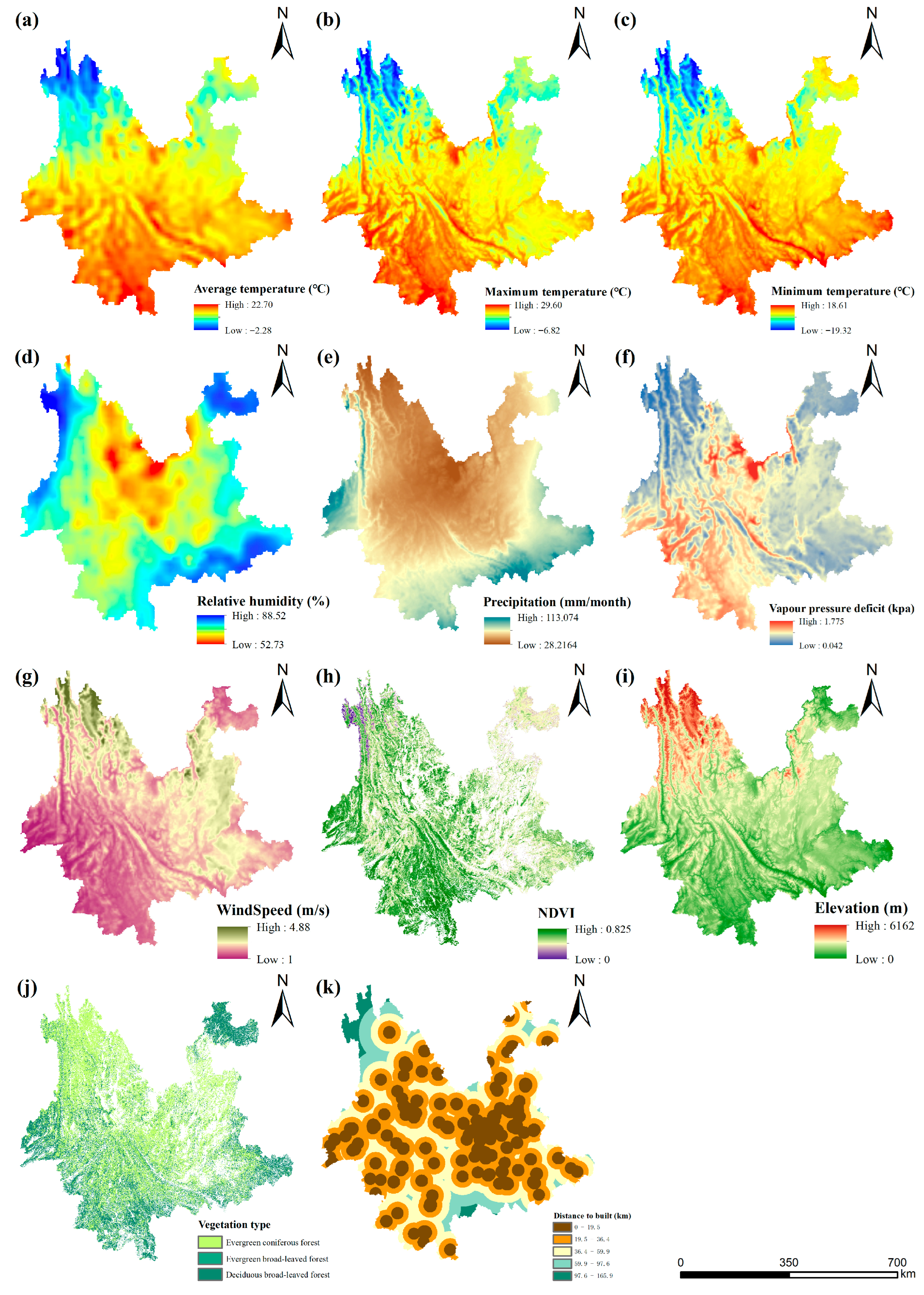



| No. | Data | Scale/Resolution | Unit | Original Data Format | Source |
|---|---|---|---|---|---|
| 1 | Average temperature | 0.25° (lat/long) | °C | NetCDF | ERA5 |
| 2 | Relative humidity | 0.25° (lat/long) | % | NetCDF | ERA5 |
| 3 | Maximum temperature | 0.041° (lat/long) | °C | NetCDF | TerraClimate |
| 4 | Minimum temperature | 0.041° (lat/long) | °C | NetCDF | TerraClimate |
| 5 | Precipitation | 0.041° (lat/long) | mm | NetCDF | TerraClimate |
| 6 | Vapor pressure deficit | 0.041° (lat/long) | kpa | NetCDF | TerraClimate |
| 7 | WindSpeed | 0.041° (lat/long) | m/s | NetCDF | TerraClimate |
| 8 | Elevation | 90 m | m | Raster | SRTM |
| 9 | NDVI | 1 km | ratio | Raster | MODIS |
| 10 | Vegetation type | 30 m | - | Raster | GLC_FCS30 |
| 11 | Distance to built | - | km | Vector | ESA WorldCover |
| 12 | Forest fire points | 1 km | - | Vector | MODIS |
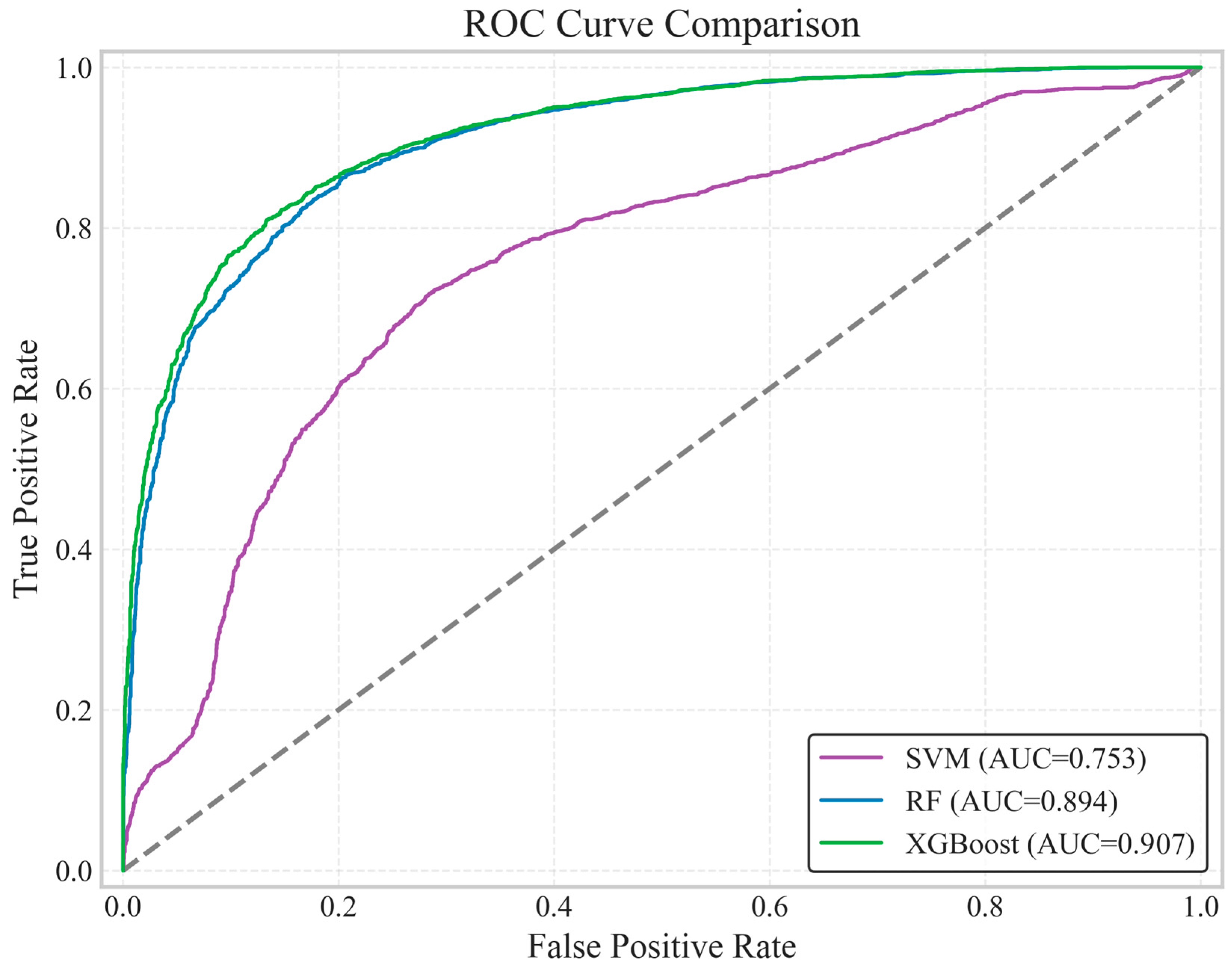
| Model | AUC | Accuracy | Precision | Recall | F1 Score | Kappa | Sensitivity |
|---|---|---|---|---|---|---|---|
| SVM | 0.753 | 0.716 | 0.718 | 0.71 | 0.714 | 0.431 | 0.71 |
| RF | 0.894 | 0.814 | 0.865 | 0.769 | 0.814 | 0.629 | 0.809 |
| XGBoost | 0.907 | 0.831 | 0.877 | 0.792 | 0.832 | 0.662 | 0.817 |
| Scenario | Period | Mean | Max | Min | Std | HighRiskPct |
|---|---|---|---|---|---|---|
| Present | 2000–2020 | 0.452 | 0.985 | 0.010 | 0.307 | 0.416 |
| SSP1-2.6 | 2020–2050 | 0.423 | 0.956 | 0.014 | 0.234 | 0.354 |
| SSP1-2.6 | 2050–2080 | 0.456 | 0.956 | 0.014 | 0.231 | 0.427 |
| SSP1-2.6 | 2080–2100 | 0.449 | 0.945 | 0.014 | 0.221 | 0.421 |
| SSP2-4.5 | 2020–2050 | 0.430 | 0.958 | 0.014 | 0.233 | 0.370 |
| SSP2-4.5 | 2050–2080 | 0.468 | 0.958 | 0.013 | 0.237 | 0.428 |
| SSP2-4.5 | 2080–2100 | 0.490 | 0.942 | 0.014 | 0.232 | 0.477 |
| SSP5-8.5 | 2020–2050 | 0.445 | 0.964 | 0.014 | 0.228 | 0.408 |
| SSP5-8.5 | 2050–2080 | 0.518 | 0.944 | 0.013 | 0.210 | 0.548 |
| SSP5-8.5 | 2080–2100 | 0.522 | 0.942 | 0.073 | 0.158 | 0.533 |
Disclaimer/Publisher’s Note: The statements, opinions and data contained in all publications are solely those of the individual author(s) and contributor(s) and not of MDPI and/or the editor(s). MDPI and/or the editor(s) disclaim responsibility for any injury to people or property resulting from any ideas, methods, instructions or products referred to in the content. |
© 2026 by the authors. Licensee MDPI, Basel, Switzerland. This article is an open access article distributed under the terms and conditions of the Creative Commons Attribution (CC BY) license.
Share and Cite
Yang, C.; Yao, P.; Wang, Q.; Wang, S.; Xing, D.; Wang, Y.; Zhang, J. XGBoost-Based Susceptibility Model Exhibits High Accuracy and Robustness in Plateau Forest Fire Prediction. Forests 2026, 17, 74. https://doi.org/10.3390/f17010074
Yang C, Yao P, Wang Q, Wang S, Xing D, Wang Y, Zhang J. XGBoost-Based Susceptibility Model Exhibits High Accuracy and Robustness in Plateau Forest Fire Prediction. Forests. 2026; 17(1):74. https://doi.org/10.3390/f17010074
Chicago/Turabian StyleYang, Chuang, Ping Yao, Qiuhua Wang, Shaojun Wang, Dong Xing, Yanxia Wang, and Ji Zhang. 2026. "XGBoost-Based Susceptibility Model Exhibits High Accuracy and Robustness in Plateau Forest Fire Prediction" Forests 17, no. 1: 74. https://doi.org/10.3390/f17010074
APA StyleYang, C., Yao, P., Wang, Q., Wang, S., Xing, D., Wang, Y., & Zhang, J. (2026). XGBoost-Based Susceptibility Model Exhibits High Accuracy and Robustness in Plateau Forest Fire Prediction. Forests, 17(1), 74. https://doi.org/10.3390/f17010074