


Abstract
In Central Poland, bryophytes growing on trees have not previously been the subject of detailed analysis. Furthermore, the collected data have never been examined using mathematical methods. Several years of observation of the bryoflora in Central Poland, conducted across 465 hectares of forest and involving 21 tree species, revealed that these trees are colonized by 67 bryophyte taxa, primarily mosses. In this part of Poland most of the trees were overgrown by common, multi-substrate forest species such as Hypnum cupressiforme, Brachythecium rutabulum, or Lophocolea heterophylla. On the other hand, species occurring more rarely, and typically limited to single tree species, included, e.g., Dicranum viride and representatives of the genus Orthotrichum sensu lato (e.g., O. affine, O. pumilum, O. speciosum). The conducted research indicated that not only deciduous trees (e.g., Quercus robur, Carpinus betulus, Betula pendula) were readily colonized by bryophytes—Abies alba, as well as other coniferous trees, also proved to be a highly favorable substrate for these organisms. Moreover, analysis of the bryophytes of individual trees revealed that the trees formed three distinct groups, and the grouping is influenced not only by the species composition of the growing bryophytes. Nonetheless, deciduous and coniferous taxa within each group were colonized by similar mosses and liverworts species. Additionally, different zones of the tree trunk were found to be inhabited by distinct bryophyte assemblages. Thus, the study highlights the specificity of mosses and liverworts flora growing on trees in Central Poland.
1. Introduction
Central Poland, as defined by Jakubowska-Gabara et al. [1], is a region that essentially corresponds to the area of the Łódź Voivodeship. Since the 19th century, this region has been thoroughly and systematically studied [2,3,4,5,6,7,8] with respect to vascular plants [9,10,11,12,13,14,15,16]. However, as indicated by Staniaszek-Kik and Wolski [17], the bryoflora of the region has been poorly studied and only fragmentarily.
The innovative use of bryophytes as bioindicators of phytocoenoses [18,19,20,21,22], which was pioneered in Central Poland as one of the first initiatives in the country, did not continue there in the following decades. It was only in the 20th century [23,24,25,26,27] that interest in researching bryophytes in this region began to increase [28,29,30,31,32].
A common feature of natural and semi-natural forest phytocoenoses is their complex, multi-layered structure [33,34], which develops through the natural process of selecting species capable of coexisting in specific environmental conditions. Forest phytocoenoses are characterized by a high diversity of substrates, microforms of terrain, and ecological niches, as well as a high degree of internal complexity, extensive structure, and stability [33,35]. These features determine the number of potentially available habitats and substrates, and thus the richness of organisms inhabiting the forest. For spore-bearing plants, the forest interior thus represents a mosaic of habitats and substrates available for colonization [22,36,37,38,39,40].
Bryophytes are a permanent and integral component of all plant communities—both forest and non-forest. Unlike other plants, they grow on all available substrates. In lowland forests, these substrates are primarily epigenic, epixylic, and epiphytic habitats. The colonization process by bryophytes is influenced by factors such as the rate of plant growth and the mode of reproduction [41]. These processes are also affected by a species tolerance, or the lack thereof, to specific environmental conditions. Based on this criterion, species are classified as either facultative or obligate [35,41,42,43,44,45].
These close relationships between species and their overgrown substrate are reflected not only in the distinction of bryocoenological groups [46] but also—particularly for soil species—in the classification of individual plant communities [47]. Two of the bryocoenological groups mentioned above—epixylia and epiphytia—include taxa inhabiting the bark and roots of trees [46].
Barkman’s studies [48] showed that the diversity of epiphytic flora is influenced by properties of the phorophyte, such as the substrate duration (tree age), crown density, and bark characteristics, including the rate of its renewal, water absorption capacity, texture (i.e., surface cracking), and its chemical composition. On the other hand, the richness of the epiphyte group is also determined by local climate factors, terrain slope, elevation, wind exposure, and the height at which a given species grows on the trunk. Additionally, whether the tree grows within a compact forest complex or isolation is important [35,41,43,45]. The forest community in which the tree grows, as well as the degree of naturalness of the phytocoenoses, are also significant factors [35,41,42,43,49,50]. Since no large-scale, comprehensive study of bryoflora in Central Poland has been conducted since the 1970s [6,18,19,20,21], this study aims to fill that gap.
Taking into account the above facts, the research was planned with following objectives: to examine the richness of bark-inhabiting bryophytes in forest reserves of Central Poland; analyze the similarity of bryoflora on individual trees; assess the differences in species composition of bryophytes growing in different tree zones. The results of this research are presented in the following article.
2. Materials and Methods
2.1. Explanation of Concept
In studies of bryophytes growing on tree bark, the term epiphyte is commonly applied to any species found colonizing living bark surfaces [48,51]. This broad definition, rooted in classical ecological terminology, encompasses both obligate epiphytes—species that are specialized to grow exclusively on living plant surfaces—and a wide range of facultative taxa, which may also occur on dead wood, rocks or soil [52]. However, this inclusive use of the term epiphyte may obscure important ecological distinctions, particularly in forest habitats, where the bark surface is frequently colonized by species that are not true epiphytes in the functional sense [53,54]. In the context of the present study, the majority of species recorded on tree bark were not obligate epiphytes, but rather terrestrial or epixylous bryophytes that secondarily occupy bark under favorable microclimatic conditions. These species typically exhibit broader ecological amplitudes and are often dominant in forest floor communities or on decaying wood [55]. Their presence on tree bark likely reflects the humid, shaded, and thermally buffered environment of closed forest stands, which allows such species to extend their realized niche beyond their primary substrates [56]. To avoid confusion and to better reflect the ecological reality of the studied communities, we therefore refrain from using the term “epiphyte” as a general descriptor in this paper. Instead, we refer to these species more precisely as “bark-inhabiting bryophytes”, which emphasizes the substrate without implying obligate epiphytism. This terminological choice aims to more accurately represent the ecological character of the species involved and to facilitate a clearer interpretation of their distribution patterns within forest ecosystems [57,58].
2.2. Sampling Design
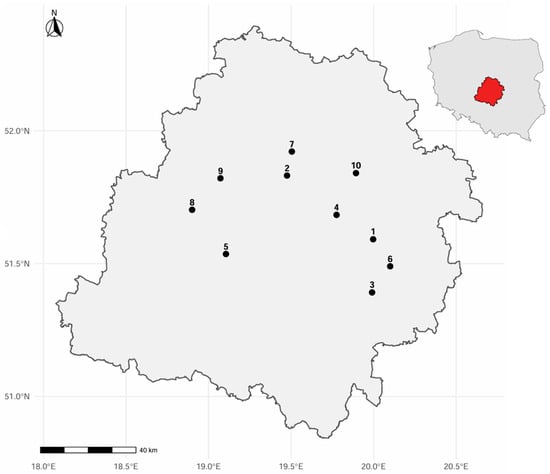
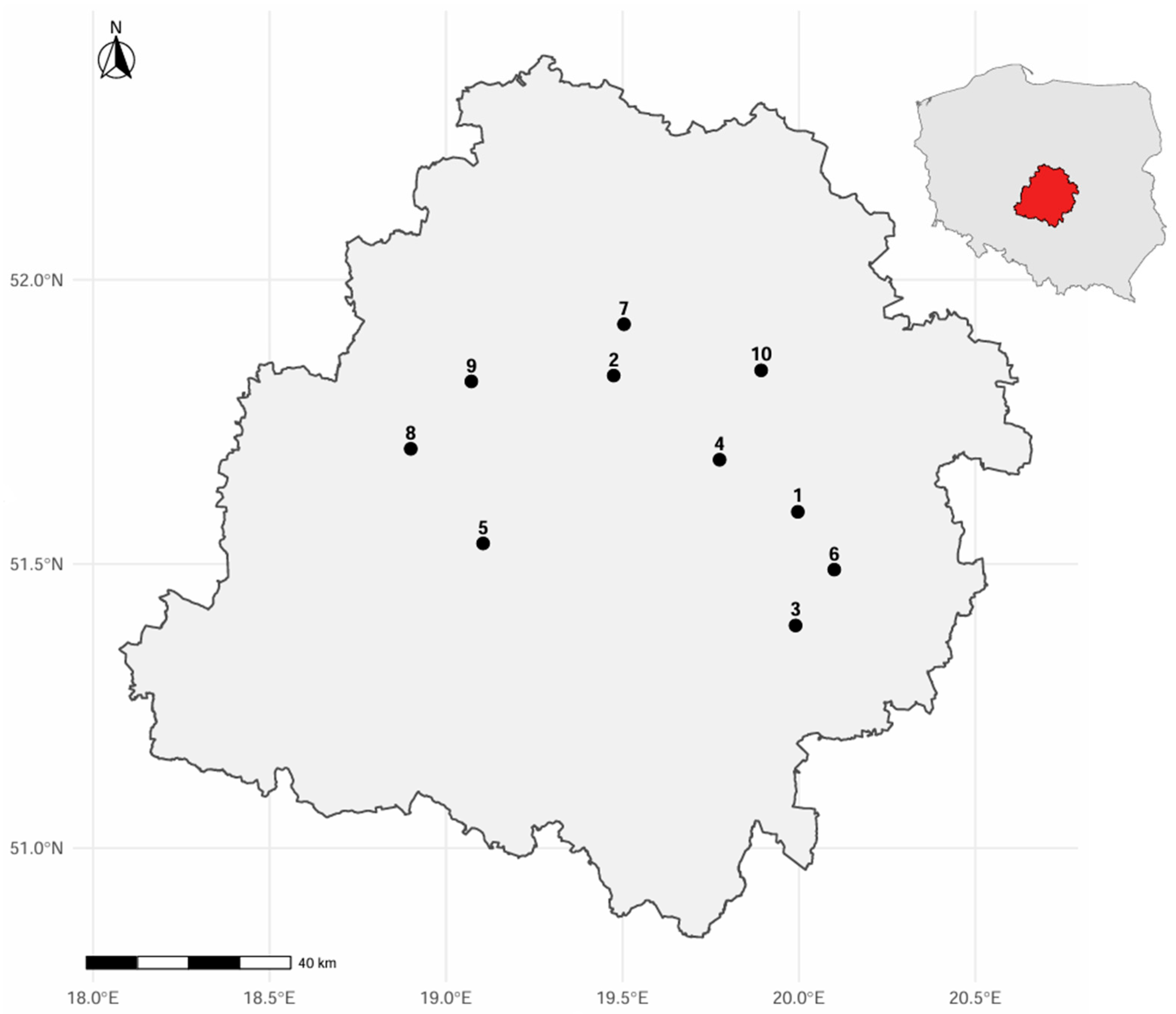
Field studies were conducted in Central Poland, as defined by Jakubowska-Gabara et al. [1], which corresponds to the Łódź Voivodeship. The research focused on nature reserves whose primary conservation goal is the silver fir (Abies alba) along the northern edge of its geographical range in the lowlands of Poland. According to Kurowski et al. [59], 27 reserves were established for this purpose in Central Poland. After reviewing the relevant literature on current vegetation and conducting preliminary fieldwork, 10 reserves were selected for the study. These reserves were chosen as they represent the most significant forest phytocoenoses of the region and represent the basic phytocoenoses of this region of Poland (Table 1 and Figure 1).
Table 1.
Area and phytocenosis of the studied nature reserves.
Figure 1.
Location of the studied nature reserves against the background of the borders of Central Poland (design, and creation of the graphic by Mikołaj Latoszewski). Names of individual reserves: 1—Kruszewiec, 2—Las Łagiewnicki, 3—Błogie, 4—Łaznów, 5—Jodły Łaskie, 6—Jeleń, 7—Grądy nad Moszczenicą, 8—Jamno, 9—Jodły Oleśnickie, 10—Doliska.
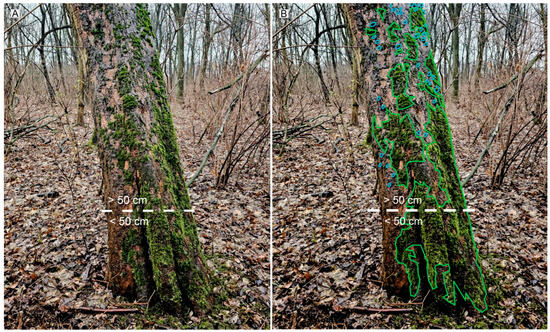
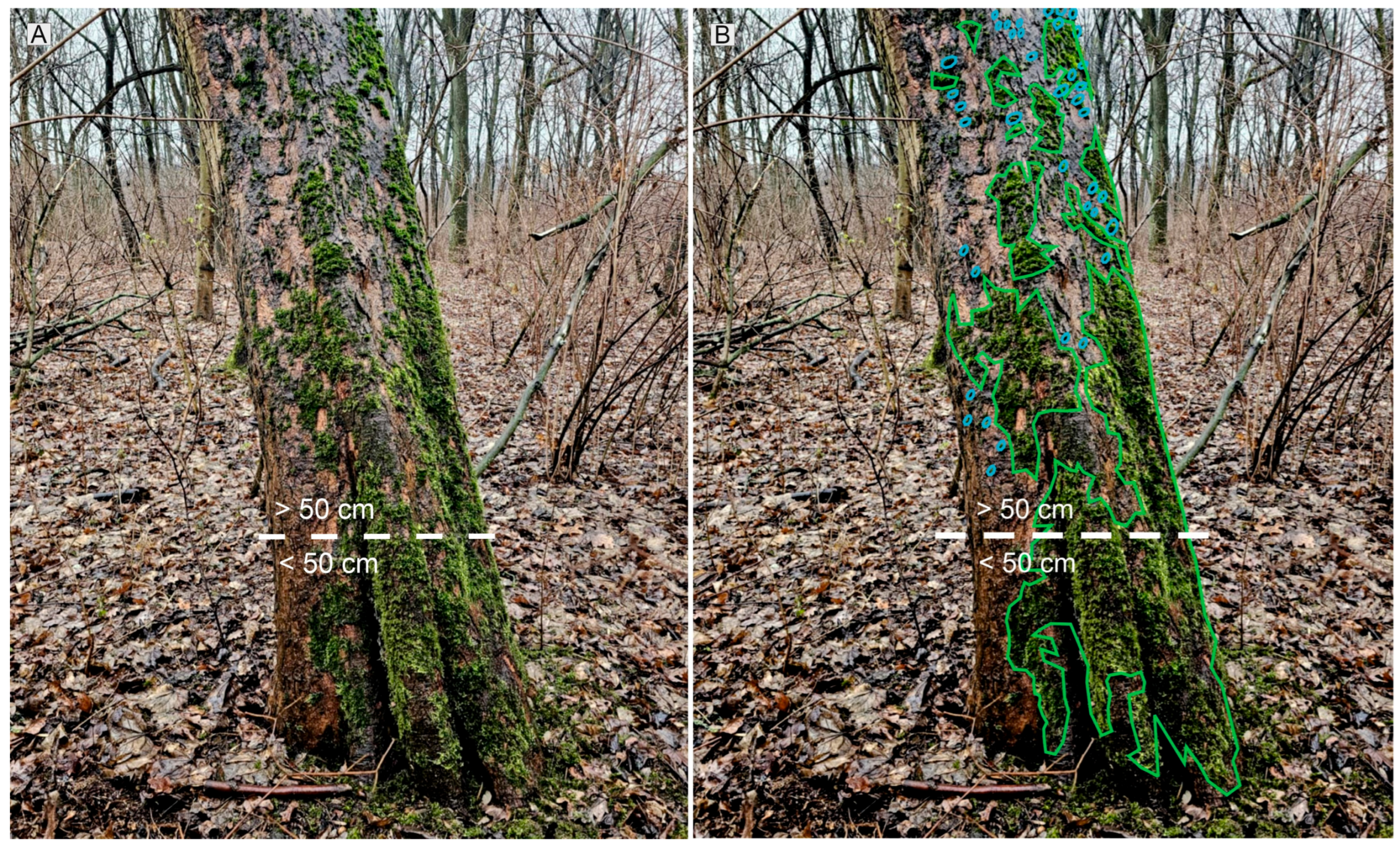
The study area, covering more than 465 hectares, was investigated between 2009 and 2012 and have been enriched by data collected in recent years by the first author of this manuscript. Research was conducted using the topographic method [60], which involves systematically searching the entire study area along designated strips. During research, all trees colonized by bryophytes were examined. Mosses and liverworts were identified and analyzed in two height ranges and two trunk zones: zone I (from ground level to 50 cm in height) and zone II (from 50 cm up to about 2.5 m in height) (Figure 2). What is the accepted practice and methodology in this type of research.
Figure 2.
Two zones of the examined trunk: zone I (from ground level to 50 cm in height) and zone II (from 50 cm up to about 2.5 m in height): (A) location of the lines on the trunk, (B) explanation of its influence: dominance of Hypnum cupressiforme (green line) in the lower parts of the trunk, which is a multi-substrate species, and the occurrence of typical epiphytes—species of the genus Orthotrichum (blue line)—only in the upper parts of the trunk (photo, design, and creation of the graphic by Grzegorz J. Wolski).
The herbarium material documenting these studies was deposited in the Herbarium LOD and KRAM-B. The names of vascular plants followed Mirek et al. [61], bryophytes followed Ochyra et al. [62], except for Rosulabryum moravicum (Podp.) Ochyra & Stebel, which is cited according to Stebel [38], Sciuro-hypnum curtum (Lindb.) Ignatov [63], and liverworts were classified according to Szweykowski [64].
The research provided extensive qualitative and quantitative data (Supplementary Materials S1 and S2). These data were initially used to provide a general description of the bark-inhabiting bryoflora of the studied area, as well as to describe the bryophyte flora on individual tree species (Supplementary Material S3).
2.3. Qualitative and Quantitative Analysis
To analyze the differences between the bryophyte species pools growing across individual trees, and due to the absence of data on the total number of trees studied, the original quantitative database (Supplementary Materials S1 and S2) was transformed into a binary 0–1 database (Supplementary Materials S4–S6). This data was then used for statistical analyses, including all bryophyte species, even those occurring sporadically.
To assess the similarity of the studied trees based on the bryophyte species present, hierarchical clustering was performed using the Jaccard similarity coefficient and the Ward linkage method (HCA dendrogram). To further explore the relationships between the studied plots, Principal Coordinate Analysis (PCoA) was also performed. To determine statistical significance between the groups, a PERMANOVA analysis was conducted based on the Bray–Curtis distance, with pairwise comparisons using Bonferroni correction. All calculations were performed using the PAST v. 4.09 package.
3. Results
3.1. The Richness of Bark-Inhabiting Bryophyte Flora in the Studied Reserves
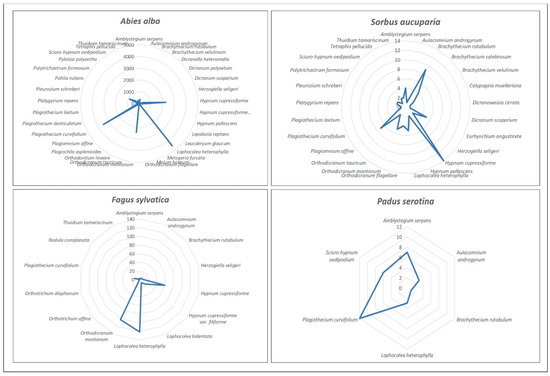
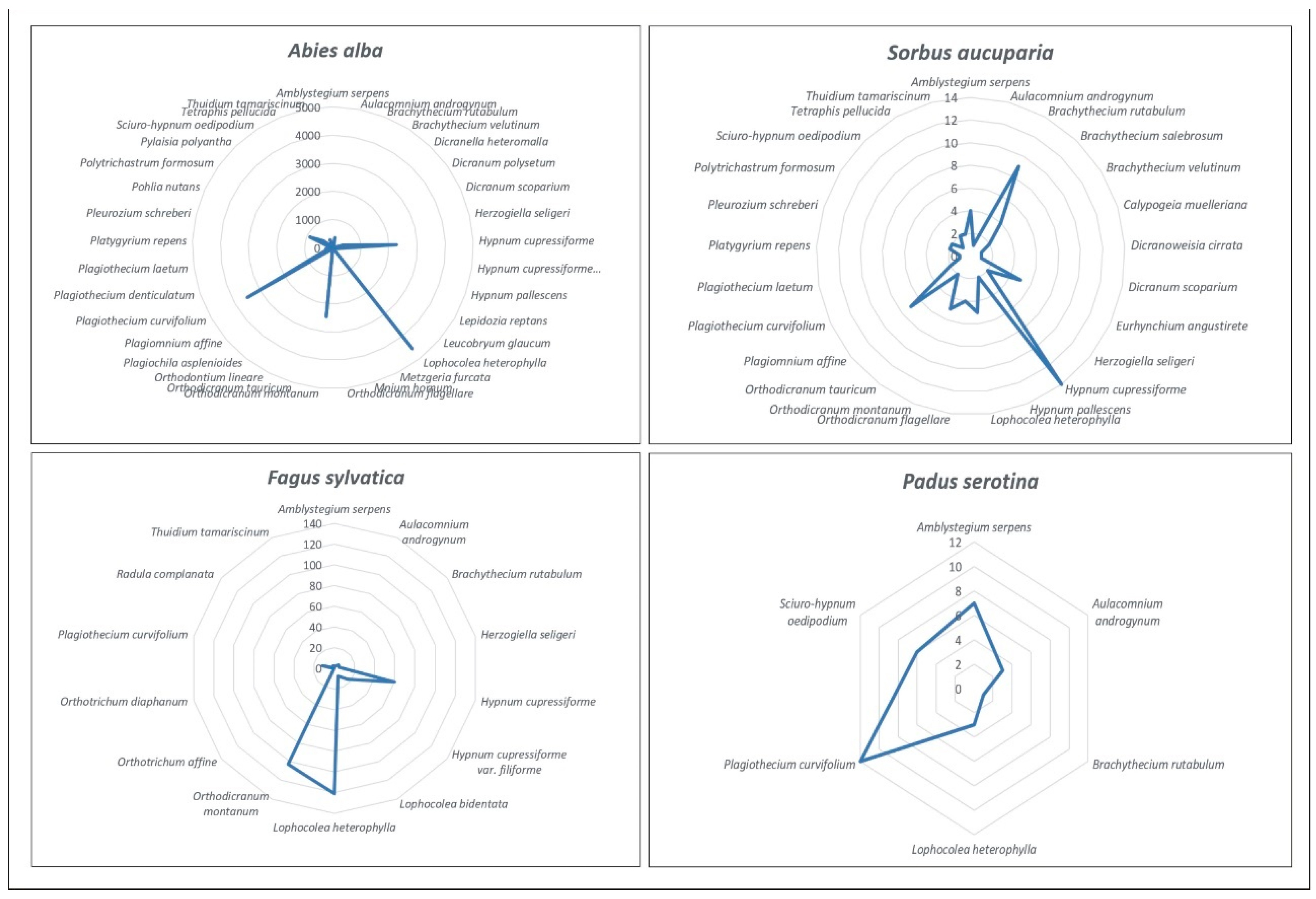
In the study area, 67 bryophytes taxa were recorded, growing on 21 tree species. Among the trees colonized by these plants, four coniferous species were recorded: Abies alba, Pinus sylvestris, Picea abies, Larix decidua, along with 17 deciduous tree species (Supplementary Material S1). The bryophyte species composition varied between individual tree species, both qualitatively and quantitatively. The highest number of bryophyte species was found on Quercus robur (49 taxa), Carpinus betulus (46), and Abies alba (34 species). Much less on Fagus sylvatica (14), while the fewest species were found on Padus serotina, Fraxinus excelsior, Cornus sanguinea (six species each), and Ulmus laevis (five taxa) (Supplementary Materials S1–S3 and Figure 3).
Figure 3.
Examples of tree species most and least frequently colonized by bryophytes, along with the frequency of individual bryophyte taxa.
In the study area, among the 67 recorded bryophytes taxa, the majority were common, multi-substrate, and generalist forest species. The most widespread species was Hypnum cupressiforme, recorded on 20 out of 21 tree species. Other frequent species included Brachythecium rutabulum, Lophocolea heterophylla, and Plagiothecium curvifolium sensu lato (each found on 18 trees), as well as Orthodicranum montanum (on 17 tree species). In contrast, the rarest were species, often occurring on only one or a few specific tree. These included Dicranum viride on Alnus glutinosa, Leucodon sciuroides on Carpinus betulus, and several representatives of the genus Orthotrichum sensu lato (e.g., O. affine, O. pumilum, O. speciosum), recorded on Acer pseudoplatanus, Alnus glutinosa, and Fagus sylvatica (Figure 4, Supplementary Materials S5 and S6).
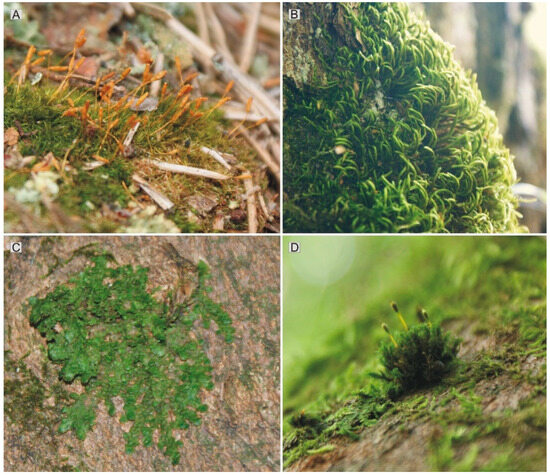
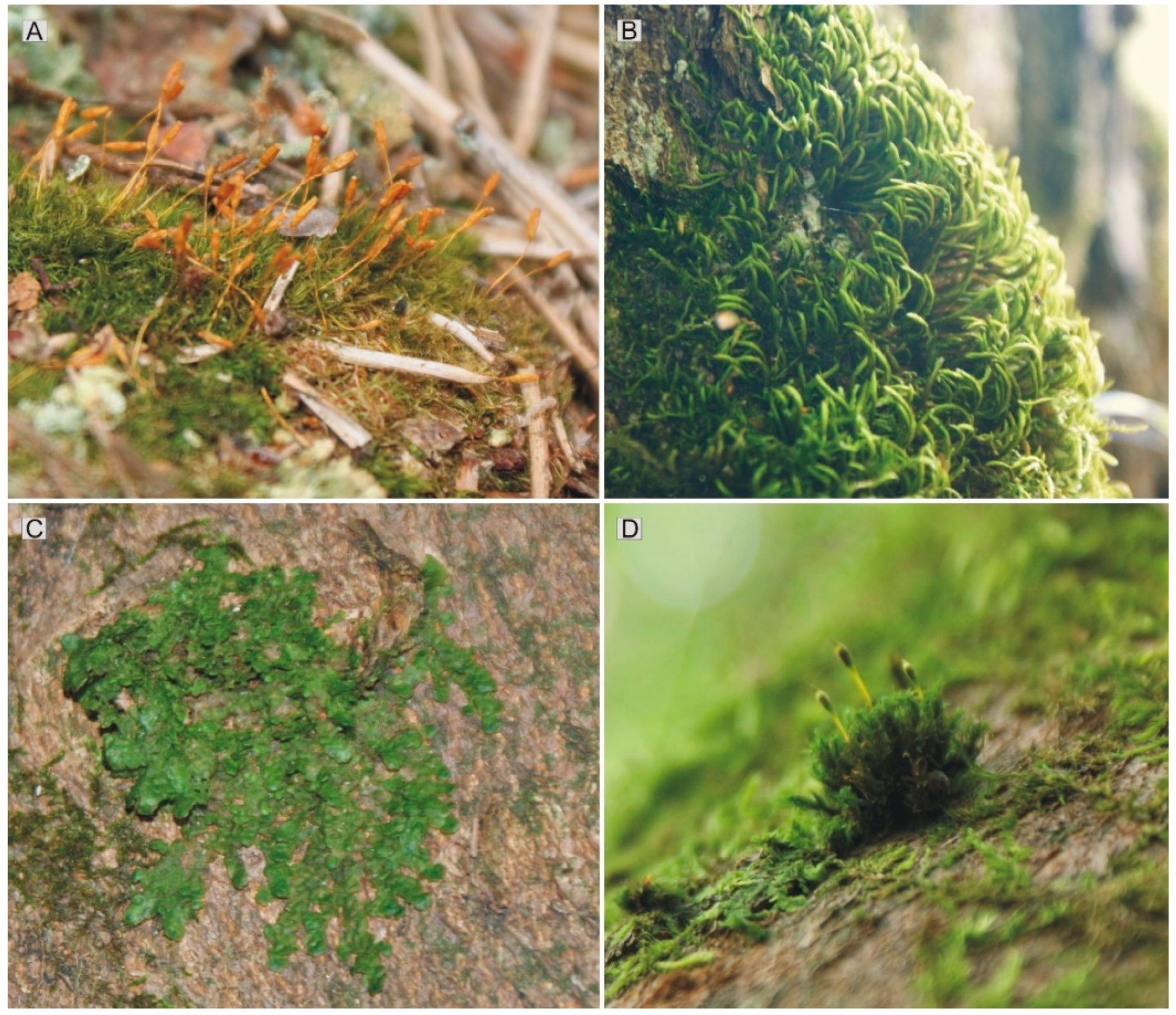
Figure 4.
Examples of recorded species in the studied area. (A)—Orthodontium lineare on Pinus sylvestris, (B)—Leucodon sciuroides on Carpinus betulus, (C)—Radula complanata on Acer pseudoplatanus, (D)—Dicranoweisia cirrata on Acer pseudoplatanus (photo, design, and creation of the graphic by Grzegorz J. Wolski).
3.2. Analysis of the Similarity of the Bryoflora of Individual Trees
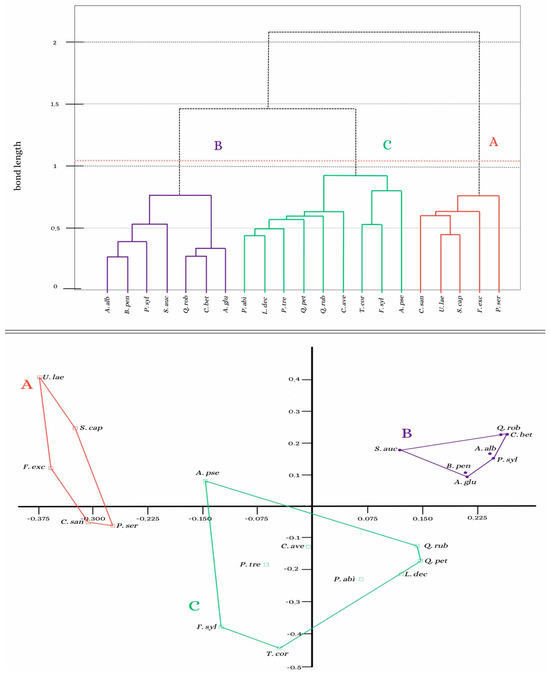
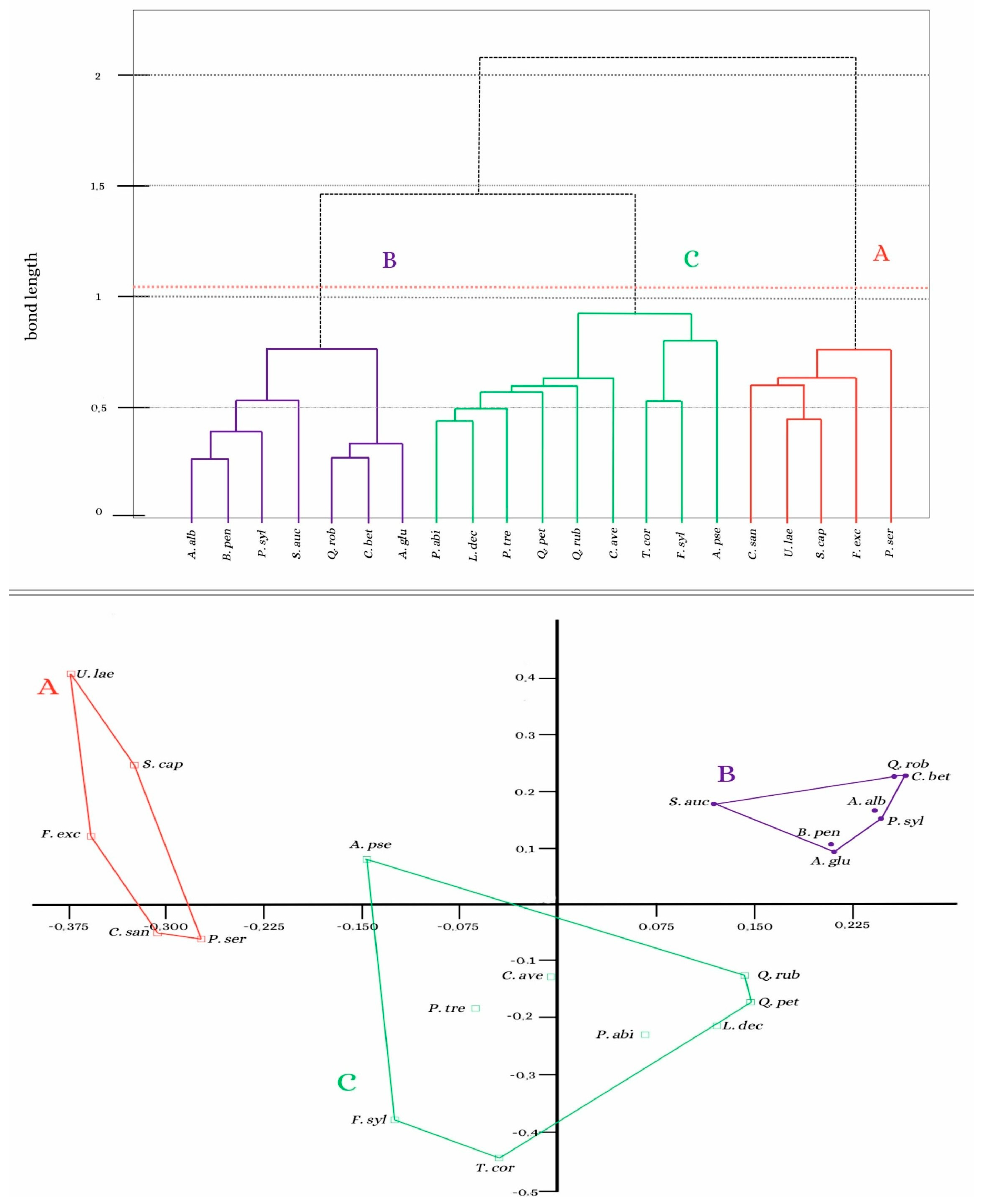
As mentioned earlier, the bryoflora associated with individual tree species varied both quantitatively and qualitatively (Supplementary Materials S1–S3), which influenced the classification of the studied substrate. The analysis identified three distinct groups (Figure 5).
Figure 5.
Grouping of the studied tree species according to the bryophytes recorded on their bark. Explanation: (top)—HCA dendrogram, (bottom)—PCoA analysis.
Group A includes tree species such as Cornus sanguinea, Fraxinus excelsior, Padus serotina, and Ulmus laevis, which are most distinct from the other groups and support the fewest bryophyte species (ranking from five to nine). These trees exhibit the lowest biodiversity of the bark-inhabiting bryophyte flora. Only common and multi-substrate species, such as Amblystegium serpens, Brachythecium rutabulum, Hypnum cupressiforme, and Lophocolea heterophylla, were recorded on these trees (Figure 5 and Supplementary Material S4).
Group B includes, for example, Acer pseudoplatanus, Larix decidua, Picea abies, Quercus petraea, and Tilia cordata. These trees host significantly larger number of bryophyte species (ranking from 14 to 22 taxa). Compared to group A, common, multi-substrate species are less dominant here. Instead, rarer species, observed only on selected trees are more frequent, such as Brachythecium reflexum, Frullania dilatata, Isothecium alopecuroides, Metzgeria furcata, and Ulota crispa (Figure 5 and Supplementary Material S4).
Group C comprised tree species such as Abies alba, Betula pendula, Pinus sylvestris, and Quercus robur, which support the richest bryophyte group, with between 25 and 49 species recorded. The Quercus robur host the highest number of species (49 taxa), followed by Carpinus betulus (46), Alnus glutinosa (39), and Abies alba (34 species). This group harbors the greatest biodiversity of mosses and liverworts, including both common species (e.g., Pohlia nutans, Sciuro-hypnum curtum, Thuidium tamariscinum) and rarer taxa (e.g., Cephalozia bicuspidata, Dicranum viride, Orthodontium lineare) (Figure 5 and Supplementary Material S4).
This classification is supported by the multivariate principal coordinate analysis (PCoA), which clearly separates the three groups (Figure 5 and Supplementary Material S7). Furthermore, the PERMANOVA analysis at p < 0.001 confirms statistically significant differences between the groups (Supplementary Material S7).
3.3. Assessment of the Bryophyte Flora Growing in Individual Tree Zones
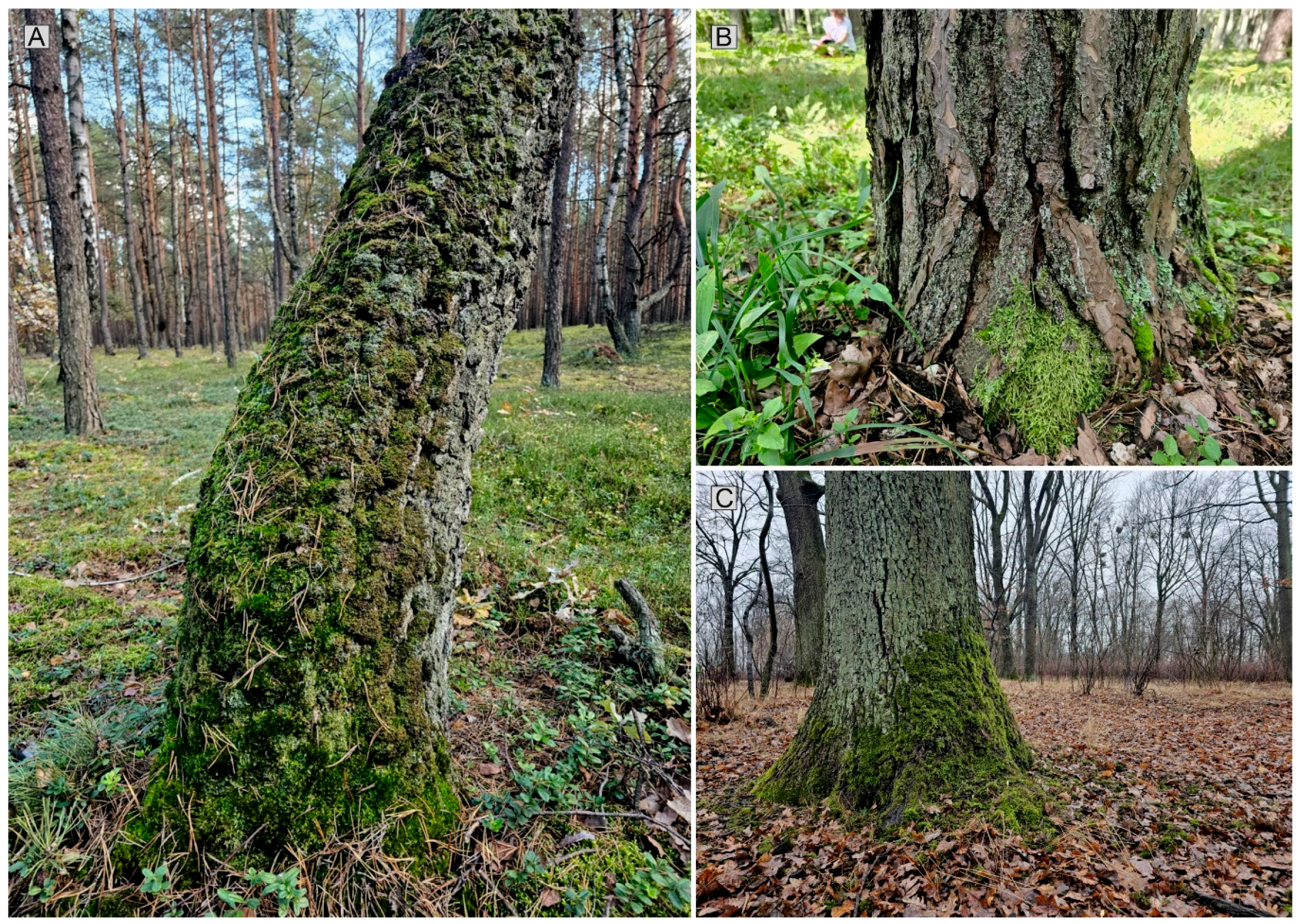
Not only individual tree species support different bryophyte taxa, but the various trunk zones also harbor distinct assemblages of moss and liverwort taxa (Supplementary Materials S5 and S6). Among the 67 moss taxa recorded on 21 tree species, 60 taxa (89% of the entire bryoflora) were recorded exclusively in zone I of the studied trees. In contrast, only 28 taxa (42%) were recorded exclusively in trunk zone II, while 38 bryophyte species (57% of the entire bryoflora) were observed in both zones I and II. Thus, zone I is more frequently and more readily colonized than zone II (Figure 6).
Figure 6.
Example of how trees are overgrown by bryophytes in nature reserves of Central Poland. (A)—Betula pendula and (B)—Pinus sylvestris in Dicrano-Pinion, (C)—Quercus robur in Carpinion betuli (photo, design, and creation of the graphic by Grzegorz J. Wolski).
For all the analyzed taxa, it was observed that in zone I, common, soil-dwelling, or multi-substrate species tend to dominate. This zone host species such as Atrichum undulatum, Dicranum polysetum, Hylocomium splendens, Mnium hornum, Plagiomnium undulatum, and Rhizomnium punctatum (Supplementary Material S4). Many of these taxa were found incidentally on the tree bark, including Bazzania trilobata, Hypnum lacunosum, and Rosulabryum laevifolium.
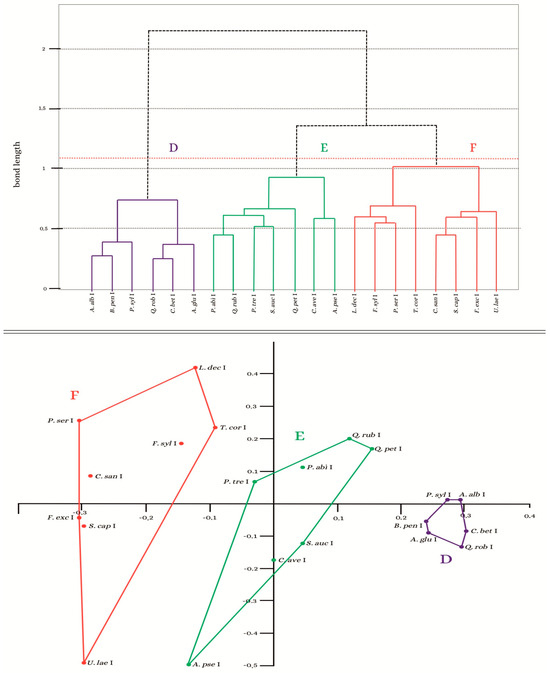
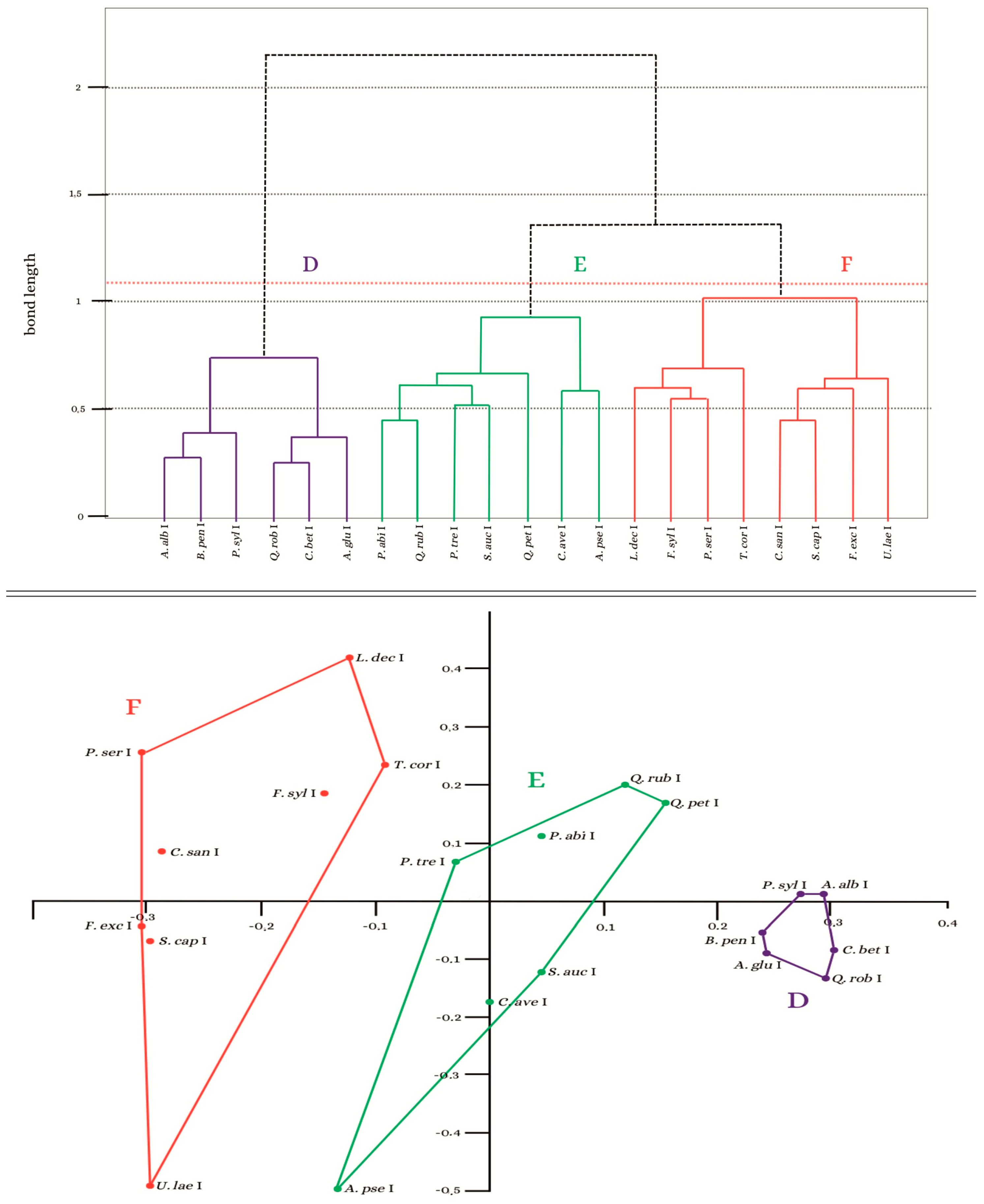
Exclusive species of zone I divide the studied trees into three distinct groups (Figure 7). Group D, the most distinct of these, includes trees such as Abies alba, Pinus sylvestris, Quercus robur, and Carpinus betulus. These trees support the highest number of bryophytes (ranking from 27 to 48 taxa), making zone I of these trees the most biodiverse. Mainly common and multi-substrate species dominate there, with taxa such as Aulacomnium androgynum, Herzogiella seligeri, Hypnum cupressiforme, Lophocolea heterophylla, Plagiothecium denticulatum, and Tetraphis pellucida recorded (Figure 7 and Supplementary Material S5).
Figure 7.
Grouping of the studied tree species in terms of the bryophyte taxa recorded in zone I. Explanation: (top)—HCA dendrogram, (bottom)—PCoA analysis.
The second group is divided into two smaller E and F. Subgroup E includes trees species such as Acer pseudoplatanus, Corylus avellana, Picea abies, Populus tremula, Quercus petraea, and Sorbus aucuparia. The bryophyte pool in zone I of these trees is characterized by a smaller number of species (ranking from 12 to 18 taxa), and dominated by common and multi-substrate taxa like Hypnum cupressiforme, Orthodicranum montanum, and Plagiothecium curvifolium. This group also includes some rare species with a narrower ecological range, including Radula complanata, Orthotrichum diaphanum, and Isothecium alopecuroides. Subgroup F consists of trees such as Larix decidua, Tilia cordata, Fagus sylvatica, Cornus sanguinea, Padus serotina, and Ulmus laevis. Zone I of these trees is at least overgrown, with the lowest bryophyte diversity. Even the common multi-substrate taxa, including Eurhynchium angustirete, Plagiothecium denticulatum, Polytrichastrum formosum, Sciuro-hypnum curtum, and Thuidium tamariscinum, are only sporadically recorded (Supplementary Material S5). Thus, this grouping appears to be primarily influenced by the number of bryophytes recorded, and secondarily by the species composition of the bark-inhabiting bryophyte flora in zone I of these trees.
This classification is corroborated by the multivariate PCoA analysis, which reveals a clear, non-overlapping clustering of the analyzed zones (Figure 7 and Supplementary Material S7). Furthermore, the PERMANOVA analysis at p < 0.001 confirms that all groups differ statistically significantly (Supplementary Material S7).
In zone II of the analyzed tree trunks, similarly to zone I, common, multi-substrate species dominate (e.g., Amblystegium serpens, Brachythecium rutabulum, Herzogiella seligeri, Hypnum cupressiforme, Orthodicranum montanum). However, soil-associated taxa are less frequently observed (e.g., Dicranum polysetum, Pleurozium schreberi, Pseudoscleropodium purum). A smaller group of rare, often occurring epiphytically, was noted there, includes Dicranum viride, Homalothecium sericeum, Radula complanata, and species of the genus Orthotrichum s.l. (Supplementary Material S5).
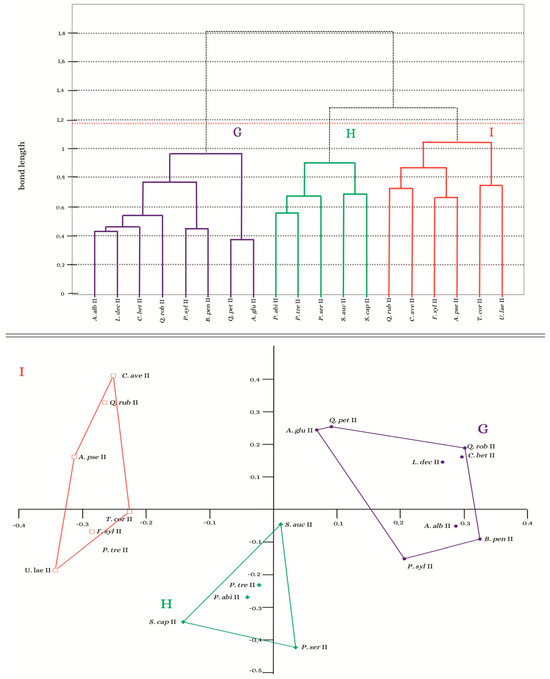
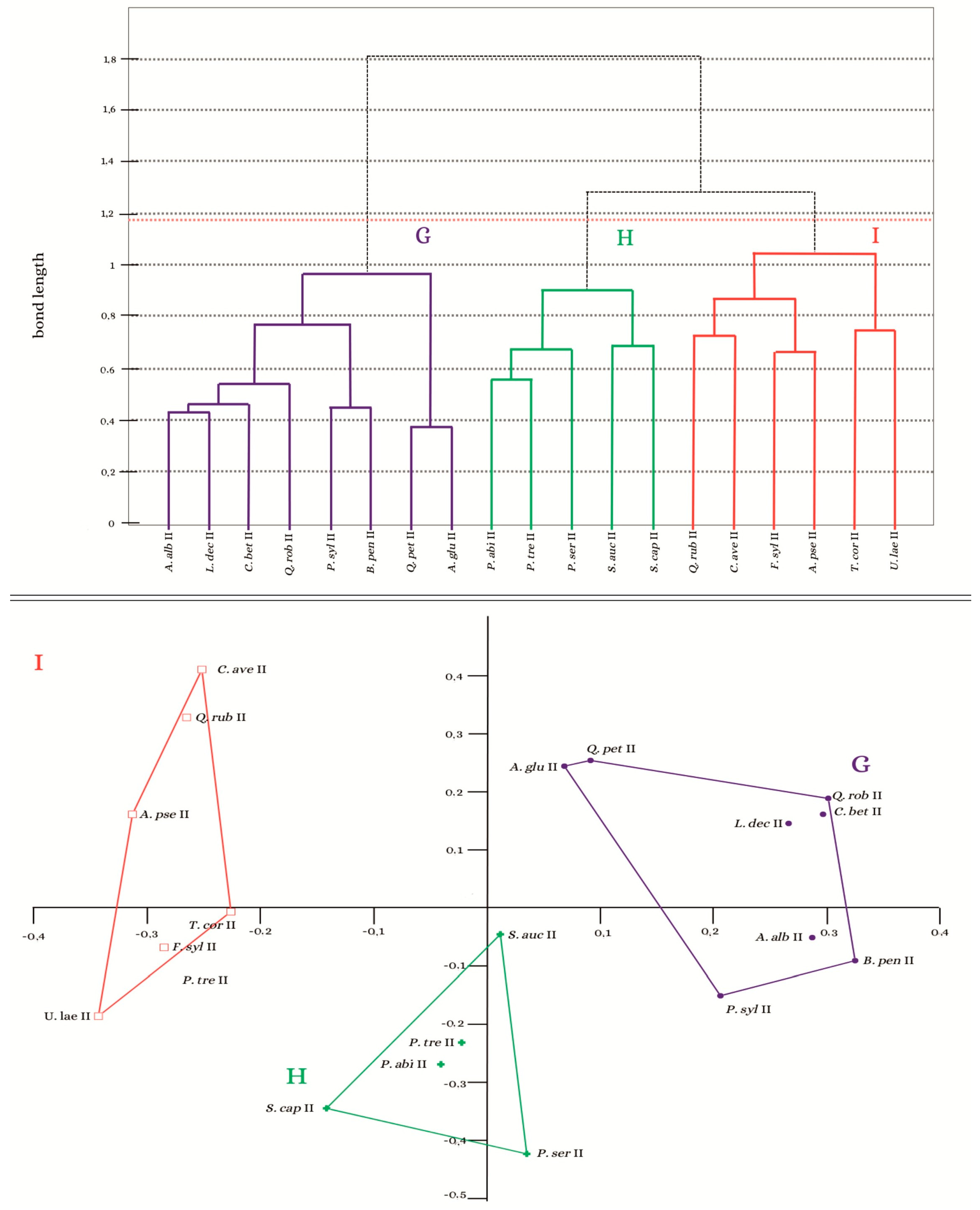
As in zone I, the species recorded in zone II divide the studied trees into three groups (Figure 8). The first group, G, includes tree species overgrown by the highest number of bryophytes (ranging from 11 to 32 taxa). Thus, zone II of these trees is characterized by the highest biodiversity. Both common and multi-substrate species, were recorded in this zone (Figure 8 and Supplementary Material S7). The second group is subdivided into two smaller groups, H and I. Group H includes species such as Padus serotina, Picea abies, Populus tremula, Salix caprea, Sorbus aucuparia, which support 5 to 16 bryophyte taxa. Group I consists of species such as Acer pseudoplatanus, Corylus avellana, Tilia cordata, Fagus sylvatica, Quercus rubra, and Ulmus laevis, overgrown by 1 to 10 bryophyte species. Both groups are characterized by the dominance of rare species recorded only on a few tree taxa. Only a few species (Hypnum cupressiforme, Orthodicranum montanum, Lophocolea heterophylla) were recorded on most of the trees (Figure 8 and Supplementary Material S7).
Figure 8.
Grouping of the studied tree species in terms of the bryophyte taxa recorded in zone II. Explanation: (top)—HCA dendrogram, (bottom)—PCoA analysis.
This grouping is influenced by both the number of bryophytes recorded and the species composition of the bryophyte flora of zone II of these trees. The classification is supported by the multivariate PCoA analysis, which shows clear, non-overlapping clustering of the analyzed zones (Figure 8). In addition, the PERMANOVA analysis at p < 0.001 confirms that all groups differ statistically significantly (Supplementary Material S7).
4. Discussion
Bryophytes are considered as outstanding bioindicators [65]. Therefore, each of the ecological groups of these plants can indicate changes occurring in the environment [28,32,66,67]. The same applies to epiphytes, whose presence, or perhaps more importantly, their absence, points to changes occurring in the studied phytocoenoses [31].
In Central Poland, epigeic bryophytes were the only ones subject to relatively detailed studies. This group, as an element of phytosociological research, has been the subject of numerous works, and despite the fact that the data from this region are somewhat fragmentary and historical, there is quite a lot of them, e.g., [6,18,19,20,21,22,32,68,69,70,71,72]. On the other hand, the remaining ecological groups have never been the subject of thorough research. They were usually an element of general ecological studies [6,22,23,25,30,70,71,73,74,75]. Only epiphytes, in the context of their bioindication role, have been the subject of a fragmentary study in this region [31].
The study of bryophytes colonizing tree bark in forest communities revealed a distinct distributional pattern and species composition compared to bryophyte assemblages on trees in open habitats [76,77,78]. Differences in the diversity of bark-inhabiting bryophytes between trees growing in closed forest stands and solitary trees are substantial. The key distinction lies in the microclimatic conditions of the two habitat types, which influence both the availability and the quality of the bark substrate for colonization [76,79]. Solitary trees are often exposed to direct sunlight, wind, and greater fluctuations in temperature and humidity, resulting in faster desiccation of their surface [80]. In contrast, trees within forest stands benefit from the buffering effect of surrounding vegetation, which ensures more stable humidity, lower temperature fluctuations, and generally shadier microclimatic conditions [58,77,81,82]. These factors have a direct impact on species richness and composition of epiphytic bryophyte communities [58,83]. At the study sites, bryophyte species ecologically classified as terrestrial or epixylous—exhibiting only a facultative relationship with tree bark—clearly predominated in both vertical zones (zone I and zone II) of the trees. Truly obligate epiphytic species were recorded only rarely, and when present, they occurred exclusively in the upper vertical zone of the tree trunks.
An analysis of the similarity in bryophyte species composition among individual trees revealed three distinct groups. First group includes species such as Cornus sanguinea, Fraxinus excelsior, Padus serotina, and Ulmus laevis. This group is the most distinct and supports the lowest number of bryophyte species, ranging from only five to nine taxa. A plausible explanation is that the trees in this group share a set of bark characteristics that may negatively influence, in various ways, the establishment and persistence of bryophyte communities. Most notably, the bark texture of these trees is generally smooth to moderately fissured, particularly in younger individuals [84,85]. Such surfaces offer limited structural complexity and provide relatively few suitable microhabitats for initial bryophyte colonization [56]. Only as the trees mature—especially in the case of Fraxinus and Ulmus—does the bark become more structured and deeply cracked, thereby increasing microhabitat heterogeneity and offering a broader array of microsites for bryophyte attachment and growth. Another key characteristic shared by the trees in this group is their relatively weakly basic bark pH, which is particularly pronounced in F. excelsior and U. laevis. However, this chemical property does not appear to offer a favorable substrate for the predominantly acidophilous forest bryophyte species recorded in this study [86,87].
Second group includes tree species such as Acer pseudoplatanus, Larix decidua, Picea abies, Quercus petraea, and Tilia cordata represent a taxonomically and ecologically diverse group. Nevertheless, they share several bark-related characteristics that are important for the colonization of bark-inhabiting bryophytes. A common trait among these species is a moderately acidic bark pH [88], which allows for the colonization by a broad range of acidophilous forest bryophyte species. Another shared feature is the relatively early development of rough, fissured bark, particularly pronounced in Quercus petraea, Acer pseudoplatanus, and Picea abies. This structurally complex bark increases the available surface area [54,85] and provides protected microhabitats such as crevices and ridges, where moisture—and occasionally soil particles—can accumulate along with reproductive propagules of bryophytes [56]. These features enhance water retention and reduce desiccation stress, both of which are critical factors for the survival of bark-inhabiting bryophytes, especially under fluctuating microclimatic conditions [89]. As a result, the bark structure of these trees creates a spatial gradient that can support a variety of bryophyte assemblages with differing ecological requirements [54,90]. In summary, although the specific bark traits vary among these species, they converge functionally in their capacity to support a wide spectrum of forest bryophyte species. This group hosts significantly larger number of bryophyte species (ranking from 14 to 22 taxa) than the first one (ranking from 5 to 9 taxa).
Third group, comprising tree species such as Quercus robur, Betula pendula, Carpinus betulus, Alnus glutinosa, and Abies alba, forms a functionally cohesive group in terms of bark traits relevant to bryophyte colonization. These tree species support the richest bryophyte group, with between 25 and 49 species recorded. A common feature is their weakly acidic bark pH, which makes them generally favorable for a range of forest bryophytes [85,87,91]. Chemically, the bark of these species provides a balanced nutrient profile [86], supporting the colonization by terrestrial forest bryophytes that benefit from nutrient-rich substrates [56,92]. At the same time, the relatively moderate pH is also suitable for certain epiphytic species that are sensitive to the strongly acidic bark found on other, mainly coniferous, trees [93,94,95]. As a result of these combined factors—their bark chemistry, texture, and structural dimensions—the trees in this group tend to support a broad spectrum of bryophyte species, including both terrestrial and obligate epiphytic taxa.
In addition to chemical and microstructural bark traits, the total available surface area for colonization is a critical ecological factor determining the suitability of trees as hosts for epiphytic bryophytes [54]. The extent of colonizable bark is influenced not only by tree height and trunk diameter but also by longevity, architecture, and the vertical complexity of branching [92,96]. When comparing the three previously discussed groups of tree species, clear differences emerge in terms of their epiphytic substrate potential. First group, including Cornus sanguinea, Fraxinus excelsior, Padus serotina, and Ulmus laevis, exhibits moderate to high potential, albeit with greater variability. While Cornus and Padus are often shrubby or small-statured and thus offer limited surface area, Fraxinus and Ulmus are capable of reaching substantial size and provide broad, fissured bark suitable for colonization. The overall contribution of this group to epiphytic substrate area is therefore strongly dependent on species composition and tree age.
Second group, comprising Acer pseudoplatanus, Larix decidua, Picea abies, Quercus petraea, and Tilia cordata, stands out as offering the largest colonizable surface area. These species are generally tall, long-lived, and capable of developing thick trunks and extensive branching systems. In particular, Acer, Quercus, and Tilia are known for their massive trunk diameters and deep bark fissures in maturity, while Larix and Picea contribute through dense, vertically continuous branching. This group combines physical stature with morphological complexity, making it especially valuable for epiphytic bryophyte assemblages in structurally diverse forest environments.
Third group, including Abies alba, Betula pendula, Pinus sylvestris, Quercus robur, Carpinus betulus, and Alnus glutinosa, presents a highly heterogeneous profile. While Quercus robur, Abies alba, and Pinus sylvestris can develop into large and structurally complex individuals offering significant surface area, other members such as Betula pendula and Carpinus betulus tend to have thinner, smoother, or exfoliating bark, limiting their overall epiphytic colonization potential. Alnus glutinosa often exhibits a short lifespan and moderate dimensions, although it may achieve greater trunk size in hydrologically favorable sites. As such, the group’s average contribution to epiphytic surface area is best described as moderate to high, with considerable variability among individual species.
Professor Halina Urbanek [6,18,19,20,21,22,68,69,70,71,73] made the greatest contribution in Central Poland, not only to the knowledge of the bryophytes flora of this region, but also to the understanding of their bioindication character. Her groundbreaking works, considering the mid-20th century, enabled the understanding of the ecological amplitude of hundreds of bryophytes taxa. The results she obtained, although now historical, allow us to refer to the bryophytes flora of this region and at least to some extent infer about the transformations of this group of plants. The bryological studies conducted by Urbanek [6,18,19,20,21,22,68,69,70,71,73] reveal many species recorded exclusively on trees. She specifically lists, among others, Frullania dilatata, Leucodon sciuroides, Metzgeria furcata, and Radula complanata, which are still noted today. Moreover, the author also mentions species present on trees, which were not recorded by us and are becoming increasingly rare in all of Central Poland: Homalia trichomanoides, Neckera complanata, and species from the Anomodon genus [22].
On the other hand, it is surprising that in her detailed studies conducted throughout the Central Poland region, Urbanek [6,18,19,20,21,22,68,69,70,71,73] never recorded typical forest, epigeic species on trees, e.g., Atrichum undulatum, Dicranum polysetum, Eurhynchium angustirete, Leucobryum glaucum, Plagiomnium affine, P. undulatum, Pleurozium schreberi, Polytrichastrum formosum, Pseudoscleropodium purum, or Thuidium tamariscinum. The absence of these species on tree bark in the results provided by the aforementioned author is puzzling. Given their large size and ease of distinction, these species could not have been overlooked. Their presence on tree bark, confirmed 60 years after Urbanek’s studies [22], suggests that forest species with a tendency to grow on soil exhibit faster growth and quicker expansion onto new substrates compared to obligatory epiphytes.
While obligate epiphytic bryophytes are typically regarded as key elements of tree bark communities, especially on solitary or exposed trees [97,98,99,100], a different pattern emerges within closed forest environments. In such conditions, the bryophyte flora colonizing bark surfaces is often dominated not by obligate epiphytes, but rather by common forest species—bryophytes that primarily occupy substrates such as soil, decaying wood or stones, yet readily extend to tree bark under suitable microhabitat conditions [53,92,101].
One of the primary reasons for this shift is competitive ability [102]. Forest bryophytes frequently exhibit faster growth rates, larger colony sizes, and higher biomass accumulation compared to obligate epiphytes, which are often small, slow-growing, and ecologically constrained [52]. In the relatively stable and humid microclimate of forest interiors, these competitively superior bryophytes can rapidly occupy available bark surfaces, outcompeting true epiphytes for space and resources. Furthermore, many obligate epiphytes are adapted to microclimatically stressful environments, such as those found on solitary trees exposed to sunlight, wind, and fluctuating humidity [103,104]. These habitats select for traits such as desiccation tolerance and poikilohydry [105], which are not necessarily advantageous under the shaded and consistently moist conditions found deeper within forest stands [106]. Consequently, obligate epiphytes may find themselves ecologically displaced in closed forests, not because conditions are too harsh, but rather because conditions are too favorable for their faster-growing competitors [58,107].
Another factor limiting obligate epiphytes in comparison to common forest bryophytes is dispersal limitation [108]. Although obligate epiphytic bryophytes produce a sufficient number of spores (and in many cases also asexual diaspores), their dispersal success is often constrained by forest structure [109,110]. These propagules are primarily wind-dispersed, which may appear to be a simple and efficient strategy. However, in densely structured forests, spores and gemmae encounter significant physical barriers [111]. The complex and closed canopy architecture, combined with a dense layer of branches and foliage, acts as a filter that reduces the vertical and horizontal movement of diaspores through the forest [112,113]. As a result, the likelihood of spores reaching the bark surface of suitable host trees is considerably reduced in such environments. Moreover, even when diaspores do reach inner forest zones, they may settle in microhabitats that are already colonized or dominated by fast-growing forest bryophytes [109,114]. This further reduces the chance of successful establishment. Thus, the structure of dense forest changes not only limits light and microclimatic conditions, but also serves as a physical dispersal barrier, which disproportionately affects obligate epiphytes with limited or passive dispersal mechanisms [115].
The clear difference in bryophyte diversity between trunk zones I and II suggests that microclimatic and ecological conditions vary substantially along the vertical axis of the tree trunk [92,116,117]. Zone I, situated closer to the forest floor, appears to offer more stable moisture levels, greater substrate continuity, and higher propagule pressure from surrounding terrestrial bryophyte communities. These conditions likely facilitate colonization by common, soil-dwelling, and multi-substrate species, many of which were observed incidentally on the lower bark surface.
In contrast, zone II experiences greater microclimatic fluctuations, including increased exposure to light, wind, and desiccation, especially in more open canopy areas. These factors may selectively limit the establishment of less stress-tolerant species and favor taxa that can withstand drier or more variable conditions. The substantially lower number of taxa recorded exclusively in zone II supports this interpretation.
Overall, the vertical stratification observed in bryophyte communities highlights the importance of fine-scale habitat heterogeneity on tree trunks and emphasizes the need to consider multiple vertical layers when assessing epiphytic biodiversity in forest ecosystems.
5. Conclusions
This study demonstrates that the bark-inhabiting bryophyte flora of forest reserves in Central Poland is both taxonomically rich and highly differentiated across tree species and trunk zones. A total of 67 taxa were recorded on 21 tree species, with both deciduous and coniferous hosts supporting substantial bryophyte diversity. Consequently, the hypotheses that deciduous trees provide the richest substrate for bryophytes and that coniferous and deciduous trees host distinct bryophyte assemblages were rejected. Instead, species richness and composition varied idiosyncratically among individual tree species, independent of their phylogenetic group.
Multivariate analyses revealed clear groupings of trees based on their bryophyte communities, indicating pronounced ecological differentiation among hosts. The lower trunk zone (zone I) proved to be the most readily colonized, containing nearly 90% of all recorded taxa, while the upper zone (zone II) supported fewer species and a narrower pool of typical epiphytes. Both zones formed statistically distinct assemblages, confirming that vertical stratification strongly structures bryophyte distribution.
Despite the overall high species richness, the epiphytic flora was dominated by common, multi-substrate taxa, whereas true epiphytes were rare and typically restricted to only one or a few host species. This suggests that although these reserves maintain diverse bryophyte communities, their qualitative epiphytic potential remains relatively low.
Supplementary Materials
The following supporting information can be downloaded at: https://www.mdpi.com/article/10.3390/f17010066/s1, Supplementary Material S1—species growing on individual trees (qualitative and quantitative data); Supplementary Material S2—species growing on individual trees and their zones (qualitative and quantitative data); Supplementary Material S3—bryophytes on individual tree species; Supplementary Material S4—bryophytes on individual trees (data 0–1); Supplementary Material S5—bryophytes on zones I of individual trees (data 0–1); Supplementary Material S6—bryophytes on zones II of individual trees (data 0–1); Supplementary Material S7—PCoA and PERMANOVA (for all species and individual groups).
Author Contributions
Conceptualization, G.J.W. and V.P.; investigation, G.J.W. and V.P.; data curation, G.J.W.; writing—original draft preparation, G.J.W., V.P. and A.C.; writing—review and editing, G.J.W., V.P. and A.C.; visualization, G.J.W.; supervision, G.J.W.; project administration, G.J.W.; funding acquisition, G.J.W. All authors have read and agreed to the published version of the manuscript.
Funding
This research received no external funding.
Data Availability Statement
All data are in the manuscript and its Supplementary Materials.
Acknowledgments
The authors wish to express their sincere gratitude to Ewa Fudali, the supervisor and mentor of the first author’s doctoral dissertation, within the framework of which the research was conducted and part of the results have been presented in this publication.
Conflicts of Interest
The authors declare no conflicts of interest.
References
- Jakubowska-Gabara, J.; Kucharski, L.; Zielińska, K.; Kołodziejek, J.; Witosławski, P.; Popkiewicz, P. Atlas Rozmieszczenia Roślin Naczyniowych w Polsce Środkowej. Gatunki Chronione, Rzadkie, Ginące i Zagrożenie; Wyd. UŁ: Łódź, Poland, 2011; pp. 1–283. [Google Scholar]
- Drymmer, K. Spis roślin zebranych w pow. kutnowskim, w okolicach Żychlina, Kutna, Krośniewic i Orłowa. Pam. Fizjogr. 1885, 5, 39–66. [Google Scholar]
- Drymmer, K. Sprawozdanie z wycieczki botanicznej do powiatu tureckiego i sieradzkiego w r. 1889 i 1890. Pam. Fizjogr. 1891, 11, 41–66. [Google Scholar]
- Mowszowicz, J. Conspectus Florae Lodziensis; Prace Wydz. III ŁTN: Łódź, Poland, 1960. [Google Scholar]
- Mowszowicz, J. Conspectus Florae Poloniae Medianae (Plantae Vaculare); Wyd. UŁ: Łódź, Poland, 1978. [Google Scholar]
- Urbanek, H. Rezerwat cisowy Jasień. Zesz. Nauk. UŁ. Ser. 1960, 2, 105–122. [Google Scholar]
- Sowa, R. Bardziej interesujące gatunki synantropijne na terenach kolejowych województwa łódzkiego. Fragm. Flor. Geobot. 1966, 12, 3–8. [Google Scholar]
- Siciński, J.T. Interesujące gatunki segetalne w dorzeczu środkowej Warty (woj. łódzkie). Zesz. Nauk. UŁ Ser. II 1972, 54, 59–64. [Google Scholar]
- Kurowski, J.K. Bory i lasy z antropogenicznie wprowadzoną sosną w dorzeczach środkowej Pilicy i Warty. Acta Univ. Lodz. Folia Bot. 1979, 29, 3–156. [Google Scholar]
- Kurowski, J.K. Materiały do flory lasów Wysoczyzny Złoczewskiej w województwie sieradzkim. Acta Univ. Lodz. Zesz. Nauk. UŁ Nauki Mat.-Przyr. Ser. II 1979, 27, 39–74. [Google Scholar]
- Kurowski, K.J. Flora naczyniowa zachodniej części rezerwatu Jaksonek w Sulejowskim Parku Krajobrazowym. Przyr. Pol. Środ. 2005, 7, 14–17. [Google Scholar]
- Jakubowska-Gabara, J. Notatki florystyczne z doliny Rawki i terenów przyległych. Acta Univ. Lodz. Folia Bot. 1987, 5, 41–49. [Google Scholar]
- Jakubowska-Gabara, J. Materiały do flory naczyniowej lasów okolic Sieradza i Zduńskiej Woli. Acta. Univ. Lodz. Folia Bot. 1990, 7, 3–34. [Google Scholar]
- Kucharski, L. Nowe stanowisko turzycy Davalla Carex davalliana w Polsce Środkowej. Chrońmy Przyr. Ojcz. 1996, 52, 92–94. [Google Scholar]
- Kucharski, L. Szata Roślinna Łąk Polski Środowej i Jej Zmiany w XX Stuleciu; Wyd. UŁ: Łódź, Poland, 1999. [Google Scholar]
- Witosławski, P. Atlas of Distribution of Vascular Plants in Łódź; Wyd. UŁ: Łódź, Poland, 2006; pp. 1–386. [Google Scholar]
- Staniaszek-Kik, M.; Wolski, G.J. Mszaki—zróżnicowanie, zmiany, zagrożenia. In Szata Roślinna Polski Środkowej; Kurowski, J.K., Ed.; Towarzystwo Ochrony Krajobrazu Wydawnictwo EKO-GRAF: Łódź, Poland, 2009; pp. 48–56. [Google Scholar]
- Urbanek, H. Zespoły leśne województwa łódzkiego ze szczególnym uwzględnieniem mszaków. Cz. I. Zespoły olchowe i łęgowe. Acta Soc. Bot. Pol. 1966, 35, 79–110. [Google Scholar] [CrossRef] [Scilit]
- Urbanek, H. Zespoły borowe województwa łódzkiego ze szczególnym uwzględnieniem mszaków. Cz. III. Bór mieszany. Zesz. Nauk. UŁ Nauki Mat.-Przyr. Ser. II 1966, 22, 91–103. [Google Scholar]
- Urbanek, H. Zespoły leśne województwa łódzkiego ze szczególnym uwzględnieniem mszaków. Cz. II. Zespoły grądowe. Acta Soc. Bot. Pol. 1966, 35, 511–527. [Google Scholar] [CrossRef] [Scilit]
- Urbanek, H. Zespoły leśne województwa łódzkiego ze szczególnym uwzględnieniem mszaków. Cz. IV. Przegląd mszaków w wyróżnionych zespołach leśnych. Fragm. Flor. Geobot. Ser. Pol. 1996, 12, 151–178. [Google Scholar]
- Urbanek, H. Udział i Rola Diagnostyczna Mszaków Oraz Stosunki Florystyczno-Fitosocjologiczne w Przewodnich Zespołach Roślinnych Regionu Łódzkiego i Jego Pobrzeży; Wyd. UŁ: Łódź, Poland, 1969. [Google Scholar]
- Wolski, G.J.; Jakubowska-Gabara, J. Materiłay do brioflory Polski Środkowej. Mchy i wątrobowce rezerwatu leśnego Łaznów. Parki Nar. Rez. Przyr. 2010, 29, 51–62. [Google Scholar]
- Wolski, G.J. Stanowiska inwazyjnych gatunków mchów w mieście Łodzi. Acta Bot. Siles. 2011, 7, 245–250. [Google Scholar]
- Wolski, G.J. Materiały do brioflory Polski Środkowej. Mchy i wątrobowce rezerwatu torfowiskowego Czarny Ług oraz jego otuliny (województwo łódzkie). Parki Nar. Rez. Przyr. 2012, 31, 25–28. [Google Scholar]
- Wolski, G.J.; Kobylińska, A.; Sadowska, B.; Podsędek, A.; Kajszczak, D.; Fol, M. Influence of phytocenosis on the medical potential of moss extracts: The Pleurozium schreberi (Willd. ex Brid.) Mitt. case. Sci. Rep. 2023, 13, 20293. [Google Scholar] [CrossRef] [Scilit]
- Gustafson, L.; Fiskesjö, A.; Hallingbäck, T.; Inglög, T.; Petterson, B. Semi-natural deciduous broadleaved woods in southern Sweden—Habitat factors of importance to same bryophyte species. Biodivers. Conserv. 1992, 59, 175–181. [Google Scholar]
- Wolski, G.J. Materiały do brioflory Polski Środkowej. Mchy i wątrobowce rezerwatu leśnego Łaznów (województwo łódzkie) oraz zmiany jego brioflory po 36 latach ochrony. Parki Nar. Rez. Przyr. 2016, 35, 13–34. [Google Scholar]
- Wolski, G.J.; Grabowska, E.; Kucharski, L. Błotniszek wełniasty Helodium blandowii (Bryophyta, Helodiaceae) w Polsce Środkowej. Chrońmy Przyr. Ojcz. 2013, 69, 241–243. [Google Scholar]
- Wolski, G.J.; Fudali, E. Species and ecological diversity of bryophytes occurring on midforest roads in some forest nature reserves in Central Poland. Bot. Steciana 2014, 17, 141–148. [Google Scholar]
- Fudali, E.; Wolski, G.J. Ecological diversity of bryophytes on tree trunks in protected forests (a case study from Central Poland). Herzogia 2015, 28, 91–107. [Google Scholar] [CrossRef] [Scilit]
- Wolski, G.J.; Kruk, A. Determination of plant communities based on bryophytes: The combined use of Kohonen artificial neural network and indicator species analysis. Ecol. Indic. 2020, 113, 106160. [Google Scholar] [CrossRef] [Scilit]
- Klama, H. Distribution Patterns of Liverworts (Marchantiopsida) in Natural Forest Communities (Białowieża Primeval Forest, NE Poland); University of Bielsko-Biala: Bielsko-Biala, Poland, 2002; pp. 1–278. [Google Scholar]
- Żarnowiec, J. Wykorzystanie właściwości bioindykacyjnych mchów w fitosocjologii. Zesz. Nauk. ATH—Inżynieria Włókiennicza I Ochr. Sr. 2004, 14, 217–232. [Google Scholar]
- Cieśliński, S.; Czyżewska, K.; Faliński, J.B.; Klama, H.; Mułenko, W.; Żarnowiec, J. Relikty lasu puszczańskiego. In Białowieski Park Narodowy (1921–1996) w Badaniach Geobotanicznych; Faliński, J.B., Ed.; Phytocoenosis 8 N.S. Seminarium Geobotanicum: Warsaw, Poland, 1996; Volume 4, pp. 47–64. [Google Scholar]
- Klama, H.; Żarnowiec, J.; Jędrzejko, K. Mszaki Naziemne w Strukturze Zbiorowisk Roślinnych Rezerwatów Przyrody Makroregionu Południowego Polski; Politechnika Łódzka Filia w Bielsku-Białej: Bielsko-Biała, Poland, 1999; pp. 1–236. [Google Scholar]
- Klama, H. Różnorodność Gatunkowa—Wątrobowce i Glewiki in Różnorodność Biologiczna Polski. Drugi Polski Raport—10 Lat po Rio; Andrzejewski, R., Weigle, A., Eds.; Narodowa Fundacja Ochrony Środowiska: Warszawa, Poland, 2003; pp. 49–58. [Google Scholar]
- Stebel, A. The Mosses of the Beskidy Zachodnie as a Paradigm of Biological and Environmental Changes in the Flora of the Polish Western Carpatians. Ph.D. Thesis., Medical University of Silesia in Katowice, Katowice-Poznań, Poland, 2006; pp. 1–348. [Google Scholar]
- Fojcik, B. Mchy Wyżyny Krakowsko-Częstochowskiej w Obliczu Antropogenicznych Przemian Szaty Roślinnej; Wyd. Uniwersytetu Śląskiego: Katowice, Poland, 2011; pp. 1–231. [Google Scholar]
- Vanderpoorten, A.; Goffinet, B. Introduction to Bryophytes; Cambridge University Press: New York, NY, USA, 2009; pp. 1–303. [Google Scholar]
- Mickiewicz, J. Udział mszaków w epifitycznych zespołach buka. Monogr. Bot. 1965, 19, 1–84. [Google Scholar]
- Mickiewicz, J.; Trocewicz, A. Mszaki epifityczne zespołów leśnych w Białowieskim Parku Narodowym. Acta Soc. Bot. Pol. 1958, 27, 151–158. [Google Scholar]
- Cieśliński, S.; Czyżewska, K.; Kalma, H.; Żarnowiec, J. Epiphytes and Epiphytism. In Cryptogamous Plants in the Forest Communities of Białowieża National Park. Functional Groups Analysis and General Synthesis (Project CRYPTO 3); Faliński, J.B., Mułenko, W.W., Eds.; Phytocoenosis 8 (N.S.) Archivum Geobotanicum: Warsaw, Poland, 1996; Volume 6, pp. 15–35. [Google Scholar]
- Chlebicki, A.; Żarnowiec, J.; Cieśliński, S.; Klama, H.; Bujakiewicz, A.; Załuski, T. Epixylites, lignicolous fungi and their links with different kinds of wood. In Cryptogamous Plants in the Forest Communities; Faliński, J.B., Mułenko, W., Eds.; Phytocoenosis 8 (N. S.) Archivum Geobotanicum: Warsaw, Poland, 1996; Volume 6, pp. 75–110. [Google Scholar]
- Bates, J.W. Mineral nutrition, substratum ecology, and pollution. In Bryophyte Biology; Shaw, A.J., Goffinet, B., Eds.; Cambridge University Press: Cambridge, UK, 2000; pp. 248–311. [Google Scholar]
- Gams, H. Vingt aus de Bryocenologie. Rev. Bryol. Lichn. 1953, 22, 161–171. [Google Scholar]
- Matuszkiewicz, W. Przewodnik do Oznaczania Zbiorowisk Roślinnych Polski; Wyd. Nauk. PWN: Warszawa, Poland, 2001; pp. 1–537. [Google Scholar]
- Barkman, J.J. Phytosociology and Ecology of Cryptogamic Epiphytes. Including a Taxonomy Survey and Description of Their Vegetation units in Europe; Van Gorcum & Copmp. N.V.: Asses, The Netherlands, 1958; pp. 1–628. [Google Scholar]
- Fudali, E. Mszaki siedlisk epiksylicznych Puszczy Bukowej—Porównanie rezerwatów i lasów gospodarczych. Przegląd Przyr. 1999, 10, 49–58. [Google Scholar]
- Herben, T.; Söderström, L. Which habitat parameters are most important for the persistence of a bryophyte species on patchy, temporary substrates? Biodivers. Conserv. 1992, 14, 2061–2078. [Google Scholar] [CrossRef] [Scilit]
- Smith, A.J.E. Epiphytes and Epiliths. In Bryophyte Ecology; Smith, A.J.E., Ed.; Springer: Dordrecht, The Netherlands, 1958. [Google Scholar] [CrossRef] [Scilit]
- Rola, K.; Plášek, V.; Rożek, K.; Zubek, S. Effect of tree species identity and related habitat parameters on understorey bryophytes—Interrelationships between bryophyte, soil and tree factors in a 50-year-old experimental forest. Plant Soil 2021, 466, 613–630. [Google Scholar] [CrossRef] [Scilit]
- Ódor, P.; Király, I.; Tinya, F.; Bortignon, F.; Nascimbene, J. Patterns and drivers of species composition of epiphytic bryophytes and lichens in managed temperate forests. For. Ecol. Manag. 2013, 306, 256–265. [Google Scholar] [CrossRef] [Scilit]
- Mitchell, R.J.; Hewison, R.L.; Beaton, J.; Douglass, J.R. Identifying substitute host tree species for epiphytes: The relative importance of tree size and species, bark and site characteristics. Appl. Veg. Sci. 2021, 24, e12569. [Google Scholar] [CrossRef] [Scilit]
- Andersson, L.I.; Hytteborn, H. Bryophytes and decaying wood—A comparison between managed and natural forest. Holarct. Ecol. 1991, 14, 121–130. [Google Scholar] [CrossRef] [Scilit]
- Becker, D.; Dobson, A.; Klitgaard, K. Bark characteristics affect epiphytic bryophyte cover across tree species. CEC Res. 2019, 1–8. [Google Scholar] [CrossRef]
- Slack, N.G. Bryophytes and ecological niche theory. Bot. J. Linn. Soc. 1990, 104, 187–213. [Google Scholar] [CrossRef] [Scilit]
- Glime, J.M. Roles of Bryophytes in Forest Sustainability—Positive or Negative? Sustainability 2024, 16, 2359. [Google Scholar] [CrossRef] [Scilit]
- Kurowski, J.K.; Andrzejewski, H.; Kiedrzyński, M. Ochrona szaty roślinnej i krajobrazu. In Szata Roślinna Polski Środkowej; Kurowski, J.K., Ed.; Towarzystwo Ochrony Krajobrazu, Wydawnictwo EKO-GRAF: Łódź, Poland, 2009; pp. 139–163. [Google Scholar]
- Faliński, J.B. Kartografia Geobotaniczna; PPWK: Warszawa-Wrocław, Poland, 1990; 1, 1–284, 2, 1–283, 3, 1–353. [Google Scholar]
- Mirek, Z.; Piękoś-Mirkowa, H.; Zając, A.; Zając, M. Flowering Plants and Pteridophytes of Poland—A Checklist; W. Szafer Institute of Botany Polish Academy of Sciences: Kraków, Poland, 2002; pp. 1–442. [Google Scholar]
- Ochyra, R.; Żarnowiec, J.; Bednarek-Ochyra, H. Census Catalogue of Polish Mosses; Polish Academy of Sciences, Institute of Botany: Kraków, Poland, 2003; pp. 1–372. [Google Scholar]
- Ignatov, M.S.; Milyutina, I.A. On Sciuro-hypnum oedipodium and S. curtum (Brachytheciaceae, Bryophyta). Arctoa 2007, 16, 47–61. [Google Scholar] [CrossRef] [Scilit]
- Szweykowski, J. An Annotated Checklist of Polish Liverworts and Hornworts; W. Szafer Institute of Botany, Polihs Academy of Sciences: Kraków, Poland, 2006; pp. 1–114. [Google Scholar]
- Oishi, Y.; Morimoto, Y. Identifying indicator species for bryophyte conservation in fragmented forests. Landsc. Ecol. Eng. 2016, 12, 107–114. [Google Scholar] [CrossRef] [Scilit]
- Wolski, G.J.; Sobisz, Z.; Mitka, J.; Kruk, A.; Jukonienė, I.; Popiela, A. Vascular plants and mosses as bioindicators of variability of the coastal pine forest (Empetro nigri-Pinetum). Sci. Rep. 2024, 14, 76. [Google Scholar] [CrossRef] [Scilit]
- Wolski, G.J.; Celka, Z.; Marciniuk, J.; Marciniuk, P.; Mitka, J.; Nowak, S.; Afranowicz-Cieślak, R.; Kruk, A.; Łysko, A.; Popiela, A. New indicator species for associations within mesotrophic oak-hornbeam forests in Poland. Ecol. Indic. 2025, 173, 113339. [Google Scholar] [CrossRef] [Scilit]
- Urbanek, H. Rezerwat leśny Lubiaszów. Zesz. Nauk. UŁ Nauki Mat.-Przyr. Ser. II 1959, 5, 91–111. [Google Scholar]
- Urbanek, H. Rezerwat lipowy Babsk. Zesz. Nauk. UŁ Nauki Mat.-Przyr. Ser. II 1961, 10, 151–156. [Google Scholar]
- Urbanek, H. Rezerwat leśny Nowa Wieś. Zesz. Nauk. UŁ Ser. II 1963, 14, 59–72. [Google Scholar]
- Urbanek, H. Materiały do szaty briologicznej Wyżyny Łódzkiej. Zesz. Nauk. UŁ Nauki Mat.-Przyr. Ser. II 1964, 16, 163–171. [Google Scholar]
- Wolski, G.J. Siedliskowe Uwarunkowania Występowania Mszaków w Rezerwatach Przyrody Chroniących Jodłę Pospolitą w Polsce Środkowej. Ph.D. Thesis, University of Lodz, Łódź, Poland, 2013. [Google Scholar]
- Urbanek, H. Materiały do flory mszaków regionu łódzkiego. Mszaki kompleksów leśnych Dębowca i Żądłowic. Łódzkie Tow. Nauk. Spraw. Z Czynności I Posiedzeń 1965, 9, 1–9. [Google Scholar]
- Wolski, G.J.; Fudali, E. Materiały do brioflory Polski Środkowej. Mchy i wątrobowce rezerwatu leśnego Doliska (województwo łódzkie). Park. Nar. I Rezerwaty Przyr. 2013, 32, 3–18. [Google Scholar]
- Wolski, G.J.; Fudali, E. Materiały do brioflory Polski Środkowej. Mchy i wątrobowce rezerwatu leśnego Jodły Oleśnickie (województwo łódzkie). Park. Nar. I Rezerwaty Przyr. 2013, 32, 3–23. [Google Scholar]
- Löbel, S.; Snäll, T.; Rydin, H. Epiphytic bryophytes near forest edges and on retention trees: Reduced growth and reproduction especially in old-growth-forest indicator species. J. Appl. Ecol. 2012, 49, 1334–1343. [Google Scholar] [CrossRef] [Scilit]
- Király, I.; Nascimbene, J.; Tinya, F.; Ódor, P. Factors influencing epiphytic bryophyte and lichen species richness at different spatial scales in managed temperate forests. Biodivers. Conserv. 2013, 22, 209–223. [Google Scholar] [CrossRef] [Scilit]
- Nowak, A.; Plášek, V.; Nobis, M.; Nowak, S. Epiphytic Communities of Open Habitats in the Western Tian-Shan Mts (Middle Asia: Kyrgyzstan). Cryptogam. Bryol. 2016, 37, 415–433. [Google Scholar] [CrossRef] [Scilit]
- Löbel, S.; Rydin, H. Trade-offs and habitat constraints in the establishment of epiphytic bryophytes. Funct. Ecol. 2010, 24, 887–897. [Google Scholar] [CrossRef] [Scilit]
- Wierzcholska, S.; Łubek, A.; Dyderski, M.K.; Horodecki, P.; Rawlik, M.; Jagodziński, A.M. Light availability and phorophyte identity drive epiphyte species richness and composition in mountain temperate forests. Ecol. Inform. 2024, 80, 102475. [Google Scholar] [CrossRef] [Scilit]
- Mežaka, A.; Brumelis, G.; Piterans, A. Tree and stand-scale factors affecting richness and composition of epiphytic bryophytes and lichens in deciduous woodland key habitats. Biodivers. Conserv. 2012, 21, 3221–3241. [Google Scholar] [CrossRef] [Scilit]
- Ilić, M.; Igić, R.; Ćuk, M.; Veljić, M.; Radulović, S.; Orlović, S.; Vukov, D. Environmental drivers of ground-floor bryophytes diversity in temperate forests. Oecologia 2023, 202, 275–285. [Google Scholar] [CrossRef] [Scilit]
- Ohlson, M.; Söderström, L.; Hörnberg, G.; Zackrisson, O.; Hermansson, J. Habitat qualities versus long-term continuity as determinants of biodiversity in boreal old-growth swamp forests. Biol. Conserv. 1997, 81, 221–231. [Google Scholar] [CrossRef] [Scilit]
- Bates, J.W.; Brown, D.H. Epiphyte differentiation between Quercus petraea and Fraxinus excelsior trees in maritime area of southwest England. Vegetatio 1981, 48, 61–70. [Google Scholar] [CrossRef] [Scilit]
- Bates, J. Influence of Chemical and Physical Factors on Quercus and Fraxinus Epiphytes at Loch Sunart, Western Scotland: A Multivariate Analysis. J. Ecol. 1992, 80, 163–179. [Google Scholar] [CrossRef] [Scilit]
- Wiklund, K.; Rydin, H. Ecophysiological constraints on spore establishment in bryophytes. Funct. Ecol. 2004, 18, 907–913. [Google Scholar] [CrossRef] [Scilit]
- Spier, L.; van Dobben, H.; van Dort, K. Is bark pH more important than tree species in determining the composition of nitrophytic or acidophytic lichen floras? Environ. Pollut. 2010, 158, 3607–3611. [Google Scholar] [CrossRef] [Scilit] [PubMed]
- Steindor, K.; Palowski, B.; Goras, P.; Nadgórska-Socha, A. Assessment of Bark Reaction of Select Tree Species as an Indicator of Acid Gaseous Pollution. Pol. J. Environ. Stud. 2010, 20, 619–622. [Google Scholar]
- Rossell, J.A. Bark in woody plants: Understanding the diversity of a multifunctional structure. Integr. Comp. Biol. 2019, 59, 535–547. [Google Scholar] [CrossRef] [Scilit]
- Whitelaw, M.; Burton, M. Diversity and distribution of epiphytic bryophytes on Bramley’s Seedling trees in East of England apple orchards. Glob. Ecol. Conserv. 2015, 4, 380–387. [Google Scholar] [CrossRef] [Scilit]
- Fritz, Ö.; Brunet, J.; Caldiz, M. Interacting effects of tree characteristics on the occurrence of rare epiphytes in a Swedish beech forest area. Bryologist 2009, 112, 488–505. [Google Scholar] [CrossRef] [Scilit]
- Kaufmann, S.; Weinrich, T.; Hauck, M.; Leuschner, C. Vertical variation in epiphytic cryptogam species richness and composition in a primeval Fagus sylvatica forest. J. Veg. Sci. 2019, 30, 881–892. [Google Scholar] [CrossRef] [Scilit]
- Frisvoll, A.; Prestø, T. Spruce forest bryophytes in central Norway and their relationship to environmental factors including modern forestry. Ecography 1997, 20, 3–18. [Google Scholar] [CrossRef] [Scilit]
- Caners, R.T.; Macdonald, S.E.; Belland, R.J. Responses of boreal epiphytic bryophytes to different levels of partial canopy harvest. Botany 2010, 88, 315–328. [Google Scholar] [CrossRef] [Scilit]
- Kovářová, M.; Pyszko, P.; Plášek, V. How Does the pH of Tree Bark Change with the Presence of the Epiphytic Bryophytes from the Family Orthotrichaceae in the Interaction with Trunk Inclination? Plants 2021, 11, 63. [Google Scholar] [CrossRef] [Scilit] [PubMed]
- Tinya, F.; Márialigeti, S.; Király, I.; Németh, B.; Ódor, P. The effect of light conditions on herbs, bryophytes and seedlings of temperate mixed forests in Orség, Western Hungary. Plant. Ecol. 2009, 204, 69–81. [Google Scholar] [CrossRef] [Scilit]
- Lõhmus, P.; Rosenvald, R.; Lõhmus, A. Effectiveness of solitary retention trees for conserving epiphytes: Differential short-term responses of bryophytes and lichens. Can. J. For. Res. 2006, 36, 1319–1330. [Google Scholar] [CrossRef] [Scilit]
- Manning, A.D.; Fischer, J.; Lindenmayer, D.B. Scattered trees are keystone structures—Implications for conservation. Biol. Cons. 2006, 132, 311–321. [Google Scholar] [CrossRef] [Scilit]
- Plášek, V.; Nowak, A.; Nobis, M.; Kusza, G.; Kochanowska, K. Effect of 30 years of road traffic abandonment on epiphytic moss diversity. Environ. Monit. Assess. 2014, 186, 8943–8959. [Google Scholar] [CrossRef] [Scilit]
- Prevedello, J.A.; Almeida-Gomes, M.; Lindenmayer, D.B. The importance of scattered trees for biodiversity conservation: A global meta-analysis. J. Appl. Ecol. 2018, 55, 205–214. [Google Scholar] [CrossRef] [Scilit]
- Jüriado, I.; Paal, J.; Liira, J. Epiphytic and epixylic lichen species diversity in Estonian natural forests. Biodivers. Conserv. 2003, 12, 1587–1607. [Google Scholar] [CrossRef] [Scilit]
- Rydin, H. Competition among bryophytes. Adv. Bryol. 1997, 6, 135–168. [Google Scholar]
- Vanderpoorten, A.; Engels, P.; Sotiaux, A. Trends in diversity and abundance of obligate epiphytic bryophytes in a highly managed landscape. Ecography 2004, 27, 567–576. [Google Scholar] [CrossRef] [Scilit]
- Gril, E.; Spicher, F.; Vanderpoorten, A.; Gallet-Moron, E.; Brasseur, B.; Le Roux, V.; Laslier, M.; Decocq, G.; Marrec, R.; Lenoir, J. The affinity of vascular plants and bryophytes to forest microclimate buffering. J. Ecol. 2025, 113, 22–38. [Google Scholar] [CrossRef] [Scilit]
- Proctor, M.C.F.; Oliver, M.J.; Wood, A.J.; Alpert, P.; Stark, L.R.; Cleavitt, N.L.; Mishler, B.D. Desiccation Tolerance in Bryophytes: A Review. Bryologist 2007, 110, 595–621. [Google Scholar] [CrossRef] [Scilit]
- Busby, J.R.; Bliss, L.C.; Hamilton, C.D. Microclimate control of growth rates and habitats of the boreal forest mosses, Tomenthypnum nitens and Hylocomium splendens. Ecol. Monogr. 1978, 48, 95–110. [Google Scholar] [CrossRef] [Scilit]
- Dai, Z.; Zhang, H.-W.; Qian, H.; Li, M.; Shi, R.-P.; Zhang, Z.-C.; Zhang, J.; Li, H.-Q.; Wang, J. Effects of Microclimates on Species Richness of Epiphytic and Non-Epiphytic Bryophytes Along a Subtropical Elevational Gradient in China. J. Biogeogr. 2025, 52, e15134. [Google Scholar] [CrossRef] [Scilit]
- van Zanten, B.O.; Pócs, T. Distribution and dispersal of bryophytes. Adv. Bryol. 1981, 1, 479–562. [Google Scholar]
- Kimmerer, R.W. Patterns of dispersal and establishment of bryophytes colonizing natural and experimental treefall mounds in northern hardwood forests. Bryologist 2005, 108, 391–401. [Google Scholar] [CrossRef] [Scilit]
- Wierzcholska, S.; Dyderski, M.K.; Jagodziński, A.M. Potential distribution of an epiphytic bryophyte depends on climate and forest continuity. Glob. Planet. Chang. 2020, 193, 103270. [Google Scholar] [CrossRef] [Scilit]
- Király, I.; Ódor, P. The effect of stand structure and tree species composition on epiphytic bryophytes in mixed deciduous–coniferous forests of Western Hungary. Biol. Conserv. 2010, 143, 2063–2069. [Google Scholar] [CrossRef] [Scilit]
- Snäll, T.; Riberiro, P.J.; Rydin, H. Spatial occurrence and colonisations in patch-tracking metapopulations: Local conditions versus dispersal. Oikos 2003, 103, 566–578. [Google Scholar] [CrossRef] [Scilit]
- Spitale, D. Forest and substrate type drive bryophyte distribution in the Alps. J. Bryol. 2017, 39, 128–140. [Google Scholar] [CrossRef] [Scilit]
- Ross-Davis, A.L.; Frego, K.A. Propagule sources of forest floor bryophytes: Spatiotemporal compositional patterns. Bryologist 2004, 107, 88–97. [Google Scholar] [CrossRef] [Scilit]
- Löbel, S.; Rydin, H. Dispersal and life history strategies in epiphyte metacommunities: Alternative solutions to survival in patchy, dynamic landscapes. Oecologia 2009, 161, 569–579. [Google Scholar] [CrossRef] [Scilit]
- Fan, X.-Y.; Liu, W.-Y.; Song, L.; Liu, S.; Shi, X.-M.; Yuan, G.-D. A combination of morphological and photosynthetic functional traits maintains the vertical distribution of bryophytes in a subtropical cloud forest. Am. J. Bot. 2020, 107, 761–772. [Google Scholar] [CrossRef] [Scilit] [PubMed]
- Fojcik, B.; Chmura, D. Vertical distribution of epiphytic bryophytes depends on phorophyte type; a case study from windthrows in Kampinoski National Park (Central Poland). Folia Cryptogam. Est. 2020, 57, 59–71. [Google Scholar] [CrossRef] [Scilit]

Disclaimer/Publisher’s Note: The statements, opinions and data contained in all publications are solely those of the individual author(s) and contributor(s) and not of MDPI and/or the editor(s). MDPI and/or the editor(s) disclaim responsibility for any injury to people or property resulting from any ideas, methods, instructions or products referred to in the content. |
© 2026 by the authors. Licensee MDPI, Basel, Switzerland. This article is an open access article distributed under the terms and conditions of the Creative Commons Attribution (CC BY) license.