
Article

Analysis of Genetic Structure in Winterberry (Ilex verticillata) Using Genotyping-by-Sequencing

by
Mingzhuo Hao
1,2,*,
Yizhuo Fan
1,
Xiaonan Zhao
1 and
Xueqing Zhao
1,2
1
College of Forestry, Nanjing Forestry University, Nanjing 210037, China
2
Co-Innovation Center for Sustainable Forestry in Southern China, Nanjing Forestry University, Nanjing 210037, China
*
Author to whom correspondence should be addressed.
Forests 2026, 17(1), 47; https://doi.org/10.3390/f17010047 (registering DOI)
Submission received: 23 November 2025 / Revised: 18 December 2025 / Accepted: 23 December 2025 / Published: 29 December 2025
(This article belongs to the Section Genetics and Molecular Biology)

Abstract

Winterberry (Ilex verticillata) is a deciduous shrub within the Aquifoliaceae family that holds significant ornamental and medicinal value. However, the lack of systematic research on the genetic background and phylogenetic relationships among its cultivars has hindered germplasm conservation and breeding efforts. This study marks the first application of genotyping-by-sequencing (GBS) technology to analyze winterberry germplasm resources. Sequencing was performed on 79 samples from eight representative cultivars, and 3,411,968 high-quality single-nucleotide polymorphism (SNP) markers were developed using a de novo assembly strategy. Population structure analysis based on STRUCTURE indicated K = 8 as the statistically optimal number of genetic components according to the delta K statistic. However, when STRUCTURE results were interpreted together with principal component analysis (PCA) and phylogenetic reconstruction, the winterberry cultivars were consistently summarized into five major genetic clusters. Ilex verticillata ‘Winter Gold’ and I. verticillata ‘Winter Red’ shared highly consistent genetic backgrounds, indicating extremely close kinship; I. verticillata ‘Citronella’ and I. verticillata ‘Oosterwijk’ clustered closely together; I. verticillata ‘Red Sprite’ (Rizhao) and I. verticillata ‘Red Sprite’ (Dezhou), despite differing geographical origins, clustered together, demonstrating good genetic stability; and I. verticillata ‘Golden Verboom’ and I. verticillata ‘Little Goblin Red’ each formed independent genetic branches, possessing unique genetic backgrounds. This study concludes that GBS effectively reveals the complex genetic structure among winterberry cultivars. The findings not only provide accurate molecular evidence for cultivar identification and intellectual property protection but also lay a solid foundation for future hybrid breeding, including parent selection, identification of superior genes, and advancement of marker-assisted breeding.

1. Introduction

Winterberry (Ilex verticillata), a highly ornamental deciduous shrub within the Aquifoliaceae family, is prized for its distinctive winter display featuring dense clusters of bright, persistent red berries that remain on bare branches after leaf fall. It holds significant importance in the global ornamental horticulture market. Beyond its outstanding ornamental qualities [1], plants of the genus Ilex are rich in diverse bioactive compounds [2,3]. Triterpenoids and flavonoids found in their leaves and berries have demonstrated significant antibacterial [4], antiviral [5], antiplatelet aggregation [6], and hepatoprotective activities [7]. These compounds are showing great promise in traditional medicine and functional food development [8,9,10]. While DNA sequence variation provides the genetic basis for phenotypic diversity in Ilex, it may not fully account for the observed phenotypic variation. Epigenetic mechanisms, particularly DNA methylation, have been increasingly recognized as contributors to phenotypic plasticity and environmental responses in plants [11,12]; however, epigenetic evidence in Ilex remains limited and is mainly confined to differences observed between reproductive and vegetative tissues [13]. In recent years, driven by enhanced urban and rural greening initiatives and growing demand for winter landscapes in China, multiple winterberry species have been successfully introduced and widely adopted in horticultural settings. However, systematic research on the genetic backgrounds, true phylogenetic relationships, and population genetic structures among these varieties remains scarce. This gap severely hampers effective germplasm conservation, variety rights authentication, and molecular breeding progress [14,15].
Genotyping-by-Sequencing (GBS) technology is a significant breakthrough that simplifies genomic complexity through restriction enzyme digestion and high-throughput sequencing. This technique not only provides efficient generation of large numbers of single-nucleotide polymorphism (SNP) markers but also enables detailed genetic studies across species that lack a reference genome [16,17]. GBS technology has been successfully applied to assess genetic diversity in various crops [18,19], analyze population structure [20,21], construct high-density genetic linkage maps [22,23], and perform genome-wide association studies (GWAS) [24,25] and genomic selection (GS) [26,27] for important traits. In forestry research, GBS has similarly demonstrated its powerful capability to identify complex genetic structures in species such as pecan [28], eucalyptus [29], and pine [30]. It should be noted that de novo GBS strategies may introduce potential errors such as erroneous clustering or chimeric tag formation; however, these effects can be effectively minimized through stringent read quality control, conservative SNP filtering criteria, and the use of well-established analytical pipelines, thereby ensuring the robustness of downstream analyses.
The application of GBS technology in the study of winterberry germplasm resources has both significant theoretical and practical value. Theoretically, it provides new insights into the evolutionary history, species formation, and adaptive evolution of the Ilex genus [31,32,33]. From a practical perspective, a clear understanding of genomic differences and genetic relationships between breeds is essential for effective hybrid breeding. Additionally, this information is important for the protection of breed rights and innovation in genetic resources [34,35]. The genome-wide SNP marker resources developed through GBS will lay a solid foundation for constructing high-density genetic maps, localizing QTLs for key traits, and enabling marker-assisted selection breeding [36].
This study employed eight representative winterberry cultivars as materials and adopted a de novo GBS analysis strategy. It aimed to construct a genome-wide set of reference tag sequences for winterberry shrubs and develop high-quality SNP markers. The research systematically assessed the genetic diversity levels across different cultivars, analyzed the population genetic structure and phylogenetic relationships among cultivars, and anticipated that these cultivars would group into distinct genetic clusters. The findings from this study will provide crucial scientific evidence and technical support for the conservation of winterberry germplasm, cultivar innovation, and the sustainable development of the industry.
In addition to the current study, further research should explore how winterberry genetics interact with environmental factors such as temperature fluctuations and soil conditions. Understanding these interactions could improve cultivation in diverse climates. Moreover, applying GBS to other related Ilex species could enhance the genetic framework for the entire genus. Future studies could also focus on linking genetic markers with ornamental traits like berry color and retention, helping to improve breeding. Integrating GBS data with phenotypic information could accelerate marker-assisted selection, particularly for disease resistance and environmental stress tolerance.

2. Materials and Methods

2.1. Plant Materials

This study utilized winterberry as experimental material, employing a total of 79 samples. The eight cultivars selected (Table 1) included: Ilex verticillata ‘Winter Red’, I. verticillata ‘Winter Gold’, I. verticillata ‘Oosterwijk’, I. verticillata ‘Red Sprite’ (Rizhao), I. verticillata ‘Red Sprite’ (Dezhou), I. verticillata ‘Golden Verboom’, I. verticillata ‘Citronella’, and I. verticillata ‘Little Goblin Red’. Among these, I. verticillata ‘Red Sprite’ (Rizhao) and I. verticillata ‘Red Sprite’ (Dezhou) were collected from two distinct cultivation sites in Rizhao and Dezhou, Shandong Province, respectively, and treated as separate sample groups in this study. Experimental samples were collected during the winter of 2023 from three cultivation areas within China: Rizhao City, Shandong Province; Dezhou City, Shandong Province; and Nanjing City, Jiangsu Province. Except for I. verticillata ‘Citronella’ (9 plants), 10 healthy mature plants were randomly selected for each variety and its corresponding independent sample group. Fresh leaves and mature fruits were collected as experimental tissues. All samples underwent liquid nitrogen rapid freezing before being shipped to Genedenovo Biotechnology Co., Ltd. (Guangzhou, China) for genotyping sequencing.

2.2. GBS Assay and SNP Filtering

Fresh leaves and fruits of eight winterberry cultivars were collected in winter 2023. Genomic DNA was extracted using a modified CTAB method. DNA concentration was measured with a Qubit fluorometer (Illumina ThermoFisher Scientific, Waltham, MA, USA). DNA quality was assessed by electrophoresis on a 1% agarose gel at 100 V for 40 min to ensure suitability for GBS library construction. Approximately 2 µg of DNA per sample was used for GBS analysis. The genome was digested with the restriction enzyme ApeKI, followed by blunt-end repair and ligation of sequencing adapters. The adapter-ligated DNA fragments were purified using AMPure XP magnetic beads (Beckman Coulter, Mississauga, ON, Canada), and fragments in the 300–400 bp range were selected for PCR amplification. The library was purified, quality-checked, and sequenced on the HiSeq X10 PE150 platform (Illumina, San Diego, CA, USA). Raw reads were processed using fastp [37] for quality control, with filtering steps including removal of adapter-containing reads, reads with >10% N bases, reads composed entirely of A bases, and low-quality reads (those with >50% bases having a quality score Q ≤ 20). Reads were clustered using Stacks (version 2.5) [38], and clustered tags underwent overlap processing. Tags without overlap were linked with N bases, and a uniform-sized pseudo-genome was generated for further analysis. Clean reads were aligned to the reference genome using BWA-MEM (version 0.7.10). Variant calling was performed using GATK (version 3.7.0) [39], and SNPs were filtered by excluding variants with minor allele frequency (MAF) < 0.05, removing individuals with genotype missing rates > 50%, and retaining SNPs with read depths ≥ 5.

2.3. Genetic Structure Analysis

Genetic structure analysis was performed using the software STRUCTURE (version 2.3.4) [40]. Prior to analysis, the SNP dataset underwent pruning using the software Plink (version 2.0) [41] to remove SNP loci with strong linkage disequilibrium, thereby reducing redundancy among markers. Subsequently, based on the filtered SNP data, the number of subpopulations (K value) was set within a range of 1 to 10 [42]. Each K value was run 20 times to ensure result stability, and the ΔK statistic was calculated to determine the optimal K value. Multidimensional validation was performed by combining principal component analysis (PCA) and phylogenetic tree analysis. PCA was performed using GCTA (version 0.7.10) [43] to visually display genetic differentiation distances and clustering patterns among samples. A phylogenetic tree was constructed using the neighbor-joining (NJ) method with MEGA11 [44].

3. Results

3.1. Genome-Wide SNP Discovery and Characterization

After genotype sequencing of 79 winterberry samples, the raw data underwent quality control processing. Post-QC data showed that all samples maintained a high-quality cleaned read length ratio of no less than 98.78% (Table S1), with Q30 base percentages exceeding 91.44% (Table S2), which aligns with the standards for GBS. Based on the quality-controlled data, a total of 3,411,968 high-quality SNPs were identified genome-wide using the GATK standard workflow. The SNP rate of winterberry was found to be 6.87 × 10⁻⁵ SNPs per base pair, which is higher than the SNP density reported in peanut [45]. Analysis of the transition-to-transversion ratio for SNPs revealed a ratio of 2.23 (Figure 1), which is consistent with the typical transition-to-transversion ratio observed in plant genomes. Distribution analysis of sample data indicated uniform sequencing depth across samples and stable individual base quality (Figures S1 and S2).

3.2. Genetic Structure and Relationship

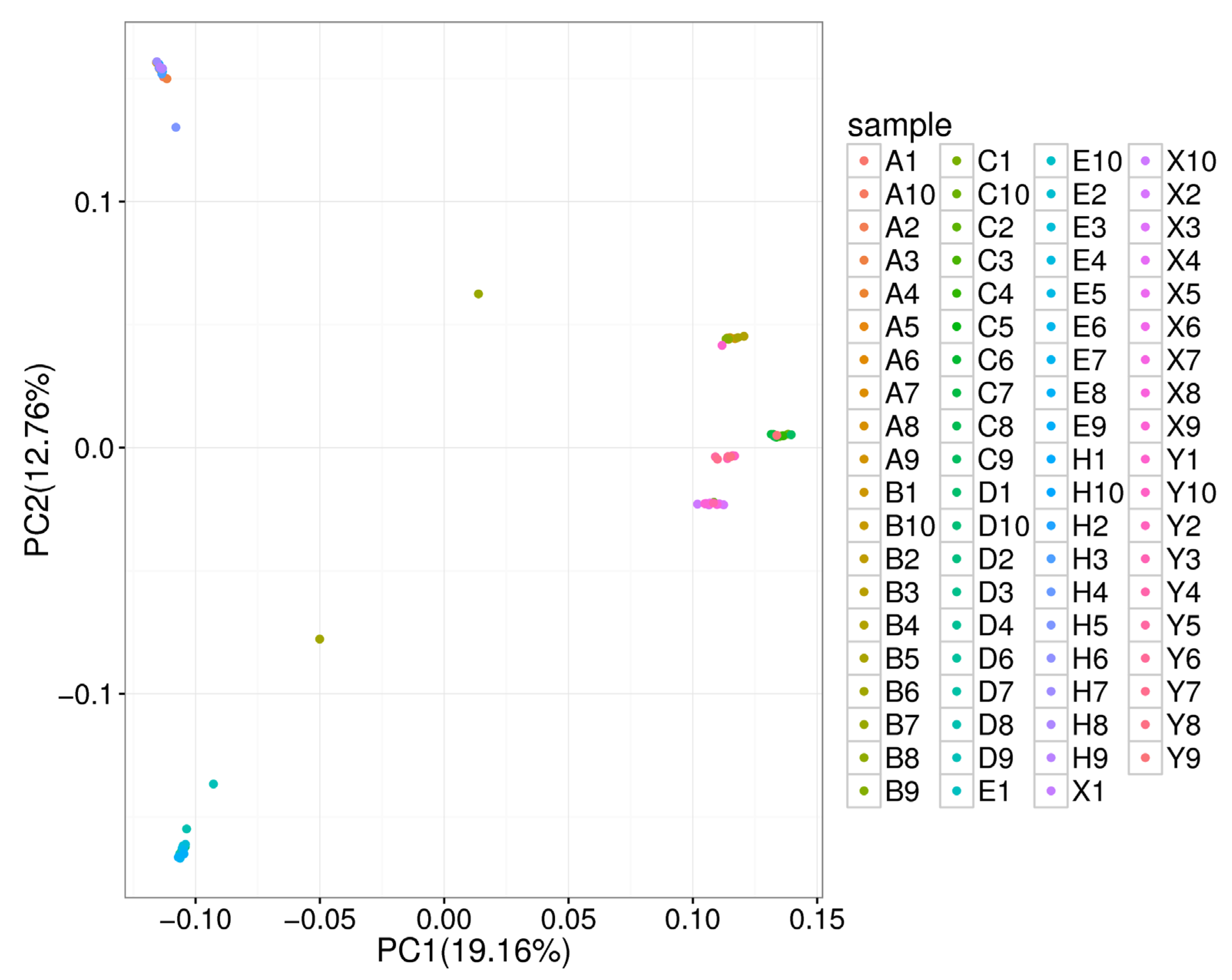
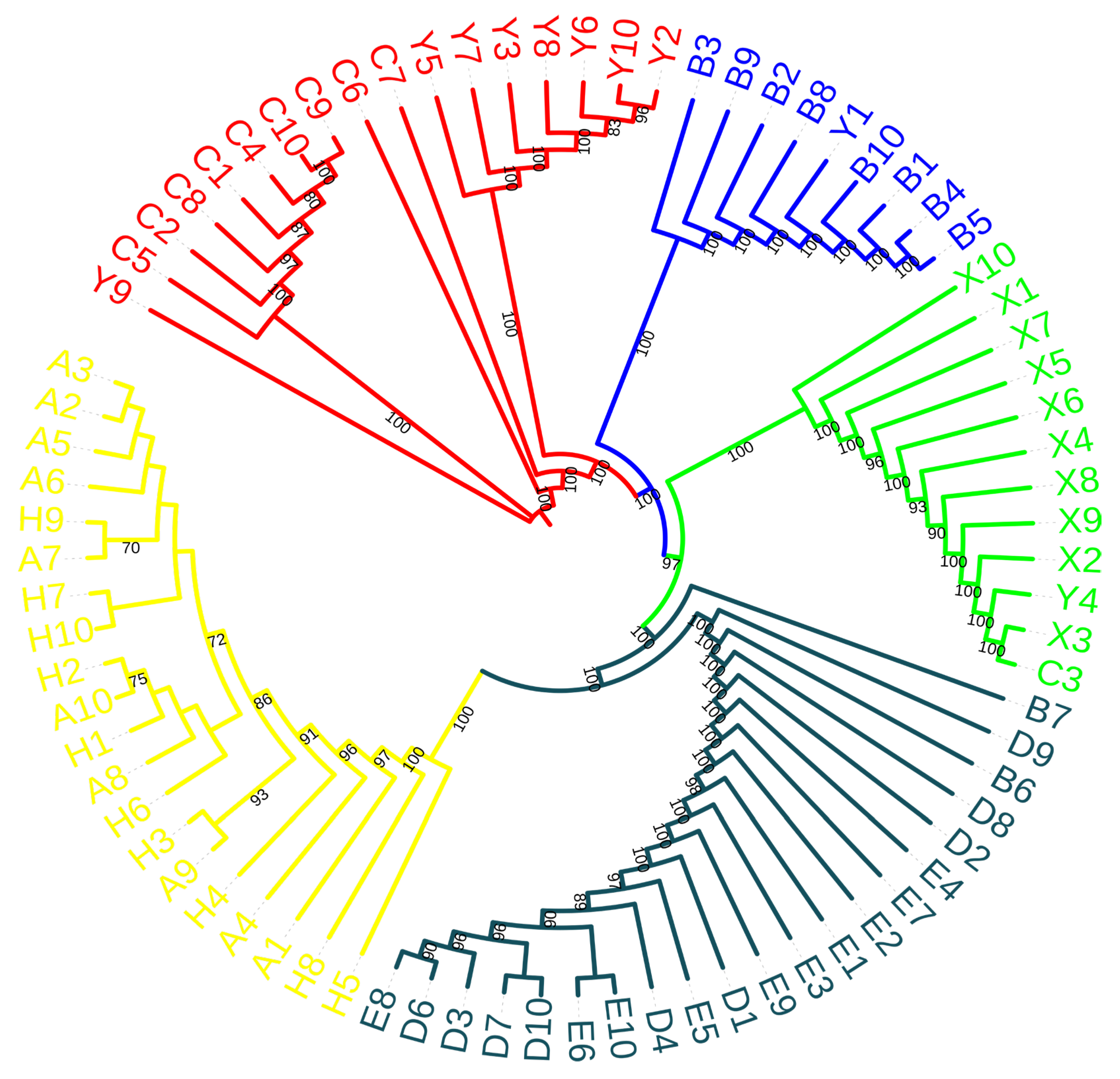
Genetic structure analysis using STRUCTURE showed that the delta K statistic supported an optimal number of subpopulations at K = 8 (Figure S3). However, inspection of the ancestry proportion patterns revealed that several inferred genetic components were highly shared among cultivars. When the STRUCTURE (Figure 2) results were considered together with PCA (Figure 3) and phylogenetic reconstruction (Figure 4), the genetic relationships among winterberry cultivars were consistently summarized into five major genetic clusters.
Specifically (Figure 2), I. verticillata ‘Winter Gold’ and I. verticillata ‘Winter Red’ exhibited nearly identical genetic profiles across all analyzed loci, indicating a very close kinship and high genetic stability between these two cultivars. Similarly, I. verticillata ‘Citronella’ and I. verticillata ‘Oosterwijk’ clustered together, demonstrating highly similar genetic backgrounds and further suggesting their genetic stability. I. verticillata ‘Red Sprite’ (Rizhao) and I. verticillata ‘Red Sprite’ (Dezhou), despite being geographically separated, showed no significant genetic differentiation, further supporting their stable genetic relationship. In contrast, I. verticillata ‘Golden Verboom’ and I. verticillata ‘Little Goblin Red’ displayed distinct genetic components, with backgrounds markedly different from other cultivars, highlighting their uniqueness as genetically specialized, independent germplasm resources. These results suggest that while some cultivars maintain stable genetic structures, others exhibit greater genetic diversity, reflecting their independent evolutionary paths.
PCA results indicate that all samples did not distribute randomly but exhibited distinct varietal clustering (Figure 3). First, along the first principal component axis, varieties were clearly divided into two major groups: the first group included I. verticillata ‘Winter Gold’, I. verticillata ‘Winter Red’, I. verticillata ‘Oosterwijk’, and I. verticillata ‘Citronella’, with negative PC1 scores; The second group comprised I. verticillata ‘Golden Verboom’, I. verticillata ‘Little Goblin Red’, I. verticillata ‘Red Sprite’ (Rizhao), and I. verticillata ‘Red Sprite’ (Dezhou), with positive PC1 scores. This macro-level differentiation indicates significant genetic background differences between the two clusters. Second, the second principal component further revealed subtle distinctions within groups. I. verticillata ‘Red Sprite’ (Rizhao) and I. verticillata ‘Red Sprite’ (Dezhou) showed a distinguishable trend along the PC2 axis, suggesting that geographic origins may have caused genetic differentiation among materials sharing the same cultivar name. Additionally, isolated outlier samples within the I. verticillata ‘Golden Verboom’ group (e.g., B6, B7) positioned far from the main varietal cluster may stem from individual heterozygosity or sample peculiarities, warranting further investigation.
A phylogenetic tree was constructed using the neighbor-joining method in MEGA11, with clustering results consistent with those from STRUCTURE analysis (Figure 4). The overall tree comprises five major branches. The first branch consists of all individuals of I. verticillata ‘Winter Gold’ and I. verticillata ‘Winter Red’, indicating that these two share the most recent common ancestor among all winterberry cultivars and exhibit highly consistent genetic backgrounds. The second branch stably grouped all samples of I. verticillata ‘Citronella’ and I. verticillata ‘Oosterwijk’, suggesting their close genetic relationship. The populations of I. verticillata ‘Red Sprite’ (Rizhao) and I. verticillata ‘Red Sprite’ (Dezhou) perfectly cluster within the third branch. Despite geographical isolation, these two populations show no significant genetic differentiation. I. verticillata ‘Golden Verboom’ and I. verticillata ‘Little Goblin Red’ each formed independent branches, reflecting their distinct genetic identities as the two most genetically specialized cultivars.

4. Discussion

Through GBS, we conducted an in-depth genetic analysis of eight winterberry cultivars, yielding high-quality sequencing data that provides a reliable foundation for subsequent analyses. This outcome aligns with GBS performance in other plant genetic studies, further validating the technique’s applicability and reliability for non-model plant genetic analysis [46]. Through comprehensive analysis of genome-wide SNP markers, we systematically revealed the complex genetic relationships among winterberry cultivars. While Ilex includes many species, studies have shown varying levels of genetic differentiation. For example, Ilex chinensis populations in China display clear genetic differentiation across geographic regions [47]. Similarly, Ilex aquifolium shows notable genetic diversity within populations, suggesting complex genetic relationships even within a single species [48]. Furthermore, the Ilex genus, with over 600 species, exhibits frequent lineage diversification and hybridization, pointing to varied genetic structures across species [49]. Therefore, the observed genetic similarity in winterberry cultivars could reflect broader genetic trends within Ilex. These findings not only provide molecular evidence for cultivar identification but also offer crucial insights into their breeding history and future breeding strategies. Results indicate that I. verticillata ‘Winter Gold’ and I. verticillata ‘Winter Red’ exhibit high genetic similarity, suggesting a shared breeding background. This finding corroborates their phenotypic similarity, implying that these two cultivars can be managed and utilized as materials with comparable genetic value in breeding practices [14]. I. verticillata ‘Red Sprite’ (Rizhao) and I. verticillata ‘Red Sprite’ (Dezhou) exhibited only slight genetic differentiation, indicating that geographic isolation has limited impact on genetic structure. This provides a genetic basis for introducing and cultivating winterberry across different ecological regions [50,51].
Samples were collected from different geographic regions, and environmental factors influenced the genetic structure of winterberry. Environmental factors drive local adaptation through natural selection mechanisms, thereby affecting genetic structure. Sunlight, as a key environmental factor, exerts different selective pressures on winterberry populations in different regions, leading to genetic differentiation. Varying environmental conditions prompt winterberry to adjust its growth patterns or reproductive strategies to adapt to specific ecological environments [52]. Furthermore, attention was given to the genetic background and stability of the selected materials during sample collection, considering the potential impact of interspecies hybridization on genetic structure. This approach minimized the interference of non-target genetic components on the population structure analysis, ensuring that the inferred genetic structure primarily reflects the genuine genetic differences between winterberry cultivars. Future studies could employ gene flow analysis and pedigree reconstruction methods to identify and exclude hybrid individuals, thus ensuring the accuracy and reliability of genetic structure analysis.
This study also identified germplasm resources with unique genetic backgrounds. The marked genetic distinctiveness exhibited by I. verticillata ‘Golden Verboom’ and I. verticillata ‘Little Goblin Red’ suggests they may harbor rare alleles [15]. Such germplasm resources with unique genetic backgrounds hold significant value for broadening the genetic foundation of breeding resources, particularly in introducing new traits and improving existing cultivars. In ornamental plant breeding, crossing parents with high genetic divergence often yields offspring with enhanced ornamental value, representing a strategy successfully applied in chrysanthemums [53,54]. From a breeding practice perspective, these findings provide important guidance for cultivar development in winterberry. Crossbreeding between highly genetically similar cultivars yields limited hybrid vigor, whereas utilizing parents with unique genetic backgrounds facilitates the development of breakthrough new cultivars [55,56]. For example, the unique genetic backgrounds of I. verticillata ‘Golden Verboom’ and I. verticillata ‘Little Goblin Red’ are more likely to harbor distinctive ornamental traits. Crossing them with existing widely cultivated varieties holds promise for obtaining offspring that combine the advantages of both parents.
The SNP marker resources developed and the genetic structure information obtained in this study lay a solid foundation for subsequent research on winterberries. Future work may focus on the following aspects: First, conducting genome-wide association studies for important traits to identify genetic loci associated with ornamental characteristics and stress tolerance [25]. Second, constructing a high-density genetic linkage map to provide technical support for marker-assisted selection [22]. Additionally, expanding the scope of germplasm resource collection and integrating genomic and phenomic data to establish a genomic selection breeding system for winterberry [26,27]. These studies will significantly advance winterberry breeding from traditional empirical methods toward modern molecular design approaches, ultimately achieving substantial improvements in breeding efficiency.

5. Conclusions

This study marks the first successful application of GBS to winterberry germplasm resource analysis. Through in-depth analysis of representative cultivars, it systematically revealed their population genetic structure. The results indicate that the tested cultivars can be genetically classified into five distinct clusters: I. verticillata ‘Winter Gold’ and I. verticillata ‘Winter Red’, which share highly consistent genetic backgrounds; I. verticillata ‘Citronella’ and I. verticillata ‘Oosterwijk’, which cluster closely together; I. verticillata ‘Red Sprite’ (Rizhao) and I. verticillata ‘Red Sprite’ (Dezhou), which showed no significant genetic differentiation, demonstrating excellent genetic stability; and I. verticillata ‘Golden Verboom’ and I. verticillata ‘Little Goblin Red’, which exhibited unique genetic backgrounds, representing distinct germplasm resources with high breeding potential. This study not only provides reliable molecular evidence for variety identification and intellectual property protection of North American holly but also establishes a robust foundation for subsequent genome-wide association studies, high-density genetic mapping, and marker-assisted breeding through the development of high-quality SNP marker resources. These advancements will significantly propel breeding research for this species toward precision and efficiency.

Supplementary Materials

The following supporting information can be downloaded at: https://www.mdpi.com/article/10.3390/f17010047/s1, Figure S1: Frequency plot of sample filtering analysis; Figure S2: Sample filtering analysis proportion chart; Figure S3: Determination of the optimal genetic clustering number (K); Table S1: Read Filtering Information Statistics; Table S2: Statistics of Base Information Before and After Filtration.

Author Contributions

M.H. and Y.F. carried out the experiments, organized data, wrote the manuscript. X.Z. (Xiaonan Zhao) performed the initial sampling for the experiments. X.Z. (Xueqing Zhao) revised the manuscript. M.H. designed and superintended the Project. All authors have read and agreed to the published version of the manuscript.

Funding

This research was funded by the Nanjing Municipal Science and Technology Program (202306003) for the development of new flower varieties, elite breeding, and efficient cultivation techniques.

Data Availability Statement

The data generated in this study have been deposited in the China National GeneBank DataBase (CNGBdb) under the CNSA (CNGB Sequence Archive) with the Project accession number CNP0008684.

Acknowledgments

We are grateful to Guangzhou Genedenovo Biotechnology Co., Ltd. for assisting in sequencing and/or bioinformatics analysis.

Conflicts of Interest

The authors declare no conflicts of interest.

References

  1. He, P.; Lu, H.; Zhao, C.; Zhang, M.; Zhou, P.; Wang, Y.; Liu, J.; Shen, Q.; Kant, S.; Sun, S.; et al. Trichoderma Bio-Organic Fertilizer Enhances Ornamental Value of Ilex verticillata. Sci. Hortic. 2025, 350, 114348. [Google Scholar] [CrossRef]
  2. Ali, A.; Nisar, M.; Shah, S.W.A.; Khalil, A.A.K.; Zahoor, M.; Nazir, N.; Shah, S.A.; Nasr, F.A.; Noman, O.M.; Mothana, R.A.; et al. Anatomical Characterization, HPLC Analysis, and Biological Activities of Ilex dipyrena. Plants 2022, 11, 617. [Google Scholar] [CrossRef] [PubMed]
  3. Wang, D.-Q.; Wu, C.-N.; Song, Y.; Jiang, H.-Q.; Zhou, H.-L.; Zhang, C.; Li, H.-F.; Zhang, X.-L.; Wu, Y. Chemical Constituents from Ilex urceolatus. Biochem. Syst. Ecol. 2016, 64, 70–73. [Google Scholar] [CrossRef]
  4. Paluch, E.; Okińczyc, P.; Zwyrzykowska-Wodzińska, A.; Szperlik, J.; Żarowska, B.; Duda-Madej, A.; Bąbelewski, P.; Włodarczyk, M.; Wojtasik, W.; Kupczyński, R.; et al. Composition and Antimicrobial Activity of Ilex Leaves Water Extracts. Molecules 2021, 26, 7442. [Google Scholar] [CrossRef]
  5. Pachura, N.; Włodarczyk, M.; Bażanów, B.; Pogorzelska, A.; Gębarowski, T.; Kupczyński, R.; Szumny, A. Antiviral and Cytotoxic Activities of Ilex aquifolium Silver Queen in the Context of Chemical Profiling of Two Ilex Species. Molecules 2024, 29, 3231. [Google Scholar] [CrossRef]
  6. Yang, B.; Zhu, J.-P.; Rong, L.; Jin, J.; Cao, D.; Li, H.; Zhou, X.-H.; Zhao, Z.-X. Triterpenoids with Antiplatelet Aggregation Activity from Ilex rotunda. Phytochemistry 2018, 145, 179–186. [Google Scholar] [CrossRef]
  7. Xia, W.-Q.; Li, R.-F.; Liu, J.-B.; Cui, B.-S.; Hou, Q.; Sun, H.; Li, S. Triterpenoids from the Leaves of Ilex chinensis. Phytochemistry 2018, 148, 113–121. [Google Scholar] [CrossRef]
  8. Liao, F.; Yousif, M.; Huang, R.; Qiao, Y.; Hu, Y. Network Pharmacology- and Molecular Docking-Based Analyses of the Antihypertensive Mechanism of Ilex kudingcha. Front. Endocrinol. 2023, 14, 1216086. [Google Scholar] [CrossRef]
  9. Han, Y.; Zhang, L.; Li, W.; Liu, X.; Xiao, J.; Chen, G.; Li, N. Natural CAC Chemopreventive Agents from Ilex rotunda Thunb. J. Nat. Med. 2019, 73, 456–467. [Google Scholar] [CrossRef]
  10. Pachura, N.; Kupczyński, R.; Sycz, J.; Kuklińska, A.; Zwyrzykowska-Wodzińska, A.; Wińska, K.; Owczarek, A.; Kuropka, P.; Nowaczyk, R.; Bąbelewski, P.; et al. Biological Potential and Chemical Profile of European Varieties of Ilex. Foods 2021, 11, 47. [Google Scholar] [CrossRef]
  11. Meyer, P. Epigenetic Variation and Environmental Change. J. Exp. Bot. 2015, 66, 3541–3548. [Google Scholar] [CrossRef]
  12. Rajpal, V.R.; Rathore, P.; Mehta, S.; Wadhwa, N.; Yadav, P.; Berry, E.; Goel, S.; Bhat, V.; Raina, S.N. Epigenetic Variation: A Major Player in Facilitating Plant Fitness under Changing Environmental Conditions. Front. Cell Dev. Biol. 2022, 10, 1020958. [Google Scholar] [CrossRef] [PubMed]
  13. Cascales, J.; Acevedo, R.M.; Paiva, D.I.; Gottlieb, A.M. Differential DNA Methylation and Gene Expression during Development of Reproductive and Vegetative Organs in Ilex Species. J. Plant. Res. 2021, 134, 559–575. [Google Scholar] [CrossRef] [PubMed]
  14. Islam, A.S.M.F.; Sanders, D.; Mishra, A.K.; Joshi, V. Genetic Diversity and Population Structure Analysis of the USDA Olive Germplasm Using Genotyping-By-Sequencing (GBS). Genes 2021, 12, 2007. [Google Scholar] [CrossRef] [PubMed]
  15. Muli, J.K.; Neondo, J.O.; Kamau, P.K.; Michuki, G.N.; Odari, E.; Budambula, N.L.M. Genetic Diversity and Population Structure of Wild and Cultivated Crotalaria Species Based on Genotyping-by-Sequencing. PLoS ONE 2022, 17, e0272955. [Google Scholar] [CrossRef]
  16. He, J.; Zhao, X.; Laroche, A.; Lu, Z.-X.; Liu, H.; Li, Z. Genotyping-by-Sequencing (GBS), an Ultimate Marker-Assisted Selection (MAS) Tool to Accelerate Plant Breeding. Front. Plant Sci. 2014, 5, 484. [Google Scholar] [CrossRef]
  17. Chung, Y.S.; Choi, S.C.; Jun, T.-H.; Kim, C. Genotyping-by-Sequencing: A Promising Tool for Plant Genetics Research and Breeding. Hortic. Environ. Biotechnol. 2017, 58, 425–431. [Google Scholar] [CrossRef]
  18. Singh, L.; Wu, Y.; McCurdy, J.D.; Stewart, B.R.; Warburton, M.L.; Baldwin, B.S.; Dong, H. Genetic Diversity and Population Structure of Bermudagrass (Cynodon spp.) Revealed by Genotyping-by-Sequencing. Front. Plant Sci. 2023, 14, 1155721. [Google Scholar] [CrossRef]
  19. Niu, S.; Song, Q.; Koiwa, H.; Qiao, D.; Zhao, D.; Chen, Z.; Liu, X.; Wen, X. Genetic Diversity, Linkage Disequilibrium, and Population Structure Analysis of the Tea Plant (Camellia sinensis) from an Origin Center, Guizhou Plateau, Using Genome-Wide SNPs Developed by Genotyping-by-Sequencing. BMC Plant Biol. 2019, 19, 328. [Google Scholar] [CrossRef]
  20. Ha, Y.-H.; Gil, H.-Y.; Kim, S.-C.; Choi, K.; Kim, J.-H. Genetic Structure and Geneflow of Malus across the Korean Peninsula Using Genotyping-by-Sequencing. Sci. Rep. 2022, 12, 16262. [Google Scholar] [CrossRef]
  21. Hou, L.; Chen, W.; Zhang, Z.; Pang, X.; Li, Y. Genome-wide Association Studies of Fruit Quality Traits in Jujube Germplasm Collections Using Genotyping-by-sequencing. Plant Genome 2020, 13, e20036. [Google Scholar] [CrossRef] [PubMed]
  22. Pootakham, W.; Ruang-Areerate, P.; Jomchai, N.; Sonthirod, C.; Sangsrakru, D.; Yoocha, T.; Theerawattanasuk, K.; Nirapathpongporn, K.; Romruensukharom, P.; Tragoonrung, S.; et al. Construction of a High-Density Integrated Genetic Linkage Map of Rubber Tree (Hevea brasiliensis) Using Genotyping-by-Sequencing (GBS). Front. Plant Sci. 2015, 6, 367. [Google Scholar] [CrossRef] [PubMed]
  23. Pavan, S.; Curci, P.L.; Zuluaga, D.L.; Blanco, E.; Sonnante, G. Genotyping-by-Sequencing Highlights Patterns of Genetic Structure and Domestication in Artichoke and Cardoon. PLoS ONE 2018, 13, e0205988. [Google Scholar] [CrossRef] [PubMed]
  24. Chen, Y.; Niu, S.; Deng, X.; Song, Q.; He, L.; Bai, D.; He, Y. Genome-Wide Association Study of Leaf-Related Traits in Tea Plant in Guizhou Based on Genotyping-by-Sequencing. BMC Plant Biol. 2023, 23, 196. [Google Scholar] [CrossRef]
  25. Kishor, D.S.; Noh, Y.; Song, W.-H.; Lee, G.P.; Park, Y.; Jung, J.-K.; Shim, E.-J.; Sim, S.-C.; Chung, S.-M. SNP Marker Assay and Candidate Gene Identification for Sex Expression via Genotyping-by-Sequencing-Based Genome-Wide Associations (GWAS) Analyses in Oriental Melon (Cucumis melo L. Var. makuwa). Sci. Hortic. 2021, 276, 109711. [Google Scholar] [CrossRef]
  26. Crossa, J.; Beyene, Y.; Kassa, S.; Pérez, P.; Hickey, J.M.; Chen, C.; De Los Campos, G.; Burgueño, J.; Windhausen, V.S.; Buckler, E.; et al. Genomic Prediction in Maize Breeding Populations with Genotyping-by-Sequencing. G3 Genes Genomes Genet. 2013, 3, 1903–1926. [Google Scholar] [CrossRef]
  27. Ayalew, H.; Anderson, J.D.; Krom, N.; Tang, Y.; Butler, T.J.; Rawat, N.; Tiwari, V.; Ma, X.-F. Genotyping-by-Sequencing and Genomic Selection Applications in Hexaploid Triticale. G3 Genes Genomes Genet. 2022, 12, jkab413. [Google Scholar] [CrossRef]
  28. Bentley, N.; Grauke, L.J.; Klein, P. Genotyping by Sequencing (GBS) and SNP Marker Analysis of Diverse Accessions of Pecan (Carya illinoinensis). Tree Genet. Genomes 2019, 15, 8. [Google Scholar] [CrossRef]
  29. Klápště, J.; Ashby, R.L.; Telfer, E.J.; Graham, N.J.; Dungey, H.S.; Brauning, R.; Clarke, S.M.; Dodds, K.G. The Use of “Genotyping-by-Sequencing” to Recover Shared Genealogy in Genetically Diverse Eucalyptus Populations. Forests 2021, 12, 904. [Google Scholar] [CrossRef]
  30. Hall, D.; Zhao, W.; Wennström, U.; Andersson Gull, B.; Wang, X.-R. Parentage and Relatedness Reconstruction in Pinus sylvestris Using Genotyping-by-Sequencing. Heredity 2020, 124, 633–646. [Google Scholar] [CrossRef]
  31. Yao, X.; Tan, Y.-H.; Liu, Y.-Y.; Song, Y.; Yang, J.-B.; Corlett, R.T. Chloroplast Genome Structure in Ilex (Aquifoliaceae). Sci. Rep. 2016, 6, 28559. [Google Scholar] [CrossRef] [PubMed]
  32. De Luca, D.; Del Guacchio, E.; Cennamo, P.; Paino, L.; Caputo, P. Genotyping-by-Sequencing Provides New Genetic and Taxonomic Insights in the Critical Group of Centaurea tenorei. Front. Plant Sci. 2023, 14, 1130889. [Google Scholar] [CrossRef] [PubMed]
  33. Shi, L.; Li, N.; Wang, S.; Zhou, Y.; Huang, W.; Yang, Y.; Ma, Y.; Zhou, R. Molecular Evidence for the Hybrid Origin of Ilex dabieshanensis (Aquifoliaceae). PLoS ONE 2016, 11, e0147825. [Google Scholar] [CrossRef]
  34. Delvento, C.; Pavan, S.; Miazzi, M.M.; Marcotrigiano, A.R.; Ricciardi, F.; Ricciardi, L.; Lotti, C. Genotyping-by-Sequencing Defines Genetic Structure within the “Acquaviva” Red Onion Landrace. Plants 2022, 11, 2388. [Google Scholar] [CrossRef] [PubMed]
  35. Hong, U.V.T.; Tamiru-Oli, M.; Hurgobin, B.; Okey, C.R.; Abreu, A.R.; Lewsey, M.G. Insights into Opium Poppy (Papaver spp.) Genetic Diversity from Genotyping-by-Sequencing Analysis. Sci. Rep. 2022, 12, 111. [Google Scholar] [CrossRef]
  36. Wang, L.; Fang, C.; Liu, J.; Zhang, T.; Kou, K.; Su, T.; Li, S.; Chen, L.; Cheng, Q.; Dong, L.; et al. Identification of Major QTLs for Flowering and Maturity in Soybean by Genotyping-by-Sequencing Analysis. Mol. Breed. 2020, 40, 99. [Google Scholar] [CrossRef]
  37. Chen, S.; Zhou, Y.; Chen, Y.; Gu, J. Fastp: An Ultra-Fast All-in-One FASTQ Preprocessor. Bioinformatics 2018, 34, i884–i890. [Google Scholar] [CrossRef]
  38. Catchen, J.; Hohenlohe, P.A.; Bassham, S.; Amores, A.; Cresko, W.A. Stacks: An Analysis Tool Set for Population Genomics. Mol. Ecol. 2013, 22, 3124–3140. [Google Scholar] [CrossRef]
  39. DePristo, M.A.; Banks, E.; Poplin, R.; Garimella, K.V.; Maguire, J.R.; Hartl, C.; Philippakis, A.A.; Del Angel, G.; Rivas, M.A.; Hanna, M.; et al. A Framework for Variation Discovery and Genotyping Using Next-Generation DNA Sequencing Data. Nat. Genet. 2011, 43, 491–498. [Google Scholar] [CrossRef]
  40. Alexander, D.H.; Novembre, J.; Lange, K. Fast Model-Based Estimation of Ancestry in Unrelated Individuals. Genome Res. 2009, 19, 1655–1664. [Google Scholar] [CrossRef]
  41. Chang, C.C.; Chow, C.C.; Tellier, L.C.; Vattikuti, S.; Purcell, S.M.; Lee, J.J. Second-Generation PLINK: Rising to the Challenge of Larger and Richer Datasets. Gigascience 2015, 4, s13742-015. [Google Scholar] [CrossRef] [PubMed]
  42. Francis, R.M. POPHELPER: An R Package and Web App to Analyse and Visualize Population Structure. Mol. Ecol. Resour. 2017, 17, 27–32. [Google Scholar] [CrossRef] [PubMed]
  43. Yang, J.; Lee, S.H.; Goddard, M.E.; Visscher, P.M. GCTA: A Tool for Genome-Wide Complex Trait Analysis. Am. J. Hum. Genet. 2011, 88, 76–82. [Google Scholar] [CrossRef] [PubMed]
  44. Kumar, S.; Stecher, G.; Li, M.; Knyaz, C.; Tamura, K. MEGA X: Molecular Evolutionary Genetics Analysis across Computing Platforms. Mol. Biol. Evol. 2018, 35, 1547–1549. [Google Scholar] [CrossRef]
  45. Shirasawa, K.; Kuwata, C.; Watanabe, M.; Fukami, M.; Hirakawa, H.; Isobe, S. Target Amplicon Sequencing for Genotyping Genome-Wide Single Nucleotide Polymorphisms Identified by Whole-Genome Resequencing in Peanut. Plant Genome 2016, 9, plantgenome2016.06.0052. [Google Scholar] [CrossRef]
  46. Deschamps, S.; Llaca, V.; May, G.D. Genotyping-by-Sequencing in Plants. Biology 2012, 1, 460–483. [Google Scholar] [CrossRef]
  47. Hou, S.; Zhou, P.; Fang, Y.; Wang, X.; Zhang, M.; Zhang, Q. The Genetic Diversity of Natural Ilex chinensis Sims (Aquifoliaceae) Populations as Revealed by SSR Markers. Forests 2024, 15, 763. [Google Scholar] [CrossRef]
  48. Vega, C.; Fernández, V.; Gil, L.; Valbuena-Carabaña, M. Clonal Diversity and Fine-Scale Genetic Structure of a Keystone Species: Ilex aquifolium. Forests 2022, 13, 1431. [Google Scholar] [CrossRef]
  49. Cascales, J.; Bracco, M.; Garberoglio, M.; Poggio, L.; Gottlieb, A. Integral Phylogenomic Approach over Ilex L. Species from Southern South America. Life 2017, 7, 47. [Google Scholar] [CrossRef]
  50. Byrne, T.; Farrelly, N.; Kelleher, C.; Hodkinson, T.R.; Byrne, S.L.; Barth, S. Genetic Diversity and Structure of a Diverse Population of Picea sitchensis Using Genotyping-by-Sequencing. Forests 2022, 13, 1511. [Google Scholar] [CrossRef]
  51. Hu, Y.; Hu, Q.; Ma, X.; Zhang, X.; Zheng, J. Population Genetics and Origin of Horticultural Germplasm in Clematis via Genotyping-by-Sequencing. Hortic. Res. 2025, 12, uhae336. [Google Scholar] [CrossRef]
  52. Sork, V.L. Genomic Studies of Local Adaptation in Natural Plant Populations. J. Hered. 2017, 109, 3–15. [Google Scholar] [CrossRef]
  53. Nguyen, T.K.; Ha, S.T.T.; Lim, J.H. Analysis of Chrysanthemum Genetic Diversity by Genotyping-by-Sequencing. Hortic. Environ. Biotechnol. 2020, 61, 903–913. [Google Scholar] [CrossRef]
  54. Lee, Y.-J.; Jung, J.-A.; Lee, N.H.; Kim, J.S.; Won, S.Y. Genetic Analysis of Anemone-Type and Single-Type Inflorescences in Chrysanthemum Using Genotyping-by-Sequencing. Euphytica 2022, 218, 177. [Google Scholar] [CrossRef]
  55. Rahmati, R.; Nemati, Z.; Naghavi, M.R.; Pfanzelt, S.; Rahimi, A.; Kanzagh, A.G.; Blattner, F.R. Phylogeography and Genetic Structure of Papaver bracteatum Populations in Iran Based on Genotyping-by-Sequencing (GBS). Sci. Rep. 2024, 14, 16309. [Google Scholar] [CrossRef]
  56. Cros, D.; Bocs, S.; Riou, V.; Ortega-Abboud, E.; Tisné, S.; Argout, X.; Pomiès, V.; Nodichao, L.; Lubis, Z.; Cochard, B.; et al. Genomic Preselection with Genotyping-by-Sequencing Increases Performance of Commercial Oil Palm Hybrid Crosses. BMC Genom. 2017, 18, 839. [Google Scholar] [CrossRef]
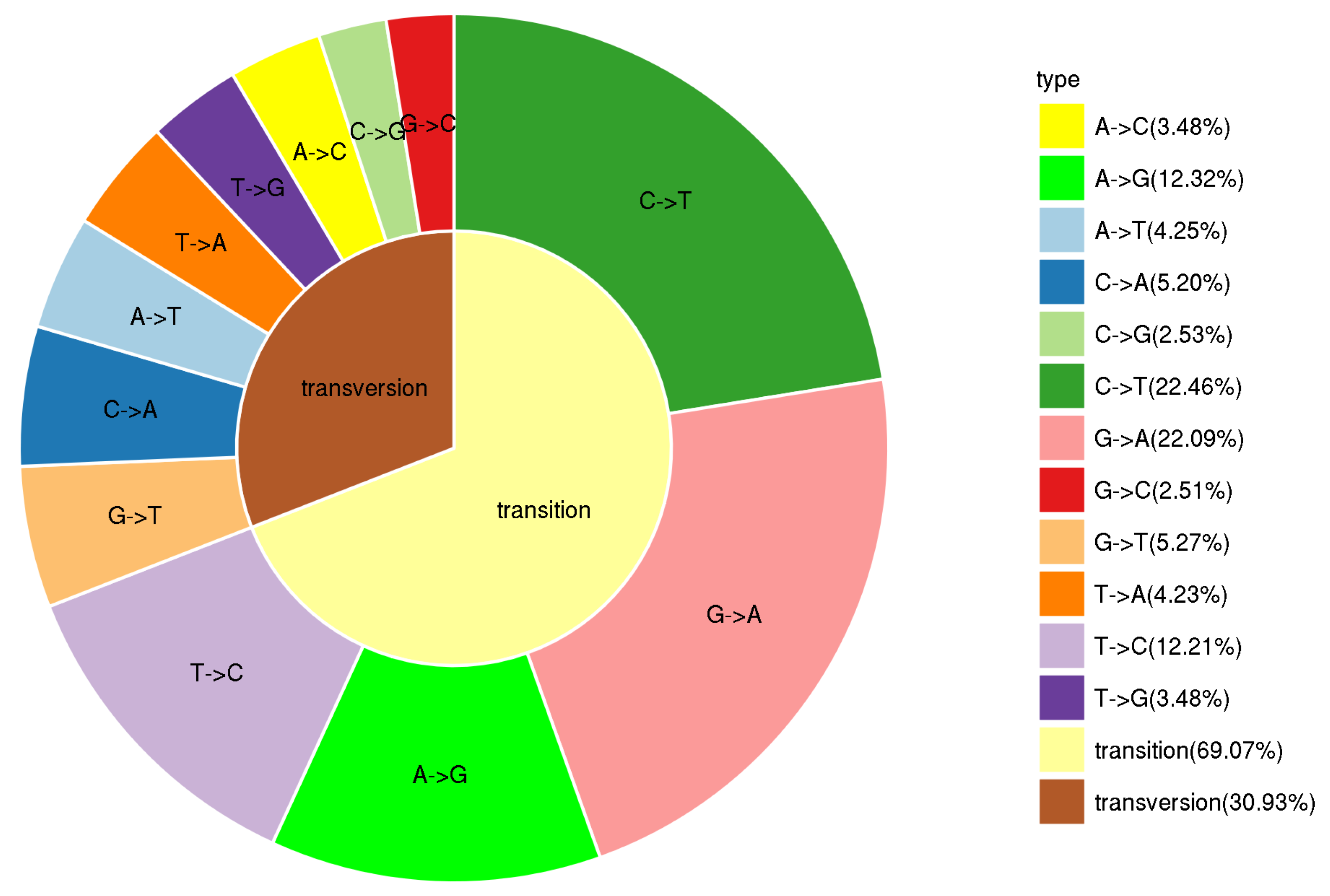
Figure 1. Spectrum of Point Mutations. Transition (69.07%) and Transversion (30.93%) Proportions in Genomic DNA.
Forests 17 00047 g001
Figure 2. Population structure of 79 winterberry samples mapped using 3,411,968 SNP markers. The aggregate population structure was inferred using STRUCTURE software, with bar charts depicting the ancestral proportion of individuals within genetic clusters (K = 8). Subpopulation grouping inferred by the STRUCTURE software indicated in five different colors. The y-axis values indicate the probability of the population.
Forests 17 00047 g002
Figure 3. Principal Component Analysis (PCA). Genetic relationships among 79 winterberry samples were revealed through 34,119,688 SNP markers.
Forests 17 00047 g003
Figure 4. Phylogenetic analysis of 79 winterberry samples using the neighbor-joining method. Genetic diversity and relationships among winterberry genotypes were revealed through 3,411,968 SNP markers. Different colors represent populations generated by structural analysis.
Forests 17 00047 g004
Table 1. List of Ilex verticillata in this study.
Sample ID RangeCultivar NameOrigin CountrySource Province City
A1–A10Ilex verticillata ‘Winter Gold’USAShandong Rizhao
B1–B10Ilex verticillata ‘Golden Verboom’The NetherlandsShandong Rizhao
C1–C10Ilex verticillata ‘Red Sprite’USAShandong Rizhao
D1–D4, D6–D10Ilex verticillata ‘Citronella’USAShandong Rizhao
E1–E10Ilex verticillata ‘Oosterwijk’The NetherlandsJiangsu Nanjing
H1–H10Ilex verticillata ‘Winter Red’USAJiangsu Nanjing
X1–X10Ilex verticillata ‘Little Goblin Red’USAShandong Dezhou
Y1–Y10Ilex verticillata ‘Red Sprite’USAShandong Dezhou
Disclaimer/Publisher’s Note: The statements, opinions and data contained in all publications are solely those of the individual author(s) and contributor(s) and not of MDPI and/or the editor(s). MDPI and/or the editor(s) disclaim responsibility for any injury to people or property resulting from any ideas, methods, instructions or products referred to in the content.