Article

Spatial Pattern of Drought-Induced Mortality Risk and Influencing Factors for Robinia pseudoacacia L. Plantations on the Chinese Loess Plateau


by
Zhong-Dian Zhang
1,2,3,4,
Tong-Hui Liu
1,2,5,
Ming-Bin Huang
6,
Xiao-Ying Yan
6,
Ming-Hua Liu
1,2,
Jun-Hui Yan
1,2,5,
Fei-Yan Chen
1,2,
Wei Yan
1,2,5 and
Ji-Qiang Niu
1,2,*
1
School of Geographic Sciences, Xinyang Normal University, Xinyang 464000, China
2
Henan Key Laboratory for Synergistic Prevention of Water and Soil Environmental Pollution, Xinyang Normal University, Xinyang 464000, China
3
Henan Dabieshan National Field Observation and Research Station of Forest Ecosystem, Zhengzhou 450046, China
4
Xinyang Academy of Ecological Research, Xinyang 464000, China
5
North-South Transitional Zone Typical Vegetation Phenology Observation and Research Station of Henan Province, Xinyang 464000, China
6
State Key Laboratory of Soil Erosion and Dryland Farming on the Loess Plateau, College of Soil and Water Conservation Science and Engineering, Northwest A&F University, Xianyang 712100, China
*
Author to whom correspondence should be addressed.
Forests 2024, 15(8), 1477; https://doi.org/10.3390/f15081477
Submission received: 1 August 2024 / Revised: 17 August 2024 / Accepted: 21 August 2024 / Published: 22 August 2024
(This article belongs to the Section Forest Hydrology)

Abstract

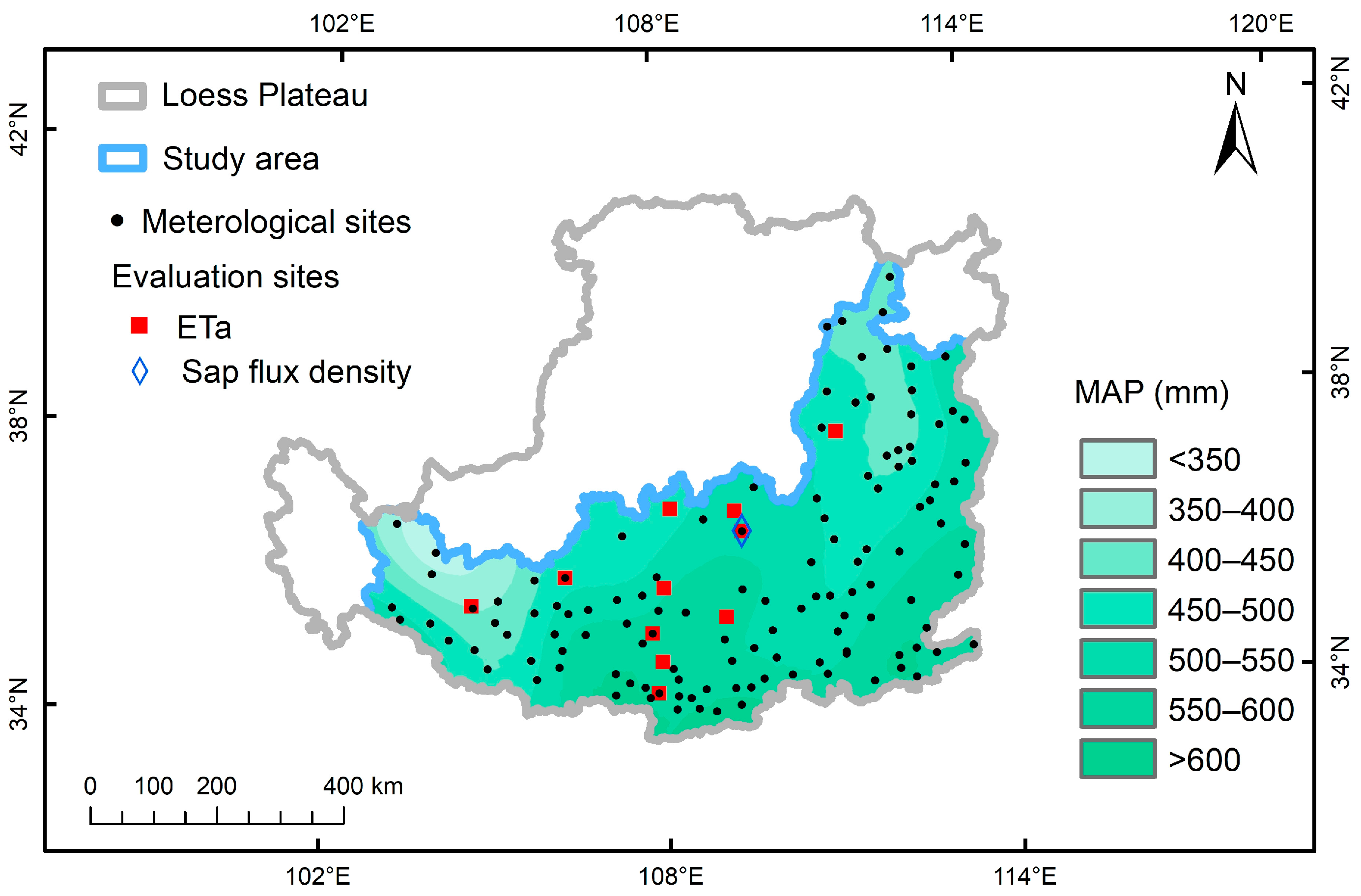
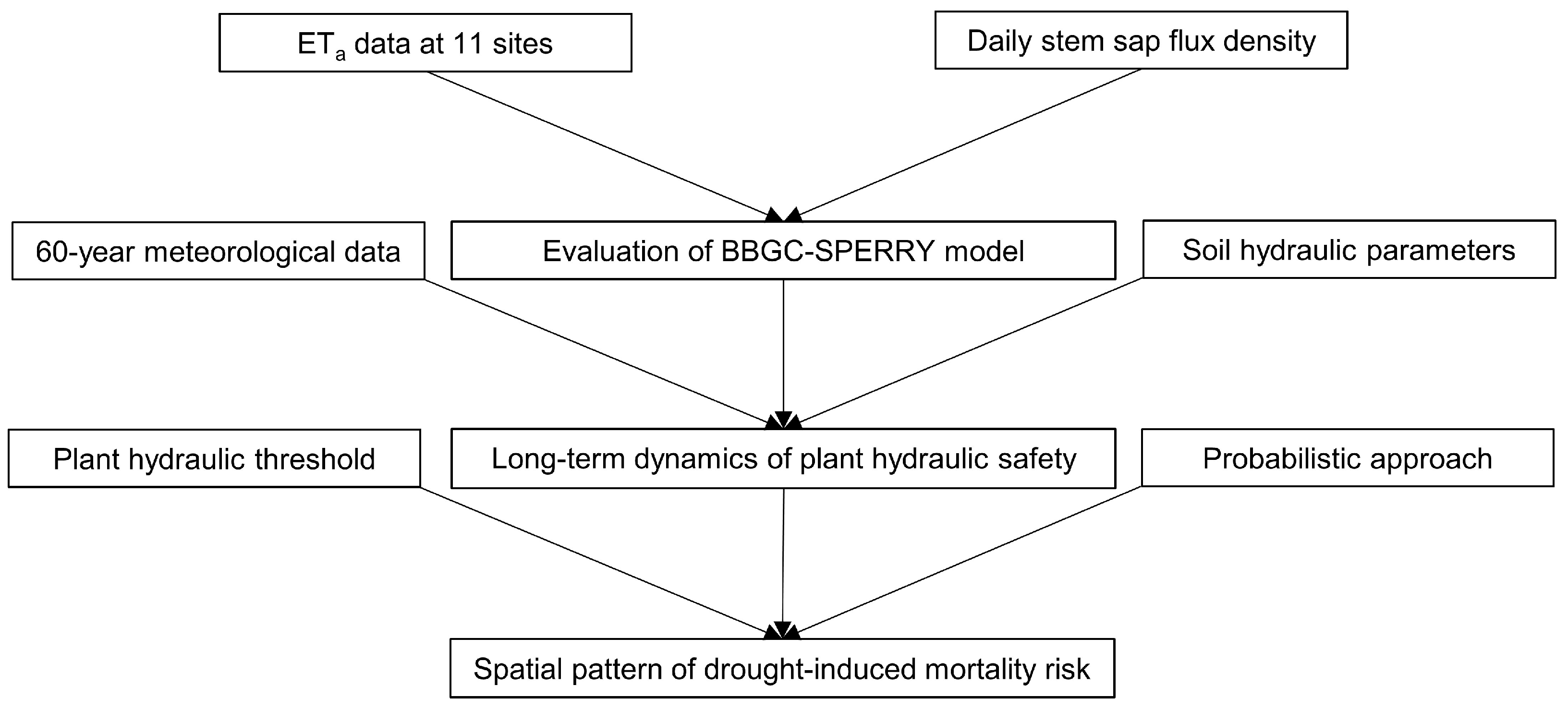
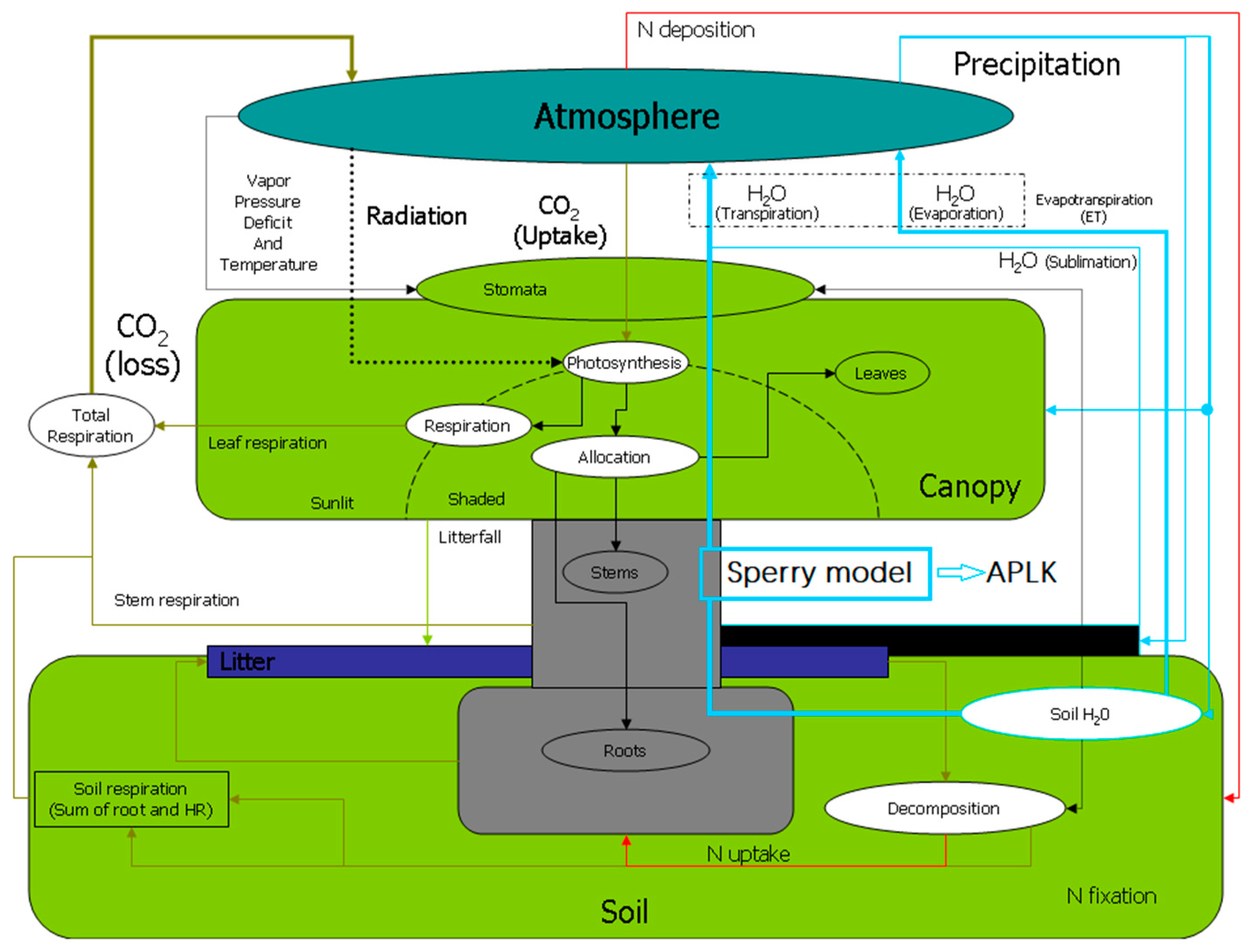
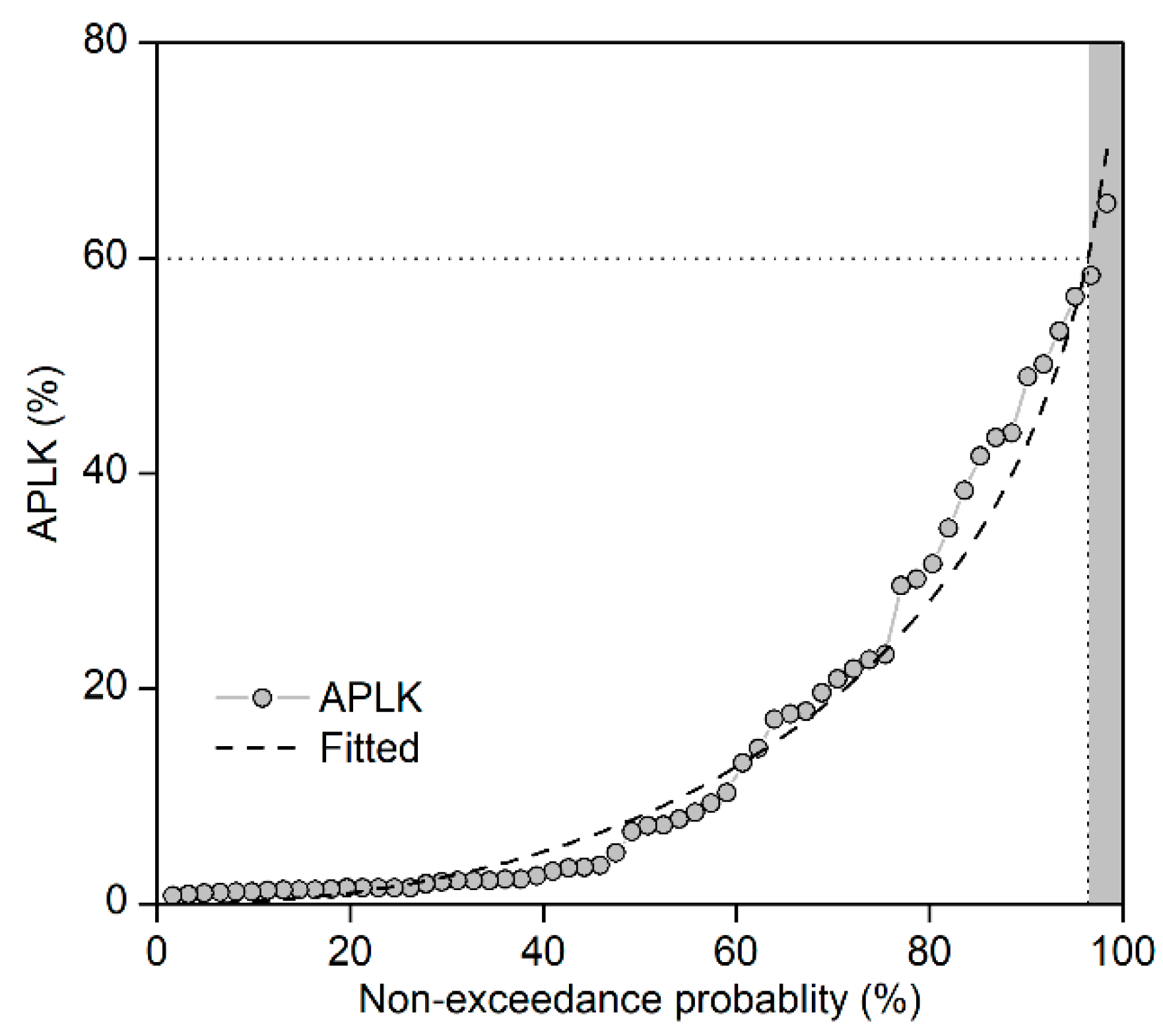
During the large-scale vegetation restoration on the Loess Plateau, the introduction of exotic species with high water consumption, such as Robinia pseudoacacia L., led to widespread soil desiccation, and resulted in severe drought stress and increasing risk of forest degradation and mortality. Accurate assessment of drought-induced mortality risk in plantation forests is essential for evaluating and enhancing the sustainability of ecological restoration, yet quantitative research at the regional scale on the Loess Plateau is lacking. With a focus on Robinia pseudoacacia L. plantations, we utilized a coupled model of the Biome BioGeochemical Cycles model and plant supply–demand hydraulic model (BBGC-SPERRY model) to simulate the dynamics of the annual average percentage loss of whole-plant hydraulic conductance (APLK) at 124 meteorological stations over an extended period (1961–2020) to examine changes in plant hydraulic safety in Robinia pseudoacacia L. plantations. Based on the probability distribution of APLK at each site, the drought-induced mortality risk probability (DMRP) in Robinia pseudoacacia L. was determined. The results indicate the BBGC-SPERRY model could effectively simulate the spatiotemporal variations in transpiration and evapotranspiration in Robinia pseudoacacia L. stands on the Loess Plateau. The mean APLK and DMRP exhibited increasing trends from southeast to northwest along a precipitation gradient, with their spatial patterns on the Loess Plateau mainly driven by mean annual precipitation and also significantly influenced by other climatic and soil factors. The low-risk (DMRP < 2%), moderate-risk (2% ≤ DMRP ≤ 5%), and high-risk (DMRP > 5%) zones for drought-induced mortality in Robinia pseudoacacia L. accounted for 60.0%, 30.7%, and 9.3% of the study area, respectively. These quantitative findings can provide an important basis for rational forestation and sustainable vegetation management on the Loess Plateau.
Keywords: tree mortality; plant hydraulics; BBGC-SPERRY model; risk probability; Loess Plateau tree mortality; plant hydraulics; BBGC-SPERRY model; risk probability; Loess Plateau