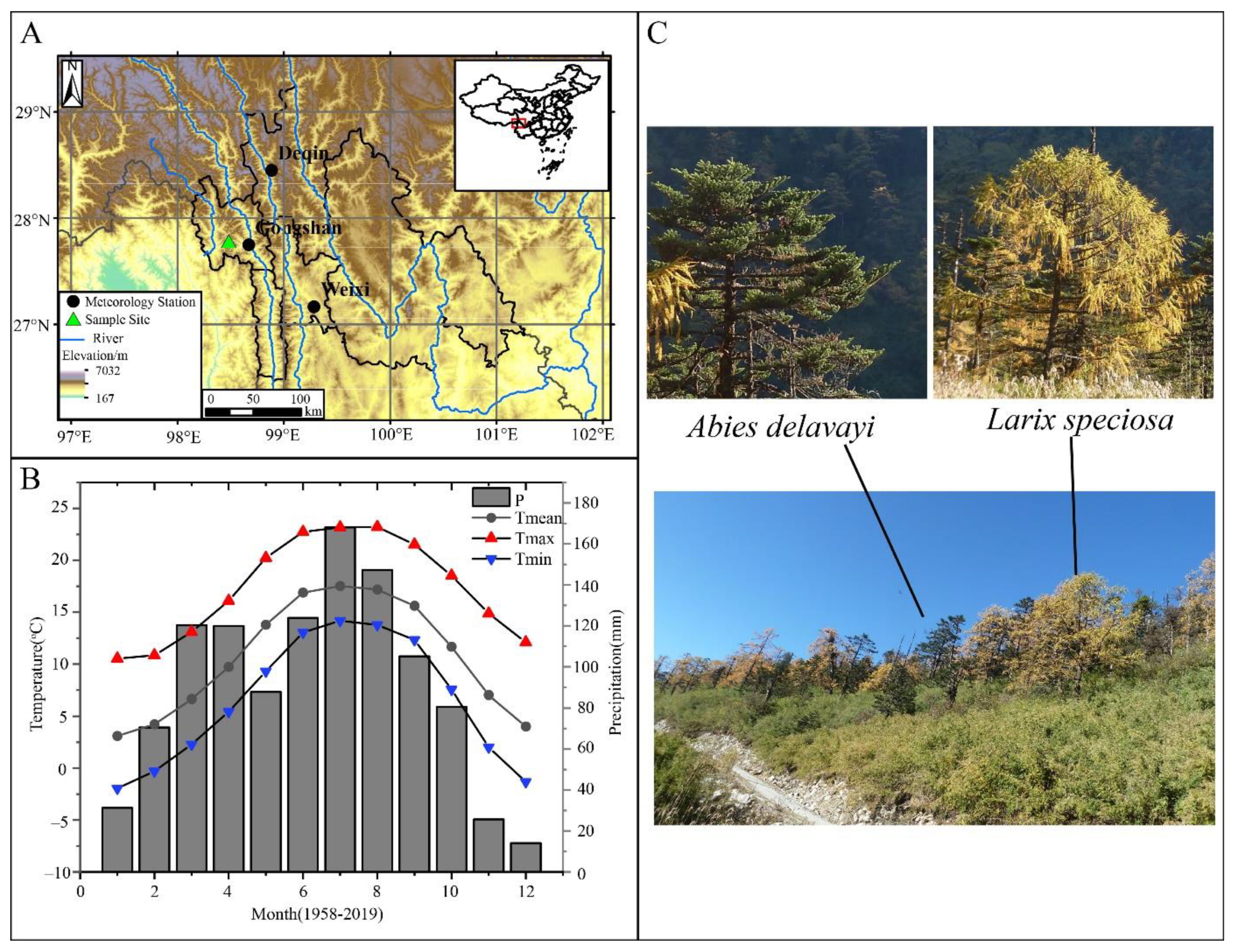
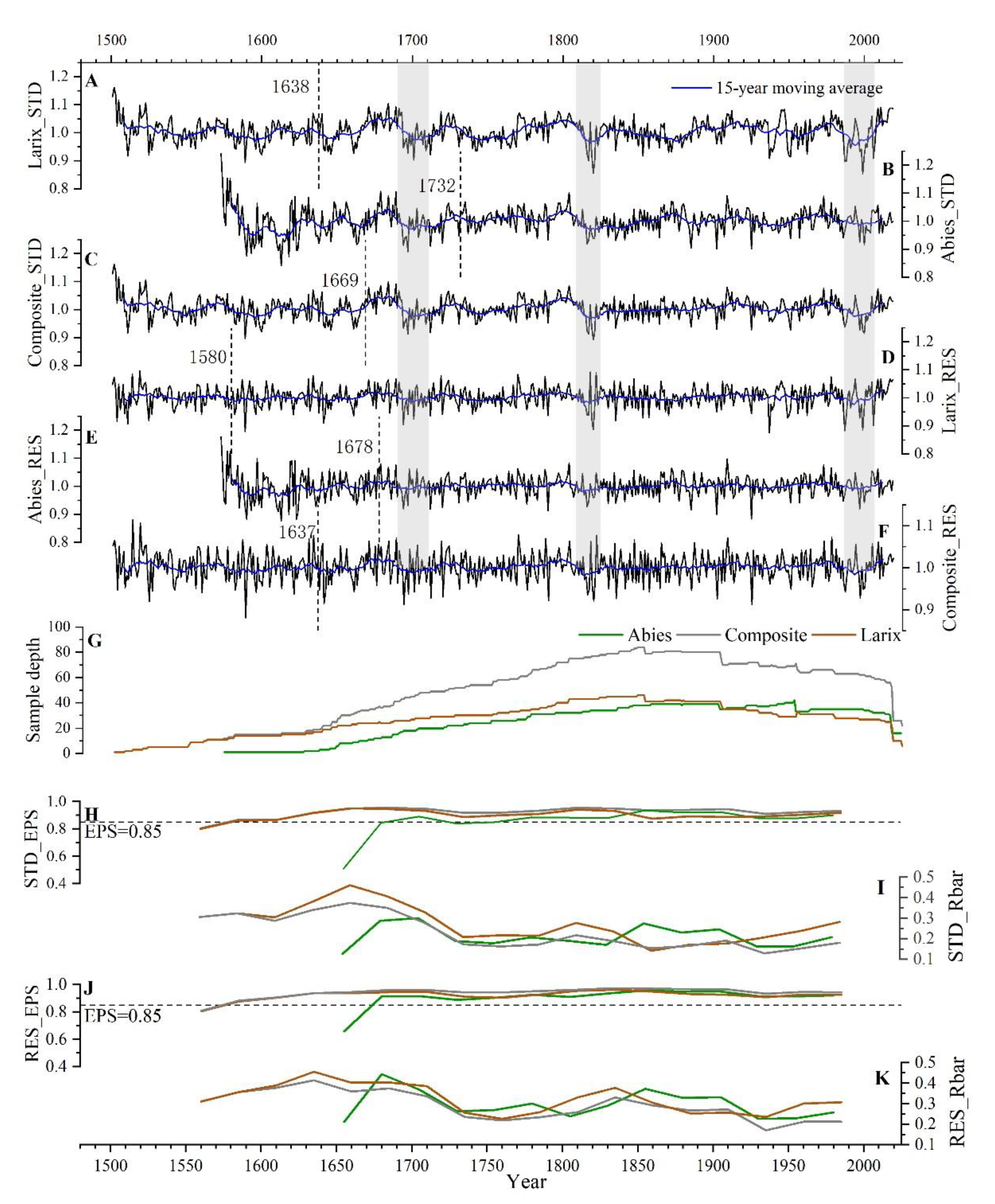
Responses to Climate Change of Maximum Latewood Density from Larix speciosa Cheng et Law and Abies delavayi Franch. in the Northwest of Yunnan Province, China

Abstract
Share and Cite
Deng, G.; Li, M.; Hao, Z.; Shao, X. Responses to Climate Change of Maximum Latewood Density from Larix speciosa Cheng et Law and Abies delavayi Franch. in the Northwest of Yunnan Province, China. Forests 2022, 13, 720. https://doi.org/10.3390/f13050720
Deng G, Li M, Hao Z, Shao X. Responses to Climate Change of Maximum Latewood Density from Larix speciosa Cheng et Law and Abies delavayi Franch. in the Northwest of Yunnan Province, China. Forests. 2022; 13(5):720. https://doi.org/10.3390/f13050720
Chicago/Turabian StyleDeng, Guofu, Mingqi Li, Zhixin Hao, and Xuemei Shao. 2022. "Responses to Climate Change of Maximum Latewood Density from Larix speciosa Cheng et Law and Abies delavayi Franch. in the Northwest of Yunnan Province, China" Forests 13, no. 5: 720. https://doi.org/10.3390/f13050720
APA StyleDeng, G., Li, M., Hao, Z., & Shao, X. (2022). Responses to Climate Change of Maximum Latewood Density from Larix speciosa Cheng et Law and Abies delavayi Franch. in the Northwest of Yunnan Province, China. Forests, 13(5), 720. https://doi.org/10.3390/f13050720