Article

Influence of Mean Leaf Angles and Irrigation Volumes on Water Capture, Leaching, and Growth of Tropical Tree Seedlings


by
Richardson Barbosa Gomes da Silva
1,*,
Mônica Moreno Gabira
2,
Débora Zanoni do Prado
3,
Gláucia Uesugi
1,
Danilo Simões
4 and
Magali Ribeiro da Silva
1
1
School of Agriculture, São Paulo State University (UNESP), Botucatu 18610-034, Brazil
2
Forestry Sciences Department, Federal University of Paraná (UFPR), Curitiba 80210-170, Brazil
3
Institute of Biosciences, São Paulo State University (UNESP), Botucatu 18618-689, Brazil
4
Campus of Itapeva, São Paulo State University (UNESP), Itapeva 18409-010, Brazil
*
Author to whom correspondence should be addressed.
Forests 2020, 11(11), 1198; https://doi.org/10.3390/f11111198
Submission received: 13 October 2020 / Revised: 2 November 2020 / Accepted: 10 November 2020 / Published: 13 November 2020
(This article belongs to the Section Forest Ecophysiology and Biology)

Abstract

Research Highlights: The mean leaf angle and crown projection area can be used as criteria for grouping tree seedling species in different irrigation zones in tree nurseries with overhead microsprinkler systems, preventing water and fertilizer waste, and increasing growth. Background and Objectives: There are important gaps in current functional knowledge about how plant architecture, especially the mean leaf angles of tree seedlings, affect water and nutrient solution capture in overhead microsprinkler systems. These gaps contribute to water and fertilizer waste in tree nurseries. This research aimed to ascertain how mean leaf angles affect irrigation water capture, leaching, and the growth of tree seedlings given different volumes of irrigation. Materials and Methods: Nine species of tree seedlings with different mean leaf angles were submitted to four irrigation volumes (8, 10, 12, and 14 mm) applied daily by overhead microsprinklers in a split-plot design completely randomized. The variables leaching fraction, height, stem diameter, shoot, root, and total dry mass, Dickson quality index, crown projection area, root system quality, and leachate electrical conductivity were evaluated. Results: For species with mean leaf angles of −54, 31, 38, 42, 55, 57, and 58°, the 8 mm irrigation volume was sufficient to produce greater growth and less leaching. For species with angles of −56 and −14°, the 14 mm irrigation volume was required to produce greater growth. Conclusions: The tree seedling species with positive mean leaf angles facilitate irrigation water and nutrient solution capture, allowing the application of lower irrigation volume. On the other hand, some tree seedling species with negative mean leaf angles hinder irrigation water and nutrient solution capture, requiring the application of higher irrigation volume. When the tree seedling species have a negative mean leaf angle, but the crown projection area is small, the difficulty of water and nutrient solution reaches directly the substrate is attenuated.

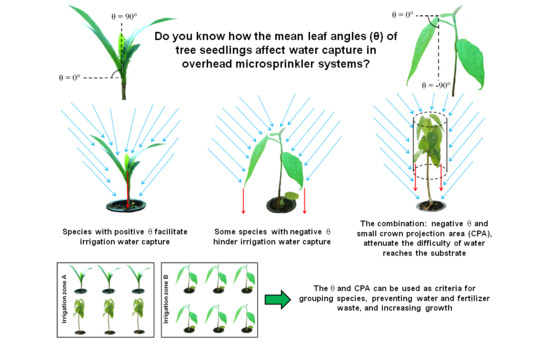
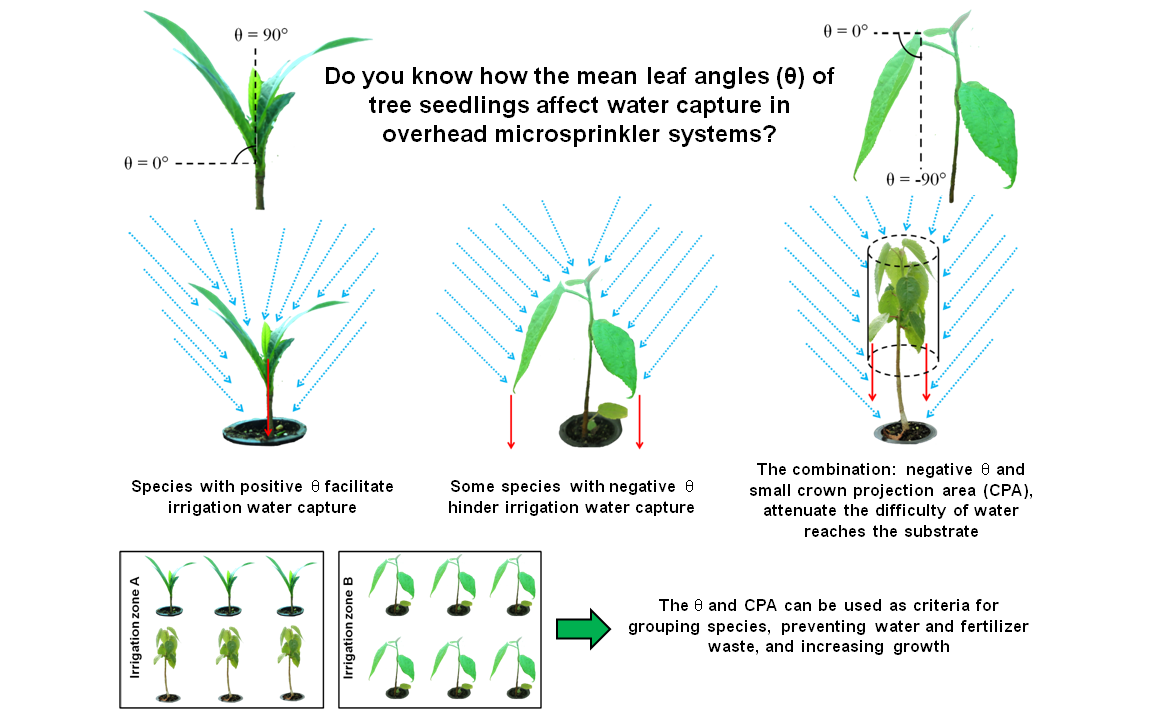
Graphical Abstract

1. Introduction

The nursery production has traditionally focused on producing seedlings efficiently and economically. However, there is a growing interest in reducing the environmental impacts of seedling production [1], especially the impacts related to water use for irrigation.
The purpose of irrigation in tree nurseries is to artificially supply water to meet plant water needs for economic production [2]. Thus, conservation of water is the goal from an environmental and social perspective in seedling production, whereas improved seedling quality with fewer inputs is a beneficial outcome from a grower perspective [3,4]. Finding a single correct irrigation level is challenging in tropical tree nurseries due to the different cultivated species and growth stage [5,6,7]. Most nurseries use an excess of water and, consequently, achieve low irrigation efficiency and seedling growth [8], especially in overhead microsprinkler irrigation, a commonly used irrigation system for container production of seedlings [9].
The architecture of each species is among the characteristics that can influence irrigation efficiency [10]. Plant architecture is defined as the three-dimensional organization of the plant body. For the parts of the plant that are above ground, this includes the branching pattern, as well as the size, shape, and position of leaves and flower organs [11]. Plant species can vary widely in their architecture and the angles formed between the leaf surface to the horizontal plane are defined as mean leaf angles and represent the main variation amongst species in leaf orientation distributions [12].
Studies about the influence of the architecture of plants on irrigation water capture are scarce [13,14], especially those related to mean leaf angles in tree seedlings. The lack of knowledge about exactly how the architecture of species affects irrigation water capture in overhead microsprinkler systems prevents irrigation improvement and does not allow growers to reduce nutrient leaching [5].
Therefore, this research aimed to ascertain how mean leaf angles affect irrigation water capture in different irrigation volumes, and how this affects the leaching and growth of tree seedlings.

2. Materials and Methods

2.1. Mean Leaf Angles Characterization

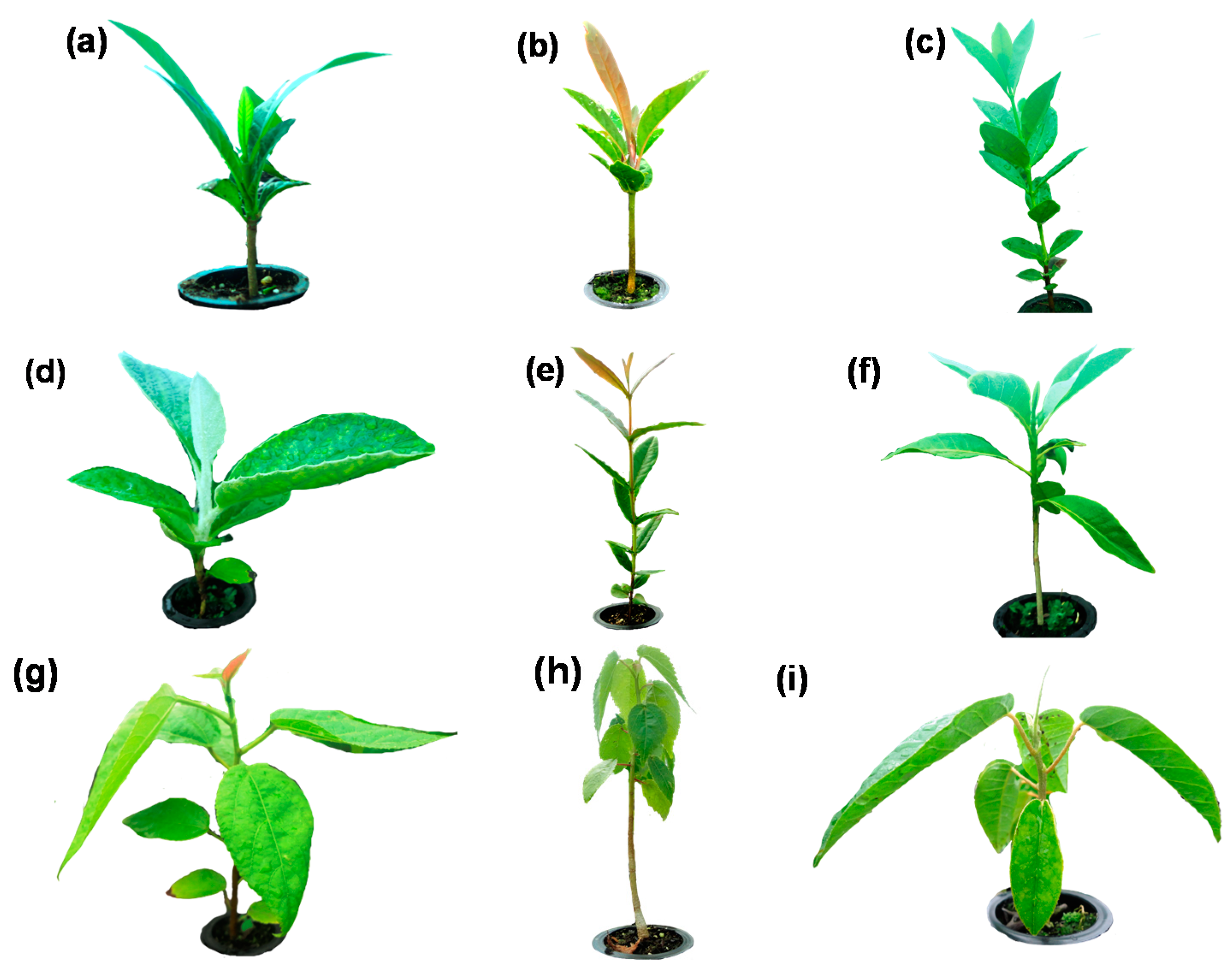
For mean leaf angles characterization of nine tropical tree species, 30 seedlings of each species in the standard size for field planting were measured using a transparent plastic protractor according to [12]. The mean angles formed between the leaf surface to the horizontal (θ = 0° → horizontal plane; θ = 90° → vertically up; θ = −90° → vertically straight down) were measured on the first and second fully expanded leaf, counting from the top of each seedling (Figure 1).

2.2. Experimental Design and Treatments

The experiment was conducted in a split-plot design wherein irrigation volumes treatments commonly used for container seedling production [15,16,17,18] were allocated to main plots and the mean leaf angle treatments to sub-plots in a completely randomized design.
The treatments consisted of four daily irrigation water volume (8, 10, 12, and 14 mm) applied with the overhead microsprinkler irrigation system at 10:00 am and 3:00 pm. and seedlings of nine tropical tree species with different mean leaf angles, as previously mentioned. Each irrigation volume was randomly assigned to two beds designed higher than the ground surface, totaling 8 main plots. Each bed received two trays of each one of nine species that were randomly assigned to the so-called split-plots. Each tray contained 12 seedlings, totaling 1,728 seedlings in the experiment.

2.3. Nursery Culture

The experiment was conducted in a nursery located in Botucatu, São Paulo State, Brazil (22°51′22′′ S, 48°26′01′′ W). The climate of the region is Cfa (hot climate with rains in the summer and drought in the winter, and the average temperature in the hottest month is above 22 °C), according to the Köppen climate classification. Polyethylene trays with 288 cells (68 × 34 × 5 cm, 15 cm3 cell−1) were filled with a substrate consisting of sphagnum peat moss, perlite, and carbonized rice chaff (2:1:1; by vol) and placed in a shade house with 50% light reduction. Sowing was performed manually by placing a seed in each cell tray. The shade house had an overhead microsprinkler irrigation system with a 200 L h−1 flow nozzle that was triggered by an electric panel for 20 s every 30 min from 9:00 am to 4:00 pm. At 30 days after sowing, the seedlings of each species were transplanted into containers of tube type with 92 cm3 of volume (3.7 cm diameter top and 13 cm height) containing the same substrate. In each polyethylene tray (62 × 42 × 3 cm) with 108 cells, the density was 115 containers of tube type per square meter.
Before the application of irrigation volumes, the average height (±standard deviation; cm) of each species was measured to ensure that did not statistically differ (p < 0.05) between the plots: Genipa americana L. (58°) 3.4 ± 0.9, Magnolia ovata (A.St.-Hil.) Spreng. (57°) 4.5 ± 0.5, Psidium cattleyanum Sabine (55°) 8.8 ± 1.2, Moquiniastrum polymorphum (Less.) G. Sancho (42°) 4.8 ± 1.2, Lafoensia pacari A.St.-Hil. (38°) 13.3 ± 1.3, Esenbeckia leiocarpa Engl. (31°) 7.9 ± 1.0, Guazuma ulmifolia Lam. (−14°) 9.6 ± 1.0, Heliocarpus popayanensis Kunth (−54°) 11.7 ± 1.6 and, Croton floribundus Spreng. (−56°) 5.0 ± 0.8.
To begin the application of irrigation volumes, the trays were randomized assigned in beds designed higher than the ground surface and covered with a plastic light diffuser, keeping seedlings undercover to prevent them from rain interference. The overhead microsprinkler irrigation system was activated by an electrical panel to deliver the specified water volume of each treatment. The Christiansen uniformity coefficient [19] and the Distribution uniformity [20] from this irrigation system were 90.2% and 85.8%, respectively.
When the irrigation volume treatments began, fertilization was also implemented. The seedlings of all treatments received 4 mm of nutrient solution twice per week via an overhead microsprinkler fertigation system. The nutrient solution was composed of purified mono-ammonium phosphate, magnesium sulfate, potassium nitrate, calcium nitrate, and urea in concentrations of 295, 84, 200, 160, 38, and 52 mg L−1 of N, P, K, Ca, Mg and S, respectively, and micronutrients solution of boric acid, sodium molybdate and manganese sulfate, zinc, copper, and iron in concentrations of 4.6, 3.9, 1.2, 0.6, 0.3, and 25 mg L−1 of B, Mn, Zn, Cu, Mo, and Fe, respectively.
In all treatments, at the hardening phase, fertilization was applied for 30 days, and the seedlings received nutrient solution at 4 mm twice per week via overhead microsprinkler fertigation system. The hardening fertilizer solution was a concentration of 700 mg L−1 of K (potassium chloride), while the micronutrients were maintained at the same level as previously mentioned. As expected, due to the different development patterns of the species, specifically to the rhythms of root system aggregation in the substrate, the nursery production cycle varied among the species. Thus, the nursery production cycle for Magnolia ovata (A.St.-Hil.) Spreng. (57°), Esenbeckia leiocarpa Engl. (31°), and Croton floribundus Spreng. (−56°) lasted 150 days; for Guazuma ulmifolia Lam. (−14°) and Genipa americana L. (58°) 120 days; for Psidium cattleyanum Sabine (55°), Moquiniastrum polymorphum (Less.) G. Sancho (42°), Lafoensia pacari A.St.-Hil. (38°), and Heliocarpus popayanensis Kunth (−54°) 90 days.

2.4. Growth Analysis

To ascertain how mean leaf angles affect irrigation water and nutrient solution capture in different irrigation volumes and how it affects seedling growth, the following variables were evaluated at the end of the production cycle: height, stem diameter, shoot, root, and total dry mass, Dickson quality index, crown projection area, and root system quality.
The height and stem diameter of each species were measured for 48 seedlings per irrigation volume. Height was measured from the base of the stem to the apical bud. Stem diameter was measured at the root collar. Shoot dry mass was measured by sectioning the seedlings closest to the substrate and dividing the sections into two parts. Roots were washed with tap water in a sieve for root dry mass sampling. Roots and shoots were dried to a constant mass in an oven at 70 °C and were then weighed on an electronic precision scale M3102 (BEL Engineering®, Piracicaba, São Paulo, Brazil). Total dry mass was determined by combining shoot and root dry mass. For each species, these variables were evaluated in 20 seedlings per irrigation volume. Dickson quality index [21] was determined in the same seedlings used to obtain dry mass according to the following formula:
D Q I   =   T D M H S D   +   S D M R D M ,
where DQI is the Dickson quality index, TDM (g) is the total dry mass, H (cm) is the height, SD (mm) is the stem diameter, SDM (g) is the shoot dry mass and RDM (g) is root dry mass.
The crown projection area was measured for each species in 8 seedlings per irrigation volume. According to [22], two crown diameters were measured following the north-south x west-east orientation with a millimeter ruler to determine the mean crown diameter. Thus, the crown projection area was determined according to the following formula:
C P A   =   π 4   ·   m c d 2 ,
where CPA (cm2) is the crown projection area and mcd (cm) is the mean crown diameter.
Root system quality was evaluated in the same seedlings used to obtain dry mass. According to [23], this variable had two categories: suitable and unsuitable for field planting. The category “suitable for field planting” indicates a well-structured root system with no or some flexibility and the presence of new roots. The category “unsuitable for field planting” indicates root systems with few roots and that had no aggregated substrate.

2.5. Leaching Fraction

Leaching fraction (%) was measured at the end of the production cycle for each species in 8 seedlings per irrigation volume. According to [10], leaching fraction is defined as the amount of water and nutrient (solution) that runs out the bottom of the container divided by the total amount of solution applied to the container. To quantify the solution that runs out from the bottom of the container, plastic bags were secured with an elastic band. The total solution applied to the container was quantified as the sum of the amount of solution retained in the substrate after irrigation plus solution that runs out from the bottom of the container. To quantify the amount of solution retained in the substrate, the mass of the whole container + seedling + plastic bag was weighed before and after each irrigation event. All masses were measured on an electronic precision scale M3102 (BEL Engineering®, Piracicaba, São Paulo, Brazil).

2.6. Leachate Electrical Conductivity

Leachate electrical conductivity (LEC) (dS m−1) of each species was measured at the end of the production cycle using a conductivity meter mCA-150 (MS Tecnopon Special Equipments LTDA. Piracicaba, São Paulo, Brazil). For this, the seedlings received nutrient solution via an overhead microsprinkler fertigation system one day before the beginning of this evaluation. The next day, before the first daily irrigation, plastic bags secured with the elastic band were placed in 20 seedlings per irrigation volume to collect the leachate. Measurements of LEC started immediately after the second daily irrigation and were repeated for three consecutive days because after the third day another fertigation would be applied in seedlings.

2.7. Data Analysis

The growth and leaching fraction data were subjected to multivariate analysis by principal components analysis (PCA). The eigenvalues criteria were used to define the number of principal components used in dimensionality reduction. Only the components that had eigenvalues greater than 1 in absolute value were therefore considered significant [24] to perform the analysis of variance. In addition to these variables, the crown projection area and the leachate electrical conductivity was used in the discussion of the results.
Analysis of variance was performed on the main effects of irrigation volume and mean leaf angle as well as their interaction. Normality was tested using Shapiro–Wilk test. The data that were normally distributed were analyzed using Scott–Knott’s test to compare the treatments (p < 0.05). Data analyses were accomplished using the STATISTICA software package version 8.0.
The root system quality data of each species were analyzed using Goodman’s test [25,26] to compare the irrigation volumes applied (p < 0.05).

3. Results

3.1. Seedling Growth and Leaching Fraction

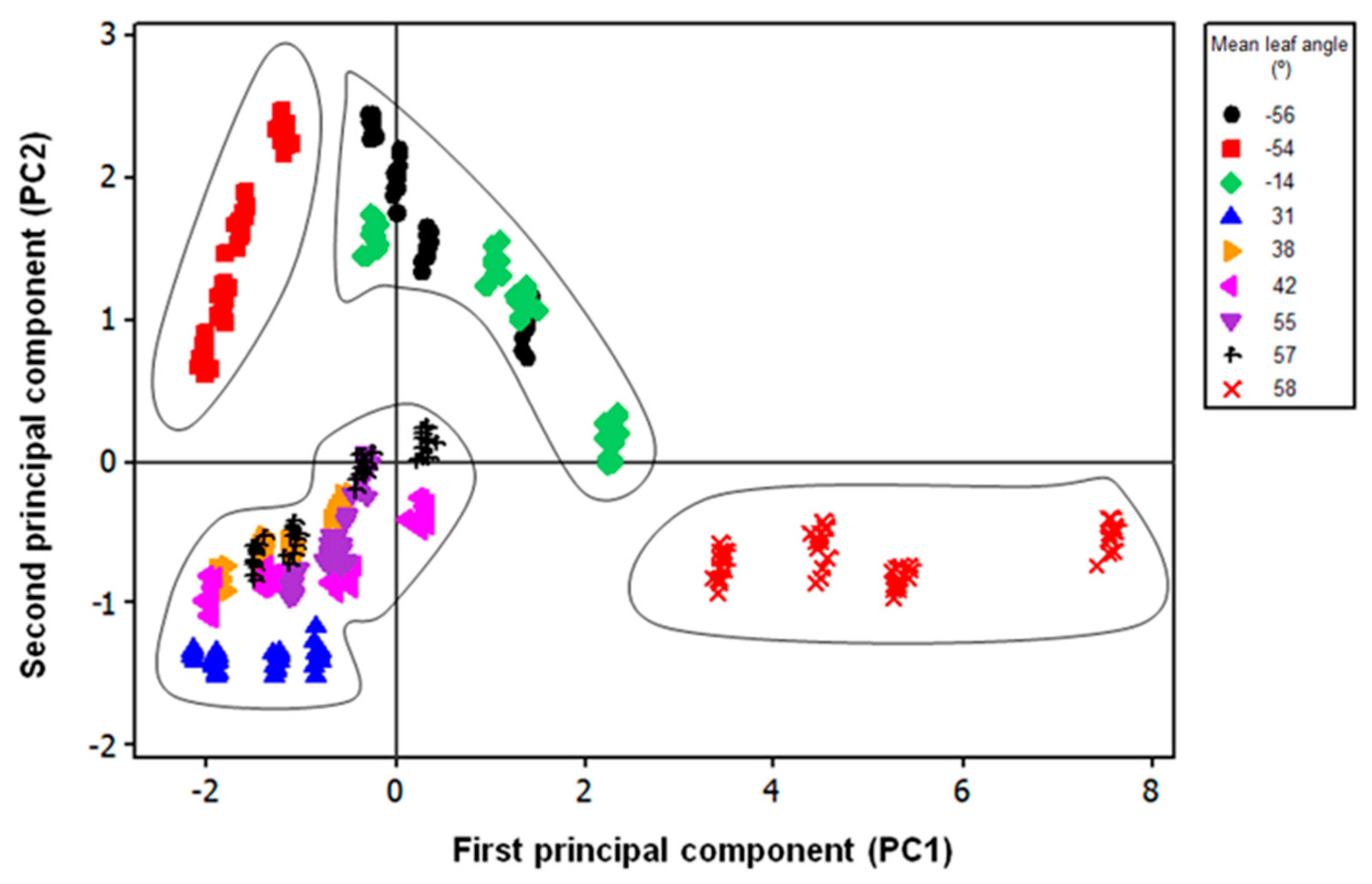
The three main components of the PCA [PC1 (x-axis), PC2 (y-axis), and PC3 (z-axis)] performed on the growth variables and leaching fraction accounted for 90% of the total variance. The variables that distinguished the response groups were total dry mass (PC1), leaching fraction (PC2), and height (PC3) (Table S1 available at Supplementary Materials).
For the first and second principal components (x- and y-axes), we observed the formation of four response groups. Two upper groups and two lower groups were differentiated by the leaching fraction variable according to the treatments (Figure 2). In the upper groups, the species with leaf angles of −56 and −14° were at a distance from the species with an angle of −54°. In the lower groups, species with angles of 31, 38, 42, 55, and 57° were far from the species with an angle of 58°. The third principal component (z-axis) was not represented in the two-dimensional (2D) figure.
In the analysis of variance, leaf angle, and irrigation volume significantly interacted to affect leaching fraction (p < 0.05). For all mean leaf angles, increasing irrigation volume increased the leaching fraction at different levels. The species with angles of −56, −54, and −14° presented smaller leaching fractions at all irrigation volumes, thus confirming the grouping performed by the principal components analysis. In species with angles of 31, 38, 42, 55, 57, and 58° the leaching fraction was greater at all irrigation volumes (Table 1).
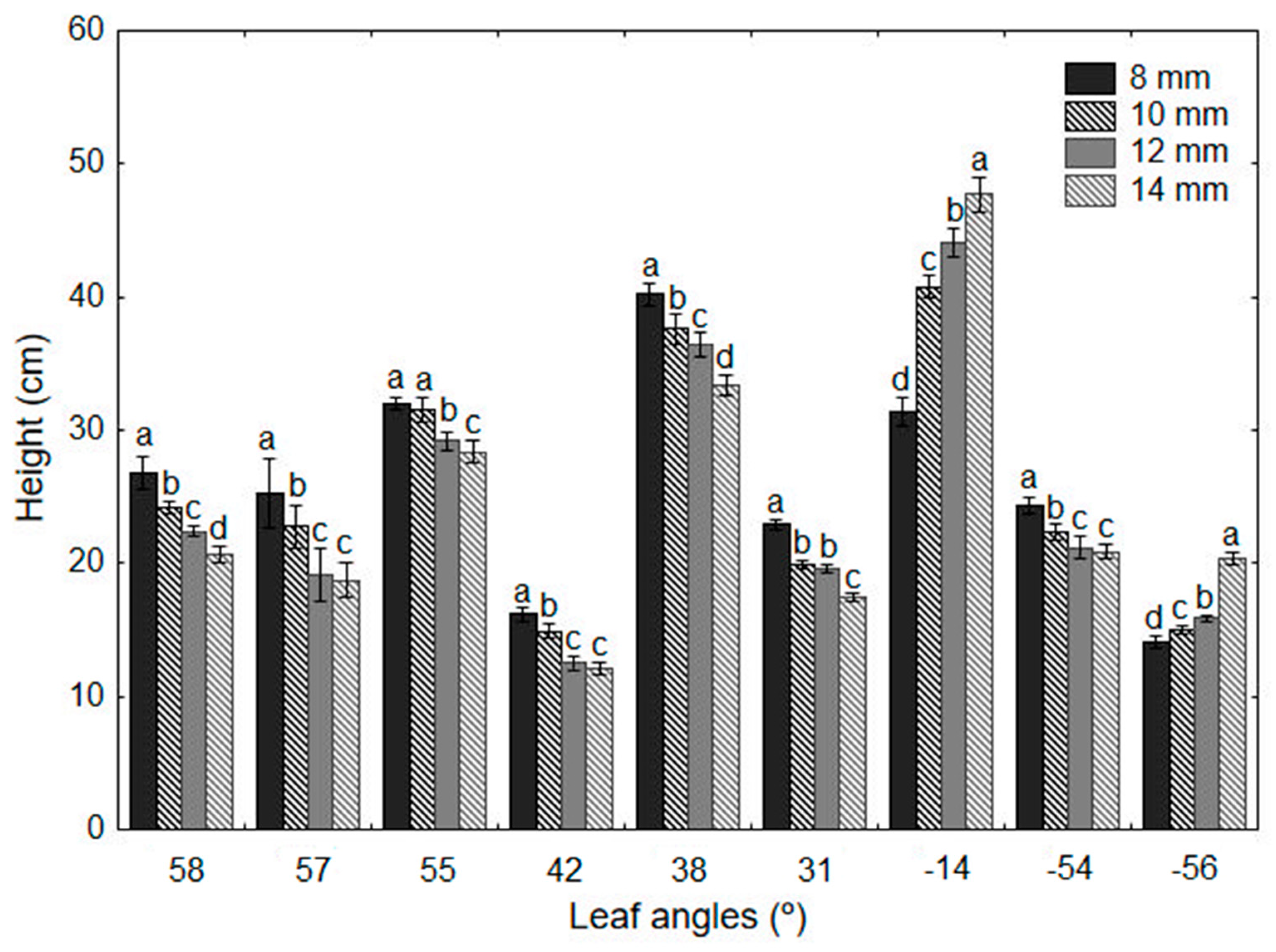
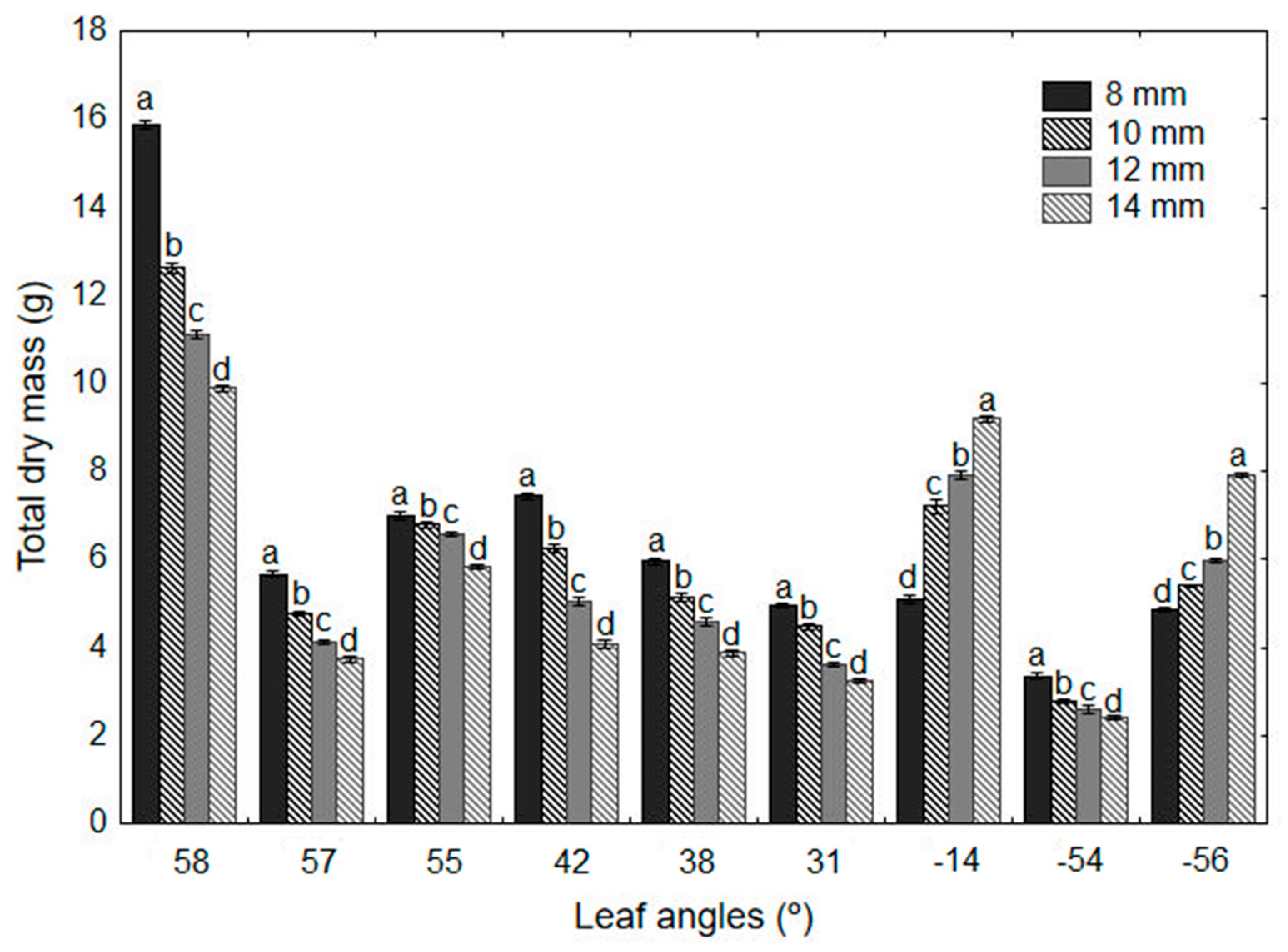
For each mean leaf angle, irrigation volume significantly affected height and total dry mass (p < 0.05). In species with angles of −54, 31, 38, 42, 55, 57, and 58°, an increase in irrigation volume reduced the total dry mass and height values to different extents. In species with angles of −56 and −14°, the 14 mm irrigation volume was required to produce a greater total dry mass and height (Figure 3 and Figure 4).
Compared to species with positive mean leaf angles, the species with angles of −56, −54, and −14° presented the smallest leaching fractions, but the irrigation volumes applied in these species promoted different growth results between them. In species with angles of −56 and −14°, increasing irrigation volume increased the total dry mass and height, whereas Heliocarpus popayanensis Kunth (−54°) showed the opposite response (Figure 3 and Figure 4).
Leaf angle and irrigation volume significantly interacted to affect the crown projection area (p < 0.05). In species with angles of −54, 31, 38, 42, 55, 57, and 58°, an increase in irrigation volume reduced the crown projection area. It is important to highlight that the species Heliocarpus popayanensis Kunth (−54°) showed the smallest crown projection area of all species. In species with angles of −56 and −14°, the 14 mm irrigation volume was required to produce a greater crown projection area (Table 2).

3.2. Root System Quality

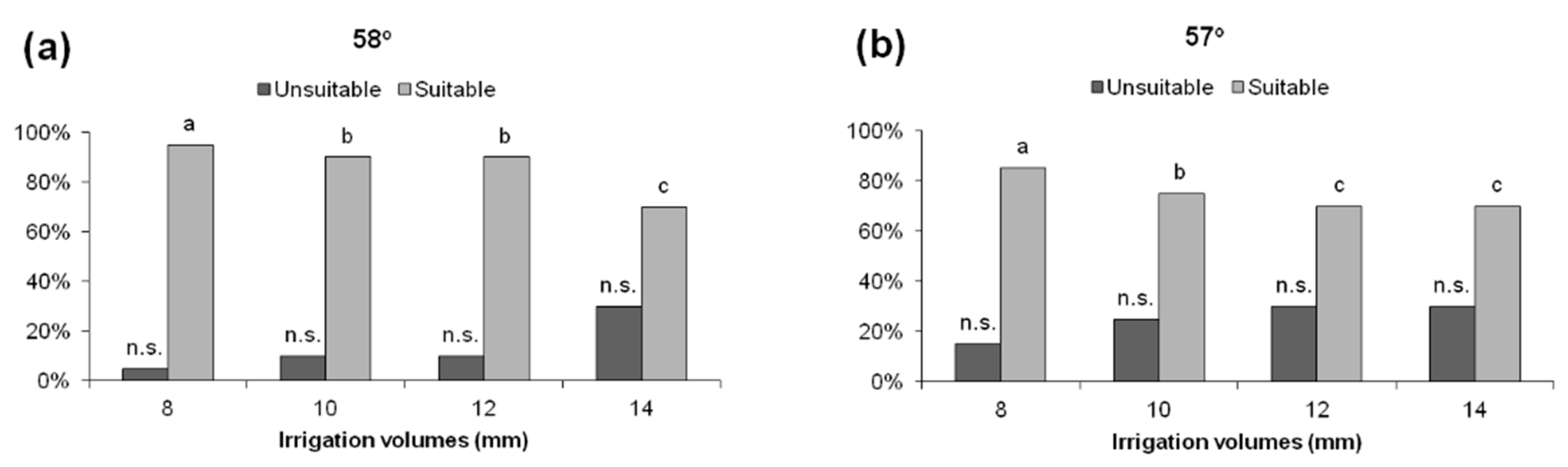
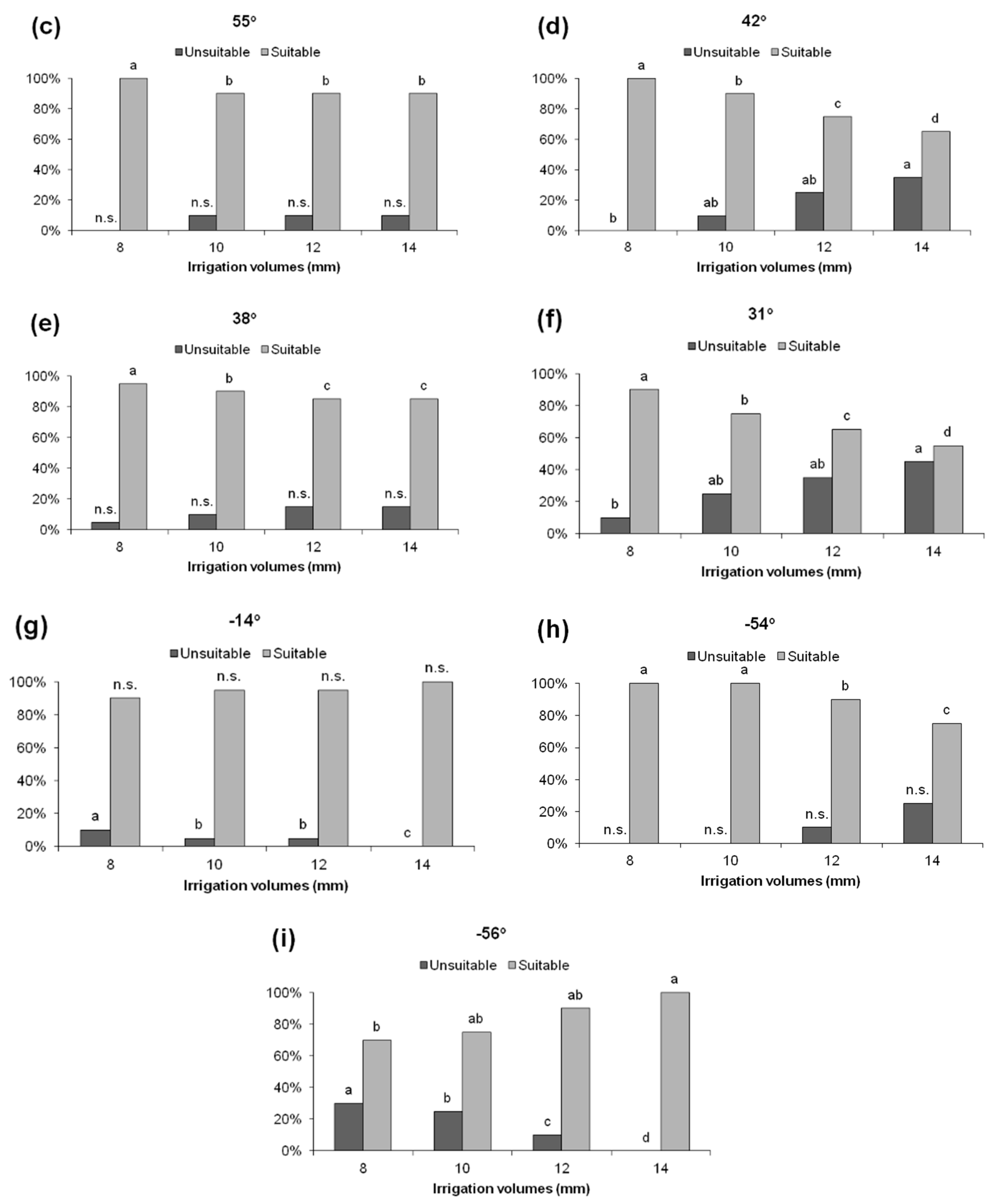
The response of root system quality to irrigation volumes applied at different mean leaf angles was similar to that of the growth variables and formed two groups. In the first group, which included species with mean leaf angles of −54, 31, 38, 42, 55, 57, and 58°, reducing irrigation volume increased, at different levels, the percentage of seedlings with root systems suitable for field planting (p < 0.05). In the second group, i.e., species with angles of −56 and −14°, reducing irrigation volume increased, at different levels, the percentage of seedlings with root systems unsuitable for field planting (p < 0.05) (Figure 5).

3.3. Leachate Electrical Conductivity

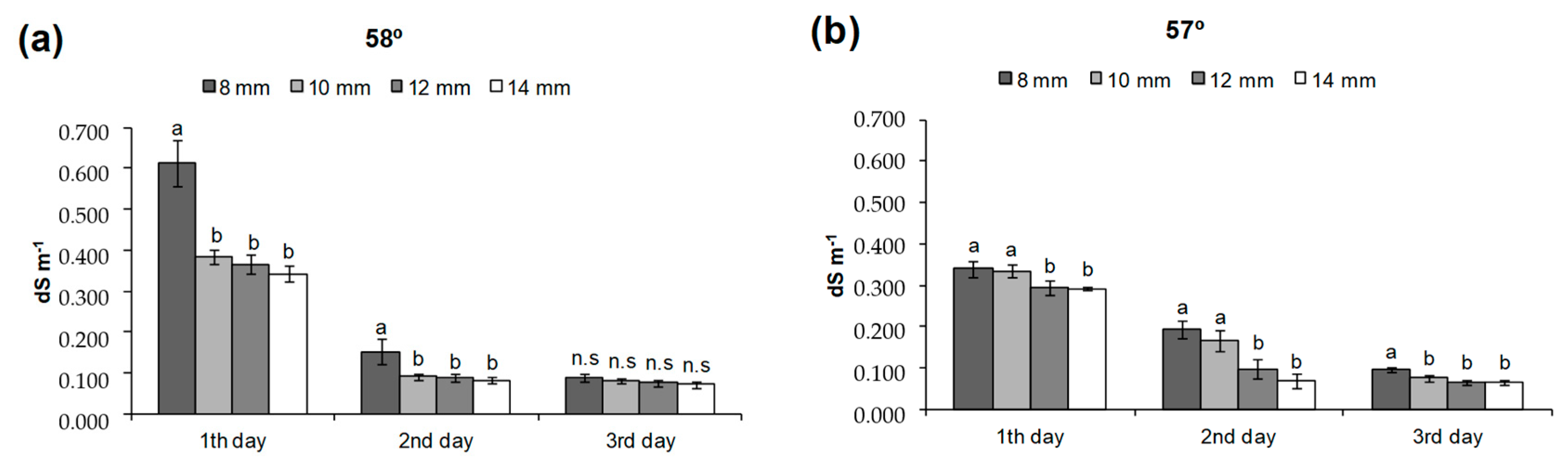
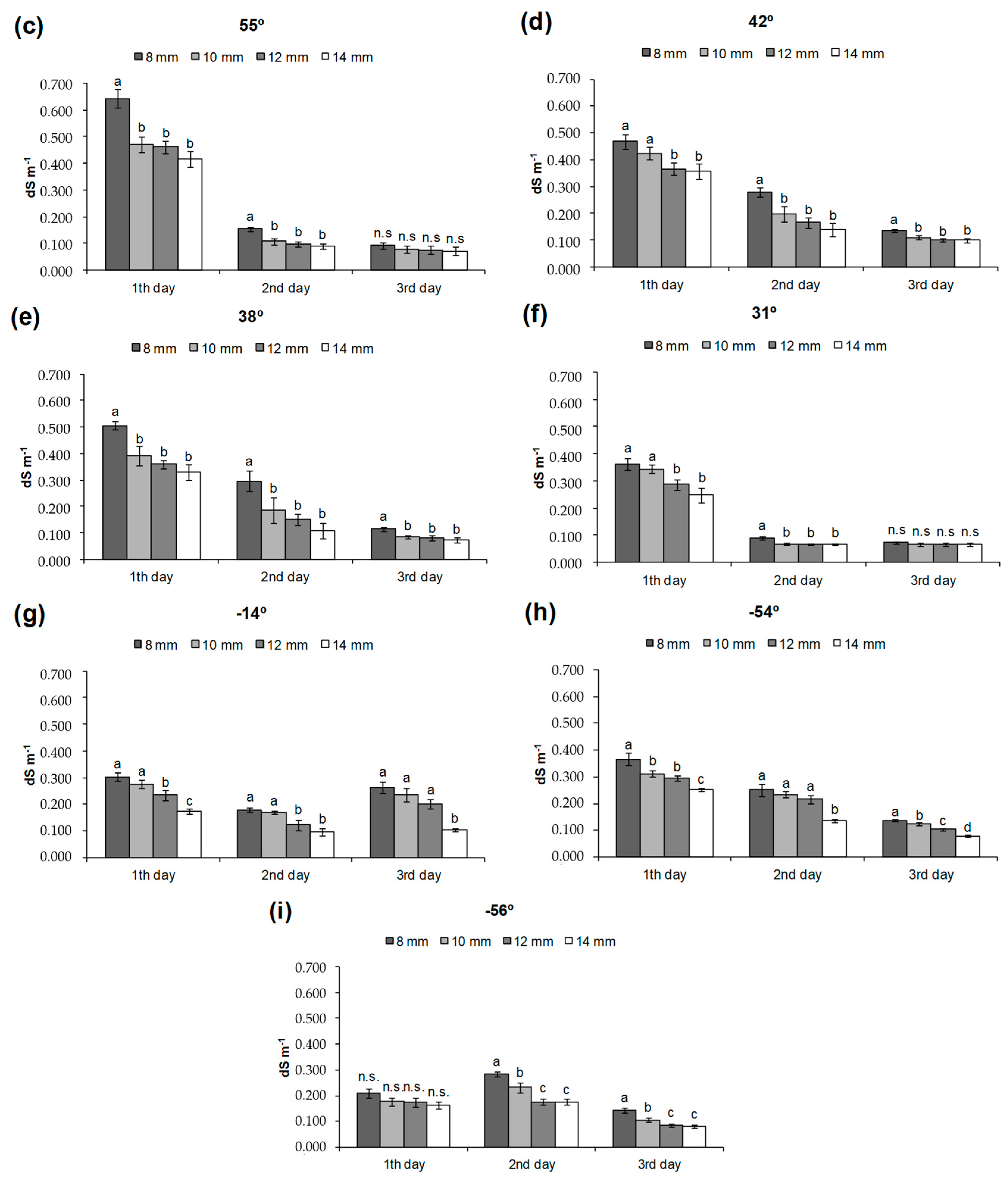
For each mean leaf angle, irrigation volume significantly affected leachate electrical conductivity (LEC) on almost every evaluation day (Figure 6).
On the first evaluation day, increasing irrigation volumes reduced the LEC at all mean leaf angles at different levels, except to Croton floribundus Spreng. (−56°) that did not statistically differ among irrigation volumes (p < 0.05).
On the second evaluation day, in all mean leaf angles, the increasing irrigation volume continued to reduce the LEC at different levels (p < 0.05), but for Croton floribundus Spreng. (−56°) the values of LEC increased from the first to the second evaluation day.
Finally, on the third evaluation day, the irrigation volumes applied in species with mean leaf angles of 31, 55, and 58° produced low values of LEC (0.066–0.092 dS m−1) and did not significantly different from each other (p < 0.05). For species with mean leaf angles of −56, −54, 38, 42, and 57°, the 8 mm irrigation volume resulted in higher LEC (p < 0.05), however, the values of LEC were low too (0.066–0.144 dS m−1). For the species Guazuma ulmifolia Lam. (−14°), the values of LEC increased from the second to the third evaluation day.

4. Discussion

4.1. Seedling Growth and Leaching Fraction

In our study, we demonstrated how mean leaf angles affect irrigation water and nutrient solution capture in different irrigation volumes and how they affect the leaching and growth of tree seedlings. For species with mean leaf angles of −54, 31, 38, 42, 55, 57, and 58°, the application of the 8 mm irrigation volume was sufficient to produce greater growth, represented by the variables total dry mass and height (Figure 3 and Figure 4), and less leaching (Table 1). Furthermore, for species with positive mean leaf angles, the size of the crown projection area contributed to the capture of irrigation water and nutrient solution (Table 2). According to [27], a positive relationship between initial seedling height and subsequent height growth has been reported in 70% of studies. Greater shoot height is beneficial in sites with competing vegetation because of improved competitive ability.
For species with mean leaf angles of −54, 31, 38, 42, 55, 57, and 58°, greater irrigation volumes increased water and nutrient solution capture and deposition on the substrate; however, in these cases, this is undesirable due to the low storage capacity of the substrate containers of tube type (92 cm3). Even if the substrate has excellent water-holding properties, there is a little buffer against overwatering and leaching occurs, causing water and fertilizer waste. Excessive amounts of irrigation can result in leaching of nutrients from the medium with the potential to degrade surface and groundwater. Through diligent monitoring of rhizosphere substrate water contents, substantial irrigation water savings can be achieved without adversely affecting seedling growth and quality [28]. Differences in canopy water storage capacity for tree species can be explained by the orientation of the leaves. When the leaves are more parallel to the ground, they promote water retention. In contrast, when the leaves are oriented perpendicular to the ground, they assist in the shedding of water from the leaves [29] to the substrate or outside it. [16] reported that the deposition of irrigation water and nutrient solution applied by overhead microsprinklers to the substrate was related to growth variables of seedlings, particularly to height and shoot dry mass.
Unlike the other species with negative mean leaf angles, the seedlings of species Heliocarpus popayanensis Kunth (−54°) did not need great volumes of irrigation to increase their growth (Figure 3 and Figure 4). This occurred because this species showed the smallest crown projection area of all species (Table 2), which attenuated the difficulty of irrigation water and nutrient solution reaching the substrate surface. According to [29], species-specific canopy water storage capacity, beyond the effect of mean leaf angle, is due to differences in leaf size, crown depth, leaf area index, leaf texture, and the hydrophobicity of leaf and wood surfaces.
For species with angles of −56 and −14°, the irrigation water and nutrient solution capture and direction to the substrate was more difficult, and the 14 mm irrigation volume was required to produce a greater total dry mass and height (Figure 3 and Figure 4). Furthermore, the crown projection areas of these species hindered that water and nutrient solution from reaching the substrate (Table 2). This shows that when mean leaf angles hinder the water and nutrient solution from reaching the substrate surface, especially at lower irrigation volumes, the absorption of water and nutrients is decreased and, consequently, the growth of the seedlings too. For the best management of the water resources, the ideal would be to have a leaching fraction of zero; however, this does not suggest simply reducing the irrigation volume. If low volumes of water are applied to eliminate leaching without regard to maintaining adequate water in the container, then a reduction in growth will occur [30].

4.2. Root System Quality

In this study, we observed a positive relationship between root system quality and growth. Similar responses have been observed for other tree species [27,31,32,33]. High-quality seedlings, without infection from diseases and with well-developed shoots and roots, are better able to survive extended environmental stresses and produce vigorous growth after outplanting [34]. Furthermore, root system quality presents a positive correlation with the ease of seedling removal from the containers, improving the efficiency of the planting operation [35].
In the species with mean leaf angles of −54, 31, 38, 42, 55, 57, and 58°, reducing irrigation volume increased, at different levels, the percentage of seedlings with root systems suitable for field planting (Figure 5). This can be explained by the same mechanism described for growth variables: in these mean leaf angles, the lower leaching produced in the 8 mm irrigation volume decreased the loss of nutrients and favored the development of roots aggregated to the substrate. Leaching of mineral nutrients from the substrate increases exponentially as a function of an increase in the rhizosphere water content [36]. Furthermore, the roots are the organs in closest contact with the nutritional environment; therefore, they are especially prone to be affected by this environment [37].
In the species with mean leaf angles of −56 and −14°, reducing irrigation volume increased, at different levels, the percentage of seedlings with root systems unsuitable for field planting, demonstrating that the shallower irrigation volumes applied were unable to reach the substrate satisfactorily and form a well-structured root system (Figure 5). A similar result was observed with Inga vera seedling, another tropical tree species, in which 14 mm irrigation increased the percentage of seedlings with root systems suitable for field planting [17]. Root proliferation depends on the availability of water and nutrients in the microenvironment surrounding the root, called the rhizosphere; if this microenvironment is poor in nutrients or is very dry, root growth will be slow [38]. The persistence of root deformation after planting and the planting of smaller seedlings due to restrictions in the nursery can reduce or delay growth in the field, which leads to higher costs of weed control and production delays [39].

4.3. Leachate Electrical Conductivity

In the present study, on the first evaluation day, increasing irrigation volumes reduced the LEC at all mean leaf angles at different levels (Figure 6). This occurred because the increases in irrigation volume increased the dilution of the leached salts, resulting in low LEC. The only exception was the species Croton floribundus Spreng., where negative mean leaf angle (−56°) and crown projection area hindered the irrigation water and nutrient solution capture and direction to the substrate, resulting in similar LEC for all irrigation volumes. The dynamics of nutrients in the nutrition of plants grown in containers with the substrate are directly linked to water management [40]. Routinely sampling LEC provides data on when the fertilizer runs out and whether the irrigation volume applied is correct. If the LEC readings are low, the irrigation volume applied can be high and should be reduced in that zone to decrease the leaching of nutrients. In addition, the reading may indicate that new fertigation is necessary [41,42].
On the second evaluation day, in all mean leaf angles, the increasing irrigation volume continued to reduce the LEC at different levels. For the species Croton floribundus Spreng. (−56°), the values of LEC increased from the first to the second evaluation day due to the low leachate volumes, resulting in less dilution and thus higher nutrient concentrations.
Finally, on the third evaluation day, the irrigation volumes applied resulted in similar low LEC or only the 8 mm irrigation volume, comparatively, showed higher LEC, however, with low values (0.073–0.144 dS m−1), suggesting that the applied fertilizer may have been largely depleted. For the species Guazuma ulmifolia Lam. (−14°), the values of LEC increased from the second to the third evaluation day, indicating a higher concentration of nutrients in less volume of leachate. Improved knowledge of the combined influence of irrigation and nutrient management during nursery production is needed to develop integrated nursery production practices targeted at improving plant quality and decreasing production inputs [43]. The container nursery industry is continuously seeking new irrigation and fertilization strategies to improve application efficiency and reduce negative environmental impacts. The objective of these strategies is to strike a balance between the rewards of reduced water and fertilizer inputs and the risks of reduced plant growth and quality [44].
The increasing irrigation volumes reduced the LEC, but this does not implicate that is necessary to simply reducing the irrigation volume for all leaf mean angles. For example, in species with mean leaf angles of −56 and −14°, the 8 mm irrigation volume decreased loss of nutrients, but this water flow was insufficient to move the nutrients towards the root surface and confer greater seedling growth. On the other hand, for species with mean leaf angles of −54, 31, 38, 42, 55, 57, and 58, the 8 mm irrigation volume reduced nutrient leaching and was sufficient to produce greater growth. Thus, for a correct diagnosis, the results of LEC need to be combined with the growth results. By improving irrigation delivery to more closely match the capture capability of the container plant, growers could reduce the water application amount and fertilizer leaching [5]. Prudent irrigation and fertilization management can significantly reduce the costs of containerized forest seedling production and preserve the quality of groundwater resources [28].
In summary, from the knowledge demonstrated here about the impact of mean leaf angles on irrigation water and nutrient solution capture in different irrigation volumes, leaching, and the growth of tree seedlings, the mean leaf angle and crown projection area can be used as criteria for grouping species in different irrigation zones in tree nurseries with overhead microsprinkler systems. This grouping can improve the efficiency of irrigation, preventing water and fertilizer waste, and increasing seedling growth and quality.

5. Conclusions

This study demonstrates that tree seedling species with positive mean leaf angles facilitate irrigation water and nutrient solution capture and the direction to the substrate in overhead microsprinkler systems; therefore, the application of a lower irrigation volume (8 mm) results in less leaching and greater growth.
On the other hand, some tree seedling species with negative mean leaf angles hinder irrigation water and nutrient solution capture and the direction to the substrate; thus, to achieve greater growth, it is necessary to compensate for the uncaptured water by applying a higher irrigation volume (14 mm).
When the tree seedling species have a negative mean leaf angle, but the crown projection area is small, the difficulty of water and nutrient solution applied by overhead microsprinkler systems directly reaches the substrate is attenuated, and low irrigation volumes applied are enough to produce greater growth.

Supplementary Materials

The following are available online at https://www.mdpi.com/1999-4907/11/11/1198/s1, Table S1: Correlation coefficients, eigenvalues, explained and accumulated variance for the three main components of the PCA performed on the growth variables (height, stem diameter, shoot, root and total dry mass, Dickson quality index, and crown projection area) and leaching fraction.

Author Contributions

Conceptualization, R.B.G.d.S. and M.R.d.S.; methodology, R.B.G.d.S. and M.R.d.S.; formal analysis, R.B.G.d.S. and D.S.; investigation, R.B.G.d.S., M.M.G., and G.U.; writing—original draft preparation, R.B.G.d.S.; writing—review and editing, R.B.G.d.S., M.R.d.S., D.Z.d.P., and M.M.G.; visualization, R.B.G.d.S. and D.Z.d.P.; funding acquisition, R.B.G.d.S. and M.R.d.S. All authors have read and agreed to the published version of the manuscript.

Funding

This research was funded by grant #2013/17447-8, São Paulo Research Foundation (FAPESP).

Acknowledgments

We thank the following for the contribution of their experience, ideas, equipment and time in the field of this study: Cláudio Roberto Ribeiro da Silva, Osni Barbosa, Jayme Carnietto Neto, Luiz Gustavo Martinelli Delgado, José Aparecido Benedito, Leonardo Albiero Gomes, Thaís Randazzo Enz, Ludmila Ribeiro Roder, Maurício Torloni Neto, Lourdes Croce Barbosa, Nelson Barbosa, Ivar Wendling, Regina Célia de Matos Pires, Luiz Fernando Rolim de Almeida, Maria Márcia Pereira Sartori, Jadir Roberto Carnietto, Ana Júlia Barbosa, Rosangela Cristina Moreci, João Marques Rodrigues, and Carlos Nogueira Souza Junior.

Conflicts of Interest

The authors declare no conflict of interest.

References

  1. Riikonen, J.; Luoranen, J. Seedling production and the field performance of seedlings. Forests 2018, 9, 740. [Google Scholar] [CrossRef]
  2. Irmak, S.; Haman, D.Z.; Yeager, T.H.; Larsen, C. Seasonal irrigation water use efficiency of multi-pot box system. J. Environ. Hortic. 2001, 19, 4–10. [Google Scholar] [CrossRef]
  3. Fulcher, A.; LeBude, A.V.; Owen, J.S.; White, S.A.; Beeson, R.C. The next ten years: Strategic vision of water resources for nursery producers. Horttechnology 2016, 26, 121–132. [Google Scholar] [CrossRef]
  4. Ahmed, A.K.M.; Jiang, L.; Wang, F.; Chen, S.; Zhou, X.; Pei, X.; Zhao, X.; Qu, G. Variation analysis of growth traits of four poplar clones under different water and fertilizer management. J. For. Res. 2020, 31, 45–55. [Google Scholar] [CrossRef]
  5. Yeager, T.; Million, J.; Larsen, C.; Stamps, B. Florida nursery best management practices: Past, present, and future. Horttechnology 2010, 20, 82–88. [Google Scholar] [CrossRef]
  6. van Iersel, M.W.; Chappell, M.; Lea-Cox, J.D. Sensors for improved efficiency of irrigation in greenhouse and nursery production. Horttechnology 2013, 23, 735–746. [Google Scholar] [CrossRef]
  7. Tawegoum, R.; Leroy, F.; Sintes, G.; Chassériaux, G. Forecasting hourly evapotranspiration for triggering irrigation in nurseries. Biosyst. Eng. 2015, 129, 237–247. [Google Scholar] [CrossRef]
  8. Mathers, H.M.; Case, L.T.; Yeager, T.H. Improving irrigation water use in container nurseries. Horttechnology 2005, 15, 8–12. [Google Scholar] [CrossRef]
  9. Augusto, D.C.C.; Guerrini, I.A.; Engel, V.L.; Rousseau, G.X. Utilização de águas residuárias provenientes do tratamento biológico de esgotos domésticos na produção de mudas de Eucalyptus grandis Hill ex. Maiden. Rev. Árvore 2007, 31, 745–751. [Google Scholar] [CrossRef]
  10. Lea-Cox, J.D.; Ross, D.S.; Teffeau, K.M. A water and nutrient management planning process for container nursery and greenhouse production systems in Maryland. J. Environ. Hortic. 2001, 19, 230–236. [Google Scholar] [CrossRef]
  11. Reinhardt, D.; Kuhlemeier, C. Plant architecture. EMBO Rep. 2002, 3, 846–851. [Google Scholar] [CrossRef] [PubMed]
  12. Falster, D.S.; Westoby, M. Leaf size and angle vary widely across species: What consequences for light interception? New Phytol. 2003, 158, 509–525. [Google Scholar] [CrossRef]
  13. Zapata, N.; Robles, O.; Playán, E.; Paniagua, P.; Romano, C.; Salvador, R.; Montoya, F. Low-pressure sprinkler irrigation in maize: Differences in water distribution above and below the crop canopy. Agric. Water Manag. 2018, 203, 353–365. [Google Scholar] [CrossRef]
  14. Zhou, Z.; Plauborg, F.; Parsons, D.; Andersen, M.N. Potato canopy growth, yield and soil water dynamics under different irrigation systems. Agric. Water Manag. 2018, 202, 9–18. [Google Scholar] [CrossRef]
  15. Da Silva, R.B.G.; da Silva, M.R.; Simões, D. Substrates and controlled-release fertilizations on the quality of eucalyptus cuttings. Rev. Bras. Eng. Agrícola e Ambient. 2014, 18, 1124–1129. [Google Scholar] [CrossRef]
  16. Da Silva, R.B.G.; da Silva, M.R. Is it possible to save water without losing quality in the Guanandi seedling production? IRRIGA 2016, 21, 503. [Google Scholar] [CrossRef]
  17. Delgado, L.G.M.; da Silva, R.B.G.; Silva, M.R. Qualidade morfológica de mudas de Ingá sob diferentes manejos hídricos. IRRIGA 2017, 22, 420–429. [Google Scholar] [CrossRef][Green Version]
  18. Gabira, M.M.; Da Silva, R.B.G.; Mateus, C.D.M.D.; Villas Boas, R.L.; Da Silva, M.R. Effects of water management and composted sewage sludge substrates on the growth and quality of clonal Eucalyptus seedlings. FLORESTA 2020, 50, 1307. [Google Scholar] [CrossRef]
  19. Christiansen, J.E. Irrigation by Sprinkling; Bulletin 6.; University of California: Berkeley, CA, USA, 1942; p. 124. [Google Scholar]
  20. Merriam, J.L.; Keller, J. Farm Irrigation System Evaluation: A Guide for Management; Utah State University: Logan, UT, USA, 1978; p. 271. [Google Scholar]
  21. Dickson, A.; Leaf, A.L.; Hosner, J.F. Quality appraisal of white spruce and white pine seedling stock in nurseries. For. Chron. 1960, 36, 10–13. [Google Scholar] [CrossRef]
  22. Wink, C.; Monteiro, J.S.; Reinert, D.J.; Liberalesso, E.E. Parâmetros da copa e a sua relação com o diâmetro e altura das árvores de eucalipto em diferentes idades. Sci. For. 2012, 40, 57–67. [Google Scholar]
  23. Da Silva, R.B.G.; da Silva, M.R. Nursery water management on initial development and quality of Piptadenia gonoacantha seedlings. Sci. For. 2015, 43, 91–100. [Google Scholar]
  24. Hair Jr, J.F.; Black, W.C.; Babin, B.J.; Anderson, R.E. Análise Multivariada de dados; Bookman: Porto Alegre, Brazil, 2009; p. 688. [Google Scholar]
  25. Goodman, L.A. Simultaneous confidence intervals for contrasts among multinomial populations. Ann. Math. Stat. 1964, 35, 716–725. [Google Scholar] [CrossRef]
  26. Goodman, L.A. On simultaneous confidence intervals for multinomial proportions. Technometrics 1965, 7, 247. [Google Scholar] [CrossRef]
  27. Grossnickle, S.C.; MacDonald, J.E. Why seedlings grow: Influence of plant attributes. New For. 2018, 49, 1–34. [Google Scholar] [CrossRef]
  28. Stowe, D.C.; Lamhamedi, M.S.; Carles, S.; Fecteau, B.; Margolis, H.A.; Renaud, M.; Bernier, P.Y. Managing irrigation to reduce nutrient leaching in containerized white spruce seedling production. New For. 2010, 40, 185–204. [Google Scholar] [CrossRef]
  29. Attarod, P.; Sadeghi, S.M.M.; Pypker, T.G.; Bagheri, H.; Bagheri, M.; Bayramzadeh, V. Needle-leaved trees impacts on rainfall interception and canopy storage capacity in an arid environment. New For. 2015, 46, 339–355. [Google Scholar] [CrossRef]
  30. Warren, S.L.; Bilderback, T.E. More plant per gallon: Getting more out of your water. Horttechnology 2005, 15, 14–18. [Google Scholar] [CrossRef]
  31. Da Silva, R.B.G.; Simões, D.; da Silva, M.R. Qualidade de mudas clonais de Eucalyptus urophylla x E. grandis em função do substrato. Rev. Bras. Eng. Agrícola e Ambient. 2012, 16, 297–302. [Google Scholar] [CrossRef]
  32. Kratz, D.; Nogueira, A.C.; Wendling, I.; De Souza, P.V.D. Substratos renováveis para produção de mudas de Mimosa scabrella. FLORESTA 2015, 45, 393. [Google Scholar] [CrossRef]
  33. Kratz, D.; Wendling, I. Crescimento de mudas de Eucalyptus camaldulensis em substratos à base de casca de arroz carbonizada. Rev. Ceres 2016, 63, 348–354. [Google Scholar] [CrossRef]
  34. Won, S.-J.; Choub, V.; Kwon, J.-H.; Kim, D.-H.; Ahn, Y.-S. The control of Fusarium root rot and development of Coastal Pine (Pinus thunbergii Parl.) seedlings in a container nursery by use of Bacillus licheniformis MH48. Forests 2019, 10, 6. [Google Scholar] [CrossRef]
  35. Wendling, I.; Guastala, D.; Dedecek, R. Características físicas e químicas de substratos para produção de mudas de Ilex paraguariensis St. Hil. Rev. Árvore 2007, 31, 209–220. [Google Scholar] [CrossRef]
  36. Lamhamedi, M.; Lambany, G.; Margolis, H.; Renaud, M.; Veilleux, L.; Bernier, P.Y. Growth, physiology, and leachate losses in Picea glauca seedlings (1+0) grown in air-slit containers under different irrigation regimes. Can. J. For. Res. 2001, 31, 1968–1980. [Google Scholar] [CrossRef]
  37. Epstein, E.; Bloom, A.J. Mineral Nutrition of Plants: Principles and Perspectives; Planta: Londrina, Brazil, 2006; p. 380. [Google Scholar]
  38. Taiz, L.; Zeiger, E. Plant Physiology; ArtMed: Porto Alegre, Brazil, 2017; p. 888. [Google Scholar]
  39. De Freitas, T.A.S.; Barroso, D.G.; de Carneiro, J.G.A.; Penchel, R.M.; Lamônica, K.R.; de Ferreira, D.A. Desempenho radicular de mudas de eucalipto produzidas em diferentes recipientes e substratos. Rev. Árvore 2005, 29, 853–861. [Google Scholar] [CrossRef]
  40. Boaventura, P.R.R.; Quaggio, J.A.; Abreu, M.F.; Bataglia, O.C. Balanço de nutrientes na produção de mudas cítricas cultivadas em substrato. Rev. Bras. Frutic. 2004, 26, 300–305. [Google Scholar] [CrossRef]
  41. Bayer, A.; Ruter, J.; van Iersel, M.W. Optimizing irrigation and fertilization of Gardenia jasminoides for good growth and minimal leaching. HortScience 2015, 50, 994–1001. [Google Scholar] [CrossRef]
  42. Santoro, B.D.L.; de Pires, R.C.M.; Peres, J.G.; Souza, C.F. Soil solution dynamics for drip fertigation management in bell pepper crop. IRRIGA 2016, 1, 99. [Google Scholar] [CrossRef][Green Version]
  43. Scagel, C.F.; Bi, G.; Fuchigami, L.H.; Regan, R.P. Irrigation frequency alters nutrient uptake in container-grown Rhododendron plants grown with different rates of nitrogen. HortScience 2012, 47, 189–197. [Google Scholar] [CrossRef]
  44. Million, J.B.; Yeager, T.H.; Albano, J.P. Evapotranspiration-based irrigation scheduling for container-grown Viburnum odoratissimum (L.) Ker Gawl. HortScience 2010, 45, 1741–1746. [Google Scholar] [CrossRef]
Figure 1. Tree seedling species with different mean leaf angles used in this study. (a) Genipa americana L. (58°), (b) Magnolia ovata (A.St.-Hil.) Spreng. (57°), (c) Psidium cattleyanum Sabine (55°), (d) Moquiniastrum polymorphum (Less.) G. Sancho (42°), (e) Lafoensia pacari A.St.-Hil. (38°), (f) Esenbeckia leiocarpa Engl. (31°), (g) Guazuma ulmifolia Lam. (−14°), (h) Heliocarpus popayanensis Kunth (−54°) and, (i) Croton floribundus Spreng. (−56°).
Forests 11 01198 g001
Figure 2. Representation of the first two principal components (PC1 and PC2) according to the treatments.
Forests 11 01198 g002
Figure 3. Effect of irrigation volumes for each mean leaf angle on height (cm) of seedlings. For each mean leaf angle, means with the same letter are not significantly different from each other according to Scott–Knott’s test (p < 0.05). Error bars indicate standard error.
Forests 11 01198 g003
Figure 4. Effect of irrigation volumes for each mean leaf angle on total dry mass (g) of seedlings. For each mean leaf angle, means with the same letter are not significantly different from each other according to Scott–Knott’s test (p < 0.05). Error bars indicate standard error.
Forests 11 01198 g004
Figure 5. Effect of irrigation volume at each mean leaf angle on the root system quality (%) of seedlings. (a) Genipa americana L. (58°), (b) Magnolia ovata (A.St.-Hil.) Spreng. (57°), (c) Psidium cattleyanum Sabine (55°), (d) Moquiniastrum polymorphum (Less.) G. Sancho (42°), (e) Lafoensia pacari A.St.-Hil. (38°), (f) Esenbeckia leiocarpa Engl. (31°), (g) Guazuma ulmifolia Lam. (−14°), (h) Heliocarpus popayanensis Kunth (−54°), and (i) Croton floribundus Spreng. (−56°). For each mean leaf angle and quality category of the root system (suitable or unsuitable for field planting), means with the same letter are not significantly different from each other according to Goodman’s test (p < 0.05), n.s.—not significant.
Forests 11 01198 g005aForests 11 01198 g005b
Figure 6. Effect of irrigation volume at each mean leaf angle on the leachate electrical conductivity (dS m−1) of seedlings. (a) Genipa americana L. (58°), (b) Magnolia ovata (A.St.-Hil.) Spreng. (57°), (c) Psidium cattleyanum Sabine (55°), (d) Moquiniastrum polymorphum (Less.) G. Sancho (42°), (e) Lafoensia pacari A.St.-Hil. (38°), (f) Esenbeckia leiocarpa Engl. (31°), (g) Guazuma ulmifolia Lam. (−14°), (h) Heliocarpus popayanensis Kunth (−54°), and (i) Croton floribundus Spreng. (−56°). For each mean leaf angle and evaluation day, means with the same letter are not significantly different from each other according to Scott–Knott’s test (p < 0.05), n.s.—not significant. Error bars indicate standard error.
Forests 11 01198 g006aForests 11 01198 g006b
Table 1. Effect of interaction between mean leaf angle and irrigation volume on leaching fraction (%) of seedlings (mean ± standard deviation).
Mean Leaf Angles (°)Irrigation Volumes (mm)
8101214
5840.9 ± 2.8 Ed 162.5 ± 2.1 Cc66.7 ± 4.3 Cb72.7 ± 3.2 Da
5746.7 ± 2.8 Dd54.1 ± 2.4 Dc74.5 ± 3.1 Bb81.6 ± 2.6 Ba
5544.8 ± 3.3 Dd60.3 ± 1.2 Cc62.8 ± 1.3 Db73.1 ± 1.8 Da
4257.4 ± 2.0 Cc71.9 ± 1.4 Bb73.1 ± 1.3 Bb78.7 ± 2.9 Ca
3861.0 ± 2.5 Bd72.4 ± 1.5 Bc74.8 ± 1.5 Bb83.8 ± 0.8 Ba
3175.9 ± 1.7 Ac82.0 ± 1.7 Ab87.7 ± 2.3 Aa88.5 ± 1.7 Aa
−146.3 ± 2.9 Gd11.1 ± 2.9 Fc17.8 ± 2.3 Gb40.9 ± 3.6 Fa
−548.6 ± 2.8 Fd27.3 ± 3.2 Ec43.2 ± 4.0 Eb54.6 ± 2.5 Ea
−562.1 ± 1.7 Hd12.7 ± 3.5 Fc27.8 ± 2.7 Fb40.0 ± 4.7 Fa
1 Means followed by the same capital letter in the column and the same lowercase letter across the row are not different from each other according to Scott–Knott’s test (p < 0.05).
Table 2. Effect of interaction between mean leaf angle and irrigation volume on the crown projection area (cm2) of seedlings (mean ± standard deviation).
Mean Leaf Angles (°)Irrigation Volumes (mm)
8101214
581060.1 ± 8.1 Aa 1849.0 ± 8.4 Ab741.7 ± 5.6 Ac622.1 ± 4.7 Ad
57473.9 ± 2.2 Ca419.6 ± 2.7 Bb266.7 ± 4.7 Dc167.8 ± 4.3 Dd
55108.9 ± 4.4 Ga91.6 ± 5.4 Gb74.5 ± 2.9 Hc68.8 ± 2.4 Gd
42242.6 ± 2.9 Ea210.4 ± 5.8 Eb153.3 ± 3.1 Ec112.3 ± 3.5 Ed
38172.0 ± 5.2 Fa139.3 ± 4.0 Fb121.3 ± 5.2 Fc89.4 ± 5.3 Fd
31515.8 ± 4.1 Ba408.9 ± 3.5 Cb306.8 ± 3.8 Cc265.0 ± 4.1 Cd
−14366.1 ± 3.6 Dd387.3 ± 4.1 Dc423.3 ± 3.8 Bb574.7 ± 4.3 Ba
−5460.1 ± 3.9 Ia43.0 ± 3.4 Ib34.6 ± 3.6 Ic26.1 ± 2.7 Hd
−5675.3 ± 2.6 Hd82.0 ± 2.6 Hc91.2 ± 4.7 Gb123.9 ± 3.6 Ea
1 Means followed by the same capital letter in the column and the same lowercase letter across the row are not different from each other according to Scott–Knott’s test (p < 0.05).
Publisher’s Note: MDPI stays neutral with regard to jurisdictional claims in published maps and institutional affiliations.