Article

Nutrient Allocation to Different Compartments of Age-Sequence Larch Plantations in China

1
Research Institute of Forestry, Chinese Academy of Forestry, Beijing 100091, China
2
State Key Laboratory of Tree Genetics and Breeding, Chinese Academy of Forestry, Beijing 100091, China
*
Author to whom correspondence should be addressed.
Forests 2019, 10(9), 759; https://doi.org/10.3390/f10090759
Submission received: 30 July 2019 / Revised: 28 August 2019 / Accepted: 29 August 2019 / Published: 3 September 2019
(This article belongs to the Section Forest Ecophysiology and Biology)

Abstract

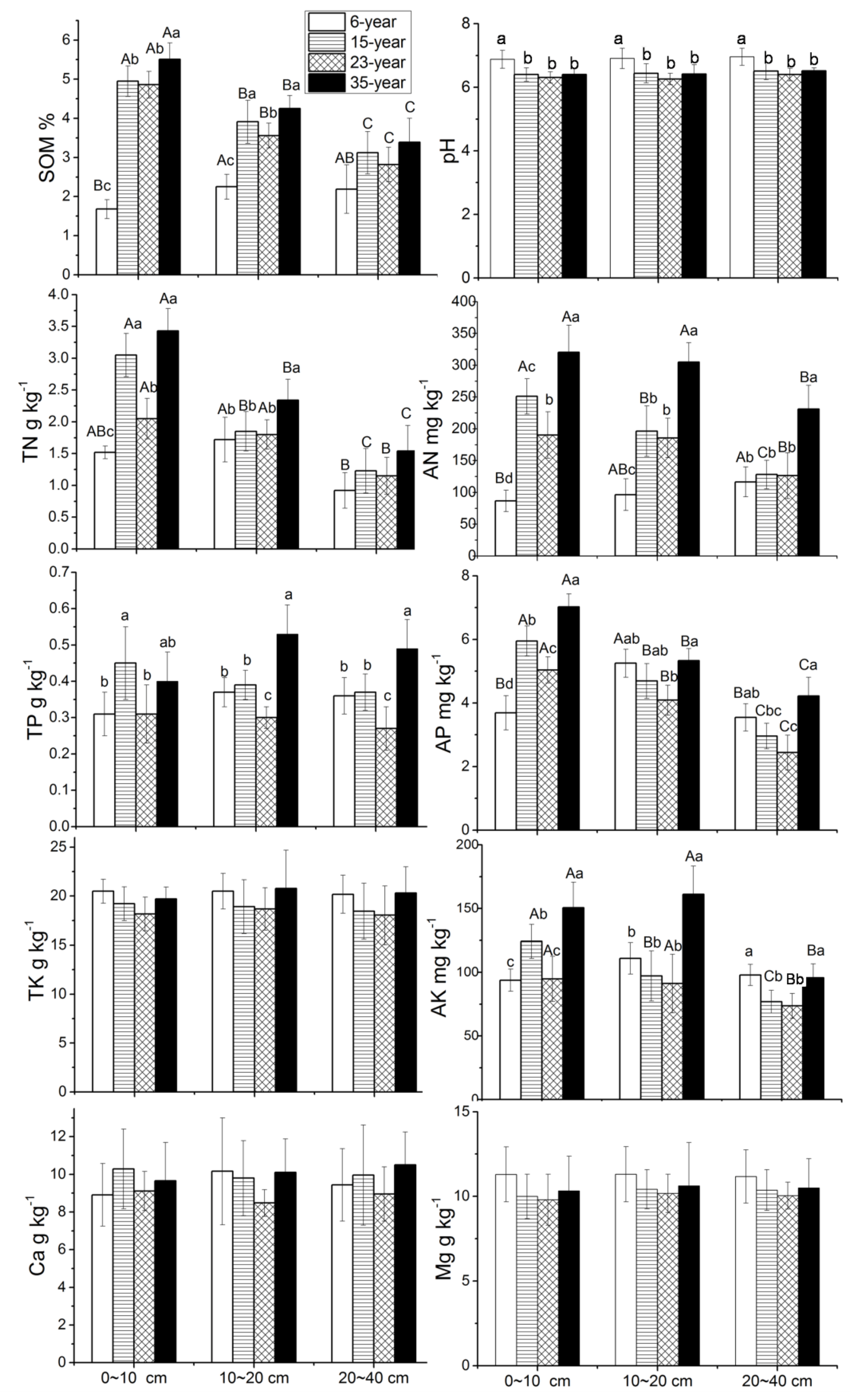
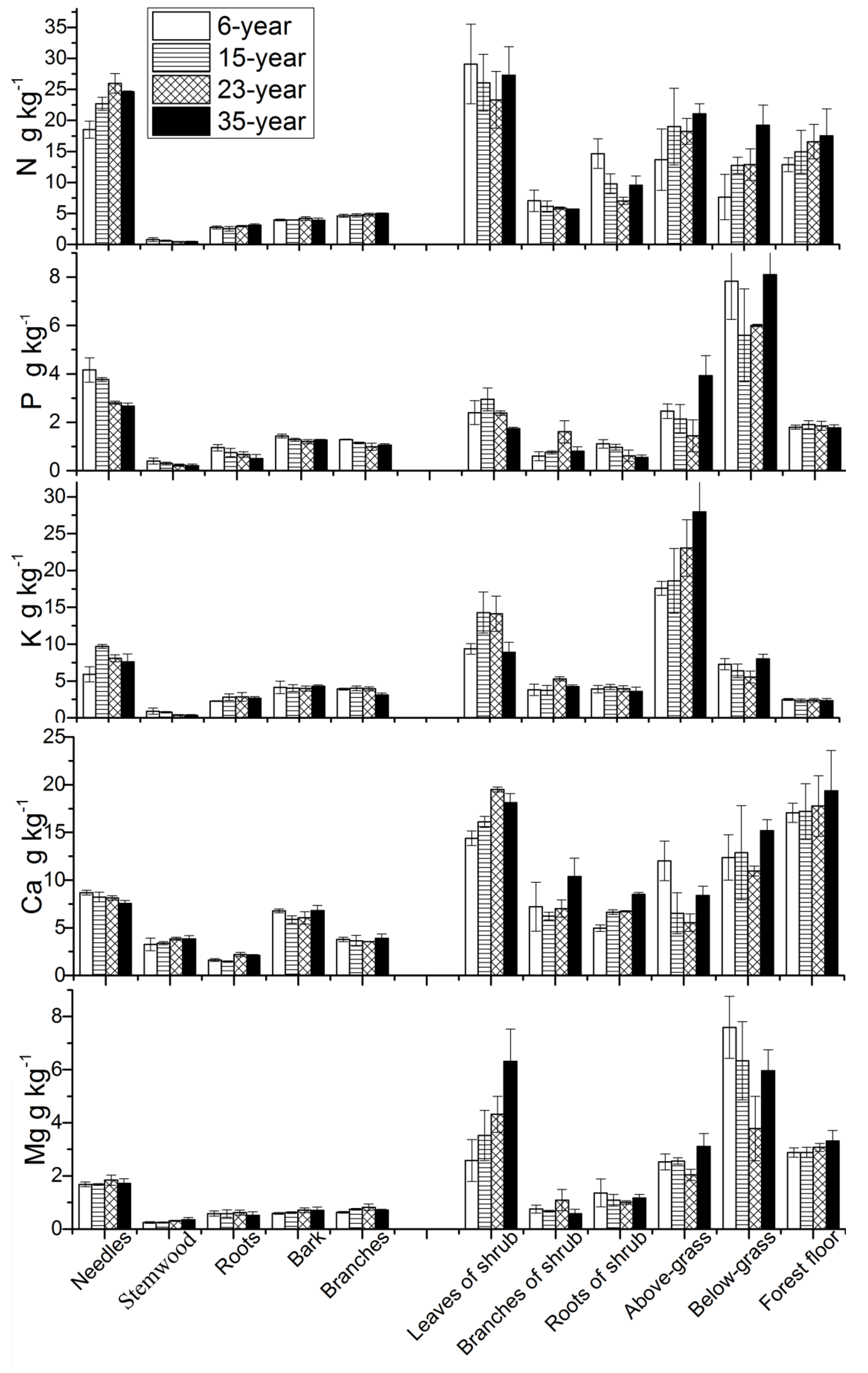
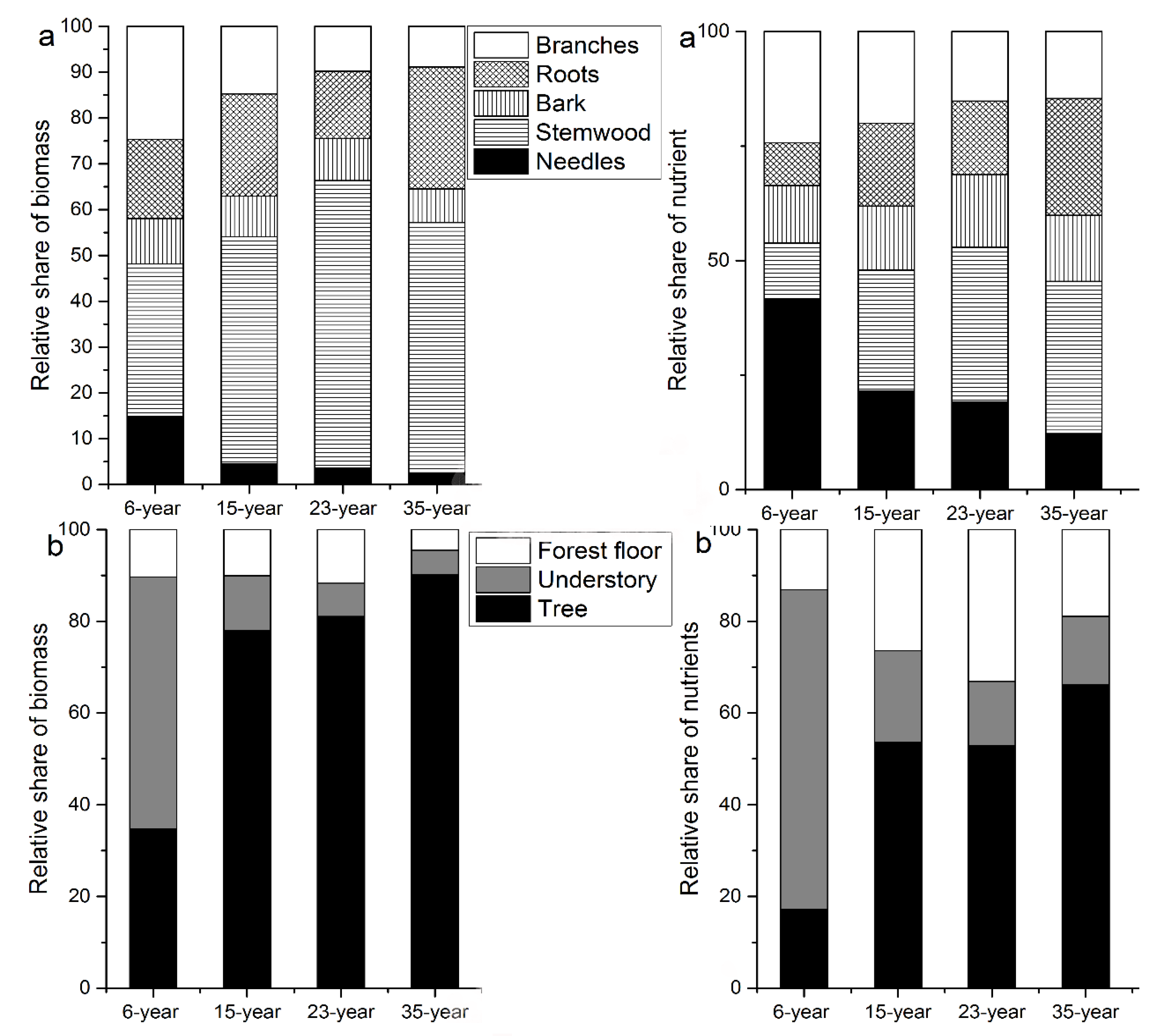
Increased demand for forest-derived biomass has led to more intensive harvesting practices. However, the export of large nutrient quantities with the harvested biomass may lead to the depletion of soil nutrients. Therefore, improved knowledge concerning macronutrient allocation (N, P, K, Ca, and Mg) to different components in forests along age sequences is crucial for their sustainable management. In this study, we quantified nutrient allocation to different ecosystem components, including trees, understorey, forest floor, and different soil depths within a chronosequence (6-, 15-, 23-, and 35-year-old) of larch plantations in China. We then assessed the danger of significant nutrient losses from whole tree harvesting (WTH). Nutrient amounts in trees increased with stand age due to an increase in biomass. Stems accounted for 59%–72% of tree biomass and contained 40%–50% of total tree nutrients in the 15- to 35-year-old stands. The forest floor’s nutrient quantities increased from the 6- to 23-year-old stands and then decreased in the 35-year-old plantations. Conversely, most soil indicators initially declined from 15- to 23-year-old stands and then increased in the 35-year-old stand. The total nutrient stocks were greatest in the soil (0–40 cm), which accounted for about 93%–99% of total nutrients in the larch ecosystem. These data indicate that WTH causes nutrient losses about 2.0–2.5 times higher than stem-only harvesting, when thinning 15- or clear-cut harvesting 23- and 35-year-old stands. However, nutrient losses by WTH have little effect on the soil nutrient pools. Prolonging the crop cycle of larch plantations may be beneficial to improve nutrient return through litterfall and allow available soil nutrients to recover.
Keywords: Larix kaempferi; stand age; nutrient allocation; nutrient stocks; tree harvesting system Larix kaempferi; stand age; nutrient allocation; nutrient stocks; tree harvesting system