
Compact Models for Some Cluster Problems on Node-Colored Graphs




Abstract
1. Introduction
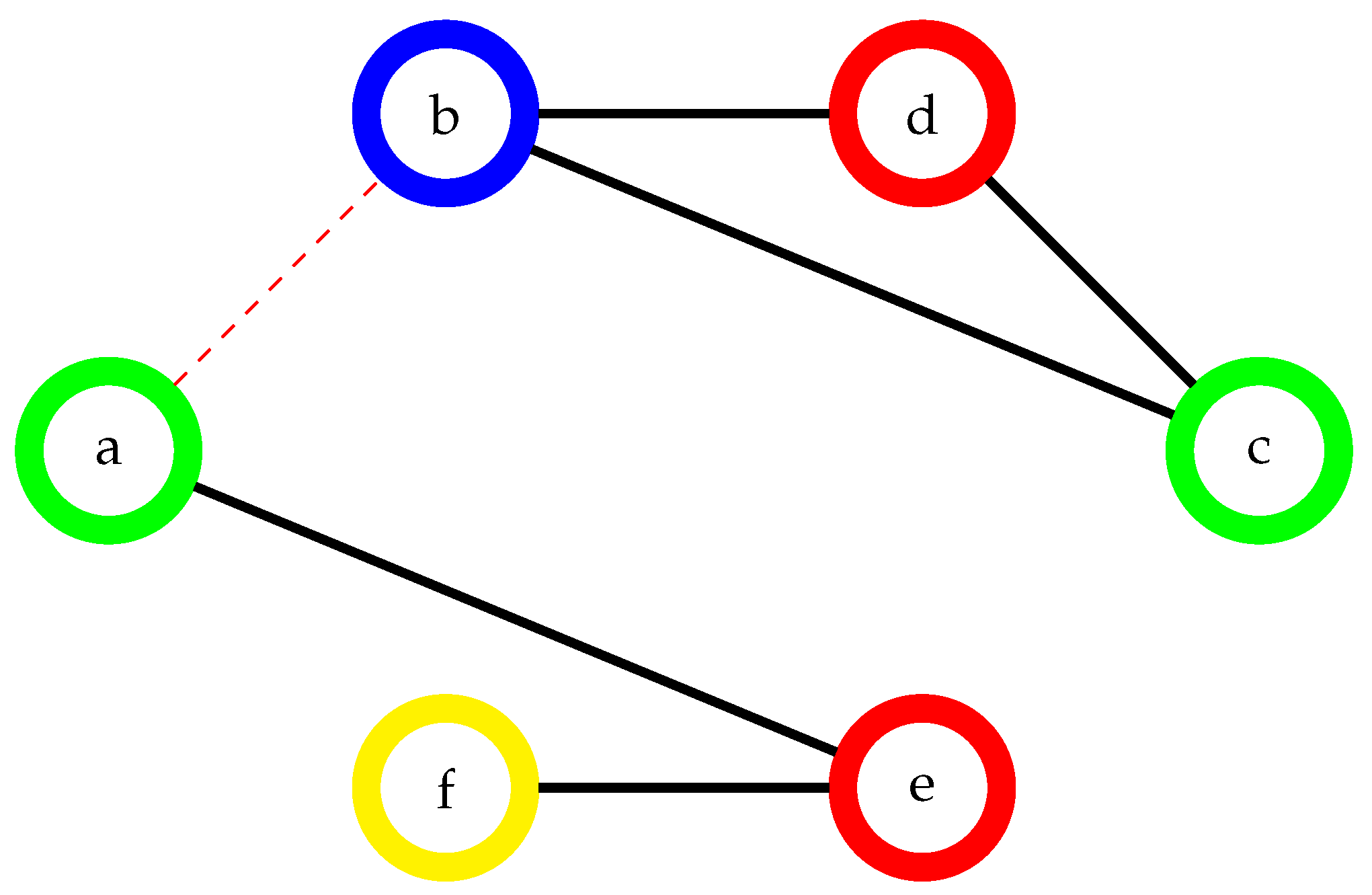
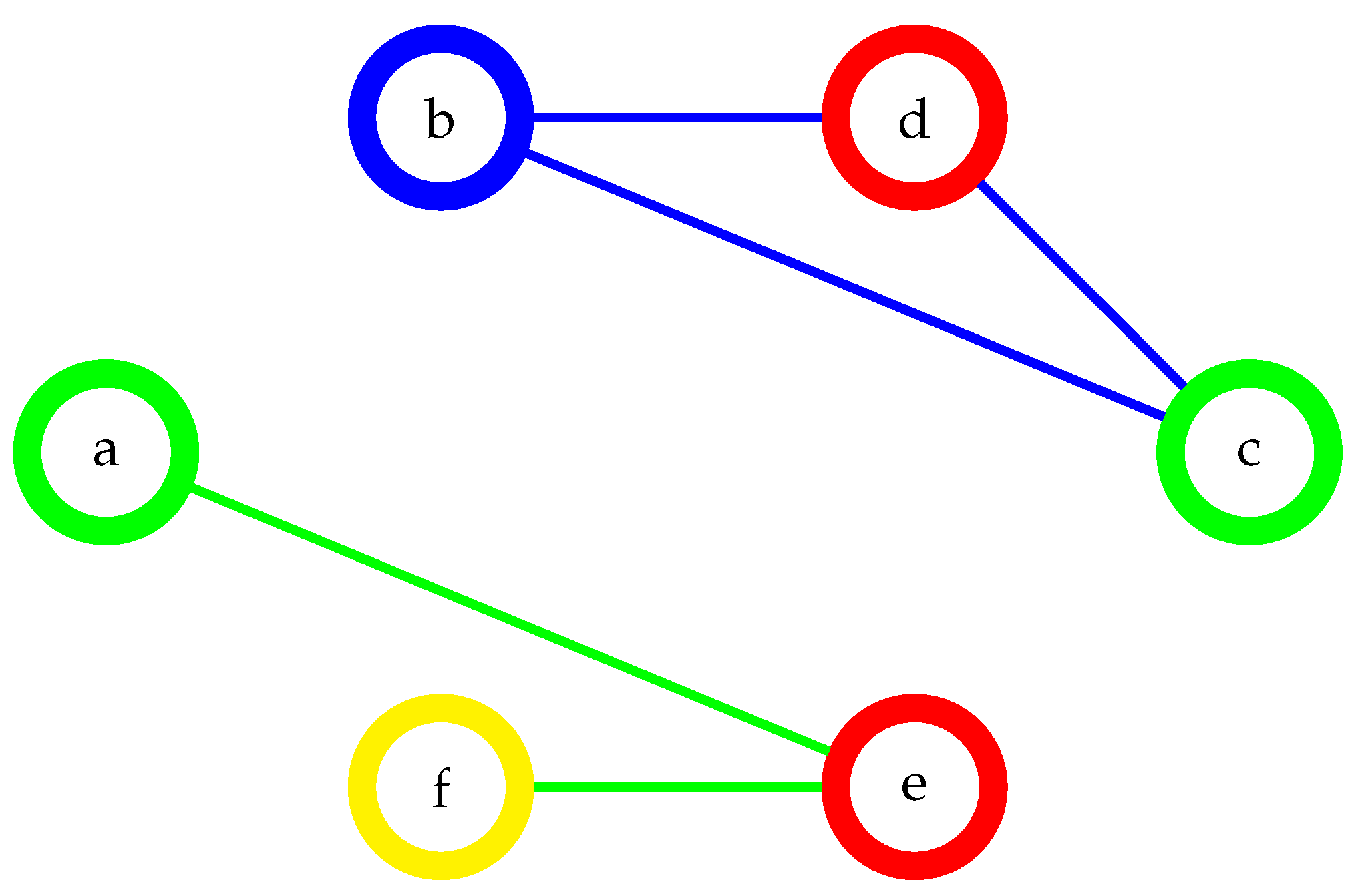
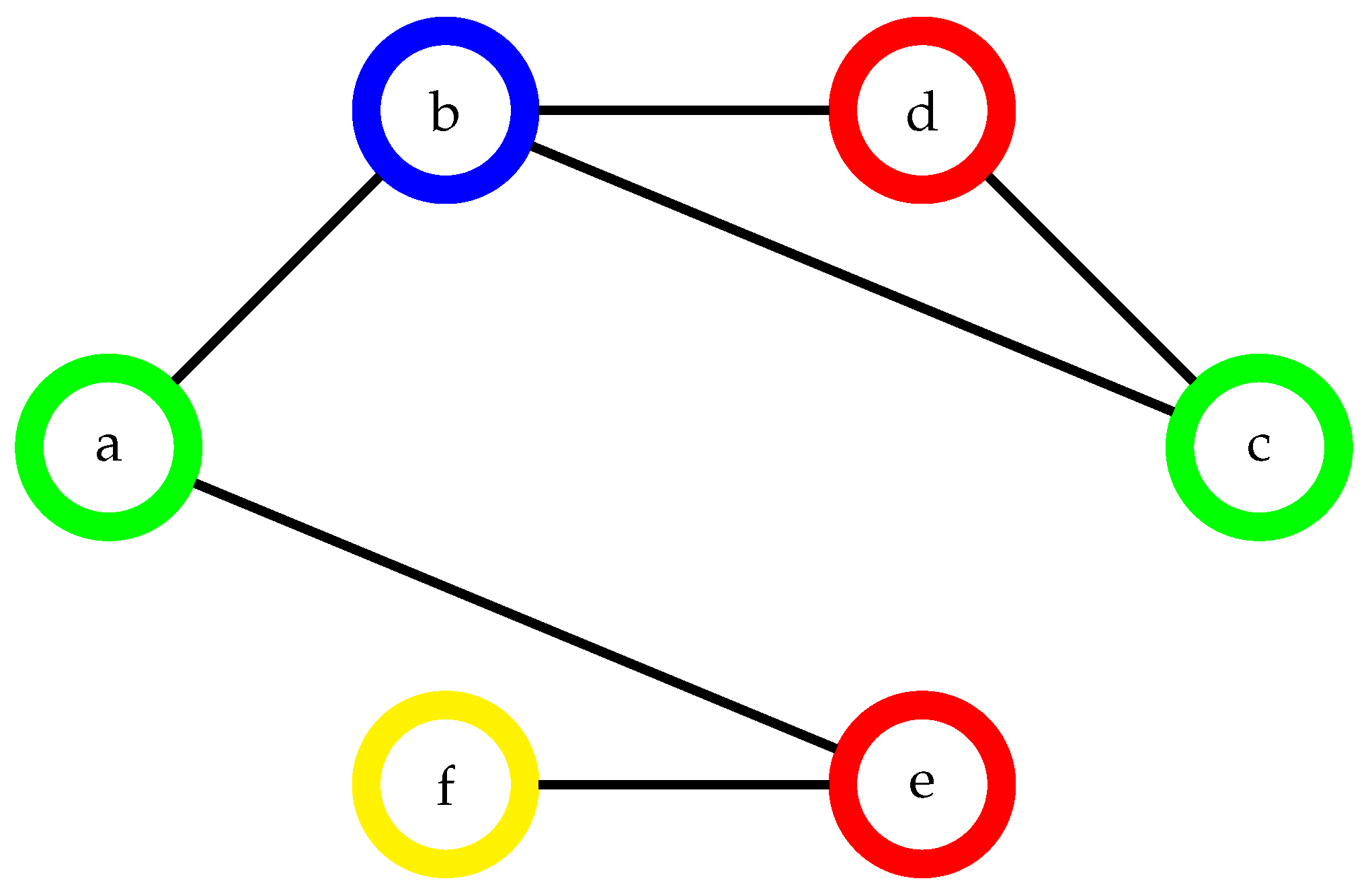
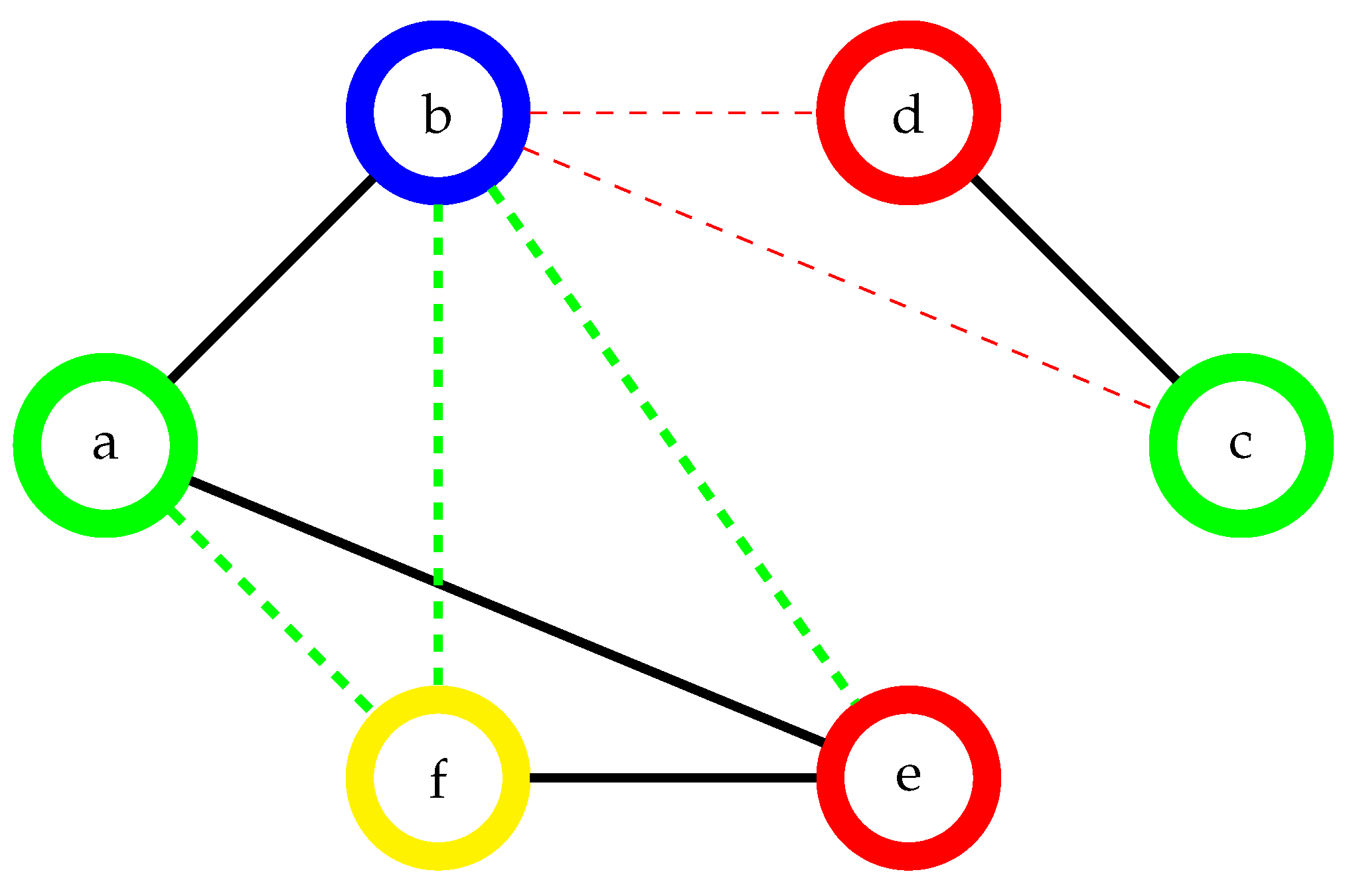
2. Definition of the Problems
3. Compact Mixed Integer Linear Programming Models
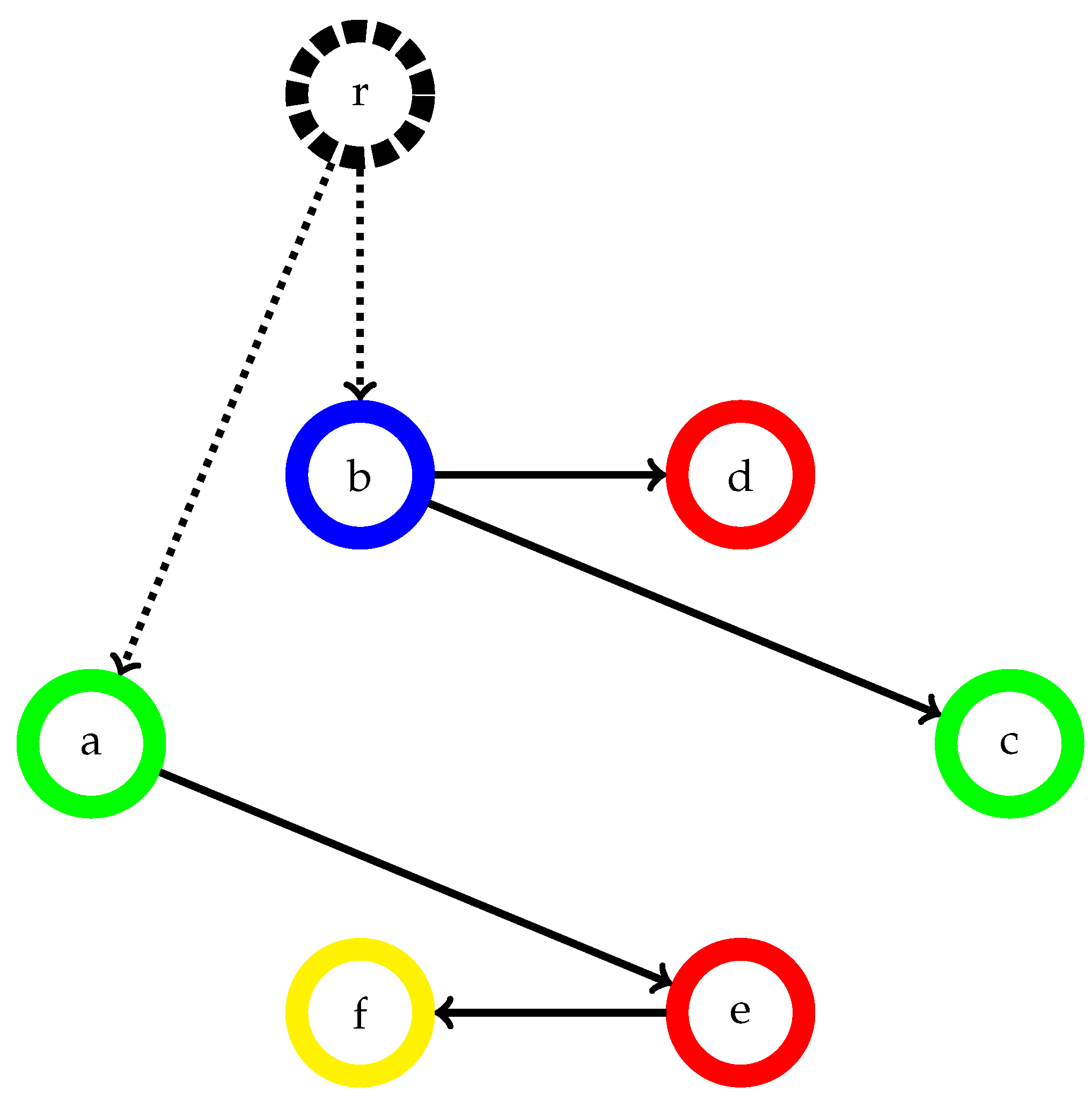
3.1. Backbone Spanning Tree: A Compact Formulation to Model Colored Clustering
3.2. A Compact Model for the MOP
3.3. A Compact Model for the MEC
3.4. A Compact Model for the MCC
4. Experimental Results
4.1. Benchmark Instances
4.2. Computational Experiments
- LB: The average lower bounds obtained in the given computation time;
- UB: The average upper bounds obtained in the given computation time;
- Gap %: The average optimality gap obtained in the given computation time;
- # Solved: The number of instances solved to optimality in the given computation time;
- Sec: The average computation time in seconds. For the new methods introduced in this work, we also report in brackets the unnormalized wall time registered for each instance on the Intel Core i7-12700F adopted for the experiments.
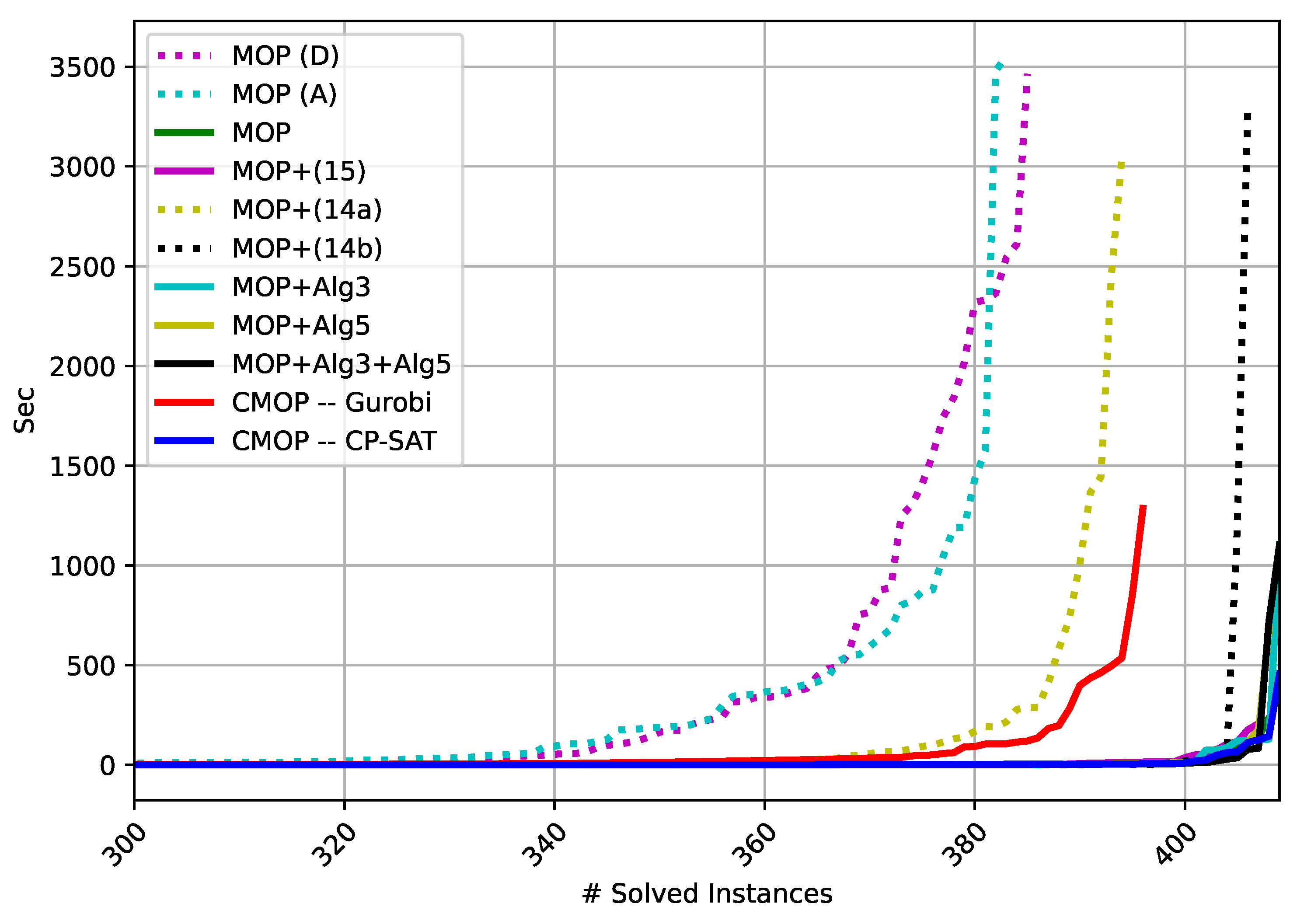
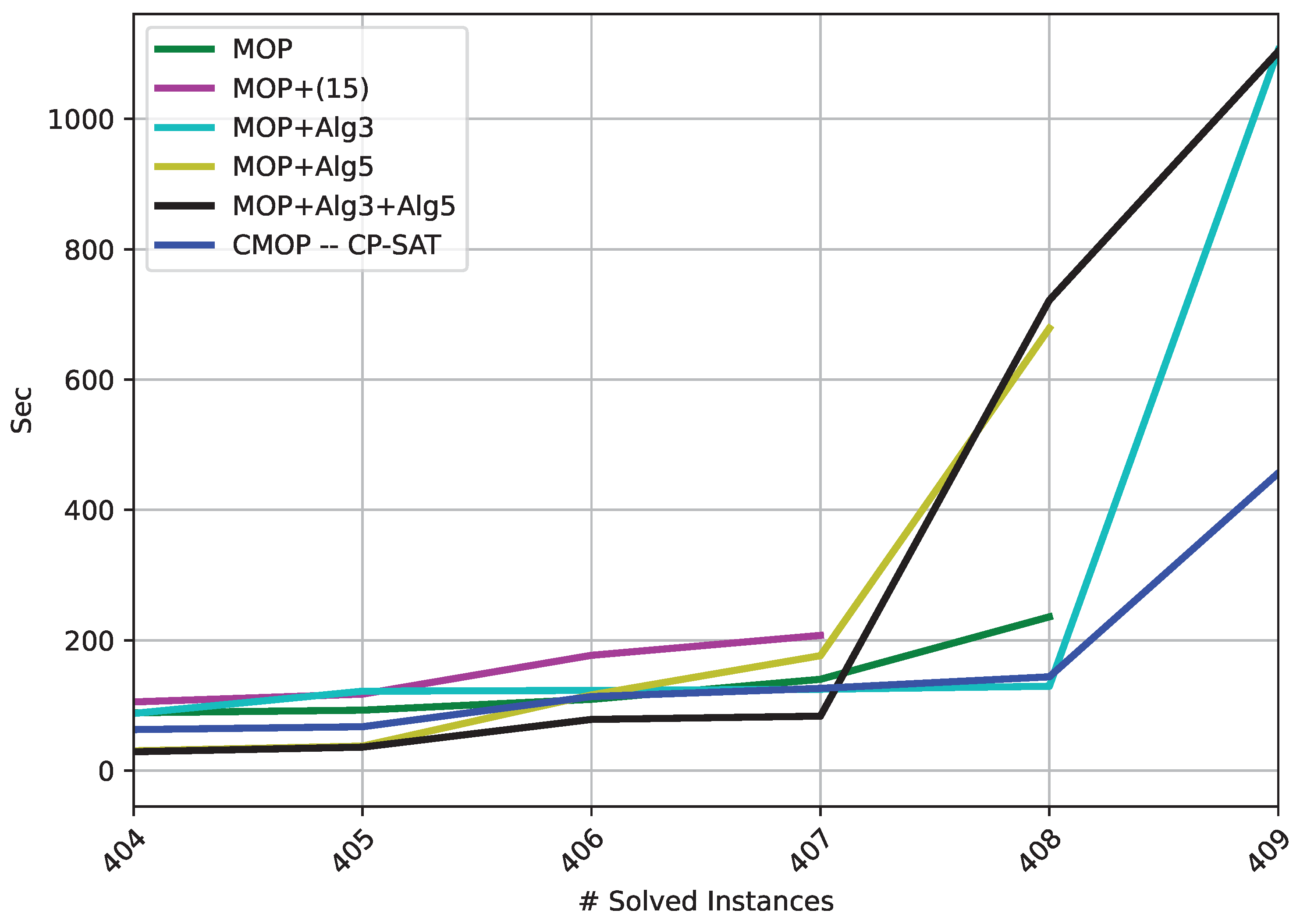
4.2.1. Minimum Orthogonal Partition Problem
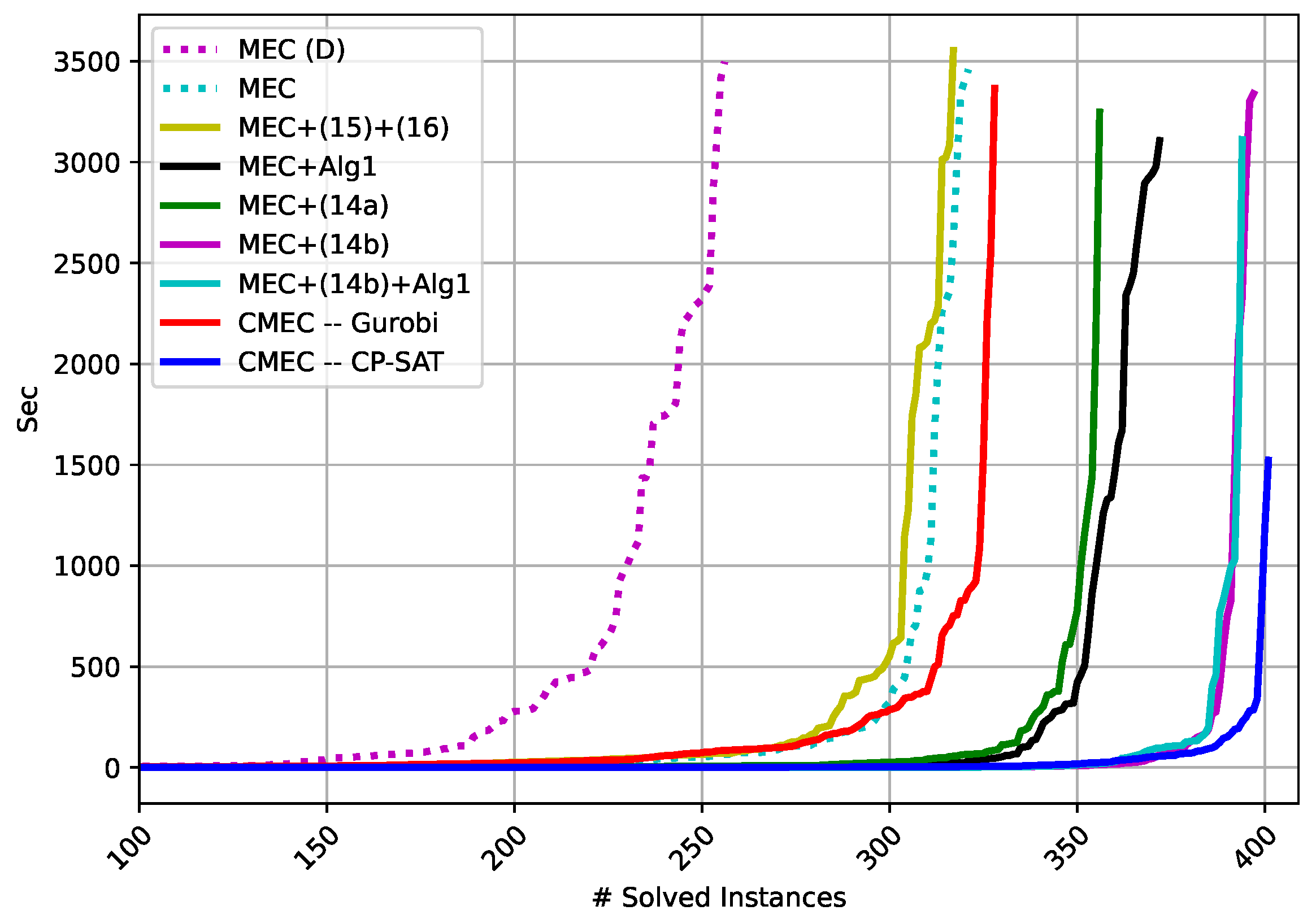
4.2.2. Maximum Edges in Transitive Closure Problem
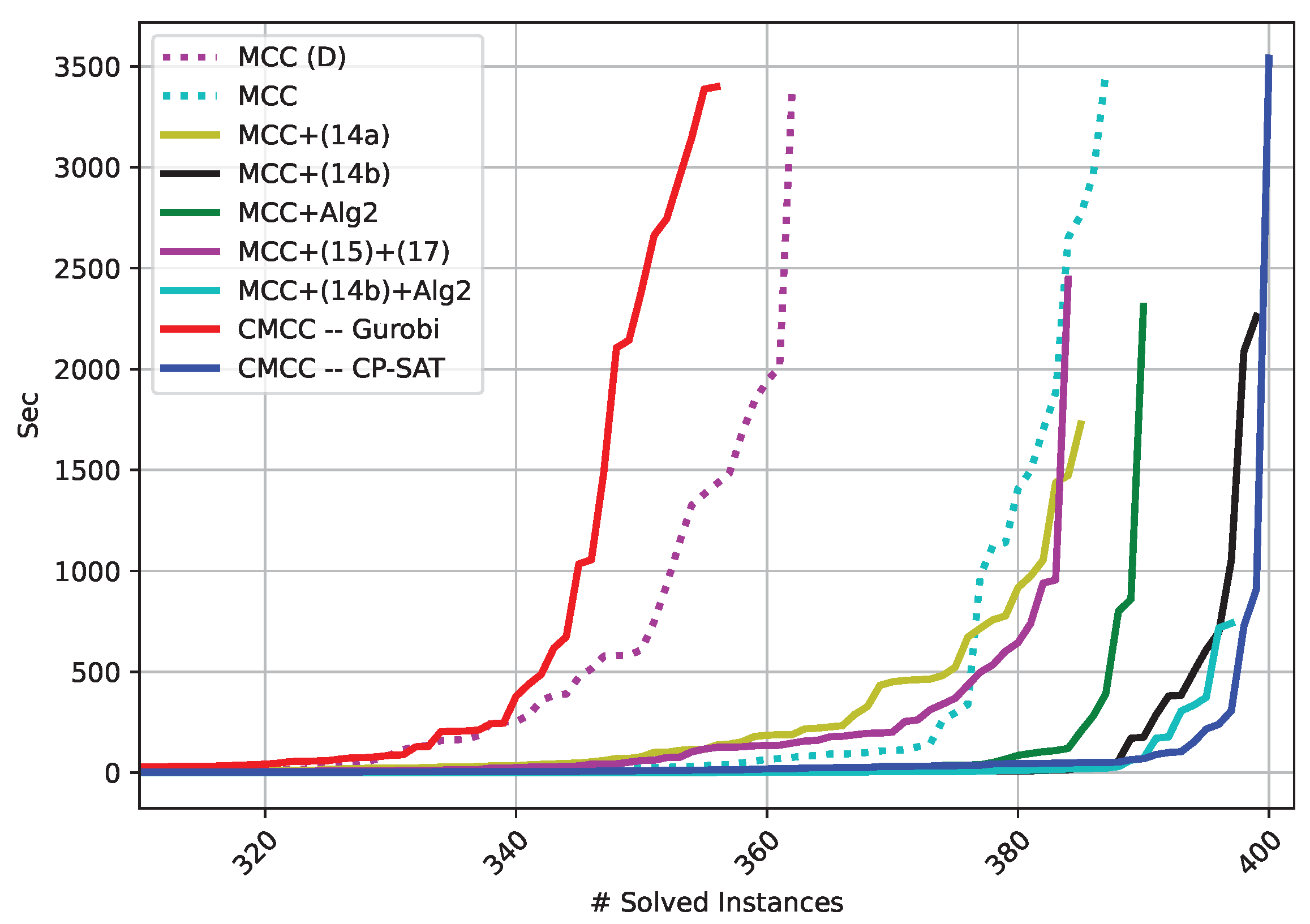
4.2.3. Minimum Colorful Components Problem
4.3. Discussion
5. Conclusions
Author Contributions
Funding
Data Availability Statement
Acknowledgments
Conflicts of Interest
References
- Zheng, C.; Swenson, K.; Lyons, E.; Sankoff, D. OMG! Orthologs in Multiple Genomes—Competing Graph-Theoretical Formulations. In Algorithms in Bioinformatics, Proceedings of the WABI 2011, Saarbrücken, Germany, 5–7 September 2011; Przytycka, T.M., Sagot, M.F., Eds.; Springer: Berlin/Heidelberg, Germany, 2011; pp. 364–375. [Google Scholar]
- Bruckner, S.; Hüffner, F.; Komusiewicz, C.; Niedermeier, R.; Thiel, S.; Uhlmann, J. Partitioning into colorful components by minimum edge deletions. In Combinatorial Pattern Matching, Proceedings of the 23rd Annual Symposium, CPM 2012, Helsinki, Finland, 3–5 July 2012; Springer: Berlin/Heidelberg, Germany, 2012; pp. 56–69. [Google Scholar]
- Adamaszek, A.; Popa, A. Algorithmic and hardness results for the colorful components problems. In LATIN 2014: Theoretical Informatics, Proceedings of the 11th Latin American Symposium, Montevideo, Uruguay, 31 March–4 April 2014; Springer: Berlin/Heidelberg, Germany, 2014; pp. 683–694. [Google Scholar]
- Archetti, C.; Cerulli, M.; Sorgente, C. Branch-and-cut algorithms for colorful components problems. INFORMS J. Comput. 2025. [Google Scholar] [CrossRef]
- He, G.; Liu, J.; Zhao, C. Approximation algorithms for some graph partitioning problems. J. Graph Algorithms Appl. 2000, 4, 1–11. [Google Scholar] [CrossRef]
- Avidor, A.; Langberg, M. The multi-multiway cut problem. Theor. Comput. Sci. 2007, 377, 35–42. [Google Scholar] [CrossRef]
- Misra, N. On the parameterized complexity of colorful components and related problems. In International Workshop on Combinatorial Algorithms, Proceedings of the IWOCA 2018, Singapore, 16–19 July 2018; Springer: Berlin/Heidelberg, Germany, 2018; pp. 237–249. [Google Scholar]
- Bruckner, S.; Hüffner, F.; Komusiewicz, C.; Niedermeier, R.; Wernicke, S. Correcting interlanguage links in Wikipedia: A colorful components approach. In Proceedings of the 22nd International Conference on World Wide Web, Rio de Janeiro, Brazil, 13–17 May 2013; pp. 1359–1368. [Google Scholar]
- Chandrasekaran, K.; Karp, R.; Moreno-Centeno, E.; Vempala, S. Algorithms for Implicit Hitting Set Problems. In Proceedings of the Twenty-Second Annual ACM-SIAM Symposium on Discrete Algorithms, San Francisco, CA, USA, 23–25 January 2011; pp. 614–629. [Google Scholar]
- Moreno-Centeno, E.; Karp, R. The implicit hitting set approach to solve combinatorial optimization problems with an application to multigenome alignment. Oper. Res. 2013, 61, 453–468. [Google Scholar] [CrossRef]
- Grötschel, M.; Wakabayashi, Y. A cutting plane algorithm for a clustering problem. Math. Program. 1989, 45, 59–96. [Google Scholar] [CrossRef]
- Adamaszek, A.; Blin, G.; Popa, A. Approximation and hardness results for the maximum edges in transitive closure problem. In Combinatorial Algorithms; Springer International Publishing: Berlin/Heidelberg, Germany, 2015; pp. 13–23. [Google Scholar]
- Dondi, R.; Sikora, F. Complexity and approximation for colorful component problems. J. Comput. Syst. Sci. 2018, 94, 62–75. [Google Scholar]
- Hu, T.C. Multi-commodity network flows. Oper. Res. 1963, 11, 344–360. [Google Scholar] [CrossRef]
- Perron, L.; Didier, F. Google OR-Tools-CP-SAT. 2025. Available online: https://developers.google.com/optimization/cp/cp_solver/ (accessed on 10 October 2025).
- Montemanni, R.; Dell’Amico, M. Solving the parallel drone scheduling traveling salesman problem via constraint programming. Algorithms 2023, 16, 40. [Google Scholar] [CrossRef]
- Montemanni, R.; Dell’Amico, M.; Corsini, A. Parallel drone scheduling vehicle routing problems with collective drones. Comput. Oper. Res. 2024, 163, 106514. [Google Scholar] [CrossRef]
- Montemanni, R.; Ceschia, S.; Schaerf, A. A compact model for the home healthcare routing and scheduling problem. EURO J. Comput. Optim. 2025, 13, 100101. [Google Scholar] [CrossRef]
- Magnanti, T.L.; Wolsey, L. Optimal trees. In Handbook in Operations Research and Management Science: Networks Models; Ball, M.O., Magnanti, T.L., Monma, C.L., Nemhauser, G.L., Eds.; Elsevier: Amsterdam, The Netherlands, 1995; pp. 503–615. [Google Scholar]
- Gagolewski, M.; Cena, A.; Bartoszuk, M.; Brzozowski, Ł. Clustering with Minimum Spanning Trees: How Good Can It Be? J. Classif. 2025, 42, 90–112. [Google Scholar] [CrossRef]
- Thompson, J.D.; Koehl, P.; Ripp, R.; Poch, O. Balibase 3.0: Latest developments of the multiple sequence alignment benchmark. Proteins Struct. Funct. Bioinform. 2005, 61, 127–136. [Google Scholar] [CrossRef] [PubMed]
- Gurobi Optimization, LLC. Gurobi 12.0.3; Gurobi Optimization, LLC.: Beaverton, OR, USA, 2025. [Google Scholar]
- PassMark Software Pty Ltd. CPU Benchmarks; PassMark Software Pty Ltd.: Sydney, Australia, 2025. [Google Scholar]




| Method | LB | UB | Gap % | # Solved | Sec |
|---|---|---|---|---|---|
| “MOP (D)” [4] | 17.53 | 20.01 | 1.87% | 385 | 280.63 |
| “MOP (A)” [4] | 17.91 | 20.12 | 1.53% | 384 | 255.14 |
| “MOP” [4] | 18.72 | 19.32 | 0.24% | 408 | 2.94 |
| “MOP + (15)” [4] | 18.72 | 19.32 | 0.24% | 408 | 3.22 |
| “MOP + (14a)” [4] | 17.92 | 19.74 | 1.08% | 394 | 158.13 |
| “MOP + (14b)” [4] | 18.72 | 19.33 | 0.25% | 406 | 29.61 |
| “MOP + Alg.3” [4] | 19.16 | 19.16 | 0.00% | 409 | 4.81 |
| “MOP + Alg.5” [4] | 18.72 | 19.32 | 0.24% | 408 | 3.41 |
| “MOP + Alg.3 + Alg.5” [4] | 19.16 | 19.16 | 0.00% | 409 | 5.46 |
| CMOP-Gurobi | 19.15 | 19.59 | 0.35% | 396 | 132.48 (9.02) |
| CMOP-CP-SAT | 19.16 | 19.16 | 0.00% | 409 | 3.33 (0.23) |
| Method | LB | UB | Gap % | # Solved | Sec |
|---|---|---|---|---|---|
| “MEC (D)” [4] | 23.66 | 236.74 | 21.74% | 257 | 1504.49 |
| “MEC” [4] | 28.89 | 258.72 | 12.48% | 321 | 840.90 |
| “MEC + (15) + (16)” [4] | 28.64 | 254.71 | 13.64% | 317 | 891.95 |
| “MEC + Alg.1” [4] | 32.39 | 190.19 | 2.63% | 372 | 429.24 |
| “MEC + (14a)” [4] | 25.81 | 211.21 | 5.71% | 356 | 498.73 |
| “MEC + (14b)” [4] | 28.72 | 189.32 | 2.38% | 397 | 148.19 |
| “MEC + (14b) + Alg.1” [4] | 33.17 | 191.36 | 2.05% | 394 | 164.17 |
| Overall Best Bounds [4] | 33.24 | 172.29 | 1.90% | 398 | - |
| CMEC-Gurobi | 27.99 | 223.01 | 13.21% | 328 | 796.14 (54.18) |
| CMEC-CP-SAT | 33.04 | 110.99 | 1.12% | 401 | 90.78 (6.18) |
| CMEC-CP-SAT 36,000 s | 33.63 | 33.79 | 0.05% | 404 | 501.61 (34.14) |
| Method | LB | UB | Gap % | # Solved | Sec |
|---|---|---|---|---|---|
| “MCC (D)” [4] | 4.70 | 8.14 | 5.08% | 362 | 454.94 |
| “MCC” [4] | 4.71 | 6.98 | 2.12% | 387 | 229.93 |
| “MCC + (14a)” [4] | 4.72 | 6.82 | 2.38% | 385 | 237.91 |
| “MCC + (14b)” [4] | 4.90 | 6.13 | 1.18% | 399 | 101.80 |
| “MCC + Alg.2” [4] | 4.87 | 5.55 | 0.92% | 390 | 174.07 |
| “MCC + (15) + (17)” [4] | 4.72 | 7.09 | 2.42% | 384 | 227.95 |
| “MCC + (14b) + Alg.2” [4] | 5.02 | 5.19 | 0.43% | 397 | 113.57 |
| Overall Best Bounds [4] | 5.03 | 5.15 | 0.28% | 401 | - |
| CMCC-Gurobi | 4.04 | 5.09 | 6.70% | 356 | 552.63 (37.61) |
| CMCC-CP-SAT | 4.90 | 5.08 | 0.63% | 400 | 98.78 (6.72) |
| CMCC-CP-SAT 36,000 s | 4.99 | 5.08 | 0.24% | 404 | 538.96 (36.68) |
Disclaimer/Publisher’s Note: The statements, opinions and data contained in all publications are solely those of the individual author(s) and contributor(s) and not of MDPI and/or the editor(s). MDPI and/or the editor(s) disclaim responsibility for any injury to people or property resulting from any ideas, methods, instructions or products referred to in the content. |
© 2025 by the authors. Licensee MDPI, Basel, Switzerland. This article is an open access article distributed under the terms and conditions of the Creative Commons Attribution (CC BY) license (https://creativecommons.org/licenses/by/4.0/).
Share and Cite
Montemanni, R.; Smith, D.H.; Luangpaiboon, P.; Aungkulanon, P. Compact Models for Some Cluster Problems on Node-Colored Graphs. Algorithms 2025, 18, 759. https://doi.org/10.3390/a18120759
Montemanni R, Smith DH, Luangpaiboon P, Aungkulanon P. Compact Models for Some Cluster Problems on Node-Colored Graphs. Algorithms. 2025; 18(12):759. https://doi.org/10.3390/a18120759
Chicago/Turabian StyleMontemanni, Roberto, Derek H. Smith, Pongchanun Luangpaiboon, and Pasura Aungkulanon. 2025. "Compact Models for Some Cluster Problems on Node-Colored Graphs" Algorithms 18, no. 12: 759. https://doi.org/10.3390/a18120759
APA StyleMontemanni, R., Smith, D. H., Luangpaiboon, P., & Aungkulanon, P. (2025). Compact Models for Some Cluster Problems on Node-Colored Graphs. Algorithms, 18(12), 759. https://doi.org/10.3390/a18120759