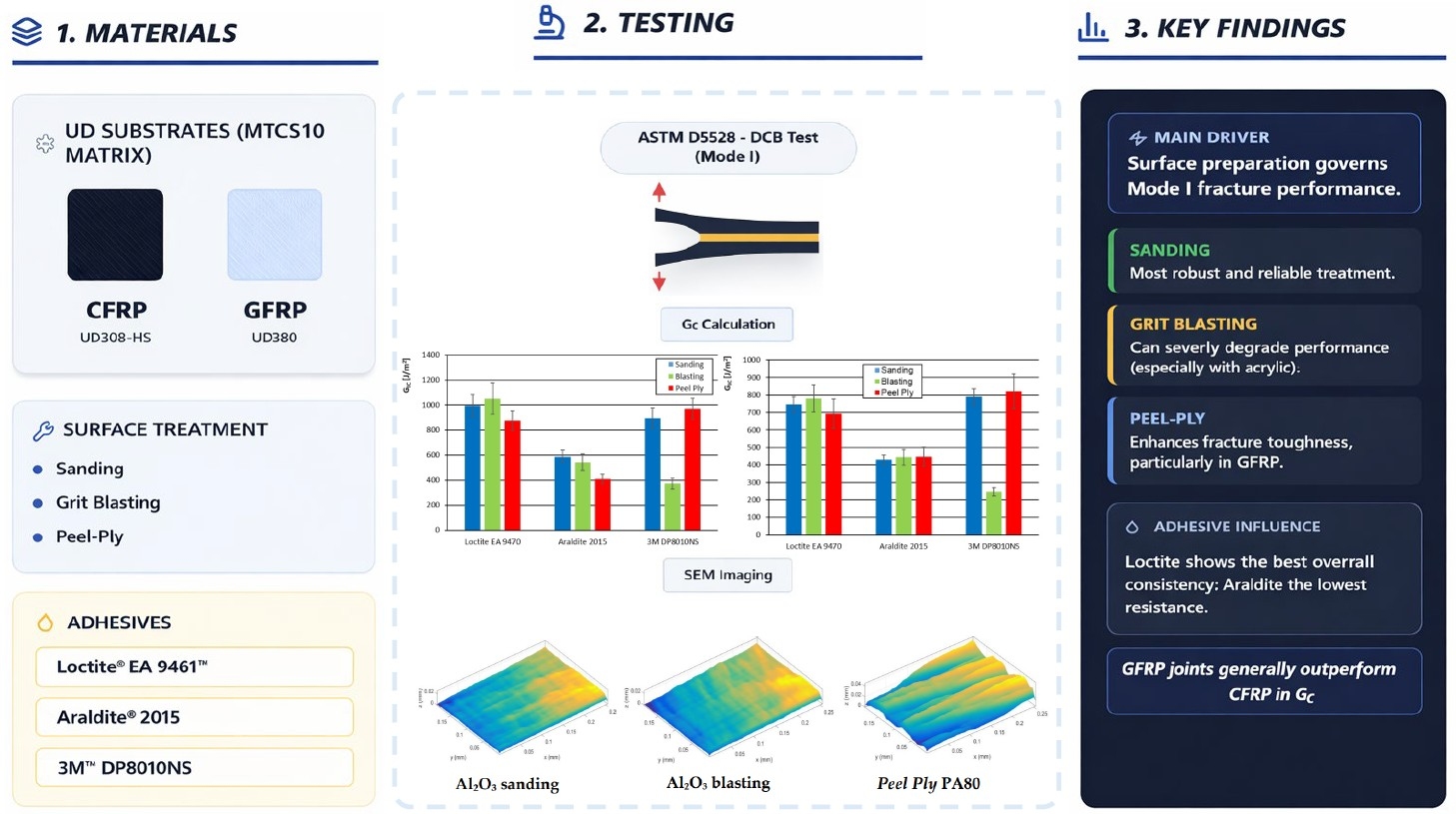
Effect of Adhesive Type and Surface Preparation on the Debonding Behavior of Glass and Carbon Fiber Reinforced Epoxy Adhesive Joints

Abstract
1. Introduction
2. Materials
2.1. Base Materials
2.2. Adhesives
3. Experimental Work
3.1. Specimen Preparation
3.2. Selection of the Methodology for Surface Preparation
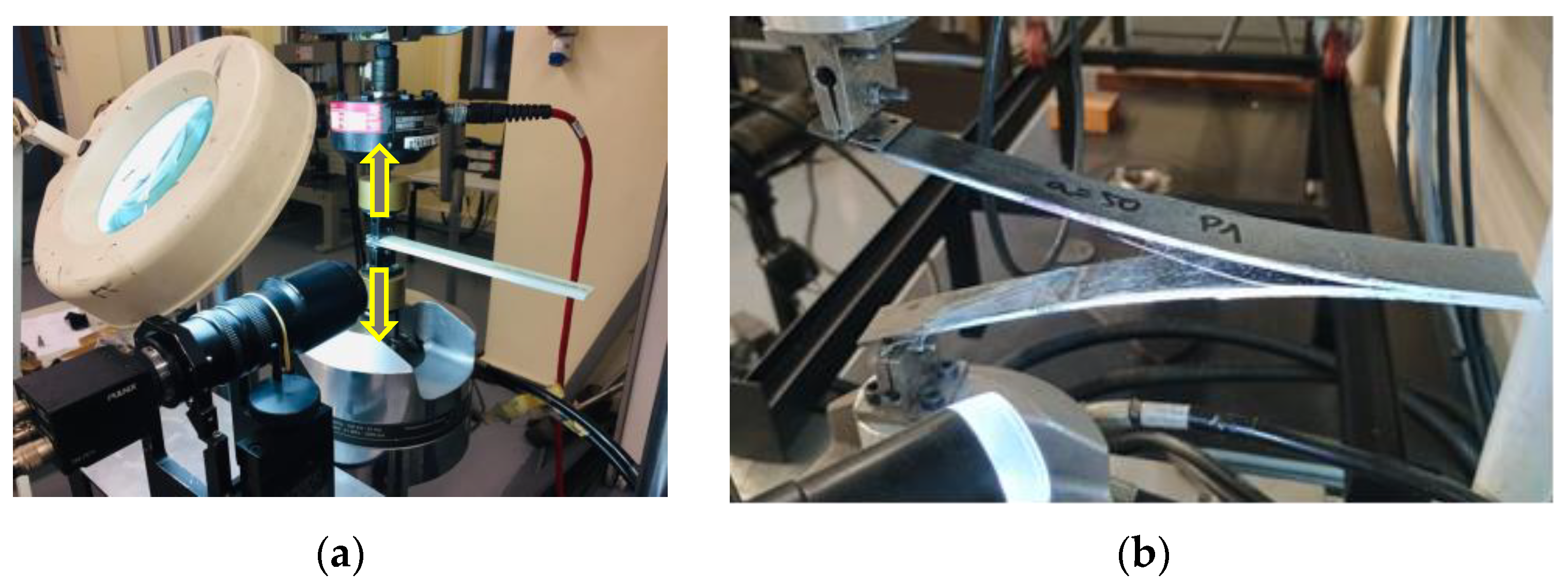
3.3. Experimental Procedure
3.4. Mode I Fracture
4. Results
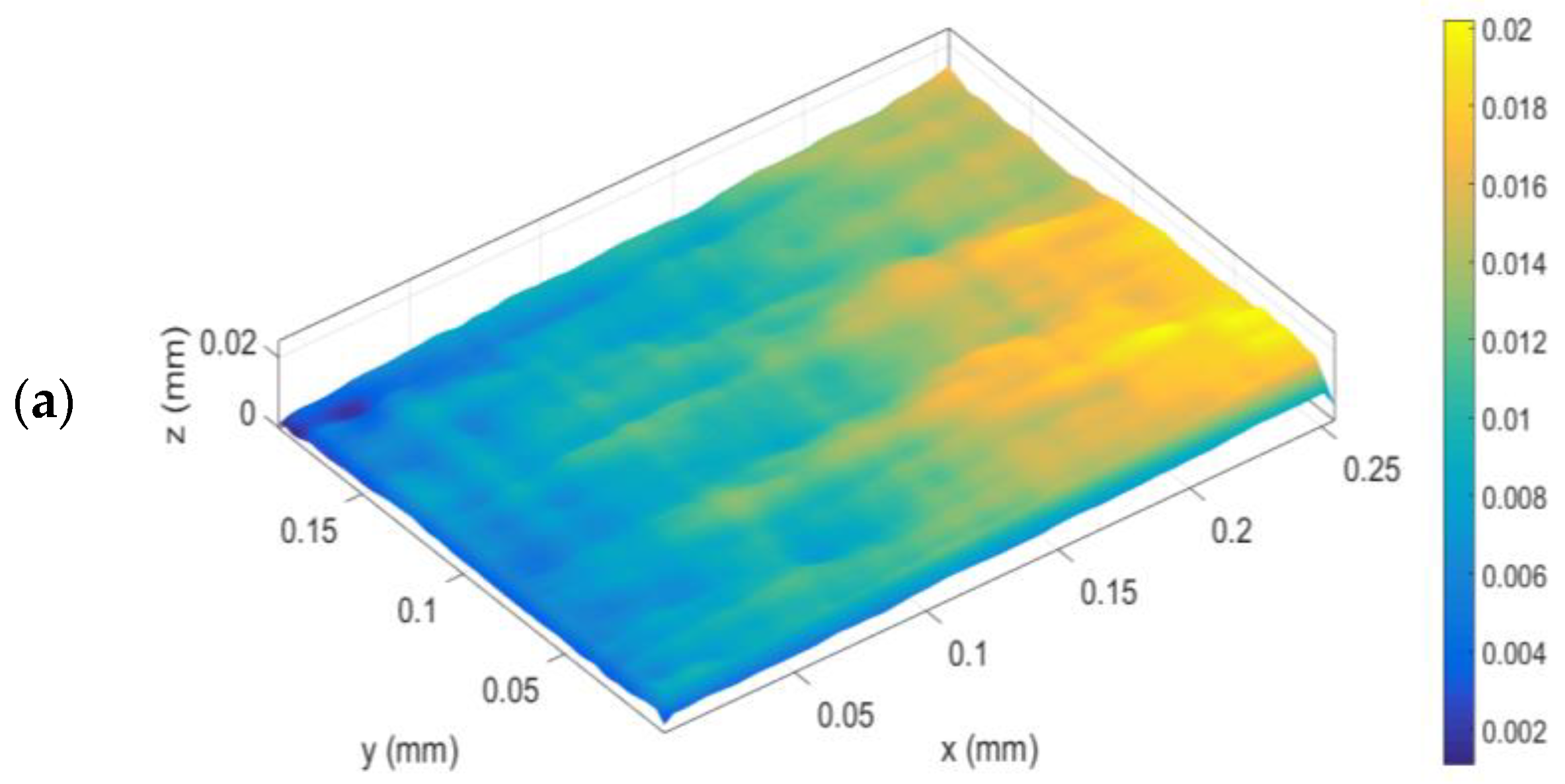
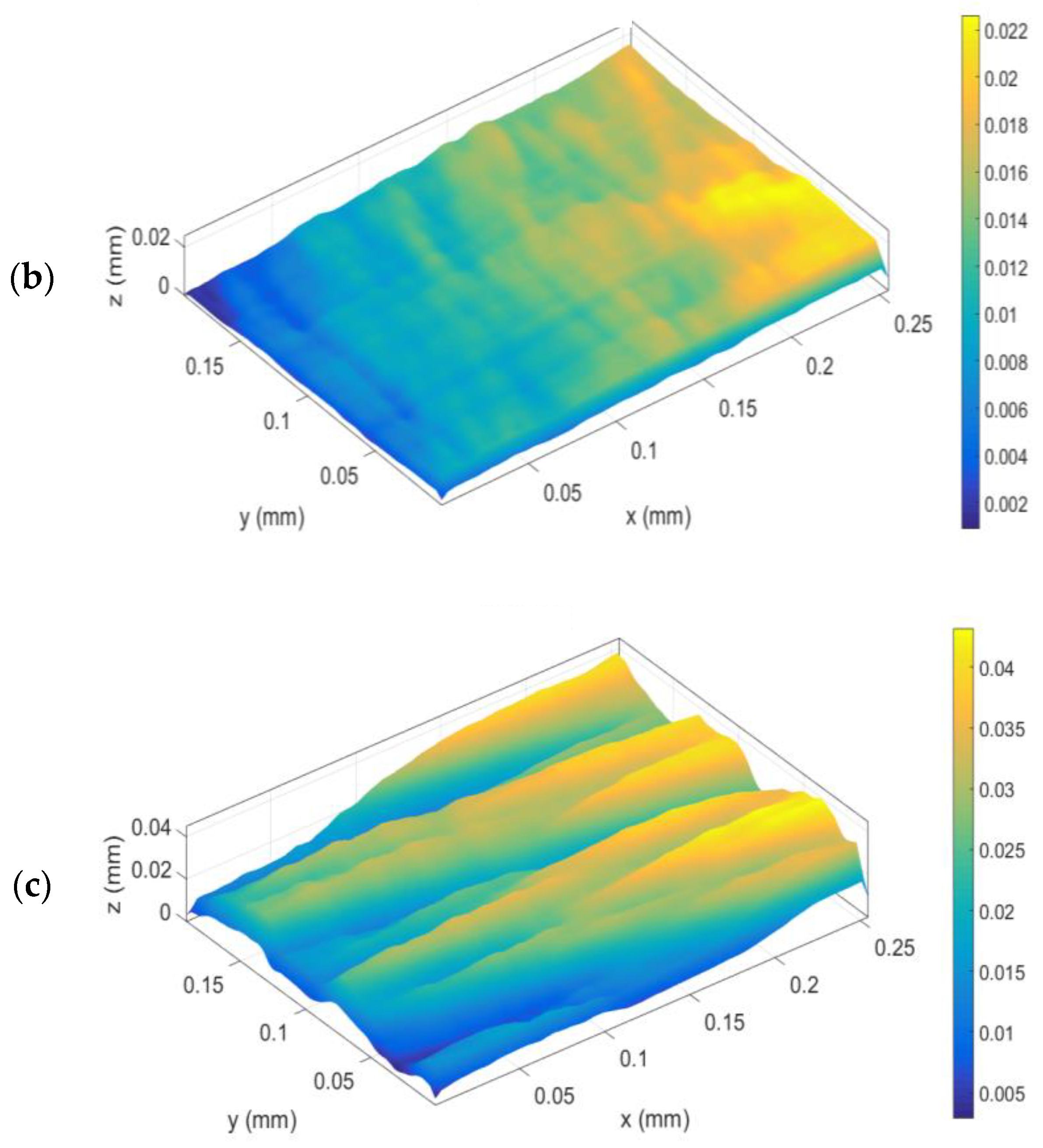
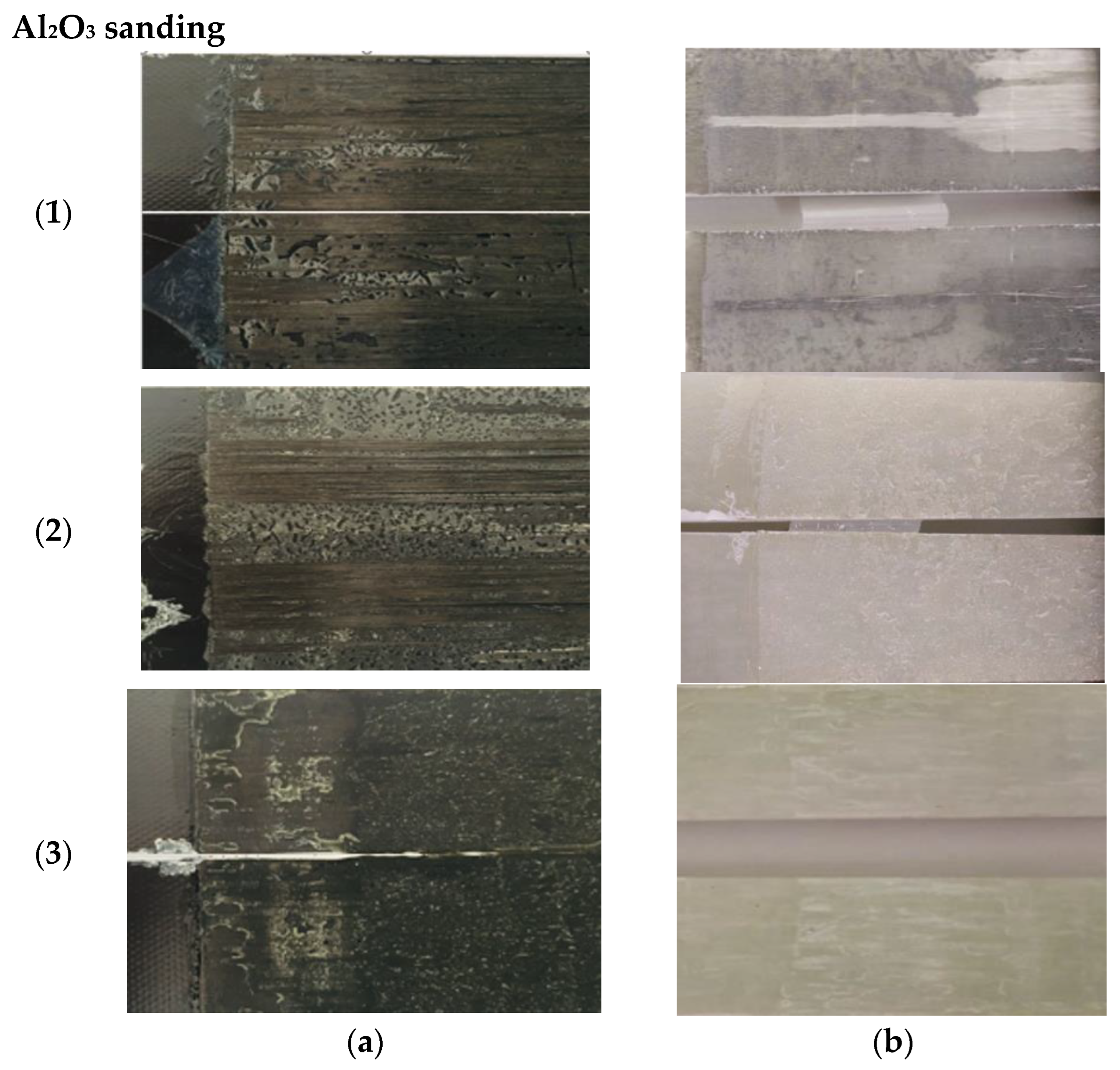
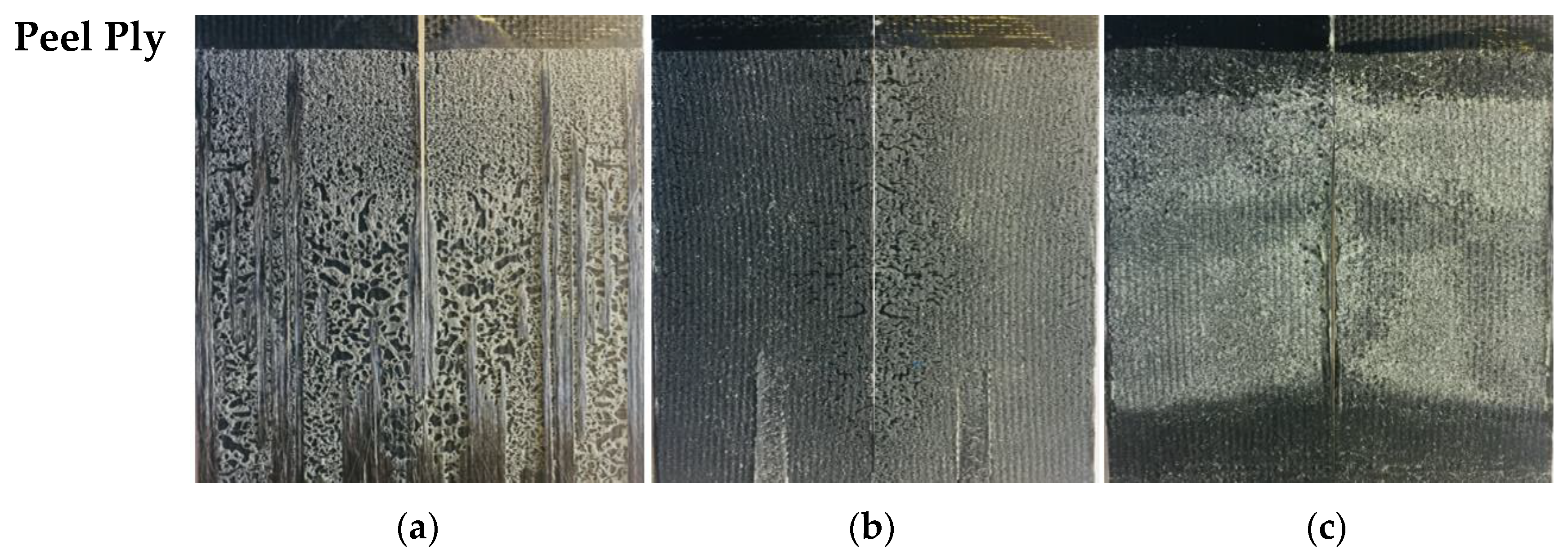
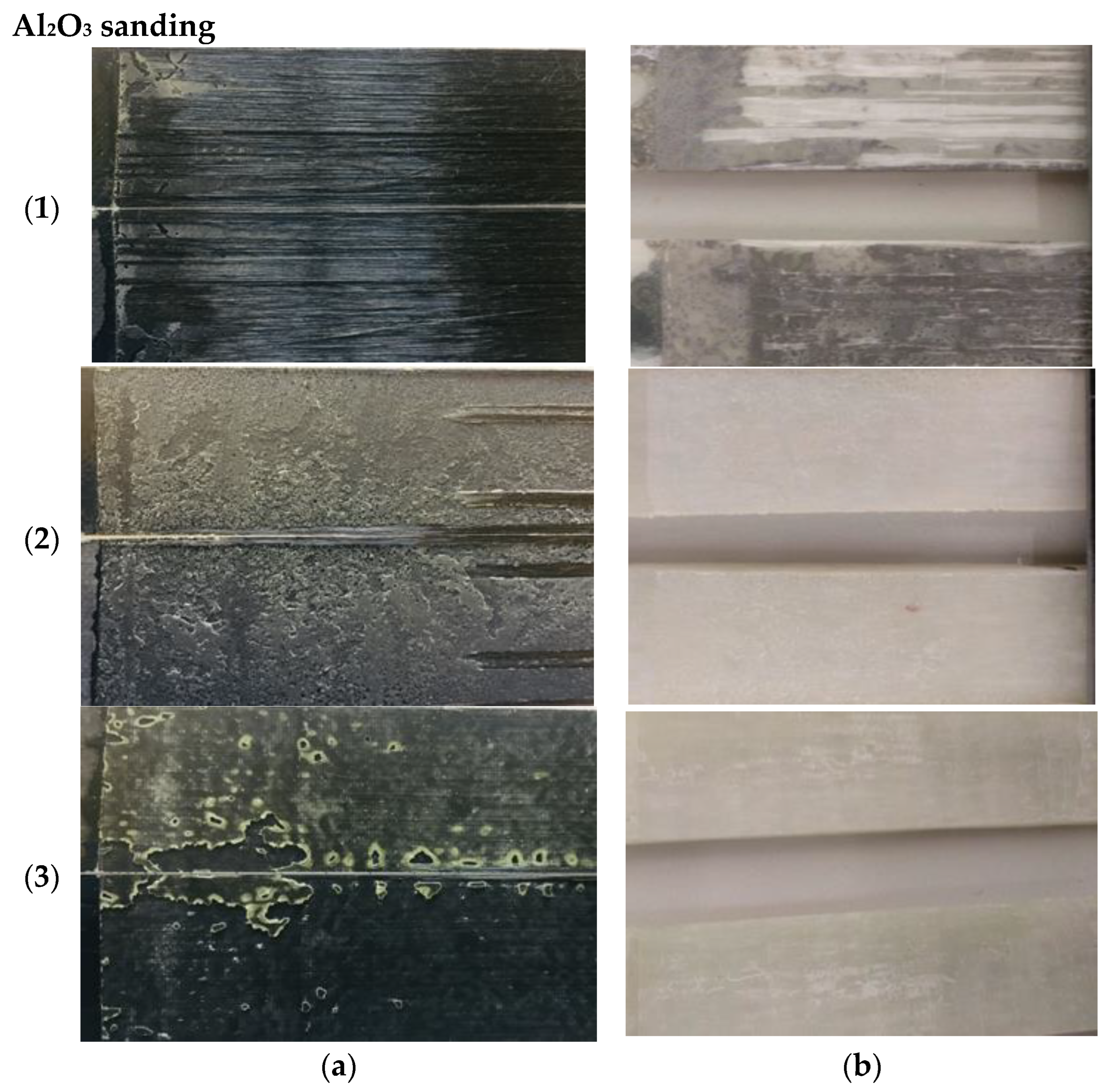
4.1. Surface Characterization After Surface Preparation
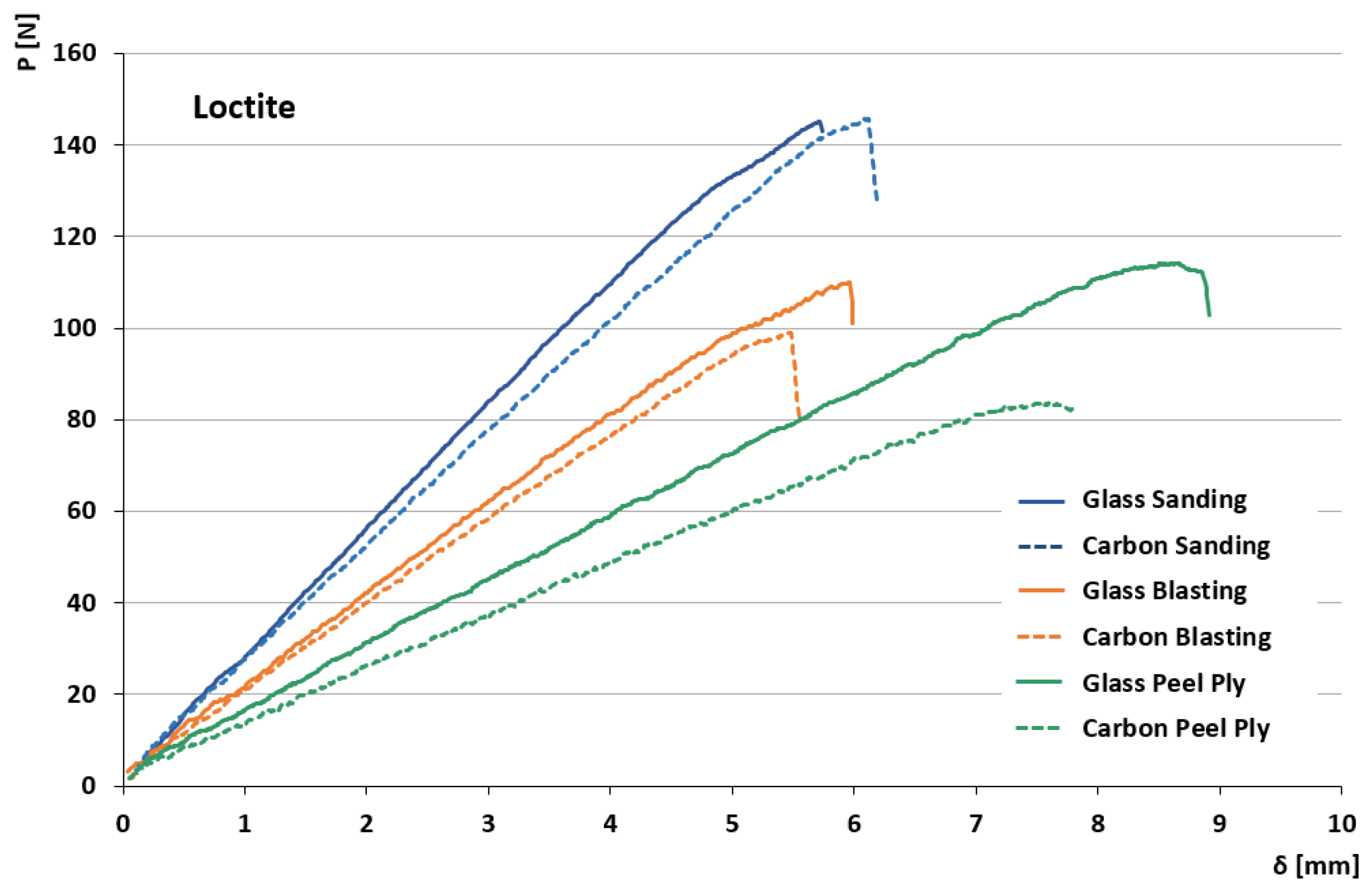
4.2. Mode I DCB Load Displacement
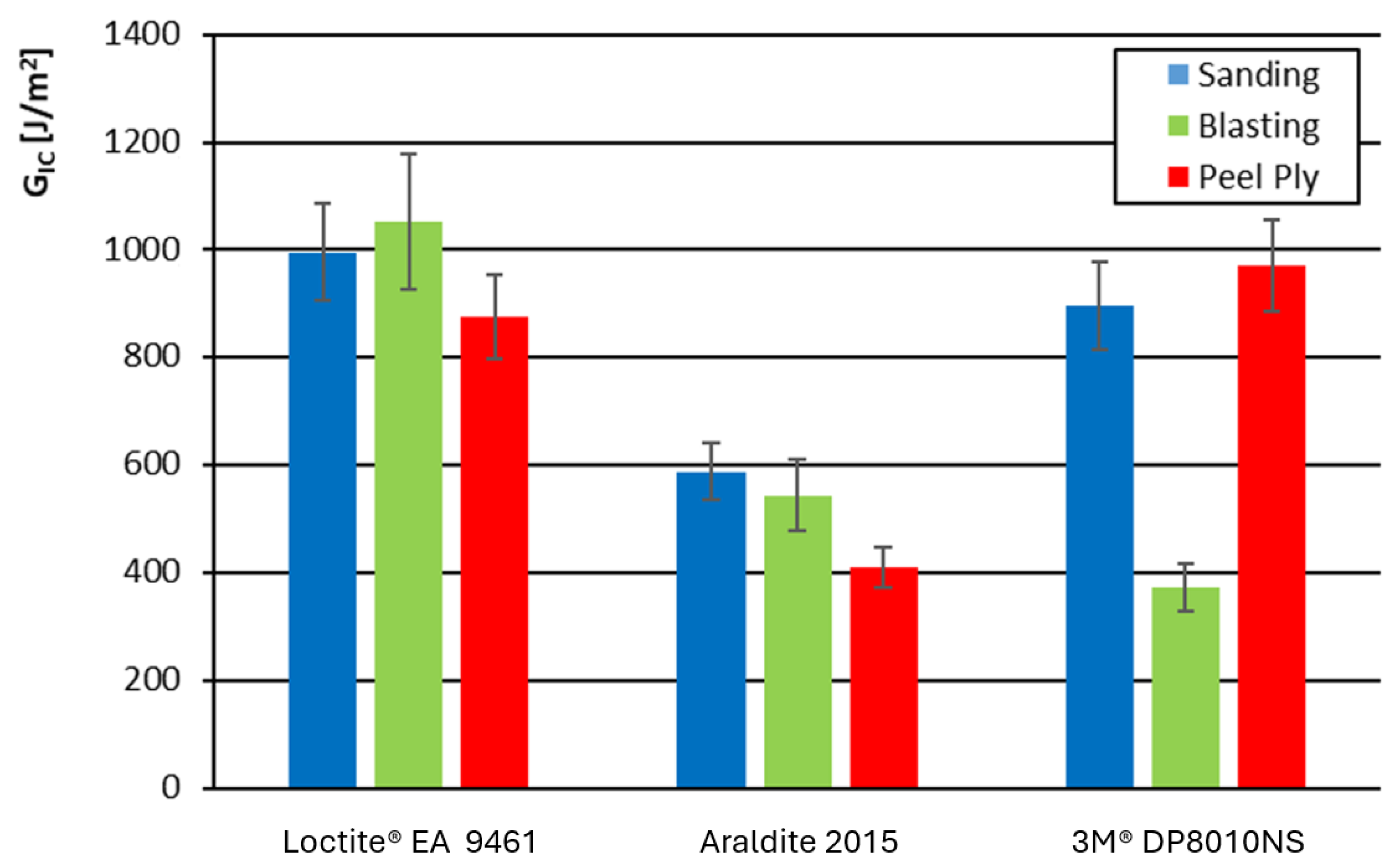
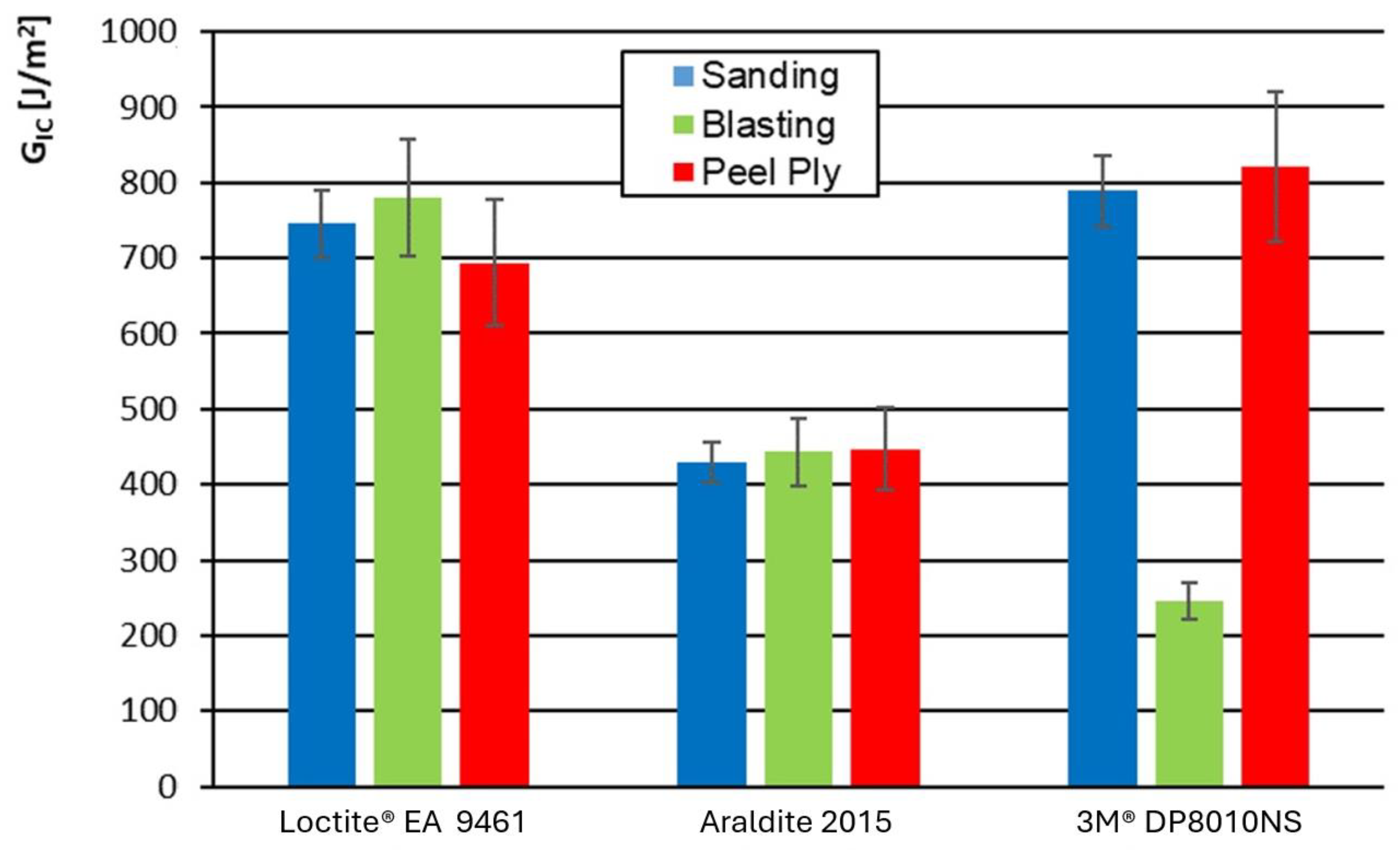
4.3. Mode I Energy Release Rate GIC
5. Conclusions
Author Contributions
Funding
Data Availability Statement
Acknowledgments
Conflicts of Interest
References
- Budzik, M.K.; Wolfahrt, M.; Reis, P.; Kozłowski, M.; Sena-Cruz, J.; Papadakis, L.; Nasr Saleh, M.; Machalicka, K.V.; Teixeira de Freitas, S.; Vassilopoulos, A.P. Testing mechanical performance of adhesively bonded composite joints in engineering applications: An overview. J. Adhes. 2022, 98, 2133–2209. [Google Scholar] [CrossRef]
- Argüelles, A.; Viña, J.; Canteli, A.F.; Coronado, P.; Mollón, V. Influence of the temperature in the delamination under mode I of fracture and dynamic loading of two carbon-epoxy composites. Compos. Part B Eng. 2014, 68, 207–214. [Google Scholar]
- Zhang, Y.; Vassilopoulos, A.P.; Keller, T. Effects of low and high temperatures on tensile behavior of adhesively-bonded GFRP joints. Compos. Struct. 2010, 92, 1631–1639. [Google Scholar] [CrossRef]
- Jakubczak, P. Fatigue delamination growth of carbon and glass reinforced fiber metal laminates in fracture mode II. Int. J. Fatigue 2020, 130, 105267. [Google Scholar] [CrossRef]
- Takeda, T.; Narita, F. Fracture behavior and crack sensing capability of bonded carbon fiber composite joints with carbon nanotube-based polymer adhesive layer under Mode I loading. Compos. Sci. Technol. 2017, 146, 26–33. [Google Scholar] [CrossRef]
- Meng, J.; Lei, H.; Li, Y.; Ma, Y.; Yang, H.; Wang, P.; Fang, D. Mode I fracture toughness with fiber bridging of unidirectional composite laminates under cryogenic temperature. Compos. Sci. Technol. 2024, 246, 110386. [Google Scholar] [CrossRef]
- Fernandes, R.L.; De Moura, M.F.S.F.; Moreira, R.D.F. Effect of moisture on pure mode I and II fracture behavior of composite bonded joints. Int. J. Adhes. Adhes. 2016, 68, 30–38. [Google Scholar] [CrossRef]
- Zabala, H.; Aretxabaleta, L.; Castillo, G.; Aurrekoetxea, J. Dynamic 4 ENF test for a strain rate dependent mode II interlaminar fracture toughness characterization of unidirectional carbon fiber epoxy composites. Polym. Test. 2016, 55, 212–218. [Google Scholar] [CrossRef]
- Srivastava, V.K.; Gries, T.; Quadflieg, T.; Mohr, B.; Kolloch, M.; Kumar, P. Fracture behavior of adhesively bonded carbon fabric composite plates with nano materials filled polymer matrix under DCB, ENF and SLS tests. Eng. Fract. Mech. 2018, 202, 275–287. [Google Scholar] [CrossRef]
- Low, K.O.; Teng, S.M.; Johar, M.; Israr, H.A.; Wong, K.J. Mode I delamination behavior of carbon/epoxy composite at different displacement rates. Compos. B Eng. 2019, 176, 107293. [Google Scholar] [CrossRef]
- Lee, C.S.; Chun, M.S.; Kim, M.H.; Lee, J.M. Delamination failure of multilaminated adhesively bonded joints at low temperatures. Cryogenics 2011, 51, 429–437. [Google Scholar] [CrossRef]
- Ogawa, M.; Shinozaki, A.; Hosoya, Y.; Hu, J.; Yonezu, A.; Liu, L. Fatigue fracture mechanisms and strength improvement of epoxy adhesive joints with surface Treatment: An integrated experimental and molecular dynamics study. Int. J. Adhes. Adhes. 2025, 140, 104040. [Google Scholar] [CrossRef]
- Li, C.; Viswanathan-Chettiar, S.; Sun, F.; Shi, Z.; Blackman, B. Effect of CFRP surface topography on the adhesion and strength of composite-composite and composite-metal joints. Compos. Part A Appl. Sci. Manuf. 2023, 164, 107275. [Google Scholar] [CrossRef]
- Karthikeyan, N.; Naveen, J. Progress in adhesive-bonded composite joints: A comprehensive review. J. Reinf. Plast. Compos. 2025, 44, 1844–1890. [Google Scholar] [CrossRef]
- Bechikh, A.; Klinkova, O.; Maalej, Y.; Tawfiq, I.; Nasri, R. Effect of dry abrasion treatments on composite surface quality and bonded joints shear strength. Int. J. Adhes. Adhes. 2022, 113, 103058. [Google Scholar] [CrossRef]
- Harris, A.F.; Beevers, A. The effects of grit-blasting on surface properties for adhesion. Int. J. Adhes. Adhes. 1999, 19, 445–452. [Google Scholar] [CrossRef]
- Baldan, A. Adhesively-bonded joints and repairs in metallic alloys, polymers and composite materials: Adhesives, adhesion theories and surface pretreatment. J. Mater. Sci. 2004, 39, 1–49. [Google Scholar] [CrossRef]
- Akpinar, S.; Kars, A.; Bayramoglu, S.; Demiral, M. The influence of combination of surface roughness and nanostructure of adhesive on the strength of adhesively bonded joints. Int. J. Adhes. Adhes. 2024, 133, 103743. [Google Scholar] [CrossRef]
- Da Silva, L.F.M.; De Magalhães, F.A.C.R.G.; Chaves, F.J.P.; De Moura, M.F.S.F. Mode II fracture toughness of a brittle and a ductile adhesive as a function of the adhesive thickness. J. Adhes. 2010, 86, 891–905. [Google Scholar] [CrossRef]
- Campilho, R.D.S.G.; Moura, D.C.; Banea, M.D.; Da Silva, L.F.M. Adherend thickness effect on the tensile fracture toughness of a structural adhesive using an optical data acquisition method. Int. J. Adhes. Adhes. 2014, 53, 15–22. [Google Scholar] [CrossRef]
- Floros, I.; Tserpes, K. Fatigue crack growth characterization in adhesive CFRP joints. Compos. Struct. 2019, 207, 531–536. [Google Scholar] [CrossRef]
- Ayatollahi, M.R.; Ajdani, A.; Akhavan-Safar, A.; da Silva, L.F.M. Effect of notch length and pre-crack size on mode II fracture energy of brittle adhesives. Eng. Fract. Mech. 2019, 212, 123–135. [Google Scholar] [CrossRef]
- Saleh, M.N.; Tomić, N.Z.; Marinković, A.; Teixeira de Freitas, S. The effect of modified tannic acid (TA) eco-epoxy adhesives on mode I fracture toughness of bonded joints. Polym. Test. 2021, 96, 107122. [Google Scholar] [CrossRef]
- Sun, G.; Liu, X.; Zheng, G.; Gong, Z.; Li, Q. On fracture characteristics of adhesive joints with dissimilar materials—An experimental study using digital image correlation (DIC) technique. Compos. Struct. 2018, 201, 1056–1075. [Google Scholar] [CrossRef]
- Imanaka, M.; Ishii, K.; Hara, K.; Ikeda, T.; Kouno, Y. Fatigue crack propagation rate of CFRP_aluminum acrylic and epoxy adhesives.pdf. Int. J. Adhes. Adhes. 2018, 85, 149–156. [Google Scholar] [CrossRef]
- Budhe, S.; Banea, M.D.; de Barros, S.; da Silva, L.F.M. An updated review of adhesively bonded joints in composite materials. Int. J. Adhes. Adhes. 2017, 72, 30–42. [Google Scholar] [CrossRef]
- Mohan, J.; Ivanković, A.; Murphy, N. Mode i fracture toughness of co-cured and secondary bonded composite joints. Int. J. Adhes. Adhes. 2014, 51, 13–22. [Google Scholar] [CrossRef]
- Droubi, M.G.; McAfee, J.; Horne, R.C.; Walker, S.; Klaassen, C.; Crawford, A.; Prathuru, A.K.; Faisal, N.H. Mixed-mode fracture characteristics of metal-to-metal adhesively bonded joints: Experimental and simulation methods. Procedia Struct. Integr. 2017, 5, 40–47. [Google Scholar] [CrossRef]
- Sassi, S.; Tarfaoui, M.; Ben Yahia, H. An investigation of in-plane dynamic behavior of adhesively-bonded composite joints under dynamic compression at high strain rate. Compos. Struct. 2018, 191, 168–179. [Google Scholar] [CrossRef]
- Del Real, J.C.; Ballesteros, Y.; Chamochin, R.; Abenojar, J.; Molisani, L. Influence of surface preparation on the fracture behavior of acrylic adhesive/CFRP composite joints. J. Adhes. 2011, 87, 366–381. [Google Scholar] [CrossRef]
- Sekiguchi, Y.; Sato, C. Experimental investigation of the effects of adhesive thickness on the fracture behavior of structural acrylic adhesive joints under various loading rates. Int. J. Adhes. Adhes. 2021, 105, 102782. [Google Scholar] [CrossRef]
- Tarfaoui, M.; Neme, A.; Choukri, S. Damage kinetics of glass/epoxy composite materials under dynamic compression. J. Compos. Mater. 2009, 43, 1137–1154. [Google Scholar] [CrossRef]
- Araújo, H.A.M.; Machado, J.J.M.; Marques, E.A.S.; da Silva, L.F.M. Dynamic behavior of composite adhesive joints for the automotive industry. Compos. Struct. 2017, 171, 549–561. [Google Scholar] [CrossRef]
- Sekiguchi, Y.; Shimamoto, K.; Houjou, K.; Sato, C. Fatigue crack growth analysis of a ductile structural acrylic adhesive under constant-amplitude load control at various loading conditions. Int. J. Adhes. Adhes. 2025, 140, 104049. [Google Scholar] [CrossRef]
- Carvajal, D.R.A.; Correa, R.A.M.; Casas-Rodríguez, J.P. Durability study of adhesive joints used in high-speed crafts manufactured with composite materials subjected to impact fatigue. Eng. Fract. Mech. 2020, 225, 106393. [Google Scholar] [CrossRef]
- Almansour, F.A.; Dhakal, H.N.; Zhang, Z.Y. Effect of water absorption on Mode I interlaminar fracture toughness of flax/basalt reinforced vinyl ester hybrid composites. Compos. Struct. 2017, 168, 813–825. [Google Scholar] [CrossRef]
- Johar, M.; Chong, W.W.F.; Kang, H.S.; Wong, K.J. Effects of moisture absorption on the different modes of carbon/epoxy composites delamination. Polym. Degrad. Stab. 2019, 165, 117–125. [Google Scholar] [CrossRef]
- Kujawa, M.; Paczos, P.; Smakosz, Ł.; Piasecki, A.; Jan, F.; Winkelmann, K.; Konopińska-Zmysłowska, V.; Eremeyev, V.A. Impact of thermal and humidity conditions on structural epoxy adhesives during medium-term exposure. Int. J. Adhes. Adhes. 2025, 139, 103981. [Google Scholar] [CrossRef]
- Yao, L.; Sun, Y.; Guo, L.; Lyu, X.; Zhao, M.; Jia, L.; Alderliesten, R.; Benedictus, R. Mode I fatigue delamination growth with fibre bridging in multidirectional composite laminates. Eng. Fract. Mech. 2018, 189, 221–231. [Google Scholar] [CrossRef]
- Quan, D.; Carolan, D.; Rouge, C.; Murphy, N.; Ivankovic, A.J. Mechanical and fracture properties of epoxy adhesives modified with graphene nanoplatelets and rubber particles. Int. J. Adhes. Adhes. 2018, 81, 21–29. [Google Scholar] [CrossRef]
- Gai, D.; Yao, Z.; Xu, H.; Yang, K.; Yang, S.; Yu, S. Mechanical and failure analysis of “outer single lap” adhesive joints of carbon fiber reinforced plastics under hygrothermal conditions. Int. J. Adhes. Adhes. 2024, 134, 103793. [Google Scholar] [CrossRef]
- Teixeira de Freitas, S.; Banea, M.D.; Budhe, S.; de Barros, S. Interface adhesion assessment of composite-to-metal bonded joints under salt spray conditions using peel tests. Compos. Struct. 2017, 164, 68–75. [Google Scholar] [CrossRef]
- Vigón, P.; Argüelles, A.; Lozano, M.; Viña, J. Fracture analysis under modes I and II of adhesive joints on CFRP in saline environment. Npj Mater. Degrad. 2024, 8, 117. [Google Scholar] [CrossRef]
- Du, Y.; Ma, Y.; Sun, W.; Wang, Z. Effect of hygrothermal aging on moisture diffusion and tensile behavior of CFRP composite laminates. Chin. J. Aeronaut. 2023, 36, 382–392. [Google Scholar] [CrossRef]
- Kim, M.H.; Ri, U.-I.; Hong, H.S.; Kim, Y.C. Comparative study of failure models for prediction of mixed-mode failure characteristics in composite adhesively bonded joint with brittle/Quai-brittle adhesive using finite element analysis. Int. J. Adhes. Adhes. 2021, 109, 102911. [Google Scholar] [CrossRef]
- Wu, X.F.; Chowdhury, U. Fracture toughness of adhesively bonded joints with large plastic deformations. Eng. Fract. Mech. 2018, 190, 16–30. [Google Scholar] [CrossRef]
- ASTM D3039M-17R25; Standard Test Method for Tensile Properties of Polymer Matrix Composite Materials. American Society for Testing and Materials: West Conshohocken, PA, USA, 2025.
- ASTM D3518M-18R25; Standard Test Method for In-Plane Shear Response of Polymer Matrix Composite Materials by Tensile Test of a ±45° Laminate. American Society for Testing and Materials: West Conshohocken, PA, USA, 2025.
- ASTM D 5528M-21; Standard Test Method for Mode I Interlaminar Fracture Toughness of Unidirectional Fiber-Reinforced Polymer Matrix Composites. American Society for Testing and Materials: West Conshohocken, PA, USA, 2021.






| Elastic Modulus a | Tensile Strength a | Shear Modulus b | Shear Strength b | |||
|---|---|---|---|---|---|---|
| Material | E11 (GPa) | E22 (GPa) | σ11 (MPa) | σ22 (MPa) | G12 (GPa) | τmax (MPa) |
| MTC510-UD300-HS | 122.0 CV = 8.5% | 8.5 CV = 8.0% | 1156.0 CV = 12.5% | 28.0 CV = 11.8% | 5.2 CV = 9.8% | 37.0 CV = 2.0% |
| MTC510-UD300-Eglass | 38.8 CV = 5.5% | 8.4 CV = 6.0% | 585.0 CV = 3.6% | 41.9 CV = 0.8% | 5.4 CV = 7.2% | 34.3 CV = 8.3% |
| Base | Viscosity [mPa·s] | Tensile Modulus [GPa] | Tensile Strength [MPa] | Shear Strength [MPa] | |
|---|---|---|---|---|---|
| Loctite® EA 9461TM | Epoxy | 150,000 to 250,000 | 2.758 | 30.3 | 13.8 |
| Araldite® 2015 | Epoxy | thixotropic | 2.000 | 30.0 | 14.3 |
| 3MTM DP8010NS | Acrylic | 45,000 | 0.862 | 11.4 | 6.9 |
| [µm] | As Received | Glass Bead Blasting, 5s | Al2O3 Blasting, 5s | Sanding, P220, Al2O3 | Peel Ply | HNO3 Etching | HNO3 + HCl Etching |
|---|---|---|---|---|---|---|---|
| Ra | 2.21 | 3.09 | 3.20 | 3.14 | 9.34 | 2.25 | 3.68 |
| Rz | 9.44 | 20.35 | 19.50 | 16.59 | 50.3 | 13.14 | 24.23 |
| Rmax | 10.91 | 21.23 | 23.98 | 18.88 | 59.99 | 18.45 | 26.08 |
Disclaimer/Publisher’s Note: The statements, opinions and data contained in all publications are solely those of the individual author(s) and contributor(s) and not of MDPI and/or the editor(s). MDPI and/or the editor(s) disclaim responsibility for any injury to people or property resulting from any ideas, methods, instructions or products referred to in the content. |
© 2026 by the authors. Licensee MDPI, Basel, Switzerland. This article is an open access article distributed under the terms and conditions of the Creative Commons Attribution (CC BY) license.
Share and Cite
Vigón, P.; Argüelles, A.; Lozano, M.; Viña, J. Effect of Adhesive Type and Surface Preparation on the Debonding Behavior of Glass and Carbon Fiber Reinforced Epoxy Adhesive Joints. Materials 2026, 19, 1561. https://doi.org/10.3390/ma19081561
Vigón P, Argüelles A, Lozano M, Viña J. Effect of Adhesive Type and Surface Preparation on the Debonding Behavior of Glass and Carbon Fiber Reinforced Epoxy Adhesive Joints. Materials. 2026; 19(8):1561. https://doi.org/10.3390/ma19081561
Chicago/Turabian StyleVigón, Paula, Antonio Argüelles, Miguel Lozano, and Jaime Viña. 2026. "Effect of Adhesive Type and Surface Preparation on the Debonding Behavior of Glass and Carbon Fiber Reinforced Epoxy Adhesive Joints" Materials 19, no. 8: 1561. https://doi.org/10.3390/ma19081561
APA StyleVigón, P., Argüelles, A., Lozano, M., & Viña, J. (2026). Effect of Adhesive Type and Surface Preparation on the Debonding Behavior of Glass and Carbon Fiber Reinforced Epoxy Adhesive Joints. Materials, 19(8), 1561. https://doi.org/10.3390/ma19081561