1. Introduction
Civil infrastructure may be exposed to accidental lateral collisions during service, particularly from vehicles or vessels. Although such events are infrequent, they may cause severe local damage and, in extreme cases, progressive collapse of the structural system [
1,
2]. Edge and corner columns in bridges, port structures, and high-rise buildings are especially vulnerable because they are directly exposed and may experience high-energy, short-duration lateral loads. Improving the impact resistance of these critical vertical members is therefore an important issue in structural safety and resilience.
Steel-reinforced concrete (SRC) members combine high load-carrying capacity with good ductility and seismic performance, and are widely used in major structural components [
3,
4]. According to the configuration of the embedded steel section, SRC columns may be classified as symmetric or asymmetric. In practice, L- and T-shaped sections are often used in edge and corner columns to satisfy non-uniform boundary conditions and directional demand. Compared with symmetric sections, asymmetric SRC columns exhibit direction-dependent stiffness and strength. Under lateral impact, this anisotropy may lead to more complex force-path redistribution, flexure-shear interaction, and energy-dissipation behavior.
The lateral impact behavior of reinforced concrete (RC) columns has been extensively studied [
5,
6,
7,
8,
9,
10,
11]. Existing work shows that the response depends strongly on axial compression ratio, longitudinal reinforcement, and transverse reinforcement detailing [
5,
6,
7,
8]. Improved transverse confinement helps restrain damage and deformation [
6,
7,
8,
9]. Member geometry and impact scenario also play important roles [
10,
11]. Taken together, RC columns under lateral impact remain susceptible to brittle shear-type failure. Their impact resistance depends strongly on axial load level and detailing, while conventional reinforcement alone is often insufficient to produce a substantial improvement.
Concrete-filled steel tube (CFST) members have therefore been widely investigated as an alternative impact-resisting solution to conventional RC columns under impact [
12,
13,
14,
15,
16]. Their improved performance is generally attributed to external steel-tube confinement, which stabilizes the concrete core and sustains composite action during transient loading [
16,
17,
18]. Previous studies have shown that the impact response of CFST members is governed mainly by confinement level, steel strength, and impact severity [
17,
18,
19,
20]. By contrast, the influence of concrete strength is often less pronounced [
21,
22,
23]. The full-scale validation of impact behavior under more realistic scenarios remains limited [
24,
25]. This mechanism differs from that of SRC columns, where an internal steel skeleton provides load-path continuity and confinement from within the section.
Research on SRC members under impact has increased in recent years, but the available evidence still focuses mainly on symmetric sections or selected strengthening schemes [
26,
27,
28]. Existing studies show that SRC members generally outperform conventional RC members in impact resistance and energy dissipation [
29,
30,
31,
32], and that the embedded steel skeleton plays a decisive role in sustaining resistance after local concrete damage [
30,
31,
32]. However, most of these findings were obtained for symmetric SRC sections or for members with a mechanically balanced steel arrangement.
For asymmetric SRC columns, the situation is less clear. In practice, L- and T-shaped columns contain an intrinsically unbalanced steel layout, which introduces direction-dependent stiffness and strength. Under lateral impact, this asymmetry can amplify the sensitivity to loading direction and promote coupled damage and energy-dissipation processes that differ from those of symmetric members. Experimental evidence for such members remains limited. The most relevant published study is that of Xiang et al. [
33], who investigated laterally impacted SRC columns with a T-shaped steel section. Even so, the coupled effects of impact velocity (v), axial compression ratio (n), and transverse detailing, represented here by stirrup spacing in the non-densified region (s), on the full force-displacement response, residual deformation, and energy-dissipation efficiency have not been systematically quantified for L-shaped SRC columns. It also remains unclear whether the trends observed for T-shaped configurations apply to L-shaped SRC columns.
Accordingly, systematic experimental evidence and mechanistic understanding are still lacking for the lateral impact behavior of L-shaped SRC columns. This gap limits the reliability of current assessment and detailing decisions for asymmetric SRC members subjected to accidental impact.
This study therefore presents seven lateral drop-weight impact tests on SRC columns with built-in L-shaped steel sections. The effects of impact velocity (v), axial compression ratio (n), and stirrup spacing in the non-densified region (s) are examined in terms of failure pattern, impact force-displacement response, residual deformation, and energy dissipation. The main contributions are as follows:
(1) the individual and coupled effects of v, n, and s are quantified for L-shaped SRC columns under lateral impact;
(2) the role of the embedded L-shaped steel section in maintaining post-damage resistance and load-path continuity is clarified; and
(3) the response trends identify a confinement-related balance between resistance, deformation control, and energy dissipation, with implications for the preliminary assessment and transverse detailing of asymmetric SRC columns.
4. Discussion
4.1. Effects of Axial Compression Ratio on Dynamic Response and Failure Modes
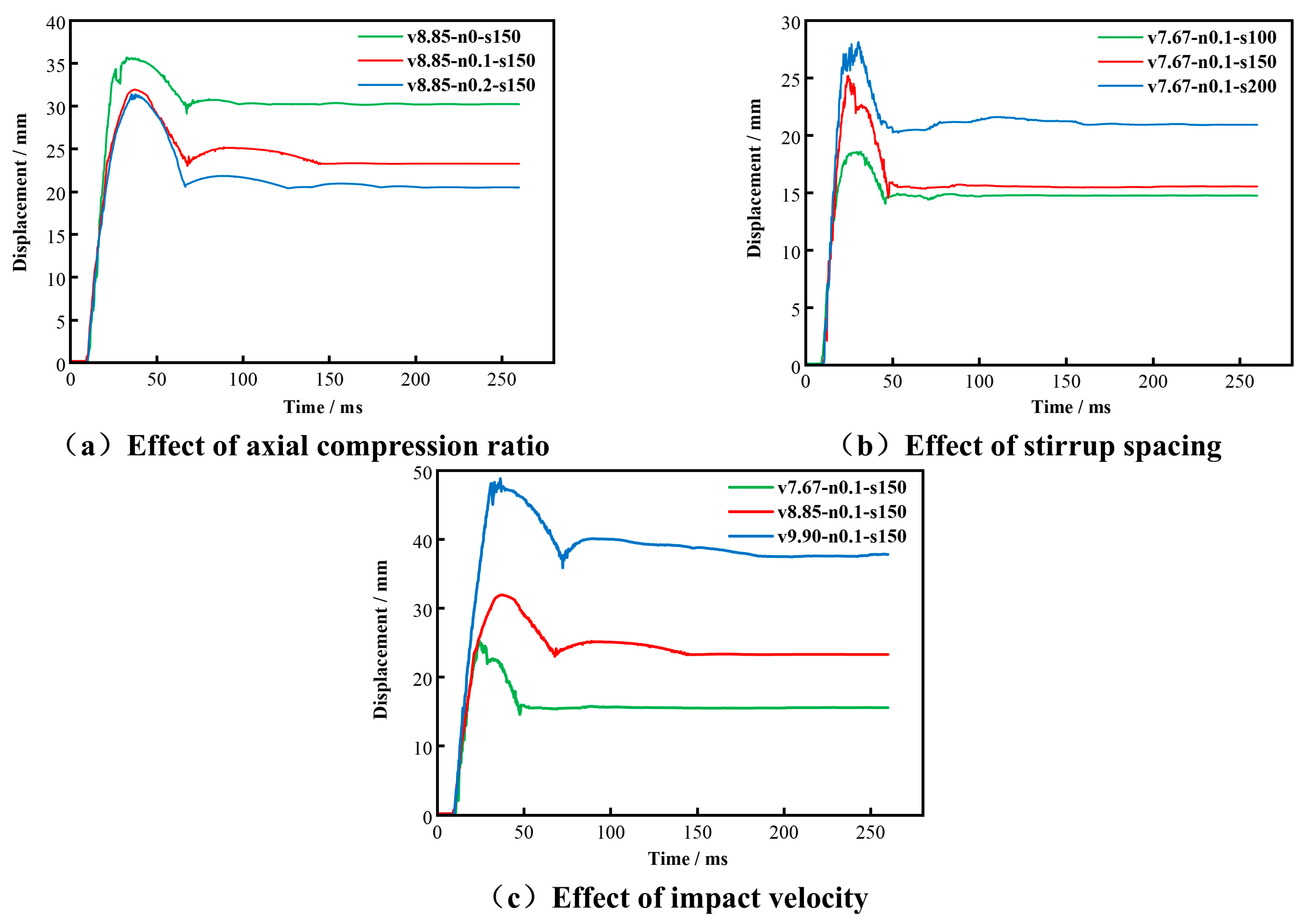
Within the investigated range (n ≤ 0.2), the axial compression ratio had a pronounced effect on the lateral impact response of the L-shaped SRC columns. The main consequences were higher resistance, lower deformation demand, and more localized damage.
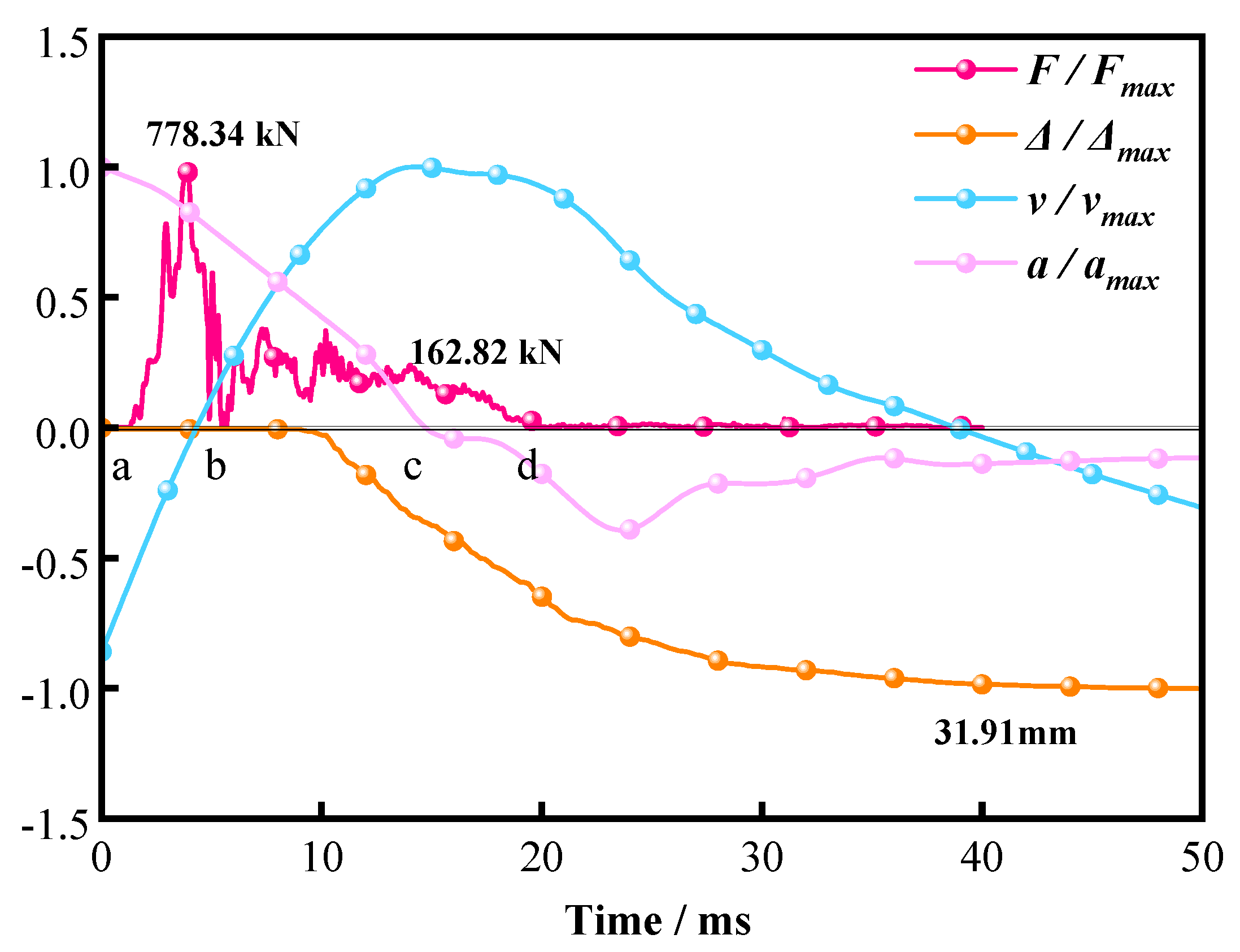
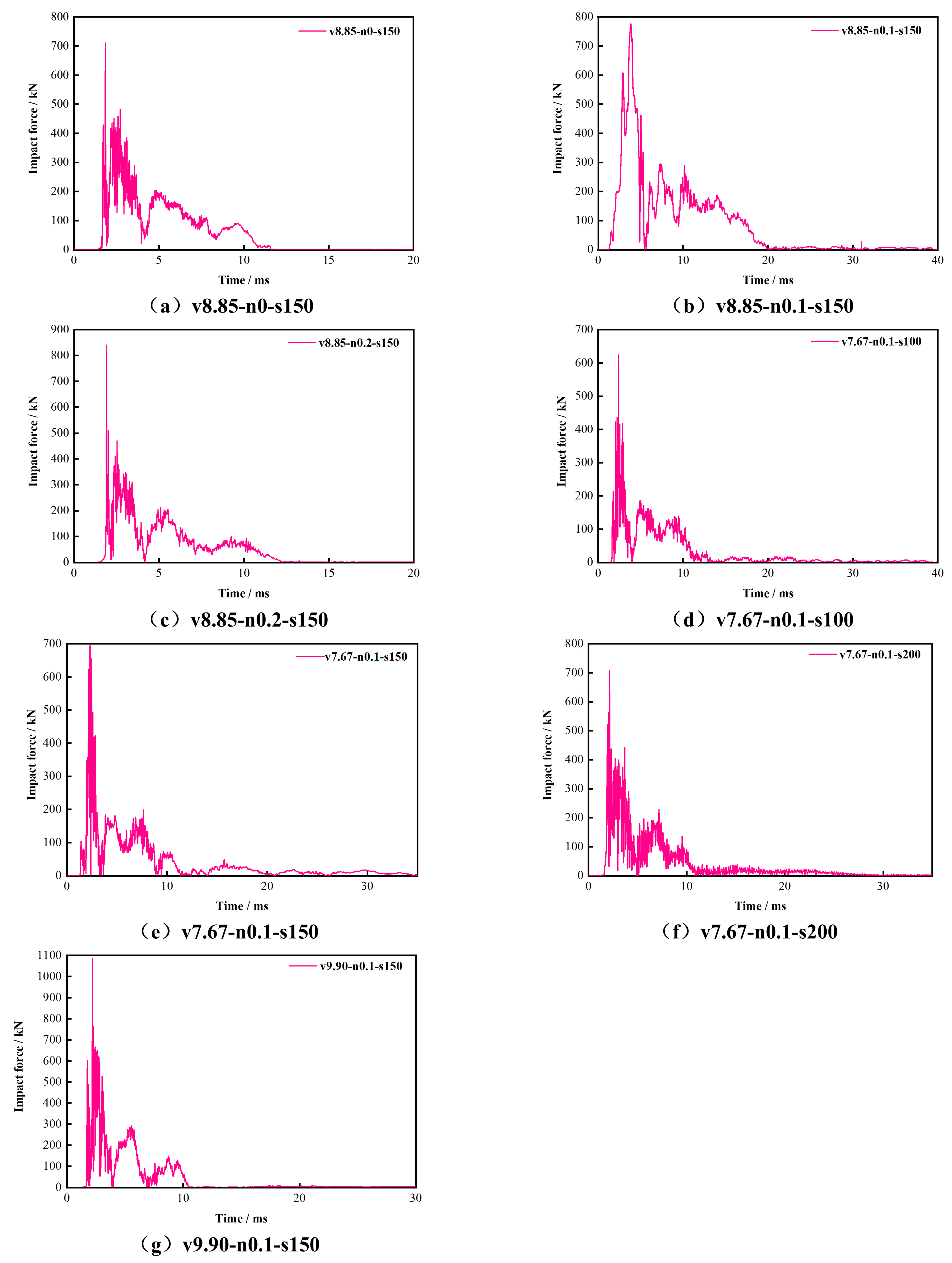
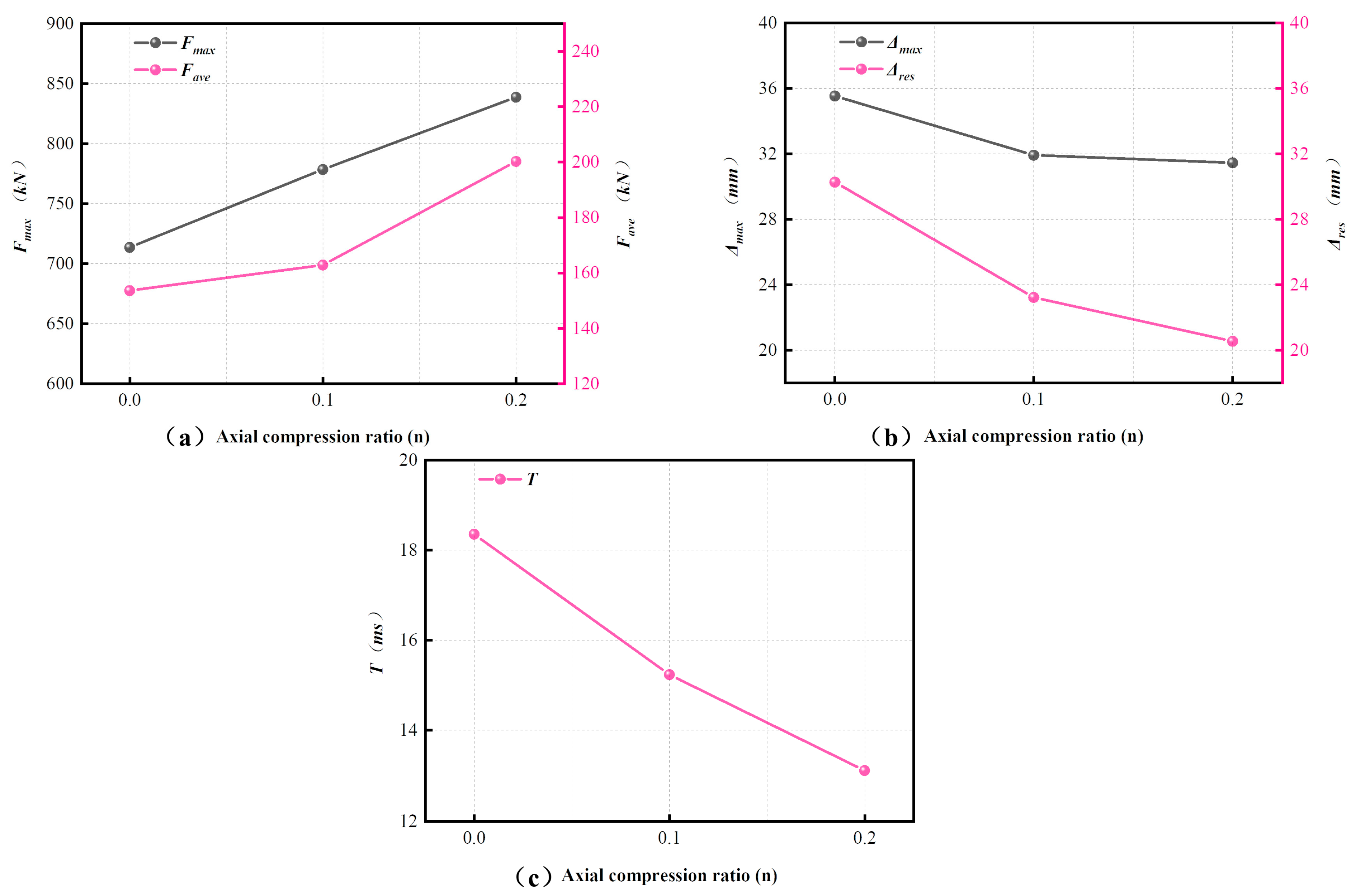
When n increased from 0 to 0.2, the resistance capacity increased substantially. The peak impact force
rose from 713.49 kN to 838.62 kN (17.5%), and the average plateau force
increased from 153.54 kN to 200.19 kN (30.4%). By contrast, the deformation response was reduced. The maximum mid-span displacement
decreased from 35.52 mm to 31.44 mm (11.5%), while the residual displacement
decreased more markedly from 30.26 mm to 20.54 mm (32.1%). The impact duration (T) also shortened from 18.35 ms to 13.10 ms (28.6%). These changes are consistent with the damage observations in
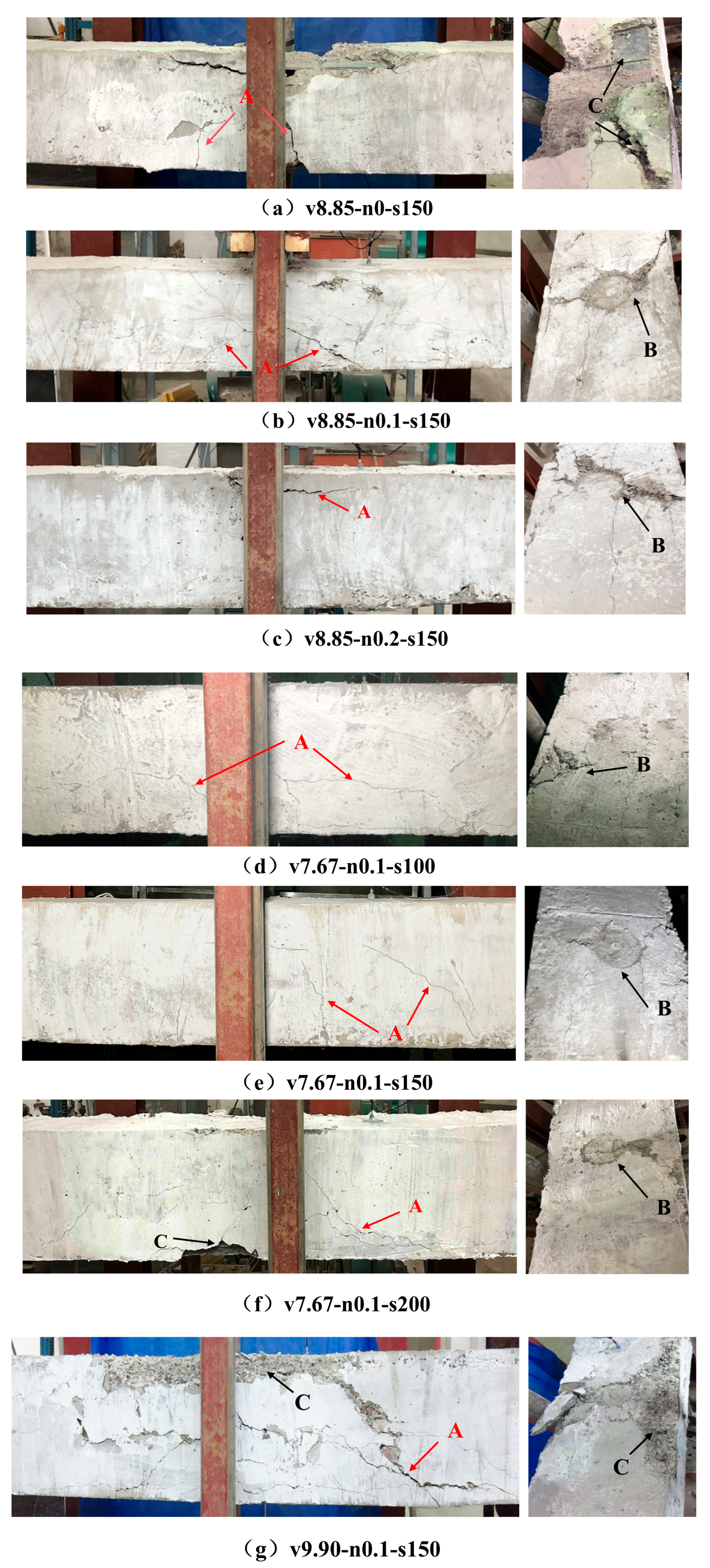
Section 3.1, where higher axial compression ratios suppressed crack propagation and reduced concrete spalling.
This behavior is broadly consistent with earlier impact studies on RC and SRC columns [
10,
11,
33], which likewise showed that moderate axial compression can enhance impact resistance while limiting lateral deformation. A more detailed section-type comparison with previously reported T-shaped and cruciform SRC columns is given in
Section 4.6.
Mechanically, axial pre-compression enhances section-level confinement and stabilizes force transfer between steel and concrete, allowing resistance to be mobilized earlier in the impact event. It also restrains diagonal flexural–shear cracking, thereby confining damage more closely to the impact region and the steel–concrete interface. The accompanying increase in energy absorption ratio further indicates improved internal coordination between the steel skeleton and the surrounding concrete.
This beneficial effect should, however, be interpreted only within the investigated range. With increasing lateral displacement, the applied axial load can magnify the impact-induced bending moment through P–Δ effects, thereby reducing the residual stability margin. Comparable stiffness- and stability-related behaviour has been reported in analytical and numerical studies of slender concrete columns, in which flexural rigidity controls deformation growth and the onset of instability under combined axial and lateral actions [
39]. Although those studies were not performed under impact loading, they still help contextualize the present observations. Moreover, under severe impact, pronounced local crushing and concrete spalling were observed, indicating that any beneficial effect of axial compression must be evaluated together with the stability constraints that become increasingly significant at larger lateral deformations.
4.2. Dominant Role of Impact Velocity
Impact velocity was the dominant parameter governing the lateral impact response of the present L-shaped SRC columns, primarily because it directly determined the kinetic energy input of the drop hammer. Within the investigated range, increasing v led to clear and systematic increases in force response, deformation demand, and impact duration.
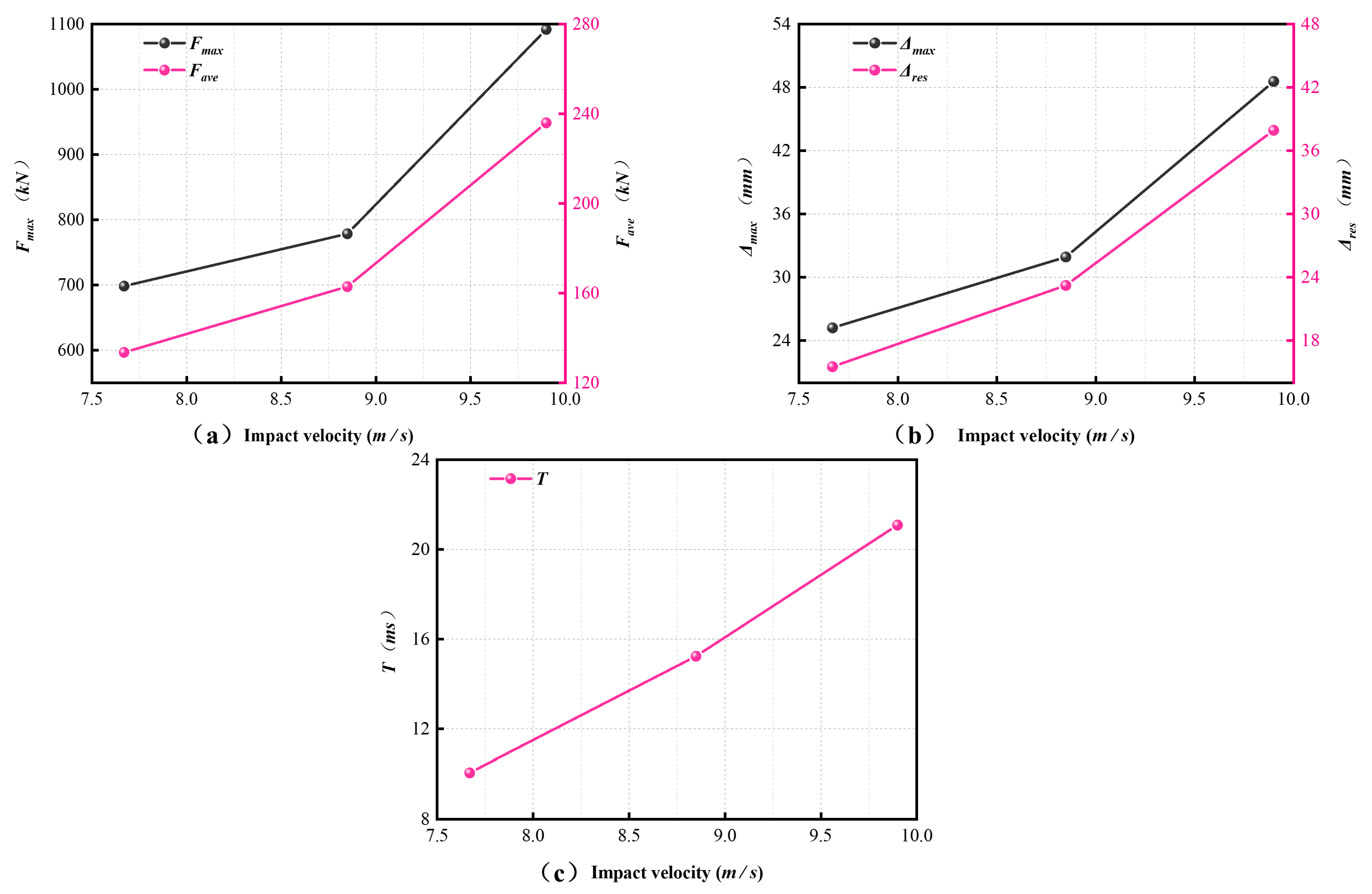
As v increased from 7.67 m/s to 9.90 m/s, the peak impact force (Fmax) increased by 56.3%, and the average plateau force (Fave) increased by 76.6%. The impact duration (T) increased by 110.0%. The corresponding deformation response was even more sensitive: the maximum mid-span displacement (Δmax) increased by 92.6%, while the residual displacement (Δres) increased by 144.3%. These results are consistent with the damage observations in
Section 3.1, where higher impact velocities produced deeper local crushing, more extensive concrete spalling, and wider crack propagation.
These trends are broadly consistent with previous studies on RC, SRC, and steel–concrete composite members under lateral impact [
9,
10,
11,
30,
33]. A more detailed quantitative comparison with previously reported T-shaped and cruciform SRC columns is presented in
Section 4.6.
In addition to the increase in impact energy, strain-rate effects in concrete and steel may also have contributed to the response at higher impact velocities. Under impact loading, rate-dependent increases in apparent material strength and stiffness may influence peak force development, local crushing, and energy dissipation. Since local strain rates were not measured directly in the present tests, this effect cannot be quantified separately and is therefore discussed here only as a plausible physical contribution rather than as a calibrated rate-dependent mechanism.
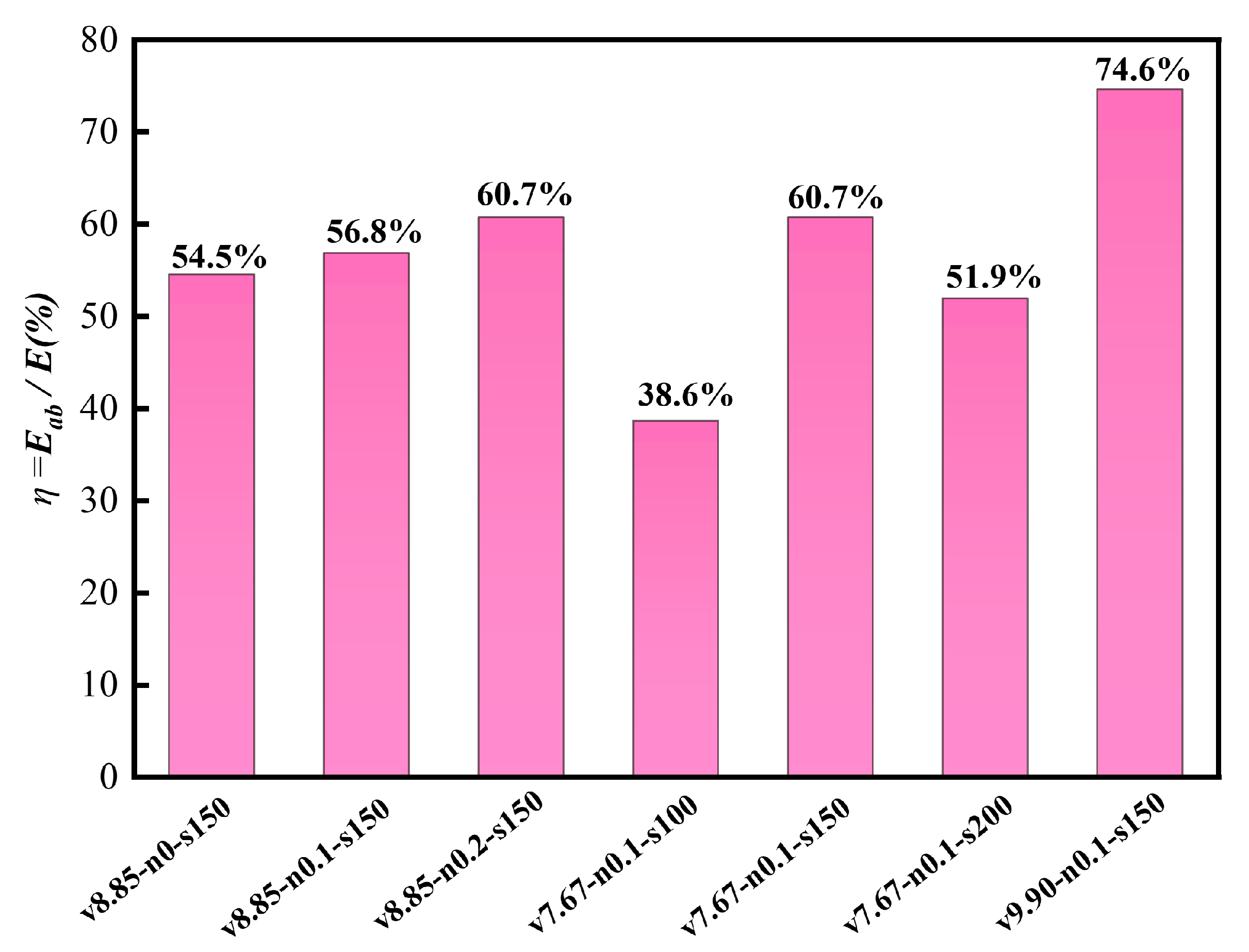
Despite the more severe local damage observed at higher impact velocities, the energy absorption ratio (η) also increased. For specimen v9.90–n0.1–s150, η reached 74.6%, while the absorbed energy (Eab) increased from 6.06 kJ to 12.38 kJ as v rose from 7.67 m/s to 9.90 m/s. Post-test observations further showed that even when concrete crushing and spalling exposed part of the embedded steel, the built-in L-shaped steel section did not exhibit global buckling, and the specimens retained overall stability. This suggests that the internal steel skeleton continued to provide load-path continuity after local concrete degradation, thereby enabling substantial energy dissipation even under high-velocity impact.
Overall, within the investigated range, impact velocity was the most influential parameter controlling response severity under lateral impact.
4.3. Influence of Stirrup Spacing on Deformation and Energy Dissipation
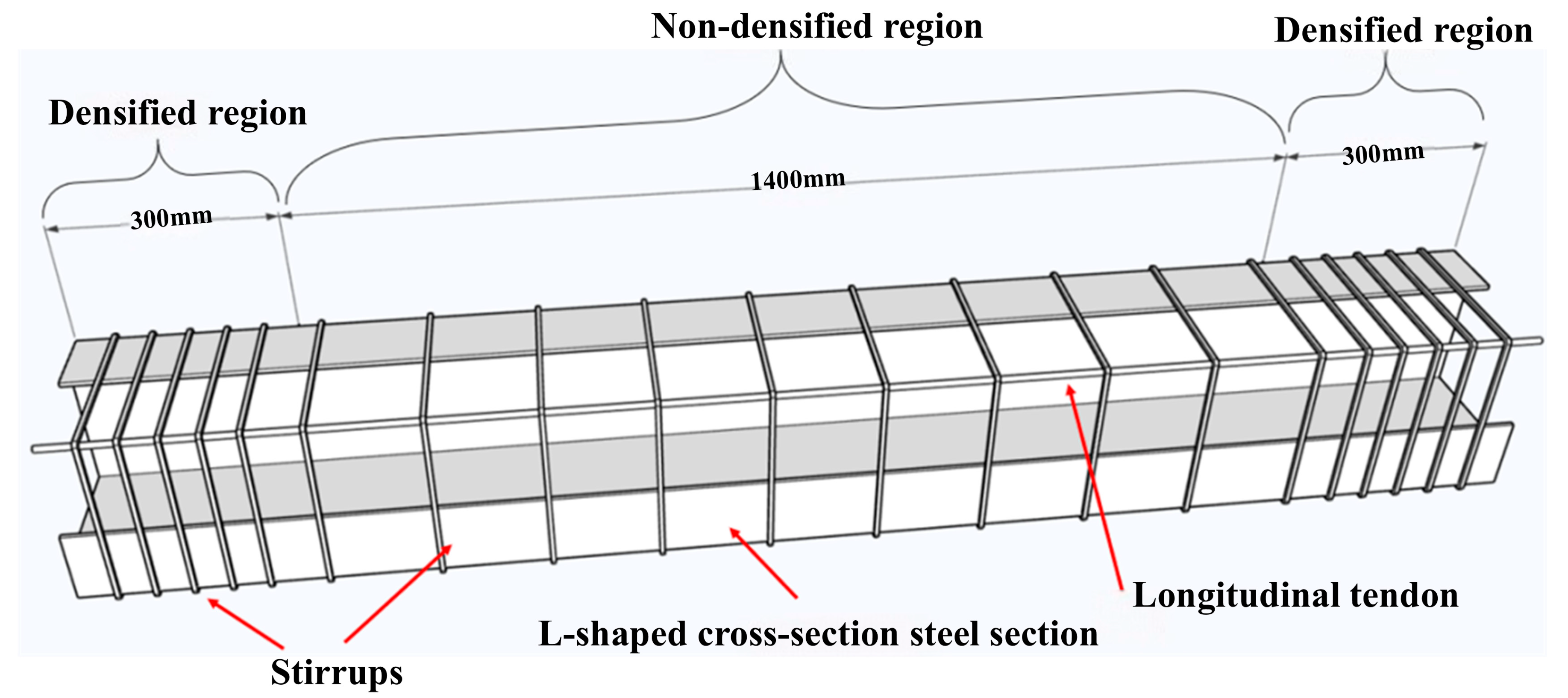
Stirrup spacing s had a clear influence on the impact response of the L-shaped SRC columns because it governed the level of transverse confinement in the non-densified region. Within the investigated range, this effect was distinctly non-monotonic. The main consequences were a modest variation in peak resistance, a stronger sensitivity of deformation demand, and a non-monotonic change in energy absorption efficiency.
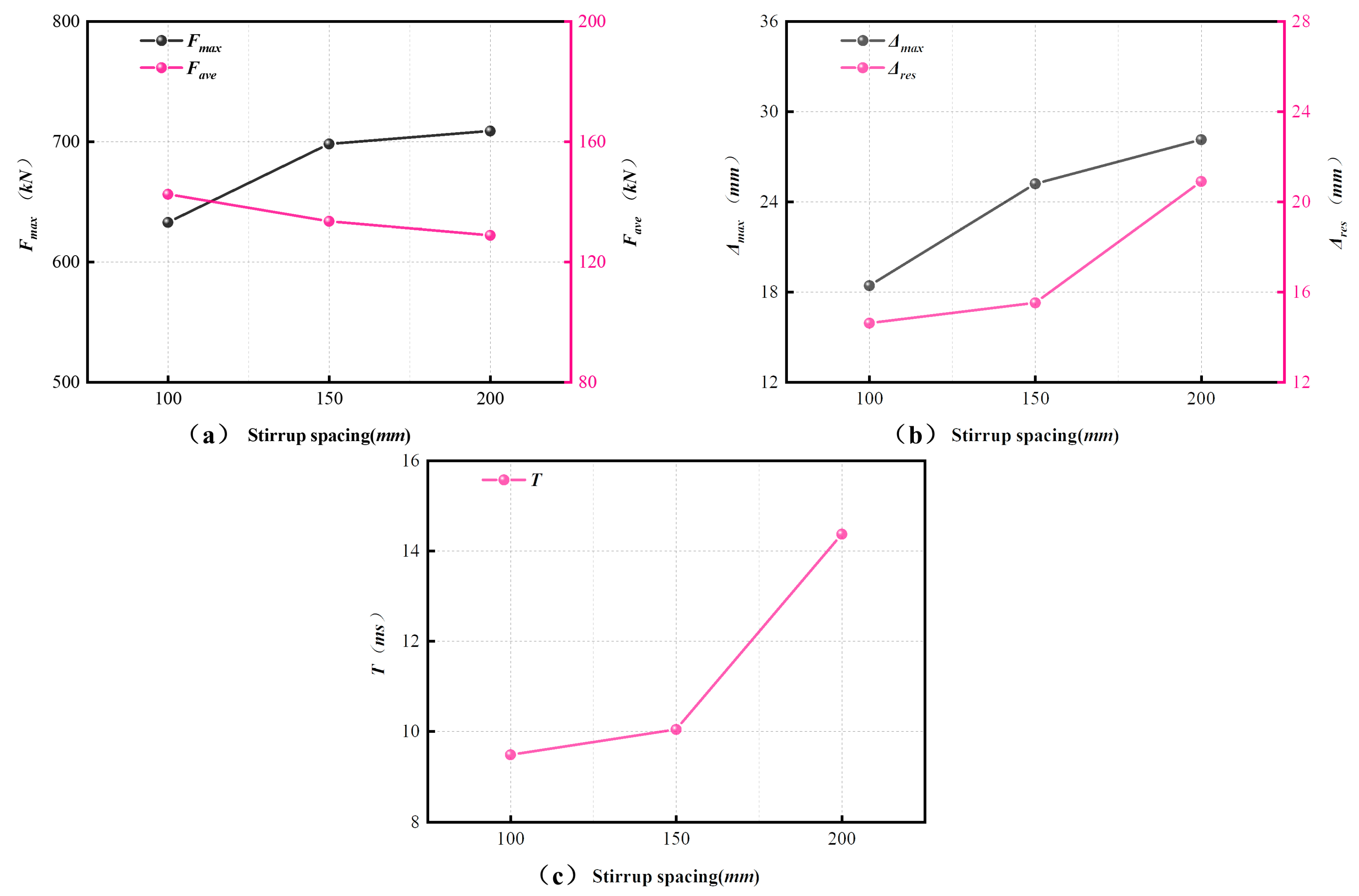
As s increased from 100 mm to 200 mm, the peak impact force (Fmax) increased from 632.86 kN to 708.85 kN, corresponding to a rise of 12.0%. By contrast, the average plateau force (Fave) remained within a relatively narrow range but decreased slightly overall, from 142.51 kN at s = 100 mm to 128.83 kN at s = 200 mm. This difference indicates that stirrup spacing had a limited effect on the instantaneous peak response but a more noticeable influence on the sustained resistance developed during the impact process.
The deformation response was considerably more sensitive to stirrup spacing. When s increased from 100 mm to 200 mm, the maximum displacement (Δmax) increased from 18.42 mm to 28.13 mm (52.7%), while the residual displacement (Δres) increased from 14.62 mm to 20.90 mm (42.9%). These changes are consistent with the damage observations in
Section 3.1, where wider stirrup spacing was associated with more extensive crack development and a larger damaged zone.
The variation in energy absorption ratio (η) was also non-monotonic. The highest value (60.7%) was recorded at s = 150 mm, whereas the specimen with the smallest spacing (s = 100 mm) showed a substantially lower value (38.6%). The specimen with the widest spacing (s = 200 mm) gave an intermediate value (51.9%), confirming that neither the densest nor the widest transverse reinforcement arrangement produced the most favorable overall response. Instead, the intermediate spacing provided a better balance among resistance, deformation control, and energy dissipation within the tested range.
A broadly similar role of transverse confinement has been reported in earlier impact studies on RC and SRC columns [
9,
33]. Reduced stirrup spacing generally improves crack control and preserves member integrity, whereas larger spacing leads to greater deformation demand and more extensive damage. A more detailed quantitative comparison with previously reported T-shaped and cruciform SRC columns is presented in
Section 4.6.
Within the investigated range, s = 150 mm provided the most balanced overall response among the tested cases, rather than a definitive optimum. The corresponding normalized trend of η is discussed further in
Section 4.4.
4.4. Quantification of Parametric Trends and Strain-Rate-Related Interpretation
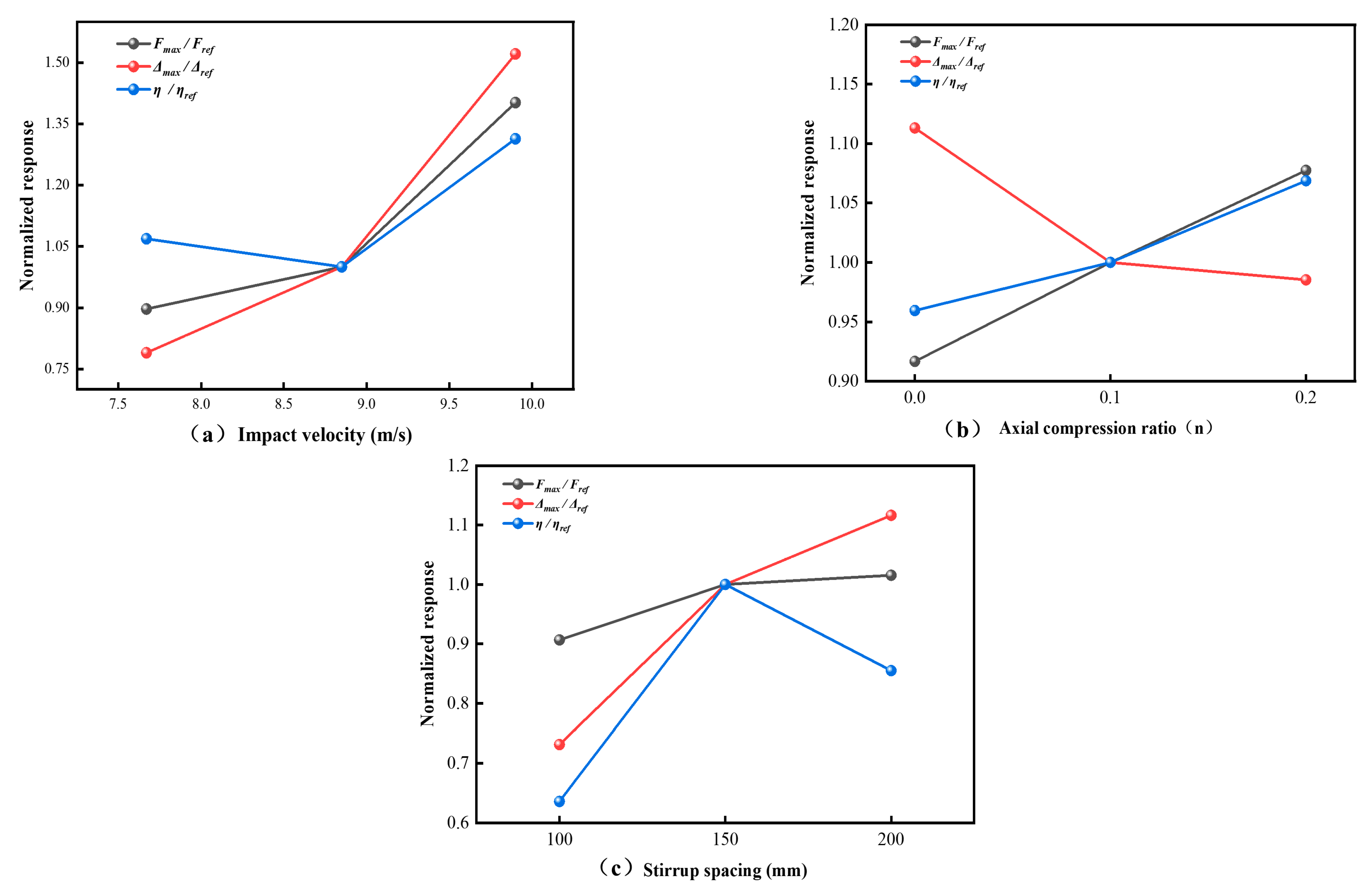
To move beyond purely descriptive comparison, the effects of the three governing parameters were further expressed in normalized form using three key response indices, namely the peak impact force Fmax, the maximum displacement Δmax, and the energy absorption ratio η. For the impact-velocity and axial-compression-ratio groups, specimen v8.85–n0.1–s150 was taken as the reference. For the stirrup-spacing group, specimen v7.67–n0.1–s150 was used as the reference, since this group was tested under a constant impact velocity (v = 7.67 m/s) and axial compression ratio (n = 0.1). The estimated response may be written as
where
R is the response quantity,
Rref is the corresponding value of the reference specimen, and
ϕx(
x) is a normalized correction function associated with the varying parameter x (v, n, or s). In the present study,
ϕx(
x) was represented by low-order fitting within each controlled comparison group, and the corresponding fitted expressions are summarized in
Appendix A.
Figure 15 summarizes the resulting normalized trends for Fmax, Δmax, and η under different parameter variations. Increasing impact velocity led to clear increases in normalized Fmax and normalized Δmax. Over the tested velocity range, Δmax increased by 92.6%, compared with 56.3% for Fmax, indicating that deformation demand was more sensitive to impact velocity than peak resistance. The normalized η values likewise reached their highest level at the largest impact velocity. Among the three indices, Δmax showed the strongest sensitivity to impact velocity.
The influence of impact velocity should also be interpreted in relation to strain-rate sensitivity. A characteristic member-level strain-rate scale may be estimated as
, giving an order of magnitude of approximately 4–5 s
−1 for the present tests based on
–9.90 m/s and
. This estimate is intended only to indicate the overall loading-rate level of the member, rather than a directly measured local material strain rate. Within this range, established dynamic increase factor (DIF) models suggest that both concrete and steel may exhibit non-negligible rate-dependent strength enhancement under impact loading [
40,
41,
42]. Similar lateral-impact studies on SRC columns have also reported peak strain-rate levels on the order of 10–15 s
−1 in reinforcing steel and embedded steel sections under comparable impact conditions [
43]. This local level exceeds the present member-scale estimate, which is reasonable because strain-rate concentration is expected in the plastic hinge region. The observed velocity effect should therefore be understood as the combined result of increasing input energy and rate-related material enhancement, rather than as a pure energy-input effect alone. Since local strain rates were not measured directly, this interpretation should be regarded as approximate.
Increasing axial compression ratio was associated with a moderate increase in normalized Fmax and η, while normalized Δmax decreased slightly. By contrast, the effect of stirrup spacing was non-monotonic. To describe this feature more explicitly, the normalized energy absorption ratio in the stirrup-spacing group was approximated by the following quadratic relation:
where
X = 0 corresponds to
s = 150 mm. This relation captures the non-monotonic trend observed at the three tested spacing levels within the investigated range. The corresponding fitted expressions for normalized Fmax and Δmax, together with those for the other parameter groups, are summarized in
Appendix A.
These normalized results further indicate that stirrup spacing governs a trade-off among resistance, deformation control, and energy dissipation. Within the investigated range, s = 150 mm provided the most balanced overall response among the tested cases rather than a definitive optimum. Overall, the present normalization framework provides a quantitative basis for comparing the relative influence of the three governing parameters and for supporting preliminary within-range interpretation. It should not, however, be treated as a standalone predictive model for design, particularly in view of the limited specimen matrix and the absence of repeated tests.
4.5. Simplified Mechanical Interpretation of Impact Resistance and Energy Dissipation
To clarify the observed response, the lateral impact behavior of the present L-shaped SRC columns is interpreted through a simplified force-transfer and energy-dissipation framework. At the sectional level, the residual resistance may be conceptually expressed as
where
Mc,
Mrs, and
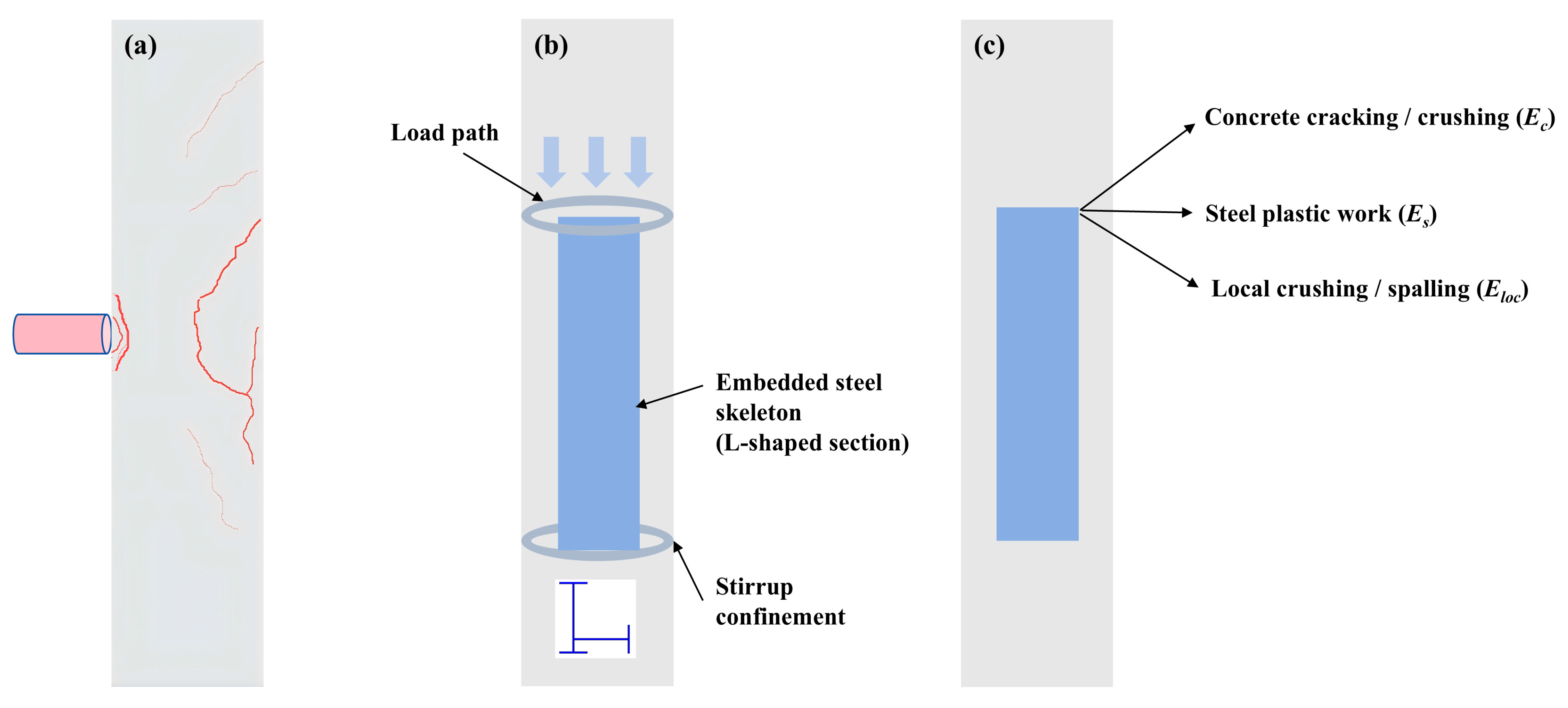
Mss denote the respective contributions of the concrete, the reinforcing steel, and the embedded steel section to the coupled flexural-shear resistance of the section. Equation (9) is introduced only to distinguish the relative roles of the constituent components and is not intended as a predictive capacity model. At the onset of impact, these components act together to resist the imposed demand. As cracking, crushing, and local spalling progressively develop in the surrounding concrete, the concrete contribution diminishes. By contrast, the embedded steel section and the longitudinal reinforcement continue to preserve the internal load path. This retained load path helps explain why severe local damage did not trigger global collapse in the present tests. The conceptual basis of this interpretation is illustrated in
Figure 16, in which the damage pattern and retained load path are shown in
Figure 16a,b, while the principal energy dissipation pathways are summarized in
Figure 16c.
The effect of stirrup spacing may also be interpreted in terms of confinement efficiency. In simplified form, the confinement level may be represented by the transverse reinforcement index
where
sv is the volumetric stirrup ratio,
fyv is the stirrup yield strength, and
fc is the concrete compressive strength. This index is used here only to indicate the relative confinement level provided by the stirrups, rather than as a calibrated design parameter. Since
, the confinement efficiency decreases as the stirrup spacing s increases. Reduced confinement promotes crack localization, accelerates deterioration of the concrete core, and increases residual deformation. This interpretation is consistent with the displacement response observed in the present tests and also helps explain the non-monotonic variation in energy absorption efficiency discussed in
Section 4.4. Within the investigated range, the intermediate spacing level (s = 150 mm) provided the most balanced overall response among the tested cases rather than representing a definitive optimum.
As defined in Equation (5), the absorbed energy Eab may be interpreted in terms of three main dissipation pathways: energy dissipated through concrete cracking and crushing (Ec), plastic work in the reinforcing bars and the embedded steel section (Es), and local contact-related dissipation near the impact zone (Eloc), including local crushing and spalling. In the present specimens, concrete mainly provided local bearing and confinement during the initial stage of impact. As concrete damage accumulated, the steel skeleton carried an increasing share of the post-damage resistance. The overall response may therefore be understood as a progressive shift in both load-carrying responsibility and energy dissipation, from a concrete-dominated stage to a steel-sustained stage.
This treatment remains a simplified mechanical interpretation rather than a calibrated analytical model. Even so, it provides a clearer basis for discussing load-path continuity, confinement efficiency, and the main energy dissipation pathways in L-shaped SRC columns under lateral impact.
4.6. Quantitative Benchmarking Against Previously Reported SRC Impact Tests
To place the present results in a broader context, a quantitative benchmarking analysis was conducted against previously reported lateral impact tests on T-shaped and cruciform SRC columns. Across the three studies, the specimens were designed as 1:2 scaled SRC columns with a 300 × 300 mm section and a member length of 2000 mm, and the main variables were defined in terms of impact velocity, axial compression ratio, and stirrup spacing. This provides a consistent basis for comparing the influence of section type.
Table 5 summarizes the sensitivity of the main response indices under matched loading conditions.
Under the matched velocity case (v = 7.67 → 9.90 m/s, n = 0.1, s = 150 mm), the increase in maximum displacement was 92.6% for the L-shaped columns, compared with 80.2% for the T-shaped columns and 88.0% for the cruciform columns. More notably, the increase in residual-like displacement was 144.3% for the L-shaped columns, versus 107.3% and 94.7% for the T-shaped and cruciform columns, respectively. This indicates that the L-shaped section was more sensitive to irreversible deformation accumulation as impact severity increased. The corresponding increase in peak force was 56.4% for the L-shaped columns, 32.2% for the T-shaped columns, and 56.1% for the cruciform columns.
Under the matched axial-loading case (n = 0 → 0.2, v = 8.85 m/s, s = 150 mm), the reduction in residual-like displacement was 32.1% for the L-shaped columns, compared with 17.5% for the T-shaped columns and 9.9% for the cruciform columns. By contrast, the increase in peak impact force was most pronounced in the T-shaped columns (+72.1%), compared with +17.5% for the L-shaped columns and +13.1% for the cruciform columns. These results suggest that the response of SRC columns under impact is strongly section-dependent, and that the L-shaped configuration is particularly sensitive in terms of deformation accumulation and confinement-related deformation control, whereas the T-shaped configuration shows a stronger axial-load effect on peak resistance.
For the stirrup-spacing case (s = 100 → 200 mm, v = 7.67 m/s, n = 0.1), the increase in maximum displacement was 52.7% for the L-shaped columns, compared with 38.5% for the T-shaped columns and 47.9% for the cruciform columns. This again indicates that the L-shaped section was more sensitive to changes in transverse confinement. In terms of energy dissipation, the present L-shaped specimens showed an energy absorption ratio of 38.6–74.6%, while the previously reported cruciform specimens showed a comparable range of 33.2–73.9%. At the matched medium-spacing case (s = 150 mm), the L-shaped specimen had η = 60.7%, compared with 49.4% for the cruciform specimen. The T-shaped study did not report absorbed energy directly, so η is not compared for that series.
Taken together, these comparisons show that the present L-shaped SRC columns do not simply reproduce the response trends reported for previously tested asymmetric or symmetric SRC sections. Their most distinctive feature is the stronger sensitivity of residual deformation to both impact severity and confinement variation, while their energy dissipation efficiency remains at least comparable to that of previously tested cruciform SRC columns. This section-type dependence should be taken into account when assessing the impact resistance and detailing strategy of asymmetric SRC members.
4.7. Uncertainty, Scaling Considerations, and Applicability
The present findings should be interpreted in light of the limited specimen matrix and the absence of repeated tests under identical conditions. The observed differences among specimens are sufficient to support the main response trends discussed above, particularly those associated with impact velocity, axial compression ratio, and stirrup spacing. Even so, the quantitative magnitude of some differences should still be treated with caution. Because repeated tests were not available for each parameter level, formal inferential statistical analysis (e.g., confidence intervals or hypothesis testing) was not feasible. Instead, the results were treated in a descriptive statistical sense through normalized response indices, percentage changes under controlled comparison groups, and quantitative benchmarking against similar SRC impact tests reported in the literature. This limitation is particularly relevant to the non-monotonic response associated with stirrup spacing, for which the available evidence supports only a balanced-response interpretation within the investigated range, rather than a definitive optimum.
A second source of uncertainty arises from model scale. All specimens were designed as 1:2 scaled columns. This provides a practical basis for controlled impact testing, but it does not fully eliminate scale effects. Local crushing, crack development, interface interaction, and strain-rate sensitivity may not scale in a strictly proportional manner. The present results should therefore be interpreted primarily as revealing section-dependent behavioral trends and relative parameter effects, rather than as direct predictions for full-scale members. Under ideal geometric similarity, the characteristic scales of several global response quantities may be expressed in approximate form, with force, displacement, and impact energy varying with λ2, λ, and λ3, respectively, where λ is the geometric scale factor. For a gravity-driven drop-weight problem, strict similitude would in principle also require consideration of a Froude-type velocity scale, while inertia-to-stiffness effects may be viewed in relation to a Cauchy-type parameter. The present experimental program was not intended as a strict model–prototype reproduction satisfying full similitude, but rather as a comparative parametric study within a consistent model series. These basic scaling considerations therefore serve only to clarify the interpretive scope of the results, not to support direct quantitative extrapolation to prototype members.
These limitations do not undermine the significance of the experimental observations, but they do define their present scope. Within that scope, the tests provide a consistent basis for comparing the relative influence of the governing parameters and for identifying the main behavioral characteristics of L-shaped SRC columns under lateral impact. In particular, impact velocity emerged as the dominant driver of response severity, axial compression showed a beneficial but bounded effect, and stirrup spacing governed a confinement-related trade-off among resistance, deformation control, and energy dissipation.
From an engineering perspective, the present results are most useful as a basis for preliminary assessment and detailing considerations for asymmetric SRC members subjected to lateral impact. The findings suggest that transverse reinforcement should not be selected solely on the basis of maximizing confinement, and that residual deformation warrants particular attention in L-shaped SRC columns because of its pronounced sensitivity to both impact severity and confinement level. Further work should include repeated tests, expanded specimen matrices, and full-scale or multi-scale validation, together with direct strain-rate measurements and refined numerical modeling, in order to establish more general design-oriented relationships.
5. Conclusions
This study experimentally examined the effects of impact velocity (v), axial compression ratio (n), and stirrup spacing (s) in the non-densified region on the failure mode, dynamic response, and energy dissipation of L-shaped steel-reinforced concrete (SRC) columns under lateral drop-weight impact. A total of seven specimens were tested. The main conclusions are as follows.
(1) Within the investigated range, impact velocity was the dominant parameter governing the impact response. For specimens with n = 0.1 and s = 150 mm, increasing v from 7.67 m/s to 9.90 m/s increased Fmax and Fave by 56.3% and 76.6%, respectively. Over the same range, Δmax, Δres, and T increased by 92.6%, 144.3%, and 110.0%, respectively. The absorbed energy Eab increased from 6.06 kJ to 12.38 kJ, and the energy absorption ratio η increased from 60.7% to 74.6%. Higher impact velocity therefore led to greater force demand, larger deformation, more severe damage, and higher energy dissipation.
(2) Within the investigated range (n ≤ 0.2), axial compression had a beneficial effect on resistance enhancement and deformation control. Under v = 8.85 m/s ands = 150 mm, increasing n from 0 to 0.2 increased Fmax and Fave by 17.5% and 30.4%, respectively, while reducing Δmax and Δres by 11.5% and 32.1%. The impact duration T decreased by 28.6%, and η increased by about 6.2 percentage points. These results indicate that moderate axial compression improved plateau resistance and limited post-impact deformation. Under large lateral displacement, however, second-order (P–Δ) effects may become significant and should be considered in high-energy impact design.
(3) The effect of stirrup spacing was non-monotonic. For specimens with v = 7.67 m/s and n = 0.1, increasing s from 100 mm to 200 mm increased Fmax by 12.0% but reduced Fave by 9.6%. Over the same range, Δmax, Δres, and T increased by 52.7%, 42.9%, and 51.6%, respectively. The highest η (60.7%) was obtained at s = 150 mm, whereas the specimen with s = 100 mm showed the smallest deformation demand but a much lower η (38.6%). These results reflect a trade-off among resistance, deformation control, and energy dissipation. Within the investigated range, s = 150 mm provided the most balanced overall response among the tested cases, rather than representing a definitive optimum.
(4) The embedded L-shaped steel section was essential to post-impact integrity. No specimen exhibited global instability or collapse, and no global buckling of the embedded steel section was observed. Even when severe concrete crushing and spalling occurred, the steel section maintained a continuous internal load path and preserved overall member stability. The internal steel skeleton therefore remained the principal load-resisting component after significant local concrete damage.
(5) Within the investigated parameter range, the combination of moderate axial compression (n ≤ 0.2) and intermediate stirrup spacing (s = 150 mm) was associated with the most balanced performance in terms of resistance, deformation control, and energy dissipation. This observation may serve as a useful reference for the preliminary assessment and impact-resistant transverse detailing of asymmetric SRC columns under comparable axial-load conditions. Overall, the present results provide experimental support for the performance assessment and detailing optimization of L-shaped SRC members under lateral impact.
The present study was based on a limited specimen matrix. Although the selected parameter design made it possible to identify the effects of impact velocity, axial compression ratio, and stirrup spacing within the investigated range, the statistical robustness and broader applicability of the observed trends remain limited. Future work should include repeated tests, expanded specimen matrices, and validated numerical analyses to improve the reliability of the conclusions. Further studies should also address post-impact residual load-carrying capacity, longer-term durability issues such as corrosion and fatigue, and SRC members incorporating alternative or recycled cement-based materials, so that impact resistance can be assessed together with serviceability, durability, and sustainability.