Long-Term Strength Development and Microstructural Characteristics of High-Content Cemented Soil Under Seawater Exposure


Abstract
1. Introduction
2. Experimental Materials and Methods
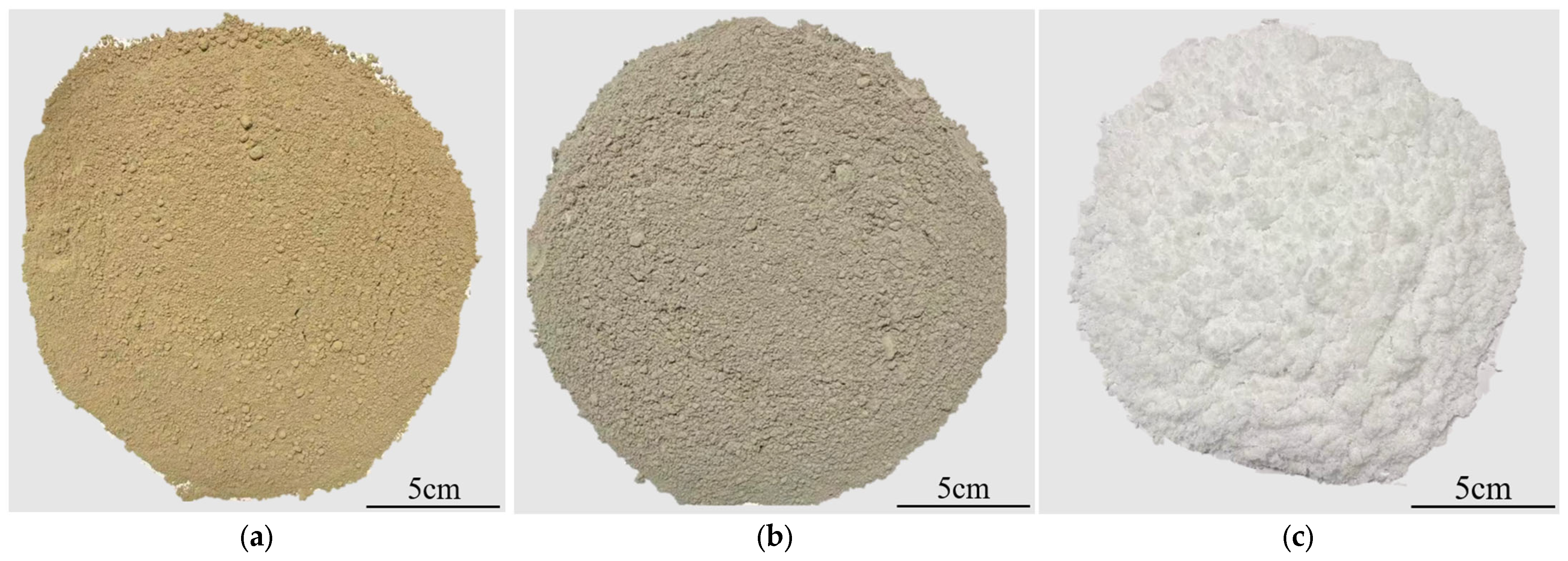
2.1. Experimental Materials
2.2. Experimental Program
2.3. Test Methods
2.3.1. UCS Test
2.3.2. Microstructural Analysis
2.4. Specimen Preparation
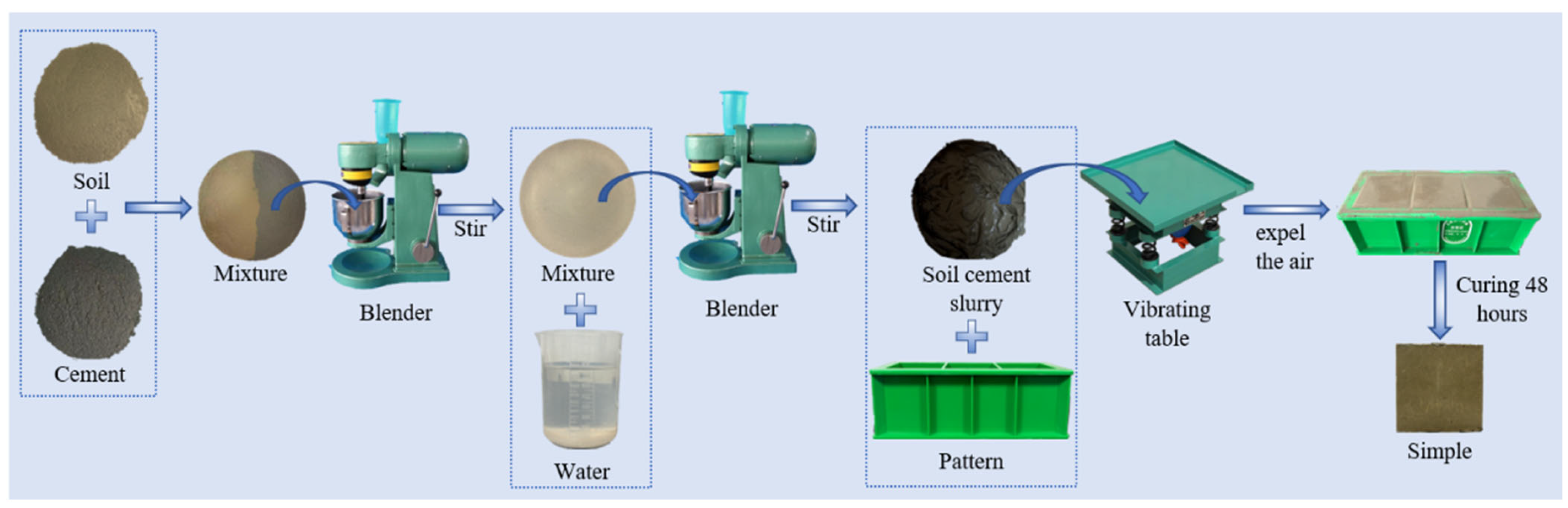
- Air-dried soil was pulverized and sieved. The resulting powder was dry-mixed with cement for 1 min to ensure homogeneity.
- The predetermined amount of water was added, followed by stirring at a low speed for 60 s and at a high speed for 30 s. To ensure uniformity, material adhering to the blades and mixer walls was scraped off between cycles; this mixing–scraping sequence was repeated three times.
- The mixture was cast into 70.7 mm × 70.7 mm × 70.7 mm cubic molds in layers and vibrated for 3–5 min to eliminate entrapped air.
- The specimen surfaces were leveled, and the molds were sealed with plastic film. Specimens were demolded after 48 h of curing at a constant temperature.
- Subsequently, specimens were immersed in their respective curing environments (freshwater or seawater) at 20 ± 2 °C for duration of 28, 60, 90, 120, 180, and 365 days. For seawater curing, the solution was refreshed every 7 days during the first 28 days and every 30 days thereafter to maintain stable ion concentrations. It should be explicitly noted that this continuous full-immersion condition with periodic solution renewal constitutes an accelerated degradation environment.
3. Experimental Results
3.1. Effect of Cement Content and Curing Ages on UCS Under Freshwater Condition
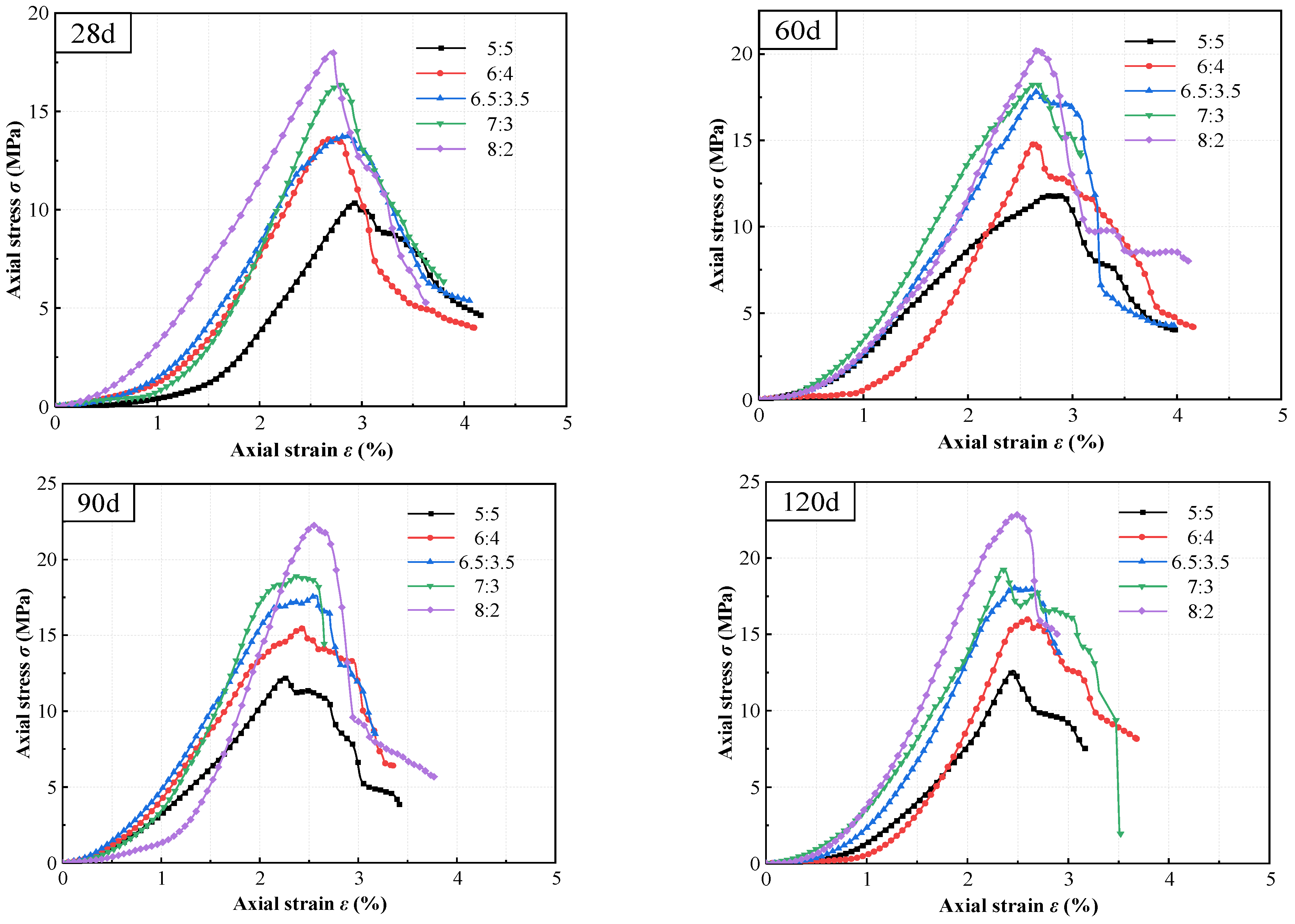
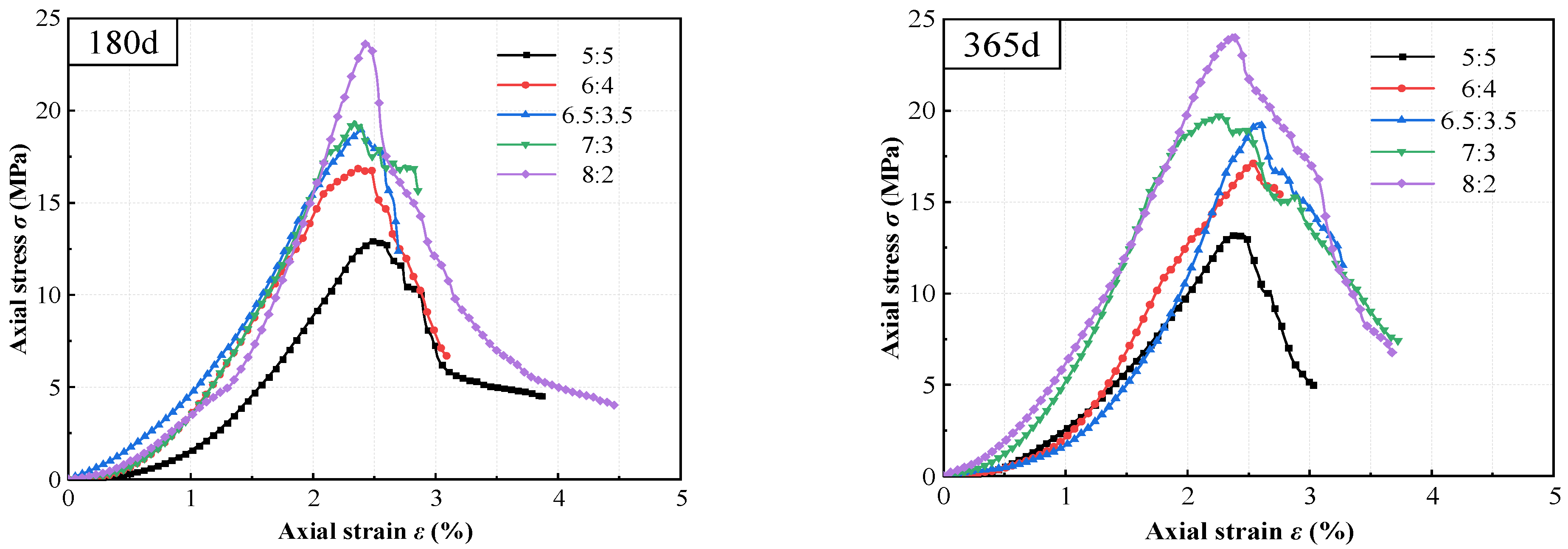
3.1.1. Stress–Strain Behavior
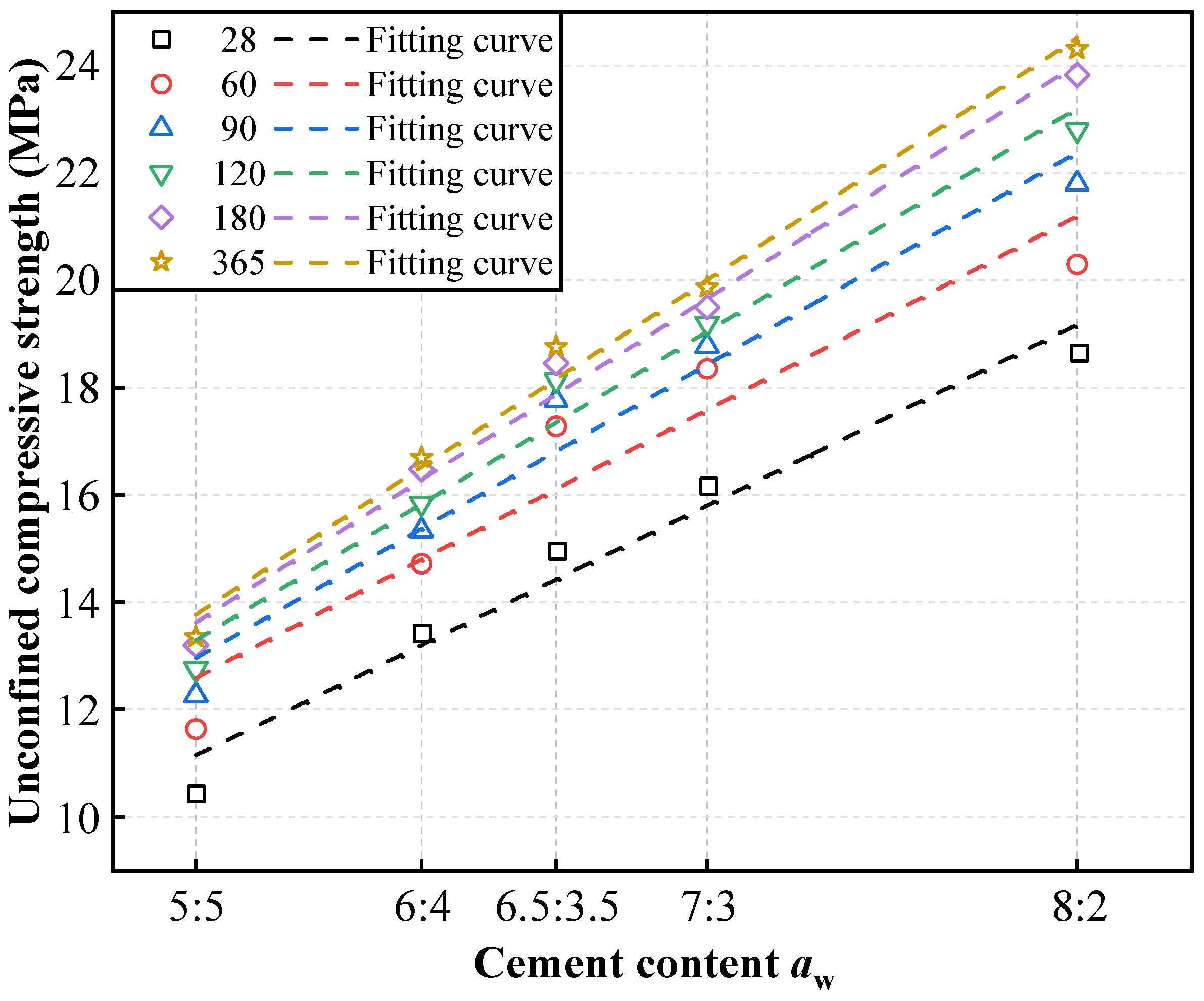
3.1.2. Peak Strength Evolution
3.2. Effect of Seawater on UCS of High-Content Cemented Soil
3.2.1. Effect on Strain–Stress Behavior: Emergence of Pseudo-Ductility
3.2.2. Effect on Peak Strength: Dual-Stage Deterioration
3.3. Microstructural Evolution of High-Content Cemented Soil Under the Influence of Seawater
3.3.1. Scanning Electron Microscope (SEM)
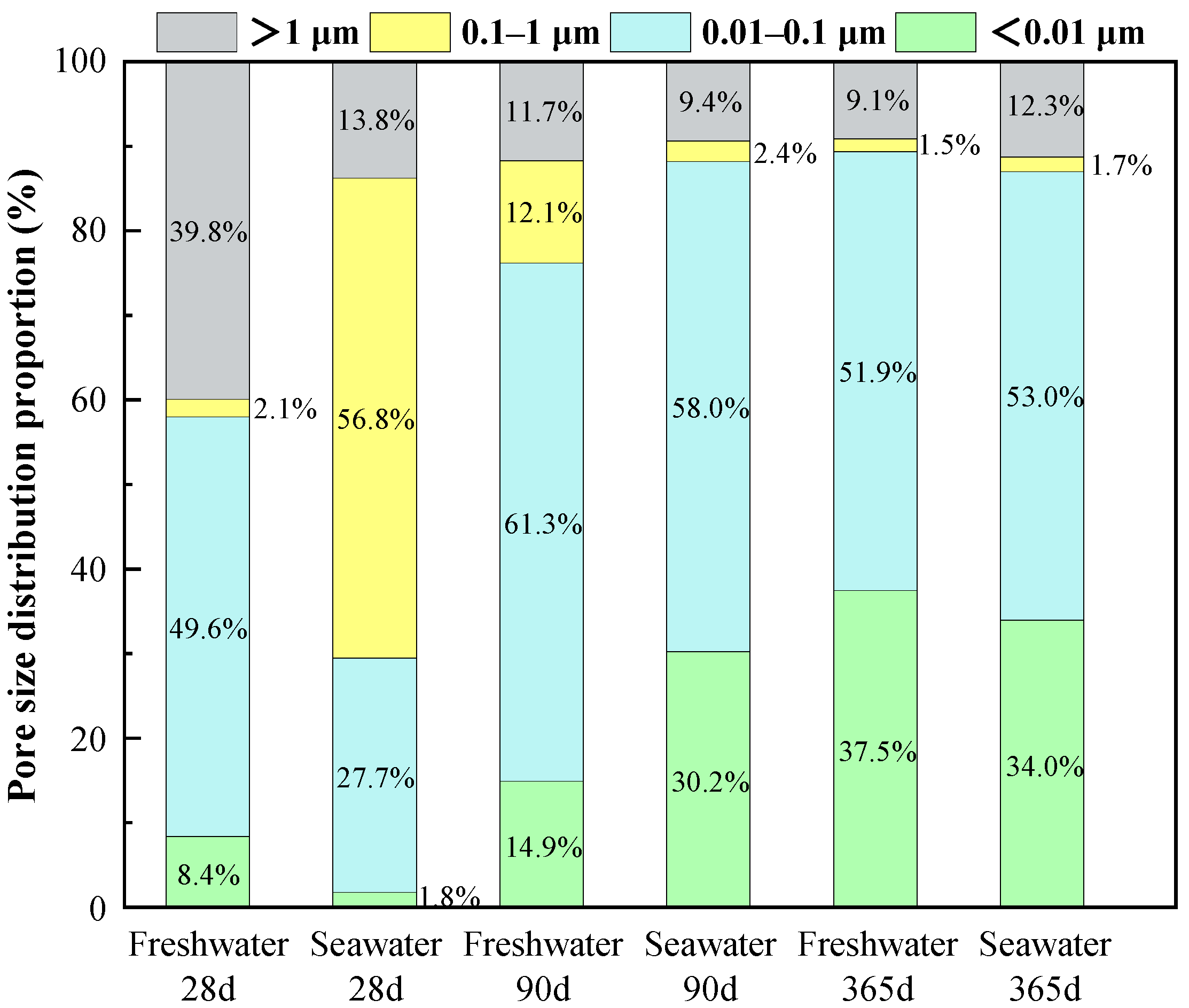
3.3.2. Mercury Intrusion Porosimetry (MIP)
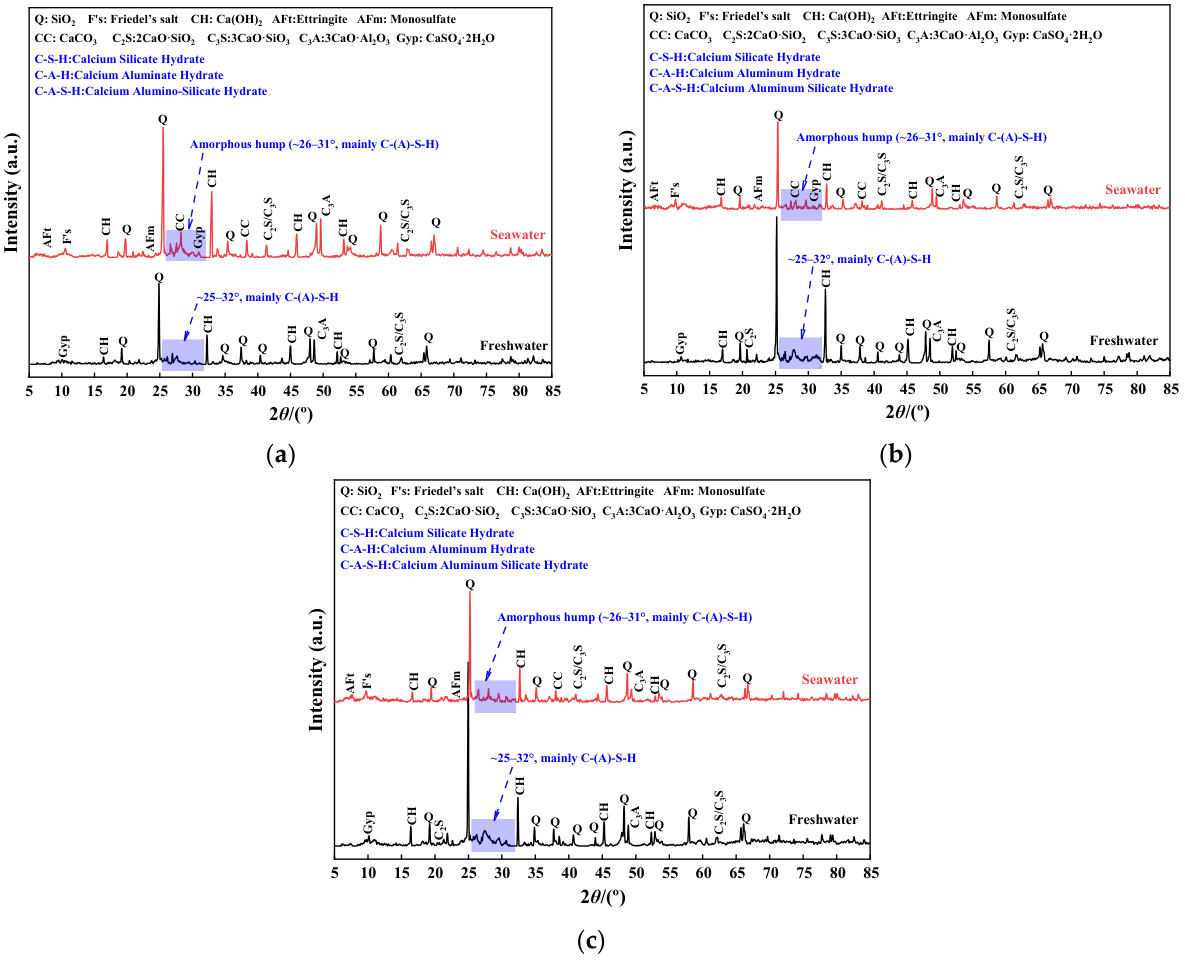
3.3.3. X-Ray Diffraction (XRD)
4. Discussion
4.1. Dominant Role of Cement Content in Governing the Theoretical Limit of Long-Term Strength
4.2. Time-Dependent Deterioration of Strength and “Pseudo-Ductility” Under Seawater Environment
4.3. The Paradox Between Pore Refinement and Strength Degradation
4.4. Comprehensive Mechanism and Engineering Implications
5. Conclusions
- (1)
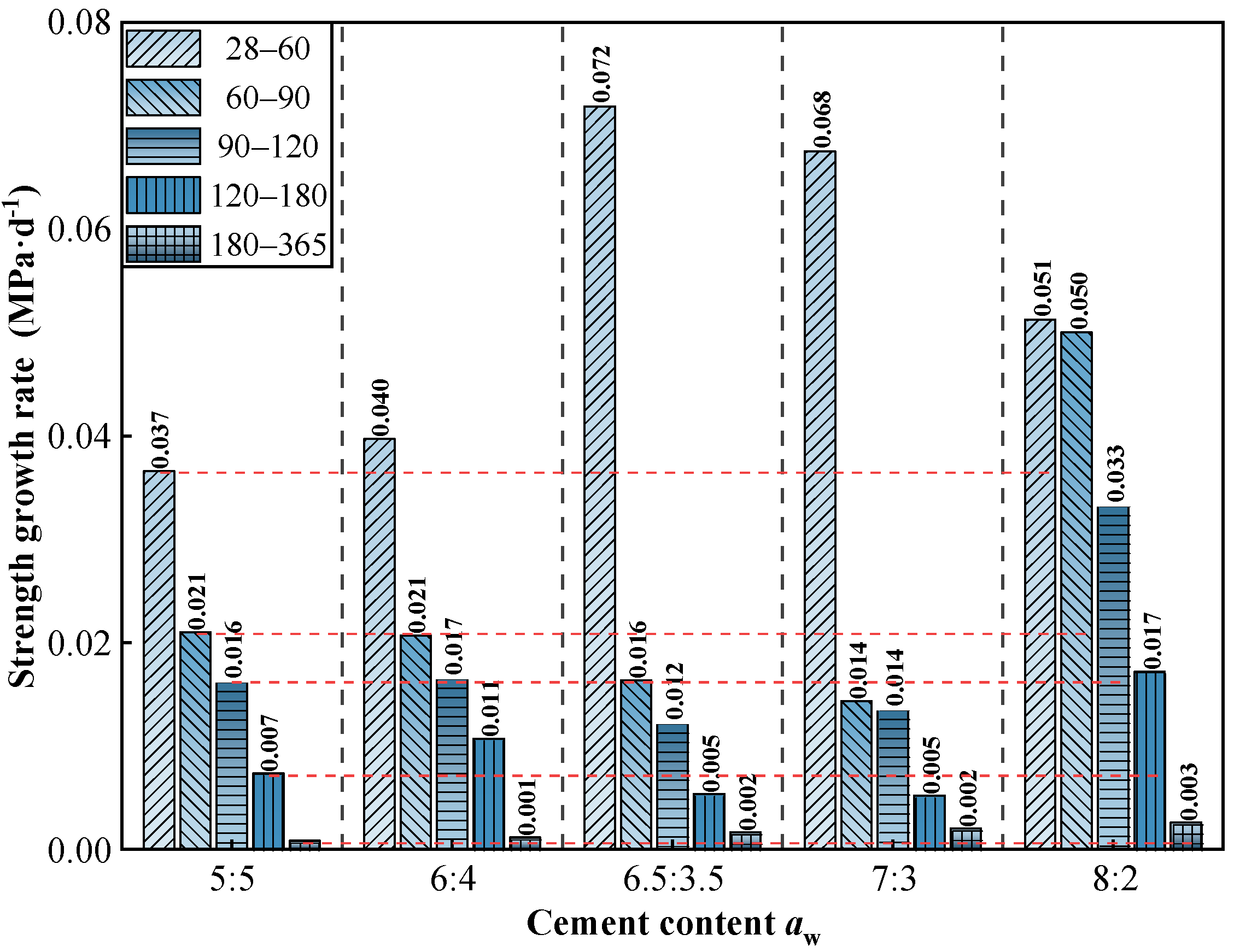
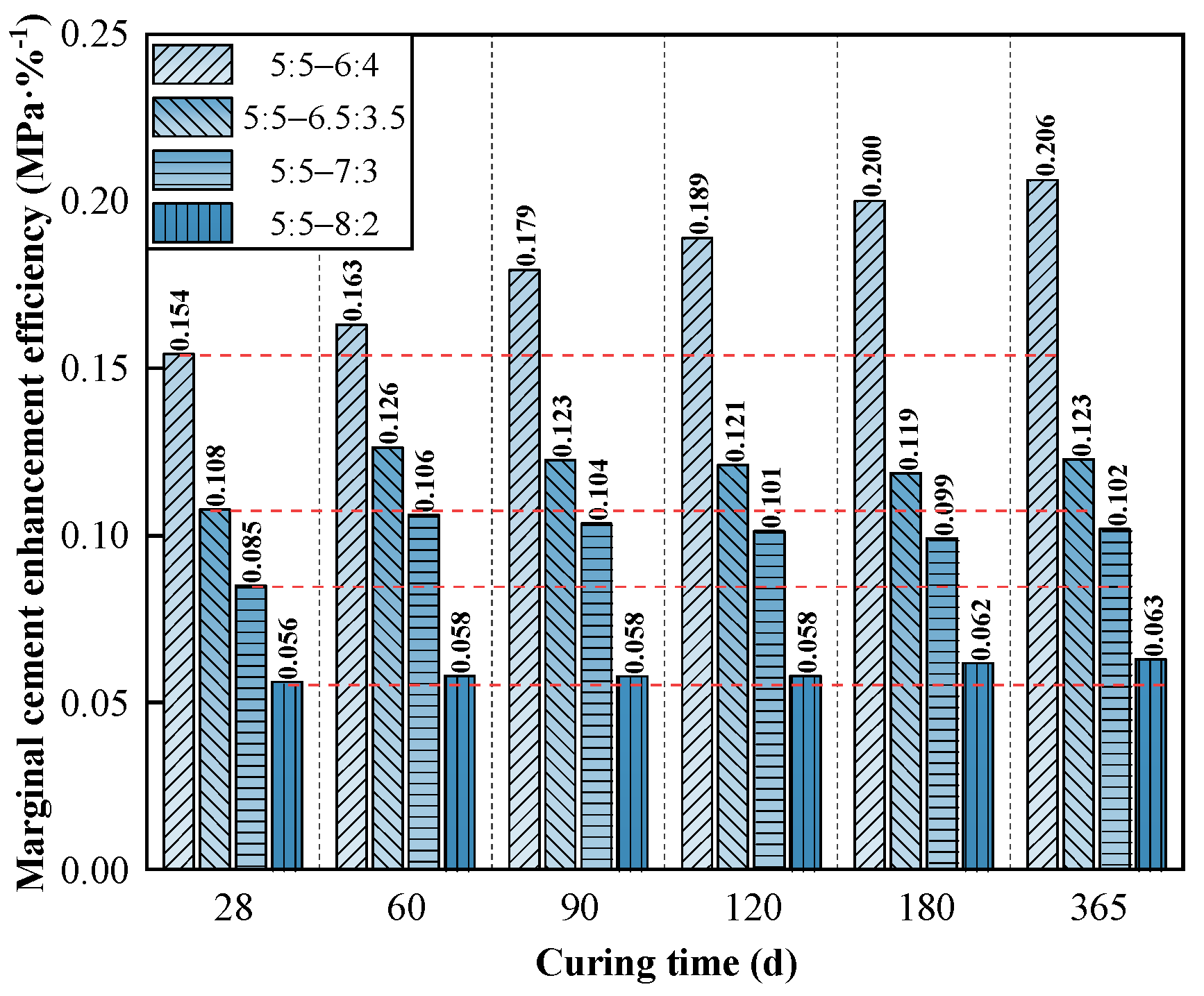
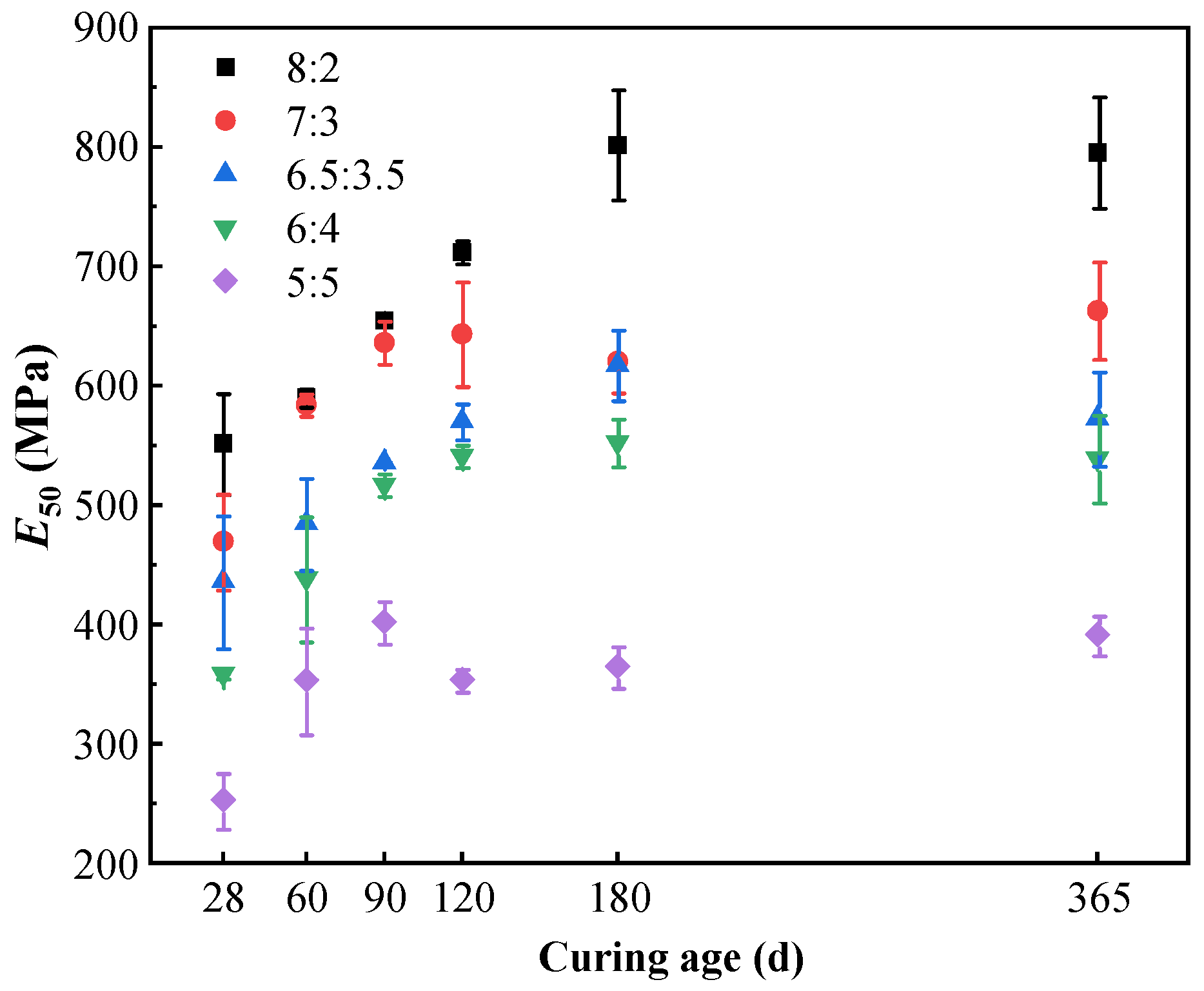
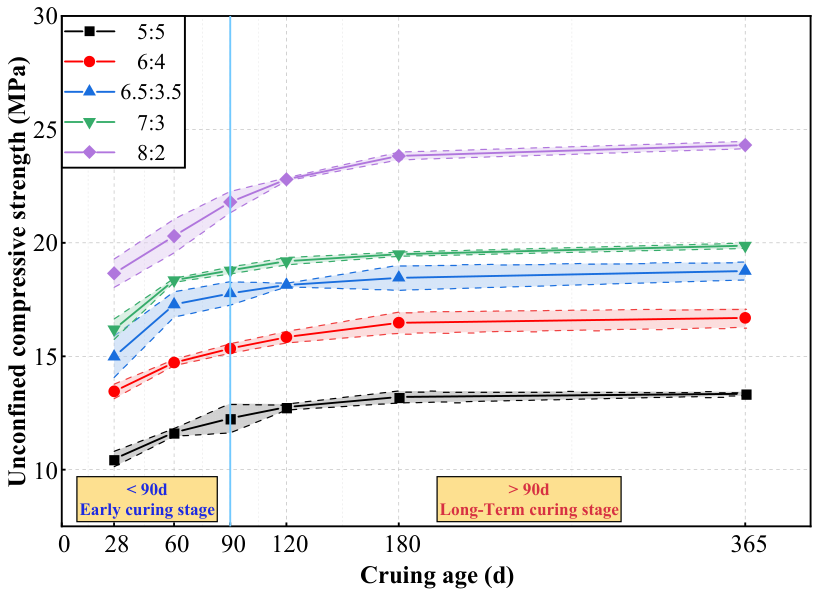
- Strength, Deformation, and Efficiency in Freshwater: Cement content directly dictates the theoretical “ceiling” of macroscopic strength, with the 8:2 mix reaching 24.31 MPa at 365 days (an 82.1% increase over the 5:5 mix). However, higher contents consistently decreased peak strain, inducing a distinctly brittle failure mode, quantitatively evidenced by a substantial surge in the deformation modulus (E50). Furthermore, analysis of the strength growth rate (RT) and marginal cement enhancement efficiency (ηc) confirmed diminishing returns for excessive binder: while the 8:2 mixture achieved the highest strength, it yielded the lowest marginal efficiency (ηc = 0.06 MPa·%−1). Consequently, the 7:3 ratio was established as the optimal baseline, effectively balancing mechanical performance and economic efficiency.
- (2)
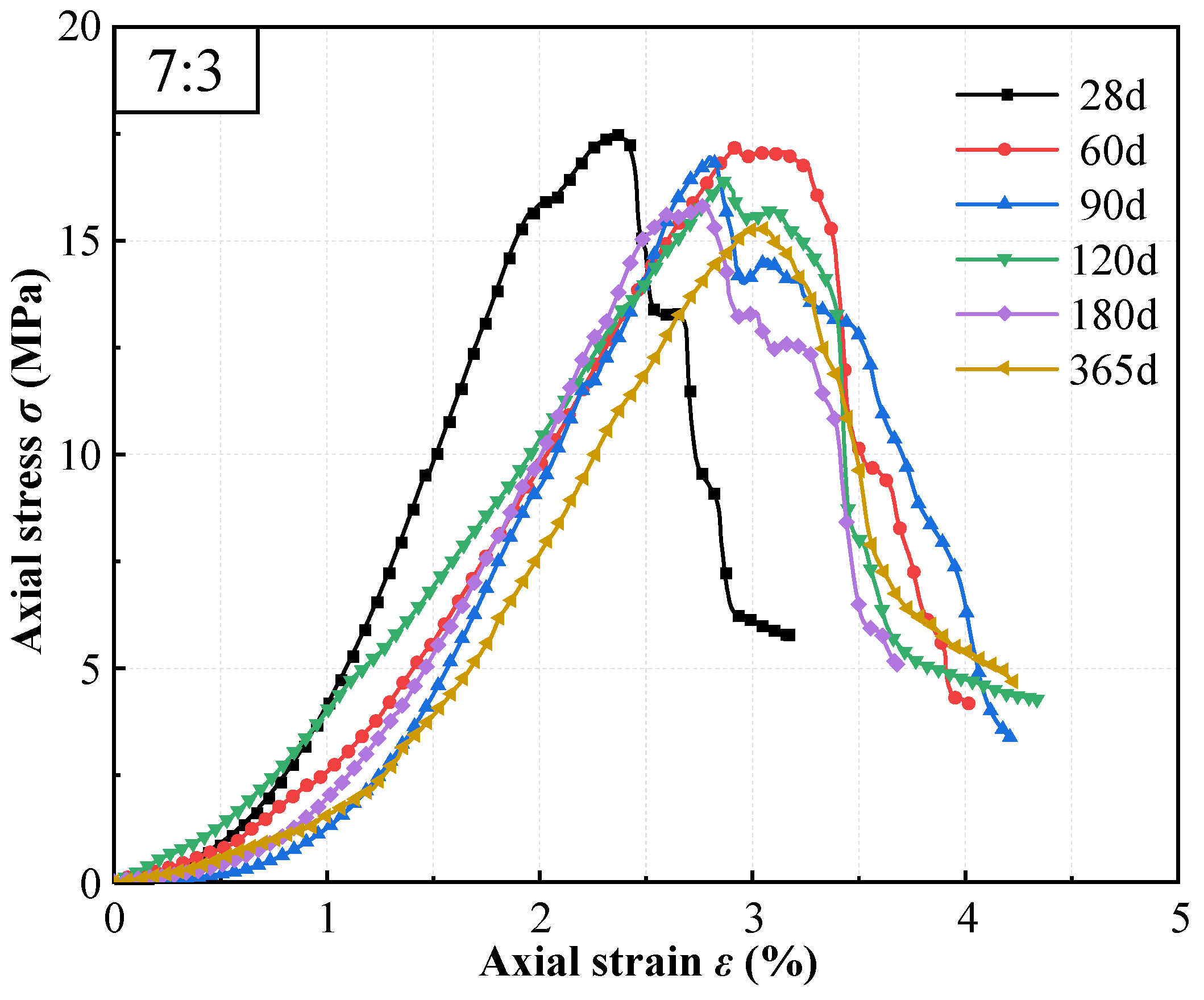
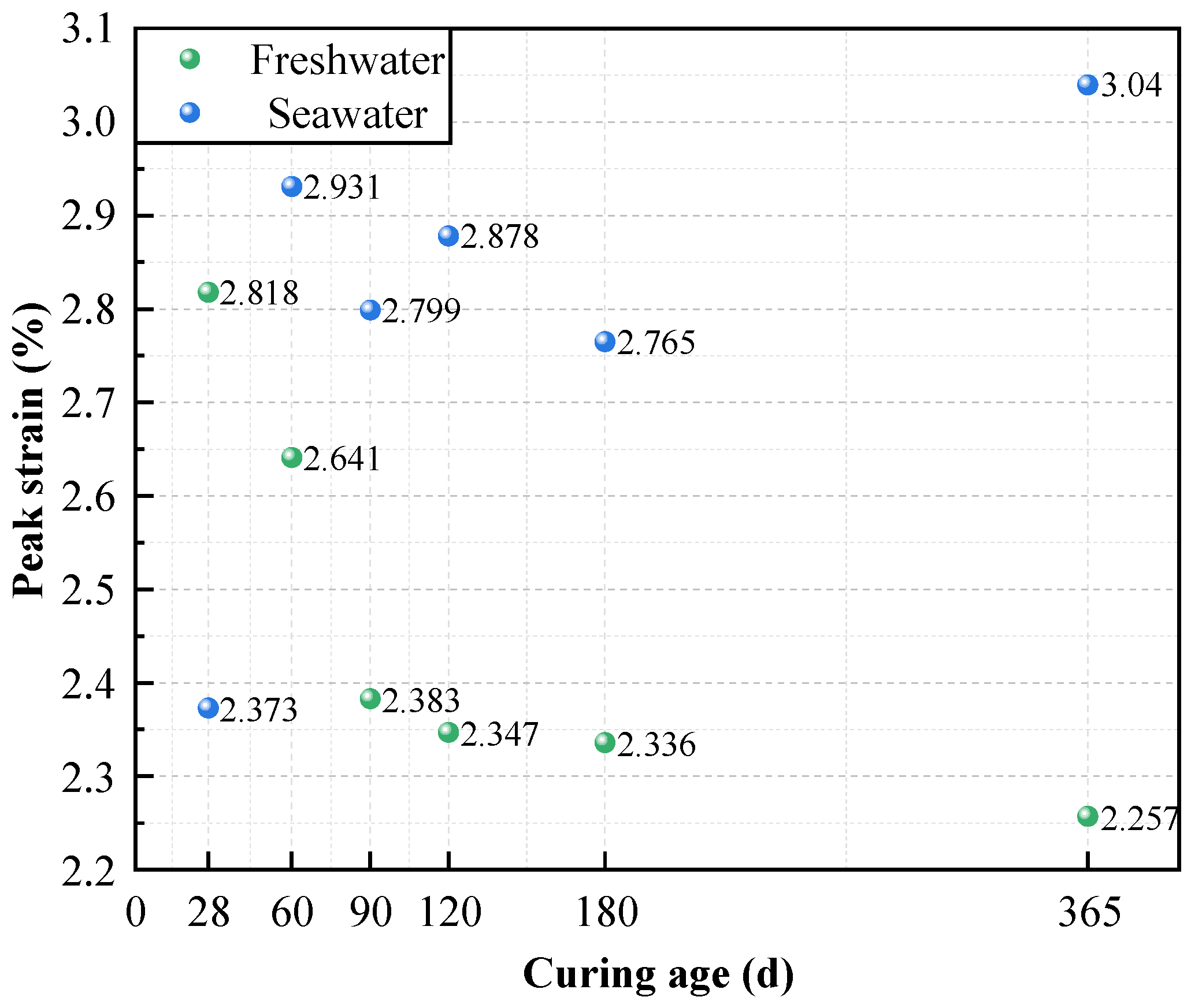
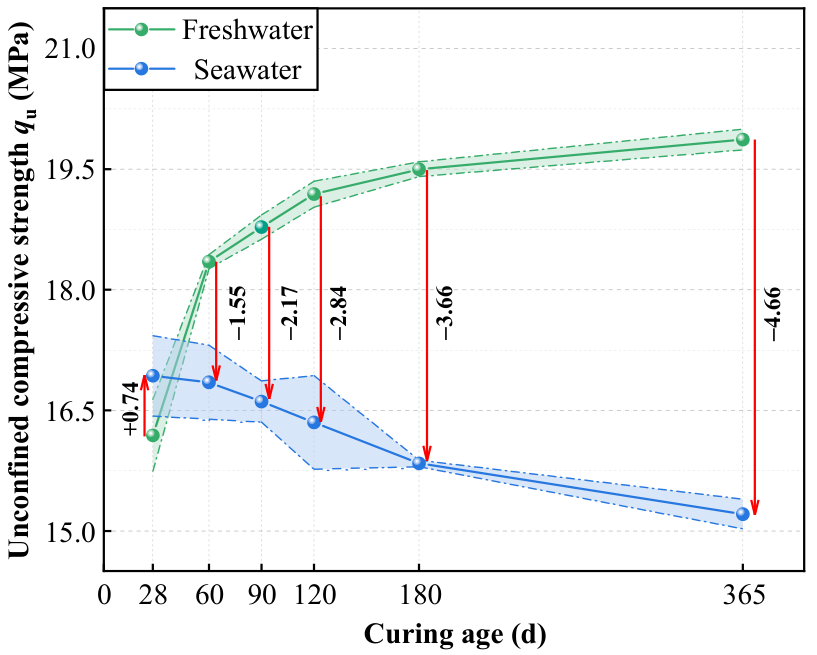
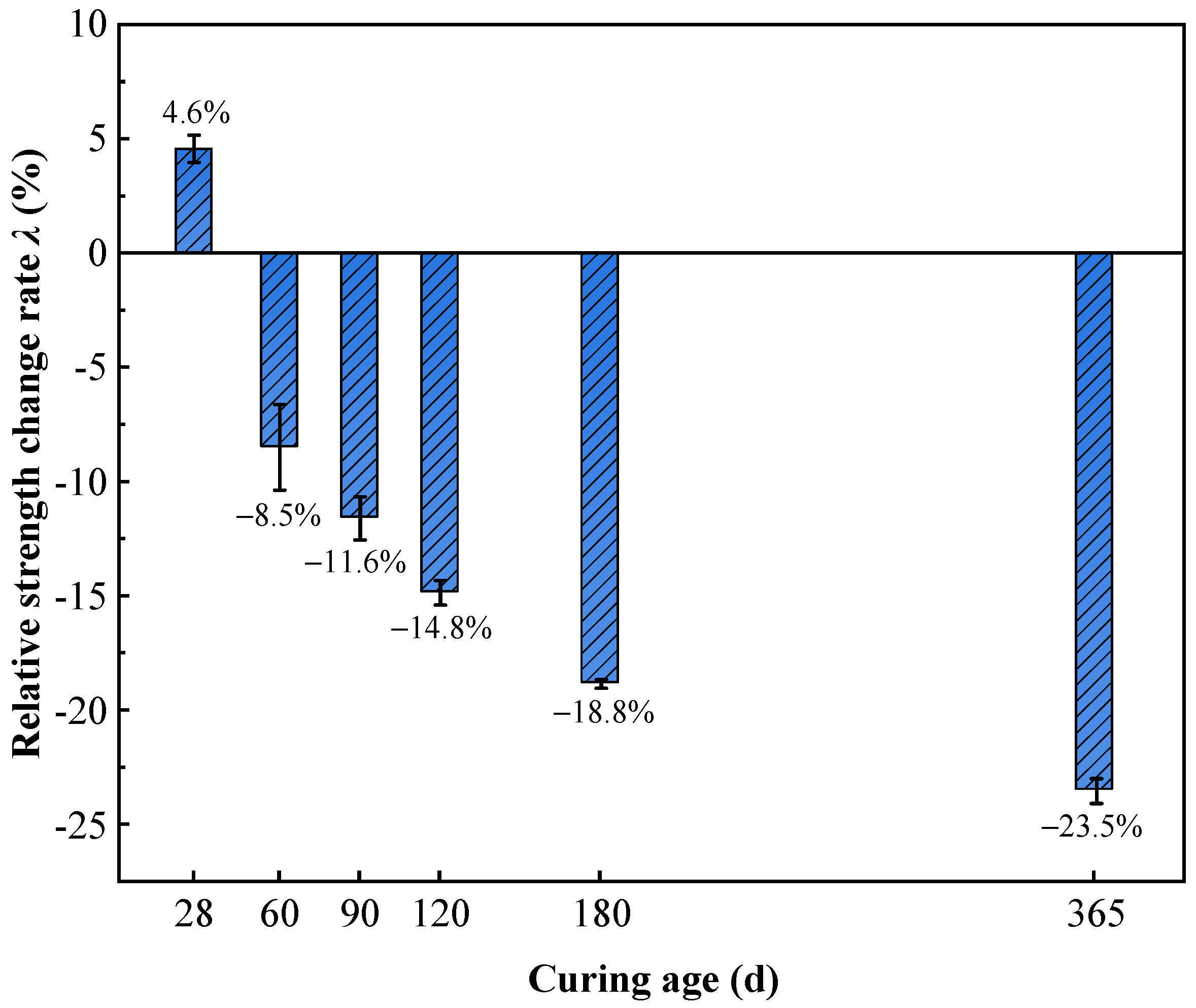
- Biphasic Seawater Response and Pseudo-ductility: Seawater exposure induces a distinct dual-stage strength evolution: early enhancement followed by long-term deterioration. At 28 days, physical pore-filling resulted in a slight strength gain (λ = 4.6%). However, by 365 days, significant degradation occurred (λ = −23.5%). Concurrently, the failure mode shifted from brittle fracture to “pseudo-ductility”—characterized by an anomalous increase in peak strain (from 2.37% to 3.04%) and a gentler post-peak softening response. This shift reflects a progressive loss of structural integrity rather than a genuine improvement in material toughness.
- (3)
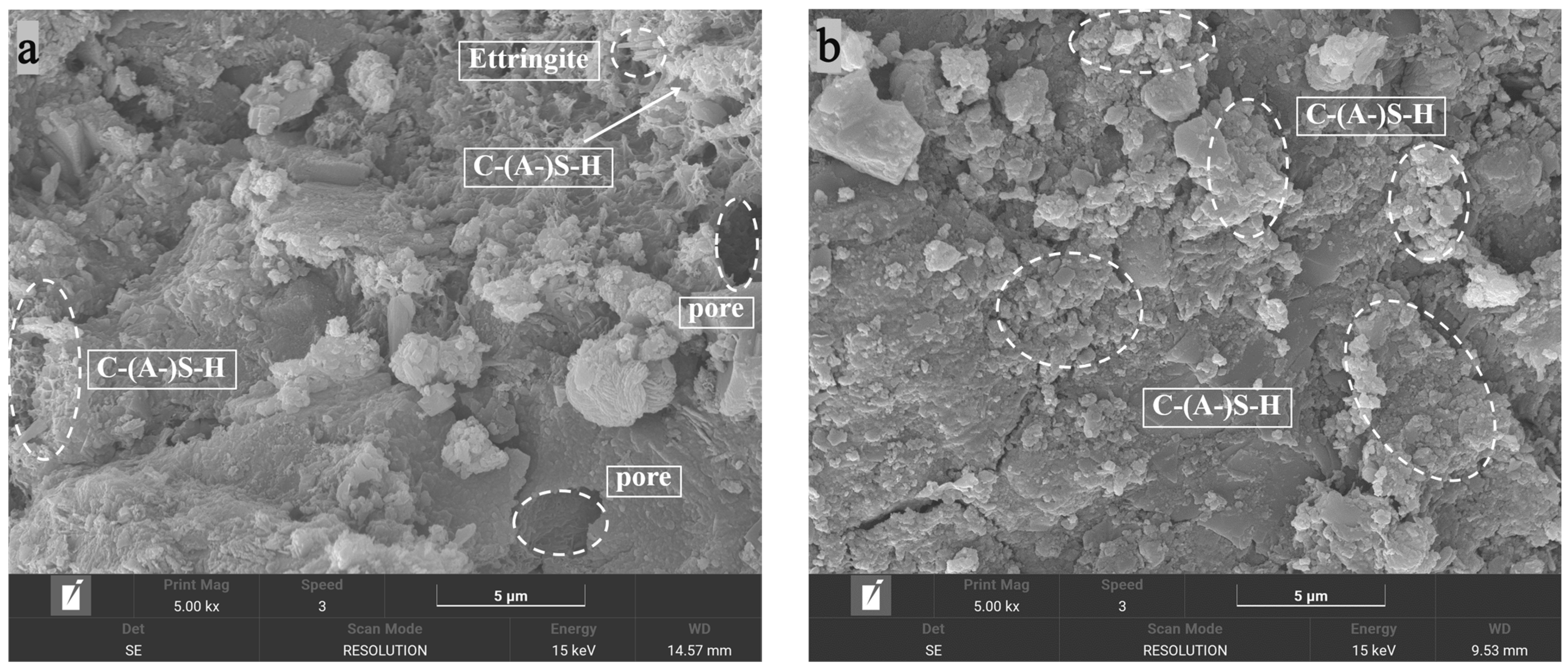
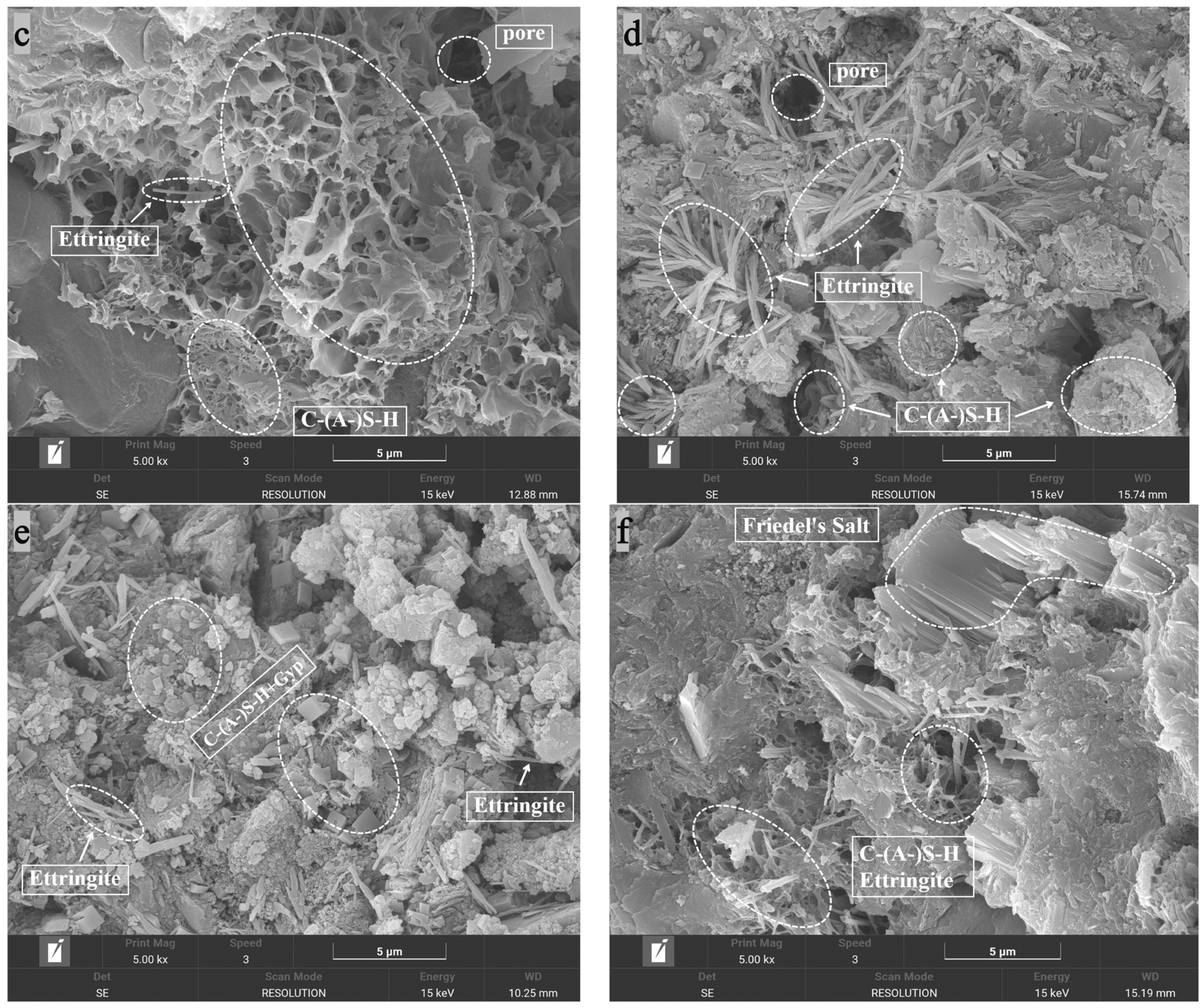
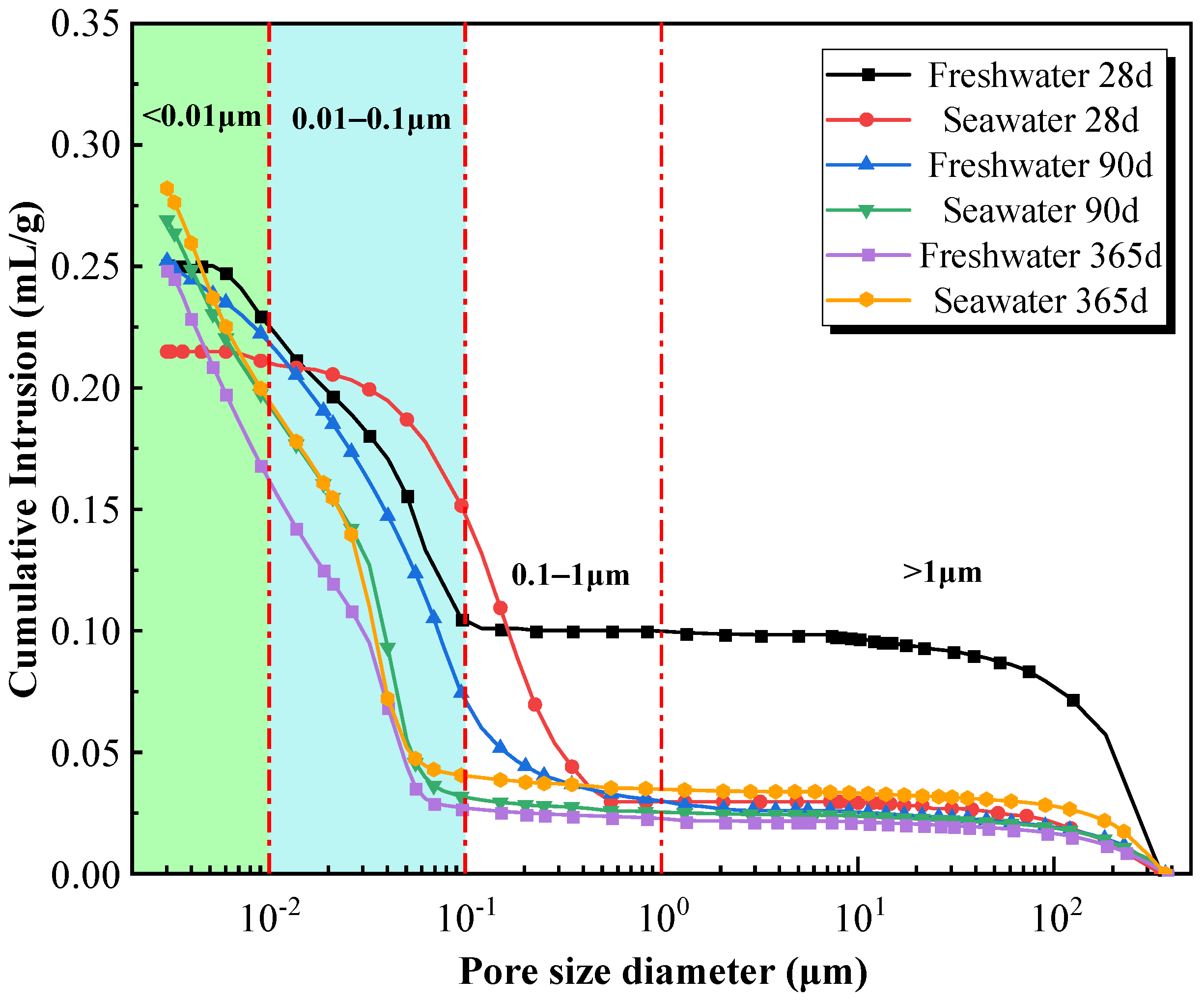
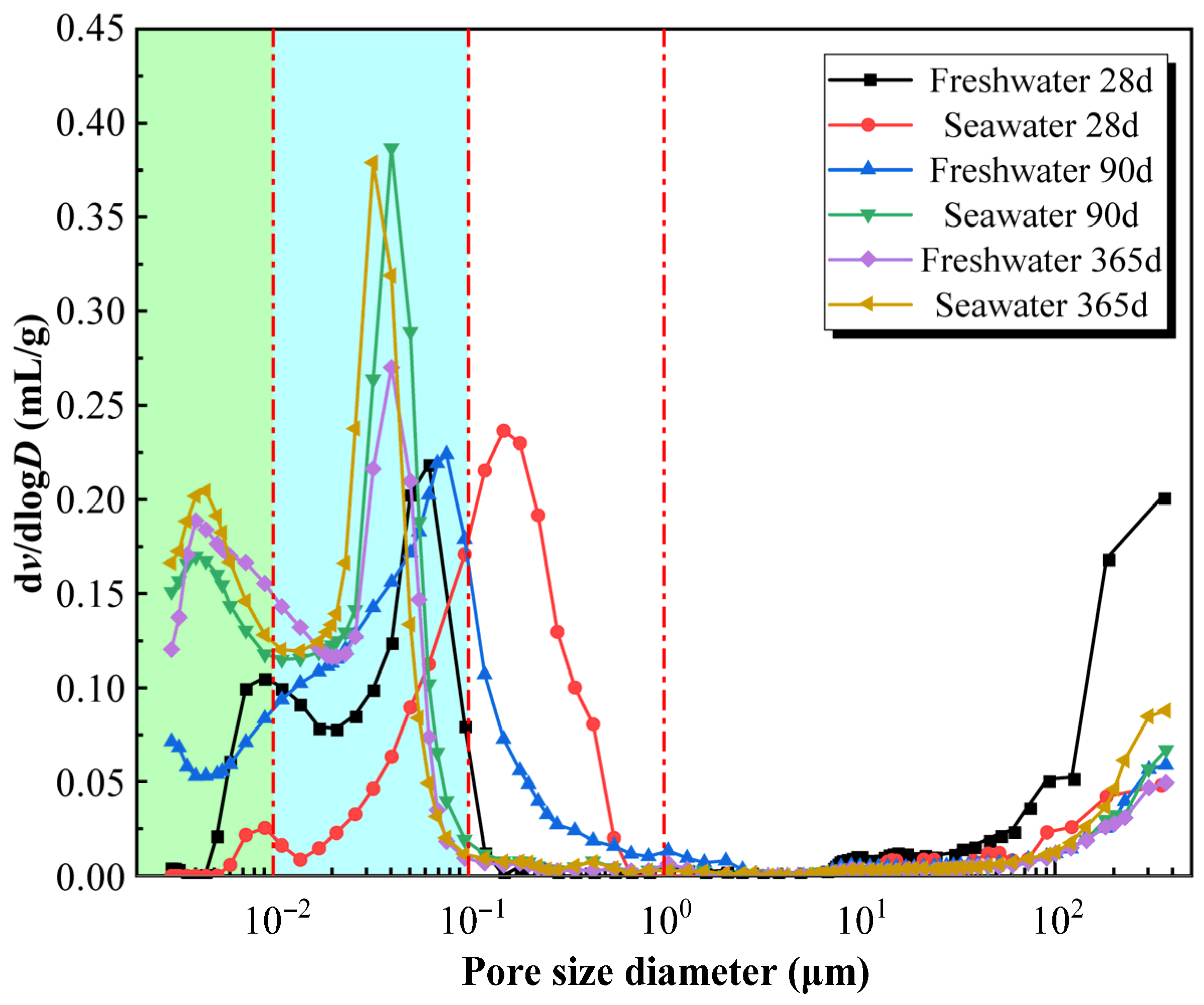
- Pore Structure–Strength Paradox (Micro–Macro Inconsistency): A critical inconsistency between microstructural densification and macroscopic strength was identified under long-term seawater conditions. Despite significant early pore refinement at 90 days (micropore proportion reaching 30.2%), macroscopic strength paradoxically regressed. This intense early-stage physical densification temporarily conceals the concurrent progression of chemical damage. Semi-quantitative XRD explicitly confirmed this underlying degradation via a massive depletion of the Ca(OH)2 alkaline buffer (plummeting from 2592 to 280 counts), triggering a high risk of subsequent decalcification.
- (4)
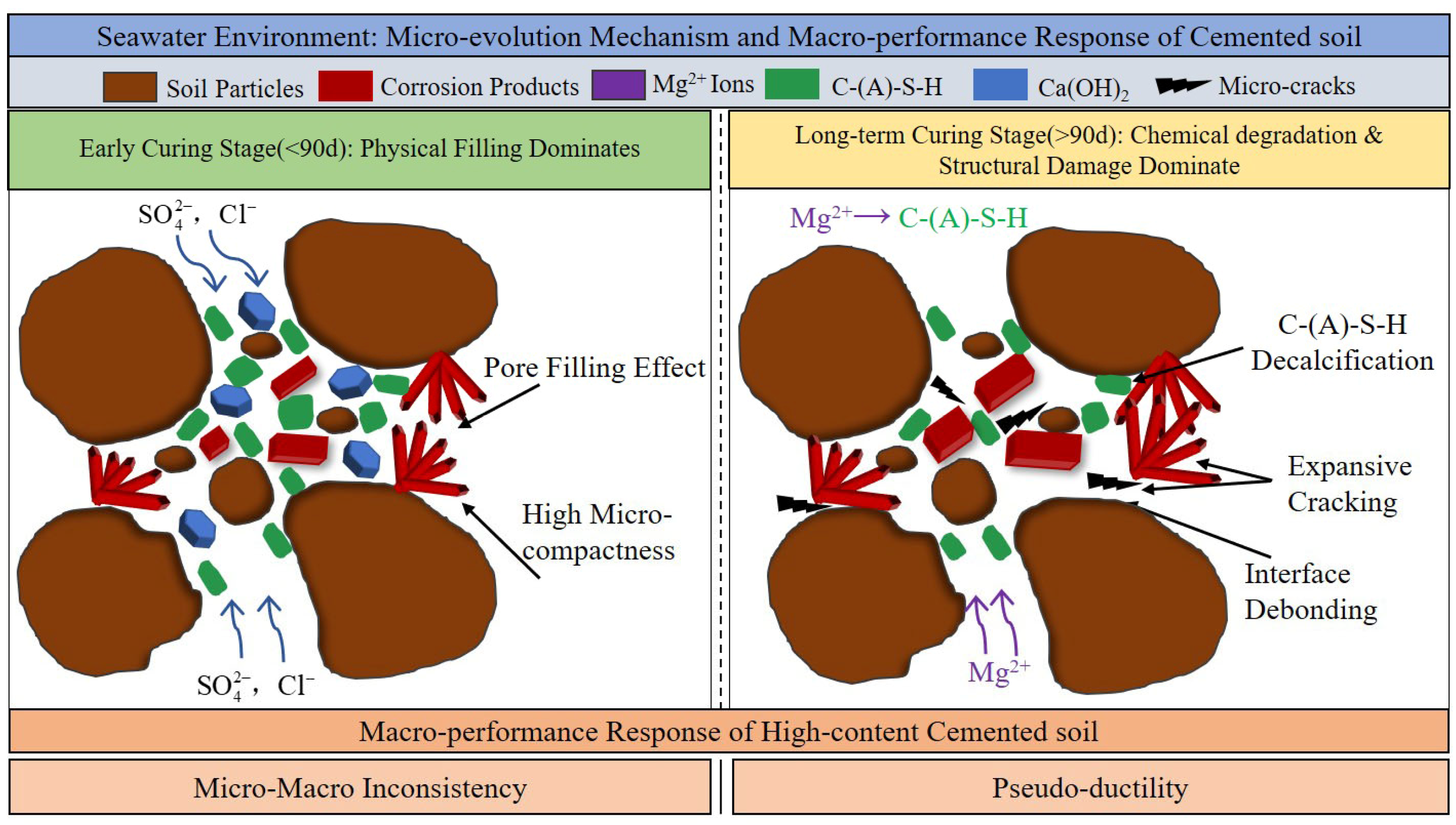
- Engineering Implications: The observed micro–macro inconsistency demonstrates that physical pore refinement (induced by expansive salts filling the mesopores) does not prevent macroscopic strength loss under long-term marine exposure. Consequently, for high-binder marine foundations such as pre-bored precast concrete piles, lifecycle durability assessments should not rely solely on physical metrics (e.g., porosity). Instead, design standards must adopt a comprehensive multi-factor evaluation framework, coupling macroscopic physical compactness with the long-term chemical stability of the cementing phases to ensure reliable lifecycle safety predictions.
6. Limitation and Future Work
Author Contributions
Funding
Data Availability Statement
Conflicts of Interest
References
- Wang, W.; Gao, W.; Gong, W.; Lin, Y.; Liu, Y.; Wu, J. Development and innovation of foundation engineering technology. China Civ. Eng. J. 2024, 57, 97–117. (In Chinese) [Google Scholar] [CrossRef]
- Zhang, R.; Wu, L.; Kong, Q. Research and practice of JZGZ pile foundation. Chin. J. Geotech. Eng. 2013, 35, 1200–1203. (In Chinese) [Google Scholar]
- Zhang, Z.; Li, J. Review and applications of MJS techniques for ground improvement. J. Civ. Archit. Environ. Eng. 2017, 39, 1–11. (In Chinese) [Google Scholar] [CrossRef]
- Zhang, F. Two advanced jet grout methods. Chin. J. Geotech. Eng. 2010, 32, 406–409. (In Chinese) [Google Scholar]
- Hu, X.; Kawada, M.; Nakanishi, Y.; Li, J. Application of jet grouting pile method in Japan. Chin. J. Geotech. Eng. 2010, 32, 410–413. (In Chinese) [Google Scholar]
- Wu, X.; Xia, Y.; Li, D.; You, X.; Shan, N.; Xiao, Z.; Chen, X. Experimental study on internal interface shear strength of a novel stiffened cement-soil composite pile. Rock Soil Mech. 2025, 46, 467–478. (In Chinese) [Google Scholar]
- Zhang, L.; Li, Y.; Wei, X.; Liang, X.; Zhang, J.; Li, X. Unconfined compressive strength of cement-stabilized Qiantang River silty clay. Materials 2024, 17, 1082. [Google Scholar] [CrossRef]
- Roshan, M.J.; Rashid, A.S.B.A. Geotechnical characteristics of cement stabilized soils from various aspects: A comprehensive review. Arab. J. Geosci. 2024, 17, 1. [Google Scholar] [CrossRef]
- Chang, L.; Wang, W.; Nie, S. Measurement and Analysis of Construction Impact on Environmental of Ultra-high Pressure Jet Grouting. Chin. J. Undergr. Space Eng. 2019, 15, 759–765. (In Chinese) [Google Scholar] [CrossRef]
- Zhou, J.; Gong, X.; Wang, K.; Zhang, R.; Xu, G. Effect of cemented soil properties on the behavior of pre-bored grouted planted nodular piles under compression. J. Zhejiang Univ. Sci. A 2018, 19, 534–543. [Google Scholar] [CrossRef]
- Ling, Z.; Wang, W.; Wu, J.; Tang, M. Laboratory Test on Mechanical Properties of Cement Soil in Pre-Bored Precast Pile with an Enlarged Base. Chin. J. Undergr. Space Eng. 2022, 18, 106–113. (In Chinese) [Google Scholar]
- Xiong, Z.; Qin, Z.; Cai, H.; Wang, S. Application and Analysis of MJS Pile in Shield Starting of Water-rich Sandy Stratum. J. Railw. Eng. Soc. 2021, 38, 8–12. (In Chinese) [Google Scholar]
- DB33/T 1134-2017; Technical Specification for Pre-Bored Precast Concrete Pile Foundation. China Planning Press: Beijing, China, 2017. (In Chinese)
- Zhou, J.; Wang, K.; Gong, X.; Zhang, R.; Yan, T. A test on base bearing capacity of static drill rooted nodular pile. Rock Soil Mech. 2016, 37, 2603–2609. (In Chinese) [Google Scholar] [CrossRef]
- Gong, X.; Shao, J.; Xie, C.; Shu, J. Model Test on Influence of Enlarged Head Size on Bearing Capacity of Pile End. J. Hunan Univ. (Nat. Sci.) 2018, 45, 102–109. (In Chinese) [Google Scholar] [CrossRef]
- Wang, W.; Wang, M.; Wu, J. Field study on the ultimate bearing capacity of enlarged grout base of pre-bored grouted planted pile. Rock Soil Mech. 2023, 44, 3091–3098. (In Chinese) [Google Scholar] [CrossRef]
- Huang, X.; Ning, J.; Guo, Y.; Zhu, B. Effect of cement content on the structural formation of stabilized soil. Chin. J. Geotech. Eng. 2006, 28, 436–441. (In Chinese) [Google Scholar]
- Ruan, J.; Ruan, B.; Yang, J.; Xiao, W. Experimental study on cement-soil unconfined compressive strength of silty clay. J. Railw. Sci. Eng. 2009, 6, 56–60. (In Chinese) [Google Scholar] [CrossRef]
- Consoli, N.C.; Rosa, D.A.; Cruz, R.C.; Rosa, A.D. Water content, porosity and cement content as parameters controlling strength of artificially cemented silty soil. Eng. Geol. 2011, 122, 328–333. [Google Scholar] [CrossRef]
- Cao, Z.; Zhang, D. Key Parameters Controlling Unconfined Compressive Strength of Soil-Cement Mixtures. Chin. J. Rock Mech. Eng. 2015, 34, 3446–3454. (In Chinese) [Google Scholar] [CrossRef]
- Fu, X.; Feng, J.; Xie, Y. Mechanical behavior of soil cement under ambient with sulfate conditions. Rock Soil Mech. 2008, 29, 659–662. (In Chinese) [Google Scholar] [CrossRef]
- Han, P.; Bai, X.; Zhao, Y.; Dong, X.; Ren, J. Experimental study on strength of cement soil under Mg2+ and interaction influence. Chin. J. Geotech. Eng. 2009, 31, 72–76. (In Chinese) [Google Scholar] [CrossRef]
- Li, P.; Li, W.; Yu, T.; Qu, F.; Tam, V.W.Y. Investigation on early-age hydration, mechanical properties and microstructure of seawater sea sand cement mortar. Constr. Build. Mater. 2020, 249, 118776. [Google Scholar] [CrossRef]
- Ning, B.; Chen, S.; Liu, B.; Liu, Y. Fracturing Behaviors of Cemented Soil Under Environmental Erosion. Rock Soil Mech. 2005, 26, 600–603. (In Chinese) [Google Scholar] [CrossRef]
- Liu, Z. Laboratory Test of Mechanical Properties of Cemented Soil Under Brine Erosion Environment and Durability Analysis. Ph.D. Thesis, Wuhan University, Wuhan, China, 2014. (In Chinese) [Google Scholar]
- Hara, H.; Suetsugu, D.; Hayashi, S.; Matsuda, H. Fundamental study on deterioration mechanism of cement-treated soil exposed to seawater. J. Jpn. Soc. Civ. Eng. 2013, 69, 469–479. (In Japanese) [Google Scholar]
- Han, P.; Wang, S.; Chen, F.Y.; Bai, X. Mechanism of cemented soil polluted by magnesium sulfate. J. Cent. South Univ. 2015, 22, 1869–1877. [Google Scholar] [CrossRef]
- Xiong, F.; Xing, H.; Li, H. Experimental study on the effects of multiple corrosive ion coexistence on soil-cement characteristics. Soils Found. 2019, 59, 398–406. [Google Scholar] [CrossRef]
- Ding, J.; Ma, D.; Zhang, R.; Jiang, D. Investigating on dynamic and static mechanical characteristics and microscopic mechanism of fiber-reinforced and rubberized cement stabilized soil under dry-wet cycle sulfate erosion. Constr. Build. Mater. 2025, 487, 142083. [Google Scholar] [CrossRef]
- Sarkar, P.K.; Mitra, N.; Prasad, D. Molecular level deformation mechanism of ettringite. Cem. Concr. Res. 2019, 124, 105836. [Google Scholar] [CrossRef]
- Bernard, E.; Lothenbach, B.; Le Goff, F.; Pochard, I.; Dauzères, A. Effect of magnesium on calcium silicate hydrate (C-S-H). Cem. Concr. Res. 2017, 97, 61–72. [Google Scholar] [CrossRef]
- Liu, X.; Feng, P.; Yu, X.; Shen, X.; Geng, G.; Lothenbach, B. The physiochemical alterations of calcium silicate hydrate (C-S-H) under magnesium attack. Cem. Concr. Res. 2022, 160, 106901. [Google Scholar] [CrossRef]
- Hara, H.; Ikeda, K.; Yoshimoto, N. Strength reduction mechanism of cement-treated soil under seawater environment. Soils Found. 2024, 64, 101425. [Google Scholar] [CrossRef]
- Kalipcilar, I.; Mardani-Aghabaglou, A.; Sezer, A.; Altun, S.; Inan Sezer, G. Sustainability of cement-stabilised clay: Sulfate resistance. Proc. Inst. Civ. Eng. Eng. Sustain. 2018, 171, 254–274. [Google Scholar] [CrossRef]
- Zhao, C.; Zhang, W.; Zhang, J. Degradation mechanisms of cement-based materials exposed to mining wastewater and strategies for improvement via typical SCMs. J. Build. Eng. 2026, 117, 114883. [Google Scholar] [CrossRef]
- Tong, P.; Wang, Y.; Wang, M.; Zhang, X.; Su, H.; Li, Z.; Zhou, S.; Zhao, C.; Zhang, X.; Zhang, J. Synergistic effects of sulfate, magnesium, and bicarbonate ions in mine water on the hydration, microstructure, and long-term durability of Portland cement paste. Miner. Eng. 2026, 235, 109867. [Google Scholar] [CrossRef]
- Wu, Y.; Liu, X.; Yang, J.; Liu, Q. Influence of the wide range cement content on the properties of cement-treated marine soft soil and bound method of semi-solidified soil. Case Stud. Constr. Mater. 2024, 20, e03180. [Google Scholar] [CrossRef]
- Chen, D.; Guo, W.; Chen, D.; Guo, L.; Cai, B.; Ye, T. Mechanistic modeling for coupled chloride-sulfate attack in cement-based materials. Constr. Build. Mater. 2024, 455, 139231. [Google Scholar] [CrossRef]
- Pham, V.N.; Turner, B.; Huang, J.; Kelly, R. Long-term strength of soil-cement columns in coastal areas. Soils Found. 2017, 57, 645–654. [Google Scholar] [CrossRef]
- Lin, J.; Wang, W.; Cheng, X.; Pan, H. Experimental study on static and dynamic characteristics of low content solidified sludge. Water Resour. Plan. Des. 2025, 12, 144–150. (In Chinese) [Google Scholar] [CrossRef]
- GB/T 50123-2019; Standard for Geotechnical Testing Method. China Planning Press: Beijing, China, 2019. (In Chinese)
- JGJ/T 233-2011; Specification for Mix Proportion Design of Cement Soil. China Architecture & Building Press: Beijing, China, 2011. (In Chinese)
- Horpibulsuk, S.; Rachan, R.; Chinkulkijniwat, A.; Raksachon, Y.; Suddeepong, A. Analysis of strength development in cement-stabilized silty clay from microstructural considerations. Constr. Build. Mater. 2010, 24, 2011–2021. [Google Scholar] [CrossRef]
- Wang, X.; Yang, J.; Dong, M.; Jiao, D.; Wang, M. The effect and mechanism of seawater concentration on cement soil strength. Period. Ocean Univ. China 2018, 48, 134–141. (In Chinese) [Google Scholar] [CrossRef]
- Yan, N.; Yang, J.; Liu, Q.; Dong, M. Laboratory test on strength deterioration process of soil cement in seawater environment. China Civ. Eng. J. 2017, 50, 115–124. (In Chinese) [Google Scholar] [CrossRef]










| Water Content (%) | Wet Density (kN·m−3) | Particle Specific Gravity | Void Ratio | Plastic Limit (%) | Liquid Limit (%) |
|---|---|---|---|---|---|
| 26.14 | 1.97 | 2.72 | 0.738 | 24.8 | 42.8 |
| Composition | SiO2 | CaO | Al2O3 | Fe2O3 | K2O | Na2O | SO3 | MgO | Ignition Loss (%) |
|---|---|---|---|---|---|---|---|---|---|
| Content (%) | 25.0 | 51.42 | 8.26 | 4.03 | 2.17 | 0.79 | 2.51 | 3.71 | 1.16 |
| Major Ions (mg/L) | Artificial Seawater | Daxie Island’s Seawater |
|---|---|---|
| Ca2+ | 486.0 | 481.0 |
| Mg2+ | 872.2 | 846.1 |
| Na+ | 8140.0 | 7720.0 |
| Cl− | 15,422.1 | 14,713.0 |
| 1625.0 | 1450.0 | |
| 24.4 | 36.6 |
| Cement Content | mc:mw:ms | Curing Environment | Curing Age/d | Test Type | |
|---|---|---|---|---|---|
| Vc:Vs | aw/% | ||||
| 8:2 | 93.1 | 2.7:1.8:1.0 | Freshwater | 28, 60, 90, 120, 180, 365 | UCS |
| 7:3 | 72.7 | 1.6:1.2:1.0 | |||
| 6.5:3.5 | 61.7 | 1.2:1.0:1.0 | |||
| 6:4 | 53.6 | 1.0:0.8:1.0 | |||
| 5:5 | 40.0 | 0.7:0.6:1.0 | |||
| 7:3 | 72.7 | 1.6:1.2:1.0 | Seawater | 28, 60, 90, 120, 180, 365 | UCS |
| Freshwater Seawater | 28, 90, 365 | SEM, XRD MIP | |||
Disclaimer/Publisher’s Note: The statements, opinions and data contained in all publications are solely those of the individual author(s) and contributor(s) and not of MDPI and/or the editor(s). MDPI and/or the editor(s) disclaim responsibility for any injury to people or property resulting from any ideas, methods, instructions or products referred to in the content. |
© 2026 by the authors. Licensee MDPI, Basel, Switzerland. This article is an open access article distributed under the terms and conditions of the Creative Commons Attribution (CC BY) license.
Share and Cite
Pan, H.; Wang, W.; Zhou, J.; Cheng, X.; Hu, G. Long-Term Strength Development and Microstructural Characteristics of High-Content Cemented Soil Under Seawater Exposure. Materials 2026, 19, 1477. https://doi.org/10.3390/ma19071477
Pan H, Wang W, Zhou J, Cheng X, Hu G. Long-Term Strength Development and Microstructural Characteristics of High-Content Cemented Soil Under Seawater Exposure. Materials. 2026; 19(7):1477. https://doi.org/10.3390/ma19071477
Chicago/Turabian StylePan, Haoqiang, Wenjun Wang, Jie Zhou, Xiao Cheng, and Guangyang Hu. 2026. "Long-Term Strength Development and Microstructural Characteristics of High-Content Cemented Soil Under Seawater Exposure" Materials 19, no. 7: 1477. https://doi.org/10.3390/ma19071477
APA StylePan, H., Wang, W., Zhou, J., Cheng, X., & Hu, G. (2026). Long-Term Strength Development and Microstructural Characteristics of High-Content Cemented Soil Under Seawater Exposure. Materials, 19(7), 1477. https://doi.org/10.3390/ma19071477