Article

Controllable Preparation of Si3N4@MgSiN2 Core–Shell Powders via a “Template Growth” Mechanism in NaCl-KCl Mixed Molten Salt

Science and Technology on Advanced Ceramic Fibers and Composites Laboratory, College of Aerospace Science and Engineering, National University of Defense Technology, Changsha 410073, China
*
Authors to whom correspondence should be addressed.
Materials 2026, 19(7), 1475; https://doi.org/10.3390/ma19071475
Submission received: 24 February 2026 / Revised: 2 April 2026 / Accepted: 4 April 2026 / Published: 7 April 2026
(This article belongs to the Section Advanced and Functional Ceramics and Glasses)

Abstract

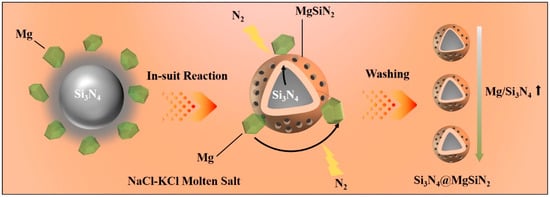
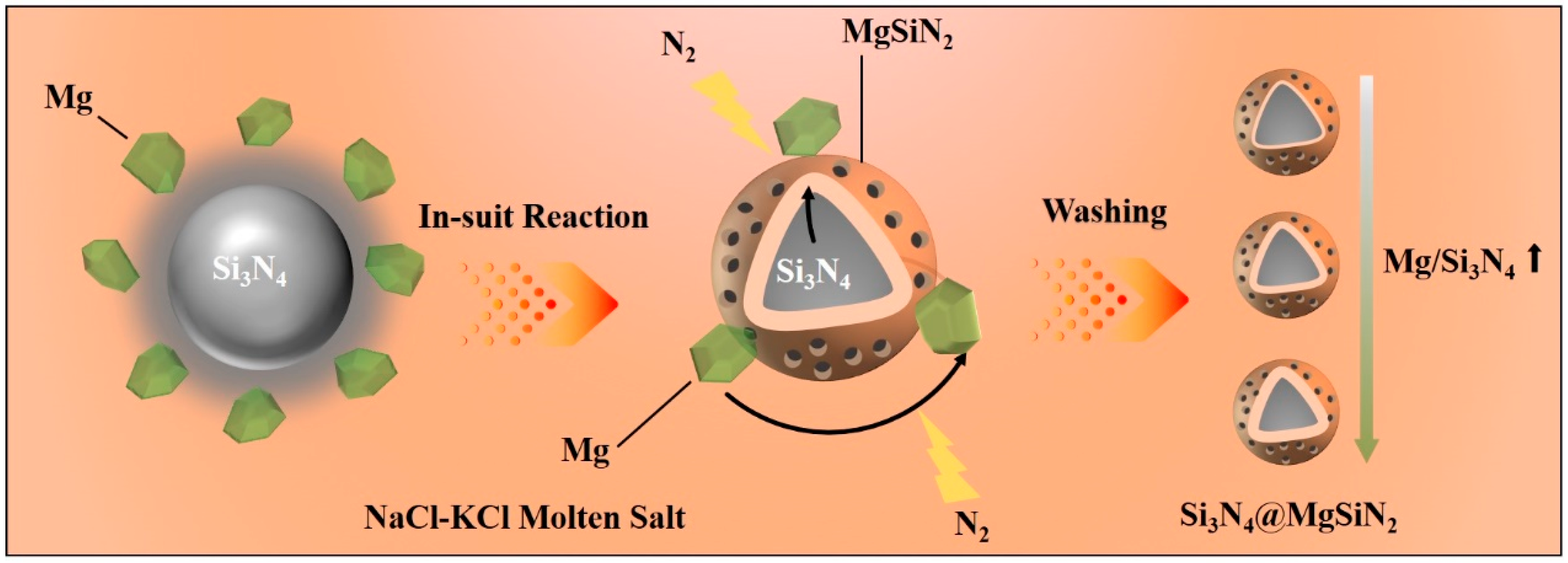
Si3N4@MgSiN2 composite powder with a core–shell structure was successfully synthesized via the in situ reaction between Mg and α-Si3N4 using a NaCl–KCl mixed molten salt in this study. The effects of process parameters, including the molten salt system, reaction temperature, and Mg/Si3N4 mass ratio, on the morphology, phase composition, and microstructure of the coating layer were investigated. The results indicate that the reaction follows a “template growth” mechanism. Mg-containing species dissolve in the molten salt, diffuse to the surface of Si3N4 particles, and react with α-Si3N4, resulting in a relatively uniform MgSiN2 layer at 1300 °C. The yield of MgSiN2 layer exhibits a linear positive correlation with the Mg/Si3N4 mass ratio, enabling controllable microstructural regulation through adjustment of the starting materials composition. The core–shell powder forms a liquid phase at a relatively low temperature (approximately 1350 °C), demonstrating excellent sintering activity. This work provides a new material foundation for the fabrication of silicon nitride ceramics with high thermal conductivity.

Graphical Abstract

1. Introduction

Silicon nitride (Si3N4) ceramics have been widely used in fields such as aerospace, chemical engineering, and metallurgy owing to their excellent chemical stability and mechanical properties [1,2,3]. Meanwhile, β-Si3N4 exhibits great potential as a new generation of high-performance electronic packaging and thermal management material, due to its theoretically high thermal conductivity exceeding 320 W·m−1·K−1 [4]. However, translating this potential into practical performance faces significant challenges in material processing. Si3N4, as a strong covalent compound, possesses an extremely low atomic self-diffusion coefficient, making full densification via conventional solid-state sintering difficult [5]. The common approach is liquid-phase sintering using sintering aids such as Y2O3 and MgO [6,7]. At elevated temperatures, these aids react with the SiO2 present on the surface of α-Si3N4 particles to form an oxynitride liquid phase [8]. This liquid phase provides a fast pathway for mass transport, thereby driving the densification process and promoting the α → β phase transformation [9]. Nevertheless, during the liquid-phase sintering process, oxygen atoms dissolve into the β-Si3N4 lattice to form silicon vacancies, triggering strong phonon scattering and significantly reducing the phonon mean free path, which is a key factor limiting the thermal conductivity of Si3N4 ceramic [10,11]. In addition, the liquid phase will remain in the form of low thermal conductivity amorphous glass phase at grain boundaries and polycrystalline intersections after cooling, becoming a barrier for phonon transmission [12].
During the sintering of Si3N4 ceramics, the dissolution of α-Si3N4, the nucleation of β- Si3N4, and the growth of β-Si3N4 grains all occur within the liquid phase [13]. Reducing the oxygen content in the liquid phase can directly decrease oxygen impurities within the β-Si3N4 lattice, thereby enhancing thermal conductivity. Consequently, constructing a low-oxygen liquid phase has become an effective approach for improving thermal conductivity. In the context where significant breakthroughs in low-oxygen α-Si3N4 powder have not yet been achieved, the use of non-oxide sintering aids to replace traditional oxide aids has become a mainstream research direction. Currently, non-oxide aids under investigation include: silicides (ZrSi2 [14], MgSi2 [15,16]), fluorides (YbF3 [17,18], YF3 [19], MgF2 [19,20,21], LiF [22,23]), hydrides (YH2 [24], GdH2 [25], ZrH2 [26]), and nitrides (Y2Si4N6C [27], YN [28], Mg3N2 [15], MgSiN2 [29,30,31,32,33]). Non-oxide aids can establish a high-nitrogen, low-oxygen liquid phase, significantly reducing the oxygen content dissolved in β-Si3N4 while promoting phase transformation and the growth of β-Si3N4 grains, all of which are beneficial for improving the thermal conductivity of Si3N4 ceramics. Among the various types of non-oxide aids, nitrides exhibit excellent compatibility with Si3N4. Notably, magnesium silicon nitride (MgSiN2), as a novel oxygen-free nitride, has demonstrated exceptional effectiveness during the sintering of Si3N4 ceramics. It can provide additional nitrogen atoms to the sintering system, further increasing the N/O ratio of the formed liquid phase. Simultaneously, MgSiN2 decomposes at high temperatures, and the released Mg can remove a portion of oxygen atoms in the form of MgO vapor, thereby further purifying the Si3N4 lattice and reducing the content of intergranular amorphous phase [28,34]. For instance, Fu et al. [29] used Gd2O3 + MgSiN2 as sintering aids and fabricated Si3N4 ceramics with a thermal conductivity of 124 W·m−1·K−1 after holding at 1900 °C for 12 h. Similarly, Fan et al. [28] employed YN + MgSiN2 as sintering aids, reduced the content of the intergranular phase Y2Si3O3N4, and successfully prepared Si3N4 ceramics with a thermal conductivity of 112 W·m−1·K−1.
In the sintering process of ceramic materials, the method of introducing sintering aids significantly influences the defects generated in the samples after sintered and the reliability of the final product. The mechanical mixing method, which is currently widely used for raw material blending, only achieves random dispersion between particles. From a microscopic perspective, it is difficult to ensure that each raw material particle effectively contacts the aid particles [30,35]. Furthermore, the use of non-oxide sintering aids leads to a sharp increase in the viscosity of the resulting liquid phase, thereby reducing the efficiency of mass transport. The uneven distribution of sintering aids may cause localized segregation of the liquid phase, which in severe cases can adversely affect the performance of the ceramic. To enhance the uniformity of sintering aid distribution within the starting materials, several coating techniques have been developed, including the formation of coating layers on raw material particles via the decomposition of organic precursors [36], the synthesis of shell structures based on the sol–gel method [37], and the in situ formation of coating layers on particle surfaces using the molten salt method [38,39,40]. Among these, the molten salt method is a versatile synthetic approach that employs molten salts as the reaction medium and offers advantages such as low reaction temperature, short reaction time, controllable process, high degree of reaction, no by-products, and minimal agglomeration of the products [41,42,43]. Compared to solid-state reactions, the diffusion rate of reactants in the molten salt liquid phase is significantly higher than that in the solid state. For example, Shao et al. [38] used metallic Y and SiC as starting materials, with a mixture of NaCl and KCl salts as the molten salt medium, and successfully synthesized Y3Si2C2-uniformly-coated SiC powder after reacting at 1100 °C under an argon atmosphere for 2 h. Similarly, Wan et al. [39] employed metallic Dy and SiC as the starting materials, with NaCl salt as the molten salt medium, and obtained Dy3Si2C2-uniformly-coated SiC powder after reacting at 1100 °C for 1 h. Both types of coated powders exhibited excellent sintering performance, demonstrating that the molten salt method enables the in situ coating of sintering aids and achieves uniform mixing of aids and the starting materials at the microscopic scale.
Given the similarity in sintering mechanisms between Si3N4 and SiC ceramics, the aforementioned approach can be adopted to synthesize a raw material system comprising α-Si3N4 coated with sintering aids. It should be noted that a prerequisite for employing this method is that the selected metallic element must be capable of reacting with α-Si3N4 to form the corresponding sintering aid phase. Currently, Mg is notably the primary metal reported to fulfill this condition. It can react with α-Si3N4 to form MgSiN2 via the reaction shown in Reaction 1. This reaction pathway not only meets the requirement for a low-oxygen-content liquid phase essential for high-thermal-conductivity Si3N4 ceramics but also achieves uniform coating of the sintering aid on the surface of α-Si3N4 particles, thereby providing an ideal raw material system for the fabrication of high-performance Si3N4 ceramics.
3Mg + N2 + Si3N4 = 3MgSiN2
Based on the above analysis, this study aims to successfully construct a MgSiN2 coating layer on the surface of α-Si3N4 particles using the molten salt method with metallic Mg as a precursor, thereby preparing Si3N4@MgSiN2 composite powder with a core–shell structure. The effects of the molten salt system, salt content, and Mg addition amount on the formation of the MgSiN2 shell layer were systematically investigated. This study provides a raw material system with low oxygen content and good coating effect, suitable for preparing high-performance Si3N4 ceramics, and successfully extends the molten salt-assisted coating strategy from the SiC system to the Si3N4 system.

2. Materials and Methods

2.1. Preparation of Si3N4@MgSiN2 Powders

The starting materials included α-Si3N4 (HQ plus, α phase > 93 wt.%, oxygen content < 1 wt.%, size < 10 μm, Alzchem Trostberg GmbH Co. Ltd., Trostberg, Germany), Mg (AR, Kermel Co. Ltd., Tianjin, China), MgSiN2 (CX-M02, purify > 99%, Alticera Advanced Materials Co. Ltd., Qingdao, China), NaCl and KCl (AR, Sinopharm Co. Ltd., Shanghai, China). The molten salt used in the experiments was a composite salt consisting of NaCl and KCl in a mass ratio of 1:1. In all samples, the total mass of the salt was fixed at twice the mass of α-Si3N4. A series of samples were prepared by varying the mass ratio of Mg powder to α-Si3N4 (specifically 0.200, 0.175, 0.150, 0.125, 0.100, 0.075, 0.067, 0.050, 0.040, and 0.033), and these were labeled sequentially as MS1 through MS10.
The mixtures were homogenized in a planetary ball mill (QM-3S94 Planetary Ball Mill, manufactured by Nanjing Nanda Instrument Factory, Nanjing, China) at 300 rpm for 4 h using silicon nitride balls and a polymer jar, followed by sieving and grinding to obtain uniform starting materials. The as-prepared samples were subsequently placed in MgO crucibles for the subsequent heat treatment process. To investigate the optimal reaction temperature and molten salt system, MS1 samples were heat-treated at 1000, 1100, 1200, 1300, and 1400 °C for 2 h, respectively. Meanwhile, the starting materials with a Mg/Si3N4 mass ratio of 0.100 were prepared using NaCl, KCl, and NaCl + KCl salt systems and heat-treated at 1300 °C for 2 h. Unless otherwise specified, all other samples were heat-treated at 1300 °C for 2 h. All samples were heat-treated in a pyrolysis furnace under a nitrogen atmosphere at 0.1 MPa, except for the use of nitrogen and argon atmospheres in experiments studying different atmospheric influences. The heat-treated samples were then washed with water, filtered, dried, and sieved to obtain the final products.

2.2. Characterizations

Phase composition analysis was conducted using a Cu Kα X-ray diffractometer (XRD, Empyren, PANalytical B.V., Almelo, The Netherlands), with subsequent Rietveld refinement performed via the GSAS-II software. The microscopic morphological features of the products were examined by field-emission scanning electron microscopy (SEM, Hitachi Regulus 8100, Hitachi, Tokyo, Japan) and transmission electron microscopy (TEM, FEI Talos F200X, Thermo Fisher Scientific, Waltham, MA, USA), as well as by energy-dispersive spectroscopy (EDS, Oxford Instruments plc, Abingdon, UK) coupled with TEM. The thermal and mass changes of the samples at high temperatures were analyzed using a simultaneous thermal analyzer (TG-DSC, Netzsch Sta 449 F5/F3 Jupiter, Netzsch-Gerätebau GmbH, Selb, Germany). During the experiment, a nitrogen atmosphere was employed with a gas flow rate of 50 mL·min−1. The electronic structure of the surface species on the core–shell structured powder was investigated by X-ray photoelectron spectroscopy (XPS, Thermo Escalab 250Xi, Thermo Fisher Scientific, Waltham, MA, USA). The sintering behavior of the synthesized powder was investigated by observing the sintering deformation of the green body using a visual high-temperature thermal analysis apparatus (TA-Z16B, CTJZH, Tianjin Zhonghuan Technology Co., Ltd., Tijian, China). The shrinkage behavior was measured using in situ shrinkage curves in HPS furnace (ZT-100-18Y, Shanghai Chenhua Science Technology Co., Ltd., Shanghai, China) with a minimal mechanical pressure (3 MPa) applied. All samples subjected to testing were taken from the central region of the product after heat treatment, in order to minimize potential interference from the MgO crucible and atmospheric components on the analytical results.

3. Results and Discussion

3.1. Synthesis Mechanism of Si3N4@MgSiN2 Powder

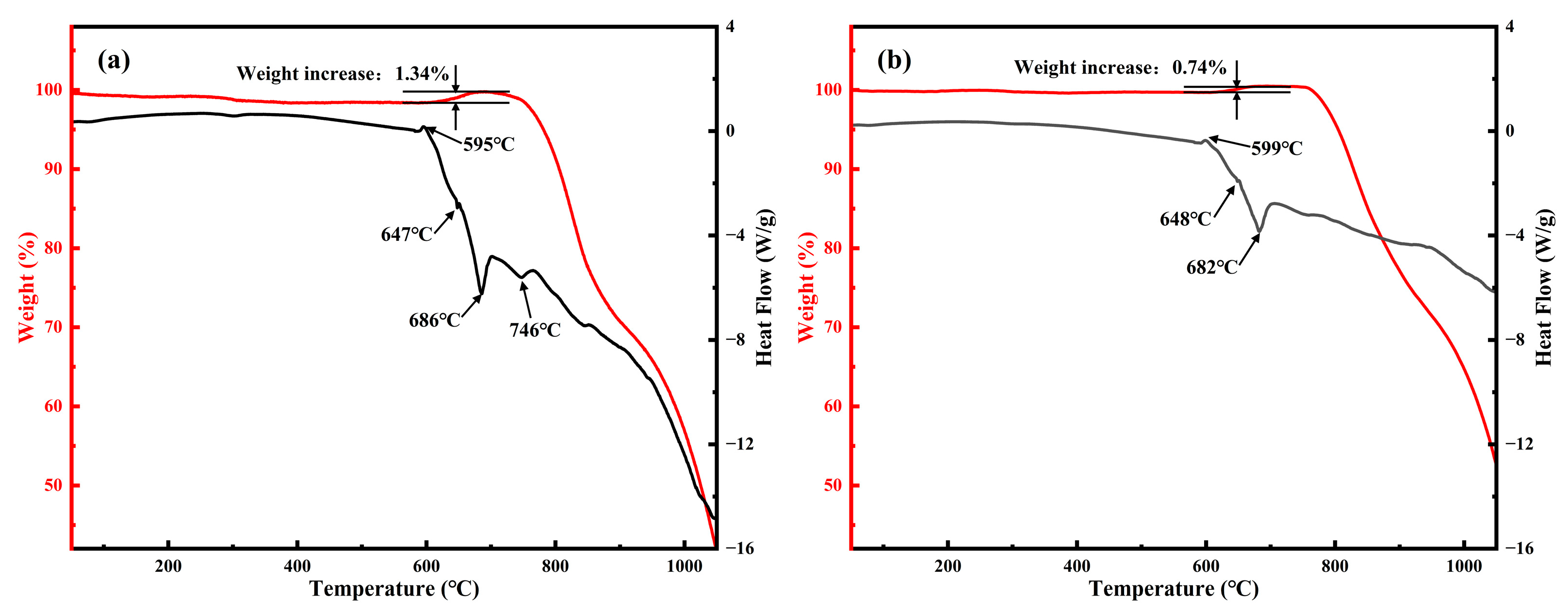
The TG-DSC analysis results of the MS1 and MS5 samples under a nitrogen atmosphere are presented in Figure 1. The slight weight loss observed below 600 °C is primarily attributed to the removal of adsorbed water and impurities from the system. The weight gain step commencing at approximately 600 °C can be attributed to the nitridation reaction between Mg and atmospheric N2, forming Mg3N2 (Reaction 2) [44], where the incorporation of nitrogen into the system results in an overall mass increase. The exothermic peak appearing at approximately 600 °C in the DSC curve further corroborates the occurrence of Mg nitridation. Within the temperature range of 600–700 °C, the nitridation reaction of Mg proceeds continuously. However, due to the relatively low total Mg content in the system, the heat released from the nitridation reaction is minimal, and consequently, no distinct exothermic peak is discernible in the DSC curve. As the temperature rises to approximately 650 °C, eutectic melting of the NaCl-KCl mixed salt occurs [45], coinciding with a temperature approaching the melting point of Mg, at which point the endothermic peak in the DSC curve sharpens markedly. Simultaneously, the formation of molten Mg and the mixed molten salt enables Mg droplets to disperse and dissolve more thoroughly within the molten salt, substantially increasing the contact area between Mg and the nitrogen atmosphere and thereby accelerating the formation of Mg3N2. The accelerated weight gain rate observed in the TG curve also indicates an enhanced nitridation reaction rate of Mg, suggesting that the formation of the molten salt liquid phase promotes the nitridation reaction. The endothermic processes within the 650–680 °C interval are primarily associated with the dispersion of the salt and Mg, after which the endothermic trend moderates. By approximately 680 °C, the nitridation reaction of Mg is essentially complete, as evidenced by an inflection point in the DSC curve at this temperature, marking the conclusion of the exothermic reaction. The weight loss and endothermic phenomenon observed after 700 °C are primarily attributable to the gradual volatilization of NaCl and KCl following melting during the TG-DSC measurement. The endothermic peak appearing at around 750 °C can be attributed to the significant acceleration of salt volatilization, which can also be seen in the TG curve. Given that the measurement was conducted under a flowing atmosphere, the volatilized salt was continuously carried away by the flowing gas, preventing the establishment of saturation and leading to persistent salt depletion from the system, thereby resulting in mass loss. Due to the small sample mass employed in the measurement (approximately 10 mg), this volatilization-induced weight loss becomes particularly pronounced. It should be noted that in other experimental processes involving larger sample masses and a static atmosphere, such significant salt loss does not occur.
3Mg + N2 = Mg3N2
Mg3N2 + Si3N4 = 3MgSiN2
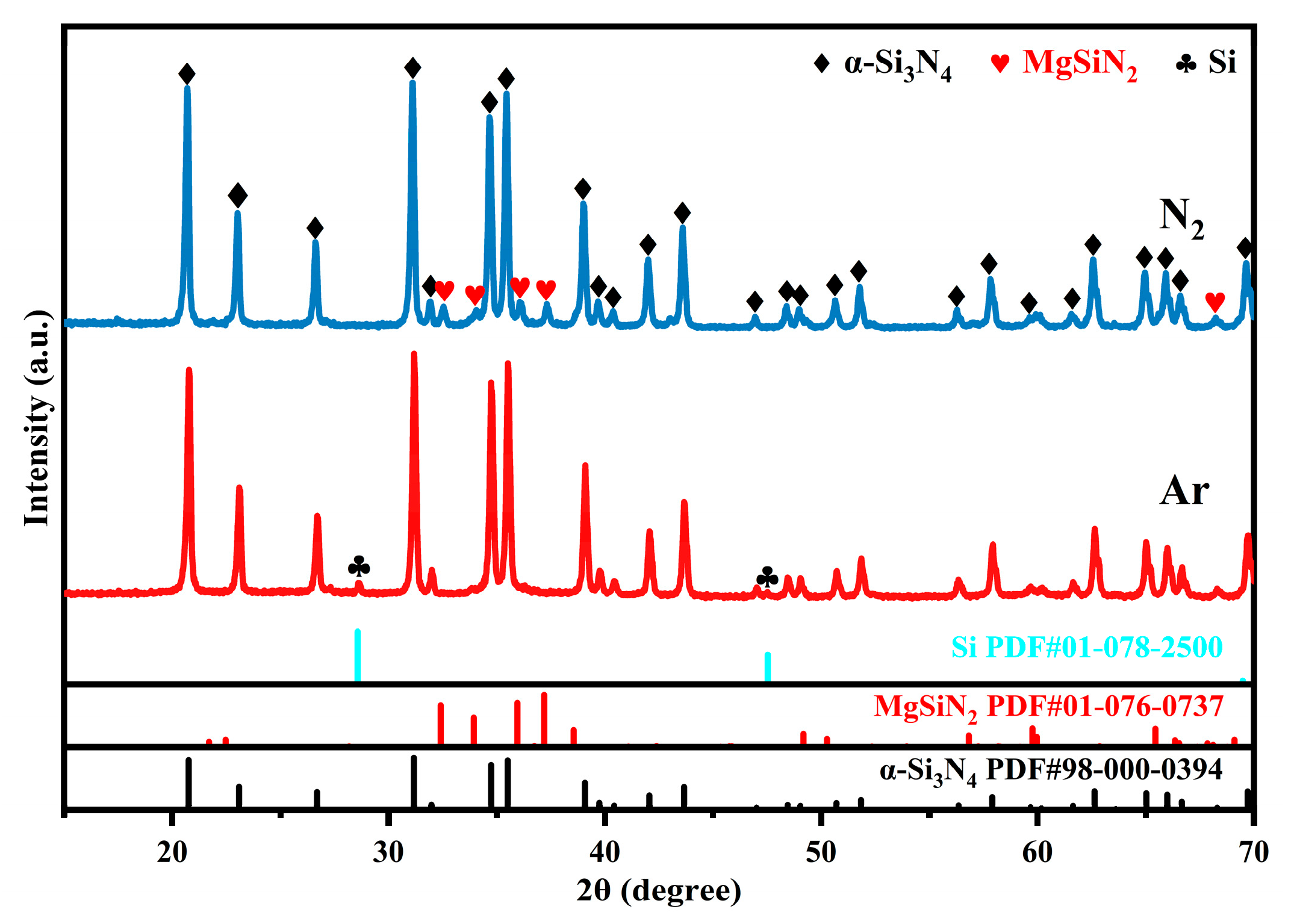
Figure 2 presents the XRD patterns of the MS5 sample after being treated under nitrogen and argon atmospheres, respectively. The analysis reveals that the diffraction peaks intensity of the MgSiN2 in the sample reacted in the Ar atmosphere is significantly lower than that the sample under the N2 atmosphere, unequivocally demonstrating that N2 is an indispensable source of nitrogen for the formation reaction of MgSiN2. The XRD pattern of the sample reacted in the Ar atmosphere exhibits distinct diffraction peaks corresponding to Si, which is likely a by-product of the reaction where Mg directly reduces Si3N4 to form MgSiN2. The lower yield of MgSiN2 in the Ar atmosphere can be attributed to the high activation energy required for Mg to react directly with Si3N4, which results in a low reaction extent. Additionally, the absence of N2 atmosphere prevents the formation of the intermediate product Mg3N2 through the nitridation at relatively lower temperatures. This intermediate phase plays a crucial role in immobilizing the Mg element, thereby suppressing its volatilization at elevated temperatures, while simultaneously enabling the reaction with Si3N4 to form MgSiN2 at high temperatures. Consequently, in the Ar atmosphere, Mg rapidly volatilizes and escapes from the reaction system at high temperatures. In conclusion, N2 is an essential reactant for the formation of MgSiN2.
3MgSiN2 = 3Mg + N2 + Si3N4
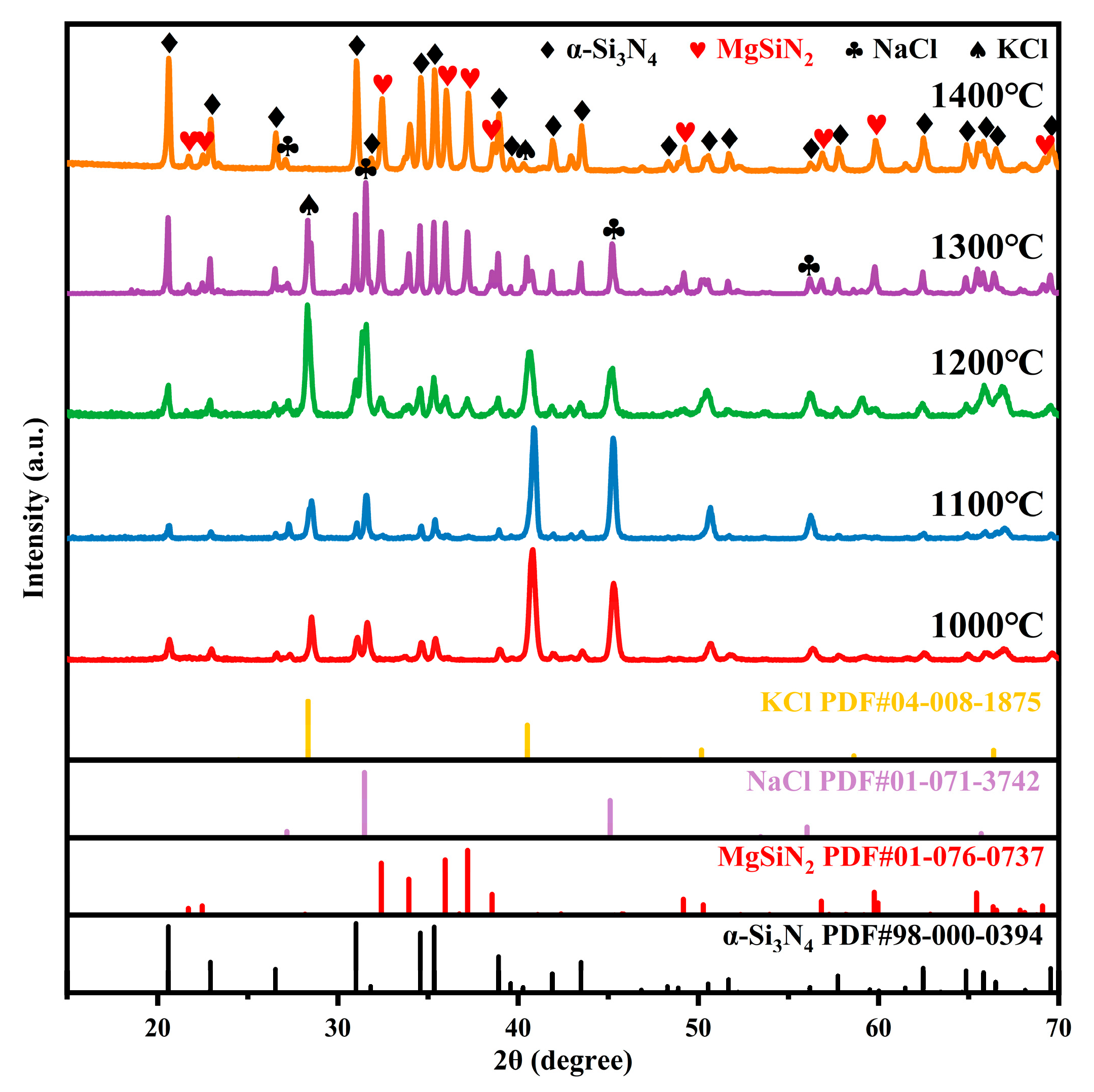
The XRD patterns of the products obtained from the MS1 sample after being treated at 1000, 1100, 1200, 1300, and 1400 °C for 2 h (without water washing) are shown in Figure 3. At reaction temperatures of 1000 °C and 1100 °C, the absence of distinct MgSiN2 diffraction peaks in the samples indicates that its formation reaction does not proceed under these conditions. As the temperature reached 1200 °C, weak diffraction peaks of MgSiN2 emerge, signifying the initiation of MgSiN2 formation. However, the reaction rate remained relatively slow due to the low temperature. When the temperature further increases to 1300 °C and 1400 °C, although the relative diffraction peak intensities of MgSiN2 and α-Si3N4 change, the degree of change is minimal compared to previous temperature variations, indicating that the reaction has nearly completed under these temperature conditions. Diffraction peaks attributable to NaCl, KCl, and their resultant solid solutions were clearly detectable in the systems after reacting at 1000, 1100, 1200, and 1300 °C. Nevertheless, the intensities of these salt phase diffraction peaks diminished rapidly with increasing reaction temperature. Notably, after reacting at 1400 °C, diffraction peaks of NaCl and KCl were no longer detectable in the XRD pattern. This phenomenon is primarily attributed to the volatilization behavior of the molten salt. According to the Clausius-Clapeyron equation, the vapor pressure of the eutectic melt formed by the NaCl-KCl salt mixture at approximately 650 °C increases exponentially with rising temperature, leading to a drastic acceleration in its volatilization rate. Consequently, as the holding temperature increases, the volatilization rate of the salt accelerates, resulting in a gradual decrease in the intensity of its diffraction peaks. Given that the boiling points of NaCl and KCl (~1413 °C and ~1420 °C, respectively) are very close to the holding temperature of 1400 °C, prolonged exposure at this temperature is sufficient to volatilize nearly all of the salt, leaving essentially no salt residue in the final product.
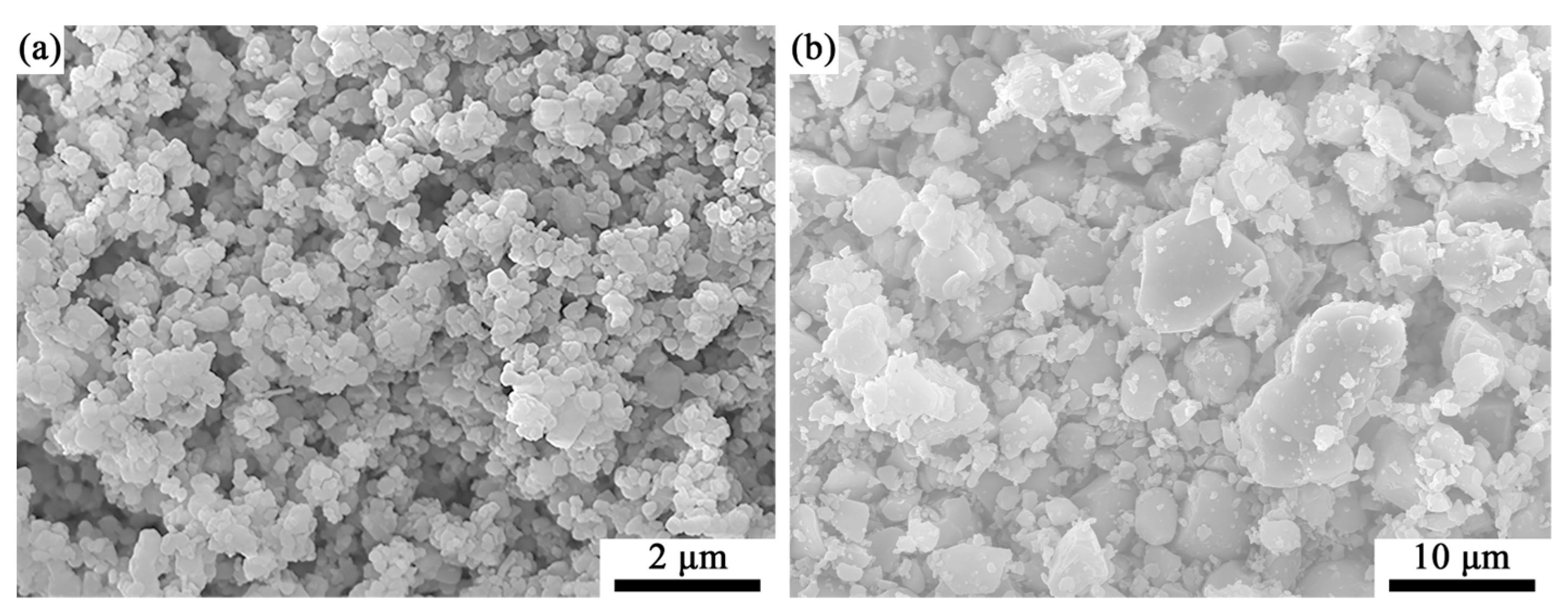
The SEM micrographs of the pure phase MgSiN2 samples after being compressed into discs under a pressure of 10 MPa and treated at 1300 °C and 1400 °C for 10 min are shown in Figure 4a,b, respectively. The sample treated at 1300 °C retains a particulate morphology at the submicron scale. In contrast, after treatment at 1400 °C the sample exhibits significantly coarsened, larger particles. This morphological difference can be attributed to the significantly enhanced surface diffusion activity of MgSiN2 in the temperature range of 1300–1400 °C. When the temperature rises to 1400 °C, particles may undergo coarsening through surface diffusion and Ostwald ripening mechanism. At the same time, under conditions close to their thermal decomposition temperature [46], local decomposition redeposition processes may also promote grain growth. Based on these observations, to achieve a uniform and fine MgSiN2 coating layer on the Si3N4 particles, the heat-treatment temperature should not exceed 1300 °C. Furthermore, it has been reported that MgSiN2 undergoes a decomposition reaction above 1400 °C (Reaction (4)). Therefore, considering account morphological control, coating uniformity, and thermal stability, 1300 °C is selected as the optimal temperature for the preparation of the MgSiN2 coating layer.
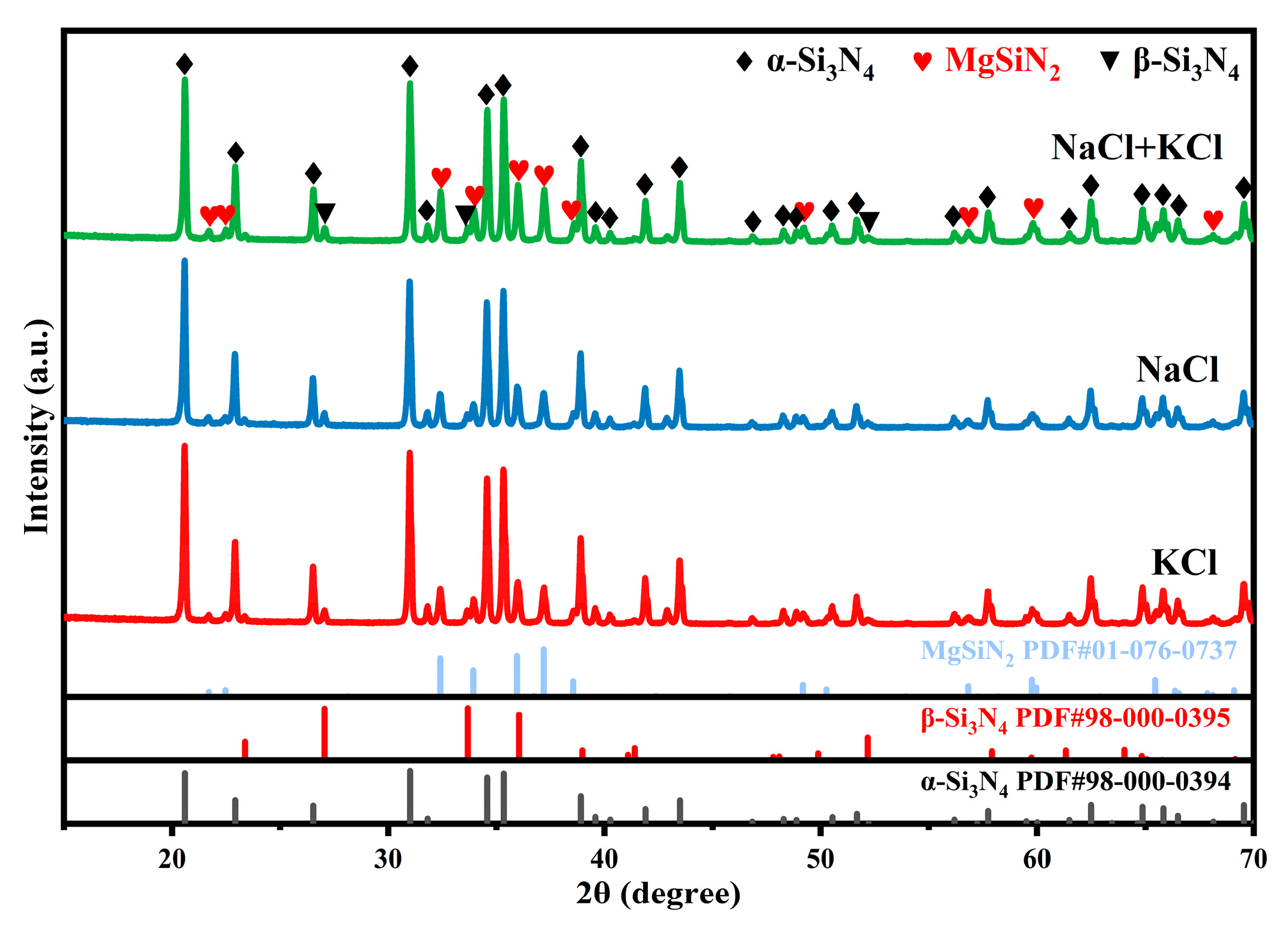
Figure 5 presents the X-ray diffraction patterns of the samples with a Mg/Si3N4 mass ratio of 0.100 after being treated in different molten salt environments. The phase fractions obtained through structural refinement of the XRD results are summarized in Table 1. The analysis indicates that, compared to samples processed using NaCl or KCl alone as the molten salt medium, the sample treated in the NaCl-KCl mixed molten salt exhibits significantly enhanced formation of MgSiN2. This phenomenon can be attributed to the lower eutectic melting point of the mixed salt system, which enables the establishment of a stable molten salt liquid phase environment at a relatively low temperature. Such an environment facilitates the uniform dispersion of Mg and its effective contact with N2, thereby accelerating the nitridation reaction of Mg, reducing the volatilization loss of Mg at elevated temperatures, and ultimately promoting the formation of MgSiN2.

3.2. Controlled Synthesis and Microstructural Analysis of MgSiN2 Shells

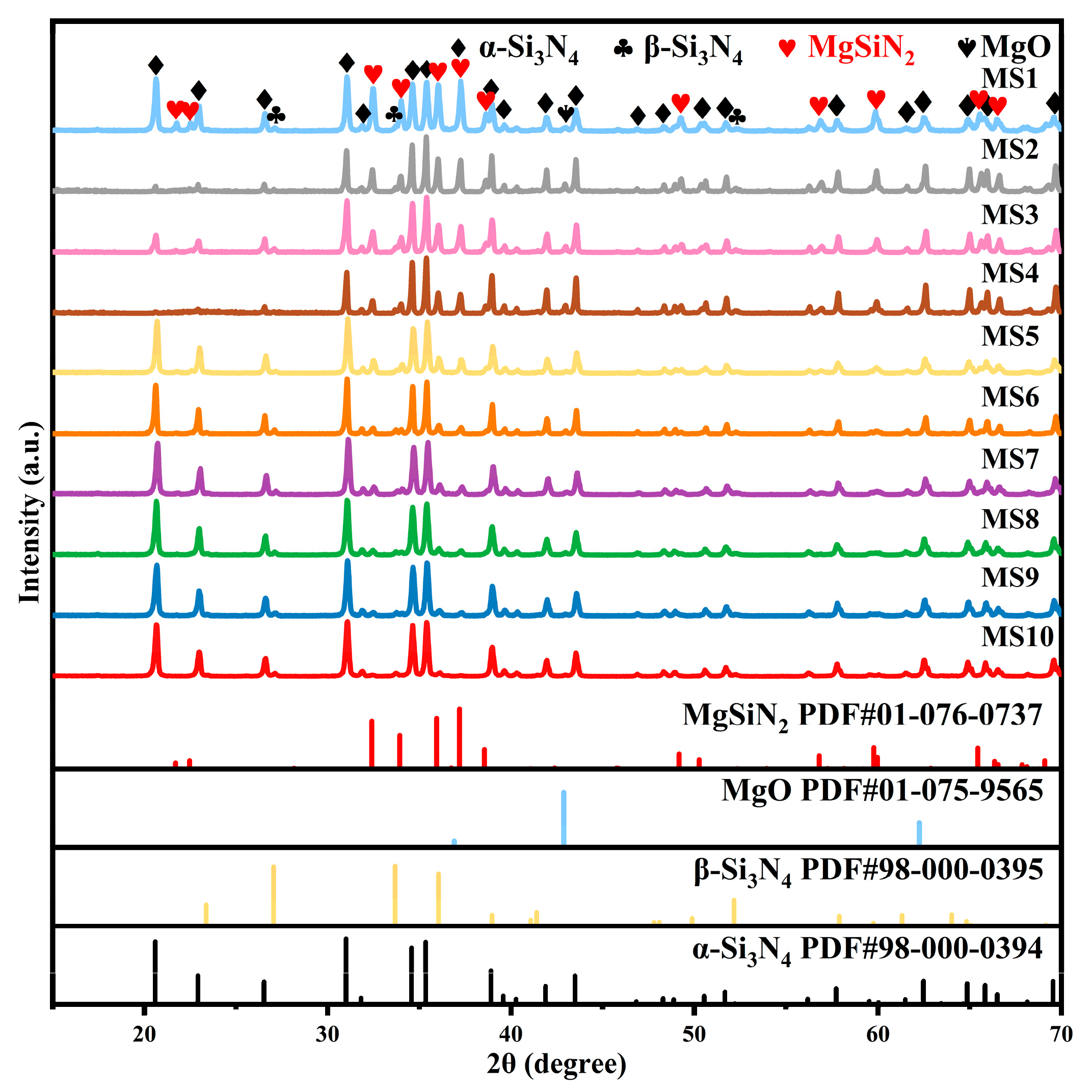
Figure 6 shows the phase composition of the samples obtained from the starting materials with different Mg/Si3N4 mass ratios after being treated at 1300 °C for 2 h followed by water washing. The results indicate that diffraction peaks corresponding to the MgSiN2 were clearly detected in all the samples investigated. As the Mg content in the starting materials decreased, the diffraction peak intensity of MgSiN2 in the products gradually weakens. This demonstrates that the yield of MgSiN2 in the final products can be effectively controlled by precisely adjusting the Mg/Si3N4 mass ratio in the starting materials.
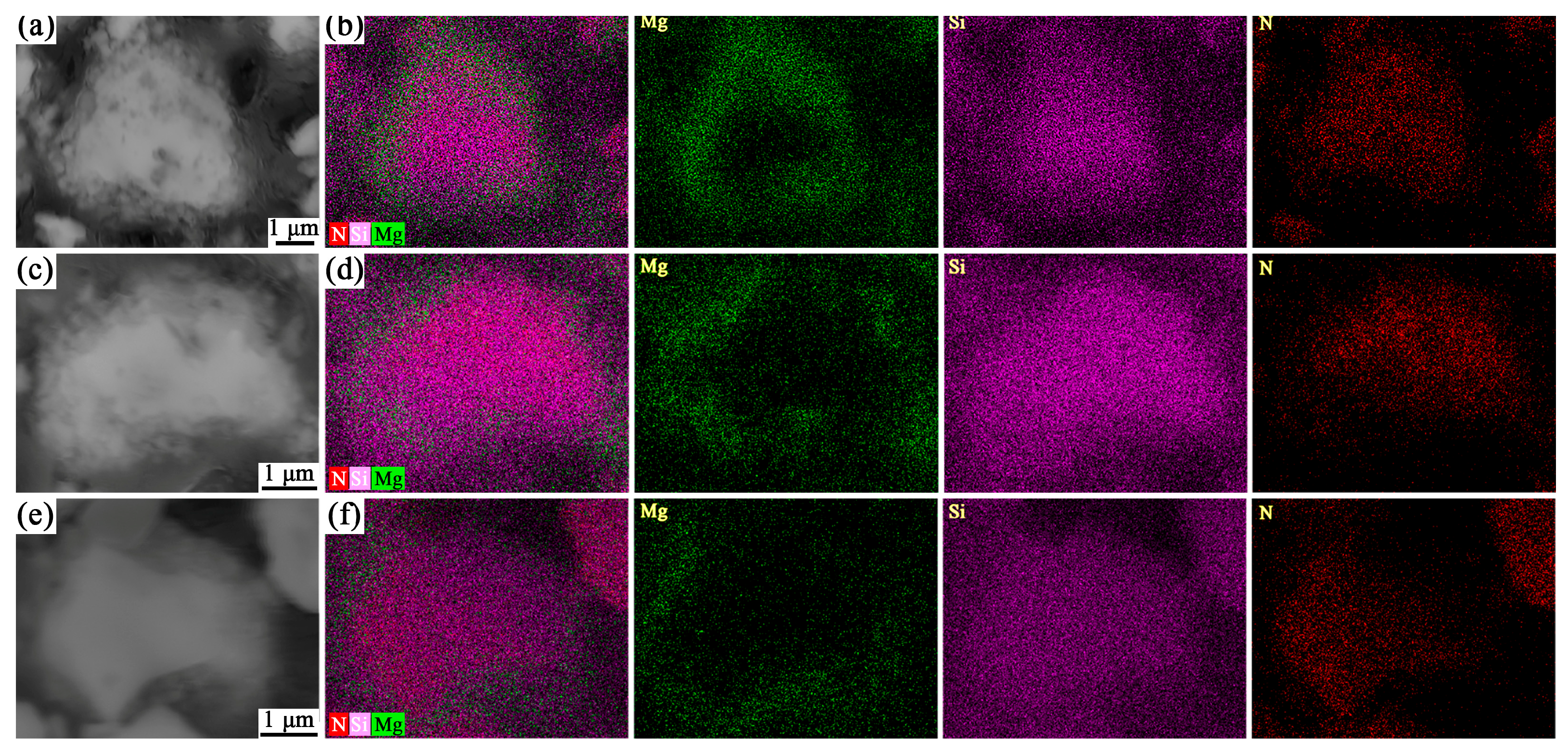
The cross-sectional microstructures of the MS4, MS5, and MS6 samples treated at 1300 °C for 2 h were characterized, with the results presented in Figure 7. It can be observed that the surfaces of the Si3N4 particles in all samples were covered with a substantial amount of finely dispersed particles. As the Mg/Si3N4 mass ratio in the starting materials increased, the quantity of these surface-attached particles increased significantly, which consequently led to an increase in the surface roughness of the Si3N4 particles. The corresponding elemental mapping results indicate that the interior region of the particles consisted of Si and N elements, aligning with the composition of α-Si3N4, while the periphery region of the particles was coated with a layer primarily composed of Mg, Si, and N elements. Furthermore, with increasing Mg content in the starting materials, the thickness of this coating layer exhibited a progressively increasing trend. This is extremely similar to the SEM image of the sample cross-section shown in reference [38,47], which also demonstrates the feasibility of this method in the Si3N4 system. Integrating the results from XRD phase analysis and SEM-EDS elemental mapping, it can be concluded that the reaction in the molten salt environment leads to the formation of a new MgSiN2 phase on the surface of the Si3N4 particles, successfully constructing a core–shell structure with Si3N4 as the core and MgSiN2 as the shell.
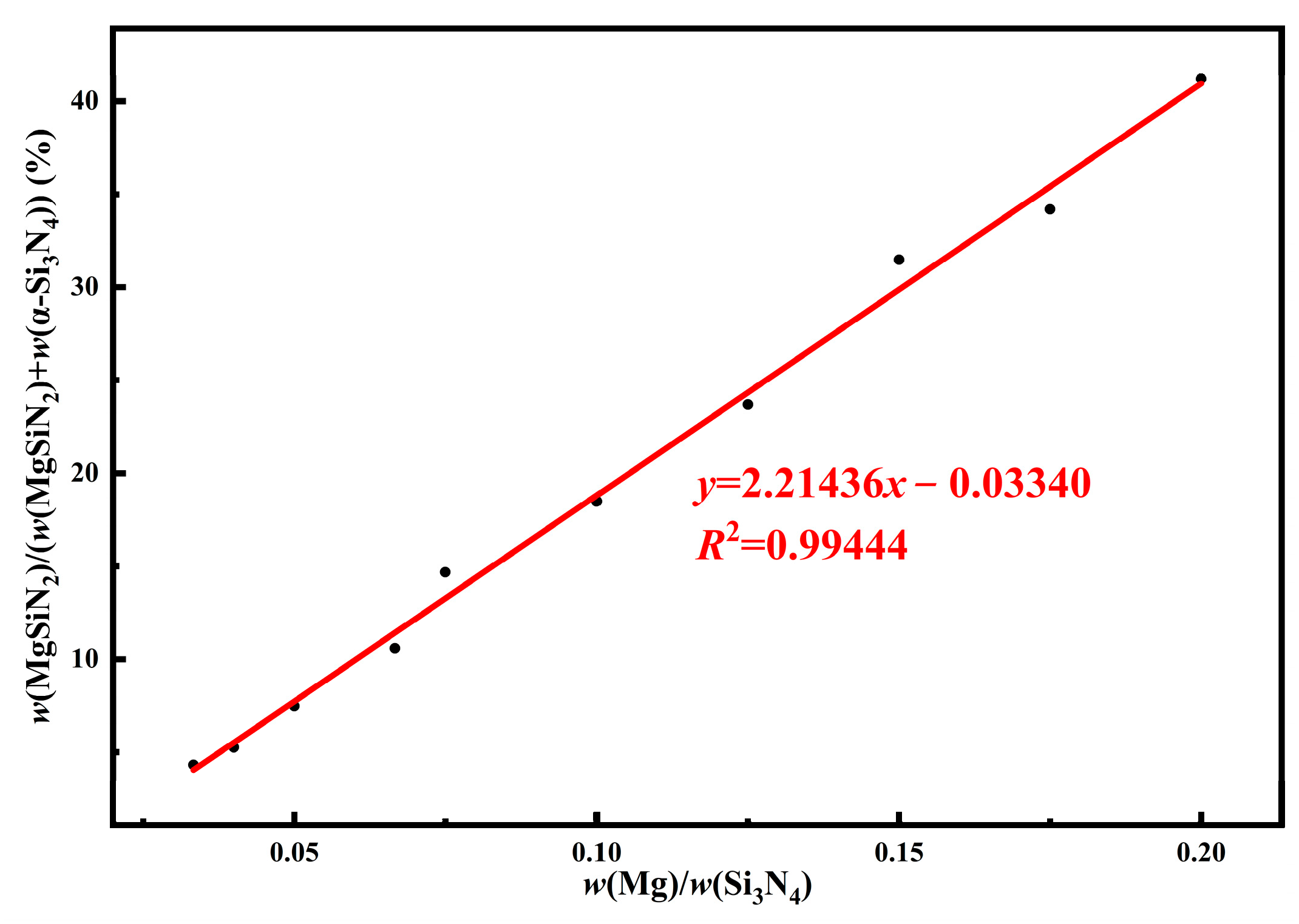
To quantitatively analyze the effect of the Mg/Si3N4 mass ratio in the starting materials on the formation of MgSiN2 in the products, the obtained XRD patterns were refined to determine the mass fractions of each crystalline phase in the products, and the results are summarized in Table 2. The data reveal that as the Mg/Si3N4 mass ratio in the starting materials decreases, the mass fraction of Si3N4 in the products gradually increases, while the mass fraction of MgSiN2 correspondingly decreases. A regression analysis was conducted between Mg/Si3N4 mass ratio and the mass fraction of MgSiN2 in the product (calculated as the proportion of MgSiN2 relative to the combined weight of α-Si3N4 and MgSiN2). The results are presented in Figure 8. The regression analysis indicates a highly significant linear positive correlation between the Mg/Si3N4 mass ratio in the starting materials and the mass fraction of MgSiN2 in the product. Consequently, precise adjustment of the relative content of Mg in the starting materials enables accurate control over the yield of MgSiN2 in the final product. This finding further implies that the MgSiN2 coating layer on the Si3N4 particle surfaces in the final composite powders can be tailored by adjusting the starting materials composition, thereby meeting the design requirements for different amounts of sintering aids or specific interface characteristics.
Furthermore, the integrated results from Figure 6 and Table 2 indicate that a small amount of β-Si3N4 phase is present in all the resultant products. Its sources include a small amount of β-Si3N4 present in the initial α-Si3N4 raw materials, as well as a small amount of α-Si3N4 that has undergone the α → β phase transformation at high temperatures. Concurrently, a certain amount of the MgO phase is also observed in all samples. This may originate from the trace MgO present in the Mg powder. Moreover, due to the intrinsic structural defects in α-Si3N4, a certain amount of oxide layer in the form of SiO2 is present on its surface [48]. Such oxygen species exhibit high reactivity and tend to react with Mg at elevated temperatures, forming MgO that remains in the system, which constitutes another significant source of MgO.

3.3. Surface Structure of Si3N4@MgSiN2 Particles

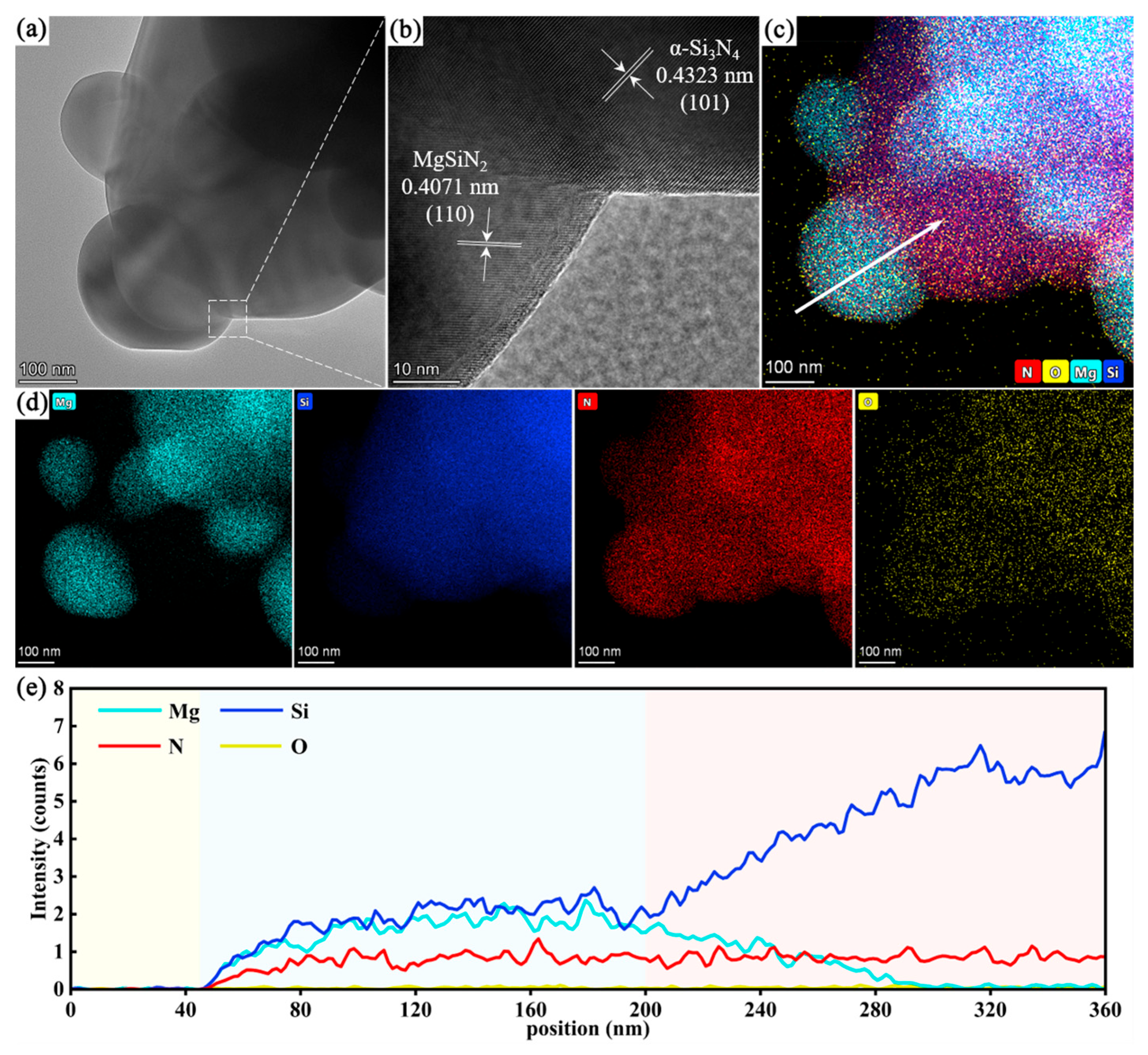
To further investigate the formation and attachment morphology of MgSiN2 on the surface of Si3N4 particles, high-resolution transmission electron microscopy (HRTEM) analysis was performed on the as-synthesized MS5 samples, with the results presented in Figure 9. Two distinct sets of lattice fringes are clearly identifiable in the HRTEM image. The measured interplanar spacings are 0.4323 nm and 0.4071 nm, corresponding to the (101) plane of α-Si3N4 and the (110) plane of MgSiN2, respectively. Figure 9c,d show the corresponding TEM-EDS elemental mapping results. The distributions of Mg, Si, and N elements further confirm the spatial relationship between the MgSiN2 and Si3N4 phases. In Figure 9e, the EDS line-scan profile collected along the white arrow indicated in Figure 9c reveals the variation in elemental content. The intensity of the Mg signal gradually decreases from the exterior toward the interior of the particle, indicating that the reaction between Mg and Si3N4 within the molten salt environment proceeds progressively from the surface inward. This reaction pathway aligns well with the classical “template growth” mechanism associated with molten salt synthesis [38,47,49].
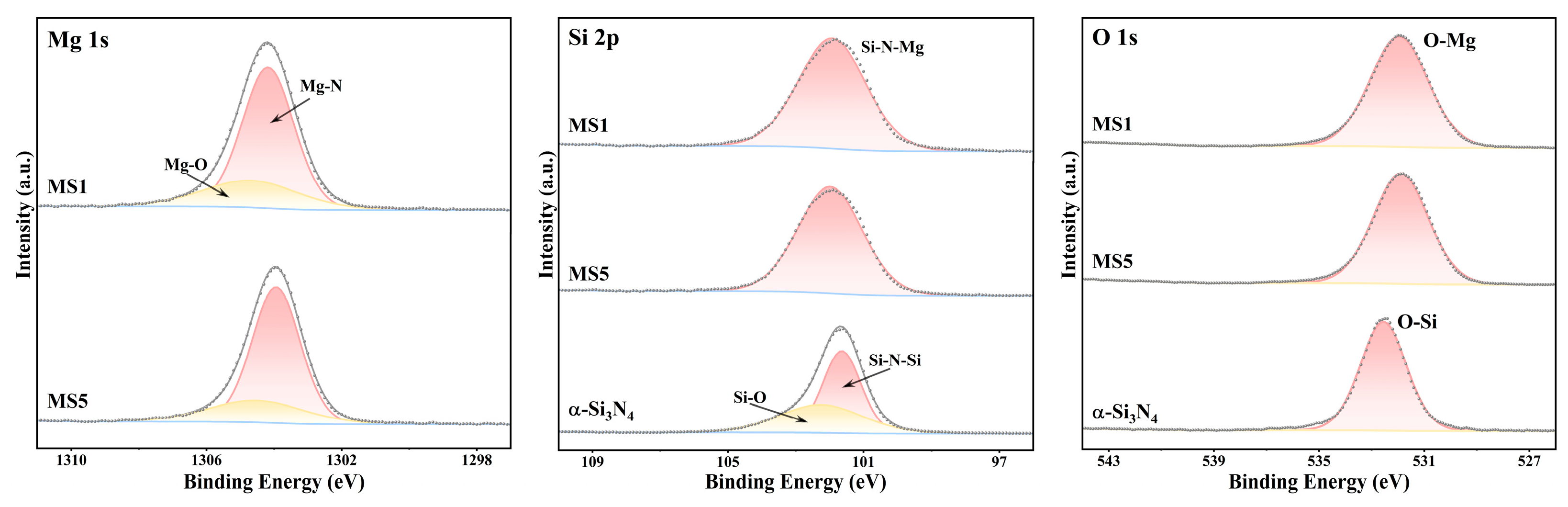
To further investigate the chemical states on the surface of the Si3N4@MgSiN2 particles and the effect of Mg on oxygen impurities in the starting materials, X-ray photoelectron spectroscopy (XPS) analysis was performed on the MS1, MS5, and raw α-Si3N4 samples, with the results presented in Figure 10. Analysis of the Mg 1s spectra indicates that on the surface of the Si3N4@MgSiN2 particles, Mg exists predominantly in the form of Mg-N bonds, which aligns with the structural characteristic of Mg occupying the tetrahedral MgN4 coordination center in MgSiN2 [50]. In the Mg 1s spectra of the MS1 and MS5 samples, a minor amount of Mg atoms was detected in the form of Mg-O bonds. Correspondingly, peaks corresponding to O-Mg bonds are observable in their O 1s spectra, and no peaks corresponding to Si-O bonds were detected in the Si 2p spectra of these two samples. In sharp contrast, a relatively distinct peaks corresponding to Si-O bonds were present in the Si 2p spectrum of the raw α-Si3N4 sample, and its O 1s peaks corresponded to the binding energy of O-Si bonds. This difference confirms the gettering effect of Mg on oxygen impurities in the raw α-Si3N4. In the Si 2p spectra, the characteristic peaks corresponding to Si-N bonds for the MS1 and MS5 samples is located at 102.0 eV, which is assigned to Si-N bonds within the MgSiN2 phase. This represents a positive shift of 0.3 eV compared to the peaks corresponding to standard Si-N bonds in α-Si3N4 at 101.7 eV. This shift is primarily attributed to the strong electron-withdrawing inductive effect exerted of Mg on N in MgSiN2. This effect reduces the shielding of the electron cloud around adjacent Si atoms by N atoms, leading to an increase in the binding energy of the Si 2p electrons and consequently a stronger Si-N bond in MgSiN2. This phenomenon provides evidence at the electronic structure level that the reaction between Si3N4 and Mg on the surface of the Si3N4 particles leads to the formation of MgSiN2.

3.4. Sintering Properties of Si3N4@MgSiN2

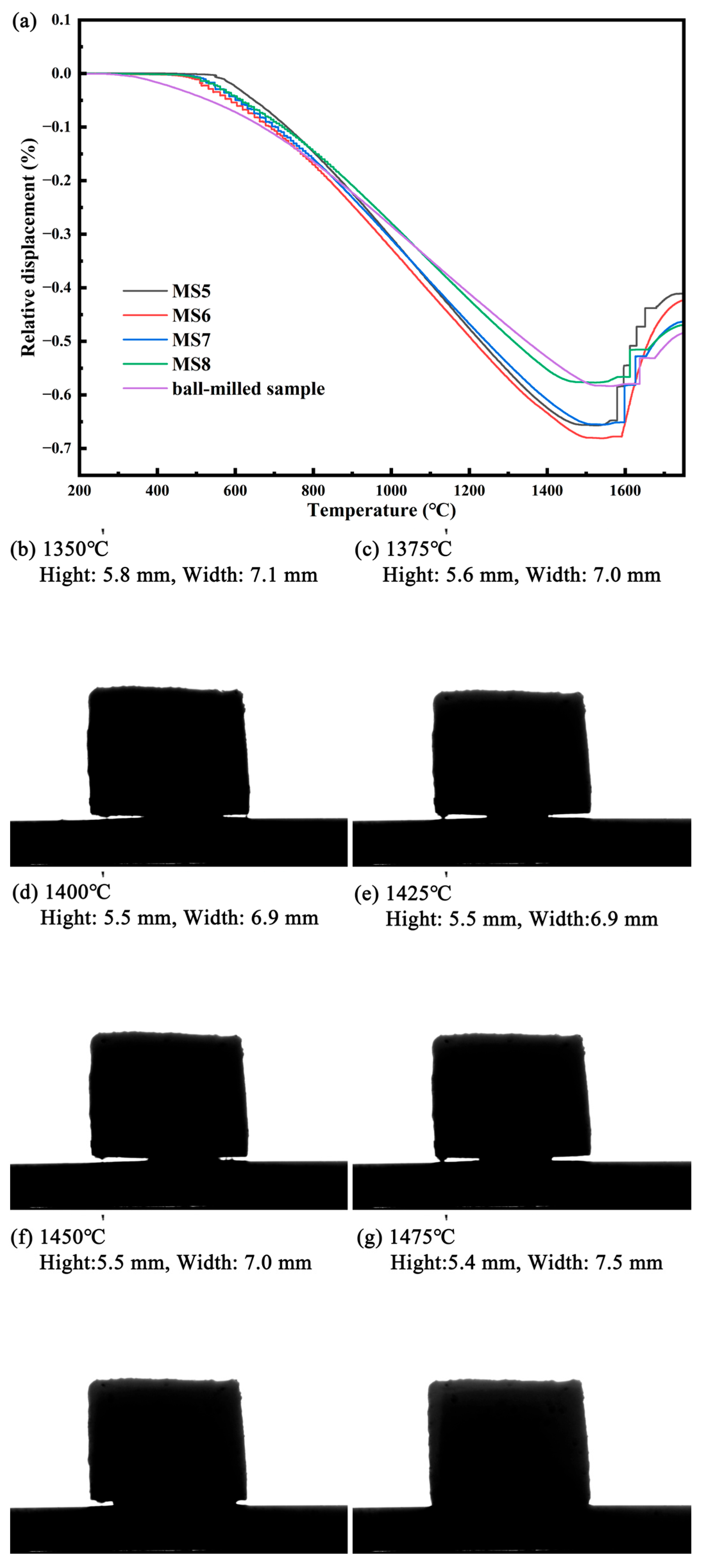
The shrinkage behavior of samples MS5–MS8 and a Si3N4 raw material mixture prepared by ball milling with the addition of 7 wt.% MgSiN2 as a sintering aid was investigated during the sintering process, with the results shown in Figure 11a. It can be observed that the shrinkage cessation temperatures of the four MS5–MS8 samples are lower than that of the ball-milled sample, indicating a lower temperature for the onset of liquid phase formation. Simultaneously, visual sintering observations of the MS5 sample were conducted under a nitrogen atmosphere, as presented in Figure 11b–g. Figure 11b reveals that when the temperature reaches approximately 1350 °C, the sample height exhibits a decreasing trend with further temperature increase, suggesting the onset of melting around this temperature. Based on the images of the sample at various temperatures shown in Figure 11c–g, distinct wetting behavior of the sample toward the substrate can be observed at approximately 1425 °C. These phenomena demonstrate that the Si3N4@MgSiN2 powder can melt to form a liquid phase at a relatively low temperature and maintain this liquid state over a wide temperature range. This characteristic is highly favorable for promoting the α → β phase transformation, as well as facilitating the nucleation and grain growth of β-Si3N4 during the sintering process of Si3N4 ceramics [13,14,51].

4. Conclusions

In summary, Si3N4@MgSiN2 composite powder with a core–shell structure was successfully synthesized via the in situ reaction between Mg and α-Si3N4 in a molten salt environment. The reaction pathway involved nitridation of Mg at approximately 600 °C to form Mg3N2, which dispersed in NaCl-KCl molten salt and reacted with α-Si3N4 above 1200 °C via a template growth mechanism, forming a well-crystallized MgSiN2 shell. Temperatures of 1200 °C or below were insufficient for MgSiN2 formation, while 1400 °C led to grain coarsening. In contract, the MgSiN2 layer formed at 1300 °C exhibits the optimal morphology and uniformity, thereby establishing this as the optimal reaction temperature. Furthermore, investigation into different molten salt systems reveals that, compared to using a single salt, the use of mixed salts can more effectively facilitate mass transfer and contact between reactants, which is more conducive to the formation of MgSiN2. A linear positive correlation was established between the coating thickness and the Mg/Si3N4 mass ratio in the starting materials. This relationship enables the controllable preparation of core–shell powders with varying shell thicknesses through precise adjustment of the starting material composition. The synthesized powder exhibited liquid phase formation at approximately 1350 °C, thereby conferring higher sintering activity to the entire system. This study provides a comprehensive synthesis strategy and mechanistic understanding for the controllable preparation of Si3N4@MgSiN2 core–shell structured materials, offering a new material foundation for the synthesis of Si3N4 ceramics with high thermal conductivity.

Author Contributions

Y.L.: Writing—original draft, Investigation, Formal analysis. W.W. (Weiming Wang): Supervision, Data curation. Y.M.: Project administration, Supervision. L.G.: Supervision, Resources. Z.P.: Supervision. W.W. (Weide Wang): Writing—review and editing, Supervision, Conceptualization, Funding acquisition. Q.M.: Supervision, Funding acquisition, Resources. All authors have read and agreed to the published version of the manuscript.

Funding

This work was funded by Hunan Provincial Natural Science Foundation of China, General Program (No. 2024JJ5407), Hunan Province Postgraduate Research and Innovation Project (CX20240122) and Young Elite Scientists Sponsorship Program by CAST (YESS20240040).

Data Availability Statement

The original contributions presented in this study are included in the article. Further inquiries can be directed to the corresponding authors.

Conflicts of Interest

The authors declare no conflict of interest.

References

  1. Tang, S.J.; Guo, W.M.; Sun, S.K.; Lin, H.T. Design Strategy of phase and microstructure of Si3N4 ceramics with simultaneously high hardness and toughness. J. Adv. Ceram. 2023, 12, 122–131. [Google Scholar] [CrossRef]
  2. Zhang, J.; Liu, G.H.; Cui, W.; Ge, Y.Y.; Du, S.M.; Gao, Y.X.; Zhang, Y.Y.; Li, F.; Chen, Z.L.; Du, S.X.; et al. Plastic deformation in silicon nitride ceramics via bond switching at coherent interfaces. Science 2022, 378, 371–376. [Google Scholar] [CrossRef]
  3. Zhan, Z.; Deng, B.; Chen, Y.R.; Zhang, X.H.; Song, J.Z. Synergistic improvement of the mechanical and biological performance of Si3N4 by incorporating nanostructured graphene. J. Adv. Ceram. 2015, 14, 9221026. [Google Scholar] [CrossRef]
  4. Hirosaki, N.; Ogata, S.; Kocer, C.; Kitagawa, H.; Nakamura, Y. Molecular dynamics calculation of the ideal thermal conductivity of single-crystal α- and β-Si3N4. Phys. Rev. B Condens. Matter Mater. Phys. 2002, 65, 134110. [Google Scholar] [CrossRef]
  5. Wang, W.M.; Wang, W.D.; Liu, Y.M.; Zeng, K.H.; Mo, Y.; Ma, Q.S. Synergistic improvement of flexural strength and fracture toughness in Si3N4 ceramics featuring high-entropy grain boundary phase. J. Adv. Ceram. 2025, 15, 9221230. [Google Scholar] [CrossRef]
  6. Li, S.S.; Chen, H.B.; Wang, W.D.; Yao, D.X.; Xia, Y.F.; Zeng, Y.P. Effects of Y2O3/MgO ratio on mechanical properties and thermal conductivity of silicon nitride ceramics. Int. J. Appl. Ceram. Technol. 2022, 19, 2873–2882. [Google Scholar] [CrossRef]
  7. Han, Z.Q.; Liu, J.; Wang, W.W.; Zhou, Q.X.; Zhao, Z.C.; Han, Y.N.; Wang, Y.Y.; Wang, Y.; Liu, F.T.; Li, L. Effect of Er2O3/MgO ratio on mechanical and thermal properties of Si3N4 ceramics. Int. J. Appl. Ceram. Technol. 2024, 21, 2915–2922. [Google Scholar] [CrossRef]
  8. Hampshire, S.; Pomeroy, M.J. Oxynitride Glasses. Int. J. Appl. Ceram. Technol. 2008, 5, 155–163. [Google Scholar] [CrossRef]
  9. Wang, L.J.; Liu, X.J.; Qi, Q.; Ni, D.W.; Zhang, H.; Yin, J.; Qiao, Z.H.; Huang, Z.R. A new type of dense silicon nitride-based metamaterial. J. Adv. Ceram. 2025, 14, 9221037. [Google Scholar] [CrossRef]
  10. Kitayama, M.; Hirao, K.; Tsuge, A.; Watari, K.; Toriyama, M.; Kanzaki, S. Thermal Conductivity of β-Si3N4: II, Effect of Lattice Oxygen. J. Am. Ceram. Soc. 2000, 83, 1985–1992. [Google Scholar] [CrossRef]
  11. Kitayama, M.; Hirao, K.; Tsuge, A.; Toriyama, M.; Kanzaki, A. Oxygen content in β-Si3N4 crystal lattice. J. Am. Ceram. Soc. 1999, 82, 3263–3265. [Google Scholar] [CrossRef]
  12. Kitayama, M.; Hirao, K.; Toriyama, M.; Kanzaki, S. Thermal Conductivity of β-Si3N4: I, Effects of various microstructural factors. J. Am. Ceram. Soc. 1999, 82, 3105–3112. [Google Scholar] [CrossRef]
  13. Wang, W.D.; Liu, Y.M.; Pan, Y.; Chen, S.A.; Guo, L.; Peng, Z.; Yao, D.X.; Ma, Q.S.; Zeng, Y.P. The effects of silicon additive content on thermal conductivity and mechanical properties of Si3N4 ceramics. J. Am. Ceram. Soc. 2025, 108, e20534. [Google Scholar] [CrossRef]
  14. Wang, W.D.; Yao, D.X.; Chen, H.B.; Xia, Y.F.; Zuo, K.H.; Yin, J.W.; Liang, H.Q.; Zeng, Y.P. ZrSi2–MgO as novel additives for high thermal conductivity of β-Si3N4 ceramics. J. Am. Ceram. Soc. 2020, 103, 2090–2100. [Google Scholar] [CrossRef]
  15. Zhuang, Y.H.; Sun, F.; Zhou, L.J.; Jiang, C.X.; Wang, J.J.; Li, S.; Liao, S.J. The influence of magnesium compounds on the properties of silicon nitride ceramics. Int. J. Appl. Ceram. Technol. 2024, 21, 2273–2287. [Google Scholar] [CrossRef]
  16. Peng, A.Y.; Li, J.G.; Chen, Y.; Li, M.J.; Shen, Q. Low-temperature fabrication of Si3N4 ceramics with high thermal conductivities using a single Mg2Si sintering additive. Ceram. Int. 2023, 49, 39473–39478. [Google Scholar] [CrossRef]
  17. Lee, H.M.; Lee, E.B.; Kim, D.L.; Kim, D.K. Comparative study of oxide and non-oxide additives in high thermal conductive and high strength Si3N4 ceramics. Ceram. Int. 2016, 42, 17466–17471. [Google Scholar] [CrossRef]
  18. Lee, H.M.; Tatami, J.; Kim, D.K. Microstructural evolution of Si3N4 ceramics from starting powders with different α-to-β ratios. J. Ceram. Soc. Jpn. 2016, 124, 800–807. [Google Scholar] [CrossRef]
  19. Lia, S.J.; Zhou, L.J.; Jiang, C.X.; Wang, J.J.; Zhuan, Y.H.; Li, S. Thermal conductivity and mechanical properties of Si3N4 ceramics with binary fluoride sintering additives. J. Eur. Ceram. Soc. 2021, 41, 6971–6982. [Google Scholar] [CrossRef]
  20. Yang, C.P.; Ye, F.; Ma, J.; Ding, J.J.; Zhang, B.; Liu, Q.; Zhang, H.Q. Comparative study of fluoride and non-fluoride additives in high thermal conductive silicon nitride ceramics fabricated by spark plasma sintering and post-sintering heat treatment. Ceram. Int. 2018, 44, 23202–23207. [Google Scholar] [CrossRef]
  21. Hu, F.; Zhao, L.; Xie, Z.P. Silicon nitride ceramics with high thermal conductivity and excellent mechanical properties fabricated with MgF2 sintering aid and post-sintering heat treatment. J. Ceram. Sci. Technol. 2016, 7, 423–428. [Google Scholar] [CrossRef]
  22. Ratzker, B.; Sokol, M.; Kalabukhov, S.; Frage, N. High-pressure spark plasma sintering of silicon nitride with LiF additive. J. Eur. Ceram. Soc. 2018, 38, 1271–1277. [Google Scholar] [CrossRef]
  23. Luo, C.X.; Zhang, Y.X.; Deng, T.F. Pressureless sintering of high performance silicon nitride ceramics at 1620 °C. Ceram. Int. 2021, 47, 29371–29378. [Google Scholar] [CrossRef]
  24. Wang, W.D.; Yao, D.X.; Liang, H.Q.; Xia, Y.F.; Zuo, K.H.; Yin, J.W.; Zeng, Y.P. Improved thermal conductivity of β-Si3N4 ceramics by lowering SiO2/Y2O3 ratio using YH2 as sintering additive. J. Am. Ceram. Soc. 2020, 103, 5567–5572. [Google Scholar] [CrossRef]
  25. Wang, W.D.; Yao, D.X.; Liang, H.Q.; Xia, Y.F.; Zuo, K.H.; Yin, J.W.; Zeng, Y.P. Improved thermal conductivity of β-Si3N4 ceramics through the modification of the liquid phase by using GdH2 as a sintering additive. Ceram. Int. 2021, 47, 5631–5638. [Google Scholar] [CrossRef]
  26. Wang, W.D.; Yao, D.X.; Liang, H.Q.; Xia, Y.F.; Zuo, K.H.; Yin, J.W.; Zeng, Y.P. Enhanced thermal conductivity in Si3N4 ceramics prepared by using ZrH2 as an oxygen getter. J. Alloys Compd. 2021, 855, 157451. [Google Scholar] [CrossRef]
  27. Li, Y.; Kim, H.N.; Wu, H.B.; Kim, M.J.; Ko, J.W.; Park, Y.J.; Huang, Z.; Kim, H.D. Enhanced thermal conductivity in Si3N4 ceramic with the addition of Y2Si4N6C. J. Am. Ceram. Soc. 2018, 101, 4128–4136. [Google Scholar] [CrossRef]
  28. Fan, B.B.; Sun, W.; Hu, Z.L.; Zhao, D.K.; Wang, B.H.; Zhao, S.; Zhang, S.J.; Li, F.; Xi, Z.P.; Chen, K.C.; et al. Preparation of Si3N4 ceramics with enhanced thermal conductivity and mechanical properties using nitride sintering additives. Int. J. Appl. Ceram. Technol. 2025, 22, e15182. [Google Scholar] [CrossRef]
  29. Fu, S.; Yang, Z.C.; Li, H.H.; Wang, L.; Li, Y.; Li, J.T. Effects of Gd2O3 and MgSiN2 sintering additives on the thermal conductivity and mechanical properties of Si3N4 ceramics. Int. J. Appl. Ceram. Technol. 2022, 20, 1855–1864. [Google Scholar] [CrossRef]
  30. Li, J.B.; Jiang, Q.G.; Pan, Z.F.; Lv, D.L.; Wu, S.H. Fabrication of silicon nitride with high thermal conductivity and flexural strength by hot-pressing flowing sintering. Int. J. Appl. Ceram. Technol. 2023, 21, 2841–2849. [Google Scholar] [CrossRef]
  31. Liu, Y.; Liu, R.X.; Zheng, Y.H.; Zhao, J.X.; Sui, T.Y.; Li, X.L.; Lin, B. Effect of the ratio of Y2O3 and MgSiN2 sintering additives on the microstructure, thermal and mechanical properties of Si3N4 ceramic. Ceram. Int. 2023, 49, 36490–36496. [Google Scholar] [CrossRef]
  32. Hayashi, H.; Hirao, K.; Toriyama, M.; Kanzaki, S.; Itatani, K. MgSiN2 Addition as a Means of Increasing the Thermal Conductivity of β-Silicon Nitride. J. Am. Ceram. Soc. 2001, 84, 3060–3062. [Google Scholar] [CrossRef]
  33. Zhou, M.; Liu, Y.; Li, X.L.; Sui, T.Y.; Su, D.; Ji, H.M. Microstructure evolution of Si3N4 ceramics with high thermal conductivity by using Y2O3 and MgSiN2 as sintering additives. Ceram. Int. 2023, 49, 26331–26337. [Google Scholar] [CrossRef]
  34. Liu, Y.; Liu, R.X.; Zheng, Y.H.; Zhao, J.X.; Sui, T.Y.; Li, X.L.; Lin, B. Densification, microstructure, thermal and mechanical properties of Si3N4 ceramics: Effect of Y2Si4N6C and MgSiN2 content. Ceram. Int. 2024, 50, 38507–38513. [Google Scholar] [CrossRef]
  35. Li, M.; Zhou, X.B.; Yang, H.; Du, S.Y.; Huang, Q. The critical issues of SiC materials for future nuclear systems. Scr. Mater. 2018, 143, 149–153. [Google Scholar] [CrossRef]
  36. Lu, D.L.; Yang, P.; Huang, Y.; Huang, N.S.; Wu, S.H. Enhanced thermal conductivity in Si3N4 ceramics by carbonizing polydopamine coatings. Ceram. Int. 2022, 48, 18615–18624. [Google Scholar] [CrossRef]
  37. Ge, M.Z.; Kan, H.H.; Yang, H.; Qiao, J.M.; Jiang, Z.H. Additive-coated Si3N4 powder prepared by the sol-gel method. MRS Online Proc. Libr. 1994, 346, 667. [Google Scholar] [CrossRef]
  38. Shao, J.Q.; Li, M.; Chang, K.K.; Huang, Y.; Ren, D.L.; Wang, J.; Zhou, X.B.; He, L.; Huang, F.; Du, S.Y.; et al. Fabrication and characterization of SPS sintered SiC-based ceramic from Y3Si2C2-coated SiC powders. J. Eur. Ceram. Soc. 2018, 38, 4833–4841. [Google Scholar] [CrossRef]
  39. Wan, P.; Li, M.; Huang, Q. Molten salt assisted synthesis of Dy3Si2C2 coated SiC powders and sintering behavior of SiC ceramics. J. Inorg. Mater. 2021, 36, 49. [Google Scholar] [CrossRef]
  40. Li, W.X.; Pang, H.J.; Zhang, Z.X.; Cheng, L.Y.; Wang, Y.F.; Zhang, X.L.; Mu, J.B.; Dong, Y.; Wang, Y.M.; Zhang, X.R. Core–shell SiCw@TiC composite whisker-reinforced Al2O3 ceramics: Preparation, properties, and toughening mechanisms. J. Adv. Ceram. 2025, 14, 9221093. [Google Scholar] [CrossRef]
  41. Zhang, G.G.; Li, G.S.; Lan, Z.A.; Lin, L.H.; Savateev, A.; Heil, T.; Zafeiratos, S.; Wang, X.C.; Antonietti, M. Optimizing optical absorption, exciton dissociation, and charge transfer of a polymeric carbon nitride with ultrahigh solar hydrogen production activity. Angew. Chem. Int. Ed. 2017, 56, 13445–13449. [Google Scholar] [CrossRef]
  42. Li, Y.; Gong, F.; Zhou, Q.; Feng, X.H.; Fan, J.J.; Xiang, Q.J. Crystalline isotype heptazine-/triazine-based carbon nitride heterojunctions for an improved hydrogen evolution. Appl. Catal. B-Environ. 2020, 268, 118381. [Google Scholar] [CrossRef]
  43. Liu, D.; Fu, Q.G.; Chu, Y.H. Molten salt synthesis, formation mechanism, and oxidation behavior of nanocrystalline HfB2 powders. J. Adv. Ceram. 2020, 9, 35–44. [Google Scholar] [CrossRef]
  44. Zong, F.J.; Meng, C.Z.; Guo, Z.M.; Ji, F.; Xiao, H.D.; Zhang, X.J.; Ma, J.; Ma, H.L. Synthesis and characterization of magnesium nitride powder formed by Mg direct reaction with N2. J. Alloys Compd. 2010, 508, 172–176. [Google Scholar] [CrossRef]
  45. Hu, J.J.; Qin, J.; Zhou, Z.Y.; Shi, Z.Q.; Peng, K.; Gao, K.; Xia, H.Y. Facile synthesis of BP powder via molten salt method and their photoelectrochemical properties. Ceram. Int. 2023, 49, 14596–14606. [Google Scholar] [CrossRef]
  46. Lenčéš, Z.; Pentráková, L.; Hrabalová, M.; Šajgalík, P.; Hirao, K. Decomposition of MgSiN2 in nitrogen atmosphere. J. Eur. Ceram. Soc. 2011, 31, 1473–1480. [Google Scholar] [CrossRef]
  47. Liu, Y.; Wang, C.Y.; Luo, W.; Bai, L.; Xu, Y.; Hao, X.D.; Zhu, J.F.; Guo, S.W. Facile synthesis of hollow Ti3AlC2 microrods in molten salts via Kirkendall effect. J. Adv. Ceram. 2022, 11, 1491–1497. [Google Scholar] [CrossRef]
  48. Kim, J.M.; Ko, S.I.; Kim, H.N.; Ko, J.W.; Lee, J.W.; Kim, H.D.; Park, Y.J. Effects of microstructure and intergranular glassy phases on thermal conductivity of silicon nitride. Ceram. Int. 2017, 43, 5441–5449. [Google Scholar] [CrossRef]
  49. Ye, J.; Zhang, S.; Lee, W.E. Molten salt synthesis and characterization of SiC coated carbon black particles for refractory castable applications. J. Eur. Ceram. Soc. 2013, 33, 2023–2029. [Google Scholar] [CrossRef]
  50. Li, Y.J.; Xu, L.Q.; Wang, L.C.; Ju, Z.C.; Yang, L.S.; Xing, Z.; Qian, Y.T. Synthesis of MgSiN2 cuboids by a solid-state reaction. Chem. Lett. 2010, 39, 888–889. [Google Scholar] [CrossRef]
  51. Sarin, V.K. On the α-to-β phase transformation in silicon nitride. Mater. Sci. Eng. A 1988, 105–106, 151–159. [Google Scholar] [CrossRef]
Figure 1. TG-DSC test results of (a) MS1 and (b) MS5 samples under flowing nitrogen atmosphere.
Materials 19 01475 g001
Figure 2. XRD patterns of the MS5 samples after being treated at 1300 °C under different atmospheres for 2 h.
Materials 19 01475 g002
Figure 3. XRD patterns of the MS1 samples after being treated at different temperatures under a nitrogen atmosphere for 2 h without water washing.
Materials 19 01475 g003
Figure 4. SEM images of pure phase MgSiN2 samples after being treated at (a) 1300 °C and (b) 1400 °C for 10 min.
Materials 19 01475 g004
Figure 5. XRD patterns of the samples with Mg/Si3N4 mass ratio of 0.100 after being treated under different molten salt environments.
Materials 19 01475 g005
Figure 6. XRD patterns of the samples with different Mg/Si3N4 mass ratios after being treated at 1300 °C for 2 h.
Materials 19 01475 g006
Figure 7. Cross-sectional SEM images and corresponding elemental mapping of the samples with different Mg/Si3N4 mass ratios: (a,b) MS4, (c,d) MS5, (e,f) MS6.
Materials 19 01475 g007
Figure 8. Regression analysis between the Mg/Si3N4 mass ratio and the mass fraction of MgSiN2 (calculated as w(MgSiN2)/(w(MgSiN2) + w(Si3N4))), with the corresponding regression equation.
Materials 19 01475 g008
Figure 9. (a,b) TEM images of the MS5 sample, (c,d) corresponding elemental mapping of the TEM images, (e) EDS line-scan profile along the white arrow in (c).
Materials 19 01475 g009
Figure 10. XPS spectra of the Mg 1s, Si 2p, and O 1s for the MS1, MS5, and α-Si3N4 samples.
Materials 19 01475 g010
Figure 11. (a) Sintering shrinkage curves of the five samples during the sintering process, (bg) images of the MS5 sample at different temperatures during the in-situ visualization of the sintering process.
Materials 19 01475 g011
Table 1. The content of each phase in samples prepared using different salt systems.
SampleTypes of SaltContent of Each Phase/wt.%
α-Si3N4β-Si3N4MgSiN2
1KCl77.9226.09415.894
2NaCl76.0766.20617.718
3NaCl + KCl72.2285.79421.978
Table 2. The phase content of samples with different Mg/Si3N4 mass ratios after sintering.
SampleMg/Si3N4 Mass RatioContent of Each Phase/wt.%w(MgSiN2)/(w(MgSiN2) + w(α-Si3N4))
α-Si3N4β-Si3N4MgSiN2MgO
MS10.20057.2071.84940.1030.84141.212
MS20.17562.2582.96332.3322.44734.181
MS30.15065.0343.46529.8721.62931.475
MS40.12572.2282.78822.4172.56723.685
MS50.10078.9912.33417.9150.76018.487
MS60.07580.7323.72013.8841.66414.674
MS70.06785.9872.92510.1850.90310.590
MS80.05089.3852.6107.2280.7777.481
MS90.04091.8012.6045.0980.4975.261
MS100.03390.8093.2964.0961.7984.316
Disclaimer/Publisher’s Note: The statements, opinions and data contained in all publications are solely those of the individual author(s) and contributor(s) and not of MDPI and/or the editor(s). MDPI and/or the editor(s) disclaim responsibility for any injury to people or property resulting from any ideas, methods, instructions or products referred to in the content.