
Prediction and Regulation of SCC’s Shrinkage Using the PSO-BPNN Model
 ,
,
Abstract
1. Introduction
2. Prediction of Shrinkage Deformation Value of SCC Based on PSO-BPNN
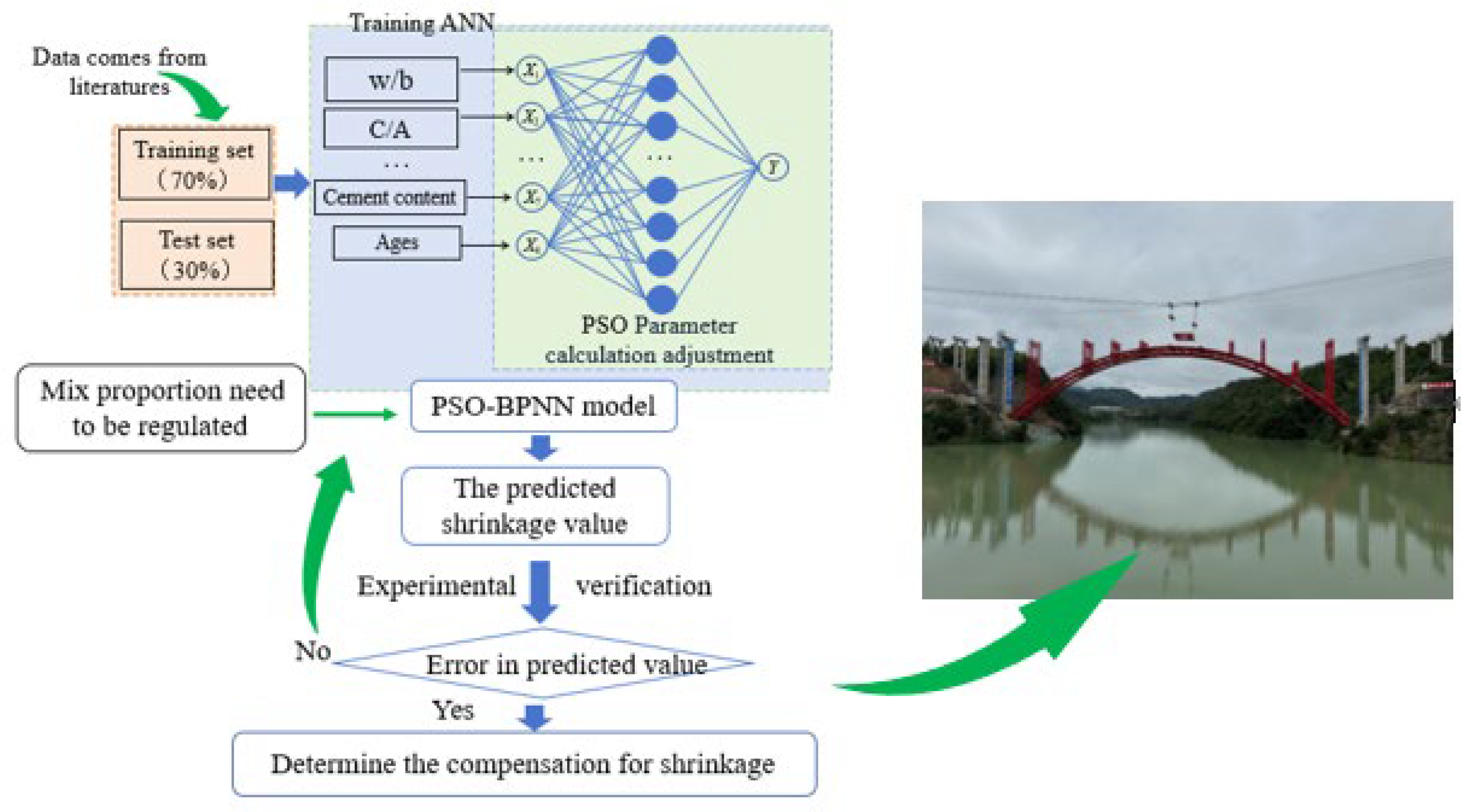
2.1. PSO-BPNN Model
2.1.1. The Parameters of the PSO-BPNN Setting
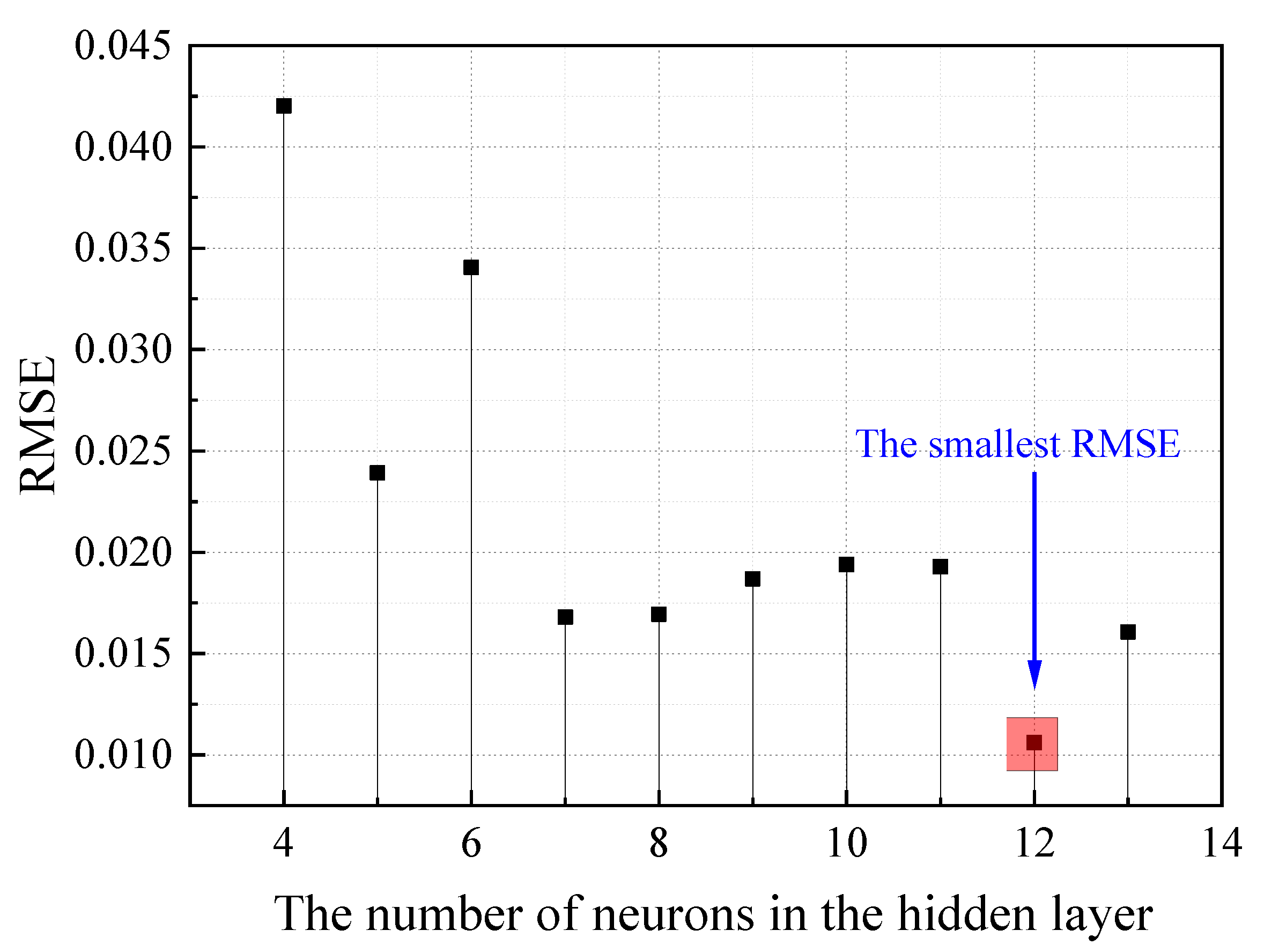
2.1.2. Optimized Parameter Setting
2.2. Prediction of Shrinkage of SCC by the PSO-BPNN Model and Experimental Validation
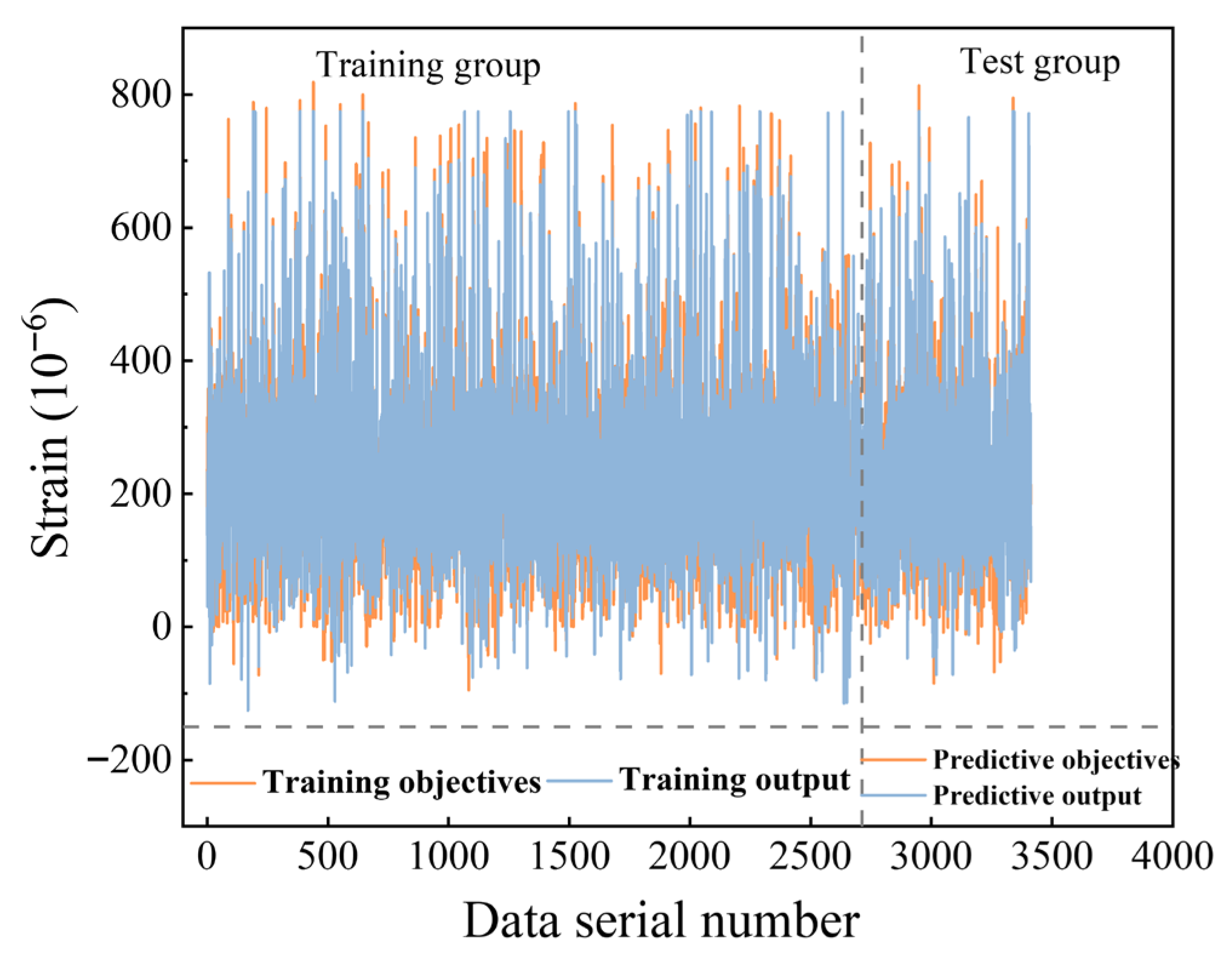
2.2.1. Prediction
2.2.2. Experimental Validation of PSO, PSO-BPNN Prediction
3. Regulation of the Shrinkage Deformation of SCC
3.1. Proportion Design and Regulation
- (i).
- To produce sufficient expansion compensation for shrinkage during the early age;
- (ii).
- To ensure the harmlessness of SCC during the delayed expansion;
- (iii).
- To compensate for the long-term and sustainable shrinkage of SCC after the expansion reaction;
- (iv).
- To reasonably select the type and dosage of shrinkage-compensating materials, so as to avoid the excessive negative impact on SCC caused by delayed expansion or harmful effects.
3.2. Shrinkage Compensation by Expansion Agents
3.3. Compensate for Shrinkage Through a Combination of Expansion and Contraction
4. Results and Discussion
4.1. Guidance for Regulation Experiments Based on the Prediction of the PSO-BPNN Model
4.2. Effect of EA on Hydration Products of Concrete
4.3. Effect of Combined Use of EA and SRA
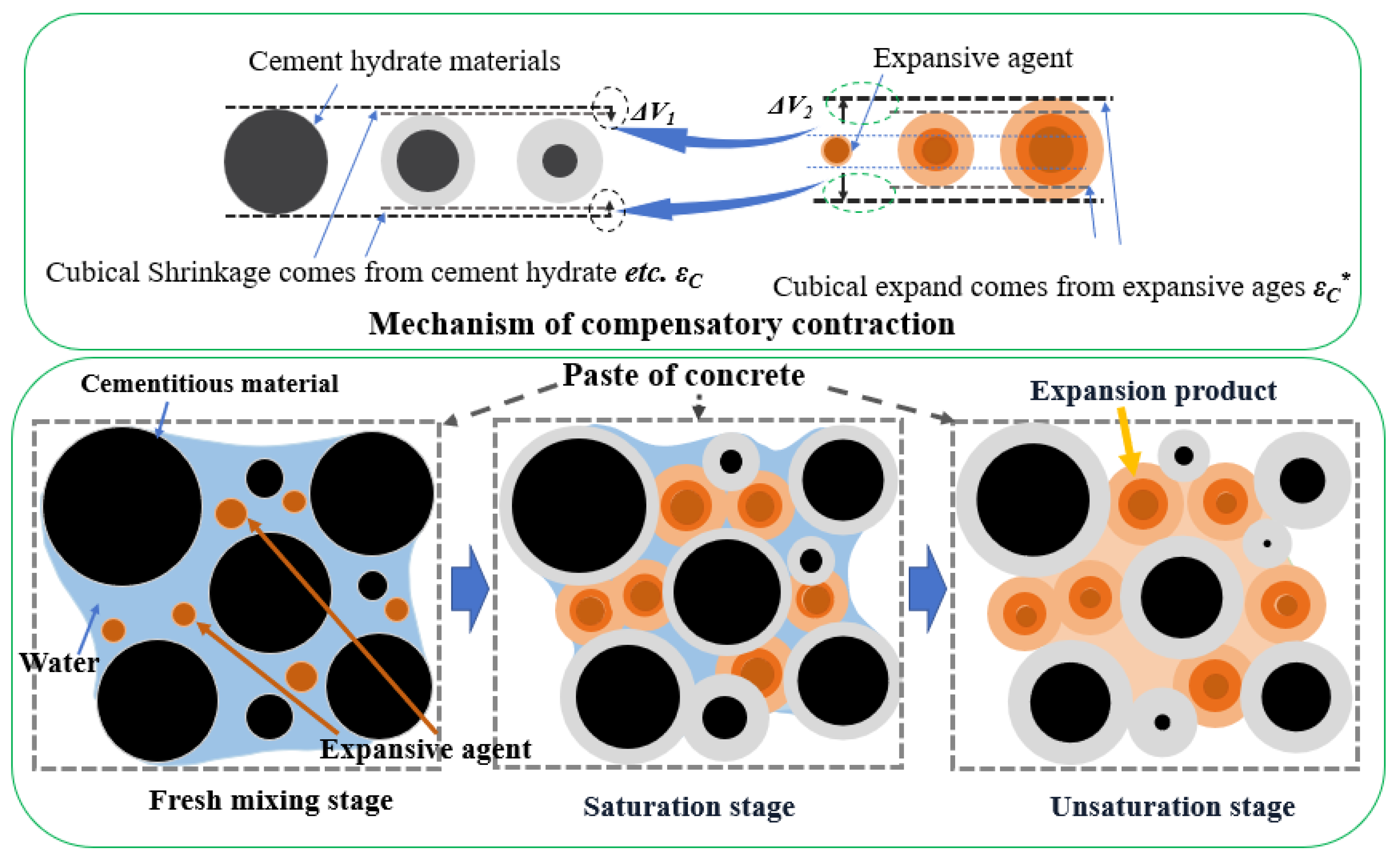
4.4. Analysis of the Mechanism of Volume Deformation Regulation
5. Conclusions
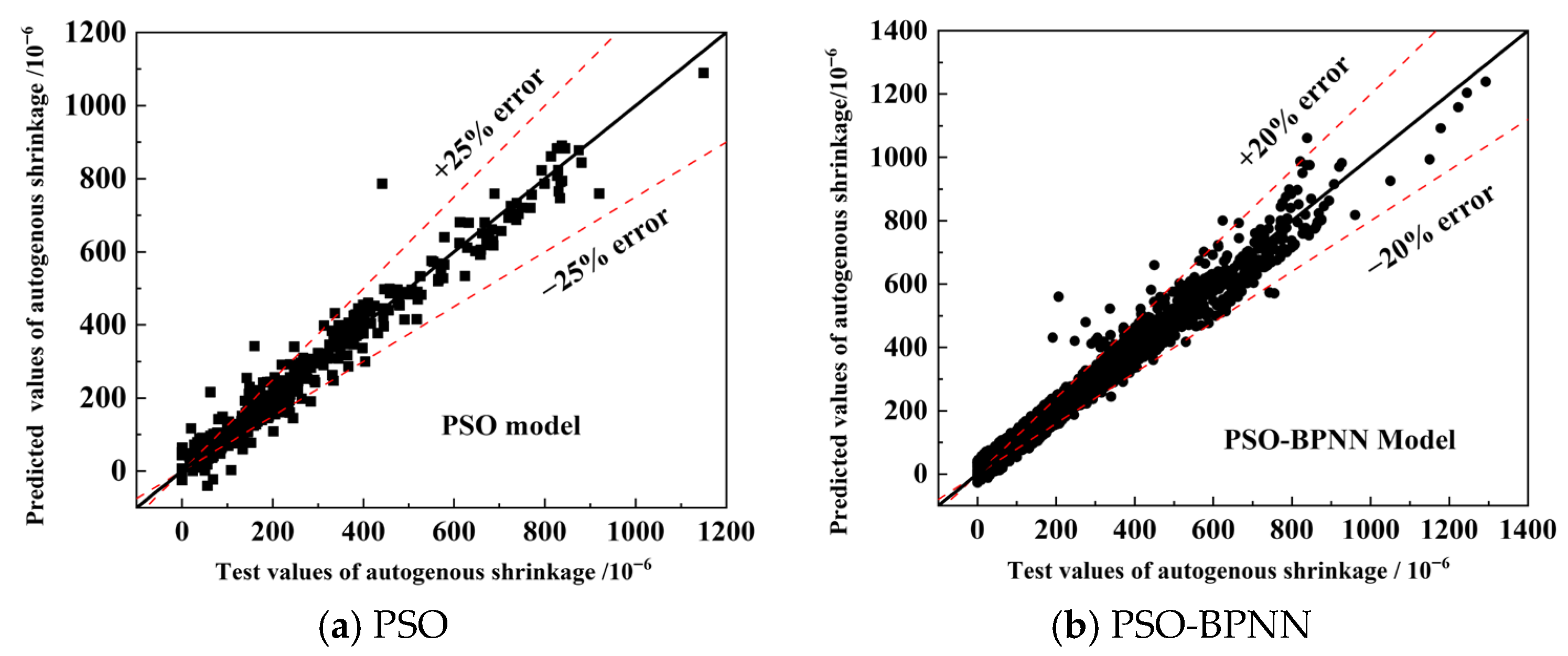
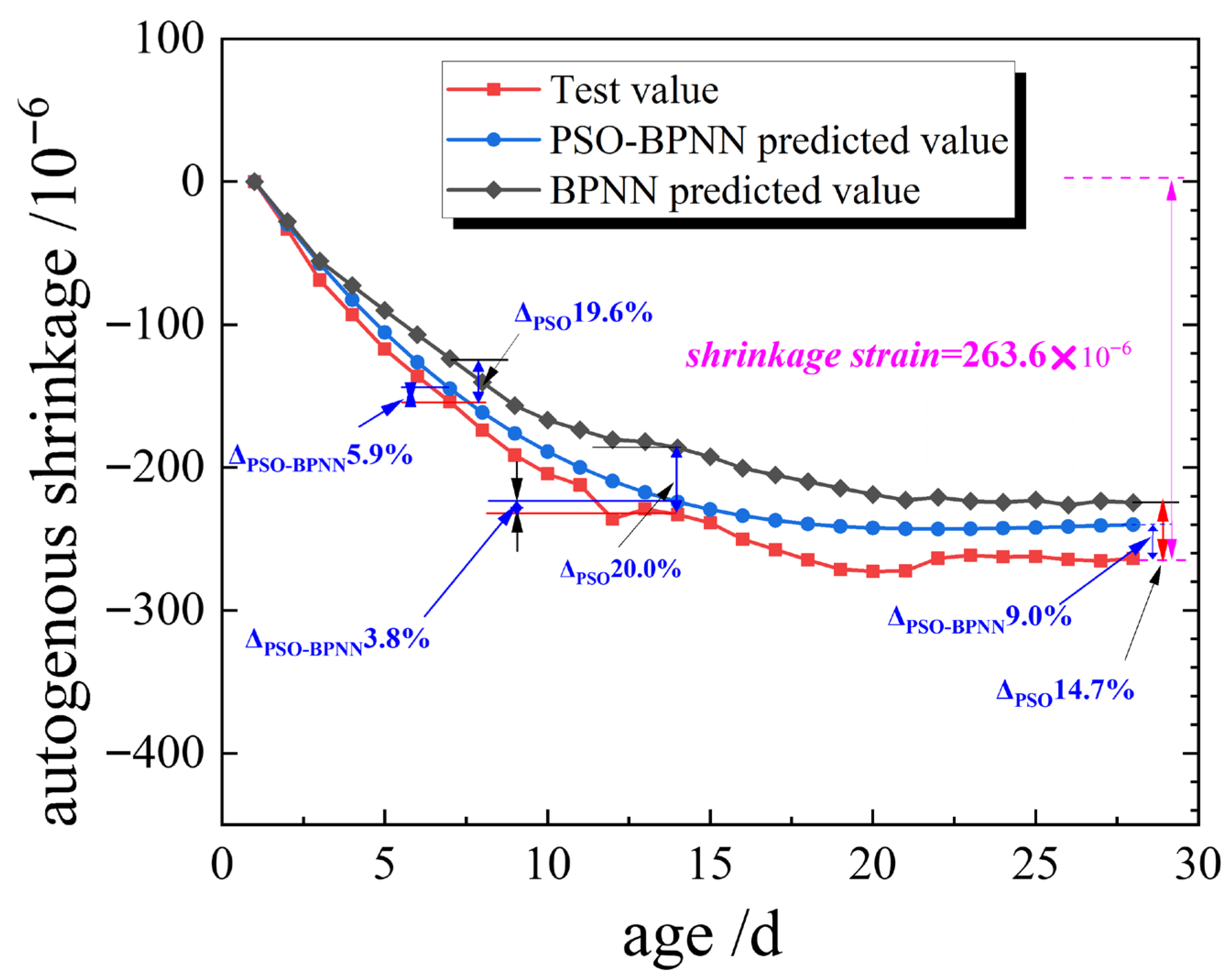
- The PSO-BPNN model has a good consistency between predicted and measured values, demonstrating PSO-BPNN the model’s high accuracy in predicting concrete autogenous shrinkage. The prediction error of the PSO-BPNN model was less than 10% at 28 d, demonstrating strong generalization capability. The prediction was a guide for regulation to compensate for shrinkage, and the experimental workload was reduced. But the level of PSO-BPNN model intelligence remains relatively low. With the increase in relevant engineering and experimental data, model accuracy will be further improved. Meanwhile, predictive algorithms such as PSO-BPNN would be further optimized with the advancement of AI technology.
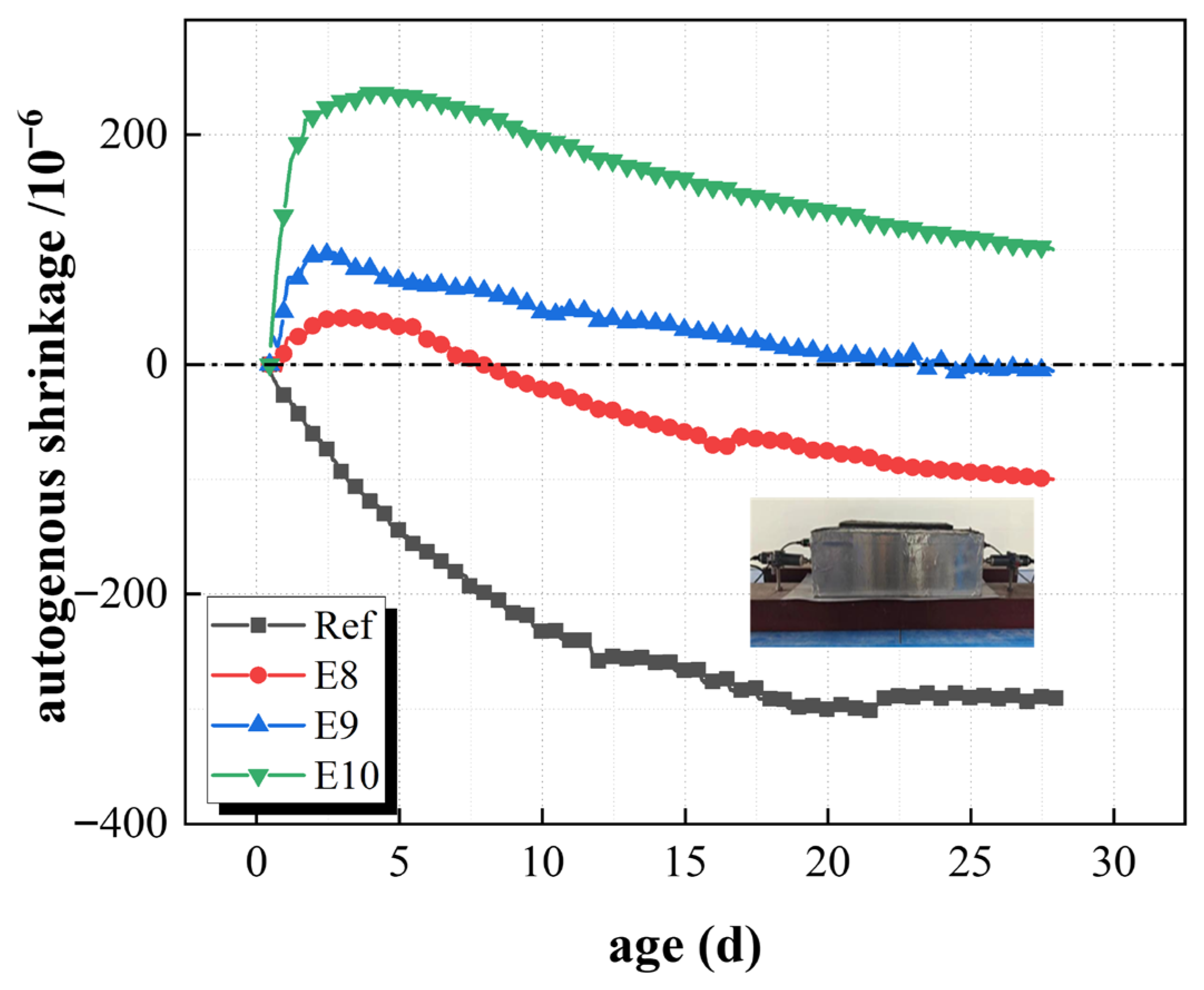
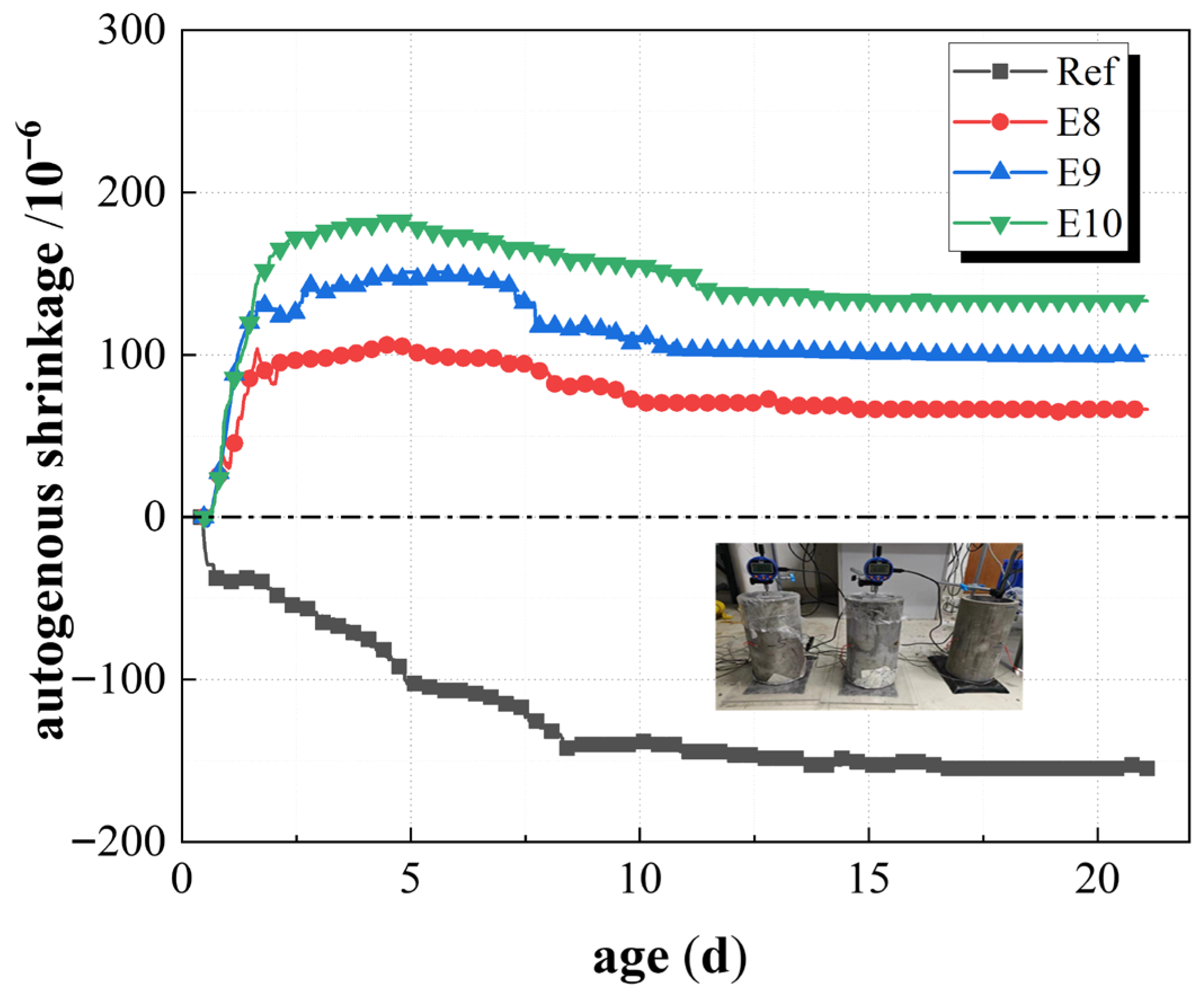
- The reasonable regulation of the amount of expansion agent and reducing shrinkage agent is the key to ensuring the stability of concrete volume, especially in structures that need to control the autogenous shrinkage.
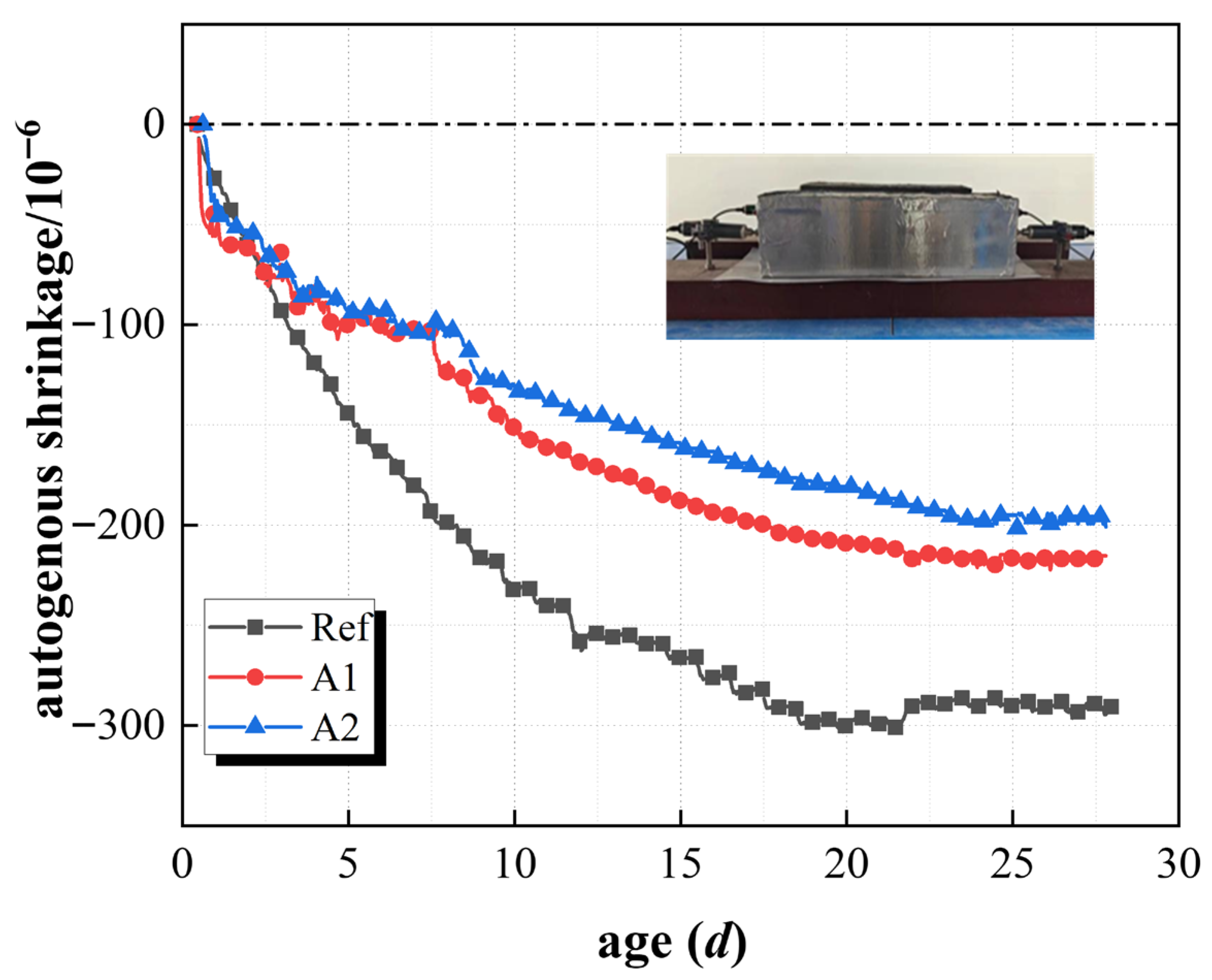
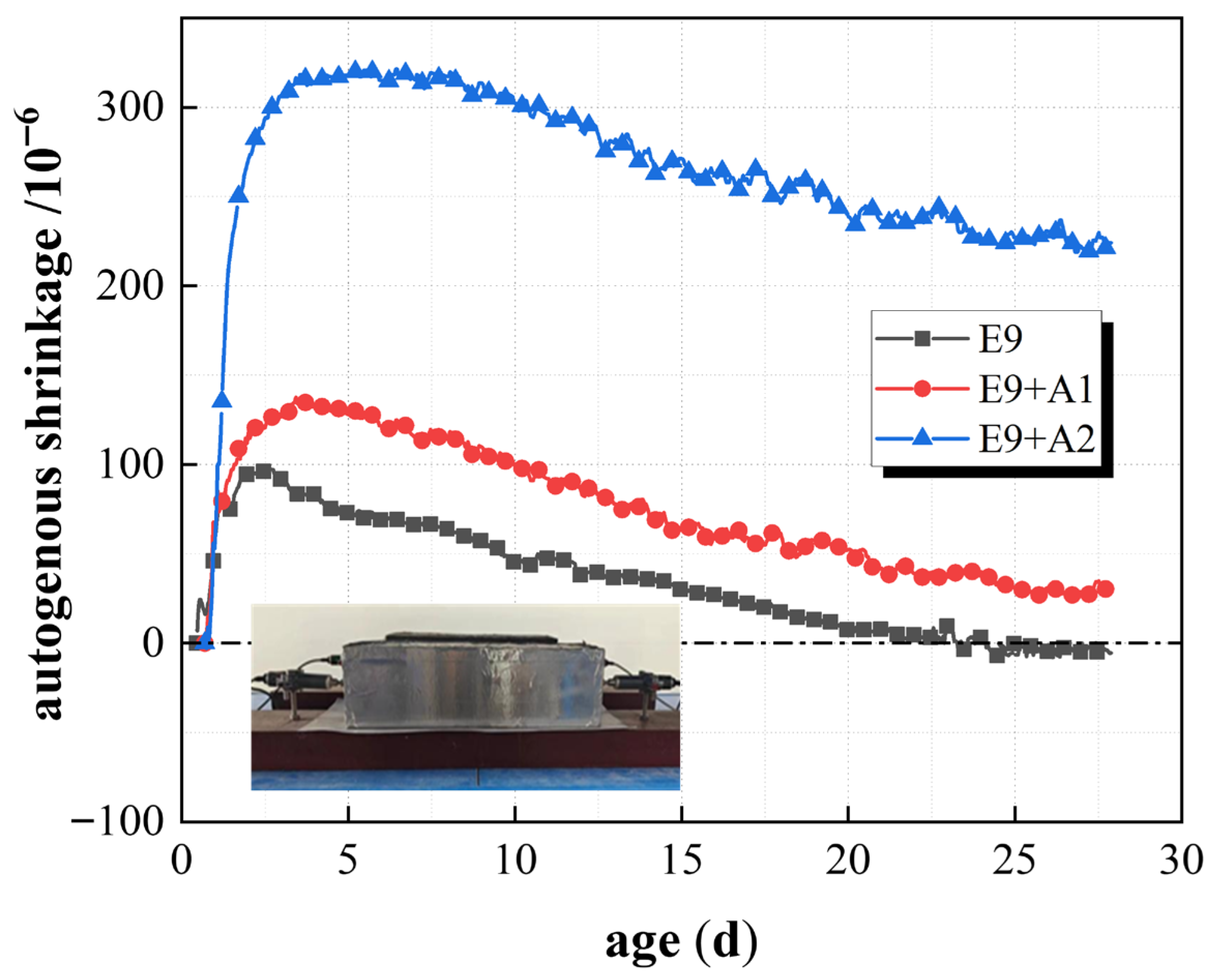
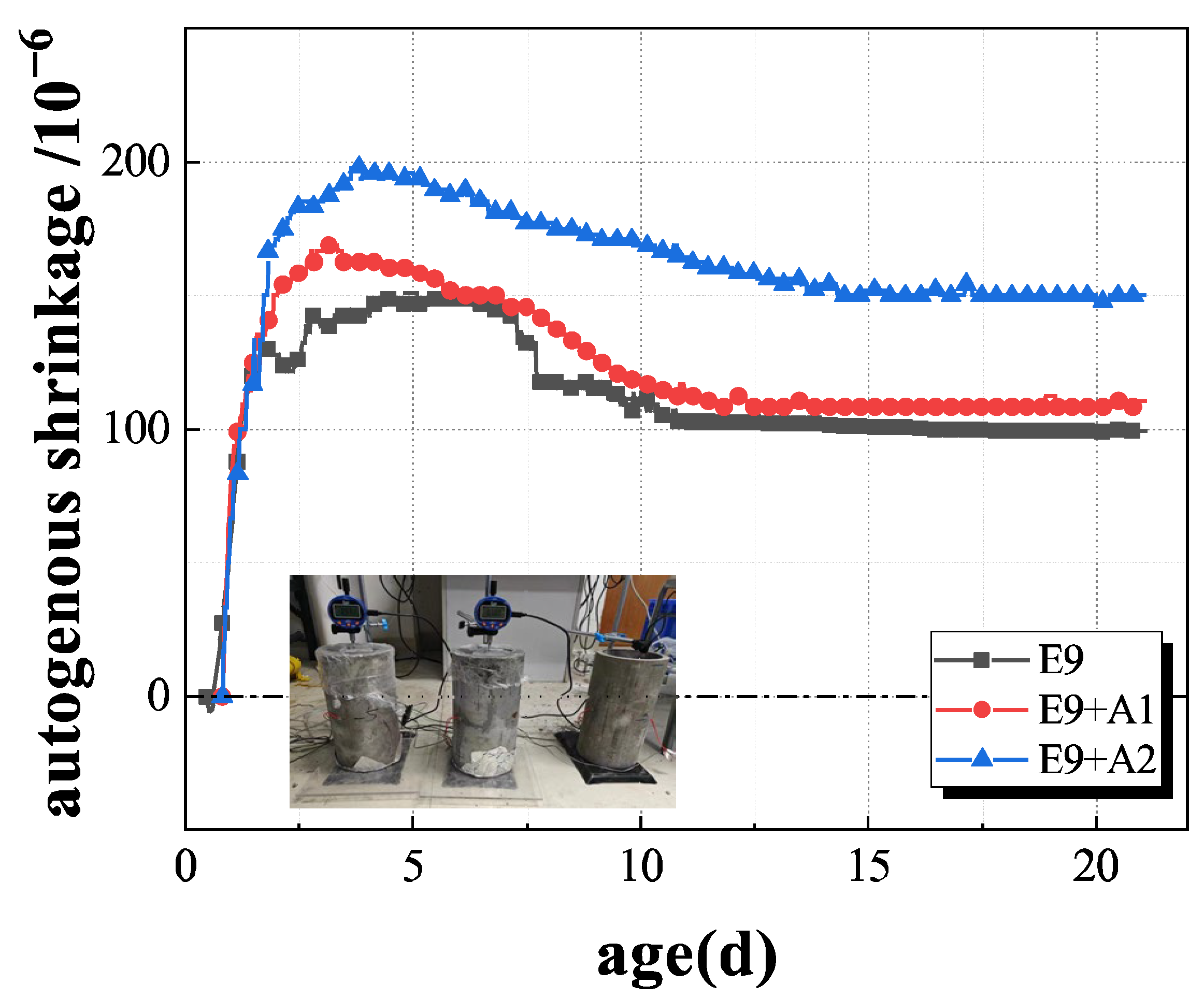
- The composite incorporation with EA and SRA can significantly change the volume deformation of steel tube constrained concrete, and the amount of SRA has a significant impact on the volume stability of concrete. While the EA plays the role of compensating for autogenous shrinkage, 2% of SRA can also reduce the shrinkage deformation of concrete, and the synergy between EA and SRA in concrete volume shrinkage deformation was good. Reasonable control of the mixing amount of SRA can effectively balance the autogenous shrinkage and expansion effect of concrete and improve the volume stability and long-term durability of concrete.
Supplementary Materials
Author Contributions
Funding
Institutional Review Board Statement
Informed Consent Statement
Data Availability Statement
Acknowledgments
Conflicts of Interest
References
- Li, K. Performance Test and Engineering Application of Micro-Expansive Concrete-Filled Steel Tube. Railw. Constr. Technol. 2023, 2, 46–51. [Google Scholar]
- Zhang, Y.; Zhang, Z.Q. Analysis on composite action of concrete filled steel tube columns reinforced by different confining materials. Mater. Res. Innov. 2015, 9, 236–239. [Google Scholar] [CrossRef]
- Li, Y.; Zhang, L. Preparation and application of high- strength self- com pacting m icro- expansion steel tube concrete. Concrete 2023, 408, 206–212. [Google Scholar]
- Han, L.H.; Yang, Y.F.; Li, Y.J.; Zhao, X.L. Hydration heat and shrinkage of high performance concrete-filled steel tubes. China Civ. Eng. J. 2006, 39, 1–9. [Google Scholar]
- Song, L.; Wei, M.; Zhang, X.; Liu, Y.; Chen, Z. Research on the Detection Method of Internal Void in Full-Scale Square Concrete-filled Steel Tube Boxes. Railw. Stand. Des. 2025, 6, 1–3. [Google Scholar]
- Yang, Y.; Kawai, R.S.K. Autogenous shrinkage of high-strength concrete containing silica fume under drying at early ages. Cem. Concr. Res. 2005, 33, 449–456. [Google Scholar] [CrossRef]
- Jiang, C.; Yang, Y.; Wang, Y.; Zhou, Y.; Ma, C. Autogenous shrinkage of high performance concrete containing mineral admixtures under different curing temperatures. Constr. Build. Mater. 2014, 61, 260–269. [Google Scholar] [CrossRef]
- Li, Y.; Ruan, X.; Yi, Y.; Xu, L. Multiphysics simulation for concrete early-age hydration behavior with mesoscopic modelling. Constr. Build. Mater. 2023, 362, 129780. [Google Scholar] [CrossRef]
- Tang, S.; Huang, D.; He, Z. A review of autogenous shrinkage models of concrete. J. Build. Eng. 2021, 44, 103412. [Google Scholar] [CrossRef]
- Chen, Z.; Wu, C.; Luo, X.; Xu, W.; Liang, W.; Tang, Y. Spatio-temporal autogenous shrinkage and cracking behavior of core concrete in full-scale CFST: Insights from the world’s largest span arch bridge. Thin-Walled Struct. 2024, 200, 111899. [Google Scholar] [CrossRef]
- Boshoff, W.P.; Combrinck, R. Modelling the severity of plastic shrinkage cracking in concrete. Cem. Concr. Res. 2013, 48, 34–39. [Google Scholar] [CrossRef]
- Jensen, O.M.; Hansen, P.F. Autogenous deformation and RH-change in perspective. Cem. Concr. Res. 2001, 31, 1859–1861. [Google Scholar] [CrossRef]
- Geiker, M.; Knudsen, T. Chemical shrinkage of portland cement pastes. Cem. Concr. Res. 1982, 12, 603–610. [Google Scholar] [CrossRef]
- Yang, Y.; Liiu, Y.; Du, L. Study on early autogenous shrinkage and microcosmic pore distribution of self-compacting concrete. Jianzhu Cailiao Xuebao/J. Build. Mater. 2010, 13, 601–606. [Google Scholar]
- Chen, J.; Kuder, K.G.; Lehman, D.E.; Roeder, C.W.; Lowes, L.N. Creep modeling of concretes with high volumes of supplementary cementitious materials and its application to concrete-filled tubes. Mater. Struct. 2017, 50, 89. [Google Scholar] [CrossRef]
- Yan, X.-F.; Hao, J.-P.; He, M.-N. Behavior of circular concrete-filled double-skin aluminum alloy tubular stub columns: Test, modeling and confinement-based design. J. Build. Eng. 2024, 95, 110060. [Google Scholar] [CrossRef]
- Liu, Z.; Zhou, J.; Xin, J.; Su, W.; Teng, Y. Stress control method for concrete pouring construction of continuous CFST tied arch bridge: Calculation method and actual bridge case. Case Stud. Constr. Mater. 2025, 23, e05074. [Google Scholar] [CrossRef]
- Ni, T.; Chen, K.; Gao, F.; Li, X.; Yang, Y.; Kong, D.; Yao, S. An Investigation of the Influence of Paste’s Rheological Characteristics on the Tensile Creep of HVFAC at Early Ages. Materials 2025, 18, 305. [Google Scholar] [CrossRef]
- Yao, J.; Yao, S.; Huang, S. The Influence of Fly Ash on the Tensile Creep Prediction of High-Strength Concrete at Early Ages. Materials 2023, 16, 1337. [Google Scholar] [CrossRef]
- Li, H.; Wang, Y.; Wang, Y.; Zhou, X.; Chen, Z. Effect of CaO and MgO based expansive agent on deformation and mechanical properties of concrete-filled steel tubes. Constr. Build. Mater. 2020, 250, 118723. [Google Scholar] [CrossRef]
- Igarashi, S.I.; Kawamura, M. Effects of microstructure on restrained autogenous shrinkage behavior in high strength concretes at early ages. Mater. Struct. 2002, 35, 80–84. [Google Scholar]
- Zhan, P.M.; He, Z.H. Application of shrinkage reducing admixture in concrete: A review. Constr. Build. Mater. 2019, 201, 676–690. [Google Scholar] [CrossRef]
- Rongbing, B.; Jian, S. Synthesis and evaluation of shrinkage-reducing admixture for cementitious materials. Cem. Concr. Res. 2005, 35, 445–448. [Google Scholar] [CrossRef]
- Zuo, W.; Feng, P.; Zhong, P.; Tian, Q.; Gao, N.; Wang, Y.; Yu, C.; Miao, C. Effects of novel polymer-type shrinkage-reducing admixture on early age autogenous deformation of cement pastes. Cem. Concr. Res. 2017, 100, 413–422. [Google Scholar]
- Wang, Y.; Xu, W.; Chen, R.; He, L.; Zhou, N.; Liu, S. Deformation and debonding detection of concrete-filled steel tube with expansive agent. Constr. Build. Mater. 2025, 490, 142554. [Google Scholar] [CrossRef]
- Mardani, N.; Kazemi, R.; Unverdi, M.; Mardani, A.; Mirjalili, S. ANN trained by BBO for modeling of fly ash cementitious systems with high range water reducing admixtures. Sci. Rep. 2026, 16, 4540. [Google Scholar] [CrossRef]
- Damodhara Reddy, B.; Narasimha Reddy, P.; Aruna Jyothy, S.; Mohan Babu, M.; Venkata Kavyatheja, B. Predicting Compressive Strength of Self-Repairing Concrete Using Artificial Neural Networks. In Intelligent Manufacturing and Energy Sustainability, ICIMES 2023; Talpa Sai, P.H.V.S., Potnuru, S., Avcar, M., Ranjan Kar, V., Eds.; Smart Innovation, Systems and Technologies; Springer: Singapore, 2024; Volume 372. [Google Scholar] [CrossRef]
- Tazawa, E.-I.; Miyazawa, S. Influence of cement and admixture on autogenous shrinkage of cement paste. Cem. Concr. Res. 1995, 25, 281–287. [Google Scholar] [CrossRef]
- Lai, M.H.; Binhowimal, S.A.M.; Griffith, A.M.; Hanzic, L.; Wang, Q.; Chen, Z.; Ho, J. Shrinkage design model of concrete incorporating wet packing density. Constr. Build. Mater. 2021, 280, 122448. [Google Scholar] [CrossRef]
- Rasoolinejad, M.; Rahimi-Aghdam, S.; Bazant, Z. Prediction of autogenous shrinkage in concrete from material composition or strength calibrated by a large database, as update to model B4. Mater. Struct. 2019, 52, 33. [Google Scholar] [CrossRef]
- Hu, Z.; Wyrzykowski, M.; Scrivener, K.; Lura, P. Prediction of autogenous shrinkage of cement pastes as poro-visco-elastic deformation. Cem. Concr. Res. 2019, 126, 105917. [Google Scholar]
- Sivasuriyan, A.; Vijayan, D.S. Prediction of displacement in Reinforced concrete based on artificial neural networks using sensors. Meas. Sens. 2023, 27, 100764. [Google Scholar] [CrossRef]
- Karthikeyan, J.; Upadhyay, A.; Bhandari, N.M. Artificial Neural Network for Predicting Creep and Shrinkage of High Performance Concrete. J. Adv. Concr. Technol. 2008, 6, 135–142. [Google Scholar] [CrossRef]
- Ni, T.; Du, X.; Mo, Y.; Zhang, Y.; Liu, J. Prediction and Evaluation of HVFAC Tensile Properties Based on ANN. Mater. Rep. 2024, 38, 23070117–23070119. [Google Scholar]
- Koenders, E.A.; van Breugel, K. Numerical modelling of autogenous shrinkage of hardening cement paste. Cem. Concr. Res. 1997, 27, 1489–1499. [Google Scholar] [CrossRef]
- Li, Y.; Li, J. Capillary tension theory for prediction of early autogenous shrinkage of self-consolidating concrete. Constr. Build. Mater. 2014, 53, 511–516. [Google Scholar] [CrossRef]
- Hua, C.; Acker, P.; Ehrlacher, A. Analyses and models of the autogenous shrinkage of hardening cement paste: I. modeling at macroscopic scale. Cem. Concr. Res. 1995, 25, 1457–1468. [Google Scholar] [CrossRef]
- Ishida, T.; Chaube, R.P.; Kishi, T.; Maekawa, K. Microphysical Approach to Coupled Autogenous and Drying Shrinkage of Concrete; The University of Tokyo: Tokyo, Japan, 1998. [Google Scholar]
- Yao, J.; Huang, S.; Xu, Y.; Gu, C.; Liu, J.; Yang, Y.; Ni, T.; Kong, D. Mix design of equal strength high volume fly ash concrete with artificial neural network. Case Stud. Constr. Mater. 2023, 19, e02294. [Google Scholar] [CrossRef]
- Lu, W.; Chen, J.; Tang, Q.; Gu, F. Evaluation of mechanical properties and cracking resistance of shrinkage-compensating concrete reinforced by expansive agents with polypropylene fibers. Case Stud. Constr. Mater. 2025, 22, e04171. [Google Scholar] [CrossRef]
- Zhang, W.; Liu, X.; Zhang, Z.; Wang, Y.; Xue, Y.; Hao, X.; Lu, Y. Circulating Fluidized Bed Fly Ash Mixed Functional Cementitious Materials: Shrinkage Compensation of f-CaO, Autoclaved Hydration Characteristics and Environmental Performance. Materials 2021, 14, 6004. [Google Scholar] [CrossRef]
- Cui, Y.; Li, Y.; Wang, Q. Engineering performance and expansion mechanism of MgO expansion agent in ultra-high performance concrete (UHPC). J. Build. Eng. 2023, 68, 106079. [Google Scholar] [CrossRef]
- Wang, X.; Yang, Y.; Zhong, J. Novel strategy for autogenous shrinkage mitigation by combining internal curing and self-compensation: Carbon nanotube sponge with carbamate solution absorbed. Cem. Concr. Compos. 2025, 157, 105908. [Google Scholar]
- Zhao, Y.; Wu, X. Shrinkage Compensation Technology of Concrete Filled Steel Tubular Structure of Large Cross-Sea Bridge. Adv. Civ. Eng. 2023, 2023, 4471407. [Google Scholar] [CrossRef]
- Zhang, Y.; Pan, Y.; Ren, T.; Liang, H.; Zhang, J.; Zhang, D. The Application of Calcium-Based Expansive Agents in High-Strength Concrete: A Review. Buildings 2024, 14, 2369. [Google Scholar] [CrossRef]
- Meddah, M.S.; Suzuki, M.; Sato, R. Influence of a combination of expansive and shrinkage-reducing admixture on autogenous deformation and self-stress of silica fume high-performance concrete. Constr. Build. Mater. 2011, 25, 239–250. [Google Scholar] [CrossRef]
- Tafesse, M.; Kim, H.K. The role of carbon nanotube on hydration kinetics and shrinkage of cement composite. Compos. Part B Eng. 2019, 169, 55–64. [Google Scholar]
- Rajabipour, F.; Sant, G.; Weiss, J. Interactions between shrinkage reducing admixtures (SRA) and cement paste’s pore solution. Cem. Concr. Res. 2008, 38, 606–615. [Google Scholar] [CrossRef]
- Tang, S.; Cai, X.; He, Z.; Shao, H.; Li, Z.; Chen, E. Hydration process of fly ash blended cement pastes by impedance measurement. Constr. Build. Mater. 2016, 113, 939–950. [Google Scholar] [CrossRef]
- T/CECS 203-2021; Technical Specification for Application of Self-Compacting Concrete. China Architecture & Building Press: Beijing, China, 2021.
- Sun, Y.; Yu, R.; Wang, S.; Zhou, Y.; Zeng, M.; Hu, F.; Shui, Z.; Rao, B.; Yuan, S.; Luo, Z.; et al. Development of a novel eco-efficient LC2 conceptual cement based ultra-high performance concrete (UHPC) incorporating limestone powder and calcined clay tailings: Design and performances. J. Clean. Prod. 2021, 315, 128236. [Google Scholar] [CrossRef]
- Ren, P.; Zheng, H.; Jin, Z.; Li, M.; Li, J.; Pang, B. Transformation Mechanism of AFt and AFm in Geothermal Environment. Bull. Chin. Ceram. Soc. 2023, 42, 1151–1160. [Google Scholar]
- Kong, D.; Huang, S.; Corr, D.; Yang, Y.; Shah, S.P. Whether do nano-particles act as nucleation sites for C-S-H gel growth during cement hydration? Cem. Concr. Compos. 2018, 87, 98–109. [Google Scholar]
- Sun, W.-j.; Liu, L.; Zhao, Y.y.; Fang, Z.-y.; Lyu, Y.-z.; Xie, G.; Shao, C.-c. Hydration mechanism and microstructure characteristics of modified magnesium slag alkali-activated coal-fired slag based cementitious materials. J. Cent. South Univ. 2025, 32, 2148–2169. [Google Scholar] [CrossRef]
- Zheng, R.; Xia, J.; Liu, E.; Zhou, Q.; Wang, H. A high water-cement ratio aerated concrete using carbon dioxide as the foaming agent: Mix design, pore structure and hydration products. J. Build. Eng. 2025, 108, 112926. [Google Scholar] [CrossRef]
- Hao, S.; Xu, W.; May, B.M.; Zhang, Z.; Zhang, Y. Experimental study on the micro-mechanism and compressive strength of concrete with calcined coal gangue coarse aggregate. Case Stud. Constr. Mater. 2025, 22, e04680. [Google Scholar] [CrossRef]







| № | W/B | C | FA | M | S | G | W | SP |
|---|---|---|---|---|---|---|---|---|
| Ref | 0.32 | 290 | 97 | 97 | 722 | 1039 | 155 | 5.8 |
| № | C | FA | M | S | G | W | SP | EA | SRA |
|---|---|---|---|---|---|---|---|---|---|
| Ref | 290 | 97 | 97 | 722 | 1039 | 155 | 5.8 | — | — |
| E8 | 251 | 97 | 97 | 722 | 1039 | 155 | 5.8 | 38.7 | — |
| E9 | 247 | 97 | 97 | 722 | 1039 | 155 | 5.8 | 43.5 | — |
| E10 | 242 | 97 | 97 | 722 | 1039 | 155 | 5.8 | 48.4 | — |
| A1 | 290 | 97 | 97 | 722 | 1039 | 155 | 5.8 | — | 4.84 |
| A2 | 290 | 97 | 97 | 722 | 1039 | 155 | 5.8 | — | 9.68 |
| E9A1 | 247 | 97 | 97 | 722 | 1039 | 155 | 5.8 | 43.5 | 4.84 |
| E9A2 | 247 | 97 | 97 | 722 | 1039 | 155 | 5.8 | 43.5 | 9.68 |
Disclaimer/Publisher’s Note: The statements, opinions and data contained in all publications are solely those of the individual author(s) and contributor(s) and not of MDPI and/or the editor(s). MDPI and/or the editor(s) disclaim responsibility for any injury to people or property resulting from any ideas, methods, instructions or products referred to in the content. |
© 2026 by the authors. Licensee MDPI, Basel, Switzerland. This article is an open access article distributed under the terms and conditions of the Creative Commons Attribution (CC BY) license.
Share and Cite
Ni, T.; Shen, L.; Shen, S.; Cai, Z.; Chu, W.; Hu, C.; Jiang, C.; Jing, K. Prediction and Regulation of SCC’s Shrinkage Using the PSO-BPNN Model. Materials 2026, 19, 1468. https://doi.org/10.3390/ma19071468
Ni T, Shen L, Shen S, Cai Z, Chu W, Hu C, Jiang C, Jing K. Prediction and Regulation of SCC’s Shrinkage Using the PSO-BPNN Model. Materials. 2026; 19(7):1468. https://doi.org/10.3390/ma19071468
Chicago/Turabian StyleNi, Tongyuan, Lihua Shen, Shenghao Shen, Zaoyang Cai, Wen Chu, Chengshun Hu, Chenhui Jiang, and Kai Jing. 2026. "Prediction and Regulation of SCC’s Shrinkage Using the PSO-BPNN Model" Materials 19, no. 7: 1468. https://doi.org/10.3390/ma19071468
APA StyleNi, T., Shen, L., Shen, S., Cai, Z., Chu, W., Hu, C., Jiang, C., & Jing, K. (2026). Prediction and Regulation of SCC’s Shrinkage Using the PSO-BPNN Model. Materials, 19(7), 1468. https://doi.org/10.3390/ma19071468