2. Materials and Methods
The micro/nano-scale (TiC + TiB2)/Al composites with varying TiC and TiB2 contents (0, 5, 10, 15, 20, 25 and 30 wt.%, respectively) were prepared by Ti-B4C reactive sintering and SPS, using pure Al powders (99.99 wt.%, about 45 μm; Zhongchun New Materials Technology Co., Ltd., Beijing, China), pure Ti powders (99.5 wt.%, about 10 μm; Beijing xingrongyuan Technology Co., Ltd., Beijing, China) and B4C powders (99.9 wt.%, about 1.0 μm; ZhenHan New Materials Co., Ltd., SuZhou, China). Firstly, pure Ti and pure B4C powders were weighed according to the reaction 3Ti + B4C = TiC + 2TiB2, and then the Ti and B4C powders were mixed in a 3D mixing machine (JXHY-2L, Shanghai Jingxin Industrial Development Co., Ltd., Shanghai, China) at 30 rpm for 10 h. After mixing, the mixed powder was then sintered in a tube furnace (GSL-1500X, Hefei Kejing Materials Technology Co., Ltd., Hefei, China) at temperatures of 1100, 1200, 1300 and 1400 °C for 2 h with a heating rate of 10 °C/min under a high-purity argon atmosphere (99.999%) to ensure complete reaction. Secondly, to obtain fine TiC and TiB2 ceramic particles, the sintered bulk sample was first ground into powder, followed by high-energy ball milling in a planetary ball mill (YXQM-1L, Changsha Miqi Instrument and Equipment Co., Ltd., Changsha, China) for 2 h under the following conditions: an ethanol medium, zirconia ball-milling jar and balls, a ball-to-material ratio (wt.%) of 10:1 and a rotational speed of 400 rpm. After that, the ball-milled powder was dried in a vacuum oven (DZF-6050T, Guansen Biotechnology Co., Ltd., Shanghai, China) under vacuum conditions at 80 °C for 8 h. Finally, the as-prepared TiC and TiB2 and Al powders were blended for 10 h at 15 rpm in a horizontal roller mixer (QM-1.5, Changsha Tianchuang Powder Technology Co., Ltd., Changsha, China) at a ball-to-material ratio (wt.%) of 5:1. After that, the powder blends were sintered into cylindrical samples (Φ20 × 15) by SPS (LABOX-1050, Tokyo, Japan) using a graphite mould (Φ20.4 × 50) at 550 °C for 10 min under 40 MPa and a heating rate of 100 °C/min, followed by furnace cooling to room temperature (RT).
The Archimedes principle was used to determine the relative density of the (TiC + TiB
2)/Al composites. Vickers hardness was measured at RT using a hardness tester (Via-F, Matsuzawa, Japan) under a 1 kgf load with a 15 s dwell time. Each reported Vickers hardness value is the average of seven measurements per sample. The compressive properties were evaluated at RT on an electronic universal testing machine (C45.105Y, MTS, Shanghai, China) at a compression speed of 0.2 mm/min using cylindrical samples (Φ6 × 9). Triplicate tests were conducted for each sample to ensure reliability. Tribological experiments were conducted using a reciprocating ball-on-disk tribometer (UMT TriboLab, Bruker, Beijing, China) under ambient conditions. An Al
2O
3 ball with a 6 mm diameter served as the counterpart. Tribological tests were conducted using a sliding velocity of 10 mm/s, applied loads of 1–5 N, a stroke length of 6 mm, and a total duration of 1800 s. The coefficient of friction (COF) was recorded in real-time, and the reported COF is the average value over the steady-state region (after 900 s) of the friction curve. To ensure reproducibility, each test was repeated three times under controlled ambient conditions with the relative humidity maintained at 60 ± 5% and the RT at 26 ± 2 °C during the testing process. And the Al
2O
3 counterface ball was replaced after each frictional experiment. The wear rate (W) was calculated according to the literature using the standard formula: W = V/(F × S) [
26]. After the dry sliding tests, the wear volume (V) was measured using a three-dimensional optical profiler (ContourX-200, Bruker, Beijing, China). For accuracy, measurements were taken at a minimum of three different locations along the wear track, and the results were averaged. The tribological test samples were ground using silicon carbide sandpaper with different grits (80–1200) and then mechanical polished with a finer-grained (0.05 μm) silica suspension.
Phase analysis of the (TiC + TiB2)/Al composites was performed via X-ray diffraction (XRD, D6 Phaser, Bruker, Berlin, Germany) with Cu Kα radiation (40 kV; 30 mA). Scans were conducted from 20° to 90° (2θ) with a scanning time of 1 s and a step size of 0.02°. The microstructures and elemental distribution of (TiC+TiB2)/Al composites were examined by scanning electron microscope (SEM, JSM-7900F, JEOL, Tokyo, Japan) equipped with EDS (Ultim MAX 65, Oxford, London, UK) and transmission electron microscope (TEM, Talos F200X, TMO, Bellevue, WA, USA). The grain size and distribution of the (TiC + TiB2)/Al composites were characterized via electron backscatter diffraction (EBSD, GeminiSEM 500, Zeiss, Oberkochen, Germany).
3. Results and Discussion
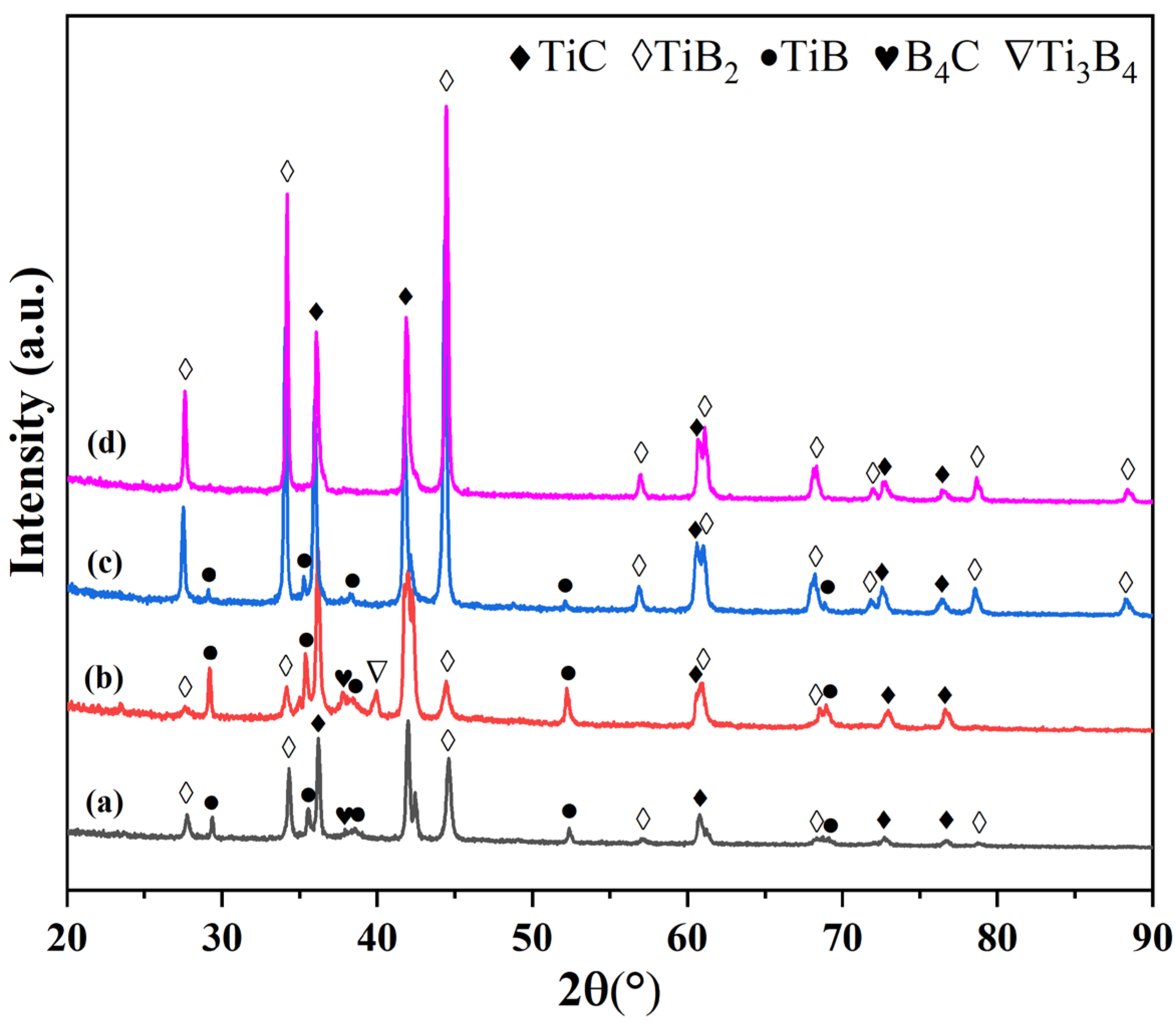
Figure 1 shows the XRD patterns of Ti-B
4C powders sintered from 1100 °C to 1400 °C. With increasing sintering temperature, the diffraction peak intensities of TiC and TiB
2 progressively increased, indicating a progressively more thorough reaction between Ti and B
4C. After sintering at 1100 and 1200 °C, the main products were predominantly TiC and a minor amount of TiB
2, along with traces of the TiB and Ti
3B
4 intermediate phases. Moreover, a trace of unreacted B
4C was also detected, confirming the reaction was incomplete at these temperatures. When sintered at 1300 °C, only a trace of the TiB intermediate phase remained, while the Ti
3B
4 intermediate phase had completely disappeared. The final products were predominantly TiC and TiB
2, indicating that the reaction was nearing completion. After sintering at 1400 °C, all the intermediate phases had completely disappeared, and only TiB
2 and TiC peaks were detected in the XRD patterns, indicating a complete reaction between Ti and B
4C. Therefore, high-purity TiB
2 and TiC ceramic powders can be successfully synthesized via the Ti-B
4C reaction at 1400 °C.
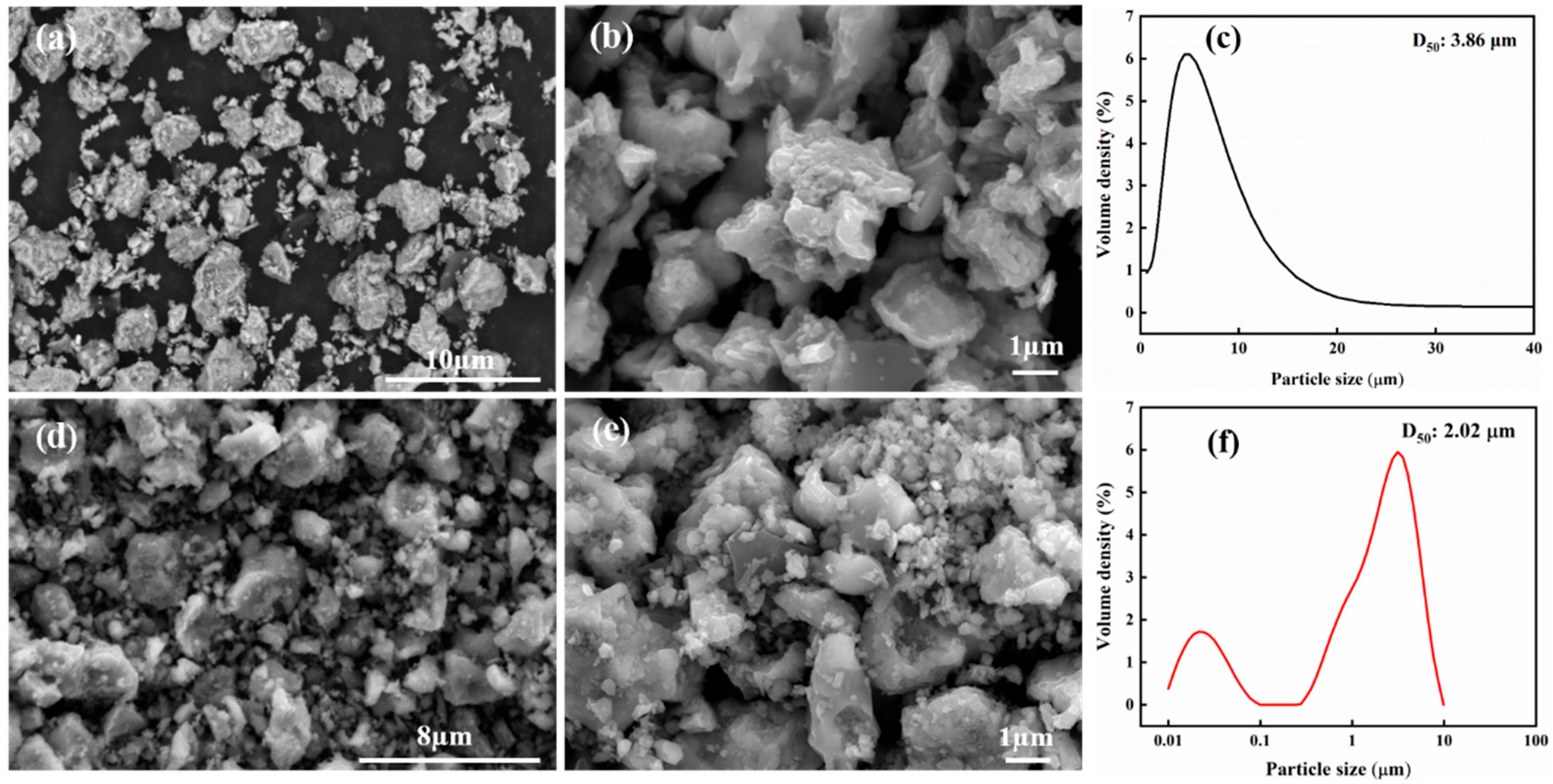
SEM images and the particle size distribution of TiB
2 and TiC powders are displayed in
Figure 2 before and after ball milling. As seen in
Figure 2a,b, the TiB
2 and TiC powders synthesized via reactive sintering have a relatively large particle size with a median particle size (D
50) of about 3.86 µm (
Figure 2b), following a Gaussian distribution. Following ball milling, the particle size of the TiB
2 and TiC powders was significantly reduced, following a bimodal distribution with a median particle size (D
50) of about 2.02 μm (
Figure 2d). In addition, numerous fine particles smaller than 100 nm (
Figure 2e) were observed as shown in
Figure 2c. Compared with the as-synthesized TiB
2 and TiC powders, the particle size of the ball-milled TiB
2 and TiC powders was reduced by nearly 50%. This is mainly attributed to the significant impact and shear forces generated from vigorous collisions between the grinding balls and powders as well as the powder particles themselves during ball milling, thereby causing repeated fracture and fragmentation and ultimately leading to the formation of nanoparticles [
27]. Therefore, after ball milling, the TiB
2 and TiC ceramic powders exhibit a bimodal distribution, consisting of a minority of nanoparticles and a majority of microparticles. The above results indicate that multi-scale TiB
2 and TiC ceramic powders can be successfully synthesized by Ti-B
4C reactive sintering.
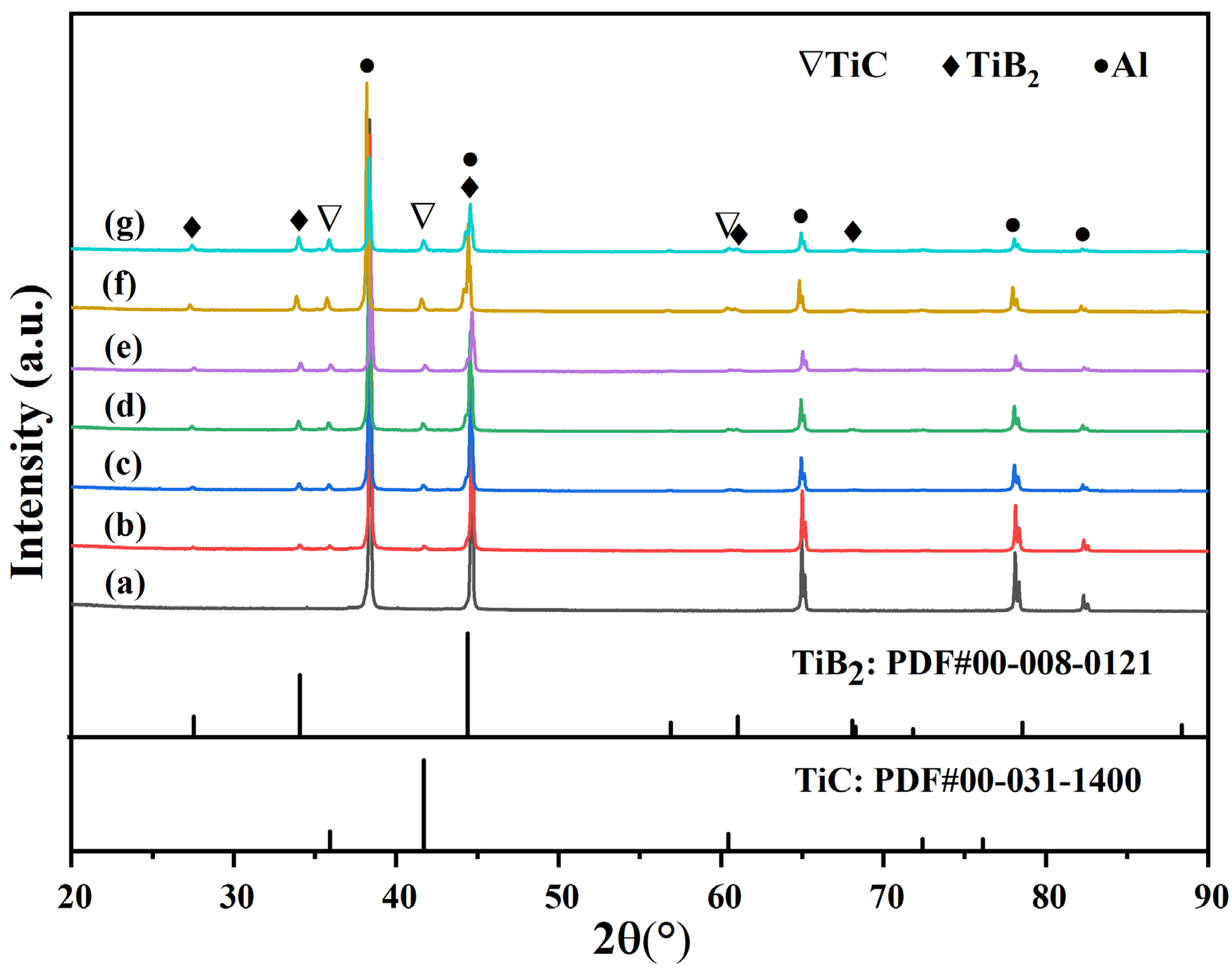
XRD analysis of the micro/nano-scale (TiC + TiB
2)/Al composites with varying TiC and TiB
2 content are shown in
Figure 3. Compared with pure Al, TiB
2 and TiC phases were identified in all (TiC + TiB
2)/Al composites, and their diffraction peak intensities increased gradually with increasing TiB
2 and TiC content. These results indicated that micro/nano-scale (TiC + TiB
2)/Al composites can be successfully prepared.
As shown in
Table 1, almost fully dense (TiC + TiB
2)/Al composites were successfully fabricated, with relative density showing a slight decrease with the increase in TiC and TiB
2.
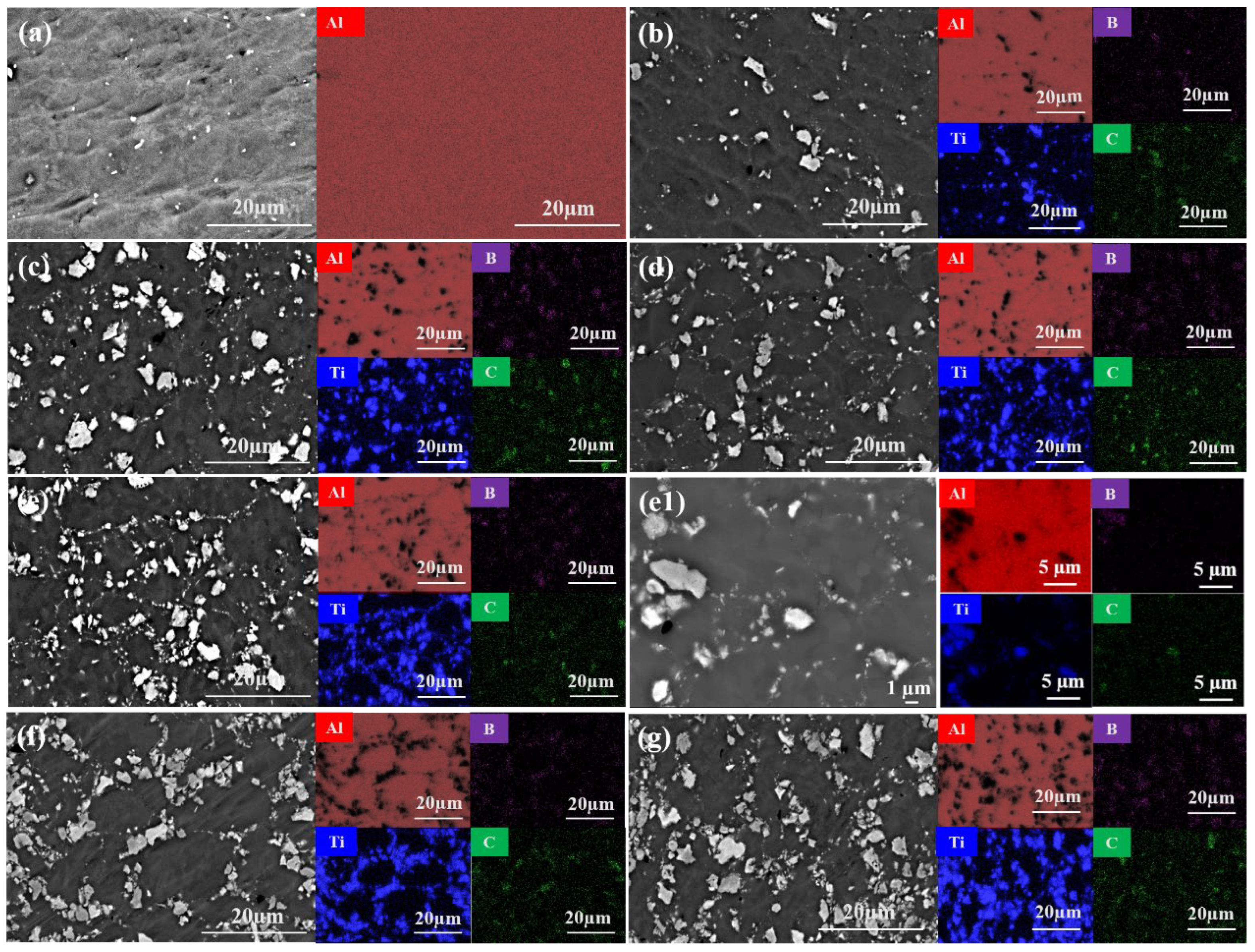
Figure 4 shows SEM micrographs and corresponding EDS results for the (TiC + TiB
2)/Al composites with varying TiB
2 and TiC contents. As shown in
Figure 4a, there are no other phases in pure Al. As shown in
Figure 4b–e, TiB
2 and TiC phases are detected in the (TiC + TiB
2)/Al composites after adding TiB
2 and TiC ceramic particles. At contents up to 20 wt.%, a uniform distribution of TiB
2 and TiC ceramic particles is observed in the Al matrix, which effectively hinders grain boundary migration and dislocation motion, thus enhancing strength and hardness and consequently improving the tribological properties by dispersion strengthening. Additionally, the micro/nano-scale TiC and TiB
2 tend to aggregate at grain boundaries, as shown in the high-magnification image of
Figure 4(e1), resulting in grain refinement [
28]. However, when the content of TiB
2 and TiC is increased to 25 wt.% or 30 wt.%, the ceramic particles agglomerate in localized regions, as shown in
Figure 4f,g, which can induce severe stress concentration and cause them to act as potential sites for crack initiation, promoting crack initiation and propagation and consequently degrading the mechanical and tribological performance of (TiC + TiB
2)/Al composites [
15].
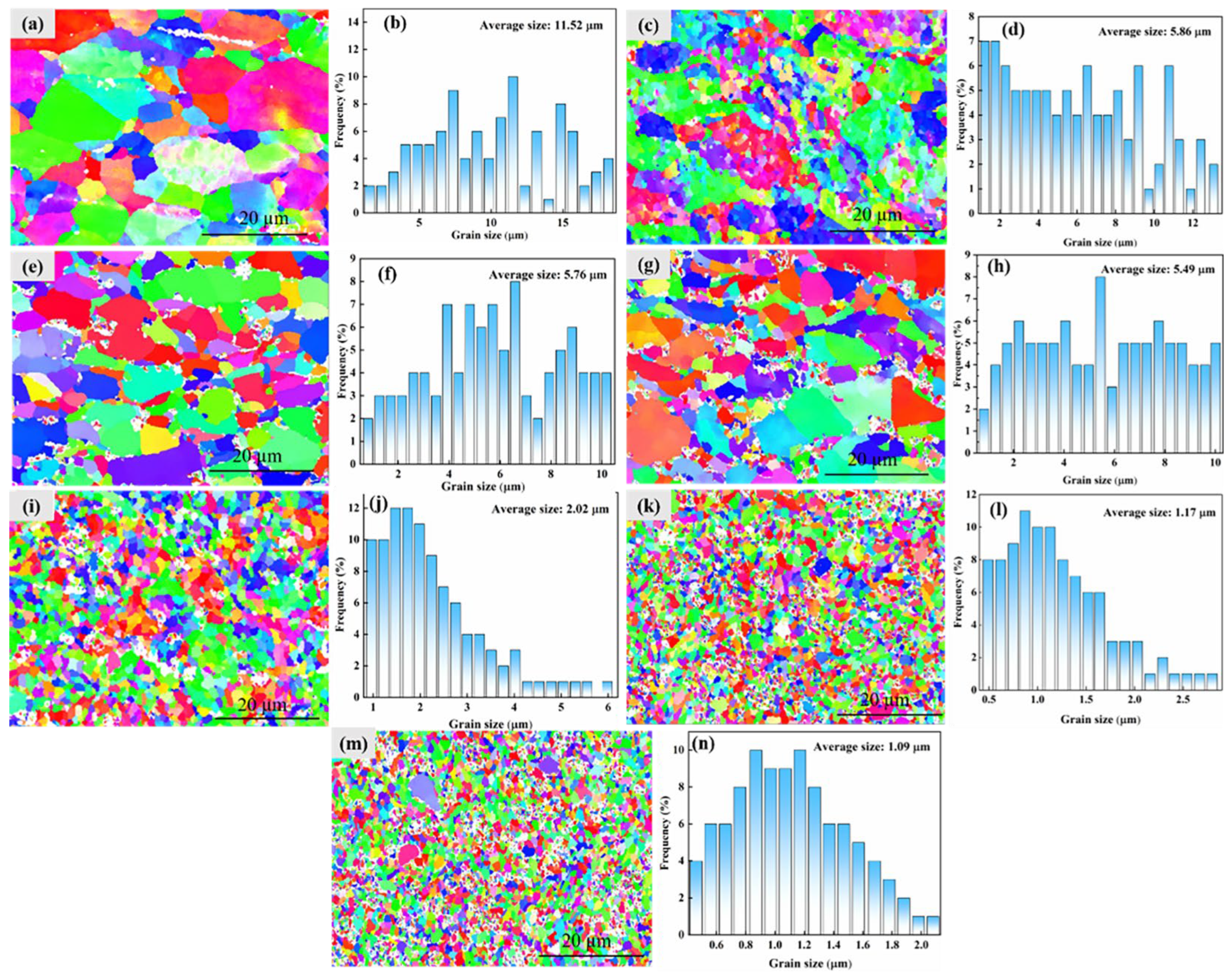
Figure 5 shows an EBSD analysis of (TiC + TiB
2)/Al composites with varying TiB
2 and TiC contents. As shown in
Figure 5a, the pure Al exhibits a coarse, heterogeneous grain structure with an average grain size of about 11.52 μm. The grain size distribution exhibits the widest range, from 1.54 to 18.16 μm, and follows an approximately log-normal distribution. Adding TiB
2 and TiC ceramic particles leads to significant grain refinement of the Al matrix. As TiB
2 and TiC content rises from 5 to 15 wt.%, the average grain size is markedly reduced to about 5.86, 5.76 and 5.49 μm, respectively (
Figure 5d,f,h). Accordingly, the grain size distribution range becomes narrower and the grain structure becomes more homogeneous. However, the (TiC + TiB
2)/Al composites still show a heterogeneous grain structure consisting of coarse and fine grains as shown in
Figure 5c,e,g, and their grain size distribution remains an approximately log-normal distribution. Further increasing the TiB
2 and TiC content to 20, 25 and 30 wt.% results in an average grain size of about 2.02, 1.17, and 1.09 μm, respectively (
Figure 5i–n). Notably, the grain size distribution curves are very symmetrical and sharp, with sizes primarily concentrated between 0.5 and 1.5 µm (
Figure 5l,n), demonstrating a shift to a typical normal distribution. This finer grain size results in more grain boundaries, which can effectively impede dislocation movement, thereby improving strength and hardness and consequently enhancing the tribological properties [
26,
28]. However, in
Figure 5f,g, particle agglomeration of TiC and TiB
2 in localized regions results in severe stress concentration, potential sites for crack initiation and propagation, and material delamination, thereby aggravating wear. Moreover, the agglomeration of TiC and TiB
2 particles leads to an inhomogeneous distribution of hard phases on the worn surface, which results in an uneven plastic deformation and exacerbates ploughing of the Al matrix, consequently leading to severe fatigue wear and brittle spallation and significantly reducing the wear resistance of the (TiC + TiB
2)/Al composite. Hence, the 25 and 30 wt.% (TiC + TiB
2)/Al composites exhibit a relatively poor friction performance compared with the 20 wt.% (TiC + TiB
2)/Al composite.
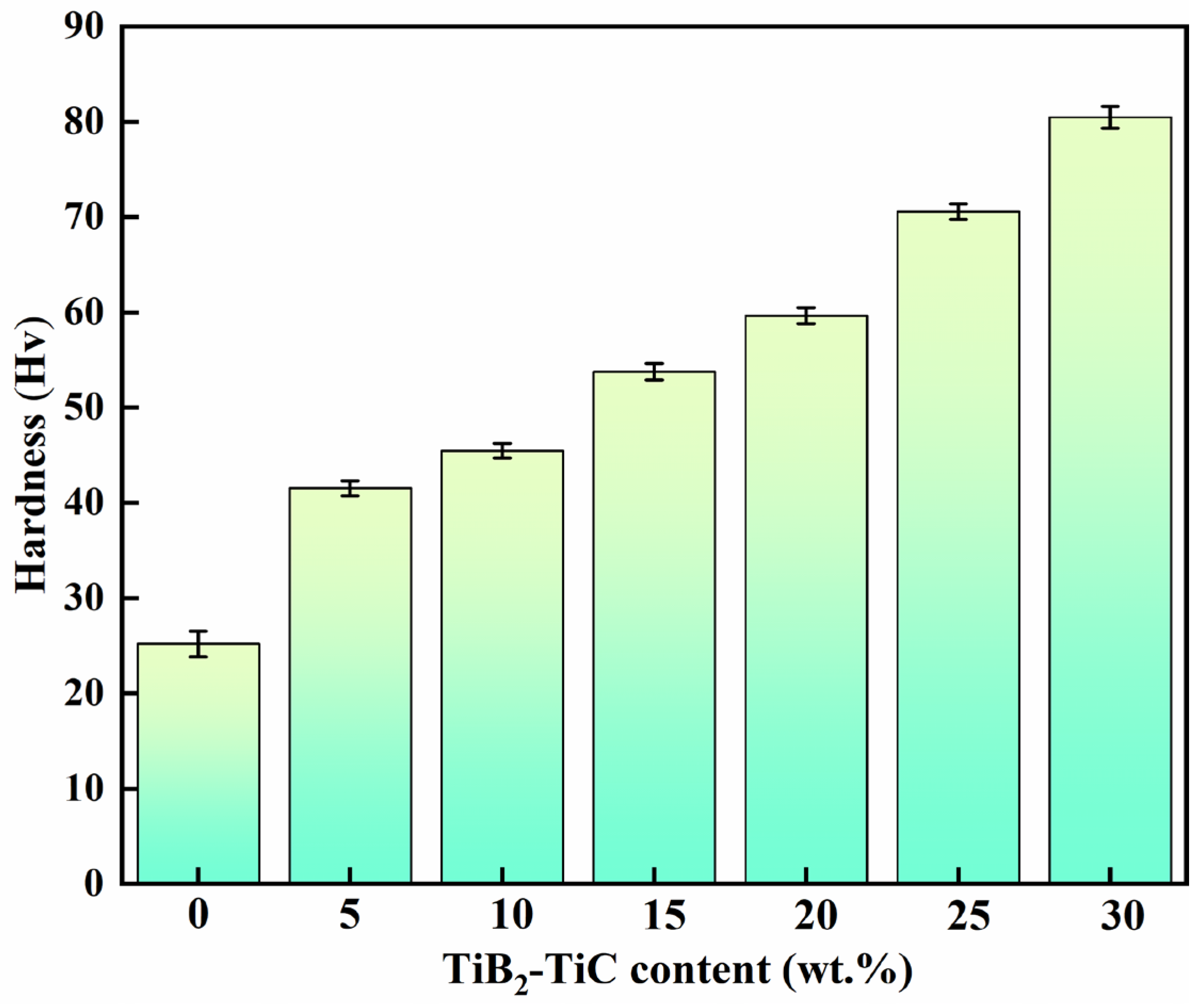
The Vickers hardness of (TiC + TiB
2)/Al composites with different TiB
2 and TiC contents is presented in
Figure 6. The incorporation of TiB
2 and TiC particles leads to a significant enhancement in hardness, which increases progressively with increasing TiB
2 and TiC content. The average Vickers hardnesses for the (TiC + TiB
2)/Al composites are 25.2 ± 1.4, 41.5 ± 0.8, 45.4 ± 0.7, 53.8 ± 0.8, 59.6 ± 0.9, 70.6 ± 1.2 and 80.5 ± 1.1 HV
1, respectively, which are much higher than that for the pure Al matrix. Notably, when the content of TiB
2 and TiC is 30 wt.%, its Vickers hardness reaches as high as 80.5 ± 1.1 HV
1, which improves on pure Al by about 220%. The XRD and microstructure results (
Figure 3,
Figure 4 and
Figure 5) show that TiC and TiB
2 can effectively impede dislocation movement and refine the microstructure of the Al matrix, thereby significantly enhancing Vickers hardness through grain refinement and dispersion strengthening [
26,
28].
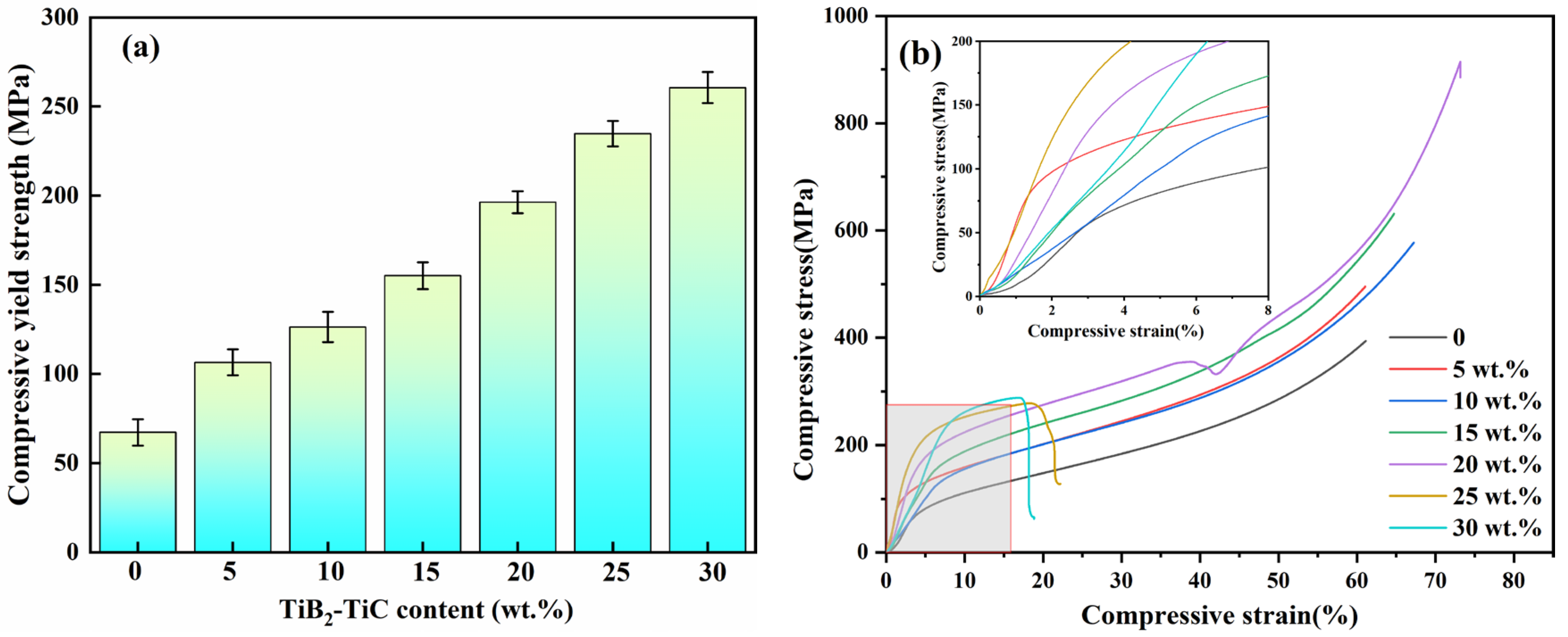
Figure 7 shows the compressive performance of (TiC + TiB
2)/Al composites with different TiB
2 and TiC contents. As shown in
Figure 7a, the compressive yield strength of (TiC + TiB
2)/Al composites increases markedly with the increase in TiB
2 and TiC, from about 67 ± 7.4 MPa for pure Al to 251 ± 8.7 MPa for the 30 wt.% (TiC + TiB
2)/Al composites, showing a 275% improvement over pure Al. However, the 30 wt.% (TiC + TiB
2)/Al composite exhibits a very poor uniform compressive plastic strain (about 16.8%) and a very low ultimate compressive strength of 288.2 ± 10.0 MPa due to TiC and TiB
2 agglomeration [
28]. Conversely, both ultimate compressive strength and uniform compressive plastic strain first increase and then reduce with the increase in TiB
2 and TiC content (
Figure 7b). When the TiB
2 and TiC content is 20 wt.%, the (TiC + TiB
2)/Al composite demonstrates a high compressive yield strength of 196.4 ± 6.1 MPa and an ultimate compressive strength of 648.1 ± 20.1 MPa, as well as a good uniform compressive plastic strain of approximately 73.2%. As is well known, the compressive strength of Al matrix composites is strongly influenced by reinforcement content and the particle–matrix interface bonding strength. According to the literature [
13], the α-Al grain size in (TiC + TiB
2)/Al composites can be calculated by the Hall–Petch equation:
. In this equation, k is the Hall–Petch parameter equal to 0.04 MPam
1/2, and d and dm are the average grain size of the (TiC + TiB
2)/Al composites and pure Al, respectively. According to the EBSD results in
Figure 5, dm = 11.52 μm and d = 5.86, 5.76, 5.49, 2.02, 1.17, and 1.09 μm for the 5, 10, 15, 20, 25 and 30 wt.% (TiC + TiB
2)/Al composites, respectively. The calculation results of Δσ are shown in
Table 2. It can be seen that adding TiC and TiB
2 particles can effectively improve the yield strength through grain refinement.
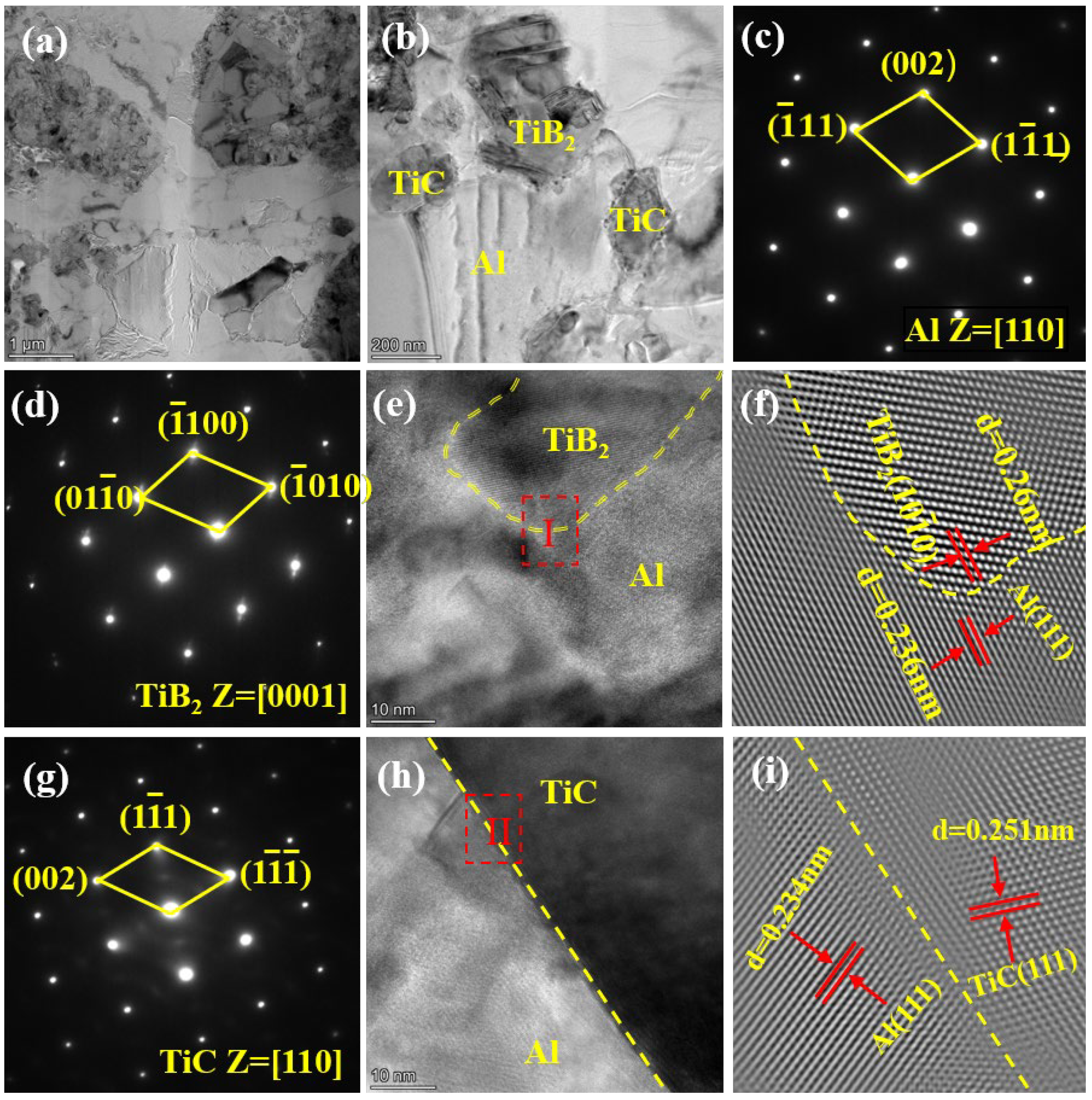
Figure 8 shows the TEM images of the 20 wt.% (TiC + TiB
2)/Al composite. It can be seen that TiB
2 and TiC particles are uniformly distributed in the Al matrix. The TiB
2 particles are irregular polygonal flakes with a hexagonal structure along the [001] zone axis, as confirmed by the SAED pattern in
Figure 8d. The TiC particles are spherical-like shapes with a face-centred cubic (FCC) structure along the [110] zone axis, as confirmed by the SAED pattern in
Figure 8g. The interface of TiB
2/Al and TiC/Al is clean and straight, and there are no interface reactants as shown in
Figure 8e,f,h,i. Furthermore, the inverse Fast Fourier transform (IFFT) pattern of region I indicates that the crystal planes of the Al matrix and the TiB
2 particles have an orientation relationship of
//
and the lattice misfit is about 10.2%, regarded as a semi-coherent interface. The IFFT pattern of region II indicates that the crystal planes of the Al matrix and the TiC particles have an orientation relationship of
//
and the lattice misfit is about 7.3%, regarded as a semi-coherent interface. The clean and strong interfacial bonding of Al/TiB
2 and Al/TiC interfaces effectively transfers external loads from the Al matrix to the high-strength TiC and TiB
2 particles and hinders crack propagation, thereby significantly enhancing the load-bearing capability [
6,
17,
28,
29]. Concurrently, it reduces the stress concentration at the Al/TiB
2 and Al/TiC interfaces, which improves the strength and ductility and prevents premature failure [
28,
30]. Therefore, the synergy of grain refinement, dispersion strengthening and enhanced load-bearing capacity collectively accounts for the high strength and good plasticity in the (TiC + TiB
2)/Al composites [
6,
17,
28,
29,
30].
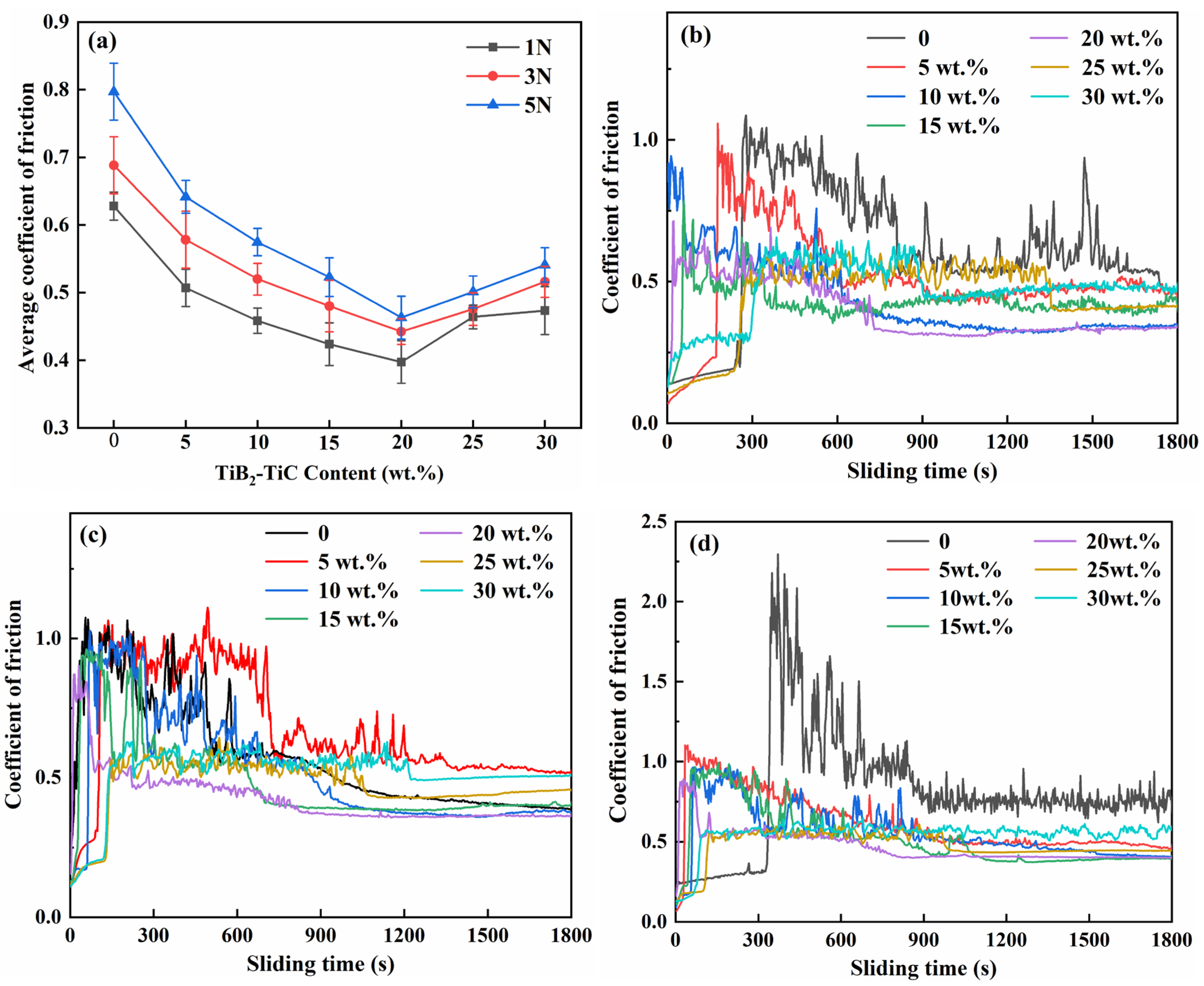
Figure 9 presents the average COF and COF-versus-time curves of (TiC + TiB
2)/Al composites with varying amounts of TiB
2 and TiC contents. As shown in
Figure 9a, the average COF of pure Al under applied loads of 1, 3 and 5 N is 0.604 ± 0.05, 0.678 ± 0.03 and 0.801 ± 0.04, respectively, showing much higher values than the (TiC + TiB
2)/Al composites. At the same load, the average COF values of (TiC + TiB
2)/Al composites first reduce and then increase with increasing TiB
2 and TiC content. The (TiC + TiB
2)/Al composites exhibit minimal COF values of 0.397 ± 0.03, 0.423 ± 0.03 and 0.467 ± 0.02 under applied loads of 1, 3 and 5 N, respectively, for the 20 wt.% (TiC + TiB
2)/Al composites. However, for the 25 and 30 wt.% (TiC + TiB
2)/Al composites, TiC and TiB
2 agglomeration not only reduces the ductility of the Al matrix but also acts as abrasive debris during wear, leading to an increase in COF [
28]. Moreover, the higher content of brittle phases also leads to severe abrasive wear, consequently leading to a high COF. In addition, the tribological properties vary significantly with varying TiC and TiB
2 contents and loads (
Figure 9b–d). Adding TiC and TiB
2 particles can effectively reduce the run-in period. It can be seen that the run-in period is reduced from about 900, 600 and 900 s for pure Al to about 300, 150, 90 s for the 30 wt.% (TiC + TiB
2)/Al composite. Moreover, compared to a low load, the high load not only introduces greater COF fluctuations but also accelerates the transition to a steady-state wear regime due to the increase in the contact zone between the specimen and abrasive and enhanced micro-ploughing efficiency [
31].
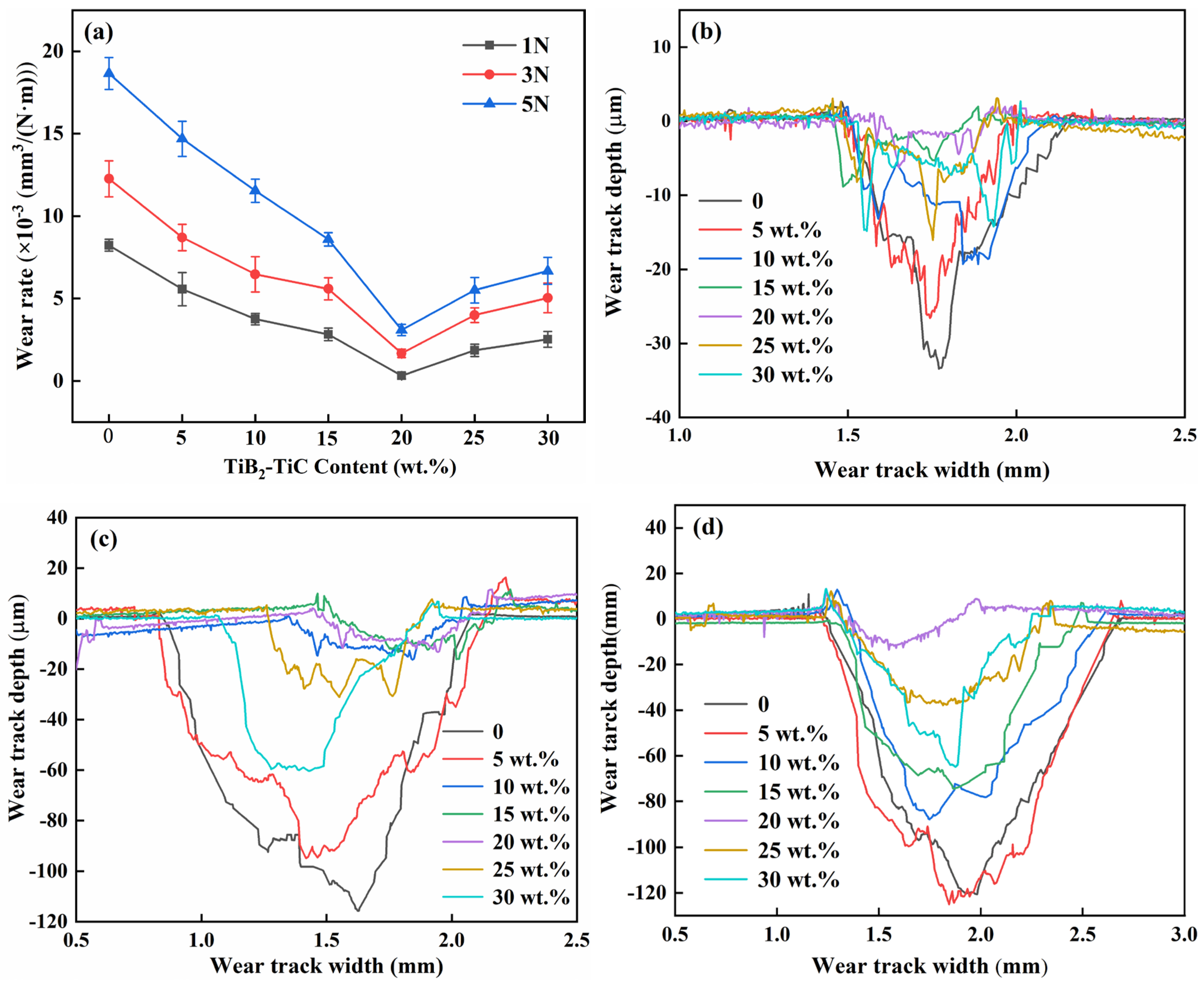
Figure 10 shows the average volumetric wear rates and two-dimensional wear scar profiles of the (TiC + TiB
2)/Al composites. A marked rise in the wear rate is observed in (TiC + TiB
2)/Al composites in
Figure 10a with increasing applied load. Under the same test conditions, pure Al exhibits the highest wear rate at all loads, primarily due to the lower hardness and strength of pure Al compared to (TiC + TiB
2)/Al composites. According to the Archard wear model (V ≈ K·P·s/H), wear volume is inversely related to material hardness [
32]. The incorporation of TiB
2 and TiC improves the strength of the Al matrix, thus improving the load-bearing capacity and consequently yielding excellent wear resistance [
28]. Therefore, the wear scar depth and width are significantly reduced, leading to a substantially lower wear rate. When the content of TiB
2 and TiC increases from 5 to 20 wt.%, the average volumetric wear rate significantly decreases to the minimum values of (3.143 ± 0.194) × 10
−4 mm
3/(N·m), 1.676 ± 0.251× 10
−3 mm
3/(N·m) and (3.093 ± 0.335) × 10
−3 mm
3/(N·m) at 1 N, 3 N, 5 N, respectively. These values are an order of magnitude lower than those for pure Al. However, further increasing the TiB
2 and TiC content to 30 wt.% leads to a higher wear rate. This deterioration stems primarily from the agglomeration of TiC and TiB
2 particles due to excessive addition, resulting in severe stress concentration and reduced ductility. This, in turn, promotes the initiation and propagation of cracks as well as brittle spallation during sliding, ultimately leading to a degradation in tribological performance [
31]. Furthermore, excessive addition promotes the detachment of TiC and TiB
2 during wear, which act as abrasive debris, inducing severe abrasive wear and thereby increasing the wear rate [
28,
31].
The 2D wear scar profiles of (TiC + TiB
2)/Al composites under varying loads are displayed in
Figure 10b–d. Pure Al exhibits the widest and deepest wear scar of about 658.8 and 33.4 μm, 1270. 9 and 115.6 μm, and 1472.5 and 120.6 μm at 1 N, 3 N and 5 N, respectively. The profile is uneven with significant fluctuations, indicating a relatively rough worn surface. In contrast, adding TiB
2 and TiC particles can significantly reduce the scar width and depth and improve wear resistance. When the content of TiC and TiB
2 is 20 wt.%, the smallest width and depth wear scars are about 474.9 and 6.2 μm, 740.2 and 11.4 μm, and 787.8 and 13.6 μm at 1 N, 3 N and 5 N, respectively, and minimal fluctuations are obtained in the (TiC + TiB
2)/Al composites, showing excellent abrasive wear resistance. Conversely, when increasing the TiB
2 and TiC content to 30 wt.%, both the wear scar width and depth (about 502.3/14.8 μm at 1 N, 891.5/60.3 μm at 3 N, and 1039.9/64.6 μm at 5 N) and wear rate (about 2.525 × 10
−3, 5.033 × 10
−3 and 6.674 × 10
−3 mm
3/(N·m) at 1 N, 3 N and 5 N, respectively) increase instead, as shown in
Figure 10a. This is mainly because the excessive addition causes the agglomeration of TiC and TiB
2 particles, which disrupts uniform stress distribution, reduces ductility, and provides abrasive debris during wear, thereby increasing scar size and wear rate [
28,
31,
33,
34]. Moreover, a higher TiC and TiB
2 concentration elevates the surface hardness and roughness of the (TiC + TiB
2)/Al composite, which promotes mechanical interlocking during the wear process, thereby leading to a higher COF and wear rate [
35].
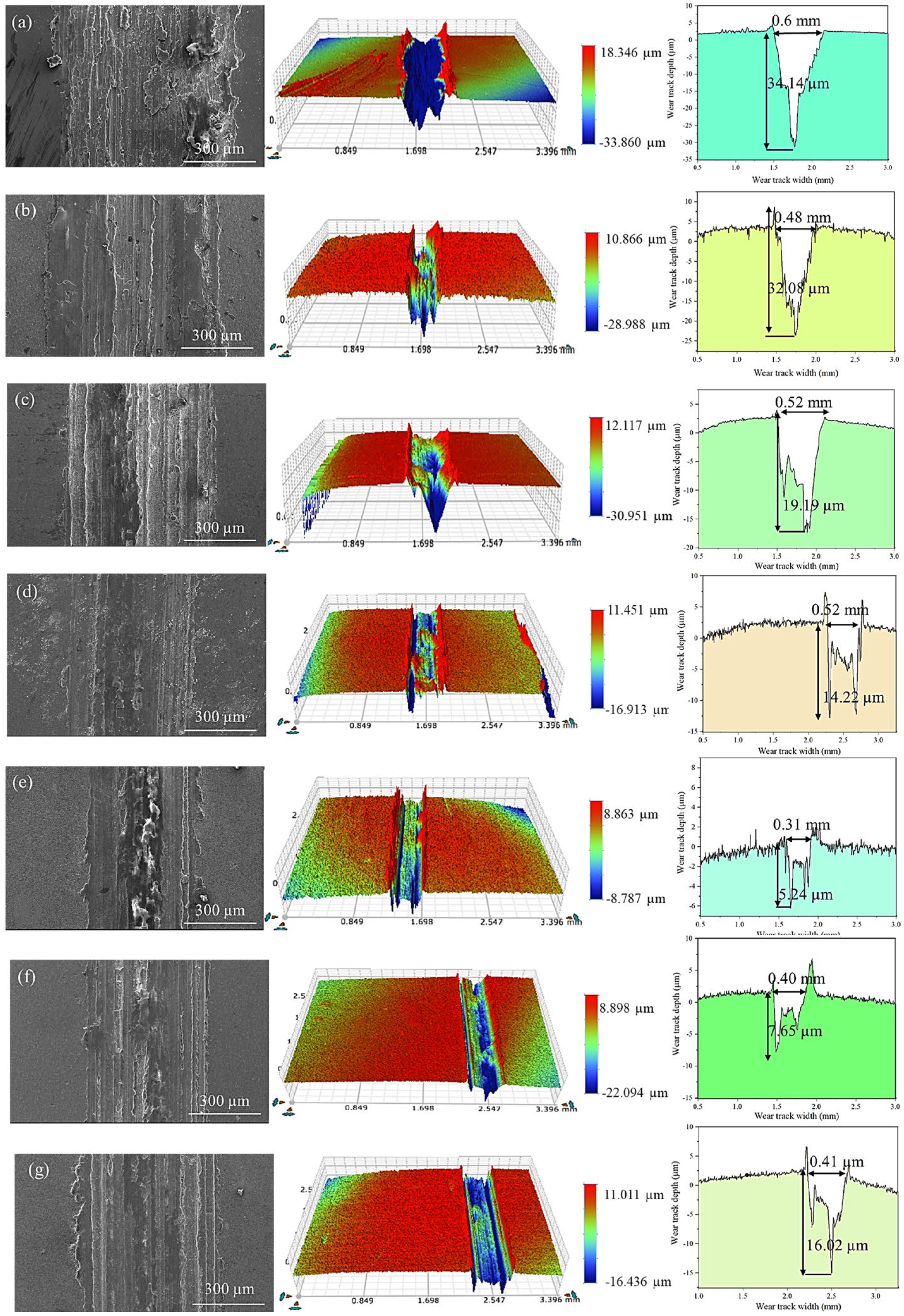
To further reveal the wear mechanism of (TiC + TiB
2)/Al composites, wear surface morphology and the associated performance of (TiC + TiB
2)/Al composites under a 1 N load are characterized, as illustrated in
Figure 11. For pure Al, the morphology exhibits distinct ploughing grooves and plastic deformation (
Figure 11a), corresponding to the largest scar dimensions of 0.6 mm in width and 34.14 µm in depth. Compared with pure Al, the worn surfaces of the (TiC + TiB
2)/Al composites exhibit progressively shallower ploughing grooves and reduced plastic deformation with the increase in TiB
2 and TiC content from 5 to 20 wt.%, which is consistent with the gradual reduction in scar width and depth (
Figure 11b–d). As shown in
Figure 11e, the 20 wt.% (TiC + TiB
2)/Al composite achieves the optimal performance, with a minimal wear scar of 0.31 mm in width and 5.24 µm in depth, demonstrating that an appropriate amount of TiB
2 and TiC significantly enhances the wear resistance. The primary reason is that an optimal amount of TiB
2 and TiC effectively enhances the hardness and strength of the Al matrix, thus improving its load-bearing capacity, reducing plastic deformation and suppressing both adhesive and abrasive wear, which collectively yield the best wear resistance performance [
28,
35]. In contrast, with further increases in TiB
2 and TiC content, the wear scars become wider and deeper as shown in
Figure 11f,g. The performance deterioration mainly stems from particle agglomeration and poor dispersion due to the excessive TiB
2 and TiC content, which facilitates particle detachment during sliding and thereby degrades the tribological performance [
36,
37].
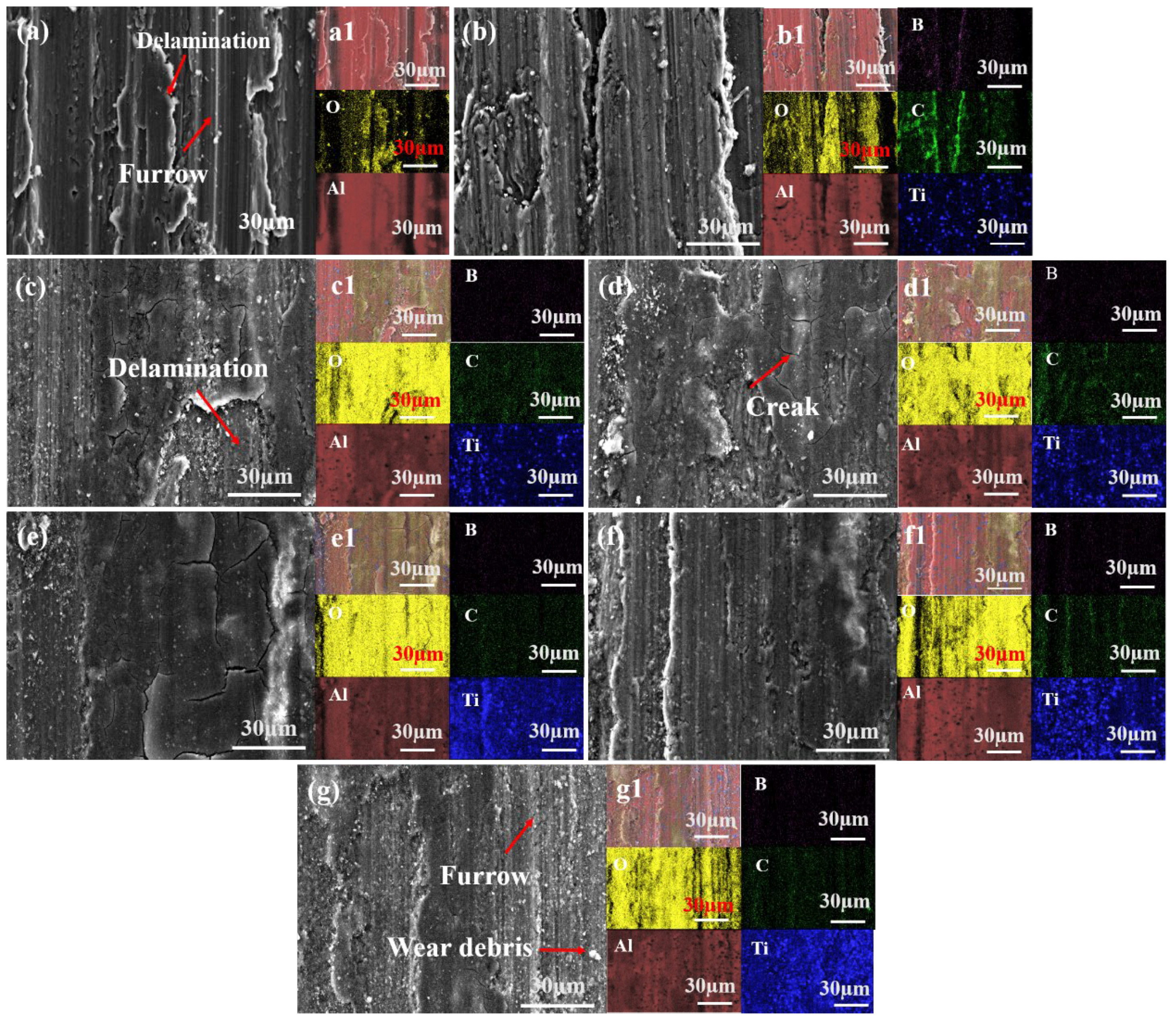
Figure 12 shows the worn surface morphology and elemental distribution of (TiC + TiB
2)/Al composites with different contents of TiB
2 and TiC under a 1 N load. Severe adhesive wear, characterized by deep grooves and delamination, is evident in the pure Al alloy (
Figure 12a). This is attributed to severe plastic deformation and the detachment of surface asperities, triggered by the normal load and shear stresses from the Al
2O
3 counterface. The EDS mapping of the wear track indicates that some oxide particles are formed in the detached Al debris due to the frictional heat as shown in
Figure 12a. During the reciprocating sliding process, the generated oxide particles act as abrasive media and enhance the ploughing effect, resulting in deep grooves in the Al matrix. Moreover, the formation and spallation of the oxide layers occur cyclically due to the low support capacity of the soft Al matrix and repeated shear stress [
28], thus leading to eventual delamination. Therefore, pure Al exhibits a higher COF and wear rate under severe adhesive wear.
The wear surface morphology of the 5 wt.% (TiC + TiB
2)/Al composite (
Figure 12b) shows little distinction from that of the pure Al matrix. However, as the TiB
2 and TiC content increases to 10 and 15 wt.%, the wear surfaces of the (TiC + TiB
2)/Al composite show a gradual reduction in both grooves and delamination regions as shown in
Figure 12c,d. They exhibit a typical abrasive wear feature, characterized by shallow, parallel grooves aligned with the sliding direction [
31]. According to the EDS mapping results as shown in
Figure 12(c1,d1), there is uniform oxygen distribution across the worn surface, suggesting the formation of a continuous oxide-containing tribolayer. This layer effectively mitigates plastic deformation and tearing of the Al matrix, thereby resulting in a smoother tribo-oxidized film, fine wear debris, and shallower/narrower grooves as seen in
Figure 12c,d. The EDS mapping results (
Figure 12(c1,d1)) reveal that Ti, B and C elements are enriched in the debris, indicating the debris originates from TiB
2 and TiC particles, which in turn improve the surface resistance to plastic deformation and abrasion, resulting in the dominant mechanism of abrasive wear [
28]. Furthermore, the additional presence of numerous microcracks and spallation as well as obvious plastic deformation (
Figure 12c,d) also implicates fatigue wear as a co-dominant mechanism on the worn surface. Thus, the primary wear mechanisms are a synergistic combination of abrasive and fatigue wear.
As shown in
Figure 12e, the 20 wt.% (TiC + TiB
2)/Al composite exhibits shallower ploughing grooves and less micro-cutting due to its enhanced load-bearing capacity, which results from its increased hardness and strength. Under applied stress, the fine wear debris is pressed into the worn surface, thereby forming a relatively continuous and smooth tribo-oxidized film composed of oxide matrix and ceramic particles. This harder tribo-oxidized film exhibits much stronger resistance to plastic deformation, abrasion and material spalling, thereby suppressing adhesive wear and shifting the dominant mechanism towards abrasion. Moreover, stress concentration often arises during reciprocating sliding, leading to the formation of microcracks within the film. The subsequent propagation of these cracks results in localized spallation, a characteristic of fatigue wear [
38]. Furthermore, the harder tribo-oxidized film also minimizes direct contact between the Al matrix and Al
2O
3 counterface, thereby mitigating friction and wear and reducing the COF and wear rate in (TiC + TiB
2)/Al composites.
Beyond 20 wt.% TiB
2 and TiC, the (TiC + TiB
2)/Al composite displays a worn surface characterized by abundant fine debris and elongated ploughing grooves (
Figure 12f,g), indicating abrasive wear as the controlling mechanism. Although the high TiB
2 and TiC content raises the hardness and strength of the (TiC + TiB
2)/Al composite, it also induces a significant reduction in ductility due to the severe agglomeration of TiC and TiB
2 particles. During reciprocating sliding, stress concentration facilitates crack initiation and propagation, culminating in the detachment of a large amount of hard debris under cyclic stress. Furthermore, the high-hardness TiB
2 and TiC particles act as abrasives, cutting severely into the Al matrix and disrupting the continuity of the protective surface oxide film. This promotes severe abrasive wear and brittle spallation, which accounts for the higher COF and wear rate in (TiC + TiB
2)/Al composites [
39].
In summary, the dominant wear mechanism of (TiC + TiB
2)/Al composites evolves with increasing ceramic content: from adhesive–abrasive wear to a mixed abrasive–fatigue wear, and finally to severe fatigue wear accompanied by brittle spallation. At low contents of TiC and TiB
2 (≤10 wt.%), the Al matrix is directly exposed to the Al
2O
3 counterface and heavily penetrated due to the low load-bearing capacity, subsequently generating coarse debris and chips via deep grooving, leading to characteristic severe adhesive wear and abrasive wear. At an intermediate content (15–20 wt.%), uniformly dispersed TiC and TiB
2 particles effectively improve the hardness and strength through grain refinement and dispersion strengthening, thereby improving load-bearing and abrasion resistance [
40,
41]. Moreover, the continuous oxide-containing tribolayer effectively increases the plastic deformation resistance and minimizes the direct contact between the Al matrix and Al
2O
3 counterface, thereby weakening cutting and adhesive wear [
42,
43]. Instead, abrasive wear and incipient fatigue wear occurs. However, beyond the optimal content (≥25 wt.%), the agglomeration of TiC and TiB
2 particles causes severe stress concentration, leading to crack initiation and propagation and brittle spallation under cyclic stress. Moreover, the high-hardness TiB
2 and TiC particles act as abrasives, leading to severe fatigue wear and brittle spallation. Overall, the 20 wt.% (TiC + TiB
2)/Al composite exhibits optimal abrasive wear performance, which is ascribed to the synergistic effect of enhanced load-bearing capacity through grain refinement and dispersion strengthening and suppression of micro-cutting and adhesive wear through a continuous oxide-containing tribolayer.