Article

Experimental Assessment of the Effect of Temperature in the Range of 20–80 °C on Structural Behaviour of NSM CFRP Reinforced Concrete Slabs


Institute for Sustainability and Innovation in Structural Engineering (ISISE), Advanced Production and Intelligent Systems Associated Laboratory (ARISE), Department of Civil Engineering, University of Minho, 4800-058 Guimarães, Portugal
*
Author to whom correspondence should be addressed.
Materials 2026, 19(7), 1382; https://doi.org/10.3390/ma19071382
Submission received: 6 March 2026 / Revised: 23 March 2026 / Accepted: 27 March 2026 / Published: 31 March 2026
(This article belongs to the Section Advanced Composites)

Abstract

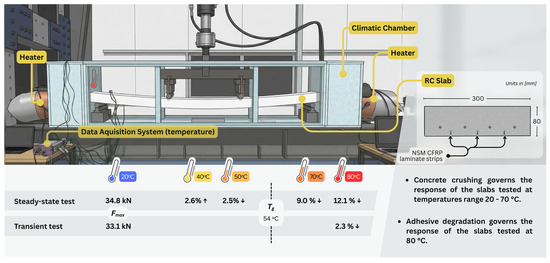
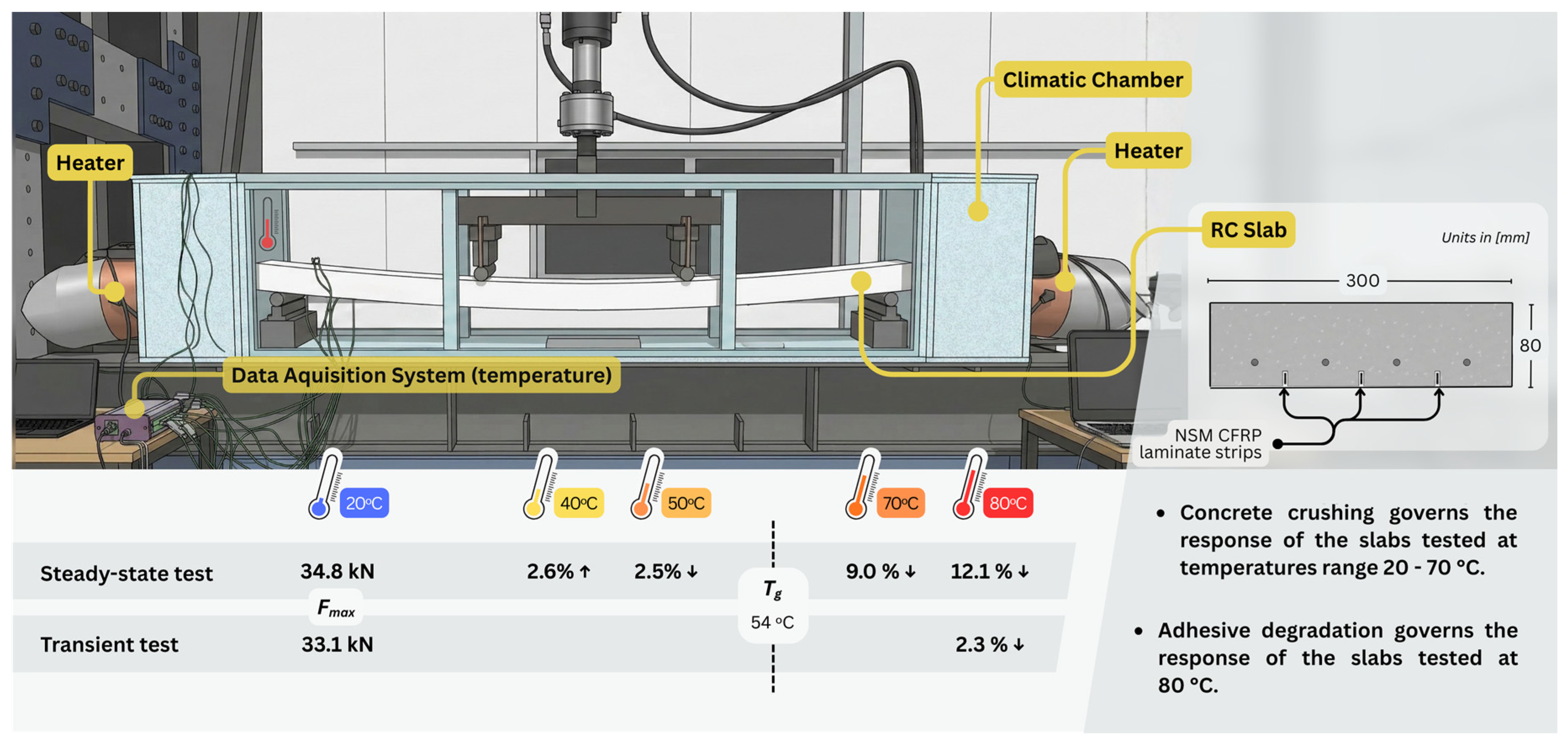
The near-surface mounted (NSM) technique with carbon fibre-reinforced polymer (CFRP) composites has been proven to be one of the most effective alternatives for the flexural strengthening of existing reinforced concrete (RC) members. However, several issues remain unresolved, including the effects of elevated temperatures on the performance of these strengthened RC elements. This study experimentally investigates the mechanical performance of RC slabs strengthened with NSM-CFRP systems under elevated temperatures, using both (i) steady-state and (ii) transient heating under applied loads. The steady-state tests were conducted at 20, 40, 50, 70, and 80 °C, while the transient tests were performed at 20 and 80 °C. Deflections, strains, temperatures and loads were registered during the heating phase and during the flexural tests up to failure. These measurements were used to analyse the system response in terms of load–deflection curves, evolution of concrete and CFRP strains, and bond stresses between the epoxy adhesive and CFRP. At 80 °C, the NSM-CFRP-strengthened RC slabs exhibited an average reduction of 12.1% (steady-state) and 2.3% (transient) in ultimate strength. Moreover, the concrete crushing failure mode governed up to 70 °C, despite passing the epoxy’s glass transition temperature (54 °C), while cohesive failure of the adhesive governed the failure at 80 °C.

Graphical Abstract

1. Introduction

Carbon fibre-reinforced polymer (CFRP) composites have been increasingly used in various fields of engineering in the past few decades [1]. One of their most prominent applications is the strengthening of reinforced concrete (RC) structures [2]. CFRP composites have several advantages over traditional strengthening materials, such as lightness, ease of installation, high strength-to-weight ratio and resistance to corrosion [3]. Among the CFRP composites’ strengthening techniques, the near-surface mounted (NSM) and externally bonded reinforcement (EBR) techniques are the most widely adopted [1,3]. In NSM, FRP laminates or rods are inserted inside grooves cut through the concrete cover of the RC member and bonded with an adhesive, typically epoxy-based. In EBR, FRP composites are adhesively bonded to the exterior surface of the RC member, which has been previously prepared. The NSM technique provides more efficient stress transfer for a given reinforcement geometry as the reinforcement is bonded on all faces rather than one, reducing premature debonding and allowing better utilisation of the reinforcement compared to EBR (with or without prestressing) [3,4,5,6,7,8]. The NSM technique also requires less preparation work and offers better protection of the FRP against external aggressive agents, environmental conditions, and vandalism [5,7].
A critical factor in structural strengthening systems is the exposure to high service temperatures and fire, particularly for cold-curing epoxy adhesives due to their low glass transition temperature (Tg) [3]. When the epoxy approaches a temperature equal to or higher than the Tg, a sudden change in its mechanical properties occurs from a glassy, hard and relatively brittle state into a rubber-like state. This transition from solid to a viscous state is a continuous process over a certain temperature range (starting at about 10–20 °C below the Tg), degrading bond performance [9,10]. Certain structures, such as bridges, are susceptible to high ambient temperatures (close to 80 °C) due to the sealing layer and asphalt application [11].
Research on the performance of strengthened RC systems at elevated temperatures can generally be classified into two main areas: (i) fire resistance testing (up to ~1000 °C in a fire furnace) evaluating structural integrity under extreme thermal conditions and (ii) high service temperature testing (<100 °C) evaluating loading capacities at a target temperature near or above the Tg of the adhesive.
Studies on the fire resistance of various slab-strengthening techniques showed that NSM-CFRP systems have a higher average critical temperature when the CFRP debonded (2.9 to 4.9 times Tg) compared to the EBR (1.1 to 1.6 times Tg), likely due to the better confinement within the concrete cover [1,12]. However, tests conducted showed the temperature susceptibility of both techniques without insulation, losing their effectiveness after exposure for 2 min for EBR and 16 min for NSM, while insulation systems increased the endurance time up to 30 min for EBR and 90 min for NSM reinforcement [12]; that is why insulation systems and techniques have been investigated on multiple occasions, e.g., [3,12,13]. Fire endurance tests have been developed using the NSM, focusing on the type of adhesive used for bonding with RC beams, comparing epoxy and cement-based adhesives, with epoxy showing lower performance [13,14,15]. In Ref. [15], the CFRP composite laminates started to gradually lose their contribution at around 300 °C using epoxy adhesives, compared to 830 °C for cement-based ones.
High service temperature research includes sustaining service loads [16], comparing the behaviour of epoxy and cement-based adhesives [16], single- and double-lap shear tests on the adhesives [17,18], and the flexural performance of strengthened beams [1,19]. In both the flexural and adhesive shear tests using NSM, the failure mode changes from cohesive in the RC member to adhesive in the interface between the RC and CFRP near Tg [1,17,18,19]. Additionally, cement-based adhesives outperform epoxy adhesives under elevated service temperatures ranging from 50 to 255 °C [16,17,18]. Under similar conditions, NSM shows superior performance over EBR, consistent with observations from the fire endurance tests [20].
Experimental programmes comparing the NSM flexural performance under elevated service temperature include tests at: (i) ambient temperature and 40 °C—well below the adhesive’s Tg (53.9–65.3 °C)—and (ii) elevated temperatures of 60, 70, and 85 °C [1,19]. Performance is only marginally affected up to a temperature of 60 °C, but ultimate capacity drops by 3.95% at 70 °C and 10.45% at 85 °C [1]. Additionally, failure evolves from FRP rupture at 20, 40, and 60 °C, to end debonding at 70 °C and concrete crushing at 85 °C. This change in failure behaviour can be attributed to the degradation of the mechanical properties of both the concrete and the epoxy at elevated temperatures [1].
Most studies to date focus on strengthened beams, leaving the flexural performance of NSM-strengthened slabs under elevated service temperatures largely unexplored. While experiments on RC beams are well-documented, only a few studies have investigated slab strips subjected to fire [3,12]. This gap motivates the present investigation of NSM CFRP-strengthened RC slabs in the range of 20–80 °C.
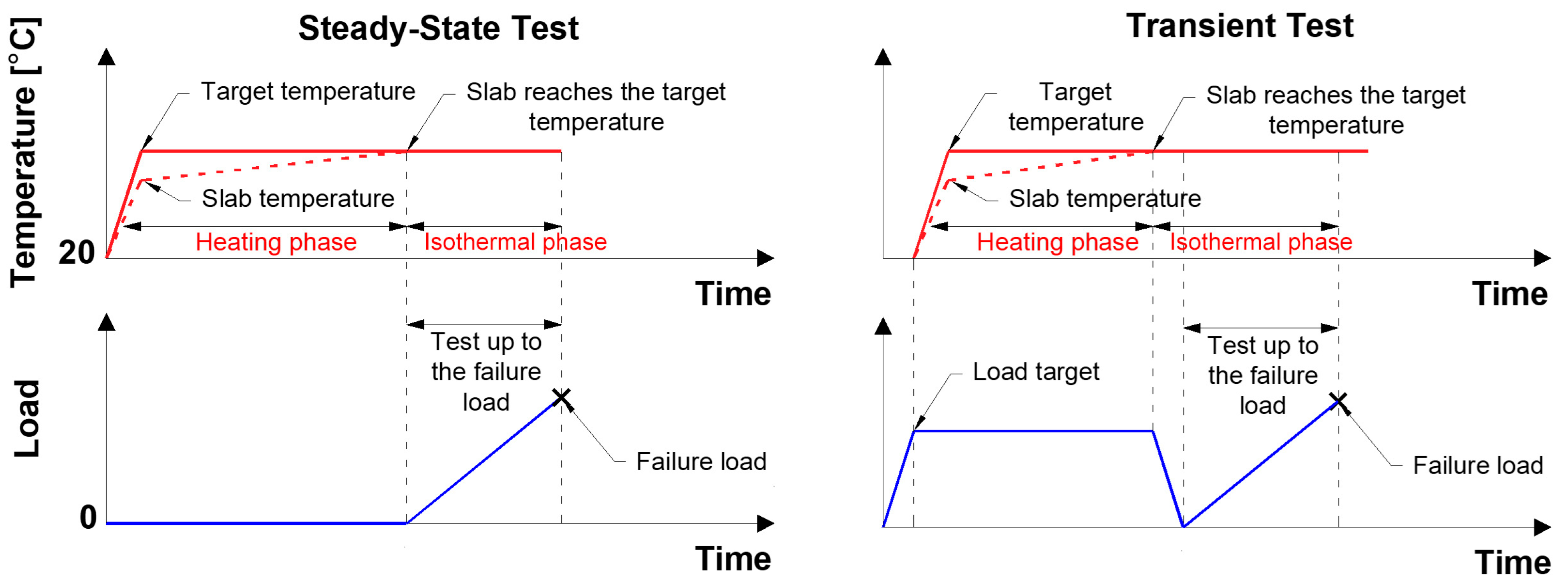
The main goal of the present study is to contribute to the current state of knowledge on the effect of elevated service temperatures on the NSM technique. This is done through an experimental investigation of RC slab strips strengthened with NSM CFRP laminates submitted to elevated temperatures in the range of 20–80 °C, spanning above and below the epoxy adhesive’s Tg. The experimental programme consisted of nine slabs tested under two conditions: (i) steady-state and (ii) transient. In the steady-state tests, slabs were first heated to a predefined temperature (20, 40, 50, 70, and 80 °C) and then monotonically four-point bending loaded to failure. For the transient tests, slabs were initially preloaded to 2/3 of their ultimate load at room temperature, followed by a gradual increase in temperature up to 80 °C, unloaded, and monotonically tested to failure. The following section presents a detailed description of the experimental programme.

2. Specimens, Materials and Methods

2.1. Tests at Elevated Temperature with Slabs

2.1.1. Setup and Instrumentation

The experimental setup and instrumentation scheme are depicted in Figure 1. A four-point bending setup with a shear span of 600 mm and a total span of 1800 mm was used, as shown in Figure 1a. Deflections were recorded using five Linear Variable Displacement Transducers (LVDTs, RDP Electronics Ltd., Wolverhampton, UK) positioned at the mid-span, load application points, and midpoints between supports and loads. Seven strain gauges (TML BFLA-5-3-3L, Tokyo Measuring Instruments Laboratory Co., Ltd., Tokyo, Japan) were installed on the CFRP laminates (SG1–SG5) and steel bars (SG6–SG7), while one additional gauge (TML PFL-30-11-3L, Tokyo Measuring Instruments Laboratory Co., Ltd., Tokyo, Japan) monitored concrete strains, as shown in Figure 1b. The applied load (F) was measured by a 200 kN load cell positioned between the actuator and the grip, featuring a linearity error below ±0.05% F.S.
K-type thermocouples were placed at two instrumented sections: (i) a section 50 mm from the support (S1) and (ii) the mid-span (S2), as shown in Figure 1b. A total of 25 thermocouples were installed to monitor temperatures at various points, as illustrated in Figure 1c: 10 thermocouples per section (S1 and S2) and 5 to measure the air temperature inside and outside the climatic chamber. Temperature data were recorded using DataTaker DT85M [21] and PicoLog USB TC-08 [22] systems.
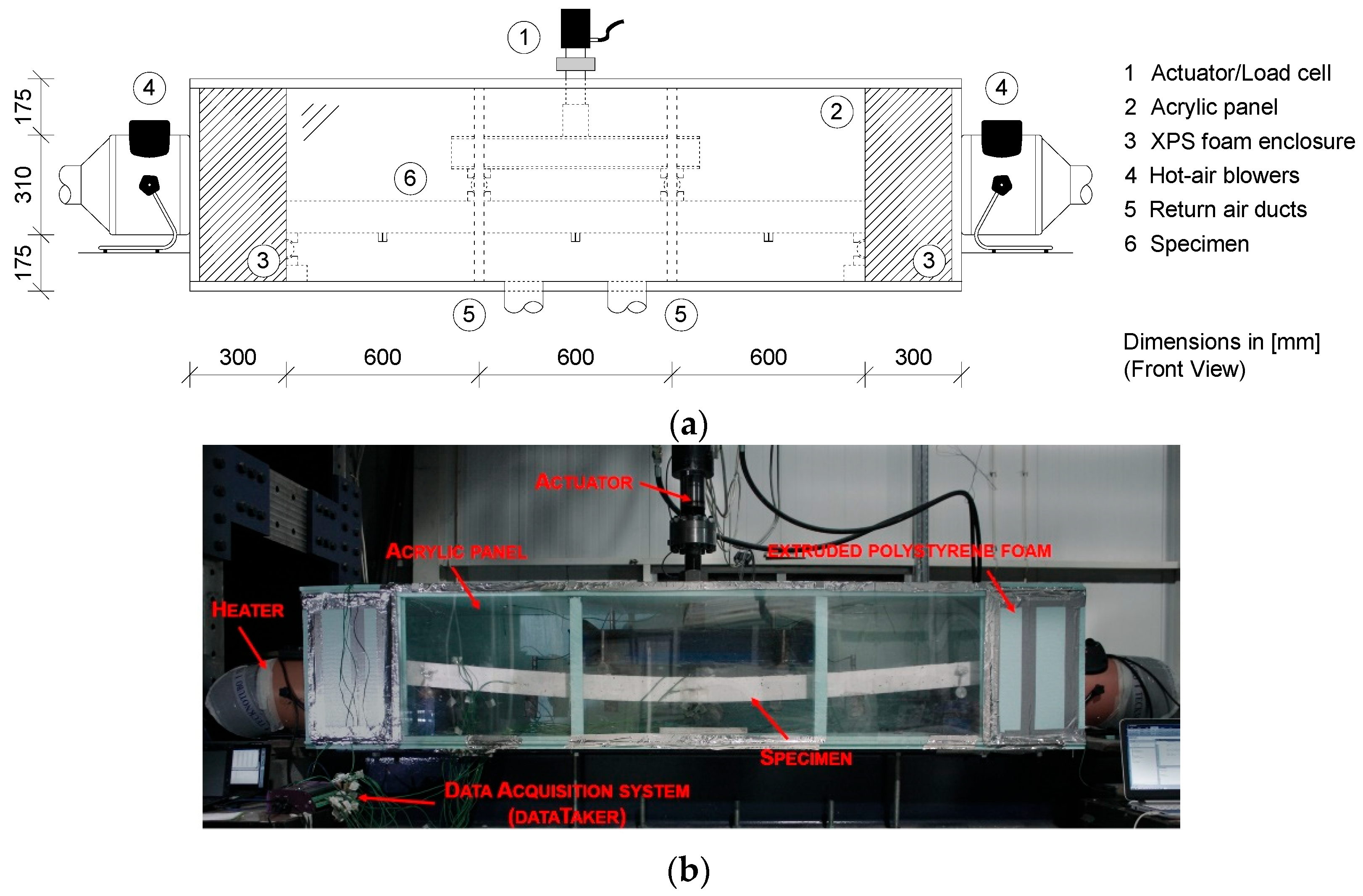
Figure 2 shows a general view of the fabricated chamber and heating system used for the steady-state (SS) and transient (TR) tests. The chamber was constructed from extruded polystyrene foam and designed to withstand temperatures of up to 100 °C. Two industrial hot-air blowers were used to heat the interior, with temperature controlled by an Arduino UNO [23] equipped with a MAX31855 thermocouple amplifier ADC featuring cold-junction compensation [24]. After describing the instrumentation and chamber setup, the experimental programme is detailed below.

2.1.2. Test Programme

As previously referenced, the present experimental programme encompasses steady-state (SS) and transient (TR) tests. Figure 3 illustrates schematically the temperature and loading protocols adopted, while Table 1 provides further details, in addition to the denomination that was adopted in each test.
Six SS slabs were tested at 20, 40, 50, 70, and 80 °C, with two slabs at 80 °C for repeatability. The SS slabs were heated without a sustained load until the target temperature. Subsequently, the slabs were monotonically loaded to failure with a rate of 0.02 mm/s while maintaining the target temperature.
Two slabs were used in the TR tests: (i) one of the TR slabs (SL1_TR-80) was exposed to approximately 80 °C for 4 h, while (ii) the other slab (SL2_TR-80) was exposed for nearly 12 h, corresponding to the time required for the slab to reach 80 °C. Prior to the initiation of the heating phase, the TR slabs were preloaded to 2/3 of their ultimate capacity, with a rate of 14 N/s, at room temperature (20 °C). After the heating phase, the TR slabs were unloaded at 0.1 mm/s and then loaded to failure under the same displacement control as the SS tests.
Additionally, a control specimen (SL1_TR-20) was tested monotonically to failure at room temperature (20 °C).

2.2. Specimen Design

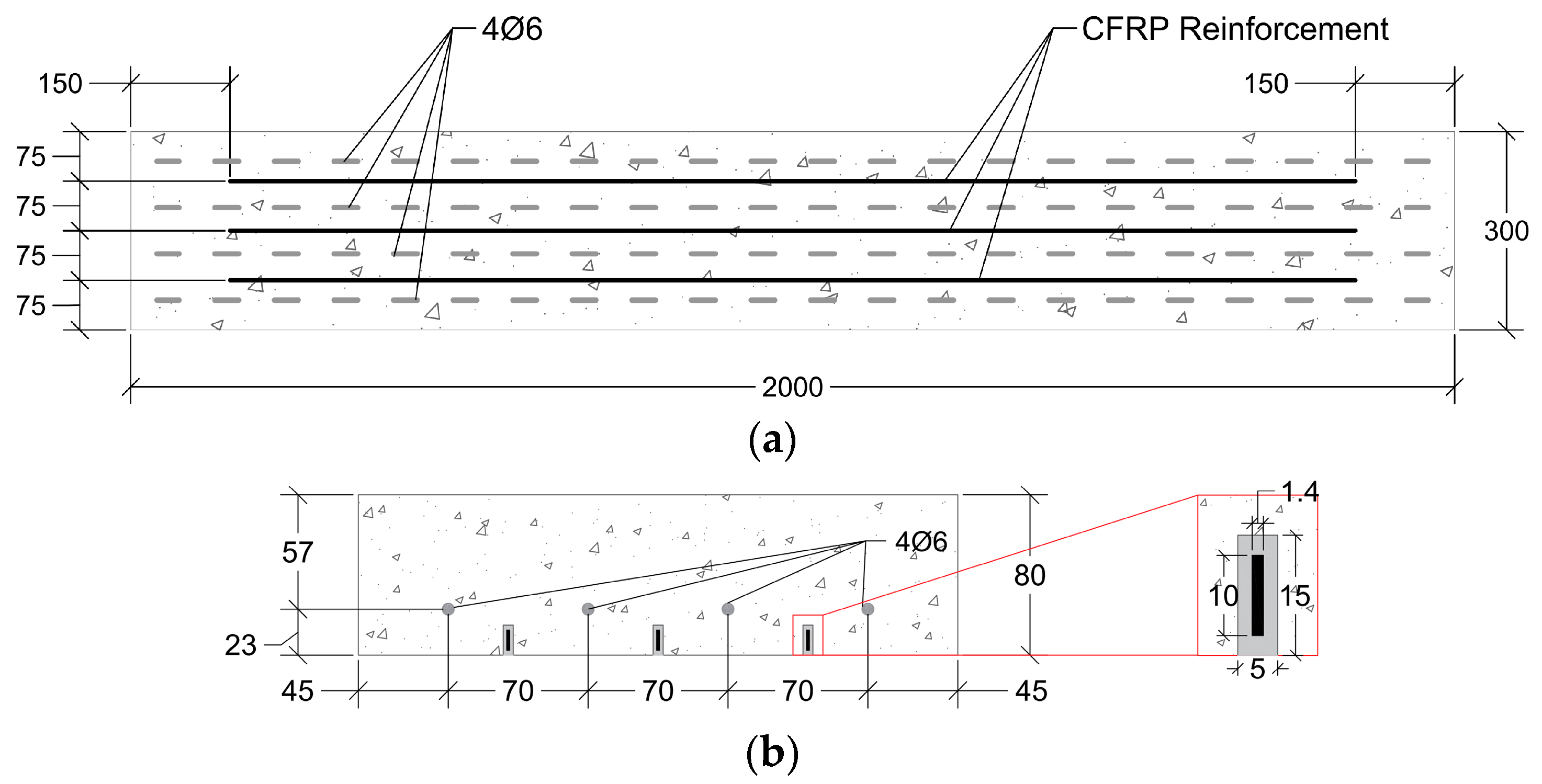
The experimental programme consisted of nine slabs with dimensions of 2000 mm in length, 300 mm in width, and 80 mm in thickness, as shown in Figure 4. The longitudinal reinforcement comprised four 6 mm diameter rebars, corresponding to a longitudinal reinforcement ratio of 0.47%, as illustrated in Figure 4a. The NSM technique was adopted for flexural strengthening, using three CFRP laminate strips, which provided an equivalent longitudinal reinforcement ratio of 0.68% in total [26]. Details of the groove geometry and corresponding reinforcement configuration are presented in Figure 4b.
The strengthening of the slabs was carried out approximately three months after concrete casting. Before strengthening, grooves were cut using a saw-cutting machine—the average groove width and depth were 5.47 mm (CoV = 1.82%) and 15.59 mm (CoV = 2.16%), respectively. The strengthening procedure involved the following steps: (i) cleaning the grooves with compressed air and the CFRP laminates with acetone; (ii) preparing the epoxy adhesive according to the manufacturer’s recommendations; (iii) applying the adhesive in the grooves and on the lateral faces of the laminates using a hand scraper; (iv) carefully inserting each laminate at the centre of the groove; and (v) smoothing the external surface of the groove region. The strengthening process was performed under laboratory conditions, with an average temperature of 25 °C and a relative humidity of 42%. Further details relating to these slabs, including the rationale supporting the geometry, materials, reinforcements and strengthening solutions, can be found in the following references [27,28,29]. The RC slab geometry, longitudinal reinforcement, groove dimensions, material properties, and strengthening procedure adopted in the present study are identical to those used in a companion publication examining the fatigue performance of the same NSM-CFRP-strengthened slabs [28]. Both investigations form part of the same R&D project. Further details can be found in [27].

2.3. Materials

2.3.1. Concrete

Only one batch was used to cast all the specimens involved in this experimental programme. The concrete mixture was composed of 765.3 kg/m3 of coarse aggregate (maximum aggregate size of 12.5 mm), 125.8 kg/m3 of fine aggregate, 345.8 kg/m3 of fine sand, 562.3 kg/m3 of coarse sand, 212.5 kg/m3 of cement 42.5 type II, 143 kg/m3 of fly ash, 124 L/m3 of water, and 2.9 kg/m3 of plasticiser (Chryso®Plast 820, Chryso Portugal, Baguim do Monte, Portugal).
The mechanical characterisation of the concrete was carried out using five cylindrical specimens with a diameter of 150 mm and a height of 300 mm. The specimens were tested in compression at the same time as the slab tests. The modulus of elasticity and compressive strength were evaluated in accordance with LNEC E397-1993:1993 [30] and NP EN 12390-3:2011 [31], respectively. The average compressive strength of the concrete was 51.9 MPa (CoV = 3.9%), and the corresponding Young’s modulus was 28.8 GPa (CoV = 1.5%).

2.3.2. Steel Reinforcement

The longitudinal reinforcement was grade A500 NR, in accordance with NP EN 1992-1-1 [32]. Tensile tests were conducted following NP EN 10002-1:1990 [33] to determine the mechanical properties of the steel. The average values of Young’s modulus, hardening modulus, and ultimate strength were 212.2 GPa (CoV = 6.3%), 0.7 GPa (CoV = 6.6%), and 733.0 MPa (CoV = 1.0%), respectively.

2.3.3. CFRP Laminate

The CFRP laminate strips were supplied by S&P Clever Reinforcement Company under the trademark CFK 150/2000 (S&P Clever Reinforcement Company AG, Seewen, Switzerland). They consisted of unidirectional carbon fibres bound with an epoxy vinyl ester resin. Each laminate had a rectangular cross-section of 10 mm × 1.4 mm and a smooth external surface. The mechanical properties were evaluated in accordance with ISO 527-5:1997 [34]. The measured average values of Young’s modulus, tensile strength, and strain at peak stress were 169.5 GPa (CoV = 2.5%), 2648.3 MPa (CoV = 1.8%), and 1.6% (CoV = 1.8%), respectively.

2.3.4. Epoxy Adhesive

The epoxy adhesive used to bond the CFRP laminates to the RC slabs was S&P Resin 220. It is a solvent-free, thixotropic, grey, two-component system (resin and hardener), recommended for application between 10 °C and 35 °C. After mixing, the compound density ranges between 1.70 and 1.80 g/cm3. Following three days of curing at 20 °C, the manufacturer reports: (i) compressive strength > 70 MPa; (ii) tensile E-modulus > 7.1 GPa; (iii) shear strength > 26 MPa; and (iv) adhesive tensile strength to concrete or CFRP > 3 MPa [35]. Previous studies developed by the authors indicate that the adhesive attains about 90% of its maximum stiffness after 18 h of curing at 20 °C, a tensile strength of 21.98 MPa (CoV = 0.87%), and a tensile E-modulus of 7.10 GPa (CoV = 5.74%) [36,37].
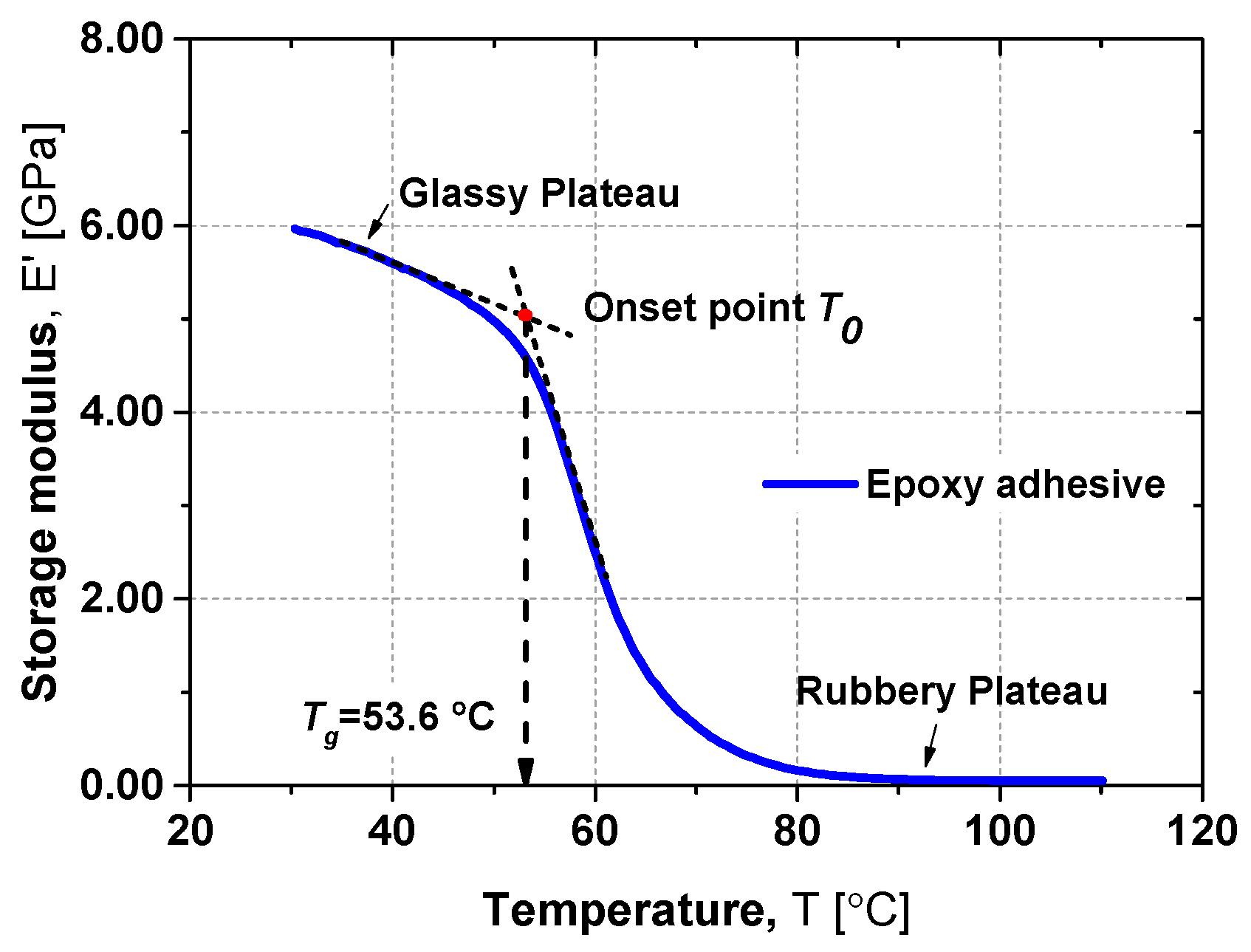
The Tg was determined following the procedure in [10] (more details in [9,38]), based on the onset of the drop in the storage modulus curve, Figure 5. The obtained Tg was 53.6 °C, with a marked reduction in storage modulus above this temperature, reflecting the transition to viscoelastic behaviour of the polymer matrix.

3. Results and Discussion

3.1. Steady-State Tests

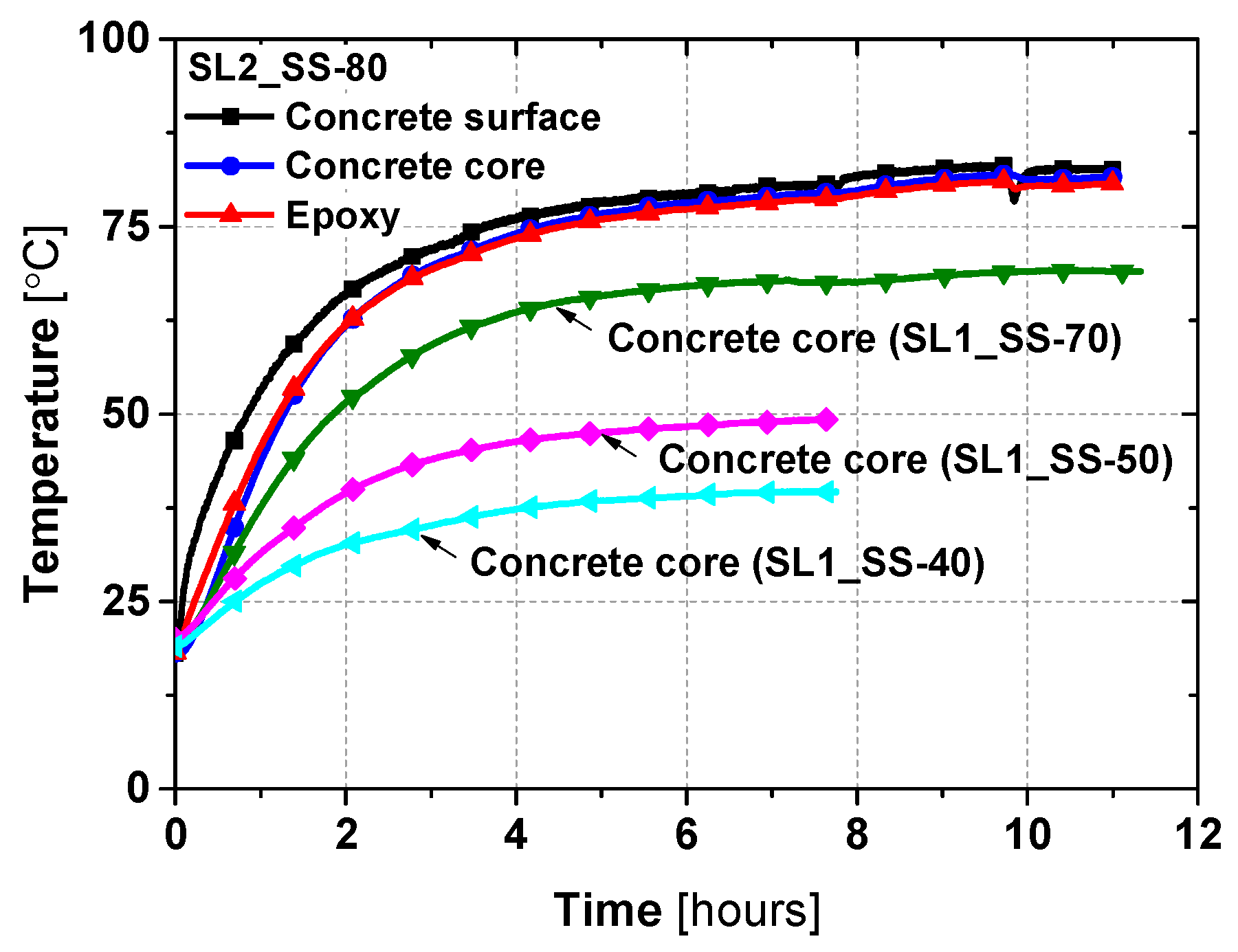
The typical evolution of the air temperature and the average temperatures measured at the two instrumented cross-sections (S1 and S2) for slab SL2_SS-80 are shown in Figure 6. The surface temperature rises earlier than that of the core and epoxy, mainly due to differences in thermal conductivity, before a homogeneous target temperature is eventually reached throughout the section. For the remaining slabs (SL2_SS-40, SL2_SS-50, SL2_SS-70), a similar temperature correlation was observed; therefore, only the concrete core temperature evolution is presented. The additional thermocouples (TC1, TC2, and TC5–TC10) installed at the two cross-sections were used solely for verification purposes, and their recorded temperatures were nearly identical to those shown. This agreement confirms the thermal homogeneity across the concrete section.
The heating process comprised an initial linear rise lasting about one hour, reaching approximately 60% of the target, followed by an asymptotic phase. Specifically, slabs SL1_SS-80, SL2_SS-80, and SL1_SS-70 reached thermal equilibrium in about 10 h, i.e., all thermocouples reached the target temperature, whereas SL1_SS-40 and SL1_SS-50 required only about 6.5 h. Despite different target temperatures, all slabs exhibited a similar temperature evolution, consistent with the existing literature, e.g., [39].
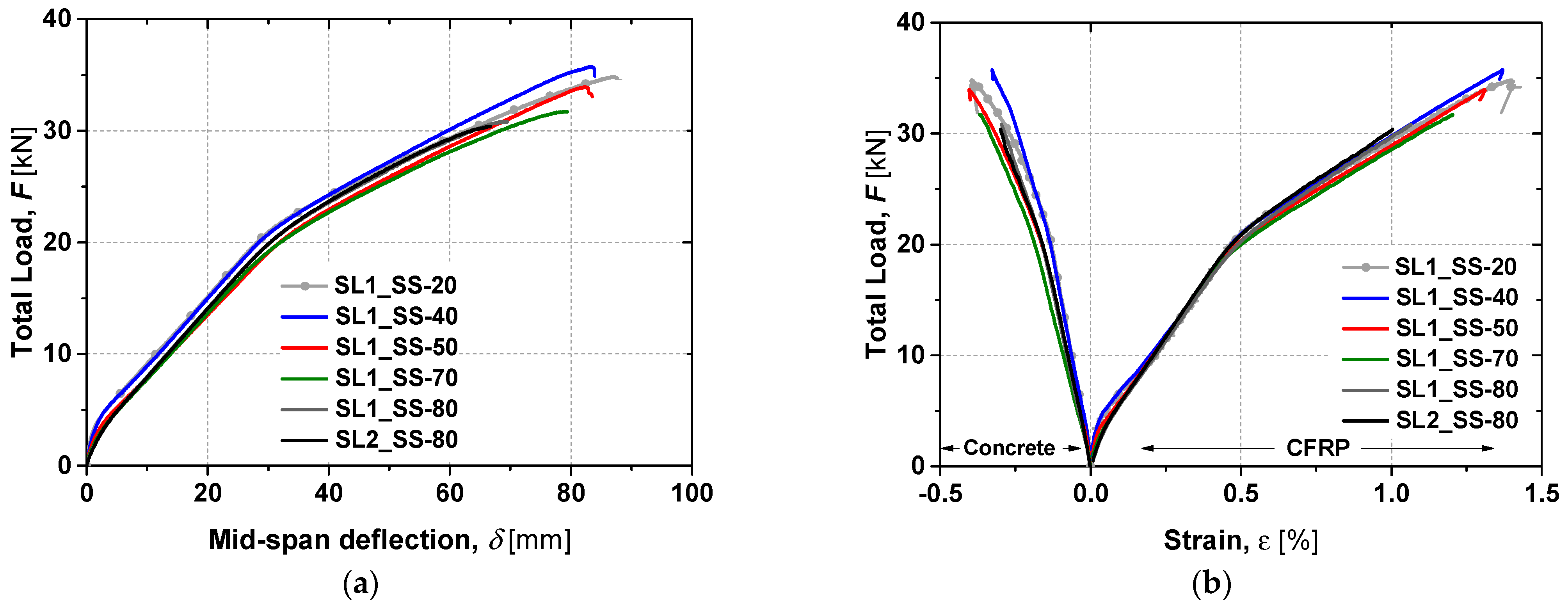
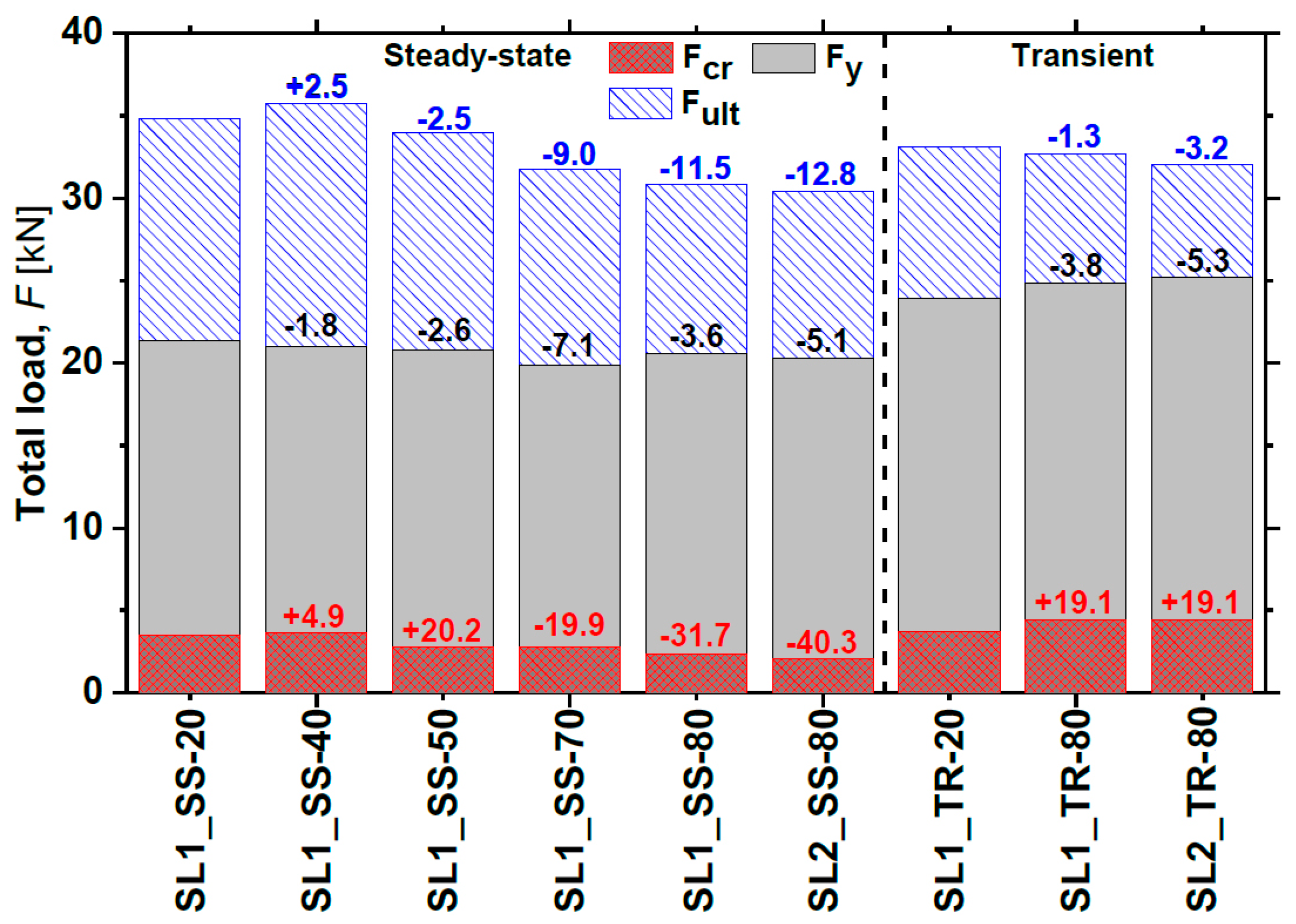
The total load–deflection curves (F-δ) curves and the strain evolution in the CFRP and in the concrete up to failure are presented in Figure 7. Key load–deflection parameters are summarised in Table 2, while Figure 8 illustrates the values of Fcr, Fy and Fmax and their variations relative to the control slab SL1_SS-20.
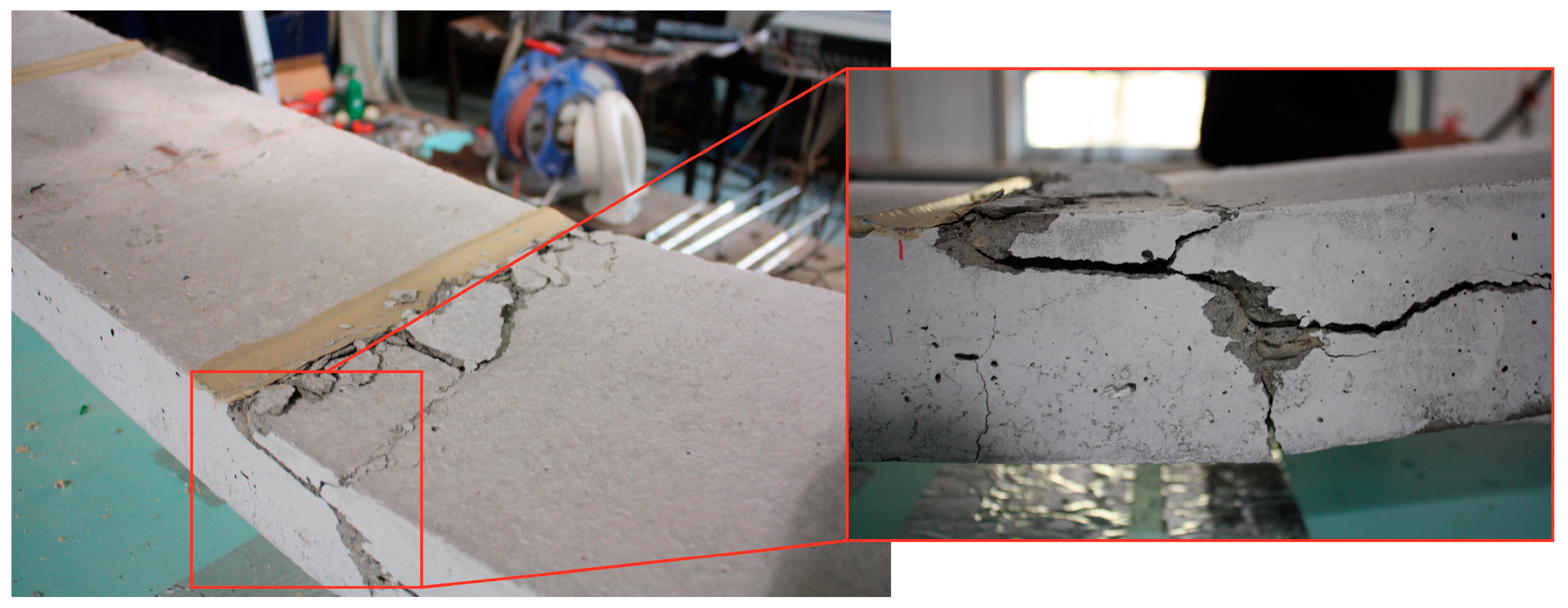
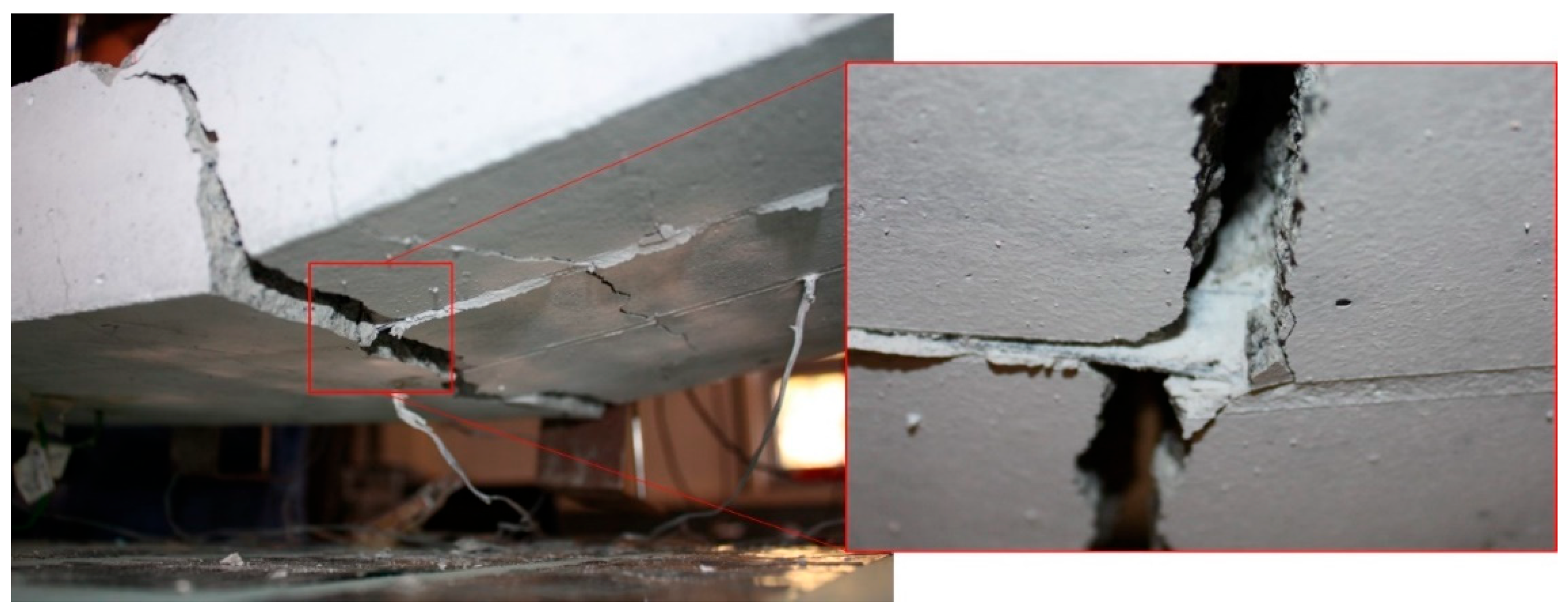
The F-δ curves show the typical three-stage response of strengthened slabs: (i) uncracked concrete, (ii) cracked concrete, and (iii) steel yielding. Slab SL1_SS-40 achieved the highest ultimate load and stiffness, even exceeding the reference. Slab SL1_SS-50 also showed higher stiffness in the third branch despite a lower ultimate capacity, whereas slabs at 70 °C and 80 °C exhibited reduced stiffness in both the first and third branches. The maximum concrete strain reached was approximately 0.4% in slabs SL1_SS-20 and SL1_SS-50, while a maximum CFRP strain of about 1.4% was recorded in SL1_SS-20 and SL1_SS-40. Slabs tested between 20 °C and 70 °C failed by concrete crushing, with typical mid-span flexural cracks propagating symmetrically until sudden top-face crushing (Figure 9). Although the epoxy adhesive had a Tg of around 54 °C, the overall structural response remained largely unaffected up to 70 °C. No visible debonding of the CFRP laminates or adhesive failure was observed, confirming effective stress transfer. However, cohesive failure of the epoxy occurred at 80 °C (see Figure 10), leading to a 21% reduction in CFRP strain at ultimate load and a corresponding 12% drop in load-carrying capacity. Furthermore, the ultimate load-carrying capacity decreased by 9, 12 and 13% for slabs SL1_SS-70, SL1_SS-80 and SL2_SS-80, respectively, when compared with the reference slab.

3.2. Transient Tests

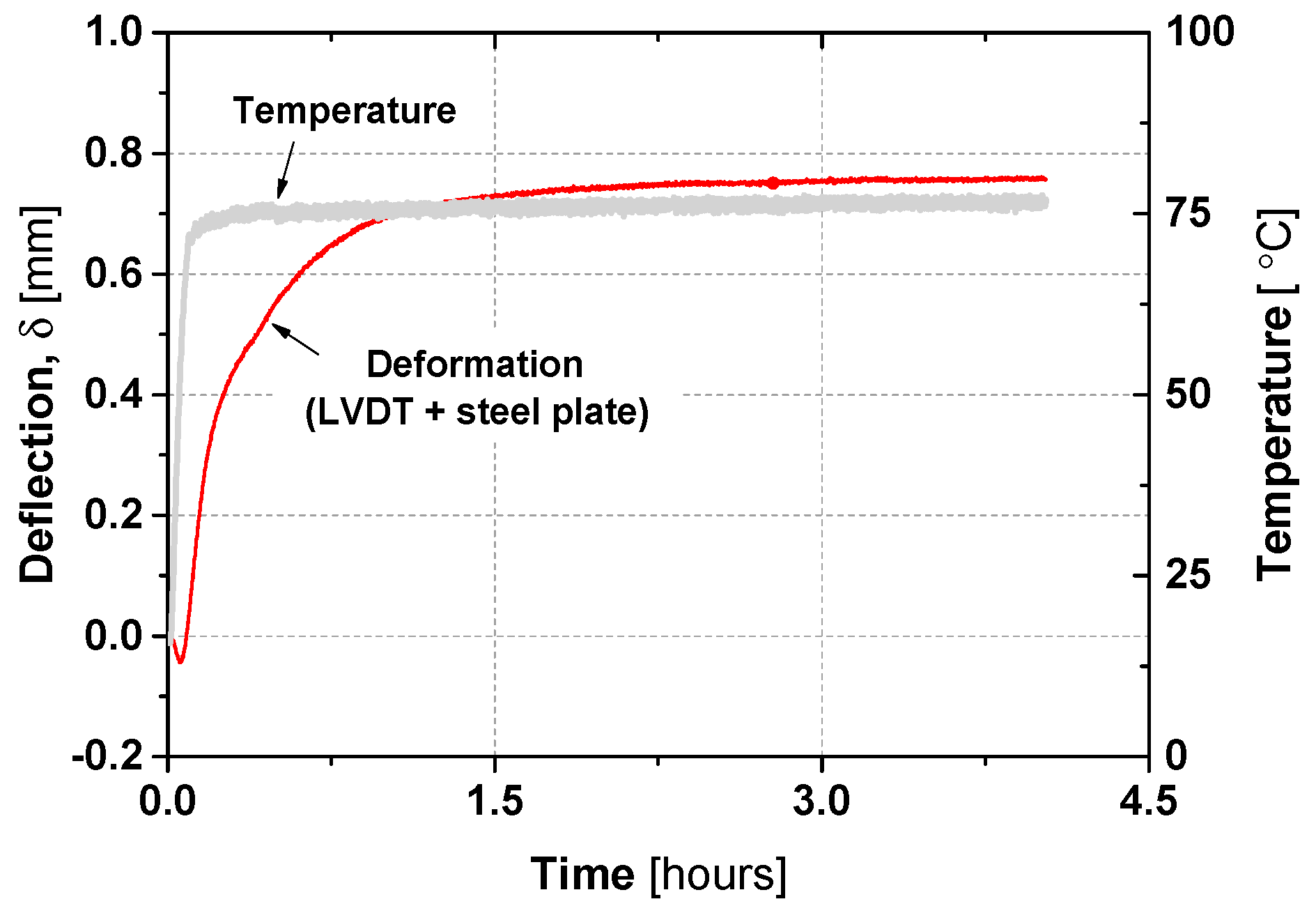
Although the LVDTs are rated for operation between −50 and 120 °C, unexpected behaviour was observed during the transient slab tests—an almost instantaneous increase in measured deformation when the heaters were activated. To quantify this effect, an experimental artefact with the LVDT and a steel plate equal to the ones used in the test of the slabs was exposed to 80 °C for ~4 h under similar temperature conditions to the slab tests. Figure 11 shows the time evolution of the measured deformation: an initial contraction occurred as the air temperature increased, followed by an expansion over roughly 1.5 h, mainly due to steel plate heating and sensor response. The maximum deviation recorded due to temperature effects from 20 °C to 80 °C was 0.75 mm. Given that this value is ~1% of the deflections recorded at maximum load, no thermal compensation was applied to the readings, as the uncertainty remains negligible relative to the structural response.
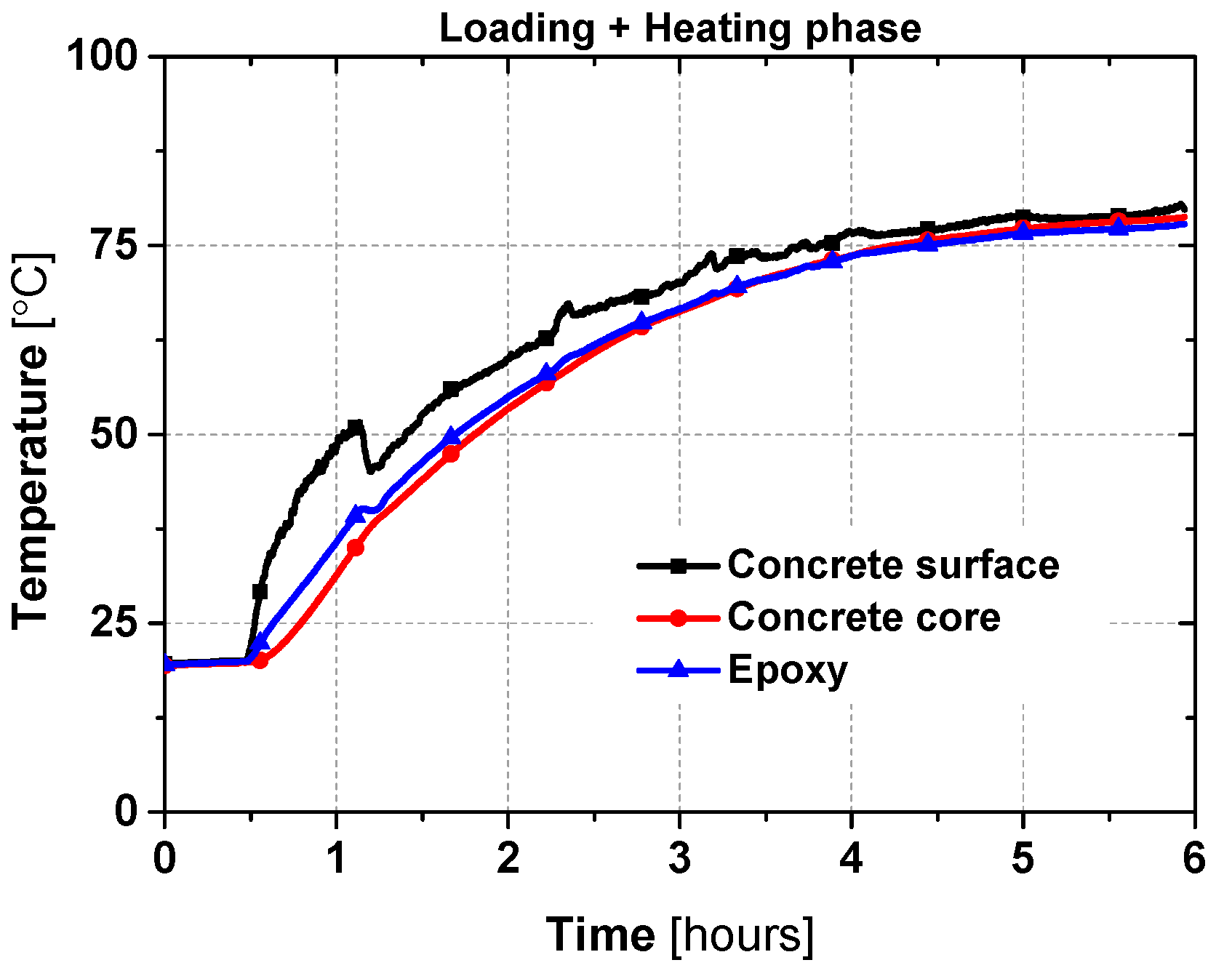
Figure 12 depicts the temperature evolution of the epoxy, concrete surface, and slab core for SL1_TR-80 during the heating phase. Some instability in the air temperature occurred due to a heater issue (between 1 h and 1.5 h), but the test was not compromised, given the visually observed responses—the temperature evolution in the materials followed the same trend as observed in the steady-state tests.
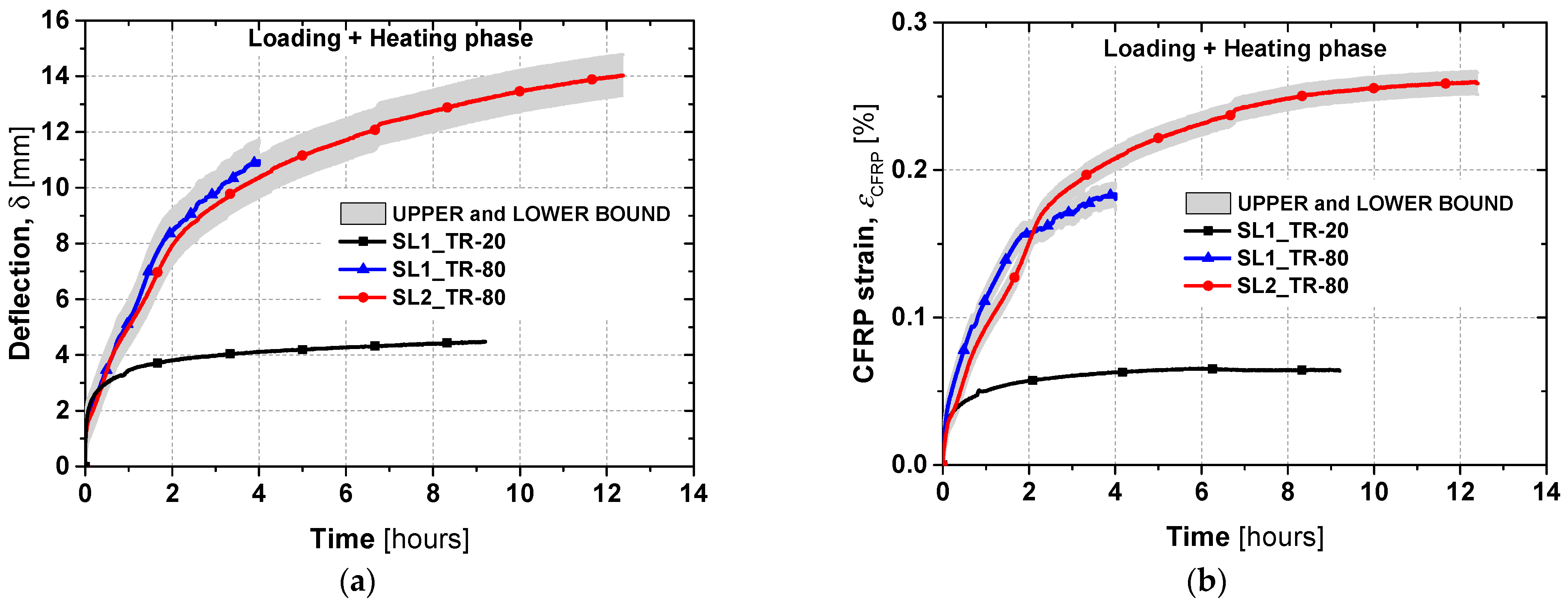
Figure 13 shows the evolution of deformations and CFRP strains under sustained load during the heating phase. Uncertainty arose in the measured deformations due to the temperature effects on the LVDTs and the steel plate device. To address this, upper and lower bounds were calculated by adding and subtracting 0.75 mm—the maximum temperature-induced LVDT deviation—to the measured values, defining the range of possible deformations. The same approach was applied to the CFRP strain measurements and temperature-compensation data from the strain gauge technical sheet at 80 °C. Figure 13b plots the CFRP strain evolution caused by the combined effects of sustained load (creep) and temperature variation in the slab. The gradual strain increase over time reflects both the creep of the concrete and the thermal expansion of the composite.
For all three tested slabs, the deformation increased over time. However, the difference between the slabs tested at 20 °C and 80 °C is pronounced: the reference slab (SL1_TR-20) reached deformations of 4.1 mm and 4.3 mm after approximately 4 and 9 h, respectively, whereas the heated slabs (SL1_TR-80 and SL2_TR-80) exhibited much larger deformations of about 11.0 mm and 13.1 mm over the same time intervals.
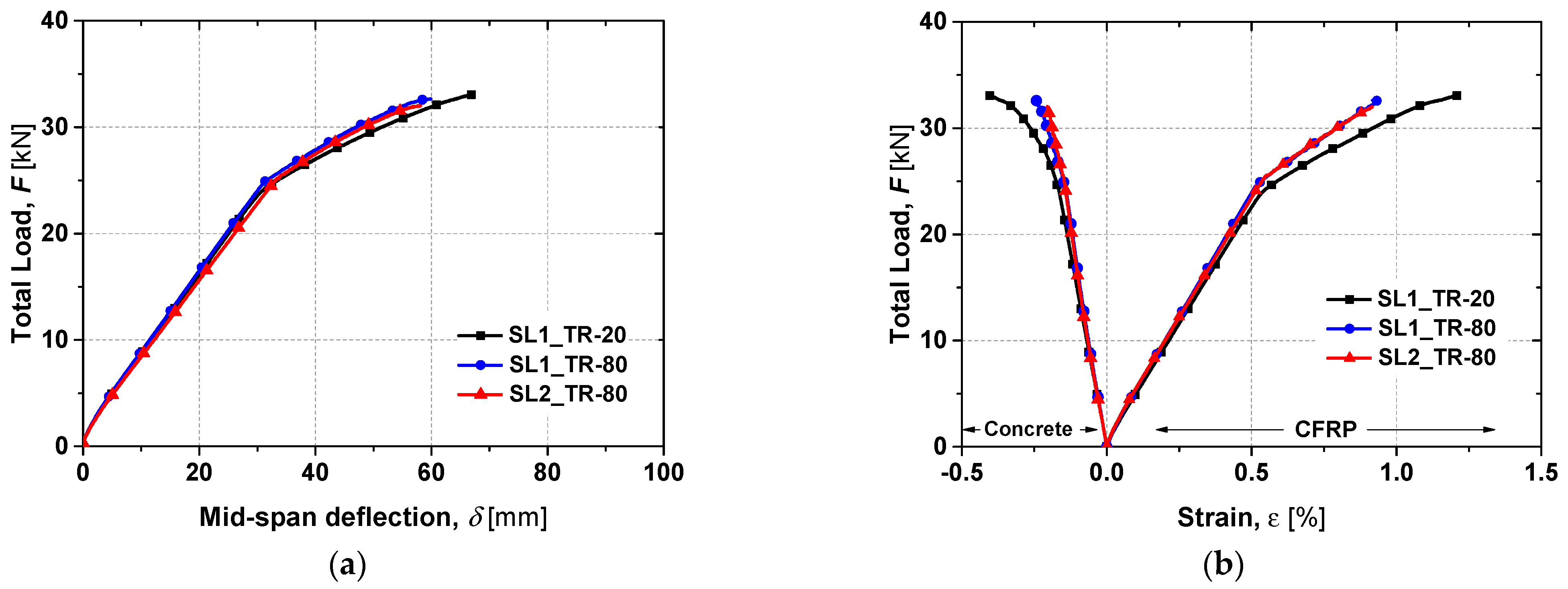
Figure 14 presents the static test results up to failure for the TR slabs. A linear response up to yielding reflects pre-existing cracking caused by the sustained load. In this phase, the slabs tested at 80 °C exhibited larger linear deformations (>8%) compared to the reference slab SL1_TR-20, while the stiffness of the first branch remained similar for both the heated and reference slabs.
The behaviour in the second branch was similar for both slabs tested at 80 °C, though marginally stiffer than the reference slab. The ultimate load of SL1_TR-80 and SL2_TR-80 decreased only by 1.3% and 3.2%, respectively, compared to SL1_TR-20. The slight difference between the two heated slabs can be attributed to the different durations under sustained load and elevated temperature. The strain evolution shown in Figure 14b indicates a maximum CFRP strain of 1.4% and a concrete strain of 0.4% for SL1_TR-20, which failed by concrete crushing. In contrast, SL1_TR-80 and SL2_TR-80 exhibited cohesive failure of the epoxy, similar to the SS slabs tested at 80 °C. Their maximum CFRP strains were 1.27% and 1.23%, respectively—approximately 12% lower than the reference slab. These results provide a basis for evaluating the influence of elevated temperature on structural performance, further discussed in the next section.

3.3. Discussion

Starting with the results of the SS tests, the superior performance of slab SL1_SS-40 can be attributed to post-curing of the epoxy adhesive during the heating phase. Post-curing typically occurs when epoxy adhesives are exposed to temperatures higher than those used during their initial cure, leading to enhanced mechanical properties due to increased chain branching and molecular crosslinking in any remaining unreacted groups [40]. This is consistent with experimental observations from pull-out tests on NSM-CFRP-strengthened concrete specimens cured at 20 and 40 °C, where curing at 40 °C significantly improved the bond strength performance of the studied NSM-CFRP system and also significantly improved the final elastic modulus of the epoxy due to enhanced crosslinking of the polymeric chains [41]. In addition, the concrete–epoxy and epoxy–CFRP adhesion mechanisms can be improved at temperatures approaching the Tg. The increase in temperature may have strengthened the chemical–covalent bonding within the adhesive, either through the formation of new bonds or reinforcement of existing ones between the polymer matrix and the CFRP laminate [42].
Previous studies indicate that the temperature range investigated here only marginally affects concrete behaviour [29,43]. Thus, the stiffness reduction observed at 70 °C and 80 °C likely results from thermal expansion and consequent internal microcracking [43], combined with the degradation of epoxy properties above its Tg, where stiffness decreases by about 93% (see Section 2). Despite this significant reduction in adhesive stiffness, the ultimate load capacity was only slightly affected. This is due to the stress transfer mechanism inherent to NSM CFRP systems, where tensile and compressive forces develop through interfacial shear stresses at the adhesive–concrete and CFRP–adhesive interfaces. These micro-mechanisms allow effective load transfer even when the adhesive has very low stiffness. For example, a tensile Young’s modulus as low as 8 MPa has been shown to provide satisfactory performance in similar systems [44,45].
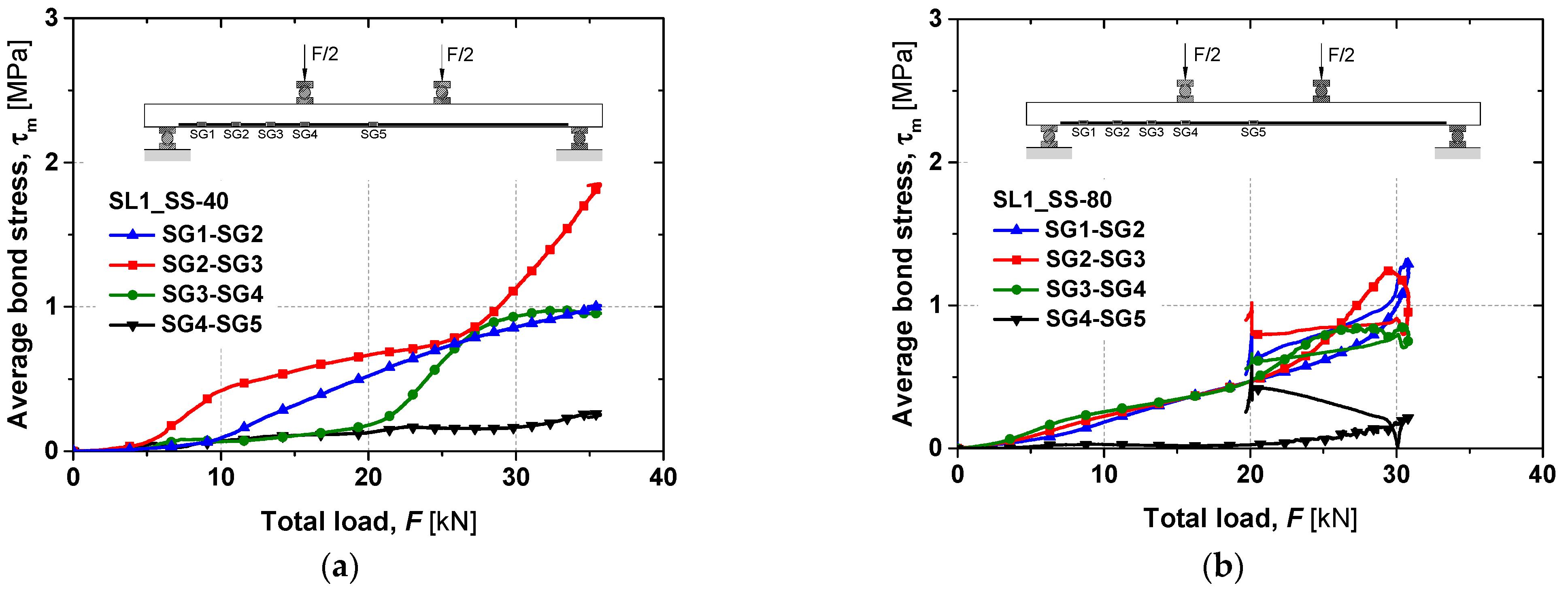
To complement the global load–deflection analysis, the bond behaviour during the monotonic static tests up to failure was further examined. The average bond stress between consecutive strain gauges was evaluated following the procedure described in [28]. This method assumes perfect bonding between materials and linear elastic behaviour of the CFRP. It should be noted that due to the adhesive’s highly non-linear (rubbery) behaviour at temperatures exceeding Tg, it may violate these assumptions, and some uncertainties are introduced. Nevertheless, consistent with observations mentioned in the preceding paragraph on the persistence of stress transfer through interfacial shear mechanisms, it was assumed that the approach remains applicable for comparative evaluation across temperatures, providing approximate values of the average bond stresses. The resulting average bond stress–total load curves at different locations for slabs SL1_SS-40 and SL1_SS-80 are shown in Figure 15. In both slabs, the bond stresses in the pure bending region were minimal, as expected due to the constant bending moment (strain gauges SG4 and SG5). However, between the support and the load application point, the slabs exhibited distinct bond behaviour. For SL1_SS-80, the bond stresses between SG1–2, SG2–3, and SG3–4 show an almost linear distribution, in contrast to SL1_SS-40. The literature suggests that this response is associated with the epoxy adhesive exceeding its Tg, which promotes a more uniform shear stress distribution along the bonded length [17]. The difference in bond stresses between the two slabs can be attributed to an increase in the effective bond length at elevated temperatures. In SL1_SS-80, the bond strength, which depends on transverse confinement and chemical adhesion, was further enhanced by friction at the CFRP–adhesive interface, as the adhesive had essentially completed its glass transition [17]. The observed failure mode for SL1_SS-80 was cohesive shear within the adhesive, governed primarily by its mechanical properties, particularly shear strength, and the degree of transverse confinement [5].
For the TR tests, the increase in measured deformation during the heating phase is primarily due to the expansion of the steel plate device, which has high thermal conductivity. The continued evolution of deformation for about 1 h suggests that electronic components within the LVDT sensor also influenced the readings. The LVDT operates in a 4-wire configuration, connected to a dedicated signal-conditioning circuit that converts its AC output into usable DC voltage. The wiring and signal-conditioning architecture affect both measurement simplicity and instrumentation cost. Temperature variations can further impact LVDT performance through mechanical expansion, shifts in winding resistance, and changes in core and coil material properties, potentially causing zero-shifts or scale-factor changes for a given displacement [46]. This observation further justifies the upper and lower deformation bounds developed in the previous section to account for temperature-induced artefacts.
The higher deformations observed in the slabs exposed to 80 °C can be attributed to the combined effects of concrete creep and the reduced stiffness of the epoxy adhesive. Quantifying the individual contributions of these two mechanisms is challenging, as creep deformation increases with temperature, while the epoxy’s stiffness decreases significantly under elevated temperatures [9,32,47,48,49]. The literature reports that creep in concrete at an average temperature of 40 °C is about 25% higher than at 20 °C [50]. In another study, concrete subjected to 60 °C and sustained loading for 10 days exhibited approximately 50% higher total strain (elastic plus creep) compared to similar tests at 20 °C [49], with similar trends reported in other works [47,48]. The increase in CFRP strain is likely due to both the slab deformation and the higher thermal expansion of the epoxy adhesive, which is roughly four times that of concrete and much higher than that of CFRP. This mismatch in thermal expansion generates internal stresses between the CFRP and the adhesive, further contributing to the CFRP strain [51].
Comparing the TR and SS tests at 80 °C, several observations can be made regarding the monotonic tests:
  • The SS slabs showed a slightly larger decrease in performance (≈9%) than the TR slabs, likely due to the longer exposure to elevated temperature.
  • The TR slabs exhibited higher stiffness up to yielding, attributed to the preloading applied before the monotonic test.
  • In the TR tests, the CFRP laminates reached lower strains than in the SS tests, due to residual deflection after unloading and the effects of sustained load and heating.
  • Both the SS and TR slabs at 80 °C failed in the same cohesive mode.
Future experimental work could investigate the combined effects of sustained loading and elevated temperature on the NSM CFRP–concrete bond over longer periods, explore the temperature-dependent behaviour of different adhesives—including cement-based systems that may perform better at elevated temperatures—and evaluate the structural response of slabs under transient thermal conditions with varied preloading levels, as highlighted by the differences observed between the SS and TR tests.

4. Conclusions

This experimental study evaluated the flexural response of RC slab strips strengthened with NSM CFRP laminates when subjected to elevated service temperatures between 20 °C and 80 °C. Based on the experimental results, the following conclusions can be drawn:
  • Despite the epoxy adhesive having a Tg of approximately 54 °C, the global structural response remained essentially unaffected up to 70 °C, with failure governed by concrete crushing. This indicates that the load transfer mechanism of the NSM system remained effective despite the progressive degradation of the adhesive.
  • At 80 °C, cohesive failure of the epoxy adhesive occurred, reducing the ultimate load capacity of the slabs by 11–13% in steady-state tests and by 1–3% in transient tests. These changes were associated with the degradation of the adhesive after exceeding the Tg, highlighting the susceptibility of bond performance to temperature.
  • The SS slabs exhibited a greater reduction in maximum load (≈9%) and deflection at maximum load (≈12.5%) compared to the TR slabs at 80 °C. This was attributed to the longer exposure of the SS slabs to elevated temperature, highlighting the influence of thermal exposure duration on stiffness degradation and the flexural behaviour.
Overall, the results confirm that the NSM technique maintains satisfactory performance under elevated service temperatures up to 70 °C (~1.3 × Tg), given the properties of the adhesive used in this study. However, adhesive degradation governs the structural response at higher temperatures and demands careful consideration in design and modelling. Furthermore, the pronounced increase in deflection observed at elevated temperatures highlights the potential governing of serviceability in the design of strengthening systems subjected to thermal action.

Author Contributions

Conceptualisation, methodology, P.S., G.E., M.A. and J.S.-C.; validation, P.S., G.E., M.A. and J.S.-C.; formal analysis, P.S., H.H.A., G.E., L.C., M.A. and J.S.-C.; investigation, P.S., G.E., M.A. and J.S.-C.; data curation, P.S., H.H.A., G.E., L.C., M.A. and J.S.-C.; writing—original draft preparation, P.S.; writing—review and editing, P.S., H.H.A., G.E., L.C., M.A. and J.S.-C.; visualisation, P.S. and H.H.A.; supervision, M.A. and J.S.-C.; project administration, J.S.-C.; funding acquisition, J.S.-C. All authors have read and agreed to the published version of the manuscript.

Funding

This research was funded by the R&D Project “CirWind—Development of innovative sustainable urban furniture and equipment in composites from waste produced by the wind energy industry for circularity”, project no. 15232, operation code COMPETE2030-FEDER-00889600, cofunded by Innovation and Digital Transition Program (COMPETE 2030), by the Portugal 2030 and by the European Union, in its FEDER component. This work was also supported by FCT/MCTES under the R&D Unit Institute for Sustainability and Innovation in Structural Engineering (ISISE), under the references UID/4029/2025 (https://doi.org/10.54499/UID/04029/2025) and UID/PRR/04029/2025 (https://doi.org/10.54499/UID/PRR/04029/2025), and under the Associate Laboratory Advanced Production and Intelligent Systems ARISE under reference LA/P/0112/2020. Furthermore, this work is financed by national funds through FCT under grant agreement [SFRH/BD/89768/2012] attributed to the first author.

Institutional Review Board Statement

Not applicable.

Informed Consent Statement

Not applicable.

Data Availability Statement

The original contributions presented in this study are included in the article. Further inquiries can be directed to the corresponding author.

Acknowledgments

The authors would also like to thank the S&P Clever Reinforcement Ibérica Lda. company for providing the material tested in ambit of the present work.

Conflicts of Interest

The authors declare no conflicts of interest.

References

  1. Jahani, Y.; Baena, M.; Gómez, J.; Barris, C.; Torres, L. Experimental Study of the Effect of High Service Temperature on the Flexural Performance of Near-Surface Mounted (Nsm) Carbon Fiber-Reinforced Polymer (Cfrp)-Strengthened Concrete Beams. Polymers 2021, 13, 920. [Google Scholar] [CrossRef]
  2. Zhang, S.S.; Yu, T.; Chen, G.M. Reinforced Concrete Beams Strengthened in Flexure with Near-Surface Mounted (NSM) CFRP Strips: Current Status and Research Needs. Compos. B Eng. 2017, 131, 30–42. [Google Scholar]
  3. Azevedo, A.S.; Firmo, J.P.; Correia, J.R.; Firouz, R.M.; Barros, J.A.O. Fire Behaviour of Reinforced Concrete Slab Strips Strengthened with Prestressed NSM-CFRP Laminates. Eng. Struct. 2023, 297, 116982. [Google Scholar] [CrossRef]
  4. Bilotta, A.; Ceroni, F.; Di Ludovico, M.; Nigro, E.; Pecce, M.; Manfredi, G. Bond Efficiency of EBR and NSM FRP Systems for Strengthening Concrete Members. J. Compos. Constr. 2011, 15, 757–772. [Google Scholar] [CrossRef]
  5. Sena-Cruz, J.M.; Barros, J.A.O.; Coelho, M.R.F.; Silva, L.F.F.T. Efficiency of Different Techniques in Flexural Strengthening of RC Beams under Monotonic and Fatigue Loading. Constr. Build. Mater. 2012, 29, 175–182. [Google Scholar] [CrossRef]
  6. Coelho, M.R.F.; Sena-Cruz, J.M.; Neves, L.A.C. A Review on the Bond Behavior of FRP NSM Systems in Concrete. Constr. Build. Mater. 2015, 93, 1157–1169. [Google Scholar] [CrossRef]
  7. Hajihashemi, A.; Mostofinejad, D.; Azhari, M. Investigation of RC Beams Strengthened with Prestressed NSM CFRP Laminates. J. Compos. Constr. 2011, 15, 887–895. [Google Scholar] [CrossRef]
  8. El-Hacha, R.; Rizkalla, S.H. Near-Surface-Mounted Fiber-Reinforced Polymer Reinforcements for Flexural Strengthening of Concrete Structures. ACI Struct. J. 2004, 101, 717–726. [Google Scholar] [CrossRef]
  9. Michels, J.; Widmann, R.; Czaderski, C.; Allahvirdizadeh, R.; Motavalli, M. Glass Transition Evaluation of Commercially Available Epoxy Resins Used for Civil Engineering Applications. Compos. B Eng. 2015, 77, 484–493. [Google Scholar] [CrossRef]
  10. Silva, P.; Fernandes, P.; Sena-Cruz, J.; Xavier, J.; Castro, F.; Soares, D.; Carneiro, V. Effects of Different Environmental Conditions on the Mechanical Characteristics of a Structural Epoxy. Compos. B Eng. 2016, 88, 55–63. [Google Scholar] [CrossRef]
  11. Silveira, A. The Influence of Thermal Actions in the Behavior of Reinforced Concrete Bridges. Ph.D. Thesis, National Laboratory for Civil Engineering, Lisbon, Portugal, 1996. (In Portuguese) [Google Scholar]
  12. Azevedo, A.S.; Firmo, J.P.; Correia, J.R.; Chastre, C.; Biscaia, H.; Franco, N. Fire Behaviour of CFRP-Strengthened RC Slabs Using Different Techniques—EBR, NSM and CREatE. Compos. B Eng. 2022, 230, 109471. [Google Scholar] [CrossRef]
  13. Saeed, I.A.; Kalfat, R.; Al-Mahaidi, R.; Al-Attar, T.S.; Al-Shather, B.S. Performance of RC Beams Strengthened Using NSM FRP and Cement Based Adhesives after Exposure to Elevated Temperatures. Structures 2024, 69, 107557. [Google Scholar] [CrossRef]
  14. Del Prete, I.; Bilotta, A.; Bisby, L.; Nigro, E. Elevated Temperature Response of RC Beams Strengthened with NSM FRP Bars Bonded with Cementitious Grout. Compos. Struct. 2021, 258, 113182. [Google Scholar] [CrossRef]
  15. Al-Abdwais, A.H.; Al-Mahaidi, R.S. Evaluation of High Temperature Endurance of RC Beams Retrofitted with NSM Technique Using CFRP Composites and Modified Cement-Based Adhesive. Eng. Struct. 2022, 264, 114445. [Google Scholar] [CrossRef]
  16. Burke, P.J.; Bisby, L.A.; Green, M.F. Effects of Elevated Temperature on near Surface Mounted and Externally Bonded FRP Strengthening Systems for Concrete. Cem. Concr. Compos. 2013, 35, 190–199. [Google Scholar] [CrossRef]
  17. Firmo, J.P.; Correia, J.R.; Pitta, D.; Tiago, C.; Arruda, M.R.T. Bond Behavior between Near-Surface-Mounted CFRP Strips and Concrete at High Temperatures. J. Compos. Constr. 2015, 19, 04014071. [Google Scholar] [CrossRef]
  18. Al-Abdwais, A.; Al-Mahaidi, R.; Al-Tamimi, A. Performance of NSM CFRP Strengthened Concrete Using Modified Cement-Based Adhesive at Elevated Temperature. Constr. Build. Mater. 2017, 132, 296–302. [Google Scholar] [CrossRef]
  19. Baena, M.; Jahani, Y.; Torres, L.; Barris, C.; Perera, R. Flexural Performance and End Debonding Prediction of NSM Carbon FRP-Strengthened Reinforced Concrete Beams under Different Service Temperatures. Polymers 2023, 15, 851. [Google Scholar] [CrossRef]
  20. Arruda, M.R.; Correia, J.R.; Firmo, J.P.; Firmo, J.P.; Pitta, D. Experimental and Numerical Study on the Bond Behavior of CFRP-Concrete Interfaces at Elevated Temperature. In Proceedings of the 7th International Conference on FRP Composites in Civil Engineering (CICE), Vancouver, BC, Canada, 20–22 August 2014. [Google Scholar]
  21. DataTaker. DT85 Series4 Data Loggers Measurement and Control Instrumentation: Data Sheet; Omni Instruments Ltd.: Dundee, UK, 2021. [Google Scholar]
  22. TC-08 Cloud-Connected 8-Channel Thermocouple Data Logger: Data Sheet. Available online: https://www.picotech.com/download/datasheets/usb-tc-08-thermocouple-data-logger-data-sheet.pdf (accessed on 27 October 2025).
  23. UNO R3|Arduino Documentation. Available online: https://www.arduino.cc/en/Main/ArduinoBoardUno (accessed on 27 October 2025).
  24. MAX31855 Thermocouple Data Sheet. Available online: https://cdn-learn.adafruit.com/downloads/pdf/thermocouple.pdf (accessed on 27 October 2025).
  25. Silva, P.M.; Escusa, G.G.; Sena-Cruz, J.; Azenha, M. Experimental Investigation of RC Slabs Strengthened with NSM CFRP System Subjected to Elevated Temperatures up to 80 °C. In Proceedings of the 8th International Conference on Fibre-Reinforced Polymer (FRP) Composites in Civil Engineering (CICE 2016), Hong Kong, China, 14–16 December 2016. [Google Scholar]
  26. Sena-Cruz, J.; Silva, P.; Fernandes, P.; Azenha, M.; Barros, J.; De Sousa, C.; Castro, F.; Teixeira, T. Creep Behavior of Concrete Elements Strengthened with NSM CFRP Laminate Strips under Different Environmental Conditions. In Proceedings of the FRPRCS-11 11th International Symposium on Fibre Reinforced Polymer for Reinforced Concrete Structures, Guimaraes, Portugal, 26–28 June 2013. [Google Scholar]
  27. Silva, P. Time-Dependent Behaviour and Durability of RC Slabs Strengthened with NSM CFRP Strips. Ph.D. Thesis, University of Minho, Braga, Portugal, 2017. [Google Scholar]
  28. Fernandes, P.M.G.; Silva, P.M.; Sena-Cruz, J. Bond and Flexural Behavior of Concrete Elements Strengthened with NSM CFRP Laminate Strips under Fatigue Loading. Eng. Struct. 2015, 84, 350–361. [Google Scholar] [CrossRef]
  29. Anderberg, Y.; Thelandersson, S. Stress and Deformation Characteristics of Concrete at High Temperatures. 2. Experimental Investigation and Material Behaviour Model. In Bulletin of Division of Structural Mechanics and Concrete Construction; Lund Institute of Technology: Lund, Sweden, 1976; Volume 54. [Google Scholar]
  30. LNEC. E397-1993; Concrete—Determination of the Elasticity Young Modulus Under Compression. Portuguese Specification from LNEC: Lisboa, Portugal, 1993. [Google Scholar]
  31. NP. EN 12390-3; Testing Hardened Concrete. Part 3: Compressive Strength of Test Specimens. Instituto Português Da Qualidade (IPQ): Caparica, Portugal, 2011.
  32. NP. EN 1992-1-1; Eurocode 2: Design of Concrete Structures—Part 1-1: General Rules and Rules for Buildings. Management Centre: Brussels, Belgium, 2010.
  33. NP. EN 10002-1; Metallic Materials—Tensile Testing. Part 1: Method of Test (at Ambient Temperature). International Organization for Standardization (ISO): Caparica, Portugal, 1990.
  34. ISO 527-5; ISO Plastics—Determination of Tensile Properties—Part 5: Test Conditions for Unidirectional Fibre-Reinforced Plastic Composites. International Organization for Standardization (ISO): Genève, Switzerland, 1997.
  35. S&P Resin 220 HP High Performance Epoxy Adhesive Technical Data Sheet. Available online: https://strongtie.com.au/sites/default/files/technical_data/r_resin220hp_pub_tds_prod_resin_220_hp_eu_en_v082020.pdf (accessed on 27 October 2025).
  36. Fernandes, P.; Granja, J.L.; Benedetti, A.; Sena-Cruz, J.; Azenha, M. Quality Control and Monitoring of NSM CFRP Systems: E-Modulus Evolution of Epoxy Adhesive and Its Relation to the Pull-out Force. Compos. B Eng. 2015, 75, 95–103. [Google Scholar] [CrossRef]
  37. Granja, J.L.; Fernandes, P.; Benedetti, A.; Azenha, M.; Sena-Cruz, J. Monitoring the Early Stiffness Development in Epoxy Adhesives for Structural Strengthening. Int. J. Adhes. Adhes. 2015, 59, 77–85. [Google Scholar] [CrossRef]
  38. Firmo, J.P.; Correia, J.R.; França, P. Fire Behaviour of Reinforced Concrete Beams Strengthened with CFRP Laminates: Protection Systems with Insulation of the Anchorage Zones. Compos. B Eng. 2012, 43, 1545–1556. [Google Scholar] [CrossRef]
  39. Vecchio, F.J.; Agostino, N.; Angelakos, B. Reinforced Concrete Slabs Subjected to Thermal Loads. Can. J. Civ. Eng. 1993, 20, 741–753. [Google Scholar] [CrossRef]
  40. Moussa, O.; Vassilopoulos, A.P.; de Castro, J.; Keller, T. Time–Temperature Dependence of Thermomechanical Recovery of Cold-Curing Structural Adhesives. Int. J. Adhes. Adhes. 2012, 35, 94–101. [Google Scholar] [CrossRef]
  41. Benedetti, A.; Fernandes, P.; Granja, J.L.; Sena-Cruz, J.; Azenha, M. Influence of Temperature on the Curing of an Epoxy Adhesive and Its Influence on Bond Behaviour of NSM-CFRP Systems. Compos. B Eng. 2016, 89, 219–229. [Google Scholar] [CrossRef]
  42. National Research Council. Guide for the Design and Construction of Externally Bonded FRP Systems for Strengthening Existing Structures; CNR-DT 200/2004; National Research Council: Rome, Italy, 2004. [Google Scholar]
  43. Neville, A.M. Properties of Concrete, 5th ed.; Pearson: London, UK, 1995. [Google Scholar]
  44. Cruz, J.R. Influência do Tipo de Adesivo No Comportamento de Elementos de Betão Reforçados com Laminados de CFRP de Acordo com a Técnica NSM. Master’s Thesis, University do Minho, Guimaraes, Portugal, 2016. [Google Scholar]
  45. De Lorenzis, L.; Teng, J.G. Near-Surface Mounted FRP Reinforcement: An Emerging Technique for Strengthening Structures. Compos. B Eng. 2007, 38, 119–143. [Google Scholar] [CrossRef]
  46. Position & Displacement Measurement with LVDTs. Available online: https://www.ni.com/en/shop/data-acquisition/measuring-position-and-displacement-with-lvdts.html (accessed on 30 May 2025).
  47. York, G.P.; Kennedy, T.W.; Perry, E.S. Experimental Investigation of Creep in Concrete Subjected to Multiaxial Compressive Stresses and Elevated Temperatures. Research Report 2864-2 Prepared for Oak Ridge National Laboratory; Department of Civil Engineering, University of Texas: Austin, TX, USA, 1970. [Google Scholar]
  48. Komendant, G.; Polivka, M.; Pirtz, D. Study of Concrete Properties for Prestressed Concrete Reactor Vessels, Final Report, Part II: Creep and Strength Characteristics of Concrete at Elevated Temperatures; UCB/SESM-1976/03; University of California Berkeley: Berkeley, CA, USA, 1976. [Google Scholar]
  49. Arthanari, S.; Yu, C.W. Creep of Concrete under Uniaxial and Biaxial Stresses at Elevated Temperatures. Mag. Concr. Res. 1967, 19, 149–156. [Google Scholar] [CrossRef]
  50. Gilbert, R.I.; Ranzi, G. Time-Dependent Behaviour of Concrete Structures; Spon Press: Oxfordshire, UK, 2011. [Google Scholar]
  51. de Oliveira, R.; Lavanchy, S.; Chatton, R.; Costantini, D.; Michaud, V.; Salathé, R.; Månson, J.-A.E. Experimental Investigation of the Effect of the Mould Thermal Expansion on the Development of Internal Stresses during Carbon Fibre Composite Processing. Compos. Part A Appl. Sci. Manuf. 2008, 39, 1083–1090. [Google Scholar] [CrossRef]
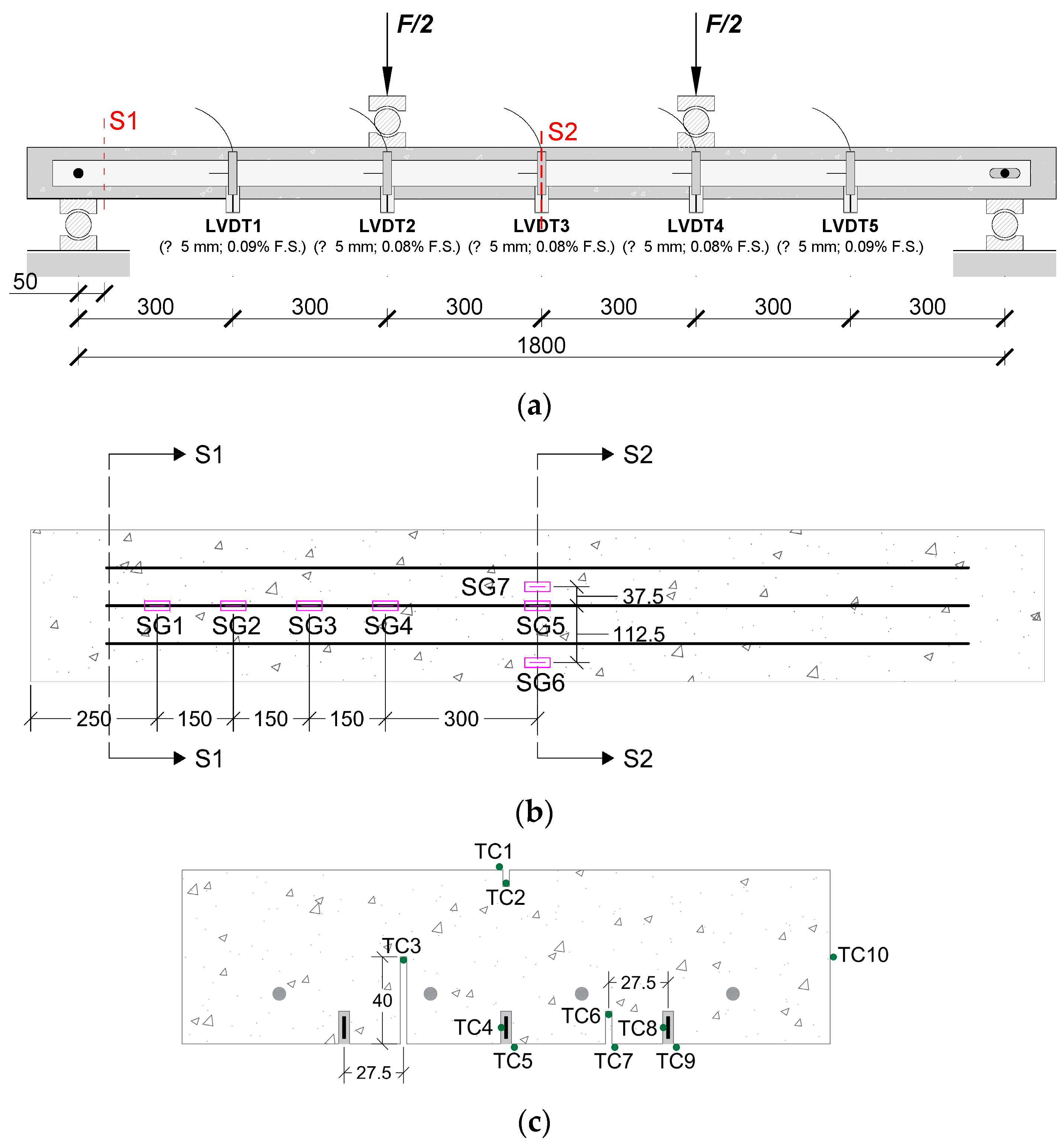
Figure 1. Experimental setup and instrumentation scheme: (a) four-point bending test arrangement with LVDTs; (b) strain gauge (SG—pink boxes) positions with cross-sections shown; (c) cross-sectional view of S1 and S2 showing thermocouple (TC—green dots) distribution. Note: all the dimensions are in [mm].
Materials 19 01382 g001
Figure 2. (a) Schematic diagram of the climatic chamber and (b) the setup used.
Materials 19 01382 g002
Figure 3. Temperature and load evolution over time throughout the steady-state and transient tests [25].
Materials 19 01382 g003
Figure 4. Slab geometry and reinforcement details: (a) bottom view, (b) longitudinal cross-section. Note: all the dimensions are in [mm].
Materials 19 01382 g004
Figure 5. Tg of epoxy adhesive based on the onset of the drop in the storage modulus curve.
Materials 19 01382 g005
Figure 6. Typical temperature evolution curves for different slabs.
Materials 19 01382 g006
Figure 7. (a) Total load versus mid-span deflection curves and (b) total load versus strain curves of flexural tests up to failure for the SS slabs [27].
Materials 19 01382 g007
Figure 8. Notable points of all tested slabs and variation of ultimate capacity with respect to the corresponding reference slabs (SL1_SS-20 and SL1_TR-20) [25].
Materials 19 01382 g008
Figure 9. Representative concrete crushing failure mode observed in slabs tested between 20 °C and 70 °C (SL1_SS-50 shown).
Materials 19 01382 g009
Figure 10. Cohesive failure observed at the adhesive at 80 °C (SL1_SS-80 shown).
Materials 19 01382 g010
Figure 11. Time versus deflection of the LVDT due to the effect of temperature in the LVDT itself and the steel plate placed to measure the displacements in the slab test [27].
Materials 19 01382 g011
Figure 12. Time versus temperature of slab SL1_TR-80 [27].
Materials 19 01382 g012
Figure 13. Time versus (a) deflection and (b) CFRP strain during the heating phase.
Materials 19 01382 g013
Figure 14. (a) Total load versus mid-span deflection and (b) total load versus strains for flexural tests up to the failure of TR slabs.
Materials 19 01382 g014
Figure 15. (a) Average bond stress versus total load curves of SL1_SS-40 and (b) SL1_SS-80 for flexural tests up to failure.
Materials 19 01382 g015
Table 1. Experimental programme.
Type of TestSlab IDSustained LoadTemperature Target [°C]
Steady-State (SS)SL1_SS-20-20
SL1_SS-40-40
SL1_SS-50-50
SL1_SS-70-70
SL1_SS-80-80
SL2_SS-80-80
Transient (TR)SL1_TR-202/3 Fult20
SL1_TR-802/3 Fult80 (heated in 4 h)
SL2_TR-802/3 Fult80 (heated in 12 h)
Table 2. The main results of the slabs obtained in the monotonic tests for both SS and TR slabs.
Slab IDδcr [mm]Fcr [kN]δy [mm]Fy [kN]δmax [mm]Fmax [kN]εCFRP [‰]εconc [‰]
SL1_SS-201.353.4730.9921.3689.2134.8514.293.97
SL1_SS-401.673.6430.4720.9783.9235.7413.713.27
SL1_SS-501.602.7733.8020.8183.4933.9713.114.05
SL1_SS-702.082.7831.6119.8481.1631.7312.113.69
SL1_SS-801.852.3731.6120.5973.6330.8411.32 (b)2.97
SL2_SS-801.522.0730.8820.2867.8930.4010.11 (b)2.99
SL1_TR-201.52 (a)3.72 (a)30.65 (c)23.93 (c)70.0433.1113.98 (b)4.12
SL1_TR-801.47 (a)4.43 (a)31.22 (c)24.84 (c)63.8832.6712.342.64
SL2_TR-801.62 (a)4.43 (a)33.47 (c)25.21 (c)61.9732.0312.712.36
Notes: Fcr = cracking load; δcr = mid-span deflection at Fcr; Fy = steel yielding load; δy = mid-span deflection at Fy; Fmax = maximum load; δmax = mid-span deflection at Fmax; εCFRP = CFRP strain at Fmax; εconc = mid-span concrete strain at Fmax; (a) values reached at the preloading phase; (b) strains measured at the point load section; (c) yielding of the reinforcement after the submission of a sustained loading.
Disclaimer/Publisher’s Note: The statements, opinions and data contained in all publications are solely those of the individual author(s) and contributor(s) and not of MDPI and/or the editor(s). MDPI and/or the editor(s) disclaim responsibility for any injury to people or property resulting from any ideas, methods, instructions or products referred to in the content.