


Abstract
The ultraviolet (UV) copolymers of two monomers, one methacrylic and the other vinyl monomer (styrene, S) were prepared. As methacrylic monomers, citronellyl methacrylate (CM) or geranyl methacrylate (GM) were used. The preparation was proven to contain high solvent- and chemical-resistant copolymers due to their cross-linked structure with the conversion degree of the double bonds above 0.92 for poly(citronellyl methacrylate)/polystyrene (PCM/PS) and above 0.85 for poly(geranyl methacrylate)/polystyrene (PGM/PS) copolymers. The obtained copolymers showed only one glass transition temperature (Tg). Depending on the structure and amount of the used methacrylic monomer, the Tg values were from 0.4 °C to −15.2 °C for PCM/PS copolymers and from −23.2 °C to −50.5 °C for PGM/PS copolymers. The thermogravimetric analysis (TG/DTG) showed a higher thermal stability for PCM/PS (148–187 °C) than for PGM/PS copolymers (119–159 °C) in inert and oxidative atmospheres. The simultaneous thermogravimetric analysis coupled with Fourier Transform Infrared spectroscopy (TG/FTIR) showed that the pyrolysis and oxidative decomposition of the tested copolymers took place according to the radical mechanism. This led to receiving a mixture of low molecular mass organic molecules containing saturated and unsaturated fragments, carbonyl groups, aromatic fragments as well as to CO, CO2 and H2O. This indicated the depolymerization process (inert) and further oxidation processes of the initially formed volatiles and/or residues in oxidative conditions.
1. Introduction
Styrene is a vinyl monomer, commonly, industrially applied for the production of a whole range of synthetic polymeric materials, including the formation of solid plastic and foam polystyrene. Among solid plastic forms, general purpose polystyrene and high-impact polystyrene are well known. The foam forms, expanded polystyrene and extruded polystyrene, are also mentioned [1,2,3,4,5,6]. In addition to creating homopolymers in various forms, styrene is also often used in compositions with other monomers to obtain copolymers in order to improve or modify polystyrene properties. Such a wide use of styrene is due to its high susceptibility to polymerization and thus obtaining materials with desirable beneficial properties for various practical applications. Such styrene materials are characterized by high rigidity, transparency, high flexural strength and surface hardness, high resistance to wear and tear, low density, and the ease with which they can be painted, printed, and colored. Styrene is a widely used in the production of plastics, synthetic rubbers, latex paints, coatings, polyesters, styrene-alkyd coatings, and other materials. Styrene-based polymeric materials are used as common plastics in packaging, insulation, and various consumer products; in automotive parts, appliance housings, and various industrial components; in fiber-reinforced polymer composites for applications like car parts, boat hulls, and bathroom fixtures; in tire manufacturing, shoe soles, and other rubber products; for pipes, roofing, and other building materials; for the production of toys, household appliances, and sporting goods, etc. [7,8,9,10,11,12,13,14,15,16,17,18,19]. However, polystyrene materials are also poorly recyclable and non-biodegradable. When exposed to heat, these materials can release harmful chemicals, posing risks in food contact or high-heat environments. Moreover, most of them are not resistant to contact with oils, solvents and strong acids or bases. Usually, commercial polystyrene materials show limited thermal resistance, poor ultraviolet (UV) and weather resistance, high moisture absorption or fragility. For these reasons, the properties of polystyrenes are often modified. One of the modification methods is to obtain styrene copolymers with another polymerizable monomer.
The most commonly known copolymers of styrene are copolymers with acrylonitrile, butadiene, isoprene, methyl methacrylate and acrylic monomers. A random copolymer of styrene-acrylonitrile (SAN) containing 70–80% mass styrene is characterized by improved strength, rigidity and chemical resistance compared to a styrene homopolymer. This copolymer is used, among others, in household goods, cosmetics packing and sanitary articles [20,21,22,23,24,25,26,27,28]. However, the copolymer of styrene and butadiene (SBR) with high styrene content (above 70% mass), due to its good abrasion and aging resistance, is used for the creation of shoe soles, automotive parts and various mechanical rubber goods. The other examples of copolymers are styrenic block copolymers including styrene-butadiene-styrene (SBS) and styrene-ethylene/butylene-styrene (SEBS) copolymers, which are characterized by rubber-like elasticity and thermoplastic processability. As a result, they are industrially used as adhesives, sealants and modified asphalts. Other styrene copolymers include materials such as styrene-co-butyl acrylate, potentially useful for fuel cell membranes, and styrene-isoprene-styrene, with thermoplastic elastomer properties. Terpolymers with high toughness and impact resistance, including styrene-acrylonitrile-butadiene or styrene-maleic anhydride copolymers used in various applications, were also described [29,30,31,32,33,34,35].
Despite the wide range of commercially available styrene-based materials used both in industry and everyday life, the new materials are still in demand. In particular, the materials with limited styrene content, due to its properties (volatilization and evaporation), and with the same or improved functional properties are desirable. The second aspect that is taken into account in the synthesis of new polymeric materials is the increase in their biodegradability. Usually, commonly used styrene-based materials are materials obtained from petrochemical reagents. Therefore, they are non-biodegradable materials which are most often collected in landfills. It takes hundreds of years for them to decompose there. For these reasons, intensive research is undertaken on polymeric materials based on natural compounds originating from renewable natural sources. Both monomers and polymers are used in these studies to obtain materials with properties comparable or better than those of known, petrochemical materials. Terpene compounds are one of the natural monomers that can be used in the copolymerization process with styrene. To date, the application of such terpenes, like α-pinene, β-pinene, limonene, β-myrcene, ocimene, β-farnesene, turpentiene, allocimene, linallol, nerol, geraniol, menthol, etc., is known. The known styrene-terpene copolymers form one of the classes of the bio-based materials that combine the rigidity of polystyrene with the elastomeric properties of terpene polymers. Such styrene-terpene copolymers are versatile, sustainable materials that, depending on the terpene compound used, are characterized by good adhesion, flexibility, resistance to atmospheric and chemical factors, low glass transition temperature, high transparency and good compatibility with various resins. As a result of their properties, they have a wide range of applications as binders in adhesives, components of paints, varnishes, asphalts and bituminous masses, etc. They are also used in the production of rubber, cosmetics and synthetic materials [36,37,38,39,40,41,42,43,44,45,46,47,48,49,50,51,52,53,54,55].
In the present work, it was proposed to use methacrylic monomers synthesized based on primary terpene alcohols such as citronellol and geraniol as a component of styrene copolymers. The copolymers were prepared in the ultraviolet (UV) polymerization process using different amounts of methacrylic monomers and styrene. The effect of the amount of a given monomer on the properties such as solubility in both polar and non-polar solvents, chemical resistance in acidic, alkaline and buffer environments, glass transition temperature determined according to the differential scanning calorimetry (DSC) method, thermal resistance evaluated based on the thermogravimetric/derivative thermogravimetric (TG/DTG) method and the decomposition course studied with the use of simultaneous thermogravimetric analysis coupled with the Fourier Transform Infrared spectroscopy (TG/FTIR) method of the obtained polymeric materials was discussed. The properties of the obtained copolymers were compared with the properties of homopolymers: polystyrene, poly(citronellyl methacrylate) and poly(geranyl methacrylate) obtained under the same experimental ultraviolet (UV) conditions.
2. Materials and Methods
2.1. Materials
Methacrylic monomers: Citronellyl methacrylate (CM) and geranyl methacrylate (GM) by acylation of terpene alcohol: citronellol (CAS no. 106.22-9, purity ≥ 95%) or geraniol (CAS no. 106-24-1, purity ≥ 97%) and methacryloyl chloride (CAS no. 920-46-7, purity 97%) in the presence of trimethylamine (CAS no. 121-44-8, purity ≥ 99.5%) were prepared according to Refs. [56,57,58]. The commercially available, aromatic vinyl monomer (styrene, S, CAS no. 100-42-5, purity ≥ 99%) was delivered by Sigma-Aldrich (St. Louis, MO, USA). The 2,2-dimethoxy-1,2-diphenylethan-1-one (initiator, CAS no. 24650-42-8, purity 99%) and the following solvents, methanol, butanol, acetone, acetic acid, ethyl acetate, tetrahydrofuran, diethyl ether, dioxane, chloroform, carbon tetrachloride, hexane, cyclohexane and toluene, were delivered by Merck (Darmstadt, Germany). Sodium hydroxide, hydrochloric acid and buffer solutions with pH 4, 7, and 10 were from Avantor Performance Materials (Poland S.A, Gliwice, Poland).
2.2. The Ultraviolet (UV) Polymerization
The appropriate compositions of the suitable methacrylic monomer, vinyl monomer and an initiator were exposed to UV irradiation, Table 1. UV irradiation was carried out using the TL20W/05 SLV low-pressure mercury lamp (Philips Lighting, Warsaw, Poland) with 340–365 nm. The power of the lamp was 20 W. The area of the irradiated surface was 0.0025 m2. The exposure conditions were as follows: irradiation time 10 min and irradiation temperature 25 °C. The obtained UV films were subjected to conditioning at 60 °C for 5 h and at 120 °C for 1 h.
Table 1.
Composition of copolymers prepared with ultraviolet (UV) irradiation.
2.3. Methods
2.3.1. The Fourier Transform Infrared Spectroscopy (FTIR)
An FTIR Tensor 27 (Bruker, Brema, Germany) instrument equipped with a Digital TechTM detector system, high-sensitivity DLaTGS (Bruker, Brema, Germany), was used to collect the FTIR spectra. The FTIR spectra were collected from 600 cm−1 to 4000 cm−1 using KBr tablets. The resolution of each spectrum was 4 cm−1. The 62 scans per spectrum were gathered. The KBR tablets were prepared by mixing 3 mg of the tested material with 300 mg of KBr, grinding in an agate mortar and pressing on the Specac Atlas™ manual 15T hydraulic press (Specac Inc., Washington, PA, USA). The conversion degrees (α) of the C=C bonds were calculated based on the following equation:
where Rm is the ratio of the C=C peak area integration to the C=O peak area integration for the monomer, and Rp is the ratio of the C=C peak area integration to the C=O peak area integration for the resulting polymer, respectively [58,59].
α = 1 − (Rp/Rm)
To calculate Rm and Rp, the peak areas integration of the C=C stretching vibrations bands at 1636 cm−1 (methacrylic bonds) and at 1629 cm−1 (vinyl bonds) and at 1676 cm−1 (ethylenic bonds), and the peak area integration of the C=O stretching vibration band at 1718 cm−1 (citronellyl methacrylate) or 1724 cm−1 (geranyl methacrylate) visible in the FTIR spectra for the obtained monomers and polymers, were used, respectively.
2.3.2. The Solubility
The gravimetric method was used at 25 °C to evaluate the solubility of the tested materials. A total of 0.2 g of a sample was immersed in the appropriate solvent. The solubility tests were conducted over a period of six months. At the specific time intervals, the solvent was poured off, and the sample was dried and weighed. Both polar and non-polar solvents were used. As solvents, water, methanol, butanol, acetone, acetic acid, ethyl acetate, tetrahydrofuran, diethyl ether, dioxane, chloroform, carbon tetrachloride, hexane, cyclohexane and toluene were used.
2.3.3. The Chemical Stability
The gravimetric method was used at 25 °C to examine the chemical stability of the prepared materials. A total of 0.2 g of a sample was immersed in the chosen solutions (1 M NaOH, buffer solutions with pH 4, 7, and 10, and 1 M HCl). The chemical stability tests were carried out over a period of six months. At specific time intervals, the samples were washed with distilled water, dried and weighed. The solubility and chemical stability of the tested polymers as a percentage change in mass (ΔwS) was calculated from the following [60]:
ΔwS = (m1−m2)/m1 × 100%
m1—the sample mass before the solubility or chemical stability test, m2—the sample mass after the solubility or chemical stability test, and ΔwS—the percentage change in mass.
2.3.4. The Differential Scanning Calorimetry (DSC)
The DSC method (a DSC 204 Jupiter instrument, Netzsch, Germany) was used to evaluate the glass transition temperature (Tg) of the prepared polymeric materials. The 10 mg of sample was placed in an Al crucible with a pierced lid. Each sample was heated from −120 °C to 150 °C, and then cooled to −120 °C and reheated to 150 °C in argon as a furnace atmosphere. The heating rate was 10 °C/min. The flow rate of argon was 40 mL/min. The values of the glass transition temperature (Tg) from the second DSC scan were evaluated.
2.3.5. The Thermogravimetric/Derivative Thermogravimetric/Differential Scanning Calorimetry Analysis (TG/DTG/DSC)
The TG/DTG/DSC method was used in order to study the thermal properties of the tested polymers. An STA 449 Jupiter F1 instrument produced by Netzsch, Selb, Germany, was used. The 10 mg of sample was placed in an open Al2O3 crucible. The sample was heated from 40 °C to 550 °C with a heating rate of 10 °C/min. As a furnace atmosphere, helium with a flow rate of 40 mL/min and synthetic air with a flow rate of 100 mL/min were applied. The thermal stability of the materials was described as the temperature at which there is a mass loss of 5% (T5%), and maximum decomposition temperatures (Tmax), mass loss in each decomposition stage (Δm) and residual masses (mr) were determined.
2.3.6. The Simultaneous Thermogravimetric Analysis Coupled with the Fourier Transform Infrared Spectroscopy (TG-FTIR)
The volatiles released during the decomposition of the prepared polymeric materials by the simultaneous TG-FTIR analysis were defined. An STA 449 Jupiter F1 instrument produced by Netzsch, Selb, Germany, connected online to a Fourier Transform Infrared Spectroscopy (FTIR) analyzer (FTIR TGA 585, Bruker, Brema, Germany), was applied. The FTIR analyzer, through a Teflon tube (a diameter 2 mm) heated to 200 °C, was connected online to an STA device. The FTIR spectra of the volatiles in the range of 600–4000 cm−1 were collected. The resolution of each spectrum was 4 cm−1. The gaseous FTIR spectra for the samples heated in inert (a helium atmosphere, a flow rate of 40 mL/min) and in oxidizing (synthetic air, a flow rate of 100 mL/min) conditions were gathered.
3. Results and Discussion
3.1. The Fourier Transform Infrared Spectroscopy (FTIR) Results
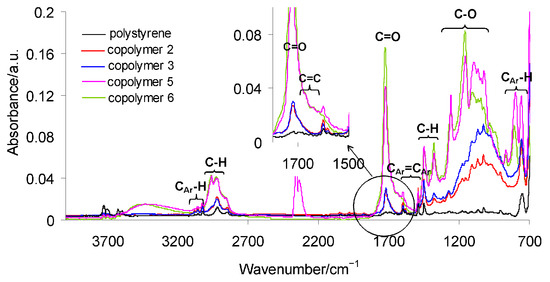
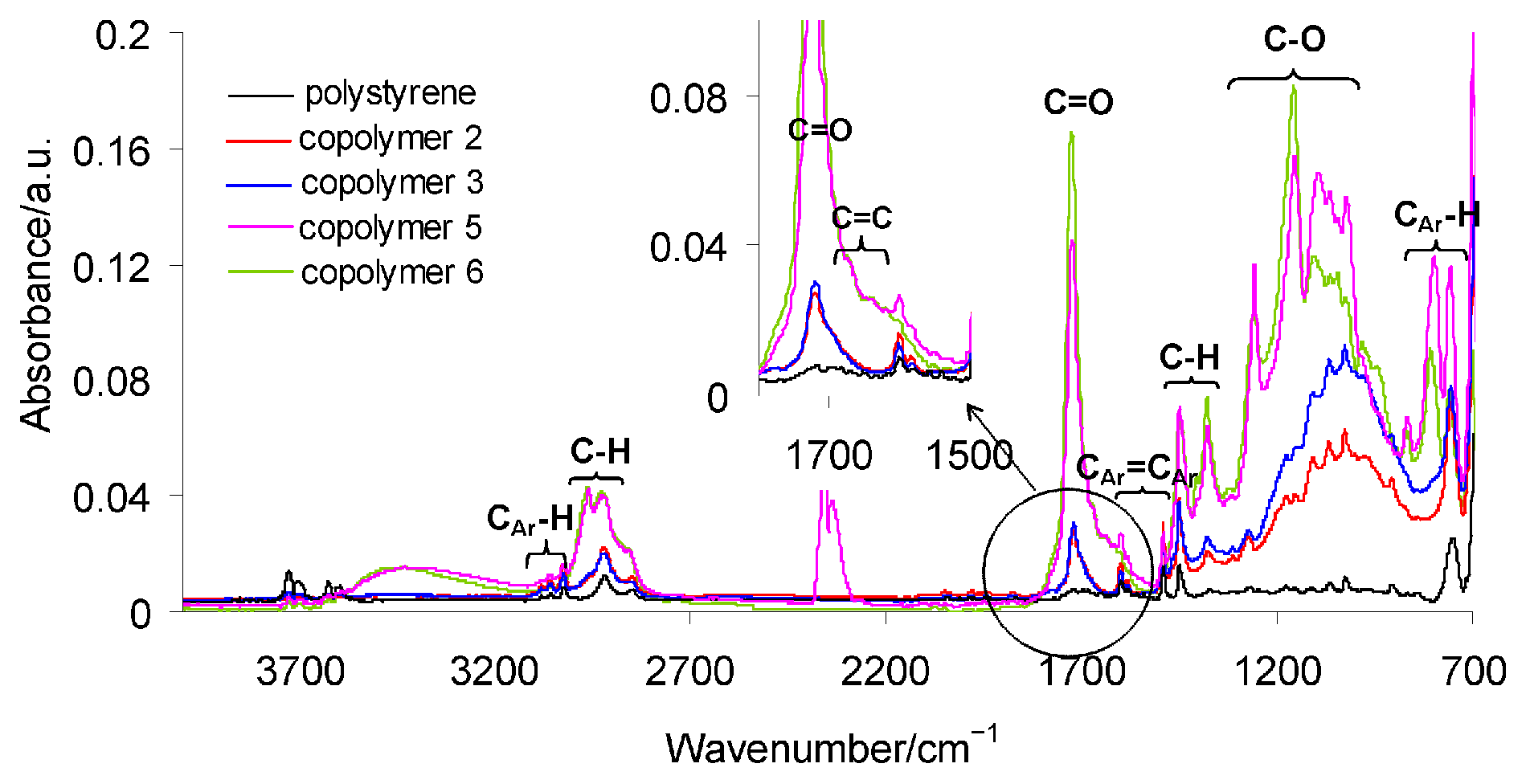
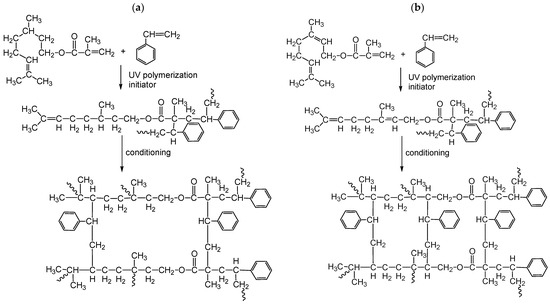
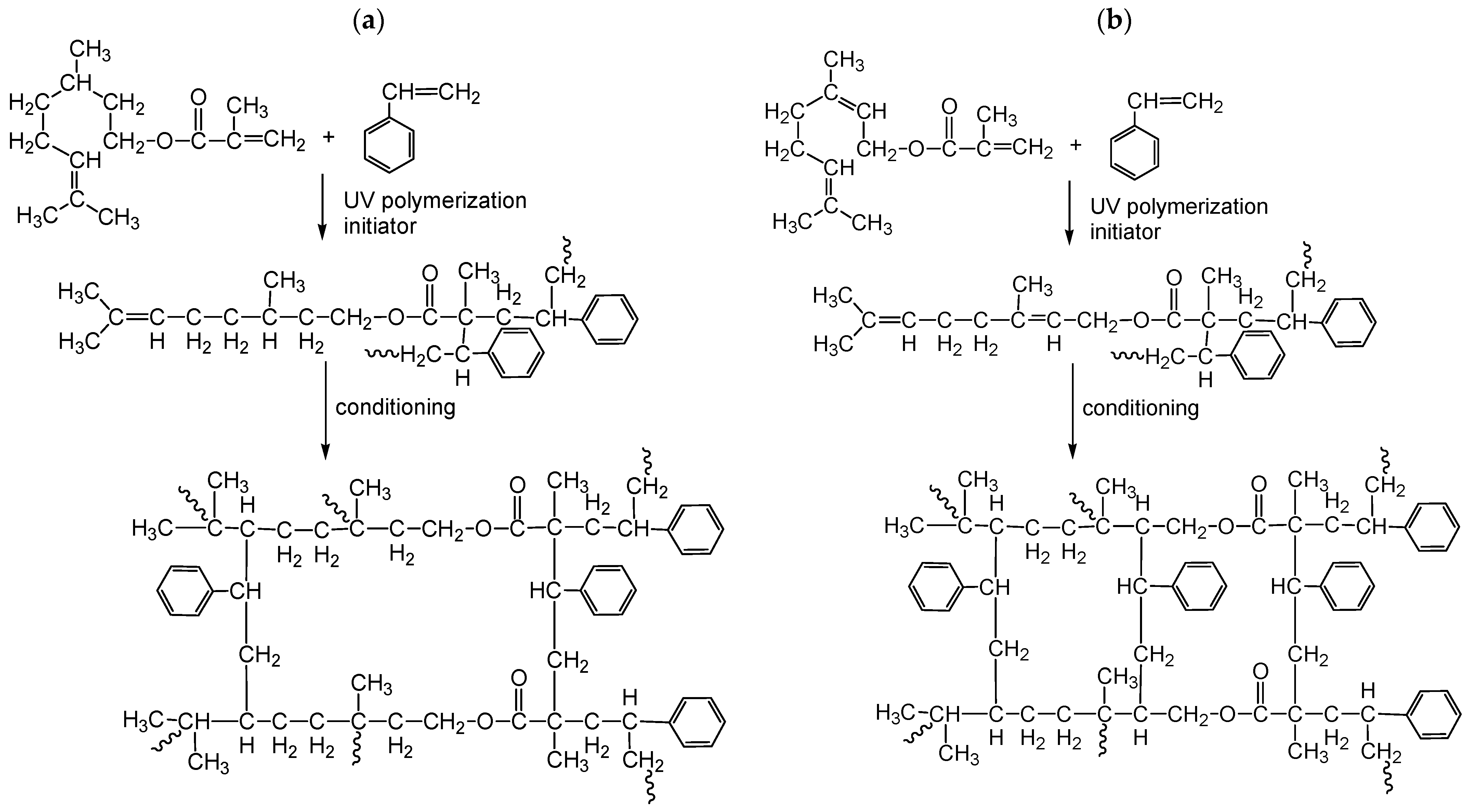
The FTIR spectra for the selected polymer materials are shown in Figure 1. As is clearly visible, all of the absorption bands connected with the characteristic group vibrations present in the chemical structure of the prepared polymeric materials appear. The occurrence of the absorption bands at 3024–3093 cm−1 (the CAr-H stretching vibrations), 2840–2918 cm−1 (the C-H stretching vibrations), 1718 cm−1 (the C=O stretching vibrations in citronellyl methacrylate-based polymeric materials), 1724 cm−1 (the C=O stretching vibrations in geranyl methacrylate-based polymeric materials), 1490–1600 cm−1 (the CAr=CAr stretching vibrations), 1377–1450 cm−1 (the C-H deformation vibrations), 1010–1200 cm−1 (the C-O stretching vibrations) and 756–960 cm−1 (the CAr-H out-of-plane deformation vibrations) clearly confirms their structures [56,57,58,61]. What is noteworthy is that the C=C stretching vibrations at 1629 cm−1 due to the vibrations of vinyl bonds of styrene are not observed in the FTIR spectra for copolymers. Moreover, in the case of polymeric materials prepared with the use of citronellyl methacrylate, there is no absorption band at 1636 cm−1, characteristic for a methacrylic bond. Also, the absorption band at 1676 cm−1 (due to ethylenic bonds from citronellyl methacrylate), as a residual band with very little intensity, is observed [61]. For the polymeric materials obtained with the use of geranyl methacrylate, low-intensity absorption signals responsible for the C=C stretching vibrations at 1636 cm−1 (methacrylic bond) and at 1676 cm−1 (ethylenic bonds) are still present in the FTIR spectra. Hence, it can be suspected that geranyl methacrylate is a monomer with lower reactivity in the UV polymerization process with styrene compared to the reactivity of citronellyl methacrylate. However, it is clearly seen that all types of the C=C double bonds take part in the UV polymerization process, but their conversion is different and depends on the methacrylic monomer used. Table 2 contains the calculated conversion degrees of the C=C double bonds based on the FTIR spectra. The conversion degree of the C=C double bonds (α) for geranyl methacrylate/styrene copolymers is lower as compared to the α for citronellyl methacrylate/styrene copolymers. This is due to the higher reactivity of the citronellyl methacrylate monomer containing only one ethylenic bond in its structure. Thus, the formation of a less cross-linked structure than for the geranyl methacrylate monomer containing two ethylenic bonds is expected. Lower cross-linked density is associated with the greater flexibility of the prepared polymer networks. As is expected and confirmed from the FTIR spectra, two ethylenic bonds of the geranyl methacrylate monomer take part in the UV polymerization process. Thus “more dense” gels are formed at the beginning of the polymerization process. This makes it difficult to react all of the available double bonds. Therefore, some of them remain unchanged in the final cross-linked product. Scheme 1 shows the theoretical structure of the prepared materials.
Figure 1.
The Fourier Transform Infrared (FTIR) spectra for the tested materials.
Table 2.
The double bonds conversion degree (α).
Scheme 1.
The theoretical structure of the prepared polymeric materials: (a) citronellyl methacrylate/styrene copolymers and (b) geranyl methacrylate/styrene copolymers.
3.2. The Solubility of the Tested Polymers Results
The solubility results of the tested polymers in the solvents of different polarities and chemical structures are presented in Table 3 and Table 4. Due to the fact that the obtained methacrylic-based copolymers are cross-linked materials, it is expected that they will be characterized by reduced solubility. The obtained results confirm this assumption. The solubility of both homopolymers (PCM and PGM) and PCM/PS and PGM/PS copolymers is very low; the determined mass loss is below 1%. Moreover, the obtained materials do not swell in the used solvents. As is clearly visible, the polystyrene homopolymer is a soluble material in some of the solvents used. The very low solubility of the obtained copolymers additionally confirms the absence of styrene homopolymer in their composition. This also proves that the applied UV polymerization process conditions allow for the effective incorporation of the styrene into the copolymer’s structure.
Table 3.
Percentage change in mass (ΔwS).
Table 4.
Percentage change in mass (ΔwS).
3.3. The Chemical Stability Results
The chemical stability results are shown in Table 5. In this case, there is also an almost complete lack of influence of a specific chemical environment on the change in the mass of the tested materials. The percentage change in mass is below 0.5%. This indicates that the chemical environments used, alkaline, neutral and acidic, do not cause chemical degradation of the obtained materials, or their swelling. This confirms that the tested polymeric materials have excellent chemical stability. The chemical environment used does not cause degradation or hydrolysis, due to their high degree of cross-linking.
Table 5.
Percentage change in mass (ΔwS).
3.4. The Differential Scanning Calorimetry (DSC) Results
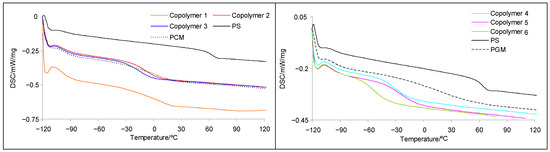
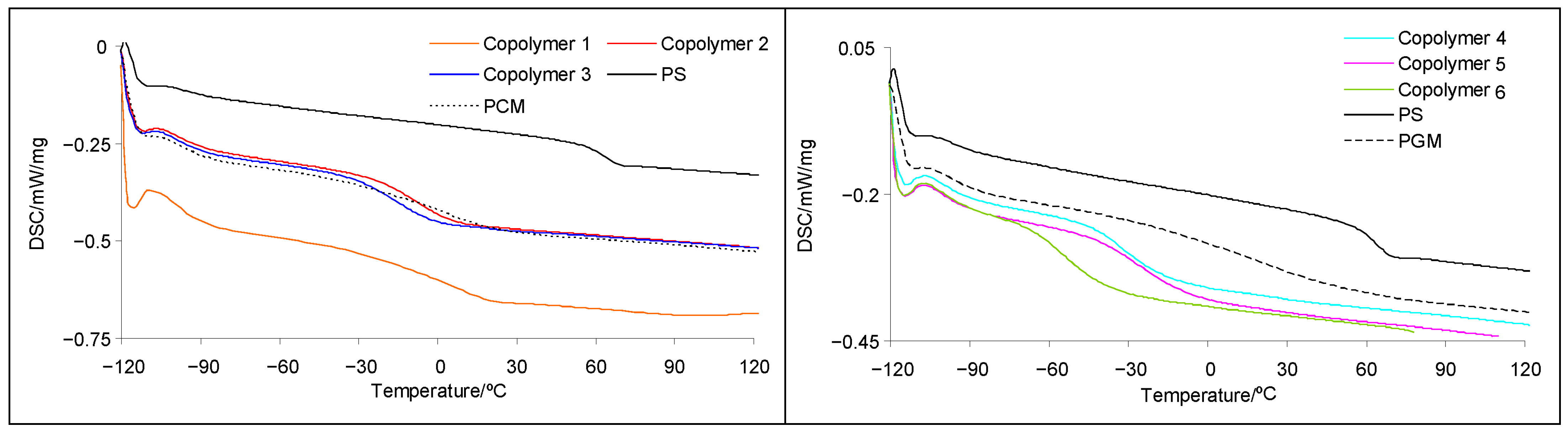
A DSC method was used to evaluate the glass transition temperatures (Tg) of the tested polymeric materials. The DSC curves are shown in Figure 2. In addition, Table 6 presents the Tg values. The Tg values for citronellyl methacrylate/styrene copolymers are from 0.4 °C to −15.2 °C. However, the Tg values for geranyl methacrylate/styrene copolymers are lower and range from −23.2 °C to −50.5 °C. Taking into account the conversion degree of the double bonds determined based on the FTIR, it can be stated that higher Tg values for copolymers obtained using citronellyl methacrylate are caused by a higher number of cross-links in the obtained polymer networks as compared to the geranyl methacrylate-based copolymers.
Figure 2.
The glass transition temperature (Tg) evaluated by DSC.
Table 6.
The glass transition temperature (Tg) values for the obtained polymeric materials.
In addition, it is noticed that with the increase in methacrylic monomer content in the copolymers, the Tg values decrease. This is most likely caused by the extension of aliphatic chains macromolecules, which gives them greater flexibility compared to copolymers containing larger amounts of styrene as an aromatic monomer. Moreover, it can be said that the use of compositions containing citronellyl or geranyl methacrylate monomers and styrene results in the preparation of polymeric materials with more elastomeric and flexible properties.
3.5. The Thermogravimetric/Derivative Thermogravimetric/Differential Scanning Calorimetry (TG/DTG/DSC) Results (Inert Conditions)
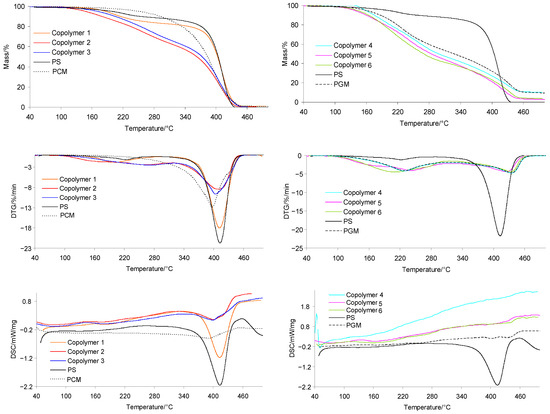
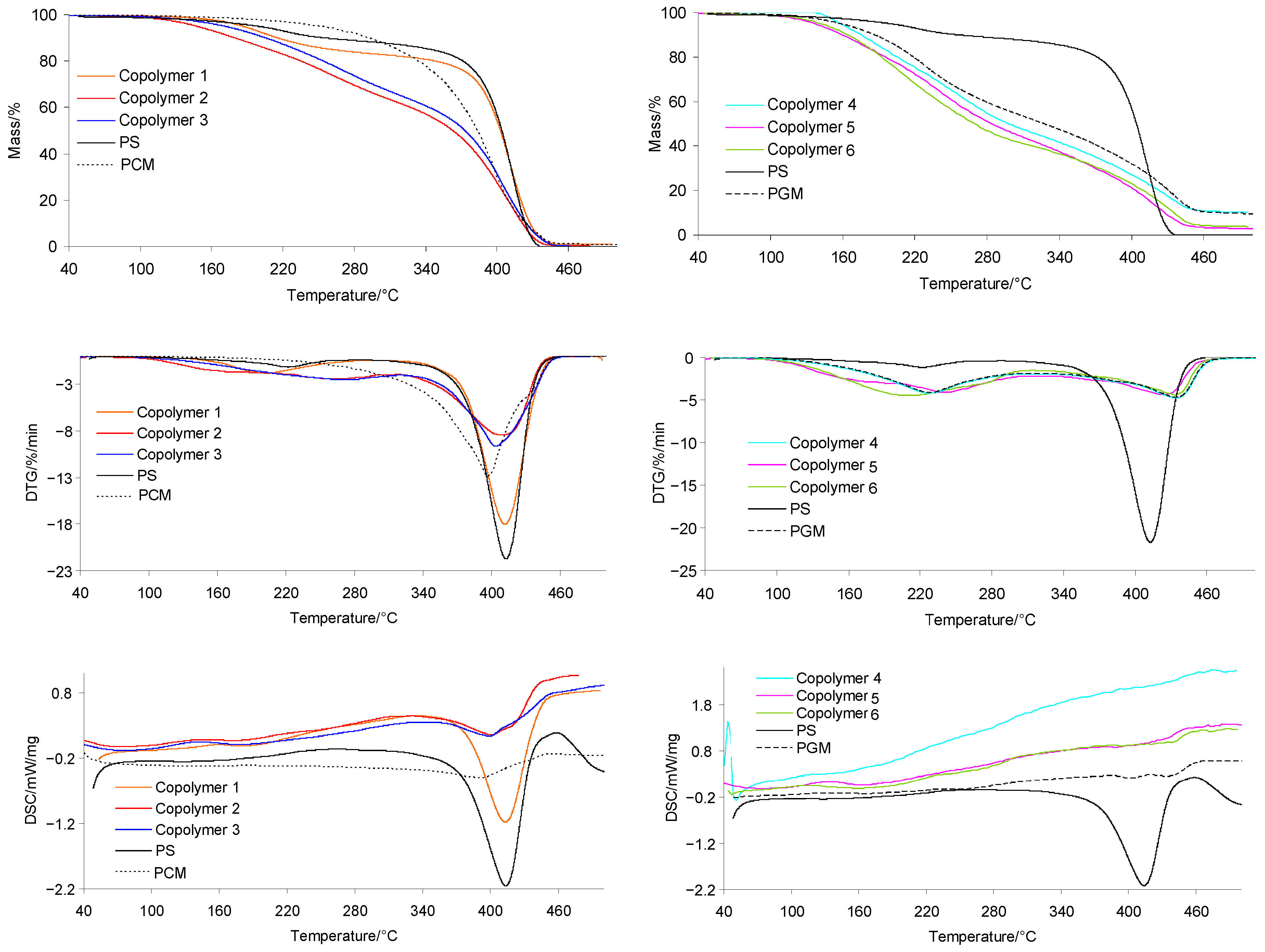
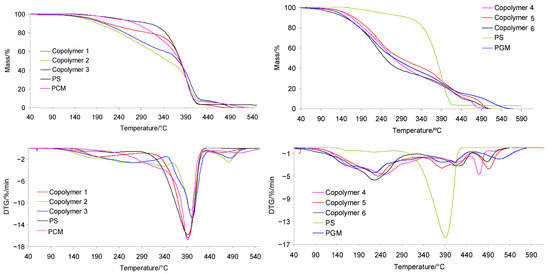
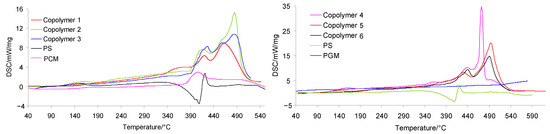
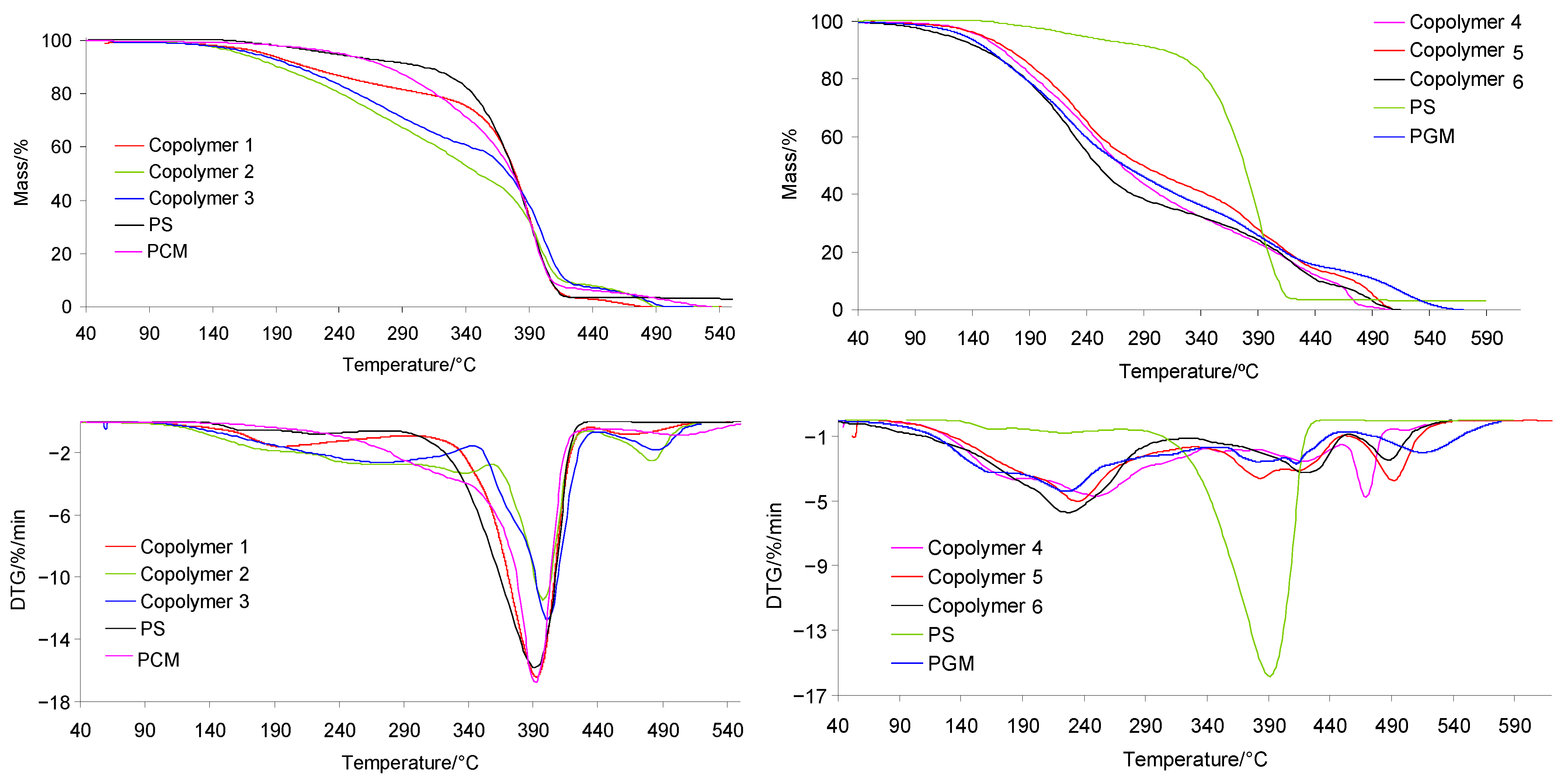
Figure 3 shows the TG/DTG/DSC curves. In addition, Table 7 presents the collected data read from the TG/DTG curves. A slightly higher thermal stability is observed for the citronellyl methacrylate/styrene copolymers compared to geranyl methacrylate/styrene copolymers. The thermal stability marked as 5% of mass loss is from 148 °C to 187 °C for citronellyl methacrylate-based copolymers and from 142 °C to 159 °C for geranyl methacrylate-based copolymers. All of the tested copolymers decompose in at least two stages in helium atmosphere. The first decomposition stage spreads from T5% to 310–320 °C. This stage is depicted by a “fuzzy” DTG signal with one maximum at 205–277 °C (Tmax1) for citronellyl methacrylate-based materials or two maxima, one at 180–212 °C (Tmax1) and the other at 238–276 °C (Tmax1a), for geranyl methacrylate-based copolymers. The mass loss (Δm1) is from 17.4% to 38% for copolymers 1–3 (citronellyl methacrylate-based copolymers) and from 54.1% to 59.4% for copolymers 4–6 (geranyl methacrylate-based copolymers) during the first stage of decomposition. The second decomposition stage spreads from ca. 310–320 °C to 460 °C (copolymers 1–3) or to 500 °C (copolymers 4–6). In addition, the thermal resistance of the tested copolymers is lower than homopolymers (PGM, PCM and PS). This may indicate their presence at the ends of a cross-linked network of linear/aliphatic groups containing unreacted double bonds in their structure. These groups promote the thermal depolymerization of the tested copolymers and thus lower the initial decomposition temperature. Such a structure can be compared to a ball with threads attached to it, where the ball is a cross-linked network and the threads are linear aliphatic chains containing saturated and unsaturated fragments. In addition, it is clearly visible that the copolymers containing 50% mass of methacrylic monomer and 50% mass of styrene show the lowest thermal stability of all obtained copolymers.
Figure 3.
The thermogravimetric/derivative thermogravimetric/differential scanning calorimetry (TG/DTG/DSC) curves (helium).
Table 7.
The thermogravimetric/derivative thermogravimetric (TG/DTG) data (helium).
3.6. The Simultaneous Thermogravimetric Analysis Coupled with the Fourier Transform Infrared Spectroscopy (TG/FTIR) Results (Inert Conditions)
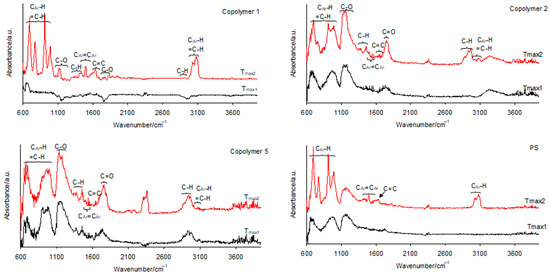
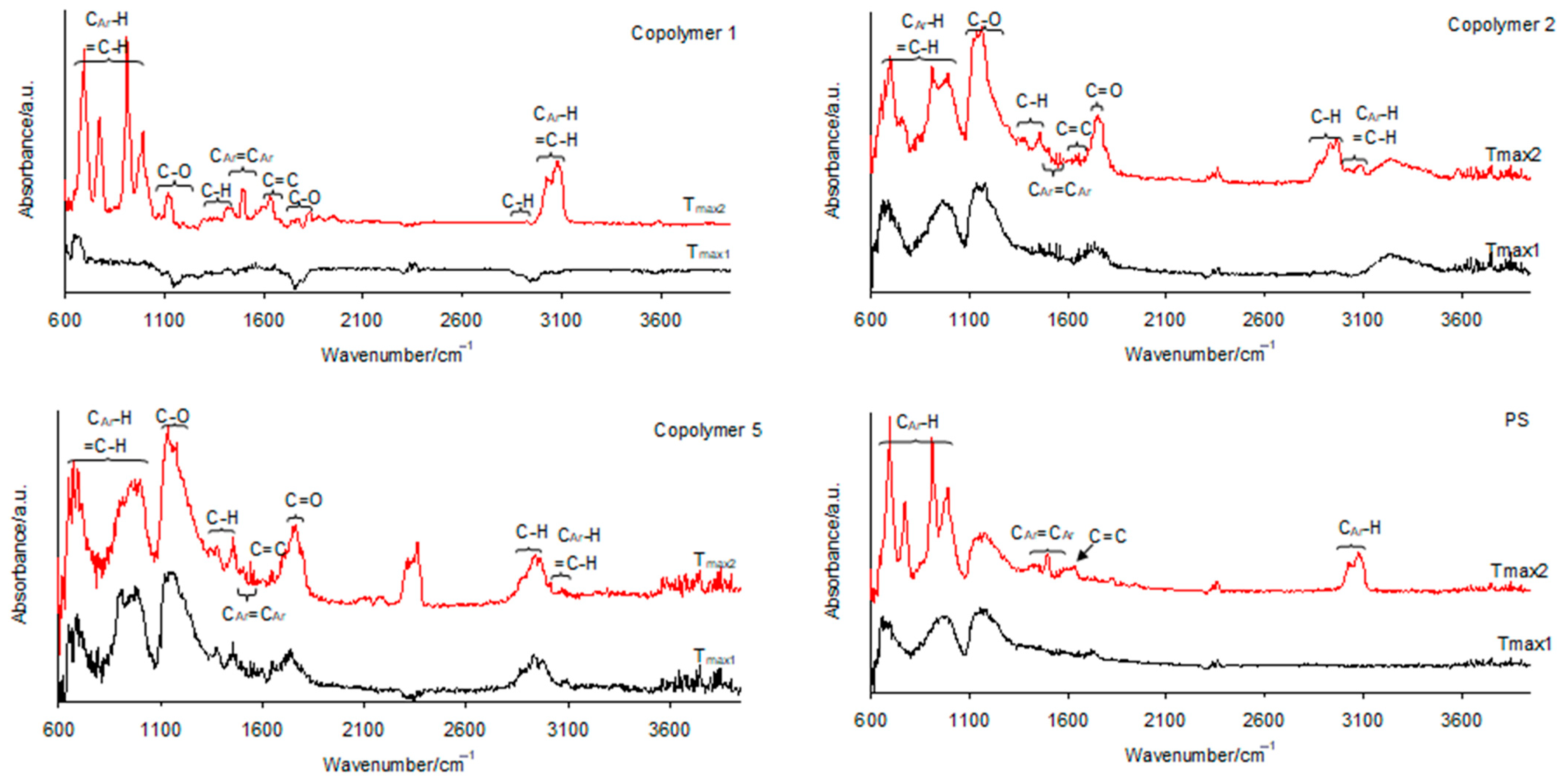
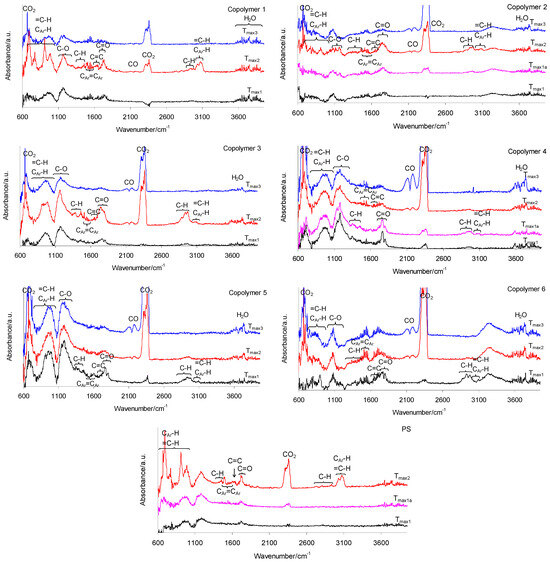
Figure 4 shows the gaseous FTIR spectra gathered at the characteristic maximum decomposition temperatures (Tmax1, Tmax1a and Tmax2) for the selected PCM/PS and PGM/PS copolymers. In addition, the FTIR spectra of the emitted volatiles from PS are provided for comparision. As is already known, the pyrolysis of polystyrene includes radical reactions, e.g., random-scission and end-chain β-scission processes in which mainly the depolymerization product—styrene—is formed. However, other radical processes may occur for the generation of volatiles such as benzene, toluene and ethylbenzene [61,62,63,64,65]. The obtained experimental gaseous FTIR spectra collected during the heating of PS indicate very low emission of volatiles at Tmax1 due to low mass loss (11.6%) at this stage. However, the presence of the C-H out-of-plane bending of the aromatic ring (695–991 cm−1) and aromatic ring vibrations (1563–1700 cm−1) can be seen in this spectrum. This indicates a small emission of aromatic compounds because of the decomposition of macromolecules with a lower double bond conversion and thus lower molecular masses. If the furnace temperature exceeds 280 °C, a significant increase in volatile emission connected with the main decomposition stage of PS is observed. The recorded gaseous FTIR spectrum at this stage of PS decomposition clearly indicates the emission of its depolymerization products [66,67,68,69,70].
Figure 4.
The gaseous Fourier Transform Infrared (FTIR) spectra collected at Tmax1 and Tmax2 (helium).
If we analyze the decomposition course of the tested copolymers, we can notice that in the case of PCM/PS copolymers, the greatest intensity of the released gaseous decomposition products is observed at Tmax2 (copolymer 1 and copolymer 2, Figure 4). Taking into account the composition of the copolymers, the highest intensity of absorption signals is observed with the monomer used in larger amounts for the polymerization process. For copolymer 1, containing 80% mass styrene and 20% mass citronellyl methacrylate, the dominant absorption bands originating from the decomposition products of polystyrene mers incorporated into the copolymer structure are observed. However, the decomposition of copolymer 2 (50% mass styrene: 50% mass citronellyl methacrylate), results in the appearance of the overlapping or slightly different wavenumber values for absorption bands of the FTIR spectra collected at Tmax2 due to the emission of gaseous decomposition products of both polystyrene and poly(citronellyl methacrylate) mer units. This confirms that the bonds in the formed polymer network are characterized by similar decomposition energy. The determined mass loss during the second decomposition stage (Δm2) proves that this stage is the main decomposition stage of PCM/PS materials. The appearance of the following absorption bands at 692–989 cm−1 (the =C-H and the =CAr-H out-of-plane deformation vibrations), 1039–1224 cm−1 (the C-O stetching vibrations), 1322–1445 cm−1 (the C-H deformation vibration, respectively), 1500–1581 cm−1 (the CAr=CAr the stretching vibrations), 1626–1654 cm−1 (the C=C stretching vibrations), 1733–1825 cm−1 (the C=O stretching vibrations), 2925–2965 cm−1 (the C-H stretching vibrations) and 3022–3066 cm−1 (the C=C and CAr-H stretching vibrations) clearly indicates the creation of mainly depolymerization products of copolymer 1. Among the emitted volatiles, mainly styrene and low amounts of citronellyl methacrylate are expected. The emission of styrene is predominant since this copolymer is formed from 80% mass of styrene and only 20% mass of citronellyl methacrylate. Meanwhile, in the case of copolymer 2, the appearance of the FTIR spetrum is different. In this spectrum, the emission of the decomposition products of citronellyl methacrylate mer units increases compared to the products of decomposition of styrene mer units. This is due to the higher content of citronellyl methacrylate used to prepare this copolymer. The FTIR spectrum collected for copolymer 2 at Tmax2 clearly shows the presence of the following absorption peaks: 651–993 cm−1 (the =C-H and =CAr-H out-of-plane deformation vibrations), 1124–1210 cm−1 (the C-O stetching vibrations), 1350–1470 cm−1 (the C-H deformation vibration, respectively), 1540–1600 cm−1 (the CAr=CAr the stretching vibrations), 1640–1667 cm−1 (the C=C stretching vibrations), 1730–1810 cm−1 (the C=O stretching vibrations), 2865–2980 cm−1 (the C-H stretching vibrations), and 3054–3090 cm−1 (the C=C and CAr-H stretching vibrations) [61]. This proves volatile emission from both styrene and citronellyl methacrylate units. It additionally confirms that all bonds present in the copolymer structure are characterized by similar decomposition energy.
Similar observations can be made in the case of PGM/PS copolymers. Higher emissions of the gaseous decomposition products are visible in Tmax2 compared to Tmax1. Both recorded FTIR spectra show the absorption peaks in the same wavenumbers. This confirms that the same chemical bonds from the structure of copolymers are decomposed at both maximum temperatures. The presence of the following absorption peaks in the FTIR spectra is clearly visible: 720–981 cm−1 (the =C-H and the =CAr-H out-of-plane deformation vibrations), 1083–1284 cm−1 (the C-O stretching vibrations), 1363–1445 cm−1 (the C-H deformation vibration, respectively), 1506–1600 cm−1 (the CAr=CAr the stretching vibrations), 1640–1680 cm−1 (the C=C stretching vibrations), 1720–1805 cm−1 (the C=O stretching vibrations), 2910–2980 cm−1 (the C-H stretching vibrations), and 3035–3070 cm−1 (the C=C and CAr-H stretching vibrations). In addition, in the gaseous FTIR spectra collected at Tmax2, the absorption peaks characteristic for CO (the absorption bands at 2086 cm−1 and 2160 cm−1) and CO2 (the absorption bands at 2306–2354 cm−1) can also be seen, as indicated in Figure 4 [61,71,72,73].
In summary, it is stated that at lower temperatures (Tmax1), the C-C and C-O bonds present at the ends of polymer macromolecules (as branches with an ester moiety) undergo pyrolysis and/or macromolecules with lower molar mass undergo depolymerization. As the heating temperature increases, the breaking of the C-C and C-O bonds in the main macromolecular chains and in the branched chains connected with the reactions between the formed fragments are the most expected. Among the emitted volatiles, saturated, unsaturated, carbonyl and aromatic-type compounds are observed. This indicates that the decomposition of the tested copolymers occurs according to the radical mechanism. This process proceeds in an uncontrolled manner and thus a mixture of volatiles is formed. It should be remembered that the decomposition reactions taking place according to the radical mechanism lead to the production of the highly reactive radicals that can react with other radicals in an uncontrolled and random manner. This results in the formation of intermediate products, radicals with larger molecular masses and thus, various decomposition products.
3.7. The Thermogravimetric/Derivative Thermogravimetric/Differential Scanning Calorimetry (TG/DTG/DSC) Results (Oxidative Conditions)
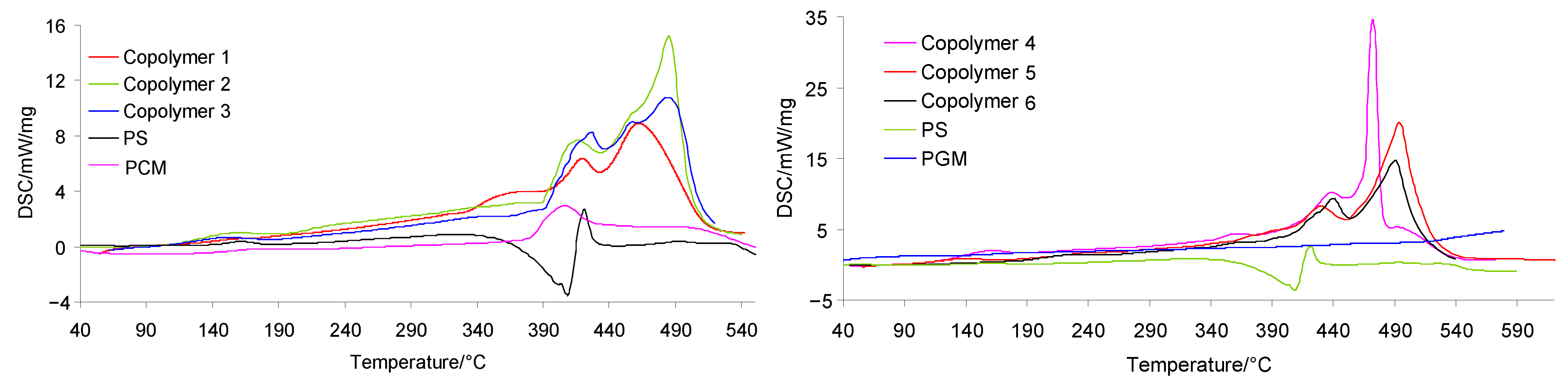
Figure 5 presents the TG/DTG/DSC curves collected in oxidative conditions. In addition, Table 8 shows the data determined from the TG/DTG curves. Similar to what is visible in an inert condition, the copolymers based on citronellyl methacrylate and styrene show slightly better thermal resistance as compared to the copolymers formed from geranyl methacrylate and styrene. The thermal stability is from 163 °C to 181 °C for citronellyl methacrylate-based coolymers and from 119 °C to 149 °C for geranyl methacrylate-based copolymers. All of the tested copolymers decompose in at least three main stages under the influence of the oxidizing conditions (oxygen from synthetic air furnace atmopshere). The first decomposition stage includes at least two steps (Tmax1, Tmax1a). The first stage of decomposition spreads from T5% to 320–340 °C and similarly to a non-oxidizing atmosphere; it is described by a “fuzzy” DTG signal with two main maxima at Tmax1 and Tmax1a between 182 and 249 °C for the tested copolymers. The mass loss (Δm1) is from 17.9% to 53% for copolymers 1–3 (citronellyl methacrylate-based copolymers) and from 57% to 75.4% for copolymers 4–6 (geranyl methacrylate-based copolymers). The second stage of decomposition appears from ca. 320–340 °C to 440–450 °C and it is connected with the mass loss (Δm2) from 39.1% to 78.1% for copolymers 1–3 and from 14.2% to 29.4% for copolymers 4–6. Moreover, in an oxidative atmosphere, an additional third decomposition stage above 440–450 °C with Tmax3 at 464–501 °C and a mass loss (Δm3) between 4% and 13.6% is observed.
Figure 5.
The thermogravimetric/derivative thermogravimetric/differential scanning calorimetry (TG/DTG/DSC) curves (synthetic air).
Table 8.
The thermogravimetric/derivative thermogravimetric (TG/DTG data) (synthetic air).
All of the tested copolymers decompose fully in oxidative conditions. If one looks closely at the course of the DSC curves, one can determine the presence of mainly exothermic signals. These exothermic DSC signals directly point to chemical reactions occurring under the heating and decomposition of the copolymers in the presence of oxygen. Among chemical reactions, oxidation, combustion and reactions of the formed radicals with oxygen can be mentioned. These may lead to the formation of different gaseous products during oxidative decomposition as compared to the gases released during heating of the prepared materials in an atmosphere without access to oxygen.
3.8. The Simultaneous Thermogravimetric Analysis Coupled with the Fourier Transform Infrared Spectroscopy (TG/FTIR) Results (Oxidative Conditions)
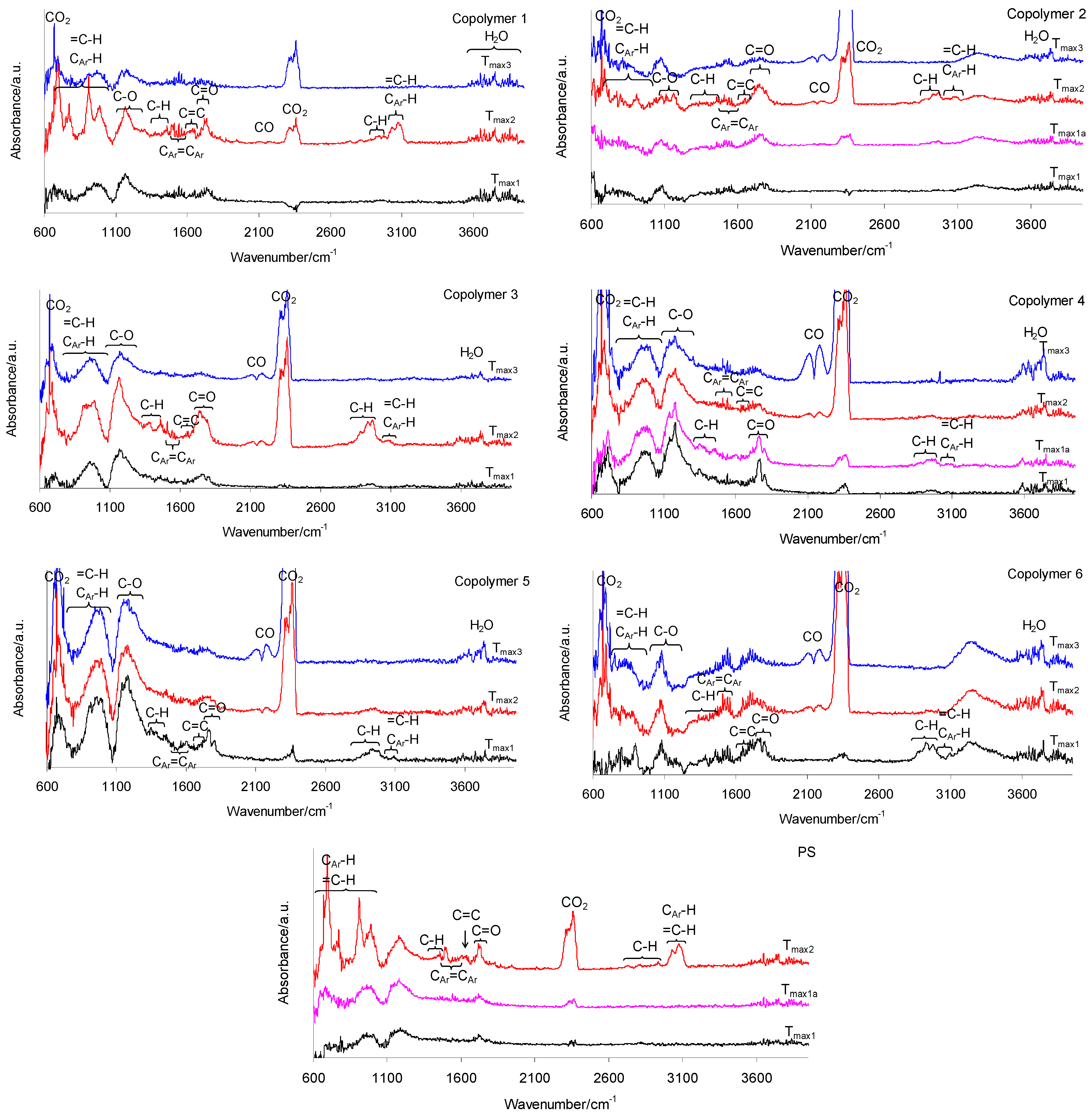
Figure 6 presents the FTIR spectra for the emitted volatiles in a synthetic air atmosphere. As is clearly visible, the emission of the volatiles for copolymers 1–3 starts from T5%. The maximum emission at Tmax2 is observed. The FTIR spectra collected at Tmax1 and Tmax2 for PCM/PS copolymers (copolymers 1–3) show the appearance of absorption bands at the following: 678–975 cm−1 (the =C-H and the =CAr-H out-of-plane deformation vibrations), 1060–1284 cm−1 (the C-O stetching vibrations), 1368–1476 cm−1 (the C-H deformation vibration, respectively), 1490–1556 cm−1 (at the low-frequency end, mixed C-H deformation vibrations and the CAr=CAr stretching vibrations; at the high-frequency end, the CAr=CAr the stretching vibrations), 1635–1670 cm−1 (the C=C stretching vibrations), 1700–1752 cm−1 (the C=O stretching vibrations), 2709 and 2788 cm−1, 2860–2954 cm−1 (the C-H stretching vibrations) and 3021–3073 cm−1 (the C=C and CAr-H stretching vibrations). Also, the absorption bands responsible for CO2, CO and H2O emission at Tmax1 and Tmax2 are present. In turn, at Tmax3, mainly the formation of CO2 (the absorption bands at 2306–2354 cm−1), CO (the absorption bands at 2086 cm−1 and 2160 cm−1) and H2O (the absorption bands at 1400–1700 cm−1 and above 3500 cm−1) is confirmed. The PGM/PS copolymers (copolymers 4–6) at Tmax1 show the maximum intensity of the volatile emission. This is consistent with the amount of mass loss at this decomposition stage. A detailed analysis of the FTIR spectra at this decomposition stage confirms the presence of the absorption peaks at 694–995 cm−1 (the =C-H and =CAr-H out-of-plane deformation vibrations), 1167–1284 cm−1 (the C-O stretching vibrations), 1457–1488 cm−1 (the C-H deformation vibration, respectively), 1517–1600 cm−1 (the CAr=CAr the stretching vibrations), 1623–1650 cm−1 (the C=C stretching vibrations), 1681–1800 cm−1 (the C=O stretching vibrations), 2720–2780 cm−1 (the C-H stretching vibrations in aldehyde groups), 2933–2985 cm−1 (the C-H stretching vibrations), 3025–3068 cm−1 (the C=C and CAr-H stretching vibrations) and the characteristic peaks for CO2, CO and water vapour formation. This proves volatile emission from both styrene and citronellyl methacrylate units. It additionally confirms that all bonds present in the copolymer structure are characterized by similar decomposition energy. At Tmax2, the intensity of the above-mentioned absorption bands is definitely decreased. In addition, at Tmax3, the emisssion of CO2, CO and H2O is dominant and clearly visible [61,71,72,73].
Figure 6.
The gaseous Fourier Transform Infrared (FTIR) spectra collected at Tmax1, Tmax2 and Tmax3 (synthetic air).
If one compares the FTIR spectra collected in an oxidizing atmosphere with the FTIR spectra collected in an inert atmosphere for both types of copolymers, one can see some differences in the wavenumber values for the organic gaseous decomposition products. These differences in the structure of the emitted gases are connected with the existence of oxygen in the atmosphere of the flowing gas through the furnace. As a result, formed organic gaseous decompostion products can further undergo chemical reactions such as oxidation or combustion (radical type reactions) under heating. This results in a mixture of gaseous products with a more diverse structure compared to those observed in inert atmosphere.
4. Conclusions
Ultraviolet (UV) copolymers based on different contents of citronellyl methacrylate, geranyl methacrylate and styrene were prepared. The Fourier Transform Infrared (FTIR) spectra confirmed their structure and the high conversions of the double bonds in the UV polymerization process. All of the obtained copolymers showed high solvent resistance and high chemical stability in environments with different pH. The cross-linked materials with glass transition temperatures from 0.4 °C to −50.5 °C, depending on the methacrylate monomer structure used and the content of UV composition, were prepared. The monomer type used and the applied thermogravimetric (TG) furnace atmosphere directly influenced the thermal stability of these copolymers. Generally, the prepared UV copolymers were more thermally stable in an inert atmosphere than in an oxidative atmosphere. Moreover, the thermal stability of UV copolymers based on citronellyl methacrylate was comparable or slightly higher than for geranyl methacrylate copolymers. This was due to the higher double bonds conversion and thus higher cross-linking density of the citronellyl methacrylate/styrene copolymers. The collected FTIR spectra of volatiles emitted under the heating of the copolymers confirmed the creation of a mixture of mainly organic volatiles. This was related to the bond cleavage from the structure of the prepared polymeric materials according to a radical mechanism. The studies performed showed that the use of methacrylic monomers prepared from terpene alcohols (citronellol and geraniol) in the mixture with styrene allowed for the production of cross-linked polymeric materials with high resistance to solvents and chemical environments and with glass transition temperatures below room temperature and with a satisfactory thermal resistance. Due to their properties and incorporation of monomers based on naturally occurring terpene alcohols, such materials can be suitable for applications where objects made of such copolymers are in direct and long-term contact with bases, acids, buffers and solvents of various polarities.
Funding
This research received no external funding.
Institutional Review Board Statement
Not applicable.
Informed Consent Statement
Not applicable.
Data Availability Statement
The original contributions presented in this study are included in the article. Further inquiries can be directed to the corresponding author.
Conflicts of Interest
The author declares no conflicts of interest.
References
- Singh, A.; Chauhan, A.; Gaur, R. A comprehensive review on the synthesis, properties, environmental impacts, and chemiluminescence applications of polystyrene (PS). Discov. Chem. 2025, 2, 47. [Google Scholar] [CrossRef] [Scilit]
- Kreutz, J.C.; de Souza, P.R.; Benetii, V.P.; dos Reis Freitas, A.; Bittencourt, P.R.S.; Gaffo, L. Mechanical and thermal properties of polystyrene and medium density fiberboard composites. Polimeros 2021, 31, e2021013. [Google Scholar] [CrossRef] [Scilit]
- Carswell, T.S.; Hayes, R.F.; Nason, H.K. Physical properties of polystyrene as influenced by temperature. Ind. Eng. Chem. 1942, 34, 454–457. [Google Scholar] [CrossRef] [Scilit]
- Dan, O.; Trofirmova, L. A study of the properties of forming mixtures containing polystyrene wastes. J. Cast. Mater. Eng. 2021, 5, 14–19. [Google Scholar] [CrossRef] [Scilit]
- Hylova, L.; Mizera, A.; Mizera, M.; Grund, R.; Ovsik, M. Mechanical properties study of high impact polystyrene under impact and static tests. IOP Conf. Ser. Mater. Sci. Eng. 2018, 448, 012044. [Google Scholar] [CrossRef] [Scilit]
- Csernica, J.; Brown, A. Effect of plasticizers on the properties of polystyrene films. J. Chem. Educ. 1999, 76, 1526. [Google Scholar] [CrossRef] [Scilit]
- Church, J.M.; Berenson, C. Properties of styrene-polyester copolymers. Ind. Eng. Chem. 1955, 47, 2456–2462. [Google Scholar] [CrossRef] [Scilit]
- Butzelaar, A.J.; Röring, P.; Mach, T.P.; Hoffmann, M.; Jeschull, F.; Wilhelm, M.; Winter, M.; Brunklaus, G.; Théato, P. Styrene-based poly(ethylene oxide) side-chain block copolymers as solid polymer electrolytes for high-voltage lithium-metal batteries. ACS Appl. Mater. Interfaces 2021, 13, 39257–39270. [Google Scholar] [CrossRef] [Scilit] [PubMed]
- Zaharescu, T.; Banciu, C. Packaging materials based on styrene-isoprene-styrene rriblock copolymer modified with graphene. Polymers 2023, 15, 353. [Google Scholar] [CrossRef] [Scilit] [PubMed]
- Haile, L. Study of recycling of waste high impact polystyrene (PS-HI) and polystyrene with flame retardant additives (PS-FR) co-polymers. J. Text. Sci. Fash. Technol. 2021, 7, 1–11. [Google Scholar] [CrossRef] [Scilit]
- Srivastava, H.; Lade, H.; Paul, D.; Arthanareeswaran, G.; Kweon, J.H. Styrene-based copolymer for polymer membrane modifications. Appl. Sci. 2016, 6, 159. [Google Scholar] [CrossRef] [Scilit]
- Li, F.; Larock, R.C. New soybean oil–styrene–divinylbenzene thermosetting copolymers. II. Dynamic mechanical properties. J. Polym. Sci. Part B Polym. Phys. 2000, 38, 2721–2738. [Google Scholar] [CrossRef] [Scilit]
- Xavier, T.; Samuel, J.; Kurian, T. Thermoplastic ionomers based on “styrene grafted natural rubber”. Int. J. Polym. Mater. Polym. Biomater. 2003, 52, 251–264. [Google Scholar] [CrossRef] [Scilit]
- Galdi, N.; Buonerba, A.; Oliwa, L. Olefin–styrene copolymers. Polymers 2016, 8, 405. [Google Scholar] [CrossRef] [Scilit]
- Schué, E.; Rickertsen, D.R.L.; Korpusik, A.B.; Adili, A.; Seidel, D.; Sumerlin, B.S. Alternating styrene–propylene and styrene–ethylene copolymers prepared by photocatalytic decarboxylation. Chem. Sci. 2023, 14, 11228–11236. [Google Scholar] [CrossRef] [Scilit] [PubMed]
- Bumbac, M.; Zaharescu, T.; Nicolescu, C.M.; Borbath, T.; Borbath, I. Chemiluminescence-based evaluation of styrene block copolymers’ recyclability. Sci. Rep. 2024, 14, 28221. [Google Scholar] [CrossRef] [Scilit]
- Francisco-Vieira, L.; Benavides, R.; Cuara-Diaz, E.; Morales-Acosta, D. Styrene-co-butyl acrylate copolymers with potential application as membranes in PEM fuel cell. Int. J. Hydrogen Energy 2019, 44, 12492–12499. [Google Scholar] [CrossRef] [Scilit]
- Zhan, P.; Chen, J.; Zheng, A.; Shi, H.; Wu, T.; Wei, D.; Xu, X.; Guan, Y. Methyl methacrylate-styrene copolymers prepared by utilizing the Trommsdorff effect in an inverted two-stage extruder. Mater. Res. Express 2020, 7, 095305. [Google Scholar] [CrossRef] [Scilit]
- Rahlwes, D.; Roovers, J.E.L.; Bywater, S. Synthesis and characterization of poly(styrene-g-isoprene) copolymers. Macromolecules 1977, 10, 604–609. [Google Scholar] [CrossRef] [Scilit]
- Tsarevsky, N.V.; Sarbu, T.; Göbelt, B.; Matyjaszewski, K. Synthesis of styrene-acrylonitrile copolymers and related block copolymers by atom transfer radical polymerization. Macromolecules 2002, 35, 6142–6148. [Google Scholar] [CrossRef] [Scilit]
- Radha, K.; Shobana, K.; Mohan, D.; Narayana, Y.L. Synthesis and characterization of styrene-acrylonitrile copolymer blend ultrafiltration membranes. Desalination Water Treat. 2009, 12, 114–126. [Google Scholar] [CrossRef] [Scilit]
- Ohishi, H.; Kishimoto, S.; Ikehara, T.; Nishi, T. Synthesis of styrene–acrylonitrile random copolymers (SAN) and polyarylate block copolymers and the control of their mechanical properties by morphology generation. J. Polym. Sci. Part B Polym. Phys. 2000, 38, 127–137. [Google Scholar] [CrossRef]
- Hill, D.J.T.; O’DOnnell, J.H.; O’SUllivan, P.W. Analysis of the mechanism of copolymerization of styrene and acrylonitrile. Macromolecules 1982, 15, 960–966. [Google Scholar] [CrossRef] [Scilit]
- Ko, E.B.; Lee, D.E.; Yoon, K.B. Electrically conductive nanocomposites composed of styrene-acrylonitrile copolymer and rGO via free-radical polymerization. Polymers 2020, 12, 1221. [Google Scholar] [CrossRef] [Scilit]
- Wu, M.M. Acrylonitrile polymers, survey and styrene-scrylonitrile (SAN). In Kirk-Othmer Encyclopedia of Chemical Technology; Wiley: Hoboken, NJ, USA, 2001. [Google Scholar]
- Tian, M.; You, J.; Qiu, J.; Li, M.; Xing, H.; Xue, J.; Jiang, Z.; Tang, T. Unexpected super anti-compressive styrene-acrylonitrile co-polymer/polyurea nanocomposite foam with excellent solvent resistance, re-processability and shape memory performance. Compos. Part B Eng. 2023, 264, 110908. [Google Scholar] [CrossRef] [Scilit]
- López-García, J.; Primc, G.; Junkar, I.; Lehocký, M.; Mozetič, M. On the hydrophilicity and water resistance effect of styrene-acrylonitrile copolymer treated by CF4 and O2 plasmas. Plasma Process. Polym. 2015, 12, 1075–1084. [Google Scholar] [CrossRef] [Scilit]
- Migahed, M.D.; El-Khodary, A.; Hammam, M.; Shaban, A.; Hafiz, H.R. Compensation effect in styrene-acrylonitrile copolymer and acrylonitrile-butadiene-styrene terpolymer as explored by thermally stimulated depolarization measurements. J. Mater. Sci. 1990, 25, 2795–2799. [Google Scholar] [CrossRef] [Scilit]
- McKeen, L.W. Chapter 5—Styrenic Plastics, Film Properties of Plastics and Elastomers (Third Edition); Plastics Design Library: New York, NY, USA, 2012; pp. 81–89. [Google Scholar]
- Demirors, M. Styrene-Butadiene Copolymers, Encyclopedia of Polymer Science and Technology; Wiley Online Library: Hoboken, NJ, USA, 2001. [Google Scholar]
- Velásquez, E.; Leal, M.; García, L.; Oliva, H. Influence of styrene-b-butadiene copolymer types on phase morphology and polymer partitioning between demixed-macrophases from HIPS-mimicking unstable blends. J. Polym. Res. 2021, 28, 443. [Google Scholar] [CrossRef] [Scilit]
- McClements, J.; Buffone, C.; Shaver, M.P.; Sefiane, K.; Koutsos, V. Poly(styrene-co-butadiene) random copolymer thin films and nanostructures on a mica surface: Morphology and contact angles of nanodroplets. Soft Matter 2017, 13, 6152–6166. [Google Scholar] [CrossRef] [Scilit] [PubMed]
- Canto, L.; Mantovani, G.; Deazevedo, E.; Bonagamba, T.; Hage, E.; Pessan, L. Molecular characterization of styrene-butadiene-styrene block copolymers (SBS) by GPC, NMR, and FTIR. Polym. Bull. 2006, 57, 513–524. [Google Scholar] [CrossRef] [Scilit]
- Liu, J.; Min, X.; Zhang, X.; Zhu, X.; Wang, Z.; Wang, T.; Fan, X. A novel synthetic strategy for styrene–butadiene–styrene tri-block copolymer with high cis-1,4 units via changing catalytic active centres. R. Soc. Open Sci. 2019, 6, 190536. [Google Scholar] [CrossRef] [Scilit]
- Chen, X.; Ma, Z.; Zhou, J.; Wang, J.; Zhang, X.; Zhao, R.; Tong, J. Thermal degradation characteristics of styrene-butadiene-styrene copolymer asphalt binder filled with an inorganic flame-retarding agent. Polymers 2022, 14, 3761. [Google Scholar] [CrossRef] [Scilit] [PubMed]
- Lu, J.; Liang, H.; Li, A.; Cheng, Q. Synthesis of block and graft copolymers of β-pinene and styrene by transformation of living cationic polymerization to atom transfer radical polymerization. Eur. Polym. J. 2004, 40, 397–402. [Google Scholar] [CrossRef] [Scilit]
- Lu, J.; Kamigaito, M.; Sawamoto, M.; Higashimura, T.; Deng, Y.-X. Living cationic isomerization polymerization of β-pinene. 2. Synthesis of block and random copolymers with styrene or p-methylstyrene. Macromolecules 1997, 30, 27–31. [Google Scholar] [CrossRef] [Scilit]
- Hahn, C.; Göttker-Schnetmann, I.; Tzourtzouklis, I.; Wagner, M.; Müller, A.H.E.; Floudas, G.; Mecking, S.; Frey, H. Nopadiene: A pinene-derived cyclic diene as a styrene substitute for fully biobased thermoplastic elastomers. J. Am. Chem. Soc. 2023, 145, 26688–26698. [Google Scholar] [CrossRef] [Scilit] [PubMed]
- Garrido Barros, M. Potentially biodegradable polymers based on α- or β-pinene and sugar derivatives or styrene, obtained under normal conditions and on microwave irradiation. Eur. J. Org. Chem. 2007, 8, 1357–1363. [Google Scholar] [CrossRef] [Scilit]
- Afzal, A.; Kausar, A.; Siddiq, M. Review highlighting physical prospects of styrenic polymer and styrenic block copolymer reinforced with carbon nanotube. Polym. Technol. Eng. 2016, 56, 573–593. [Google Scholar] [CrossRef] [Scilit]
- Sharma, S.; Srivastava, A. Synthesis and characterization of copolymers of limonene with styrene initiated by azobisisobutyronitrile. Eur. Polym. J. 2004, 40, 2235–2240. [Google Scholar] [CrossRef] [Scilit]
- Derdar, H.; Mitchell, G.R.; Chaibedraa, S.; Mahendra, V.S.; Cherifi, Z.; Bachari, K.; Chebout, R.; Touahra, F.; Meghabar, R.; Belbachir, M. Synthesis and characterization of copolymers and nanocomposites from limonene, styrene and organomodified-clay using ultrasonic assisted method. Polymers 2022, 14, 2820. [Google Scholar] [CrossRef] [Scilit]
- Marzocchi, R.; Grimaldi, I.; Ruiz de Ballesteros, O.; Femina, G.; Guida, A.; Ricciardi, R.; Morvillo, P.; Capacchione, C.; Auriemma, F. Synthesis and characterization of β-myrcene-styrene and β-ocimene-styrene copolymers. Macromol. Rapid Commun. 2025, 46, 2400641. [Google Scholar] [CrossRef] [Scilit]
- Hulnik, M.I.; Vasilenko, I.V.; Radchenko, A.V.; Peruch, F.; Ganachaud, F.; Kostjuk, S.V. Aqueous cationic homo- and co-polymerizations of β-myrcene and styrene: A green route toward terpene-based rubbery polymers. Polym. Chem. 2018, 9, 5690–5700. [Google Scholar] [CrossRef] [Scilit]
- Fu, Y.; Dai, Q.; Tan, H.; Han, X.; Zhang, B.; Xiong, Q.; Yi, W.; Yang, Z.; Li, L.; Liu, K. The influence of myrcene on anionic copoly-merization of 1,3-pentadiene and styrene. Eur. Polym. J. 2024, 221, 113507. [Google Scholar] [CrossRef] [Scilit]
- Wahlen, C.; Blankenburg, J.; von Tiedemann, P.; Ewald, J.; Sajkiewicz, P.; Müller, A.H.E.; Floudas, G.; Frey, H. Tapered multiblock copolymers based on farnesene and styrene: Impact of biobased polydiene architectures on material properties. Macromolecules 2020, 53, 10397–10408. [Google Scholar] [CrossRef] [Scilit]
- Gutarowska, B.; Kotynia, R.; Bieliński, D.; Anyszka, R.; Wręczycki, J.; Piotrowska, M.; Koziróg, A.; Berłowska, J.; Dziugan, P. New sulfur organic polymer-concrete composites containing waste materials: Mechanical characteristics and resistance to biocorrosion. Materials 2019, 12, 2602. [Google Scholar] [CrossRef] [Scilit] [PubMed]
- Li, T.; Zhang, M.; He, J.; Ni, P. Synthesis and characterization of graft copolymers with poly(ε-caprolactone) side chain using hydroxylated poly(β-myrcene-co-α-methyl styrene). Molecules 2024, 29, 2363. [Google Scholar] [CrossRef] [Scilit]
- Shukla, A.; Srivastava, A.K. Terpolymerization of linalol, styrene, and methyl methacrylate: Synthesis, characterization, and kinetic study. Polym. Technol. Eng. 2002, 41, 777–793. [Google Scholar] [CrossRef] [Scilit]
- Shukla, A.; Srivastava, A.K. Determination of reactivity ratios and kinetics of free radical copolymerization of linalool with styrene. Polym. Adv. Technol. 2004, 15, 445–452. [Google Scholar] [CrossRef] [Scilit]
- Singh, A.; Kamal, M.; Singh, D.K. Interpenetrating polymer network of poly(linalool-co-MMA) and styrene initiated by selenonium ylide. J. Macromol. Sci. Part A 2015, 52, 193–201. [Google Scholar] [CrossRef] [Scilit]
- Tong, J.D.; Ni, S.; Winnik, M.A. Synthesis of polyisoprene-b-polystyrene block copolymers bearing a fluorescent dye at the junction by the combination of living anionic polymerization and atom transfer radical polymerization. Macromolecules 2000, 33, 1482–1486. [Google Scholar] [CrossRef] [Scilit]
- Srivastava, A.; Pandey, P. Synthesis and characterisation of copolymers containing geraniol and styrene initiated by benzoyl peroxide. Eur. Polym. J. 2002, 38, 1709–1712. [Google Scholar] [CrossRef] [Scilit]
- Min, E.H.; Wong, K.H.; Setijadi, E.; Ladouceur, F.; Straton, M.; Argyros, A. Menthol-based chiral copolymers for polymer optical fibres (POF). Polym. Chem. 2011, 2, 2045–2051. [Google Scholar] [CrossRef] [Scilit]
- Sahu, P.; Bhowmick, A.K.; Kali, G. Terpene based elastomers: Synthesis, properties, and applications. Processes 2020, 8, 553. [Google Scholar] [CrossRef] [Scilit]
- Worzakowska, M. UV polymerization of methacrylates-preparation and properties of novel copolymers. Polymers 2021, 13, 1659. [Google Scholar] [CrossRef] [Scilit] [PubMed]
- Makowskaya, K.; Jargieło, P.; Worzakowska, M.; Rogulska, M. Thermal properties and the decomposition path of novel UV polymers of terpene-based monomer: Citronellyl methacrylate. J. Therm. Anal. Calorim. 2023, 148, 13349–13362. [Google Scholar] [CrossRef] [Scilit]
- Worzakowska, M. TG/DSC/FTIR/QMS analysis of environmentally friendly poly(citronellyl methacrylate)-co-poly(benzyl methacrylate) copolymers. J. Mater. Sci. 2023, 58, 2005–2024. [Google Scholar] [CrossRef] [Scilit]
- Podgórski, M. Structure–property relationship in new photo-cured dimethacrylate-based dental resins. Dent. Mater. 2012, 28, 398–409. [Google Scholar] [CrossRef] [Scilit] [PubMed]
- Kaith, B.S.; Singha, A.S.; Grupa, S.K. Graft copolymerization of flax fibres with binary vinyl monomer mixtures and evaluation of swelling, moisture absorbance and thermal behavior of the grafted fibres. J. Polym. Mater. 2003, 20, 195–199. [Google Scholar]
- NIST Chemistry Webbook. NIST Standard Reference Data. 2011. Available online: http://webbook.nist.gov (accessed on 1 February 2026).
- Setiano, S.; Panatarani, C.; Singh, D.; Joni, I.M. Semi-empirical infrared spectra simulation of pyrene-like molecules insight for simple analysis of functionalization grapheme quantum dots. Sci. Rep. 2023, 13, 2282. [Google Scholar] [CrossRef] [Scilit]
- Kot, M.; Wojcieszak, R.; Janiszewska, E.; Pietrowski, M.; Zieliński, M. Effect of modification of amorphous silica with ammonium agets on the physicochemical properties and hydrogenation activity of ir/SiO2 catalysts. Materials 2021, 14, 968. [Google Scholar] [CrossRef] [Scilit]
- Feng, Y.; Wang, W.; Wang, Y.; Sun, J.; Zhang, C.; Mao, Y.; Xiqiang, Z.; Song, Z. Experimental study on in-situ decomposition of VOCs using microwave-induced metal discharge. Waste Biomass Valorization 2019, 10, 3921–3929. [Google Scholar] [CrossRef] [Scilit]
- Ece, M.S.; Kutluay, S. Comparative and competitive adsorption of gaseous toluene, ethylbenzene, and xylene onto natural cellulose-modified Fe3O4 nanoparticles. J. Environ. Chem. Eng. 2022, 10, 107389. [Google Scholar] [CrossRef] [Scilit]
- Gonzalez-Aguilar, A.M.; Pérez-García, V.; Riesco-Ávila, J.M. A thermo-catalytic pyrolysis of polystyrene waste review: A systematic, statistical, and bibliometric approach. Polymers 2023, 15, 1582. [Google Scholar] [CrossRef] [Scilit]
- Balema, V.P.; Hlova, I.Z.; Carnahan, S.L.; Seyedi, M.; Dolotko, O.; Rossini, A.J.; Luzinov, I. Depolymerization of polystyrene under ambient conditions. New J. Chem. 2021, 45, 2935–2938. [Google Scholar] [CrossRef] [Scilit]
- Kumar, V.; Khan, A.; Rabnawaz, M. Efficient depolymerization of polystyrene with table salt and oxidized copper. ACS Sustain. Chem. Eng. 2022, 10, 6493–6502. [Google Scholar] [CrossRef] [Scilit]
- Yoshida, E. Vacuum pyrolysis depolymerization of waste polystyrene foam into high-purity styrene using a spirit lamp flame for convenient chemical recycling. RSC Sustain. 2023, 1, 2058–2065. [Google Scholar] [CrossRef] [Scilit]
- Reed, M.R.; Belden, E.R.; Kazantzis, N.K.; Timko, M.T.; Castro-Dominguez, B. Thermodynamic and economic analysis of a deployable and scalable process to recover Monomer-Grade styrene from waste polystyrene. Chem. Eng. J. 2024, 492, 152079. [Google Scholar] [CrossRef] [Scilit]
- Ngohang, F.; Fontaine, G.; Gay, L.; Bourbigot, S. Revisited investigation of fire behavior of ethylene vinyl acetate/aluminum trihydroxide using a combination of mass loss cone, Fourier transform infrared spectroscopy and electrical low pressure impactor. Polym. Degrad. Stab. 2014, 106, 26–35. [Google Scholar] [CrossRef] [Scilit]
- Celina, M.; Ottesen, D.; Gillen, K.; Clough, R. FTIR emission spectroscopy applied to polymer degradation. Polym. Degrad. Stab. 1997, 58, 15–31. [Google Scholar] [CrossRef] [Scilit]
- Xu, L.; Zheng, J.; Che, L.; Wu, X.; Chen, P.; Zhang, L.; Hu, Q.; Huang, G. Synthesis and thermal degradation property study of N-vinylpyrrolidone and acrylamide copolymer. RSC Adv. 2014, 4, 33269–33278. [Google Scholar] [CrossRef] [Scilit]

Disclaimer/Publisher’s Note: The statements, opinions and data contained in all publications are solely those of the individual author(s) and contributor(s) and not of MDPI and/or the editor(s). MDPI and/or the editor(s) disclaim responsibility for any injury to people or property resulting from any ideas, methods, instructions or products referred to in the content. |
© 2026 by the author. Licensee MDPI, Basel, Switzerland. This article is an open access article distributed under the terms and conditions of the Creative Commons Attribution (CC BY) license.