Article

Morphology and Surface Reconstruction-Driven Catalytic Enhancement in CoMn2O4 for Efficient OER Application

by
Abu Talha Aqueel Ahmed
1,
Abu Saad Ansari
2,
Sangeun Cho
1 and
Atanu Jana
1,*
1
Division of System Semiconductor, Dongguk University, Seoul 04620, Republic of Korea
2
Nano Center Indonesia Research Institute, Puspiptek Street, South Tangerang 15314, Banten, Indonesia
*
Author to whom correspondence should be addressed.
Materials 2026, 19(3), 542; https://doi.org/10.3390/ma19030542
Submission received: 31 December 2025 / Revised: 26 January 2026 / Accepted: 27 January 2026 / Published: 29 January 2026

Abstract

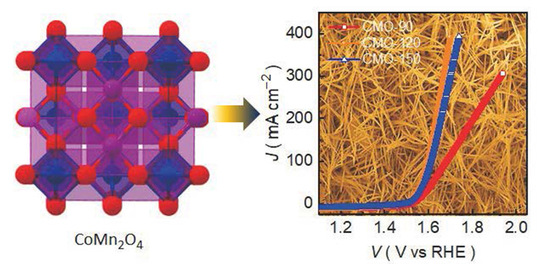
The development of efficient and durable oxygen evolution reaction (OER) catalysts from earth-abundant materials is essential for advancing alkaline water electrolysis. Herein, nanograss-like CoMn2O4 electrode films are directly grown on stainless-steel substrates via a temperature-controlled hydrothermal approach, and their OER performance is systematically investigated. The CoMn2O4 obtained at 120 °C (CMO-120) delivers the best catalytic activity in 1.0 M KOH, requiring an overpotential of 292 mV at 10 mA cm−2, which is lower than those synthesized at 150 (CMO-150) and 90 °C (CMO-90). Notably, activity of CMO-120 becomes even more pronounced at elevated current densities, achieving the low overpotential of 434 mV even at 300 mA cm−2, substantially outperforming both CMO-90 and CMO-150 electrodes. The enhanced activity is attributed to an interconnected nanograss architecture with mixed Co2+/Co3+ and Mn2+/Mn3+ redox couples and abundant defect-related oxygen species, which result in increased electrochemically active surface area and improved charge transportation throughout the nanograss architecture that facilitate OH adsorption and OER intermediate transformation. Furthermore, CMO-120 demonstrates excellent durability (100 h) after electro-oxidation-induced surface activation. These findings highlight precise temperature regulation as an effective strategy for optimizing Mn-Co spinel for efficient alkaline OER applications.

Graphical Abstract

1. Introduction

The global transition toward a sustainable energy infrastructure has intensified the demand for efficient, cost-effective, and durable technologies for renewable hydrogen production [1]. Among electrochemical water-splitting processes, the oxygen evolution reaction (OER) remains a major performance bottleneck due to its intrinsically sluggish four-electron transfer mechanism and the high overpotentials required to drive the reaction [2,3]. Consequently, the development of electrocatalysts that can accelerate OER kinetics while maintaining structural and electrochemical stability under high-current operation is essential for advancing electrolyzer efficiency in both industrial and renewable energy systems [4]. Although noble metal oxides such as IrO2 and RuO2 are widely regarded as benchmark OER catalysts because of their high intrinsic activity, their scarcity and high cost severely limit large-scale practical deployment [5,6]. This challenge has driven extensive research into earth-abundant transition-metal-based materials, including oxides, hydroxides, sulfides, and spinel structures, which offer competitive catalytic performance with improved economic viability [7].
Within this context, spinel oxides (AB2O4), where A and B are transition-metal cations, have attracted significant attention as promising OER electrocatalysts owing to their tunable electronic structures, compositional flexibility, and relatively high electrical conductivity among non-noble catalysts [8,9,10]. By modulating the type and distribution of metal cations at tetrahedral (A) and octahedral (B) sites, the surface redox behavior and charge-transport properties of spinel oxides can be systematically tailored to optimize active-site availability and reaction kinetics [11]. For example, Grimaud et al. demonstrated that tuning B-site occupancy in Co-based spinel modulates metal–oxygen covalency, which directly correlates with enhanced OER activity [12]. Similarly, Suntivich et al. established that the intrinsic OER activity of AB2O4 spinel is governed by the electronic configuration of octahedrally coordinated B-site cations, providing a fundamental descriptor for rational catalyst design [13]. Furthermore, Ya et al. showed that temperature-regulated surface engineering of MgCo2O2 spinel effectively alters surface valence states and composition, leading to a marked reduction in OER overpotential [14]. Complementary theoretical and in situ studies have also revealed that structural parameters such as oxygen-vacancy concentration, cation distribution, and metal–oxygen bond covalency play critical roles in governing OER activity in spinel systems [15].
Among earth-abundant transition-metal-based electrocatalysts, Mn- and Co-based materials have been extensively investigated for OER owing to their rich redox chemistry, favorable stability in alkaline media, and low cost [16]. Cobalt-based oxides and (oxy)hydroxides exhibit high intrinsic OER activity due to reversible Co2+/Co3+ redox transitions and strong metal–oxygen covalency that facilitates adsorption of oxygenated intermediates [17]. Manganese-based catalysts, inspired by the Mn4Ca cluster in natural photosystem II, offer excellent structural robustness and multivalent redox behavior (Mn2+/Mn3+), contributing to long-term durability under anodic polarization [12,18]. The integration of Co and Mn into bimetallic systems enables synergistic electronic interactions and charge redistribution between the two metal centers, optimizing adsorption energies of OER intermediates and thereby enhancing catalytic kinetics beyond those of single-metal counterparts [19,20,21,22,23,24]. In addition to composition, catalyst morphology plays a decisive role in determining OER performance. Morphological engineering has emerged as an effective strategy to increase electrochemically active surface area, shorten ion-diffusion pathways, and improve electron transport [25]. In particular, one-dimensional (1D) nanostructures such as nanowires and nanorods offer distinct advantages, including continuous electron-conduction pathways, high aspect ratios, and abundant exposed active sites, which collectively promote faster charge transfer and improved catalytic efficiency compared with bulk, nanoparticle, or dense film morphologies [26,27,28].
Despite these advances and the growing literature on CoMn2O4 spinel electrocatalysts for alkaline OER, existing studies have largely focused on compositional tuning or post-treatment strategies, while the direct and systematic correlation between hydrothermal growth temperature and high-current OER performance remains insufficiently explored [29,30,31]. In particular, how temperature-regulated nucleation and anisotropic growth govern the formation of vertically aligned nanograss architectures and their impact on charge-transfer kinetics and long-term stability is still not well understood. In this work, we address this gap by directly growing CoMn2O4 electrode films on stainless-steel substrates via a temperature-controlled hydrothermal route without templates or binders, enabling precise modulation of nanograss morphology through reaction temperature alone. By comparatively investigating samples synthesized at different temperatures, we demonstrate that optimized nanograss-like architectures significantly enhance OER activity not only at conventional current densities (10 mA cm−2) but also under practically relevant high-current operation (up to 300 mA cm−2). Furthermore, the study elucidates the role of temperature-induced phase evolution toward surface oxyhydroxide species during initial activation and its contribution to sustained catalytic durability. These findings establish temperature-guided morphology engineering as an effective and scalable strategy for unlocking the full OER potential of Mn-Co spinel oxides, providing new insight into the rational design of robust, high-rate oxygen evolution electrodes.

2. Materials and Methods

2.1. Materials

Urea (CO(NH2)2), potassium hydroxide (KOH, ≥85%), manganese(II) nitrate hydrate (Mn(NO3)2·xH2O), ethanol (CH3CH2OH, ≥95%), and cobalt(II) nitrate hexahydrate (Co(NO3)2·6H2O) were purchased from Sigma-Aldrich (St. Louis, MO, USA) and used as received without any further purification. Deionized water prepared in the laboratory was used for all solution preparations and in washing processes. Commercial stainless-steel substrates were employed as the conductive supports for the hydrothermal growth of the electrode films.

2.2. Synthesis of CoMn2O4 Electrodes

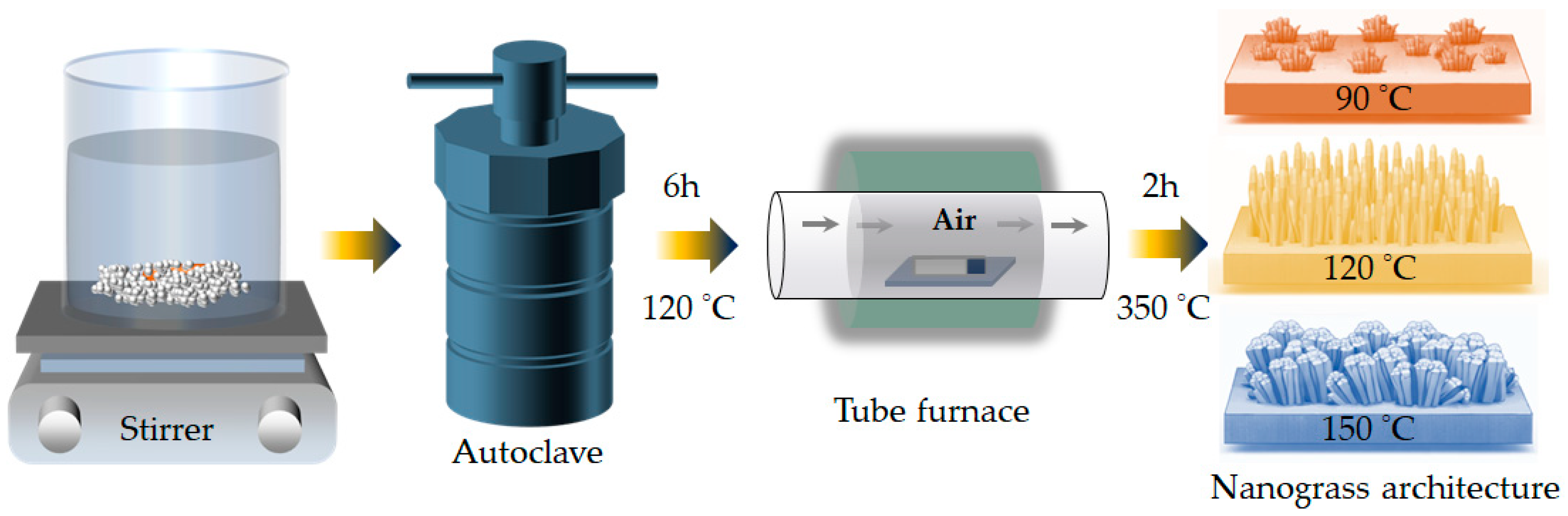
The CoMn2O4 (CMO) electrode films were synthesized via a hydrothermal deposition process directly on stainless-steel substrates. Prior to hydrothermal synthesis, the stainless-steel substrates were cut into appropriate dimensions (1 × 5 cm2) and mechanically roughened using successive grades of polishing paper to increase surface roughness and promote strong adhesion of the deposited catalyst layer. The roughened substrates were then thoroughly rinsed with deionized water to remove residual debris generated during polishing, followed by repeated rinsing with ethanol and deionized water. The cleaned substrates were finally dried in air and directly used for the hydrothermal growth of the CMO films (Figure 1). In a typical procedure, stoichiometric amounts of Co(NO3)3·6H2O and Mn(NO3)2·xH2O were dissolved in 50 mL of deionized water to maintain a Co:Mn molar ratio of 1:2, corresponding to the targeted CoMn2O4 spinel composition. Subsequently, 15 mmol of CO(NH2)2 was added as a homogeneous precipitation agent and the mixed solution was stirred until a clear and uniform precursor solution was obtained. The precursor solution was transferred into a Teflon-lined stainless-steel autoclave and the pretreated stainless-steel substrates were placed vertically in the solution with the polished surface facing inward. The autoclave was sealed and maintained at 120 °C for 6 h to obtain the CoMn2O4 electrode. After completion of the hydrothermal reaction, the autoclave was allowed to cool naturally to room temperature. The substrates were removed and thoroughly rinsed with deionized water to eliminate residual reactants and dried at 80 °C overnight in a vacuum oven. The as-deposited precursor films were subsequently annealed in an air atmosphere at 350 °C for 2 h with a heating rate of 2 °C min−1 to obtain the crystalline CoMn2O4 spinel structure and denoted as CMO-120. After annealing, the electrodes were allowed to cool naturally to room temperature and were directly used for further characterization and electrochemical evaluation. During the hydrothermal process, the gradual thermal decomposition of urea provides a controlled supply of hydroxide (OH) ions:
CO(NH2)2 + H2O → 2NH3 + CO2,
CO2 + 2(OH) → (CO3)2− + H2O,
NH3 + H2O ⇌ (NH4)+ + (OH)
The gradual release of OH ensures homogeneous nucleation and uniform growth of precursor species on the stainless-steel substrate:
Co(NO3)2 → Co2+ + 2(NO3),
Mn(NO3)2 → Mn2+ + 2(NO3),
Co2+ + (CO3)2− + 2(OH) → Co(OH)2(CO3),
Mn2+ + (CO3)2− + 2(OH) → Mn(OH)2(CO3)
This mixed hydroxide precursor uniformly covers the substrate surface due to heterogeneous nucleation on the stainless-steel surface and upon annealing the hydroxide precursor undergoes dehydration and oxidation, leading to spinel CoMn2O4 formation, as follows:
Co(OH)2(CO3) + 2Mn(OH)2(CO3) → CoMn2O4 + 3CO2 + O2 + 3H2O
To investigate the influence of synthesis temperature on crystal growth, morphology evolution, and electrocatalytic properties, the hydrothermal deposition was further carried out at elevated temperatures of 150 °C and 90 °C under the identical experimental conditions, and the obtained films were denoted as CMO-150 and CMO-90, respectively. Increasing the hydrothermal temperature is expected to accelerate nucleation and growth kinetics, modify particle coalescence and crystallinity, and thereby influence the structural and electrochemical characteristics of the resulting CoMn2O4 electrodes.

2.3. Material Characterization

The crystalline phase and structural identification of the synthesized CoMn2O4 electrode were examined using the X-ray diffraction (XRD) technique with the help of Rigaku Smartlab instrument (Rigaku, Tokyo, Japan) (operational voltage of 40 kV and current of 30 mA). The XRD spectrum was recorded with a Cu Kα radiation source (λ = 1.5406 Å) over an 2θ spectral range of 15–70° at a scan rate of 2° min−1. The surface morphology and microstructural features of the electrodes were analyzed by field-emission scanning electron microscopy (FESEM) using the JEOL JSM-6701F instrument (JEOL, Tokyo, Japan). Elemental composition was further verified using energy-dispersive X-ray spectroscopy (EDX) detector (Bruker AXS Microanalysis GmbH, Berlin, Germany) attached to the FESEM system. The surface chemical states and electronic structure of the electrodes were investigated by X-ray photoelectron spectroscopy (XPS) using a ULVAC PHI 5000 VersaProbe instrument (ULVAC-PHI, Inc., Chigasaki, Japan). High-resolution spectra of Co 2p, Mn 2p, and O 1s regions were recorded to determine oxidation states, metal–oxygen bonding environments, and the presence of defect-related oxygen species. All binding energies were calibrated using the contaminant carbon (C 1s) peak at 284.51 eV as a reference.

2.4. Catalytic OER Activity

The OER performance of the CoMn2O4 electrodes were evaluated using a standard three-electrode electrochemical configuration connected to an electrochemical workstation (VersaSTAT, Ametek Scientific Instruments, Berwyn, PA, USA). The formed CoMn2O4 electrode films grown on stainless-steel substrates were used as the working electrodes. A platinum mesh and a saturated calomel electrode (SCE, occupied with the saturated KCl solution) were employed as the counter and reference electrodes, respectively. All electrochemical measurements were conducted in 1.0 M KOH aqueous electrolyte at room temperature. The linear sweep voltammetry (LSV) curves were carried out at a scan rate of 1.0 mV s−1 in the potential window of 0.0 to 1.3 V (vs. SCE). The measured potentials were converted to the reversible hydrogen electrode (RHE) scale according to the following equation [32]:
ERHE = ESCE° + ESCE + (pH × 0.059),
where ERHE is the converted potential in RHE scale. ESCE and ESCE° are the obtained potential in SCE scale and the standard potential of reference electrode at an ambient room temperature. To eliminate ohmic losses, all the obtained polarization curves were corrected for solution resistance using iR-compensation (J·RS correction), where RS was obtained from electrochemical impedance spectroscopy (EIS) analysis. The OER overpotential (η) was determined from the iR-compensated polarization curves by subtracting the thermodynamic OER potential (1.23 V vs. RHE) from the applied potential required to reach a given current density using the following equations [22]:
ERHE (J·RS correction) = ERHE − (J·RS),
η = ERHE (J·RS correction) − 1.23,
Thereafter, the Tafel slopes were derived from the linear region of the corresponding Tafel plots (η vs. log J) to analyze the reaction kinetics, which is expressed by the following equation [33]:
η = a + (b × log(J)),
where a and b are the arbitrary constant and Tafel slope of the curve, respectively. The electrochemical impedance spectroscopy measurements were carried out at the OER operating potential over a frequency range of 10 mHz to 10 kHz with an AC amplitude of 10 mV to evaluate charge-transfer resistance and interfacial kinetics. The impedance data were fitted using an equivalent circuit model to assess the solution resistance and charge transfer resistance (Rct). Further, the electrochemically active surface area (ECSA) was estimated by measuring the double-layer capacitance (Cdl) from cyclic voltammetry (CV) recorded in a non-faradaic potential region at various scan rates (10–50 mV s−1). The ECSA was then calculated using the following equation:
ECSA = Cdl/Ce,
where Ce is the specific capacitance of a smooth surface in alkaline electrolyte. The long-term electrochemical stability of the optimized electrode was assessed by chronopotentiometry test at a constant applied current density 100 mA cm−2 for an extended duration of 100 h. All measurements were repeated to ensure the reproducibility of the OER activity.

3. Results

3.1. Morphological and Compositional Properties of CoMn2O4 Electrode Films

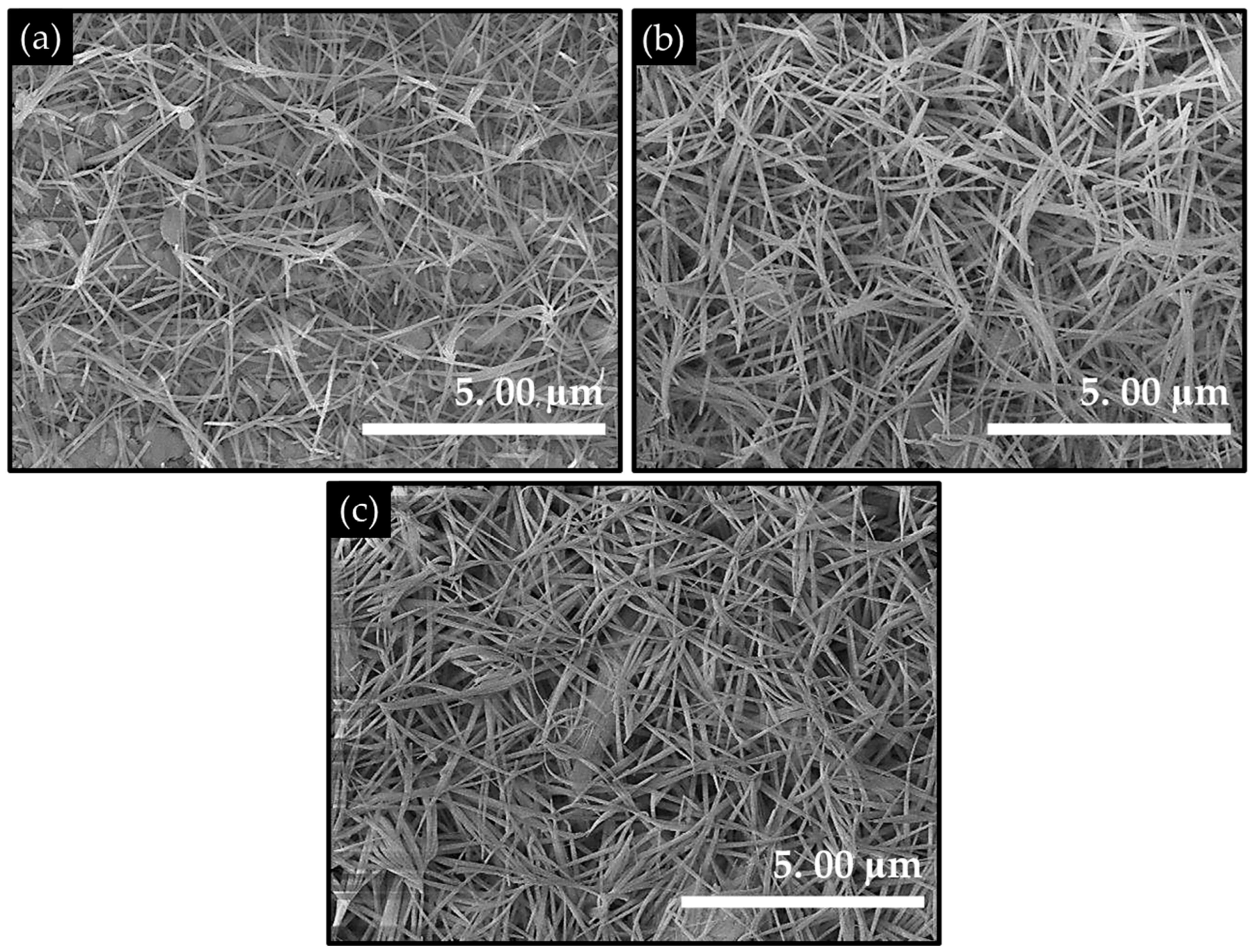
The FESEM imaging was employed to examine the effect of hydrothermal synthesis temperature on nanoscale growth behavior, surface texture, and film coverage on the stainless-steel substrate. As shown in Figure 2, all samples exhibit a distinct one-dimensional nanograss-like architecture uniformly grown on the stainless-steel substrate, indicating effective heterogeneous nucleation and strong substrate adhesion induced by surface roughening. The FESEM image of CMO-90 film (Figure 2a) shows that the electrode surface is covered with relatively thin and sparsely packed nanograss structures, reflecting the early stage of nucleation and limited growth kinetics at lower hydrothermal temperature. The nanograss architectures are non-uniform in the distribution with noticeable gaps between the adjacent structures. This incomplete coverage suggests insufficient precursor decomposition and slower ion diffusion, which restrict the vertical growth and lateral interconnection of nanostructures. Upon increasing the synthesis temperature (CMO-120, Figure 2b), a well-defined, dense, and highly interconnected nanograss network is formed. The nanograss structures are uniformly distributed across the substrate, exhibiting high aspect ratios with typical lengths in the range of ~1.3–3.9 µm and an average diameter of ~40–70 nm. The nanograss intersect and overlap to each other creating an open yet mechanically robust framework. This morphology maximizes surface exposure, generates abundant edge and tip sites, and forms continuous ion-transport channels throughout the electrode. The homogeneous growth and optimal density of nanograss in CMO-120 film indicate a balanced nucleation-growth process, where enhanced thermal energy promotes controlled anisotropic growth without inducing excessive aggregation. In contrast, the CMO-150 film (Figure 2c) exhibits the signs of overgrowth and partial structural congestion. Although the nanograss morphology is preserved, the structures appear thicker and more densely stacked, with slightly reduced intergrass spacing. The excessive growth at higher temperature likely accelerates precursor decomposition and crystal growth rates, leading to coalescence and partial loss of accessible surface area. This densification can impede the electrolyte penetration and gas diffusion, which may adversely affect electrochemical performance. The formation of the nanograss architecture can be attributed to urea-assisted slow OH and CO32− release, enabling gradual co-precipitation of the Co-Mn hydroxy-carbonate species on the stainless-steel surface. The roughened substrate provides abundant nucleation sites, while temperature-controlled hydrothermal conditions govern the anisotropic growth of one-dimensional nanostructures. At 120 °C, the growth kinetics are optimized to favor the vertical elongation and uniform distribution, whereas excessive thermal energy at 150 °C induces rapid growth and structural densification.
The EDX analysis was performed to verify the elemental composition and confirm the successful incorporation of Co and Mn within the CoMn2O4 nanograss electrodes grown on stainless-steel substrates. For all the electrode films, the EDX spectra clearly show the presence of Co, Mn, and O, confirming the formation of cobalt–manganese oxide-based films. The Co and Mn signals observed for CMO-90 film (Figure S1a) confirm that the nanograss layer formed even at the lowest hydrothermal temperature. However, the relatively weaker Co/Mn intensities are attributed to the lower surface coverage and thinner deposited layer, which are in agreement with the FESEM results. With increasing the synthesis temperature to 120 °C (CMO-120, Figure S1b), the EDX spectrum exhibits more pronounced Co and Mn signals, which are consistent with the dense and interconnected morphology. Importantly, the Co:Mn atomic ratio estimated from the EDX analysis remains close to the targeted 1:2 stoichiometric ratio, supporting the intended CoMn2O4 composition. For CMO-150 film (Figure S1c), the Co and Mn peaks remain evident, confirming retention of the Co-Mn oxide phase at higher synthesis temperature. The comparatively stronger overall oxide-related signal is consistent with increased growth and densification of the nanograss layer at elevated temperature. Overall, the EDX spectral analysis confirms the successful deposition of Co-Mn-O electrodes on stainless steel and support that the compositional integrity is maintained across the temperature series, enabling reliable comparison of morphology–performance relationships.

3.2. Crystallographic and Bonding Properties of CoMn2O4 Electrode Film

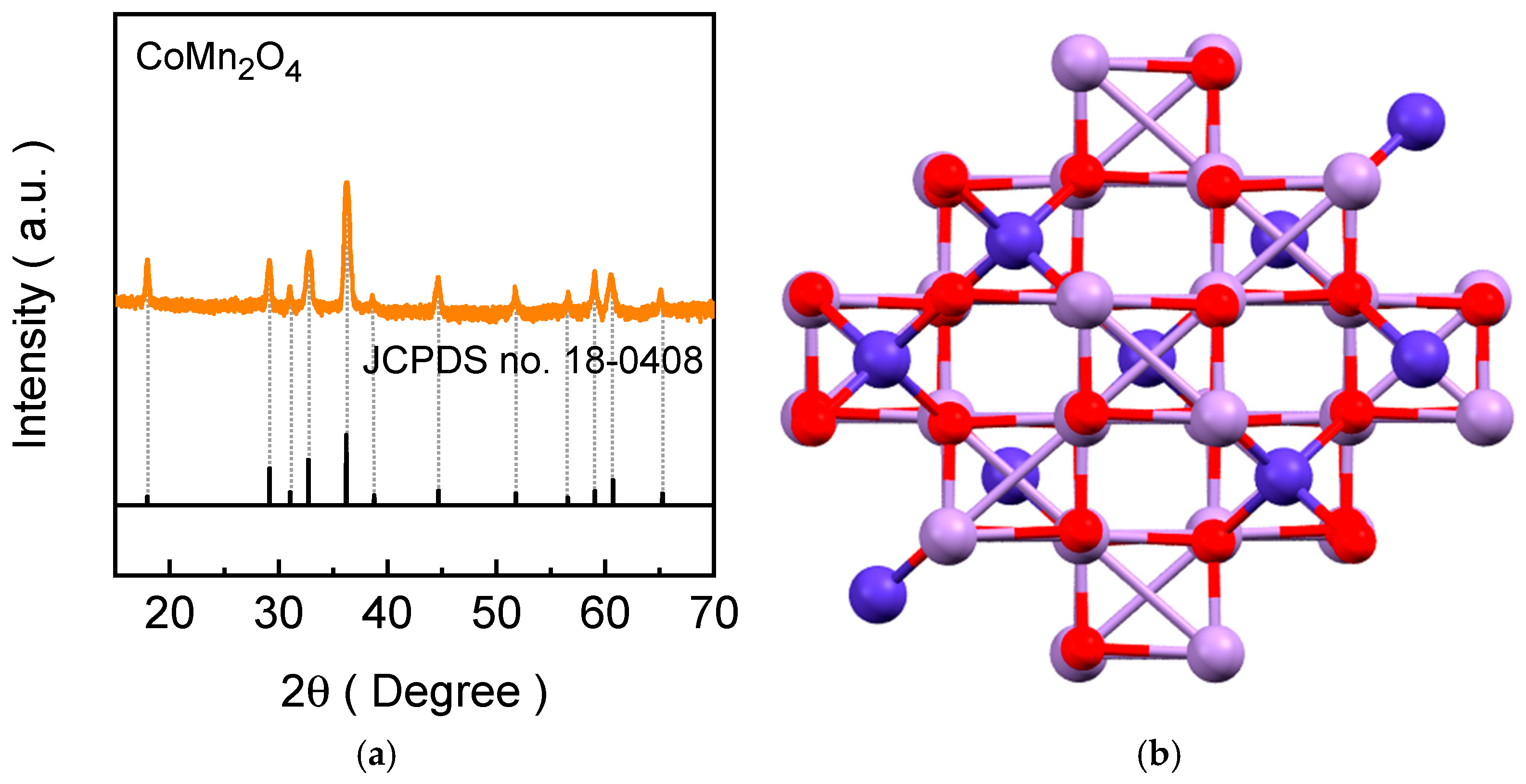
The crystal structure and phase purity of the synthesized CoMn2O4 electrode was investigated by the XRD spectral analysis (Figure 3). The XRD pattern of the CMO-120 film (Figure 3a) exhibits a series of characteristic diffraction peaks, matching well with the reference JCPDS card No. 18-0408, which can be indexed to the tetragonal spinel CoMn2O4 phase. The distinct diffraction peaks located at approximately 2θ ≈ 18.9°, 31.2°, 36.8°, 44.7°, 59.2°, and 65.1° correspond to the (111), (220), (311), (400), (511), and (440) crystallographic planes of spinel CoMn2O4, respectively. These reflections are in good agreement with the characteristic crystallographic planes of tetragonally distorted CoMn2O4, confirming the successful phase formation. Importantly, no additional peaks related to secondary cobalt or manganese oxide phases are detected, indicating the high phase purity of the synthesized electrode. Figure 3b illustrates the crystal structure of tetragonal CoMn2O4, highlighting the cation arrangement within the distorted spinel lattice. In this structure, Co2+ ions primarily occupy the tetrahedral sites, while Mn3+ ions are located at the octahedral sites, coordinated by oxygen atoms. The tetragonal distortion, compared to an ideal cubic spinel, originates from the Jahn-Teller activity of Mn3+, which elongates the MnO6 octahedra along the c-axis and lowers the symmetry. This structural distortion modifies the metal-oxygen bond lengths and electronic environment, which is known to influence redox behavior and catalytic activity during the oxygen evolution reaction. The excellent agreement between the experimental XRD pattern and the tetragonal crystal model confirms that the hydrothermal synthesis followed by mild annealing yields a structurally well-defined tetragonal CoMn2O4 spinel. This crystallographic framework provides multiple redox-active Co and Mn centers and flexible metal–oxygen bonding, which are essential for facilitating oxygen evolution kinetics.

3.3. Chemical Bonding States of CoMn2O4 Electrode Film

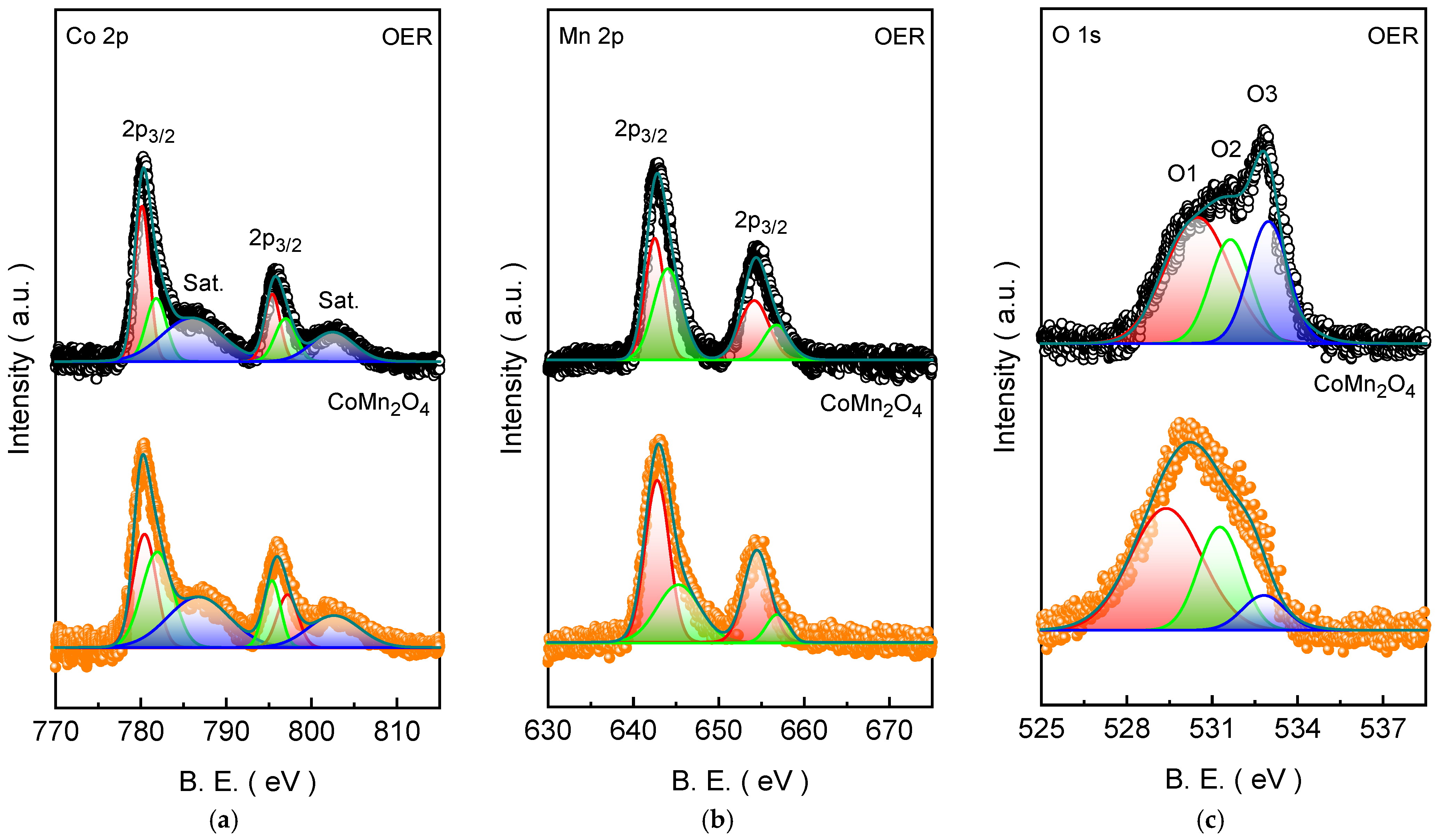
To investigate the surface electronic structure and oxidation states of the CoMn2O4 electrode film, detailed XPS analysis was performed. The spectrum confirms that Co, Mn, and O are the primary elements present along with the additional C 1s feature aroused from the contaminant carbon present inside the chamber. The absence of other impurity peaks indicates the high surface purity of the CoMn2O4 film. The high-resolution Co 2p spectrum of the CMO-120 film (Figure 4a) exhibits the characteristic spin–orbit doublet of Co 2p3/2 and Co 2p1/2, together with two shake-up satellite features, confirming the presence of cobalt in a mixed oxidation environment typical of spinel oxides. The main Co 2p3/2 and Co 2p1/2 peaks are centered at 780.41 and 795.98 eV, respectively, giving a spin–orbit separation of ~15.6 eV, which is consistent with cobalt oxide lattices [29]. In addition, two pronounced satellite (Sat.) peaks located at 786.95 and 802.65 eV are clearly observed. The appearance of these satellites is a well-known fingerprint of Co2+ species due to final-state shake-up processes, indicating that Co2+ is present on the surface. To further resolve the cobalt chemical states, the Co 2p spectrum was deconvoluted into multiple components. The Co 2p3/2 region can be fitted with two peaks at 780.42 and 781.94 eV, which are assigned to Co3+ and Co2+, respectively. Similarly, the Co 2p1/2 region is deconvoluted into two corresponding components at 795.34 (Co3+) and 797.18 eV (Co2+). The coexistence of Co3+ and Co2+ strongly supports the formation of a spinel-type Co-Mn oxide, where cobalt typically occupies tetrahedral coordination environments. This mixed Co3+/Co2+ surface chemistry is highly advantageous for alkaline OER because cobalt centers can readily undergo oxidation to higher-valence states under anodic polarization (e.g., Co2+ → Co3+/CoOOH-like species), which are widely regarded as the catalytically active forms during oxygen evolution [34]. Meanwhile, the presence of Co2+ (supported by the strong satellite intensity) implies enhanced redox flexibility and charge compensation within the lattice, which can facilitate electron transfer and promote the formation/turnover of oxygenated intermediates.
The high-resolution Mn 2p XPS spectrum (Figure 4b) shows two well-resolved spin–orbit split components at approximately 642.98 (Mn 2p3/2) and 654.46 eV (Mn 2p1/2), with a characteristic spin–orbit separation of ~11.5 eV. These binding energies and the spectral shape are consistent with manganese oxide environments in mixed oxidation states [35]. The deconvolution of the Mn 2p3/2 and Mn 2p1/2 peak reveals two distinct doublets located at 642.82 and 654.41 eV (Mn2+) and 645.30 eV and 656.84 eV (Mn3+), respectively. The presence of both Mn2+ and Mn3+ indicates that manganese exists in a mixed valence state in the CoMn2O4 structures. This analysis aligns with earlier reports on manganese-containing spinel oxides, where the electronic configuration of Mn2+ (3d5) and Mn3+ (3d4) in the octahedral environment of the spinel facilitates redox flexibility and can strongly influence catalytic behavior [36]. Further, the Mn2+ sites are often associated with lower binding energies due to a higher electron density around the Mn center, whereas Mn3+ features arise at higher binding energies due to increased effective nuclear charge and partial oxidation [37]. The coexistence of Mn2+ and Mn3+ in CMO-120 film suggests a balanced redox environment where both oxidation states can participate in electron exchange during OER, potentially enhancing catalytic turnover [38]. Moreover, the presence of mixed Mn valence states can influence the degree of lattice distortion and facilitate oxygen vacancy formation, which are known to promote OH adsorption and O-O bond formation under alkaline conditions [39]. The high-resolution O 1s XPS spectrum of the CMO-120 film (Figure 4c) provides detailed insight into the oxygen chemical environments present at the surface. As shown in the deconvoluted spectrum, the O 1s spectrum can be deconvoluted into three components centered at 529.39 eV (38.71%), 531.24 eV (34.33%), and 532.80 eV (26.96%), which are assigned to lattice oxygen, defect-related oxygen species (associated with oxygen vacancies), and surface-adsorbed oxygen species, respectively. The coexistence of lattice oxygen and a substantial fraction of defect-related oxygen vacancy suggests that the formed electrode surface combines structural stability with chemical reactivity [40]. In particular, oxygen vacancies and hydroxylated oxygen species can enhance OH adsorption and facilitate surface reconstruction under anodic polarization, which is widely recognized as a key step toward the formation of catalytically active oxyhydroxide-like intermediates during the oxygen evolution reaction [41,42].

3.4. Electrochemical Properties of the CoMn2O4 Electrode Films

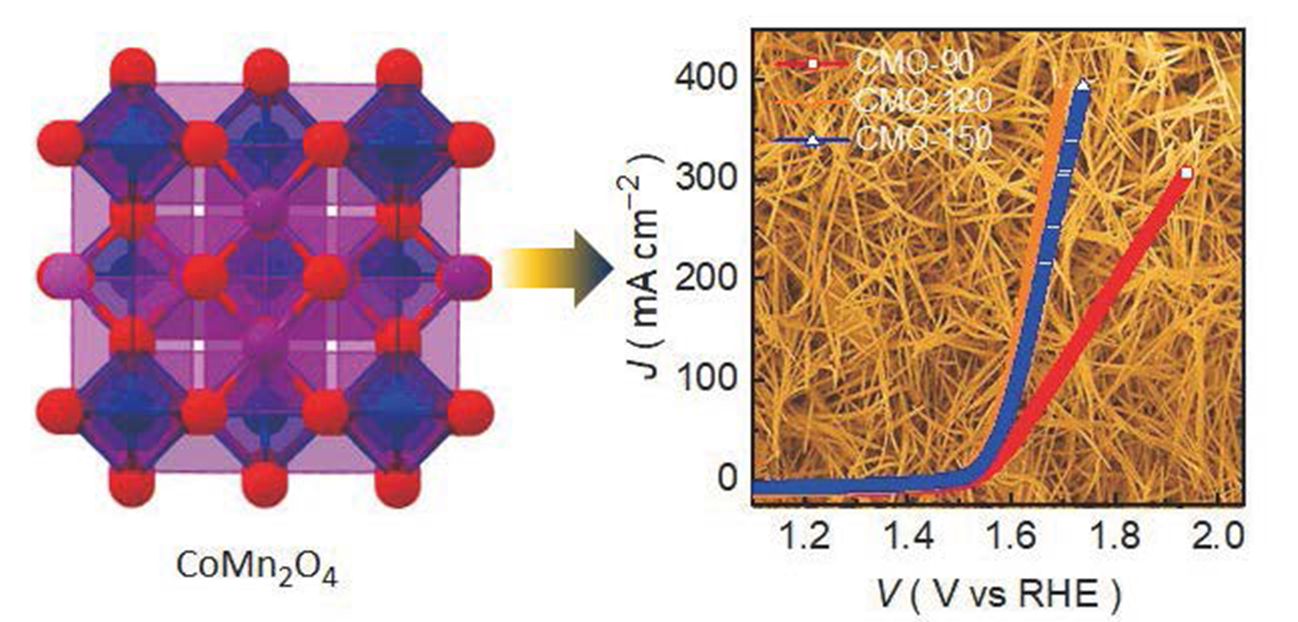
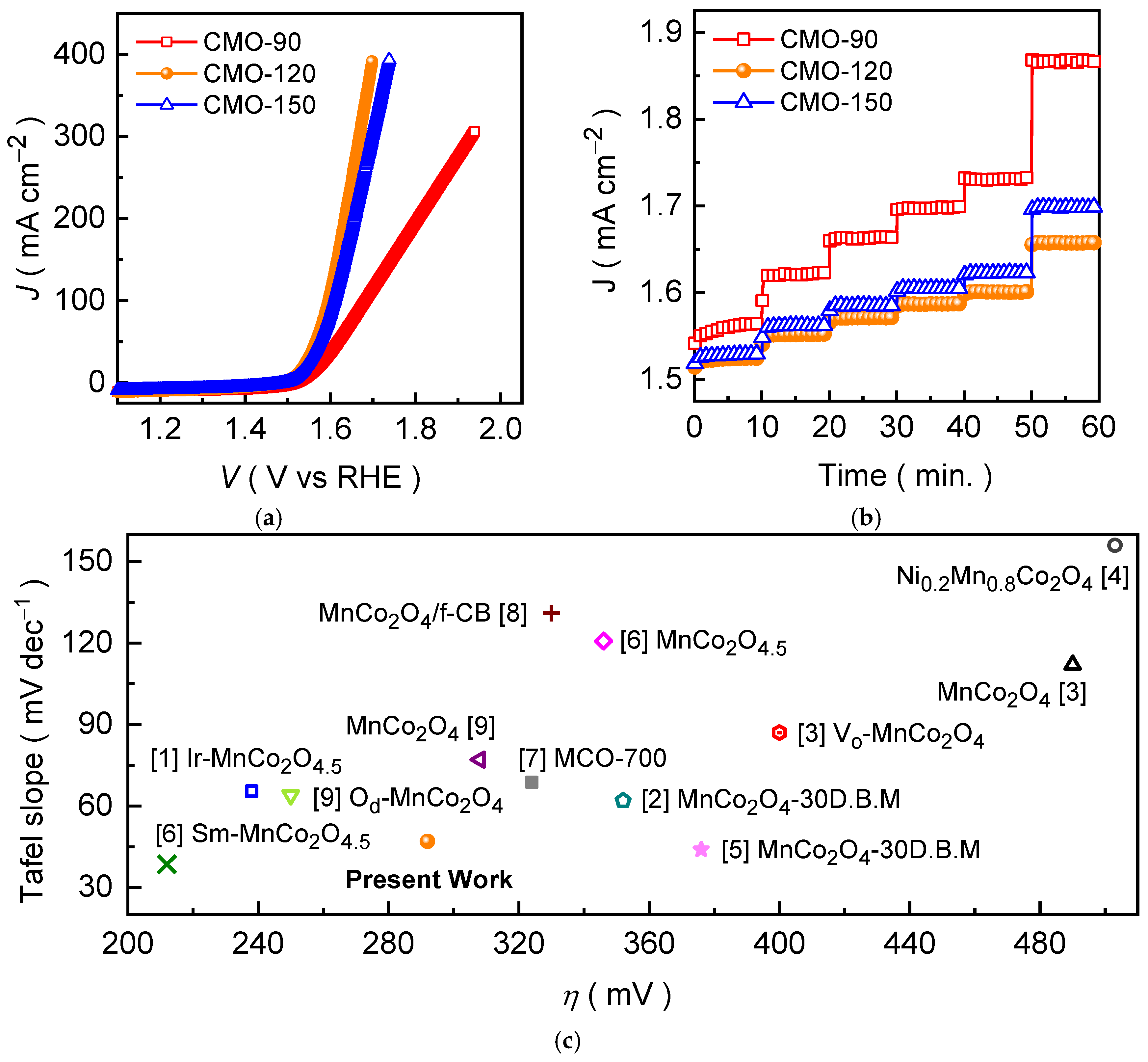
The electrochemical OER activities of the synthesized CoMn2O4 electrodes were systematically evaluated in an alkaline 1.0 M KOH medium using the LSV curves benchmarking to comprehensively assess their catalytic efficiencies and practical viability. Figure 5a presents the iR-compensated LSV curves of CMO-90, CMO-120, and CMO-150 electrodes recorded at a scan rate of 1 mV s−1. All electrodes exhibit typical onset behavior associated with alkaline oxygen evolution, showing negligible current in the pre-OER region followed by a rapid increase in anodic current with increasing potential. A clear distinction in catalytic response emerges among the synthesized electrodes, as the CMO-120 electrode consistently requiring lower overpotentials to achieve the same current density compared with the CMO-90 and CMO-150 electrodes. The CMO-120 electrode attains the current densities of 10, 20, 50, 100, and 300 mA cm−2 to achieve the overpotentials of 292, 307, 332, 363, and 434 mV. Whereas the CMO-90 and CMO-150 electrodes require the overpotentials of 321, 344, 387, 454, and 763 mV and 298, 313, 349, 382, and 470 mV, respectively, to drive the same current densities. The systematic downward shift in overpotential from CMO-90 to CMO-120 establishes that moderate hydrothermal heating optimizes the catalyst structure and surface accessibility, while excessive temperature (CMO-150) offers diminished returns due to morphological compaction. The enhanced OER performance of CMO-120 electrode can be attributed to the synergistic interplay between its optimized morphology and surface electronic structure, as revealed by FESEM, XPS, and ECSA (Figure S2) analyses. The well-developed, interconnected nanograss architecture provides a large population of electrochemically accessible active sites, as reflected by its increased double-layer capacitance, while maintaining open pathways for electrolyte transport and oxygen release. Concurrently, the coexistence of mixed cobalt (Co2+/Co3+) and manganese (Mn2+/Mn3+) oxidation states, together with a significant contribution of defect-related oxygen species, creates a redox-flexible surface that facilitates hydroxide adsorption and stabilizes key OER intermediates. In contrast, the limited surface development of CMO-90 electrode restricts active-site utilization, whereas the excessive growth and partial structural compaction observed for CMO-150 electrode impede mass transport and charge transfer. These combined factors lead to comparatively higher overpotentials and slower reaction kinetics for CMO-90 and CMO-150 electrodes, underscoring the importance of balanced structural and electronic optimization achieved in CMO-120 electrode.
To evaluate the dynamic response and operational stability of the electrodes under progressively increasing current density, a chronopotentiometric step-current test was employed (Figure 5b). Each electrode was subjected to sequential current density increments and the applied current density was constantly maintained for about 10 min to attain a quasi-steady potential. Interestingly, the CMO-120 electrode consistently maintains the lowest potential plateau at each operating current density compared to the CMO-90 and CMO-150 electrodes, reflecting the reduced polarization losses and more efficient charge-transfer kinetics under sustained electrochemical loading. Whereas the CMO-90 electrode exhibits pronounced potential increment with rising current density, indicative of greater kinetic resistance and mass-transport limitations at higher reaction rates. Furthermore, the smooth potential evolution and minimal rise in the overpotential value observed for CMO-120 electrode during current transitions signify a well-balanced electrode–electrolyte interface. The interconnected nanograss morphology of CMO-120 promotes rapid electrolyte permeation, homogeneous current distribution, and efficient removal of oxygen bubbles from the catalyst surface, thereby mitigating concentration polarization and ensuring stable operation even at elevated current densities. For a comparative assessment, the OER activity of the CMO-120 electrode was benchmarked against the Mn-Co spinel and other transition-metal oxides reported for OER in the recent literature (Figure 5c), revealing the reasonably comparative catalytic activity of the CMO-120 electrode with previously reported catalyst electrodes, particularly when both activity and sustained operational behavior are considered.
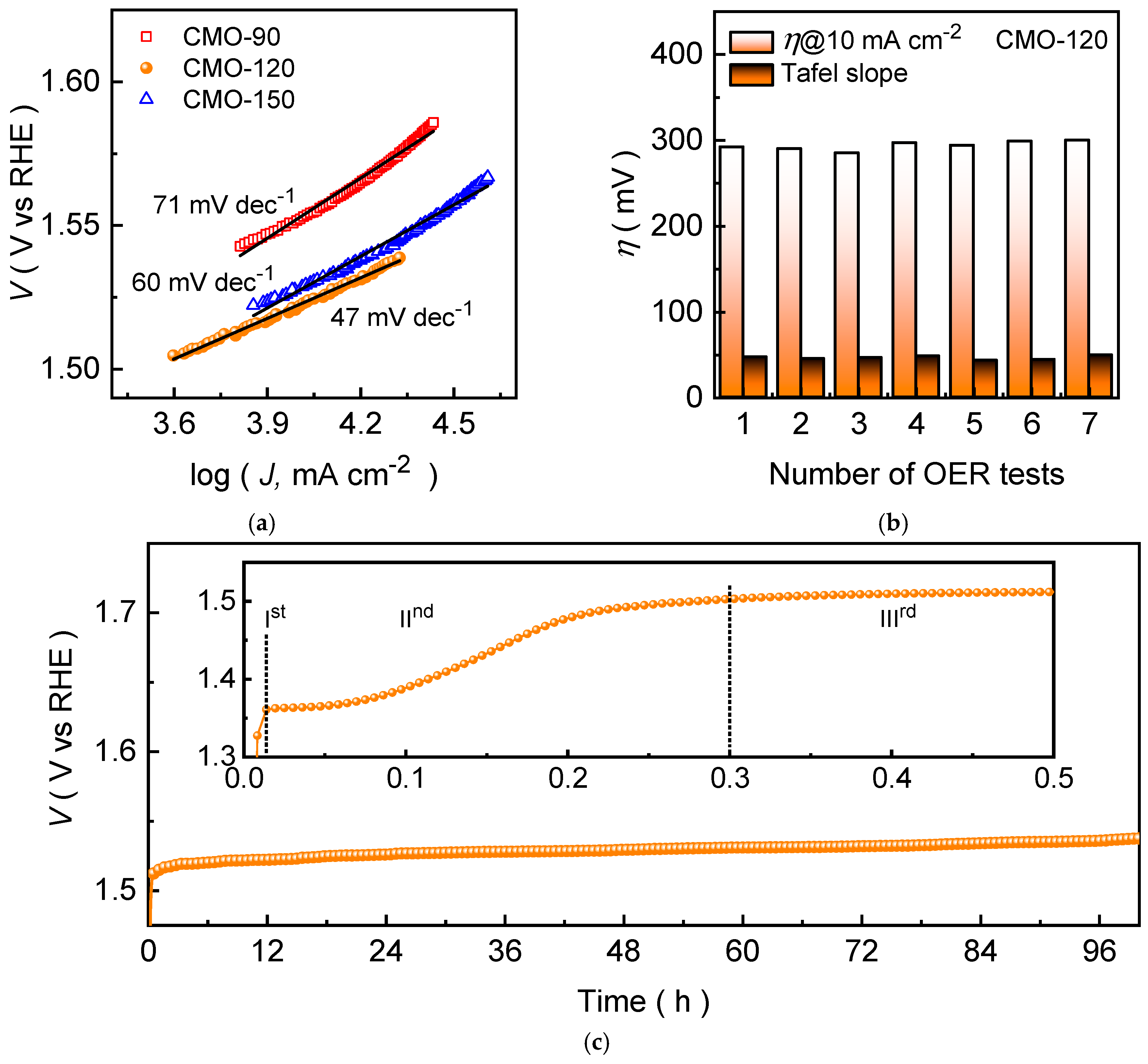
To further elucidate the intrinsic OER kinetics of the CoMn2O4 electrode films, Tafel plots were derived from the corresponding polarization curves (Figure 5a). A lower Tafel slope reflects the more favorable electrochemical reaction kinetics during the OER process. Among the all CoMn2O4 electrodes, the CMO-120 electrode (Figure 6a) exhibits the smallest Tafel slope of 47 mV dec−1, confirming the accelerated OER kinetics relative to CMO-190 (71 mV dec−1) and CMO-150 (60 mV dec−1). This kinetic advantage is a result of the optimized nanograss architecture of CMO-120, which promotes efficient electrolyte permeation and rapid gas release, while simultaneously providing improved charge-transfer pathways through a more continuous and electrochemically accessible network (Figures S2 and S3), and yields the most kinetically favorable CoMn2O4 electrode for alkaline OER. Thereafter, the reliability of the OER response was evaluated by comparing the OER performance examined under identical testing conditions (Figure 6b and Figure S4). The narrow dispersion in the measured values indicates that the electrochemical behavior is highly reproducible, confirming that the hydrothermal growth process produces consistent electrode films and stable catalyst–substrate electrical contact. Notably, CMO-120 maintains the most consistent performance, with minimal variation across repeated measurements, highlighting the robustness of its nanograss film architecture and its uniform electrochemical utilization. The improved reliability of CMO-120 also aligns with its steady polarization behavior, suggesting that its electrode structure sustains homogeneous current distribution and mitigates localized degradation during operation. The low variation in the measured electrochemical parameters across repeated OER tests demonstrates that all CoMn2O4 electrodes exhibit the high reproducibility and reliable catalytic behavior, confirming the consistency of the hydrothermal growth process.
The long-term durability of the optimized CMO-120 electrode was assessed by chronopotentiometric testing at a constant current density of 10 mA cm−2 for the prolonged duration of 100 h (Figure 6c). The potential-time profile exhibits an initial adjustment stage during the early period of electrolysis (in the inset of Figure 6c). This behavior is attributed to electro-oxidation-driven surface reconstruction, a well-recognized phenomenon in transition-metal-based OER catalysts under alkaline conditions. During this activation process, the surface of CoMn2O4 undergoes partial transformation into catalytically active Co/Mn (oxy)hydroxide species, accompanied by surface hydroxylation and redistribution of oxidation states. This analysis is in agreement with the post-stability measured XPS spectra (Figure 4), which reveals the increment in the Co3+/Mn3+ and O3 species after prolonged stability in alkaline KOH medium. The post-stability measured EDX spectrum (Figure S5a) further validates the XPS analysis, showcasing the improved concentration of oxygen species, which suggests that extra oxygen is contributed by the electrolyte [29]. Following this initial activation, the operating potential stabilizes and remains nearly constant throughout the 100 h continuous operation, which is consistent with the post-stability measured LSV curve (Figure S5b), demonstrating excellent electrochemical stability. The absence of significant potential alteration indicates that the reconstructed oxyhydroxide layer remains stable during prolonged OER, while the underlying CoMn2O4 framework preserves structural integrity and efficient electron transport.

4. Conclusions

In summary, nanograss-like CoMn2O4 electrode films were successfully grown directly on stainless-steel substrates via a temperature-controlled hydrothermal approach, and their structure–property–performance relationships for the alkaline OER were systematically investigated. Among the series of electrodes, the CMO-120 emerges as the optimal catalyst, delivering the lowest overpotentials over a wide current density range, favorable OER kinetics with a low Tafel slope of 47 mV dec−1, and excellent stability up to 100 h. The superior activity of CMO-120 electrode is primarily attributed to its optimized nanograss architecture, which provides a high electrochemically active surface area while preserving open pathways for electrolyte diffusion and the efficient oxygen bubble release. The EIS and ECSA analyses further confirm reduced charge-transfer resistance and an enhanced interfacial charge distribution, leading to accelerated reaction kinetics and minimized polarization losses. Further, the chronopotentiometric testing reveals an initial activation stage, attributed to electro-oxidation-induced surface reconstruction into catalytically active Co/Mn oxyhydroxide species, followed by a highly stable operating potential. This behavior demonstrates that the reconstructed surface remains electrochemically robust, while the underlying CoMn2O4 framework preserves structural integrity and efficient charge transport. Nonetheless, this work demonstrates that precise temperature control during hydrothermal growth is an effective and scalable strategy for tailoring the morphology, surface chemistry, and electrochemical behavior of Mn-Co spinel oxides, offering practical design guidelines for developing efficient, durable, and binder-free OER electrocatalysts for alkaline water electrolysis.

Supplementary Materials

The following supporting information can be downloaded at: https://www.mdpi.com/article/10.3390/ma19030542/s1, Figure S1: EDX spectra of (a) CMO-90, (b) CMO-120, and (c) CMO-150 electrode films; Figure S2: Scan rate dependent CV curves of the (a) CMO-90, (b) CMO-120, and (c) CMO-150 electrode films measured in non-Faradaic potential region at different scan rates. (d) “J versus v” plots obtained at 0.05 V (vs. SCE) from non-Faradaic CV curves to calculate the double-layer capacitance and ECSA; Figure S3: (a) Nyquist impedance curves and (b) Tank circuit used to fit the EIS curves of the electrode films; Figure S4: Reliability data of (a) CMO-90 and (b) CMO-150 electrodes measured for the series of sample at the same experimental conditions; Figure S5: (a) Post-stability measure EDX spectrum and (b) LSV curves for the CMO-120 electrode film.

Author Contributions

Visualization, writing—original draft preparation, conceptualization, software, methodology, investigation, writing—review and editing, A.T.A.A.; software, writing—review and editing, data curation, formal analysis, A.S.A.; formal analysis, software, data curation, visualization, supervision, resources, software, writing—original draft preparation, writing—review and editing, funding acquisition, project administration, A.J. and S.C. All authors have read and agreed to the published version of the manuscript.

Funding

This research was supported by the National Research Foundation (NRF) of Korea (Grant number: RS-2025-24683196).

Data Availability Statement

The original contributions presented in this study are included in the article/Supplementary Materials. Further inquiries can be directed to the corresponding author.

Acknowledgments

This research was supported by the NRF of Korea grant funded by the Korean government. The authors gratefully acknowledge the research facilities and support provided by Dongguk University, Republic of Korea.

Conflicts of Interest

The authors declare no conflicts of interest.

Abbreviations

The following abbreviations are used in this manuscript:
CMOCoMn2O4
EISElectrochemical impedance spectroscopy
OEROxygen evolution reaction
XPSX-ray photoelectron spectroscopy
LSVLinear sweep voltammetry
FESEMField-emission scanning electron microscopy
XRDX-ray diffraction
EDXEnergy-dispersive X-ray
CVCyclic voltammetry
RHEReversible hydrogen electrode
SCESaturated calomel electrode
RctCharge transfer resistance
RSSolution resistance
ηOverpotential
ECSAElectrochemically active surface area

References

  1. Hua, K.; Li, X.; Rui, Z.; Duan, X.; Wu, Y.; Yang, D.; Li, J.; Liu, J. Integrating Atomically Dispersed Ir Sites in MnCo2O4.5 for Highly Stable Acidic Oxygen Evolution Reaction. ACS Catal. 2024, 14, 3712–3724. [Google Scholar] [CrossRef]
  2. Pawłowska, S.; Lankauf, K.; Błaszczak, P.; Karczewski, J.; Górnicka, K.; Cempura, G.; Jasiński, P.; Molin, S. Tailoring a low-energy ball milled MnCo2O4 spinel catalyst to boost oxygen evolution reaction performance. Appl. Surf. Sci. 2023, 619, 156720. [Google Scholar] [CrossRef]
  3. Zeng, K.; Li, W.; Zhou, Y.; Sun, Z.; Lu, C.; Yan, J.; Choi, J.-H.; Yang, R. Multilayer hollow MnCo2O4 microsphere with oxygen vacancies as efficient electrocatalyst for oxygen evolution reaction. Chem. Eng. J. 2021, 421, 127831. [Google Scholar] [CrossRef]
  4. Khamsanga, S.; Khampuanbut, A.; Kheawhom, S.; Limphirat, W.; Uyama, H.; Pattananuwat, P. Defect Engineered Ni Doped MnCO2O4 Spinel Acts as Effective Bifunctional Electrocatalyst for Rechargeable Zinc-Air Batteries. ChemCatChem 2024, 16, e202301446. [Google Scholar] [CrossRef]
  5. Lankauf, K.; Górnicka, K.; Błaszczak, P.; Karczewski, J.; Ryl, J.; Cempura, G.; Zając, M.; Bik, M.; Sitarz, M.; Jasiński, P.; et al. Tuning of eg electron occupancy of MnCo2O4 spinel for oxygen evolution reaction by partial substitution of Co by Fe at octahedral sites. Int. J. Hydrogen Energy 2023, 48, 8854–8866. [Google Scholar] [CrossRef]
  6. Li, M.; Yang, J.; Li, S.; Deng, L.; Zhao, S.; Li, L.; Hung, S.-F.; Xing, G.; Wang, T.; Liang, Y.; et al. Rare-Earth-Induced Intermediate-Spin Co Centers in MnCo2O4.5 for Sustainable Acidic Water Oxidation. J. Am. Chem. Soc. 2025, 147, 45680–45690. [Google Scholar] [CrossRef]
  7. Rajore, S.M.; Satrughna, J.A.K.; Kanwade, A.R.; Mali, S.; Patil, J.V.; Hong, C.K.; Shirage, P.M. Unravelling Structural–Electronic Properties Correlation with Oxygen Evolution Reaction Activity of MnCo2O4 and Its Performance in Aluminum–Air Batteries. ACS Appl. Eng. Mater. 2025, 3, 4402–4418. [Google Scholar] [CrossRef]
  8. Chandrasekaran, S.; Vignesh, S.; Al-Sadoon, M.K.; Mythili, R.; Alagumalai, K.; Arumugam, E. MnCo2O4 Nanostructure Anchored on Functionalized Carbon Black for the Enhanced Bifunctional Electrocatalytic Performance of OER and HER. Luminescence 2024, 39, e70052. [Google Scholar] [CrossRef]
  9. Ahmed, A.T.A.; Sekar, S.; Khadtare, S.S.; Rochman, N.T.; Lee, S.; Kim, H.; Kim, D.Y.; Im, H.; Ansari, A.S. Facilitated catalytic surface engineering of MnCo2O4 electrocatalyst towards enhanced oxygen evolution reaction. J. Electroanal. Chem. 2023, 946, 117716. [Google Scholar] [CrossRef]
  10. Montalto, M.; Freitas, W.d.S.; Mastronardo, E.; Ficca, V.C.A.; Placidi, E.; Baglio, V.; Mosca, E.; Vecchio, C.L.; Gatto, I.; Mecheri, B.; et al. Spinel-type high-entropy oxides for enhanced oxygen evolution reaction activity in anion exchange membrane water electrolyzers. Chem. Eng. J. 2025, 507, 160641. [Google Scholar] [CrossRef]
  11. Shao, M.; Chang, Q.; Dodelet, J.-P.; Chenitz, R. Recent Advances in Electrocatalysts for Oxygen Reduction Reaction. Chem. Rev. 2016, 116, 3594–3657. [Google Scholar] [CrossRef]
  12. Grimaud, A.; May, K.J.; Carlton, C.E.; Lee, Y.-L.; Risch, M.; Hong, W.T.; Zhou, J.; Shao-Horn, Y. Double perovskites as a family of highly active catalysts for oxygen evolution in alkaline solution. Nat. Commun. 2013, 4, 2439. [Google Scholar] [CrossRef]
  13. Suntivich, J.; May, K.J.; Gasteiger, H.A.; Goodenough, J.B.; Shao-Horn, Y. A Perovskite Oxide Optimized for Oxygen Evolution Catalysis from Molecular Orbital Principles. Science 2011, 334, 1383–1385. [Google Scholar] [CrossRef]
  14. Ya, M.; Wang, J.; Li, G.; Gao, G.; Zhao, X.; Cui, J.; Wu, H.; Li, L. Surface Engineering in MgCo2O4 Spinel Oxide for an Improved Oxygen Evolution Reaction. ACS Sustain. Chem. Eng. 2023, 11, 744–750. [Google Scholar] [CrossRef]
  15. Calle-Vallejo, F.; Martínez, J.I.; García-Lastra, J.M.; Sautet, P.; Loffreda, D. Fast Prediction of Adsorption Properties for Platinum Nanocatalysts with Generalized Coordination Numbers. Angew. Chem. Int. Ed. 2014, 53, 8316–8319. [Google Scholar] [CrossRef]
  16. Roger, I.; Shipman, M.A.; Symes, M.D. Earth-abundant catalysts for electrochemical and photoelectrochemical water splitting. Nat. Rev. Chem. 2017, 1, 0003. [Google Scholar] [CrossRef]
  17. Dionigi, F.; Strasser, P. NiFe-Based (Oxy)hydroxide Catalysts for Oxygen Evolution Reaction in Non-Acidic Electrolytes. Adv. Energy Mater. 2016, 6, 1600621. [Google Scholar] [CrossRef]
  18. Dau, H.; Limberg, C.; Reier, T.; Risch, M.; Roggan, S.; Strasser, P. The Mechanism of Water Oxidation: From Electrolysis via Homogeneous to Biological Catalysis. ChemCatChem 2010, 2, 724–761. [Google Scholar] [CrossRef]
  19. Jiang, J.; Zhou, X.-L.; Lv, H.-G.; Yu, H.-Q.; Yu, Y. Bimetallic-Based Electrocatalysts for Oxygen Evolution Reaction. Adv. Funct. Mater. 2023, 33, 2212160. [Google Scholar] [CrossRef]
  20. Wang, G.-B.; Hsu, C.-S.; Chen, H.M. The individual role of active sites in bimetallic oxygen evolution reaction catalysts. Dalton Trans. 2020, 49, 17505–17510. [Google Scholar] [CrossRef]
  21. Shang, S.; Li, W.; Liu, S.; Zhang, L.; Tang, Q.; Ding, Y.; Li, C.; Sun, Y.; Wu, H. Bimetallic NiCo-MOF engineering on foam nickel for efficient oxygen evolution reaction in wide-pH-value water and seawater. Chem. Eng. J. 2024, 496, 154093. [Google Scholar] [CrossRef]
  22. Sekar, S.; Momin, M.M.; Ansari, A.S.; Cho, S.; Lee, Y.; Lee, S.; Ahmed, A.T.A. Unlocking the Cu-Co Interplay: Electrodeposited Spinel Co2CuO4 as a High-Performance Hydrogen Evolution Catalyst. Int. J. Mol. Sci. 2025, 26, 11226. [Google Scholar] [CrossRef]
  23. Barua, S.; Balčiūnaitė, A.; Upskuvienė, D.; Vaičiūnienė, J.; Tamašauskaitė-Tamašiūnaitė, L.; Norkus, E. Bimetallic Ni–Mn Electrocatalysts for Stable Oxygen Evolution Reaction in Simulated/Alkaline Seawater and Overall Performance in the Splitting of Alkaline Seawater. Coatings 2024, 14, 1074. [Google Scholar] [CrossRef]
  24. Zang, Y.; Lu, D.-Q.; Wang, K.; Li, B.; Peng, P.; Lan, Y.-Q.; Zang, S.-Q. A pyrolysis-free Ni/Fe bimetallic electrocatalyst for overall water splitting. Nat. Commun. 2023, 14, 1792. [Google Scholar] [CrossRef]
  25. Bodhankar, P.M.; Dhawale, D.S.; Giddey, S.; Kumar, R.; Sarawade, P.B. Well-defined hierarchical teddy bear sunflower-like NiCo2O4 electrocatalyst for superior water oxidation. Sustain. Energy Fuels 2022, 6, 5491–5502. [Google Scholar] [CrossRef]
  26. Xiang, R.; Wang, C.; Luo, W.; Gao, Q. Perspective on recent advances in self-supported electrodes with hierarchical structures for efficient and durable water electrolysis. Dalton Trans. 2025, 54, 17730–17753. [Google Scholar] [CrossRef] [PubMed]
  27. Zeng, Q.; Deng, N.; Wang, S.; Luo, S.; Wang, G.; Gao, H.; Li, Y.; Wang, H.; Cheng, B.; Kang, W. A Review of One-Dimensional Nanomaterials as Electrode Materials for Oxygen Reduction Reaction Electrocatalysis. ChemElectroChem 2022, 9, e202200946. [Google Scholar] [CrossRef]
  28. Wang, P.; Jia, T.; Wang, B. A critical review: 1D/2D nanostructured self-supported electrodes for electrochemical water splitting. J. Power Sources 2020, 474, 228621. [Google Scholar] [CrossRef]
  29. Chen, X.; Han, F.; Chen, X.; Zhang, C.; Gou, W. Cerium-Doped CoMn2O4 Spinels as Highly Efficient Bifunctional Electrocatalysts for ORR/OER Reactions. Catalysts 2022, 12, 1122. [Google Scholar] [CrossRef]
  30. Du, J.; Chen, C.; Cheng, F.; Chen, J. Rapid Synthesis and Efficient Electrocatalytic Oxygen Reduction/Evolution Reaction of CoMn2O4 Nanodots Supported on Graphene. Inorg. Chem. 2015, 54, 5467–5474. [Google Scholar] [CrossRef]
  31. Ashiq, M.F.; Abid, A.G.; Jabbour, K.; Fawy, K.F.; Alzahrani, H.A.; Ehsan, M.F. Increasing electrocatalytic efficiency of CuO/CoMn2O4 nanocomposite for oxygen evolution reaction. Ceram. Int. 2023, 49, 28071–28079. [Google Scholar] [CrossRef]
  32. Ahmed, A.T.A.; Ansari, A.S.; Nugroho, F.G.; Kim, J.; Im, H.; Cho, S. Electronic Structure Tuning of CoS2 via N-Heteroatom Doping for Efficient Oxygen Evolution Reaction Application. Int. J. Energy Res. 2025, 2025, 4507049. [Google Scholar] [CrossRef]
  33. Ahmed, A.T.A.; Mujtaba, M.M.; Ansari, A.S.; Cho, S. Binder-Free Spinel Co2CuO4 Nanosheet Electrodes with Cu-Driven Kinetic Enhancement for Alkaline OER Applications. Materials 2026, 19, 301. [Google Scholar] [CrossRef]
  34. Ahmed, A.T.A.; Seol, J.H.; Seok, J.H.; Jana, A.; Meena, A.; Cho, S.; Sree, V.G.; Park, Y.; Lee, S.U.; Im, H. Boosting the electrocatalytic performance of CuCo2S4 via surface-state engineering for ampere current water electrolysis applications. Appl. Surf. Sci. 2025, 680, 161353. [Google Scholar] [CrossRef]
  35. Pattanayak, B.; Simanjuntak, F.M.; Panda, D.; Yang, C.C.; Kumar, A.; Le, P.A.; Wei, K.H.; Tseng, T.Y. Role of precursors mixing sequence on the properties of CoMn2O4 cathode materials and their application in pseudocapacitor. Sci. Rep. 2019, 9, 16852. [Google Scholar] [CrossRef]
  36. Risch, M.; Stoerzinger, K.A.; Han, B.; Regier, T.Z.; Peak, D.; Sayed, S.Y.; Wei, C.; Xu, Z.; Shao-Horn, Y. Redox Processes of Manganese Oxide in Catalyzing Oxygen Evolution and Reduction: An in Situ Soft X-ray Absorption Spectroscopy Study. J. Phys. Chem. C 2017, 121, 17682–17692. [Google Scholar] [CrossRef]
  37. Mitran, G.; Chen, S.; Seo, D.-K. Role of oxygen vacancies and Mn4+/Mn3+ ratio in oxidation and dry reforming over cobalt-manganese spinel oxides. Mol. Catal. 2020, 483, 110704. [Google Scholar] [CrossRef]
  38. Ibrahim, K.B.; Tsai, M.-C.; Chala, S.A.; Berihun, M.K.; Kahsay, A.W.; Berhe, T.A.; Su, W.-N.; Hwang, B.-J. A review of transition metal-based bifunctional oxygen electrocatalysts. J. Chin. Chem. Soc. 2019, 66, 829–865. [Google Scholar] [CrossRef]
  39. Hirai, S.; Yagi, S.; Seno, A.; Fujioka, M.; Ohno, T.; Matsuda, T. Enhancement of the oxygen evolution reaction in Mn3+-based electrocatalysts: Correlation between Jahn–Teller distortion and catalytic activity. RSC Adv. 2016, 6, 2019–2023. [Google Scholar] [CrossRef]
  40. Fan, J.; Xiang, X.; Liu, Y.; Yang, X.; Shi, N.; Xu, D.; Zhou, C.; Han, M.; Bao, J.; Huang, W. Defect-Rich High-Entropy Spinel Oxide as an Efficient and Robust Oxygen Evolution Catalyst for Seawater Electrolysis. SusMat 2025, 5, e70010. [Google Scholar] [CrossRef]
  41. Friebel, D.; Louie, M.W.; Bajdich, M.; Sanwald, K.E.; Cai, Y.; Wise, A.M.; Cheng, M.-J.; Sokaras, D.; Weng, T.-C.; Alonso-Mori, R.; et al. Identification of Highly Active Fe Sites in (Ni,Fe)OOH for Electrocatalytic Water Splitting. J. Am. Chem. Soc. 2015, 137, 1305–1313. [Google Scholar] [CrossRef] [PubMed]
  42. Wang, F.; Xu, X.; Li, Y.; Gu, L.; Li, L.; Liu, H.; Cong, H. Triggering lattice oxygen in in-situ evolved CoOOH for industrial-scale water oxidation. Appl. Catal. B Environ. 2025, 363, 124838. [Google Scholar] [CrossRef]
Figure 1. Schematic illustration of the hydrothermal synthesis of nanograss-like CoMn2O4 electrode films on stainless-steel substrates. In the first step (I), Co2+ and Mn2+ precursor species undergo hydrolysis and homogeneous nucleation in an aqueous solution containing urea under hydrothermal conditions. In the subsequent step (II), the as-grown precursor structures undergo annealing to form the spinel CoMn2O4 phase with stable adhesion and uniform coverage. By adjusting the hydrothermal temperature, the nucleation density and growth kinetics are regulated, enabling precise control over nanograss morphology and surface architecture.
Materials 19 00542 g001
Figure 2. FESEM images of the CoMn2O4 electrode films for various deposition temperatures associated with the (a) CMO-90, (b) CMO-120, and (c) CMO-150 samples.
Materials 19 00542 g002
Figure 3. (a) XRD spectra along with the relevant JCPDS reference pattern (card number #18-0408) and (b) crystallographic schematic arrangement for the tetragonal CoMn2O4 electrode films. Notably, in the crystal structure model, Co, Mn, and O atoms are shown in blue, light violet, and red colors.
Materials 19 00542 g003
Figure 4. High-resolution XPS spectra of CoMn2O4 electrode film measured before and after the OER test for the (a) Co 2p, (b) Mn 2p, and (c) O 1s emissions. All high-resolution emission spectra were deconvoluted using Gaussian fitting functions.
Materials 19 00542 g004
Figure 5. Electrochemical OER performance of CMO-90, CMO-120, and CMO-150 electrode films examined in an alkaline 1.0 M KOH condition. (a) LSV curves, (b) voltage-step profile, and (c) comparative OER performance of CMO-120 electrode and various metal oxide-based catalysts reported at 10 mA cm−2 in an alkaline 1.0 M KOH medium.
Materials 19 00542 g005
Figure 6. (a) Tafel plots, (b) OER performance reliability for the CMO-120 electrode, and (c) chronopotentiometric stability curve of CMO-120 electrode recorded at a current density of 10 mA cm−2 for 100 h.
Materials 19 00542 g006
Disclaimer/Publisher’s Note: The statements, opinions and data contained in all publications are solely those of the individual author(s) and contributor(s) and not of MDPI and/or the editor(s). MDPI and/or the editor(s) disclaim responsibility for any injury to people or property resulting from any ideas, methods, instructions or products referred to in the content.