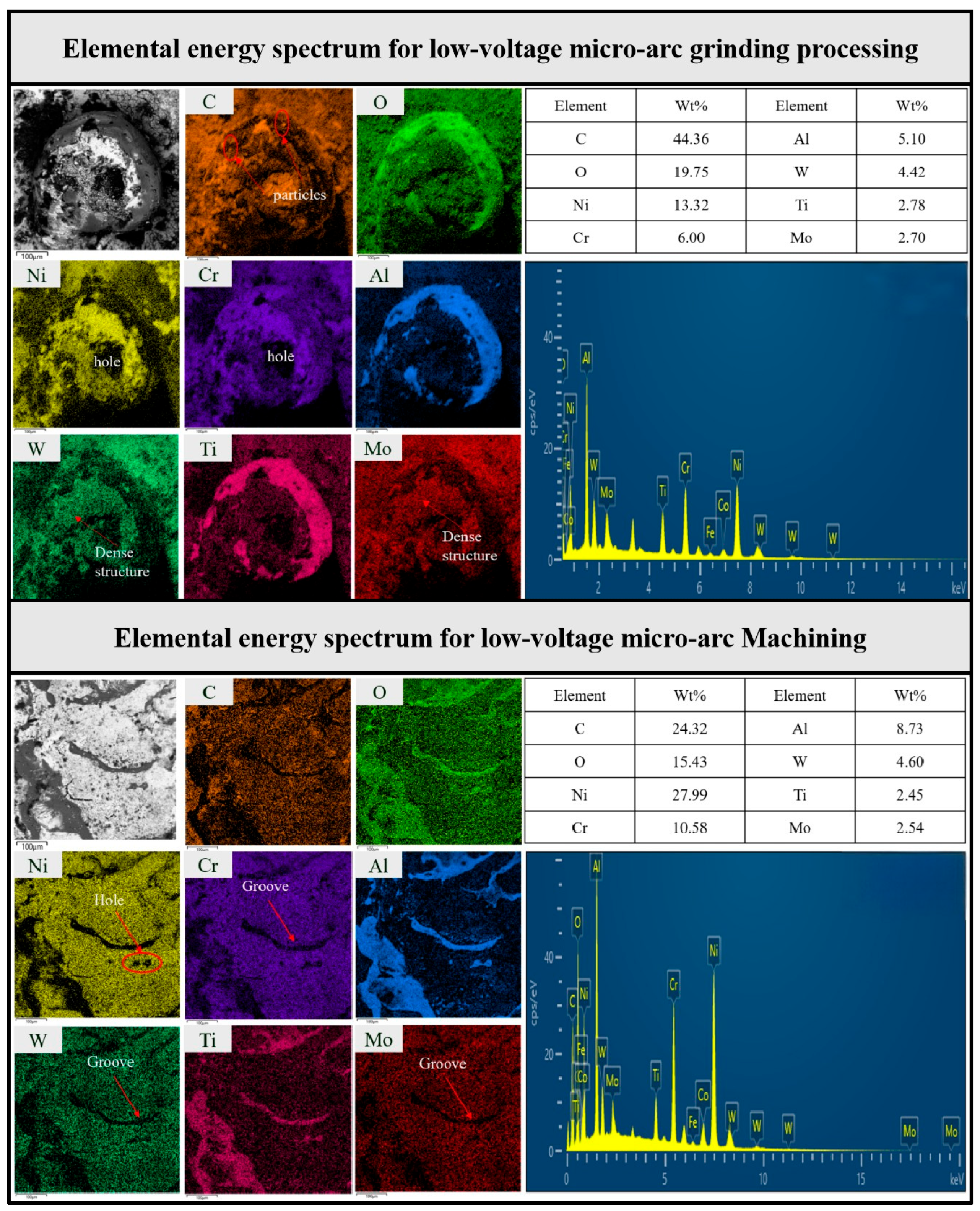
3.1. Surface Topography Analysis
We characterized the surface after arc composite grinding using an ultra-depth-of-field three-dimensional microscope (VHX-6000).
Figure 4,
Figure 5 and
Figure 6 are all observed at a magnification of 200 times.
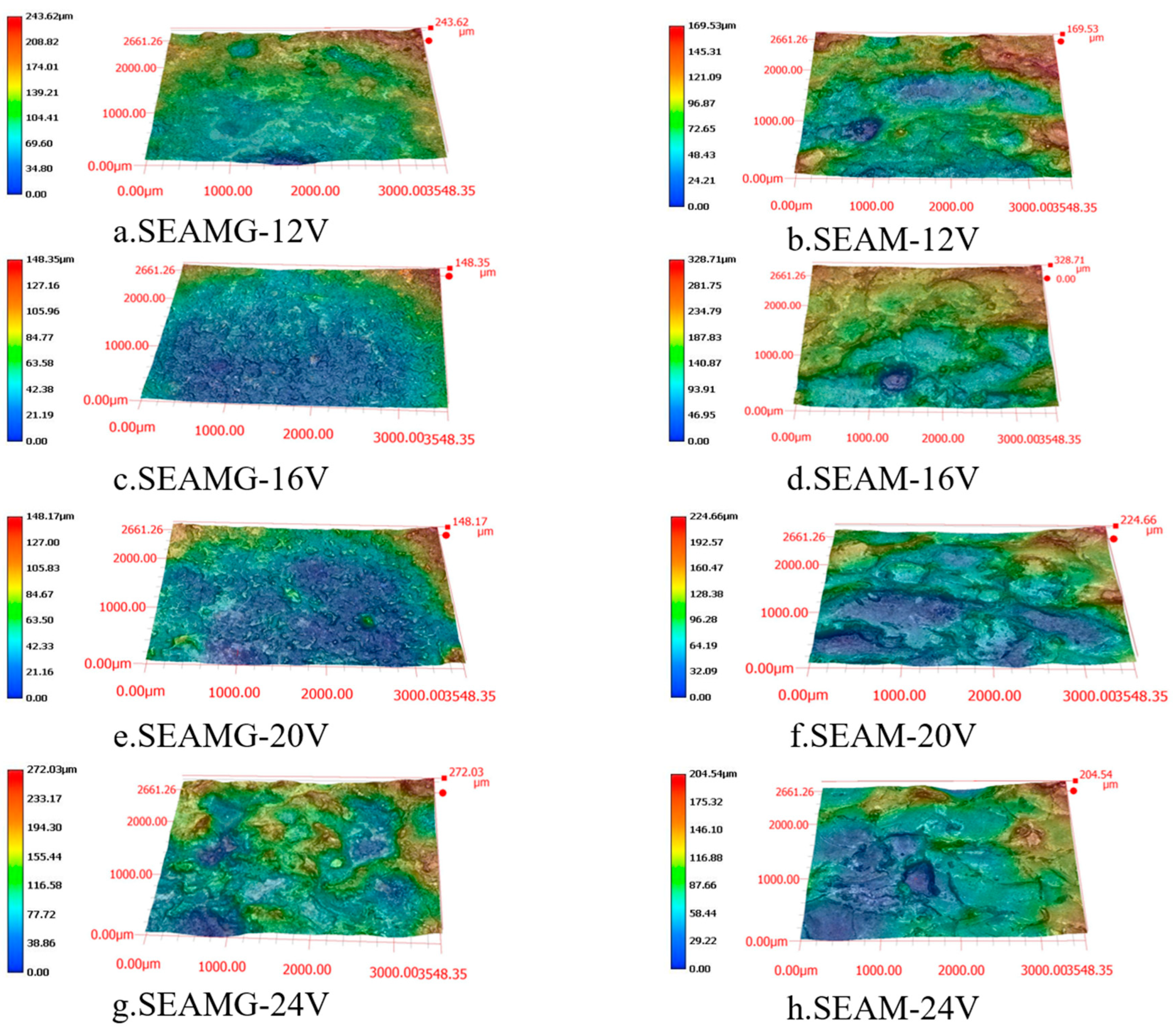
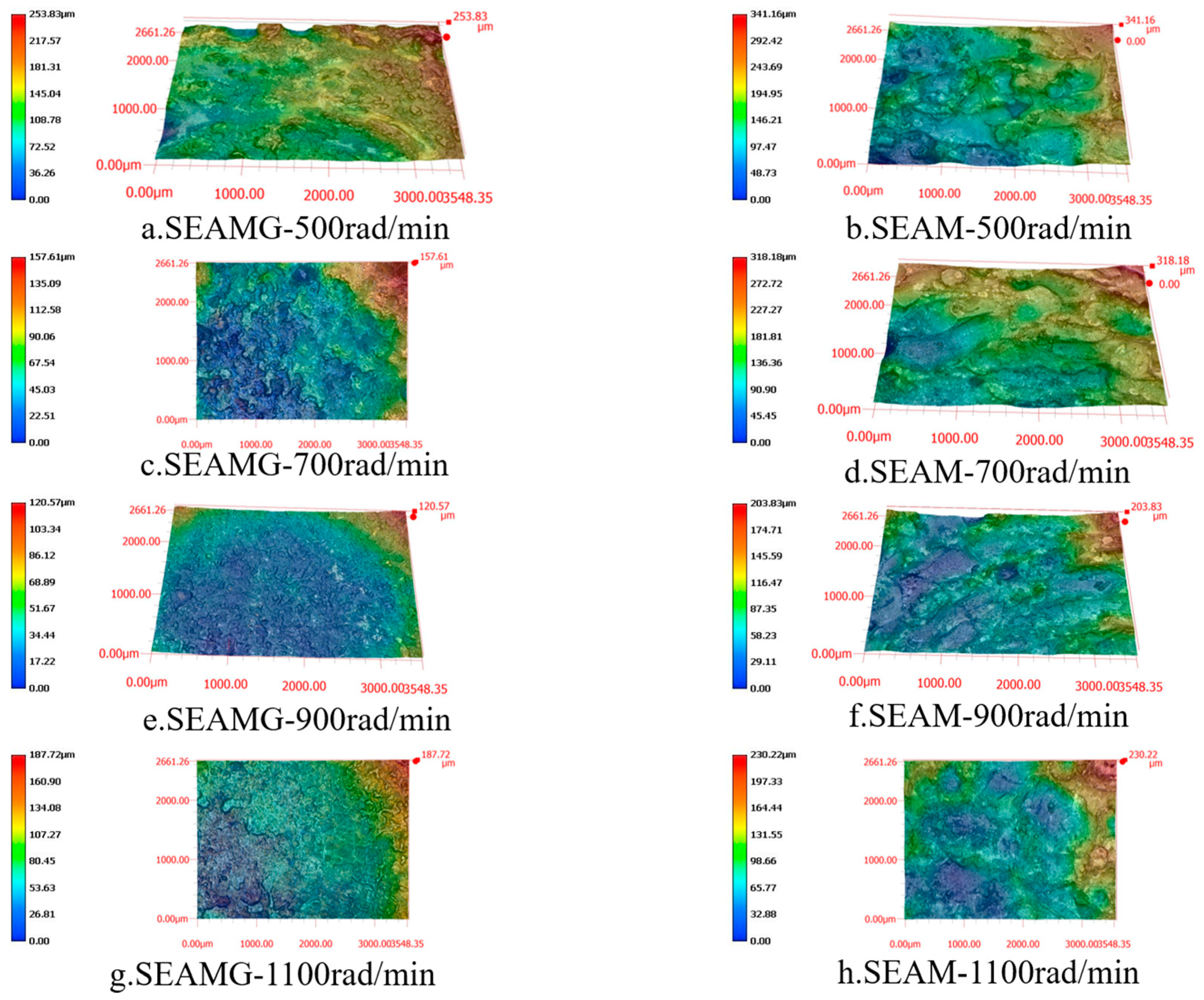
Figure 4 shows the short electric arc machining grinding processing at different voltages (
Figure 4a,c,e,g) and the corresponding short electric arc machining processing for comparison (
Figure 4b,d,f,h).
Figure 4a,c,e,g show the surface morphology of the short electric arc machining grinding processing at voltages of 12 V, 16 V, 20 V, and 24 V, respectively.
Figure 4b,d,f,h show the corresponding comparison experiments of short electric arc machining processing. Based on the experimental results, the variation in surface morphology was significantly influenced by both the discharge voltage and the processing method. In the short electric arc machining grinding process, as the discharge voltage increased (from 12 V to 24 V), the surface of the workpiece exhibited noticeable irregularities, with surface roughness progressively increasing. Especially at higher voltages (20 V and 24 V), localized protrusions and deep indentations became more pronounced, indicating that higher discharge energy induced stronger thermal effects on the material surface, leading to more significant ablation and uneven grinding effects. This phenomenon was particularly evident when compared to short electric arc machining processing (right-hand images), where the surface morphology was relatively smooth and regular, with lower roughness. This comparison demonstrates that short electric arc machining grinding was influenced not only by discharge voltage but also by the combined effects of grinding force and arc discharge, resulting in a more complex microstructure on the surface. Therefore, optimizing discharge voltage and other processing parameters was crucial for improving the surface quality of the workpiece.
Figure 5 presents the surface morphologies obtained under different spindle speeds during short electric arc machining grinding (
Figure 5a,c,e,g) and the corresponding surface morphologies of short electric arc machining processing for comparison (
Figure 5b,d,f,h). As illustrated in the images, the surface roughness increased as the spindle speed increased from 500 rpm to 1100 rpm in short electric arc machining grinding. At higher spindle speeds (900 rpm and 1100 rpm), more pronounced surface irregularities, such as protrusions and indentations, were observed. These irregularities are attributed to the combined effects of grinding forces and arc discharge, which became more intense as the spindle speed rose. In contrast, the surface morphologies obtained from short electric arc machining processing exhibited relatively smooth surfaces, with only a moderate increase in roughness despite the increase in spindle speed. This comparison highlights the significant impact of grinding forces in short electric arc machining grinding, which, when combined with discharge energy, resulted in a more complex surface structure compared to the smoother surfaces achieved through short electric arc machining processing. These findings underscore the importance of optimizing processing parameters, such as spindle speed, to improve the surface quality in short electric arc machining grinding.
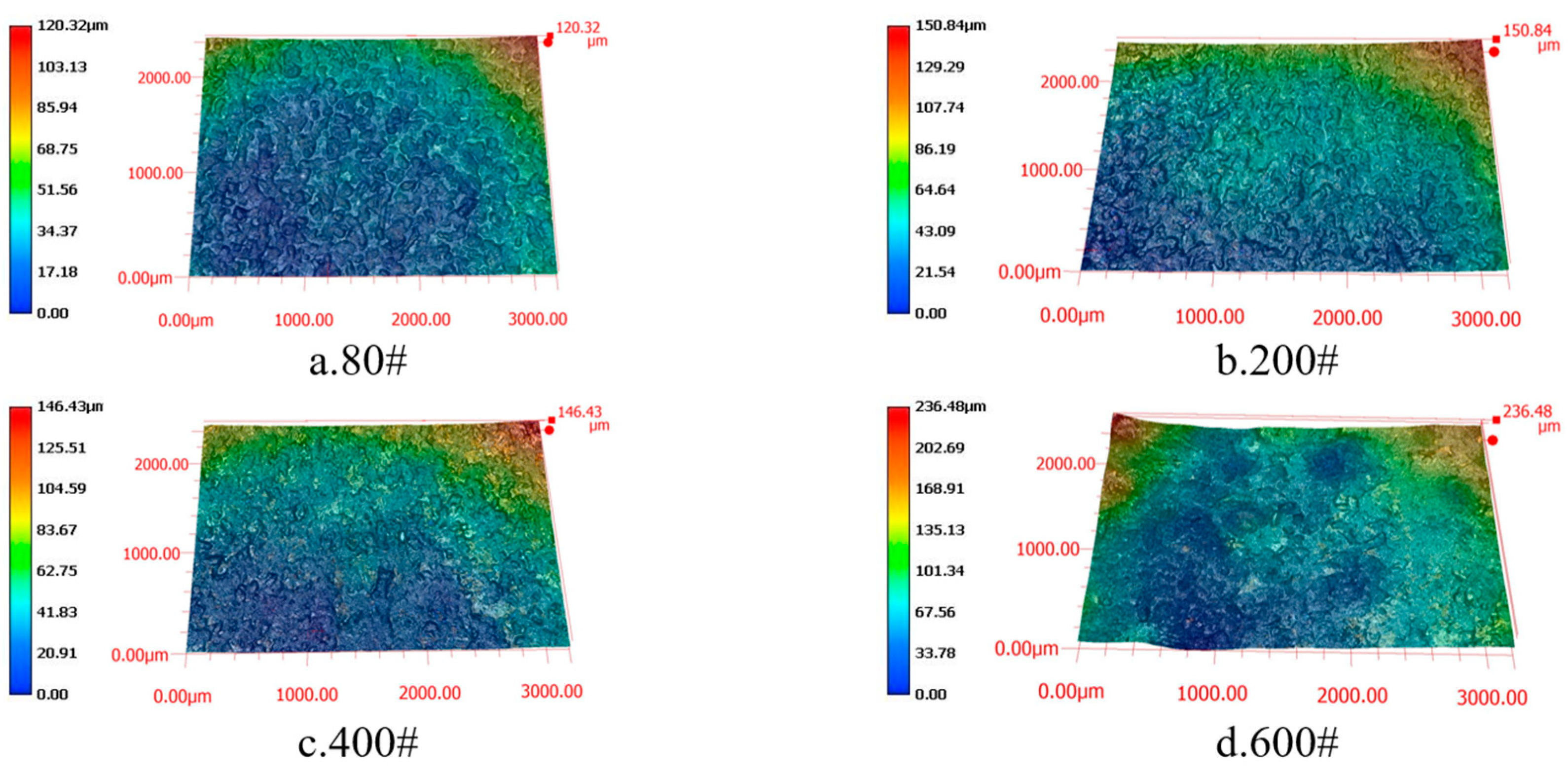
Figure 6 presents the surface morphologies obtained from short electric arc machining grinding with different diamond grit sizes (80#, 200#, 400#, 600#) as shown in images a, b, c, and d, respectively. The experimental data indicates that lower diamond abrasive particle sizes significantly reduced surface roughness. When processed using 600# abrasive grains, the surface exhibited pronounced protrusions and depressions, resulting in high and irregular roughness. As particle sizes decreased to 200# and 400#, surface roughness progressively diminished with finer, more uniform textures and markedly reduced defects. The 80# abrasive grains demonstrated optimal processing performance, featuring minimal surface height variations and significantly reduced roughness values. This demonstrates that in low-pressure micro-arc grinding processes, lower particle sizes effectively reduce grinding forces and thermal effects, thereby achieving more uniform and smooth surfaces. The findings indicate that selecting appropriate abrasive grain sizes is crucial for optimizing surface quality in low-pressure micro-arc grinding processes, where lower particle sizes significantly enhance surface finish and consistency.
3.3. Microscopic Morphology Analysis
We conducted scanning electron microscope (SEM) analysis of the surface of the workpiece. To investigate the effects of discharge voltage and processing mode on workpiece surface quality, a single-factor experiment was designed in this study.
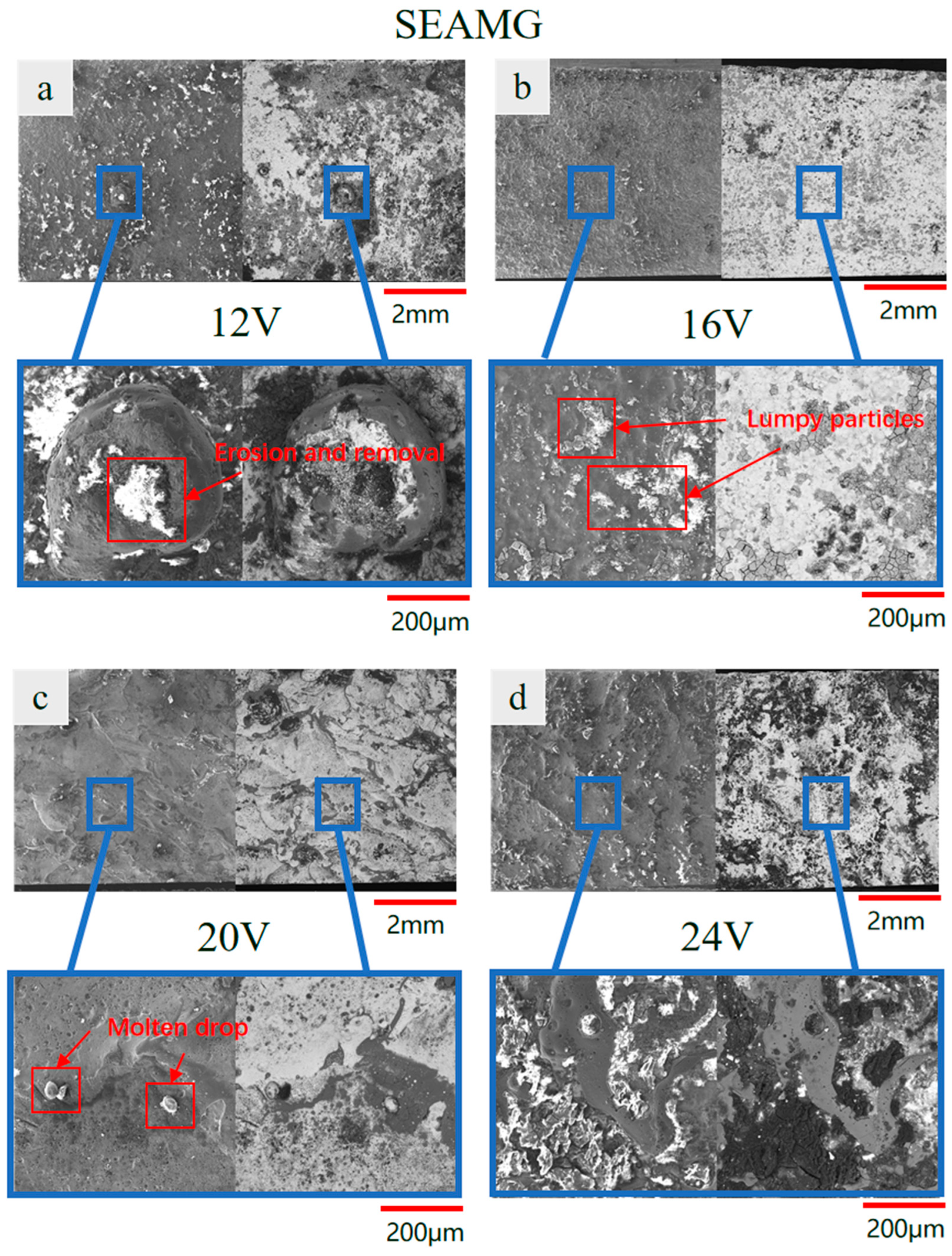
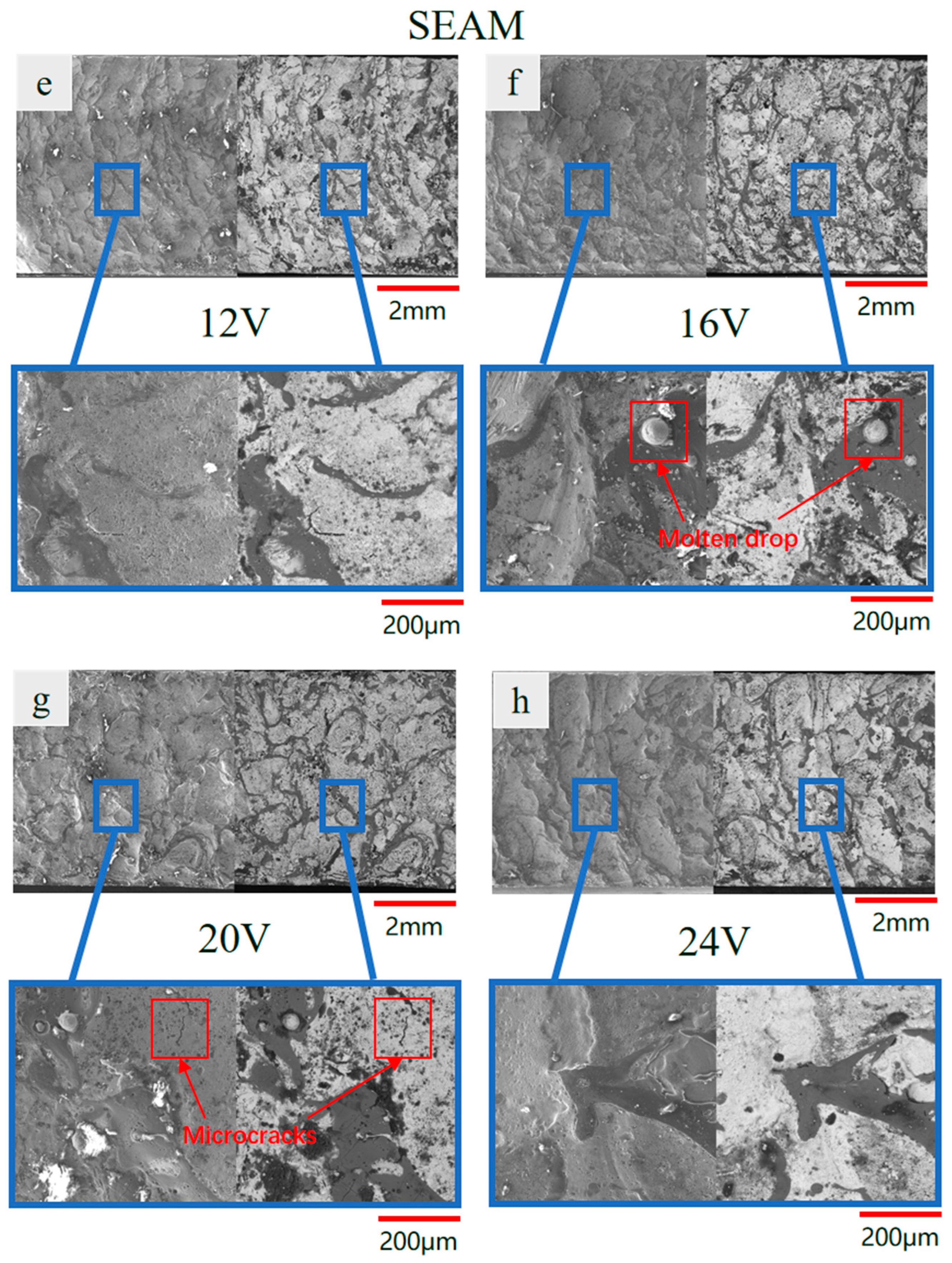
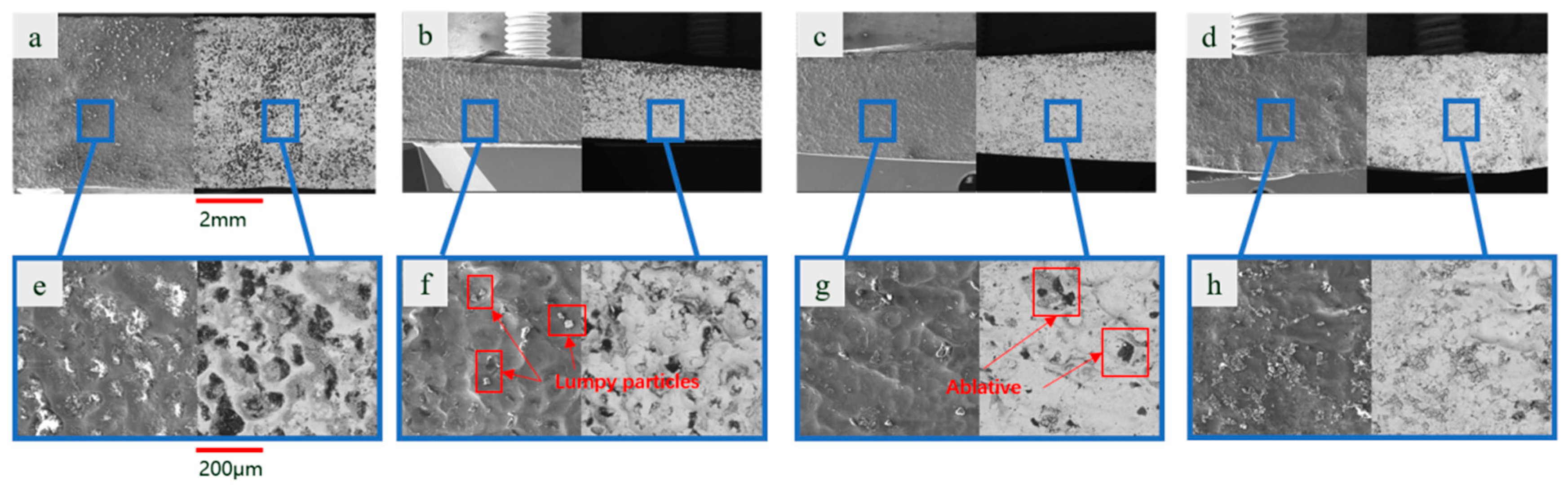
Figure 8a–d show the surface topography of samples processed by short electric arc machining grinding at discharge voltages of 12 V, 16 V, 20 V, and 24 V, respectively. For comparison,
Figure 8e–h show the corresponding results obtained using short electric arc machining under identical discharge parameters.
Comparative analysis reveals that short electric arc machining grinding consistently delivered superior surface quality compared to short electric arc machining across all voltage parameters. As voltage increased from 12 V to 24 V, thermal input rose for both machining methods, yet the evolution of surface topography exhibited distinctly different trends.
For sample (
Figure 8e–h), surface quality exhibited extreme sensitivity to voltage variations. At 12 V (
Figure 8e), uneven pitting and minor molten deposits already appeared on the surface; as voltage increased, melting, spattering, and accumulation became increasingly severe (
Figure 8f,g); and by 24 V (
Figure 8e), the surface was covered with coarse molten particles and significant microcracks, indicating severe morphological deterioration. This indicates that the pure micro-arc machining process was unstable with low energy utilization efficiency. Excessive heat accumulation caused irreversible thermal damage to the workpiece surface.
In contrast, samples (
Figure 8a–d) exhibited highly consistent and stable surface quality across varying voltages. Even at the high voltage of 24 V (
Figure 8d), the surface remained flat and uniform, showing no catastrophic melting or cracking as seen in
Figure 8h. This demonstrates that the introduction of grinding elements effectively mitigated the negative effects of high energy input.
Local magnified images further reveal the underlying mechanism. The micro-topography (
Figure 8e–h) of low-pressure micro-arc machining shows the surface covered by an unevenly thick remelted layer, accompanied by pits and cracks—hallmarks of rapid solidification of molten material. In contrast, the local morphology (
Figure 8a–d) of short electric arc machining grinding shows that the grinding action simultaneously scraped away and reshaped the molten layer produced by the micro-arc in situ. This prevented uneven accumulation and solidification, resulting in a denser, smoother surface. Particularly at high voltages (comparing
Figure 8d), the short electric arc machining grinding technique overcame the thermal defect bottleneck inherent in pure arc processing through mechanical means, demonstrating its superiority.
In summary, this comparative analysis leads to the following conclusions: short electric arc machining grinding technology exhibits superior tolerance to fluctuations in discharge voltage, enabling the achievement of stable, high-quality surfaces across a broad range of process parameters. This capability holds significant importance for designing the process window in industrial applications.
Under identical discharge parameters, short electric arc machining processing effectively prevents thermal defects such as surface melt buildup, micro-cracks, and pits through the synergistic action of mechanical grinding and micro-arc discharge. The overall surface quality is significantly superior to that achieved by short electric arc machining processing alone.
Short electric arc machining grinding is not a simple combination of two processes but rather utilizes the “cold working” characteristics of mechanical grinding to dynamically regulate and correct the “hot working” effects of micro-arc processing. This achieves synergistic enhancement through “thermal–mechanical” composite processing, providing an effective strategy for addressing thermal damage issues in high-energy beam surface processing.
To investigate the influence of spindle speed on surface quality in composite machining, this study examined the surface formation characteristics of short electric arc machining grinding and short electric arc machining at different spindle speeds while keeping other discharge parameters (voltage, duty cycle, etc.) constant. The results are shown in
Figure 9.
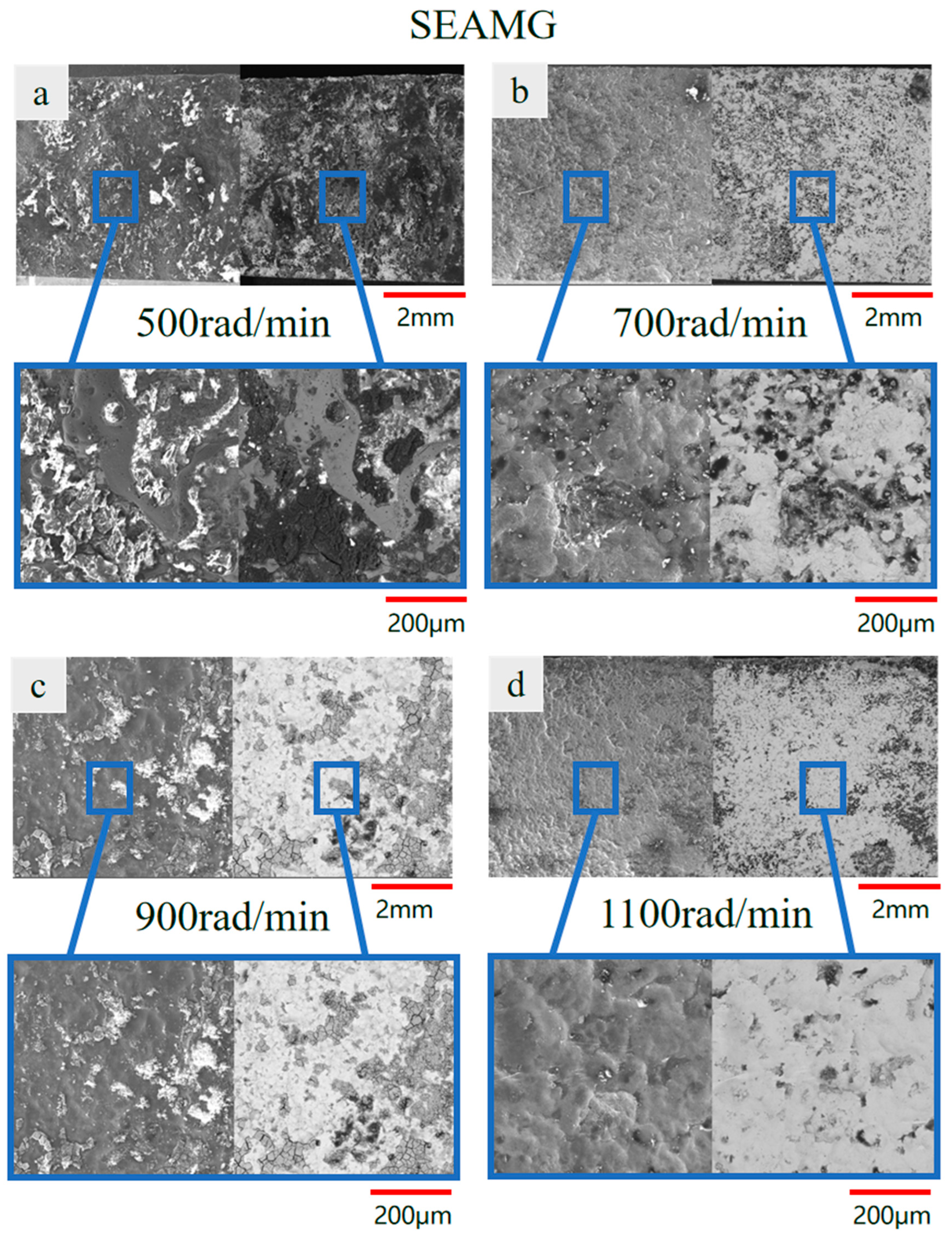
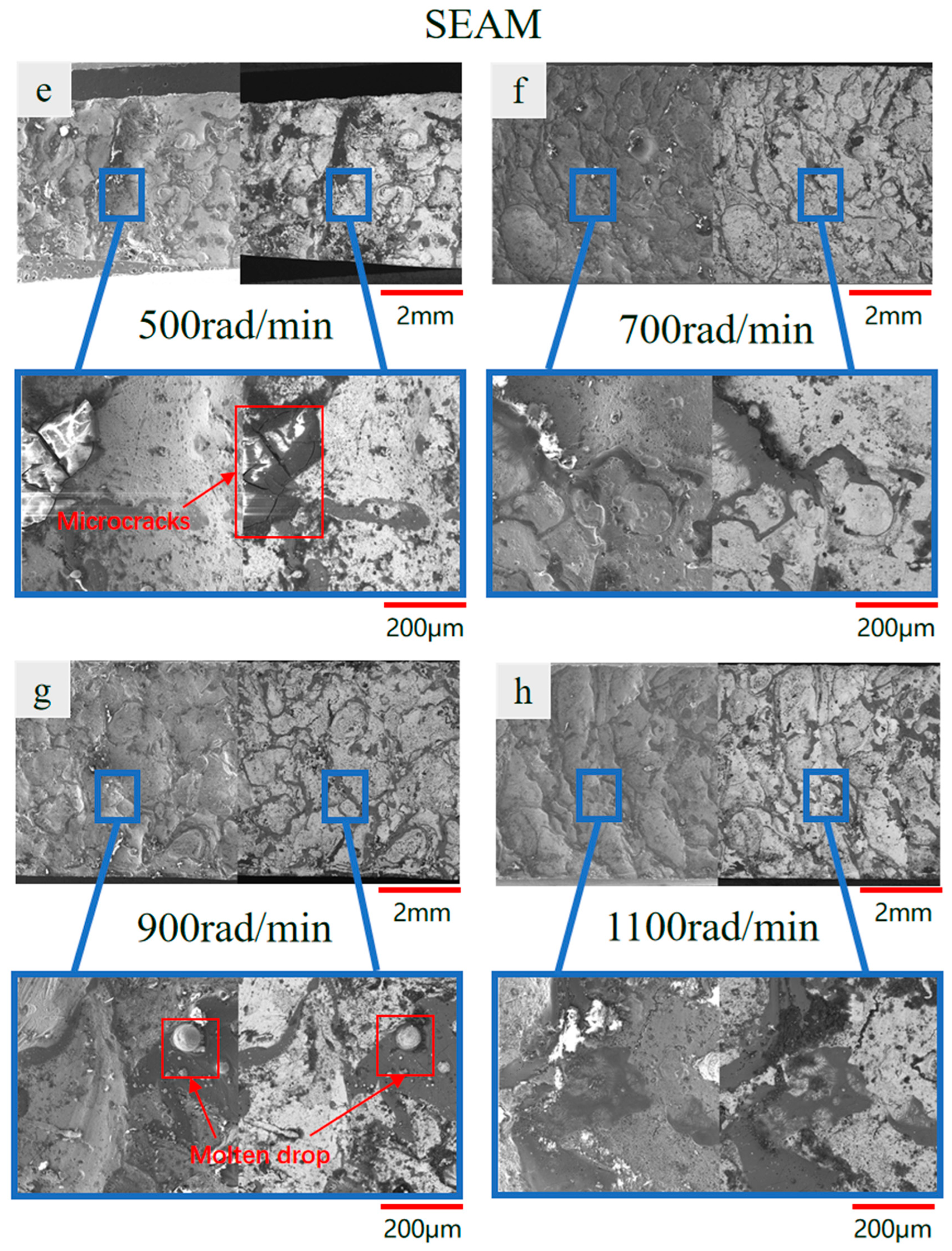
Figure 9a–d illustrate the overall surface morphology of short electric arc machining grinding at different spindle speeds. Consistent with prior research, surfaces processed by low-pressure micro-arc grinding exhibited superior uniformity and consistency compared to those processed by short electric arc machining grinding (
Figure 9a–d) at all spindle speeds. As spindle speed increased, the surface texture of materials processed by short electric arc machining grinding exhibited a systematic change: at lower speeds (
Figure 9a), a fusion of slight grinding traces and micro-arc discharge features was visible; with higher speeds (
Figure 9b,c), the surface became finer and more uniform, achieving an optimal composite effect of mechanical grinding and micro-arc discharge. At higher speeds (
Figure 9d), the surface maintained high quality without defects caused by excessive speed.
In contrast, the surface morphology of the short electric arc machining sample (
Figure 9a–d) once again exhibited typical thermal processing defects: numerous protrusions and irregular pits formed by spattering and accumulation of molten material. Notably, the improvement in surface morphology from varying rotational speed was negligible for short electric arc machining. This indicates that the quality bottleneck of pure micro-arc machining lies in the inherent uncontrollability of its thermal process. Relying solely on adjusting non-core parameters—such as rotational speed in this case—is insufficient to achieve significant quality enhancement.
The local magnified views (
Figure 9a–d,e–h) reveal the underlying mechanism of rotational speed influence: At low rotational speeds (
Figure 9a), the grinding action frequency was insufficient to adequately remove and reshape the molten layer, resulting in a slightly uneven surface. Within the optimal speed range (
Figure 9b,c), mechanical grinding and micro-arc discharge achieved a dynamic equilibrium, enabling the grinding needle to promptly and effectively scrape away molten protrusions. This yielded the smoothest and densest surface layer. At high rotational speeds (
Figure 9d), the intense mechanical action ensured high surface quality, with micro-morphology nearly indistinguishable from that achieved at optimal speeds. This demonstrates the excellent stability of short electric arc machining grinding across a broad rotational speed range. For short electric arc machining, the local morphology at different rotational speeds was uniformly dominated by uneven remelted layers, porosity, and microcracks (as shown at the 200 μm scale). Variations in rotational speed do not alter the fundamental nature of the thermal process and cannot eliminate the inherent defects arising from the rapid solidification of molten material.
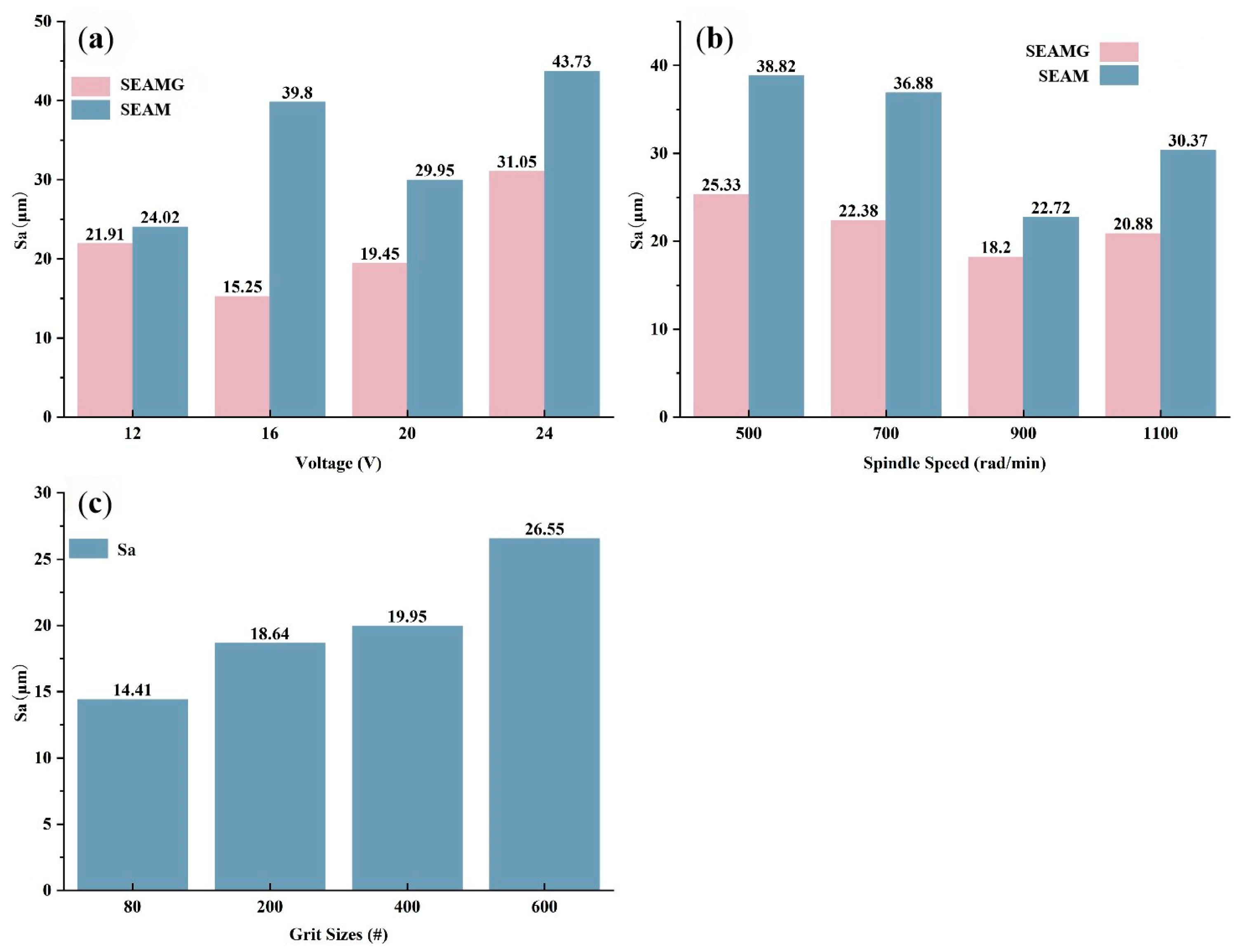
In summary, the single-factor experiment on spindle speed conducted in this study leads to the following observations. In short electric arc machining grinding, the mechanical grinding action plays a noticeable role in improving surface quality. As a key parameter that regulates the intensity of the mechanical effect, spindle speed exhibits an effective range within which the thermo-mechanical interaction can operate more favorably. Within this range, surface morphology and roughness show measurable improvements compared with those under pure micro-arc machining under the same voltage conditions, as illustrated in the corresponding figures (
Figure 7).
The results also indicate that short electric arc machining grinding maintains a relatively stable surface-quality response across different spindle speeds. Even when the spindle speed deviates from its optimal range, the processed surface remains smoother than that obtained by pure micro-arc machining, according to the quantitative roughness values presented in
Figure 7. In contrast, for pure micro-arc machining, changing spindle speed does not substantially alter the thermal-dominated surface features. This observation suggests that the addition of a mechanical grinding unit provides an effective supplementary mechanism for mitigating thermal-induced surface defects, as supported by the comparative results shown in
Figure 7.
To investigate the potential qualitative changes in machined surface topography resulting from increasing spindle speed to higher ranges, the effects of short electric arc machining grinding and short electric arc machining were compared at speeds of 1500 rad/min and 2000 rad/min. The results are shown in
Figure 10.
As shown in
Figure 10a,b, at high rotational speeds of 1500 rad/min and 2000 rad/min, the short electric arc machining grinding-processed surfaces exhibited exceptional uniformity and consistency. The surface texture was fine-grained, with no noticeable discharge pits or extensive accumulation of molten material, indicating highly effective mechanical grinding at high speeds. A comparative analysis with previous experiments at medium and low speeds reveals that as spindle speed increased, the dominant role of mechanical grinding in the composite process continued to strengthen. This enabled more effective control over the thermal effects of micro-arc discharge, ultimately achieving an optimized surface morphology.
In contrast, examining the short electric arc machining samples at equivalent high rotational speeds (
Figure 10c,d), although the scanning trajectory became denser due to increased rotational speed, the fundamental defects remained unresolved. The surface still exhibited noticeable molten spatter and undulations formed by rapid solidification. This demonstrates that merely increasing the relative movement speed cannot alter the inherently random and uncontrollable nature of the thermal process in pure micro-arc processing.
The enlarged sections provide more compelling evidence: Under high magnification, surfaces processed by short electric arc machining grinding (
Figure 10e,f) exhibit traces of thorough plastic flow and grinding action. The molten region was effectively confined and reshaped by mechanical forces, forming a flat, dense surface layer.
Figure 10f demonstrates the grinding head’s real-time crushing and flattening effect on molten spatter—a critical factor for achieving high-performance surfaces. The results indicate that at high rotational speeds, the “mechanical dressing” effect in short electric arc machining grinding reached new heights, nearly completely suppressing the thermally induced defects commonly associated with micro-arc machining. In stark contrast, the local microstructure of short electric arc machining (
Figure 10g,h) clearly reveals its limitations. The surface was covered by a coarse recast layer, accompanied by micro-pores and cracks. As shown in
Figure 10h, these were precisely the traces left by material vaporization or spattering after being instantaneously melted at high temperatures. High rotational speeds did not mitigate these defects, demonstrating an insurmountable quality ceiling inherent to purely thermal processing methods.
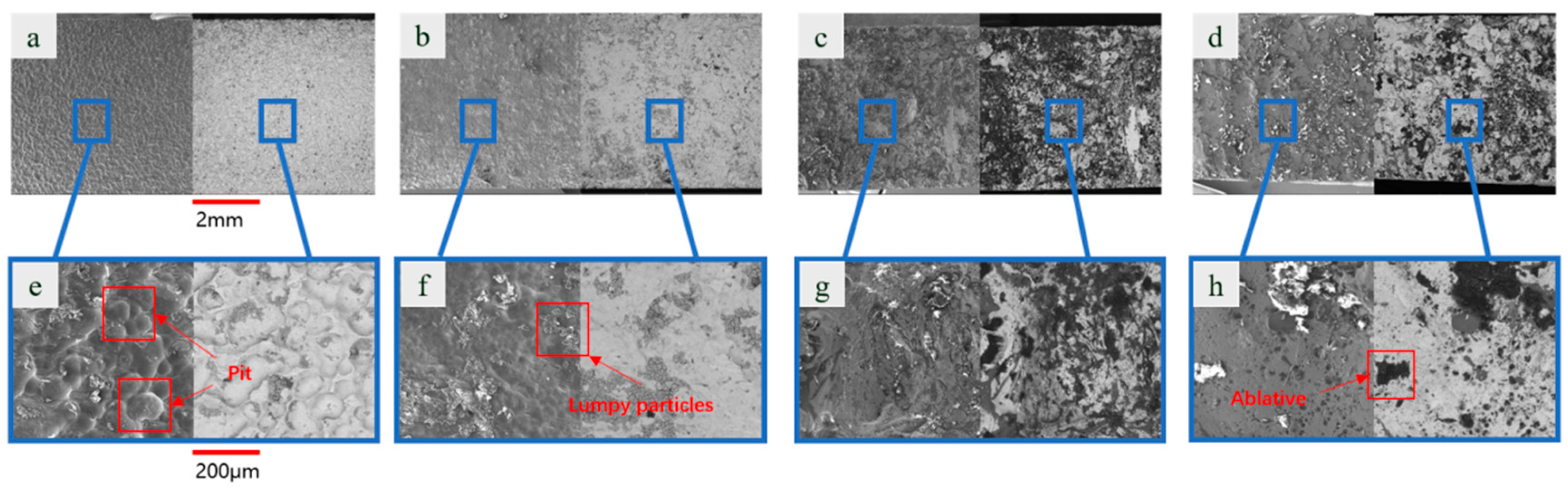
To investigate the influence of diamond abrasive grit size—a critical factor in mechanical grinding units—on the surface quality of composite machining, short electric arc machining grinding experiments were conducted using abrasives of four different grit sizes (80#, 200#, 400#, and 600#) under fixed electrical parameters and other process conditions. The resulting surface topographies are shown in
Figure 11a–h.
Figure 11a–d clearly demonstrate the significant influence of abrasive grain size on the macroscopic morphology of surfaces processed by low-pressure micro-arc grinding. The overall trend shows that as the diamond abrasive grain size decreased (from 80# to 600#), the uniformity and smoothness of the machined surface underwent a change process that first improved and then stabilized.
Figure 11a shows a relatively clear superimposed surface morphology of grinding scratches and micro-arc discharge features. Due to the larger abrasive particle size and deeper penetration, the mechanical action of individual particles dominated, resulting in slightly poorer surface uniformity. Nevertheless, the surface quality remains superior to that achieved by pure micro-arc discharge processing under any parameter combination.
Figure 11b,c demonstrate significantly improved surface quality. Grinding marks appear shallower and are distributed more densely and uniformly, integrating better with the thermal effects of micro-arc discharge to form a flatter, more uniform composite machined surface. This indicates that within this grain size range, the “dressing” effect of mechanical grinding and the “melting” effect of micro-arcs achieved an optimal synergistic balance.
Figure 11d shows surface morphology similar to that achieved at 400 grit, exhibiting a high-quality smooth surface. This indicates that when abrasive particle size was reduced to a certain level, its effect on improving surface macro-uniformity gradually reached saturation. Further enhancement of surface quality would increasingly depend on optimizing electrical parameters.
The magnified sections e-h reveal the micro-mechanisms at work under different abrasive particle sizes: At 80# (
Figure 11e), microscopic cutting grooves and solidified melt platforms coexisted. This indicates that material removal was dominated by “micro-cutting” and “melt scraping,” with intense mechanical action. As the grit size decreased to 200# and 400# (
Figure 11f,g), the surface morphology transitioned from “plow-like” characteristics to ‘ironing’ and “plastic flow.” The finer abrasive particles repeatedly ground, compacted, and polished the molten layer generated by micro-arcs, effectively eliminating macro-scratches and large molten protrusions. At 600 grit (
Figure 11h), the surface was extremely dense and smooth. Traces of molten discharge were thoroughly smoothed by mechanical action, achieving a near-mirror finish.
The above research indicates that coarse-grained abrasives, due to their high cutting force, may cause microfractures or spalling in the workpiece substrate or ceramic phase (though not clearly visible in the figure, this represents a potential risk). In contrast, fine-grained abrasives (400#, 600#) achieve defect-free modified surface layers by gently and continuously removing material within the plastic deformation range, effectively suppressing thermal defects such as microcracks and porosity.