3.2. X-Ray Measurements
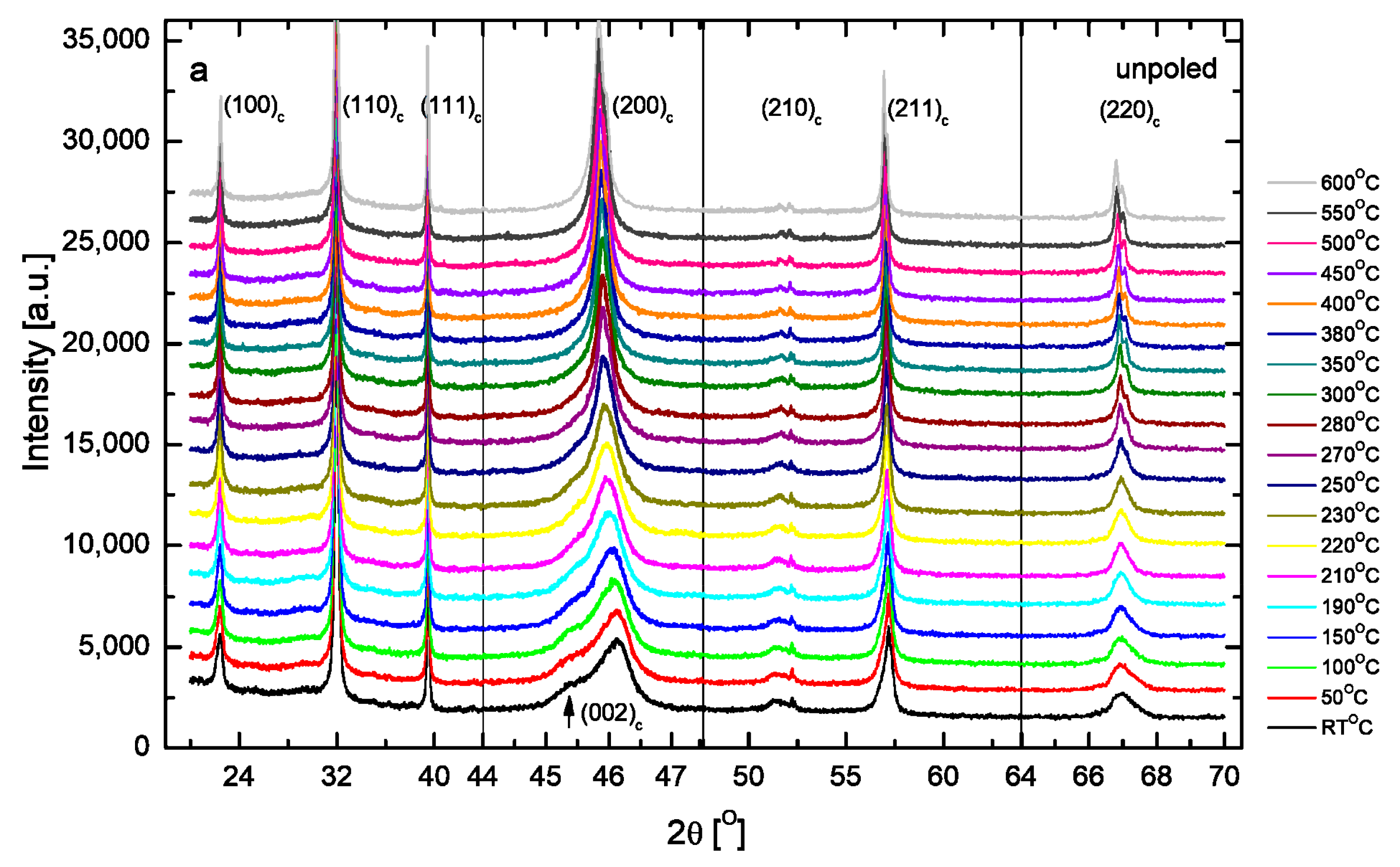
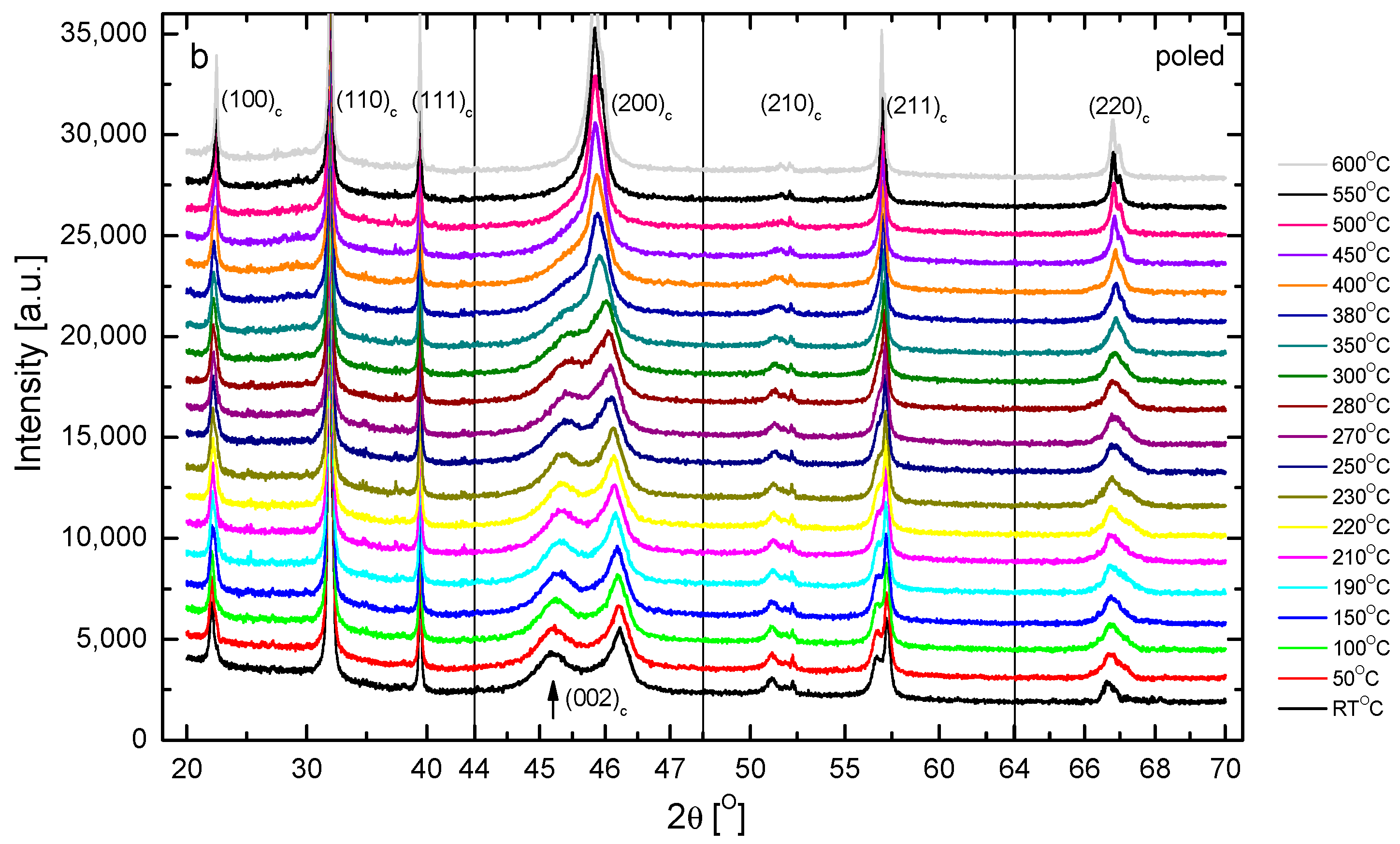
Figure 2 shows the temperature evolution of X-ray diffraction (XRD) spectra of KBT in unpoled and poled states. The cubic (200)
c reflection splits into (002)
c/(200)
c reflections characteristic of the tetragonal phase. The peaks shift toward each other and gradually merge into the cubic single peak at ~400 °C for the unpoled state (see also
Figure 3). The intensity of the (002)
c peak is smaller as compared to the (200)
c one (i.e., the intensity ratio of the (002)
c/(200)
c peaks is small), which can be the result of a random distribution of unit cell orientation. It can be seen that a low-angle tail of the (200)
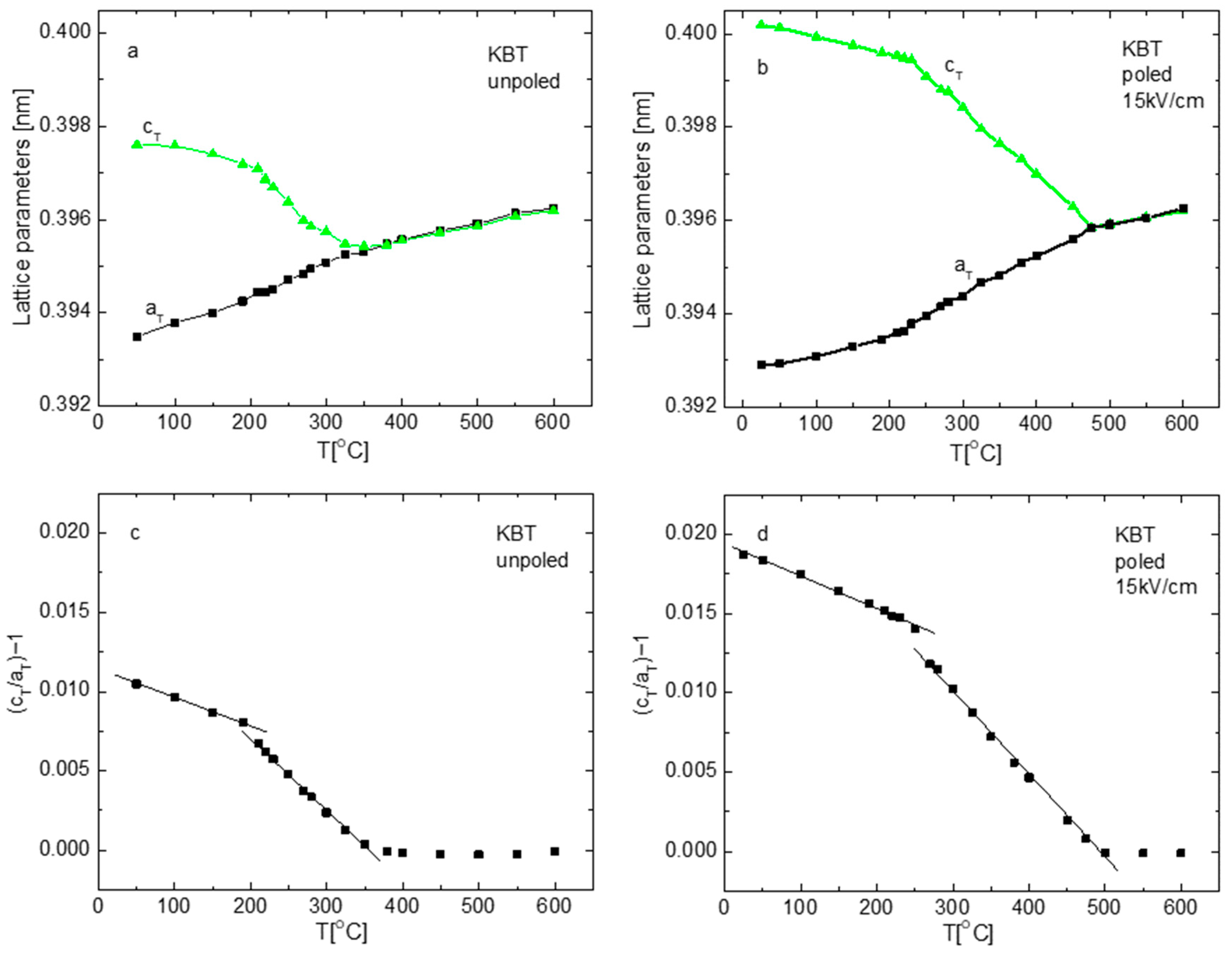
c peak still indicates the presence of some minority tetragonal phase (tetragonal polar regions) in the cubic matrix, even at 600 °C. Some broadening of the reflections of the cubic phase was observed, which also indicates the existence and temperature evolution of these regions. The temperature behavior of the majority of the reflections distinguished three characteristic regions. In the first range up to about 200 °C, a slow decrease in peak splitting and an increase in the maximum line intensities appears. Simultaneously, anomalies of lattice parameters and tetragonality are observed around this temperature (
Figure 3).
In the second range (~200–400 °C), the intensity increases strongly in comparison to the first one. In the third one (~400–600 °C), the peaks become single and almost do not change intensity. These changes in the diffraction patterns indicate the presence of two phase transitions: a tetragonal-tetragonal (T-T) one at about 200 °C and a tetragonal-cubic (T-C) one at about 400 °C. Computer analysis confirmed these qualitative predictions. From the lowest temperatures, the tetragonal phase (P4mm) exists up to approximately 400 °C, while above this temperature, the cubic phase (Pm
m) exists. At 200 °C, no change in the point-group symmetry is detected. We only observe a gradual evolution of the lattice parameters, with the a and c periods slowly converging over the temperature range from RT to 200 °C (
Figure 3a). For the poled state (15 kV/cm), the tetragonal (002)
c/(200)
c peak splitting is more pronounced (the intensity ratio of the (002)
c/(200)
c peaks has an equal 1:2 characteristic for the tetragonal phase) in comparison to the unpoled one, and the splitting disappears at a temperature of approximately 450 °C instead of 400 °C for the unpoled one. An increase in intensity of the (002)
c peak compared to (200)
c is expected because poling causes a preferred orientation of the unit cell within the field direction and reorientation of the ferroelectric domains. The tetragonal-tetragonal phase transition is also shifted from about 200 °C to about 220 °C. As the 180° domain reversal does not affect the XRD intensities, the change in the intensity ratio of the (002)
c/(200)
c peaks only reflects the 90° domain reorientation. The calculated percentage of 90° domain reorientation by electric field (15 kV/cm) is about 21%. E-poling also causes a change in lattice parameters, which leads to a drastic increase in tetragonality and distinguishes the temperature of 270 °C as a characteristic one, about which a clear anomaly of these parameters is visible (
Figure 3). In general, these results indicate the remarkable rearrangement of the crystal structure and show that the electric field transforms the cubic phase into a tetragonal (ferroelectric) one, and extends the temperature range over which the latter phase exists.
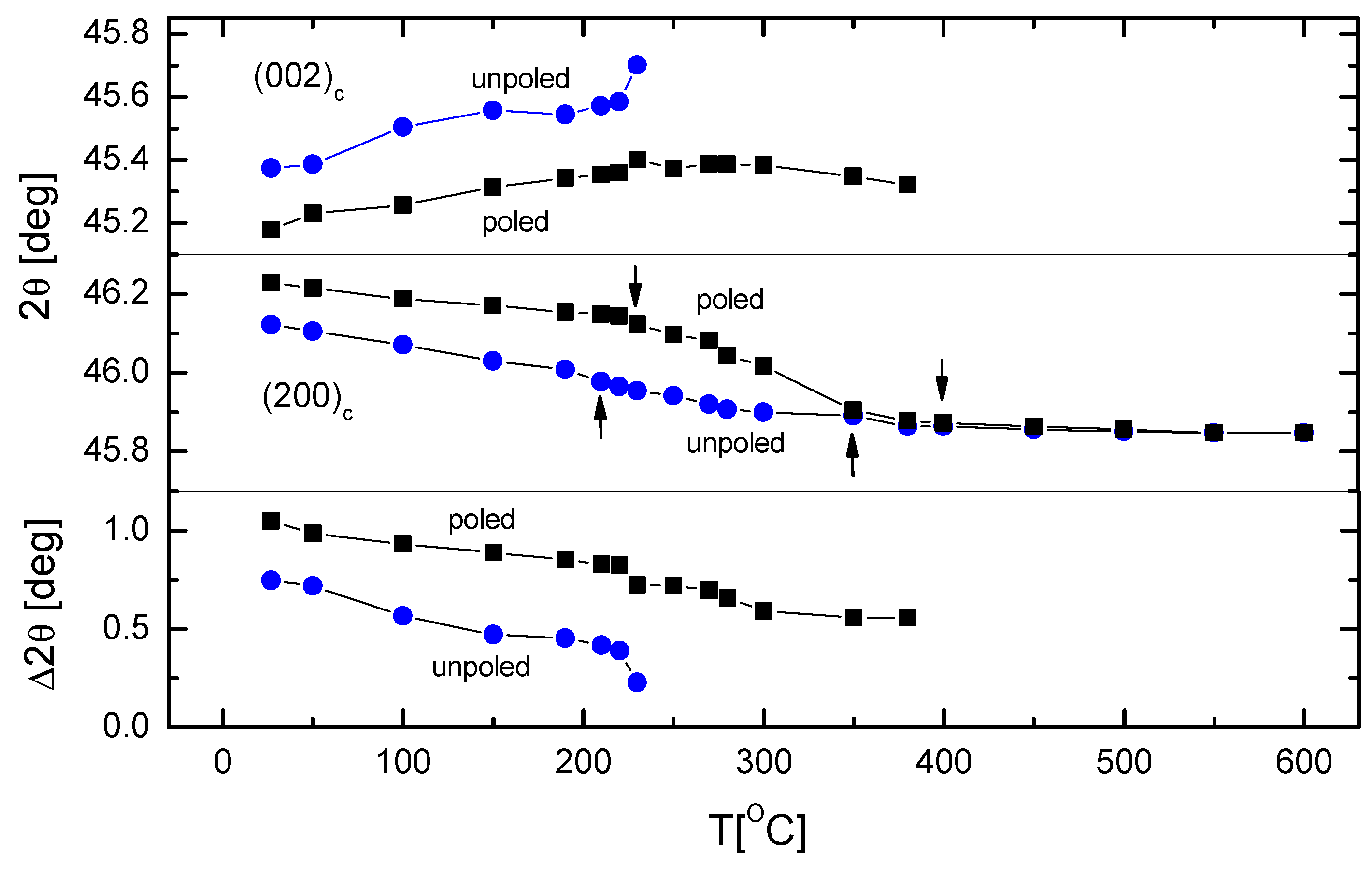
For closer inspection, the 2Θ-position and the 2Θ-position difference of the (002)
c and (200)
c peaks are plotted against temperature in
Figure 4. Apart from lower angle shift, the 2Θ-T curve for the (200)
c peak also undergoes a slope change at ~200° and at ~380–400 °C for the unpoled state (three different straight lines can be fitted to the points). The lower-angle shift of the Bragg peaks indicates a gradual increase in unit cell volume with increasing temperature; however, the slope changes of 2Θ-T curves indicate structural transformations. The symmetry changes which occurred in KBT are from the room-temperature tetragonal phase to a high-temperature cubic phase, and additionally, between tetragonal phases at about 200 °C. Considering the phase transitions sequence, the slope changes of 2Θ-T curves can be attributed to the tetragonal-tetragonal and tetragonal-cubic phase transitions. For the poled sample, the slope changes of 2Θ vs. temperature curves are shifted towards higher temperature, which further show that the electric field transforms the cubic phase into a tetragonal (ferroelectric) one and extends the temperature range in which the tetragonal phase exists. In addition, in both unpoled and poled samples, a shift in the position of the (002)
c reflection to larger lattice spacings is observed, while a smaller shift of the peak position of the (200)
c reflection to lower lattice spacings is also seen. The position of the (002)
c peak for the unpoled sample shifts toward larger lattice spacing with increasing temperature, with an anomaly at about 200 °C. For the poled sample, it also shifts in the same manner, with an anomaly at about 220 °C. As the temperature increases, the 2Θ-position difference of the (002)
c and (200)
c peaks decreases, with an anomaly at about 200 °C for the unpoled state and at about 220 °C for the poled state.
3.3. Dielectric Properties
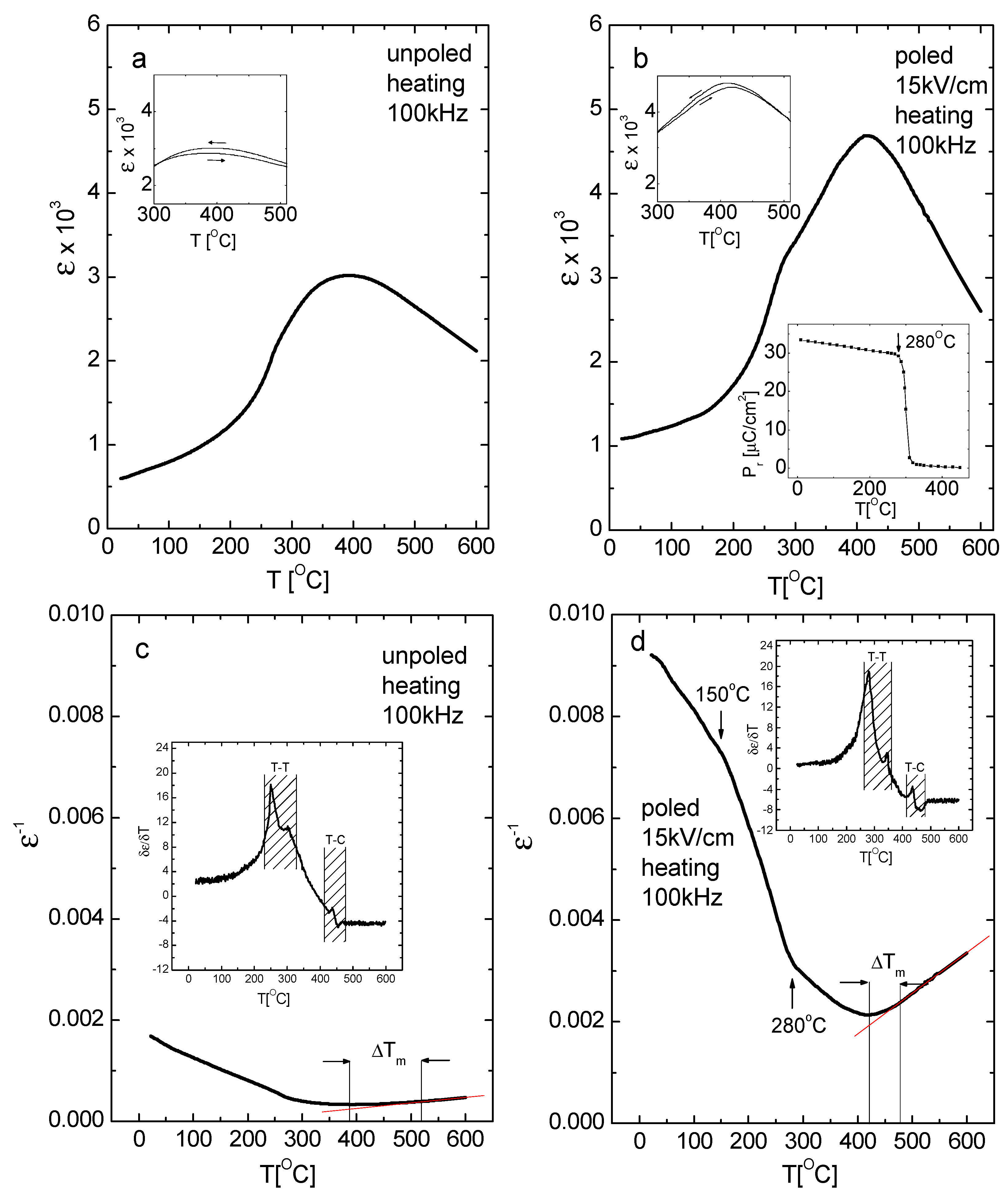
The temperature evolution of the electric permittivity ε(T) of unpoled and poled (15 kV/cm) KBT measured during heating is shown in
Figure 5a,b. The ε(T) curves for the unpoled and poled states differ. In the unpoled state, after a rather slow increase in ε up to about 215 °C, there is a faster increase up to about 270 °C, and then it enters a “diffuse region”, where it increases slowly up to T
m ≈ 390 °C, where the maximum occurs. Above T
m, ε decreases gradually.
Conversely, in the poled state, after a slow increase in ε up to about 150 °C, there is a faster increase up to about 280 °C (see also
Figure 5d), and then there is slower growth up to T
m ≈ 410 °C, where the maximum is observed. Above T
m, ε decreases more rapidly than in the unpoled state. Overall, dielectric anomalies are sharper and shifted to higher temperatures after poling compared to unpoled samples. In both cases, the ε(T) evolution reveals characteristic temperatures visible in XRD measurements.
Both unpoled and poled states exhibit thermal hysteresis of the electric permittivity (shown in inserts in
Figure 5a,b), indicating a first-order phase transition. It is expected that applying an electric field at a high temperature (200 °C), followed by cooling to room temperature in the presence of the field, modifies both the crystal structure—transforming the cubic phase into a tetragonal one—and the domain structure, increasing the proportion of monodomain-like state. These changes affect the inter-phase boundaries and density of domain walls (twin walls). The structural and domain states of KBT can be specifically manipulated by controlled poling, i.e., by applying a poling field of varying strength at different temperatures or with varying cooling durations. In particular, the temperature notably influences the poling process due to a decrease in coercive field and reduced lattice distortion at elevated temperatures, which facilitates easier modification of the crystal structure and increases the fraction of domain reorientations. Modifying the crystal structure and domain state via an electric field provides a practical means to tailor the material’s physical properties.
At high-temperatures, ε(T) follows the Curie-Weiss law, as shown in
Figure 5c,d. Below about 520 °C and 470 °C, ε(T) begins to deviate from the Curie-Weiss law for the unpoled and poled states, respectively. The E-poling extends the temperature range in which ε(T) adheres to the Curie-Weiss law (i.e., ΔT
m = T
B − T
m decreases, where T
B is the Burns temperature, below which ε
−1 does not follow a linear trend).
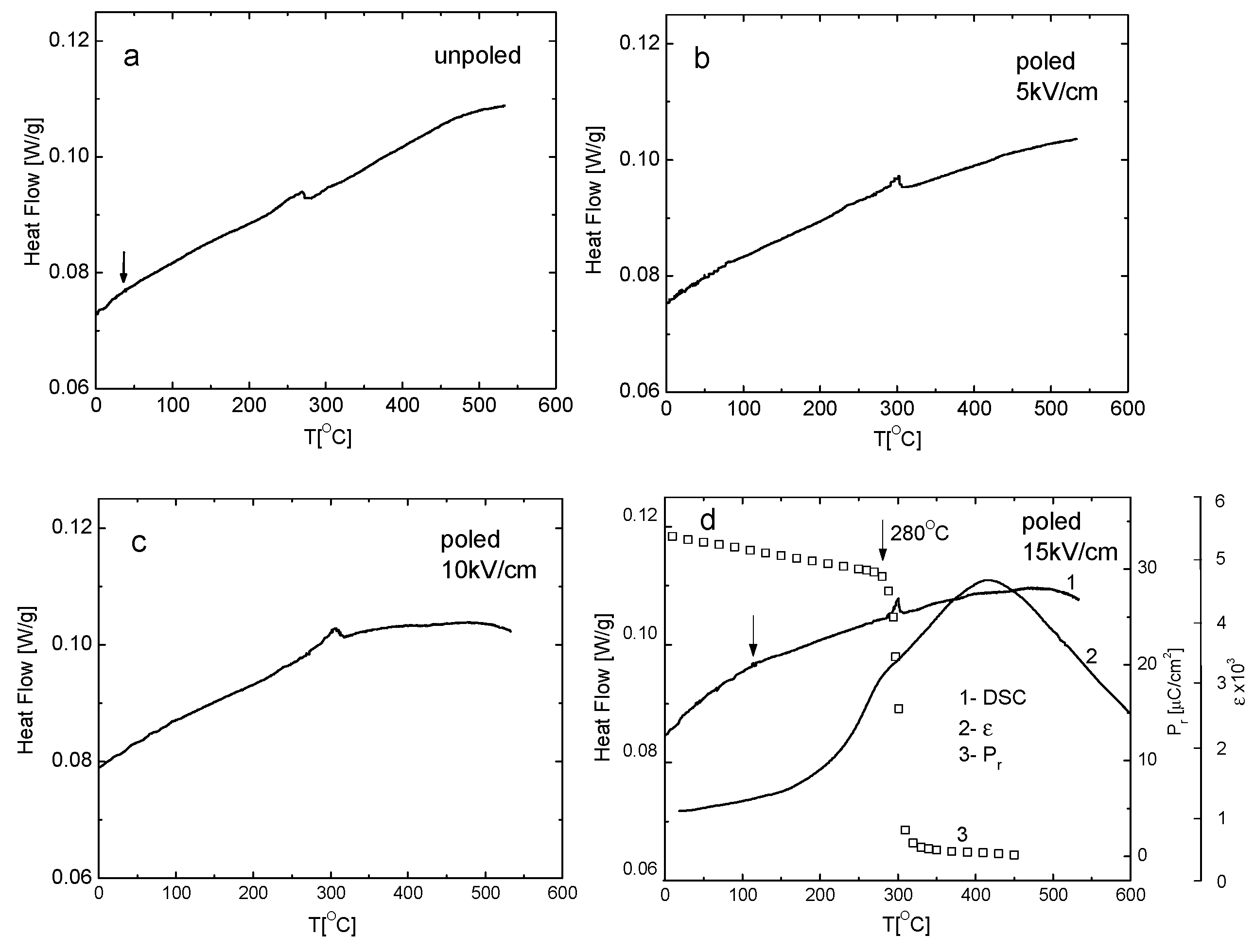
To better understand the nature of the tetragonal-tetragonal and tetragonal-cubic phase transition, the δε/δT versus T plots are presented in inserts of
Figure 5c,d. The abrupt inflection points near both the tetragonal-tetragonal and tetragonal-cubic (T
m) temperatures seem to be more sharp for the poled state compared to the unpoled state. Since such inflections mark first-order behavior, this suggests that the transition tends to become more first order after E-poling. This implies that electric poling enhances the order within KBT (i.e., the electric ordering is improved by the electric field).
It is noteworthy that the ε(T) features of poled samples remain stable and essentially unchanged after multiple heating/cooling cycles up to T
d = 270–280 °C, where a distinct anomaly exists (
Figure 5b,d). This stability is further supported by the behavior of the remnant polarization P
r (shown in lower insert in
Figure 5b). P
r decreases slightly up to about 275 °C (the onset of depoling behavior), followed by a more abrupt change until roughly 305 °C, and then decreases very slowly up to approximately 450 °C. Therefore, the depolarization temperature (T
d) of KBT exceeds that of the lead-free NBT analogue by over 100 °C, which is significant for practical applications. The temperature-dependent evolution of remnant polarization indicates that polar behavior persists across a wide temperature interval, up to about 450 °C.
3.5. Raman Spectroscopy
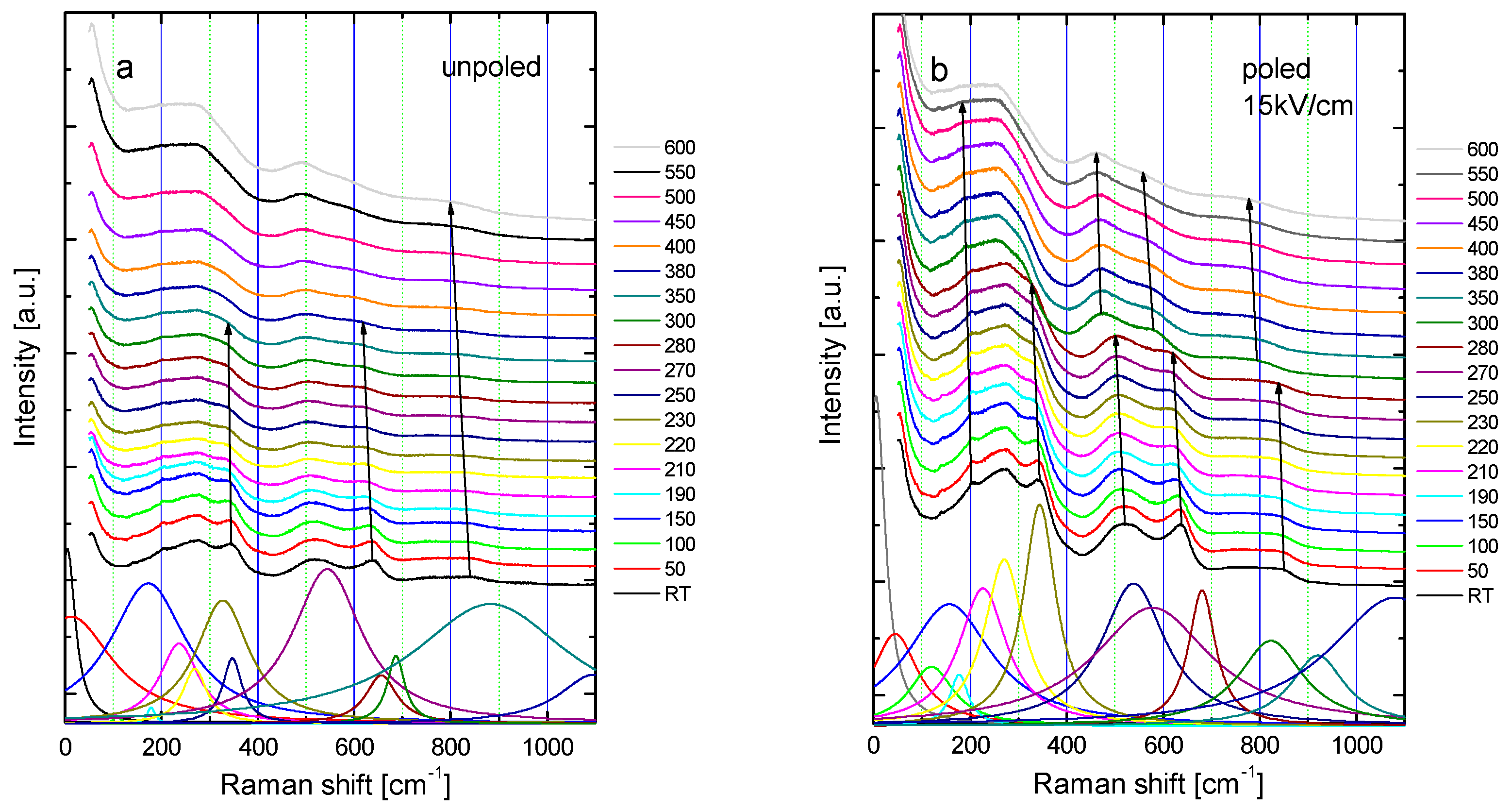
Raman spectra of KBT ceramics at various temperatures are presented in
Figure 7. Multi-Lorentzian oscillator functions were utilized to fit Raman spectra, as shown in
Figure 7.
The broad modes in wavenumber observed around 150–300 cm
−1 indicate an increase in short-range polarization, in contrast to sharp features typical of long-range polar order. The spectra can be divided into three main regions: (1) the bands at about 100–350 cm
−1 originating from K-O and Ti-O vibrations, (2) the bands near 500 and 650 cm
−1 dominated by Ti-O octahedral vibrations and rotations, and (3) the bands above 700 cm
−1 related to oxygen vibration and the presence of oxygen vacancies [
25]. Modes associated with A-site cations (K
+ and Bi
3+) are likely to occur predominantly below about 200 cm
−1. As temperature increases, the two splitting modes in the 280–370 cm
−1 range first broaden, and eventually (around 400 °C) one mode at about 280 cm
−1 persists. This suggests a change in symmetry towards a structure with fewer Raman active modes, linked to the gradual disappearance of both the tetragonal phase and the long-range ferroelectric state (the mode near 280 cm
−1 is also related to the ferroelectric phase transformation). The mode at approximately 280 cm
−1 develops throughout the investigated temperature range and remains quite complex even at 600 °C. Similar behavior is observed in the modes at about 520 and 836 cm
−1, implying that the symmetry is not purely cubic at temperatures well above T
m. These modifications reflect the shift in average crystal symmetry seen in the XRD data and show that polar-active Ti-O vibrations persist within this temperature range. At the same time, oxygen vibrations and rotations are also present in the high-temperature cubic phase, which exhibits a short correlation length. It is vital to note that, according to X-ray results, above approximately 400 °C, the large-length scale average structure of KBT is cubic (Pm
m). When the temperature exceeds T
m, the cubic phase gradually develops, causing the Raman peaks to broaden, with modes overlapping and becoming indistinct during the fitting process. As a result, the fitting outcomes may be affected by other phonon modes and cannot be clearly separated. The disorder of A-site cations in KBT necessitates the existence of the chemical 1:1 order in the K/Bi sublattice (chemically ordered nanoregions) [
14]. Another reason for the observed first-order Raman spectra in the cubic phase is the presence of unstable polar regions (most likely tetragonal), whose existence may fluctuate over their lifetime within this temperature range [
14]. Since Raman spectroscopy is sensitive to the local symmetry, it can detect these regions. Furthermore, the presence of polar regions in the paraelectric phase of perovskites has also been reported and interpreted as pre-transitional effects (precursor dynamics), resulting from interaction between polar and elastic areas [
26,
27,
28].
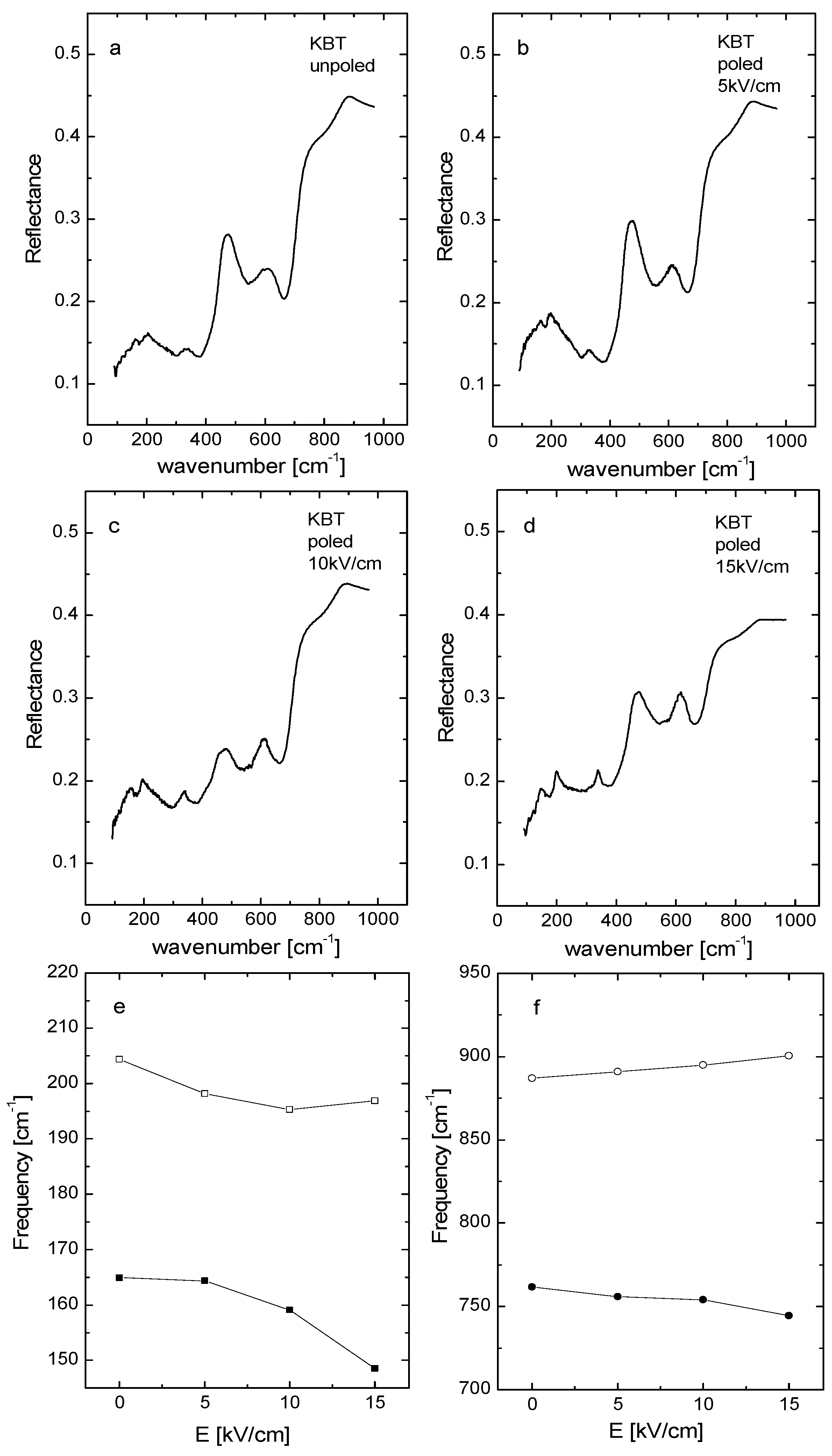
It is expected that applying an electric field induces changes in the distances and displacements of ions. These modifications alter force constants, thereby affecting vibration conditions. In the poled state (
Figure 7b), most modes appear sharper and more symmetric, their intensities increase, and they shift towards lower wavenumbers, indicating a change in crystal structure and/or ferroelectric order. This Raman behavior suggests the development of long-range polar order and an increase in the degree of ordering after E-poling.
The distinct shift in the frequency of the 520, 615, and 836 cm
−1 modes occurs in the poled state at about 280–290 °C (
Figure 7b and
Figure 8d), aligning with the temperature range where depoling phenomena, as previously discussed, are observed. This includes a reduction in tetragonality (
Figure 3b), an anomaly in electric permittivity (
Figure 5b,d) and DSC (
Figure 6d), and a rapid change in remnant polarization (insert in
Figure 5b and
Figure 6d). These facts clearly demonstrate that local-scale processes significantly influence macroscopic properties.
The disorder of KBT arises from the presence of two different ions, K
+ and Bi
3+ at the A-site. Beyond differences in charge, these ions also differ in several respects: (1) the ionic radius is 1.64 Å for K
+ and 1.17 Å for Bi
3+, with coordinator number XII and VIII, respectively; (2) the K-O bond is nearly ionic, but the Bi-O bond is predominantly covalent; (3) the bond lengths vary; and (4) the electronegativity is 0.82 for K
+ and 2.02 for Bi
3+. These differences create notably distinct local environments, causing distinctly different local environments for K and Bi. Due to these substantial differences, the partial local ordering of A-site cations—forming chemically ordered nanoregions—is plausible [
14] in accordance with theoretical predictions [
29]. Both Bi and K easily evaporate, leading to local deficiencies or excesses in the cation sublattice. The difference in ion sizes and valences causes local lattice stresses, promotes fluctuations in occupancy at lattice sites, and leads to dynamic (disordered) shifts and local inhomogeneities. Bi ions have quite a complex electronic structure and can appear as Bi
3+ and Bi
5+. Therefore, we can speculate that they can be incorporated into different places within the structure. If that is the case, it would mean that Bi can modify the density of defects, especially by reducing the density of oxygen vacancies, thereby supplying the structure with electrons. Therefore, one cannot exclude Bi disorder in the KBT structure; however, it is not acting negatively, but rather positively, on the polar properties presented in our paper.
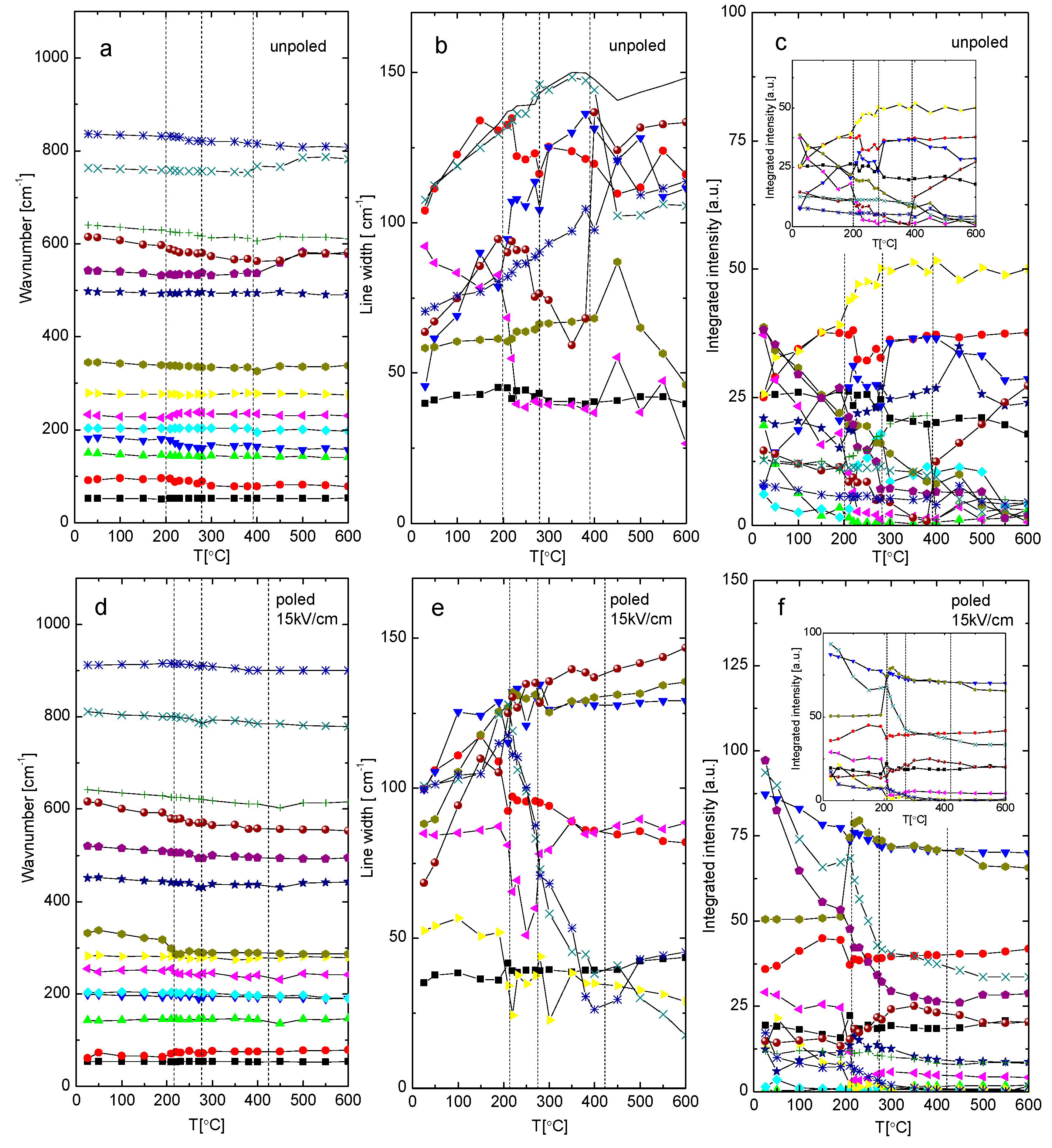
For closer examination of the local structure state, the temperature evolution of the peak position, full width of half maximum (FWHM), and intensity of the Raman modes derived from spectral deconvolution are presented in
Figure 8. Overall, the Raman parameters exhibit an almost classical temperature variation: (1) the wavenumber decreases and modes broaden, (2) FWHM increases (while remaining relatively small, indicating a large coherence length), and (3) for most modes integrated intensity decreases, suggesting the first-order character of these modes. The modes change non-monotically, with sudden shifts around phase transitions, particularly around the tetragonal-tetragonal phase transition; smaller changes occur during the tetragonal-cubic phase transition. This includes a significant change in peak intensities and abrupt jumps in their positions and widths, likely related to the different ionic arrangements associated with changes in crystal structure. The variations in the Raman line parameters are more noticeable in the poled sample, due to decreased structural disorder caused by the electric field. At least three Raman modes, 91, 182, and 615 cm
−1, show softening-like behavior on approaching T-T phase transition (
Figure 8a).
Above this temperature, frequencies of these modes remain nearly constant, indicating the displacive character of this transition. In the poled state, modes 91, 233, 345, and 615 cm
−1 demonstrate similar softening-like behavior near this transition (
Figure 8d). The modes 641 (possibly also 615), 345, and 204 cm
−1 display softening-like behavior approaching the C-T phase transition (
Figure 8a), with modes 641 (possibly also 615), 345, 233, and 182 cm
−1 showing similar tendencies in the poled state. Generally, applying an electric field causes the wavenumber to shift towards lower frequencies, decreases the FWHM, and increases the integrated intensity. Notably, in the poled state, an anomaly in the temperature evolution of some modes (including the 280 cm
−1 mode related to Ti-O vibrations) appears near the depolarization temperature T
d. Based on the anomalies in the temperature evolution of the wavenumber, linewidth, and intensity, phase transition temperatures were estimated. For the unpoled sample, these temperatures are ~195 °C and ~375 °C for the tetragonal-tetragonal and tetragonal-cubic phase transitions, respectively (
Table 1). For the poled sample (15 kV/cm), the estimates are higher, around 210 °C and 410 °C.
As mentioned earlier, some Raman modes show changes resembling softening at characteristic temperatures (
Figure 7 and
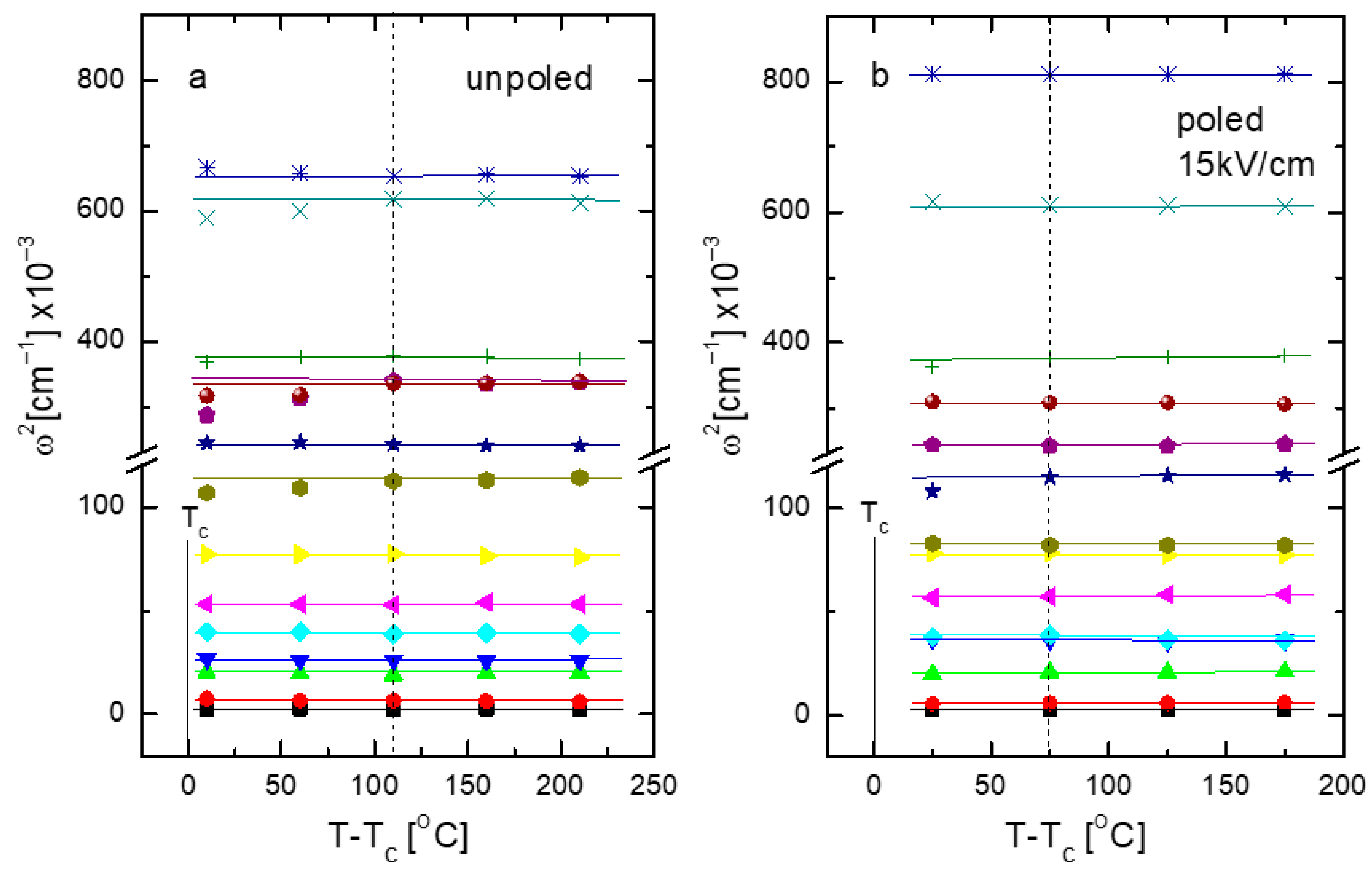
Figure 8a,d) derived from X-ray and dielectric measurements, as previously described. This suggests that the phase transition is mainly of displacive character. According to Cochran’s law, the square of the soft-phonon frequency should be a linear function of temperature: ω
2~(T-T
c).
Figure 9 shows the temperature variation of the squared frequency of the modes with a linear fit (the same symbols are used for particular modes, as for
Figure 8). In general, this behavior is observed for low-frequency modes; however, for high-frequency modes, a divergence from the linear ω
2(T) function appears at about 500 °C and 450 °C for the unpoled and poled (15 kV/cm) states, respectively (
Figure 9). These temperatures roughly correspond with Burn’s temperatures obtained from the Curie-Weiss law and also agree with theoretical predictions made by Bussmann-Holder A. et al. [
26,
27]. This behavior can be connected in a first approximation with a non-homogeneous distribution of chemically ordered nanoregions and/or with local strain associated with them. Referring once again to the theoretical considerations [
26,
27,
28], precursor dynamics in the paraelectric phase are not related to inhomogeneity but to acoustic-optic mode coupling as an inherent effect. From this perspective, the derived temperatures arise from the presence of polar regions in the high-temperature range and the shift of these regions from stable to dynamic (not with their disappearance) as temperature increases. As temperature decreases, stable polar regions start interacting with each other and grow in size, eventually leading to a phase transition at T
c.
It is known that when the tolerance factor is approximately one, a stable cubic phase can form. When the tolerance factor is significantly greater or smaller than one, it indicates the possible presence of octahedral tilts and their deformation. This deformation may lead to instability in phonons within the Brillouin zone. Because the calculated tolerance factor for the investigated material is 1.02, i.e., very close to one, one cannot expect distinct instability of phonons at the Brillouin zone. In principle, the Raman scattering does not “see” the modes from the Brillouin zone. However, this can happen due to the presence of defects and disorder. Then, the crystal lattice disturbances can “loosen” the selection rules and enable the observation of phonons outside the Γ point, usually at high values of the wave vectors. The result is that the Raman spectrum is much broader than the “normal Raman line”. Therefore, we cannot exclude that our Raman spectra at high wavenumbers are influenced by the modes from the Brillouin-zone instability.
3.7. Mechanical Properties
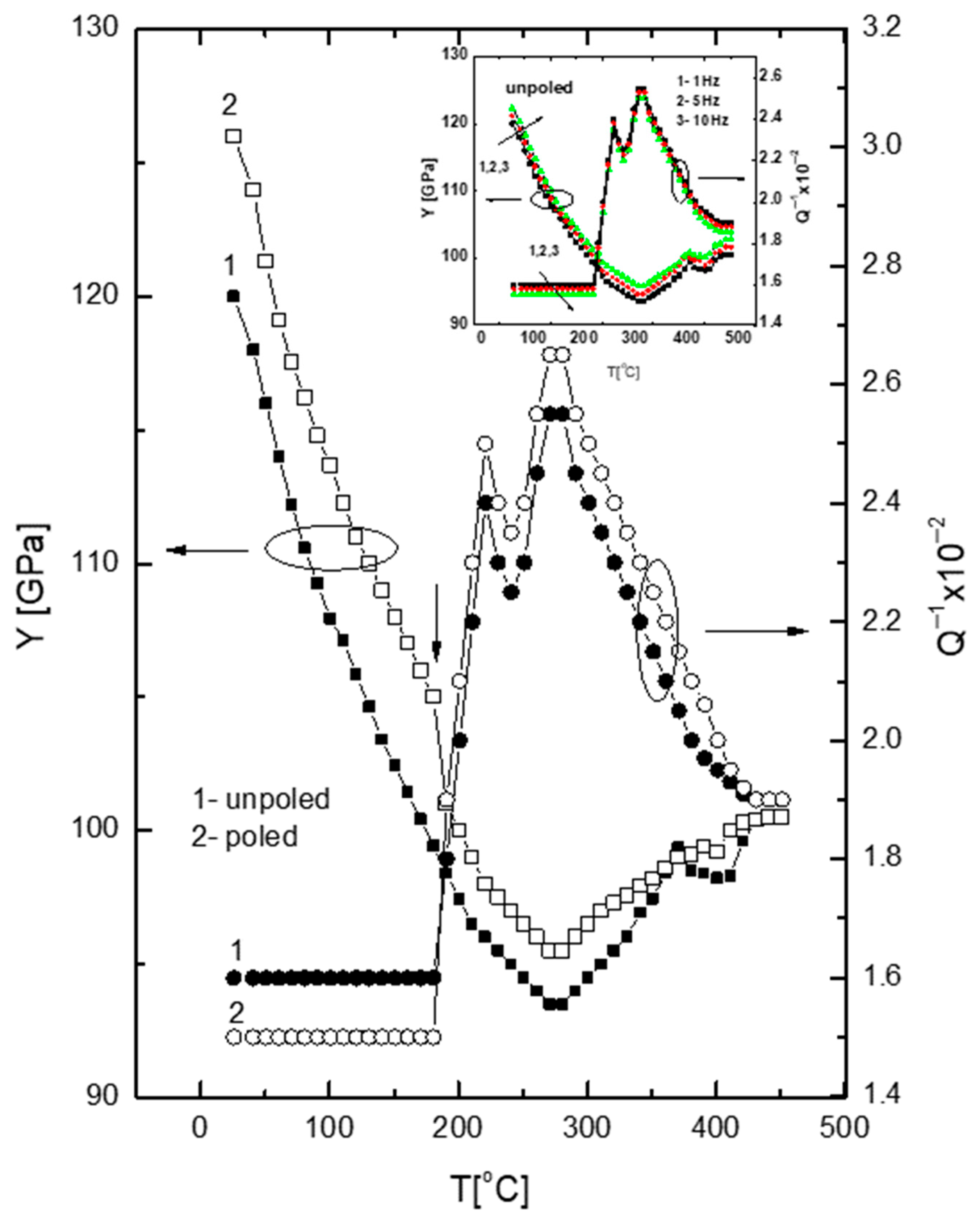
Figure 11 depicts the temperature dependence of Young’s modulus (Y) and the internal friction (Q
−1) for unpoled and poled samples. The Y(T) curve exhibits two anomalies: (1) at approximately 270 °C (minimum) and (2) the small peak at about 370 °C. The first anomaly corresponds to depolarization phenomena described earlier, and indicates increased domain wall movement before the tetragonal-cubic phase transition.
The second anomaly aligns with the maximum electric permittivity. A detailed examination of
Figure 11 reveals a minor anomaly at approximately 200 °C (marked by an arrow), which is associated with the tetragonal-tetragonal phase transformation. The Y drops from ~120 to 93 GPa in the temperature range RT-270 °C, indicating elastic softening similar to that observed in improper ferroelastic transitions. This softening primarily results from the coupling between spontaneous strain and the order parameter, which is linked to a specific tilt angle of the oxygen octahedron. At a constant spontaneous strain level, the restoring force resisting octahedral tilting weakens to the point that the material softens [
30]. Additionally, the movement of twin walls contributes to this elastic softening. An anomaly resembling an elastic softening-like anomaly can also be observed near 400 °C, which corresponds to the tetragonal-cubic phase transition.
The Q
−1(T) curve presents three anomalies (1) around 215 °C, coinciding with anomalies in ε and Y and related to the tetragonal-tetragonal phase transition, (2) around 270 °C, matching the epsilon anomaly and Y minimum, and corresponds to depoling effect, associated with increased of domain walls movement before the tetragonal-cubic phase transition, and (3) near 370 °C, corresponding to the maximum of both ε and Y, linked to the tetragonal-cubic phase transition. It is plausible that electromechanical interaction between the tetragonal matrix and chemically ordered matrix, as well as between the cubic matrix and tetragonal regions, significantly influence the evolution of mechanical parameters Y and Q at low and high temperatures, respectively. It is noteworthy that twin walls between 90° domains in the tetragonal symmetry of KBT are both ferroelectric and ferroelastic in nature, as multiaxial ferroelectrics display simultaneous weak ferroelasticity [
31,
32]). The former are sensitive to the electric field, while the latter respond to stress. The elastic strain field is weaker and longer-ranging than the electric field, which, although stronger, is relatively short-range. This loss mechanism in KBT is likely to involve mobile interfaces between ferroelastic domains. The anomalies and frequency dependence of Q
−1 are primarily governed by the ferroelastic aspects of the tetragonal-tetragonal and tetragonal-cubic phase changes, possibly resulting from the relaxation of twin walls between 90° domains and mobile interfaces between coexisting phases.
Excellent agreement between the transition temperatures obtained using XRD, DSC, dielectric, Raman, and mechanical measurements is clearly evident, as shown in
Table 2. Note that the temperature of the tetragonal-cubic phase transition obtained from Raman studies is lower in comparison to that obtained using other measurements. This difference can be mainly due to the varying scales of changes detected by the techniques and the stress effect, which can shift the phonon frequencies [
33,
34]. X-ray, DSC, mechanical, and dielectric responses relate to macroscopic structural changes, whereas the Raman technique provides information about microscopic (local scale) structural changes. Apart from the different local stress fields within individual grains, there are at least two reasons for the existence of stress in KBT: (1) the difference in the ionic radius of ions occupying the A-site and (2) the existence of chemically ordered nanoregions and polar regions across a wide temperature range. These stresses can lower the temperature at which the tetragonal-cubic phase transition occurs in Raman studies. Some differences in the phase transition temperatures compared to previous studies may be due to variations in technological conditions used by different authors.
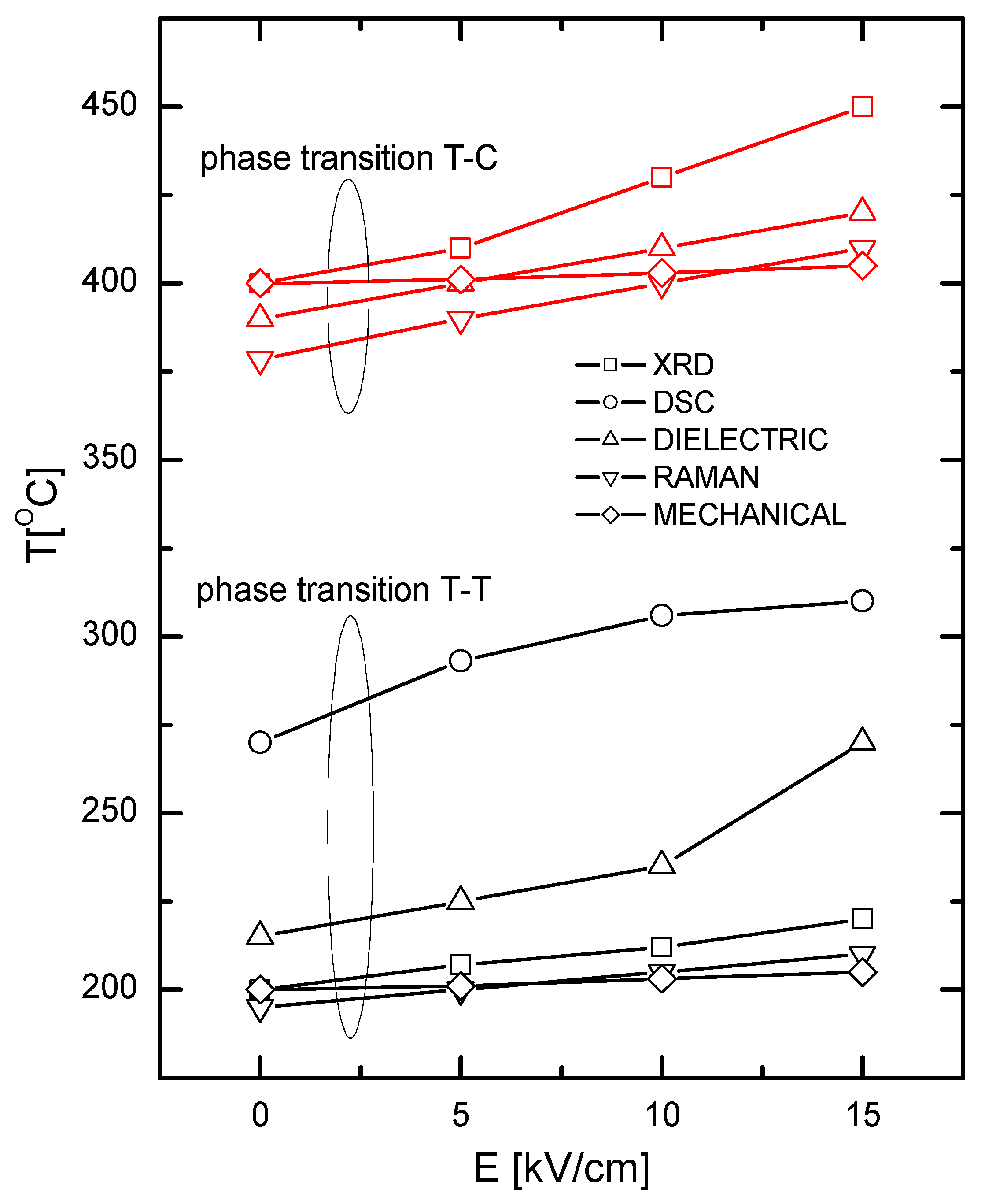
The transition temperatures from our measurements are plotted against the electric field intensity in
Figure 12. As shown, increasing the electric field intensity has a consistent effect on the temperature for both the tetragonal-tetragonal and tetragonal-cubic phase transitions, displaying an almost linear increase. Excellent agreement between the transition temperatures obtained via different measurement techniques is again clearly evident.
To enhance properties of the perovskites, dopant strategies are commonly employed. We have demonstrated that E-poling is an effective method for achieving a similarly stable enhancement effect.




 ,
,