
Flexural Fracture Behavior and Mechanical Properties of SAP-PVA Fiber-Reinforced Concrete


Abstract
1. Introduction
2. Experimental Program
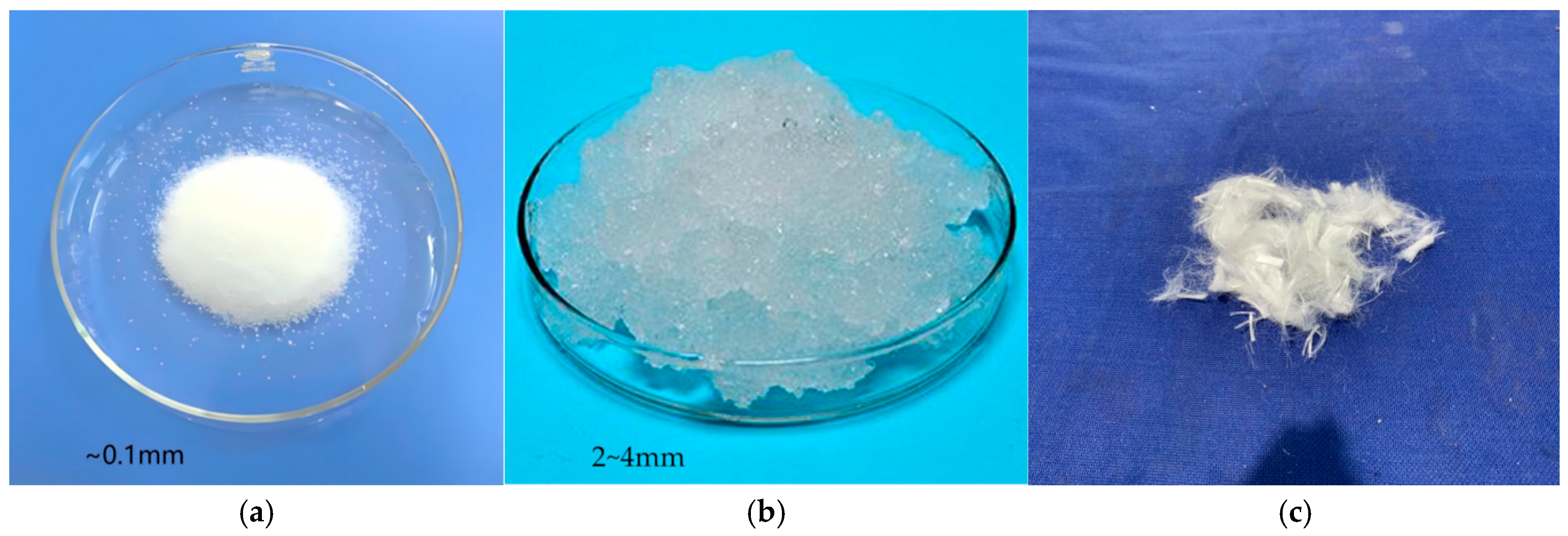
2.1. Experimental Materials
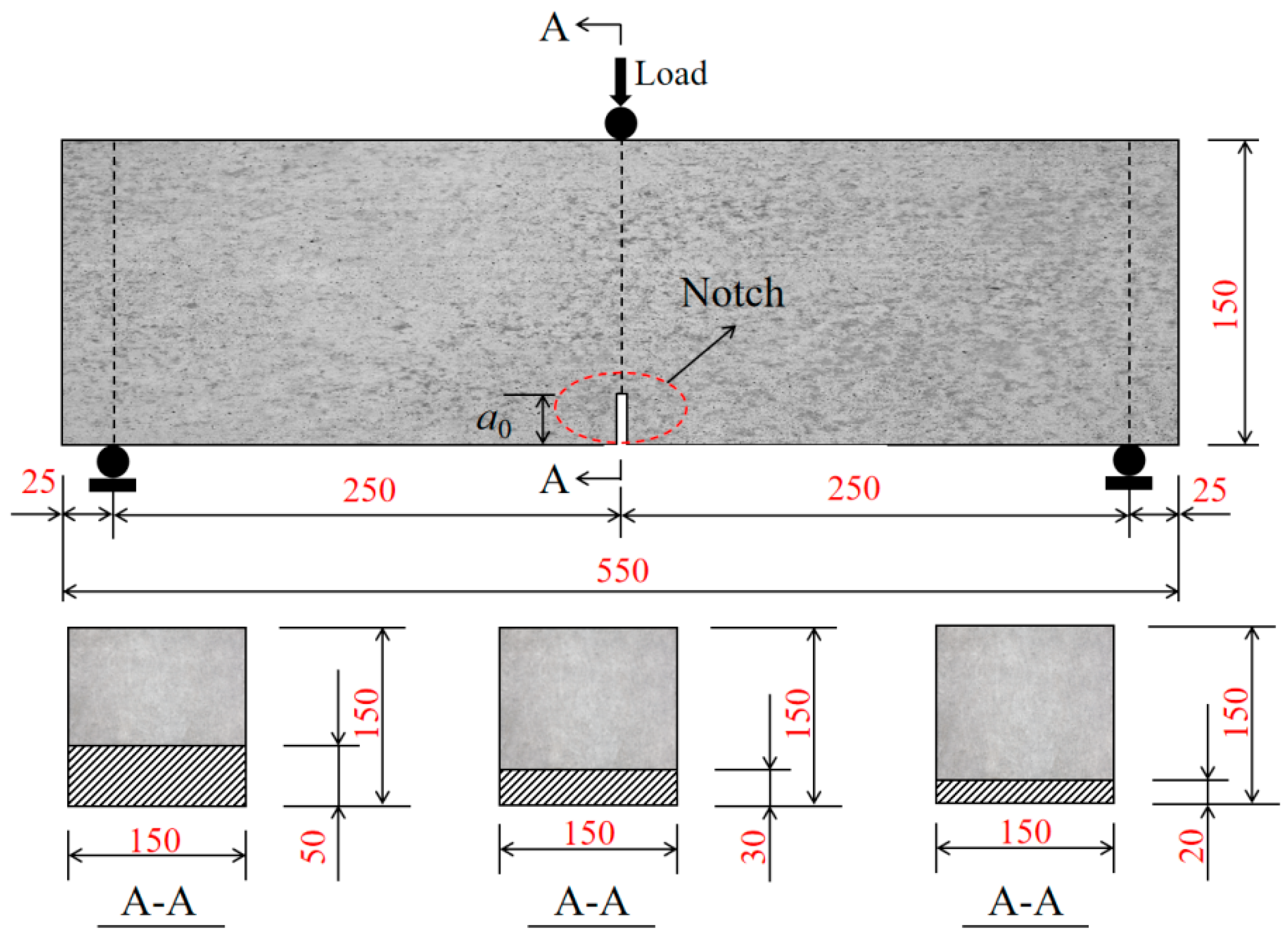
2.2. Sample Preparation
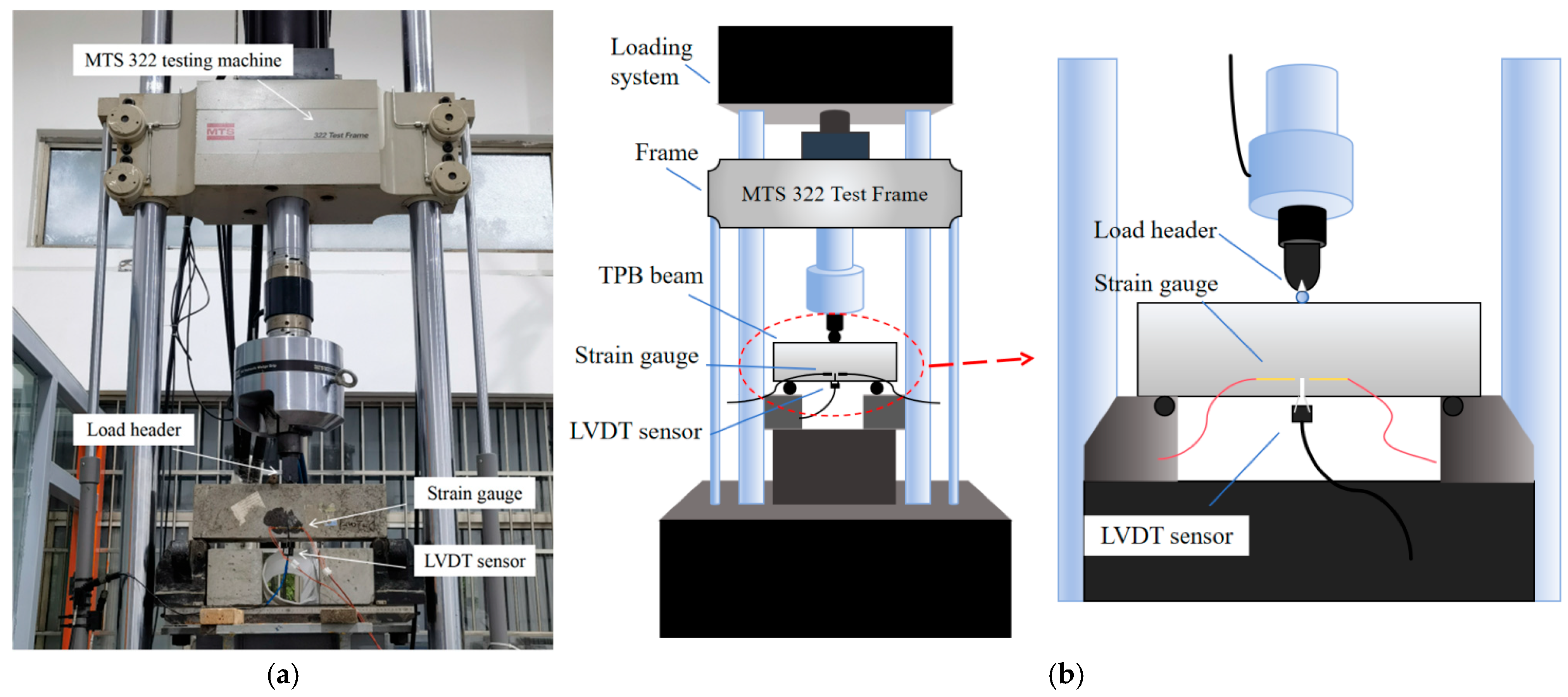
2.3. Experimental Methods
3. Results and Discussion
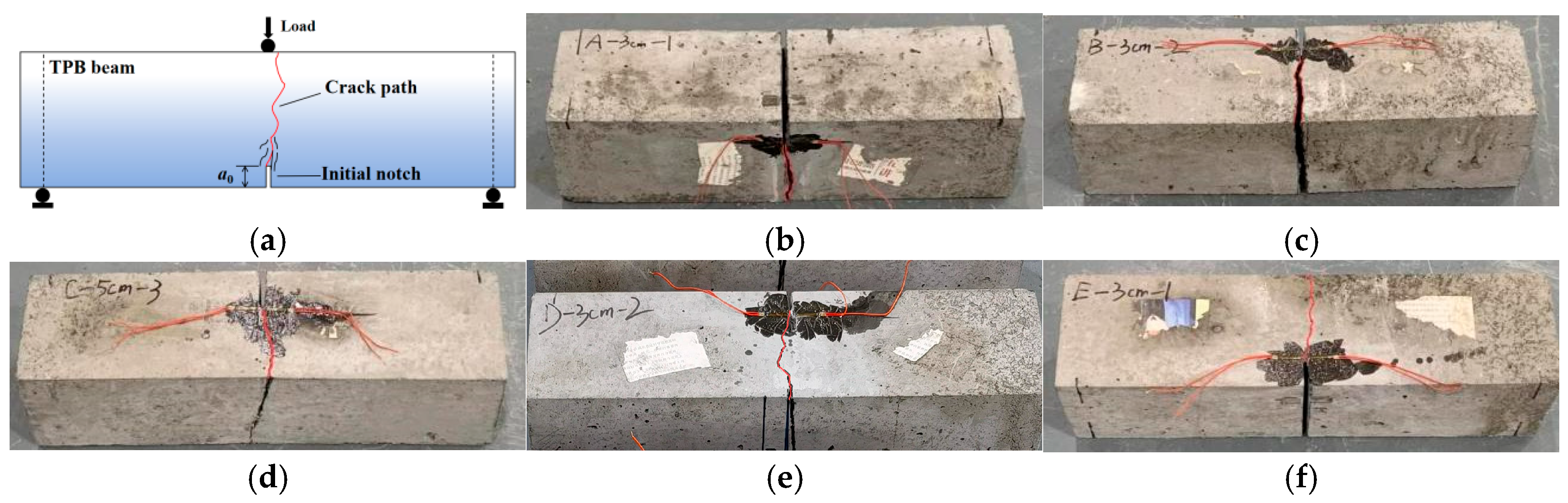
3.1. Failure Modes
3.2. P-CMOD Curves
3.3. Fracture Characteristics
3.3.1. Fracture Energy and Fracture Toughness
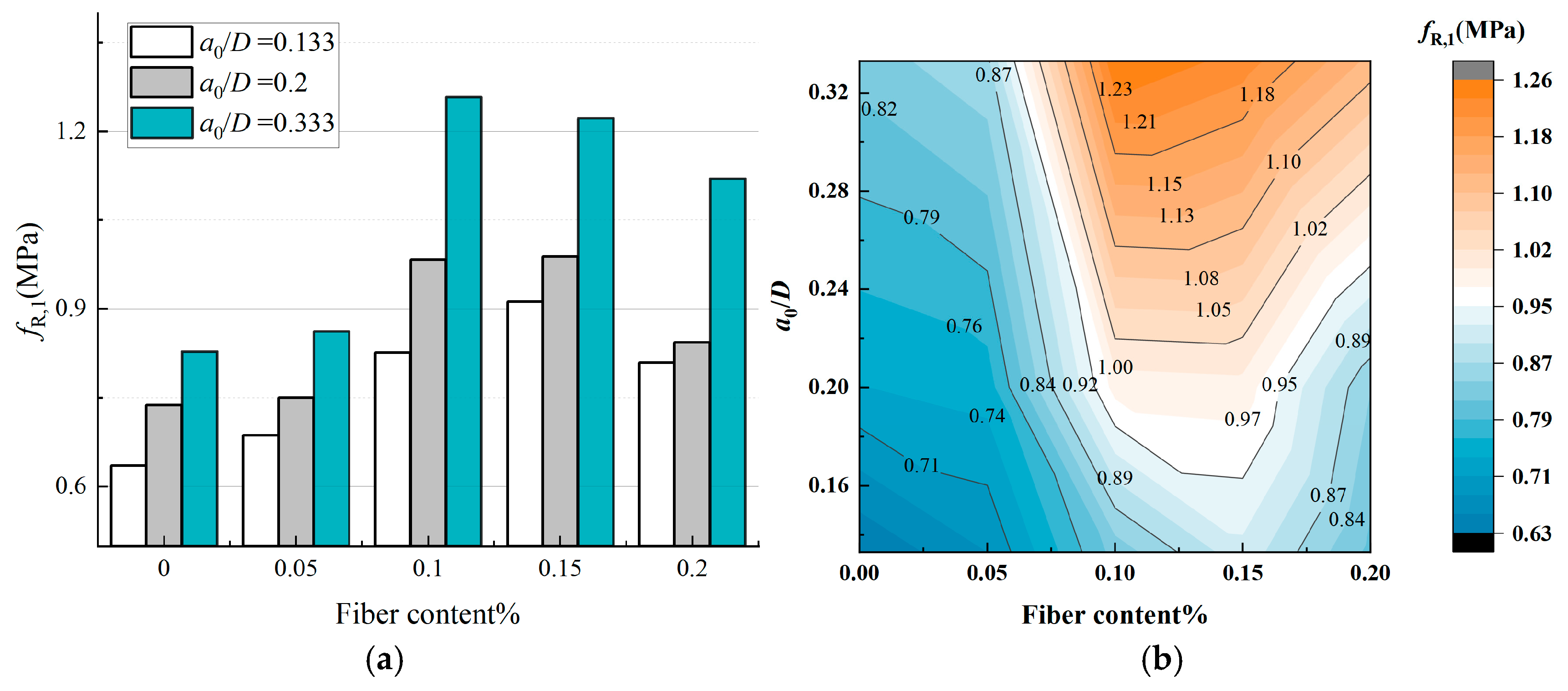
3.3.2. Residual Flexural Tensile Strength
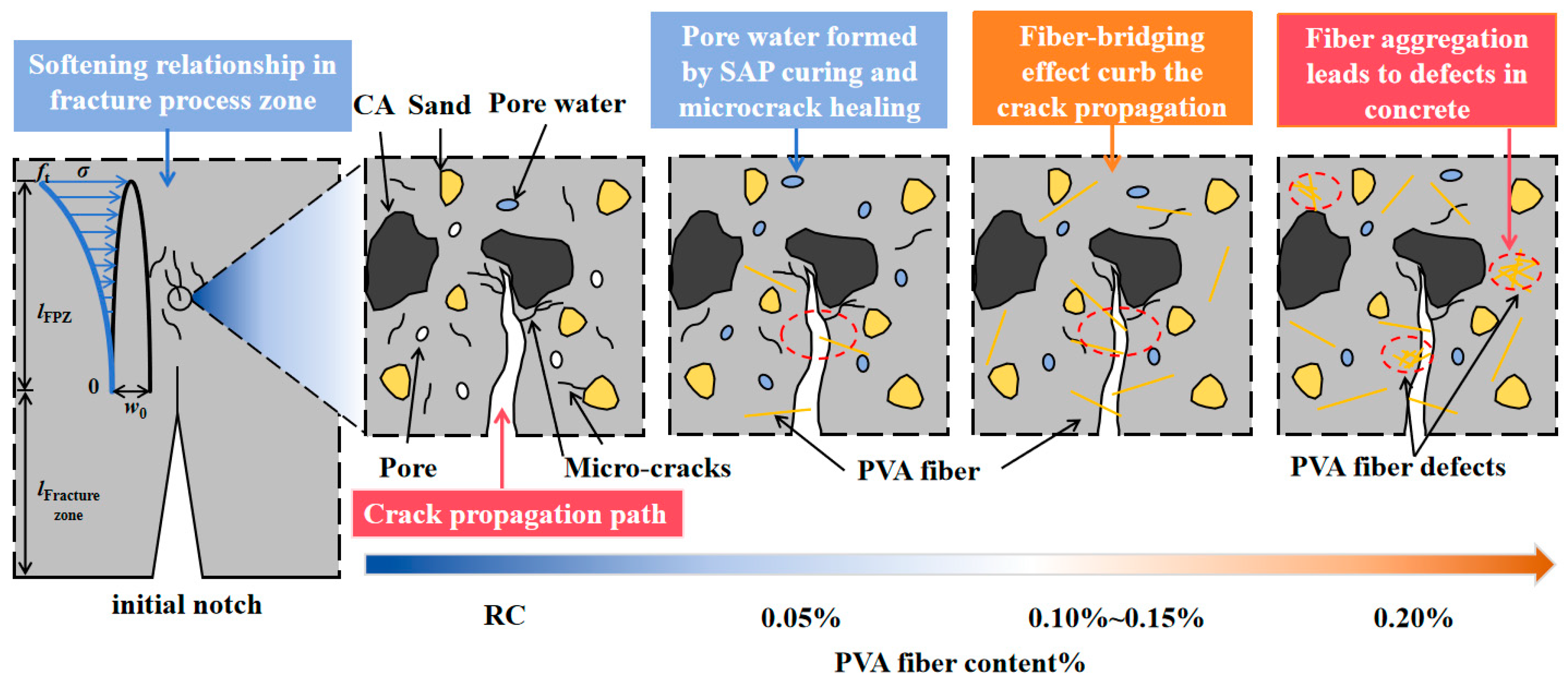
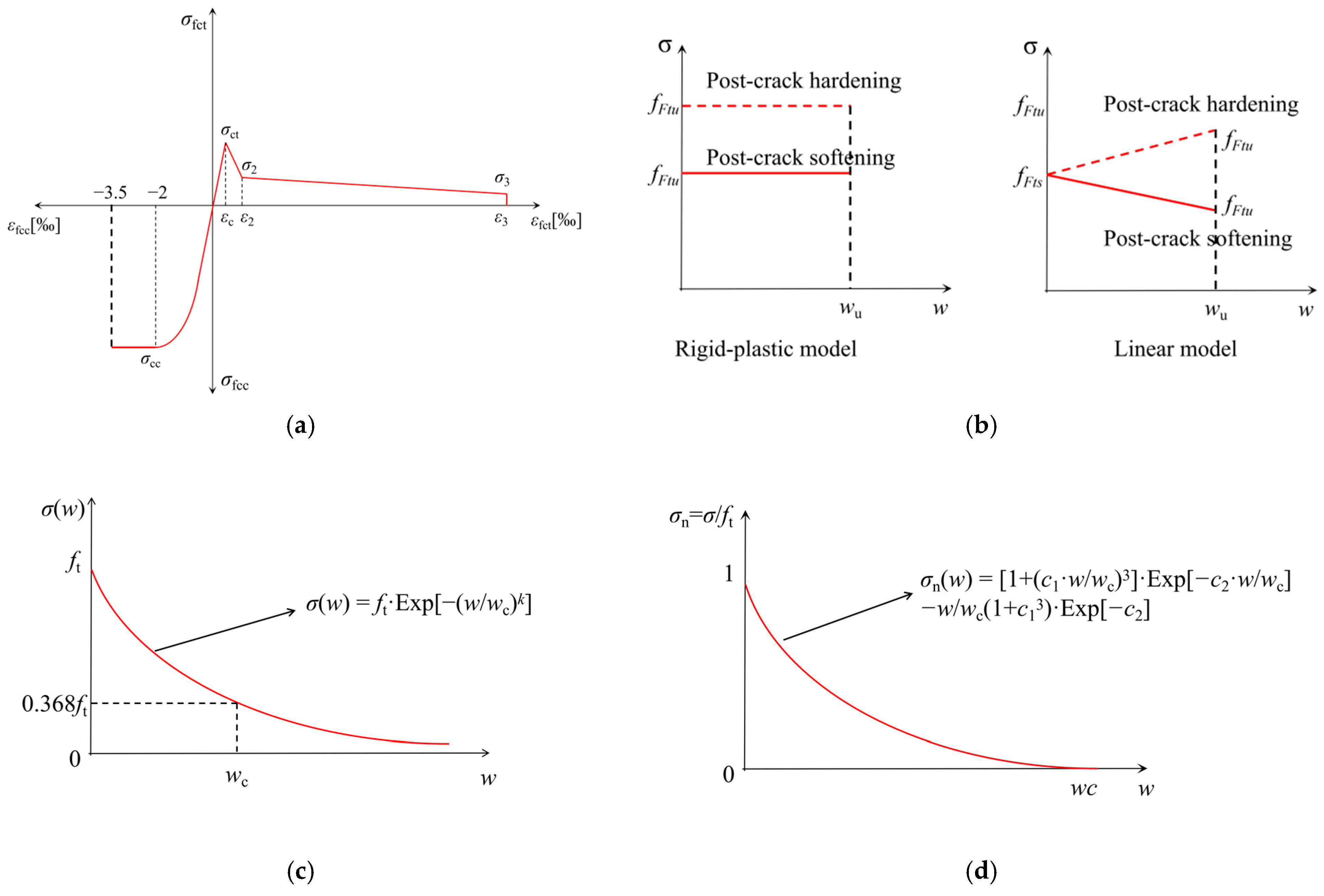
3.3.3. Discussion of Concrete Scratch and Softening Relationship
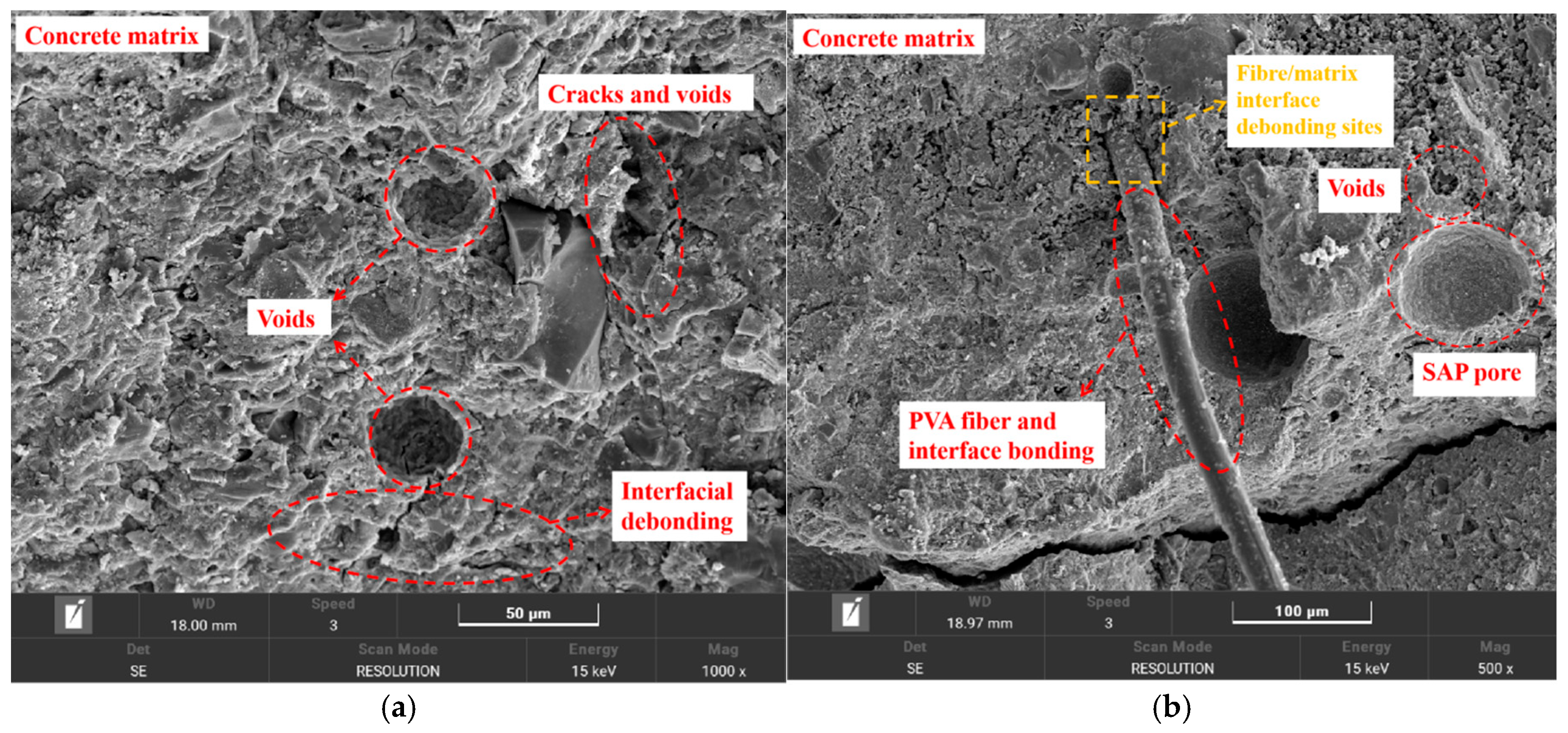
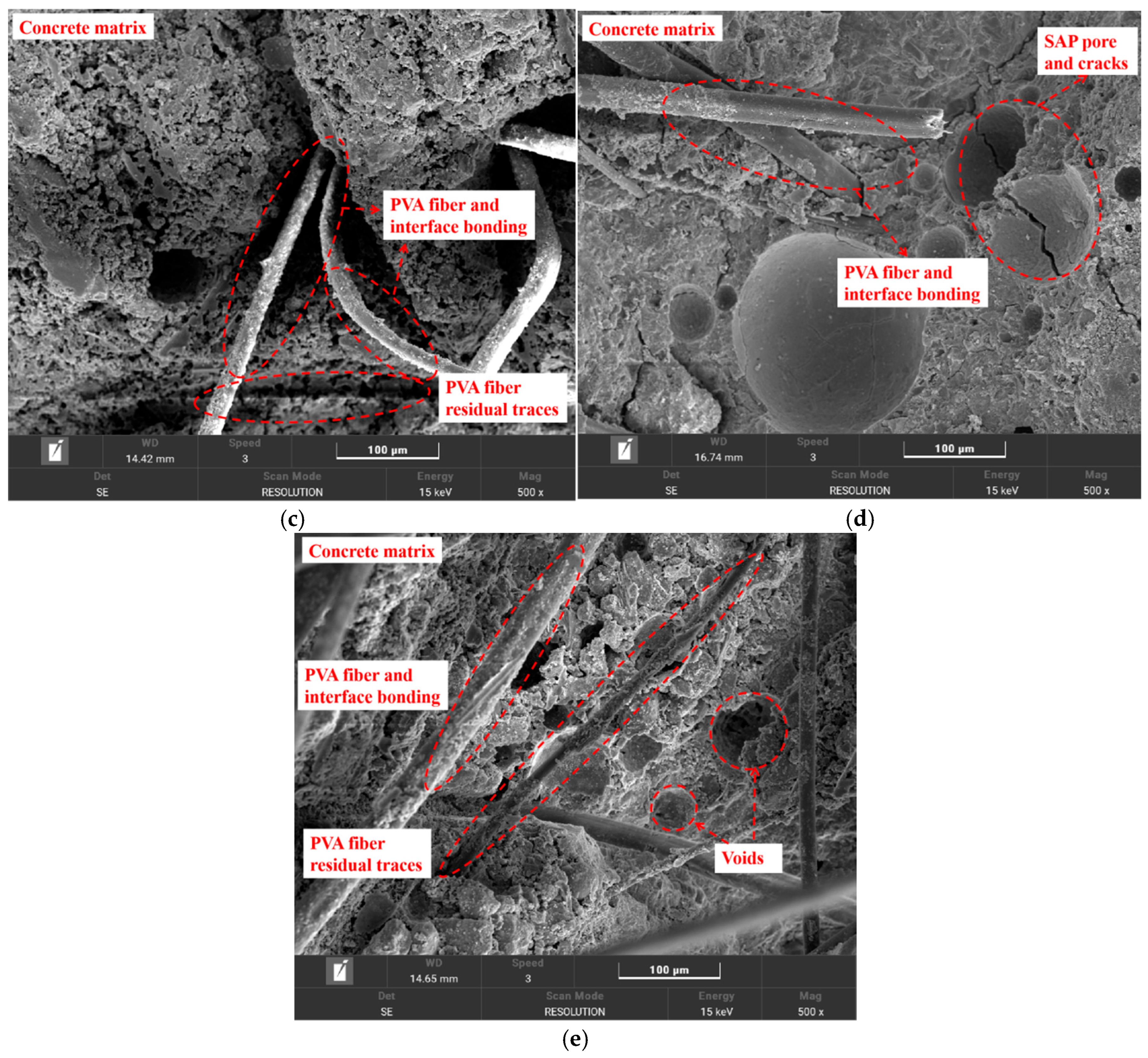
4. SEM Microstructural Analysis
5. Conclusions
- (1)
- The failure mode of SAP-PVAC specimens was significantly influenced by PVA fibers. At a higher fiber content, the open cracks of the specimens under load are smaller and more compact, and the crack propagation angle is also larger. The initial crack depth has no effect on the crack width at the time of specimen fracture, while the crack propagation angle of specimens with a larger a0/D is relatively smaller.
- (2)
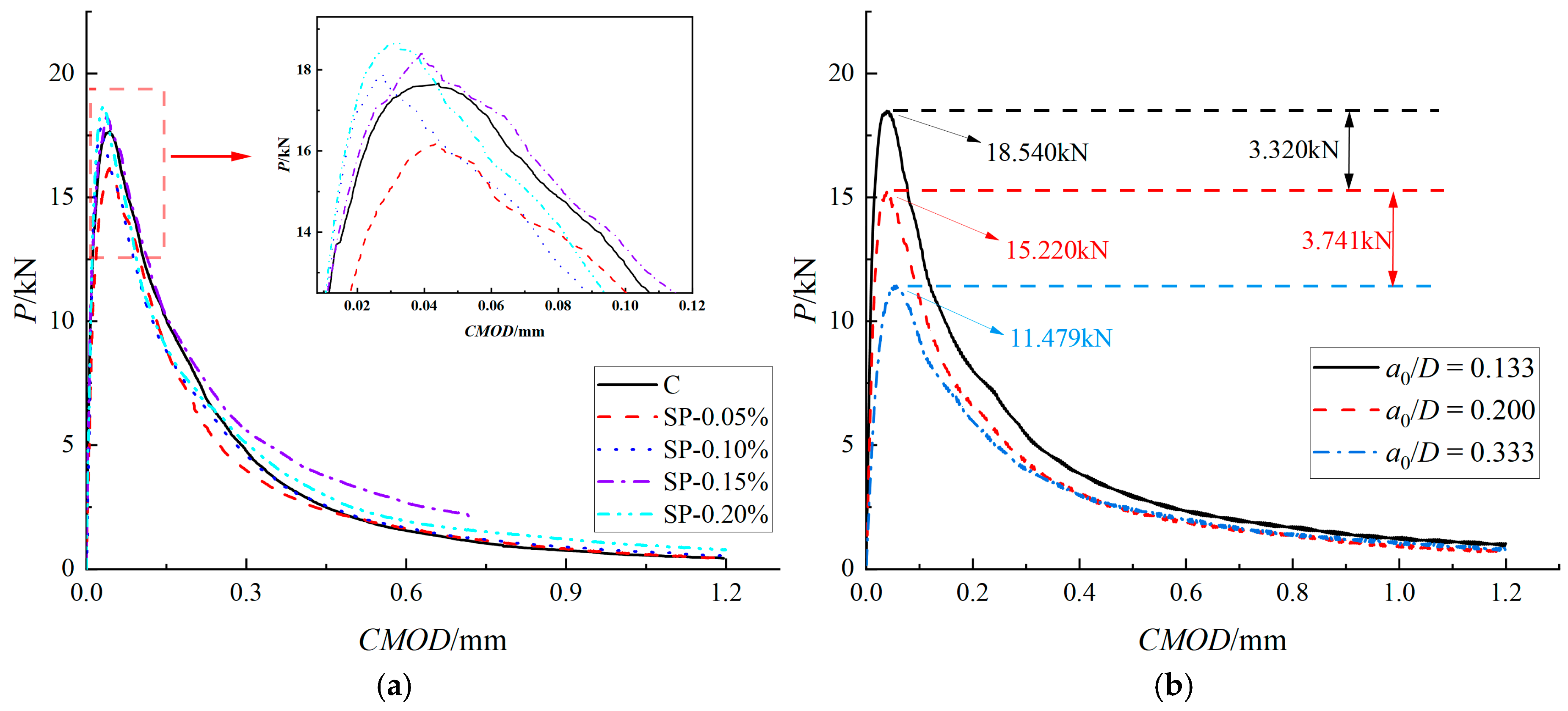
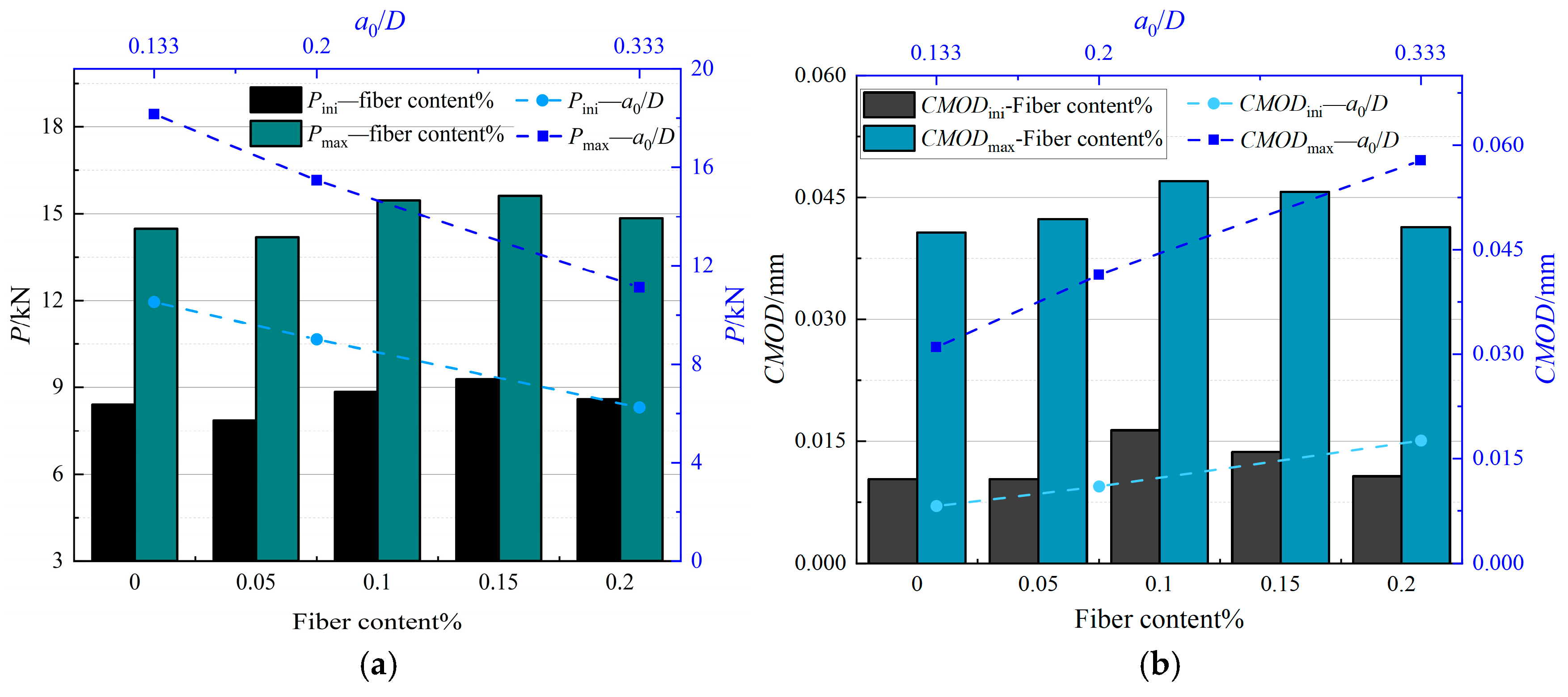
- The P-CMOD curves exhibited substantial variations in shape. Specimens with higher PVA fiber content demonstrated a maximum 14.3% increase in load-bearing capacity, accompanied by gentler post-peak softening behavior due to fiber reinforcement. Larger a0/D significantly reduced the specimens’ load-bearing capacity and failure deformation by an average of 22%, while simultaneously increasing the crack mouth opening displacement (CMOD) at critical states.
- (3)
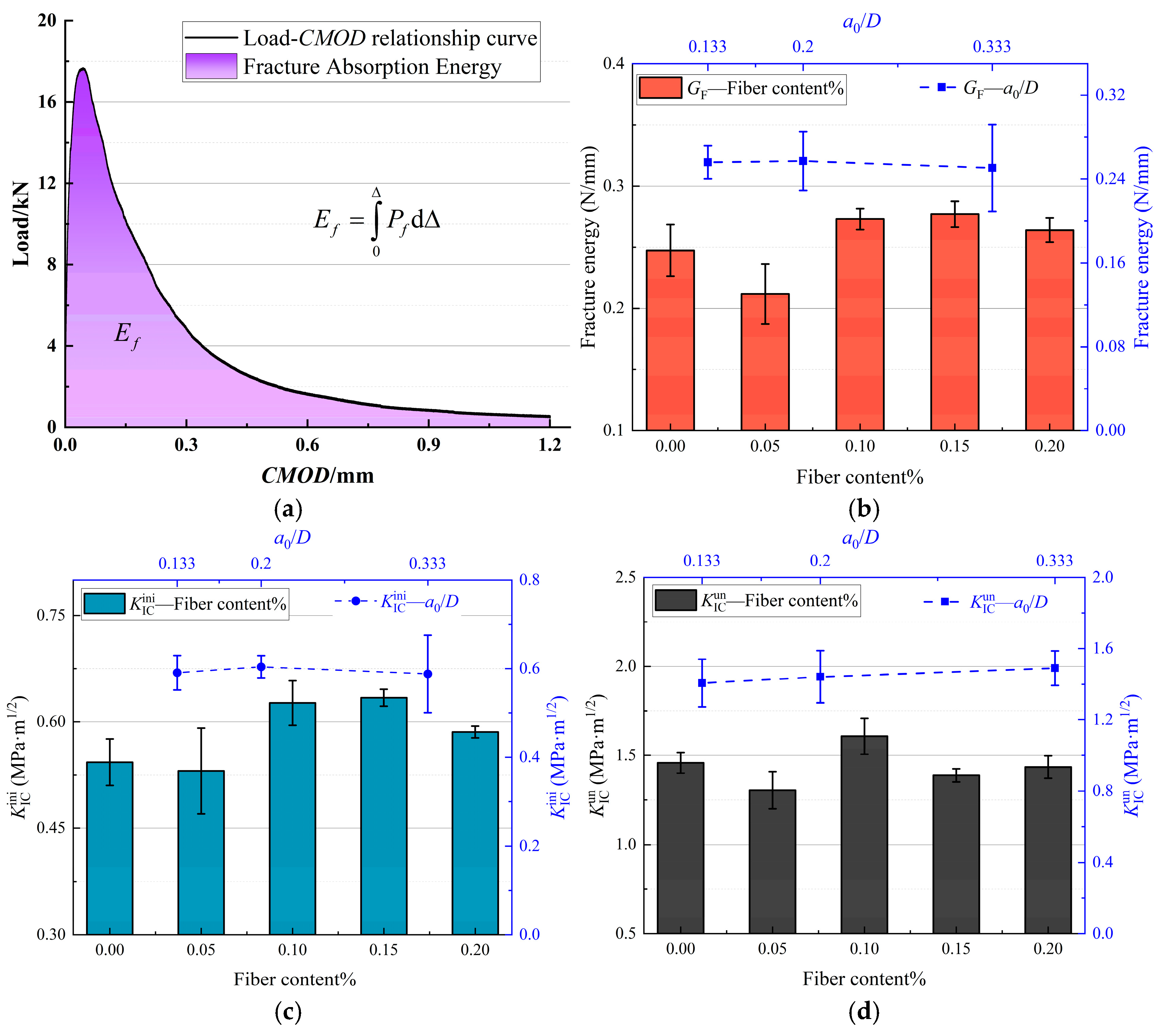
- The PVA fiber content exhibited dominant control in the range of 0.10–0.15%, significantly enhancing the fracture energy, fracture toughness, and residual tensile strength of concrete. In contrast, the a0/D showed negligible effects on fracture energy and toughness. However, analytical results revealed that variations in the a0/D could remarkably increase the residual flexural tensile strength (maximum enhancement of 33.0%), suggesting the probable existence of a threshold value for the a0/D.
- (4)
- SEM-based microstructural analysis revealed that while SAP and PVA fibers objectively increased the incidence of initial defects in the concrete matrix, their synergistic coupling bridging effect enhanced interfacial bonding properties, demonstrating a positive role in toughening and crack resistance for SAP-PVAC specimens. However, this study has limitations regarding the characterization of microscopic fracture mechanisms in these specimens. Further research is required to quantify the micro-interfacial properties of SAP-PVAC composites, such as through nanoindentation or spectroscopic imaging techniques.
Author Contributions
Funding
Data Availability Statement
Conflicts of Interest
References
- Zhang, P.; Wang, C.; Gao, Z.; Wang, F. A review on fracture properties of steel fiber reinforced concrete. J. Build. Eng. 2023, 67, 105975. [Google Scholar] [CrossRef]
- Meng, Q.; Xue, H.; Song, H.; Zhuang, X.; Rabczuk, T. Rigid-Block DEM Modeling of Mesoscale Fracture Behavior of Concrete with Random Aggregates. J. Eng. Mech. 2023, 149, 04022114. [Google Scholar] [CrossRef]
- Xie, C.; Cao, M.; Khan, M.; Yin, H.; Guan, J. Review on different testing methods and factors affecting fracture properties of fiber reinforced cementitious composites. Constr. Build. Mater. 2021, 273, 121766. [Google Scholar] [CrossRef]
- Carpinteri, A.; Fortese, G.; Ronchei, C.; Scorza, D.; Vantadori, S. Mode I fracture toughness of fibre reinforced concrete. Theor. Appl. Fract. Mech. 2017, 91, 66–75. [Google Scholar] [CrossRef]
- Monazami, M.; Gupta, R. Investigation of mechanical behavior and fracture energy of fiber-reinforced concrete beams and panels. Cem. Concr. Compos. 2022, 133, 104656. [Google Scholar] [CrossRef]
- Liu, X.; Guo, Y.; Wang, X.; Song, A.X.; Zhang, Y.J. Research progress on causes of concrete cracks. Bull. Chin. Ceram. Soc. 2018, 37, 2173–2178. [Google Scholar] [CrossRef]
- Yang, T.; Sun, N.; Guo, W.J.; Zhang, J.; Pei, M.S.; Wei, Y.F.; Wang, S.N. Effect of Super-absorbent Polymer as Admixture on the Mechanical Properties of Mortars. Adv. Mater. Res. 2011, 306, 1683–1687. [Google Scholar] [CrossRef]
- Yao, Y.; Zhu, Y.; Yang, Y. Incorporation superabsorbent polymer (SAP) particles as controlling pre-existing flaws to improve the performance of engineered cementitious composites (ECC). Constr. Build. Mater. 2012, 28, 139–145. [Google Scholar] [CrossRef]
- Ding, Y.; Zhan, B.; Huang, Q.; Zhou, W. Study of the frost resistance and impermeability of high-performance concrete under self-curing. J. Hefei Univ. Technol. Nat. Sci. Ed. 2007, 05, 603–606. [Google Scholar]
- Xia, D.; Song, N.; Li, B.; Zheng, Y.; Guo, W.; Wu, J.; Wang, S. Understanding the synergetic effect of SAP and nano-silica on the mechanical properties, drying shrinkage and microstructures of alkali-activated slag/fly ash-based concrete. Constr. Build. Mater. 2024, 455, 139223. [Google Scholar] [CrossRef]
- Hasholt, M.T.; Jensen, O.M.; Kovler, K.; Zhutovsky, S. Can superabsorent polymers mitigate autogenous shrinkage of internally cured concrete without compromising the strength? Constr. Build. Mater. 2012, 31, 226–230. [Google Scholar] [CrossRef]
- Faxiang, X.; Dingpeng, C.; Lin, J.; Chuanlong, Z.; Jing, R.; Xiao, L. Combined compression-shear performance and failure criteria of internally cured concrete with super absorbent polymer. Constr. Build. Mater. 2021, 266, 120888. [Google Scholar] [CrossRef]
- Xu, B.; Toutanji, H.A.; Gilbert, J. Impact resistance of poly(vinyl alcohol) fiber reinforced high-performance organic aggregate cementitious material. Cem. Concr. Res. 2010, 40, 347–351. [Google Scholar] [CrossRef]
- Li, D.; Hai, C.; Jinping, O. Fracture behavior and damage evaluation of polyvinyl alcohol fiber concrete using acoustic emission technique. Mater. Des. 2012, 40, 205–211. [Google Scholar] [CrossRef]
- Kou, S.-C.; Poon, C.-S. Properties of concrete prepared with PVA-impregnated recycled concrete aggregates. Cem. Concr. Compos. 2010, 32, 649–654. [Google Scholar] [CrossRef]
- Liu, F.; Xu, K.; Ding, W.; Qiao, Y.; Wang, L. Microstructural characteristics and their impact on mechanical properties of steel-PVA fiber reinforced concrete. Cem. Concr. Compos. 2021, 123, 104196. [Google Scholar] [CrossRef]
- Liu, B.; Chen, Y.; Li, D.; Wang, Y.; Geng, S.; Qian, K. Study on the fracture behavior and anisotropy of 3D-printing PVA fiber-reinforced concrete. Constr. Build. Mater. 2024, 447, 138051. [Google Scholar] [CrossRef]
- Jiang, J.; Hong, L.; Gao, P.; Zhang, Q.; Chen, Y. Experimental research on macroscopic mechanical properties of high strength and high modulus PVA fiber reinforced concrete. J. Hefei Univ. Technol. Nat. Sci. Ed. 2019, 42, 785–790. [Google Scholar]
- Nestle, N.; Kühn, A.; Friedemann, K.; Horch, C.; Stallmach, F.; Herth, G. Water balance and pore structure development in cementitious materials in internal curing with modified superabsorbent polymer studied by NMR. Microporous Mesoporous Mater. 2009, 125, 51–57. [Google Scholar] [CrossRef]
- Kang, S.-H.; Hong, S.-G.; Moon, J. The effect of superabsorbent polymer on various scale of pore structure in ultra-high performance concrete. Constr. Build. Mater. 2018, 172, 29–40. [Google Scholar] [CrossRef]
- Qin, X.; Shen, A.; Lyu, Z.; Shi, L.; Yang, J.; Liu, H. Research on water transport behaviors and hydration characteristics of internal curing pavement concrete. Constr. Build. Mater. 2021, 24, 606–614. [Google Scholar] [CrossRef]
- Xie, F.; Cao, W.; Jin, Z. Study on uniaxial tensile mechanical properties and damage constitutive model of SAP-PVA fiber-reinforced concrete after high-temperature exposure. Constr. Build. Mater. 2025, 489, 142189. [Google Scholar] [CrossRef]
- Fib-Federation International du Béton. CEB-FIP Model Code for Concrete Structures 2010; John Wiley & Sons: Hoboken, NJ, USA, 2013. [Google Scholar]
- Zhang, S.; Lu, Z.; Ang, Y.; Xin, P. Effect of Super-absorbent Polymer Water Absorption Characteristics on Performance of Concrete. J. Chin. Ceram. Soc. 2020, 48, 1278–1284. [Google Scholar] [CrossRef]
- He, Z.; Shen, A.; Guo, Y.; Lyu, Z.; Li, D.; Qin, X.; Zhao, M.; Wang, Z. Cement-based materials modified with superabsorbent polymers: A review. Constr. Build. Mater. 2019, 225, 569–590. [Google Scholar] [CrossRef]
- Kovler, K.; Jensen, O.M. Activities of RILEM technical committee: Internal curing of concrete and anticipated research. In Proceedings of the ACI Fall 2007 Convention, Fajardo, Puerto Rico, 14–18 October 2007. [Google Scholar]
- Li, M.; Wang, Y.-J.; Wang, W.-B.; Tian, Q.; Liu, J.-P. Quantitative characterisation of absorption capacity and dosage of SAP in cement paste. Adv. Cem. Res. 2016, 28, 518–528. [Google Scholar] [CrossRef]
- Liu, C.; Wang, H.; Ren, Y.; Wang, W. Effects of superabsorbent polymer (SAP) on the performance of mortar and concrete. J. Wuhan Univ. Technol. Transp. Sci. Eng. 2015, 39, 1190–1193. [Google Scholar]
- Xu, S. Fracture Mechanics of Concrete; Science Publishing Company: Beijing, China, 2011. [Google Scholar]
- Wu, Z.; Xu, S.; Lu, X.; Liu, Y. Influence of specimen initial crack length on double K fracture parameter of concrete. J. Hydraul. Eng. 2000, 31, 35–108. [Google Scholar]
- Löfgren, I.; Stang, H.; Olesen, J.F. Fracture properties of FRC determined through inverse analysis of wedge splitting and three-point bending tests. J. Adv. Concr. Technol. 2005, 3, 423–434. [Google Scholar] [CrossRef]
- Vandewalle, L. Test and design methods for steel fibre reinforced concrete. Mater. Struct. 2000, 33, 3–5. [Google Scholar]
- Recommendation, R.D. Determination of the fracture energy of mortar and concrete by means of three-point bend tests on notched beames. Mater. Struct. 1985, 18, 285–290. [Google Scholar]
- Su, J.; Xu, Z.; Wang, S.; Shui, F.; Huang, F.; Yang, H.; Zeng, Q.; Fan, Z. Effect of low temperatures on fracture properties of steel fibre reinforced rubberised concrete. J. Clean. Prod. 2024, 443, 140968. [Google Scholar] [CrossRef]
- Ghasemzadeh Mousavinejad, S.H.; Sammak, M. An assessment of the fracture parameters of ultra-high-performance fiber-reinforced geopolymer concrete (UHPFRGC): The application of work of fracture and size effect methods. Theor. Appl. Fract. Mech. 2022, 117, 103157. [Google Scholar] [CrossRef]
- RILEM Technical Committees. RILEM TC 162-TDF, Design of Steel Fibre Reinforced Concrete Using the σ-w Method: Principles and Applications, Materials and Structures; RILEM Publications: Champs-sur-Marne, France, 2000. [Google Scholar]
- Shah, S.P. Determination of fracture parameters (KIcs and CTODc) of plain concrete using three-point bend tests. Mater. Struct. 1990, 23, 457–460. [Google Scholar] [CrossRef]
- Xu, S.; Reinhardt, H.W. A simplified method for determining double-K fracture parameters for three-point bending tests. Int. J. Fract. 2000, 104, 181–209. [Google Scholar] [CrossRef]
- Yin, Y.; Qiao, Y.; Hu, S. Determining concrete fracture parameters using three-point bending beams with various specimen spans. Theor. Appl. Fract. Mech. 2020, 107, 102465. [Google Scholar] [CrossRef]
- Shen, C.; Qin, J.; Chen, X.; Xie, F.; Chen, W.; Guo, J. Influence of Fiber Content on Mechanical Parameters of PVA Fiber Concrete and Method for Calculating Compression Toughness Index. Bull. Chin. Ceram. Soc. 2020, 39, 3152–3160. [Google Scholar] [CrossRef]
- Khalilpour, S.; BaniAsad, E.; Dehestani, M. A review on concrete fracture energy and effective parameters. Cem. Concr. Res. 2019, 120, 294–321. [Google Scholar] [CrossRef]
- Bazant, Z.P.; Planas, J. Fracture and Size Effect in Concrete and Other Quasibrittle Materials, 1st ed.; Routledge: New York, NY, USA, 2019. [Google Scholar]
- Bhogone, M.V.; Pazhankave, S.S.; Subramaniam, K.V.L. Cohesive Fracture and Fiber Pullout Responses in Normal and SCC Fiber–Reinforced Concrete. J. Eng. Mech. 2021, 147, 04021109. [Google Scholar] [CrossRef]
- Júlio, E.; Cavaco, E.; Agnetti, S.; Apostolidi, E.; Bencardino, F.; Bilotta, A.; Buchin-Roulie, V.; Burtscher, S.; Cabral-Fonseca, S.; Carvelli, V.; et al. fib Bulletin 103. In Guide for Strengthening of Concrete Structures; Federation Internationale du Beton: Lausanne, Switzerland, 2022. [Google Scholar]
- Hordijk, D.A. Local Approach to Fatigue of Concrete. Ph.D. Thesis, Delft University of Technology, Delft, The Netherlands, 1993. [Google Scholar]
- Mi, Z.; Hu, Y.; Li, Q.; Wang, Y.; Zhang, H.; Zhang, Z. An inverse analysis method for determining tensile softening relationship of concrete considering local response. Constr. Build. Mater. 2023, 394, 132195. [Google Scholar] [CrossRef]



| Diameter (μm) | Density (kg/m3) | Water Absorption Rate (Pure Water)/% | Water Absorption Rate (9% NaCl)/% | Water Absorption Rate in 1 min (g/g) | pH | Water Content (%) |
|---|---|---|---|---|---|---|
| 60~100 | 700 | 350 | 45 | 230 | 6~7 | ≤7 |
| Diameter (μm) | Length (mm) | Density (g/cm3) | Tensile Strength (MPa) | Initial Elastic Modulus (GPa) | Breaking Elongation (%) |
|---|---|---|---|---|---|
| 15.09 | 12 | 1.29 | 1830 | 40 | 6.9 |
| Specimen Item | Water (kg/m3) | Cement (kg/m3) | Sand (kg/m3) | Coarse Aggregate (kg/m3) | Water Reducer (kg/m3) | SAP (kg/m3) | PVA (kg/m3) | Water-Cement Ratio (kg/m3) | Internal Conservation Water Quality (kg/m3) |
|---|---|---|---|---|---|---|---|---|---|
| C | 155 | 480 | 640 | 1160 | 1.2 | 0.000 | 0.000 | 0.323 | 0.0 |
| SP-0.05% | 155 | 480 | 640 | 1160 | 1.2 | 1.116 | 0.645 | 0.323 | 27.9 |
| SP-0.10% | 155 | 480 | 640 | 1160 | 1.2 | 1.116 | 1.290 | 0.323 | 27.9 |
| SP-0.15% | 155 | 480 | 640 | 1160 | 1.2 | 1.116 | 1.935 | 0.323 | 27.9 |
| SP-0.20% | 155 | 480 | 640 | 1160 | 1.2 | 1.116 | 2.580 | 0.323 | 27.9 |
| Specimen Item | CMODini (mm) (SD) | Pini (kN) (SD) | CMODc (mm) (SD) | Pmax (kN) (SD) | E (GPa) (SD) | ft (MPa) (SD) | ac (mm) (SD) |
|---|---|---|---|---|---|---|---|
| C-0.133 | 0.007 (0.001) | 10.01 (1.362) | 0.029 (0.006) | 17.11 (1.052) | 32.06 (2.994) | 3.545 (0.207) | 42.81 (3.261) |
| C-0.200 | 0.011 (0.002) | 8.78 (1.081) | 0.038 (0.006) | 15.34 (0.830) | 34.01 (2.978) | 3.550 (0.192) | 48.73 (2.347) |
| C-0.333 | 0.013 (0.002) | 6.44 (1.002) | 0.055 (0.001) | 10.99 (0.495) | 36.46 (0.140) | 3.663 (0.165) | 71.44 (3.985) |
| SP-0.05%-0.133 | 0.008 (0.001) | 9.92 (1.051) | 0.029 (0.003) | 16.95 (0.514) | 29.41 (1.702) | 3.343 (0.101) | 33.08 (3.278) |
| SP-0.05%-0.200 | 0.011 (0.001) | 8.79 (1.517) | 0.044 (0.001) | 14.66 (1.383) | 26.83 (2.401) | 3.394 (0.145) | 49.33 (3.623) |
| SP-0.05%-0.333 | 0.012 (0.003) | 4.88 (0.438) | 0.054 (0.001) | 10.94 (0.903) | 29.94 (1.306) | 3.378 (0.301) | 69.36 (1.539) |
| SP-0.1%-0.133 | 0.008 (0.002) | 10.14 (1.296) | 0.028 (0.002) | 19.55 (1.029) | 29.64 (3.108) | 3.622 (0.203) | 38.62 (3.531) |
| SP-0.1%-0.200 | 0.011 (0.002) | 9.45 (1.371) | 0.044 (0.005) | 15.60 (1.000) | 33.50 (2.055) | 3.575 (0.200) | 56.93 (2.571) |
| SP-0.1%-0.333 | 0.030 (0.004) | 6.94 (0.616) | 0.069 (0.003) | 11.24 (0.797) | 31.09 (2.691) | 3.465 (0.266) | 74.32 (3.832) |
| SP-0.15%-0.133 | 0.010 (0.001) | 11.68 (1.379) | 0.036 (0.005) | 18.83 (0.861) | 26.82 (1.319) | 3.576 (0.170) | 37.74 (3.344) |
| SP-0.15%-0.200 | 0.012 (0.001) | 9.34 (1.297) | 0.043 (0.003) | 16.51 (1.335) | 26.66 (2.650) | 3.486 (0.297) | 47.82 (2.231) |
| SP-0.15%-0.333 | 0.019 (0.005) | 6.82 (0.672) | 0.058 (0.007) | 11.52 (0.570) | 28.48 (2.048) | 3.638 (0.190) | 67.66 (4.729) |
| SP-0.2%-0.133 | 0.008 (0.001) | 10.94 (0.505) | 0.033 (0.007) | 18.37 (0.394) | 33.10 (2.474) | 3.623 (0.078) | 41.07 (1.707) |
| SP-0.2%-0.200 | 0.010 (0.000) | 8.68 (0.534) | 0.038 (0.004) | 15.24 (0.705) | 31.11 (0.698) | 3.527 (0.224) | 48.35 (2.360) |
| SP-0.2%-0.333 | 0.014 (0.002) | 6.14 (0.672) | 0.053 (0.008) | 10.91 (0.503) | 36.06 (2.884) | 3.637 (0.168) | 71.57 (3.796) |
| Specimen Item | (MPa·m1/2) (SD) | Standard Deviation (a0/D) | (MPa·m1/2) (SD) | Standard Deviation (a0/D) | GF (N/mm) (SD) | Standard Deviation (a0/D) | fR,1 (MPa) |
|---|---|---|---|---|---|---|---|
| C-0.133 | 0.580 (0.073) | 0.033 | 1.490 (0.089) | 0.058 | 0.241 (0.010) | 0.021 | 0.635 (0.014) |
| C-0.200 | 0.531 (0.076) | 1.391 (0.081) | 0.271 (0.017) | 0.737 (0.002) | |||
| C-0.333 | 0.518 (0.064) | 1.494 (0.113) | 0.230 (0.020) | 0.828 (0.079) | |||
| SP-0.05%-0.133 | 0.540 (0.056) | 0.061 | 1.185 (0.024) | 0.104 | 0.237 (0.014) | 0.025 | 0.686 (0.078) |
| SP-0.05%-0.200 | 0.586 (0.078) | 1.363 (0.063) | 0.210 (0.026) | 0.750 (0.232) | |||
| SP-0.05%-0.333 | 0.466 (0.048) | 1.367 (0.138) | 0.188 (0.018) | 0.862 (0.159) | |||
| SP-0.1%-0.133 | 0.594 (0.070) | 0.032 | 1.503 (0.132) | 0.100 | 0.264 (0.017) | 0.009 | 0.826 (0.131) |
| SP-0.1%-0.200 | 0.629 (0.069) | 1.703 (0.094) | 0.274 (0.014) | 0.983 (0.035) | |||
| SP-0.1%-0.333 | 0.657 (0.057) | 1.614 (0.188) | 0.281 (0.018) | 1.258 (0.161) | |||
| SP-0.15%-0.133 | 0.634 (0.074) | 0.012 | 1.373 (0.044) | 0.037 | 0.266 (0.017) | 0.011 | 0.912 (0.079) |
| SP-0.15%-0.200 | 0.622 (0.072) | 1.360 (0.121) | 0.278 (0.014) | 0.988 (0.133) | |||
| SP-0.15%-0.333 | 0.646 (0.062) | 1.430 (0.061) | 0.287 (0.018) | 1.222 (0.094) | |||
| SP-0.2%-0.133 | 0.595 (0.027) | 0.008 | 1.479 (0.115) | 0.078 | 0.272 (0.015) | 0.010 | 0.809 (0.095) |
| SP-0.2%-0.200 | 0.579 (0.051) | 1.390 (0.051) | 0.253 (0.006) | 0.843 (0.039) | |||
| SP-0.2%-0.333 | 0.583 (0.062) | 1.545 (0.062) | 0.267 (0.008) | 1.120 (0.107) |
Disclaimer/Publisher’s Note: The statements, opinions and data contained in all publications are solely those of the individual author(s) and contributor(s) and not of MDPI and/or the editor(s). MDPI and/or the editor(s) disclaim responsibility for any injury to people or property resulting from any ideas, methods, instructions or products referred to in the content. |
© 2026 by the authors. Licensee MDPI, Basel, Switzerland. This article is an open access article distributed under the terms and conditions of the Creative Commons Attribution (CC BY) license.
Share and Cite
Hu, X.; Wang, Y.; Xie, F.; Cao, W. Flexural Fracture Behavior and Mechanical Properties of SAP-PVA Fiber-Reinforced Concrete. Materials 2026, 19, 203. https://doi.org/10.3390/ma19010203
Hu X, Wang Y, Xie F, Cao W. Flexural Fracture Behavior and Mechanical Properties of SAP-PVA Fiber-Reinforced Concrete. Materials. 2026; 19(1):203. https://doi.org/10.3390/ma19010203
Chicago/Turabian StyleHu, Xiaozhu, Yanjun Wang, Faxiang Xie, and Wenhao Cao. 2026. "Flexural Fracture Behavior and Mechanical Properties of SAP-PVA Fiber-Reinforced Concrete" Materials 19, no. 1: 203. https://doi.org/10.3390/ma19010203
APA StyleHu, X., Wang, Y., Xie, F., & Cao, W. (2026). Flexural Fracture Behavior and Mechanical Properties of SAP-PVA Fiber-Reinforced Concrete. Materials, 19(1), 203. https://doi.org/10.3390/ma19010203