Article

Correlations Between Carbon Structure and Properties by XRD and Raman Structural Studies During Coke Formation in Various Rank Coals

1
Key Laboratory of Advanced Coal and Coking Technology of Liaoning Province, School of Chemical Engineering, University of Science and Technology Liaoning, Anshan 114051, China
2
Suzhou Industrial Park Monash Research Institute of Science and Technology, Southeast University-Monash University Joint Graduate School, Suzhou 215123, China
*
Authors to whom correspondence should be addressed.
Materials 2026, 19(1), 168; https://doi.org/10.3390/ma19010168
Submission received: 13 November 2025 / Revised: 12 December 2025 / Accepted: 19 December 2025 / Published: 2 January 2026
(This article belongs to the Section Advanced Materials Characterization)

Abstract

The structure and properties of coke are of significant importance in the metallurgical industry. Coke samples were prepared from different bituminous coals at varying temperatures using a one-sided heating furnace. The evolution of carbon structure during the coking process was investigated by X-ray diffraction (XRD) and Raman spectroscopy. The correlations between carbon structure parameters and the properties of the coal and coke were investigated during coke formation. The results indicated that with increasing temperature, the values of La, Lc, N, n, and fa were increased, while the d002 values decreased. The La/Lc ratio was expanded twice more than raw coal due to condensation and cross-linking reactions, indicating compaction of the carbon structure and the formation of larger aromatic units. A negative correlation was observed between Lc and the Coke Reactivity Index (CRI), whereas a positive correlation was found between La and Coke Strength after Reaction (CSR), which mean that coke properties improve with increasing Lc. Specifically, when Lc exceeds 2.4 nm, and La lies between 5 and 5.5 nm, the coke exhibits higher quality. The quality of coke is strongly affected by the structural evolution of carbon during the coal coking process.

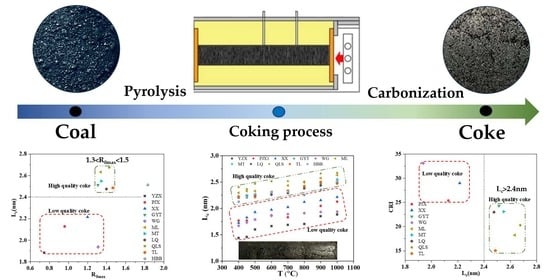
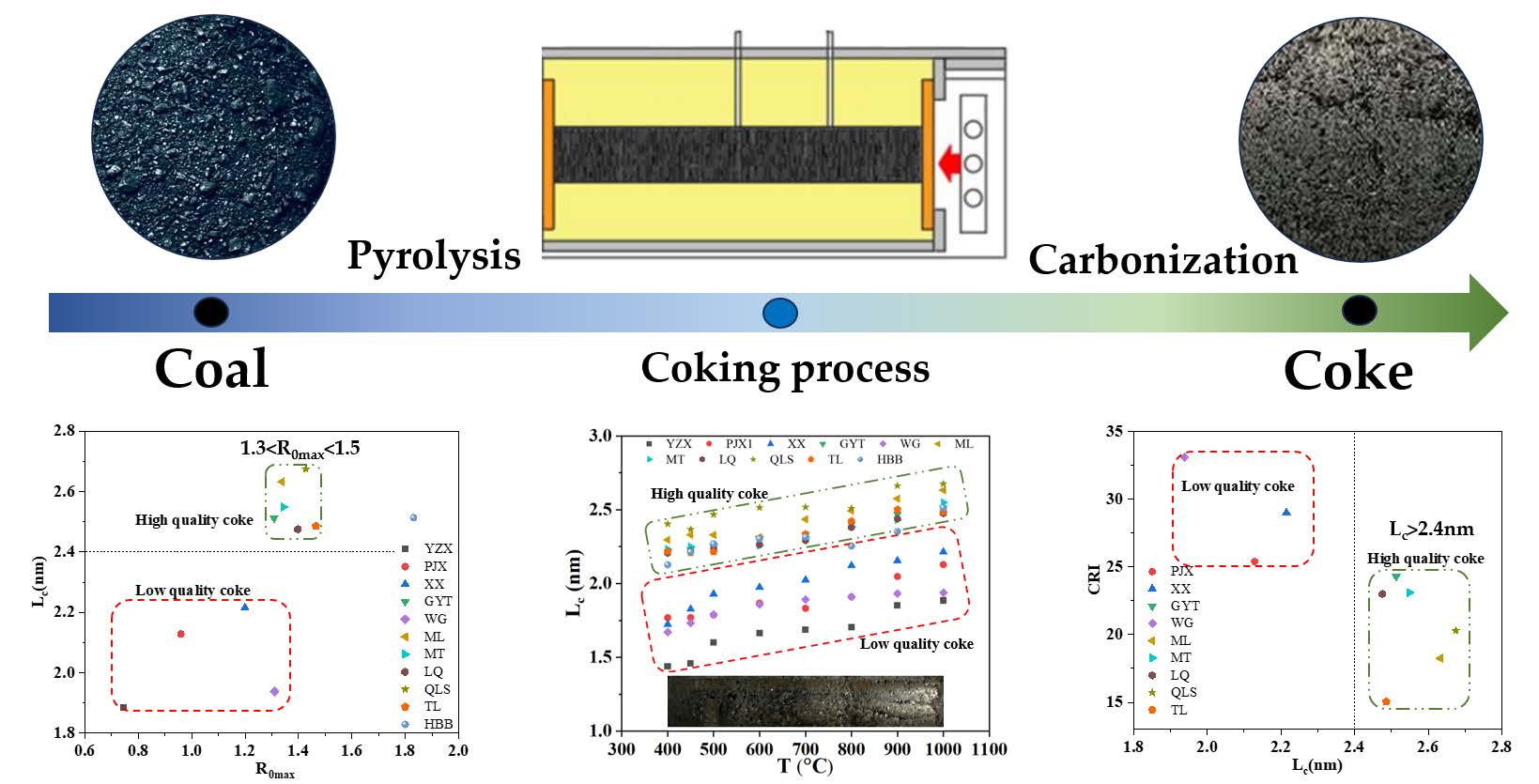
Graphical Abstract

1. Introduction

The various ranks of bituminous coals serve as essential raw materials for coking, producing coke utilized in the metallurgical industry. In metallurgical processes, coal plays a critical role not only as a fuel but also as a burden material in blast furnaces, reducing agent, and carbonization medium for reduced iron. Understanding the development of coke’s properties and its carbon structure is therefore of considerable importance [1,2,3]. To assess the suitability of valuable bituminous coals for coking, investigations into their carbon structural characteristics and coking behavior are indispensable [4,5,6]. Such studies offer valuable insights for evaluating and predicting the influence of coal’s macromolecular structure on coke formation, which holds significant implications for advancing integrated coal utilization technologies [1,6,7].
In recent years, several studies have documented alterations in coal properties during the coking process. The pressure generated by coke formation has been shown to influence the evolution of the carbon structure under coking conditions [8]. For instance, Lee et al. [8] employed a 4 kg laboratory-scale coke oven to measure internal gas pressure (IGP) and temperature distributions at five distinct locations under simulated coke heating conditions. Samples of semi-coke and coke were extracted during carbonization to examine physical transitions and fissure development via micro-CT analysis. Their results indicated that the extent of fracture development affected the maximum IGP; insufficient fracture formation inhibited the release of volatile matter, leading to peak pressure at the center of the coke oven. The thermoplastic characteristics of different coal zones during carbonization were correlated with coal properties [9]. This relationship was established using penetrometer-resistance curves derived from thermogravimetry–plastometer–swelling pressure apparatus, applied to seventeen coking coals of varying rank.
The evolution of carbon structures in coals during the coking process has been extensively investigated. Chen et al. [10] demonstrated that coal rank exerts a significant influence on the transformation of cross-linking structures and the evolution of aromatic lamellae during coke formation. Specifically, C–C bonds in semi-coke are established, and aromatic clusters grow through enhanced crosslinking, polymerization, and condensation, resulting in increased structural ordering at elevated temperatures. Another study [11] examined the development of carbon structures during the coking of coals at various metamorphic stages, revealing that the petrographic characteristics of the coals affect the transformation of carbon structures during coking. Using X-ray photoelectron spectroscopy (XPS) and high-resolution transmission electron microscopy (HRTEM), Xu et al. [12] investigated the evolution of carbon structures in five coking coals of different ranks across the temperature range of 600–1000 °C. Their findings indicated that cross-linking structures and aliphatic cross-links convert into graphitized carbon structures during coking, accompanied by the condensation of aromatic rings. This process leads to an increase in the size of aromatic layers and promotes their flattening. Compared with techniques such as 13C NMR, XPS, TEM, and FTIR, X-ray diffraction (XRD) offers a relatively simple and cost-effective approach for examining ordered packing in coal. Both XRD and Raman spectroscopy are widely employed to determine carbon structure parameters in coals, including crystallite sizes (La, Lc), interlayer spacing (d002), and aromaticity (fa).
XRD analysis has been established as a methodological approach for estimating the stacking structure, degree of order, interlayer spacing (d002), and microcrystalline dimensions (Lc/La) of carbonaceous materials in coal, thereby providing a means for evaluating their structural parameters [13,14,15,16]. Related studies have further correlated these structural parameters with coke properties [6,17]. Wei et al. [17] investigated the characteristics and formation process of coke to elucidate the mechanism of quality improvement via hot tamping coking. Their findings indicate that optimal tamping temperature and holding time promote higher semi-coke permeability and reduce volatile retention, resulting in high-quality coke with a lower Coke Reactivity Index (CRI) and a more compact pore structure. Furthermore, reduced CRI, lower porosity, thicker pore walls, and improved homogeneity contribute to enhanced Coke Strength after Reaction (CSR). Despite these advances, the relationship between coke properties (CRI and CSR) and the evolution of coke carbon structure remains insufficiently understood. In particular, the transformation of chemical and carbon structures throughout the plastic layer, semi-coke, and coke stages significantly influences the final structure and properties of coke.
The carbon structure and quality of coke are profoundly affected by the rank of coking coal. Understanding the transformation of coal into coke and the characteristics of its carbon structure is crucial. Given the complexity of coal, it is necessary to analyze multiple samples to clarify general trends. Therefore, eleven Chinese bituminous coals with different coalification degrees were chosen in this study. In addition, to gain a comprehensive understanding of the structural evolution of coal to coke and the correlation between coal properties and coke structure, results from XRD and Raman analyses were compared to validate their consistency across different ranks of bituminous coals and their corresponding cokes. The obtained carbon structural parameters will provide a foundation for advancing the study of bituminous coal coking. These data will further support subsequent investigations of the properties of cokes derived from various bituminous coals within coking systems, as well as studies on the molecular structures of coals.

2. Materials and Methods

2.1. Coal Selection and Analysis

Eleven Chinese bituminous coals with different coalification degrees were chosen in this study, including gas coal (YZX), 1/3 coking coal (PJX), fat coals (XX and WG), coking coals (GYT, ML, MT, LQ, QLS and TL), and lean coal (HBB). The proximate analysis, ultimate analysis, and coal properties are shown in Table 1, in accordance with the relevant Chinese standards (GB/T 212-2008 [18], GB/T 6948-2008 [19], GB/T 4000-2017 [20] and GB/T 1996-2017) [21]. The coal rank, characterized by the mean maximum vitrinite reflectance (Ro max), covered a broad range from 0.744% to 1.831%. Based on Ro max and the volatile matter (Vdaf) index, the coal samples were classified into five categories, as summarized in Table 1. The structural transformation of coke during carbonization significantly influences its properties, notably the Coke Reactivity Index (CRI) and Coke Strength after Reaction (CSR). The selection of coals, determination of economically viable blending ratios, and regulation of coke quality—based on a systematic understanding of coking coal properties—have consistently been key research foci in the global coal blending and coking industry. A thorough understanding of coking coal properties entails not only quantifying the values of relevant indicators at different levels but also evaluating their practical feasibility in industrial applications.
This methodology demonstrates high reliability and can be effectively employed to produce coke with consistent quality. Nevertheless, its widespread implementation faces challenges due to the scarcity of high-quality coking and fat coal resources in China.

2.2. Sample Preparation and Method

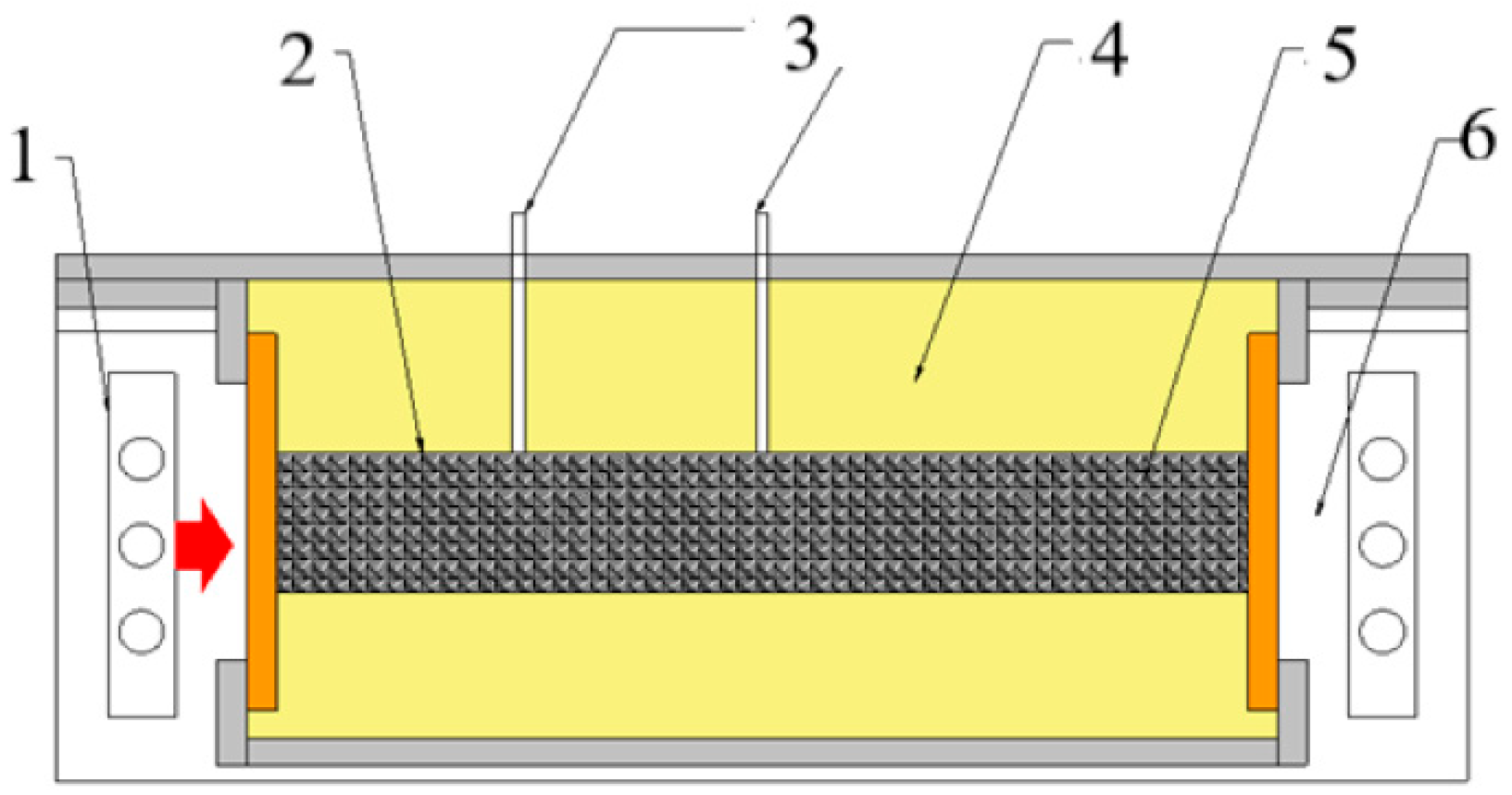
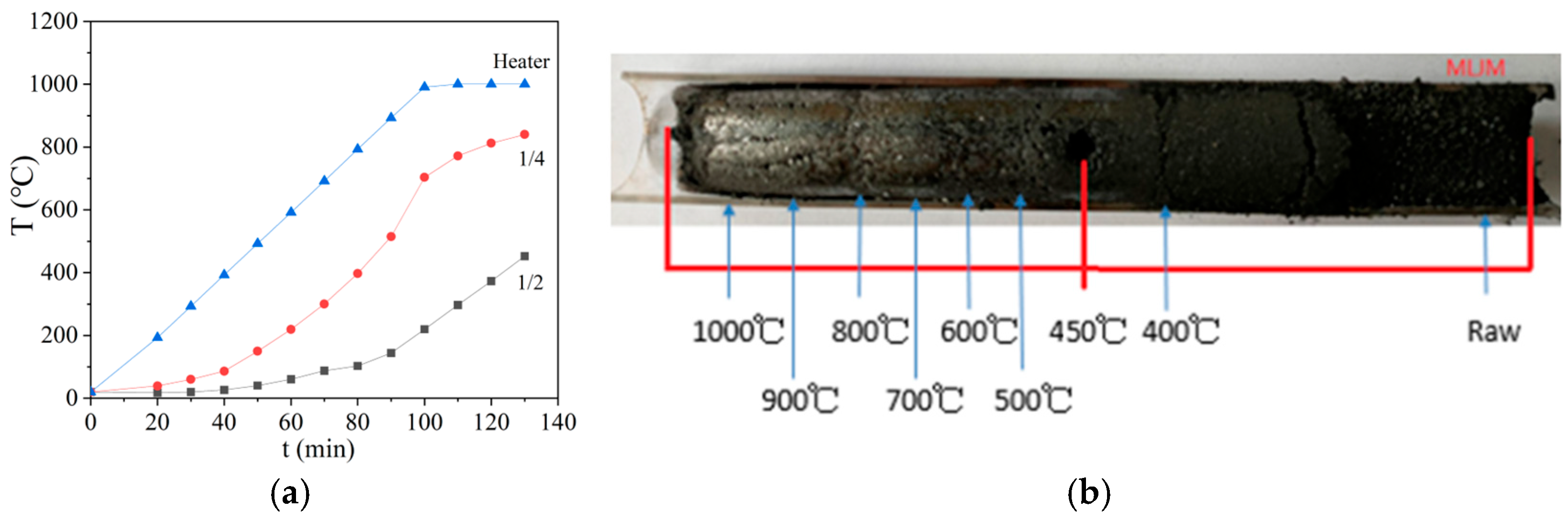
The coking experimental setup and sample preparation during the coking process are shown in Figure 1. The samples were placed into a quartz reactor (inner diameter was 20 mm, length was 170 mm, and density was 800 kg/m3) and set in the furnace. The furnace was heated from one side in order to simulate one-sided heat transfer from the heating wall. The heating conditions were 10 °C/min from room temperature to 1000 °C and 30 min in a confined space. The center of the sample was 450 °C when the run stopped. The temperature distribution of samples in different locations in the reactor is shown in Figure 2a. The heating rate of samples was 3 °C/min, and it was kept the same as the industry device [1]. The raw sample and the different temperature semi-cokes and coke (one sample is shown in Figure 2b) were prepared for carbon structure analysis.

2.3. Analysis of Coal Samples

2.3.1. Thermogravimetric Analysis (TG) Analysis Method

Thermogravimetric (TG) analysis of the coal samples was conducted using a STA 449 F3 thermogravimetric analyzer (Netzsch, Selb, Germany). For each experiment, approximately 40 mg of raw coal was heated from ambient temperature to 1000 °C at a constant heating rate of 10 °C/min under a continuous argon flow of 60 mL/min to maintain an inert atmosphere. The TG and derivative thermogravimetry (DTG) curves were analyzed to characterize the thermal properties of the coal.

2.3.2. FTIR Analysis Method

FTIR analysis was performed using a Nicolet IS 50 Fourier transform infrared spectrometer (Thermo Fisher Scientific Inc., Waltham, MA, USA). To semi-quantitatively compare the functional groups present in different ranks of bituminous coal, samples were subjected to FTIR spectroscopy. Before measurements, a background spectrum was tested by scanning pure KBr powder. Subsequently, each coal sample was evenly spread to a thickness of approximately 2 mm in a sample cell placed over SiO2 powder. The spectra were recorded in the wavenumber range from 4000 to 650 cm−1 at a resolution of 4 cm−1 and 32 scans by a liquid nitrogen-cooled mercury–cadmium–telluride (MCT) detector. The final infrared spectrograms were obtained following background correction.

2.3.3. XRD Analysis of Samples

An XRD instrument (Ultima IV, Rigaku, Tokyo, Japan) with Cu radiation (λ = 0.15418 nm) was used to analyze the carbon structure of coals, semi-cokes, and cokes. The samples were measured with a scan speed of 2°/min from 10 to 70° and a step size of 0.02°. The voltage was 40 kV and the current was 40 mA.
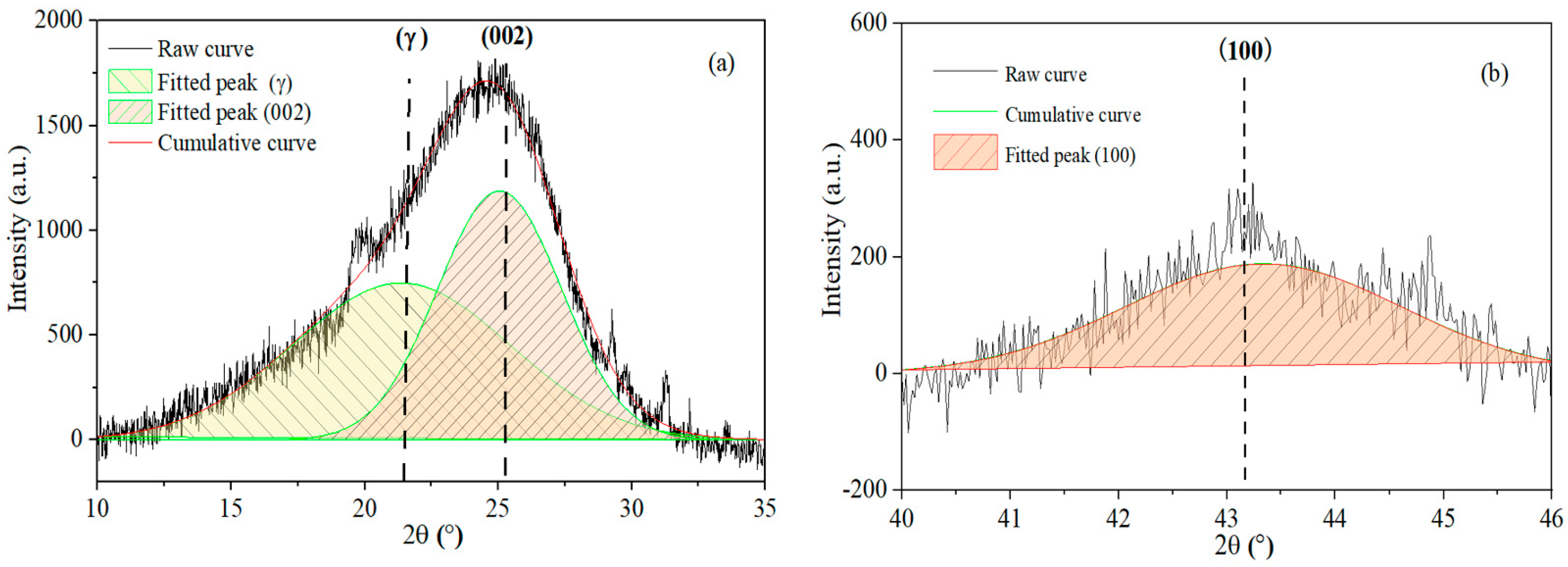
Carbon structural parameters, including crystallite lattice height (Lc), lattice diameter (La), aromatic layer spacing (d002), the number of aromatic layers (N), stacking layer number (n) and aromaticity (fa) were calculated by Equations (1)–(6) [7,22,23,24]. Peak analysis was performed using Origin 2021 and employing Gaussian band fitting. The peak centers (θ) and full widths at half maximum (FWHM) for the γ, 002, and 100 bands were derived from the fitting results. The curve-fitted spectra of the sample (YZX 900 °C) on the carbon structure (10–35° and 40–46°) from the XRD analysis were shown in Figure 3.
L c = 0.89 λ FWHM 002   ×   cos θ 002
L a = 1.84 λ FWHM 100   ×   cos θ 100
d 002   = λ 2 sin θ 002
N = L c d 002   + 1
n = 0.32   ×   N 2
f a = A 002 A 002   + A γ
where λ is the wavelength of the X-ray (0.15406 nm) and θ002 and θ100 are the peak positions of the 002 and 100 bands, respectively. FWHM002 and FWHM100 are the FWHM of the two bands, respectively. A002 and Aγ are the integrated areas of the 002 and γ bands, respectively. The Coefficients of Determination (R2) were above 0.95.

2.3.4. Raman Analysis of Samples

Raman spectroscopy of the samples was performed using a XploRA PLUS laser Raman spectrometer (Horiba, Loos, France) to evaluate the carbon crystallinity of the coals, semi-cokes, and cokes. A Diode-Pumped Solid-State (DPSS) laser with a wavelength of 532 nm was employed under the following measurement conditions: a diffraction grating of 600 gr/mm, a 50× objective, and a laser power of 1 mW. Spectra were collected in the range of 800–2000 cm−1 with an accumulation time of 30 s and 4 accumulations per spectrum, resulting in a total acquisition time of 120 s per scan. In the Raman spectra, the G band corresponded to the graphite-like ordered structure, while the D band reflected structural disorder which was characteristic of defective carbon materials. Each spectrum was deconvoluted into constituent bands associated with different carbon structures. The assignments of the Raman bands for the coal samples are summarized in Table 2 [4,24,25,26].

3. Results and Analysis

3.1. Analysis of Different Coals During Pyrolysis

3.1.1. TG Analysis

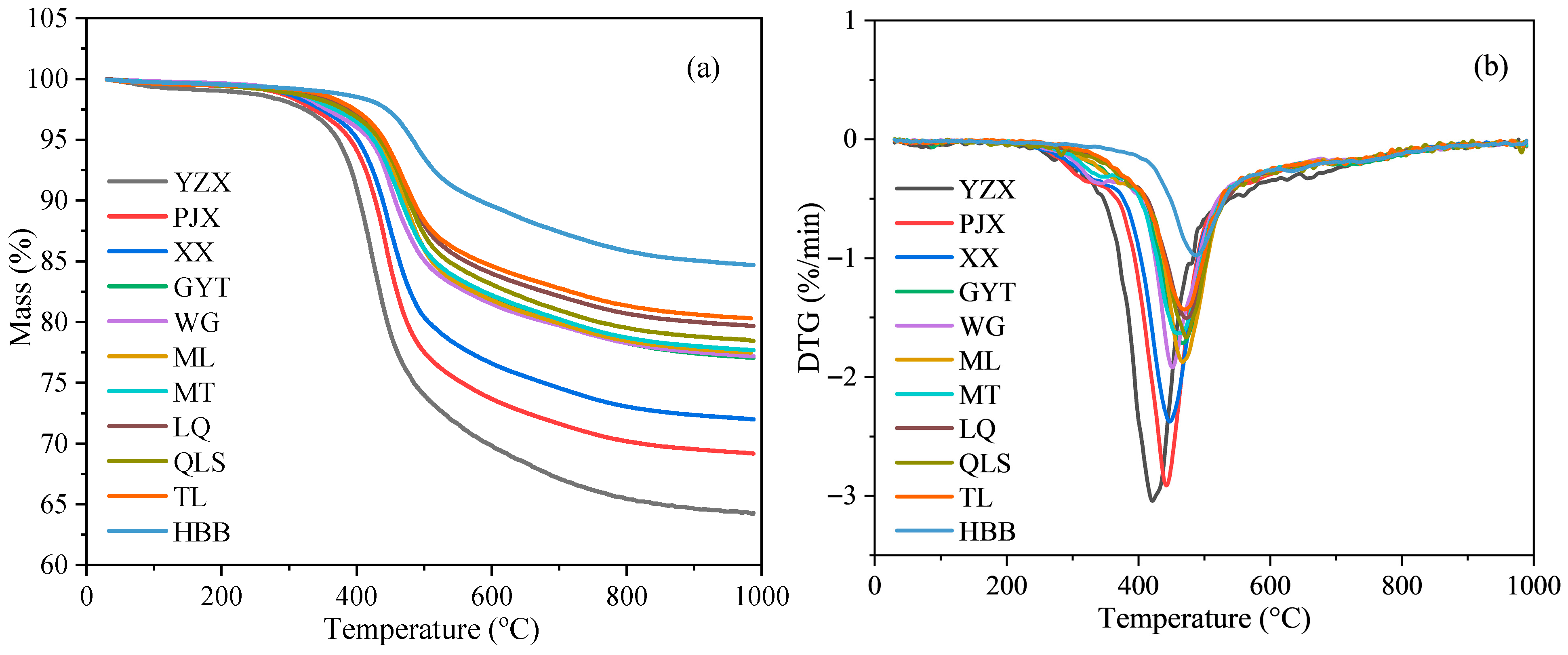
The pyrolysis performance of raw coal samples was analyzed using TGA. The TG and DTG curves of different coals during pyrolysis are shown in Figure 4.
It can be seen that the total weight losses of raw coals during pyrolysis were decreased with increasing coal rank. The total weight losses of different coals ranging from low rank to high rank were 35.7%, 30.8%, 28.0%, 22.9%, 22.8%, 22.5%, 22.3%, 20.3%, 21.5%, 19.7%, and 15.3%. Consistent with its high volatile matter content, YZX coal exhibited the greatest weight loss, whereas HBB coal, with the lowest volatile matter, showed the least weight loss. This trend was consistent with the volatile matter content of the coals.
Below 300 °C, the decomposition of raw coals was attributed to the removal of moisture and the cracking of some small volatile molecules and functional groups. The main decomposition stage occurred between 350 and 520 °C. The maximum rate of weight loss (DTGmax) appeared at approximately 420–485 °C, resulting from devolatilization reactions [27] and intensive pyrolysis processes. With increasing coal rank, the initial pyrolysis temperature shifted to higher values, and the total weight loss decreased noticeably. Furthermore, the DTG curves indicate that the peak temperature moved toward higher temperatures as coal rank increased.

3.1.2. FTIR Analysis

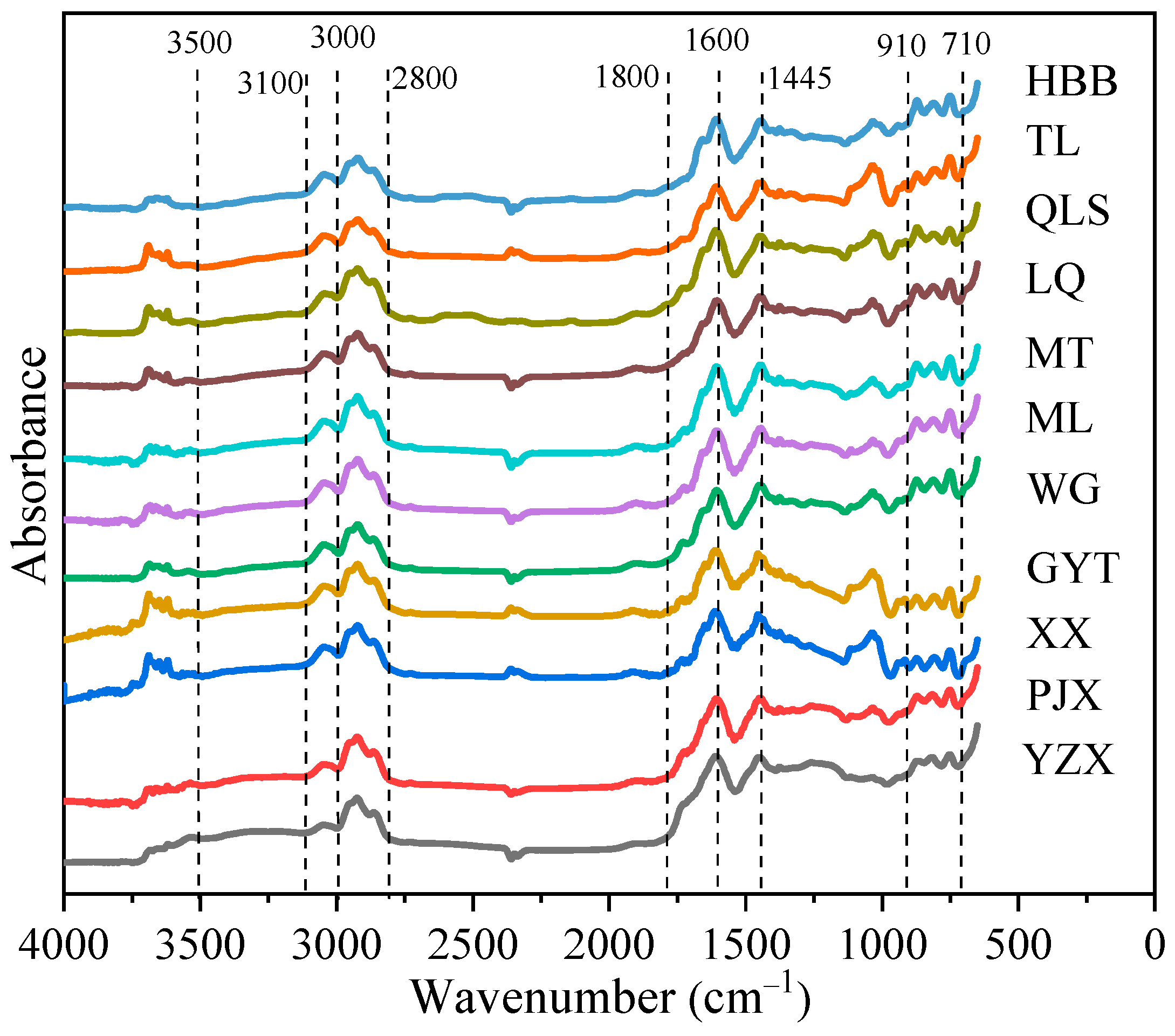
The FTIR spectra of the raw coal samples are shown in Figure 5. It can be observed that all coals exhibited similar spectral profiles. A notable feature common to each spectrum was the distinct variation in bands. The band in the range of 2800–3100 cm−1 was assigned to aliphatic C–H stretching vibrations, while the region between 3000 and 3100 cm−1 corresponds to aromatic C–H stretching vibrations [28]. Bands appearing between 1800 cm−1 and 1000 cm−1 are primarily attributed to oxygen-containing functional groups. Specifically, the band near 1600 cm−1 was ascribed to aromatic C=C stretching, and the band at 1445 cm−1 arises from the asymmetric deformation vibration of CH3. The spectral region between 910 cm−1 and 710 cm−1 was associated with out-of-plane deformation vibrations of aromatic C–H. Additionally, the absorption in the 3600–3700 cm−1 range was characteristic of clay minerals such as kaolinite [29]. Among the different coal samples, YZX coal showed greater intensity in the bands corresponding to functional groups, which was consistent with its higher content of oxygen-containing and aliphatic functional groups. The observed trend in oxygen content aligns with the results from ultimate analysis, and the distribution of aliphatic groups corresponds with coal rank.

3.2. XRD Analysis of Different Rank Coals During the Coking Process

3.2.1. XRD Analysis

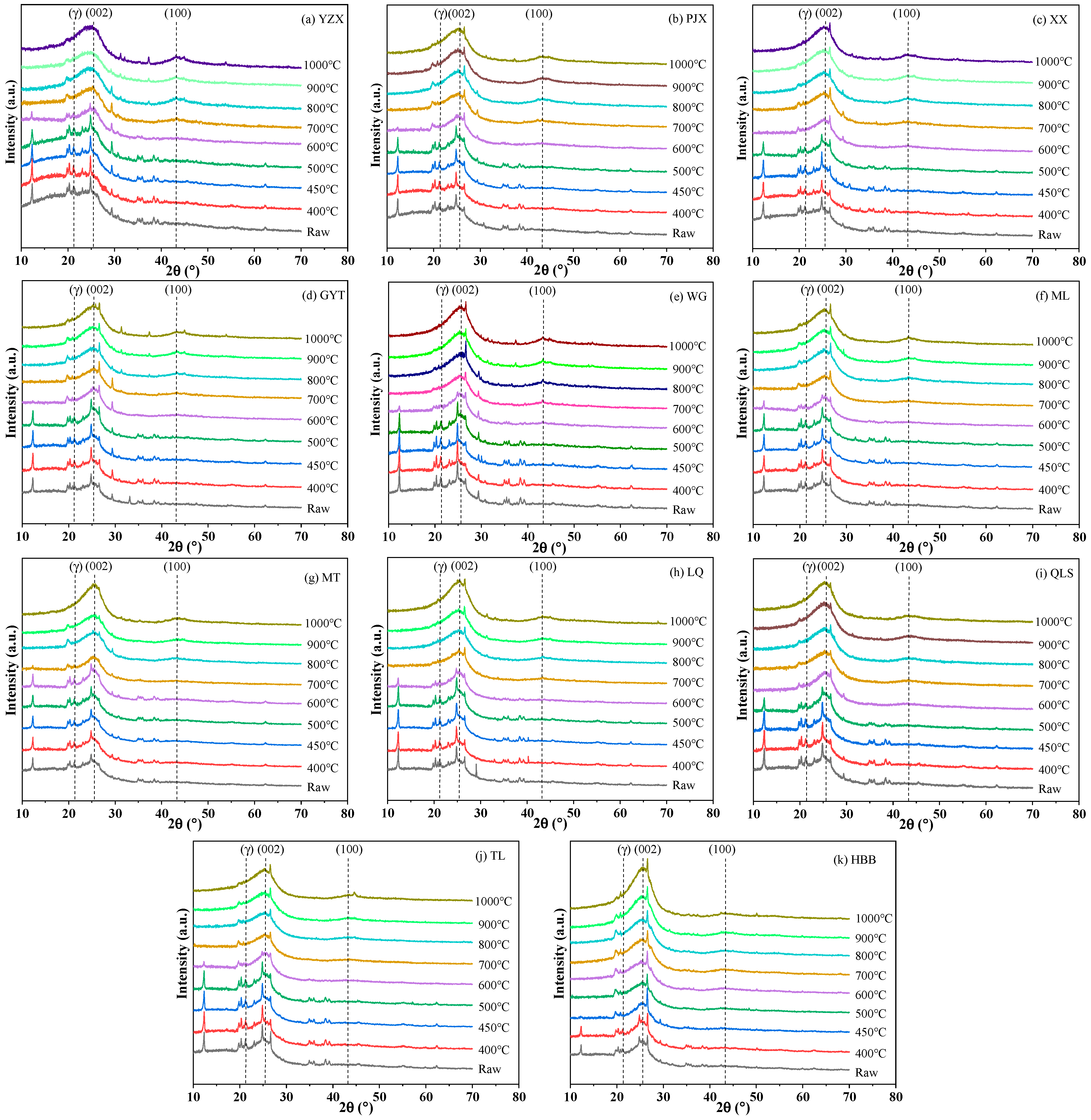
The XRD analysis of different rank coals during the coking process is shown in Figure 6, which depicts eleven coal samples of different ranks tested at multiple temperatures. As shown in Figure 6, the γ peak (approximately at 2θ = 22°) corresponds to amorphous carbon in the carbon structure, indicating the stacking of alkyl side chains. The 002 peak (approximately at 2θ = 25°) represents the stacking structure of aromatic lamellae within the carbon microcrystalline framework, reflecting both the degree of directional alignment and the stacking height of aromatic layers. The 100 peak (approximately at 2θ = 43°) relates to the condensation degree of aromatic rings in the carbon structure and denotes the size of the aromatic lamellae [15,16]. It can be observed that the intensity of the 002 peak increases, while that of the γ peak decreases, with increasing coal rank and temperature.

3.2.2. The Changes in the Carbon Structure of Different Rank Coals

As shown in Section 2.3.3, the γ, 002, and 100 bands of the different rank coals under different temperatures were obtained from the curve fitting, as shown in Figure 3, including the angle, FWHM, and area of the γ, 002, and 100 bands. The carbon structural parameters of Lc, La, d002, N, n, and fa were calculated by Equations (1)–(6) from the results of curve fitting [22,23,24,30]. The XRD analysis results of eleven coals under different temperatures during the coking process were calculated. One sample of the structural parameters of peak fitting is shown in Table 3.
With the increase in temperature, the peak position of the fitted 002 peak gradually shifted to the right, the peak area increased, and the half-peak width decreased, so the 002 peak deformation became sharper, the peak intensity increased, and the carbon microcrystalline aromatic structure increased. The FWHM and area of the γ peak decreased with temperature, which meant the amorphous carbon in the carbon structure shifted into the regular carbon structure [16,31].
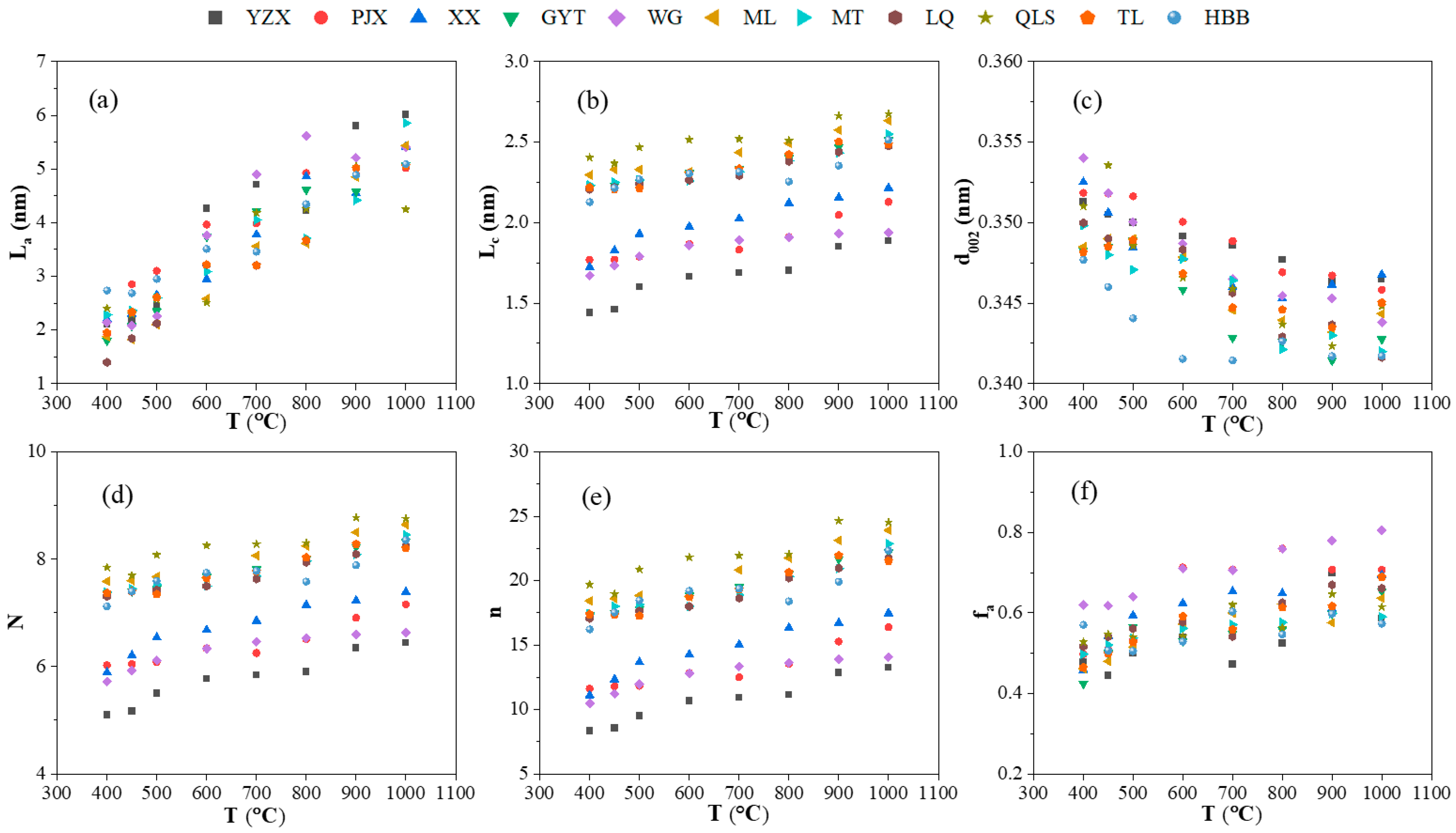
The correlations between the carbon structural parameters of Lc, La, d002, N, n, fa, and temperature with different ranks during the coking process are shown in Figure 7. It was found that the structural parameters of the eleven coals changed consistently. With the increased temperature, the carbon structural parameters La, Lc, N, n, and fa of coking coal were increased, and the opposite trend was observed for d002. This illustrated that the diameter of aromatic lamellae became larger, the spacing between aromatic layers decreased continuously, and the number of aromatic lamellae also increased, leading to an increase in the height of aromatic layers. It indicated that the coal molecules undergo condensation reactions to form larger aromatic structures during the pyrolysis process. The d002 decreased, which it meant that the coke gradually transformed into a graphitized structure. With the increase in temperature, the aromatic lamella height (Lc) showed an upward trend during the coking process.
Figure 7a showed that the aromatic cluster size (La) of the coal samples increased with rising temperature. Above 400 °C, coal decomposition commenced, leading to a noticeable rise in La. Beyond 500 °C, the La values of various coals increased significantly. This result indicated that the molecular structure of coal achieved solidification after softening, melting, flowing, and swelling, forming a larger molecular planar structure during the semi-coke formation stage [5,8]. The aromatic lamella diameter La of the samples increased rapidly between 600 and 800 °C, indicating that condensation reactions following solidification promote the transformation of small molecular structures into larger aromatic systems [32]. This process expands the planar carbon aromatic framework and enlarges the aromatic nuclei, which is attributed primarily to polycondensation reactions accompanied by H2 release within this temperature range [10]. As a result, smaller aromatic rings condense to form larger ones, thereby increasing La [33]. Regarding coals of different ranks, the aromatic lamella diameter of high-rank coal coke was slightly smaller, whereas that of low-rank coal appeared marginally larger in the later coking stage. Furthermore, with increasing coal rank, the aromatization rate slowed.
Figure 7b shows the carbon structural parameter of aromatic lamella stacking height (Lc) of raw coals and the heated samples during coking processing. For different raw coals, Lc was around 2 nm, as the literature has reported [34]. Lc was increased from 1.35 to 2.32 nm, with a rank that meant the condensation of aromatic carbon was compact [5]. Changes in the carbon structures of different rank coals were slight. It could be seen that the value of Lc increased with the increase in temperature, and its aromatic structure increased. Below 450 °C, the coals started to pyrolyze, and Lc hardly changed. When the molecular structure of coal reached the stage of solidified semi-coke formation after 500 °C, Lc increased slightly. The Lc of the eleven coal samples rose slowly at 600–800 °C. Lc rose rapidly after 800 °C, and the coal condensed into coke, with increased ordering of carbon structures at higher temperatures [35]. At this stage, the crosslinking reaction led to the increased height of the aromatic nuclei. For coals with low ranks, the layer of aromatization was less than for the high-rank coals. Samples YZX and XX, with low ranks, showed greater changes in Lc, though the coke properties of these samples were not very good. The Lc of coking coals expanded more slowly than for other coal samples. This meant that samples with good coal properties showed minor changes in Lc. Changes in Lc were too great, leading to deterioration in coke properties. As coal rank increased, Lc value also increased, indicating greater structural ordering.
It can be seen in Figure 7c that the aromatic lamella spacing (d002) of coal samples showed a decreasing trend with an increase in temperature. This indicated that the aromatic structure became more compact and the connection between layers was closer [33,35]. The d002 of coals is increased slightly at 400 °C because of softening and melting. With the increase in temperature, the aromatic lamella spacing decreased. After 800 °C, the d002 of the samples changed slightly. The decrease in d002 reflected that the lamella spacing gradually reduced, and the orderliness of the structure was improved when the coke temperature reached above 900 °C. The lamella spacing of the coke of low-rank coal was larger than that of high-rank coal. This indicated that the graphitization degree of coal increased during the coking process, and the defective amorphous carbon structure transformed into a more ordered graphitized carbon structure.
As shown in Figure 7d, the number of aromatic lamellae (N) in carbon structures exhibited gradual increasing trends during the coking process, indicating a growth in aromatic structures and an enhancement in cross-linking within the carbon matrix. The aromatic lamellae count rose with increasing coal rank: low-rank raw coal contained approximately five lamellae, whereas high-rank coal averaged about seven. For coke, the average number of aromatic lamellae ranged from six to nine [31,33]. Specifically, coke derived from low-rank coal contained six–seven lamellae, while that from coking coals exceeded eight, reflecting the superior coking properties of the latter. During coking, the number of aromatic lamellae (N) increased, whereas the interlayer spacing (d002) showed no significant change or only a slight decrease. Consequently, the crystallite stack height (Lc) demonstrated an overall upward trend, suggesting a positive correlation between Lc and N. This correlation implies that cross-linking reactions were promoted by the increase in stacked aromatic layers. From Figure 7e, it can be observed that the number of aromatic rings (n) within a single aromatic lamella also increased with temperature. As temperature rose, aromatic clusters in the coal samples expanded through continuous condensation reactions within the lamellae, leading to greater numbers of aromatic rings per lamella and improved structural ordering of the carbon material.
It can be seen from Figure 7f, with the increase of temperature, that the aromaticity (fa) of coal structure showed an upward trend during the pyrolysis and coking process. Between 400 and 500 °C was mainly the stage where coking coal underwent thermal decomposition due to the decomposition of aliphatic chains in coal. Many aliphatic side chain structures and oxygen-containing functional groups were broken and were released as small molecular gases and tar [15,36]. The reductions in aliphatic structures resulted in increases in aromaticity. Solid matter solidified into semi-coke after 500 °C, while after 600 °C, aromaticity increased significantly, which was because coal released small molecular aliphatic structures, which polymerized into larger aromatic structures. The number of aromatic structures increased, and fa gradually increased during the coking process. When the pyrolysis temperature was above 800 °C, secondary polycondensation reactions occurred, which accelerated the process of ordering the carbon structure of semi-coke. The reason was that the carbon order was more regular at high temperatures, so increased aromatic carbon content gradually increased aromaticity (fa) [37]. The structure of coal transformed into coke and became more compact [38].
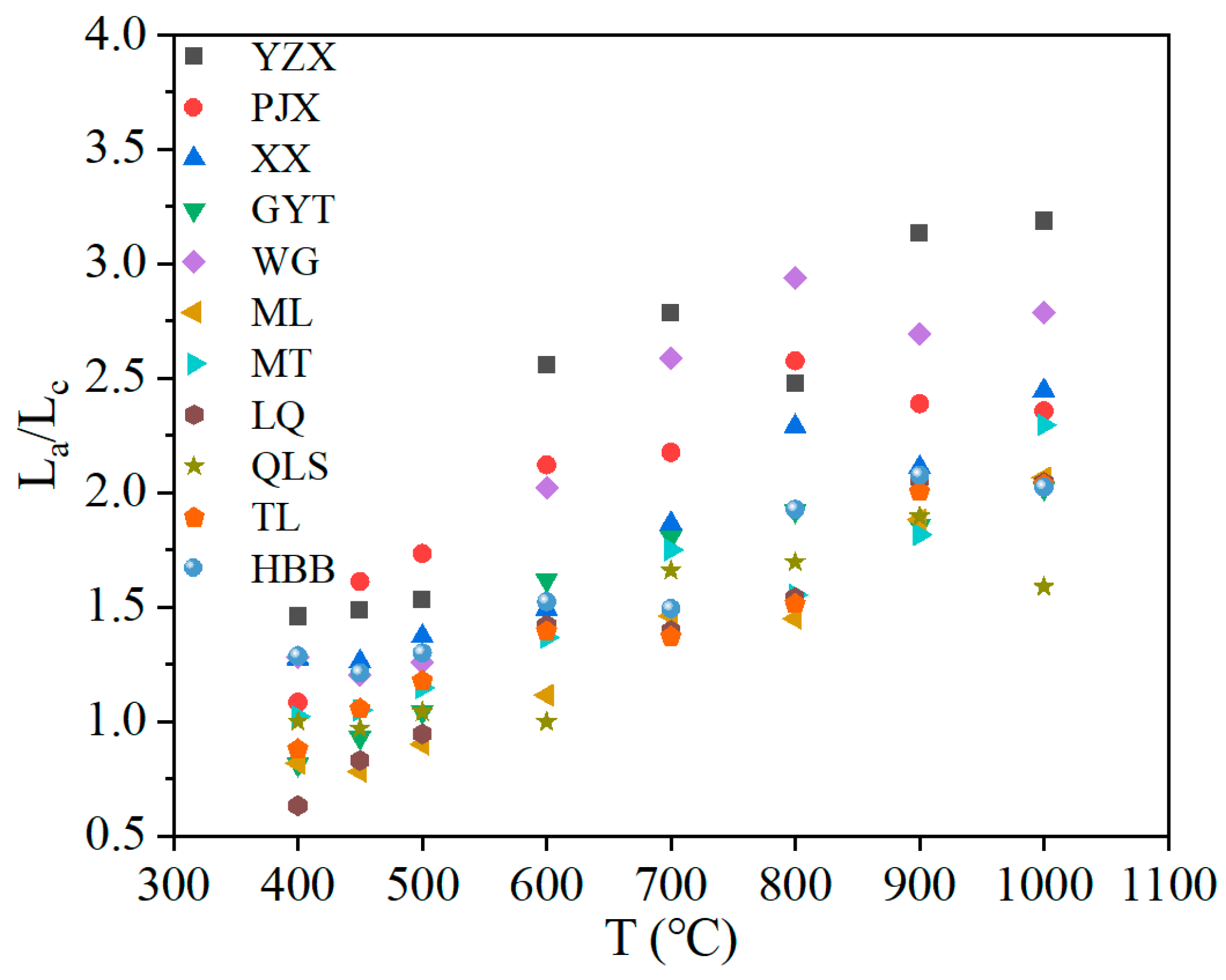
During the coking process, the crystal structure of coke showed a growth trend characterized by an increase in transverse size, number of aromatic lamellae, and longitudinal size, and a gradual decrease in the spacing between aromatic lamellae. The ratio of La/Lc represents the change in the proportion of the lateral and longitudinal dimensions of the microcrystalline structure [14]. Figure 8 shows the ratio of La/Lc of coke within this temperature range. According to the change in La/Lc, it could be found that the growth in the lateral dimension of the microcrystalline structure of the coke was larger than that of the longitudinal dimension. It was expanded approximately twice as much as raw coal. The main reason was that the condensation of the aromatic structure occurred during coke formation. The diameters of the aromatic rings of different rank coals were expanded by various degrees. The condensation reaction generated large amounts of H2, increasing the lateral dimensions of the aromatic layers [10]. The cross-linking reactions at high temperatures caused the condensation of aromatic nuclei to form more layers. Thus, the cross-linking density and the number and height of the aromatic layers increased.

3.3. Changes in Carbon Structure Parameters with Coal Rank During the Coking Process

3.3.1. Relationship Between Coal Rank and Lc During Coke Formation

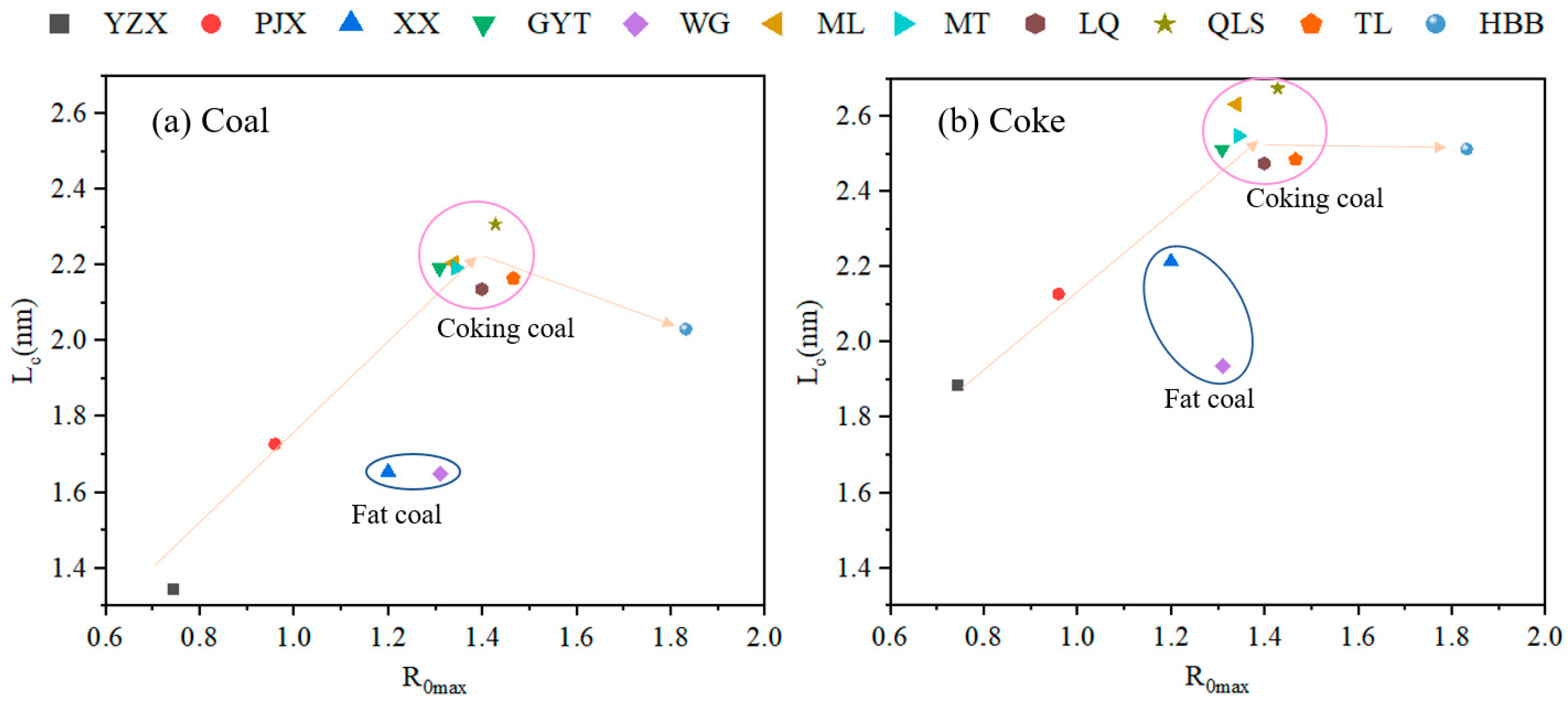
Changes in carbon structure parameters with coal rank during coking pyrolysis were studied. To understand the coke properties, the correlations between the carbon structure parameters of the coke properties and the coal rank were analyzed. XRD was used to analyze the structural parameters of La, Lc from coal to coke during coke formation. The correlation between the coal rank and Lc of samples under different temperatures during the coking process showed a positive relationship, as shown in Figure 9.
From Figure 9a,b, it can be seen that the Lc and coal rank showed an upward trend, with an increase in coal rank for the different coals and cokes. For the raw coals, the Lc of height was between 1.344 nm (YZX) and 2.309 nm (QLS). The Lc values of the cokes were between 1.885 and 2.685 nm. The increase in Lc was 0.541 and 0.8 nm for YZX and QLS, respectively. The Lc values of coking coals (GYT, ML, MT, LQ, QLS, and TL) were the largest, followed by lean coal (HBB), 1/3 coking coal (PJX), fat coal (XX, WG), and gas coal (YZX). The Lc values of fat coals (XX and WG) were not too large, and less than 1/3 coking coals. The Lc of high-rank coal (HBB) was lower than that of coking coal. Lc always increased with the increasing temperature of the coking process, as shown in Figure S1. The height of the aromatic layer of coke increased slightly after reaching the resolidification temperature. Lc obviously increased when the temperature was above 900 °C. Changes in Lc were evident for all coals during the coking process.

3.3.2. Relationship Between Coal Rank and La During Coke Formation

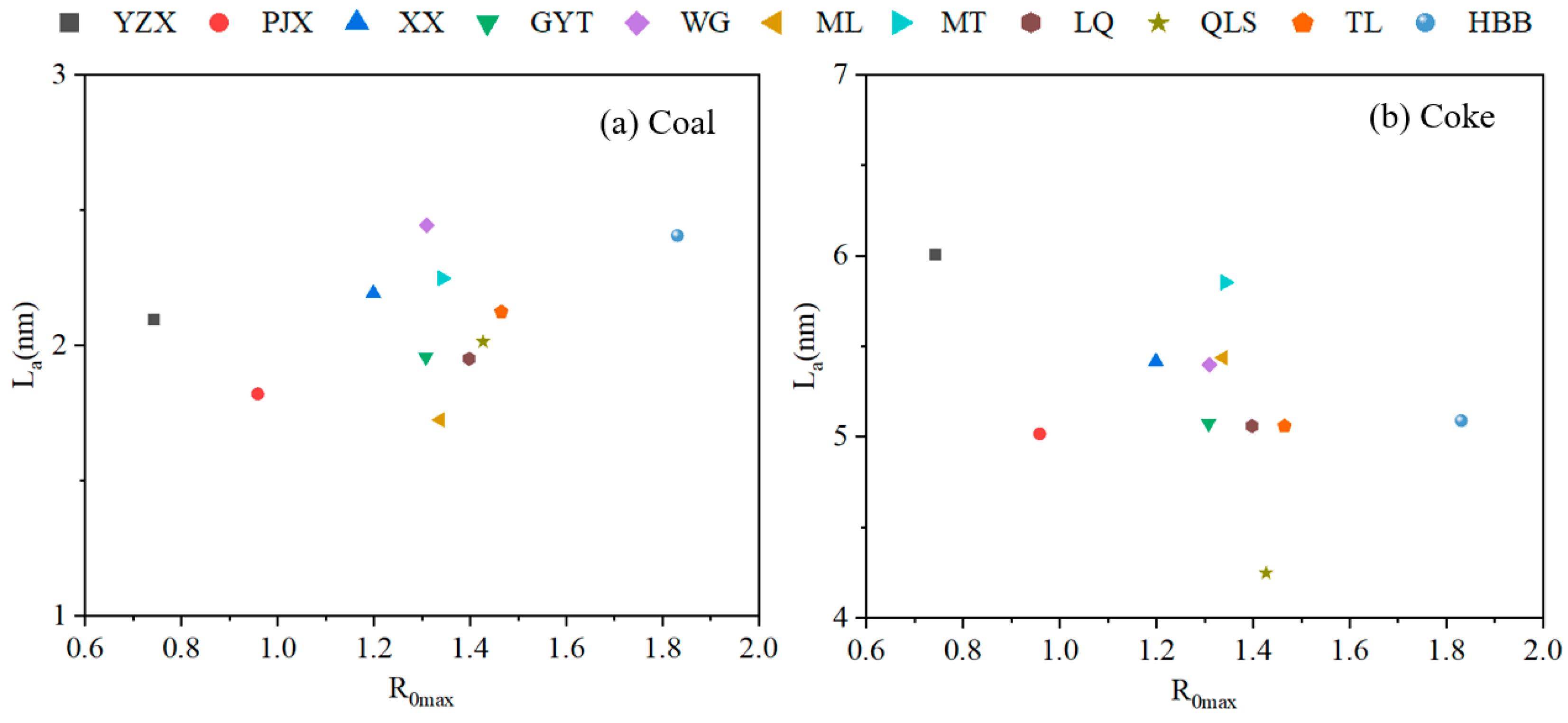
Figure 10 shows the correlation between coal rank and La for samples under different temperatures during the coking process. The La values of coal samples were between 1.725 and 2.405 nm. The data are consistent with the literature data [14]. Whereas the La of coke increased greatly, the La of coal was about three times larger than that of coke. It can be seen that the transverse sizes significantly expanded during the evolution of coal to coke. This meant the transverse size of the aromatic layer changed greatly because of the condensation reaction during coke formation.

3.4. Changes in Carbon Structures with Coke Properties During the Coking Process

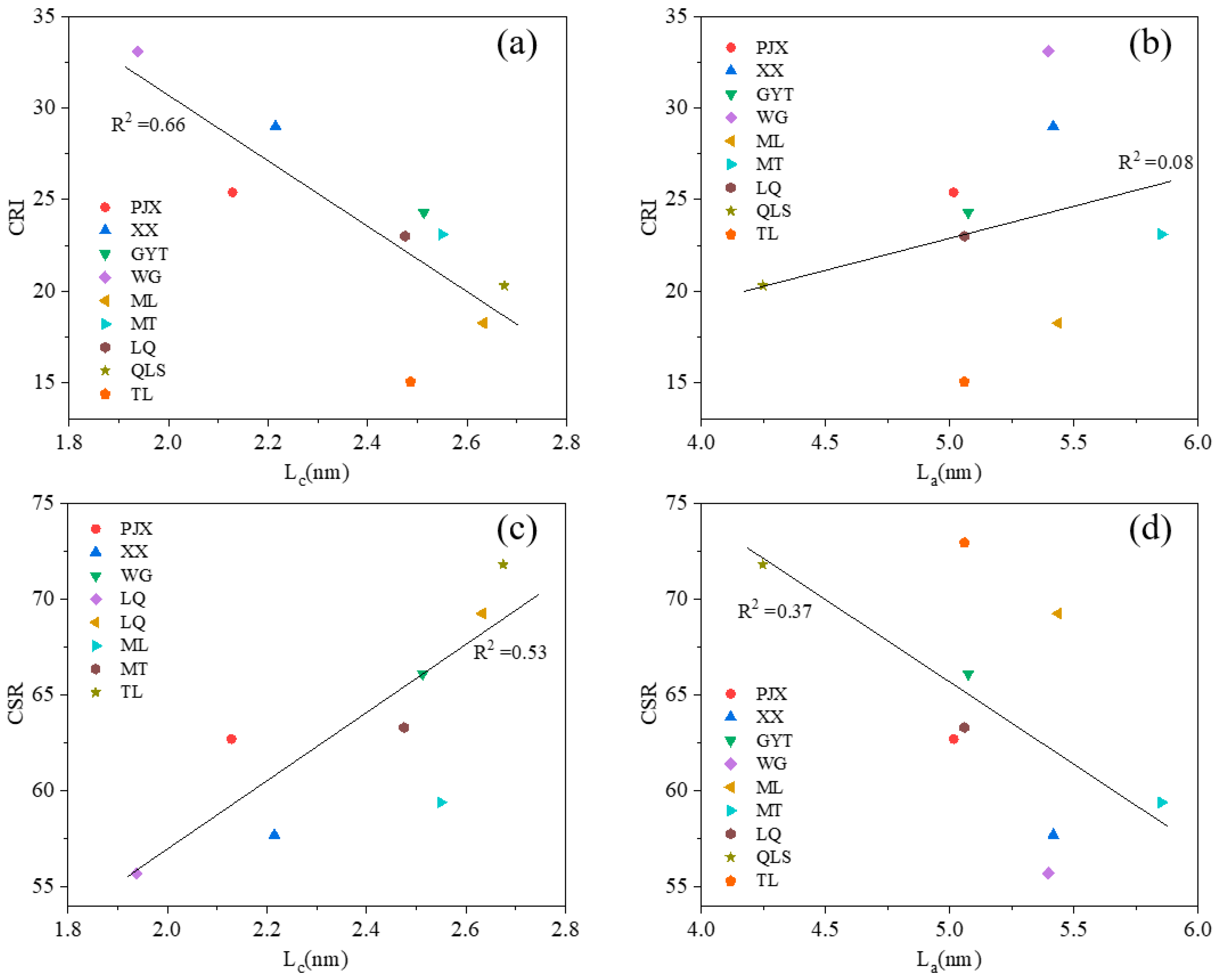
The relationship between coke properties (CRI/CSR) and carbon microstructure (Lc or La) was investigated using nine mid-rank coals, as shown in Figure 11. Two samples, namely the low-rank coal YXZ and the high-rank coal HBB, were excluded from the analysis due to their markedly distinct CRI/CSR characteristics. A negative correlation was observed between Lc and CRI, indicating that coke quality improved with increasing Lc values. Figure 11a showed that CRI was inversely proportional to Lc, with a correlation coefficient (R2) of 0.66. Samples with Lc values below 2.4 nm exhibited CRI values exceeding 25%, suggesting that lower Lc is detrimental to coke properties. Conversely, when Lc exceeded 2.67 nm, coke properties were also adversely affected. As shown in Figure 11c, CSR exhibited a positive correlation with Lc, yielding an R2 value of 0.53, which is consistent with findings reported in the literature [9,22]. Samples with Lc values below 2.4 nm displayed CSR values lower than 65%, whereas those with Lc values above 2.4 nm generally possessed higher coke strength.
The relationship between La and CRI was positive in Figure 11b, which meant the coke properties were bad, with the increase of La depending on the correlation coefficient being poor. As shown in Figure 11b, the La of samples showed high quality within the range of 5 to 5.5 nm, though they were all within this range. Figure 11d showed that the CSR was negative with La, and the R2 was 0.37. Samples WG and XX showed poor quality coke, since their CSR values were below 60, as shown in Figure 11d. On the other hand, some samples with La within the range of 5.0 to 5.5 nm had CSR values above 65. Such samples showed high-quality coke since they had high crystallite size and also high coke strength. The La showed poor quality if the La of coke was too small or too big. For bituminous coals, the changes in carbon structures were significant during the formation of coke for all coals.
The correlations between the coal ranks and La values of samples under different temperatures during the coking process is shown in Figure S2. After 900 °C, the La values of all the samples clearly increased, especially for low-rank coals.
Figure S3 illustrates the correlations between the CRI values and the aromatic layer diameters (La) of samples at various temperatures during the coking process. As temperature increased, the aromatic layer diameters exhibited gradual expansion. Above 600 °C, the increases in La became less pronounced. Furthermore, La demonstrated a clear positive correlation with coal rank. Beyond 900 °C, all samples showed a marked rise in La, particularly for coals with low CRI (indicative of higher-quality coke). This suggests that superior coke quality corresponds to a relatively modest La value. In general, a smaller La is associated with better coke quality. These observations imply that a slightly reduced aromatic layer diameter may correspond to a lower CRI, thereby reflecting improved coke quality.
Correlation between the CRI and Lc values of samples under different temperatures during the coking process is shown in Figure S4. With an increase in temperature, the height of the aromatic layer increased slightly. The aromatic layer height of the coke was relatively low. Therefore, the CRI of the coke was high and its coke properties were poor. The coke with a larger Lc had a condensed coke molecular structure and better coke properties. This indicated that the height of the aromatic layers had an impact on the coke properties. The higher the stacking height, the better the coke properties. This was consistent with lower CRI values and better coke properties.
The correlations between CSR and the diameters of the aromatic layers (La) of the samples at different coking temperatures are presented in Figure S5. As temperature increased, La exhibited a gradual expansion. Below 500 °C, the aromatic layer diameter remained largely constant. Beyond 600 °C, a moderate increase in La was observed. Notably, in cokes with inferior properties, the rise in La occurred at an earlier stage. After 900 °C, La values for all samples increased significantly, indicating considerable growth in the aromatic layer diameters. Conversely, samples with relatively small La diameters tended to demonstrate better coke properties. These results suggest that a moderately small La may contribute to higher CSR values and improved coke quality.
Figure S6 illustrates the correlation between the Coke Strength after Reaction (CSR) and the stacking heights (Lc) of aromatic layers in samples subjected to different temperatures during the coking process. With increasing temperature, the diameter of the aromatic layers expanded gradually. In contrast, the variation in Lc with temperature was not pronounced, although a slight increase in layer height was observed. Lc demonstrated a positive correlation with CSR, indicating that greater stacking heights correspond to higher coke strength and improved coke properties. These results suggest that enhanced stacking height of aromatic layers is associated with elevated CSR values, which in turn reflects superior coke quality.

3.5. Raman Analysis of Different Rank Coals During the Coking Process

3.5.1. Raman Analysis

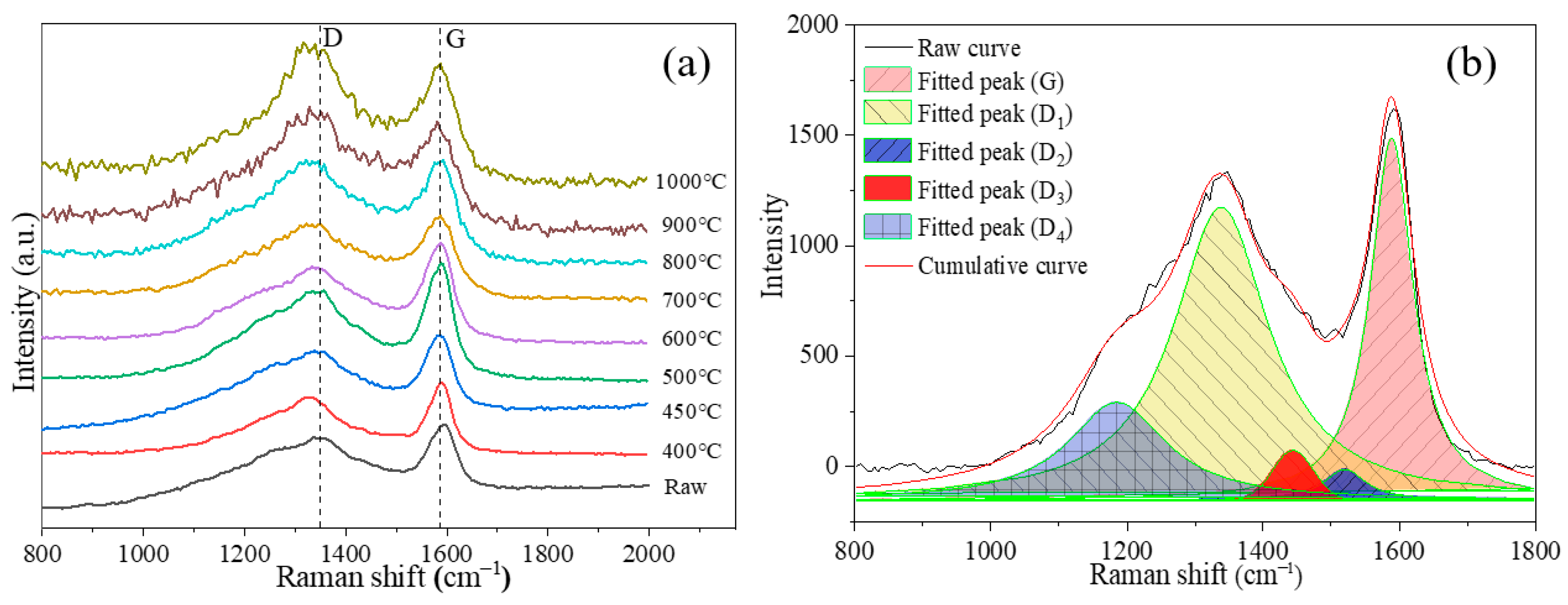
Figure 12a shows the Raman spectra of the QLS sample at different temperatures. Two distinct vibration bands were observed near 1350 cm−1 and 1590 cm−1, corresponding to the D band and G band, respectively [4]. The G band was attributed to the E22g vibration mode of the ideal graphite lattice, which was caused by the breathing mode of aromatic rings in amorphous carbon materials. The D band is associated with the A1g vibration mode and originates mainly from structural defects, edge disorder and low-symmetry carbon arrangements within the graphite lattice [4,25]. In coal molecular structures, the D band reflects planar defects and disordered domains. In the raw Raman spectra, the D and G bands consistently exhibit overlapping features. To gain further insight into the carbon skeleton structure and to elucidate microstructural evolution during the coking process, peak fitting of the Raman spectra was conducted to extract latent structural details.
Following the band assignments for coal, Raman spectra are summarized in Table 2. The spectra were deconvoluted using Origin 2021 into four Lorentzian peaks (G, D1, D2, and D4) and one Gaussian peak (D3), in accordance with methods reported in the literature [4,25]. The R2 values were above 0.95. A representative peak-fitting result is displayed in Figure 12b. It can be seen the additional bands induced by defects in the microcrystalline lattice appear in the 800–2000 cm−1 region, including peaks at approximately 1185 cm−1 (D4), 1380 cm−1 (D1), 1465 cm−1 (D3), 1540 cm−1 (D2), and 1590 cm−1 (G). The band position and assignment of these bands are summarized in Table 2.

3.5.2. Changes in the Structure Parameters of Different Rank Coals

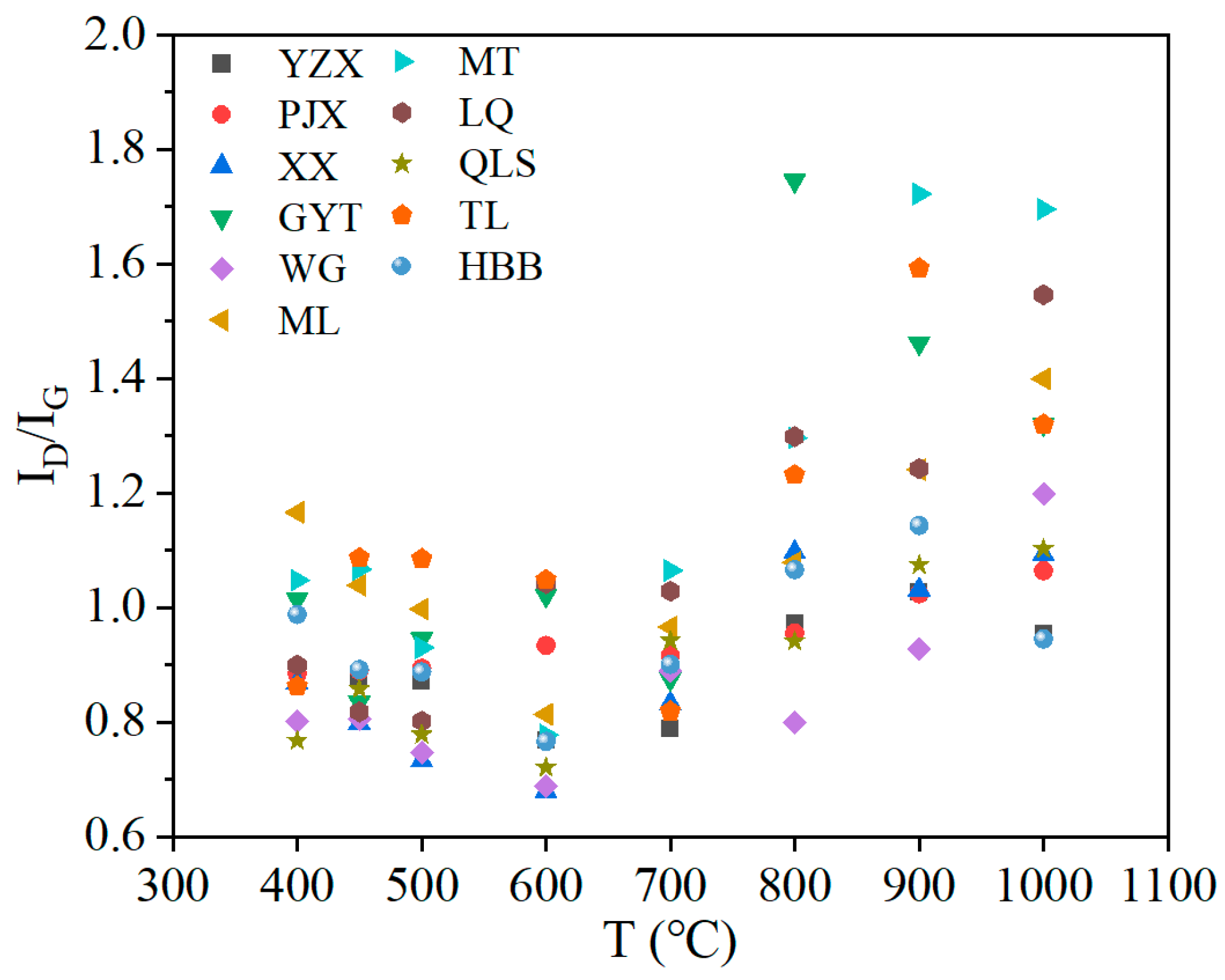
The changes in ID/IG with the pyrolysis temperature of different samples are shown in Figure 13. Figure 13 shows the variation trends in ID/IG of different coals with pyrolysis temperature. The D bands in the Raman spectra correspond to the existence of structural defects or disorders in the graphite layers of coal. The G bands correspond to the stretching of sp2-bonded carbon atoms in the graphite layers. ID/IG represented the relative amount of large disordered aromatic rings (n ≥ 6), which is an important parameter for characterizing the degree of order in carbon materials. As shown in Figure 13, coal was decomposed gradually after 400 °C and ID/IG decreased at below 600 °C. The breaking of weak bonds during pyrolysis was the main cause of the breakage of sp2-bonded carbon atoms in coal. As the temperature increased, the carbon structural defects increased and the broken side chains were deposited on the surface of coal char, increasing its amorphousness. When the temperature was above 600 °C, ID/IG increased, which meant the formation of defects and amorphous structures, leading to a decrease in the order of coal char [39].

4. Discussion

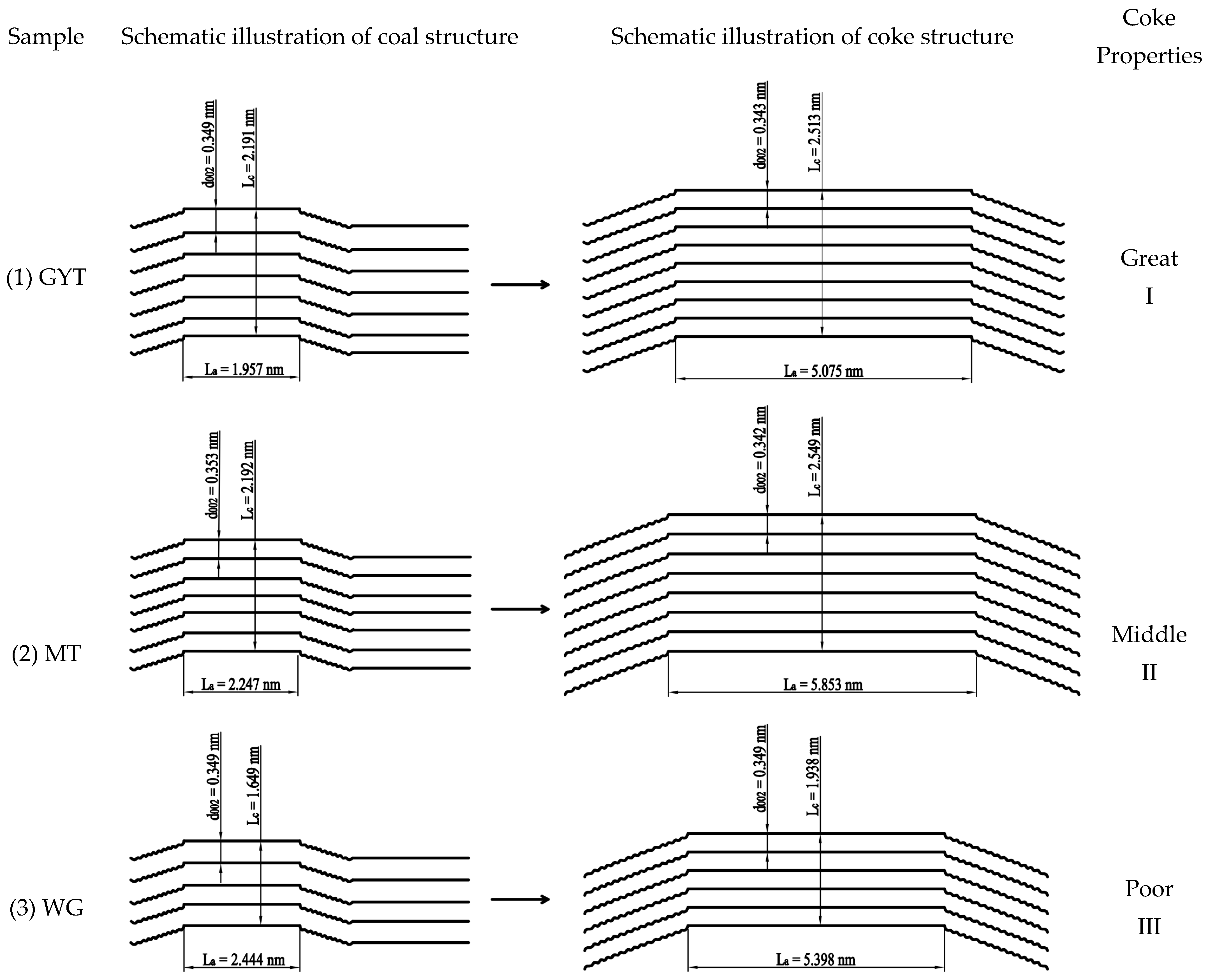
Figure 14 shows a schematic illustration of the changes in the structural parameters of coking coal during coal-to-coke transformation; the correlation between the structural properties of coke and the Lc and La structural mechanisms of formation from coal to coke. The strength of the coke was mainly determined by the microstructure. During the coking process of coal, a series of complex physical and chemical changes, such as softening, melting, polycondensation, and solidification, form the basic structural units of graphite-like microcrystals [2]. These units were connected by strong covalent bonds into a continuous and anisotropic three-dimensional network structure. During the coking process, the carbon structure of each layer was stacked through π-π bonds to form larger and roughly parallel aromatic ring layers [31,40]. When multiple layers were stacked in parallel, the structure of graphite-like microcrystals was formed [40,41], as illustrated in the structural diagram of coke in Figure 14. The carbon microcrystals of coke were different from perfect graphite crystals with a completely parallel structure. Although the layers were parallel, the relative positions between layers were randomly offset and lacked the long-range ordered stacking of graphite. Despite this “disordered layer structure”, the carbon atoms within each layer were connected by extremely strong covalent bonds (such as C–C sp2 bonds), which provided coke with extremely high strength [17,33]. The strength of individual microcrystals was high. However, if the connected bonds between the carbon structures were weak, they would break easily. The covalent bond connection between microcrystals was the fundamental reason for the mechanical strength of the coke.
The main purpose of the technologies used to improve the strength of coke (such as coal blending, coking, coal preheating, etc.) was to optimize the coking process to promote the formation of larger and better-oriented graphite-like microcrystals. It was important to improve the covalent bond connections between microcrystals, and the size and quantity of defects such as pores and cracks decreased [17]. The number and strength of chemical covalent bond connections were the key to distinguishing high-strength coke and low-strength coke. Ultimately, coke showed high mechanical strength in terms of anti-fracture and anti-wear on a macroscopic scale. Therefore, the coke was able to withstand the huge pressure of the burden column and intense friction in the blast furnace without pulverizing [1].
As shown in Figure 14, the Lc values of GYT and MT coke showed larger microcrystal structures. The proportion of inert basal planes increased, while the growth of edge lengths was relatively slow. This leads to a decrease in the proportion of active sites, resulting in a low index of CO2 reactivity (CRI) of the coke and strong resistance to reactions with CO2. Although the Lc values of GYT and MT coke were similar, the La of MT coke was wider, so its coke properties were worse than those of GYT coke. It can be seen that the Lc size of the WG coke was the smallest. This illustrated that the coke with a large unit mass had a larger specific surface area and longer total edge length. Therefore, the coke directly exposed more active carbon atoms, providing a large number of attack points for CO2. Thus, the WG coke showed high CRI and poor coke properties. Therefore, the Lc of the coke showed a good correlation with the CRI. The coke with a smaller Lc showed a high CRI value and poor reactivity. The coke with a larger Lc had a low CRI value, which meant the coke had good reactivity.
The value of the Coke Strength after Reaction (CSR) depended on the structure of the remaining carbon framework after the reaction. It was mainly closely related to the number of aromatic layers (N). The more aromatic layers, the higher the CSR. The fewer aromatic layers, the worse the CSR.
For polymer materials, the larger the molecular weight, the higher the strength [42,43]. The lower the molecular weight, the poorer the strength. For coal or coke, they were a kind of polymer material. It was still suitable for the theory that high molecular weight or large carbon structure showed heavy strength.

5. Conclusions

The coke samples were prepared at varying coking temperatures using a one-sided heating furnace. The coking behavior and carbon structure parameters of the coals were investigated. The relationships between carbon structure parameters and the properties of both the raw coal and coke were analyzed during the coke formation process. The main conclusions are as follows.
As temperature increased, La, Lc, N, n, and fa were increased, while d002 decreased, indicating compaction and a trend toward graphitization of the carbon structure. Changes in the carbon structure of different rank coals correlated positively with increasing rank, Lc showed an upward trend with an increase in coal rank.
It was found that the ratio of La/Lc was increased, with the lateral dimension of the coke microcrystalline structure expanding more significantly than the longitudinal dimension. The increase in La/Lc was approximately twice that of raw coal. The cross-linking reactions occurring at elevated temperatures, promoting condensation of aromatic nuclei and leading to a greater number of aromatic layers. Both the quantity and height of these aromatic layers were enhanced as a result of the cross-linking process.
A negative correlation was observed between Lc and CRI, indicating that higher Lc values correspond to improve coke quality. The correlation coefficient (R2) was 0.66. In contrast, CSR showed a positive correlation with Lc, with a correlation coefficient of 0.53. When the Lc value exceeded 2.4 nm, coke quality was considered favorable, characterized by a CRI below 25% and a CSR above 65%. However, a slight degradation in coke quality was noted when Lc increased beyond 2.67 nm.
The La values of the samples varied within the range of 5 to 5.5 nm and the coke process showed higher coke strength due to the larger grain sizes of the samples. Conversely, when the La value of the coke was beyond the range of 5 to 5.5 nm, the coke strength was considerably reduced. Compared with other coal samples, the carbon microcrystal structure of bituminous coals exhibited more pronounced changes during the formation of coke. Furthermore, coke derived from higher molecular mass precursors demonstrated superior strength.

Supplementary Materials

The following supporting information can be downloaded at https://www.mdpi.com/article/10.3390/ma19010168/s1, Figure S1: Correlation between coal rank and Lc of samples under different temperatures during the coking process; Figure S2: Correlation between coal rank and La of samples under different temperatures during the coking process; Figure S3: Correlation between CRI and La of samples under different temperatures during the coking process; Figure S4: Correlation between CRI and Lc of samples under different temperatures during the coking process; Figure S5: Correlation between CSR and La of samples under different temperatures during the coking process; Figure S6: Correlation between CSR and Lc of samples under different temperatures during the coking process.

Author Contributions

Writing—original draft, methodology, investigation, and formal analysis, L.T.; investigation and funding acquisition, J.D.; methodology, X.C.; project administration, supervision, and funding acquisition, J.Y. All authors have read and agreed to the published version of the manuscript.

Funding

This work was supported by funding from the National Natural Science Foundation of China (22078141).

Institutional Review Board Statement

Not applicable.

Informed Consent Statement

Not applicable.

Data Availability Statement

The original contributions presented in this study are included in the article. Further inquiries can be directed to the corresponding authors.

Conflicts of Interest

The authors declare no conflicts of interest.

References

  1. Granda, M.; Blanco, C.; Alvarez, P.; Patrick, J.W.; Menéndez, R. Chemicals from coal coking. Chem. Rev. 2013, 114, 1608–1636. [Google Scholar] [CrossRef]
  2. Cui, B.B.; Shen, Y.F.; Guo, J.; Jin, X.; Wang, M.J.; Xie, W.; Chang, L.P. A study of coking mechanism based on the transformation of coal structure. Fuel 2022, 328, 125360. [Google Scholar] [CrossRef]
  3. Guo, J.; Shen, Y.F.; Wang, M.J.; Xie, W.; Kong, J.; Chang, L.P.; Bao, W.R.; Xie, K.C. Impact of chemical structure of coal on coke quality produced by coals in the similar category. J. Anal. Appl. Pyrolysis 2022, 162, 105432. [Google Scholar] [CrossRef]
  4. Chen, X.Z.; Li, M.F.; Zeng, F.G. Control of chemical structure on the characteristics of micropore structure in medium-rank coals. Fuel Process. Technol. 2022, 228, 107162. [Google Scholar] [CrossRef]
  5. Hu, W.J.; Wang, Q.; Zhao, X.F.; Zhang, S.; Cheng, H. Relevance between various phenomena during coking coal carbonization. Part 2: Phenomenon occurring in the plastic layer formed during carbonization of a coking coal. Fuel 2019, 253, 199–208. [Google Scholar] [CrossRef]
  6. Zheng, H.; Xu, R.; Zhang, J.; Daghagheleh, O.; Schenk, J.; Li, C.; Wang, W. A comprehensive review of characterization methods for metallurgical coke structures. Materials 2022, 15, 174. [Google Scholar] [CrossRef] [PubMed]
  7. Li, K.J.; Khanna, R.; Zhang, J.L.; Barati, M.; Liu, Z.J.; Xu, T.; Yang, T.J.; Sahajwalla, V. Comprehensive investigation of various structural features of bituminous coals using advanced analytical techniques. Energy Fuels 2015, 29, 7178–7189. [Google Scholar] [CrossRef]
  8. Lee, S.; Yu, J.L.; Mahoney, M.; Tahmasebi, A.; Stanger, R.; Wall, T.; Lucas, J. In-situ study of plastic layers during coking of six Australian coking coals using a lab-scale coke oven. Fuel Process. Technol. 2019, 188, 51–59. [Google Scholar] [CrossRef]
  9. Hu, W.J.; Wang, Q.; Zhao, X.F.; Yang, S.T.; Wu, H.L.; Zhang, S.; Sun, J.F. Relevance between various phenomena during coking coal carbonization. Part 3: Understanding the properties of the plastic layer during coal carbonization. Fuel 2021, 292, 120371. [Google Scholar] [CrossRef]
  10. Chen, Y.X.; Lee, S.; Tahmasebi, A.; Liu, M.J.; Zhang, T.T.; Bai, J.; Tian, L.; Yu, J.L. Mechanism of carbon structure transformation in plastic layer and semi-coke during coking of Australian metallurgical coals. Fuel 2022, 315, 123205. [Google Scholar] [CrossRef]
  11. Miroshnichenko, D.; Shmeltser, K.; Kormer, M. Factors Affecting the formation the carbon structure of coke and the method of stabilizing its physical and mechanical properties. C—J. Carbon Res. 2023, 9, 66. [Google Scholar] [CrossRef]
  12. Xu, X.L.; Qi, Y.X.; Tian, L.; Dou, J.X.; Appiah, J.; Wang, J.W.; Zhu, R.Z.; Chen, X.X.; Yu, J.L. Evolution of carbon structure and cross-linking structure during coking process of coking coal. J. Anal. Appl. Pyrolysis 2024, 182, 106670. [Google Scholar] [CrossRef]
  13. Zhao, M.; Wang, A.; Cao, D.; Wei, Y.; Ding, L. Differences in macromolecular structure evolution during the pyrolysis of vitrinite and inertinite based on in situ FTIR and XRD measurements. Energies 2022, 15, 5334. [Google Scholar] [CrossRef]
  14. Wang, C.G.; Zeng, F.G.; Li, C.Y.; Xu, Q.Y.; Chen, P.F. Insight into the molecular structural evolution of a series of medium-rank coals from China by XRD, Raman and FTIR. J. Mol. Struct. 2024, 1303, 137616. [Google Scholar] [CrossRef]
  15. Lu, L.; Sahajwalla, V.; Kong, C.; Harris, D. Quantitative X-ray diffraction analysis and its application to various coals. Carbon 2001, 39, 1821–1833. [Google Scholar] [CrossRef]
  16. Sonibare, O.O.; Haeger, T.; Foley, S.F. Structural characterization of Nigerian coals by X-ray diffraction, Raman and FTIR spectroscopy. Energy 2010, 35, 5347–5353. [Google Scholar] [CrossRef]
  17. Wei, Q.W.; Pang, K.L.; Wu, J.; Liang, C. Coke characteristics and formation mechanism based on the hot tamping coking. J. Anal. Appl. Pyrolysis 2022, 161, 105381. [Google Scholar] [CrossRef]
  18. GB/T 212-2008; Proximate Analysis of Coal. General Administration of Quality Supervision, Inspection and Quarantine; Standardization Administration of PRC: Beijing, China, 2009.
  19. GB/T 6948-2008; Method of Determining Microscopically the Reflectance of Vitrinite in Coal. General Administration of Quality Supervision, Inspection and Quarantine; Standardization Administration of PRC: Beijing, China, 2009.
  20. GB/T 4000-2017; Determination of Coke Reactivity Index (CRI) and Coke Strength After Reaction (CSR). General Administration of Quality Supervision, Inspection and Quarantine; Standardization Administration of PRC: Beijing, China, 2018.
  21. GB/T 1996-2017; Coke for metallurgy. General Administration of Quality Supervision, Inspection and Quarantine; Standardization Administration of PRC: Beijing, China, 2018.
  22. Yan, J.C.; Lei, Z.P.; Li, Z.K.; Wang, Z.C.; Ren, S.B.; Kang, S.G.; Wang, X.L.; Shui, H.F. Molecular structure characterization of low-medium rank coals via XRD, solid state 13C NMR and FTIR spectroscopy. Fuel 2020, 268, 117038. [Google Scholar] [CrossRef]
  23. Zhang, W.Y.; Chen, S.C.; Han, F.; Wu, D. An experimental study on the evolution of aggregate structure in coals of different ranks by in situ X-ray diffractometry. Anal. Methods 2015, 7, 8720–8726. [Google Scholar] [CrossRef]
  24. Appiah, J.; Tian, L.; Dou, J.X.; Chen, Y.X.; Chen, X.X.; Xu, X.L.; Yu, J.L. Investigation into the impact of coal blending on the carbon structure of chars obtained from Chinese coals during coking. J. Anal. Appl. Pyrolysis 2024, 179, 106504. [Google Scholar] [CrossRef]
  25. Wu, D.; Liu, G.J.; Sun, R.Y.; Chen, S.C. Influences of magmatic intrusion on the macromolecular and pore structures of coal: Evidences from Raman spectroscopy and atomic force microscopy. Fuel 2014, 119, 191–201. [Google Scholar] [CrossRef]
  26. He, X.Q.; Liu, X.F.; Nie, B.S.; Song, D.Z. FTIR and Raman spectroscopy characterization of functional groups in various rank coals. Fuel 2017, 206, 555–563. [Google Scholar] [CrossRef]
  27. Rosenvold, R.J.; Dubow, J.B.; Rajeshwar, K. Thermal analyses of Ohio bituminous coals. Thermochim. Acta 1982, 53, 321–332. [Google Scholar] [CrossRef]
  28. Painter, P.C.; Snyder, R.W.; Starsinic, M.; Coleman, M.M.; Davis, A. Concerning the application of FT-IR to the study of coal: A critical assessment of band assignments and the application of spectral analysis programs. Appl. Spectrosc. 1981, 35, 475–485. [Google Scholar] [CrossRef]
  29. Meng, F.Y.; Gupta, S.; Yu, J.L.; Jiang, Y.; Koshy, P.; Sorrell, C.; Shen, Y.S. Effects of kaolinite addition on the thermoplastic behaviour of coking coal during low temperature pyrolysis. Fuel Process. Technol. 2017, 167, 502–510. [Google Scholar] [CrossRef]
  30. Jiao, A.J.; Tian, S.X.; Lin, H.Y. Analysis of outburst coal structure characteristics in Sanjia coal mine based on FTIR and XRD. Energies 2022, 15, 1956. [Google Scholar] [CrossRef]
  31. Li, K.; Liu, Q.F.; Cheng, H.F.; Hu, M.S.; Zhang, S. Classification and carbon structural transformation from anthracite to natural coaly graphite by XRD, Raman spectroscopy, and HRTEM. Spectrochim. Acta Part A Mol. Biomol. Spectrosc. 2021, 249, 119286. [Google Scholar] [CrossRef] [PubMed]
  32. Wang, R.Y.; Lu, L.B.; Zhang, D.M.; Wei, W.W.; Jin, H.; Guo, L.J. Effects of alkaline metals on the reactivity of the carbon structure after partial supercritical water gasification of coal. Energy Fuels 2020, 34, 13916–13923. [Google Scholar] [CrossRef]
  33. Tian, Y.; Li, G.Y.; Zhang, H.; Wang, J.P.; Ding, Z.Z.; Guo, R.; Cheng, H.; Liang, Y.H. Molecular basis for coke strength: Stacking-fault structure of wrinkled carbon layers. Carbon 2020, 162, 56–65. [Google Scholar] [CrossRef]
  34. Li, R.; Tang, Y.; Che, Q.; Ma, P.; Luo, P.; Lu, X.; Dong, M. Effects of coal rank and macerals on the structure characteristics of coal-based graphene materials from anthracite in Qinshui coalfield. Minerals 2022, 12, 588. [Google Scholar] [CrossRef]
  35. Yang, W.B.; Toth, P.; Song, Y.; Li, W. Staged evolutionary features of the aromatic structure in high volatile A bituminous coal (hvAb) during gold tube pyrolysis experiments. Int. J. Coal Geol. 2025, 297, 104660. [Google Scholar] [CrossRef]
  36. Shi, Z.W.; Zhang, Z.; Han, H.Y.; He, X.F.; Zhang, Y.G.; Zhou, A.N.; Jin, L.J.; Hu, H.Q. Insight into evolution characteristics of pyrolysis products of HLH and HL coal with Py-VUVPI-MS and DFT. J. Anal. Appl. Pyrolysis 2024, 183, 106829. [Google Scholar] [CrossRef]
  37. Wang, Y.X.; Huang, W.F.; Li, Z.H.; Chang, L.P.; Li, D.F.; Chen, R.C.; Lv, Q.; Zhao, Y.X.; Lv, B.L. Small furnace for the small angle X-ray scattering (SAXS) and wide angle X-ray scattering (WAXS) characterization of the high temperature carbonization of coal. Instrum. Sci. Technol. 2021, 49, 445–456. [Google Scholar] [CrossRef]
  38. Sharma, R.V.; Choudhary, A.K.S.; Adak, A.K.; Maity, K.S. An investigation on demineralization induced modifications in the macromolecular structure and its influence on the thermal behavior of coking and non-coking coal. J. Mol. Struct. 2023, 1274, 134520. [Google Scholar] [CrossRef]
  39. Appiah, J.; Tian, L.; Xu, X.L.; Dou, J.X.; Wang, J.W.; Chen, X.X.; Yu, J.L. Comparative study of the carbon structure of chars formed from coal with plastic waste and coal tar pitch additives. Carbon Lett. 2025, 35, 749–765. [Google Scholar] [CrossRef]
  40. Kidena, K.; Murata, S.; Nomura, M. Studies on the chemical structural change during carbonization process. Energy Fuels 1996, 10, 672–678. [Google Scholar] [CrossRef]
  41. Franklin, R.E. Crystallite growth in graphitizing and non-graphitizing carbons. Proc. R. Soc. A Math. Phys. Eng. Sci. 1951, 209, 196–218. [Google Scholar] [CrossRef]
  42. Kida, T.; Tanaka, R.; Hiejima, Y.; Nitta, K.H.; Shiono, T. Improving the strength of polyethylene solids by simple controlling of the molecular weight distribution. Polymer 2021, 218, 123526. [Google Scholar] [CrossRef]
  43. Kaur, J.; Hillbrick, L.; Abbott, A.; Lynch, P.; Mota-Santiago, P.; Pierlot, A.P. High molecular weight improves microstructure and mechanical properties of polyacrylonitrile based carbon fibre precursor. Polymer 2022, 247, 124753. [Google Scholar] [CrossRef]
Figure 1. Experimental setup of the coking reactor in a lab-scale coke oven (1. heating elements, 2. quartz reactor of coal charge, 3. thermocouple, 4. insulation, 5. sample, and 6. furnace).
Materials 19 00168 g001
Figure 2. Schematic of quartz tube showing temperature gradient of coal samples and locations at different stages of carbonization: (a) temperature distribution of sample in different locations in the reactor; (b) the temperature changes of heating part, 1/2, and 1/4 position with time.
Materials 19 00168 g002
Figure 3. The curve-fitted spectra of samples (YZX 900 °C) on the carbon structure from XRD analysis: (a) peak fitting of the 002 and γ bands (10–35°); (b) peak fitting of the 100 bands (40–46°).
Materials 19 00168 g003
Figure 4. TG–DTG analysis of different coals during pyrolysis: (a) TG curves; (b) DTG curves.
Materials 19 00168 g004
Figure 5. FTIR spectra of coals samples.
Materials 19 00168 g005
Figure 6. XRD analysis of different rank coals during the coking process.
Materials 19 00168 g006
Figure 7. XRD parameters of samples under different temperatures with different ranks during the coking process: (a) La; (b) Lc; (c) d002; (d) N; (e) n; (f) fa.
Materials 19 00168 g007
Figure 8. Correlation between La/Lc and the temperature of samples during the coking process.
Materials 19 00168 g008
Figure 9. Correlation between coal rank and Lc of samples under different temperatures during the coking process: (a) all the raw coal samples; (b) all the cokes.
Materials 19 00168 g009
Figure 10. Correlation between coal rank and La of samples under different temperatures during the coking process.
Materials 19 00168 g010
Figure 11. Correlation between CRI/CSR and Lc/La of samples under different temperatures during the coking process: (a) Lc and CRI; (b) La and CRI; (c) Lc and CSR; (d) La and CSR.
Materials 19 00168 g011
Figure 12. Raman spectra of QLS coal at different temperatures: (a) Raman spectra of QLS coals; (b) peak fitting of QLS coal at 700 °C.
Materials 19 00168 g012
Figure 13. The changes in ID/IG of different samples with pyrolysis temperature.
Materials 19 00168 g013
Figure 14. Schematic illustration of the changes in the structural parameters of coking coals during coal-to-coke transformation.
Materials 19 00168 g014
Table 1. Proximate analysis, ultimate analysis, and properties of coal samples.
YZXPJXXXGYTWGMLMTLQQLSTLHHB
Categories GC1/3CCFCCCFCCCCCCCCCCCLC
Proximate analysis
(wt%, ad)
M2.231.300.970.610.40.890.720.90.940.510.93
A7.898.879.2810.239.919.199.338.949.9610.2311.51
V32.4931.3029.0920.4422.9422.6720.9318.8619.7419.813.82
FC57.3958.5360.6668.7266.7567.2569.0271.369.3669.4673.74
Ultimate analysis
(wt%, daf)
C88.5285.7887.2984.2890.9186.7990.588.7586.6388.493.02
H4.714.684.53.064.275.613.943.783.825.254.07
N1.921.391.792.031.692.131.761.151.891.751.58
S0.470.360.641.340.80.910.51.250.391.290.37
O *4.387.785.799.292.334.563.35.067.273.310.96
Ro max 0.7440.9591.1991.3081.311.3381.3431.3981.4271.4651.831
Coke
properties
M4065.284.082.482.485.290.984.884.487.689.3/
M1027.28.08.86.89.26.38.48.87.26.7/
CRI59.425.42924.333.118.2523.12320.315.1/
CSR23.662.757.766.155.769.2559.463.371.873.0/
Coke grade -IIIIIIIIIIIIIIIIII-
ad—air dried basis; daf—dry ash free. * Differential calculation.
Table 2. Assignment of Raman spectrum bands in coals [4,24,25,26].
Center/cm−1BandsAssignmentBand Type
1590GAromatic ring quadrant breathing; alkene C=Csp2
1540D2Amorphous carbon structures; aromatics with 3–5 ringssp2
1465D3Aryl–alkyl ether; para-aromaticssp2, sp3
1380D1C=C between aromatic rings and aromatics with not less than 6 ringssp2
1185D4Caromatic=Calkyl; aromatic (aliphatic) ethers; C=C on hydroaromatic rings; hexagonal diamond carbon sp3; C-H on aromatic ringssp2, sp3
Table 3. XRD analysis of the characteristic parameters of WG coals during coking.
γ002100Lc/nmLa/nmd002/nmNnfa
2θ/°FWHMArea2θ/°FWHMArea2θ/°FWHMArea
Raw20.447.40725025.225.16987945.287.218411.6492.4440.35325.710.30.5767
400 °C20.416.35593125.155.09968744.818.209511.6712.1440.35405.710.50.6203
450 °C20.535.89610725.314.91985844.248.4311041.7322.0830.35185.911.20.6175
500 °C21.377.43605625.454.7510,75844.717.799691.7912.2550.35006.112.00.6398
600 °C21.426.22438725.554.5810,72444.074.676961.8593.7580.34876.312.80.7097
700 °C21.435.29472525.714.5011,33543.443.5810181.8924.8930.34656.513.40.7058
800 °C21.435.02437625.794.4613,79243.513.1211321.9105.6150.34556.513.60.7591
900 °C21.614.13385825.804.4113,63743.533.3614561.9315.2040.34536.613.90.7795
1000 °C22.133.64373825.914.4015,40543.393.2414891.9385.3980.34386.614.10.8047
Disclaimer/Publisher’s Note: The statements, opinions and data contained in all publications are solely those of the individual author(s) and contributor(s) and not of MDPI and/or the editor(s). MDPI and/or the editor(s) disclaim responsibility for any injury to people or property resulting from any ideas, methods, instructions or products referred to in the content.