


Research Progress on Characterization Techniques for the Corrosion Behavior of Bronze Artifacts



Abstract
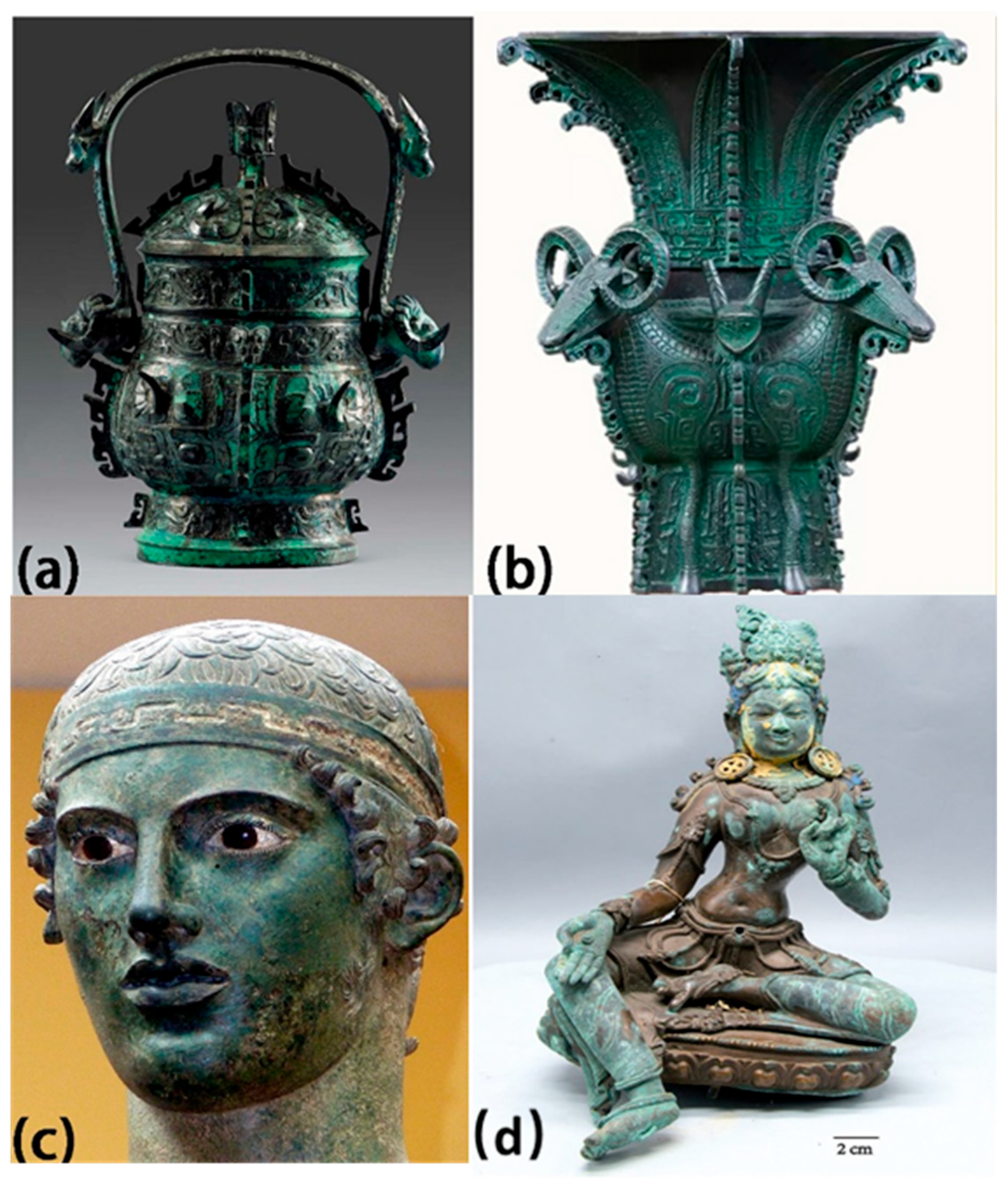
1. Ancient Bronze Artifacts
2. Corrosion of Bronze Artifacts
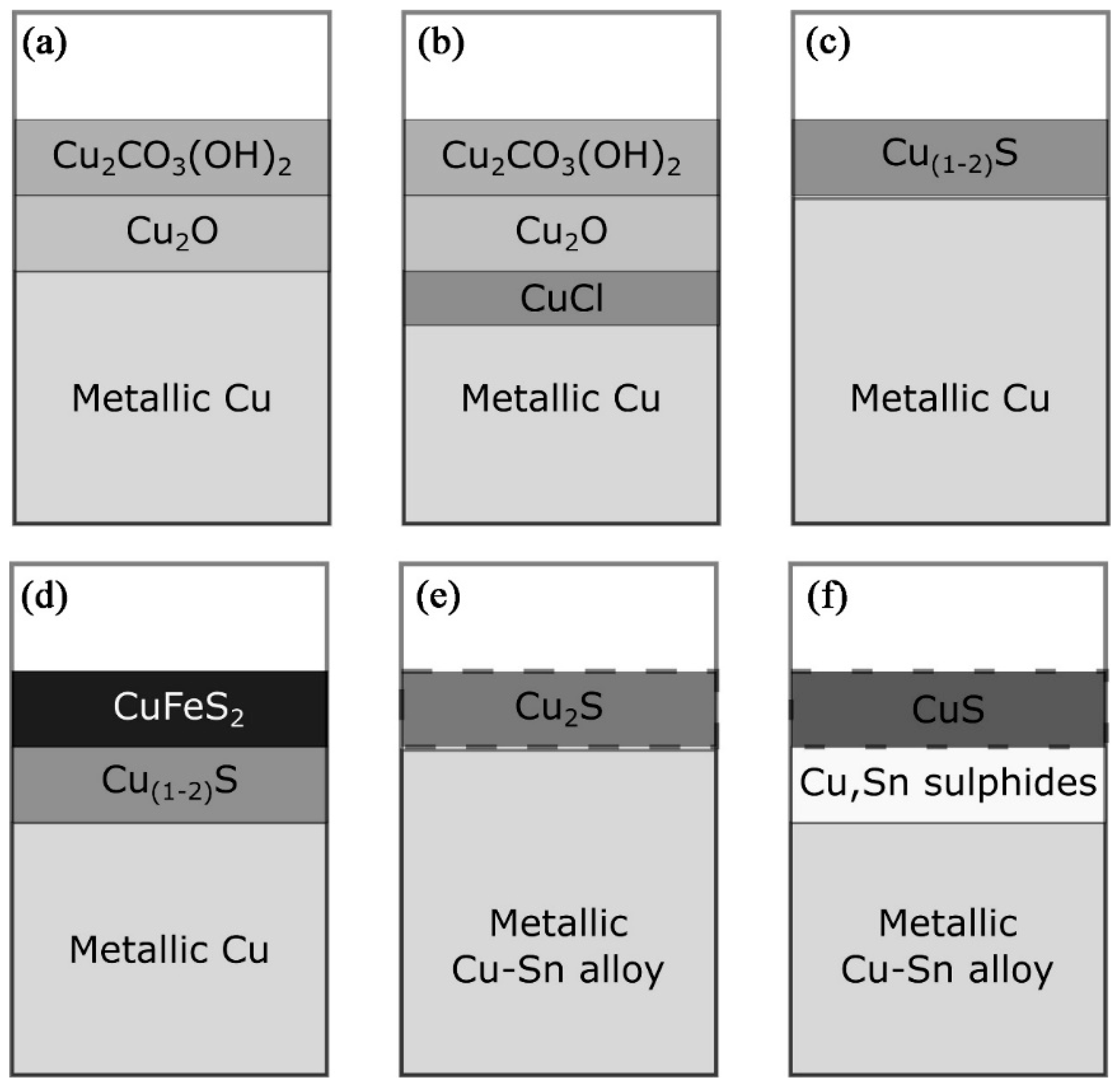
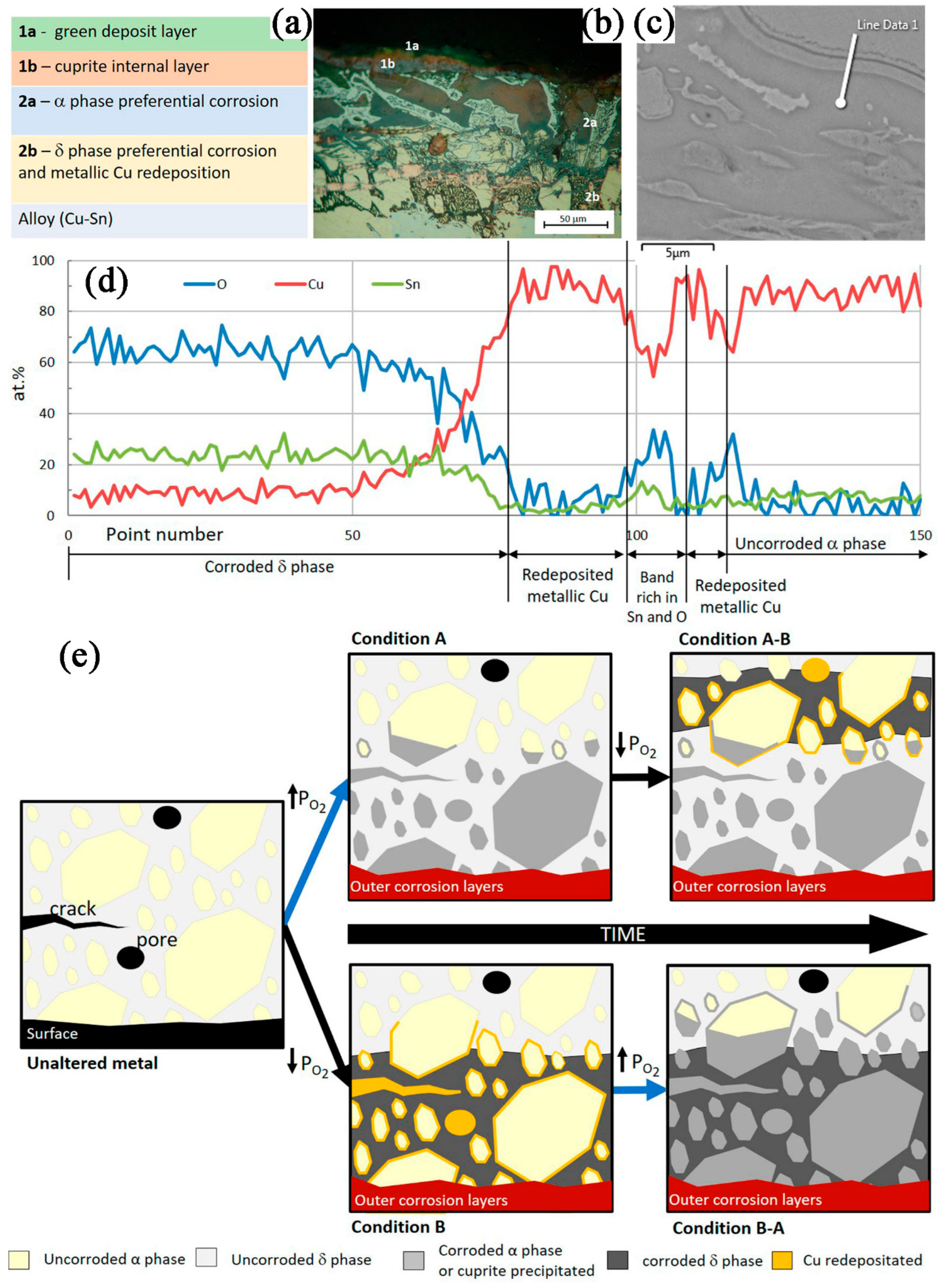
2.1. Corrosion Mechanisms of Bronze Artifacts
2.2. Influencing Factors on Corrosion Behavior of Bronze Artifacts
2.2.1. Influence of Composition and Structure of Bronze Artifacts
2.2.2. The Influence of Environmental Factors
3. Characterization Techniques for Bronze Artifacts
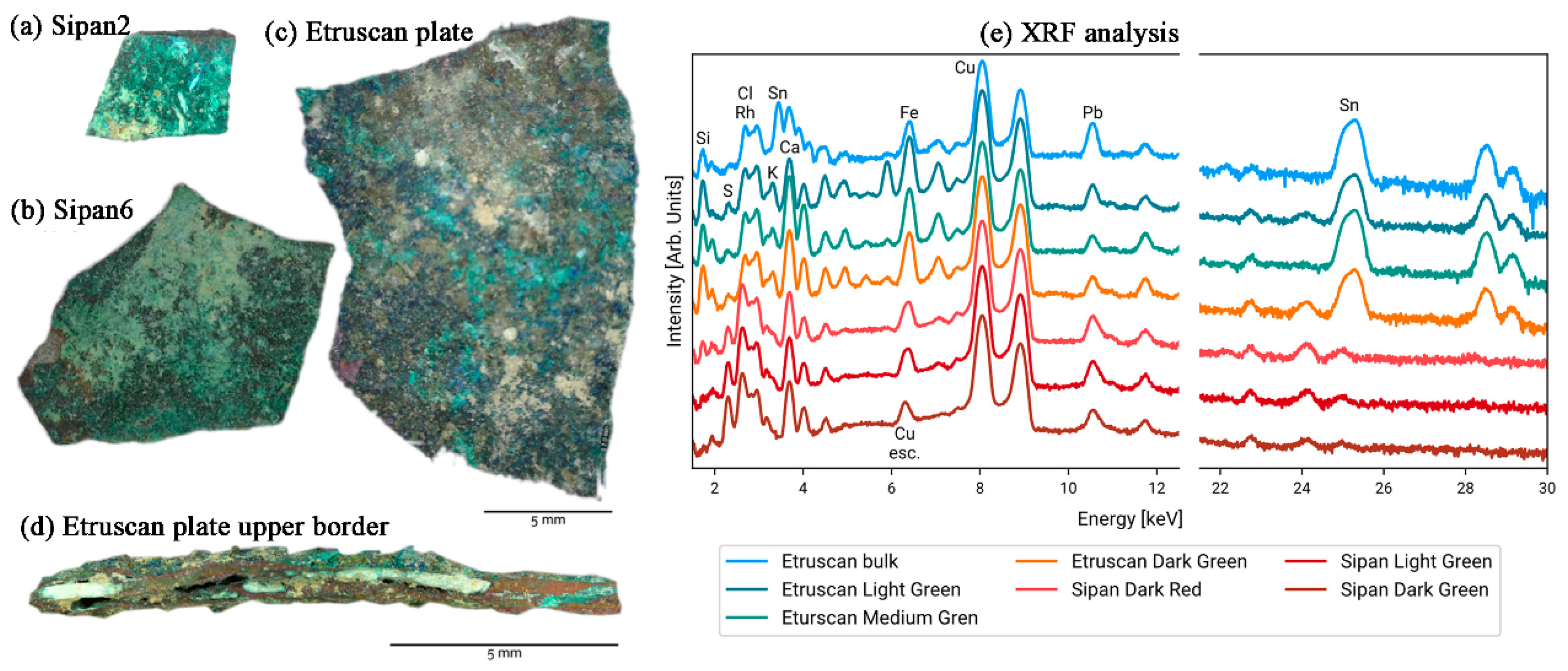
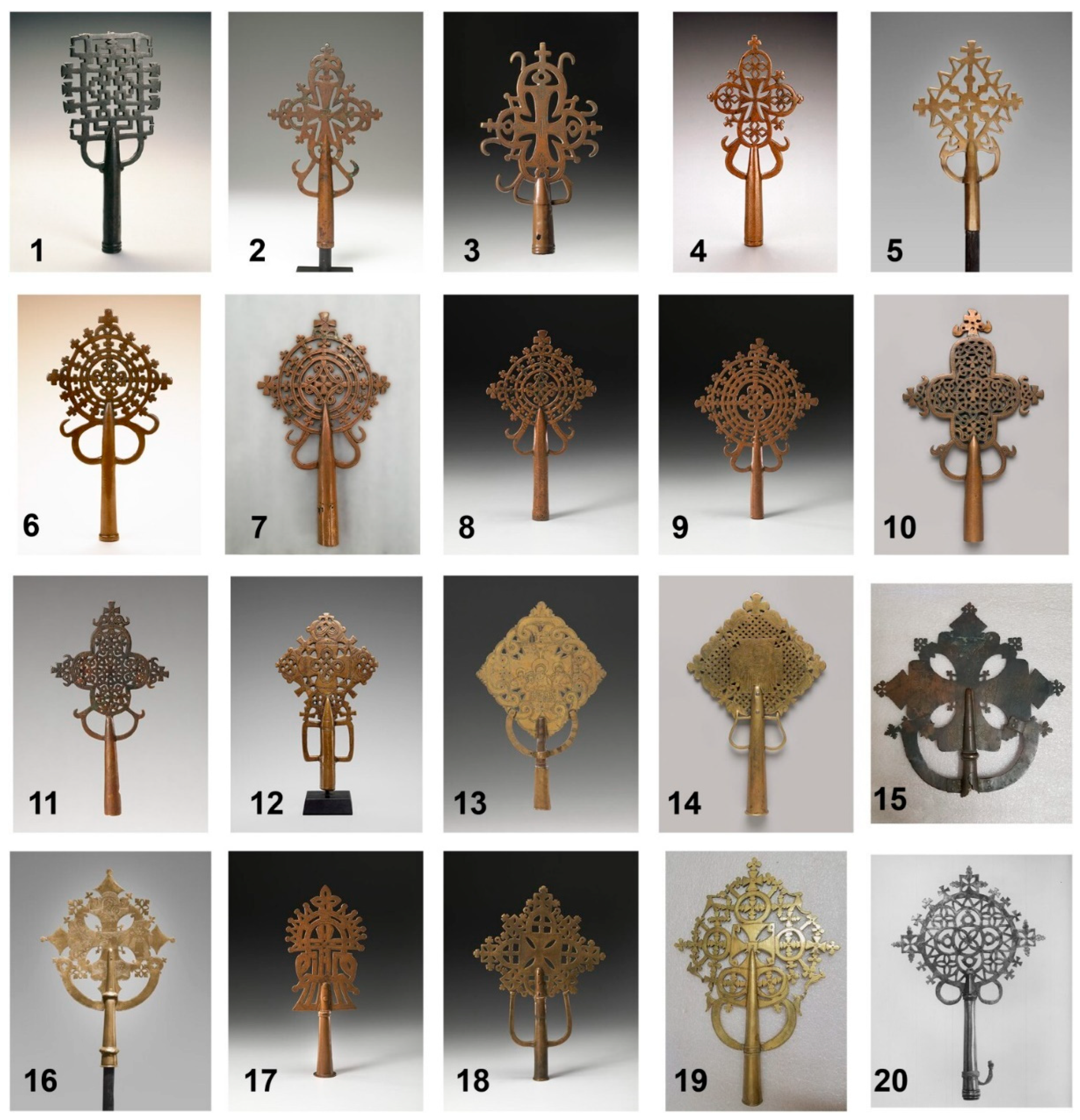
3.1. X-Ray Fluorescence (XRF)
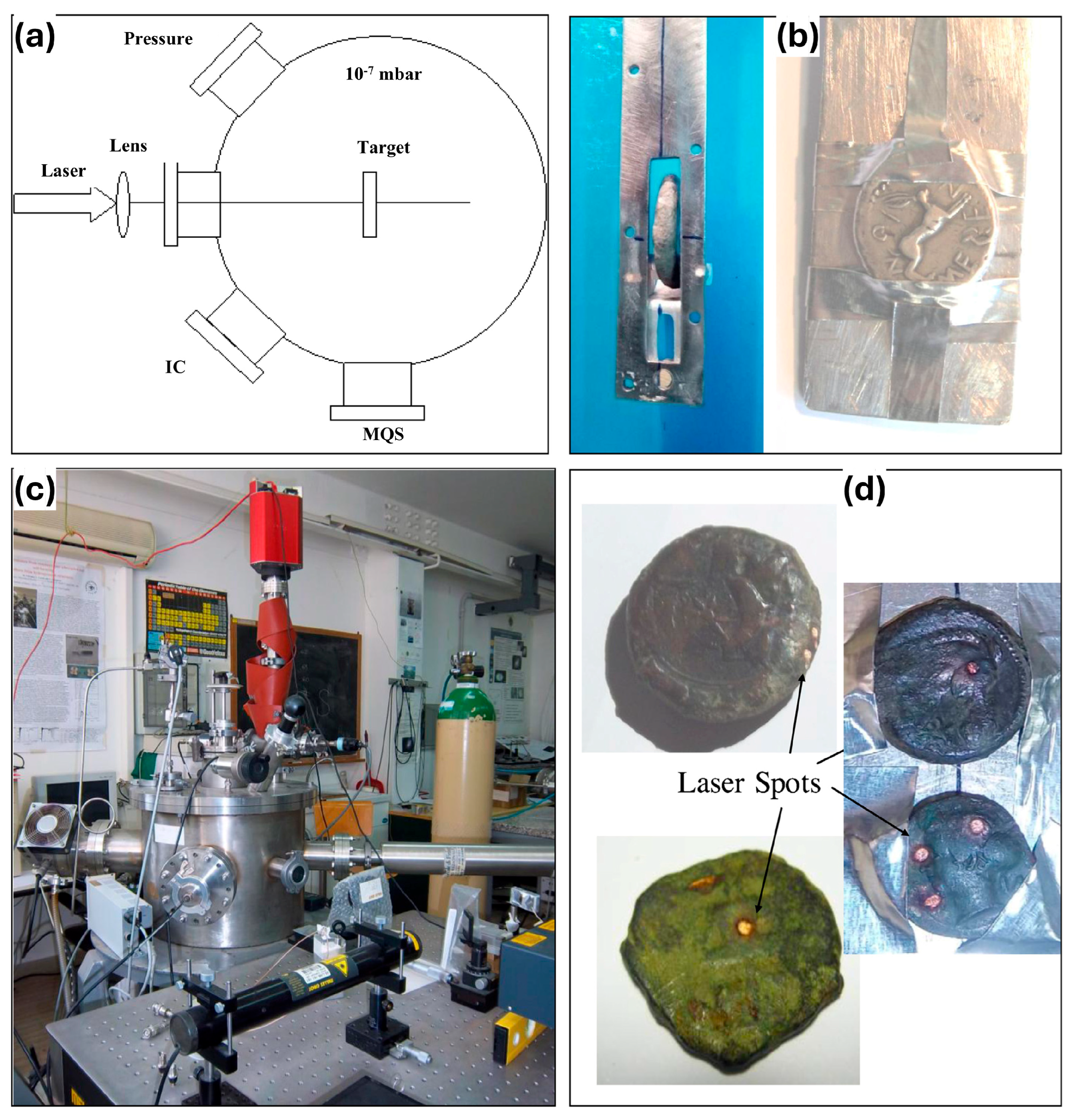
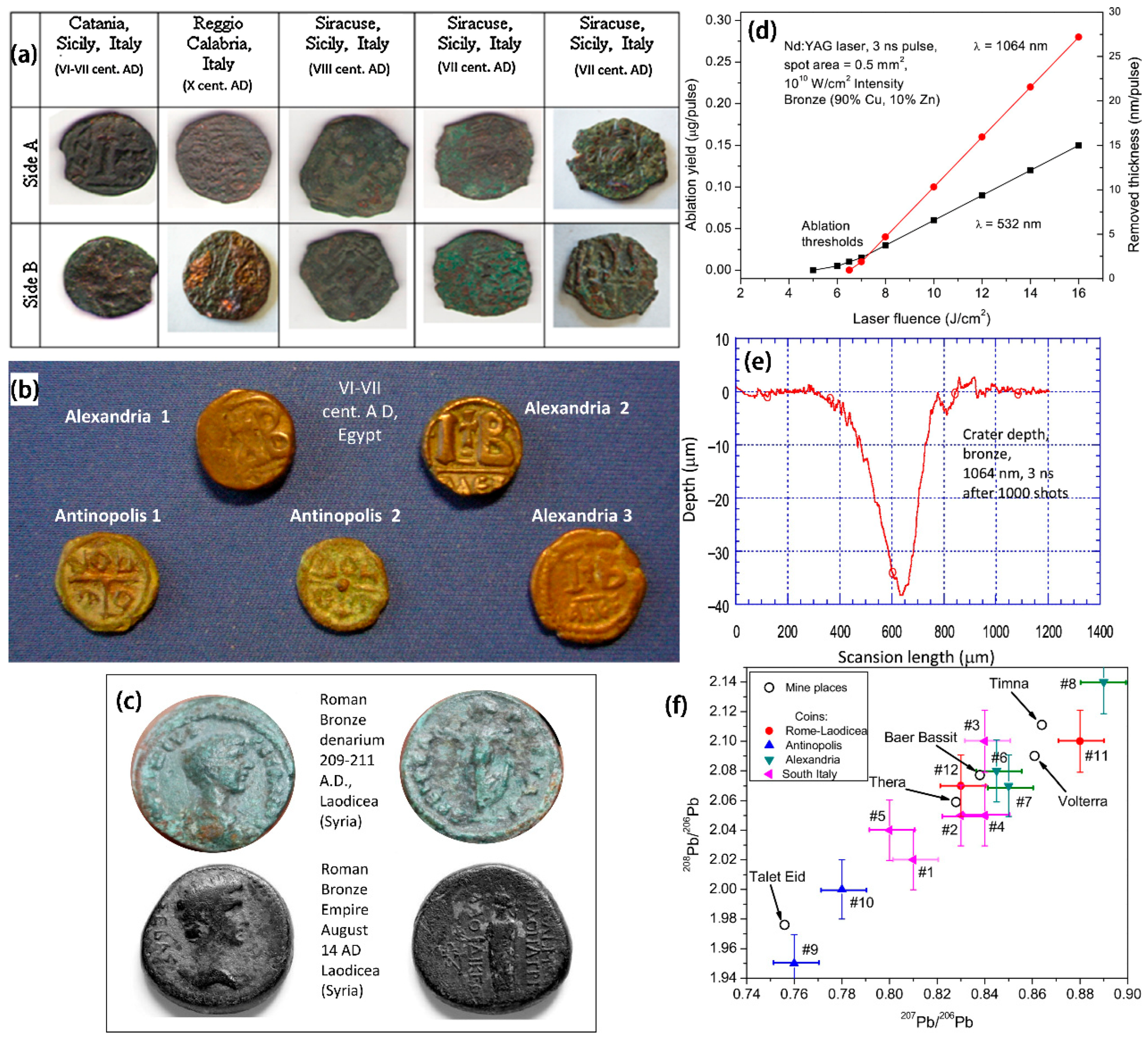
3.2. Laser Ablation Coupled to a Mass Quadrupole Spectrometry (LAMQS)
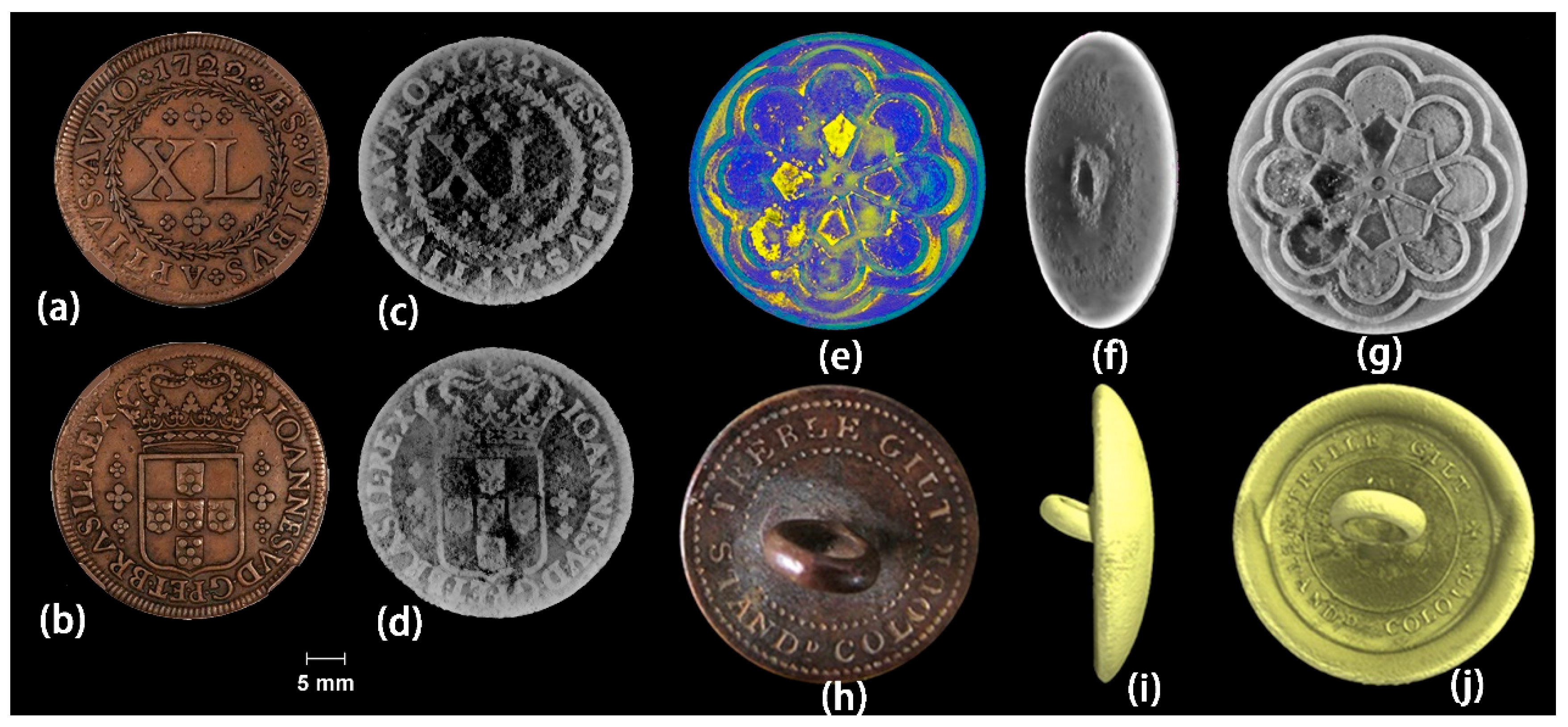
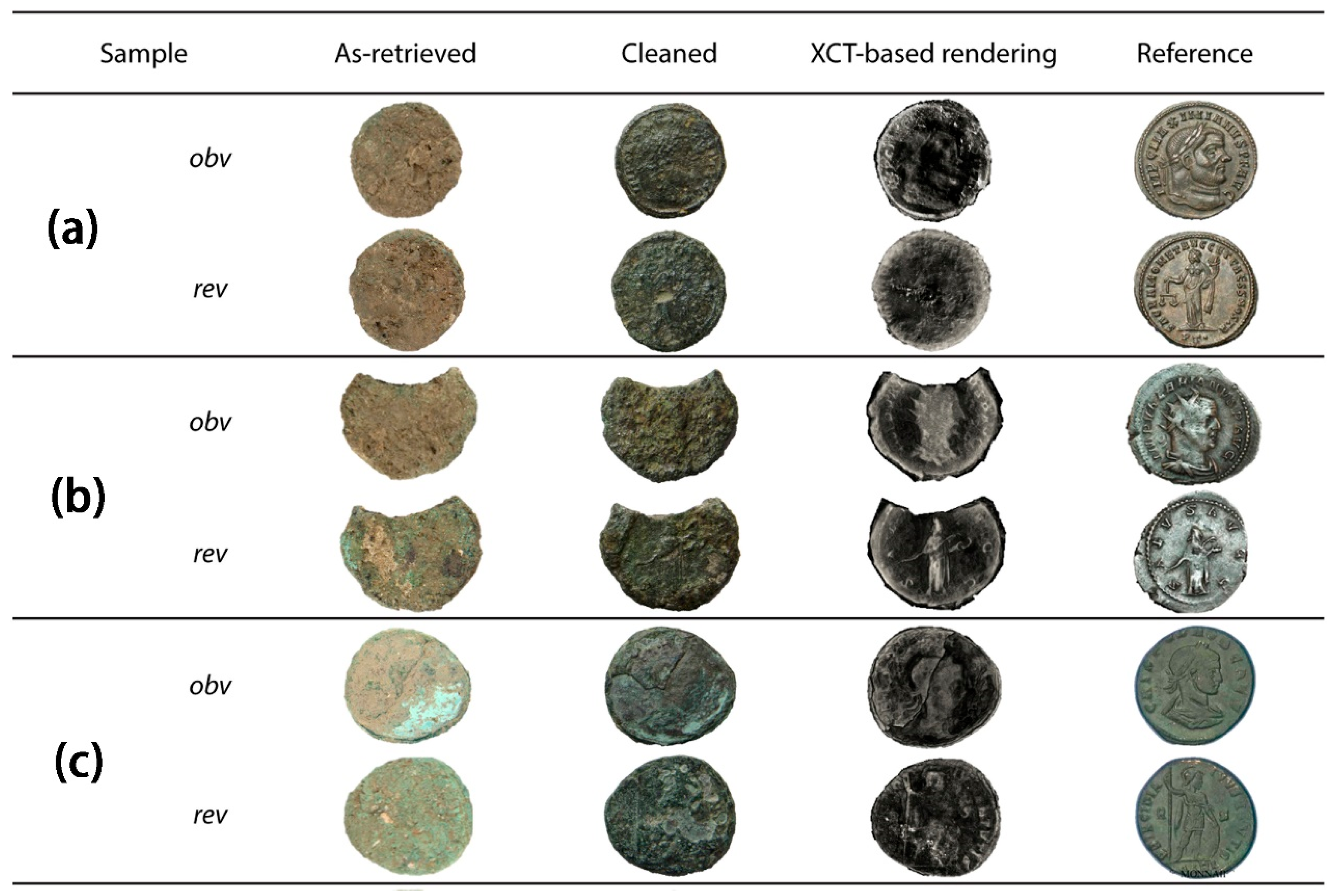
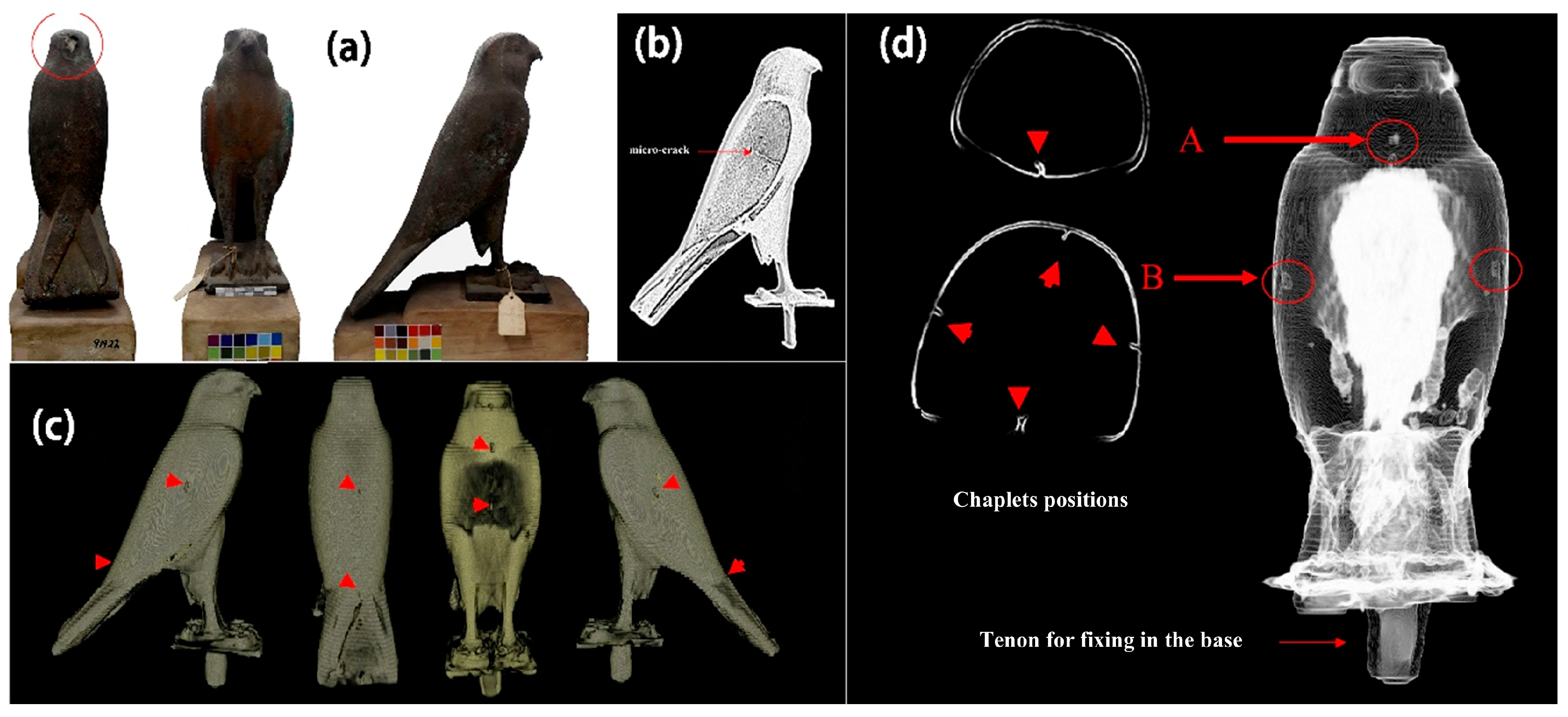
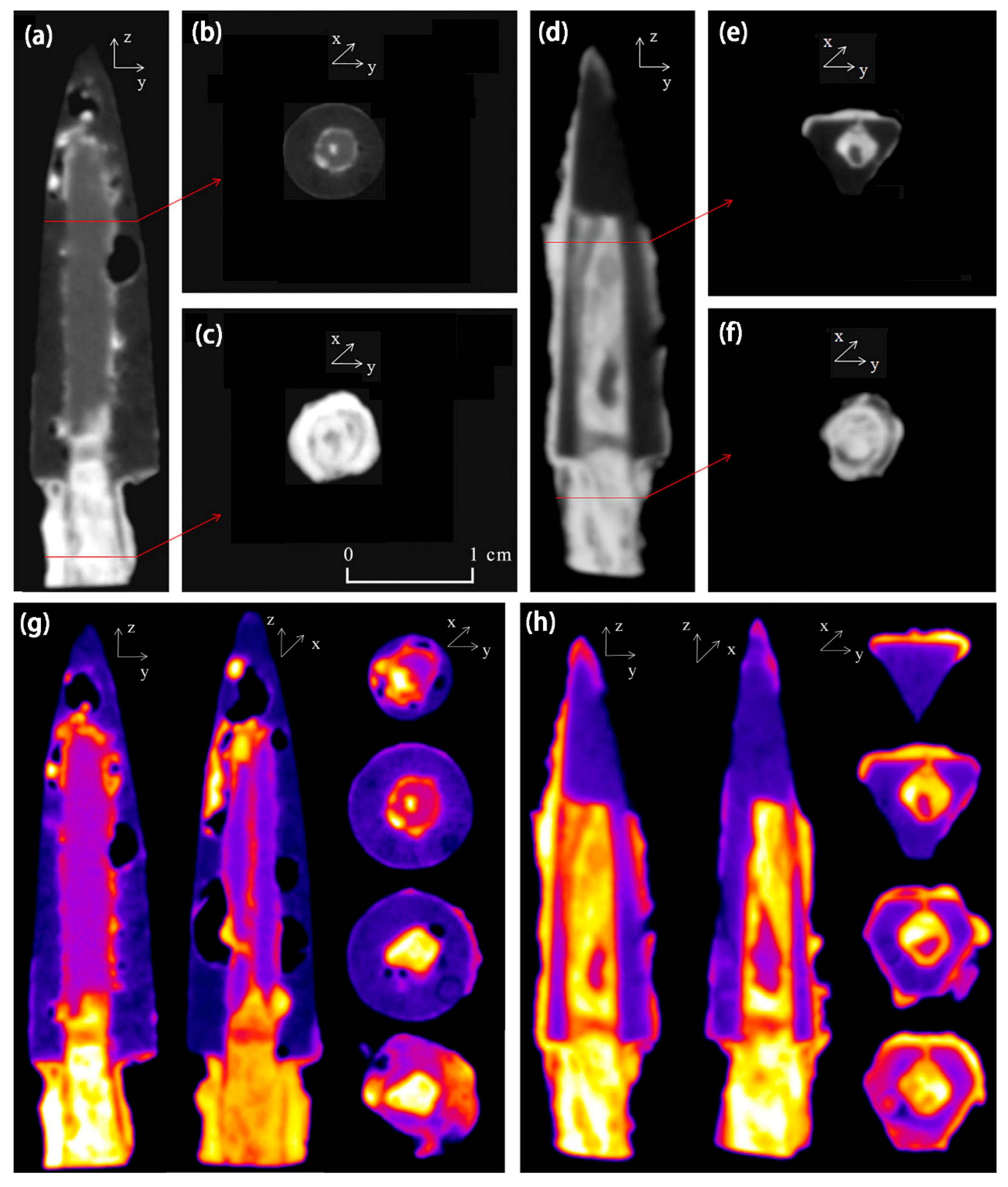
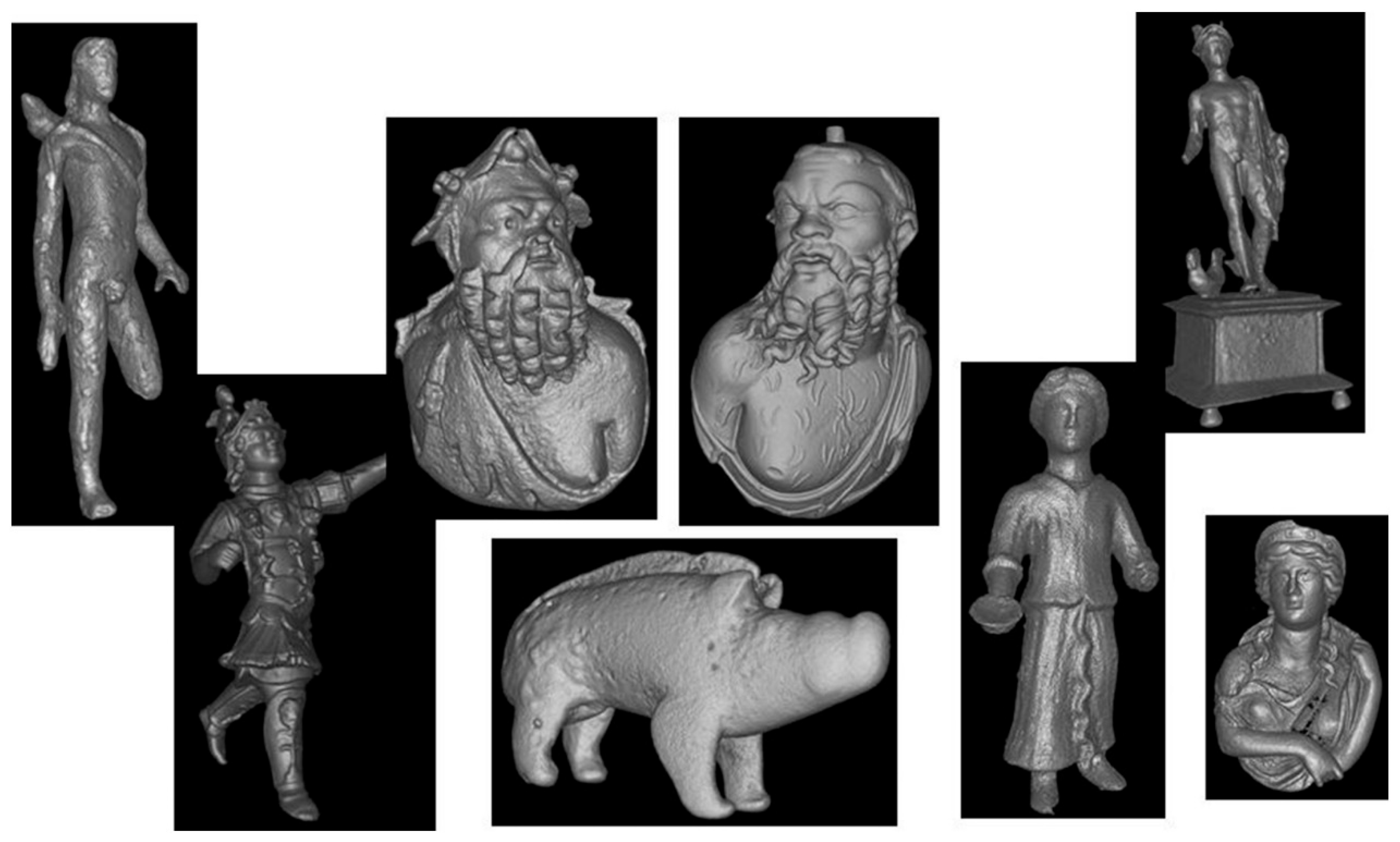
3.3. X-Ray Computed Tomography (CT)
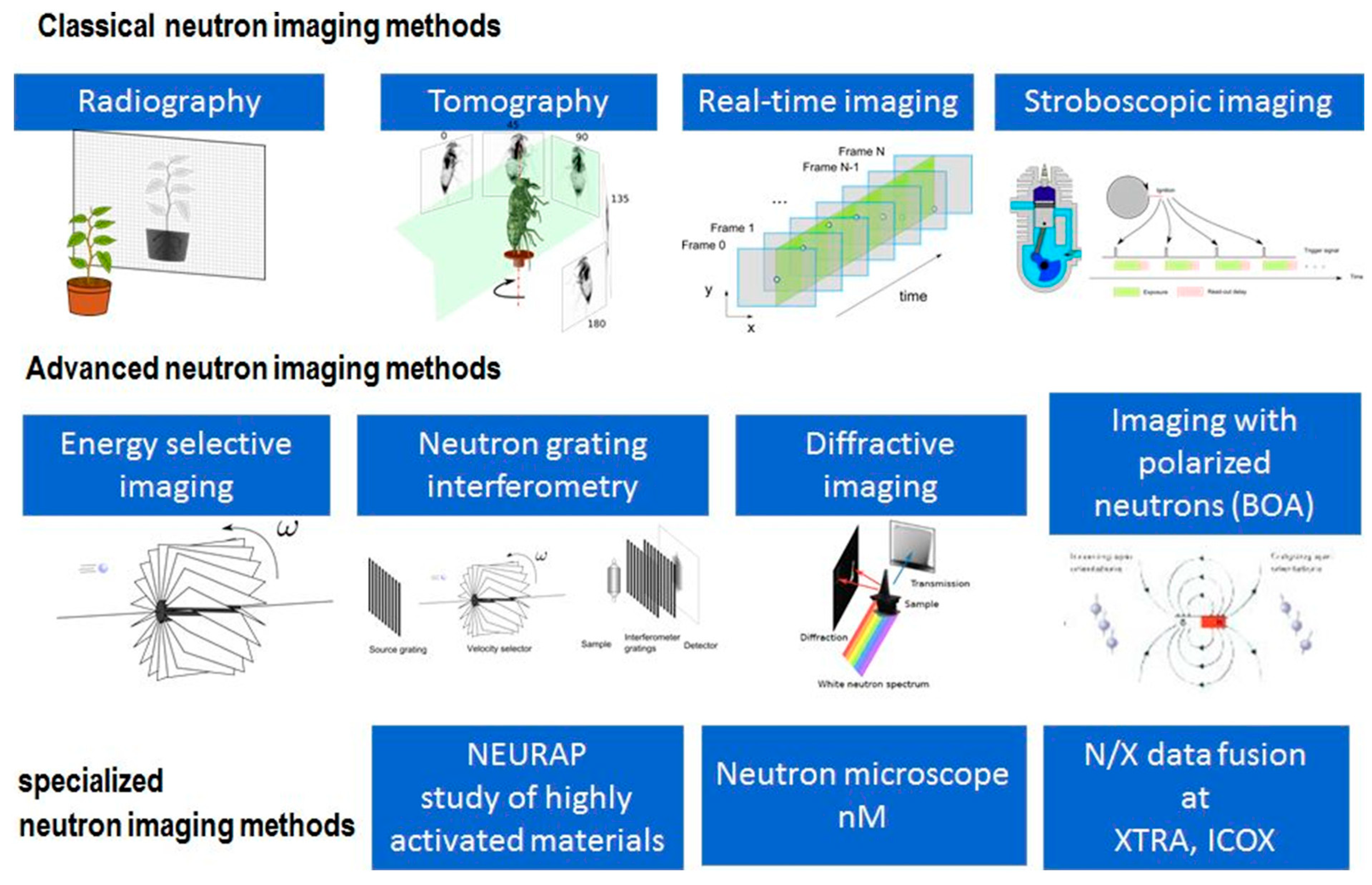
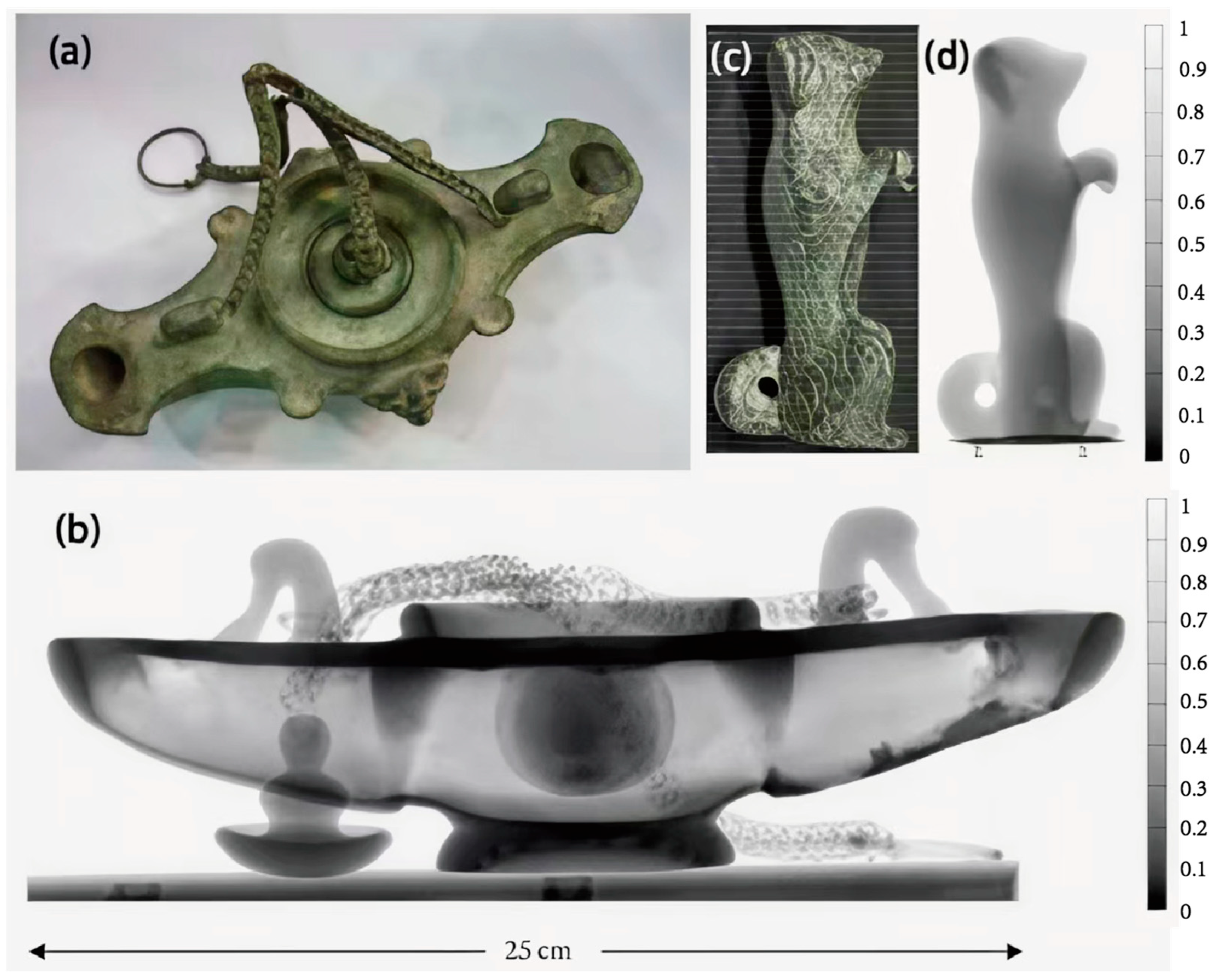
3.4. Neutron Tomography
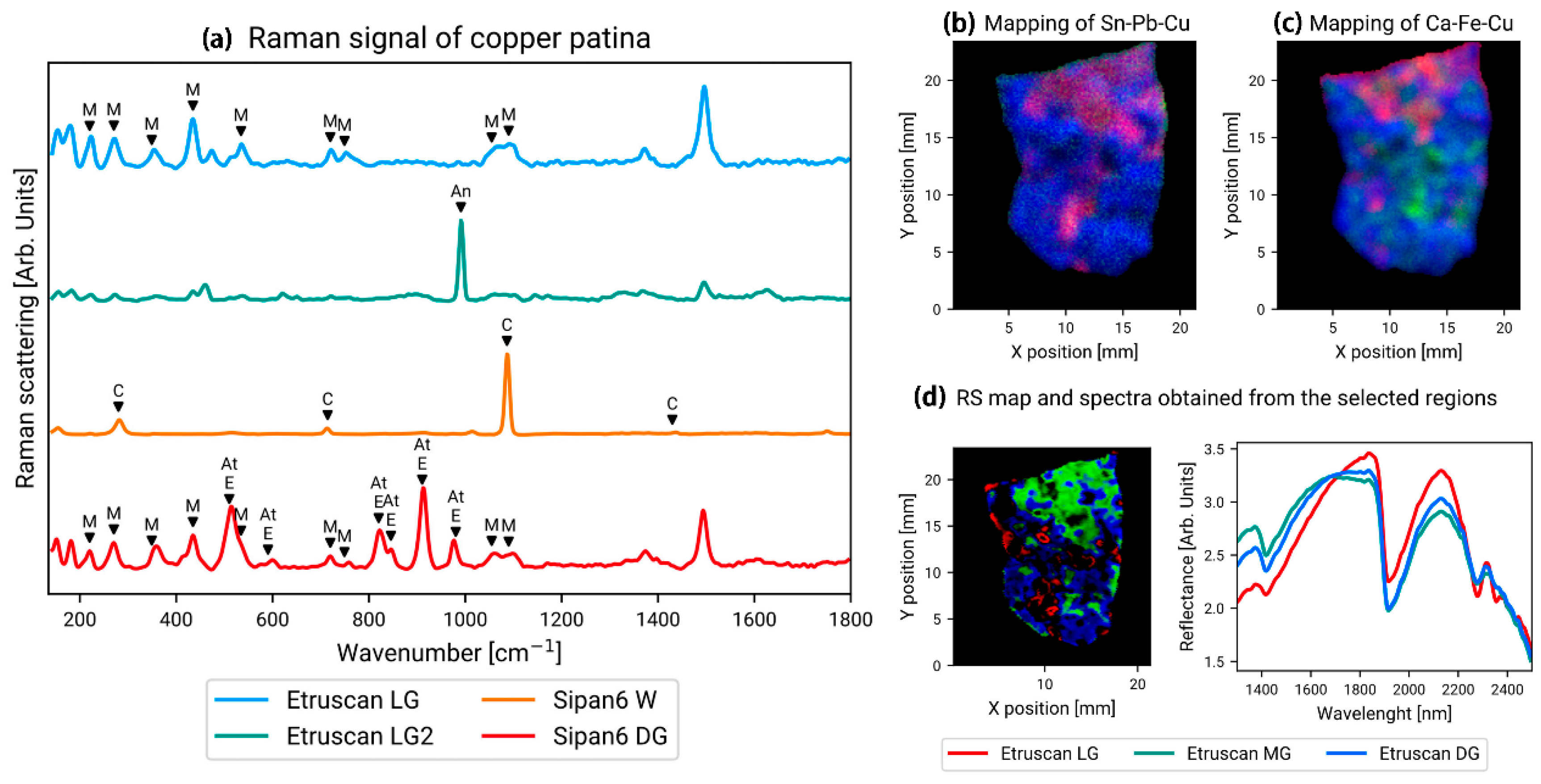
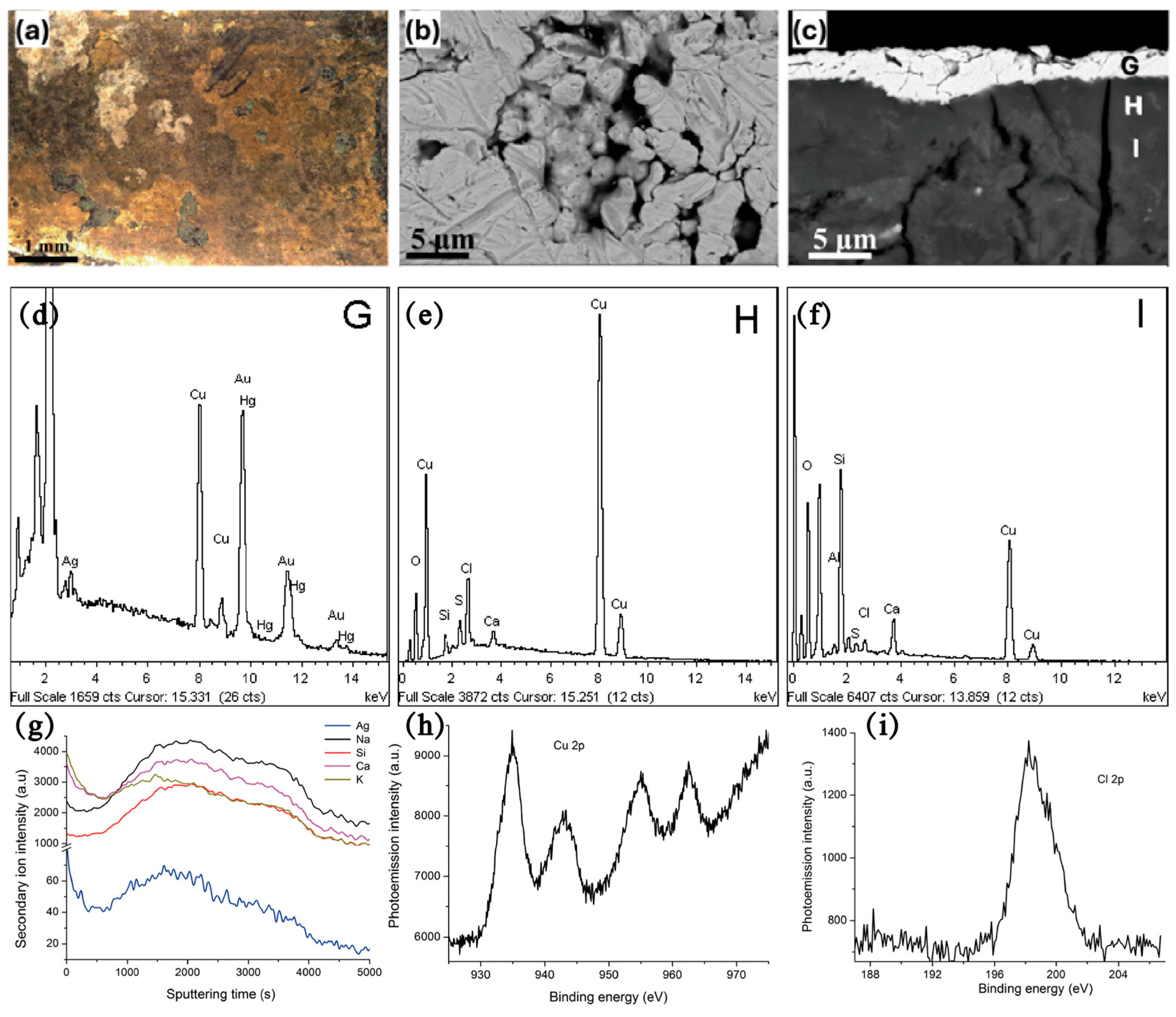
3.5. Other Physical Methods
4. Research Prospect
Author Contributions
Funding
Data Availability Statement
Conflicts of Interest
References
- Luo, W.; Song, G.; Hu, Y.; Chen, D. Tentative determination of a special bronze material by multiple technological test on a xuan-liu dagger-axe from the Xujialing Site, the Eastern Zhou period, Henan Province, China. J. Cult. Herit. 2020, 46, 304–312. [Google Scholar] [CrossRef]
- Rademakers, F.W.; Verly, G.; Degryse, P.; Vanhaecke, F.; Marchi, S.; Bonnet, C. Copper at ancient Kerma: A diachronic investigation of alloys and raw materials. Adv. Archaeomater. 2022, 3, 1–18. [Google Scholar] [CrossRef]
- Liu, D.; Tian, X.; Zhang, D.; Zhou, X.; Li, N.; Zhao, Y. Scientific Research on a Gold- and Silver-Inlaid Bronze Zun from the Han Dynasty. Coatings 2023, 13, 1480. [Google Scholar] [CrossRef]
- Cho, N.C.; Jang, M.K.; Huh, I.K. A Study on the Microstructure and Corrosion Characteristics of Early Iron Age Bronze Mirrors Excavated from the Korean Peninsula. Appl. Sci. 2021, 11, 2441. [Google Scholar] [CrossRef]
- Liu, W.; Li, M.; Wu, N.; Liu, S.; Chen, J. A new application of Fiber optics reflection spectroscopy (FORS): Identification of “bronze disease” induced corrosion products on ancient bronzes. J. Cult. Herit. 2021, 49, 19–27. [Google Scholar] [CrossRef]
- Di Turo, F. Limits and perspectives of archaeometric analysis of archaeological metals: A focus on the electrochemistry for studying ancient bronze coins. J. Cult. Herit. 2020, 43, 271–281. [Google Scholar] [CrossRef]
- Li, J.; Li, L.; Xie, Z.B.; Xiang, J.K.; Zhao, X.C.; Xiao, Q.; Ling, X. A comprehensive assessment method for the health status of bronzes unearthed at archaeological sites. Herit. Sci. 2023, 11, 86. [Google Scholar] [CrossRef]
- Liu, W.; Zhang, P.; Wu, N. The Spectroscopic Analysis of Corrosion Products on Gold-Painted Copper-Based Bodhisattva (Guanyin) in Half Lotus Position From National Museum of China. Spectrosc. Spectr. Anal. 2023, 43, 3832–3839. [Google Scholar]
- Hu, Y.; Wei, Y.; Li, L.; Zhang, J.; Chen, J. Same site, different corrosion phenomena caused by chloride: The effect of the archaeological context on bronzes from Sujialong Cemetery, China. J. Cult. Herit. 2021, 52, 23–30. [Google Scholar] [CrossRef]
- He, L.; Liang, J.; Zhao, X.; Jiang, B. Corrosion behavior and morphological features of archeological bronze coins from ancient China. Microchem. J. 2011, 99, 203–212. [Google Scholar] [CrossRef]
- Li, B.; Jiang, X.; Wu, R.; Wei, B.; Hu, T.; Pan, C. Formation of black patina on an ancient Chinese bronze sword of the Warring States Period. Appl. Surf. Sci. 2018, 455, 724–728. [Google Scholar] [CrossRef]
- Ingo, G.M.; Riccucci, C.; Guida, G.; Pascucci, M.; Giuliani, C.; Messina, E.; Fierro, G.; Di Carlo, G. Micro-chemical investigation of corrosion products naturally grown on archaeological Cu-based artefacts retrieved from the Mediterranean sea. Appl. Surf. Sci. 2019, 470, 695–706. [Google Scholar] [CrossRef]
- Huang, W.; Winfried, K.; Evelyne, G.; David, A.S. The metallography and corrosion of an ancient chinese bimetallic bronze sword. J. Cult. Herit. 2019, 37, 259–265. [Google Scholar] [CrossRef]
- Bernabale, M.; Nigro, L.; Montanari, D.; Niveau-de-Villedary, A.M.; De Vito, C. Microstructure and chemical composition of a Sardinian bronze axe of the Iron Age from Motya (Sicily, Italy). Mater. Charact. 2019, 158, 109957. [Google Scholar] [CrossRef]
- Fan, X. Characteristics of mimetite(Pb5(AsO4)3Cl)-pyromorphite(Pb5(PO4)3Cl) corrosion products on Han Dynasty bronzes from Chongqing, China. Microchem. J. 2019, 149, 104062. [Google Scholar] [CrossRef]
- Saraiva, A.S.; Figueiredo, E.; Águas, H.; Silva, R.J.C. Characterisation of Archaeological High-tin Bronze Corrosion Structures. Stud. Conserv. 2022, 67, 222–236. [Google Scholar] [CrossRef]
- Pagano, S.; Balassone, G.; Germinario, C.; Grifa, C.; Izzo, F.; Mercurio, M.; Munzi, P.; Pappalardo, L.; Spagnoli, E.; Verde, M. Archaeometric Characterisation and Assessment of Conservation State of Coins: The Case-Study of a Selection of Antoniniani from the Hoard of Cumae (Campania Region, Southern Italy). Heritage 2023, 6, 2038–2055. [Google Scholar] [CrossRef]
- Manti, P.; Watkinson, D. Corrosion phenomena and patina on archaeological low-tin wrought bronzes: New data. J. Cult. Herit. 2022, 55, 158–170. [Google Scholar] [CrossRef]
- Huisman, H.; Ackermann, R.; Claes, L.; van Eijck, L.; de Groot, T.; Joosten, I.; Kemmers, F.; Kerkhoven, N.; de Kort, J.-W.; Lo Russo, S.; et al. Change lost: Corrosion of Roman copper alloy coins in changing and variable burial environments. J. Archaeol. Sci. Rep. 2023, 47, 103799. [Google Scholar] [CrossRef]
- de Caro, T.; Susanna, F.; La Russa, M.F.; Macchia, A. The Fontanamare Discovery (Sardinia Coast, Italy), a Case of Underwater Corrosion of Bronze Coins. Minerals 2023, 13, 1085. [Google Scholar] [CrossRef]
- Robbiola, L.; Blengino, J.M.; Fiaud, C. Morphology and mechanisms of formation of natural patinas on archaeological Cu–Sn alloys. Corros. Sci. 1998, 40, 2083–2111. [Google Scholar] [CrossRef]
- Bakirov, B.; Saprykina, I.; Kichanov, S.; Mimokhod, R.; Sudarev, N.; Kozlenko, D. Phase Composition and Its Spatial Distribution in Antique Copper Coins: Neutron Tomography and Diffraction Studies. J. Imaging 2021, 7, 129. [Google Scholar] [CrossRef]
- Keheyan, Y.; Lanterna, G. Micro-Stratigraphical Investigation on Corrosion Layers in Ancient Bronze Artefacts of Urartian Period by Scanning Electron Microscopy, Energy-Dispersive Spectrometry, and Optical Microscopy. Heritage 2021, 4, 2526–2543. [Google Scholar] [CrossRef]
- Griesser, M.; Kockelmann, W.; Hradil, K.; Traum, R. New insights into the manufacturing technique and corrosion of high leaded antique bronze coins. Microchem. J. 2016, 126, 181–193. [Google Scholar] [CrossRef]
- Liang, Z.; Jiang, K.; Feng, B.-a.; Lin, S.; Chao, X.; Sui, Q.; Zhang, T.-a. Corrosion evolution of Cu-Pb alloys from the Western Zhou Dynasty in simulated archaeological soil environment. J. Electroanal. Chem. 2021, 899, 115688. [Google Scholar] [CrossRef]
- Liang, Z.; Jiang, K.; Zhang, T.-a. Corrosion behaviour of lead bronze from the Western Zhou Dynasty in an archaeological-soil medium. Corros. Sci. 2021, 191, 109721. [Google Scholar] [CrossRef]
- Westner, K.J.; Kemmers, F.; Klein, S. A novel combined approach for compositional and Pb isotope data of (leaded) copper-based alloys: Bronze coinage in Magna Graecia and Rome (5th to 2nd centuries BCE). J. Archaeol. Sci. 2020, 121, 105204. [Google Scholar] [CrossRef]
- Quaranta, M.; Catelli, E.; Prati, S.; Sciutto, G.; Mazzeo, R. Chinese archaeological artefacts: Microstructure and corrosion behaviour of high-leaded bronzes. J. Cult. Herit. 2014, 15, 283–291. [Google Scholar] [CrossRef]
- Wang, X.; Song, J.; Zhou, H.; Fan, Z.; Shi, J.; Chen, J.; Xiao, K. Mechanism of dendrite segregation on corrosion behaviour of antique cast low Sn bronze. Corros. Sci. 2023, 222, 111402. [Google Scholar] [CrossRef]
- Wang, X.; Zhou, H.; Song, J.; Fan, Z.; Zhang, L.; Shi, J.; Chen, J.; Xiao, K. Mechanism of corrosion behavior between Pb-rich phase and Cu-rich structure of high Sn–Pb bronze alloy in neutral salt spray environment. J. Mater. Res. Technol. 2024, 29, 881–896. [Google Scholar] [CrossRef]
- Papadopoulou, O.; Vassiliou, P. The Influence of Archaeometallurgical Copper Alloy Castings Microstructure towards Corrosion Evolution in Various Corrosive Media. Corros. Mater. Degrad. 2021, 2, 227–247. [Google Scholar] [CrossRef]
- Song, Z.; Tegus, O. Microstructure and Chlorine Ion Corrosion Performance in Bronze Earring Relics. Materials 2024, 17, 1734. [Google Scholar] [CrossRef]
- Kwon, H. Corrosion Behaviors of Artificial Chloride Patina for Studying Bronze Sculpture Corrosion in Marine Environments. Coatings 2023, 13, 1630. [Google Scholar] [CrossRef]
- Vasilache, V.; Diaconu, V.; Mircea, O.; Drob, A.; Sandu, I. The Archaeometallurgical Evaluation of Three Bronze Socketed Axes, Discovered in Eastern Romania. Appl. Sci. 2021, 11, 1811. [Google Scholar] [CrossRef]
- Boccaccini, F.; Riccucci, C.; Messina, E.; Pascucci, M.; Bosi, F.; Chelazzi, D.; Guaragnone, T.; Baglioni, P.; Ingo, G.M.; Di Carlo, G. Reproducing bronze archaeological patinas through intentional burial: A comparison between short- and long-term interactions with soil. Heliyon 2023, 9, e19626. [Google Scholar] [CrossRef] [PubMed]
- Yang, Y.; Cao, X.; Li, Y.; Wang, Z.; Li, B.; Jiang, X.; Jia, J.; Pan, C. Spontaneous Symmetry-Breaking in the Corrosion Transformation of Ancient Bronzes. Minerals 2020, 10, 656. [Google Scholar] [CrossRef]
- Marussi, G.; Crosera, M.; Prenesti, E.; Callegher, B.; Baracchini, E.; Turco, G.; Adami, G. From Collection or Archaeological Finds? A Non-Destructive Analytical Approach to Distinguish between Two Sets of Bronze Coins of the Roman Empire. Molecules 2023, 28, 2382. [Google Scholar] [CrossRef]
- Saint, A.-C.; Dritsa, V.; Koui, M. Development of an Optimized NDT Methodology for the Investigation of Ancient Greek Copper-Based Artifacts. Corros. Mater. Degrad. 2021, 2, 325–340. [Google Scholar] [CrossRef]
- Silveira, P.; Falcade, T. Applications of energy dispersive X-ray fluorescence technique in metallic cultural heritage studies. J. Cult. Herit. 2022, 57, 243–255. [Google Scholar] [CrossRef]
- Ferretti, M.; Miazzo, L.; Moioli, P. The application of a non-destructive XRF method to identify different alloys in the bronze statue of the Capitoline Horse. Stud. Conserv. 1997, 42, 241–246. [Google Scholar] [CrossRef]
- Roxburgh, M.A.; Heeren, S.; Huisman, D.J.; Van Os, B.J.H. Non-Destructive Survey of Early Roman Copper-Alloy Brooches Using Portable X-Ray Fluorescence Spectrometry. Archaeometry 2019, 61, 55–69. [Google Scholar] [CrossRef]
- Maróti, B.; Révay, Z.; Szentmiklósi, L.; Kleszcz, K.; Párkányi, D.; Belgya, T. Benchmarking PGAA, in-beam NAA, reactor-NAA and handheld XRF spectrometry for the element analysis of archeological bronzes. J. Radioanal. Nucl. Chem. 2018, 317, 1151–1163. [Google Scholar] [CrossRef]
- Orsilli, J.; Caglio, S. Combined Scanned Macro X-Ray Fluorescence and Reflectance Spectroscopy Mapping on Corroded Ancient Bronzes. Minerals 2024, 14, 192. [Google Scholar] [CrossRef]
- Harrison, A. Technical Study of Ethiopian Copper Alloy Processional Crosses Using Non-Destructive Analysis. Stud. Conserv. 2022, 67, 459–471. [Google Scholar] [CrossRef]
- Torrisi, L.; Caridi, F.; Giuffrida, L.; Torrisi, A.; Mondio, G.; Serafino, T.; Caltabiano, M.; Castrizio, E.D.; Paniz, E.; Salici, A. LAMQS analysis applied to ancient Egyptian bronze coins. Nucl. Instrum. Methods Phys. Res. Sect. B Beam Interact. Mater. At. 2010, 268, 1657–1664. [Google Scholar] [CrossRef]
- Caridi, F.; Mezzasalma, A.M.; Castrizio, E.D. An investigation on the patina of ancient bronze coins. Radiat. Eff. Defects Solids 2014, 169, 371–379. [Google Scholar] [CrossRef]
- Torrisi, L.; Caridi, F.; Borrielli, A.; Giuffrida, L.; Torrisi, A.; Mondio, G.; Mezzasalma, A.; Serafino, T.; Caltabiano, M.; Castrizio, E.D.; et al. LAMQS and XRF analyses of ancient Egyptian bronze coins. Radiat. Eff. Defects Solids 2010, 165, 626–636. [Google Scholar] [CrossRef]
- Torrisi, L.; Italiano, A.; Torrisi, A. Ancient bronze coins from Mediterranean basin: LAMQS potentiality for lead isotopes comparative analysis with former mineral. Appl. Surf. Sci. 2016, 387, 529–538. [Google Scholar] [CrossRef]
- Bude, R.O.; Bigelow, E.M.R. Nano-CT evaluation of totally corroded coins: A demonstration study to determine if detail might still be discernible despite the lack of internal, non-corroded, metal. Archaeometry 2020, 62, 1195–1201. [Google Scholar] [CrossRef]
- Miles, J.; Mavrogordato, M.; Sinclair, I.; Hinton, D.; Boardman, R.; Earl, G. The use of computed tomography for the study of archaeological coins. J. Archaeol. Sci. Rep. 2016, 6, 35–41. [Google Scholar] [CrossRef]
- Possenti, E.; Catrambone, M.; Colombo, C.; Cantaluppi, M.; Merlini, M.; Vaughan, G.B.M.; di Michiel, M.; Marinoni, N. Potential of synchrotron X-ray diffraction computed tomography (XRDCT) for a 3D non-destructive and/or non-invasive characterisation of cultural heritage geomaterials (CHG). J. Cult. Herit. 2024, 68, 28–37. [Google Scholar] [CrossRef]
- Wang, Z.; Xi, X.; Li, L.; Zhang, Z.; Han, Y.; Wang, X.; Sun, Z.; Zhao, H.; Yuan, N.; Li, H.; et al. Tracking the Progression of the Simulated Bronze Disease—A Laboratory X-Ray Microtomography Study. Molecules 2023, 28, 4933. [Google Scholar] [CrossRef]
- Harwood-Nash, D.C.F. Computed Tomography of Ancient Egyptian Mummies. J. Comput. Assist. Tomogr. 1979, 3, 768–773. [Google Scholar] [CrossRef]
- Machado, A.S.; Silva, A.S.S.; Campos, G.N.; Gomes, C.S.; Oliveira, D.F.; Lopes, R.T. Analysis of metallic archaeological artifacts by X-ray computed microtomography technique. Appl. Radiat. Isot. 2019, 151, 274–279. [Google Scholar] [CrossRef] [PubMed]
- Abate, F.; De Bernardin, M.; Stratigaki, M.; Franceschin, G.; Albertin, F.; Bettuzzi, M.; Brancaccio, R.; Bressan, A.; Morigi, M.P.; Daniele, S.; et al. X-ray computed microtomography: A non-invasive and time-efficient method for identifying and screening Roman copper-based coins. J. Cult. Herit. 2024, 66, 436–443. [Google Scholar] [CrossRef]
- Maher, M.A. X-RAY computed tomography of a late period falcon bronze coffin. Radiat. Phys. Chem. 2020, 166, 108475. [Google Scholar] [CrossRef]
- Kiss, V.; Fischl, K.P.; Horváth, E.; Káli, G.; Kasztovszky, Z.; Kis, Z.; Maróti, B.; Szabó, G. Non-destructive analyses of bronze artefacts from Bronze Age Hungary using neutron-based methods. J. Anal. At. Spectrom. 2015, 30, 685–693. [Google Scholar] [CrossRef]
- Szentmiklósi, L.; Maróti, B.; Kis, Z.; Kasztovszky, Z. Integration of neutron-based elemental analysis and imaging methods and applications to cultural heritage research. J. Archaeol. Sci. Rep. 2018, 20, 476–482. [Google Scholar] [CrossRef]
- Maróti, B.; Kis, Z.; Szentmiklósi, L.; Horváth, E.; Káli, G.; Belgya, T. Characterization of a South-Levantine bronze sculpture using position-sensitive prompt gamma activation analysis and neutron imaging. J. Radioanal. Nucl. Chem. 2017, 312, 367–375. [Google Scholar] [CrossRef]
- Lehmann, E.H. Using neutron imaging data for deeper understanding of cultural heritage objects experiences from 15+ years of collaborations. J. Archaeol. Sci. Rep. 2018, 19, 397–404. [Google Scholar] [CrossRef]
- Ryzewski, K.; Herringer, S.; Bilheux, H.; Walker, L.; Sheldon, B.; Voisin, S.; Bilheux, J.C.; Finocchiaro, V. Neutron Imaging of Archaeological Bronzes at the Oak Ridge National Laboratory. Phys. Procedia 2013, 43, 343–351. [Google Scholar] [CrossRef]
- Zhao, F.; Sun, M.; Li, P.; Scherillo, A.; Grazzi, F.; Kockelmann, W.; Guo, F.; Wu, C.; Wang, Y. Revealing the manufacturing and corrosion characteristics of Chinese archaeological metal arrows by non-destructive neutron techniques. Archaeol. Anthropol. Sci. 2024, 16, 50. [Google Scholar] [CrossRef]
- Ospitali, F.; Chiavari, C.; Martini, C.; Bernardi, E.; Passarini, F.; Robbiola, L. The characterization of Sn-based corrosion products in ancient bronzes: A Raman approach. J. Raman Spectrosc. 2012, 43, 1596–1603. [Google Scholar] [CrossRef]
- Hu, Q.; Liu, W.; Liu, S.; Chen, J. Detecting copper trihydroxychlorides with reflectance spectroscopy and machine learning methods. J. Cult. Herit. 2023, 59, 49–56. [Google Scholar] [CrossRef]
- Salem, Y.; Mohamed, E.H. The role of archaeometallurgical characterization of ancient coins in forgery detection. Nucl. Instrum. Methods Phys. Res. Sect. B Beam Interact. Mater. At. 2019, 461, 247–255. [Google Scholar] [CrossRef]
- Rovella, N.; Albanese, M.P.; Alberghina, M.F.; Schiavone, S.; Ricca, M.; Berikashvili, D.; Kvakhadze, L.; Tvaladze, S.; Figoli, A.; La Russa, M.F. New Insights in Metallurgical Manufacturing in the Caucasian Area: The Case Study of Artefacts from the Samshvilde Citadel Ruins (South Georgia). Minerals 2024, 14, 444. [Google Scholar] [CrossRef]
- Liu, S.; Shi, M.; Zhou, Y.; Li, R.; Xie, Z.; Hu, D.; Zhang, M.; Hu, G. Scanning electrochemical cell microscopy: A powerful method to study the intergranular corrosions of archaeological silver artifacts. J. Cult. Herit. 2020, 46, 176–183. [Google Scholar] [CrossRef]
- Mercuri, F.; Zammit, U.; Orazi, N.; Caruso, G.; Paoloni, S. Quantitative characterization of archaeological bronzes based on thermal and compositional analysis. Archaeometry 2023, 65, 1275–1284. [Google Scholar] [CrossRef]
- Liggins, F.; Vichi, A.; Liu, W.; Hogg, A.; Kogou, S.; Chen, J.; Liang, H. Hyperspectral imaging solutions for the non-invasive detection and automated mapping of copper trihydroxychlorides in ancient bronze. Herit. Sci. 2022, 10, 142. [Google Scholar] [CrossRef]
- Giussani, B.; Monticelli, D.; Rampazzi, L. Role of laser ablation–inductively coupled plasma–mass spectrometry in cultural heritage research: A review. Anal. Chim. Acta 2009, 635, 6–21. [Google Scholar] [CrossRef]
- Glaser, L.; Rothkirch, A.; Techert, S.; Freudenberg, M. A non-destructive view with X-rays into the strain state of bronze axes. Microchem. J. 2016, 126, 322–325. [Google Scholar] [CrossRef]
- Ingo, G.M.; Riccucci, C.; Pascucci, M.; Messina, E.; Giuliani, C.; Biocca, P.; Tortora, L.; Fierro, G.; Di Carlo, G. Combined use of FE-SEM+EDS, ToF-SIMS, XPS, XRD and OM for the study of ancient gilded artefacts. Appl. Surf. Sci. 2018, 446, 168–176. [Google Scholar] [CrossRef]
- Tarbay, J.G.; Maróti, B.; Kis, Z.; Káli, G.; Szentmiklósi, L. Non-destructive analysis of a Late Bronze Age hoard from the Velem-Szent Vid hillfort. J. Archaeol. Sci. 2021, 127, 105320. [Google Scholar] [CrossRef]
- Özkan, C.; Sahlmann, L.; Feiler, C.; Zheludkevich, M.; Lamaka, S.; Sewlikar, P.; Kooijman, A.; Taheri, P.; Mol, A. Laying the experimental foundation for corrosion inhibitor discovery through machine learning. Npj Mater. Degrad. 2024, 8, 21. [Google Scholar] [CrossRef]

| Artifact | Age | Chemical Composition | Excavation Site | Burial Environment | Corrosion Products | Corrosion Characteristics | Ref. |
|---|---|---|---|---|---|---|---|
| M79 Dings and Guis; M88 Fu; M85 Fu; M102 Li; M26 Hu; M107 Hu | Early Spring and Autumn Period to Mid Spring and Autumn Period (~770 B.C. to 550 B.C.) | Cu-Sn-Pb | Southern part of Sujialong Cemetery (Hubei, China) | Soil | Copper trihydroxychloride/cassiterite, cuprite, and tenorite | With/without powdery rust | [9] |
| Wu Zhou coins | Han Dynasty of China | Cu (84.8–85.4%)-Sn (3.3–6.1%)-Pb (4.7–6.4%)-Sb (2.6–2.9%) | Zhongguan minting site, 25 km west from Xi’an city, China | Soil | Cu2(OH)3Cl, Cu3(CO3)2(OH)2, Cu2(OH)2CO3, and Pb3O4 | Rough surface cracks, pits, and multicolor patina | [10] |
| Ancient Chinese bronze | Warring States Period of China (453–221 BCE) | Cu (66.88%)-Sn (22.92%)-Pb (10.2%) | No. 14 tomb of Wangjiachong, Huangzhou district, Huanggang city, Hubei province, China | Wet and acidic burial conditions | Cu2(CO3)(OH)2, SnO2, PbO | Harmless rust | [11] |
| Roman leaded-bronzes | 4th century BCE to the 2nd century CE | Cu (75.61–91.97%)-Sn (3.87–11.47%)-Pb (0.95–19.80%) | “Punta del Serrone” area (Apulia), the Sicilian channel (Sicily) and the Arburese coast (Sardinia) | Seawater | MgSn(OH)6, CaCO3, PbCO3, Cu2S, MgS, Cu2O, Mg(OH)2, Cu2S, Cu1.78S | Bronze disease | [12] |
| Bimetal bronze sword | Warring States period (476–221 BC) | Cu-Sn (16%)-Pb (7%) | Hunan Province China | Beside the decomposed bone in the tomb | Malachite (Cu2CO3(OH)2), cuprite, cassiterite, quartz, pyromorphite, libethenite, goethite, phosphogartrellite, romarchite, anarkite, lepidocrocite | Selective corrosion | [13] |
| Sardinian bronze axe | Iron Age (10th century BC) | Cu (86.9–95.4t%)-Sn (2.8–6.9%)-As (0.6–1.3%) | Motya (Sicily, Italy) | Soil | Cuprite (Cu2O), cassiterite (SnO2), laurionite (PbClOH), cerussite (PbCO3), litharge (PbO), anglesite (PbSO4) and plumbonacrite (Pb5O(OH)2(CO3)3) | Selective corrosion | [14] |
| Bronze fragment samples (Fang, Mou, Bi Earcup, Jiaodou) | Western Han of China | Cu (76.1%)-Sn (8.2%)-Pb (5.2%) | Zhong county, Yunyang county, Shizhu county and Fuling county of Chongqing, China | From tombs near the Yangtze River | pyromorphite, mimetite, malachite, azurite (Cu3(CO3)2(OH)2), cuprite, cerussite, Cu2CO3(OH)2, Cu3(CO3)2(OH)2, malachite, cerussite, Pb5(AsO4)3Cl, Pb5(PO4)3Cl, mimetite-pyromorphite | Selective corrosion | [15] |
| High-tin bronzes (bells from foundry pits) | Thirteenth to the nineteenth centuries | Cu (72.7–79.3%)-Sn (19.4–27.3%)-Pb (<3%) | Portuguese | Soil | SnO2·xH2O | Selective corrosion | [16] |
| Gilded bronze statue”Vajrasattva Bodhisattva” | Ming dynasty of China (A. D. 1368–1644) | - | National Museum of China | Atmospheric environment | Copper trihydroxychloride (atacamite/clinoatacamite) and chalconatronite | Powdery corrosion | [5] |
| Ancient Roman coins (antoniniani) | 260 to 270 CE | Cu (71–91%)-Sn (0–9%)-Pb (<4–23%)-Ag (2–17%) | Hoard of Cumae (Campania Region, Southern Italy) | Soil | Cuprite, malachite, cerussite, copper chloride, silver chloride | Bronze disease | [17] |
| Corinthian and Illyrian helmets | Archaic period | Cu-Sn (<14%) | Greece | Soil | Malachite, azurite, cuprite | Powdery corrosion | [18] |
| Roman copper alloy coins | From Vespasian (AD 69–79) to Marcus Aurelius (AD 161–180) | Cu-Sn-Pb-As-Ag | Netherlands and Switzerland | Alternations or progressive environment | Iron oxides, tin-oxide, copper sulfides, copper and copper-iron sulfides, malachite | Selective corrosion | [19] |
| Roman Empire Antoninian coins | Third century AD (Antonine age) | Cu-Sn-Pb-Ag | Fontanamare Discovery (Sardinia Coast, Italy) | Submarine conditions | Atacamite (Cu2Cl(OH)3), botallackite (Cu2(OH)3Cl), cuprite (Cu2O), cassiterite (SnO2), lead carbonates cerussite (PbCO3) and the lead oxide, lead chloro-carbonate phosgenite (PbCl)2CO3), Cu2S (chalcocite), CuS (covellite) | Bronze disease, microbial-induced corrosion (MIC) | [20] |
Disclaimer/Publisher’s Note: The statements, opinions and data contained in all publications are solely those of the individual author(s) and contributor(s) and not of MDPI and/or the editor(s). MDPI and/or the editor(s) disclaim responsibility for any injury to people or property resulting from any ideas, methods, instructions or products referred to in the content. |
© 2026 by the authors. Licensee MDPI, Basel, Switzerland. This article is an open access article distributed under the terms and conditions of the Creative Commons Attribution (CC BY) license.
Share and Cite
Li, H.; Zhao, Y.; Wang, X.; Guo, H.; Ren, C.; Liu, C.; Xiang, L. Research Progress on Characterization Techniques for the Corrosion Behavior of Bronze Artifacts. Materials 2026, 19, 162. https://doi.org/10.3390/ma19010162
Li H, Zhao Y, Wang X, Guo H, Ren C, Liu C, Xiang L. Research Progress on Characterization Techniques for the Corrosion Behavior of Bronze Artifacts. Materials. 2026; 19(1):162. https://doi.org/10.3390/ma19010162
Chicago/Turabian StyleLi, Hongliang, Yongdi Zhao, Xiaohui Wang, Hanjie Guo, Chao Ren, Chunyan Liu, and Li Xiang. 2026. "Research Progress on Characterization Techniques for the Corrosion Behavior of Bronze Artifacts" Materials 19, no. 1: 162. https://doi.org/10.3390/ma19010162
APA StyleLi, H., Zhao, Y., Wang, X., Guo, H., Ren, C., Liu, C., & Xiang, L. (2026). Research Progress on Characterization Techniques for the Corrosion Behavior of Bronze Artifacts. Materials, 19(1), 162. https://doi.org/10.3390/ma19010162

