3.1. Cyclic Stress Response
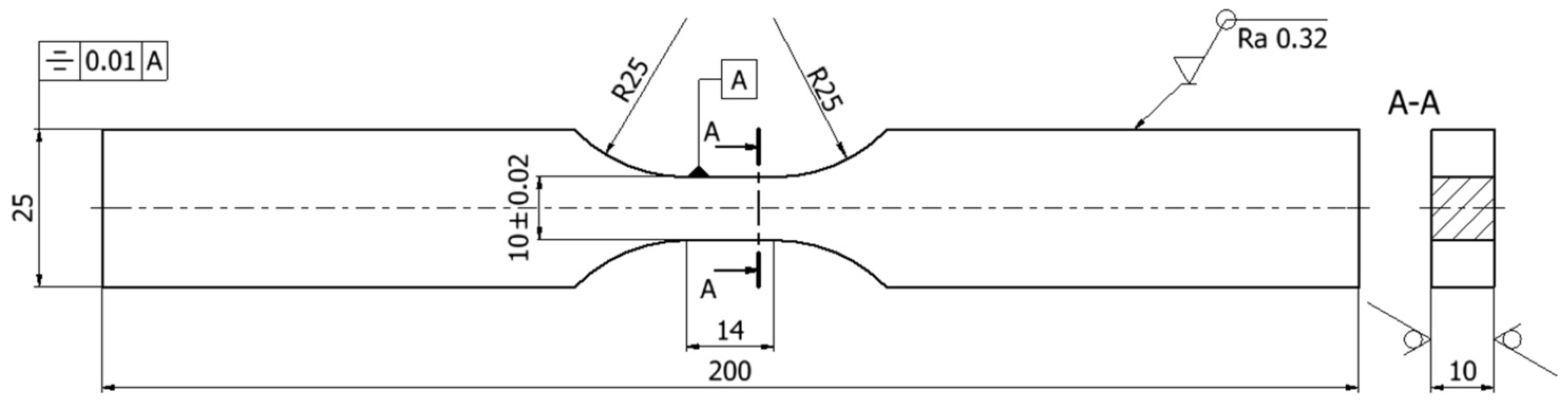
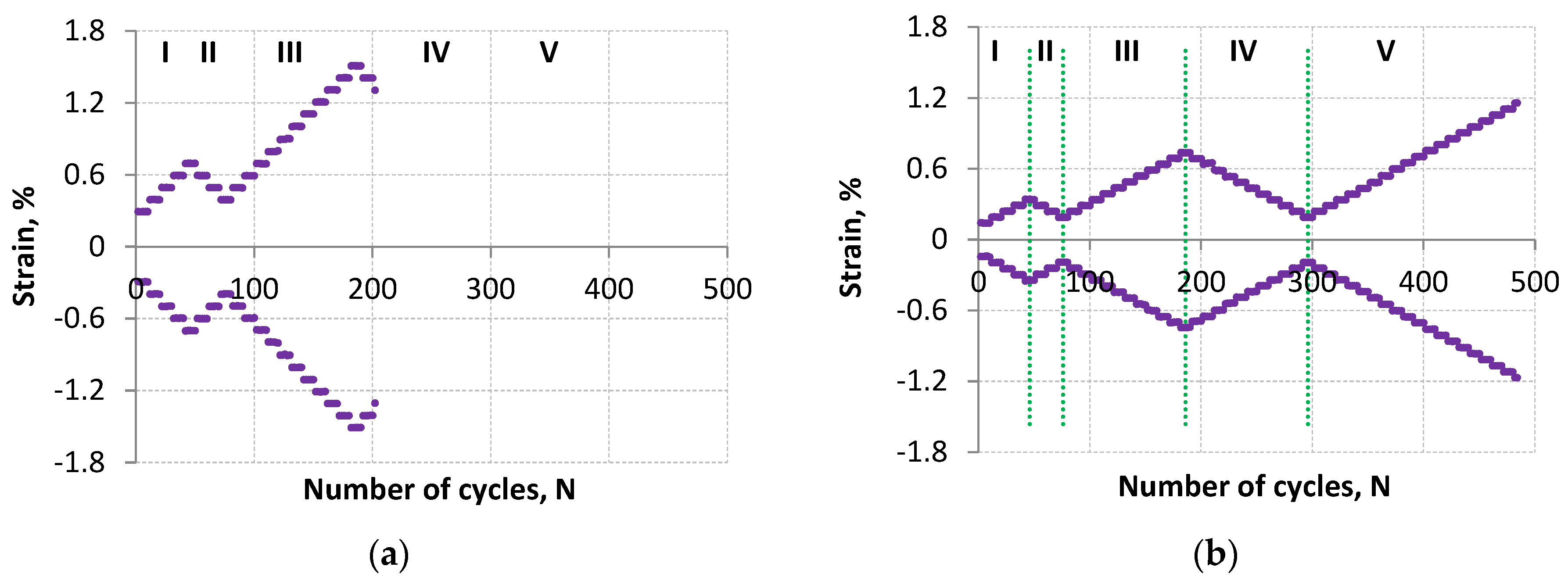
Fatigue test control with the strain value (
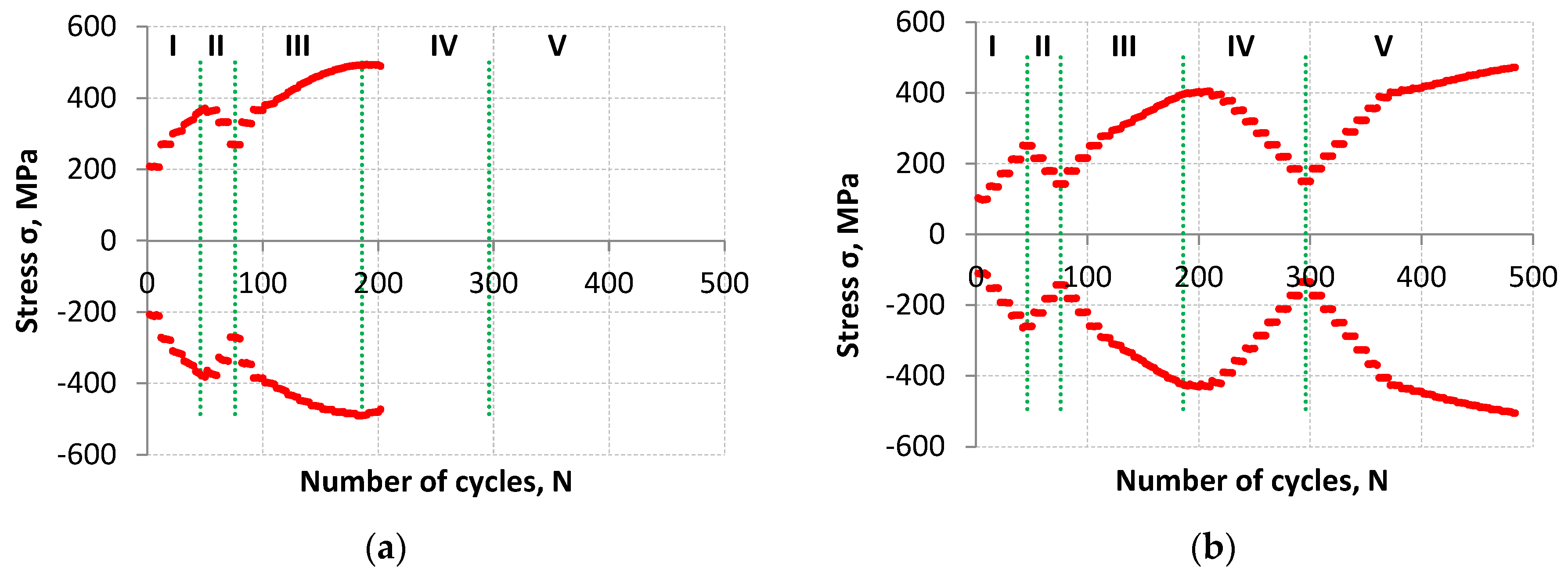
Figure 2) made it possible, among other things, to record the response in the form of maximum and minimum stress values (
Figure 3). Regardless of the fatigue life obtained, the amplitude of stress preceding the total fracture of the specimens was similar. For LFL, this amplitude was 482 MPa (for a maximum value of 490 MPa and a minimum value of −474 MPa), while for the higher fatigue life it was 488 MPa (for a maximum value of 472 MPa and a minimum value of −504 MPa).
The highest value of the stress amplitude was achieved for the LFL specimen in the 186th cycle and it amounted to σa_max_LFL = 491 MPa while for the HFL specimen in the 484th cycle and it amounted to σa_max_HFL = 488 MPa. In both cases, these values were recorded at the same control strain amplitude value of εa = 1.5%. Both σa_max values are higher than the material strength Su = 475 MPa obtained in the tensile test by about 3.4% and 2.8%, respectively. Higher stress amplitude values in cyclic tests than the material strength indicate cyclic hardening of the material.
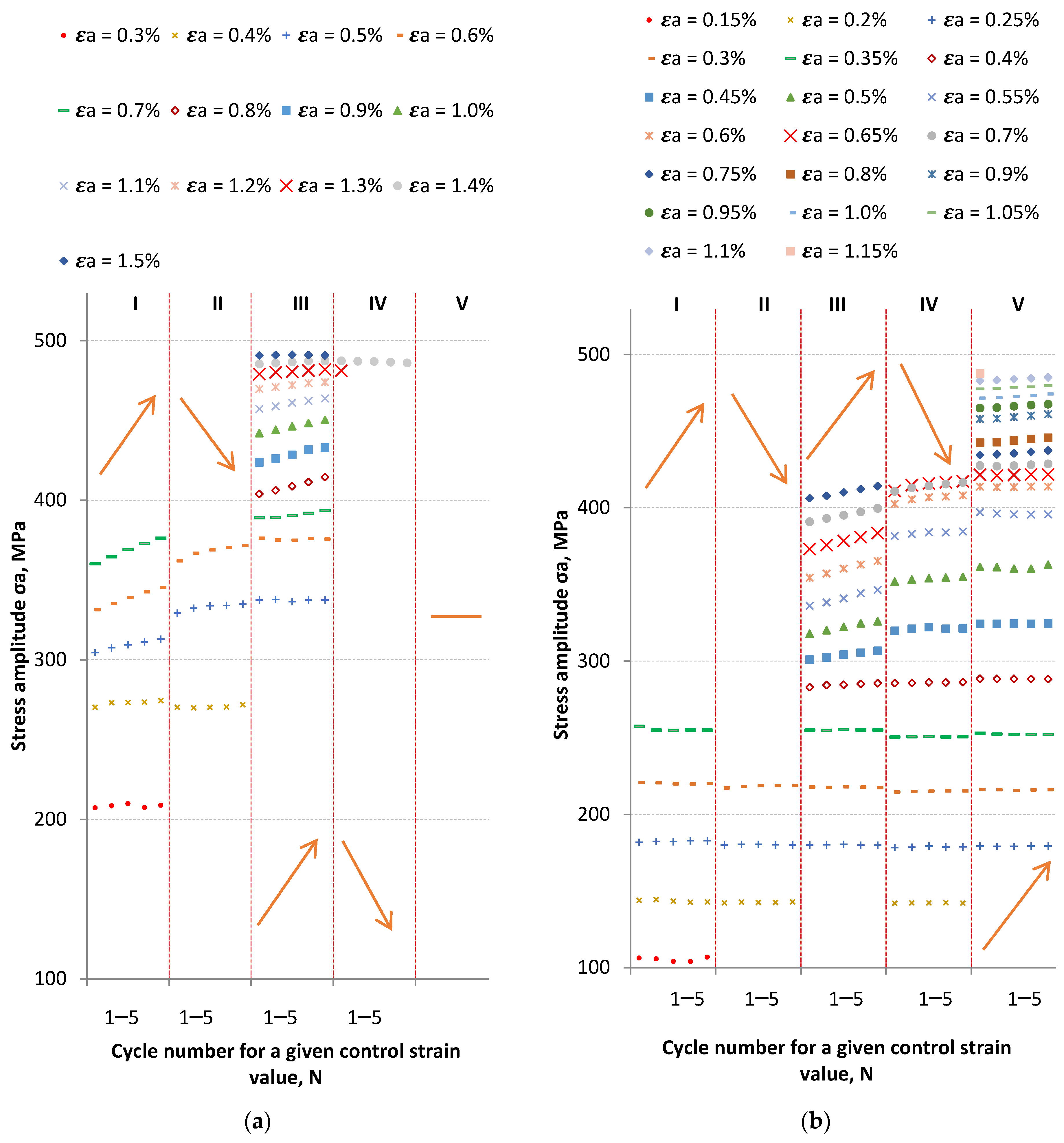
In order to analyze the behavior of the material at given levels of control strain values, the values of stress amplitudes as a function of the number of cycles were compared. The number of cycles was assumed from 1–5, since the control strain changed every five cycles. The results for LFL are summarized in
Figure 4a, while those for HFL are shown in
Figure 4b. Moreover, the up arrow indicates multiple steps with increasing strain while the down arrow indicates multiple steps with decreasing strain.
At the lowest levels of control strain (εa = 0.3–0.4% for LFL and εa = 0.15–0.35% for HFL), the material was relatively stable. A slight weakening can be observed for LFL for εa = 0.4 at the turn of step I and step II, while for HFL the weakening progressed gradually and was virtually invisible in graph 5b. For example, at a strain of εa = 0.25%, the stress amplitude σa for the first cycle at step I was 181.9 MPa, and for the last cycle at step V, 179.36 MPa. While at a control strain of εa = 0.3%, the stress amplitude was 220.84 and 216.23 MPa, respectively.
For both LFL and HFL, starting from the control strain value of εa ≈ 0.45–0.5%, the material began to harden. For LFL, the greatest hardening was observed for control amplitude of εa = 0.6%. For this loading level, a stress amplitude of 331.37 MPa was recorded for the first cycle of step I. While for the first cycle of step III, the stress reached 375.59 MPa. The hardening observed for a control strain of εa = 0.6% was thus approximately 13%. At a comparable control strain of εa = 0.55%, higher hardening was observed for the HFL test results. For the first cycle of step III, the stress amplitude was 336.18 MPa, while a stress of 397.21 MPa was recorded for the first cycle of step V. The hardening was therefore over 15%. After this first cycle of the stress amplitude in step V, there was a slight weakening of the material for the same value of control strain. This weakening of the material was also evident in subsequent loading cycles, when the control strain of εa = 0.55% in Step V progressed to subsequent levels of 0.6, 0.65, and 0.7%.
When analyzing the available test results obtained with strain control under constant-amplitude conditions, hardening (if any) is noticeable mainly in the initial steps of fatigue life. In the last step of fatigue life, the material usually weakens, which was also observed for the LFL tests (V, εa = 1.4%). However, the behavior of the material in the last step of fatigue life during the HFL test may be debatable. In this case, material hardening occurs virtually until complete fracture.
3.2. Mean Stress Relaxation
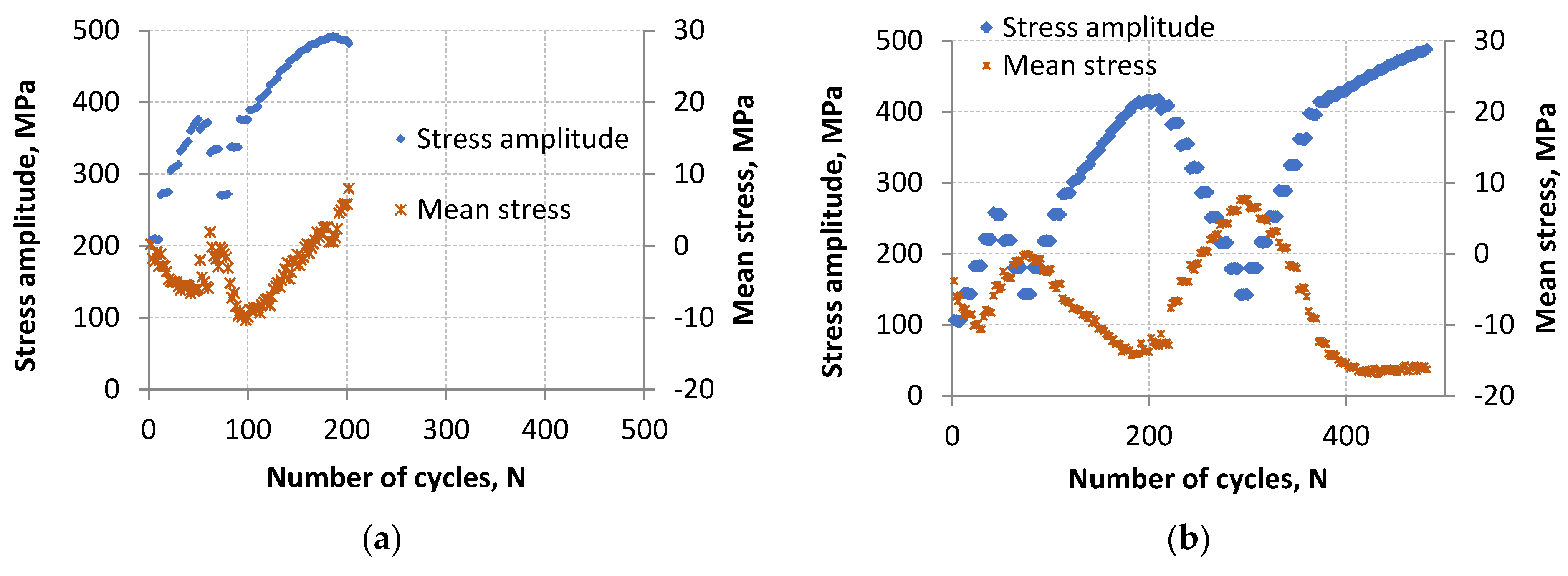
The behavior of mean stress values was also analyzed. Graphs of mean stress and stress amplitude as a function of the number of cycles are shown in
Figure 5. A change in the value of mean stress as a function of the number of cycles is observed for both LFL and HFL. These changes ranged from −10.39 to 7.97 MPa for LFL and from −17.57 to 8.04 MPa for HFL. Broader range of mean stress changes for HFL reveals the occurrence of more extensive damage mechanisms under the influence of increasing numbers of cycles, which had a positive effect on the hardening of the material virtually until the last cycle before the failure of the specimen.
When analyzing the nature of changes in mean stresses, it should be noted that during most of the fatigue life period, an increase in the value of maximum stress causes a decrease in mean stress values. However, while the maximum stress values decrease, the mean stress values increase. This regularity is observed for both cases (
Figure 5a,b). The change in this behavior begins to be observed before exceeding the hundredth loading cycle for LFL and after exceeding the four hundredth cycle for HFL. At that point, the mean stress value began to increase from −10.39 to 7.97 MPa for LFL and from −17.57 to −16.43 MPa for HFL regardless of whether successive load cycles were increasing (as observed for HFL) or decreasing (as observed for LFL). After passing the four hundredth cycle for HFL, the increase in the mean stress value was negligible and amounted to more than 1 MPa while for LFL the change was significant and amounted to as much as 18.36 MPa.
The change in the behavior of mean stress values at the end of fatigue life (LFL test), causing the mean value to shift toward larger values, can be caused by the appearance of large stress concentrations in the areas of developing micro- and macro-cracks, accompanied by large strain necessary to achieve forced control strain. These processes can decrease compression strength of the material and increase its tension strength. Such phenomena are not observed at constant-amplitude loads. On the other hand, the stabilization of mean values (HFL test) may indicate that cyclic equilibrium has been reached in the material in which stresses and microstructure have stabilized.
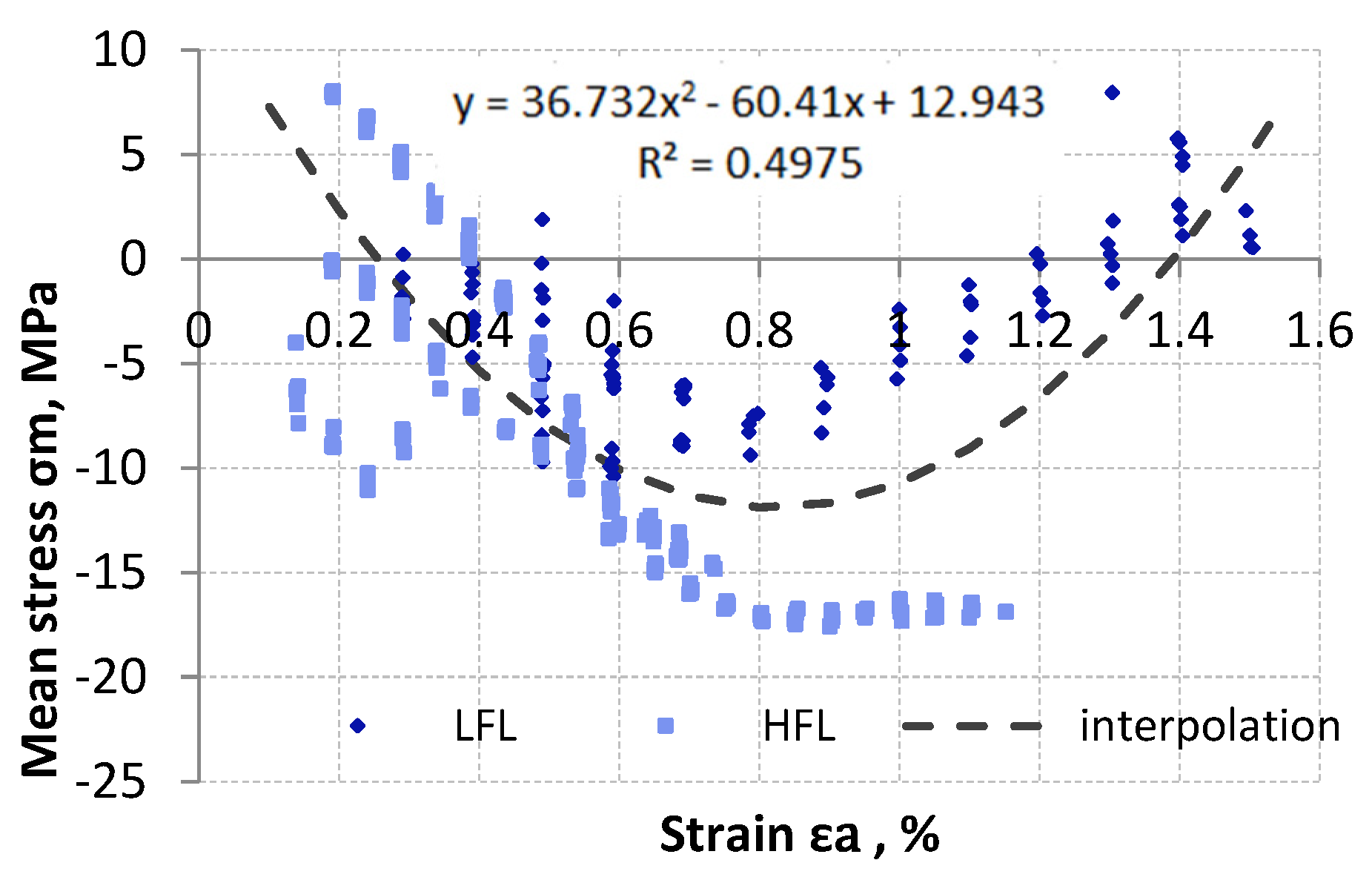
However, when analyzing the mean stress as a function of strain amplitude, it can be observed that up to a certain strain value, the mean stress decreases with increasing strain. This situation is observed up to a strain value of about 0.7–0.9% for both tests performed (LFL and HFL). For the tested material subjected to variable loads, the specified strain may turn out to be a threshold value for which the relaxation direction reverses. The change in direction sense was particularly evident for tests with a large strain range, i.e., for LFL tests (
Figure 6). Due to the similar nature of the behavior of the results of the mean stress value as a function of strain amplitude for both LFL and HFL, they were approximated by a single quadratic function equation (
Figure 6).
3.3. Analysis of Hysteresis Loop Parameters
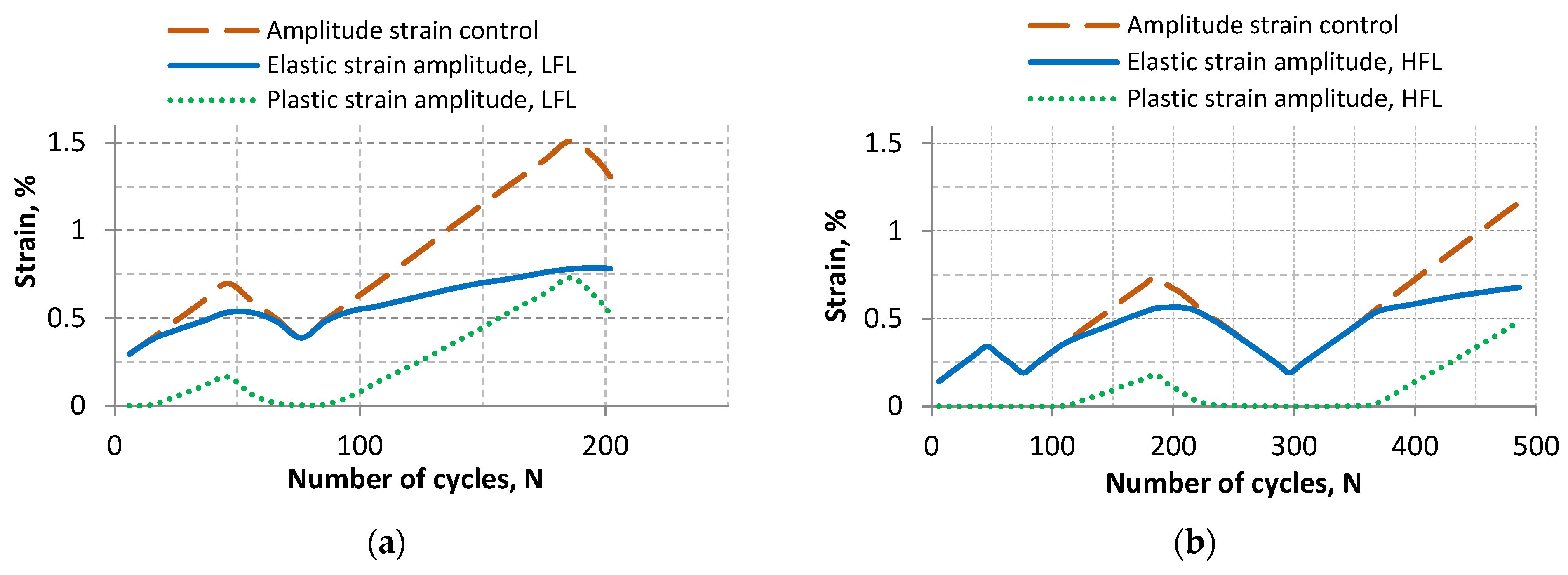
Plastic and elastic strain curves determined from hysteresis loops as a function of increasing number of cycles were analyzed (
Figure 7). A distinct plastic strain (a value of about 0.01%) appeared at a control strain amplitude of ε
a ≈ 0.39%. For LFL, the value of this plastic strain appeared at the first step of loading, while for HFL at the third step of loading, as it was only in the third step that the stress amplitude exceeded the yield stress value.
Once the stress amplitude corresponding to the yield stress (step II for LFL and step IV for HFL) is exceeded, distinct plastic strain (a value of about 0.01%) was recorded for a decreasing cycle only at a control variable of 0.45% for LFL and 0.49% for HFL. Subsequent increasing cycle resulted in the appearance of distinct plastic strain at an even higher control variable. Distinct plastic strain appeared at a control variable of 0.5% for LFL and 0.54% for HFL. The plastic strain mechanisms occurring during both increasing and decreasing cycles, once the value of the stress amplitude equivalent to the yield stress is exceeded, affect the cyclic hardening of this material.
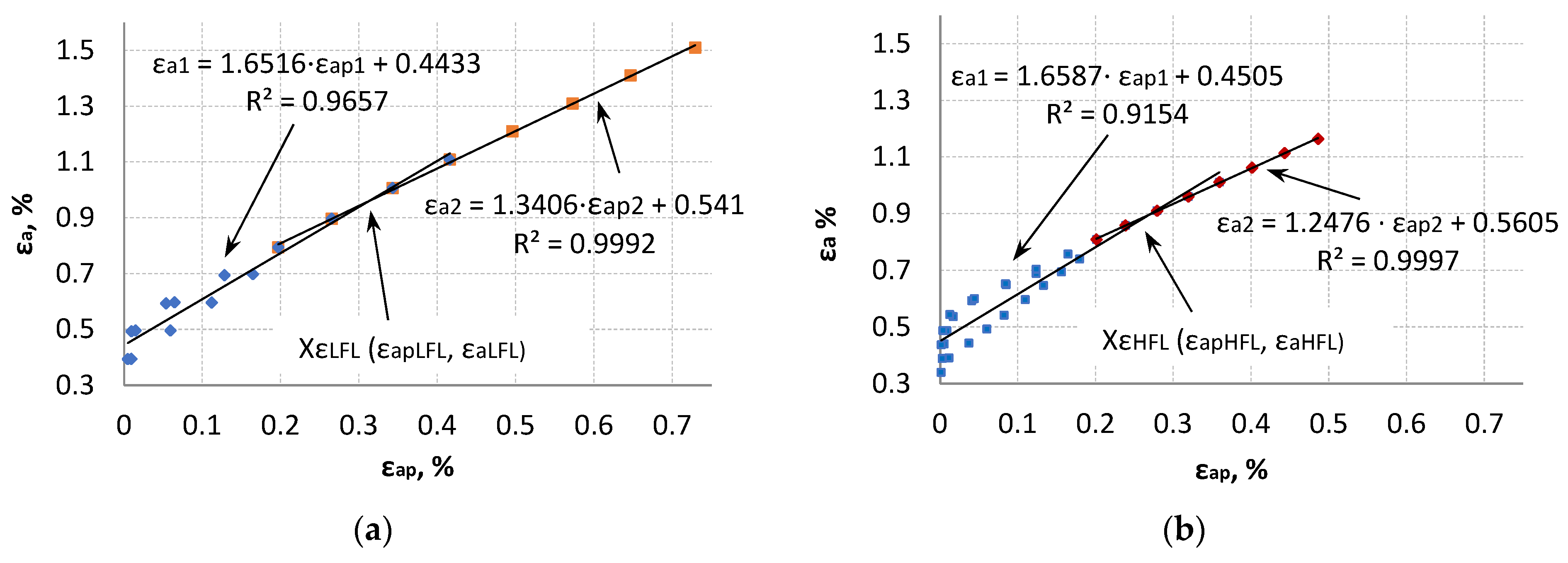
The graph showing the dependence of the control strain amplitude as a function of the plastic strain amplitude (
Figure 8) is divided into two parts—the left and the right one. The left parts of
Figure 8 are described by the straight line ε
a1 = a·ε
apl + b, while the right parts of the graph are described by the straight line ε
a2 = a·ε
ap2 + b. It is observed that the slopes of the straight lines εa1 and ε
a2 for LFL and HFL have similar values. The intersection of these straight lines is described by the point Xε (ε
ap, ε
a). The coordinates of these points are also similar and are (0.3135, 0.9612) and (0.2676, 0.8944) for LFL and HFL, respectively. Thus, taking into account the entire life of the tested items and looking at the formulas of the obtained straight lines, it can be concluded that, independent of the fatigue life result (which depends mainly on the value of the control amplitude), the selected value of the control variable will correspond to a specific plastic strain value comparable for the LFL and HFL tests.
The left side of the graphs corresponds to the results of tests with increasing/decreasing steps, while the right side corresponds mainly to the increasing step, which ended with the fracture of specimens. Experimental points to the left of point Xε and under the straight line εa1 are mainly from the first loading steps, while those above straight line εa1 are from subsequent loading steps. Subsequent loading cycles enforced by the control strain result in the fact that for the same values of the control variable εa, the values of plastic strain εap are smaller, which confirms the hardening of the material under cyclic loading.
3.4. Cyclic Modulus
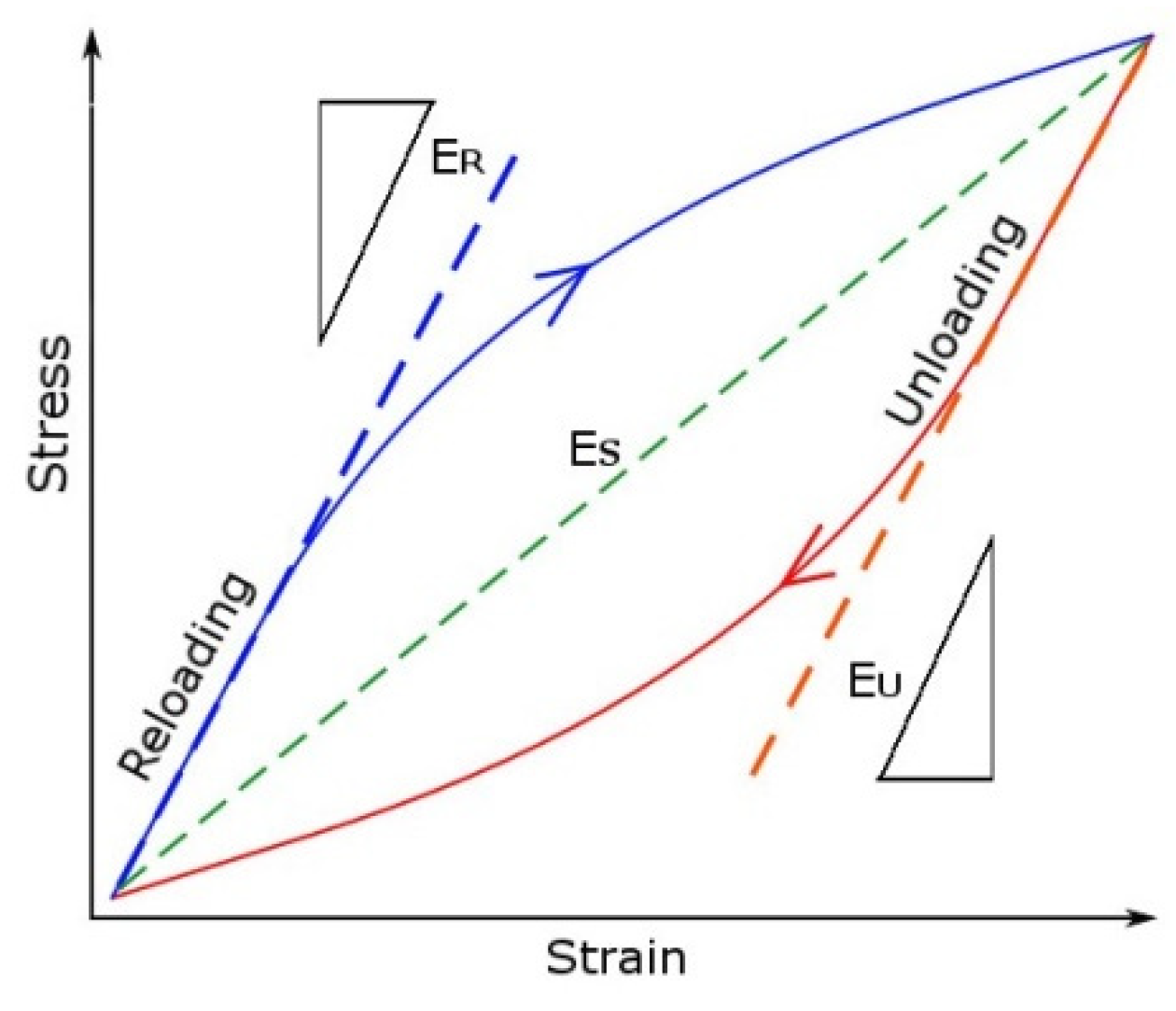
The cyclic modulus for tension loop branch (E
R) and the compression loop branch (E
U) was analyzed for the LFL and HFL tests. The cyclic module determined for the straight line connecting the edges of the hysteresis loop (E
S) was also analyzed. The cyclic moduli were determined in accordance with the diagram shown in
Figure 9. On the other hand,
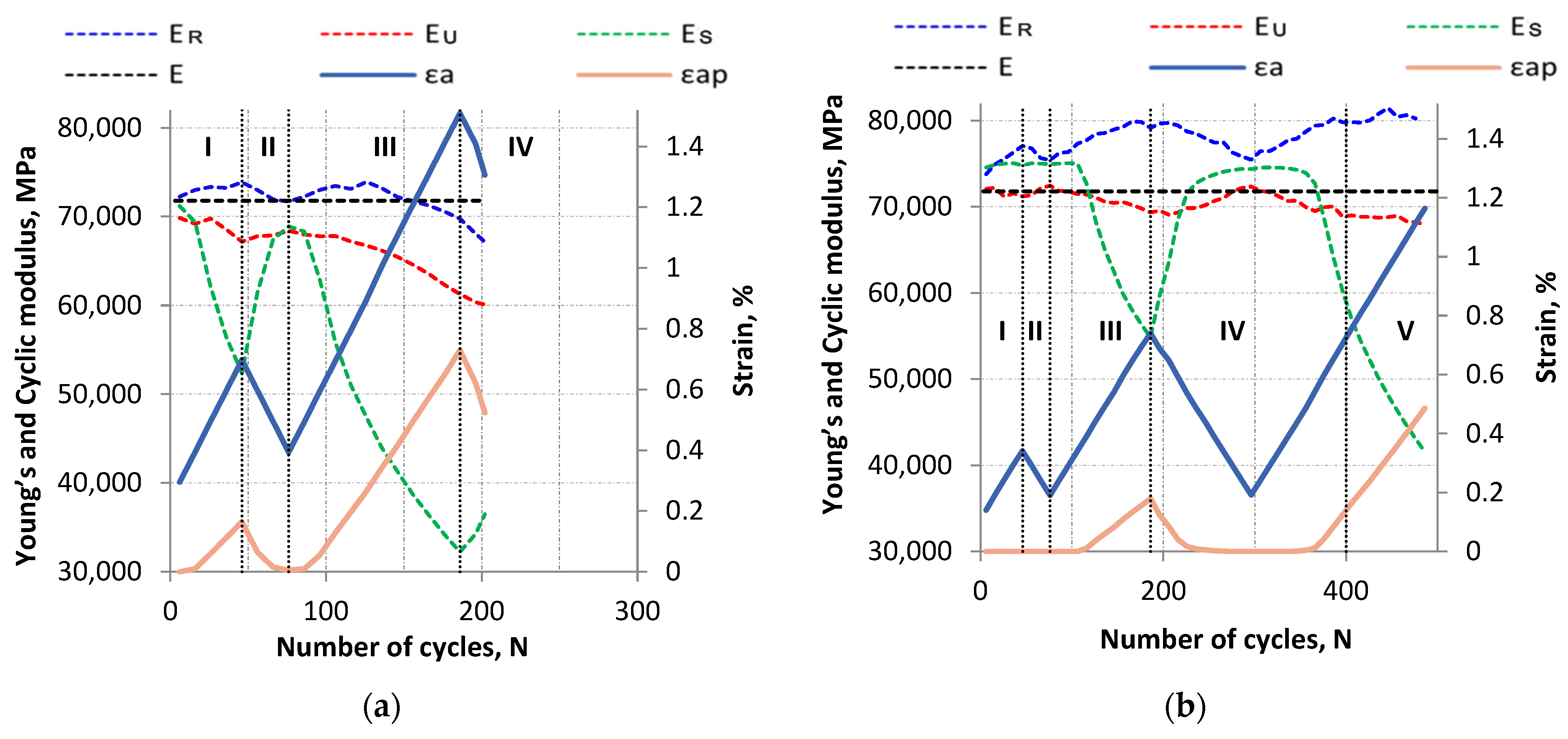
Figure 10 presents the summary of cyclic moduli as a function of the increasing number of cycles N. For comparison,
Figure 10 also presents the Young’s modulus E as the mean value of the modulus obtained from the monotonic tensile test for the AA2519 alloy, derived from three publications [
33,
35,
36].
In the first cycles of fatigue loading, especially when the yield stress point has not been exceeded, the cyclic modulus ES should be characterized by a similar value to Young’s modulus E. Such a pattern is observed for the LFL test, while in the case of the HLF test, the cyclic modulus ES is literally several percent higher than the modulus E. This difference, however, is at an acceptable level and may be related to the difference in material properties of the specimens as well as measurement errors.
The cyclic modulus E
S tends to decrease during a cyclically increasing value of the control strain. In case the control strain cyclically decreases, E
S modulus cyclically increases (
Figure 10). Exceptions to this are life periods where the plastic strain value is close to (less than 0.01%) or equal to zero. In this situation, E
S modulus is relatively stable (at the beginning of fatigue life and the transition from step II to step III for LFL, and at step I, II, the beginning of step III, and the middle part of step IV for HFL). However, it should be noted that E
S value for LFL after increasing and decreasing cycles decreased from 71,188 MPa to 68,892 MPa, i.e., more than 3%, while for HFL it decreased from 75,120 MPa to 74,598 MPa, or less than 0.7%.
The nature of the change in the other cyclic moduli (ER and EU) as a function of the number of cycles is similar for both LFL and HFL tests. In general, the ER module increases when the control value increases cyclically, while it decreases when the control value decreases. For the EU module, the situation is opposite. Such behavior of cyclic moduli, especially the ER modulus, is observed until a certain period of fatigue life. In the case of the LFL test, this is about 126 cycles while for the HFL test it is about 446 cycles. The ER modulus begins to decrease after this number of cycles. It is generally believed that the value of the classic Young’s modulus tends to decrease under the influence of cyclic loading. This is due to the fact that cyclic loading induces fatigue processes in the material, which in the initial steps lead, among other things, to microscale damage (cracks, internal structure changes) and thus to a decrease in the stiffness of the tested items. Such fatigue phenomena change the nature of the ER modulus behavior causing a cyclic decrease in its value from a certain fatigue life value until complete failure of a specimen.
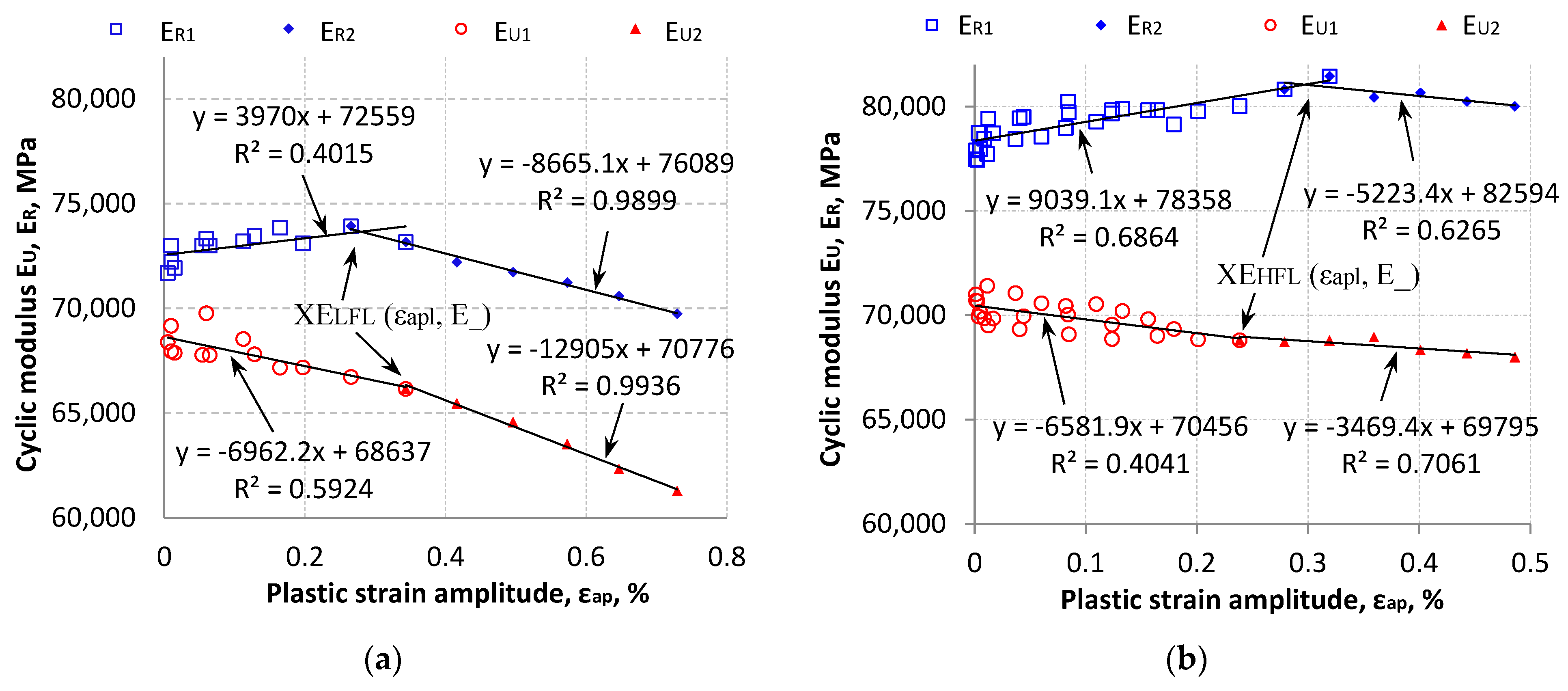
The dependence of cyclic moduli (E
R and E
U) as a function of plastic strain amplitude ε
ap was presented in the following analysis (
Figure 11). The results of each cyclic modulus were described by two linear regressions, and the intersection of these regression lines was denoted by the XE
LFL/HFL (ε
ap_, E
R/U) point. For the LFL test, the intersection points for E
R and E
U were XE
LFL_
R (0.2794%, 73,668.1 MPa) and XE
LFL_
U (0.3599%, 66,131.1 MPa), respectively. While for the HFL test, the intersection points for E
R and E
U were XE
HFL_
R (0.2970%, 81,042.6 MPa) and XE
HFL_
U (0.2124%, 69,058.2 MPa), respectively.
XE
LFL/HFL points marked in
Figure 11 are indicative of the change in material properties under cyclic loading. To the left of points XE_, the values of the cyclic moduli E
R1 for the conducted tests increase with increasing plastic strain ε
ap. Then, after passing the characteristic XE_ points, the values of cyclic moduli E
R2 decrease with the increase in plastic strain ε
ap, while cyclic moduli E
U (both to the left and to the right of the XE_ points) tend to decrease throughout the entire tested period.
In order to use the cyclic modulus in the following part of the paper to analytically describe cyclic material properties, the mean values of cyclic moduli were calculated. The mean value was calculated for the values of cyclic moduli to the left of the XE
LFL and XE
HFL points. It was noted that these values resulted in the best fit of the analytical model to the obtained study. Mean values were determined for the results of moduli E
R1 (by determining E
R1m) and E
U1 (by determining E
U1m) separately for the LFL and HFL test. Then the mean cyclic modulus E
m_ = (E
R1m + E
U1m)/2 was determined. The average values of E
m_LFL for LFL and E
m_HFL for HFL were 70,478 MPa and 74,298 MPa, respectively. These values are presented in
Table 2.
3.5. Cyclic Yield Strength
The cyclic yield strength (S
YC) was calculated for the increasing (S
YC,R) branch loop and decreasing (S
YC,U) branch loop. The S
YC was calculated for the offset value of 0.2%. The S
YC was calculated for hysteresis loops with plastic strain amplitude equal to and greater than 30% of the offset value (ε
ap ≥ 0.06%). The values of S
YC,R and S
YC,U for LFL and HFL, as a function of plastic strain amplitude ε
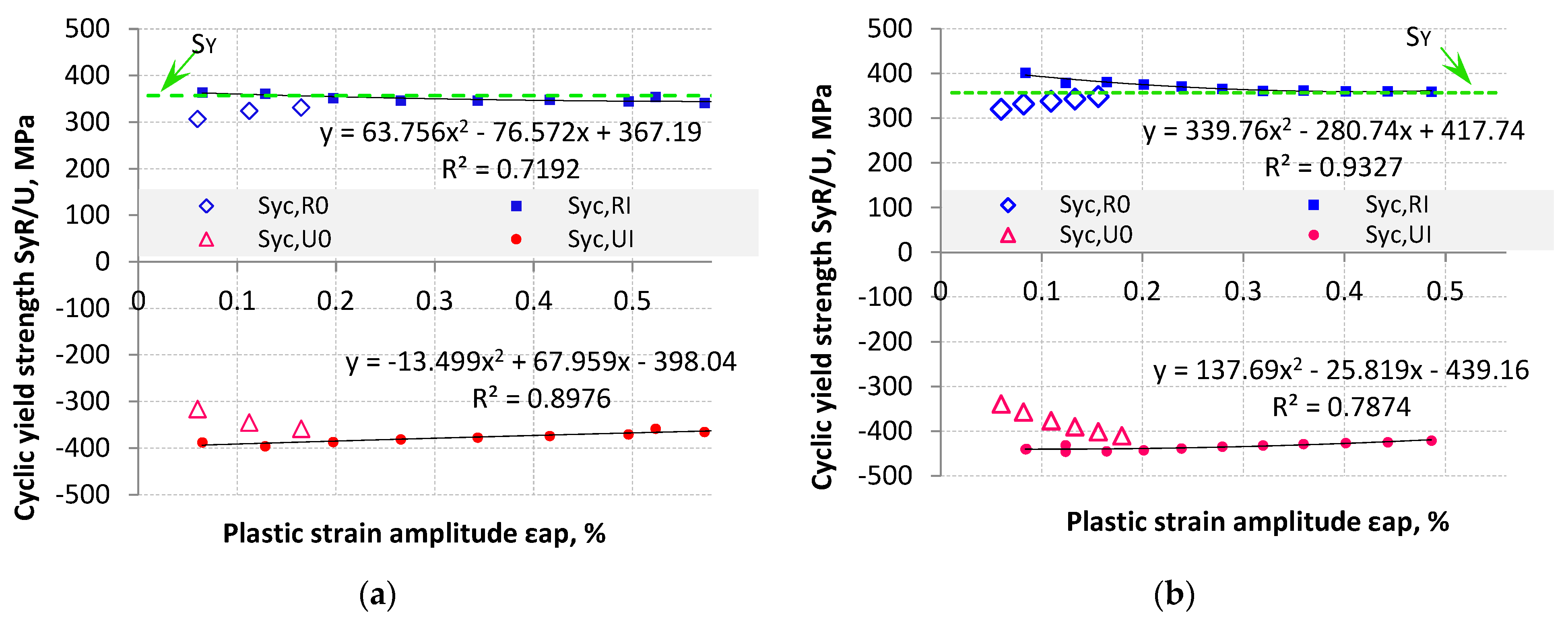
ap, are shown in
Figure 12a for the LFL test and
Figure 12b for the HFL test.
The results of SYC from the first loading blocks were marked with the subscript “0” (SYC,R0 and SYC,U0), while those from blocks where the SYC value stabilized with “I” (SYC,RI and SYC,UI). Lower absolute SYC values were recorded for the first loading blocks as compared to the later loading blocks. This proves that for this type of material SYC limit tends to harden cyclically. The hardening reached almost 30% over the lowest cyclic yield strength. SYC results from the first loading blocks were discarded in the statistical analysis. The results from subsequent loading blocks SYC,RI and SYC,UI were described by a quadratic polynomial regression function, which yielded a coefficient of determination (R2) of 0.71−0.93.
The stabilized absolute S
YC value for both the LFL test (
Figure 12a) and HFL test (
Figure 12b) results decreased with increasing plastic strain amplitude ε
ap. The differences in the determined S
YC value as a function of plastic strain amplitude were not significant and were at most about 10%. The absolute mean values of the stabilized S
YC were S
YC,R = 322 MPa and S
YC,U = 344 MPa for the LFL test, and S
YC,R = 373 MPa and S
YC,U = 434 MPa for the HFL test. The mean value of cyclic tensile yield strength (S
YC,R) was lower than the mean value of cyclic compressive yield strength.
The mean value of cyclic tensile yield strength (S
YC,R) was also determined for all previously analyzed points for both the LFL test and HFL test. This value was 354 MPa. It should be noted that this value is comparable to the yield strength calculated for the monotonic tensile test S
Y = 353 MPa. The S
Y is also plotted in
Figure 12 to illustrate the results.
3.6. Fatigue Fracture Surface
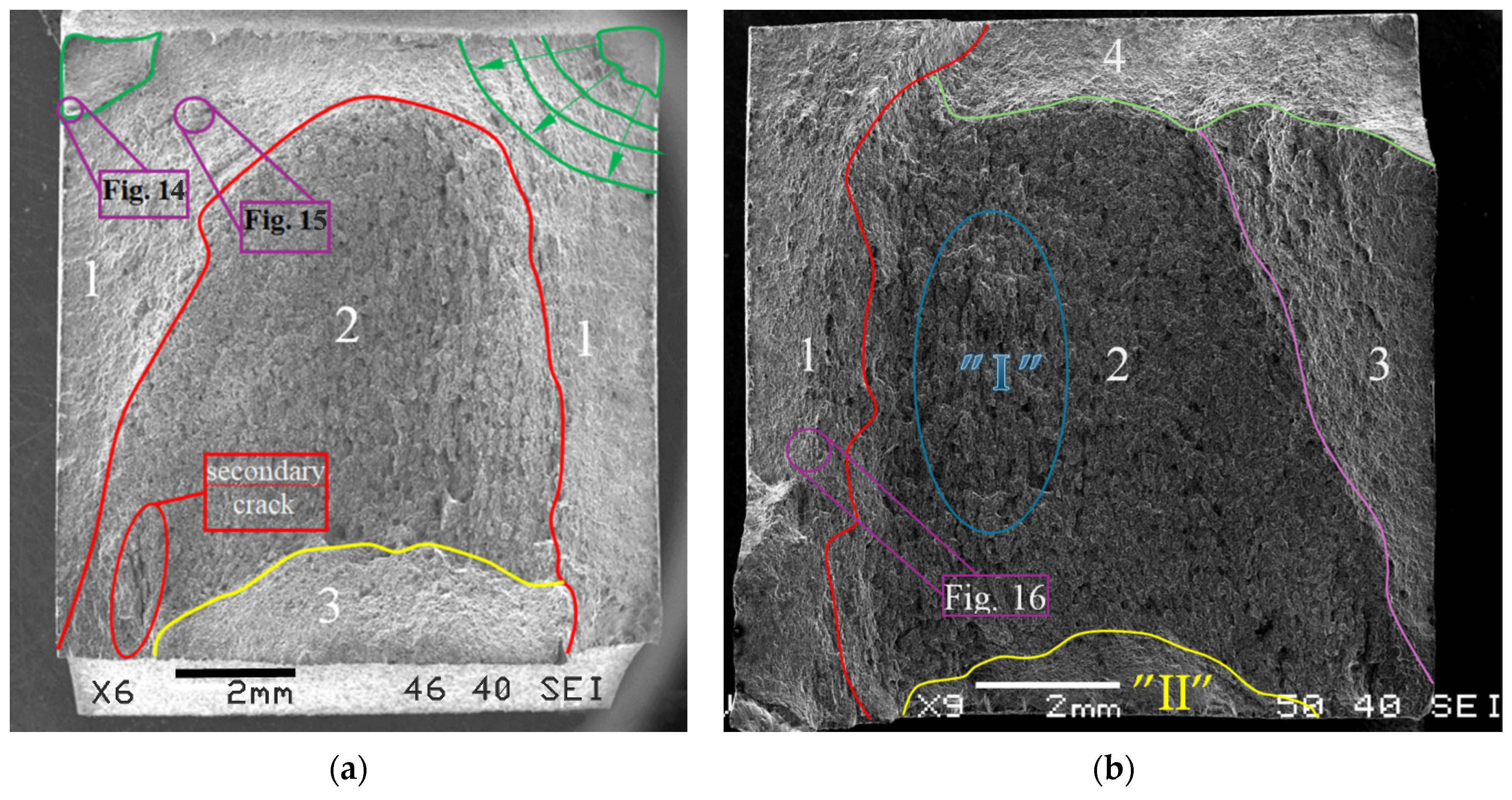
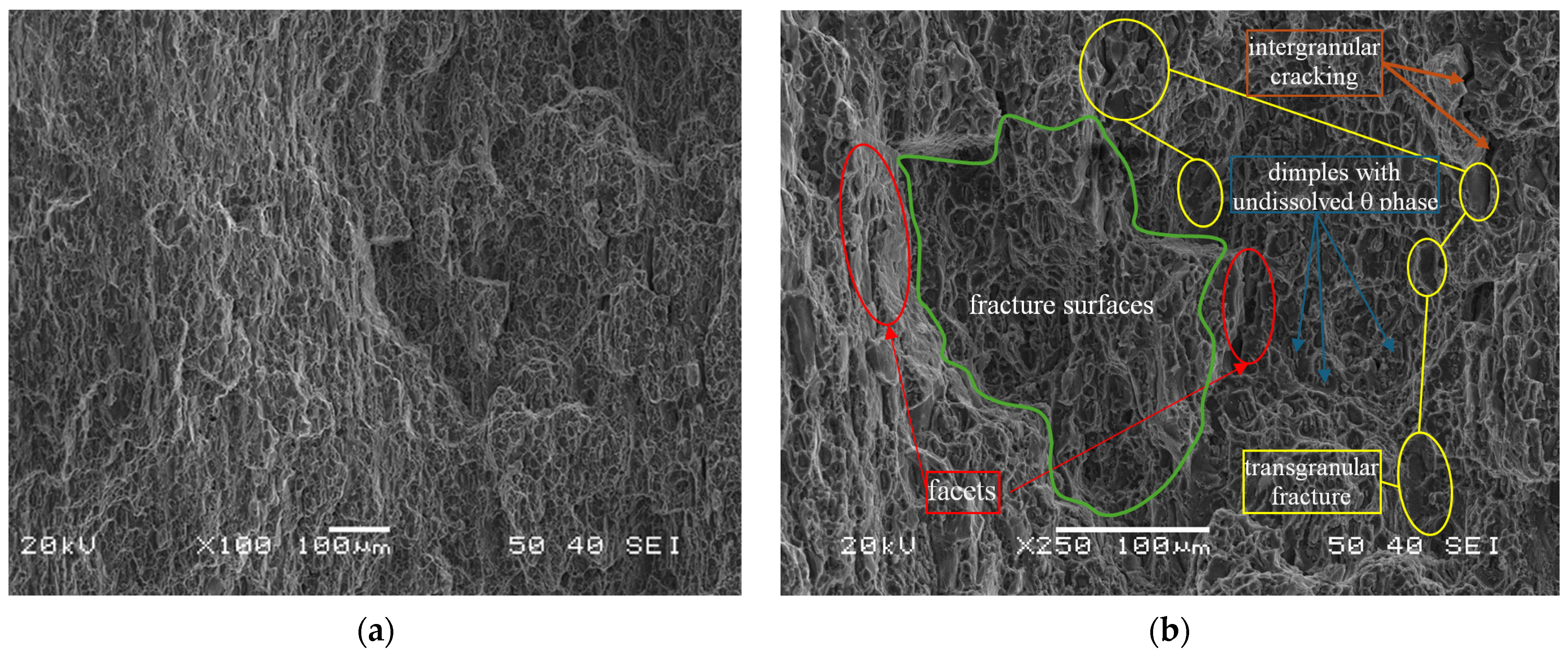
A scanning electron microscope (SEM) was used to take photographs of specimen fractures, taking a series of photos at various magnifications. Several characteristic fracture zones were identified in the photos taken. Three zones were identified for the LFL test fracture (
Figure 13a) and four zones were identified for the HFL test fracture (
Figure 13b). It should be noted that the number of distinct zones depends on the image filtering method (SEM, SEI, REF).
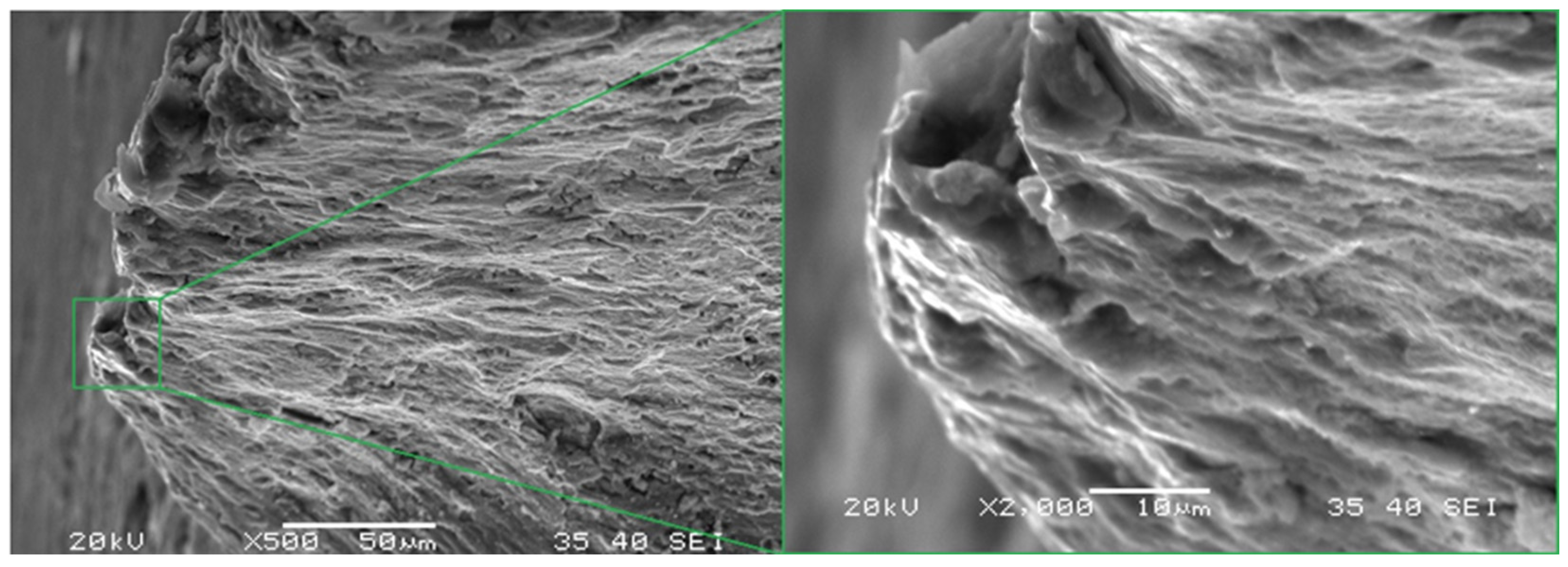
Two main fracture foci were identified for the LFL test fracture (marked green in
Figure 13a). A detailed analysis of one of them made it possible to identify the crack initiation point, which formed the river marks structure during propagation, as shown in
Figure 14. This fracture is topographically complex. One of the most characteristic features of the fracture is a large secondary crack, a detail of which is shown in
Figure 15.
No distinct fracture foci are visible in the HFL test fracture (
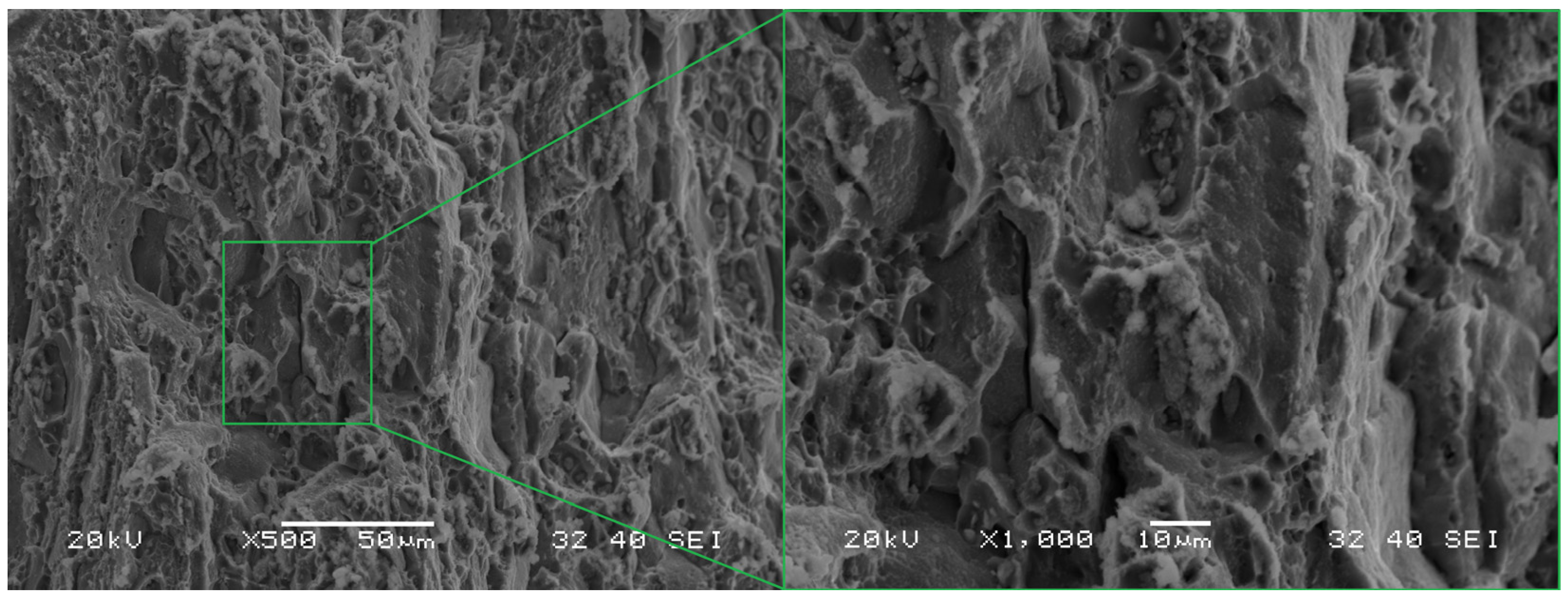
Figure 13b). The cracking process most likely began at the edge, which in the photograph shown is the lower edge of the specimen (marked “II”). The relatively complex nature of the crack is observed in the area “I” (forming part of zone 2), which is the result of intercrystalline cracks propagating in multiple directions of which the main direction was from the lower to the upper edge of the specimen propagating in the direction of the load. As a result, the direction of the main crack was neither parallel nor perpendicular to the plate rolling direction. The characteristic jagged structure is the result of exactly this propagation.
The fracture of the selected fragment of the HFL test specimen (
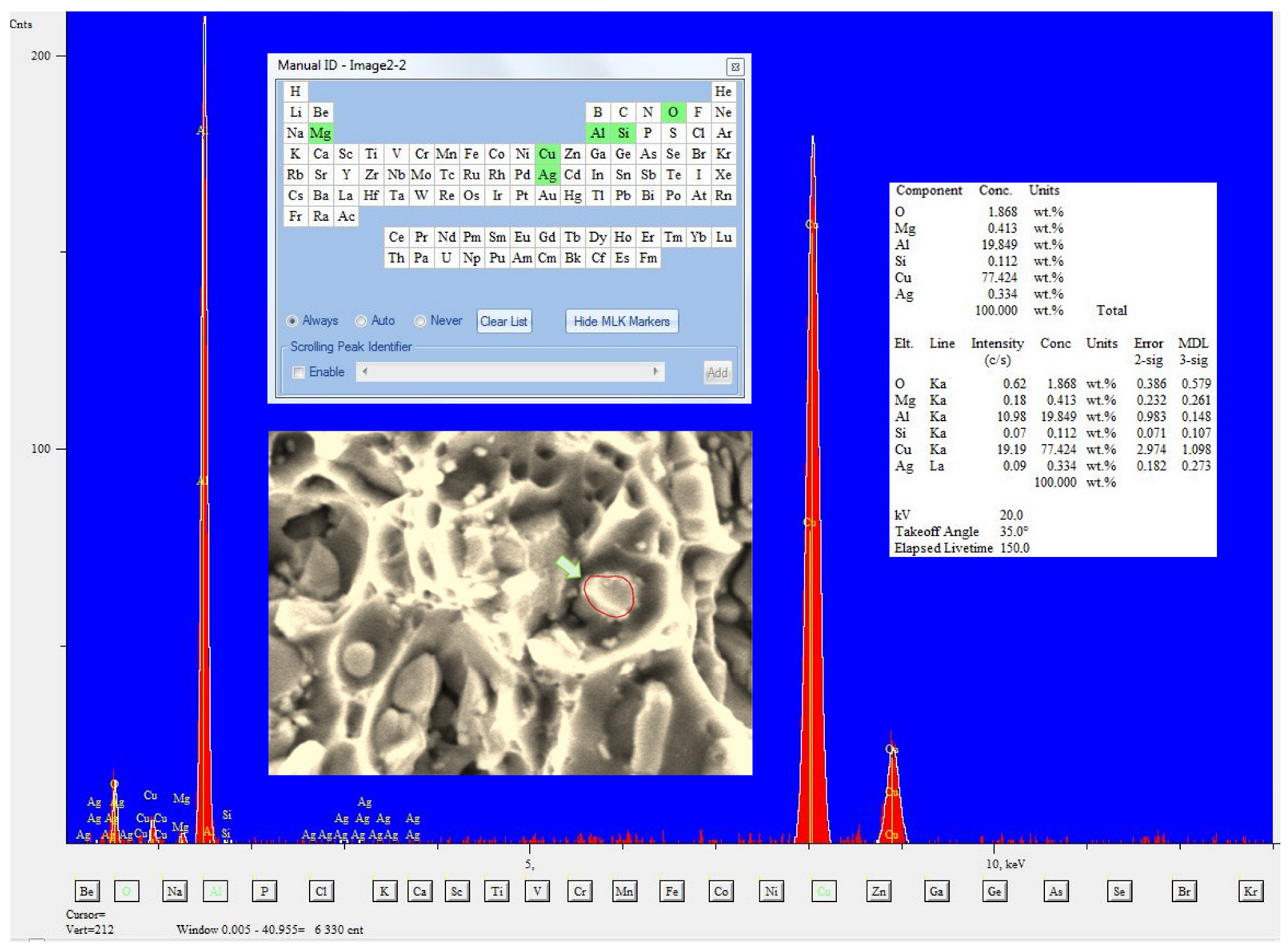
Figure 16) is of transcrystalline plastic character with sparse intercrystalline cracks present. A feature common to the analyzed fracture in this area is the occurrence of characteristic faults penetrating deep into the material. They most likely occur between individual layers of the rolled plate. Facets are visible on the walls of these cracks, and (at slightly higher magnifications) voids and micro-cracks are discernible. Particles of undissolved θ-phase are visible at the bottom of the dimples, as evidenced by the result of the chemical composition analysis of the fragment containing the said particles, the spectrum of which is shown in
Figure 17. Some of them have kept their original spherical shape, while some have cracked (
Figure 17).
3.7. Cyclic Stress–Strain Curve (CSS)
As demonstrated in the above analysis, the tested material has cyclically unstable material properties. At lower levels of the control variable, periods of cyclic material weakening prevail, while at higher levels of the control variable, periods of cyclic hardening predominate. Due to this, describing the material properties through conventional analytical equations such as the Ramberg–Osgood model using n’ and K’ [
9,
10] becomes significantly more difficult or impossible. Material data developed in this way in order to describe material properties may lead to differences between actual material properties.
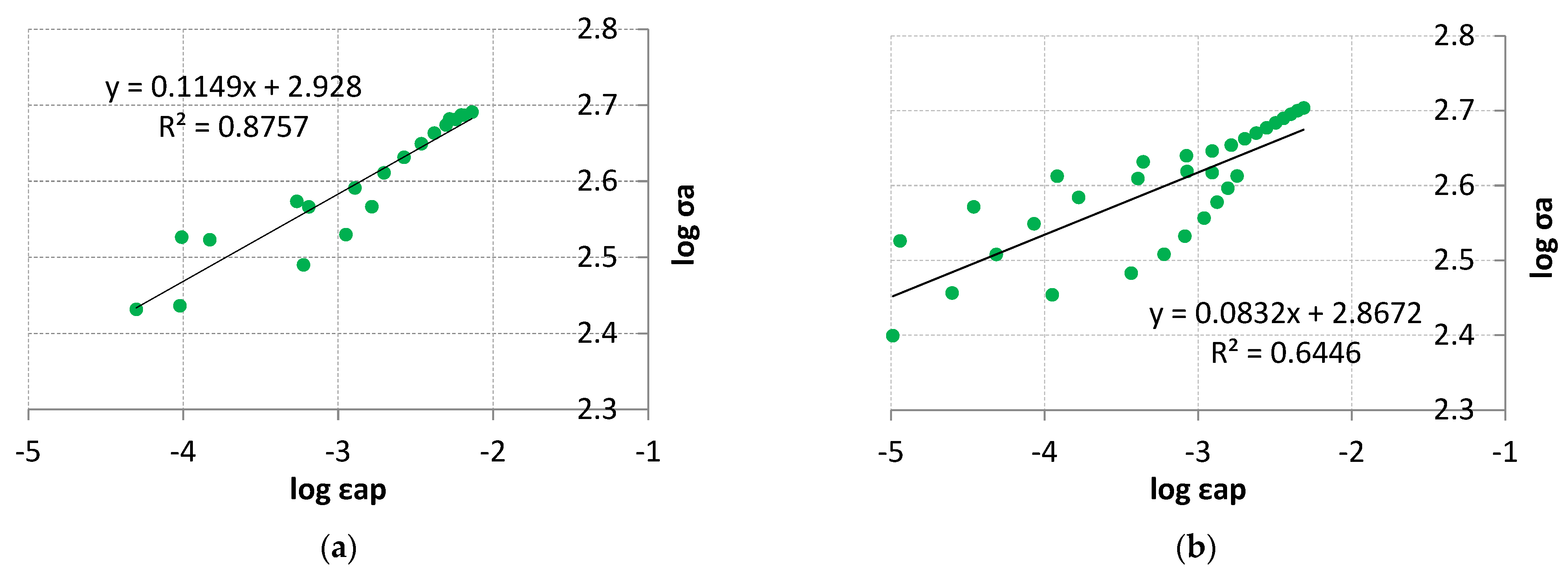
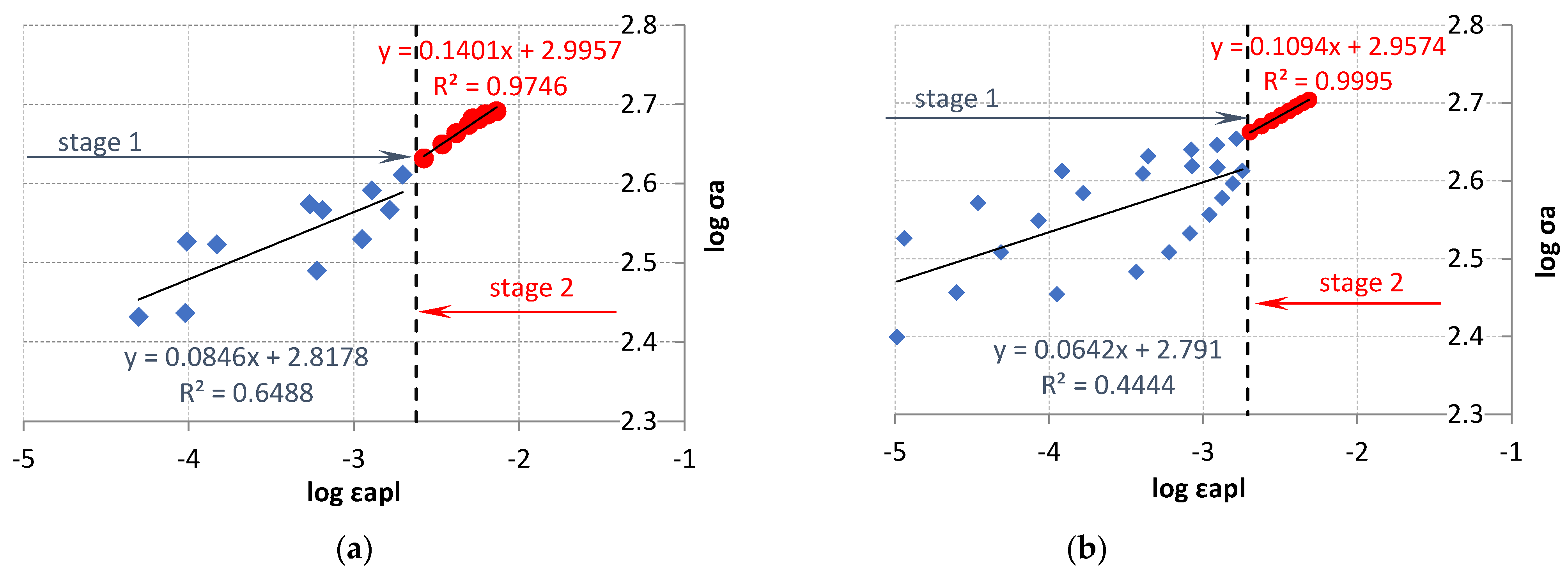
Figure 18 shows an attempt to describe experimental data from the LFL test (
Figure 18a) and the HFL test (
Figure 18b) with a straight line as a function of logσ
a of the variable logε
ap.
The description of the experimental results with a linear regression function (
Figure 18) results in a relatively high coefficient of linear determination R
2 = 0.8757 especially when it comes to the linear correlation of the LFL test results. A much worse coefficient of linear determination, R
2 = 0.6446, was obtained for the linear correlation of the HFL test results. The n′ and K′ coefficients were determined for the LFL and HFL test results, which are summarized in
Table 2.
An attempt was also made to describe the test results using two linear correlations. The value of εapX calculated from the mean value derived from the intersection points of XεLFL/HFL, XELFL/HFL_R, and XELFL/HFL_U was used as a criterion for dividing the experimental test results. These values amounted to εapXLFL = 0.2382% for the LFL test and εapXHFL = 0.1943% for the HFL test, respectively.
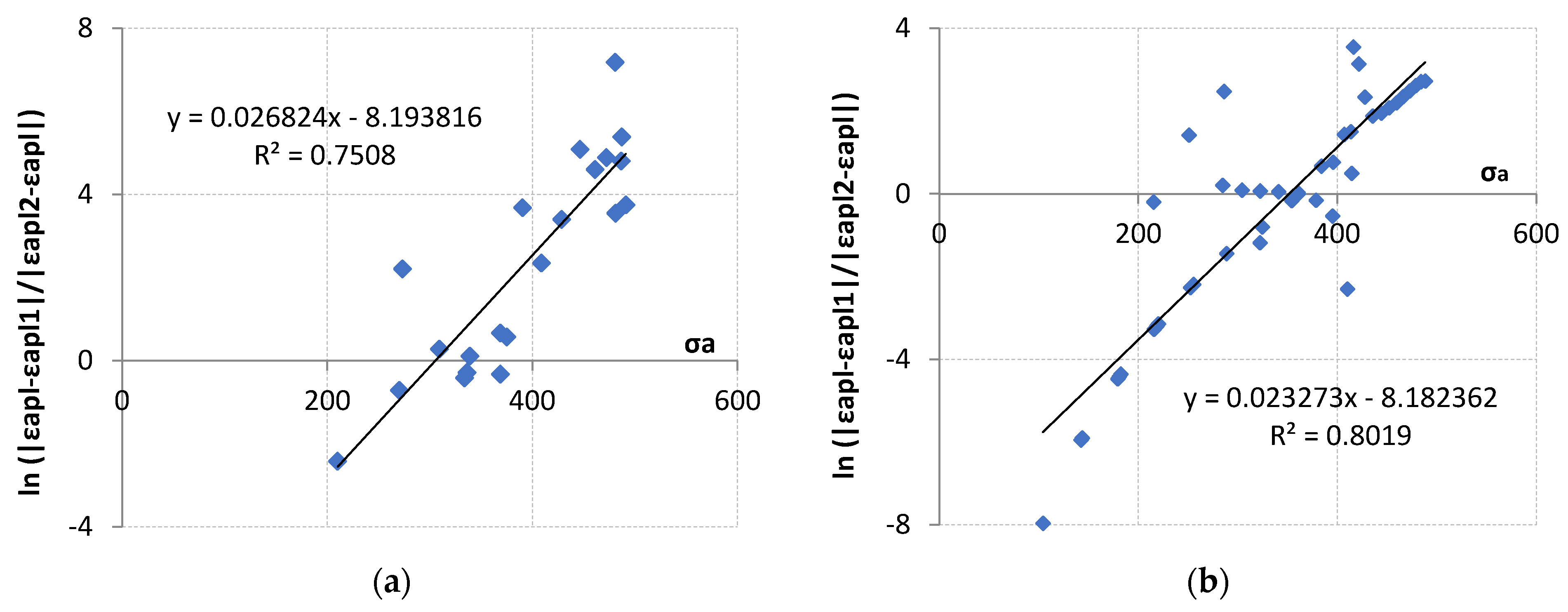
For the criterion adopted in such a way, the experimental results were divided into two parts: stage 1 and stage 2 (
Figure 19). A very high coefficient of determination was obtained for stage 2. Such a high coefficient of determination was not obtained for the results in the first part of the chart (stage 1). This is due to the fact that the test results in the first part of the chart (stage I) come from both increasing and decreasing steps, which, with cyclically unstable materials, affects their scattering. The coefficients n
1′, n
2′, K
1′, and K
2′ were determined for the stage 1 and stage 2 test results. The values of these factors are summarized in
Table 2.
A formula shown in [
32], used to describe the tensile curve, was also proposed for the analytical description of the presented test results. The present formula 1 is a slight modification of that originally proposed in [
31]. This formula takes into account A and B constants, described by Equation (1). The coefficients n
1′ and K
1′ were used to determine plastic strain amplitude ε
ap1, while the coefficients n
2′ and K
2′, listed in
Table 2, were used to determine ε
ap2. A graphical interpretation of the results obtained from Equation (1) is shown in
Figure 20. Material parameters A and B are summarized in
Table 2. A high coefficient of determination was obtained for the analyzed results, the value of which exceeded 0.75 in both cases.
The parameters summarized in
Table 2 allowed to describe the obtained test results using three analytical models. The first description was based on the Ramberg–Osgood Equation (2), where the cyclic mean modulus E
m was used instead of the standard Young’s modulus. On the other hand, the second description was based on division of the Ramberg–Osgood curve into two parts (Equation (3)) according to the idea of determining K
1′, K
2′, n
1′, and n
2′ coefficients. For the last description, Soltysiak’s proposal 4 [
32], based on a slight modification of the formula originally introduced by Li [
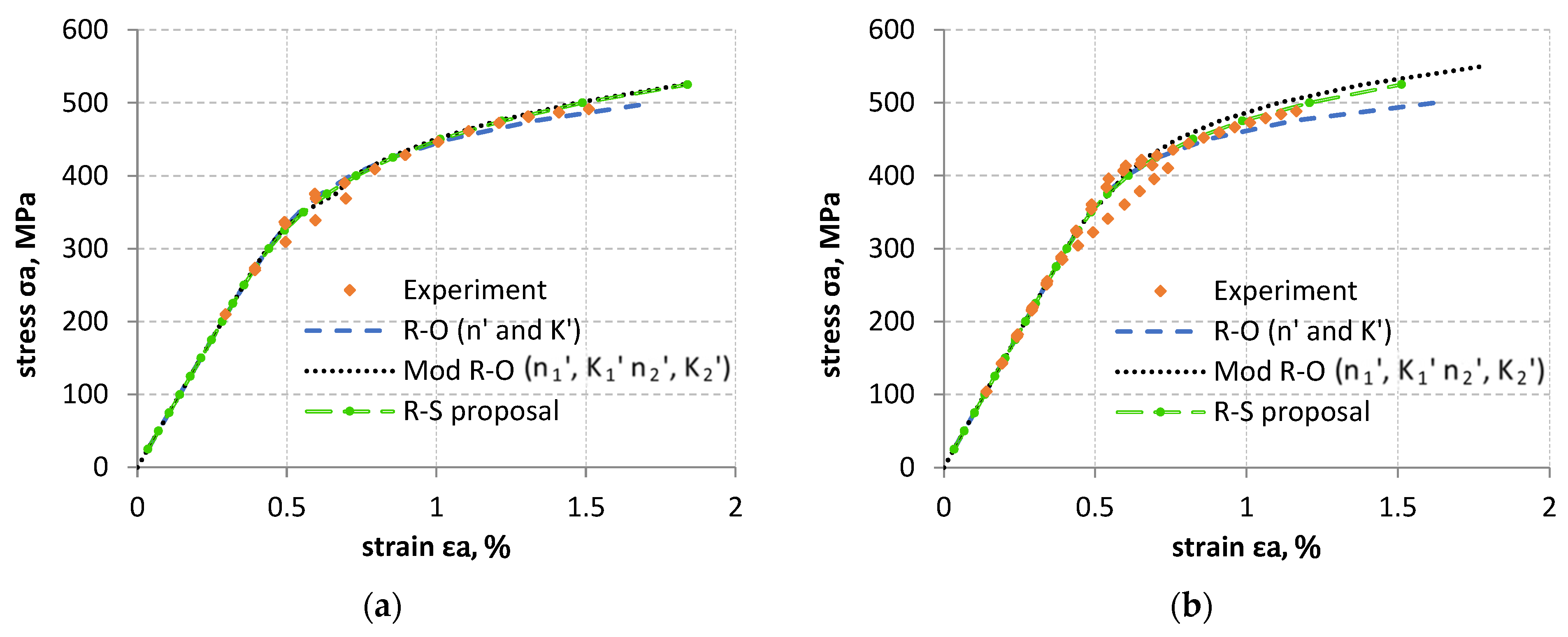
31], was applied. This description was previously used to describe monotonic properties. Graphical interpretation of these descriptions is shown in
Figure 21.
When analyzing
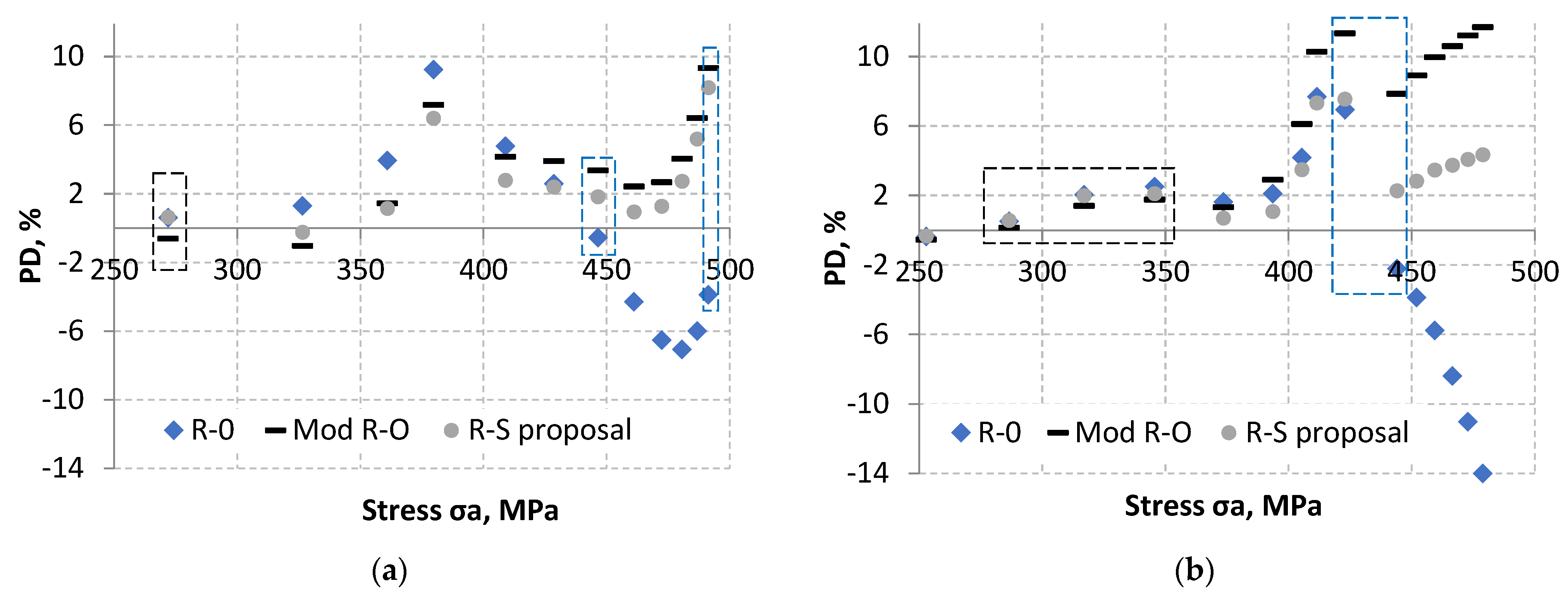
Figure 21, it is difficult to identify the model that best describes the experimental tests. In order to compare the models presented, the formula (5) was used to determine the percentage difference from the experimental results (PD, %). For several experimental points for a given value of experimental strain, the value of stress σ
a and strain ε
a were determined as the mean value. A perfect fit of the model to the experimental results means PD = 0%. Its graphical interpretation is shown in
Figure 22.
where ε
ai—total strain amplitude determined from individual R–O, Mod R–O, R–S proposal models, respectively.
The best model fit to experimental results for both the LFL and HFL test was obtained for the R–S proposal model. However, not all experimental points were better fitted using the R–S model. These points are marked in
Figure 22 with black and blue rectangles. The black rectangles indicate data for which the experimental points were slightly better described by the R–O modification. The blue rectangles indicate data for which the experimental points were slightly better described by the R–O model.