Preparation of Reusable Porous Carbon Nanofibers from Oxidized Coal Liquefaction Residue for Efficient Adsorption in Water Treatment



Abstract
1. Introduction
2. Materials and Methods
2.1. Materials
2.2. Preparation of ARCNF
2.3. Characterization of ARCNF
2.4. Adsorption of Organic Dyes
2.5. Adsorption Experiment
3. Results and Discussion
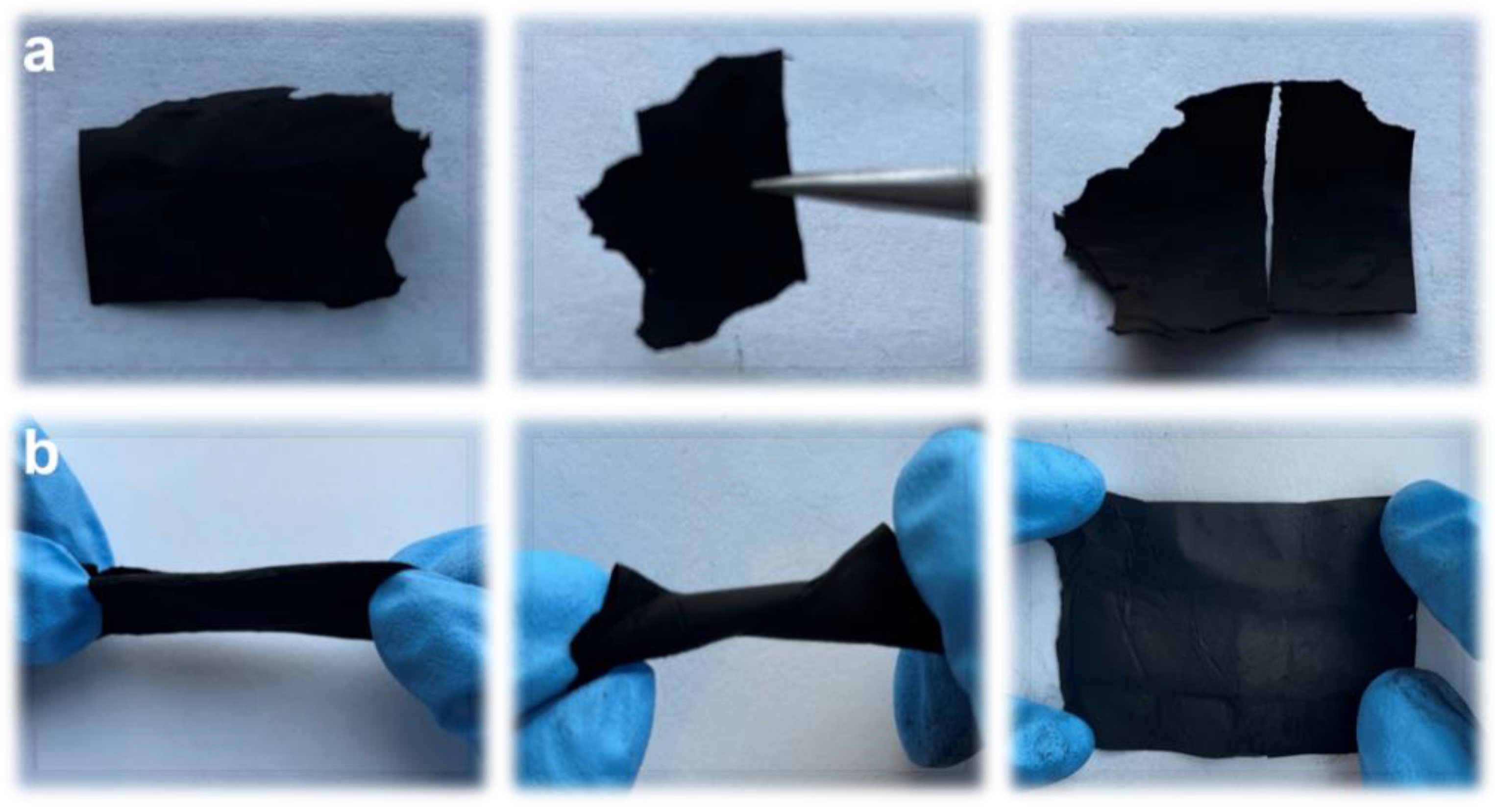
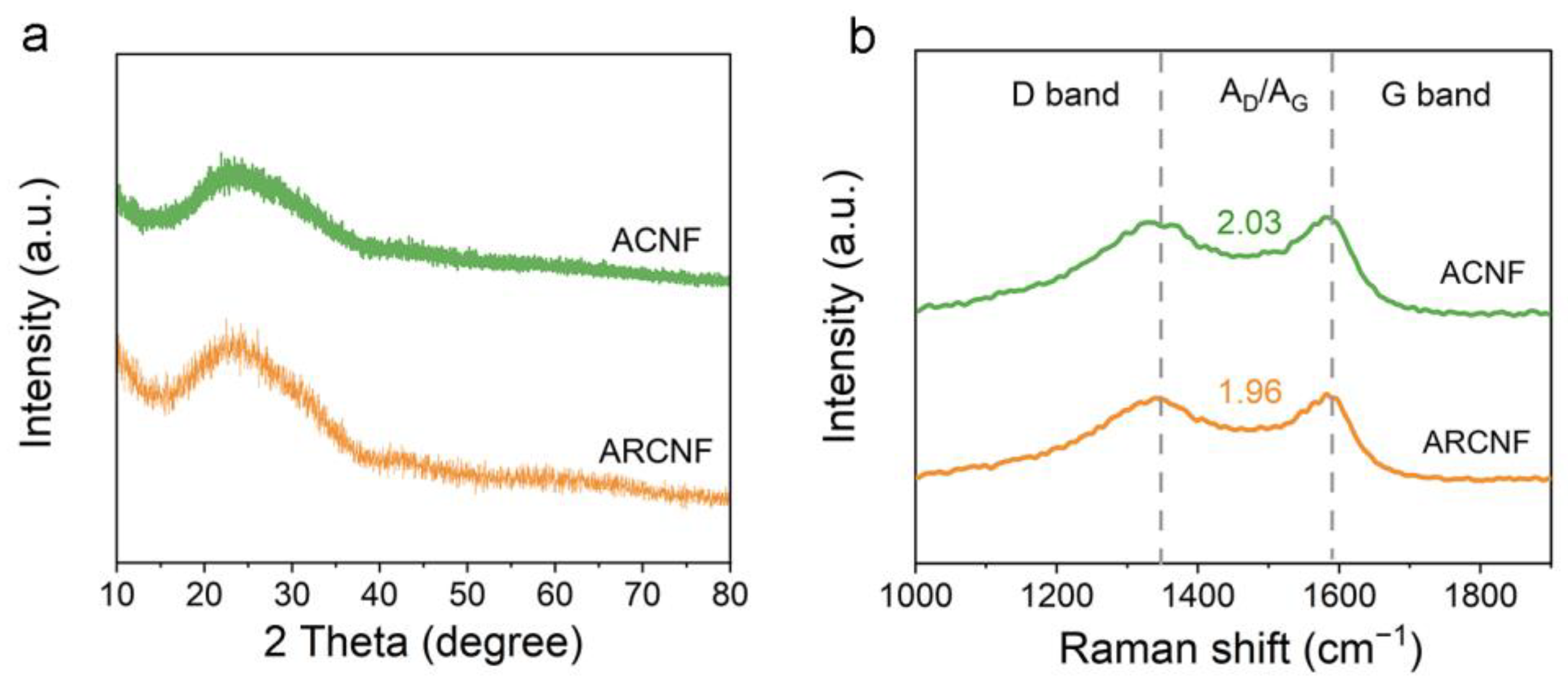
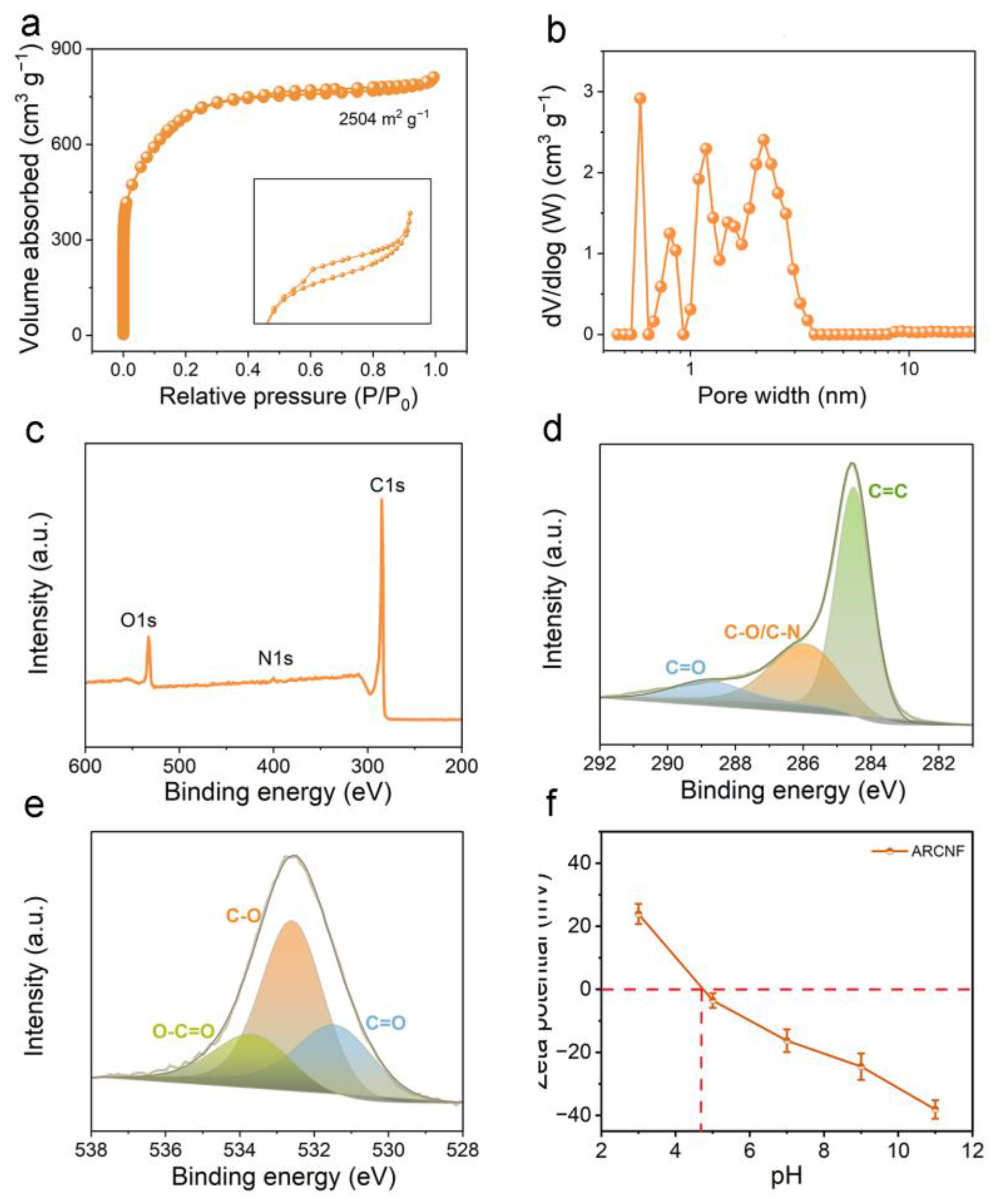
3.1. Structure and Morphologies
3.2. Adsorption of Organic Dyes
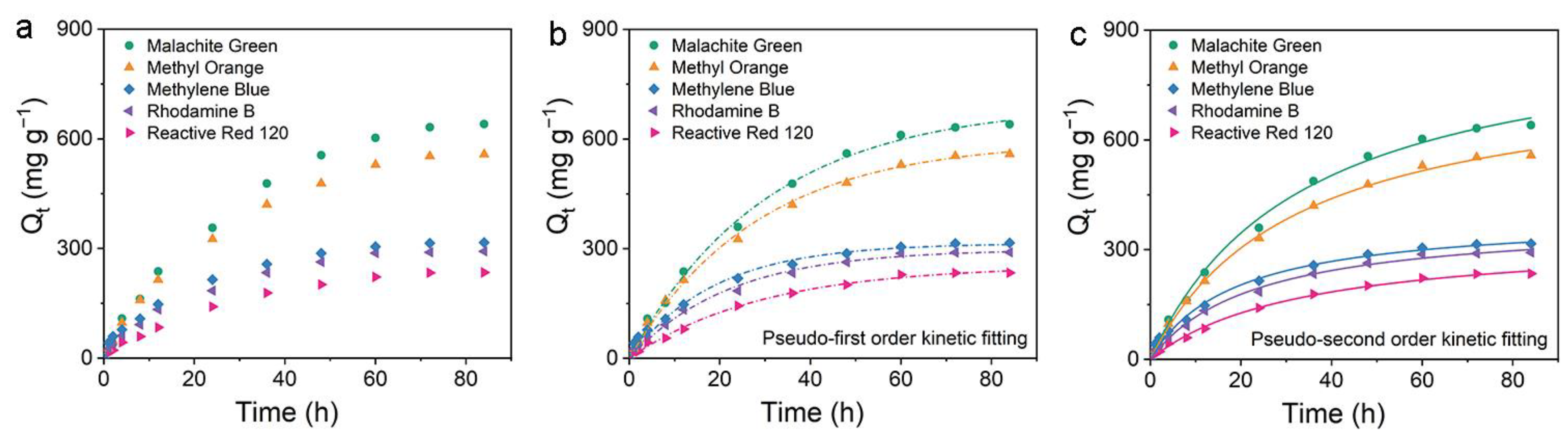
3.2.1. Adsorption Kinetic of Organic Dyes on ARCNF
3.2.2. Adsorption Isotherm of Organic Dyes on ARCNF
3.2.3. Adsorption Thermodynamics of Organic Dyes on ARCNF
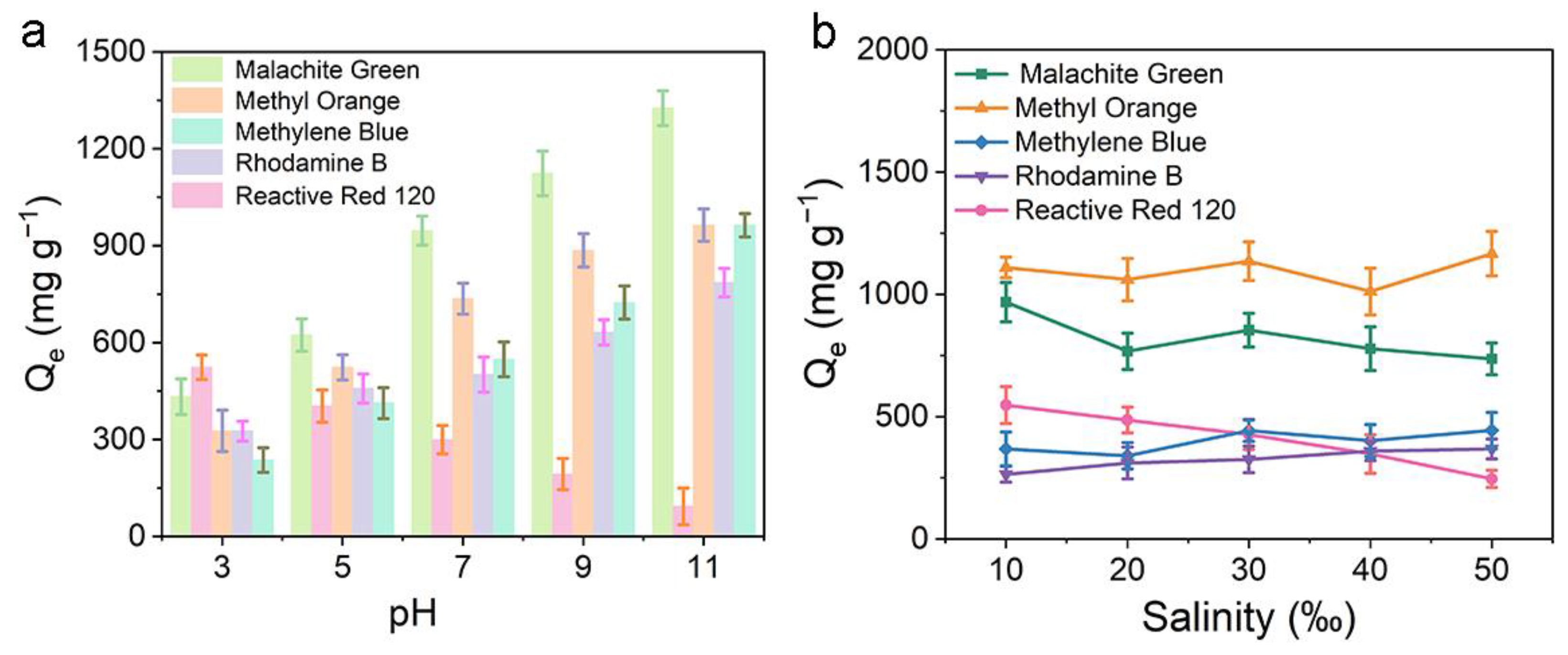
3.2.4. The Influence of pH on Adsorption of Organic Dyes in ARCNF
3.2.5. The Influence of Salinity on Adsorption of Organic Dyes in ARCNF
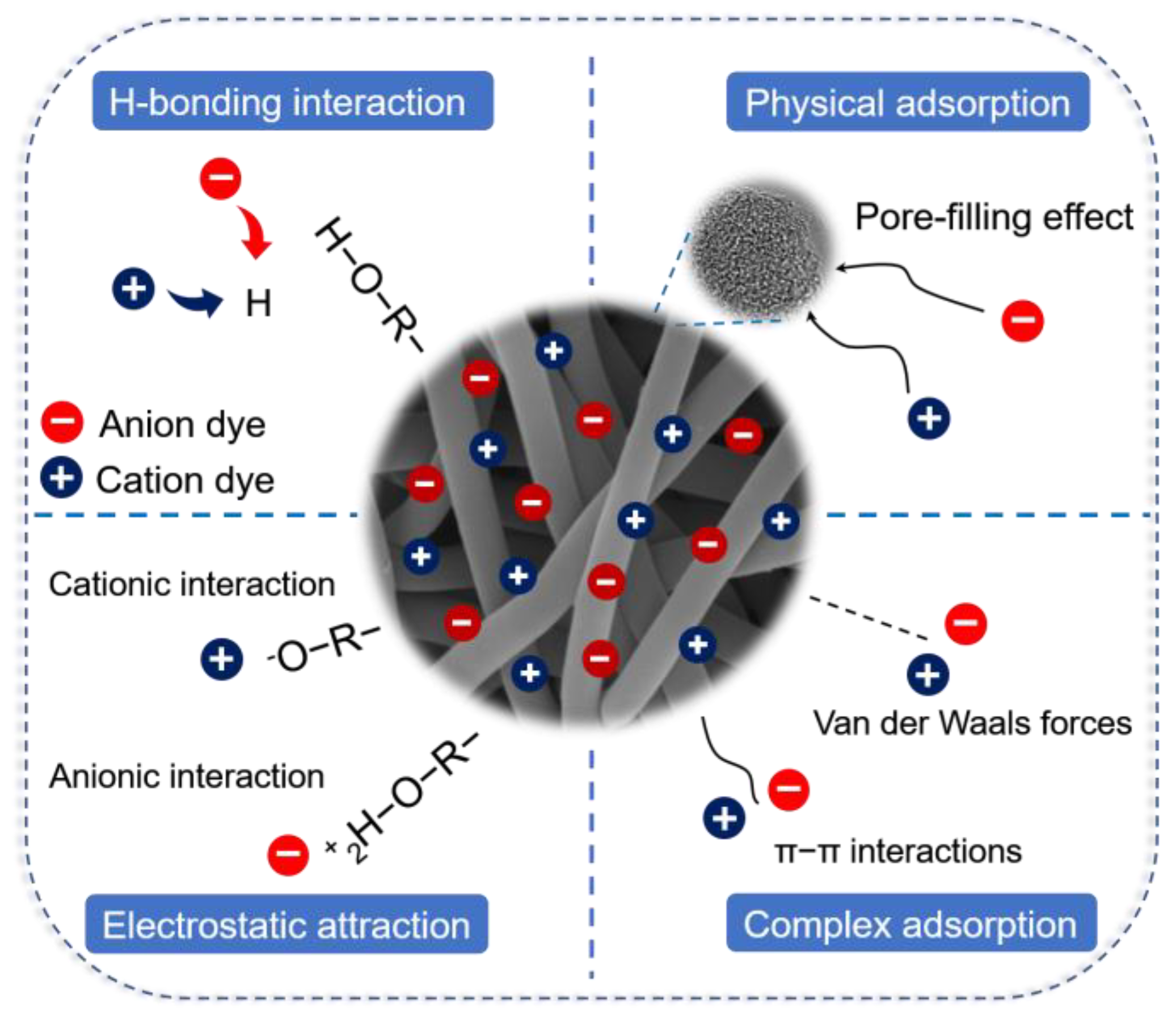
3.2.6. Adsorption Mechanism
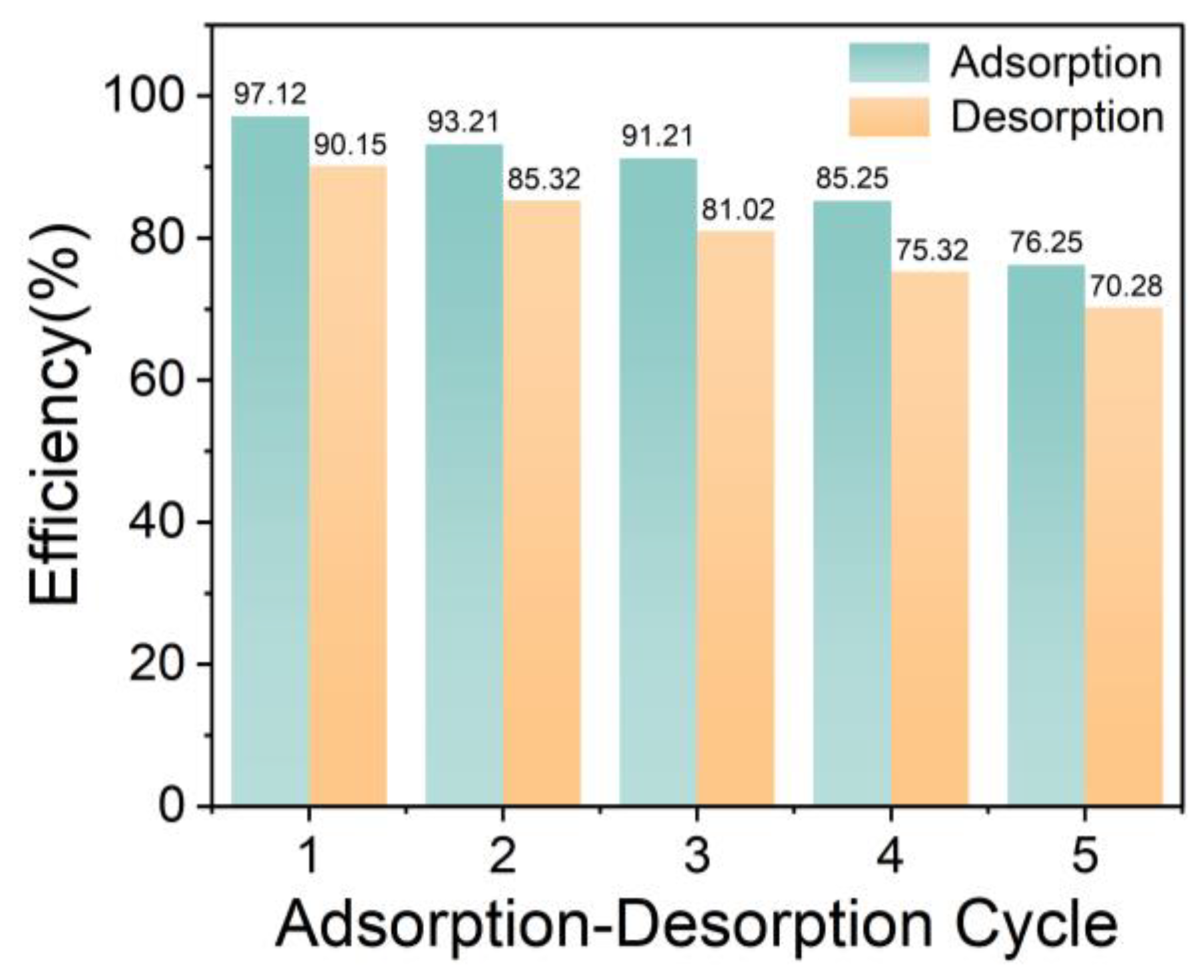
3.2.7. Regeneration Performance
4. Conclusions
Supplementary Materials
Author Contributions
Funding
Institutional Review Board Statement
Informed Consent Statement
Data Availability Statement
Conflicts of Interest
References
- Bai, S.; Wang, T.; Tian, Z.; Cao, K.; Li, J. Facile preparation of porous biomass charcoal from peanut shell as adsorbent. Sci. Rep. 2020, 10, 15845–15853. [Google Scholar] [CrossRef] [PubMed]
- Dai, Z.; Ren, P.-G.; Zhang, H.; Gao, X.; Jin, Y.-L. Nitrogen-doped and hierarchically porous carbon derived from spent coffee ground for efficient adsorption of organic dyes. Carbon Lett. 2021, 31, 1249–1260. [Google Scholar] [CrossRef]
- Elkady, M.; Shokry, H.; Hamad, H. New Activated Carbon from Mine Coal for Adsorption of Dye in Simulated Water or Multiple Heavy Metals in Real Wastewater. Materials 2020, 13, 2498. [Google Scholar] [CrossRef] [PubMed]
- Gao, B.; Yu, H.; Wen, J.; Zeng, H.; Liang, T.; Zuo, F.; Cheng, C. Super-adsorbent poly(acrylic acid)/laponite hydrogel with ultrahigh mechanical property for adsorption of methylene blue. J. Environ. Chem. Eng. 2021, 9, 106346–106358. [Google Scholar] [CrossRef]
- Gao, Y.; Zhang, J.; Chen, C.; Du, Y.; Teng, G.; Wu, Z. Functional biochar fabricated from waste red mud and corn straw in China for acidic dye wastewater treatment. J. Clean. Prod. 2021, 320, 128887–128895. [Google Scholar] [CrossRef]
- Shimizu, T.; De Silva, K.K.H.; Hara, M.; Yoshimura, M. Facile synthesis of carbon nanotubes and cellulose nanofiber incorporated graphene aerogels for selective organic dye adsorption. Appl. Surf. Sci. 2022, 600, 154098–154111. [Google Scholar] [CrossRef]
- Tran, Q.T.; Do, T.H.; Ha, X.L.; Duong, T.T.A.; Chu, M.N.; Vu, V.N.; Chau, H.D.; Tran, T.K.N.; Song, P. Experimental Design, Equilibrium Modeling and Kinetic Studies on the Adsorption of Methylene Blue by Adsorbent: Activated Carbon from Durian Shell Waste. Materials 2022, 15, 8566. [Google Scholar] [CrossRef]
- Ibupoto, A.S.; Qureshi, U.A.; Ahmed, F.; Khatri, Z.; Khatri, M.; Maqsood, M.; Brohi, R.Z.; Kim, I.S. Reusable carbon nanofibers for efficient removal of methylene blue from aqueous solution. Chem. Eng. Res. Des. 2018, 136, 744–752. [Google Scholar] [CrossRef]
- He, C.; Hu, X. Anionic Dye Adsorption on Chemically Modified Ordered Mesoporous Carbons. Ind. Eng. Chem. Res. 2011, 50, 14070–14083. [Google Scholar] [CrossRef]
- Zhai, S.; Li, M.; Peng, H.; Wang, D.; Fu, S. Cost-effective resource utilization for waste biomass: A simple preparation method of photo-thermal biochar cakes (BCs) toward dye wastewater treatment with solar energy. Environ. Res. 2021, 194, 110720–110725. [Google Scholar] [CrossRef]
- Yang, Y.; Guan, C. Adsorption properties of activated carbon fiber for highly effective removal of methyl orange dye. IOP Conf. Ser. Earth Environ. Sci. 2018, 208, 012005. [Google Scholar] [CrossRef]
- Jawad, A.H.; Saber, S.E.M.; Abdulhameed, A.S.; Reghioua, A.; Alothman, Z.A.; Wilson, L.D. Mesoporous activated carbon from mangosteen (Garcinia mangostana) peels by H3PO4 assisted microwave: Optimization, characterization, and adsorption mechanism for methylene blue dye removal. Diam. Relat. Mater. 2022, 129, 109389–109400. [Google Scholar] [CrossRef]
- Li, Z.Y.; Liu, X.R.; Zhang, X.; Zhang, T.Y.; Chen, J.; Li, Q.; Yu, Y.C.; Zhao, X.Y.; Wei, Y. Fabrication of Hydroxyl-Carboxyl Bifunctional Hyper-Crosslinked Polymers for Selective Adsorption of Methylene Blue. Chem. Eng. Technol. 2022, 45, 2178–2185. [Google Scholar] [CrossRef]
- Zhang, R.; Liu, Y.; He, M.; Su, Y.; Zhao, X.; Elimelech, M.; Jiang, Z. Antifouling membranes for sustainable water purification: Strategies and mechanisms. Chem. Soc. Rev. 2016, 45, 5888–5924. [Google Scholar] [CrossRef] [PubMed]
- Zhang, L.; Tu, L.Y.; Liang, Y.; Chen, Q.; Li, Z.S.; Li, C.H.; Wang, Z.H.; Li, W. Coconut-based activated carbon fibers for efficient adsorption of various organic dyes. RSC Adv. 2018, 8, 42280–42291. [Google Scholar] [CrossRef]
- Sasaki, M.; Tamai, H.; Yoshida, T.; Yasuda, H. Dye adsorption and ζ-potential for activated carbon fibers obtained from metal complexes containing pitch. Carbon 1998, 36, 1875–1876. [Google Scholar] [CrossRef]
- Singh, S.; Prajapati, A.K.; Chakraborty, J.P.; Mondal, M.K. Adsorption potential of biochar obtained from pyrolysis of raw and torrefied Acacia nilotica towards removal of methylene blue dye from synthetic wastewater. Biomass Convers. Biorefin. 2021. [Google Scholar] [CrossRef]
- Selvam, K.; Sudhakar, C.; Selvankumar, T. Activated carbon derived from Borassus flabellifer fruit husk waste for enhanced removal of reactive red 120. Environ. Technol. Innov. 2021, 23, 101752–101765. [Google Scholar] [CrossRef]
- Shokry, H.; Elkady, M.; Hamad, H. Nano activated carbon from industrial mine coal as adsorbents for removal of dye from simulated textile wastewater: Operational parameters and mechanism study. J. Mater. Res. Technol. 2019, 8, 4477–4488. [Google Scholar] [CrossRef]
- Zhao, H.; Zhong, H.; Jiang, Y.; Li, H.; Tang, P.; Li, D.; Feng, Y. Porous ZnCl2-Activated Carbon from Shaddock Peel: Methylene Blue Adsorption Behavior. Materials 2022, 15, 895. [Google Scholar] [CrossRef]
- Saghir, S.; Pu, C.; Fu, E.; Wang, Y.; Xiao, Z. Synthesis of high surface area porous biochar obtained from pistachio shells for the efficient adsorption of organic dyes from polluted water. Surf. Interfaces 2022, 34, 102357–102368. [Google Scholar] [CrossRef]
- Qi, C.; Xu, L.; Zhang, M.; Zhang, M. Fabrication and application of hierarchical porous carbon for the adsorption of bulky dyes. Microporous Mesoporous Mater. 2019, 290, 109651–109659. [Google Scholar] [CrossRef]
- Wang, Q.; Luo, C.; Lai, Z.; Chen, S.; He, D.; Mu, J. Honeycomb-like cork activated carbon with ultra-high adsorption capacity for anionic, cationic and mixed dye: Preparation, performance and mechanism. Bioresour. Technol. 2022, 357, 127363–127372. [Google Scholar] [CrossRef]
- Thillainayagam, B.P.; Nagalingam, R.; Saravanan, P. Batch and column studies on removal of methylene blue dye by microalgae biochar. Biomass Convers. Biorefin. 2022. [Google Scholar] [CrossRef]
- Mousavi, S.; Deuber, F.; Petrozzi, S.; Federer, L.; Aliabadi, M.; Shahraki, F.; Adlhart, C. Efficient dye adsorption by highly porous nanofiber aerogels. Colloids Surf. A 2018, 547, 117–125. [Google Scholar] [CrossRef]
- Sodkouieh, S.M.; Kalantari, M.; Shamspur, T. Methylene blue adsorption by wheat straw-based adsorbents: Study of adsorption kinetics and isotherms. Korean J. Chem. Eng. 2023, 40, 873–881. [Google Scholar] [CrossRef]
- Li, X.; Tian, X.D.; Yang, T.; He, Y.T.; Liu, W.H.; Song, Y.; Liu, Z.J. Coal Liquefaction Residues Based Carbon Nanofibers Film Prepared by Electrospinning: An Effective Approach to Coal Waste Management. ACS Sustain. Chem. Eng. 2019, 7, 5742–5750. [Google Scholar] [CrossRef]
- Zhao, L.; Wang, Y.C.; Li, W.B. Nitrogen(N)-doped activated carbon materials with a narrow pore size distribution derived from coal liquefaction residues as low-cost and high-activity oxygen reduction catalysts in alkaline solution. RSC Adv. 2016, 6, 90076–90081. [Google Scholar] [CrossRef]
- Wang, Y.J.; Zuo, H.B.; Bai, K.K.; Chen, J.S. Preparation of hot-pressed coal briquette with the extract from direct coal liquefaction residue. J. Clean. Prod. 2022, 341, 130836–130844. [Google Scholar] [CrossRef]
- Zhou, Y.; Xiao, N.; Qiu, J.; Sun, Y.; Sun, T.; Zhao, Z.; Zhang, Y.; Tsubaki, N. Preparation of carbon microfibers from coal liquefaction residue. Fuel 2008, 87, 3474–3476. [Google Scholar] [CrossRef]
- Qiao, T.; Wang, H.; Yang, Y.; Lu, X.; Fan, G.; Li, P. Preparation of polyacrylonitrile based carbon nanofibers by electrospinning with different additives from direct coal liquefaction residue. IOP Conf. Ser. Mater. Sci. Eng. 2020, 729, 012093–012097. [Google Scholar] [CrossRef]
- Xiao, N.; Zhou, Y.; Ling, Z.; Qiu, J. Synthesis of a carbon nanofiber/carbon foam composite from coal liquefaction residue for the separation of oil and water. Carbon 2013, 59, 530–536. [Google Scholar] [CrossRef]
- An, G.-H.; Ahn, H.-J. Activated porous carbon nanofibers using Sn segregation for high-performance electrochemical capacitors. Carbon 2013, 65, 87–96. [Google Scholar] [CrossRef]
- Qin, F.W.; Li, Q.Q.; Tang, T.T.; Zhu, J.Y.; Gan, X.M.; Chen, Y.Y.; Li, Y.Z.; Zhang, S.; Huang, X.L.; Jia, D.Z. Functional carbon dots from a mild oxidation of coal liquefaction residue. Fuel 2022, 322, 124216–124225. [Google Scholar] [CrossRef]
- Gan, X.M.; Yuan, R.L.; Zhu, J.Y.; Li, Q.Q.; Tang, T.T.; Qin, F.W.; Zhu, L.N.; Zhang, J.; Wang, L.X.; Zhang, S.; et al. Ultra-fine carbon nanosheets from coal oxidation for tri-functional improvement of carbon nanofiber fabrics. Carbon 2023, 201, 381–389. [Google Scholar] [CrossRef]
- Zhu, J.Y.; Zhang, S.; Wang, L.X.; Jia, D.Z.; Xu, M.J.; Zhao, Z.B.; Qiu, J.S.; Jia, L.X. Engineering cross-linking by coal-based graphene quantum dots toward tough, flexible, and hydrophobic electrospun carbon nanofiber fabrics. Carbon 2018, 129, 54–62. [Google Scholar] [CrossRef]
- Zhao, J.; Zhu, J.Y.; Li, Y.T.; Wang, L.X.; Dong, Y.; Jiang, Z.M.; Fan, C.W.; Cao, Y.L.; Sheng, R.; Liu, A.J.; et al. Graphene Quantum Dot Reinforced Electrospun Carbon Nanofiber Fabrics with High Surface Area for Ultrahigh Rate Supercapacitors. ACS Appl. Mater. Interfaces 2020, 12, 11669–11678. [Google Scholar] [CrossRef]
- Zhu, J.Y.; Wang, L.X.; Gan, X.M.; Tang, T.T.; Qin, F.W.; Luo, W.X.; Li, Q.Q.; Guo, N.N.; Zhang, S.; Jia, D.Z.; et al. Graphene quantum dot inlaid carbon nanofibers: Revealing the edge activity for ultrahigh rate pseudocapacitive energy storage. Energy Storage Mater. 2022, 47, 158–166. [Google Scholar] [CrossRef]
- Ying, Z.; Huang, L.; Ji, L.; Li, H.; Liu, X.; Zhang, C.; Zhang, J.; Yi, G. Efficient Removal of Methylene Blue from Aqueous Solutions Using a High Specific Surface Area Porous Carbon Derived from Soybean Dreg. Materials 2021, 14, 1754. [Google Scholar] [CrossRef]
- Li, M.L.; Xiao, H.Y.; Zhang, T.; Li, Q.R.; Zhao, Y.F. Activated Carbon Fiber Derived from Sisal with Large Specific Surface Area for High-Performance Supercapacitors. ACS Sustain. Chem. Eng. 2019, 7, 4716–4723. [Google Scholar] [CrossRef]
- Jia, M.M.; Liu, C.Y.; Cui, X.C.; Yu, S.S.; Chen, K.Z. Fast and efficient adsorption of the organic dyes on the porous carbon microspheres prepared from a new two-step approach. Diam. Relat. Mater. 2023, 131, 109604–109613. [Google Scholar] [CrossRef]
- Li, L.; Lv, Y.; Wang, J.; Jia, C.; Zhan, Z.; Dong, Z.; Liu, L.; Zhu, X. Enhance pore structure of cyanobacteria-based porous carbon by polypropylene to improve adsorption capacity of methylene blue. Bioresour. Technol. 2022, 343, 126101–126109. [Google Scholar] [CrossRef] [PubMed]
- Liu, B.; Du, C.; Chen, J.J.; Zhai, J.Y.; Wang, Y.; Li, H.L. Preparation of well-developed mesoporous activated carbon fibers from plant pulp fibers and its adsorption of methylene blue from solution. Chem. Phys. Lett. 2021, 771, 138535–138541. [Google Scholar] [CrossRef]
- Sawalha, H.; Bader, A.; Sarsour, J.; Al-Jabari, M.; Rene, E.R. Removal of Dye (Methylene Blue) from Wastewater Using Bio-Char Derived from Agricultural Residues in Palestine: Performance and Isotherm Analysis. Processes 2022, 10, 2039. [Google Scholar] [CrossRef]
- Wu, T.; Yang, G.; Cao, J.; Xu, Z.; Jiang, X. Activation and adsorption mechanisms of methylene blue removal by porous biochar adsorbent derived from eggshell membrane. Chem. Eng. Res. Des. 2022, 188, 330–341. [Google Scholar] [CrossRef]
- Kim, M.; Sharma, N.; Chung, J.; Yun, K. Activated graphene with fractal structure for the adsorption of malachite green with high removal rate. Microporous Mesoporous Mater. 2021, 322, 111166–111175. [Google Scholar] [CrossRef]
- Song, G.B.; Shi, Y.W.; Wang, H.N.; Li, A.Q.; Li, W.R.; Sun, Y.; Ding, G.H. Effective sorptive removal of five cationic dyes from aqueous solutions by using magnetic multi-walled carbon nanotubes. Water Sci. Technol. 2022, 85, 1999–2014. [Google Scholar] [CrossRef]
- Yar, A.; Parlayici, Ş. Carbon nanotubes/polyacrylonitrile composite nanofiber mats for highly efficient dye adsorption. Colloids Surf. A 2022, 651, 129703–129716. [Google Scholar] [CrossRef]
- Yang, D.; Qiu, L.; Yang, Y. Efficient Adsorption of Methyl Orange Using a Modified Chitosan Magnetic Composite Adsorbent. J. Chem. Eng. Data 2016, 61, 3933–3940. [Google Scholar] [CrossRef]
- Çelekli, A.; Al-Nuaimi, A.I.; Bozkurt, H. Adsorption kinetic and isotherms of Reactive Red 120 on Moringa oleifera seed as an eco-friendly process. J. Mol. Struct. 2019, 1195, 168–178. [Google Scholar] [CrossRef]
- Yaqub, A.; Ajab, H.; Almas, A.; Syed, S.M.; Azam, A.; Khan, M.I.; Awais, M.; Muhammad, I.; Galal, A.M.; Alshahrani, M.Y. Utilization of nano-biosorbents based on pine needles and banana peel for methylene blue removal: Equilibrium, kinetics, thermodynamic study, and application. Biomass Convers. Biorefin. 2022, 12, 1787–1802. [Google Scholar] [CrossRef]
- Raji, Y.; Nadi, A.; Mechnou, I.; Saadouni, M.; Cherkaoui, O.; Zyade, S. High adsorption capacities of crystal violet dye by low-cost activated carbon prepared from Moroccan Moringa oleifera wastes: Characterization, adsorption and mechanism study. Diam. Relat. Mater. 2023, 135, 109834–109846. [Google Scholar] [CrossRef]



| Dye Type | Dye | Abbreviation |
|---|---|---|
| Cationic | Malachite Green | MG |
| Methyl Orange | MO | |
| Methylene Blue | MB | |
| Rhodamine B | RB | |
| Anionic | Reactive Red 120 | RR-120 |
| Dye | Pseudo-First Order | Pseudo-Second Order | ||||||
|---|---|---|---|---|---|---|---|---|
| q1 | K1 | R2 | X2 | q2 | K2 × 10−5 | R2 | X2 | |
| MG | 695.54 | 0.033 | 0.997 | 149.7 | 923.03 | 3.24 | 0.998 | 122.0 |
| MO | 594.98 | 0.036 | 0.997 | 111.5 | 789.43 | 3.97 | 0.998 | 72.29 |
| MB | 314.82 | 0.053 | 0.987 | 197.2 | 391.16 | 0.14 | 0.992 | 127.9 |
| RB | 298.08 | 0.046 | 0.993 | 84.99 | 382.31 | 0.14 | 0.995 | 59.16 |
| RR-120 | 253.65 | 0.034 | 0.996 | 43.15 | 338.15 | 8.86 | 0.997 | 23.29 |
| Dye | Langmuir Model | Freundlich Model | ||||||
|---|---|---|---|---|---|---|---|---|
| qmax | KL | R2 | X2 | KF | n | R2 | X2 | |
| MG | 2712.84 | 0.015 | 0.986 | 1306.87 | 170.53 | 0.657 | 0.963 | 2058.18 |
| MO | 2210.58 | 0.012 | 0.975 | 880.38 | 116.55 | 0.685 | 0.962 | 1281.32 |
| MB | 1017.27 | 0.029 | 0.979 | 360.65 | 119.05 | 0.506 | 0.974 | 657.98 |
| RB | 867.21 | 0.028 | 0.989 | 542.26 | 96.85 | 0.517 | 0.958 | 745.16 |
| RR-120 | 719.49 | 0.019 | 0.986 | 453.37 | 57.23 | 0.597 | 0.975 | 824.36 |
| Adsorbent | Dye | Adsorption Capacity (mg g−1) | Ref. |
|---|---|---|---|
| Activated carbon fiber | MO | 357.14 | [11] |
| Hyper-crosslinked polymers | MB | 766.74 | [13] |
| Shaddock peel activated carbon | MB | 859.81 | [20] |
| Freeze-dried carbon microsphere | RB | 216.61 | [41] |
| Cyanobacteria-based porous carbon | MB | 667 | [42] |
| Activated graphene | MG | 791.27 | [46] |
| Magnetic multi-walled carbon nanotubes | MG | 442.2 | [47] |
| Chitosan-coated Fe3O4 nanocomposites | MO | 758 | [49] |
| Moringa oleifera seed | RR-120 | 413.32 | [50] |
| Nano-biosorbents of pine needles | MB | 1193 | [51] |
| ARCNF | MG | 2712.84 | This study |
| ARCNF | MO | 2210.58 | |
| ARCNF | MB | 1017.27 | |
| ARCNF | RB | 867.21 | |
| ARCNF | RR-120 | 719.49 |
| Dyes | ΔG0 (KJ mol−1K−1) | ΔS0 (J mol−1) | ΔH0 (KJ mol−1) | ||
|---|---|---|---|---|---|
| 288 K | 298 K | 308 K | |||
| MG | −3.74 | −4.11 | −4.49 | 37.41 | 7.03 |
| MO | −2.78 | −3.27 | −3.76 | 49.05 | 11.34 |
| MB | −2.34 | −2.79 | −3.24 | 44.89 | 10.58 |
| RB | −8.11 | −8.60 | −9.09 | 49.05 | 6.01 |
| RR-120 | −3.43 | −3.80 | −4.18 | 37.24 | 7.29 |
Disclaimer/Publisher’s Note: The statements, opinions and data contained in all publications are solely those of the individual author(s) and contributor(s) and not of MDPI and/or the editor(s). MDPI and/or the editor(s) disclaim responsibility for any injury to people or property resulting from any ideas, methods, instructions or products referred to in the content. |
© 2023 by the authors. Licensee MDPI, Basel, Switzerland. This article is an open access article distributed under the terms and conditions of the Creative Commons Attribution (CC BY) license (https://creativecommons.org/licenses/by/4.0/).
Share and Cite
Chen, Y.; Wang, K.; Cao, L.; Huang, X.; Li, Y. Preparation of Reusable Porous Carbon Nanofibers from Oxidized Coal Liquefaction Residue for Efficient Adsorption in Water Treatment. Materials 2023, 16, 3614. https://doi.org/10.3390/ma16103614
Chen Y, Wang K, Cao L, Huang X, Li Y. Preparation of Reusable Porous Carbon Nanofibers from Oxidized Coal Liquefaction Residue for Efficient Adsorption in Water Treatment. Materials. 2023; 16(10):3614. https://doi.org/10.3390/ma16103614
Chicago/Turabian StyleChen, Yaoyao, Kefu Wang, Liqin Cao, Xueli Huang, and Yizhao Li. 2023. "Preparation of Reusable Porous Carbon Nanofibers from Oxidized Coal Liquefaction Residue for Efficient Adsorption in Water Treatment" Materials 16, no. 10: 3614. https://doi.org/10.3390/ma16103614
APA StyleChen, Y., Wang, K., Cao, L., Huang, X., & Li, Y. (2023). Preparation of Reusable Porous Carbon Nanofibers from Oxidized Coal Liquefaction Residue for Efficient Adsorption in Water Treatment. Materials, 16(10), 3614. https://doi.org/10.3390/ma16103614